When people search for Australian Cattle Dog breeds, they are often looking for different types of Heelers, such as the Blue Heeler, Red Heeler, Queensland Heeler, or even the Australian Stumpy Tail Cattle Dog.
The important distinction is that these names do not all describe separate varieties of the same breed.
The Australian Cattle Dog is one recognized breed. Blue Heeler and Red Heeler are commonly used names for Australian Cattle Dogs based mainly on their coat color, while the Australian Stumpy Tail Cattle Dog is a separate breed.
Within the Australian Cattle Dog breed, dogs can have different blue or red coat patterns. There are also several related cattle-dog breeds and popular Australian Cattle Dog mixes, which can make breed searches confusing.
This guide explains the different Australian Cattle Dog types and varieties, including their colors, nicknames, related breeds, popular mixes, appearance, temperament, exercise needs, health considerations, and what to consider before bringing one home.
Quick Facts About Australian Cattle Dogs
| Feature | Details |
|---|---|
| Official breed name | Australian Cattle Dog |
| Origin | Australia |
| Common names | Blue Heeler, Red Heeler, Queensland Heeler |
| AKC group | Herding Group |
| FCI group | Sheepdogs and Cattledogs |
| Height | 17–20 inches |
| Weight | About 35–50 pounds |
| Life expectancy | 12–16 years |
| Coat | Short, dense double coat |
| Main coat colors | Blue and red |
| Common patterns | Blue speckled, blue mottled, red speckled |
| Energy level | Very high |
| Main purpose | Cattle herding |
| Best suited to | Active owners, working homes, farms, and experienced dog owners |
The AKC lists an adult height of approximately 17–20 inches, a weight range of 35–50 pounds, and a life expectancy of 12–16 years.
How Many Australian Cattle Dog Breeds Are There?
There is one Australian Cattle Dog breed.
The confusion comes from the different names and appearances associated with the breed.
For example:
- Australian Cattle Dog = official breed
- Blue Heeler = common name for an Australian Cattle Dog with blue coloring
- Red Heeler = common name for a red Australian Cattle Dog
- Queensland Heeler = another common name for the breed
- Blue Speckled Australian Cattle Dog = coat pattern
- Blue Mottled Australian Cattle Dog = coat pattern
- Red Speckled Australian Cattle Dog = coat pattern
- Australian Stumpy Tail Cattle Dog = separate breed
- Texas Heeler = Australian Cattle Dog mix
Australian Cattle Dog vs. Australian Cattle Dog Varieties
A breed is a distinct dog population with its own breed standard.
A variety generally refers to differences within that breed, such as coat color or pattern.
| Term | What It Means |
|---|---|
| Australian Cattle Dog | Recognized dog breed |
| Blue Heeler | Common name for the blue-colored Australian Cattle Dog |
| Red Heeler | Common name for the red-colored Australian Cattle Dog |
| Blue Speckled | Coat pattern |
| Blue Mottled | Coat pattern |
| Red Speckled | Coat pattern |
| Queensland Heeler | Common nickname |
| Australian Stumpy Tail Cattle Dog | Separate breed |
| Texas Heeler | Mixed breed |
This distinction is especially important when comparing Blue Heelers and Red Heelers because they are not separate breeds.
Blue Heeler
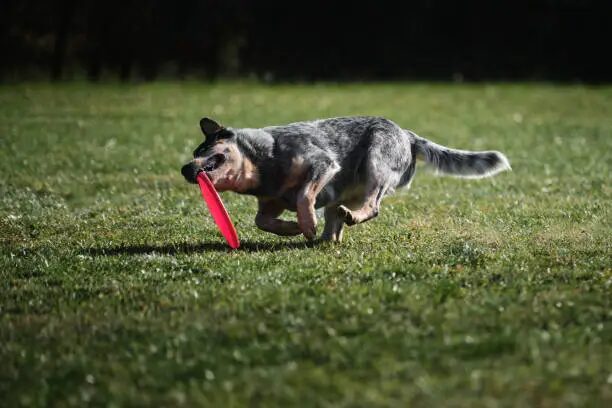
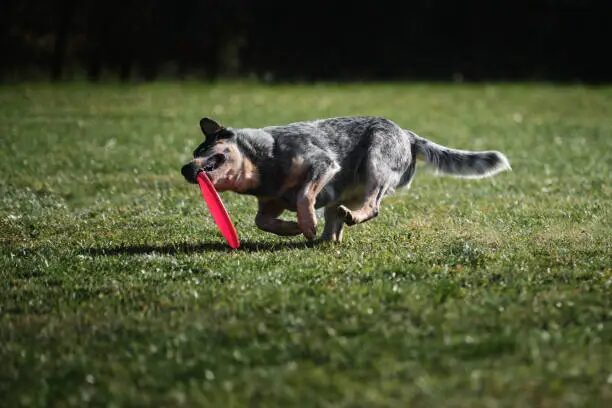
The Blue Heeler is one of the most familiar names for the Australian Cattle Dog.
The name comes from the breed’s characteristic blue-gray appearance and its traditional working behavior of controlling cattle by working around their heels.
What Does a Blue Heeler Look Like?
A Blue Heeler may have:
- Blue-gray coloring
- Black hairs mixed through the coat
- Blue speckling
- Blue mottling
- Tan markings
- Dark facial markings
The blue appearance comes from a mixture of dark and white hairs rather than a simple solid blue coat.
Blue Heeler Personality
Blue Heelers are generally:
- Intelligent
- Alert
- Loyal
- Energetic
- Hardworking
- Reserved around unfamiliar people
They were developed as working cattle dogs, so they often need much more physical and mental activity than a typical companion breed.
Is a Blue Heeler a Different Breed?
No.
Blue Heeler is a common name for the Australian Cattle Dog.
Red Heeler
The Red Heeler is another common name used for the Australian Cattle Dog.
Instead of the blue-gray appearance, Red Heelers have predominantly red coloring and are commonly seen with red speckling.
Red Heeler Appearance
Red Australian Cattle Dogs may have:
- Red speckling
- Red hairs mixed with lighter hairs
- Darker red markings
- A compact, muscular body
- Upright ears
- A short double coat
The red and blue dogs belong to the same breed.
Red Heeler Temperament
A Red Heeler can be:
- Intelligent
- Energetic
- Loyal
- Alert
- Confident
- Highly trainable
Coat color does not create a separate temperament type. The AKC specifically notes that there is no temperament difference between blue and red Australian Cattle Dogs.
Blue Heeler vs. Red Heeler
The simplest answer is that Blue Heelers and Red Heelers are Australian Cattle Dogs with different coat colors.
| Feature | Blue Heeler | Red Heeler |
|---|---|---|
| Official breed | Australian Cattle Dog | Australian Cattle Dog |
| Main appearance | Blue/gray | Red |
| Coat patterns | Speckled or mottled | Usually red speckled |
| Temperament | Same breed temperament | Same breed temperament |
| Exercise needs | High | High |
| Herding ability | High | High |
| Trainability | High | High |
| Grooming | Low to moderate | Low to moderate |
There is no established breed-level reason to expect one color to be more intelligent, easier to train, or better at herding than the other. Individual genetics, socialization, training, and breeding goals matter much more.
Australian Cattle Dog Coat Varieties
Australian Cattle Dogs are particularly recognizable because of their unusual coat patterns.
The AKC currently lists Blue, Blue Mottled, Blue Speckled, Red Speckled, and Red Mottled as color options in its registration information.
However, breed-standard terminology can vary between kennel organizations, so owners should not assume that every descriptive color term used online represents a separate official variety.
Blue
The blue appearance comes from black and white hairs mixed throughout the coat.
The dog may appear blue-gray from a distance.
Blue Speckled
Blue speckling produces a fine distribution of darker hairs throughout the lighter coat.
Blue Mottled
Blue mottling creates larger, less uniform areas of darker coloration.
Red Speckled
Red-speckled Australian Cattle Dogs have an even red-speckled appearance and are commonly called Red Heelers.
Tan Markings
Some Australian Cattle Dogs have tan markings on areas such as the face, legs, chest, and underside of the body.
Are Australian Cattle Dogs Born Blue or Red?
Australian Cattle Dog puppies are generally born with predominantly white coats.
Their characteristic blue or red coloration develops as the puppy coat changes.
This is one reason a young Australian Cattle Dog puppy may look quite different from the adult dog it eventually becomes. The AKC notes that the breed’s coat develops into either blue-gray or red coloring, often with mottling or speckling.
Queensland Heeler
Queensland Heeler is another name commonly used for the Australian Cattle Dog.
It is not a separate breed.
The names:
- Australian Cattle Dog
- Blue Heeler
- Red Heeler
- Queensland Heeler
are commonly encountered when researching the same breed.
The word Heeler refers to the traditional cattle-working technique associated with the breed.
Why Are They Called Heelers?
Australian Cattle Dogs were developed to move cattle across large Australian properties.
Their working style included moving close to cattle and controlling their movement around the heels.
That working behavior led to names such as:
- Blue Heeler
- Red Heeler
- Queensland Heeler
Today, the same instinct can sometimes appear during play. An Australian Cattle Dog may try to control the movement of children, other dogs, or running animals.
Training and early socialization are therefore important.
History of the Australian Cattle Dog
The Australian Cattle Dog was developed to meet the demands of Australia’s growing cattle industry.
Early cattle operations needed dogs that could work over large distances and cope with difficult terrain, heat, and challenging livestock.
Imported herding dogs were not always suited to these conditions, leading Australian breeders to develop dogs specifically for the environment.
The exact history contains some uncertainty because early breeders did not consistently keep detailed records. However, the FCI’s breed history describes the development as involving blue-merle Collies and Dingoes, followed by influences from Dalmatians and black-and-tan Kelpies.
The result was a tough, intelligent cattle dog capable of working independently over long distances.
Australian Cattle Dog and the Dingo
The Australian Dingo played an important role in the breed’s development.
Breeders sought dogs with greater:
- Endurance
- Heat tolerance
- Hardiness
- Agility
- Working ability
The Dingo was one of several influences used during the breed’s development.
The modern Australian Cattle Dog is, however, a distinct established breed rather than a Dingo hybrid.
Australian Cattle Dog and Other Herding Breeds
Several breeds are commonly confused with Australian Cattle Dogs because they share herding backgrounds or similar working abilities.
Australian Shepherd
The Australian Shepherd is a separate breed and, despite its name, was developed primarily in the United States. The FCI lists its country of origin as the United States.
Compared with the Australian Cattle Dog, Australian Shepherds generally have a longer coat and a different overall breed standard.
Australian Kelpie
The Australian Kelpie is another Australian working breed known for livestock herding, stamina, and intelligence.
It is a separate breed from the Australian Cattle Dog.
Border Collie
Border Collies are highly capable herding dogs with a different physical structure and working style.
They can also have considerably more coat variation and grooming requirements.
Collie
Collies are generally known for a softer appearance and different temperament profile from the intense working style of the Australian Cattle Dog.
Australian Stumpy Tail Cattle Dog
The Australian Stumpy Tail Cattle Dog deserves special attention because it is one of the breeds most often confused with the Australian Cattle Dog.
It is not simply an Australian Cattle Dog with a shortened tail.
The AKC describes the Stumpy Tail Cattle Dog as a separate, naturally bobtailed breed with structural differences from the Australian Cattle Dog.
Australian Cattle Dog vs. Stumpy Tail Cattle Dog
| Feature | Australian Cattle Dog | Australian Stumpy Tail Cattle Dog |
|---|---|---|
| Breed status | Separate breed | Separate breed |
| Tail | Naturally long tail | Naturally bobtailed |
| Origin | Australia | Australia |
| Purpose | Cattle work | Cattle work |
| Appearance | Compact and muscular | More square, leggy working build |
| Relationship | Closely related working breed | Distinct breed |
The two breeds share a cattle-working heritage but should not be treated as different varieties of the same breed.
Australian Cattle Dog Mixes
Another reason people find “Australian Cattle Dog breeds” confusing is the large number of popular mixed breeds.
These dogs can inherit characteristics from both parents, so their appearance, energy level, and temperament can vary considerably.
Texas Heeler
The Texas Heeler is commonly produced from an Australian Cattle Dog and an Australian Shepherd.
Possible traits include:
- High intelligence
- Strong herding instinct
- Athletic ability
- High energy
- Trainability
Because it is a mixed breed, individual dogs can vary substantially.
Border Heeler
A Border Heeler is generally an Australian Cattle Dog × Border Collie mix.
This combination can produce a very intelligent, energetic dog with a strong working instinct.
Labraheeler
A Labraheeler combines an Australian Cattle Dog with a Labrador Retriever.
Depending on the parents, the dog may inherit:
- Athleticism
- Retrieving instincts
- Loyalty
- High energy
- A more social personality
Corgi Cattle Dog Mix
This mix combines an Australian Cattle Dog with a Corgi.
Possible traits include:
- Herding instinct
- Compact size
- Strong personality
- High activity needs
Husky Heeler
A Husky Heeler combines an Australian Cattle Dog with a Siberian Husky.
These dogs may inherit:
- High endurance
- Strong prey drive
- Independence
- Intelligence
- High exercise requirements
Important Note About Australian Cattle Dog Mixes
Unlike purebred Australian Cattle Dogs, mixed dogs do not have one predictable breed standard.
Two puppies from similar crosses can look and behave quite differently.
Australian Cattle Dog Appearance
Regardless of whether an Australian Cattle Dog is blue or red, the breed has a distinctive athletic structure.
Body
The Australian Cattle Dog is:
- Compact
- Muscular
- Balanced
- Agile
- Built for endurance
Height
Adults generally measure about:
- 17–20 inches at the shoulder
Weight
A typical adult weighs approximately:
- 35–50 pounds
Individual healthy weight varies according to sex, size, structure, and body condition.
Ears
The ears are upright and moderately sized, giving the breed its characteristic alert expression.
Tail
The Australian Cattle Dog normally has a natural tail.
This is one of the easiest visual differences between it and the naturally bobtailed Australian Stumpy Tail Cattle Dog.
Coat
The breed has a short, dense coat designed for protection while working outdoors.
Australian Cattle Dog Temperament
The temperament is generally more important than coat color when choosing an individual dog.
Australian Cattle Dogs are known for being:
Intelligent
They learn quickly and often enjoy advanced obedience, agility, scent work, and other activities that challenge them.
Loyal
Many develop strong bonds with their owners and families.
Alert
They tend to notice unfamiliar people, sounds, and changes in their surroundings.
Energetic
This is an active working breed that usually needs substantial daily exercise.
Independent
Their history as cattle-working dogs means they can make decisions independently rather than constantly waiting for direction.
Herding-Oriented
Their natural working instinct may lead them to chase or control moving people and animals.
Reserved With Strangers
Some Australian Cattle Dogs are cautious around unfamiliar people. Early socialization can help them develop appropriate social behavior.
Do Blue and Red Heelers Have Different Temperaments?
No breed-level temperament difference is established simply because one dog is blue and another is red.
They are both Australian Cattle Dogs.
If two dogs behave differently, factors such as:
- Genetics
- Breeding lines
- Early socialization
- Training
- Environment
- Individual personality
are more useful explanations than coat color.
Exercise Needs
Australian Cattle Dogs are not low-energy companion dogs.
They were developed for demanding physical work, and many need a combination of exercise and mental stimulation every day.
Good activities include:
- Long walks
- Hiking
- Running
- Fetch
- Agility
- Obedience
- Rally
- Herding activities
- Scent work
- Puzzle games
- Training sessions
Simply putting an Australian Cattle Dog in a yard is usually not enough.
Mental stimulation matters just as much as physical exercise.
Are Australian Cattle Dogs Good Family Dogs?
They can be excellent companions for the right active household.
However, they are not automatically suitable for every family.
Potential challenges include:
- High energy
- Strong herding instincts
- Mouthy behavior
- Need for training
- Possible wariness around strangers
- Boredom when under-stimulated
Families with children should supervise interactions and teach both the dog and children appropriate behavior.
An individual dog’s temperament and socialization are important considerations.
Are Australian Cattle Dogs Good Apartment Dogs?
An apartment does not automatically rule out an Australian Cattle Dog.
The bigger question is whether the owner can consistently provide enough:
- Exercise
- Training
- Mental enrichment
- Outdoor activity
- Socialization
A large house with no activity can be less suitable than a smaller home where the dog’s physical and mental needs are consistently met.
Grooming an Australian Cattle Dog
Australian Cattle Dogs generally have manageable grooming needs.
Brushing
Regular brushing helps remove loose hair and manage seasonal shedding.
Bathing
Bathing can be done when necessary, depending on activity level and coat condition.
Nails
Trim the nails regularly so they do not become excessively long.
Ears
Check the ears periodically for dirt, excess wax, odor, or irritation.
Teeth
Regular tooth brushing helps support dental health.
The breed’s short coat is relatively easy to maintain, but owners should expect noticeable shedding.
Australian Cattle Dog Health
Australian Cattle Dogs are generally sturdy working dogs, but responsible owners should still be aware of inherited and age-related health concerns.
Breed-specific health screening recommendations include evaluations for conditions involving the hips, elbows, eyes, hearing, and several inherited eye disorders. The Australian Cattle Dog Club of America lists hip and elbow evaluations, eye examinations, PRA testing, BAER testing for congenital deafness, and testing for primary lens luxation among its health-testing recommendations.
Potential concerns include:
Hip Dysplasia
A developmental condition affecting the hip joint.
Elbow Dysplasia
A group of developmental abnormalities affecting the elbow.
Progressive Retinal Atrophy
Inherited retinal disorders can cause progressive vision loss.
Congenital Deafness
Some Australian Cattle Dogs can be born with hearing impairment, which is why appropriate screening is important in breeding programs.
Primary Lens Luxation
This inherited eye disorder is another reason responsible breeders use appropriate genetic testing.
Patellar Luxation
The Australian Cattle Dog Club of America also lists patellar evaluation as an optional breed-specific screening.
Regular veterinary examinations and appropriate preventive care remain important throughout the dog’s life.
Australian Cattle Dog Lifespan
The typical life expectancy is around 12–16 years.
Longevity can be influenced by:
- Genetics
- Nutrition
- Body weight
- Exercise
- Preventive veterinary care
- Dental health
- Overall lifestyle
Keeping an Australian Cattle Dog lean, active, and appropriately monitored can support healthy aging.
Feeding an Australian Cattle Dog
A healthy diet should match the dog’s:
- Age
- Size
- Activity level
- Body condition
- Health needs
Puppies need nutrition appropriate for growth, while adult dogs need a complete and balanced diet suited to their activity level.
Active working dogs may require different calorie intake from dogs living a less demanding lifestyle.
Rather than relying on a fixed portion for every Australian Cattle Dog, monitor body condition and discuss feeding amounts with your veterinarian.
Never intentionally overfeed an active breed simply because it exercises frequently.
Working-Line vs. Show-Line Australian Cattle Dogs
Australian Cattle Dogs can be bred with different priorities.
Working Lines
Breeding programs focused on work may emphasize:
- Herding instinct
- Stamina
- Athletic ability
- Trainability
- Working temperament
Show Lines
Show-oriented breeding places greater emphasis on:
- Conformation
- Structure
- Movement
- Breed-standard appearance
- Temperament
There can be considerable individual variation within either type.
For a prospective owner, it is often more useful to evaluate the individual dog’s temperament, health testing, parents, and lifestyle compatibility than simply choosing a “working” or “show” label.
How to Choose an Australian Cattle Dog
If you are considering an Australian Cattle Dog, look beyond coat color.
Important factors include:
1. Temperament
Ask about the puppy’s parents and observe how the puppies respond to people and new situations.
2. Health Testing
Ask breeders for appropriate health-testing documentation.
3. Energy Level
Be realistic about how much daily exercise and training you can provide.
4. Working Drive
A high-drive working dog may be wonderful on a farm but challenging for an owner seeking a relaxed companion.
5. Socialization
Early positive exposure to people, animals, environments, handling, and sounds can be valuable.
6. Breeder Practices
A responsible breeder should be willing to discuss health, temperament, pedigrees, and the long-term welfare of the puppies.
Questions to Ask an Australian Cattle Dog Breeder
Before purchasing a puppy, consider asking:
- What health testing has been completed on the parents?
- Can I see the health records?
- Can I meet the mother?
- What is the temperament of the parents?
- How are the puppies socialized?
- What vaccinations and veterinary care have they received?
- What support is provided after adoption?
- Will you take the dog back if I can no longer keep it?
The Australian Cattle Dog Club of America recommends breed-appropriate health testing and emphasizes transparency about known disorders.
Adoption and Rescue
Buying from a responsible breeder is not the only way to find an Australian Cattle Dog.
Breed-specific rescues and animal shelters sometimes have:
- Puppies
- Young adults
- Mature dogs
- Trained adult dogs
- Australian Cattle Dog mixes
An adult rescue dog can also give prospective owners a clearer idea of the dog’s established temperament and energy level.
Before adoption, ask about:
- Previous behavior
- Dog-to-dog compatibility
- Experience with children
- Training
- Medical history
- Exercise requirements
Australian Cattle Dog Pros and Cons
Advantages
- Highly intelligent
- Loyal
- Athletic
- Trainable
- Excellent working ability
- Relatively easy coat care
- Versatile in dog sports
- Long expected lifespan
Challenges
- Very high activity needs
- Strong herding instinct
- Can become destructive when bored
- Requires consistent training
- May be reserved with strangers
- Not ideal for owners seeking a low-energy dog
Blue Heeler or Red Heeler: Which Should You Choose?
If your main question is whether a Blue Heeler or Red Heeler is better, the key point is that both are Australian Cattle Dogs.
The color itself should not be the main factor in your decision.
Instead, consider:
- Individual temperament
- Health history
- Breeding practices
- Energy level
- Socialization
- Training needs
- Your lifestyle
A healthy, well-socialized Australian Cattle Dog that fits your household is more important than choosing between blue and red coloring.
Frequently Asked Questions
How many Australian Cattle Dog breeds are there?
There is one Australian Cattle Dog breed. Blue Heeler, Red Heeler, and Queensland Heeler are commonly used names for that breed.
Are Blue Heelers and Australian Cattle Dogs the same?
Yes. Blue Heeler is a common name for the Australian Cattle Dog.
Is a Red Heeler a different breed?
No. A Red Heeler is an Australian Cattle Dog with red coloring.
What is the difference between a Blue Heeler and Red Heeler?
The primary visible difference is coat color and pattern. Both belong to the Australian Cattle Dog breed.
What are the Australian Cattle Dog coat colors?
The breed is primarily associated with blue and red coloring, with patterns including blue speckling, blue mottling, and red speckling. AKC registration information also lists red mottled as a color option.
Is Queensland Heeler another breed?
No. Queensland Heeler is another common name for the Australian Cattle Dog.
Is the Australian Stumpy Tail Cattle Dog the same breed?
No. It is a separate breed with a naturally bobbed tail and distinct structural characteristics.
What is a Texas Heeler?
A Texas Heeler is a mixed dog commonly produced from an Australian Cattle Dog and Australian Shepherd.
Are Australian Cattle Dogs good family pets?
They can be excellent companions for active families that can provide consistent training, exercise, socialization, and supervision.
How much exercise does an Australian Cattle Dog need?
They generally need substantial daily physical activity combined with mental stimulation. The exact amount depends on age, health, temperament, and workload.
Do Australian Cattle Dogs shed?
Yes. They have a short double coat and shed, with shedding often becoming more noticeable during seasonal coat changes.
Are Australian Cattle Dogs easy to train?
They are highly intelligent and capable of learning quickly, but their independence and strong working drive mean that consistent training is important.
What health problems affect Australian Cattle Dogs?
Potential concerns include hip and elbow dysplasia, inherited eye conditions, congenital deafness, and other conditions for which responsible breeders may perform screening.
How long do Australian Cattle Dogs live?
The AKC gives a life expectancy of approximately 12–16 years.
Are Australian Cattle Dogs good for first-time owners?
They can be challenging for inexperienced owners because of their energy, intelligence, and herding instincts. A first-time owner should be prepared to invest significant time in training and daily activity.
Final Thoughts
The phrase “Australian Cattle Dog breeds” can make it sound as though there are several official breeds, but the reality is simpler.
The Australian Cattle Dog is one breed, commonly known as the Blue Heeler, Red Heeler, or Queensland Heeler. Within the breed are different blue and red coat patterns, including speckled and mottled appearances.
The Australian Stumpy Tail Cattle Dog is a separate breed, while dogs such as the Texas Heeler, Border Heeler, and Labraheeler are mixed breeds.
For prospective owners, coat color is only one small part of the decision. Health, temperament, breeding practices, exercise requirements, training, and lifestyle compatibility are much more important.