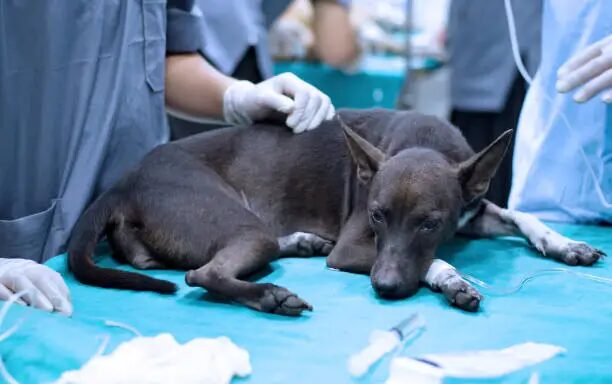
A dog intestinal blockage occurs when something prevents food, fluids, or intestinal contents from moving normally through the gastrointestinal tract. One of the most common causes is a swallowed foreign object, such as a toy, sock, bone, rock, piece of plastic, or string.
The concern is not simply whether the object will eventually pass. The bigger issue is what happens while it remains lodged.
An obstruction can cause vomiting, appetite loss, abdominal pain, dehydration, and lethargy. In severe cases, pressure on the intestinal wall can interfere with its blood supply, leading to tissue death, perforation, peritonitis, sepsis, and potentially death.
That is why understanding the dog intestinal blockage timeline is important. Unfortunately, there is no universal countdown that tells owners exactly when a blockage will become life-threatening.
A partial obstruction may produce mild or intermittent symptoms, while a complete obstruction can cause rapid deterioration. The location and type of object also matter. A piece of fabric, for example, may behave very differently from a sharp object or a length of string.
Another important point is that some dogs appear completely normal shortly after swallowing a foreign object. A lack of immediate symptoms does not prove that the object has passed safely.
If you know or strongly suspect that your dog has swallowed something potentially dangerous, contacting a veterinarian promptly is safer than waiting for severe symptoms to appear.
This guide explains the typical progression of an intestinal obstruction, early and advanced warning signs, differences between partial and complete blockages, diagnostic testing, treatment, recovery, and when an apparent digestive upset should be treated as an emergency.
Quick Answer: How Long Can a Dog Live With an Intestinal Blockage?
There is no single safe timeline for how long a dog can live with an intestinal blockage.
The outcome depends on several factors, including:
- Where the obstruction is located
- Whether it is partial or complete
- What type of object caused it
- Whether the object is sharp or linear
- Whether blood flow to the intestine is compromised
- How much the dog is vomiting
- Whether dehydration is developing
- The dog’s age and overall health
A partial obstruction may produce symptoms that come and go because some fluid or intestinal contents can still pass. A complete obstruction may prevent normal movement of food and fluids and can become serious much more quickly.
Linear foreign bodies, such as string, ribbon, yarn, or thread, can be particularly dangerous because they can become anchored while the intestines move around them. This may result in severe intestinal injury.
As an obstruction progresses, vomiting and reduced water intake can contribute to dehydration and electrolyte abnormalities. Pressure and inflammation can eventually compromise the intestinal wall. In severe cases, the intestine can perforate, allowing intestinal contents to leak into the abdominal cavity.
That can lead to peritonitis, sepsis, shock, and death.
The most important takeaway is therefore simple:
There is no reliable 24-hour or 48-hour rule that makes waiting at home safe.
If your dog may have swallowed an object capable of causing an obstruction, treat it as a veterinary problem, even if your dog currently seems comfortable.
What Is an Intestinal Blockage in Dogs?
A gastrointestinal obstruction means that something is preventing normal movement through part of the digestive tract.
The obstruction can occur in the:
- Stomach
- Small intestine
- Large intestine
The small intestine is particularly important because many swallowed objects can become lodged there.
Partial vs. Complete Obstruction
A blockage can be partial or complete.
With a partial obstruction, some material may still move past the object. This can make the condition difficult to recognize because a dog might still:
- Have bowel movements
- Pass diarrhea
- Drink some water
- Eat occasionally
- Seem normal between episodes
A complete obstruction is more concerning because food and fluid cannot move normally beyond the blockage. Vomiting, dehydration, abdominal pain, and weakness may become increasingly prominent.
However, partial does not mean harmless. A partial blockage can become complete, cause intestinal inflammation, or damage the intestinal wall.
What Causes a Blockage?
Foreign-body ingestion is a major cause of intestinal obstruction in dogs.
Common examples include:
- Toys
- Socks
- Underwear
- Fabric
- Bones
- Rocks
- Plastic
- Corn cobs
- Balls
- Rope toys
- String
- Ribbon
- Yarn
- Pieces of household objects
Dogs often investigate objects with their mouths, particularly puppies and dogs that are enthusiastic chewers or scavengers.
Some objects are more dangerous than others because of their size, shape, texture, or ability to become anchored.
Non-foreign-body causes are also possible. These can include:
- Tumors or intestinal masses
- Intussusception
- Hernias
- Intestinal twisting
- Narrowing of the gastrointestinal tract
- Severe intestinal disease
According to Cornell’s veterinary guidance, foreign-body obstruction can prevent normal passage of food and fluids and may progress to serious complications such as intestinal perforation and sepsis.
Dog Intestinal Blockage Timeline: What Happens as an Obstruction Develops?
The following stages are useful for understanding how an intestinal obstruction may progress, but they should not be interpreted as a rigid hourly schedule.
Every case is different.
Stage 1: Foreign Object Is Swallowed
The process begins when a dog swallows an object that cannot safely pass through the gastrointestinal tract.
Some small, smooth objects may eventually pass. Others become lodged in the stomach or intestine.
The risk depends on factors such as:
- Object size
- Object shape
- Object material
- Location
- Whether the object moves
- Size of the dog
- Anatomy of the gastrointestinal tract
A dog may show no obvious symptoms immediately after ingestion.
This is one reason foreign-body cases can be deceptive.
A dog that swallowed a sock at breakfast might still appear playful several hours later. That doesn’t necessarily mean the sock has passed.
Stage 2: The Object Becomes Lodged
If the object cannot move normally through the digestive tract, it may become lodged.
Depending on its location, it can interfere with:
- Movement of food
- Movement of fluids
- Normal intestinal contractions
- Passage of stool
The stomach may become irritated and distended.
If the object enters the small intestine, the risk of an actual intestinal obstruction increases.
At this stage, symptoms can still be relatively subtle.
A dog might:
- Eat less
- Drool more
- Seem restless
- Vomit once
- Become slightly quieter than usual
Because these signs can resemble an ordinary stomach upset, owners may not immediately recognize the potential seriousness.
Stage 3: Early Symptoms Develop
As the obstruction interferes with normal gastrointestinal function, signs may become more noticeable.
Common early symptoms include:
- Vomiting
- Reduced appetite
- Drooling
- Mild abdominal discomfort
- Restlessness
- Lethargy
- Changes in bowel movements
Vomiting is particularly important because it may become recurrent as food and fluid fail to move normally.
A dog may vomit:
- Recently eaten food
- Liquid
- Mucus
- Bile
- Partially digested material
The appearance of vomit alone cannot confirm an obstruction, but repeated vomiting after suspected foreign-body ingestion should be taken seriously.
Stage 4: Fluid and Electrolyte Loss
As vomiting continues, the dog begins losing fluids.
If diarrhea is also present, fluid loss may be even greater.
At the same time, a nauseated dog may drink less.
This combination can lead to:
- Dehydration
- Weakness
- Lethargy
- Dry or tacky gums
- Electrolyte abnormalities
- Reduced circulation
Dehydration isn’t simply a secondary inconvenience. It can make an already serious gastrointestinal problem harder for the body to tolerate.
A dog that repeatedly vomits and cannot retain water needs prompt veterinary assessment.
Stage 5: Increasing Intestinal Inflammation
As material accumulates around the obstruction, the intestine may become increasingly irritated and swollen.
This can contribute to:
- Increasing abdominal discomfort
- More frequent vomiting
- Loss of appetite
- Reduced intestinal movement
- Increasing lethargy
The intestinal wall may also experience increasing pressure.
At this point, the problem is no longer simply that the dog swallowed something inappropriate. The obstruction may be producing progressive physical damage.
Stage 6: Compromised Blood Supply
One of the most dangerous stages occurs when pressure and inflammation interfere with blood flow to intestinal tissue.
Without an adequate blood supply, intestinal tissue can become damaged.
This process may involve:
- Reduced circulation
- Ischemia
- Tissue injury
- Necrosis or tissue death
Once intestinal tissue becomes severely damaged, the risk of perforation increases.
This is one reason veterinarians don’t recommend simply waiting until a dog becomes extremely sick before seeking treatment.
Stage 7: Perforation and Abdominal Infection
If damaged intestinal tissue develops a hole, intestinal contents can leak into the abdominal cavity.
This can cause peritonitis, a serious inflammation and infection within the abdomen.
The infection can then spread systemically and contribute to sepsis.
At this point, a foreign-body obstruction can become a life-threatening emergency.
Treatment may require:
- Emergency surgery
- IV fluids
- Antibiotics when indicated
- Pain control
- Intensive monitoring
- Treatment for shock or organ dysfunction
Stage 8: Life-Threatening Complications
Severe untreated obstruction can ultimately result in:
- Severe dehydration
- Electrolyte disturbances
- Intestinal tissue death
- Perforation
- Peritonitis
- Sepsis
- Shock
- Organ dysfunction
- Death
The speed at which these complications develop varies considerably.
That’s why a specific statement such as “a dog can safely wait 48 hours” is misleading.
There is no universal timeline that applies to every obstruction.
How Quickly Can a Dog Develop an Intestinal Blockage?
There isn’t a reliable timetable because intestinal obstructions are highly variable.
Why There Is No Universal Timeline
The progression depends on:
- Type of foreign object
- Object size
- Object shape
- Location of obstruction
- Complete vs. partial obstruction
- Movement of the object
- Intestinal blood supply
- Dog’s size and health
- Presence of vomiting or diarrhea
A smooth object may behave differently from a sharp object.
A piece of fabric may behave differently from string.
A partial obstruction may behave differently from a complete obstruction.
Can Symptoms Appear Within Hours?
Yes.
Some dogs may develop gastrointestinal symptoms relatively soon after an obstruction begins.
Early signs can include:
- Nausea
- Drooling
- Vomiting
- Appetite loss
- Restlessness
- Abdominal discomfort
But the absence of these symptoms immediately after ingestion doesn’t establish that the object is harmless.
Can Symptoms Take a Day or More to Become Obvious?
Yes.
Some partial obstructions can produce intermittent symptoms.
The dog might:
- Eat one meal
- Refuse the next
- Vomit later
- Have a bowel movement
- Seem better temporarily
- Become sick again
This inconsistent pattern can make owners think the problem is resolving when the obstruction remains.
Can a Dog Appear Normal After Swallowing Something?
Yes.
A dog can appear perfectly normal immediately after swallowing an object.
Normal behavior doesn’t prove that:
- The object has passed
- The object is moving safely
- There is no obstruction
- Intestinal damage isn’t developing
If you witnessed your dog swallow a high-risk object, professional advice is preferable to waiting for symptoms.
Why You Shouldn’t Use a Fixed “24-Hour” or “48-Hour” Rule
One of the most common mistakes owners make is assuming that a dog is safe if symptoms don’t appear within a particular number of hours.
There is no universal 24-hour or 48-hour safety window.
For example:
- A complete obstruction may deteriorate rapidly.
- A partial obstruction may progress more gradually.
- A sharp object may injure tissue even before a complete blockage occurs.
- A linear foreign body may cause damage as the intestines move around it.
Therefore, the question shouldn’t be:
“How long can I wait?”
A better question is:
“Could my dog have swallowed something that requires veterinary evaluation?”
If the answer is yes, contacting a veterinarian early is the safer choice.
Partial vs. Complete Intestinal Blockage in Dogs
Understanding the difference between partial and complete obstruction helps explain why symptoms can be confusing.
What Is a Partial Obstruction?
A partial obstruction means that some material can still move through the gastrointestinal tract.
As a result, a dog may still:
- Pass stool
- Have diarrhea
- Drink some water
- Eat occasionally
- Appear comfortable at times
This can create a false sense of security.
A partial obstruction is still potentially serious because it can:
- Become complete
- Cause ongoing inflammation
- Produce dehydration
- Damage intestinal tissue
- Require surgery
The American Kennel Club notes that diarrhea can occur when liquefied material passes around a partial obstruction.
What Is a Complete Obstruction?
A complete obstruction prevents normal passage of gastrointestinal contents.
Potential signs include:
- Repeated vomiting
- Refusal to eat
- Abdominal pain
- Dehydration
- Weakness
- Increasing lethargy
As fluid and food accumulate above the obstruction, vomiting may become increasingly frequent.
A complete obstruction is generally considered a veterinary emergency.
Why Partial Obstruction Can Still Be Dangerous
Partial obstruction is sometimes misunderstood as a condition that can safely be watched at home.
That’s not necessarily true.
A partial blockage can change as the object moves.
For example, an object that initially allows a small amount of material through could shift and create a more complete obstruction.
It can also continue irritating the intestinal wall.
Therefore, passing stool does not automatically rule out a blockage.
Dog Intestinal Blockage Symptoms by Timeline
Rather than relying on exact hours, it can be more useful to think about symptoms in terms of early, developing, advanced, and critical signs.
| Stage | Possible Signs | Level of Concern |
|---|---|---|
| Early | Reduced appetite, drooling, mild vomiting, restlessness | Needs attention if foreign-body ingestion is suspected |
| Developing | Repeated vomiting, diarrhea, lethargy, abdominal discomfort | Veterinary evaluation recommended |
| Advanced | Persistent vomiting, dehydration, severe pain, weakness | Urgent veterinary care |
| Critical | Collapse, pale gums, severe swelling, shock, unresponsiveness | Emergency care immediately |
These stages aren’t a guaranteed sequence. A dog can deteriorate quickly or show an unusual combination of symptoms.
Early Signs of an Intestinal Blockage
Vomiting
Vomiting is one of the most common warning signs associated with gastrointestinal obstruction.
It may occur once initially and then become repeated.
Particularly concerning patterns include:
- Vomiting multiple times
- Vomiting shortly after drinking
- Vomiting food repeatedly
- Vomiting accompanied by abdominal pain
- Vomiting after known foreign-body ingestion
Loss of Appetite
A dog with gastrointestinal discomfort may lose interest in food.
Watch for:
- Refusing normal meals
- Ignoring treats
- Eating less than usual
- Approaching food but refusing to eat
Appetite loss becomes more concerning when combined with vomiting, lethargy, or abdominal pain.
Lethargy
A dog that normally wants to play but suddenly becomes unusually quiet may be experiencing significant discomfort or illness.
Possible signs include:
- Sleeping more
- Reluctance to walk
- Reduced interest in play
- Staying in one location
- Weakness
Lethargy combined with suspected foreign-body ingestion deserves veterinary attention.
Abdominal Discomfort
Dogs don’t always cry when their abdomen hurts.
Instead, they may:
- Hunch their back
- Pace
- Whine
- Avoid lying down
- Guard their abdomen
- Resist being touched
- Adopt a prayer position
A painful or tense abdomen can be an important warning sign.
Drooling
Excessive drooling can occur because of:
- Nausea
- Abdominal discomfort
- Gastrointestinal irritation
On its own, drooling has many possible causes. But when it appears alongside vomiting and suspected foreign-body ingestion, it becomes more meaningful.
Can a Dog Still Poop With an Intestinal Blockage?
Yes.
This is one of the most important things for dog owners to understand.
A dog can still defecate despite having an obstruction.
Why?
Because:
- Stool may already be present downstream from the obstruction.
- A partial obstruction may allow liquid material to pass.
- Intestinal contents may move around an incomplete blockage.
Therefore:
A bowel movement does not prove that the intestines are clear.
A dog that has passed stool but is repeatedly vomiting, refusing food, showing abdominal pain, or known to have swallowed a foreign object may still require veterinary evaluation.
Dog Intestinal Blockage and Vomiting
Vomiting occurs because normal movement through the gastrointestinal tract has been disrupted.
As food and fluid accumulate or the intestinal tract becomes irritated, nausea and vomiting can develop.
What May Appear in the Vomit?
Depending on the stage and location, vomit may contain:
- Food
- Water or fluid
- Mucus
- Bile
- Partially digested material
- Blood in serious cases
The frequency of vomiting is often more important than color alone.
Repeated vomiting can quickly contribute to dehydration.
Vomiting Without Diarrhea
A dog doesn’t need to have diarrhea to have an intestinal blockage.
Some dogs with obstruction primarily develop:
- Vomiting
- Appetite loss
- Abdominal pain
- Lethargy
The absence of diarrhea therefore does not rule out obstruction.
Dog Intestinal Blockage and Diarrhea
Diarrhea may seem contradictory when the intestine is blocked.
However, it can occur, particularly with partial obstruction.
Liquid intestinal contents may pass around the obstruction, while solid material cannot move normally.
Diarrhea can therefore occur alongside:
- Vomiting
- Appetite loss
- Abdominal pain
- Lethargy
Diarrhea does not prove that an obstruction isn’t present.
Dog Intestinal Blockage and Abdominal Pain
Abdominal pain is an important warning sign because an obstruction can cause intestinal stretching, inflammation, and tissue injury.
Signs of Abdominal Pain
Look for:
- Hunched posture
- Restlessness
- Whining
- Pacing
- Guarding the belly
- Avoiding touch
- Difficulty getting comfortable
- Prayer position
Some dogs may become unusually quiet rather than vocal.
If abdominal pain becomes severe—especially alongside repeated vomiting or a swollen abdomen—seek urgent veterinary care.
Dog Intestinal Blockage and Dehydration
Why Dehydration Develops
Several processes can contribute:
- Repeated vomiting
- Diarrhea
- Reduced drinking
- Fluid accumulation within the gastrointestinal tract
- Reduced ability to absorb fluids normally
As dehydration worsens, a dog may become increasingly weak.
Signs of Dehydration
Possible signs include:
- Dry or tacky gums
- Lethargy
- Weakness
- Reduced skin elasticity
- Reduced appetite
- Sunken-looking eyes in severe cases
Electrolyte abnormalities can also develop.
These may involve changes in:
- Sodium
- Potassium
- Acid-base balance
Dehydration can make an obstruction more dangerous and may require IV fluid therapy in moderate or severe cases.
Linear Foreign Bodies: Why String Can Be Especially Dangerous
A linear foreign body is a long, thin object that can become anchored in one part of the gastrointestinal tract while the intestines continue moving.
Examples include:
- String
- Ribbon
- Yarn
- Thread
- Rope
- Carpet fibers
These objects are particularly concerning because the intestine can bunch up around the material.
The resulting movement and tension can injure the intestinal wall.
What You Should Never Do
If you see string coming from your dog’s mouth or anus:
Do not pull it.
Pulling a linear foreign body can potentially worsen intestinal injury.
Instead, contact a veterinarian immediately.
Common Objects That Cause Dog Intestinal Blockages
Dogs can swallow surprisingly diverse objects.
Household Objects
- Socks
- Underwear
- Towels
- Children’s toys
- Plastic objects
- Small household items
- Batteries
Outdoor Objects
- Rocks
- Sticks
- Corn cobs
- Plant material
Food-Related Objects
- Bones
- Fruit pits
- Large food pieces
Pet Products
- Rope toys
- Chewed toy fragments
- Balls
- Rubber pieces
The danger isn’t necessarily related to whether an object looks large to a person. A foreign object can become lodged depending on the dog’s size and gastrointestinal anatomy.
What Happens If a Dog Swallows a Foreign Object?
There are several possible outcomes.
The Object Passes Naturally
Some objects may pass without intervention.
However, this should not be assumed without considering:
- Object size
- Shape
- Material
- Dog size
- Symptoms
- Location
A veterinarian may recommend monitoring in selected circumstances.
The Object Remains in the Stomach
Some objects become trapped in the stomach.
Depending on the object and circumstances, a veterinarian may sometimes retrieve it using endoscopy rather than abdominal surgery.
The Object Enters the Small Intestine
The small intestine is a common location for clinically significant obstruction.
At this point, the object may:
- Block passage
- Cause inflammation
- Stretch the intestinal wall
- Interfere with blood flow
- Require surgical removal
The Object Causes Intestinal Injury
A severe obstruction can progress to:
Inflammation → ischemia → tissue damage → necrosis → perforation
Once intestinal contents leak into the abdomen, the risk of peritonitis and sepsis increases substantially.
The Object Causes Systemic Complications
Advanced obstruction can ultimately affect the entire body.
Potential complications include:
- Severe dehydration
- Electrolyte abnormalities
- Infection
- Sepsis
- Shock
- Organ dysfunction
This is why early veterinary assessment is so important.
When Should You Take a Dog to the Vet for a Suspected Blockage?
If you know your dog swallowed a potentially obstructive object, contact your veterinarian promptly, even if the dog currently appears normal.
Particularly concerning objects include those that are:
- Sharp
- Large
- String-like
- Long
- Potentially expandable
- Difficult to digest
- Potentially toxic
Seek urgent veterinary care if symptoms develop, including:
- Repeated vomiting
- Refusal to eat
- Abdominal pain
- Lethargy
- Dehydration
- Significant diarrhea
Go to an emergency veterinary hospital immediately for signs such as:
- Collapse
- Severe abdominal swelling
- Pale or white gums
- Repeated unproductive retching
- Severe weakness
- Difficulty breathing
- Unresponsiveness
The safest approach is not to wait until the condition becomes critical.
How Veterinarians Diagnose an Intestinal Blockage
When a veterinarian suspects an intestinal obstruction, the goal is to determine whether a blockage exists, where it is located, what caused it, and whether the intestine has already been damaged.
There is no single test that detects every foreign body.
Instead, veterinarians usually combine the dog’s history, physical examination, laboratory tests, and abdominal imaging.
Medical History
Your veterinarian may ask:
- What did your dog swallow?
- When might the ingestion have happened?
- How large was the object?
- What material was it made from?
- Has your dog vomited?
- How many times?
- Is your dog still eating?
- Is your dog drinking?
- Is your dog passing stool?
- Has diarrhea developed?
- Could your dog have eaten anything else unusual?
- What medications does your dog currently take?
If possible, bring an identical object, product packaging, or a photograph of the item your dog may have swallowed.
The more accurately the veterinarian understands the situation, the easier it may be to determine the appropriate next step.
Physical Examination
A physical examination helps the veterinarian evaluate how sick the dog currently is.
The examination may include checking:
- Hydration status
- Heart rate
- Respiratory rate
- Body temperature
- Gum color
- Abdominal discomfort
- Abdominal distension
- Intestinal sounds
- Overall alertness
- Body condition
The veterinarian may gently palpate the abdomen to look for pain, abnormal firmness, swelling, or other abnormalities.
However, a normal-feeling abdomen does not automatically rule out an obstruction.
Some foreign bodies are difficult to detect by physical examination alone.
Blood Tests for Dog Intestinal Blockage
Blood work doesn’t necessarily identify the object itself, but it can help determine how the dog’s body is responding.
Depending on the situation, testing may evaluate:
- Hydration
- Electrolytes
- Blood glucose
- Kidney function
- Liver function
- Red and white blood cells
- Signs of inflammation
- Acid-base abnormalities
Blood tests are especially valuable when a dog has been vomiting repeatedly or appears dehydrated.
They can also help veterinarians determine whether a dog is stable enough for anesthesia or surgery.
Abdominal X-Rays
Abdominal radiographs are commonly used when intestinal obstruction is suspected.
X-rays may show:
- Abnormally dilated intestinal loops
- Unusual gas patterns
- Accumulation of fluid or gas
- Some foreign objects
- Changes suggesting obstruction
- Abnormal intestinal positioning
Certain objects are easy to see on an X-ray because they are radiopaque.
Others are much harder to identify directly.
Can an X-Ray Miss a Dog Intestinal Blockage?
Yes.
Objects made from materials such as some types of:
- Fabric
- Plastic
- Rubber
- String
may not be clearly visible on a standard radiograph.
That doesn’t mean the X-ray is useless.
Veterinarians can sometimes identify secondary changes caused by the obstruction, even when the object itself cannot be seen.
If suspicion remains high, additional imaging may be recommended.
Abdominal Ultrasound
An abdominal ultrasound can provide information that isn’t always available from X-rays.
It may help evaluate:
- Intestinal wall thickness
- Intestinal movement
- Foreign material
- Abnormal intestinal contents
- Fluid accumulation
- Pancreas
- Liver
- Lymph nodes
- Other abdominal structures
Ultrasound can be particularly useful when a suspected foreign body is difficult to see on radiographs.
Cornell’s veterinary guidance notes that diagnosis of gastrointestinal foreign bodies can involve the history, physical examination, blood work, and abdominal imaging.
Endoscopy for Dog Intestinal Blockage
In selected cases, an object may still be accessible within the stomach or upper gastrointestinal tract.
A veterinarian may use endoscopy to locate and retrieve the foreign body.
This procedure involves passing a specialized camera through the gastrointestinal tract while the dog is under anesthesia.
Endoscopy can sometimes avoid abdominal surgery.
However, it isn’t appropriate for every obstruction.
For example, an object that has moved deep into the small intestine may not be reachable with an endoscope.
Exploratory Surgery
When an obstruction cannot be safely removed through other methods—or when intestinal damage is suspected—surgery may be necessary.
During exploratory abdominal surgery, the veterinary team can:
- Open the abdomen.
- Examine the gastrointestinal tract.
- Locate the obstruction.
- Remove the foreign material.
- Evaluate intestinal tissue.
- Remove severely damaged sections when necessary.
- Reconnect healthy intestinal segments.
Surgery becomes particularly important when there is evidence of:
- Complete obstruction
- Intestinal perforation
- Tissue death
- Severe intestinal compromise
- A foreign body that cannot be removed safely through other methods
Dog Intestinal Blockage X-Ray: What Vets Look For
An X-ray isn’t simply a search for the swallowed object.
Veterinarians also evaluate the pattern of gas and fluid inside the gastrointestinal tract.
They may look for:
Abnormal Intestinal Gas
Certain patterns can suggest that intestinal contents aren’t moving normally.
Dilated Bowel Loops
Sections of intestine may become enlarged when material accumulates behind an obstruction.
Foreign Material
Some objects are directly visible.
Obstructive Patterns
Even when the object isn’t visible, the arrangement of gas-filled intestinal loops may provide evidence of obstruction.
Abnormal Positioning
Changes in the normal location or appearance of intestinal structures can provide additional clues.
Because not every foreign object appears clearly on radiographs, the veterinarian may recommend ultrasound or additional imaging when necessary.
Treatment for Dog Intestinal Blockage
Treatment depends on several factors:
- Location of the obstruction
- Type of object
- Size of the object
- Whether the obstruction is complete
- Duration of the problem
- Degree of dehydration
- Intestinal blood supply
- Presence of perforation
- Overall condition of the dog
There is no universal treatment for every case.
Veterinary Monitoring
In carefully selected cases, a veterinarian may recommend close monitoring rather than immediate surgery.
This isn’t the same as simply waiting at home.
Veterinary monitoring may involve:
- Repeat examinations
- Imaging
- Monitoring appetite
- Monitoring vomiting
- Checking hydration
- Tracking movement of the object
If the object doesn’t progress safely—or the dog’s condition deteriorates—intervention may become necessary.
Endoscopic Removal
If the foreign body remains in an accessible location, endoscopic retrieval may be possible.
Potential advantages include:
- No abdominal incision
- Less invasive than open surgery
- Potentially shorter recovery
However, the method depends heavily on where the object is located.
Surgical Removal
Surgery may be necessary when the object has caused a significant intestinal obstruction.
A veterinarian may perform an enterotomy, which involves opening the intestine to remove the foreign material.
If the intestine has become severely damaged, a section may need to be removed.
This procedure is called intestinal resection and anastomosis.
The damaged section is removed, and the healthy ends of the intestine are reconnected.
Supportive Treatment for Intestinal Obstruction
Regardless of whether an obstruction eventually requires surgery, supportive care may be important.
Treatment can include:
- IV fluids
- Electrolyte correction
- Pain management
- Anti-nausea medication when appropriate
- Nutritional support
- Monitoring of vital signs
- Postoperative care
Dogs that are severely dehydrated may need intravenous fluid therapy before anesthesia or surgery.
Stabilizing the patient can be an important part of preparing for definitive treatment.
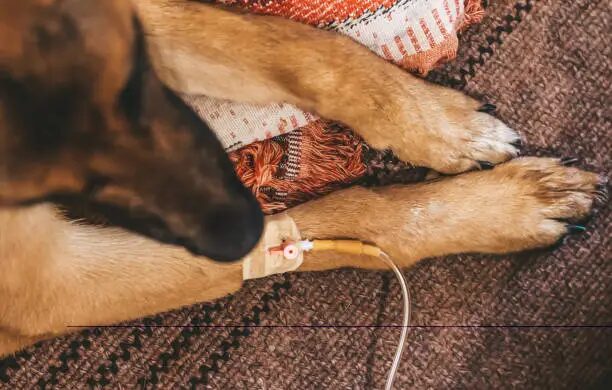
Dog Intestinal Blockage Surgery Timeline
If surgery is necessary, treatment generally involves several stages.
Before Surgery
The veterinary team may first:
- Assess hydration
- Perform blood tests
- Take abdominal X-rays
- Perform an ultrasound if needed
- Start IV fluids
- Control pain and nausea
- Assess anesthesia risk
The exact sequence depends on how stable the dog is.
A critically ill dog may require rapid stabilization while the veterinary team prepares for emergency intervention.
During Surgery
The veterinarian examines the abdominal cavity and identifies the obstruction.
The surgical process may involve:
- Locating the foreign object
- Examining the surrounding intestine
- Removing the object
- Assessing tissue viability
- Repairing the intestine
- Removing severely damaged tissue when necessary
The condition of the intestinal wall is particularly important.
Healthy tissue is generally better able to heal after surgery than severely compromised tissue.
If the Intestine Is Damaged
If a section of intestine has lost its blood supply or developed severe tissue damage, simply removing the foreign object may not be enough.
The unhealthy section may need to be removed.
The veterinarian then reconnects the healthy portions of intestine.
This is why early diagnosis can matter so much.
An obstruction detected before significant tissue damage may have a different treatment course from an obstruction complicated by intestinal necrosis or perforation.
Dog Intestinal Blockage Recovery Timeline
Recovery depends heavily on:
- Type of obstruction
- Treatment method
- Duration of obstruction
- Degree of intestinal damage
- Whether surgery was required
- Presence of infection or peritonitis
- Overall health of the dog
There is no single recovery schedule that applies to every dog.
First 24 Hours After Treatment
The first day after treatment is often focused on close monitoring.
Veterinary teams may watch:
- Vomiting
- Appetite
- Abdominal pain
- Hydration
- Heart rate
- Temperature
- Intestinal function
- Surgical incision when applicable
Pain control and fluid therapy may continue.
Some dogs may not immediately return to their normal appetite.
First Few Days
During the following days, the veterinary team may gradually adjust:
- Food intake
- Fluid therapy
- Medication
- Activity
- Pain management
After surgery, the incision should be monitored carefully.
Owners may be instructed to prevent:
- Excessive running
- Jumping
- Rough play
- Licking or chewing at the incision
The exact instructions depend on the procedure and the veterinarian’s recommendations.
Following Weeks
Once the dog is stable, activity is usually increased gradually.
Follow-up appointments may be recommended to evaluate:
- Healing
- Appetite
- Weight
- Stool quality
- Incision
- Overall recovery
Owners should continue watching for changes rather than assuming that the danger has completely disappeared immediately after discharge.
Signs That Recovery May Not Be Going Normally
Contact your veterinarian if a dog recovering from obstruction treatment develops:
- Persistent vomiting
- Refusal to eat
- Increasing abdominal pain
- Severe lethargy
- Fever
- Weakness
- Abdominal swelling
- Surgical incision swelling
- Discharge from the incision
- Sudden deterioration
After intestinal surgery, new or worsening symptoms deserve prompt attention.
Can a Dog Intestinal Blockage Resolve on Its Own?
Sometimes a foreign object may pass naturally.
But owners should never assume that every swallowed object will pass safely.
Whether an object can pass depends on factors such as:
- Its size
- Shape
- Material
- Location
- Dog’s size
- Whether the obstruction is partial
- Whether symptoms are present
A veterinarian may recommend monitoring in selected cases after evaluating the object and the dog’s condition.
Why Owners Shouldn’t Assume It Will Pass
Objects can:
- Become lodged
- Shift position
- Cause a complete obstruction
- Damage intestinal tissue
- Trigger inflammation
- Cause perforation
A dog that initially looks fine may become sick later.
This is why veterinary guidance is preferable to an informal “wait and see” approach.
Can You Treat a Dog Intestinal Blockage at Home?
A suspected intestinal obstruction is not a condition that should be treated with home remedies.
Do not attempt to:
- Force food
- Force water
- Give laxatives
- Give human medications
- Massage the abdomen
- Pull visible string
- Induce vomiting without veterinary instructions
- Wait several days hoping the object passes
Home treatment cannot determine whether the intestine is already damaged.
It also cannot reliably establish whether an object is moving safely through the digestive tract.
If a blockage is suspected, professional assessment is the safest course.
What Not to Do If Your Dog Swallowed Something
Don’t Assume It Will Pass
Even if the object seems small, its shape and location can make a major difference.
Don’t Wait for Vomiting
Some dogs may not immediately vomit.
Waiting for symptoms can delay diagnosis.
Don’t Pull Visible String
If string or another linear foreign body is visible, do not pull it.
Contact a veterinarian immediately.
Don’t Give Laxatives
Laxatives aren’t a reliable solution to a mechanical obstruction and may be inappropriate or dangerous.
Don’t Give Random Medications
Human medications can cause additional problems and may interfere with veterinary treatment.
Don’t Force Food or Water
A dog with an obstruction may vomit after consuming food or water.
Follow your veterinarian’s instructions about feeding and hydration.
Don’t Induce Vomiting Without Professional Guidance
Inducing vomiting is not appropriate for every swallowed object.
Sharp objects, corrosive substances, and certain other materials can cause additional injury when brought back through the esophagus.
Dog Intestinal Blockage vs. Stomach Upset
A simple digestive upset and an intestinal obstruction can sometimes look similar at first.
| Feature | Simple Stomach Upset | Possible Intestinal Blockage |
|---|---|---|
| Vomiting | May occur | Often repeated |
| Diarrhea | Common | Can occur, especially with partial obstruction |
| Appetite | May temporarily decrease | Often significantly reduced |
| Abdominal pain | Usually mild or absent | May be significant |
| Foreign-body history | Usually absent | May be present |
| Lethargy | Usually mild | Can become pronounced |
| Dehydration | Possible | Common with ongoing vomiting |
| Progression | Often improves | Can worsen |
| Treatment | May be supportive | May require endoscopy or surgery |
This table is useful for understanding patterns, but it cannot diagnose an obstruction.
A dog with repeated vomiting and a known history of swallowing a foreign object should be assessed by a veterinarian even if some symptoms resemble an ordinary stomach upset.
Dog Intestinal Blockage Timeline: Key Warning Signs
A suspected obstruction should move from simple concern to veterinary assessment when symptoms begin to develop.
Watch carefully for:
- Repeated vomiting
- Loss of appetite
- Abdominal pain
- Lethargy
- Dehydration
- Diarrhea combined with other symptoms
- Blood in vomit or stool
- Abdominal swelling
- Repeated unproductive retching
- Known foreign-body ingestion
A dog does not need to show every symptom before an obstruction becomes serious.
Puppies and Intestinal Blockages
Puppies are especially prone to swallowing objects because they explore their environment with their mouths.
Why Puppies Are at Higher Risk
Puppies commonly:
- Chew household objects
- Destroy toys
- Investigate unfamiliar items
- Swallow pieces of fabric
- Pick up rocks and other outdoor objects
Their smaller size can also make certain objects more likely to cause obstruction.
Common Puppy Foreign Bodies
Examples include:
- Socks
- Toy pieces
- Plastic
- Rocks
- Fabric
- Small balls
A puppy may swallow an object before an owner realizes what happened.
Warning Signs in Puppies
Pay close attention to:
- Vomiting
- Diarrhea
- Loss of appetite
- Lethargy
- Weakness
- Abdominal discomfort
- Drooling
A vomiting puppy with suspected foreign-body ingestion deserves prompt veterinary assessment.
Puppies can also become dehydrated or weak quickly, so waiting for symptoms to become severe is particularly risky.
Senior Dogs and Intestinal Obstruction
Older dogs can develop foreign-body obstructions, but veterinarians may also need to consider other causes of gastrointestinal symptoms.
These can include:
- Masses or tumors
- Chronic intestinal disease
- Hernias
- Motility disorders
- Other gastrointestinal conditions
Persistent vomiting, appetite loss, weight loss, or diarrhea in a senior dog should therefore not automatically be blamed on something the dog ate.
A veterinarian may recommend diagnostic testing to determine the underlying cause.
Dog Breeds and Blockage Risk
Any breed can develop an intestinal blockage.
Risk is often more closely associated with individual behavior than breed alone.
Dogs that are particularly enthusiastic chewers or scavengers may be more likely to swallow:
- Fabric
- Toys
- Plastic
- Rocks
- Bones
- Other inappropriate objects
Brachycephalic Dogs
Brachycephalic breeds include:
- Pugs
- French Bulldogs
- English Bulldogs
- Boston Terriers
These dogs can have additional airway considerations, particularly when vomiting, being anesthetized, or recovering from a procedure.
That makes professional management especially important when an obstruction is suspected.
Preventing Intestinal Blockages in Dogs
Prevention is one of the easiest ways to reduce the risk of a dangerous foreign-body emergency.
Choose Durable Toys
Select toys appropriate for your dog’s:
- Size
- Chewing strength
- Age
- Playing style
Inspect toys regularly and replace those that begin breaking apart.
Supervise Chewing
Puppies and aggressive chewers should be supervised when using toys, treats, bones, or other chew items.
Don’t assume that a product marketed as a dog toy is impossible to destroy.
Secure Household Objects
Keep potential foreign bodies out of reach, including:
- Socks
- Underwear
- Children’s toys
- Small plastic objects
- Craft materials
- Batteries
- String
- Sewing supplies
Laundry baskets with secure lids can help prevent dogs from stealing clothing.
Keep Trash Inaccessible
Trash cans can contain an enormous variety of dangerous materials.
Use secure containers and avoid leaving garbage where your dog can reach it.
Avoid Dangerous Bones
Some bones can splinter, become lodged, or cause gastrointestinal injury.
Discuss appropriate chew options with your veterinarian rather than assuming that every bone is safe.
Teach a Reliable “Leave It” Cue
Training your dog to drop or leave an object can prevent many accidental ingestions.
A reliable “leave it” command can be particularly useful outdoors, where dogs may encounter:
- Rocks
- Sticks
- Trash
- Animal remains
- Toxic substances
Supervise Outdoor Exploration
Dogs that scavenge should be watched carefully during walks and outdoor play.
Prevent access to potentially dangerous objects before they reach your dog’s mouth.
Dog Intestinal Blockage Emergency Checklist
If you think your dog swallowed something that could cause an obstruction:
- Remove access to the remaining object.
- Identify exactly what your dog swallowed.
- Estimate the object’s size and material.
- Note approximately when ingestion occurred.
- Contact your veterinarian promptly.
- Bring packaging, photographs, or an identical object when possible.
- Do not pull visible string or fabric.
- Do not give laxatives or random medications.
- Do not induce vomiting unless a veterinarian specifically tells you to do so.
- Follow instructions about food and water.
- Seek emergency care if severe symptoms develop.
The Most Important Rule
Don’t wait for your dog to become critically ill before seeking help.
A suspected obstruction is much easier to manage before severe dehydration, intestinal damage, perforation, or sepsis develops.
Frequently Asked Questions
How long does it take for a dog intestinal blockage to become serious?
There is no universal timeline. A complete obstruction, compromised blood supply, or dangerous foreign body can become serious rapidly, while some partial obstructions may produce intermittent symptoms. Any suspected obstruction deserves prompt veterinary assessment.
How long can a dog survive with an intestinal blockage?
There is no safe survival period that owners should use as a waiting guideline. Untreated obstruction can progress to dehydration, intestinal tissue damage, perforation, peritonitis, sepsis, shock, and death.
Can a dog have a blockage and still poop?
Yes. Partial obstructions can allow some material to pass, and stool already beyond the obstruction may still be eliminated.
Can a dog have diarrhea with an intestinal blockage?
Yes. Diarrhea can occur with partial obstruction and intestinal irritation.
Will a dog with a blockage always vomit?
No. Symptoms depend on the obstruction’s location, severity, and progression.
Can a dog pass a foreign object naturally?
Some objects may pass naturally, but owners should not assume this will happen. The size, shape, location, and material of the object all matter.
What is one of the first signs of an intestinal blockage?
Vomiting is a common warning sign, but appetite loss, drooling, lethargy, abdominal discomfort, and diarrhea may also occur.
What happens if an intestinal blockage is left untreated?
An untreated obstruction can cause dehydration, inflammation, compromised blood supply, tissue death, intestinal perforation, peritonitis, sepsis, shock, and potentially death.
Can a partial blockage become complete?
Yes. A partial obstruction can change position or worsen and eventually prevent normal passage.
Can a dog with a blockage still drink water?
Yes, a dog may continue drinking. However, if the dog repeatedly vomits after drinking, dehydration can quickly become a concern.
Should I wait 24 hours before calling a veterinarian?
No. There is no universal 24-hour safety rule. If a potentially obstructive object was swallowed, contact a veterinarian promptly.
Is surgery always required?
No. Some objects may be removed through endoscopy, and selected cases may be monitored under veterinary supervision. However, confirmed obstructions that cannot pass safely may require surgery.
Can an X-ray miss an intestinal blockage?
Yes. Some foreign materials are difficult to see directly on radiographs. Ultrasound and other diagnostic methods may provide additional information.
What should I do if I see string coming out of my dog’s mouth?
Do not pull it. Contact a veterinarian immediately because pulling a linear foreign body can potentially worsen internal intestinal damage.
Final Verdict: Understanding the Dog Intestinal Blockage Timeline
The dog intestinal blockage timeline is not a predictable countdown.
A dog may swallow a toy, sock, piece of plastic, bone, rock, or string and initially seem completely normal. Later, vomiting, appetite loss, diarrhea, abdominal pain, dehydration, and lethargy may develop.
In severe cases, intestinal blood flow can become compromised. Damaged tissue can eventually perforate, allowing intestinal contents to enter the abdominal cavity and potentially causing peritonitis and sepsis.
The most important lesson is simple:
Do not wait for severe symptoms before seeking veterinary advice when an obstruction is suspected.
Key Takeaways
- There is no single timeline for every intestinal blockage.
- Complete and partial obstructions can behave differently.
- A dog may still poop despite having an obstruction.
- Diarrhea does not rule out a blockage.
- Repeated vomiting is an important warning sign.
- Abdominal pain, lethargy, appetite loss, and dehydration increase concern.
- Linear foreign bodies such as string can cause severe intestinal injury.
- Untreated obstruction can lead to perforation, peritonitis, sepsis, and death.
- X-rays may not identify every foreign object.
- Ultrasound, endoscopy, or surgery may be necessary.
- Do not pull visible string.
- Do not give laxatives or home remedies for a suspected obstruction.
- Prompt veterinary assessment gives your dog the best opportunity for appropriate treatment.
Conclusion
A dog intestinal blockage can change from a seemingly minor problem into a life-threatening emergency, and there is no reliable clock that tells owners when that transition will occur.
Some dogs develop obvious symptoms quickly. Others, particularly those with partial obstructions, may continue eating, drinking, or passing stool for a while. That can create a false sense of security.
If your dog may have swallowed a sock, toy, bone, piece of plastic, rock, string, or another potentially dangerous object, contact your veterinarian promptly rather than waiting to see what happens.
Pay close attention to repeated vomiting, appetite loss, abdominal pain, lethargy, dehydration, diarrhea, bloating, or behavioral changes. Emergency signs such as collapse, pale gums, severe abdominal swelling, repeated unproductive retching, or profound weakness require immediate veterinary care.
Most importantly, don’t rely on a normal bowel movement or the absence of early symptoms as proof that the object has passed. A partial obstruction can still be dangerous, and a foreign body can move into a position where intestinal damage becomes much more serious.