The Australian Kelpie dog is not your average couch companion. Bred to work livestock across the demanding Australian landscape, this medium-sized herding dog is known for its intelligence, stamina, agility, loyalty, and almost endless energy.
A Kelpie can spend hours working alongside a farmer, solving problems and responding to subtle movements from sheep. Yet, after a productive day, many Kelpies are perfectly happy to settle down with their families. That combination of a powerful work ethic and a strong bond with people is one reason the breed has remained popular among farmers, active dog owners, and canine sports enthusiasts.
The breed’s history is closely connected with Australia’s sheep industry. Kelpies developed from working dogs with Scottish Collie-type ancestry and were selected for their ability to handle livestock in large, challenging areas. Their physical structure, weather-resistant coat, and sharp instincts all reflect that original purpose.
But there is an important point prospective owners should understand: an Australian Kelpie needs more than a daily walk around the block. This is a dog that thrives when its body and brain are both kept busy. Without enough exercise, training, and mental stimulation, a bored Kelpie may invent its own entertainment—and that can include chasing, barking, digging, chewing, or trying to herd everyone in the household.
So, is the Australian Kelpie a good family dog? Can it live in a house or apartment? How much exercise does it really need? What is its temperament like, and how difficult is it to train?
This guide answers those questions and explores the Australian Kelpie’s history, appearance, size, colors, temperament, exercise requirements, training, grooming, nutrition, health, working ability, and overall suitability as a companion.
Quick Facts About the Australian Kelpie
| Trait | Australian Kelpie |
|---|---|
| Breed Name | Australian Kelpie |
| Origin | Australia |
| Breed Type | Herding / Working |
| Size | Medium |
| Height | About 17–20 inches |
| Weight | Commonly around 35–50 pounds, depending on sex and build |
| Lifespan | Often around 10–13 years |
| Coat | Short, weather-resistant double coat |
| Energy Level | Very high |
| Intelligence | Very high |
| Temperament | Alert, loyal, energetic, intelligent |
| Grooming Needs | Low to moderate |
| Exercise Needs | Very high |
| Training | Highly trainable |
| Best For | Active owners, working homes, experienced dog owners |
The Australian Kelpie breed standard describes the dog as lithe, active, muscular, highly intelligent, alert, energetic, loyal, and devoted to work. Dogs Australia lists males at approximately 18–20 inches and females at approximately 17–19 inches at the withers.
Individual Kelpies can naturally vary, particularly between dogs bred primarily for work and those bred for conformation. For that reason, a single number should not be treated as a perfect prediction for every Australian Kelpie.
What Is an Australian Kelpie?
Australian Kelpie Breed Overview
The Australian Kelpie is a medium-sized Australian herding dog developed primarily for working livestock. It is athletic without appearing bulky, with a body designed for efficient movement rather than brute strength.
The breed is particularly impressive when working at speed. A Kelpie can change direction quickly, cover substantial distances, and remain focused on livestock for long periods.
Its physical abilities are matched by a sharp mind. Kelpies are often quick to learn patterns, understand routines, respond to commands, and make decisions independently when working stock.
That independence is part of what makes them excellent working dogs—and one reason they can be challenging for inexperienced owners.
A Kelpie does not simply want to be told what to do all day. It was developed to think while working.
Is the Australian Kelpie a Herding Dog?
Yes. The Australian Kelpie is fundamentally a herding dog.
Its natural aptitude for working sheep is one of the defining characteristics of the breed. The Dogs Australia standard specifically describes the Kelpie as having a natural instinct and ability to work sheep in both open country and enclosed yards.
This instinct can appear in a family environment too.
A Kelpie may attempt to:
- Follow moving children
- Chase running pets
- Circle other dogs
- Stare intensely at moving objects
- Nip at heels
- Control the movement of household members
- Chase bicycles, joggers, or vehicles
Not every Kelpie will display all of these behaviors, but owners should understand that herding is part of the breed’s genetic heritage.
What Was the Australian Kelpie Bred For?
The Australian Kelpie was developed to help farmers manage sheep over large areas of land.
Australia’s early sheep properties could cover enormous distances, creating a need for dogs that could work independently, tolerate difficult weather, and keep going long after many companion breeds would have become tired.
The Kelpie’s combination of stamina, agility, intelligence, and heat tolerance made it particularly valuable.
Instead of simply staying beside a handler, the dog needed to move livestock efficiently, sometimes with considerable freedom to make its own working decisions.
Why Are Australian Kelpies Considered Working Dogs?
The answer is in their entire design.
The Kelpie’s body, movement, coat, temperament, and intelligence all support its original job. The official breed standard describes a dog capable of untiring work, with strong muscular condition and supple movement.
A working dog also needs more than physical strength. It needs concentration.
Australian Kelpies are expected to watch livestock, react to changes, follow direction, and sometimes solve problems without constant human guidance. This is why simply providing a large yard is not always enough.
A Kelpie may have plenty of room to run and still become bored if there is nothing meaningful to do.
Australian Kelpie Intelligence and Working Ability
Few characteristics define the Australian Kelpie better than its intelligence.
The breed is capable of learning commands quickly, but its intelligence goes beyond obedience. Kelpies were selected for practical problem-solving in real working environments.
That means owners should provide opportunities to think, learn, explore, and make appropriate choices.
Activities such as obedience, agility, scent games, trick training, herding work, and interactive play can help satisfy this mental need.
The AKC describes the breed as extremely intelligent, alert, eager, and capable of sustained work. It also emphasizes that Kelpies benefit from both physical exercise and mental challenges.
Australian Kelpie History and Origin
Where Did the Australian Kelpie Originate?
As the name suggests, the Australian Kelpie originated in Australia.
The breed developed during a period when Australia’s sheep industry was expanding rapidly. Farmers needed dependable dogs that could manage livestock across vast properties, including areas with heat, dust, rough terrain, and limited shade.
The Kelpie was particularly associated with sheep farming in New South Wales and Victoria, where large-scale pastoral operations created an enormous demand for capable working dogs.
When Was the Australian Kelpie Developed?
The development of the Australian Kelpie dates back to approximately the late 19th century, with the breed’s origins commonly traced to around 1870.
Rather than appearing overnight as a completely new breed, the Kelpie developed through generations of selection. Dogs with the right combination of stamina, intelligence, working instinct, and adaptability were valued and bred for future generations.
Over time, these dogs became increasingly specialized for Australian conditions.
Scottish Roots of the Australian Kelpie
The Australian Kelpie has roots in Scottish working Collie-type dogs.
Early dogs brought to Australia from Scotland provided some of the foundation for the breed. Australian breeders then selected dogs that could handle the country’s unique environment and livestock-working demands.
This history helps explain why the Kelpie shares certain characteristics with other British and Scottish herding breeds while also possessing a distinct Australian identity.
The AKC notes that the breed originated from Collie-type dogs imported from Scotland and was subsequently developed to cope with Australia’s harsh heat and dry conditions.
How Kelpies Adapted to Australia’s Harsh Climate
Australia presented working dogs with a completely different set of challenges from the environments where their ancestors originated.
A useful working dog needed to tolerate:
- High temperatures
- Dry conditions
- Dust
- Long distances
- Rough terrain
- Extended periods of activity
- Large livestock properties
The Kelpie’s short, dense, weather-resistant double coat helped protect it from the elements, while its lean, muscular build allowed efficient movement.
Its greatest advantage, however, may have been its ability to keep working without losing focus.
The Australian Kelpie’s Role in Sheep Farming
Kelpies became closely associated with Australia’s sheep and wool industries.
On large properties, moving sheep could be an enormous task. A capable dog could reduce the amount of human effort required while helping farmers move and control livestock more efficiently.
Kelpies were useful in both open country and yards, giving them versatility that was highly valuable to farmers.
Their natural herding ability also allowed them to work at a distance from their handler, an especially useful trait when livestock were spread across large areas.
How Australian Kelpies Became Famous Working Dogs
The Kelpie earned its reputation through performance rather than appearance alone.
A dog that could work hard, think independently, respond to its handler, and remain physically sound had enormous practical value.
Generation after generation, breeders selected for those qualities. As a result, the Australian Kelpie became one of Australia’s best-known working breeds.
Today, Kelpies can still be found performing livestock work, while others participate in agility, obedience, rally, herding trials, and other canine activities.
Australian Kelpie History in Modern Australia
Modern Australian Kelpies continue to represent the connection between dogs and Australia’s agricultural heritage.
At the same time, the breed has become increasingly familiar outside farms. Active families and dog-sport enthusiasts appreciate its athletic ability and trainability.
However, bringing a Kelpie into a suburban home does not remove its working instincts.
A companion Kelpie still carries the same genetic heritage. The difference is that its “job” may now be hiking, running, training, agility, scent work, obedience, or interactive games rather than moving sheep.
Australian Kelpie Appearance
What Does an Australian Kelpie Look Like?
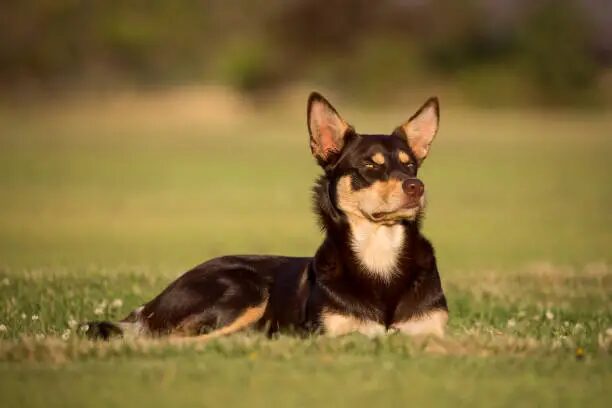
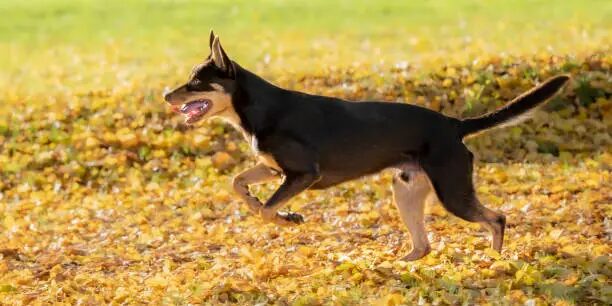
The Australian Kelpie is a medium-sized, athletic, agile dog with a lean but muscular appearance.
It should look capable rather than heavy.
The breed standard emphasizes a lithe body, strong muscles, supple limbs, and movement that allows the dog to work tirelessly.
A healthy Kelpie generally has:
- A proportionate head
- Alert, almond-shaped eyes
- Upright ears
- A deep chest
- Strong loins
- Muscular hindquarters
- Compact feet
- A brush-like tail
- A short, weather-resistant double coat
The overall impression should be one of speed, endurance, and functional athleticism.
Australian Kelpie Body Structure
The Kelpie’s body is built for movement.
Its chest is deep rather than excessively broad, while its topline should remain firm and level. Strong loins and powerful hindquarters provide the drive necessary for rapid movement and sudden changes of direction.
The breed standard also describes the body as slightly longer than tall, contributing to its balanced working-dog appearance.
Head and Facial Features
The Australian Kelpie has a clean, defined head with a slightly rounded skull and a broad area between the ears.
Its muzzle is generally slightly shorter than the skull, and the lips should be tight rather than loose.
One of the breed’s most recognizable features is its somewhat fox-like facial expression, softened by almond-shaped eyes.
Australian Kelpie Ears
Kelpies have pricked, upright ears that contribute to their alert appearance.
Those ears are not merely decorative. A working Kelpie needs to remain attentive to sounds, commands, livestock, and changes in its surroundings.
When a Kelpie is interested in something, its ears often become an immediate giveaway.
Eyes and Expression
The breed standard describes the eyes as medium-sized and almond-shaped, with an intelligent and eager expression.
A Kelpie’s face often seems intensely focused, especially when it is watching movement.
This is one reason owners sometimes describe the breed as looking as though it is constantly “thinking.”
Australian Kelpie Tail
The Kelpie has a naturally brush-like tail that reaches approximately to the hock.
When relaxed, the tail hangs with a slight curve. During movement or excitement, it may rise, but the breed standard does not call for it to be carried excessively high.
Legs, Feet, and Muscular Build
The legs should support fast, efficient movement.
Kelpies have strong hindquarters and compact, well-padded feet with arched toes. These features are important for a dog expected to cover ground quickly and turn sharply while working livestock.
Their athletic structure is one reason the breed can perform so well in activities such as agility and running.
Australian Kelpie Size and Weight
Australian Kelpie Height
Australian Kelpie size can vary, but the Dogs Australia breed standard gives the following approximate heights:
- Males: 18–20 inches
- Females: 17–19 inches
These measurements are taken at the withers.
Australian Kelpie Weight
There is not always one universally applicable official weight range because body condition and working type can vary.
A healthy adult Kelpie is generally a medium-sized, lean, athletic dog, and weight should be considered alongside body structure rather than used as the only measure of health.
An active working Kelpie may look noticeably leaner and more muscular than a less active companion dog.
Male vs Female Australian Kelpie Size
Male Australian Kelpies are typically somewhat taller and more substantial than females.
Females tend to have a slightly lighter overall frame, although individual variation is normal.
Rather than choosing a Kelpie based purely on sex and predicted size, prospective owners should consider temperament, energy level, breeding purpose, and health.
Australian Kelpie Puppy Growth
Australian Kelpie puppies grow rapidly during their first year.
However, growth is not simply about getting bigger. Puppies are developing bones, joints, muscles, coordination, and motor skills at the same time.
That is why young Kelpies should receive age-appropriate activity rather than being pushed into excessive repetitive exercise simply because they appear energetic.
Puppy training, controlled exploration, short play sessions, and appropriate socialization are usually more valuable than trying to exhaust a young dog physically.
How Big Does an Australian Kelpie Get?
Most adult Australian Kelpies remain medium-sized, making them considerably smaller than many large working breeds.
But don’t let their moderate physical size fool you.
A Kelpie may be medium in height while possessing the energy and endurance of a much larger working dog.
Australian Kelpie Size Compared With Other Herding Dogs
Compared with breeds such as the German Shepherd, the Australian Kelpie is generally smaller and lighter.
Compared with some Border Collies, the Kelpie may have a similarly athletic build, although individual dogs vary.
The most important distinction is that size does not determine exercise requirements. A medium-sized Kelpie can require more daily activity than a substantially larger but lower-energy dog.
Australian Kelpie Colors and Coat Types
The Australian Kelpie comes in several attractive coat colors.
According to the AKC, recognized colors include black, black and tan, fawn, red and tan, red, and chocolate. Dogs Australia also lists smoke blue in its breed standard.
Black Australian Kelpie
The black Australian Kelpie has a predominantly black coat and is one of the most recognizable color varieties.
An all-black Kelpie is sometimes called a Barb.
Black and Tan Australian Kelpie
Black and tan Kelpies have a dark primary coat with contrasting tan areas.
The tan markings can add considerable definition to the face and legs.
Red Australian Kelpie
The red Australian Kelpie ranges in appearance depending on the individual dog’s shade.
Red Kelpies can have warm, rich coats that make their athletic outline especially noticeable.
Red and Tan Australian Kelpie
Red and tan dogs combine a red base coat with contrasting tan markings.
Like other accepted colors, the pattern does not change the breed’s fundamental working characteristics.
Fawn Australian Kelpie
Fawn Kelpies have a lighter, warm-toned coat.
Their coloration can vary somewhat in intensity, giving individual dogs a subtly different appearance.
Chocolate Australian Kelpie
The chocolate Australian Kelpie has a rich brown coat.
This color is recognized by the AKC and can range in visual intensity between individual dogs.
Other Recognized Australian Kelpie Colors
The Dogs Australia standard also includes smoke blue among its listed colors.
When evaluating a puppy, however, coat color should be much less important than health, temperament, structure, and breeding practices.
Smooth-Coated vs Working-Coated Kelpies
People sometimes encounter different descriptions of Kelpie coats, particularly when comparing dogs bred for different purposes.
The Australian Kelpie has a double coat, consisting of a short, dense undercoat and a close outer coat that helps resist rain.
Dogs Australia describes longer hair around areas such as the neck, where it forms a ruff, and a well-furnished tail.
Australian Kelpie Temperament and Personality

What Is an Australian Kelpie’s Personality Like?
The Australian Kelpie’s personality is best described as intelligent, alert, energetic, loyal, and work-oriented.
This is not generally a dog that wants to spend the entire day doing nothing.
A well-exercised Kelpie can be affectionate and relaxed at home, but it usually wants to participate in what its people are doing.
Its personality can be especially rewarding for owners who enjoy training and outdoor activities.
Are Australian Kelpies Loyal?
Yes. Loyalty is one of the breed’s defining traits.
The official breed standard describes the Kelpie as having marked loyalty and devotion to duty.
Many Kelpies form strong bonds with their owners and become highly responsive to the people they work with.
Are Australian Kelpies Affectionate?
Kelpies can be affectionate, particularly with people they know well.
However, affection may look different from one dog to another. Some are cuddly and constantly seeking contact, while others prefer to stay close without spending all day in someone’s lap.
Their loyalty often shows through following their people, participating in activities, and remaining attentive to them.
Are Australian Kelpies Intelligent?
Absolutely.
Intelligence is one of the strongest reasons people are attracted to the breed.
A Kelpie can learn quickly, but that intelligence comes with responsibility. Owners need to provide consistent rules and meaningful training.
A clever dog with nothing to do can become creative in ways its owner may not appreciate.
Are Australian Kelpies Protective?
Kelpies can be alert to their surroundings and may notice unfamiliar people or unusual activity quickly.
However, they should not be assumed to be guard dogs simply because they are watchful.
Good socialization helps a Kelpie understand that not every unfamiliar person, sound, or situation is a threat.
Are Australian Kelpies Good With Strangers?
Individual temperament varies.
Some Kelpies are friendly and social, while others can be more reserved around unfamiliar people.
Early socialization is important because it helps puppies learn how to behave appropriately around different people, environments, sounds, and situations.
Are Australian Kelpies Good With Children?
They can be good companions for children, particularly in active families where the dog receives adequate training and exercise.
However, their herding instinct deserves special attention.
A Kelpie may instinctively chase or attempt to control running children. Young children may also move unpredictably, which can trigger the dog’s working instincts.
Children and dogs should always be supervised, and children should be taught how to interact respectfully with the dog.
Are Australian Kelpies Good With Other Dogs?
Many Kelpies can live successfully with other dogs, especially when properly socialized.
Their high energy can make them excellent playmates for compatible dogs.
Still, owners should watch for excessive chasing or controlling behavior. A Kelpie may treat another dog like livestock rather than a playmate if its herding instinct becomes too strong.
Do Australian Kelpies Have a Strong Herding Instinct?
Yes.
Herding is not simply a learned trick for this breed. It is a deeply rooted part of the Kelpie’s working heritage.
That instinct can be useful in organized herding activities, but it can also appear unexpectedly in everyday life.
Why Does an Australian Kelpie Try to Herd People or Pets?
A Kelpie may see movement and instinctively want to control it.
Running children, cats, other dogs, bicycles, and even vehicles can become targets for chasing or herding behavior.
Training can help redirect this instinct toward appropriate activities.
Instead of punishing the dog for having a natural behavior, owners should teach it when that behavior is appropriate and what to do instead.
Australian Kelpie Prey Drive and Chase Instinct
Individual Kelpies vary, but many have a strong interest in movement.
This means reliable recall and careful management are particularly important.
An unfenced Kelpie that decides to chase something may cover a surprising amount of ground in a short time.
Australian Kelpie Independence vs Obedience
One of the most interesting things about the breed is that it can be both obedient and independent.
That may sound contradictory, but it makes sense when you understand its history.
A farm dog needed to listen to its handler while also making practical decisions when working livestock at a distance.
For owners, this means training should focus not only on commands but also on engagement, impulse control, focus, and appropriate decision-making.
Do Australian Kelpies Need a Job?
Not necessarily a literal farm job—but they usually benefit enormously from having a purposeful activity.
A job could be:
- Herding
- Agility
- Obedience
- Rally
- Scent work
- Hiking
- Running
- Trick training
- Canine fitness
- Structured interactive games
The AKC specifically notes that Kelpies thrive with meaningful work and mental stimulation.
Are Australian Kelpies Good Family Dogs?
The honest answer is: they can be excellent family dogs for the right family.
The important phrase is “the right family.”
An Australian Kelpie is not automatically a good choice simply because it is loyal, intelligent, or medium-sized. Its suitability depends heavily on whether the household can provide enough exercise, training, structure, companionship, and mental stimulation.
Are Australian Kelpies Good House Pets?
Yes, a well-exercised and properly trained Kelpie can settle comfortably inside the home.
Despite their extraordinary working ability, Kelpies are capable of relaxing with their families after fulfilling their physical and mental needs.
The problem usually begins when owners expect the dog to entertain itself all day.
Are Australian Kelpies Good With Kids?
They can be, particularly with active older children who understand how to interact with dogs.
Families should pay special attention to herding behavior. A Kelpie may chase, circle, or attempt to control running children.
Training and supervision can help prevent these instincts from becoming a problem.
Are Australian Kelpies Good for Active Families?
This is where the breed can really shine.
An active family that enjoys:
- Hiking
- Running
- Long walks
- Outdoor adventures
- Dog sports
- Training
- Camping
- Farm activities
may find the Australian Kelpie to be an exceptional companion.
Can Australian Kelpies Live With Other Pets?
They can, but introductions should be gradual and controlled.
Cats, rabbits, chickens, and other small animals may trigger chasing or herding behavior in some Kelpies.
A dog’s individual temperament matters, so owners should never assume that every Kelpie will automatically coexist peacefully with every pet.
Australian Kelpies in Rural vs Urban Homes
A rural home can be an excellent environment, especially if the dog has a legitimate working role.
But simply having acreage does not guarantee a happy Kelpie.
Likewise, a suburban home can work if the owner provides enough structured activity.
Space helps, but engagement matters more.
Can an Australian Kelpie Live in an Apartment?
Apartment living is generally not ideal for this breed.
The issue is not merely square footage. It is the difficulty of providing enough daily activity and mental stimulation in a confined environment.
The AKC specifically notes that Australian Kelpies need substantial exercise and are not well suited to apartment living.
An exceptionally committed and active owner might manage a Kelpie in a smaller home, but it requires considerably more effort than owning a lower-energy breed.
Best Home Environment for an Australian Kelpie
The ideal Kelpie home is one where the dog has:
- Daily physical activity
- Regular mental stimulation
- Consistent training
- Secure outdoor access
- Opportunities to explore
- A predictable routine
- Human companionship
- Appropriate outlets for herding instincts
A farm or working property can be perfect, but an active suburban household can also succeed if it treats exercise and training as part of everyday life.
Who Should Not Own an Australian Kelpie?
An Australian Kelpie may not be a good match for someone who:
- Prefers a low-energy dog
- Works long hours without a plan for the dog’s needs
- Does not enjoy training
- Wants a dog that requires little exercise
- Lives in a small space with limited opportunities for activity
- Is unwilling to manage chasing or herding behavior
- Expects the dog to entertain itself
The Kelpie is incredibly rewarding when its needs are understood—but those needs should not be underestimated.
Australian Kelpie Energy Level and Exercise Needs
If there is one thing prospective owners should understand about the Australian Kelpie dog, it is this: this breed needs a lot of activity.
The Kelpie was developed to work for extended periods while managing livestock, so its physical and mental requirements are considerably higher than those of many companion dogs. A short walk and a few minutes of backyard play are unlikely to satisfy a healthy adult Kelpie.
That does not mean every Kelpie needs hours of nonstop running. The better approach is to combine physical exercise, training, problem-solving, and purposeful activities throughout the day.
How Much Exercise Does an Australian Kelpie Need?
There is no single exercise number that works for every Australian Kelpie. Age, health, breeding, weather, fitness, and whether the dog is a working or companion Kelpie all matter.
However, an adult Kelpie generally needs substantial daily exercise and mental stimulation.
For an active adult, a routine might include:
- A brisk morning walk or run
- Training sessions
- Interactive games
- Outdoor exploration
- Agility or obedience practice
- Another walk or activity later in the day
The goal is not simply to make the dog tired. It is to give the Kelpie appropriate outlets for the abilities it was bred to use.
Daily Exercise Requirements
A useful daily routine should balance moderate-to-high physical activity with brain work.
For example:
| Activity | Benefit |
|---|---|
| Brisk walking | Cardiovascular fitness and exploration |
| Running | Builds endurance |
| Fetch | Physical exercise and impulse control |
| Scent games | Mental stimulation |
| Obedience | Focus and responsiveness |
| Agility | Coordination and problem-solving |
| Herding | Natural working outlet |
| Hiking | Physical and environmental enrichment |
A Kelpie that receives exercise but never gets to think can still become restless.
Likewise, a dog that receives training but rarely gets to run may have excess physical energy.
The best routine provides both.
Physical Exercise for Australian Kelpies
Australian Kelpies are excellent candidates for activities that involve movement.
Depending on the individual dog, suitable activities may include:
- Long walks
- Hiking
- Running
- Fetch
- Swimming
- Agility
- Herding
- Canicross
- Flyball
- Obedience competitions
Exercise should always be adjusted for age and physical condition. Young puppies, in particular, should not be pushed through excessive repetitive exercise while their bones and joints are developing.
Mental Stimulation for Australian Kelpies
Mental stimulation is just as important as physical activity.
A Kelpie’s brain was developed for work. It needs opportunities to observe, learn, solve problems, and respond to its environment.
Try activities such as:
- Puzzle feeders
- Scent searches
- Hide-and-seek
- Trick training
- Food puzzles
- Obedience exercises
- Toy discrimination
- Find-the-object games
- Short training challenges
Even five or ten minutes of focused training can be surprisingly valuable when the dog is engaged.
Best Exercises for Australian Kelpies
The best exercise is something the dog enjoys while remaining physically and mentally appropriate.
Running With an Australian Kelpie
Healthy adult Kelpies can make excellent running partners because of their endurance and athleticism.
Start gradually, particularly if the dog has never run long distances before. Build fitness over time instead of immediately expecting a young or unconditioned dog to run several miles.
During warm weather, exercise should be scheduled carefully because dogs can overheat even when they appear eager to continue.
Hiking With an Australian Kelpie
Hiking can be an excellent activity for the breed.
It provides:
- Physical exercise
- New smells
- New sights
- Environmental enrichment
- Natural problem-solving
- Time with the owner
A secure recall is essential before allowing an Australian Kelpie off leash in an unfenced area.
Fetch and Interactive Games
Fetch is an easy way to add movement to a dog’s routine, but repetitive throwing should not be the only activity.
Mix fetch with commands such as wait, leave it, drop, come, and stay.
That turns a simple physical game into a training exercise.
Herding Activities
For Kelpies with a strong working instinct, appropriately supervised herding can be one of the most satisfying activities available.
Professional instruction is recommended for owners who are new to herding.
A Kelpie does not automatically know how to work livestock safely simply because it has the instinct. Training teaches the dog how to control that instinct appropriately.
Agility Training
Australian Kelpies often excel at agility because the sport combines speed, coordination, obedience, focus, and problem-solving.
Agility can provide both physical exercise and mental stimulation.
It is especially useful for owners looking for structured activities beyond ordinary walks.
Obedience Training
Obedience is another excellent outlet.
A Kelpie that practices recalls, stays, heelwork, impulse control, and directional commands is using its brain as well as its body.
Dog Sports for Australian Kelpies
Depending on the individual dog, Kelpies may enjoy:
- Agility
- Obedience
- Rally
- Herding trials
- Flyball
- Scent work
- Dock diving
- Canine fitness
- Tracking
The best sport is one that matches the dog’s temperament and physical abilities.
Signs Your Australian Kelpie Is Bored
A bored Kelpie may not simply lie around looking unhappy.
Instead, boredom can appear as unwanted behavior.
Common signs include:
- Excessive barking
- Digging
- Chewing
- Pacing
- Chasing
- Jumping
- Herding family members
- Destructive behavior
- Constant attention-seeking
- Restlessness
- Inventing games without permission
These behaviors do not always mean the dog is under-exercised. Pain, anxiety, inadequate training, and other issues can produce similar behaviors.
Still, a lack of stimulation is one of the first things an owner should evaluate.
What Happens When a Kelpie Doesn’t Get Enough Exercise?
An under-stimulated Australian Kelpie can become difficult to manage.
The dog may start creating its own activities, such as chasing cars, digging holes, stealing objects, or repeatedly pestering people.
This is why exercise should be preventative rather than something owners think about only after behavior problems appear.
A structured routine can make an enormous difference.
Australian Kelpie Training
Training an Australian Kelpie can be incredibly rewarding.
The breed is intelligent and often learns new behaviors quickly. However, its intelligence also means that inconsistent training can create problems.
A Kelpie may quickly discover what works—and repeat it.
Are Australian Kelpies Easy to Train?
Generally, yes.
Australian Kelpies are highly trainable, especially when training is consistent, engaging, and reward-based.
However, “easy to train” does not mean “effortless.”
The breed’s independence and high energy mean owners must provide clear expectations and enough stimulation.
Why Australian Kelpies Are Highly Trainable
Several characteristics make Kelpies excellent training candidates:
- High intelligence
- Strong work ethic
- Responsiveness to handlers
- Food and toy motivation in many individuals
- Natural desire to interact
- Ability to learn patterns quickly
- Strong problem-solving ability
The challenge is keeping training interesting.
Repeating the same exercise endlessly can cause a clever Kelpie to lose interest.
When Should You Start Training a Kelpie Puppy?
Training should begin as soon as the puppy comes home.
Early lessons should focus on:
- Name recognition
- Handling
- Basic manners
- House training
- Recall
- Leash skills
- Bite inhibition
- Appropriate play
- Calm behavior
- Socialization
Training should be short and positive.
Young puppies have limited attention spans, so several brief sessions are usually more productive than one long lesson.
Positive Reinforcement Training
Positive reinforcement works particularly well for intelligent working dogs.
Reward the behavior you want with:
- Small treats
- Praise
- Toys
- Play
- Access to something the dog enjoys
The objective is to make desirable behavior worthwhile.
Harsh physical punishment can damage trust and may create fear or defensive behavior. A thoughtful training program should teach the dog what to do rather than simply punish what it did wrong.
Australian Kelpie Obedience Training
Basic obedience gives a Kelpie the foundation it needs to function safely in everyday life.
Important skills include:
- Sit
- Down
- Stay
- Come
- Leave it
- Drop it
- Wait
- Heel
- Place
- Focus
These commands become particularly useful when managing the breed’s natural enthusiasm.
Recall Training
Reliable recall is extremely important.
A Kelpie can move quickly and may become intensely focused on something interesting.
Begin recall training in a controlled environment, then gradually increase distractions.
A long line can provide additional safety while teaching the dog that returning to the owner is rewarding.
Leash Training
A young Kelpie may naturally pull toward interesting sights, smells, and movement.
Leash training should teach the dog that walking beside its handler is rewarding.
Avoid turning every walk into a physical battle.
Instead, reward attention, loose-leash walking, and calm responses to distractions.
Crate Training
A crate can provide a safe resting area when introduced properly.
It should never be used as punishment.
Introduce the crate gradually with treats, meals, toys, and calm periods. The objective is to teach the dog that the crate is a comfortable place to relax.
House Training
Australian Kelpie puppies can learn house manners effectively when owners maintain a consistent schedule.
Take the puppy outside:
- After waking
- After eating
- After drinking
- After playing
- Before bedtime
- At regular intervals during the day
Praise appropriate elimination immediately.
Accidents are part of puppy development. Clean them thoroughly and focus on preventing the next accident rather than punishing the puppy afterward.
Socialization
Early socialization is particularly important for an alert working breed.
A well-socialized Kelpie should gradually experience:
- Different people
- Friendly dogs
- Household noises
- Cars
- Veterinary handling
- Different surfaces
- New environments
- Grooming
- Being alone for short periods
Socialization should be positive and controlled.
The goal is not to overwhelm the puppy with every possible experience at once.
Training an Australian Kelpie Not to Herd
You cannot completely erase a herding instinct, nor should you necessarily want to.
Instead, teach the dog when and where the behavior is appropriate.
If the dog attempts to herd children, redirect it toward a toy, training exercise, or another appropriate activity.
Useful commands include:
- Leave it
- Come
- Place
- Watch me
- Stay
- Drop it
Consistency is critical.
Training an Australian Kelpie to Focus
Focus exercises teach the Kelpie to pay attention to its owner even when something exciting is happening.
Start in a quiet environment.
Reward the dog for:
- Looking at you.
- Maintaining eye contact briefly.
- Responding to its name.
- Ignoring a mild distraction.
- Returning attention after seeing movement.
Gradually increase distractions.
This skill can become extremely valuable around livestock, children, cyclists, wildlife, and other dogs.
Preventing Destructive Behaviors
Prevention is easier than correcting established habits.
Give the dog appropriate outlets before boredom becomes a problem.
A combination of exercise + training + enrichment + rest is usually much more effective than simply exercising the dog harder and harder.
Advanced Training and Dog Sports
Once basic obedience is established, Kelpies can move into more advanced activities.
Agility, rally, herding, scent work, obedience, tracking, and other sports allow the breed to use its natural abilities in constructive ways.
For an especially energetic Kelpie, structured dog sports can become a major part of its weekly routine.
Australian Kelpie Puppy
An Australian Kelpie puppy may look small and cuddly, but the energetic working dog inside that puppy is already developing.
Early experiences can have a major influence on the adult dog’s behavior.
What Is an Australian Kelpie Puppy Like?
Kelpie puppies are generally:
- Curious
- Active
- Alert
- Playful
- Intelligent
- Quick to learn
- Easily stimulated by movement
Their intelligence can be both delightful and challenging.
A puppy may figure out how to open a gate, reach a forbidden object, or get attention faster than an inexperienced owner expects.
Australian Kelpie Puppy Development
Puppy development occurs in stages.
During the early months, puppies are learning about their environment while developing coordination, confidence, social skills, and emotional control.
Owners should avoid expecting an adolescent Kelpie to behave like a mature working dog.
Patience matters.
Australian Kelpie Puppy Training
Start with simple skills.
A young puppy can learn:
- Its name
- Come
- Sit
- Wait
- Drop it
- Gentle handling
- Appropriate chewing
- Calm greetings
Keep sessions short.
A few minutes of focused learning can be more effective than trying to train for half an hour.
Australian Kelpie Puppy Socialization
Socialization should be carefully planned.
Introduce the puppy to new experiences without overwhelming it.
Positive experiences with different people, sounds, surfaces, environments, and appropriately vaccinated dogs can help build confidence.
Veterinary guidance should determine which public environments are appropriate before the puppy has completed its initial vaccination series.
Australian Kelpie Puppy Exercise
Puppies need exercise, but more is not always better.
Growing joints and bones need appropriate protection.
Avoid forcing a young puppy to run long distances or perform repetitive high-impact activity.
Instead, emphasize:
- Short walks
- Free play in safe areas
- Exploration
- Training
- Food puzzles
- Gentle games
- Age-appropriate socialization
Feeding an Australian Kelpie Puppy
A Kelpie puppy should receive a nutritionally complete diet formulated for growing dogs.
How much food the puppy needs depends on:
- Age
- Body size
- Activity
- Growth rate
- Individual metabolism
- Food calorie density
Rather than relying entirely on a generic feeding chart, monitor body condition and discuss feeding amounts with your veterinarian.
Australian Kelpie Puppy Vaccinations and Veterinary Care
Routine veterinary care is an important part of puppy ownership.
Your veterinarian can create an appropriate schedule for:
- Vaccinations
- Parasite prevention
- Weight monitoring
- Dental development
- Nutrition
- Spaying or neutering
- General health screening
Keep a record of vaccinations and veterinary visits.
How to Choose a Healthy Australian Kelpie Puppy
When choosing a puppy, look beyond appearance.
Look for a breeder who prioritizes:
- Healthy breeding stock
- Appropriate health testing
- Stable temperaments
- Proper puppy care
- Clean facilities
- Early socialization
- Veterinary care
- Transparency about health history
A puppy should appear alert and appropriately active without obvious signs of illness.
Questions to Ask an Australian Kelpie Breeder
Ask questions such as:
- What health testing have the parents received?
- Can I see veterinary records?
- What are the parents’ temperaments like?
- What work or activities are the parents bred for?
- How are the puppies socialized?
- What vaccinations have they received?
- What happens if I can no longer keep the dog?
- Can I meet the mother?
- What support do you provide after adoption?
A responsible breeder should be comfortable answering detailed questions.
Signs of a Responsible Breeder
Good breeders generally care about where their puppies go, not simply how quickly they can sell them.
Positive signs include:
- Willingness to discuss health
- Appropriate health testing
- Clean and safe surroundings
- Healthy adult dogs
- Good puppy socialization
- Written agreements
- Veterinary documentation
- A willingness to ask you questions too
Be cautious when a seller refuses to provide health information or pressures you to make a quick decision.
Australian Kelpie Puppy Preparation Checklist
Before bringing a puppy home, prepare:
- Puppy food
- Food and water bowls
- Comfortable bed
- Secure crate
- Collar and identification
- Leash
- Age-appropriate toys
- Chew toys
- Grooming brush
- Enzymatic cleaner
- Baby gates
- Veterinary appointment
- Training plan
Most importantly, prepare your daily schedule.
A Kelpie puppy needs time, attention, training, and supervision.
Australian Kelpie Grooming
One advantage of the Australian Kelpie is that its coat is relatively easy to maintain.
The breed’s coat was designed for practical work rather than elaborate grooming.
Do Australian Kelpies Shed?
Yes.
Australian Kelpies shed throughout the year and may shed more heavily during seasonal coat changes.
The amount varies between individuals.
How Often Should You Brush an Australian Kelpie?
Regular brushing helps remove loose hair and dirt.
For many Kelpies, brushing once or twice a week is sufficient during ordinary periods, with more frequent brushing during heavy shedding.
A grooming routine also gives owners an opportunity to check the skin for unusual lumps, irritation, parasites, or injuries.
Australian Kelpie Coat Care
The Kelpie has a short outer coat and dense undercoat that provide protection against weather.
Routine care does not usually require elaborate trimming.
A basic grooming kit can include:
- Bristle brush
- Undercoat rake during shedding
- Dog shampoo
- Nail clippers or grinder
- Dog toothbrush
- Ear-cleaning product recommended by a veterinarian
How Often Should You Bathe an Australian Kelpie?
Kelpies generally do not need frequent baths unless they become particularly dirty or develop a veterinary reason for more frequent bathing.
Too many unnecessary baths can dry the skin.
Use a dog-specific shampoo and rinse thoroughly.
Nail Trimming
Active dogs can naturally wear their nails down to some degree, but nail length should still be monitored.
Overgrown nails can affect gait and comfort.
Trim gradually and avoid cutting into the quick.
Ear Cleaning
Check the ears regularly for:
- Dirt
- Excess wax
- Redness
- Odor
- Discharge
- Sensitivity
Do not insert objects deep into the ear canal.
If the ear appears painful or inflamed, veterinary examination is more appropriate than repeated home cleaning.
Dental Care
Dental hygiene is often overlooked.
Regular brushing with a dog-specific toothpaste can help reduce plaque buildup.
Dental care should begin gradually so the dog becomes comfortable with having its mouth handled.
Seasonal Shedding
During heavier shedding periods, you may notice loose hair accumulating around the house.
More frequent brushing can reduce the amount of hair that ends up on furniture and floors.
It also helps remove dead undercoat.
How to Manage Australian Kelpie Shedding
The best strategy is consistency.
Rather than waiting until the dog is shedding heavily, maintain a regular grooming routine throughout the year.
A healthy diet, appropriate veterinary care, and good skin hygiene also support a healthy coat.
Australian Kelpie Nutrition and Diet
Nutrition plays an important role in keeping an active Australian Kelpie healthy.
A dog that regularly runs, hikes, trains, or works livestock may have very different energy requirements from a less active companion Kelpie.
What Should an Australian Kelpie Eat?
A Kelpie should receive a complete and balanced diet appropriate for its life stage and activity level.
Look for a reputable commercial diet that provides appropriate amounts of:
- Protein
- Fat
- Carbohydrates
- Vitamins
- Minerals
- Essential fatty acids
Fresh water should always be available.
Best Food for Australian Kelpies
There is no single “best” food for every Kelpie.
The right diet depends on:
- Age
- Body condition
- Activity
- Health
- Food tolerance
- Veterinary recommendations
A working Kelpie with a high energy expenditure may need a different calorie density from a sedentary adult.
Australian Kelpie Protein Requirements
Protein supports muscle maintenance and repair, which is particularly important for an athletic breed.
However, simply choosing the food with the highest protein percentage is not automatically better.
Overall nutritional balance matters more than one number on the label.
How Much Should an Australian Kelpie Eat?
Feeding amounts should be adjusted according to body condition.
Use the manufacturer’s feeding guidelines as a starting point, then monitor the dog’s weight and physique.
A healthy athletic Kelpie should not become visibly overweight.
If the dog’s weight changes unexpectedly, consult a veterinarian.
Australian Kelpie Puppy Feeding
Puppies require nutrition designed for growth.
Meals are generally divided into multiple feedings during early puppyhood, with the frequency adjusted as the puppy matures.
Avoid overfeeding a growing puppy simply because it is active.
Healthy, controlled growth is preferable to rapid weight gain.
Adult Australian Kelpie Diet
An adult Kelpie needs a diet that supports its activity level while maintaining a healthy body condition.
Active dogs may need more calories, while companion dogs that receive less exercise may need fewer.
This distinction is particularly important because not every Kelpie lives the same lifestyle.
Senior Australian Kelpie Nutrition
As Kelpies age, their calorie requirements and nutritional needs may change.
Senior dogs may become less active and therefore need fewer calories.
At the same time, veterinary monitoring becomes increasingly useful for identifying changes in weight, mobility, dental health, kidney function, or other age-related concerns.
Feeding Active Working Kelpies
Working dogs can have significantly higher energy demands.
A Kelpie performing sustained farm work may need more calories than a dog that spends most of the day at home.
During intense work periods, feeding should be carefully managed to support performance without causing digestive problems.
Treats and Training Rewards
Treats can be extremely useful during Kelpie training.
Because these dogs often enjoy learning, food rewards can reinforce good behavior effectively.
However, treats should be included in the dog’s overall calorie intake.
Small training treats are usually more practical than large snacks.
Preventing Obesity
Even an energetic breed can gain excess weight if calorie intake consistently exceeds energy expenditure.
Regularly check:
- Waistline
- Rib coverage
- Body shape
- Activity level
- Weight trends
If you’re unsure whether your Kelpie is at an appropriate weight, ask your veterinarian to assess body condition.
Fresh Water Requirements
An active Kelpie needs reliable access to clean, fresh water.
Water requirements increase during:
- Hot weather
- Exercise
- Working activity
- Long walks
- Hiking
- Running
Never assume a dog will stop exercising simply because it is becoming dangerously overheated.
Foods Australian Kelpies Should Avoid
Some human foods are unsafe for dogs.
Particularly important examples include:
- Chocolate
- Grapes and raisins
- Onions
- Garlic
- Xylitol
- Alcohol
- Caffeinated products
- Certain high-fat foods
- Foods containing dangerous bones or other hazards
When in doubt, keep questionable foods away from your dog and ask your veterinarian before introducing unfamiliar treats.
Australian Kelpie Health and Lifespan
The Australian Kelpie is generally regarded as a robust working breed, but no dog is completely free of health risks.
Good nutrition, responsible breeding, preventive veterinary care, appropriate exercise, and maintaining a healthy weight can all contribute to a better quality of life.
How Long Do Australian Kelpies Live?
Australian Kelpie lifespan is commonly reported in the 10–13-year range, although individual dogs can live shorter or longer lives.
Genetics, nutrition, activity, veterinary care, environment, and accidents all influence longevity.
Are Australian Kelpies Healthy Dogs?
Overall, the breed is known for being hardy and functional.
That reputation is partly connected to its working history. Dogs that could not physically perform the job were less likely to be selected for breeding.
Nevertheless, responsible owners should not assume that “hardy” means “immune to disease.”
Common Australian Kelpie Health Problems
Potential health concerns can include:
- Eye disorders
- Joint problems
- Skin conditions
- Injuries associated with high activity
- Certain inherited conditions
The exact risks vary between bloodlines.
This is why responsible breeding and health screening matter.
Genetic Health Conditions
Some inherited disorders have been identified in Australian Kelpies.
One example is cerebellar abiotrophy, a neurological disorder that can affect coordination and movement.
Because genetic risks can vary by breeding line, prospective owners should ask breeders about relevant health testing and the health history of parents and relatives.
Eye Health
Eye health should be monitored throughout the dog’s life.
Changes such as:
- Cloudiness
- Squinting
- Redness
- Discharge
- Sudden vision changes
- Bumping into objects
should receive veterinary attention.
Joint and Mobility Health
Kelpies are athletic dogs that place considerable demands on their bodies.
Owners should watch for:
- Limping
- Stiffness
- Reluctance to climb stairs
- Difficulty rising
- Changes in running style
- Avoidance of previously enjoyable activities
Early assessment can be valuable when mobility changes occur.
Skin and Coat Problems
The Kelpie’s short double coat is generally easy to maintain, but skin problems can still occur.
Watch for:
- Persistent itching
- Hair loss
- Redness
- Hot spots
- Scabs
- Excessive licking
- Unusual odor
Skin issues can have many causes, including parasites, allergies, infections, and environmental irritation.
Neurological Health Concerns
Because some inherited neurological disorders have been reported in the breed, unusual changes in coordination, balance, gait, or behavior should not be ignored.
A dog that suddenly struggles to walk, stand, or coordinate movements needs prompt veterinary evaluation.
How to Keep an Australian Kelpie Healthy
A healthy lifestyle includes:
- Balanced nutrition
- Appropriate exercise
- Regular veterinary care
- Dental hygiene
- Parasite prevention
- Weight management
- Safe training
- Responsible breeding
- Mental stimulation
For this breed, avoiding inactivity is important—but avoiding excessive or inappropriate exercise is equally important.
Routine Veterinary Checkups
Routine veterinary examinations allow problems to be identified before they become advanced.
Your veterinarian can monitor:
- Weight
- Teeth
- Heart
- Eyes
- Joints
- Skin
- General body condition
- Vaccination status
- Parasite prevention
Senior Kelpies may benefit from more frequent monitoring depending on their individual health.
Genetic Testing for Australian Kelpie Breeders
Breeders should consider relevant genetic screening based on the conditions known to affect their particular bloodlines.
Ask breeders what testing has been performed on the parents and what the results mean.
A responsible breeder should be willing to explain health testing rather than simply saying that the puppies are “healthy.”
Signs Your Kelpie Needs Veterinary Attention
Contact a veterinarian when you notice significant or persistent changes such as:
- Loss of appetite
- Repeated vomiting
- Persistent diarrhea
- Breathing difficulty
- Sudden weakness
- Severe lameness
- Unusual neurological signs
- Sudden behavior changes
- Persistent pain
- Rapid unexplained weight loss
Working dogs are often good at hiding discomfort, so subtle changes deserve attention.
Australian Kelpie Lifespan
Average Australian Kelpie Lifespan
The typical Australian Kelpie lifespan is around 10–13 years, although there is natural variation.
A healthy lifestyle does not guarantee longevity, but it can improve the dog’s chances of maintaining good quality of life.
Australian Kelpie Life Stages
A Kelpie’s life can broadly be divided into:
- Puppyhood – rapid physical and behavioral development
- Adolescence – increased independence and energy
- Adulthood – peak physical and working ability
- Senior years – changing exercise, nutrition, and veterinary needs
Each stage requires a slightly different approach.
Factors That Affect Lifespan
Important influences include:
- Genetics
- Breeding quality
- Nutrition
- Body weight
- Exercise
- Preventive healthcare
- Dental health
- Injury prevention
- Environmental safety
Accidents are also a significant concern for energetic dogs that chase moving objects or roam beyond secure boundaries.
How to Help Your Kelpie Live Longer
You cannot control every factor, but you can control many of the basics.
Keep your Kelpie:
- At a healthy weight
- Physically active
- Mentally engaged
- Properly vaccinated
- Protected against parasites
- Regularly examined by a veterinarian
- Safely contained around roads and traffic
- Fed an appropriate diet
Just as importantly, give the dog a reason to stay engaged with life.
For a working breed like the Kelpie, quality of life includes having opportunities to use its mind and natural abilities.
Caring for a Senior Australian Kelpie
An older Kelpie may still want to work and play even when its body cannot handle the same intensity.
Instead of eliminating activity altogether, adapt it.
Senior-friendly activities may include:
- Shorter walks
- Gentle scent games
- Low-impact obedience
- Controlled swimming
- Puzzle toys
- Short training sessions
- Calm outdoor exploration
Pay attention to recovery time.
If a senior Kelpie takes much longer to recover after exercise, that may be a sign that its routine needs adjustment or that an underlying health problem should be investigated.
Australian Kelpie Working Ability
The Australian Kelpie dog was created to work, and its working ability remains one of the breed’s most remarkable characteristics.
Unlike many modern companion breeds, the Kelpie was not primarily developed for appearance or companionship. Its value came from its ability to move livestock efficiently, respond to a handler, work independently, and keep going in demanding conditions.
That heritage still influences the breed’s behavior today.
Australian Kelpies as Sheepdogs
Kelpies are particularly well known for working sheep.
Their natural herding instincts allow them to influence the movement of livestock using body position, eye contact, movement, and carefully timed commands from a handler.
A good working Kelpie does not simply chase sheep randomly. It learns to control movement.
That ability requires a combination of instinct, intelligence, confidence, and training.
How Australian Kelpies Herd Sheep
When working sheep, a Kelpie may move around the flock to influence its direction.
The dog needs to understand where it should position itself rather than simply running directly toward the animals.
A trained Kelpie can:
- Gather scattered sheep
- Move sheep toward a handler
- Push livestock through gates
- Separate animals when required
- Work in open areas
- Move livestock through yards
- Respond to whistles or verbal commands
The dog’s ability to work at a distance is particularly valuable on large properties.
Australian Kelpie Cattle Work
Although sheep are strongly associated with the breed, Kelpies can also be used around cattle.
Working cattle requires confidence, control, timing, and appropriate handling.
Not every Kelpie is automatically suitable for cattle work. The dog’s individual temperament, training, size, and experience all matter.
A skilled handler should introduce a dog to livestock gradually and safely.
Open-Field Herding
One of the Australian Kelpie’s greatest strengths is its ability to work in open country.
Large Australian properties may require a dog to travel significant distances away from its handler.
The Kelpie’s stamina and independent thinking make it particularly well suited to this environment.
This is also why the breed can become frustrated when confined to a routine that offers little opportunity for movement or problem-solving.
Yard Work
Kelpies can also be effective in enclosed yards and livestock handling areas.
Here, precision becomes particularly important.
The dog needs to respond to livestock movement while avoiding unnecessary pressure that could cause animals to panic.
A well-trained Kelpie can make livestock movement much more efficient.
Kelpie Intelligence and Livestock Management
Working livestock requires more than speed.
The dog must constantly assess:
- Animal movement
- Distance
- Direction
- Handler commands
- Obstacles
- Pressure
- Changes within the flock or herd
This is where the Kelpie’s intelligence becomes particularly valuable.
It can learn routines and respond to subtle changes in the working environment.
Working Kelpie vs Australian Kelpie
The terms Working Kelpie and Australian Kelpie can create confusion.
They are closely related, but they are not necessarily interchangeable terms in every context.
The Working Kelpie is primarily associated with practical livestock work, while the Australian Kelpie is also recognized as a standardized breed in conformation contexts.
The distinction becomes clearer when you consider breeding purpose.
A dog bred specifically for farm work may be selected heavily for working instinct, stamina, stock sense, and performance.
A conformation-bred Australian Kelpie may place greater emphasis on meeting a formal breed standard while still retaining important working characteristics.
Working Kelpie vs Australian Kelpie
Because these names are sometimes used interchangeably in everyday conversation, prospective owners should understand the differences.
What Is a Working Kelpie?
A Working Kelpie is a Kelpie bred primarily for livestock work.
The emphasis is generally on practical performance.
Breeders may prioritize traits such as:
- Herding instinct
- Stamina
- Stock sense
- Intelligence
- Responsiveness
- Toughness
- Working drive
A Working Kelpie may have a different appearance from a dog selected primarily for the show ring because working performance is the priority.
Are Working Kelpies and Australian Kelpies the Same?
They share a common heritage, but they should not automatically be treated as identical.
Both can possess strong herding ability and remarkable intelligence.
However, breeding goals can differ considerably.
This is an important distinction for anyone searching for an Australian Kelpie puppy. Ask the breeder what the parents were bred to do and what traits the breeding program prioritizes.
Differences in Purpose
The simplest distinction is purpose.
| Feature | Australian Kelpie | Working Kelpie |
|---|---|---|
| Primary emphasis | Breed standard and working ability | Practical livestock work |
| Herding instinct | Strong | Usually strongly selected for |
| Companion suitability | Possible with adequate activity | Depends heavily on individual dog |
| Farm work | Can excel | Primary purpose |
| Appearance | More standardized | Can vary according to working needs |
| Training needs | High | Very high |
| Energy | Very high | Often extremely high |
These are broad tendencies rather than rules for every individual dog.
Differences in Appearance
Working Kelpies can vary considerably in size, coat, color, and overall appearance depending on their bloodline and working environment.
Dogs bred for conformation generally have a more predictable appearance because breeders are working toward a defined standard.
Differences in Temperament
Both types can be intelligent, energetic, alert, and loyal.
However, a working-bred dog may have especially intense livestock instincts.
That can be wonderful on a farm but challenging in a home where there is no appropriate outlet.
Differences in Exercise Requirements
Both require substantial activity.
A working-bred Kelpie that has been selected for intense farm performance may have particularly high exercise and mental stimulation requirements.
A companion owner should ask detailed questions about the parents’ working drive before choosing a puppy.
Which Kelpie Is Better for a Working Farm?
For genuine livestock work, a well-bred Working Kelpie from proven working lines may be the more appropriate choice.
The most important factor, however, is not the label alone.
Look for a dog whose parents have demonstrated the working abilities you need.
Which Is Better as a Companion?
For a companion home, temperament matters more than the name on the paperwork.
An owner should consider:
- Energy level
- Herding instinct
- Trainability
- Sociability
- Off-switch
- Previous working experience
- Ability to settle indoors
A dog bred for intense livestock work may be an amazing farm partner but more challenging for a casual pet owner.
Australian Kelpie vs Other Popular Dog Breeds
Comparing breeds can help prospective owners understand whether the Kelpie matches their lifestyle.
Australian Kelpie vs Border Collie
Both breeds are exceptionally intelligent herding dogs.
The Border Collie is famous for its responsiveness and intense focus, while the Australian Kelpie is particularly known for endurance and independent livestock work.
Both need substantial exercise and mental stimulation.
| Trait | Australian Kelpie | Border Collie |
| Size | Medium | Medium |
| Energy | Very high | Very high |
| Intelligence | Very high | Very high |
| Herding instinct | Strong | Strong |
| Grooming | Relatively low | Low to moderate, depending on coat |
| Exercise needs | Very high | Very high |
| Best suited for | Active/working owners | Active/training-focused owners |
Neither breed is ideal for someone looking for a low-maintenance lifestyle.
Australian Kelpie vs Australian Cattle Dog
The Australian Kelpie and Australian Cattle Dog were both developed in Australia for working livestock.
However, they have different histories and physical characteristics.
The Australian Cattle Dog tends to be more compact and sturdy, while the Kelpie has a particularly light, agile, athletic build.
Both breeds have strong working instincts and require committed owners.
Australian Kelpie vs German Shepherd
German Shepherds are generally larger and heavier.
They were developed for versatile working roles, including herding, guarding, police work, service work, and other tasks.
The Kelpie is smaller and more specialized toward herding and athletic work.
A German Shepherd may be more naturally suited to owners seeking a larger versatile working dog, while the Kelpie is attractive to people who want a lighter, extremely agile herding breed.
Australian Kelpie vs Australian Shepherd
Despite the similar names, these are different breeds.
The Australian Shepherd was developed in the United States and is generally known for its distinctive coat, herding ability, and versatile companion temperament.
The Australian Kelpie, by contrast, was developed in Australia primarily for livestock work.
Both are energetic and intelligent, but their appearance and historical development are different.
Australian Kelpie vs Blue Heeler
“Blue Heeler” is a common name for the Australian Cattle Dog.
Therefore, an Australian Kelpie and Blue Heeler are not the same breed.
Both are Australian working dogs, but they have different breed histories, structures, coat patterns, and typical working styles.
Australian Kelpie vs Belgian Malinois
Both can be extremely energetic, intelligent, and trainable.
However, the Belgian Malinois has become especially associated with protection, police, military, and working-dog roles, while the Kelpie’s historical specialty is livestock herding.
Both require experienced handling and purposeful training.
Australian Kelpie Behavior Problems
Many Kelpie behavior problems are not caused by the dog being “bad.”
They often arise when a very intelligent working dog does not have enough appropriate outlets.
Understanding the reason behind the behavior is usually the first step toward improving it.
Why Is My Australian Kelpie So Hyper?
A Kelpie may appear hyper when it is actually under-stimulated, over-aroused, poorly rested, or lacking structure.
Simply adding more and more physical exercise can sometimes create an extremely fit dog that still cannot settle.
Balance exercise with:
- Training
- Chewing
- Sniffing
- Puzzle activities
- Calm routines
- Structured rest
Teaching an energetic dog how to relax is just as important as teaching it how to run.
Why Does My Kelpie Herd People?
Herding people is a natural extension of the dog’s working instincts.
The dog may circle, stare, chase, or attempt to control movement.
Redirect this behavior toward appropriate activities and reinforce calm behavior around moving people.
Why Does My Kelpie Chase Everything?
Movement is highly stimulating for many herding dogs.
Bicycles, cars, runners, cats, and wildlife can trigger chasing.
Management is critical.
Use secure fencing, appropriate leashes, and reliable recall training. Never allow a dog with an unreliable recall to roam near traffic.
Excessive Barking
Barking can result from:
- Boredom
- Excitement
- Frustration
- Alertness
- Anxiety
- Lack of training
Identify the trigger before trying to suppress the behavior.
Teaching an alternative behavior, such as going to a mat, can be more useful than repeatedly telling the dog to stop.
Chewing and Destructive Behavior
Destructive chewing is especially common in young dogs and dogs that lack sufficient enrichment.
Provide appropriate chew items and prevent access to valuable objects.
If destruction occurs primarily when the dog is alone, separation-related anxiety should also be considered.
Digging
Digging can be entertaining and rewarding for dogs.
If a Kelpie loves digging, provide a designated digging area rather than simply punishing the behavior.
You can also increase enrichment so the dog has more appropriate activities.
Jumping
An excited Kelpie may jump on people during greetings.
Reward four paws on the floor and ask visitors to avoid reinforcing jumping.
Consistency matters. If some people reward jumping with attention while others discourage it, the dog receives mixed signals.
Chasing Cars
This behavior is particularly dangerous.
Never allow a Kelpie to practice chasing vehicles.
Use secure fencing and leash management near roads.
If the behavior is already established, professional training may be appropriate.
Separation-Related Behaviors
Kelpies are often strongly attached to their people.
Some individuals may struggle when left alone.
Signs can include:
- Barking
- Destruction
- Pacing
- Scratching doors
- Excessive vocalization
- Escape attempts
If these behaviors occur specifically during separation, consult a qualified veterinary behavior professional or experienced trainer rather than assuming the dog simply needs more exercise.
How to Manage a High-Energy Kelpie
A successful routine might combine:
Morning: exercise + short obedience session
Midday: puzzle or scent activity
Afternoon: rest and independent enrichment
Evening: walk, training, play, or dog sport
The exact schedule will vary, but the principle is consistent: give the Kelpie appropriate things to do before it finds inappropriate things to do.
Australian Kelpie Living Environment
Can Australian Kelpies Live Indoors?
Yes.
A Kelpie does not need to live outdoors simply because it is a working breed.
In fact, many Kelpies enjoy spending substantial time with their owners indoors.
The important issue is what happens outside the house.
An indoor Kelpie still needs daily opportunities for exercise, exploration, training, and mental stimulation.
Can Australian Kelpies Live in an Apartment?
Technically, an individual Kelpie may adapt to an apartment, but it is generally not the easiest match.
A small home can work only if the owner is exceptionally committed to meeting the dog’s activity requirements.
Living in an apartment means the owner must be proactive about getting the dog outside for exercise and enrichment.
Do Kelpies Need a Large Yard?
A yard is useful, but it is not a substitute for exercise.
A large yard where nothing happens can quickly become boring.
A smaller property with an owner who hikes, trains, runs, and plays with the dog may provide a better life than a huge property where the dog is ignored.
Are Kelpies Good for Rural Homes?
Absolutely.
A rural environment can be ideal, particularly when the Kelpie has a legitimate role.
However, rural owners still need secure fencing.
A dog that can work livestock may also be capable of traveling considerable distances when it decides to explore.
Can Kelpies Handle Hot Weather?
The breed has a history of working in Australia’s challenging climate, but that does not make it immune to heatstroke.
Any dog can overheat.
During hot weather:
- Exercise during cooler hours
- Provide shade
- Keep fresh water available
- Avoid hot pavement
- Watch for excessive panting
- Never leave the dog inside a parked vehicle
A dog’s willingness to keep running should never be interpreted as proof that it is safe to continue exercising.
Australian Kelpie Exercise in Hot Weather
Reduce intensity when temperatures rise.
Instead of a long midday run, choose:
- Early-morning walks
- Evening activity
- Indoor training
- Scent games
- Puzzle feeders
- Short obedience sessions
Mental stimulation can help maintain enrichment when outdoor exercise needs to be reduced.
Keeping a Kelpie Safe Outdoors
A secure outdoor area should have:
- Reliable fencing
- Secure gates
- Shade
- Fresh water
- Safe surfaces
- No access to toxic plants or chemicals
- Protection from traffic
Because Kelpies are athletic and curious, fencing should be designed with an energetic dog in mind.
Australian Kelpie Adoption and Buying
Whether you adopt or purchase an Australian Kelpie, the most important consideration is finding a dog that matches your lifestyle.
Should You Adopt or Buy an Australian Kelpie?
Both options can be responsible.
Adoption can give an adult or young dog a second chance.
Buying from a responsible breeder may allow you to learn more about the dog’s lineage, health history, temperament, and working ability.
Neither choice automatically guarantees a better dog.
Finding an Australian Kelpie Rescue
If adopting, look for established rescue organizations or shelters with experience evaluating working breeds.
Ask about:
- Temperament
- Energy level
- Behavior around children
- Behavior around dogs
- Prey drive
- House training
- Separation behavior
- Previous working history
An honest assessment helps you choose a dog that fits your household.
How to Find a Responsible Breeder
A responsible breeder should care about health, temperament, structure, and suitability, rather than simply producing puppies.
Look for breeders who:
- Health-test breeding dogs
- Keep detailed records
- Socialize puppies
- Allow appropriate questions
- Explain the parents’ temperaments
- Discuss genetic risks
- Provide veterinary documentation
- Have a plan for returned dogs
Questions to Ask a Breeder
Ask:
- What health testing was performed?
- What are the parents like?
- Are the parents working dogs or companion dogs?
- What kind of work do they perform?
- How are puppies socialized?
- What veterinary care have puppies received?
- What food are puppies eating?
- What support is available after purchase?
- Will you take the dog back if circumstances change?
The answers can reveal a great deal about the breeder’s priorities.
What Health Records Should a Breeder Provide?
Depending on the puppy’s age and location, documentation may include:
- Vaccination records
- Deworming history
- Veterinary examination
- Microchip information
- Parent health testing
- Registration information, where applicable
- Written sales or adoption agreement
Ask for copies of relevant records rather than relying entirely on verbal claims.
Red Flags of an Irresponsible Breeder
Be cautious if a seller:
- Refuses to answer health questions
- Cannot provide veterinary records
- Has many unrelated breeds constantly available
- Will not discuss the parents
- Pressures you to pay immediately
- Wants to meet only in an unusual public location
- Makes exaggerated health guarantees
- Shows little interest in where the puppy will live
A healthy puppy is worth waiting for.
Australian Kelpie Adoption Checklist
Before bringing a Kelpie home, ask yourself:
- Can I provide daily exercise?
- Can I provide mental stimulation?
- Do I have time for training?
- Can I manage herding behavior?
- Is my fencing secure?
- Can I afford veterinary care?
- Do I have a plan for the dog when I’m away?
- Is everyone in the household prepared for a high-energy dog?
If several answers are no, another breed may be a better choice.
How Much Does an Australian Kelpie Cost?
The cost of owning an Australian Kelpie goes well beyond the initial puppy price.
Prices vary significantly by country, breeder, bloodline, working ability, age, registration, and local demand.
Australian Kelpie Puppy Price
There is no universal Australian Kelpie puppy price.
A puppy from established working or health-tested lines may cost more than a dog from an informal seller.
Rather than choosing the cheapest puppy, consider the total value of responsible breeding and health care.
Adoption Costs
Adoption fees vary by rescue organization and location.
The fee may cover some combination of:
- Veterinary examination
- Vaccinations
- Microchipping
- Parasite treatment
- Spaying or neutering
- Rescue care
Initial Supplies
New owners may need to purchase:
- Crate
- Bed
- Collar
- Leash
- Bowls
- Toys
- Grooming supplies
- Training treats
- Cleaning supplies
- Identification
These costs can add up quickly.
Food Costs
Food expenses depend on the dog’s size, activity, food type, and calorie requirements.
A highly active working Kelpie may consume considerably more food than a less active companion.
Veterinary Expenses
Budget for:
- Routine examinations
- Vaccinations
- Parasite prevention
- Dental care
- Emergency treatment
- Diagnostic testing
- Medications
Pet insurance or an emergency savings fund can help owners prepare for unexpected veterinary costs.
Grooming Costs
Professional grooming is usually not a major expense for this breed because the Kelpie has a relatively easy-care coat.
Many owners can handle routine brushing and bathing at home.
Training Costs
Professional training can be a worthwhile investment, especially for first-time working-dog owners.
Puppy classes, private lessons, obedience training, and dog sports can all contribute to better behavior.
Lifetime Cost of Owning an Australian Kelpie
The biggest expense is not necessarily the puppy.
Over the dog’s lifetime, owners pay for:
Food + veterinary care + training + equipment + preventive care + unexpected expenses.
Anyone considering an Australian Kelpie should evaluate whether they can comfortably manage these recurring costs.
Australian Kelpie Pros and Cons
Advantages of Owning an Australian Kelpie
There is plenty to love about this breed.
Extremely Intelligent
Kelpies are fast learners and excellent problem-solvers.
Highly Trainable
They often enjoy learning commands, tricks, sports, and complex behaviors.
Loyal
Many form strong relationships with their owners.
Athletic
They can accompany active people on runs, hikes, and outdoor adventures.
Excellent Working Ability
Their herding ability is exceptional when properly developed.
Low-Maintenance Coat
Their short double coat does not require elaborate grooming.
Excels in Dog Sports
Agility, obedience, rally, herding, and other activities can suit the breed extremely well.
Disadvantages of Owning an Australian Kelpie
The same characteristics that make Kelpies impressive can also make them challenging.
Very High Energy
They require substantial daily activity.
Requires Mental Stimulation
Exercise alone may not satisfy them.
Strong Herding Instincts
Chasing and controlling movement can become problematic without training.
Can Become Destructive When Bored
A bored Kelpie may find its own entertainment.
May Challenge Inexperienced Owners
Their intelligence and independence require consistency.
Not Ideal for Sedentary Households
Someone who prefers a quiet, low-energy companion may struggle with the breed.
Is an Australian Kelpie Right for You?
The best question is not whether the Australian Kelpie is a “good” breed.
It is whether the breed is right for your lifestyle.
Australian Kelpie for Active Owners
If you enjoy spending time outdoors, the Kelpie can be an outstanding companion.
Running, hiking, training, cycling activities where safely managed, and dog sports can provide excellent outlets.
Australian Kelpie for Farmers
For livestock owners, the breed’s working abilities can be invaluable.
A well-bred, appropriately trained Kelpie can become a genuine working partner rather than simply a household pet.
Australian Kelpie for Runners and Hikers
Healthy adult Kelpies can be excellent exercise companions.
Their stamina means they are often happiest when they can participate in active lifestyles.
Australian Kelpie for Experienced Dog Owners
Experienced owners may appreciate the breed’s intelligence and responsiveness.
They are more likely to recognize that a behavior problem often needs a combination of management, training, and appropriate enrichment.
Australian Kelpie for First-Time Dog Owners
A first-time owner can succeed with a Kelpie, but it may not be the easiest choice.
If you are prepared to invest in professional training, daily activity, socialization, and ongoing learning, the experience can be very rewarding.
Australian Kelpie for Families
Active families can be an excellent match.
The household should understand the dog’s herding instincts and ensure that children are taught safe, respectful interactions.
Australian Kelpie for Apartment Dwellers
This is one of the more challenging matches.
Apartment living can work with exceptional commitment, but owners must be prepared to provide substantial activity outside the home every day.
Australian Kelpie Owner Checklist
Before choosing this breed, you should be able to answer yes to most of these questions:
- Do I enjoy an active lifestyle?
- Can I exercise my dog every day?
- Can I provide mental stimulation?
- Am I willing to train consistently?
- Can I manage a strong herding instinct?
- Do I have safe outdoor access?
- Can I afford routine and emergency veterinary care?
- Am I comfortable living with a very intelligent dog?
- Can I give the dog meaningful activities?
- Am I prepared for a commitment lasting more than a decade?
If the answer is yes, the Australian Kelpie may be an exceptional match.
Frequently Asked Questions About Australian Kelpies
Are Australian Kelpies good family dogs?
Yes, for active and committed families. Their energy and herding instincts mean they need consistent exercise, training, supervision, and mental stimulation.
Are Australian Kelpies aggressive?
Aggression is not a defining characteristic of the breed. However, individual temperament varies, and poor socialization, fear, frustration, pain, or inadequate management can contribute to unwanted behavior.
Are Australian Kelpies easy to train?
Generally, yes. They are intelligent, responsive, and eager to work, although their independence and high energy mean training needs to remain consistent and engaging.
Are Australian Kelpies intelligent?
Yes. Intelligence is one of the breed’s defining characteristics. Kelpies were developed to work livestock and make decisions while responding to their handlers.
Are Australian Kelpies high maintenance?
Their grooming needs are relatively low, but their lifestyle requirements are high. Exercise, training, and mental stimulation require considerably more commitment than coat care.
Do Australian Kelpies shed a lot?
They shed year-round and may shed more heavily during seasonal coat changes. Regular brushing can help manage loose hair.
How much exercise does an Australian Kelpie need?
A healthy adult Kelpie generally needs substantial daily physical and mental activity. The exact amount depends on age, health, conditioning, and whether the dog works livestock.
Can Australian Kelpies live in apartments?
They can potentially adapt to apartment living, but it is generally not the ideal environment. Owners would need to provide extensive daily exercise and enrichment outside the apartment.
Are Australian Kelpies good with children?
They can be, particularly with appropriate socialization and supervision. Their herding instincts can cause them to chase or attempt to control running children.
Are Australian Kelpies good with cats?
Some can live peacefully with cats, particularly when raised and socialized appropriately. However, their natural interest in movement can make small animals tempting to chase.
How long do Australian Kelpies live?
The Australian Kelpie lifespan is commonly around 10–13 years, although individual longevity varies.
How big does an Australian Kelpie get?
Australian Kelpies are medium-sized dogs. Dogs Australia lists males at approximately 18–20 inches and females at approximately 17–19 inches at the withers.
What colors do Australian Kelpies come in?
Recognized colors include black, black and tan, red, red and tan, fawn, and chocolate. The Dogs Australia standard also recognizes smoke blue.
Are Australian Kelpies good for first-time owners?
They can be, but they are generally better suited to people who understand the demands of high-energy working breeds or are willing to invest significantly in training and education.
What is the difference between a Kelpie and a Blue Heeler?
They are different breeds. A Blue Heeler is a common name for the Australian Cattle Dog, while the Australian Kelpie is a separate Australian herding breed.
What is the difference between an Australian Kelpie and a Working Kelpie?
Both have common ancestry and strong working characteristics, but Working Kelpies are primarily selected for practical livestock performance, while Australian Kelpies may be bred within a more formal breed-standard framework.
Why do Australian Kelpies herd people?
Herding people is an expression of their natural working instinct. Running children, pets, cyclists, and other moving targets may trigger this behavior.
Do Australian Kelpies need a job?
They benefit greatly from having a meaningful activity. That job does not have to involve livestock; training, agility, scent work, hiking, obedience, and other structured activities can provide appropriate outlets.
Are Australian Kelpies good apartment dogs?
They are not usually considered an ideal apartment breed because of their high exercise and mental stimulation requirements.
What are common Australian Kelpie health problems?
Potential concerns can include certain inherited eye and neurological conditions, joint or mobility problems, skin issues, and injuries associated with an extremely active lifestyle. Responsible breeding and routine veterinary care are important.
Final Verdict: Is the Australian Kelpie a Good Dog?
The Australian Kelpie is an exceptional dog for the right owner.
It is intelligent without being fragile, athletic without being cumbersome, and devoted without necessarily being dependent.
But the breed’s strengths come with responsibilities.
A Kelpie does not simply need food, shelter, and occasional exercise. It needs a lifestyle that allows it to move, think, learn, explore, and participate.
Who Will Love Living With an Australian Kelpie?
The ideal Kelpie owner is someone who enjoys:
- Outdoor activities
- Training
- Dog sports
- Hiking
- Running
- Working with animals
- Learning about canine behavior
- Spending time with their dog
For this type of person, a Kelpie can become far more than a pet.
It can become a genuine partner.
Who Should Consider Another Breed?
A different breed may be more appropriate if you want:
- A low-energy dog
- Minimal daily exercise
- Very little training
- A dog that can entertain itself
- A breed with weaker herding instincts
- A companion that is naturally suited to a sedentary lifestyle
Choosing the wrong breed is unfair to both the dog and the owner.
The Biggest Strengths of the Australian Kelpie
The breed’s biggest advantages are its:
Intelligence, stamina, loyalty, athleticism, trainability, working ability, and relatively easy coat care.
Few dogs combine all of these characteristics so effectively.
The Biggest Challenges of Kelpie Ownership
The biggest challenges are:
High energy, strong herding instincts, mental stimulation requirements, and the need for consistent training.
A Kelpie that receives too little activity can become frustrated and difficult to manage.
Final Australian Kelpie Ownership Checklist
Before bringing one home, make sure you have a realistic plan for:
- Daily exercise
- Mental enrichment
- Puppy training
- Socialization
- Veterinary care
- Nutrition
- Grooming
- Secure fencing
- Herding behavior
- Emergency expenses
- Long-term companionship
If those needs fit naturally into your life, the Australian Kelpie deserves serious consideration.
Conclusion
The Australian Kelpie dog is one of Australia’s most impressive working breeds.
Developed from working dogs with Scottish ancestry and shaped by the demanding conditions of Australian livestock farming, the Kelpie earned its reputation through intelligence, endurance, agility, and an extraordinary willingness to work.
Today, those same qualities make the breed both rewarding and challenging as a companion.
The Kelpie’s grooming requirements are relatively straightforward. Its short double coat needs regular brushing but does not require extensive professional grooming. Nutrition is also manageable when the diet is matched to the dog’s age, health, and activity level.
The bigger commitment is exercise and mental stimulation.
A Kelpie needs opportunities to use both its body and brain. Long walks, running, hiking, agility, obedience, scent work, herding, and interactive games can all help satisfy its needs.
Training should begin early and continue throughout the dog’s life. Because Kelpies are highly intelligent, they can learn quickly—but they can also become bored quickly. Consistent positive reinforcement, clear boundaries, and purposeful activities are essential.
Health and responsible breeding should also remain priorities. Although the breed is generally considered hardy, prospective owners should ask breeders about health testing and family history and should maintain regular veterinary care throughout the dog’s life.