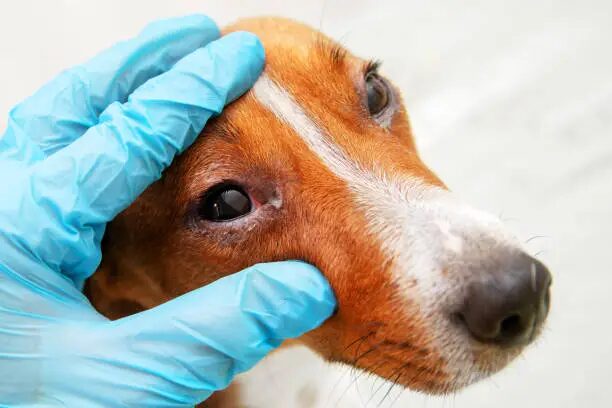
A dog with red, watery, or goopy eyes can make any pet parent nervous. The tricky part is that several different eye problems can look surprisingly similar at first. Dog eye allergies, conjunctivitis, irritation, dry eye, a foreign object, and an actual eye infection can all cause redness and discharge.
So, how can you tell whether you’re dealing with dog eye allergies vs infection?
There are a few clues that can help. Itching, clear watery discharge, and symptoms affecting both eyes may fit an allergy pattern. On the other hand, thick discharge, significant pain, squinting, or an eye that stays closed can be more concerning for infection or another painful eye condition. But these are patterns—not reliable diagnostic rules.
The reason this distinction matters is simple: the wrong treatment can delay proper care, and some eye conditions can worsen quickly. For example, a corneal ulcer or glaucoma may initially look like a routine red eye but requires very different treatment.
If your dog has a mildly irritated eye, you may be tempted to wait and see what happens. Sometimes that’s reasonable, but persistent discharge, worsening redness, pain, squinting, cloudiness, or vision changes should not be ignored.
This guide explains dog eye allergies vs infection, what symptoms to look for, what different types of discharge may mean, and when a veterinarian should examine your dog.
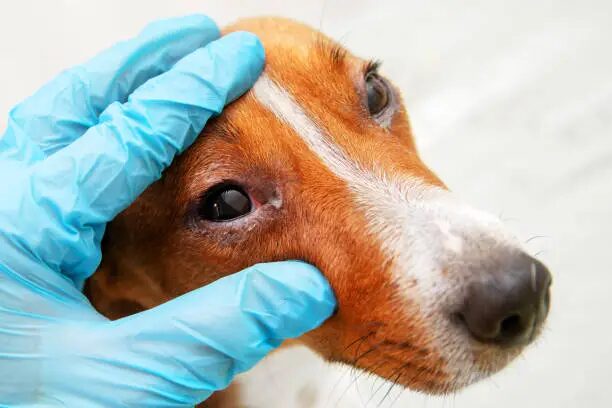
Dog Eye Allergies vs Infection: Quick Comparison
The following table gives you a useful starting point when trying to understand dog eye infection vs allergies:
| Sign | Dog Eye Allergies | Dog Eye Infection |
|---|---|---|
| Discharge | Usually clear and watery | May be thick or mucus-like |
| Color | Usually clear or whitish | May be yellow, green, or cloudy |
| Itching | Common | Less characteristic |
| Pain | Usually mild | More concerning, especially with significant inflammation |
| Squinting | May occur from irritation | More concerning when persistent |
| Eyes affected | Often both | May begin in one eye |
| Seasonality | Can occur with seasonal triggers | Usually not tied to seasons |
| Sneezing | May occur | Less typical |
| Rubbing eyes | Common | Can occur, especially when painful |
| Crusting | Usually mild | Can become more noticeable |
| Progression | May recur after exposure to triggers | May worsen or persist without appropriate treatment |
These differences can help you recognize patterns, but they shouldn’t be treated as a home diagnostic test. Allergies can cause conjunctivitis, infections can affect both eyes, and other eye diseases can mimic both conditions.
For example, a dog with both red eyes and clear discharge might have allergies, but that same appearance can occur with environmental irritation or another form of conjunctivitis. Likewise, a dog with one red eye could have an infection, but a foreign object, dry eye, or injury could also be responsible.
That’s why the question isn’t always simply “dog allergies or eye infection?” Sometimes the real answer is a different eye problem altogether.
What Are Dog Eye Allergies?
What Is Allergic Conjunctivitis in Dogs?
Allergic conjunctivitis occurs when the tissues around the eye become inflamed after exposure to something that triggers an allergic response.
The conjunctiva is the delicate membrane covering the front portion of the eye and lining the eyelids. When it becomes irritated or inflamed, the eye can look pink or red, become watery, and feel itchy.
Dogs can develop allergies to a variety of substances. Environmental allergies are particularly relevant when eye symptoms appear alongside other signs such as itchy skin, paw licking, sneezing, or a watery nose.
Allergies happen because the immune system reacts excessively to a substance that would normally be harmless. Common canine allergens include pollen, plants, dust, and other environmental substances.
One useful clue is that allergies are generally a whole-body response. Therefore, allergic eye symptoms may affect both eyes rather than staying isolated to one eye. However, this isn’t an absolute rule.
Common Causes of Eye Allergies in Dogs
Your dog’s eyes can react to many environmental or household triggers. Common possibilities include:
- Pollen
- Grass
- Weeds
- Dust
- Dust mites
- Mold and mold spores
- Smoke
- Aerosol sprays
- Strong household chemicals
- Other environmental irritants
- Certain contact allergens
Some dogs also have food-related allergic disease, although food allergies more commonly cause skin and gastrointestinal symptoms than isolated eye problems.
If your dog develops watery eyes every time you visit a particular park, spends time around freshly cut grass, or is exposed to smoke or another irritant, that timing can provide a useful clue.
However, don’t assume that every recurring watery eye is an allergy. Recurrent eye discharge can also occur with conditions such as dry eye, abnormal eyelashes, tear-duct problems, or chronic conjunctivitis.
What Do Dog Allergy Eyes Look Like?
So, what do dog eye allergies actually look like?
A dog experiencing an allergic reaction may develop:
- Red or pink eyes
- Clear, watery discharge
- Mild swelling around the eyes
- Itching
- Pawing at the face
- Rubbing the eyes
- Increased blinking
- Watery nose
- Sneezing
- Itchy skin or paws
Clear, watery eyes are particularly common with allergies. The American Kennel Club notes that allergic dogs can develop clear watery eyes and nose along with sneezing.
Your dog’s behavior can also tell you something.
If your dog keeps rubbing its face against furniture, scratching around the eyes, or using its paws to rub the face, itchiness may be an important part of the picture.
But remember: rubbing can also happen when an eye is painful. That’s one reason it’s dangerous to assume that rubbing automatically means allergies.
Are Dog Eye Allergies Usually in Both Eyes?
Often, yes.
Because an allergy is generally a systemic immune response, both eyes may be exposed to the same allergen. If your dog runs through a field containing pollen, for example, both eyes may become irritated.
This is one of the useful clues when considering dog red eye allergies vs infection.
However, one-eye symptoms do not automatically mean infection.
A foreign body such as a piece of plant material, an eye injury, dry eye, or a tear-duct problem can affect only one eye. Veterinary references specifically note that conjunctivitis in one eye can have causes other than infection, including foreign objects and dry eye.
So instead of thinking:
One eye = infection, two eyes = allergy
it’s better to think:
One eye or both eyes is one clue among several.
What Is a Dog Eye Infection?
A dog eye infection occurs when infectious organisms or another underlying problem causes inflammation or damage involving the eye or surrounding tissues.
Eye infections can produce symptoms that overlap heavily with allergies. Your dog may have redness, tearing, discharge, swelling, or increased blinking.
In some cases, an infection is the primary problem. In others, another condition—such as a corneal injury or dry eye—creates an environment where secondary infection can develop.
That’s why treating the visible discharge without finding the underlying cause isn’t always enough.
What Causes Eye Infections in Dogs?
Several different problems can contribute to infection or infection-like inflammation.
Bacterial Infections
Bacteria can be involved in some cases of canine conjunctivitis and other eye infections. Yellow or green discharge can occur with infection, although discharge color by itself cannot prove that bacteria are responsible.
Viral Infections
Some viral diseases can cause conjunctivitis and other eye symptoms. Viral causes may also occur alongside respiratory signs.
Fungal or Other Infectious Causes
Fungal and other infectious diseases are less common in routine cases but can affect the eye or surrounding tissues.
Secondary Infections
Sometimes the infection isn’t the original problem.
For example, a dog with dry eye may not produce enough tears to properly protect and flush the surface of the eye. This can contribute to mucus accumulation and secondary bacterial growth.
Trauma
A scratch or injury to the cornea can damage the eye’s protective surface. Trauma may occur while running through vegetation, playing, rubbing the face, or getting debris in the eye.
Foreign Bodies
A small piece of grass, dirt, dust, or plant material can become trapped around the eye and cause significant irritation.
Corneal Injuries
A corneal scratch or ulcer can cause redness, discharge, blinking, and pain. These cases deserve veterinary attention because the cornea is essential for vision.
Dry Eye
Keratoconjunctivitis sicca (KCS), commonly called dry eye, can cause chronic redness and thick mucus. It can also predispose the eye to complications.
Eyelid or Eyelash Abnormalities
Problems such as entropion or abnormal eyelashes can repeatedly rub against the eye, producing chronic irritation and inflammation.
Common Types of Dog Eye Infections
“Eye infection” isn’t one single disease.
Depending on the underlying cause, your veterinarian may diagnose conditions such as:
- Conjunctivitis
- Bacterial conjunctivitis
- Viral conjunctivitis
- Corneal infection
- Infection secondary to dry eye
- Eyelid infections
- Other infections involving tissues around the eye
Conjunctivitis itself simply means inflammation of the conjunctiva. Importantly, it isn’t always caused by infection. Allergies, irritants, foreign bodies, dry eye, and other eye disorders can also produce conjunctivitis.
That distinction is important because saying “my dog has pink eye” doesn’t necessarily tell you why the eye is red.
What Does a Dog Eye Infection Look Like?
Possible signs include:
- Redness
- Swelling
- Excessive tearing
- Thick discharge
- Yellow or green discharge
- Crusting around the eyelids
- Excessive blinking
- Squinting
- Light sensitivity
- Pawing at the eye
- Holding the eye partially or completely closed
- Swelling of the eyelids
- A visible third eyelid
According to veterinary guidance, yellow-green discharge, excessive blinking, pawing at the eye, and keeping the eye closed can occur with eye infections.
One important point: pain is especially significant.
A dog with allergies may be itchy and uncomfortable. A dog with a painful eye condition may become much more reluctant to open the eye, squint repeatedly, or avoid having its face touched.
That difference can help you decide how urgently to seek veterinary care.
Dog Eye Allergies vs Infection: Symptoms Explained
If you’re searching “how to tell if dog has eye infection or allergies,” symptoms are probably what you’re most interested in.
The problem is that no single symptom gives you a guaranteed answer.
Instead, look at the whole pattern.
Clear, Watery Eye Discharge
Clear, watery discharge is often associated with allergies or irritation.
For example, a dog exposed to pollen may develop watery eyes along with sneezing or itchy skin.
But watery eyes aren’t exclusive to allergies.
Excessive tearing can also occur with:
- Eye injuries
- Corneal ulcers
- Conjunctivitis
- Foreign bodies
- Abnormal eyelashes
- Tear-duct problems
- Glaucoma
- Other eye disorders
VCA notes that excessive tearing, or epiphora, has a long list of possible causes, including allergies, infections, injuries, corneal ulcers, glaucoma, and eyelid abnormalities.
So clear discharge does not automatically mean allergies.
Yellow or Green Eye Discharge
Yellow or green discharge is generally more concerning than simple watery tearing.
It can occur with infection or significant inflammation. However, it’s important not to make the leap from:
“Green discharge = bacterial infection.”
The situation isn’t always that straightforward.
For example, dogs with dry eye can develop thick mucus that becomes yellow or green because bacteria can accumulate when normal tear production is inadequate.
This is one reason your veterinarian may need to examine the eye rather than simply prescribing an antibiotic.
Itchy Eyes vs Painful Eyes
This is one of the most useful distinctions to watch.
More suggestive of an allergy pattern:
- Rubbing the face
- Pawing at the eyes
- Itchy skin
- Sneezing
- Clear tearing
- Symptoms after exposure to a suspected allergen
More concerning for a painful eye problem:
- Persistent squinting
- Holding the eye closed
- Strong sensitivity to light
- Reluctance to have the face touched
- Sudden worsening
- Cloudiness
- Vision changes
Pain and squinting can occur with infections, but they can also indicate a corneal ulcer, glaucoma, uveitis, or trauma.
So if your dog is clearly in pain, don’t spend several days trying to determine whether it’s simply an allergy.
Redness and Swelling
Both allergies and infections can make a dog’s eyes look red.
Allergic inflammation may cause the conjunctiva to become pink or red and can produce swelling around the eye.
Infection and other forms of conjunctivitis can do the same thing.
There is another term worth knowing: chemosis.
Chemosis refers to swelling of the conjunctival tissue around the cornea. Veterinary references note that it can occur with conjunctivitis, trauma, allergic reactions, and insect bites.
In other words, redness and swelling tell you that something is irritating or inflaming the eye—but not necessarily what the cause is.
Squinting and Light Sensitivity
If your dog suddenly starts squinting, pay attention.
Occasional blinking after dust or wind exposure may be minor. Persistent squinting is different.
A painful eye may cause a dog to:
- Keep blinking
- Partially close the eye
- Hold the eye shut
- Avoid bright light
- Paw at the face
- Pull away when the area is touched
These signs can occur with corneal irritation or an ulcer.
A corneal ulcer is particularly important because it involves an injury to the eye’s clear surface. It isn’t something you should attempt to diagnose or treat with leftover medication at home.
Crusty Eyes
A little eye debris after sleeping can be normal for some dogs.
But thick, recurring, excessive, or discolored discharge deserves more attention.
Consider the difference between:
Mild morning debris:
A small amount that can be gently cleaned and doesn’t return excessively.
Concerning discharge:
Thick mucus, yellow or green material, persistent crusting, unpleasant odor, redness, swelling, squinting, or frequent rubbing.
Veterinary guidance recommends contacting a veterinarian when eye discharge becomes excessive, thick, discolored, or is accompanied by redness, swelling, squinting, or persistent irritation.
One Eye vs Both Eyes
This is another helpful clue when comparing dog eye allergies vs infection.
Both eyes
Both eyes may be affected by:
- Allergies
- Environmental irritants
- Some viral infections
- Some forms of conjunctivitis
- Systemic diseases
One eye
One eye may be affected by:
- Foreign material
- Trauma
- Corneal injury
- Tear-duct problems
- Dry eye
- Localized inflammation
- Infection
But again, there are exceptions.
Don’t diagnose your dog’s condition solely based on whether one or both eyes are affected.
Sneezing and Itchy Skin
If your dog has red, watery eyes plus sneezing and itchy skin, allergies become a more plausible explanation.
For example, environmental allergies can affect several areas of the body at once.
You might notice:
- Watery eyes
- Sneezing
- Itchy paws
- Scratching
- Licking the feet
- Face rubbing
- Itchy ears
The presence of several allergy-type symptoms can make an allergic pattern easier to recognize, although a veterinarian may still need to determine the exact cause.
Dog Eye Discharge Color Chart
Discharge color can provide a clue, but it should never be used as the only diagnostic test.
| Eye Discharge | What It May Suggest |
|---|---|
| Clear/watery | Allergies, irritation, or several other conditions |
| White/mucus-like | Irritation, dry eye, or inflammation |
| Yellow | Infection or significant inflammation |
| Green | Infection, inflammation, or mucus associated with another eye disorder |
| Thick/sticky | Infection, dry eye, or other eye disease |
| Blood-tinged | Injury, inflammation, trauma, or another serious condition |
Is Green Eye Discharge Always an Infection?
No.
Green discharge can occur with infection, but the color alone cannot establish the diagnosis.
For example, dry eye can result in thick mucus and bacterial accumulation, producing yellow-green discharge.
Is Clear Eye Discharge Always Allergies?
No.
Clear tearing can occur with allergies, but also with irritation, foreign bodies, corneal injuries, glaucoma, conjunctivitis, and other problems.
When Is Dog Eye Discharge an Emergency?
Eye discharge becomes more concerning when it appears with severe pain, persistent squinting, a cloudy or blue-looking eye, sudden vision changes, significant swelling, trauma, or an eye that remains closed.
Acute glaucoma, for example, can cause pain, redness, watery discharge, cloudiness, and rapid vision loss, making it a veterinary emergency.
How Can You Tell if Your Dog Has Allergies or an Eye Infection?
There isn’t a single home test that reliably answers “dog allergies or eye infection?”
Instead, ask yourself a few practical questions.
Is Your Dog’s Eye Itchy or Painful?
Itching combined with rubbing, sneezing, and clear tearing can fit allergies.
Pain, especially persistent squinting or keeping the eye closed, is more concerning and warrants veterinary assessment.
Is the Discharge Clear or Thick and Colored?
Clear, watery discharge may fit allergies or irritation.
Thick yellow or green discharge deserves more attention, but its presence does not automatically prove bacterial infection.
Is One Eye or Both Eyes Affected?
Both eyes may fit an allergy pattern.
One eye may raise concern for a foreign body, injury, infection, or another localized problem.
Still, neither pattern is absolute.
Did the Symptoms Appear After Outdoor Exposure?
Think about what happened immediately before the symptoms appeared.
Did your dog:
- Run through tall grass?
- Visit a dusty area?
- Spend time around pollen?
- Swim in a pond?
- Play around bushes?
- Get shampoo in the eye?
The timing can provide useful information for your veterinarian.
Are There Other Allergy Symptoms?
If eye irritation appears alongside itchy skin, paw licking, sneezing, or a watery nose, an allergic cause becomes more plausible.
Are the Symptoms Getting Worse Quickly?
Rapid worsening is a reason not to wait.
Eye conditions can progress quickly, and what initially looks like simple irritation may turn out to be an injury or another painful disorder.
Is Your Dog Squinting or Keeping the Eye Closed?
This is one of the biggest warning signs.
A dog that won’t properly open its eye may be experiencing significant discomfort. Don’t assume that means allergies.
Can Dog Eye Allergies Turn Into an Infection?
They can overlap.
An allergic dog may rub the eyes because they are itchy. Repeated rubbing can irritate or traumatize the eye. At the same time, inflammation can affect the eye’s normal protective environment.
There can also be an underlying condition that causes both inflammation and secondary infection.
For example, dry eye can lead to mucus accumulation and bacterial overgrowth, creating an appearance that may be mistaken for a straightforward infection.
This is why persistent or worsening eye symptoms shouldn’t simply be treated repeatedly as “allergies.”
If the eye isn’t improving, the diagnosis may need to be reconsidered.
Other Conditions That Can Look Like Dog Eye Allergies or Infection
Sometimes the answer to “dog eye allergies vs infection” is neither.
A dog’s eye can become red, watery, swollen, or uncomfortable because of a corneal ulcer, dry eye, foreign object, glaucoma, uveitis, trauma, or an eyelid abnormality. Several of these conditions can look similar to conjunctivitis during the early stages.
That’s why persistent eye problems deserve attention rather than repeated home treatment.
Corneal Ulcer
A corneal ulcer is an open injury on the surface of the cornea, the clear outer layer of the eye.
Dogs can develop ulcers after:
- Scratching the eye
- Running through vegetation
- Getting dust or debris in the eye
- Rubbing the face
- Having abnormal eyelashes rub against the cornea
- Suffering other eye injuries
- Developing certain underlying eye diseases
A dog with a corneal ulcer may have:
- Severe squinting
- Excessive tearing
- Redness
- Pawing at the eye
- Light sensitivity
- Cloudiness
- Keeping the eye closed
One reason ulcers are important is that they can worsen and, in severe cases, threaten the eye.
A veterinarian can use a fluorescein stain to check for damage to the cornea. This is one of the reasons it’s better not to assume that a painful red eye is simply an allergy.
Never use leftover steroid eye drops on a red or painful eye unless a veterinarian specifically prescribed them for the current condition. Steroids can be harmful when certain corneal problems are present.
Dry Eye (Keratoconjunctivitis Sicca)
Dry eye, medically known as keratoconjunctivitis sicca or KCS, occurs when a dog doesn’t produce enough tears to keep the eye properly lubricated and protected.
It may cause:
- Red eyes
- Thick mucus
- Sticky discharge
- Squinting
- Irritation
- Frequent blinking
- Chronic inflammation
- Corneal changes
Dry eye can sometimes be mistaken for a recurring eye infection because the discharge may become thick and discolored.
This is particularly important if your dog’s eye problem keeps coming back after treatment.
A veterinarian can perform a Schirmer tear test to measure tear production. Dogs diagnosed with dry eye may require long-term treatment to protect the eye and control inflammation.
Foreign Object in the Eye
A tiny piece of grass, dirt, dust, seed, or plant material can cause surprisingly significant irritation.
This is particularly likely if symptoms suddenly appear after an outdoor walk or play session.
A foreign object may cause:
- One watery eye
- Sudden redness
- Excessive blinking
- Pawing at the face
- Squinting
- Keeping one eye closed
- Increased tearing
If only one eye suddenly becomes watery and your dog is uncomfortable, don’t automatically assume it’s an infection.
A veterinarian may need to examine beneath the eyelids and around the third eyelid to determine whether something is trapped there.
Avoid digging around the eye with tweezers, cotton swabs, or your fingers. Trying to remove an embedded object yourself could cause additional damage.
Glaucoma
Glaucoma is a serious eye condition involving increased pressure inside the eye.
It can sometimes initially look like a simple red or irritated eye, but glaucoma can be painful and may cause rapid vision loss.
Possible signs include:
- Red eye
- Squinting
- Significant pain
- Watery discharge
- Cloudy or bluish appearance
- Dilated pupil
- Vision problems
- Enlarged or bulging eye in some cases
Acute glaucoma is considered an emergency because prompt treatment may be necessary to protect vision. A veterinarian can measure intraocular pressure using tonometry.
If your dog’s eye suddenly becomes painful, cloudy, or appears different in size, don’t wait several days to see whether it clears up.
Uveitis
Uveitis is inflammation affecting the uveal tract inside the eye.
It can have many possible causes, including trauma, infections, immune-mediated disease, and other systemic problems.
Signs can include:
- Redness
- Squinting
- Eye pain
- Excessive tearing
- Light sensitivity
- Cloudiness
- Changes in pupil size or appearance
Because uveitis can resemble other painful eye conditions, a proper examination is important.
A dog with obvious eye pain and light sensitivity should be evaluated rather than treated as though it simply has seasonal allergies.
Eyelid and Eyelash Problems
Sometimes the problem isn’t an allergy or infection at all.
An eyelid may be positioned incorrectly, or an eyelash may grow in a direction that repeatedly touches the eye.
For example, entropion occurs when the eyelid rolls inward. Hair or eyelashes can then rub against the cornea.
This may result in:
- Chronic tearing
- Redness
- Squinting
- Rubbing
- Corneal irritation
- Recurrent discharge
If your dog repeatedly develops eye problems despite treatment, your veterinarian may examine the eyelids and eyelashes for an underlying mechanical cause.
Trauma or Corneal Injury
An eye can be injured during ordinary activities such as:
- Playing with another dog
- Running through bushes
- Chasing a toy
- Scratching the face
- Getting hit by an object
- Rubbing against furniture
Trauma can produce symptoms that resemble both dog eye allergies and infection.
A sudden change in one eye after an activity should therefore be taken seriously, especially if your dog is squinting or refusing to open the eye.
How Veterinarians Diagnose Dog Eye Allergies vs Infection
If your dog’s eye is persistently red, painful, swollen, or producing abnormal discharge, a veterinarian may need to perform several tests.
The goal isn’t simply to determine whether the eye is “infected.”
The goal is to find why the eye is abnormal.
That distinction matters because treatment for allergies, dry eye, glaucoma, corneal ulcers, and bacterial infection can be completely different.
Physical Eye Examination
The first step is usually a careful examination of the eye and surrounding structures.
The veterinarian may examine:
- Eyelids
- Eyelashes
- Conjunctiva
- Cornea
- Third eyelid
- Pupil response
- Eye symmetry
- Eye discharge
- Signs of trauma
The veterinarian may also ask questions about:
- When symptoms started
- Whether one or both eyes are affected
- Previous eye problems
- Seasonal patterns
- Recent outdoor exposure
- Other allergy symptoms
- Medications already used
- Whether the dog has been rubbing the eye
Schirmer Tear Test
The Schirmer tear test measures how much tear fluid your dog’s eyes produce.
This is especially useful when dry eye is suspected.
Insufficient tear production can cause:
- Redness
- Thick mucus
- Chronic irritation
- Recurrent infections
- Corneal damage
A dog with recurring “eye infections” that never seems to fully improve may need to be evaluated for inadequate tear production.
Fluorescein Eye Stain
A fluorescein stain is commonly used to check the cornea for scratches, ulcers, and other surface defects.
The veterinarian applies a special dye to the eye. Areas where the corneal surface has been damaged can retain the dye and become visible during examination.
This is particularly useful when a dog has:
- Squinting
- Eye pain
- Excessive tearing
- A history of trauma
- Sudden one-eye irritation
A fluorescein test can help distinguish a simple-looking red eye from a potentially more serious corneal injury.
Tonometry
Tonometry measures the pressure inside the eye.
It’s particularly important when glaucoma is a possibility.
An abnormal intraocular pressure reading can help the veterinarian determine whether the dog may have glaucoma or another internal eye disorder.
This matters because glaucoma isn’t something that should be treated as ordinary conjunctivitis or allergies.
A dog with sudden severe eye pain, redness, cloudiness, or vision changes may need urgent evaluation.
Eye Discharge Cytology
In some cases, a veterinarian may examine cells from the eye discharge under a microscope.
This is known as cytology.
It can provide additional information about the type of inflammation occurring and may help distinguish different causes.
Cytology isn’t necessary for every dog with a red eye, but it can be useful when the cause isn’t obvious or when symptoms are persistent.
Bacterial Culture
A bacterial culture may sometimes be recommended when an infection is suspected, particularly in complicated, severe, persistent, or treatment-resistant cases.
The purpose is to identify bacteria and, when appropriate, help determine which medications may be effective.
This is another reason not to assume that every dog with green discharge automatically needs the same antibiotic.
Checking the Eyelids, Eyelashes, and Third Eyelid
A complete examination may also involve checking structures around the eye.
The veterinarian may look for:
- Entropion
- Abnormal eyelashes
- Eyelid abnormalities
- Foreign material
- Third-eyelid problems
- Trauma
- Conjunctival inflammation
If a mechanical problem keeps irritating the eye, treating the resulting discharge without correcting the underlying problem may only provide temporary relief.
Treatment for Dog Eye Allergies
Once a veterinarian determines that allergies are contributing to your dog’s eye symptoms, treatment depends on the severity and underlying cause.
There isn’t one universal dog eye allergy treatment that works for every dog.
The goal may be to reduce exposure, control inflammation, relieve discomfort, and manage the underlying allergy.
Removing or Reducing the Allergen
If a particular trigger can be identified, reducing exposure can make a noticeable difference.
Possible environmental triggers include:
- Pollen
- Grass
- Weeds
- Dust
- Mold
- Smoke
- Household fragrances
- Aerosol products
- Cleaning chemicals
For seasonal allergies, completely avoiding pollen may be impossible.
Still, simple measures can reduce exposure.
For example, after outdoor activities, gently wiping your dog’s face and paws can help remove environmental material from the coat.
Avoid getting cleaning products or fragranced sprays near your dog’s face.
If smoke is triggering irritation, keeping your dog away from smoke is important.
Veterinary-Approved Eye Wash or Saline
In some situations, a veterinarian may recommend a suitable sterile eye rinse to remove irritants from the eye.
This may be useful after exposure to dust or other non-embedded irritants.
However, not every eye problem should be flushed repeatedly.
If your dog is in significant pain, keeps the eye closed, or appears to have an injury, seek veterinary care rather than relying on home flushing.
And don’t use homemade saltwater or other homemade mixtures in your dog’s eye unless a veterinarian specifically instructs you to do so.
Artificial Tears or Lubricating Eye Drops
Some dogs may benefit from veterinary-recommended lubricating eye drops.
These can help support the eye’s surface when dryness or irritation is contributing to symptoms.
But lubrication isn’t a substitute for diagnosis.
For example, a dog with glaucoma, a corneal ulcer, or severe infection needs treatment directed at the underlying condition.
Antihistamines
Veterinarians sometimes recommend antihistamines for dogs with particular allergic conditions.
However, you shouldn’t assume that a human allergy medication is automatically safe for your dog.
Products can contain additional ingredients, and the appropriate medication and dose depend on the individual dog.
Some combination products contain decongestants or other ingredients that can be dangerous for pets.
Before giving your dog an antihistamine for itchy eyes or allergies, ask your veterinarian which product is appropriate.
Prescription Allergy Eye Drops
Depending on the diagnosis, a veterinarian may prescribe eye medications designed to reduce allergic inflammation.
Some products may contain medications with antihistamine or mast-cell-stabilizing effects, while others are intended to control inflammation.
Prescription steroid eye drops require particular caution.
Why?
Because steroids can be harmful in certain situations, including some corneal ulcers and infections.
That means you should never use an old prescription eye drop simply because your dog has developed a similar-looking red eye.
The same medication that helped a previous problem could be inappropriate for a new one.
Managing Underlying Skin or Environmental Allergies
If eye symptoms are part of a larger allergy problem, treating only the eyes may not be enough.
Your dog may also need management for:
- Itchy skin
- Paw licking
- Recurrent ear problems
- Environmental allergies
- Flea allergy
- Other allergic triggers
A veterinarian can help determine whether the eye symptoms are part of a broader allergic condition.
Treatment for Dog Eye Infections
Treatment for a genuine eye infection depends heavily on what caused it.
There is no single “eye infection medicine” that is appropriate for every dog.
Antibiotic Eye Drops or Ointments
If a veterinarian determines that a bacterial infection is present or likely, they may prescribe an appropriate antibiotic eye drop or ointment.
The exact medication and duration depend on the diagnosis.
It’s important to follow the complete treatment instructions rather than stopping medication as soon as the eye looks better.
Antiviral Treatment When Appropriate
Antibiotics don’t treat viruses.
If a veterinarian determines that a viral disease is responsible, treatment may focus on supportive care or specific medication when indicated.
This is another reason why randomly using leftover antibiotics isn’t a good strategy.
Pain Relief and Supportive Care
Painful eye conditions may require additional treatment.
Depending on the diagnosis, a veterinarian may recommend:
- Appropriate pain control
- Lubrication
- Protective measures
- An Elizabethan collar to prevent rubbing
- Treatment of the underlying disease
The treatment plan depends on whether the problem involves the conjunctiva, cornea, tear production, internal eye structures, or surrounding tissues.
Treating the Underlying Cause
A recurring infection may not be the primary problem.
For example:
Foreign body → irritation → inflammation → discharge
or:
Dry eye → poor tear protection → mucus/inflammation → secondary infection
or:
Eyelid abnormality → repeated corneal irritation → inflammation/discharge
If the underlying problem isn’t addressed, symptoms may continue to return.
Why You Shouldn’t Use Leftover Antibiotic Eye Drops
It can be tempting to reach for an old bottle when your dog’s eye looks similar to a previous infection.
That’s risky.
The current problem could be:
- Allergies
- A corneal ulcer
- Dry eye
- Glaucoma
- Uveitis
- Trauma
- A foreign body
- Another condition
Even if an antibiotic helped previously, it may not be appropriate now.
And using medication without an examination can sometimes delay the correct diagnosis.
Why the Wrong Eye Medication Can Make Some Conditions Worse
The eyes are delicate structures, and some medications can be harmful when used for the wrong condition.
This is particularly important with steroid-containing eye medications.
If a dog has an undiagnosed corneal ulcer, inappropriate steroid use can interfere with healing and potentially make the situation more serious.
So, if you’re wondering whether a particular eye drop is safe, the safest approach is to have the dog’s eye evaluated first.
Can You Treat Dog Eye Allergies at Home?
For very mild irritation, there are some supportive things you can do while monitoring your dog.
But home care should not replace veterinary assessment when symptoms are painful, persistent, severe, or worsening.
What You Can Safely Do
Depending on the situation, you can:
- Keep the area around the eyes gently clean
- Prevent excessive rubbing
- Reduce exposure to suspected allergens
- Keep smoke away from your dog
- Follow veterinary instructions for approved eye products
- Monitor whether symptoms are improving or worsening
If your veterinarian has recommended a specific eye rinse or lubricant, use it exactly as directed.
What You Should NOT Put in Your Dog’s Eye
Avoid experimenting with household products or medications.
Do not put the following into your dog’s eye without veterinary guidance:
- Human medicated eye drops
- Leftover antibiotic drops
- Steroid eye drops
- Homemade solutions
- Alcohol-containing products
- Hydrogen peroxide
- Soap
- Household cleaning products
- Other unapproved substances
Even products that are safe for human eyes aren’t necessarily appropriate for dogs.
When Home Care Is Not Enough
Home care isn’t appropriate as the only strategy when your dog has:
- Significant pain
- Persistent squinting
- A closed eye
- Cloudiness
- A blue-looking cornea
- Sudden vision problems
- Blood around or inside the eye
- Major swelling
- A foreign object
- Eye trauma
- Rapidly worsening symptoms
- Persistent thick discharge
These signs can point toward problems that require prompt veterinary examination.
When to Take Your Dog to the Vet
When it comes to eye problems, it’s better to take pain and sudden changes seriously.
Seek prompt veterinary attention if your dog develops:
- Severe eye pain
- Constant squinting
- An eye that remains closed
- A cloudy or blue-looking cornea
- Sudden vision changes
- A bulging eye
- Significant swelling
- Blood in or around the eye
- Recent eye trauma
- A foreign object
- Rapidly worsening redness or swelling
- Thick or persistent discharge
- Symptoms that aren’t improving
A particularly important warning sign is a sudden change in the appearance of the cornea.
A healthy cornea should be relatively clear. Cloudiness, bluish discoloration, or an obvious change in transparency can indicate a more serious problem.
Similarly, a dog that suddenly refuses to open one eye may be experiencing significant pain.
Don’t wait for discharge to become green before seeking help. Some serious eye conditions can produce relatively little discharge.
Dog Eye Allergies vs Infection: Can You Tell at Home?
You can identify patterns, but you can’t always identify the exact cause at home.
Signs That May Point Toward Allergies
A dog may have an allergy pattern when several of these occur together:
- Both eyes are watery
- Eyes are itchy
- The dog rubs its face
- Sneezing occurs
- Skin is itchy
- Symptoms follow outdoor exposure
- Symptoms recur during particular seasons
- Discharge is mostly clear
Signs That May Point Toward Infection or Another Eye Problem
More concerning signs include:
- Thick discharge
- Yellow or green discharge
- Significant redness
- Persistent squinting
- Eye pain
- One eye suddenly becoming affected
- Symptoms that continue getting worse
- Swelling
- Cloudiness
But there is considerable overlap.
A dog can have allergies and an infection at the same time, and an entirely different condition can produce the same symptoms.
Why Symptoms Alone Cannot Confirm the Diagnosis
This is probably the most important point in this entire guide.
Redness doesn’t automatically mean infection.
Clear discharge doesn’t automatically mean allergies.
Green discharge doesn’t automatically mean bacteria.
One affected eye doesn’t automatically mean infection.
Both affected eyes don’t automatically mean allergies.
Eye conditions can be surprisingly complicated. A veterinarian may need to use a fluorescein stain, Schirmer tear test, tonometry, or other examinations to determine what’s actually happening.
That’s why the best approach isn’t simply to ask, “Does my dog have allergies or an infection?”
Instead, ask:
“What is causing my dog’s eye to become red, painful, watery, or produce discharge?”
That broader question can lead to the right diagnosis and treatment.
How to Prevent Eye Problems in Dogs
Once you’ve dealt with a dog with red, watery, or irritated eyes, prevention becomes a lot more important. While you can’t prevent every eye problem, a few simple habits can reduce exposure to common irritants and help you notice problems earlier.
Remember, dog eye allergies vs infection isn’t always easy to distinguish at home. Prevention is therefore less about trying to diagnose every episode yourself and more about keeping your dog’s eyes healthy and recognizing changes quickly.
Reduce Exposure to Environmental Allergens
If your dog appears sensitive to environmental allergens, try to reduce exposure when possible.
Common triggers include:
- Pollen
- Grass
- Weeds
- Dust
- Mold
- Smoke
- Strong fragrances
- Aerosol sprays
- Household cleaning chemicals
During periods when pollen is particularly high, you may want to shorten outdoor activities in areas with heavy vegetation.
You don’t have to keep your dog indoors all day. Instead, focus on reducing unnecessary exposure and cleaning your dog after outdoor activities.
Keep Your Dog’s Face Clean
Dogs that spend a lot of time outdoors can collect dust, pollen, dirt, and plant material around their faces.
Gently cleaning the fur around the eyes can help prevent debris from accumulating.
However, avoid rubbing directly against the eyeball.
If your dog’s face is naturally wrinkled, pay particular attention to keeping the surrounding skin clean and dry. Dogs with facial folds may need additional grooming and veterinary guidance because moisture and debris can accumulate around these areas.
Avoid Smoke and Strong Chemical Irritants
Smoke can irritate the eyes and respiratory tract.
Try to keep your dog away from:
- Cigarette smoke
- Cigars
- Wood smoke
- Strong perfumes
- Aerosol sprays
- Paint fumes
- Harsh cleaning chemicals
Even if your dog isn’t allergic, strong airborne irritants can make already-sensitive eyes uncomfortable.
Check Eyes After Outdoor Activities
Make it a habit to take a quick look at your dog’s eyes after walks, hikes, or outdoor play.
You’re looking for changes such as:
- New redness
- Excessive watering
- Swelling
- Squinting
- Discharge
- Cloudiness
- Pawing at the face
This is especially useful after your dog has been running through grass, bushes, weeds, or wooded areas.
If you notice sudden symptoms in only one eye after an outdoor activity, consider the possibility of a foreign object or injury rather than automatically assuming allergies.
Prevent Excessive Eye Rubbing
Rubbing can make an irritated eye even more irritated.
If your dog repeatedly paws at its face, try to determine why.
Possible causes include:
- Allergies
- Foreign material
- Infection
- Corneal irritation
- Dry eye
- Injury
Your veterinarian may recommend an Elizabethan collar, sometimes called a recovery cone, if your dog is repeatedly traumatizing the eye by scratching or rubbing.
Stopping the rubbing is important, but finding the underlying reason is even more important.
Keep Hair Around the Eyes Properly Groomed
For some dogs, long facial hair can collect debris or contribute to irritation.
Regular grooming can help keep the area around the eyes manageable.
However, be careful when trimming hair near the eye. Sharp scissors close to the eyeball can cause serious injury.
If you’re uncomfortable doing this yourself, have a professional groomer or veterinarian handle it.
Manage Underlying Allergies
If your dog has recurring eye irritation together with itchy skin, paw licking, ear problems, or seasonal symptoms, there may be an underlying allergy problem.
Managing the broader allergy condition may reduce recurring eye symptoms.
Your veterinarian can help determine whether the problem is related to:
- Environmental allergens
- Fleas
- Food
- Contact irritation
- Other allergic triggers
Avoid changing your dog’s diet repeatedly without a plan. Food allergy diagnosis generally requires a structured approach rather than simply switching between random foods.
Schedule Routine Veterinary Examinations
Regular veterinary checkups can help identify eye problems before they become severe.
This can be especially important for dogs with:
- Previous eye disease
- Chronic allergies
- Dry eye
- Facial folds
- Eyelid abnormalities
- Recurrent conjunctivitis
- Previous corneal ulcers
A dog with repeated “eye infections” deserves particular attention because there may be an underlying condition causing the recurring symptoms.
Dog Eye Allergies vs Infection: Practical At-Home Checklist
If you suddenly notice that your dog’s eye looks unusual, don’t panic.
Start by observing the entire pattern.
Step 1: Look at the Discharge
Ask:
Is it clear and watery, or thick and colored?
Clear tearing may fit allergies or irritation.
Thick yellow or green discharge may be associated with infection or inflammation, but it isn’t diagnostic by itself.
Step 2: Look at Your Dog’s Behavior
Is your dog:
- Rubbing the face?
- Pawing at the eye?
- Squinting?
- Holding the eye closed?
- Avoiding light?
- Acting painful?
Behavior can sometimes be more informative than the appearance of the discharge.
Step 3: Check One Eye or Both
Notice whether:
- One eye is affected
- Both eyes are affected
- Symptoms started in one eye and spread to the other
Write down when you first noticed the problem.
Step 4: Look for Other Symptoms
Check whether your dog also has:
- Sneezing
- Itchy skin
- Paw licking
- Ear irritation
- Nasal discharge
- Fever or lethargy
- Loss of appetite
These additional signs can help your veterinarian understand the bigger picture.
Step 5: Consider Recent Exposure
Think about the previous 24–48 hours.
Was your dog:
- In tall grass?
- Around pollen?
- Near dust?
- Exposed to smoke?
- Bathed recently?
- Playing with another dog?
- Running through bushes?
This information can be useful when discussing the problem with your veterinarian.
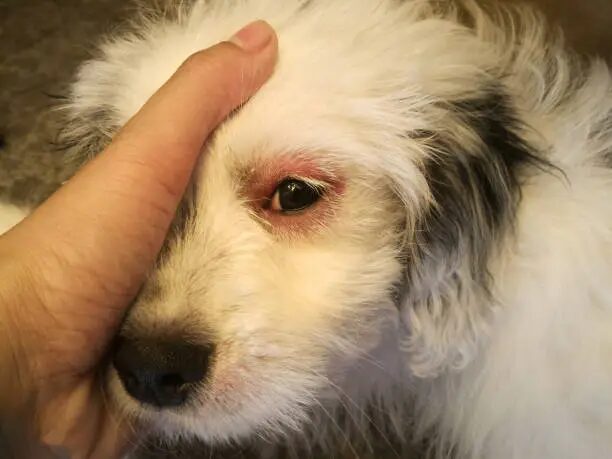
Frequently Asked Questions About Dog Eye Allergies vs Infection
How can I tell if my dog’s eye infection is allergies?
There isn’t a reliable way to confirm this based solely on appearance.
However, itching, clear watery discharge, both eyes being affected, sneezing, and recurring symptoms after exposure to environmental triggers may fit an allergy pattern.
In contrast, pain, persistent squinting, thick discharge, cloudiness, or an eye that remains closed deserves veterinary evaluation.
The important thing is not to diagnose the cause based on one symptom.
Are dog eye allergies usually in both eyes?
They often can be.
Because environmental allergens may affect both eyes, allergic conjunctivitis can involve both eyes.
However, one-eye symptoms don’t automatically rule out allergies, and both-eye symptoms don’t automatically confirm them.
A foreign object, injury, infection, dry eye, or another condition can also affect one or both eyes.
Can allergies cause yellow discharge in dogs?
Allergies are more commonly associated with clear, watery discharge, but real-life cases aren’t always that simple.
Inflammation, mucus, secondary infection, or another underlying eye condition can cause discharge to become thicker or discolored.
Therefore, yellow discharge should not simply be dismissed as an allergy.
Does green discharge mean my dog has an eye infection?
Not necessarily.
Green discharge can occur with infection, but discharge color alone cannot tell you exactly what’s happening.
Dogs with dry eye, for example, can develop thick mucus and secondary bacterial problems that produce discolored discharge.
If green discharge is persistent or accompanied by redness, pain, swelling, or squinting, have the eye examined.
Are dog eye allergies itchy?
Yes.
Itching is one of the more common features of allergic disease.
A dog with itchy eyes may rub its face against furniture, paw at its eyes, or scratch around the face.
But remember that painful eye conditions can also cause rubbing, so rubbing alone isn’t enough to diagnose allergies.
Are dog eye infections painful?
They can be.
The amount of discomfort depends on the cause and which part of the eye is affected.
A straightforward conjunctival problem may cause irritation, while a corneal ulcer, glaucoma, uveitis, or significant trauma can cause substantial pain.
If your dog is squinting heavily or refusing to open the eye, veterinary evaluation is important.
Can dog allergies cause conjunctivitis?
Yes.
Allergies can contribute to conjunctival inflammation, which is commonly called conjunctivitis.
But conjunctivitis is a description of inflammation rather than a guarantee that the underlying cause is an infection.
Other possible causes include irritants, foreign bodies, dry eye, trauma, and other eye diseases.
Can a dog have allergies and an eye infection at the same time?
Yes, it’s possible.
A dog may have an underlying allergy that causes inflammation while also developing a secondary infection.
Likewise, a dog may have an entirely different eye condition that produces symptoms resembling allergies and infection.
This overlap is one reason recurring or worsening eye symptoms should be evaluated rather than repeatedly treated based on assumptions.
Can I use human eye drops for my dog?
Don’t assume that human eye drops are safe for dogs.
Some products contain medications or additional ingredients that may be inappropriate for pets.
Even an eye drop that is harmless in one situation may be inappropriate in another.
Ask your veterinarian before using medicated human eye drops.
This is especially important with products containing steroids, decongestants, or other active ingredients.
Can I treat my dog’s eye infection at home?
A mild irritation may sometimes resolve with appropriate supportive care, but you shouldn’t assume that every red eye is a minor infection.
Some serious problems initially look like conjunctivitis.
Home treatment is particularly inappropriate as the only approach if your dog has:
- Severe pain
- Persistent squinting
- A closed eye
- Cloudiness
- Vision changes
- Trauma
- Significant swelling
- A foreign object
- Rapidly worsening symptoms
When in doubt, having the eye examined is safer than experimenting with medications.
How long do dog eye allergies last?
The duration varies depending on the trigger and whether exposure continues.
Some dogs experience seasonal symptoms, while others may have recurring problems throughout the year.
If symptoms don’t improve, keep returning, or progressively worsen, the underlying cause should be investigated.
A persistent eye problem shouldn’t automatically be labeled as “chronic allergies.”
How long does a dog eye infection take to clear?
There isn’t one standard timeline.
The recovery period depends on:
- The cause
- The severity
- Which part of the eye is affected
- Whether an underlying disease is present
- Whether the prescribed treatment is appropriate
A simple case may improve relatively quickly with appropriate treatment, while conditions such as dry eye or corneal disease can require longer-term management.
If your dog’s eye isn’t improving as expected, contact your veterinarian rather than simply continuing the same treatment.
Should I take my dog to the vet for a red eye?
A mildly pink eye without pain or other concerning symptoms may not always represent an emergency.
However, a red eye accompanied by pain, squinting, cloudiness, swelling, abnormal discharge, trauma, or vision changes should be evaluated promptly.
When it comes to eyes, the consequences of delaying treatment can sometimes be significant.
Why is my dog’s eye red but there is no discharge?
Redness without discharge can have many causes.
Possible explanations include:
- Allergic irritation
- Environmental irritation
- Dry eye
- Trauma
- Corneal injury
- Uveitis
- Glaucoma
- Other inflammatory conditions
The absence of discharge doesn’t necessarily mean the condition is minor.
If the redness persists or your dog appears painful, seek veterinary advice.
Why does my dog have one watery eye?
One watery eye can occur because of:
- A foreign object
- Dust or plant material
- A scratch
- Corneal irritation
- Tear-duct problems
- Localized inflammation
- Infection
- Other eye conditions
If the problem appeared suddenly after outdoor activity, a foreign body or injury is worth considering.
Why does my dog keep rubbing his eyes?
Repeated eye rubbing may indicate itching, irritation, pain, or a foreign object.
Allergies are one possibility, but they aren’t the only one.
Because rubbing can further damage the cornea, persistent rubbing should not simply be ignored.
If your dog is repeatedly rubbing one eye or appears painful, arrange a veterinary examination.
Is a cloudy eye in a dog an emergency?
A suddenly cloudy or bluish eye can be a serious warning sign.
Possible causes include corneal edema, ulcers, glaucoma, uveitis, and other eye disorders.
Some causes require urgent treatment to protect vision.
If your dog’s eye suddenly becomes cloudy, especially if accompanied by pain, squinting, redness, or vision changes, contact a veterinarian promptly.
Final Verdict: Dog Eye Allergies vs Infection
When comparing dog eye allergies vs infection, there are some useful patterns to remember—but no single symptom can reliably diagnose the problem.
A pattern that may fit allergies
Clear, watery discharge + itching + face rubbing + both eyes + seasonal or environmental triggers can be consistent with allergies.
A pattern that may fit infection or another eye disorder
Thick discharge + significant redness + pain + squinting + worsening symptoms can be more concerning for infection or another painful eye condition.
Signs that should never be casually dismissed
Cloudiness, severe pain, sudden vision changes, trauma, significant swelling, or an eye that remains closed deserve prompt veterinary attention.
And perhaps the most important point is this:
Clear discharge does not automatically mean allergies, and green discharge does not automatically mean infection.
A dog’s eye symptoms can be caused by allergies, conjunctivitis, infection, dry eye, corneal ulcers, foreign bodies, glaucoma, uveitis, trauma, or eyelid abnormalities.
That’s why the safest approach is to look at the whole pattern rather than relying on one symptom.
If your dog’s eye is mildly watery and your pet otherwise seems comfortable, you can monitor closely and reduce exposure to possible irritants. But if symptoms persist, worsen, or involve pain or vision changes, a veterinary examination is the right next step.