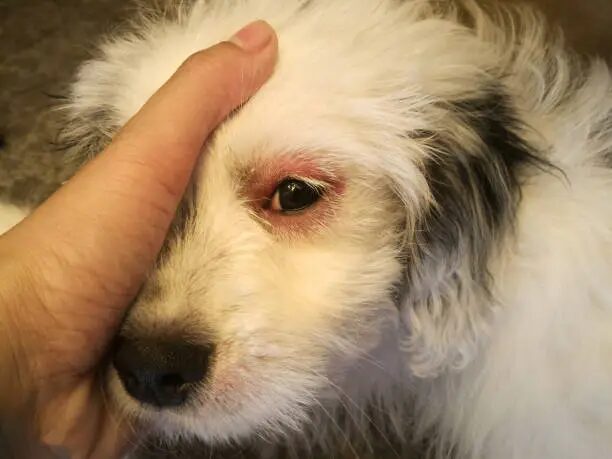
When your dog has red, itchy, watery eyes, it is easy to assume allergies are the problem. Sometimes that is exactly what is happening. Other times, however, a similar-looking eye problem may be caused by an infection, a scratch on the cornea, dry eye, a foreign object, glaucoma, or another condition that needs different treatment.
Dog eye allergies, also known as allergic conjunctivitis, occur when the dog’s immune system reacts to an allergen that contacts or affects the eye. Common triggers include pollen, grass, weeds, dust, mold, airborne spores, smoke, and other environmental irritants. The resulting inflammation can cause redness, itching, excessive tearing, swelling, discharge, frequent blinking, and face rubbing.
The good news is that dog eye allergies can usually be managed successfully. Treatment may include reducing exposure to the allergen, veterinarian-approved eye washes, prescription eye drops, antihistamines, oral allergy medication, or longer-term allergy management. The appropriate combination depends on what is actually causing your dog’s symptoms.
One important distinction is that treating allergy symptoms is not necessarily the same as treating the underlying allergy. An eye drop may calm inflammation today, while preventing future flare-ups may require reducing pollen exposure, controlling other allergy symptoms, or using a long-term allergy treatment plan.
A painful, cloudy, severely swollen, or suddenly abnormal eye should never automatically be treated as an allergy. Some eye diseases can progress quickly and threaten vision if treatment is delayed.
What Is the Best Treatment for Dog Eye Allergies?
There is no single best treatment for dog eye allergies that works for every dog.
A dog with mild seasonal irritation may need a very different approach from a dog with chronic allergic conjunctivitis, recurring skin allergies, or inflammation complicated by another eye condition.
The first step is determining whether allergies really are the cause.
Can Dog Eye Allergies Be Treated?
Yes. Most dogs with allergy-related eye inflammation can be treated or managed.
Veterinary treatment may focus on reducing inflammation in the eye, controlling itching, removing allergens from the eye surface, and addressing the underlying allergy. PetMD reports that dogs with eye allergies may be treated with medicated eye drops and systemic allergy medications, with stronger or longer-term therapy sometimes needed for more significant allergies.
The treatment plan may involve:
- Allergen avoidance
- Veterinary-approved eye washes
- Prescription allergy eye drops
- Anti-inflammatory eye medication
- Antihistamines
- Oral allergy medications
- Treatment of related skin or ear allergies
- Allergy immunotherapy
- Protection from excessive eye rubbing
The important thing is to avoid choosing medication based solely on the fact that an eye looks red.
What Is Usually Used to Treat Allergic Conjunctivitis in Dogs?
Treatment for allergic conjunctivitis in dogs may include topical medications that reduce the allergic response or inflammation.
Veterinary ophthalmology references describe several categories of topical medications, including antihistamines, mast cell stabilizers, and dual-action medications for allergic conjunctivitis.
Your veterinarian may also recommend an appropriate eye wash or lubricant to help remove environmental particles and soothe the surface of the eye.
When allergies affect other parts of the body, treatment may need to go beyond the eyes.
For example, a dog with itchy eyes plus itchy skin, recurrent ear problems, or paw licking may need a broader allergy-management strategy rather than eye drops alone.
Does Treatment Cure Dog Eye Allergies?
Usually, treatment controls the symptoms rather than permanently curing the allergy.
If pollen is the trigger, for example, the dog may improve once pollen exposure decreases. But when the dog encounters the same allergen again, the symptoms can return.
PetMD describes canine allergies as conditions that are generally managed rather than cured.
That does not mean your dog has to be uncomfortable year-round. With a well-designed treatment and prevention plan, many allergy-prone dogs can remain comfortable for long periods.
Why Dog Allergies Are Usually Managed Rather Than Cured
An allergy is related to the way the immune system responds to a particular substance.
You may be able to reduce exposure, suppress the inflammatory response, and improve your dog’s tolerance through certain long-term approaches, but simply treating an eye flare-up does not necessarily remove the underlying sensitivity.
This is why long-term management can be just as important as short-term symptom relief.
Depending on the dog, management may include environmental control, medication, parasite prevention, dietary investigation, or immunotherapy.
How Long Does Dog Eye Allergy Treatment Take to Work?
The timeline depends on the severity of the allergy, the treatment being used, and whether the underlying trigger is still present.
PetMD reports that many dogs with eye allergies improve within days of starting appropriate medication. Seasonal symptoms may also improve when the pollen or other environmental trigger decreases.
If your dog’s eye is getting worse instead of better, or treatment does not produce the expected improvement, contact your veterinarian. The original diagnosis may need to be reconsidered.
Dog Eye Allergies Treatment Options
Once allergies have been identified as the likely cause, treatment usually involves more than one strategy.
1. Remove or Reduce the Allergen
Allergen avoidance is one of the simplest concepts in allergy management.
If pollen is triggering your dog’s symptoms, reducing exposure can help. This may include wiping the paws after walks, cleaning the coat when appropriate, keeping bedding clean, and limiting exposure during periods of heavy pollen.
For indoor allergens such as dust or mold, regular cleaning and better ventilation may help reduce exposure.
The objective is not to eliminate your dog’s normal outdoor life. It is to reduce unnecessary exposure while keeping your dog active and comfortable.
2. Flush the Eye With an Appropriate Eye Wash
A veterinarian-approved eye wash may help remove pollen, dust, and other irritants from the surface of the eye.
This can be particularly helpful during allergy season after a long walk or outdoor activity. PetMD specifically notes that flushing an itchy eye with an appropriate eye wash can help reduce itching.
Do not use household liquids or homemade mixtures in your dog’s eyes.
3. Prescription Allergy Eye Drops
Prescription eye drops can target the inflammation and allergic response directly.
Depending on the diagnosis, a veterinarian may consider medications with antihistamine, mast-cell-stabilizing, dual-action, or anti-inflammatory properties. Merck Veterinary Manual identifies these medication groups as options for allergic conjunctivitis in animals.
4. Anti-Inflammatory Eye Medication
When allergy-related inflammation is significant, a veterinarian may prescribe an anti-inflammatory eye medication.
These medications can be very effective at reducing inflammation, but they are not appropriate for every eye problem. The eye must be examined first because certain inflammatory medications can be unsafe when a corneal ulcer is present.
5. Antihistamines
Antihistamines may help some dogs with allergy-related symptoms.
They work by blocking the effects of histamine, one of the chemical mediators involved in allergic reactions. However, dogs can respond very differently to antihistamines, and not every dog receives meaningful relief.
Examples veterinarians may consider include diphenhydramine, cetirizine, and other antihistamines, depending on the individual dog and the type of allergy.
6. Oral Allergy Medications
If a dog has widespread allergy symptoms rather than an isolated eye problem, oral or injectable medications may be part of treatment.
For example, veterinary allergy management may involve medications intended to reduce itching throughout the body. PetMD notes that some dogs with stronger allergies may require prescription allergy medications such as Apoquel or injectable treatments such as Cytopoint.
The choice depends on the dog’s medical history and the underlying allergy.
7. Treat Underlying Skin or Ear Allergies
It is easy to focus on the eyes and overlook the rest of the dog.
If your dog also has itchy skin, paw licking, ear inflammation, recurrent infections, or face rubbing, the eye problem may be part of a broader allergic condition.
Treating those associated problems can be an important part of controlling recurring eye symptoms.
8. Allergy Immunotherapy
Some dogs with chronic environmental allergies may benefit from allergen-specific immunotherapy.
This approach aims to gradually change the immune response to identified allergens rather than simply suppress symptoms during every flare-up.
It is a long-term treatment strategy and is usually considered after the dog’s allergy pattern has been properly evaluated. Merck describes immunotherapy as a management option for allergic disease rather than a guaranteed cure.
9. Treat Secondary Infections When Present
A dog may have allergies and another problem at the same time.
If a veterinarian identifies a secondary bacterial infection or another complication, that problem may need its own treatment.
This is one reason it is not a good idea to automatically use leftover antibiotics whenever an eye becomes red.
10. Prevent Eye Rubbing and Self-Trauma
An itchy eye creates a natural temptation for a dog to scratch.
Unfortunately, rubbing can make an eye problem worse and can potentially injure the cornea.
If your dog cannot stop pawing at their face, a veterinarian may recommend a recovery cone or another way to prevent self-trauma while the eye heals.
Dog Eye Drops for Allergies
Eye drops are among the most common treatments discussed when a dog has allergic conjunctivitis.
But the right eye drop depends on the diagnosis.
What Eye Drops Are Used for Dog Eye Allergies?
Veterinary ophthalmic treatment can include several types of medications.
These may include:
- Topical antihistamines
- Mast cell stabilizers
- Dual-action allergy medications
- Anti-inflammatory drops
- Artificial tears or lubricants
- Veterinary-approved eye washes
Merck Veterinary Manual specifically describes topical antihistamines, mast-cell stabilizers, and dual-action medications as options for allergic conjunctivitis.
Prescription Eye Drops for Allergic Conjunctivitis
Prescription drops may be chosen when symptoms are persistent or significant.
Some medications work mainly by reducing histamine activity, while others target multiple parts of the allergic inflammatory response.
Because eye medications can affect different tissues and conditions differently, use the product and schedule prescribed by your veterinarian.
Antihistamine Eye Drops for Dogs
Topical antihistamines can act directly on the affected eye.
These medicines are designed to reduce the effects of histamine that contribute to itching, irritation, tearing, and redness.
Merck lists several topical antihistamine and dual-action preparations used in veterinary ophthalmology.
Mast Cell Stabilizer Eye Drops
Mast cells are involved in allergic inflammation.
Mast cell stabilizers work by helping limit the release of inflammatory substances involved in allergic reactions.
Some may be used before exposure or as part of longer-term management. Merck notes that mast-cell stabilizers can require a loading period and may be less commonly used alone now that dual-action medications are available.
Dual-Action Allergy Eye Drops
Some modern ophthalmic allergy medications have dual activity, combining antihistamine effects with mast-cell-stabilizing activity.
Merck notes that dual-action agents are generally more effective than antihistamines or mast-cell stabilizers alone and are recommended as first-line treatment for allergic conjunctivitis in veterinary ophthalmology.
The exact drug and formulation should be selected by a veterinarian.
Anti-Inflammatory Eye Drops
Anti-inflammatory eye drops can be useful when inflammation is significant.
However, these medications should not be chosen simply because an eye looks red. A veterinarian needs to determine whether the cornea is intact and whether there is another disease that makes anti-inflammatory treatment inappropriate.
Artificial Tears for Dogs
Artificial tears may provide lubrication and help flush small amounts of irritating material from the eye.
They may be useful as supportive care in selected cases, but they do not treat every underlying cause of eye redness.
For example, a dog with glaucoma or a corneal ulcer needs treatment directed at that specific condition.
Veterinary Eye Wash for Allergies
A veterinarian-approved eye cleaner can help remove pollen, dust, and other environmental particles.
This can be especially useful after outdoor activity during allergy season.
When Saline or Eye Irrigation May Help
Appropriate saline or eye irrigation may be useful for flushing an irritant from the eye, depending on the circumstances and the product.
If a dog has a painful eye, persistent squinting, significant swelling, or suspected injury, repeated home flushing should not replace veterinary examination.
Ketotifen Eye Drops for Dogs
Ketotifen ophthalmic is a topical antihistamine used in veterinary medicine for allergic conjunctivitis and allergy-related itchy eyes in dogs and cats.
VCA identifies ketotifen ophthalmic as an off-label veterinary medication, meaning the veterinary use is outside the medication’s approved human labeling. Because of that, pet owners should follow veterinary instructions rather than relying on the instructions printed for human use.
A veterinarian may consider ketotifen when allergic eye irritation is suspected.
When administering any eye medication, the dropper tip should not touch the eye or another surface because contamination can occur.
Epinastine Eye Drops for Dogs
Epinastine ophthalmic is another antihistamine eye medication that may be used in veterinary medicine for allergic eye symptoms.
Like ketotifen, its use in pets may be off-label, so the veterinarian’s instructions are important.
It may be considered when a dog’s symptoms are consistent with allergy-related eye itching and inflammation.
The key point is that neither ketotifen nor epinastine should be selected simply because your dog’s eyes are red. A veterinarian should first determine whether an allergic process is actually responsible.
Can Steroid Eye Drops Treat Dog Eye Allergies?
Steroid eye drops can be powerful anti-inflammatory medications and may be used for certain forms of ocular inflammation, including appropriately diagnosed allergic inflammation.
But this is one area where more medication is not necessarily better.
Why Steroid Eye Drops May Help Allergy-Related Inflammation
Corticosteroids reduce inflammatory activity within the eye.
When inflammation is caused by a noninfectious condition and the cornea is healthy, they can provide substantial relief by reducing the inflammatory response.
What Veterinary Steroid Eye Drops Do
Veterinary ophthalmic corticosteroids may include medications such as prednisolone or dexamethasone.
They are prescription medications and should be used only according to the veterinarian’s instructions.
Are Steroid Eye Drops Safe for Dogs?
They can be safe when properly prescribed for the right condition, but they are not universally safe.
A major concern is the presence of a corneal ulcer.
Why a Corneal Ulcer Must Be Ruled Out First
Veterinarians commonly use a fluorescein stain to check the cornea for scratches or ulcers before using topical corticosteroids.
This is extremely important because corticosteroids can interfere with corneal healing.
Merck states that topical corticosteroids are contraindicated when a corneal ulcer is present.
Can Steroid Eye Drops Make Some Eye Problems Worse?
Yes.
Using a steroid on an ulcerated cornea can slow healing and may contribute to serious complications. VCA likewise warns against using dexamethasone ophthalmic in pets with corneal ulceration or infection.
This is why an owner should never use leftover steroid eye drops simply because they worked for a previous red-eye episode.
How Long Are Steroid Eye Drops Used?
There is no universal treatment duration.
The length of therapy depends on the diagnosis, severity of inflammation, response to treatment, and whether another underlying problem is present.
Some inflammatory eye conditions require longer-term treatment, while others need only a short course.
Never stop or extend prescription steroid treatment on your own. Your veterinarian may need to adjust or gradually reduce the medication depending on the situation.
Can Antihistamines Help Dog Eye Allergies?
How Antihistamines Work
Antihistamines reduce the effects of histamine, a chemical involved in many allergic reactions.
They can help with allergy-related itching and other symptoms in some dogs, but their effectiveness varies significantly between individuals. Merck notes that responses to antihistamines can vary considerably and that several trials may sometimes be needed to identify an effective option.
Can Benadryl Help Dog Eye Allergies?
Benadryl (diphenhydramine) may help some dogs with allergy-related symptoms, but it is not a universal treatment for red or irritated eyes.
Most importantly, Benadryl will not treat a corneal ulcer, glaucoma, a foreign body, or every type of eye infection.
The formulation also matters. Human allergy products can contain additional ingredients that are inappropriate for dogs.
For a detailed discussion of diphenhydramine, see Benadryl for dogs with allergies.
Can Zyrtec Help Dogs With Eye Allergies?
Zyrtec contains cetirizine, an antihistamine that may be used in some dogs under veterinary direction.
However, not every dog responds to cetirizine, and the medication is not appropriate for every medical situation. Merck emphasizes that antihistamine responses vary between animals.
Which Antihistamines Are Used in Dogs?
Depending on the dog’s circumstances, veterinarians may consider antihistamines such as:
- Diphenhydramine
- Cetirizine
- Hydroxyzine
- Other veterinary-directed antihistamines
The correct choice depends on the dog’s medical history, other medications, and the reason for treatment.
Oral vs. Topical Antihistamines
Topical antihistamine eye drops deliver medication directly to the affected eye.
Oral antihistamines work throughout the body and may be more useful when the dog has multiple allergy symptoms.
A dog with itchy eyes plus itchy paws and skin, for example, may need a broader allergy-management approach.
Why Antihistamines Do Not Treat Every Cause of Red Eyes
This is a crucial point.
An antihistamine may help with an allergic response, but it will not:
- Remove a foreign object
- Repair a corneal ulcer
- Reduce dangerously high eye pressure
- Correct an eyelid abnormality
- Treat every infection
- Fix a blocked tear duct
So, giving an antihistamine simply because the eye is red can delay appropriate treatment.
Why Some Dogs Respond Better Than Others
Dogs vary in their response to antihistamines.
One dog may show noticeable improvement, while another may have little or no benefit. Merck specifically notes the considerable variation in antihistamine response among animals.
That does not mean a different medication should automatically be given at home. It means your veterinarian may need to reassess the treatment strategy.
Antihistamine Side Effects in Dogs
Depending on the medication, antihistamines can cause drowsiness, gastrointestinal upset, dry mouth, or other side effects.
First-generation antihistamines can have sedating and anticholinergic effects, and excessive amounts can cause serious toxicity.
What Health Conditions Can Affect Antihistamine Safety?
Certain health conditions and medications can influence which antihistamine is appropriate.
For example, some antihistamines may be unsuitable in dogs with particular heart, eye, urinary, or other health problems.
This is why a veterinarian should review your dog’s medical history before recommending a medication.
Why You Should Ask a Veterinarian Before Giving an Antihistamine
Even common human over-the-counter medications are not automatically safe for dogs.
Some allergy and cold products contain additional ingredients, and accidental overdoses of antihistamines can cause serious problems. Merck Veterinary Manual advises discussing the potential risks of human over-the-counter medications with a veterinarian before giving them intentionally to a pet.
Can You Use Human Eye Drops for Dog Eye Allergies?
When a dog’s eye becomes red or watery, it can be tempting to reach for the same eye drops you would use yourself. That is usually not a good idea.
Human eye drops are not automatically safe or appropriate for dogs. Different products are designed for different problems, and some can cause complications when used in an eye that has an ulcer, infection, glaucoma, dry eye, or another underlying condition.
The bigger issue is that a red eye does not tell you what is happening inside it. VCA explains that treatment for conjunctivitis should be directed at the specific cause, and medication that helped during an earlier episode may not be appropriate for a new one.
Are Human Eye Drops Safe for Dogs?
Some medications used in human medicine may also be used by veterinarians in dogs, but that does not mean owners should select them independently.
A veterinarian may prescribe a particular ophthalmic medication because its ingredients, concentration, and purpose are appropriate for the dog’s condition.
So the issue is not simply whether a product was originally made for humans. The issue is whether that particular product is appropriate for that particular eye problem.
Which Human Eye Drops Should Dog Owners Avoid?
Avoid giving your dog human eye medication unless your veterinarian has specifically recommended it.
This is especially important with:
- Redness-relief eye drops
- Combination cold or allergy medications
- Prescription steroid drops
- Antibiotic drops left over from another illness
- Products containing multiple active ingredients
- Eye drops prescribed for another person or pet
Some products may contain ingredients that are unnecessary, inappropriate, or potentially harmful to dogs.
Why Redness-Relief Drops May Not Treat the Problem
A human “red-eye” product may temporarily change the appearance of the eye without addressing why the eye is red.
That can create a false sense of improvement.
If your dog actually has a corneal injury, glaucoma, dry eye, uveitis, or another condition, reducing visible redness does not solve the underlying disease.
Treat the cause, not just the appearance.
Why Combination Eye Drops Can Be Risky
Some human eye products contain more than one medication.
A combination product could include ingredients that are not appropriate for a particular dog or that interfere with treatment of another eye condition.
The same applies to human cold and allergy medications that combine an antihistamine with a decongestant or pain reliever. Never assume that because one ingredient is commonly used in dogs, the entire product is safe.
Why Leftover Prescription Eye Drops Should Not Be Reused
Suppose your dog had red eyes six months ago and your veterinarian prescribed eye drops. The symptoms disappear, and you keep the bottle in a cabinet.
Months later, the eye becomes red again.
It may be tempting to use the same medication.
Don’t assume the new problem is the old problem.
VCA specifically warns that medication used for a previous episode of conjunctivitis may not help and may even be harmful if the underlying cause is different. (VCA Animal Hospitals)
Why Medication From a Previous Eye Problem May Be Wrong
Your dog could have developed:
- A corneal ulcer
- Dry eye
- Glaucoma
- A foreign body
- An infection
- Uveitis
- An eyelid abnormality
A medication that was reasonable for allergic inflammation could be inappropriate for one of these conditions.
Dog Eye Allergies Treatment at Home
Not every allergy flare-up requires complicated care. Once your veterinarian has determined that allergies are responsible and there are no signs of a more serious eye disorder, supportive home care can help reduce irritation and limit exposure to allergens.
The goal is simple: keep the eye clean, reduce contact with the trigger, and stop your dog from making the irritation worse.
Can You Treat Mild Dog Eye Allergies at Home?
Mild symptoms may sometimes be managed at home after a veterinarian has confirmed that allergies are the likely cause.
Home care may include:
- Gently cleaning around the eyes
- Using a veterinarian-approved eye wash
- Wiping paws after walks
- Cleaning the coat after outdoor exposure
- Keeping bedding clean
- Reducing dust indoors
- Preventing excessive rubbing
Home care is not appropriate as a substitute for diagnosis when a dog’s eye is painful, cloudy, severely swollen, or rapidly changing.
Gently Cleaning Around the Eyes
If discharge has dried on the fur beneath your dog’s eye, soften it first rather than pulling or scraping it away.
Use a clean, soft cloth moistened appropriately and gently wipe the surrounding fur.
Never scrub the eyeball.
If your dog strongly resists because the eye appears painful, stop rather than forcing the eye open.
Flushing Allergens From the Eye
When pollen, dust, or another mild irritant is suspected, an appropriate eye rinse may help remove particles from the eye surface.
PetMD includes eye flushing among supportive measures for dogs experiencing allergy-related eye irritation. (PetMD)
However, repeated flushing is not a replacement for veterinary care.
If the eye remains painful or abnormal afterward, something beyond simple surface irritation may be happening.
Using a Veterinarian-Approved Eye Wash
A veterinary eye wash can be useful for cleaning or flushing an eye when your veterinarian considers it appropriate.
Read the product label carefully and follow the recommended storage and handling instructions.
Avoid homemade mixtures. The eye is not a good place for household experimentation.
Wiping Your Dog’s Paws After Walks
This small habit can be surprisingly useful during allergy season.
Your dog’s paws can pick up pollen, grass particles, dust, and other allergens outdoors. Wiping the paws after walks reduces the amount carried into the house and later transferred to the face.
A quick paw-cleaning routine can become especially helpful during periods of heavy pollen.
Washing Your Dog After Outdoor Exposure
Allergens can remain on the coat after a walk, particularly around the legs, paws, chest, and face.
Depending on your dog’s skin condition, your veterinarian may recommend bathing at appropriate intervals with a gentle veterinary shampoo.
Do not repeatedly bathe your dog with harsh products. Over-cleaning can dry the skin and add another source of irritation.
Keeping Bedding Clean
Your dog spends a lot of time on their bedding, which means dust and environmental particles can build up there.
Wash blankets, covers, and bedding regularly.
If your dog sleeps on upholstered furniture, vacuuming those areas can also help reduce accumulated dust.
Reducing Dust in the Home
Regular cleaning can reduce indoor allergens.
Focus on areas where your dog spends most of their time:
- Carpets
- Rugs
- Sofas
- Crates
- Bedding
- Floors
- Favorite sleeping spots
For dogs sensitive to indoor allergens, consistency matters more than doing one enormous deep clean every few months.
Using a HEPA Air Purifier
A HEPA air purifier can help reduce certain airborne particles in the home.
It should be viewed as one part of an allergy-management strategy rather than a cure.
Choose a unit appropriate for the size of the room and maintain its filter according to the manufacturer’s instructions.
Keeping Your Dog From Rubbing the Eye
This is one of the most important parts of home care.
A dog with itchy eyes may rub their face against:
- Carpets
- Bedding
- Furniture
- Walls
- Their own paws
Repeated rubbing can increase irritation and potentially injure the cornea.
Using an Elizabethan Collar When Recommended
If your veterinarian recommends an Elizabethan collar, commonly called a cone, use it as directed.
The cone can prevent your dog from scratching the eye while the underlying problem is treated.
It may not be your dog’s favorite accessory, but protecting the eye during healing can be worth the temporary inconvenience.
How to Make Your Dog Comfortable During Treatment
Eye treatment can make some dogs nervous.
Try to keep the routine calm and predictable. Give medication in a quiet area and reward cooperation afterward with praise, affection, or an appropriate treat.
If your dog becomes extremely distressed, ask your veterinarian or veterinary technician to demonstrate the technique again.
What Home Remedies Should You Avoid?
There are many internet suggestions for treating a dog’s eyes, but “natural” does not automatically mean safe.
Do not put essential oils, herbal preparations, soaps, household chemicals, or unapproved homemade mixtures into your dog’s eyes.
Also avoid using human eye medication without veterinary guidance.
A treatment intended to soothe one condition could make another condition worse.
What Can I Put in My Dog’s Eye for Allergies?
This question sounds simple, but there is no one product that is right for every dog.
Vet-Approved Eye Wash
An appropriate veterinary eye wash may help remove allergens and mild irritants from the eye surface.
This is mainly supportive care. It should not be expected to treat every cause of eye inflammation.
Artificial Tears
Veterinary lubricating drops may be recommended when the eye needs additional moisture or surface support.
Artificial tears can help with lubrication, but they do not treat diseases such as glaucoma, infection, or a corneal ulcer.
The type of lubricant matters, so ask your veterinarian which product is suitable.
Prescription Allergy Eye Drops
Prescription ophthalmic medications can target allergic inflammation more directly.
Depending on the diagnosis, a veterinarian may select a topical antihistamine, mast-cell stabilizer, dual-action medication, or another anti-inflammatory treatment. Merck’s veterinary reference describes these medication categories for allergic conjunctivitis.
Can You Use Saline?
A suitable sterile saline product may be used in certain circumstances to rinse an irritant from the eye, but not every saline product is designed for ophthalmic use.
Avoid homemade salt-water solutions.
When the eye is painful or persistently abnormal, flushing should not delay a veterinary examination.
Can You Use Human Artificial Tears?
Some veterinary treatment plans may include certain human ophthalmic lubricants, but the specific product matters.
Do not assume that any bottle labeled “artificial tears” is appropriate.
Your veterinarian can tell you whether a particular lubricant is suitable for your dog and how it should be used.
Can You Use Steroid Drops?
Only when a veterinarian has determined that they are appropriate.
Can You Use Antibiotic Eye Drops?
Not simply because the eye is red.
Antibiotics are useful when a bacterial infection is diagnosed or considered appropriate by the veterinarian, but allergies themselves are not treated with antibiotics.
Unnecessary antibiotic use can also expose your dog to medication they do not need.
Why the Right Product Depends on the Diagnosis
Think about eye medication this way:
Red eye → identify the cause → choose the treatment.
Not:
Red eye → grab any eye drops.
That distinction can prevent a mild allergy from being complicated by inappropriate medication and can also prevent a more serious eye disorder from being mistaken for an allergy.
How to Give Eye Drops to a Dog
Even the right medication will not work properly if it never makes it into the eye.
Giving drops to a moving, nervous dog can feel like a two-person wrestling match, but the right technique makes the process much easier.
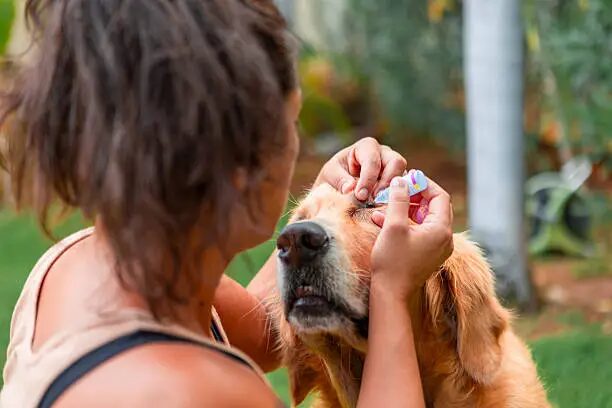
The American Kennel Club recommends stabilizing the hand holding the medication against the dog’s head, gently creating a lower-eyelid pouch, and avoiding contact between the dropper and the eye.
Preparing the Medication
Before bringing your dog over:
- Read the medication instructions.
- Have the bottle or tube ready.
- Check whether it needs shaking.
- Wash your hands.
- Make sure the medication has not expired.
- Keep treats nearby if appropriate.
Having everything prepared first prevents you from struggling with the bottle after your dog is already impatient.
Wash Your Hands First
Clean hands matter.
Wash your hands before administering eye medication and again afterward.
This helps reduce contamination of the medication and the area around the eye.
Keep Your Dog Calm
Choose a quiet location.
For some dogs, sitting beside them on the floor works well. For others, having them rest against your body provides more control.
Speak calmly and avoid rushing.
If your dog associates the eye-drop bottle with a stressful struggle every time, future treatments may become more difficult.
How to Hold Your Dog’s Head
The AKC recommends stabilizing the hand holding the medication against the dog’s head. This provides more control and reduces the chance of accidentally poking the eye if the dog moves. (AKC)
For a large dog, you can generally work beside them or behind them while keeping them secure without forcing the head.
For small dogs, a stable elevated surface may make positioning easier—but only if the surface is secure and the dog cannot fall.
How to Create the Lower-Eyelid Pouch
Gently lift the upper eyelid while using the other hand to pull the lower eyelid down slightly.
This creates a small pocket or pouch where the medication can be placed.
There is no need to pry the eye wide open.
How to Place the Eye Drop
Bring the dropper close enough to deliver the medicine, but do not touch the eye with the tip.
Place the prescribed drop into the lower-eyelid pouch and allow your dog to close the eye naturally.
The medication then spreads across the surface.
How to Avoid Touching the Eye With the Dropper
This is extremely important.
The dropper tip should not touch:
- The eyeball
- Eyelashes
- Eyelids
- Skin
- Carpet
- Your fingers
- Other surfaces
Touching the eye can cause discomfort or accidental injury, while touching surfaces can contaminate the medication. (AKC)
If the tip does become contaminated, contact your veterinarian or pharmacist for guidance rather than guessing whether the bottle is still safe to use.
What to Do After Giving the Medication
Once the drop is administered, let your dog blink normally.
Then offer praise and a reward.
The AKC recommends positive reinforcement to help dogs become more comfortable with eye-drop treatment over time. (AKC)
How to Give Drops to an Uncooperative Dog
Some dogs will cooperate. Others will behave as if the bottle contains their greatest personal enemy.
Do not turn every treatment into a physical struggle.
Try breaking the process into smaller steps:
Touch the head → reward.
Touch around the eye → reward.
Show the bottle → reward.
Position the head → reward.
Over time, this gradual approach can reduce fear.
For particularly difficult cases, ask your veterinarian or veterinary technician to demonstrate how to position your dog safely.
When to Ask Your Veterinarian to Demonstrate the Technique
Ask for a demonstration if:
- You are unsure where to place the drop
- Your dog moves constantly
- You are nervous about touching near the eye
- The medication needs to be given several times a day
- You are accidentally missing the eye repeatedly
- Your dog becomes extremely stressed
The AKC recommends asking a veterinary professional to demonstrate the proper technique when learning to administer eye drops. (AKC)
Dog Eye Allergies Treatment Based on the Cause
Treating the specific trigger can make allergy control much easier over the long term.
Treatment for Pollen Allergies
Pollen-related eye allergies may be managed with a combination of allergen reduction and veterinarian-directed medication.
Helpful strategies may include:
- Reducing exposure during heavy pollen periods
- Wiping paws after walks
- Cleaning the coat when appropriate
- Keeping bedding clean
- Using indoor air filtration
- Following the prescribed medication plan
Treatment for Grass Allergies
Grass can cause both direct irritation and allergic reactions.
If grass exposure repeatedly precedes your dog’s eye symptoms, your veterinarian may recommend reducing contact during flare-ups while finding an alternative way to maintain exercise.
Treatment for Dust Allergies
For dust-sensitive dogs, environmental management becomes especially important.
Vacuuming, washing bedding, reducing dust accumulation, and improving indoor air quality can complement medical treatment.
Treatment for Mold Allergies
Reduce exposure to damp, mold-prone areas whenever possible.
If household mold is present, proper remediation is important for people and pets alike.
Treatment for Seasonal Allergies
Seasonal allergies may require a plan that changes throughout the year.
Some dogs benefit from preventive treatment before symptoms become severe, while others may need medication only during particular periods.
Treatment for Year-Round Environmental Allergies
Year-round symptoms can be more challenging because the allergen may be present indoors or outdoors throughout the year.
Dogs with chronic environmental allergies may need a combination of medication, environmental control, skin care, and long-term allergy management.
Treatment for Contact Allergies
When a contact trigger is suspected, identify and remove the substance.
This could involve changing a grooming product, avoiding a particular plant, modifying cleaning products, or changing an object that repeatedly contacts the face.
Treatment When Flea Allergy Is Involved
If flea allergy is part of the problem, consistent flea prevention becomes a key component of treatment.
Treating the itch without controlling fleas is unlikely to provide lasting relief.
Because flea-allergic dogs can react strongly to bites, ask your veterinarian about an appropriate parasite-control plan.
Treatment for Suspected Food Allergy
Food allergy requires a different approach from pollen or dust allergy.
When a veterinarian suspects food allergy, they may recommend a controlled elimination diet using an appropriate prescription diet, followed by a structured challenge when indicated.
Randomly switching foods is much less useful because it makes it difficult to identify the actual trigger.
Why Identifying the Trigger Matters
Medication may reduce symptoms, but continuing exposure to the trigger can cause symptoms to return.
That is why long-term management often works best when it combines:
Trigger control + appropriate medication + regular monitoring.
A dog whose allergy plan addresses all three areas may have fewer flare-ups and require less reactive treatment over time.
Seasonal Dog Eye Allergies Treatment
For many dogs, eye allergy symptoms seem to appear almost like clockwork. Their eyes become watery in spring, itching gets worse after walks, or face rubbing returns every year around the same time.
Spring Dog Eye Allergy Treatment
Spring can bring a sudden increase in pollen exposure.
If your dog’s itchy eyes, watery eyes, sneezing, and skin itching reliably increase during spring, talk to your veterinarian before the season gets into full swing.
A seasonal plan may include:
- Reducing exposure during heavy pollen periods
- Wiping paws after outdoor activities
- Cleaning the coat when appropriate
- Using veterinary-approved eye products
- Starting prescribed allergy medication at the appropriate time
For some dogs, managing the problem before symptoms become severe is easier than trying to calm a major flare-up later.
Summer Dog Eye Allergy Treatment
Summer can mean continued exposure to grass pollen, weeds, dust, and outdoor particles.
Dogs that spend a lot of time in fields, parks, gardens, or grassy yards may repeatedly encounter allergens.
Keeping the dog’s paws and coat clean after outdoor activities can help reduce what gets carried back inside. Your veterinarian can also recommend treatment if symptoms continue despite environmental changes.
Fall Dog Eye Allergy Treatment
Fall is another common season for environmental allergy flare-ups.
Depending on your location, weeds and other plants may release significant amounts of pollen in the autumn. Dogs may develop watery eyes, itching, paw licking, sneezing, and skin irritation during this period.
Winter Dog Eye Allergy Treatment
Winter does not necessarily mean the end of allergies.
If your dog reacts to dust mites, mold, indoor particles, smoke, or household irritants, symptoms may continue even when outdoor pollen decreases.
In homes with year-round allergy problems, environmental management indoors becomes particularly important.
How to Reduce Pollen Exposure
You do not need to stop your dog from enjoying outdoor activities altogether.
Instead, focus on reducing unnecessary exposure:
- Wipe paws and legs after walks.
- Clean the coat when appropriate.
- Wash bedding regularly.
- Vacuum carpets and furniture.
- Keep dust from accumulating.
- Close windows during periods of heavy pollen when practical.
- Use appropriate indoor air filtration.
Best Practices During High-Pollen Days
On days when pollen exposure is particularly high, consider shortening long outdoor sessions while replacing some exercise with indoor play, training, scent games, and puzzle toys.
After returning home, wipe your dog’s paws and remove obvious debris from the coat.
If your veterinarian has prescribed seasonal allergy medication, follow the schedule rather than waiting until symptoms become severe.
Should Dogs Stay Indoors During High-Pollen Periods?
Not necessarily.
Dogs still need exercise, mental stimulation, and normal activity. The goal is sensible exposure reduction, not complete isolation.
A veterinarian can help you decide whether changing the timing or duration of outdoor activity would benefit your particular dog.
Cleaning Pollen From Your Dog’s Coat and Paws
Pollen can stick to fur and paws and later reach the face when a dog grooms.
A simple wipe-down after outdoor activity can therefore be helpful.
Pay particular attention to:
Paws → legs → belly → chest → facial area
Never spray household cleaning products or fragrances directly on your dog to remove allergens.
How Veterinarians Diagnose Dog Eye Allergies Before Treatment
Before deciding on dog eye allergies treatment, a veterinarian may need to determine whether allergies are actually responsible.
This matters because several conditions can cause similar symptoms.
Medical History
Your veterinarian may ask when the symptoms began and whether they follow a particular pattern.
Useful information includes:
- One eye or both eyes?
- Seasonal or year-round?
- Clear or thick discharge?
- Does your dog squint?
- Does your dog rub the face?
- Any recent trauma?
- Any new food?
- Any new cleaning or grooming product?
- Any itching elsewhere on the body?
- Has this happened before?
The more complete the history, the easier it may be to identify a pattern.
Complete Eye Examination
The veterinarian will inspect the eyelids, conjunctiva, cornea, pupils, surrounding tissues, and other visible structures.
An ophthalmoscope may be used to examine the eye more closely.
Schirmer Tear Test
A Schirmer tear test measures tear production.
This is particularly useful because dry eye can cause redness, discharge, and discomfort that may resemble allergies.
A veterinarian places a small test strip near the lower eyelid and measures how much moisture is produced. (PetMD)
Fluorescein Stain
A fluorescein stain helps detect scratches and ulcers on the cornea.
The stain appears bright green when it collects in an area where the normal corneal surface has been damaged.
This test is especially important when a dog is squinting or appears painful because a corneal injury changes which medications are safe to use.
Tonometry
Tonometry measures pressure inside the eye.
It may be used when glaucoma or other intraocular disease is a concern.
A red eye with pain and pressure abnormalities needs a very different treatment approach from straightforward allergic conjunctivitis.
Examination for a Foreign Body
Grass material, dust, plant fragments, or other foreign material may become trapped around or under the eyelids.
If the problem appeared suddenly, especially in one eye, the veterinarian may carefully examine for a foreign body.
Checking the Eyelids and Eyelashes
Eyelids and eyelashes can sometimes rub against the surface of the eye.
Conditions such as entropion, abnormal eyelashes, eyelid masses, or facial hair contacting the cornea can create chronic irritation.
In such cases, repeatedly treating the eye as an allergy will not correct the mechanical source.
Conjunctival Cytology
In selected cases, a veterinarian may collect cells from the conjunctiva for examination.
This can provide information about the type of inflammation and can help distinguish certain causes of conjunctivitis.
Bacterial Culture
When an infection is suspected, additional testing may be considered.
A culture can help determine whether bacteria are present and, in appropriate cases, which antibiotics may be effective.
Tear Duct Testing
A blocked or poorly functioning tear drainage system can lead to constant tearing and tear staining.
Veterinarians may evaluate the tear ducts when excessive tearing does not fit a simple allergy pattern.
Allergy Testing
When environmental allergies are suspected, allergy testing may sometimes be used to help identify relevant allergens.
Allergy testing is best viewed as part of a broader diagnostic and treatment process rather than a simple test that explains every case of red eyes.
Elimination Diet for Suspected Food Allergy
If a food allergy is suspected, your veterinarian may recommend a carefully controlled elimination diet.
This can involve a novel-protein or hydrolyzed-protein veterinary diet.
Every ingredient matters during the trial. Treats, table scraps, flavored medications, and chews can interfere with the process.
Why Diagnosis Matters Before Treating Dog Eye Allergies
A red eye is a symptom, not a diagnosis.
This simple fact is worth remembering before putting any medication into your dog’s eye.
Red Eyes Do Not Always Mean Allergies
Allergies are one possible explanation, but there are many others.
A veterinarian may need to rule out:
- Infection
- Corneal injury
- Dry eye
- Foreign material
- Glaucoma
- Uveitis
- Eyelid abnormalities
- Tear drainage disorders
Merck Veterinary Manual notes that inflammation of the conjunctiva can have multiple causes and that examination findings alone may not identify the exact cause. (Merck Veterinary Manual)
Eye Infection vs. Allergy
Allergies commonly cause itching and watery discharge, often with redness and rubbing.
Infections can also cause redness and discharge, so symptoms can overlap.
That is why it is risky to decide on antibiotics or allergy medication simply by looking at the eye.
Corneal Ulcer vs. Allergy
A corneal ulcer can cause:
- Squinting
- Tearing
- Pain
- Redness
- Rubbing
- Light sensitivity
Those signs can overlap with an allergy.
A fluorescein stain can help a veterinarian check for corneal damage before certain medications are prescribed.
Dry Eye vs. Allergy
Dry eye can cause redness, discomfort, and thick mucus-like discharge.
Because these symptoms can resemble allergy-related inflammation, tear production testing is often useful.
Glaucoma vs. Allergy
Glaucoma can cause a red, painful eye and may involve changes in vision or the appearance of the eye.
It requires prompt treatment because increased pressure inside the eye can damage vision.
Uveitis vs. Allergy
Uveitis involves inflammation inside the eye and can cause redness, tearing, squinting, and light sensitivity.
It requires a different diagnostic and treatment approach.
Foreign Body vs. Allergy
If your dog suddenly begins rubbing one eye after spending time outdoors, a piece of grass or another foreign object may be responsible.
Removing the irritant, when appropriate, can resolve the problem—but a veterinarian may need to locate it safely.
Tear Duct Problems vs. Allergy
A dog with chronic watery eyes may have a tear drainage problem rather than an allergy.
Epiphora can result from excessive tear production, blocked drainage, eyelid abnormalities, or facial anatomy. (PetMD)
Eyelid Problems vs. Allergy
If an eyelid repeatedly causes the eyelashes or skin to contact the eye, irritation can continue despite allergy treatment.
In these cases, correcting the structural problem may be necessary.
Why One-Sided Symptoms Need Extra Attention
Both eyes becoming watery and itchy can fit an environmental allergy pattern.
One eye suddenly becoming painful, red, and irritated can have a more localized cause.
One-sided symptoms do not prove that allergies are not involved, but they make a careful examination particularly useful.
Dog Eye Allergies vs. Eye Infection
The overlap between the two is one of the biggest reasons owners become confused.
Signs More Consistent With Allergies
A pattern more suggestive of allergy may include:
- Itching
- Face rubbing
- Watery eyes
- Clear discharge
- Both eyes affected
- Seasonal recurrence
- Other allergy symptoms
Signs That May Suggest Infection
Possible infection can involve:
- Persistent discharge
- Significant redness
- Swelling
- Eyelid crusting
- Discomfort
But none of these findings is enough to diagnose infection by itself.
Can Allergies Cause Eye Discharge?
Yes.
Dogs with eye allergies may have clear, cloudy, yellowish, or greenish discharge, according to PetMD. (PetMD)
However, that does not mean every type of discharge represents the same disease.
Can Allergies Cause Green or Yellow Discharge?
They can, but colored discharge should not be used as a diagnosis.
A dog with yellow or green discharge may have infection, significant inflammation, or another eye problem.
Can Allergies Cause Conjunctivitis?
Yes.
Allergic conjunctivitis is inflammation of the conjunctiva caused by an allergic response.
But conjunctivitis itself has many possible causes, so identifying the underlying problem remains important.
Can a Dog Have Allergies and an Infection at the Same Time?
Yes.
A dog can have an underlying allergy and develop another problem at the same time.
For example, chronic itching may lead to self-trauma, while inflammation and damage can contribute to secondary complications.
Why Discharge Color Alone Is Not Enough
There is no reliable rule such as:
Clear = allergy
or
Green = infection
Veterinarians evaluate the dog’s history, symptoms, eye structures, and test results before selecting treatment.
Other Eye Problems That Need Different Treatment
Conjunctivitis
Treatment depends on what is causing the inflammation.
Allergic conjunctivitis may require allergy-directed medication, while infectious, traumatic, or structural causes require different approaches.
Dry Eye / Keratoconjunctivitis Sicca
Dry eye typically requires treatment to improve lubrication and support tear production, depending on the cause.
Corneal Ulcer
A corneal ulcer requires prompt veterinary treatment.
The priority is protecting the cornea and preventing the ulcer from becoming deeper or more complicated.
Foreign Body
A foreign object may need to be removed safely.
Do not attempt to dig around inside the eye with tweezers or other household tools.
Glaucoma
Glaucoma requires treatment aimed at reducing abnormal pressure and protecting vision.
It should be considered an urgent eye problem rather than an allergy flare-up.
Uveitis
Treatment is directed toward reducing inflammation and addressing the underlying cause.
Blocked Tear Duct
Persistent tear drainage problems may require flushing or, in some cases, a procedure to address an obstruction.
Eyelid Abnormalities
Problems such as entropion or abnormal eyelashes may require mechanical correction rather than medication alone.
Tear-Staining and Epiphora
Treatment for epiphora depends on whether excess tearing is caused by irritation, allergies, poor tear drainage, eyelid abnormalities, or facial anatomy.
Eye Trauma
Trauma should receive veterinary evaluation, especially when there is pain, bleeding, swelling, cloudiness, or a change in vision.
When Should You Take a Dog With Eye Allergies to the Vet?
A mild allergy flare may be manageable after a diagnosis has been established, but certain signs should prompt veterinary attention.
Persistent Redness
An eye that remains red or repeatedly becomes red deserves evaluation.
Severe Squinting
Persistent or severe squinting can indicate pain, not simply itching.
Keeping the Eye Closed
A dog that keeps one eye closed may have significant discomfort.
Significant Swelling
Marked swelling around the eye should be examined, particularly when it develops suddenly.
Thick or Persistent Discharge
Ongoing discharge deserves attention, especially when accompanied by redness or discomfort.
Cloudy or Blue-Looking Eye
A cloudy or bluish change to the cornea is not a normal allergy symptom and should be assessed promptly.
Sudden Vision Changes
Sudden difficulty seeing is an urgent concern.
Severe Eye Pain
If your dog appears painful, do not wait several days hoping an allergy medication will solve it.
Excessive Rubbing
Repeated rubbing can cause further injury.
Symptoms After Trauma
An eye problem that follows a scratch, collision, fight, or foreign-object exposure should be evaluated.
Rapidly Worsening Symptoms
A rapidly deteriorating eye should receive prompt veterinary attention.
Symptoms That Do Not Improve With Recommended Treatment
If your veterinarian has prescribed treatment and the eye is not improving as expected, contact them.
The diagnosis or treatment plan may need to be reassessed.
Are Dog Eye Allergies an Emergency?
Mild dog eye allergies are generally not considered an emergency, but a red or uncomfortable eye can sometimes be caused by a more serious condition.
Which Symptoms Are Urgent?
Seek prompt veterinary care for:
- Severe pain
- A tightly closed eye
- Significant squinting
- Sudden cloudiness
- Sudden vision changes
- Major swelling
- Eye trauma
- Rapid deterioration
Severe Pain and Squinting
Pain is one of the strongest reasons not to assume allergies.
A dog with an intensely painful eye may have a corneal ulcer, glaucoma, uveitis, or another condition requiring immediate attention.
Sudden Cloudiness
A sudden cloudy appearance of the eye should be evaluated rather than treated with an over-the-counter allergy product.
Sudden Vision Changes
Any sudden change in vision warrants prompt veterinary assessment.
Eye Injury
An eye that has been scratched or struck can deteriorate even if the initial injury looks minor.
Severe Facial Swelling
If eye or facial swelling occurs together with difficulty breathing, collapse, repeated vomiting, or widespread hives, treat it as a potentially serious allergic reaction and seek emergency veterinary care.
Why Eye Problems Should Not Be Ignored
The eye is a delicate structure.
Some eye disorders respond very well when treated early but can become much more difficult to manage when care is delayed.
How Long Does Dog Eye Allergy Treatment Take?
How Quickly Do Eye Drops Work?
Some dogs show improvement relatively quickly after the correct medication is started.
PetMD reports that many dogs recover from allergy-related eye symptoms within days of beginning treatment.
How Long Does Allergy Medication Take to Help?
The response varies by medication and by dog.
Some treatments are intended for rapid symptom control, while other long-term therapies take more time to achieve their full effect.
How Long Does Seasonal Allergy Treatment Continue?
Seasonal treatment may continue throughout the period when the trigger is present.
For a dog sensitive to spring pollen, treatment may be needed primarily during that period rather than throughout the entire year.
Why Symptoms Can Return
Allergy medication does not necessarily remove the underlying sensitivity.
When the dog encounters the trigger again, symptoms may return.
Chronic Dog Eye Allergies
Dogs with chronic allergies may require ongoing management.
Their plan may involve environmental control, medication, skin care, parasite prevention, or immunotherapy.
What to Do if Your Dog Is Not Improving
Contact your veterinarian rather than adding medications independently.
A lack of improvement may mean:
- The trigger is still present
- The allergy needs a different treatment
- The eye has developed a secondary problem
- The original diagnosis was incorrect
- Another eye disease is involved
Long-Term Management of Dog Eye Allergies
For dogs with recurring allergies, prevention can be just as important as treating individual flare-ups.
Identify the Trigger
Look for patterns in:
- Season
- Location
- Outdoor activity
- Food
- Grooming products
- Household changes
Reduce Allergen Exposure
Remove or minimize exposure to known triggers wherever practical.
Maintain Preventive Flea Control
For dogs with flea allergy, consistent flea prevention is a central part of controlling allergic disease.
Follow the Medication Schedule
If your veterinarian prescribes seasonal or ongoing allergy medication, follow the recommended schedule.
Stopping and restarting medication without guidance can make management more difficult.
Maintain Skin and Ear Health
Because allergies often involve the skin, paws, and ears, controlling those problems can contribute to better overall allergy management.
Monitor Seasonal Patterns
A simple note in your phone can help.
Record when your dog’s eyes become watery or itchy and what other symptoms appear.
After several months, a pattern may become obvious.
Keep a Dog Allergy Symptom Diary
A useful diary might include:
| What to Track | Example |
|---|---|
| Date | September 15 |
| Eye symptoms | Red, watery |
| Itching | Moderate |
| Outdoor exposure | Long grass walk |
| Food changes | None |
| Other symptoms | Paw licking |
| Medication | Veterinarian-prescribed drops |
| Response | Improved next day |
This information can help your veterinarian recognize seasonal or environmental patterns.
Regular Veterinary Follow-Ups
Dogs receiving long-term allergy medication may need periodic reassessment.
Follow-up visits are especially important when symptoms are changing or medication is being used for extended periods.
Allergy Immunotherapy
For selected dogs with environmental allergies, immunotherapy may be used to gradually increase tolerance to specific allergens.
This is a long-term strategy and does not guarantee that every dog will become symptom-free, but it can be an important option for chronic allergic disease.
Dog Eye Allergies and Food Allergies
Can Food Allergies Cause Eye Symptoms?
Food allergies can contribute to overall allergic disease, but eye symptoms by themselves do not establish a food allergy.
Food Allergy vs. Environmental Allergy
Environmental allergies are commonly associated with substances such as pollen, grass, mold, and dust.
Food allergies involve specific food components.
The management approach is different.
Common Signs of Food Allergy
Dogs with food allergies may experience:
- Persistent itching
- Paw licking
- Ear inflammation
- Skin irritation
- Recurrent skin infections
- Gastrointestinal symptoms in some cases
When a Vet May Recommend an Elimination Diet
If food allergy is suspected, a veterinarian may recommend a structured elimination diet.
The trial needs to be followed carefully to produce useful information.
Hydrolyzed Protein Diets
Hydrolyzed diets contain proteins broken down into smaller components and may be recommended during a diagnostic food trial.
Novel Protein Diets
A novel-protein diet uses a protein source the dog has not previously eaten or has had limited exposure to.
The appropriate option depends on the dog’s dietary history.
Why Random Food Changes Can Be Misleading
Changing from one food to another every few weeks makes it difficult to establish cause and effect.
A structured veterinary trial provides better information.
Can Treats Interfere With a Food Trial?
Yes.
Even small extras can complicate an elimination diet.
That includes treats, table scraps, flavored supplements, chews, and some flavored medications.
Follow the veterinarian’s dietary instructions closely.
Dog Eye Allergies and Other Allergy Symptoms
Itchy Skin and Red Eyes
When itchy skin and red eyes occur together, the eyes may be part of a broader allergy problem.
Paw Licking and Eye Allergies
Persistent paw licking is common in dogs with environmental allergic disease.
If it increases at the same time as itchy or watery eyes, tell your veterinarian.
Ear Problems and Eye Allergies
Recurring ear inflammation often occurs alongside allergic skin disease.
A dog with ear problems, itchy paws, skin irritation, and eye symptoms may need broader allergy management.
Sneezing and Watery Eyes
Sneezing combined with watery eyes may occur during environmental allergy flare-ups.
However, infections and other respiratory conditions can also cause sneezing.
Face Rubbing
Face rubbing is particularly relevant because it may worsen eye irritation and potentially injure the cornea.
Recurrent Skin Infections
Repeated skin infections can develop in dogs with chronic allergic disease.
Managing the underlying allergy can therefore be an important part of reducing recurring problems.
Seasonal Allergy Flare-Ups
Keeping track of seasonal changes can make recurring allergy patterns much easier to recognize.
Dog Eye Allergies in Puppies
Can Puppies Get Eye Allergies?
Yes, puppies can develop allergic eye problems.
However, young dogs can also experience infectious and developmental eye conditions, so new symptoms should not automatically be blamed on allergies.
Puppy Red Eyes
A puppy with red eyes should be monitored carefully, particularly if the redness is accompanied by pain, swelling, or discharge.
Puppy Eye Discharge
Persistent discharge deserves veterinary attention.
A veterinarian can determine whether the cause is allergy, infection, irritation, or another condition.
Follicular Conjunctivitis in Young Dogs
Follicular conjunctivitis can occur in young dogs and is associated with allergic or environmental irritation. It may cause redness, discharge, and irritation.
Safe Treatment for Puppy Eye Allergies
Do not select an allergy medication based simply on the puppy’s age and weight.
Puppies can have different medication considerations, so treatment should be veterinarian-directed.
Why Puppies Should Not Be Given Human Allergy Medication Without Veterinary Advice
A human medication may have an inappropriate formulation, additional active ingredients, or a dose that is unsuitable for a puppy.
Dog Eye Allergies Treatment for Older Dogs
Why New Eye Symptoms in Senior Dogs Need Evaluation
A new eye problem in an older dog deserves careful evaluation because age increases the possibility of other eye disorders.
Medication Considerations in Older Dogs
Senior dogs may take medications for several conditions simultaneously.
Your veterinarian needs to consider potential interactions and the dog’s overall health before recommending an allergy medicine.
Differentiating Allergies From Age-Related Eye Disease
Not every change in an older dog’s eyes is an allergy.
Cloudiness, vision changes, pain, or unusual pupil changes should be assessed.
Regular Eye Monitoring for Senior Dogs
During routine veterinary visits, mention any change in:
- Tearing
- Redness
- Vision
- Squinting
- Discharge
- Eye appearance
Common Mistakes When Treating Dog Eye Allergies
Assuming Every Red Eye Is an Allergy
This is the biggest mistake.
Redness tells you that something is happening—not what the cause is.
Using Human Eye Drops
Only use human eye products when your veterinarian has specifically recommended the particular medication.
Reusing Old Prescription Medication
A new episode can have a completely different cause.
Giving Combination Allergy Products
Combination human cold or allergy products may contain ingredients that are inappropriate for dogs.
Ignoring Severe Squinting
Squinting may indicate pain and should not automatically be interpreted as itching.
Waiting Too Long to See a Veterinarian
Persistent or worsening symptoms deserve professional evaluation.
Stopping Prescription Treatment Too Early
Some medications require a specific treatment duration or tapering schedule.
Follow your veterinarian’s instructions rather than stopping when the eye simply looks better.
Focusing Only on the Eyes When the Dog Has Broader Allergies
If your dog is also scratching, licking paws, shaking their head, or developing recurring ear problems, mention all of these symptoms.
Using Unproven Homemade Remedies
The internet is full of homemade eye remedies, but the surface of the eye is not a place to experiment.
Avoid putting essential oils, herbal mixtures, soaps, household chemicals, or homemade solutions into the eye.
Dog Eye Allergy Treatment: Quick Comparison
| Treatment Approach | What It May Help With | How It Is Used |
|---|---|---|
| Allergen avoidance | Reducing environmental exposure | Long-term management |
| Veterinary eye wash | Removing allergens and mild irritants | Supportive care |
| Artificial tears | Lubrication and selected forms of irritation | Veterinary-directed |
| Topical antihistamines | Allergy-related itching and inflammation | Veterinary-directed |
| Mast-cell stabilizers | Allergic inflammation | Veterinary-directed |
| Dual-action allergy drops | Allergic eye inflammation | Veterinary-directed |
| Anti-inflammatory drops | Significant ocular inflammation | Diagnosis-dependent |
| Oral antihistamines | Some allergy symptoms | Veterinary-directed |
| Systemic allergy medication | Broader allergic disease | Veterinary-directed |
| Immunotherapy | Long-term environmental allergy management | Specialist/veterinary plan |
| Antibiotics | Appropriate bacterial infections | Only when indicated |
The key takeaway is that there is no universal best treatment for dog eye allergies. A treatment that is helpful for allergic conjunctivitis may be inappropriate for glaucoma, a corneal ulcer, dry eye, or another eye condition.
Frequently Asked Questions About Dog Eye Allergies Treatment
How do you treat dog eye allergies?
Treatment depends on the cause and severity. It may include allergen avoidance, veterinary eye washes, prescription eye drops, antihistamines, systemic allergy medication, or long-term allergy management.
What is the best treatment for dog eye allergies?
There is no single best treatment. The appropriate option depends on the dog’s specific diagnosis, allergy trigger, symptoms, and overall health.
What eye drops are safe for dogs with allergies?
Veterinarians may use certain antihistamine, mast-cell-stabilizing, dual-action, anti-inflammatory, or lubricating eye medications. Use only products recommended for your dog.
Can I treat my dog’s eye allergies at home?
Once allergies have been diagnosed, supportive care such as wiping paws, reducing pollen exposure, cleaning bedding, and using veterinarian-approved eye products may help. New or painful eye symptoms should be examined rather than treated blindly at home.
Can Benadryl help dog eye allergies?
Diphenhydramine (Benadryl) may help some dogs with allergy-related symptoms, but it does not treat every cause of red eyes. Ask your veterinarian before giving it.
Can Zyrtec help a dog’s itchy eyes?
Cetirizine (Zyrtec) may be used in some dogs under veterinary direction. Response varies, and formulation matters. (PetMD)
Can I use human allergy eye drops on my dog?
Do not use them unless your veterinarian specifically recommends the product.
Are artificial tears safe for dogs?
Some veterinary or veterinarian-approved lubricating products may be used in dogs. The specific product should be selected based on the eye’s condition.
Can saline help a dog’s itchy eyes?
An appropriate sterile ophthalmic rinse may help flush some irritants, but homemade saline solutions should be avoided.
Can steroid eye drops help dog allergies?
They may help appropriately diagnosed allergic inflammation, but a corneal ulcer must be ruled out first because topical corticosteroids can interfere with corneal healing.
Why should a vet check for a corneal ulcer first?
A corneal ulcer can look similar to allergy-related irritation but needs different management. Certain medications, particularly topical corticosteroids, can be harmful when an ulcer is present.
How do I clean my dog’s eyes during allergy season?
Gently wipe discharge from the surrounding fur and use a veterinarian-approved ophthalmic cleaner when appropriate. Avoid rubbing the eye.
How often can I flush my dog’s eyes?
The appropriate frequency depends on the product and your dog’s condition. Follow the product label or your veterinarian’s instructions rather than repeatedly flushing an unexplained eye problem.
How long do dog eye allergies take to clear?
Some dogs improve within days after appropriate treatment, although chronic or seasonal allergies can recur when the trigger returns.
Do dog eye allergies come back?
Yes. If the underlying allergy remains, symptoms can return after another exposure.
Can dog eye allergies be cured permanently?
Most allergies are managed rather than permanently cured. Long-term strategies such as allergen reduction and, in selected cases, immunotherapy can improve control.
What causes recurring eye allergies in dogs?
Recurring symptoms can result from repeated exposure to environmental allergens such as pollen, grass, mold, or dust, as well as broader allergic disease.
Can food allergies cause red eyes in dogs?
Food allergies can be part of a dog’s overall allergic disease, but red eyes alone are not enough to diagnose a food allergy.
How can I stop my dog from rubbing their eyes?
Reduce the source of irritation and follow your veterinarian’s treatment plan. A recovery cone may be recommended when a dog cannot stop rubbing or scratching.
When is a dog’s red eye an emergency?
Seek prompt veterinary attention for severe pain, persistent squinting, a closed eye, sudden cloudiness, sudden vision changes, major swelling, or trauma.
Why is my dog’s eye red but not infected?
Redness can occur because of allergies, irritation, dry eye, corneal disease, glaucoma, uveitis, and other conditions. An eye examination may be necessary to identify the cause.
Why does my dog have watery eyes?
Watery eyes can result from allergies, irritation, excessive tear production, blocked tear drainage, eyelid abnormalities, facial anatomy, or other eye disease.
Why is my dog squinting with allergies?
Allergy-related inflammation can cause discomfort and itching, leading to squinting. However, squinting is also a common sign of painful eye conditions, so persistent or severe squinting should be evaluated.
Should I take my dog to a vet for eye allergies?
Yes, particularly when symptoms are new, persistent, recurring, painful, one-sided, or worsening. A veterinarian can determine whether allergies are actually responsible and choose a safe treatment.
Final Thoughts on Dog Eye Allergies Treatment
Finding the right dog eye allergies treatment starts with one simple idea: make sure the problem really is an allergy.
Allergic eye disease can cause red, itchy, watery eyes and may respond well to allergen avoidance, veterinary eye washes, prescription eye drops, antihistamines, or broader allergy medication. For dogs with recurring environmental allergies, long-term management may include careful trigger avoidance and, in selected cases, immunotherapy.
At home, simple habits can help. Wipe your dog’s paws after walks, reduce pollen and dust exposure, keep bedding clean, and prevent excessive eye rubbing. These steps can support treatment and may reduce future flare-ups.
Medication, however, deserves caution. Do not use human eye drops, leftover prescriptions, steroid medication, or combination allergy products simply because your dog’s eye looks red. The wrong treatment can mask symptoms or worsen certain eye conditions.
Most importantly, watch for warning signs. Severe squinting, significant pain, a cloudy eye, sudden vision changes, major swelling, or eye trauma should prompt prompt veterinary attention rather than home allergy treatment.