Seeing your dog’s eye suddenly turn red, watery, swollen, or covered in discharge can be alarming. You may immediately wonder whether your dog has an eye infection, an allergy, or something stuck in the eye. If the symptoms look mild, it is also natural to search for conjunctivitis in dogs treatment at home before making a trip to the veterinarian.
Conjunctivitis, sometimes called pink eye, is inflammation of the conjunctiva—the thin tissue that covers the front of the eye and lines the inside of the eyelids. It can make a dog’s eye look noticeably red and irritated and may cause watering, mucus, discharge, squinting, or frequent blinking.
The important thing to understand is that conjunctivitis is not always caused by the same problem. Allergies, environmental irritants, infections, foreign material, dry eye, eyelid abnormalities, and other eye conditions can produce similar symptoms.
That is why treating a dog’s red eye with a random eye drop or home remedy can sometimes do more harm than good.
Can conjunctivitis in dogs be treated at home?
Mild eye irritation may sometimes be supported at home, particularly by gently cleaning away discharge, preventing your dog from rubbing the eye, and removing obvious irritants such as smoke or dust.
However, home care does not replace a veterinary examination when the eye is painful, cloudy, severely swollen, injured, or getting worse.
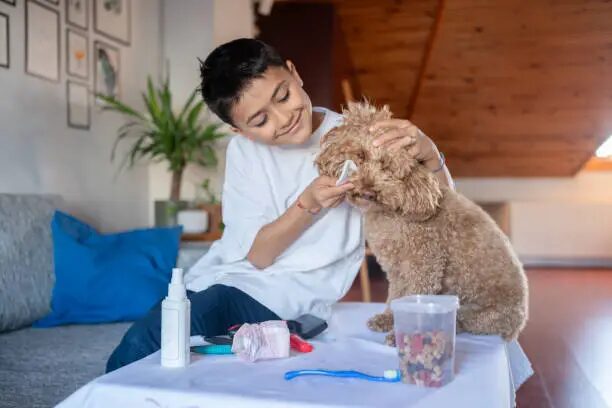
What Is Conjunctivitis in Dogs?
Canine conjunctivitis is inflammation of the conjunctiva, the delicate membrane surrounding the eye and lining the inside of the eyelids.
When this tissue becomes irritated or inflamed, the tiny blood vessels within it become more noticeable. As a result, your dog’s eye may appear pink, red, swollen, or bloodshot.
Conjunctivitis can occur in one eye or both eyes. The pattern can sometimes provide clues about the underlying problem, but it is not enough by itself to determine the cause.
For example, irritation from something that entered the eye may affect one eye, while allergies or some infectious conditions may affect both.
What Does the Conjunctiva Do?
The conjunctiva helps provide a protective barrier for the eye. It also contributes to the eye’s normal moisture and helps protect the tissues from environmental irritants.
When the conjunctiva becomes inflamed, the eye may respond with:
- Increased tearing
- Redness
- Swelling
- Mucus production
- Eye discharge
- Increased blinking
- Squinting
- Sensitivity to light
This is why dog conjunctivitis can look similar to several other eye conditions.
Dog Conjunctivitis vs. Pink Eye
You may see the terms conjunctivitis and pink eye used interchangeably.
In simple terms, pink eye is a common way of describing inflammation of the conjunctiva. The term does not necessarily tell you what caused the inflammation.
A dog with conjunctivitis may have an infection, but infection is not the only possible cause.
For instance, a dog may develop conjunctival inflammation after exposure to pollen, dust, smoke, grass, or another irritant. Dogs with dry eye can also develop recurring inflammation and discharge.
So, “pink eye” does not automatically mean your dog needs an antibiotic.
The appropriate treatment depends on the underlying cause.
Is Conjunctivitis Common in Dogs?
Yes. Conjunctivitis is a relatively common reason dogs develop red or irritated eyes.
Dogs explore their environment with their noses and faces, so their eyes can come into contact with dust, grass, dirt, pollen, hair, and other materials.
Some dogs are also more susceptible to eye problems because of their facial structure, eyelids, allergies, or underlying health conditions.
However, common does not mean harmless.
A red eye can occasionally be the first visible sign of a more serious eye problem, which is why persistent or painful symptoms should not simply be ignored.
Can Conjunctivitis Affect One or Both Eyes?
It can affect one eye, both eyes, or start in one eye and later involve the other.
The number of affected eyes can sometimes provide a clue:
- One eye: foreign material, trauma, localized irritation, or certain infections may be possible.
- Both eyes: allergies, environmental irritation, or some infectious and inflammatory conditions may be more likely.
- One eye followed by the other: some contagious or infectious conditions may spread between the eyes.
These are only general patterns. You cannot determine the exact cause simply by looking at whether one or two eyes are affected.
Is Conjunctivitis Painful for Dogs?
Conjunctivitis itself can range from mildly uncomfortable to quite irritating, depending on the cause and severity.
Some dogs may simply have watery or red eyes. Others may repeatedly blink, squint, paw at their face, or avoid bright light.
However, significant pain is a warning sign.
If your dog keeps an eye tightly closed, appears very uncomfortable, or refuses to let you near the eye, don’t assume it is ordinary conjunctivitis. Pain can occur with problems such as corneal ulcers, glaucoma, uveitis, or eye trauma.
A painful eye deserves veterinary attention.
Symptoms of Conjunctivitis in Dogs
The signs of conjunctivitis can vary depending on what caused the inflammation.
Some dogs develop only mild redness and watering, while others have considerable discharge and swelling.
Common signs of dog conjunctivitis include:
- Red or pink eyes
- Watery eyes
- Eye discharge
- Yellow or green discharge
- Clear discharge
- Mucus around the eye
- Swollen eyelids
- Excessive blinking
- Squinting
- Pawing at the face
- Rubbing the eye
- Sensitivity to light
- A visible or swollen third eyelid
- Irritated skin around the eye
- Crust or discharge around the eyelids
Your dog may have only one or two of these symptoms.
For example, a dog with environmental allergies might have watery, red eyes and frequent rubbing, while another dog may have thick mucus and more noticeable inflammation.
What Does Conjunctivitis Look Like in Dogs?
A dog’s eye with conjunctivitis may appear:
- Pink or red
- Watery
- Puffy around the eyelids
- Sticky or crusty
- Covered with mucus
- More closed than normal
- Irritated around the surrounding skin
You may also notice your dog blinking more frequently or rubbing their face against furniture, carpeting, or their paws.
One important point is that appearance alone cannot confirm conjunctivitis.
A corneal ulcer, for example, can also cause redness, watering, squinting, and discomfort. Similarly, glaucoma and uveitis can produce a red, painful eye.
That is why persistent symptoms should be assessed rather than treated based only on appearance.
Conjunctivitis Symptoms by Eye Discharge
The type and amount of discharge can provide useful information, but discharge color should not be used as a diagnosis.
| Eye discharge | Possible causes |
|---|---|
| Clear and watery | Allergies, mild irritation, environmental triggers |
| Mucus-like | Irritation, inflammation, dry eye |
| Yellow or green | Infection or significant inflammation |
| Thick or crusty | Infection, dry eye, inflammation, or another eye condition |
Is green or yellow discharge always an infection?
Not necessarily.
Yellow or green discharge can occur with infection, but the appearance of discharge alone does not prove that bacteria are responsible.
Likewise, clear discharge does not guarantee that the problem is harmless.
The complete set of symptoms matters more than discharge color alone.
What Causes Conjunctivitis in Dogs?
One of the most important things to know about canine conjunctivitis is that there is no single cause.
The inflammation may develop because of an infection, an allergy, physical irritation, an underlying eye disorder, or another medical problem.
Understanding the possible causes also explains why there is no single home remedy that works for every dog.
Common Causes of Dog Conjunctivitis
1. Bacterial Infections
Bacteria can contribute to conjunctival inflammation and eye discharge.
A bacterial problem may produce redness, swelling, mucus, or yellowish/greenish discharge. However, a veterinarian may need to determine whether bacteria are actually involved before deciding whether an antibiotic is appropriate.
Antibiotics do not treat every cause of conjunctivitis.
2. Viral Infections
Some viruses can cause eye inflammation and discharge.
Viral disease may occur alongside other symptoms, depending on the specific infection.
If your dog is also showing signs such as coughing, sneezing, fever, lethargy, poor appetite, or nasal discharge, veterinary advice becomes especially important.
3. Allergies
Allergies are another possible cause of red, watery, irritated eyes.
Dogs can react to environmental allergens such as:
- Pollen
- Grass
- Weeds
- Dust
- Mold
- Other airborne particles
Dogs with allergies may also lick or chew their paws, scratch their skin, rub their face, or develop recurring ear and skin problems.
If your dog repeatedly develops red, watery eyes during a particular season, an environmental allergy may be worth discussing with your veterinarian.
4. Environmental Irritants
Sometimes the problem isn’t an infection at all.
A dog’s eyes can become irritated by:
- Smoke
- Dust
- Aerosols
- Perfume
- Cleaning products
- Strong fragrances
- Airborne debris
- Grass particles
- Household chemicals
If symptoms appeared shortly after exposure to something irritating, removing the trigger may help prevent further irritation.
However, if redness or discomfort continues, don’t assume the irritant was the only problem.
5. Foreign Bodies
A tiny piece of grass, dirt, hair, seed, or other material can become trapped around or beneath the eyelids.
A foreign body may cause:
- Sudden tearing
- Squinting
- Pawing at the eye
- Redness
- Frequent blinking
- Discomfort
If something appears embedded in the eye, don’t try to pull it out yourself.
An attempt to remove a deeply lodged object can potentially cause additional damage.
6. Eye Trauma or Scratches
Dogs can injure their eyes while playing, running through vegetation, fighting with another animal, or rubbing their faces.
Even a small scratch on the cornea can become a significant problem.
A dog with an eye injury may keep the eye partially or completely closed and may show obvious discomfort.
This is one situation where home remedies are not an appropriate substitute for veterinary assessment.
7. Corneal Ulcers
A corneal ulcer is an open wound on the surface of the cornea.
It can produce signs that look similar to conjunctivitis, including:
- Redness
- Excessive tearing
- Squinting
- Eye rubbing
- Sensitivity to light
- Cloudiness
Because ulcers can worsen and threaten vision, a veterinarian may use a fluorescein stain to check the cornea.
8. Dry Eye or KCS
Keratoconjunctivitis sicca (KCS), commonly called dry eye, occurs when the eyes do not produce enough tears.
Dogs with dry eye may develop:
- Red eyes
- Thick mucus
- Recurring conjunctivitis
- Eye irritation
- Squinting
- Corneal changes
Without appropriate treatment, chronic dry eye can cause serious discomfort and potentially permanent damage to the eye.
For this reason, a dog with repeated episodes of conjunctivitis may need evaluation for an underlying tear-production problem.
9. Eyelid Abnormalities
The eyelids play an important role in protecting the eye.
Problems such as entropion, where an eyelid rolls inward, can cause eyelashes or hair to rub against the eye.
Other eyelid abnormalities can also contribute to chronic irritation.
In these cases, repeatedly treating the redness without addressing the underlying anatomical problem may not solve the issue.
10. Abnormal Eyelashes
Some dogs develop eyelashes or hairs that grow in an abnormal direction and rub against the surface of the eye.
This can cause persistent irritation and watering.
If the irritation keeps returning despite treatment, your veterinarian may look closely at the eyelids and eyelashes to determine whether abnormal growth is contributing to the problem.
11. Tear Duct Problems
Blocked or poorly functioning tear ducts can affect how tears drain from the eye.
This may contribute to:
- Excessive tearing
- Wet facial hair
- Eye irritation
- Recurrent discharge
A veterinarian can assess the tear drainage system if this is suspected.
12. Parasites and Other Conditions
In some situations, parasites or immune-mediated disorders can contribute to eye inflammation.
These causes are less straightforward and generally require a veterinary examination to identify.
This is another reason not to assume that every red eye is simply a mild case of pink eye.
Can You Treat Conjunctivitis in Dogs at Home?
This is the question most dog owners want answered.
The short answer is: you may be able to provide supportive care at home, but you should not assume you can diagnose and cure every case yourself.
If the irritation is minor, there are several things you can do to keep your dog comfortable while monitoring the eye.
Safe supportive care may include:
- Gently cleaning eye discharge
- Using an appropriate sterile saline solution when suitable
- Keeping the area around the eye clean
- Removing obvious environmental irritants
- Preventing your dog from rubbing the eye
- Keeping your dog away from smoke and chemical fumes
- Following a veterinarian’s treatment instructions if medication has already been prescribed
The goal of these measures is supportive care, not self-diagnosis.
What Home Treatment Cannot Replace
Home care cannot reliably determine whether your dog’s red eye is caused by:
- A bacterial infection
- An allergy
- A corneal ulcer
- Glaucoma
- Uveitis
- Dry eye
- A foreign body
- An eyelid abnormality
- Trauma
- Another eye disorder
Some of these conditions require prescription medication, diagnostic testing, or even urgent treatment.
For example, using an inappropriate steroid eye drop on an undiagnosed corneal ulcer can be dangerous.
That is why the safest approach is to keep home care limited to gentle supportive measures unless your veterinarian has diagnosed the problem and given you specific treatment instructions.
Safe Home Treatment for Conjunctivitis in Dogs
If your dog’s symptoms appear mild and there are no emergency warning signs, you can focus on keeping the eye clean and preventing additional irritation.
1. Gently Clean Your Dog’s Eyes
Eye discharge can accumulate around the eyelids and become uncomfortable.
Cleaning it gently can help keep the surrounding skin cleaner and may make your dog more comfortable.
How to clean your dog’s eye safely
- Wash your hands before touching your dog’s face.
- Use an appropriate sterile saline solution when suitable.
- Moisten a clean cotton pad, gauze, or soft cloth.
- Gently wipe away discharge from around the eye.
- Do not scrub the eye.
- Use a fresh pad or clean section of cloth for the other eye.
- Wash your hands again afterward.
Never force your dog’s eyelids open if they are tightly closed because of pain.
If your dog strongly resists because the eye appears painful, stop and contact a veterinarian.
How often should you clean the eye?
There is no universal schedule because it depends on how much discharge your dog has.
If discharge accumulates, gentle cleaning may be appropriate as needed. The goal is simply to remove buildup without repeatedly irritating the delicate tissues around the eye.
2. Use Sterile Saline for Minor Irritation
Sterile saline may be useful for gently flushing away minor dust or debris and cleaning around an irritated eye.
However, saline is not an antibiotic and does not cure every cause of conjunctivitis.
Think of it as a cleaning and supportive measure, rather than a complete treatment.
If your dog has severe redness, persistent squinting, pain, cloudiness, or vision changes, flushing the eye at home should not delay veterinary care.
3. Prevent Your Dog From Rubbing the Eye
Dogs don’t understand that rubbing an irritated eye can make the problem worse.
Pawing at the face or rubbing the eye against furniture can potentially cause additional scratches.
If your dog repeatedly tries to rub the affected eye, a protective Elizabethan collar, commonly called a cone, may help prevent self-trauma while you arrange veterinary care.
Also keep your dog’s paws reasonably clean, particularly if the dog spends a lot of time outdoors.
4. Remove Environmental Irritants
If you suspect an environmental trigger, reduce your dog’s exposure to it.
Potential irritants include:
- Cigarette or fireplace smoke
- Dust
- Aerosol sprays
- Perfumes
- Strong cleaning products
- Air fresheners
- Heavy fragrances
- Grass or plant debris
Good ventilation can also help reduce airborne irritants inside the home.
If your dog develops watery eyes after spending time outdoors, gently cleaning the face and paws after coming inside may help reduce contact with pollen and other environmental material.
5. Keep the Eye Area Clean and Dry
Long hair around the eyes can sometimes collect discharge and debris.
Keep the area around the eyes clean, but do not attempt to cut hair extremely close to the eye if you are not comfortable doing so safely.
Regularly wash your dog’s bedding and keep sleeping areas reasonably clean.
This can reduce the accumulation of dust and other potential irritants.
A Simple Home-Care Checklist
If your dog’s eye irritation appears mild and there are no warning signs, remember:
Clean → Protect → Remove irritants → Monitor
- Clean: Gently remove discharge.
- Protect: Stop your dog from rubbing the eye.
- Remove irritants: Avoid smoke, dust, chemicals, and strong fragrances.
- Monitor: Watch for worsening redness, discharge, pain, swelling, or changes in the eye.
If symptoms get worse instead of better, home care should stop being the only plan.
7. Home Remedies for Dog Conjunctivitis: What Is Safe?
When your dog has a red or irritated eye, it can be tempting to search for a natural home remedy for conjunctivitis. You may find suggestions involving tea, honey, vinegar, coconut oil, or other household ingredients.
The problem is that the surface of a dog’s eye is extremely delicate. Something that seems harmless on the skin can cause significant irritation when placed directly into the eye.
For that reason, simple supportive care is safer than experimenting with homemade treatments.
Potentially Appropriate Supportive Measures
Depending on the situation, supportive home care may include:
- Sterile saline for appropriate gentle flushing or cleaning
- Gently removing discharge with clean gauze or a soft cloth
- Using a clean, damp cloth around—not aggressively on—the eye
- Reducing exposure to smoke, dust, pollen, and chemical fumes
- Preventing your dog from rubbing or scratching the eye
- Following medication instructions provided by your veterinarian
These measures can help keep the eye clean and reduce additional irritation, but they don’t necessarily treat the underlying cause.
Home Remedies You Should NOT Put in Your Dog’s Eye
Avoid putting unapproved household substances directly into an irritated dog’s eye.
Apple Cider Vinegar
Apple cider vinegar is sometimes promoted online as a natural treatment for infections. It should not be put into your dog’s eye.
Its acidity can irritate delicate eye tissues and potentially make an existing problem worse.
Tea or Chamomile Tea
You may see recommendations for tea bags or cooled chamomile tea as an eye compress.
Even if the liquid appears mild, homemade preparations are not sterile. Small particles or contaminants can further irritate an already inflamed eye.
Honey
Honey is sometimes promoted for its antimicrobial properties, but that does not make it an appropriate DIY eye treatment.
Putting food products into the eye can introduce contaminants and cause additional irritation.
Coconut Oil
Coconut oil may be useful for some skin applications, but the fact that something is considered safe to eat does not mean it is safe to put into the eye.
Avoid putting coconut oil directly into your dog’s eye unless a veterinarian specifically recommends a veterinary ophthalmic product containing an appropriate ingredient.
Essential Oils
Essential oils should not be placed in or around an irritated dog’s eye.
Many essential oils can irritate sensitive tissues, and some can also be toxic to dogs if ingested or absorbed inappropriately.
Baking Soda
Baking soda is another household substance that should not be used as an eye treatment.
Hydrogen Peroxide
Never use hydrogen peroxide as a homemade eye wash.
It can damage or irritate delicate eye tissues.
Homemade Salt Water
It is better to use a properly prepared sterile saline product rather than making a homemade salt solution.
The concentration, cleanliness, and sterility of a homemade mixture may not be appropriate for the eye.
Why “Natural” Does Not Automatically Mean Safe
One of the biggest misconceptions surrounding dog conjunctivitis is that a natural ingredient must be gentle.
That’s not necessarily true.
The cornea and conjunctiva are highly sensitive tissues. An inappropriate substance can cause chemical irritation, worsen inflammation, or potentially injure the surface of the eye.
A useful rule is:
If a substance was not specifically designed or recommended for use in the eye, don’t put it directly into your dog’s eye.
Simple supportive care is generally safer than experimenting with ingredients from the kitchen or bathroom cabinet.
8. Can I Use Human Eye Drops for My Dog’s Conjunctivitis?
This is another common question from dog owners.
The answer is: don’t assume that human eye drops are safe for your dog simply because they are available over the counter.
Human and veterinary medications can contain different ingredients, concentrations, preservatives, or combinations that may not be appropriate for your dog.
More importantly, the right medication depends on why your dog’s eye is red in the first place.
Artificial Tears vs. Medicated Eye Drops
Not all eye drops are the same.
Some products are designed simply to lubricate the eye, while others contain medications that affect inflammation, infection, tear production, or other eye processes.
A veterinarian may recommend a specific ophthalmic lubricant in some situations, but that is different from choosing a random product from your medicine cabinet.
Be especially cautious with:
- Redness-relief eye drops
- Antibiotic eye drops
- Steroid eye drops
- Combination eye medications
- Products containing multiple active ingredients
- Contact-lens solutions
- Medicated human eye drops
Why Redness-Relief Drops Can Be a Problem
Human “get the red out” eye drops are designed for specific human conditions.
They are not automatically appropriate for dogs.
More importantly, making the eye look less red does not necessarily treat the underlying problem.
A dog with a corneal ulcer, glaucoma, or uveitis may still have a serious condition even if the redness temporarily changes.
The goal should be to identify and treat the cause, not simply make the eye appear less red.
Why Steroid Eye Drops Require Special Caution
Steroid-containing eye medications can reduce inflammation, but they are not appropriate for every eye problem.
For example, some corneal ulcers can become significantly worse when corticosteroids are used inappropriately.
This is why you should never start a steroid eye medication on your own just because your dog’s eye looks inflamed.
A veterinarian may first need to perform a fluorescein stain to check whether the cornea has an ulcer or other surface injury.
What About Human Antibiotic Eye Drops?
Antibiotic eye drops may be appropriate in some cases, but red eyes do not automatically mean antibiotics are needed.
If allergies, dry eye, a foreign body, trauma, or another condition is responsible, an antibiotic may not address the real problem.
Unnecessary antibiotic use can also contribute to inappropriate medication use and may delay proper diagnosis.
If your veterinarian determines that a bacterial infection or another condition warrants an ophthalmic antibiotic, use the medication exactly as prescribed.
9. Can I Use Leftover Dog Eye Drops?
You may have an old bottle of eye drops left over from a previous episode and wonder whether you can use it again.
Don’t automatically reuse it.
Even if your dog’s symptoms look similar, the underlying cause may be completely different this time.
For example, the previous episode may have involved irritation, while the current problem could involve:
- A corneal ulcer
- Dry eye
- An allergy
- A foreign body
- Glaucoma
- Uveitis
- Trauma
- Another infection
The same medication may therefore be ineffective or inappropriate.
Problems With Old or Leftover Eye Medication
There are several reasons to be cautious:
1. The Diagnosis May Be Different
Two episodes of red eyes do not necessarily have the same cause.
2. The Medication May Be Expired
Medications have expiration dates and storage requirements.
3. The Bottle May Be Contaminated
The tip of an eye-drop bottle should not touch the eye, eyelashes, skin, or other surfaces.
Once contamination occurs, using the product later may introduce microorganisms into the eye.
4. The Medication May Contain Steroids
A steroid-containing product can be inappropriate for certain corneal problems.
5. The Medication May Have Been Prescribed for a Different Problem
A medication that was appropriate during a previous episode may not be appropriate now.
For these reasons, don’t assume that “it worked last time” means it is safe this time.
If you still have a previous prescription, ask your veterinarian whether it is appropriate to use again.
10. Conjunctivitis in Dogs: When Are Antibiotic Eye Drops Needed?
Antibiotic eye drops or ointments are sometimes used in dogs with eye infections, but they should generally be used when a veterinarian determines that they are appropriate.
The important distinction is that conjunctivitis has many possible causes.
Antibiotics can help against susceptible bacteria, but they don’t treat:
- Allergies
- Most simple environmental irritation
- Corneal trauma itself
- Glaucoma
- Uveitis
- Dry eye as an underlying condition
- Eyelid abnormalities
- Every type of viral disease
This is why simply seeing yellow or green discharge isn’t enough to choose an antibiotic.
What Might a Veterinarian Prescribe?
Depending on the diagnosis, a veterinarian may prescribe an ophthalmic:
- Antibiotic drop
- Antibiotic ointment
- Anti-inflammatory medication
- Lubricating medication
- Tear-stimulating medication
- Other condition-specific treatment
The specific medication depends on the underlying problem.
Never borrow medication prescribed for another dog, even if the symptoms appear similar.
Why Veterinary Diagnosis Matters
The eye is a small but extremely important organ.
A veterinarian may need to determine whether the redness is coming from the conjunctiva itself or from another structure of the eye.
A simple-looking red eye could occasionally be associated with a corneal ulcer, glaucoma, uveitis, foreign body, or dry eye.
Treating the wrong condition can allow the actual problem to continue or worsen.
11. Can Allergies Cause Conjunctivitis in Dogs?
Yes. Allergies can contribute to red, watery, irritated eyes in dogs.
Environmental allergens are particularly relevant.
Possible triggers include:
- Pollen
- Grass
- Weeds
- Dust
- Mold
- Mold spores
- Seasonal outdoor allergens
- Other airborne particles
A dog with allergies may have symptoms involving more than just the eyes.
You might also notice:
- Paw licking
- Face rubbing
- Scratching
- Red skin
- Ear irritation
- Recurrent skin problems
- Sneezing
- Watery eyes
Seasonal Allergies and Dog Eye Problems
Some dogs experience more eye irritation during particular seasons.
For example, a dog that spends more time outside during periods of high pollen exposure may develop increased:
- Eye watering
- Redness
- Face rubbing
- Paw licking
If the pattern repeats every year, tell your veterinarian.
A recurring problem may require an approach that addresses the underlying allergy, rather than repeatedly treating the eyes alone.
How Can You Reduce Allergy Exposure?
You can’t eliminate every environmental allergen, but you can sometimes reduce exposure.
Try to:
- Wipe your dog’s paws after outdoor walks.
- Gently clean the face when appropriate.
- Keep bedding clean.
- Reduce indoor dust.
- Avoid cigarette smoke.
- Avoid strong fragrances and aerosols.
- Keep your dog away from freshly treated lawns when appropriate.
- Keep the home reasonably ventilated.
- Follow your veterinarian’s allergy-management plan.
If your dog has both eye and skin symptoms, don’t focus exclusively on the eyes.
The two problems may be connected.
12. Dog Conjunctivitis vs. Eye Infection
The terms conjunctivitis and eye infection are sometimes used as though they mean exactly the same thing.
They don’t.
Conjunctivitis describes inflammation of the conjunctiva. An infection is one possible cause of that inflammation.
A dog can have conjunctivitis without a bacterial infection.
Likewise, a dog with a serious eye problem may have redness and discharge that looks like conjunctivitis.
How Do They Compare?
| Feature | Conjunctivitis | Infection or other eye disease |
|---|---|---|
| Redness | Common | Common |
| Discharge | Common | Common |
| Squinting | Possible | Common with painful conditions |
| Swelling | Possible | Possible |
| Pain | Variable | Can be significant |
| Cause | Multiple | Multiple |
| Treatment | Depends on cause | Depends on diagnosis |
This overlap is exactly why looking at the eye alone isn’t always enough.
Why Yellow or Green Discharge Can Be Misleading
It’s easy to think:
“Green discharge means infection, so my dog needs antibiotics.”
But the situation isn’t always that simple.
Discharge can occur with inflammation, dry eye, infection, and other eye problems.
A veterinarian considers the dog’s complete clinical picture, including:
- Age
- Symptoms
- Duration
- One or both eyes affected
- Pain
- Corneal appearance
- Tear production
- Eye pressure
- Possible exposure to irritants
- History of recurring eye problems
13. Conjunctivitis vs. Other Serious Dog Eye Problems
One of the most important parts of understanding conjunctivitis in dogs treatment at home is knowing when the problem might not actually be simple conjunctivitis.
Several serious eye conditions can initially look like an ordinary red or irritated eye.
13.1 Corneal Ulcer
A corneal ulcer is a wound affecting the surface of the cornea.
It can develop after trauma, scratching, foreign material, abnormal eyelashes, dry eye, or other causes.
Possible signs include:
- Squinting
- Keeping the eye partially closed
- Excessive tearing
- Redness
- Eye rubbing
- Light sensitivity
- Cloudiness
- Obvious pain
A veterinarian can use a fluorescein stain to help identify many corneal ulcers.
If an ulcer is suspected, don’t experiment with home remedies or leftover eye medication.
13.2 Glaucoma
Glaucoma occurs when pressure inside the eye becomes abnormally high.
It can be painful and can threaten vision.
Possible signs include:
- A very red eye
- Significant pain
- Squinting
- Cloudy or bluish appearance
- Dilated or abnormal pupil
- Vision problems
- An enlarged-looking eye
A sudden painful red eye should be treated as potentially urgent.
A veterinarian can measure eye pressure using tonometry.
13.3 Uveitis
Uveitis refers to inflammation involving internal structures of the eye.
It can cause:
- Redness
- Squinting
- Pain
- Excessive tearing
- Light sensitivity
- Cloudiness
- Changes in the appearance of the pupil
Because uveitis can have multiple underlying causes, veterinary evaluation is important.
13.4 Dry Eye or Keratoconjunctivitis Sicca
Keratoconjunctivitis sicca (KCS) is commonly called dry eye.
Dogs with KCS may develop:
- Thick mucus
- Persistent redness
- Recurrent conjunctivitis
- Squinting
- Irritation
- Reduced tear production
- Changes to the cornea
Unlike temporary irritation, KCS can require long-term management.
Without appropriate treatment, chronic dry eye can cause serious discomfort and damage to the eye.
13.5 Foreign Body
A small piece of grass, seed, hair, dirt, or plant material may become lodged in or around the eye.
Signs can appear suddenly.
Your dog may:
- Squint
- Blink repeatedly
- Paw at the face
- Develop sudden tearing
- Keep one eye closed
- Rub the face against objects
If a foreign object is embedded in the eye, do not try to remove it yourself.
Why You Shouldn’t Assume Every Red Eye Is Conjunctivitis
A red eye is a symptom, not a diagnosis.
That’s one of the most important points for dog owners to remember.
If your dog has a mildly irritated eye after exposure to dust, gentle cleaning and removing the irritant may be reasonable supportive care.
But if the dog is in pain, cannot open the eye, develops cloudiness, or has a sudden change in vision, the situation is different.
The more painful or abnormal the eye looks, the less appropriate DIY treatment becomes.
When Home Treatment Is Not Enough
Stop relying on home care and contact your veterinarian if you notice:
- Increasing redness
- Persistent discharge
- Thick yellow or green discharge
- Significant swelling
- Repeated squinting
- Your dog keeping the eye closed
- Persistent pawing or rubbing
- Cloudiness
- A blue or gray appearance
- Light sensitivity
- Sudden changes in vision
- Eye trauma
- A visible foreign object
- Symptoms that continue or worsen
A useful rule is simple:
Mild irritation may be monitored with supportive care, but a painful, cloudy, injured, or worsening eye needs professional attention.
14. How Do Vets Diagnose Conjunctivitis in Dogs?
When a dog has a red or irritated eye, a veterinarian usually doesn’t diagnose the problem based on redness alone. Several different conditions can produce similar symptoms, so the goal is to determine what is causing the inflammation.
During the examination, your veterinarian may look closely at the eyelids, conjunctiva, cornea, pupils, and surrounding tissues.
They may also ask:
- When did the symptoms begin?
- Is one eye affected or both?
- Has the problem happened before?
- Is your dog squinting or showing pain?
- Has your dog been rubbing the eye?
- Was there any recent trauma?
- Has your dog been exposed to dust, grass, smoke, or chemicals?
- Does your dog have allergies?
- Are there other symptoms such as sneezing, coughing, skin irritation, or lethargy?
These details can help narrow down the possible causes.
Schirmer Tear Test
A Schirmer tear test measures tear production.
A small test strip is placed near the lower eyelid for a short period. The amount of moisture produced by the eye is then measured.
This test is particularly useful when a veterinarian suspects dry eye or keratoconjunctivitis sicca (KCS).
Low tear production can explain recurring redness, thick mucus, irritation, and repeated episodes that seem like conjunctivitis.
Fluorescein Stain
A fluorescein stain is commonly used when a veterinarian needs to check the cornea for scratches or ulcers.
The stain attaches to damaged areas of the corneal surface and can make an ulcer easier to identify.
This test is especially important before certain medications are prescribed because some treatments are inappropriate when a corneal ulcer is present.
Tonometry
Tonometry measures the pressure inside the eye.
It can help a veterinarian assess for conditions such as glaucoma, which can cause redness, pain, cloudiness, and vision problems.
Because glaucoma can threaten vision, a painful red eye should not automatically be treated as simple conjunctivitis.
Examination for Foreign Bodies
The veterinarian may carefully examine the eye and eyelids for:
- Grass seeds
- Plant material
- Hair
- Dirt
- Dust
- Other foreign material
Sometimes a foreign body is hidden beneath an eyelid and cannot be seen easily without a proper examination.
Conjunctival Cytology or Culture
In selected cases, a veterinarian may recommend additional testing of material from the eye.
Depending on the situation, this can help investigate infectious, inflammatory, or other causes.
Not every dog with conjunctivitis needs extensive testing. The tests used depend on the dog’s symptoms and examination findings.
Why Diagnosis Matters
The purpose of these tests isn’t simply to give the eye a label.
It is to answer a more important question:
What is causing the eye problem, and what treatment is actually appropriate?
That distinction matters because the wrong medication can sometimes make certain eye conditions worse.
15. When Should You Take Your Dog to the Vet?
If you’re searching for conjunctivitis in dogs treatment at home, knowing when home care isn’t enough is just as important as knowing what you can do at home.
Contact your veterinarian if your dog’s symptoms are persistent, worsening, recurrent, or uncomfortable.
Schedule veterinary care if your dog has:
- Persistent eye redness
- Increasing eye discharge
- Yellow or green discharge
- Swollen eyelids
- Repeated squinting
- Excessive blinking
- Frequent pawing at the eye
- Repeated face rubbing
- Symptoms that aren’t improving
- Recurring episodes of conjunctivitis
- One eye that suddenly becomes very red
- Increasing sensitivity to light
Don’t wait indefinitely to see whether the problem disappears.
A dog that keeps rubbing a painful eye can potentially cause additional damage.
When Is a Red Eye an Emergency?
Some eye symptoms deserve urgent veterinary attention.
Seek prompt veterinary care if your dog has:
- Severe eye pain
- An eye that remains tightly closed
- A cloudy or blue-looking cornea
- Sudden vision changes
- Significant eye trauma
- A bulging or protruding eye
- Severe swelling
- Blood in or around the eye
- A foreign object embedded in the eye
- Sudden severe redness
- Marked sensitivity to light
- Serious illness occurring alongside eye symptoms
Why these signs matter
A simple case of conjunctivitis isn’t the only explanation for a red eye.
Conditions such as glaucoma, corneal ulcers, uveitis, and serious trauma can threaten vision if treatment is delayed.
When an eye appears painful or structurally abnormal, it’s safer to have it examined rather than relying on home remedies.
16. How Long Does Conjunctivitis Last in Dogs?
There isn’t one exact recovery time for every dog.
The duration depends largely on what caused the conjunctivitis.
A mild irritation may improve relatively quickly after the trigger is removed. Other cases may take longer and require prescription treatment.
For example:
| Cause | Possible course |
|---|---|
| Mild environmental irritation | May improve after the irritant is removed |
| Allergies | May recur with continued exposure |
| Bacterial infection | May require veterinary-prescribed treatment |
| Dry eye/KCS | Often requires ongoing management |
| Corneal ulcer | Requires veterinary treatment and monitoring |
| Eyelid abnormality | May continue until the underlying problem is addressed |
| Foreign body | May persist until the material is properly removed |
Some uncomplicated cases may improve within several days to around a week or more, while chronic or underlying conditions can continue much longer.
The important point is that time alone doesn’t determine whether treatment is working.
If your dog’s eye is becoming more painful, red, swollen, or cloudy, don’t simply wait for the expected recovery period to pass.
What If Conjunctivitis Keeps Coming Back?
Recurring conjunctivitis deserves attention.
If your dog repeatedly develops red eyes or discharge, there may be an underlying problem such as:
- Allergies
- Dry eye
- Eyelid abnormalities
- Abnormal eyelashes
- Tear drainage problems
- Chronic irritation
- Recurrent infection
- Another eye disorder
Repeatedly cleaning the eye may remove the discharge temporarily, but it doesn’t necessarily address the underlying cause.
A veterinarian can determine whether additional testing is appropriate.
17. How to Care for a Dog With Conjunctivitis During Recovery
If your veterinarian has diagnosed conjunctivitis and prescribed treatment, your role at home becomes very important.
Follow the treatment instructions carefully.
This may include:
- Giving prescribed eye drops on schedule
- Applying prescribed ointment correctly
- Cleaning discharge gently
- Preventing your dog from rubbing the eye
- Keeping your dog’s environment free from obvious irritants
- Attending follow-up appointments
- Monitoring changes in redness and discharge
Don’t stop prescribed medication early simply because the eye appears better unless your veterinarian tells you to do so.
Keep the Eye Clean
Discharge can accumulate around the eyelids.
Use the cleaning method recommended by your veterinarian and avoid excessive rubbing.
If both eyes are affected, use separate clean materials for each eye to reduce the chance of transferring discharge or contaminants.
Prevent Rubbing
A dog may feel compelled to rub an irritated eye.
If your dog repeatedly paws at the face, a veterinarian may recommend an Elizabethan collar or protective cone.
Although dogs often dislike wearing cones at first, preventing self-trauma can be important while the eye heals.
Keep Irritants Away
During recovery, reduce exposure to:
- Smoke
- Dust
- Aerosols
- Strong fragrances
- Cleaning chemicals
- Grass or plant debris
If allergies are suspected, your veterinarian may also recommend a broader allergy-management strategy.
18. How to Give Eye Drops to a Dog Safely
Administering eye drops can be challenging, especially when your dog doesn’t want anyone near the eye.
A calm approach can make the process easier.
Step 1: Wash Your Hands
Always wash your hands before handling eye medication.
Step 2: Prepare the Medication
Check the label and make sure you are using the correct medication prescribed or recommended for your dog.
Step 3: Keep Your Dog Calm
Choose a quiet location.
For a small dog, you may be able to hold them securely in your lap. A larger dog may be easier to manage with another person helping.
Step 4: Position the Head Gently
Keep your dog’s head steady without squeezing or forcing the eyelids open.
Step 5: Apply the Drop
Hold the bottle above the eye.
Be careful not to touch the bottle tip against the eye, eyelashes, skin, or discharge.
Then apply the prescribed number of drops.
Step 6: Reward Your Dog
A calm voice and a small appropriate reward can help your dog develop a more positive association with medication time.
Step 7: Store the Medication Correctly
Follow the storage instructions on the medication label.
What If Your Dog Won’t Let You Give the Drops?
Don’t wrestle aggressively with your dog.
If administering medication becomes difficult, ask your veterinarian or veterinary technician to demonstrate a safer technique.
In some situations, another formulation may also be available.
The goal is to administer the medication without causing fear, injury, or additional stress.
19. How to Prevent Conjunctivitis in Dogs
You cannot prevent every case of conjunctivitis, but several habits may help reduce eye irritation and identify problems earlier.
Keep your dog’s eyes clean
If your dog regularly develops discharge around the eyes, gently clean the surrounding area as recommended by your veterinarian.
Reduce exposure to irritants
Avoid unnecessary exposure to:
- Cigarette smoke
- Strong fragrances
- Aerosol sprays
- Harsh cleaning chemicals
- Excessive dust
Groom facial hair appropriately
Dogs with long facial hair may need regular grooming around the eyes.
However, trimming very close to the eye requires care. If you’re unsure, have a professional groomer or veterinarian help.
Protect your dog from eye trauma
Be cautious when your dog runs through dense vegetation or plays roughly with other animals.
Grass seeds and sharp plant material can potentially injure the eye.
Check your dog’s eyes regularly
Make it part of your normal grooming routine.
Look for:
- Redness
- Discharge
- Swelling
- Cloudiness
- Unequal pupils
- Excessive tearing
- Squinting
Early recognition can make it easier to address a developing problem.
20. Is Conjunctivitis in Dogs Contagious?
This question doesn’t have a simple yes-or-no answer.
It depends on the cause.
Some infectious causes of eye inflammation can potentially spread between animals, while allergies, dry eye, trauma, and environmental irritation are not contagious.
Therefore, don’t assume that every case of conjunctivitis can spread to another dog.
Can Dogs Catch Conjunctivitis From Another Dog?
If an infectious disease is responsible, close contact may increase the risk of transmission.
If your veterinarian suspects a contagious condition, follow their recommendations about contact with other animals.
Until you know the cause, sensible hygiene is a good idea.
Helpful precautions include:
- Wash your hands after cleaning the affected eye.
- Don’t allow dogs to share contaminated eye medications.
- Keep bedding clean.
- Avoid touching one dog’s eye and then another dog’s eye without washing your hands.
- Follow veterinary instructions if separation is recommended.
Can Dog Conjunctivitis Spread to Humans?
The answer depends on the underlying cause.
Not every cause of canine conjunctivitis can infect humans.
If your dog has an infectious illness, ask your veterinarian whether there are any specific hygiene precautions your household should follow.
People who are immunocompromised, very young, elderly, or otherwise medically vulnerable may need to take additional precautions around infectious diseases.
21. Conjunctivitis in Puppies
Puppies deserve extra attention when they develop eye discharge or redness.
Their eyes are still developing, and puppies can also be exposed to infectious diseases that may produce multiple symptoms.
Watch for:
- Red eyes
- Eye discharge
- Swelling
- Excessive tearing
- Squinting
- Difficulty opening the eye
- Pawing at the face
- Lethargy
- Poor appetite
- Sneezing or nasal discharge
If a puppy has significant eye symptoms, don’t rely heavily on home treatment.
A veterinarian can determine whether the problem is a simple irritation or part of a broader illness.
Cleaning a Puppy’s Eyes
If there is minor discharge, you can gently clean around the eye using an appropriate sterile saline product and clean material.
However:
Never force a puppy’s eye open if it appears painful or swollen shut.
And if discharge is accompanied by significant swelling, pain, cloudiness, or other illness, seek veterinary care.
22. Conjunctivitis in Different Dog Breeds
Some dogs may be more prone to certain eye problems because of their facial anatomy.
Brachycephalic or flat-faced breeds
Dogs with short, broad skulls and prominent eyes may have increased susceptibility to certain eye injuries and surface problems.
Examples include breeds such as:
- Pugs
- French Bulldogs
- English Bulldogs
- Boston Terriers
- Shih Tzus
Their facial structure can influence eyelid position, tear distribution, and protection of the eye.
Dogs with facial folds
Skin folds around the face can sometimes contribute to moisture and irritation around the eyes.
Dogs with prominent eyes
Dogs whose eyes are more exposed may be more vulnerable to trauma and environmental irritation.
Dogs prone to dry eye
Certain breeds have an increased tendency toward tear-production problems.
If a particular dog repeatedly develops conjunctivitis, breed-related anatomy may be one factor your veterinarian considers.
23. What NOT to Do When Your Dog Has Conjunctivitis
When your dog’s eye is red, knowing what not to do can prevent accidental injury.
Don’t use random human eye drops
A product that is safe for people isn’t automatically appropriate for dogs.
Don’t reuse old prescriptions without veterinary advice
The current problem may have a completely different cause.
Don’t put essential oils near the eye
They can cause irritation and may be harmful if ingested.
Don’t use vinegar
Vinegar can irritate delicate ocular tissues.
Don’t use hydrogen peroxide
It is not an appropriate homemade eye wash.
Don’t force the eye open
If your dog is keeping the eye closed because of pain, forcing it open can increase stress and potentially cause additional injury.
Don’t ignore worsening redness
An eye that is becoming progressively redder deserves attention.
Don’t assume green discharge automatically means antibiotics are needed
Discharge color alone cannot diagnose the underlying cause.
Don’t delay veterinary care when the eye is painful or cloudy
These can be warning signs of conditions that require prompt treatment.
24. Conjunctivitis in Dogs Treatment at Home: Step-by-Step Guide
If your dog’s symptoms are mild and there are no emergency warning signs, the following supportive-care approach can help you decide what to do at home.
Step 1: Examine the Eye Without Forcing It Open
Look for obvious redness, discharge, swelling, or cloudiness.
Don’t pry the eyelids apart if your dog appears painful.
Step 2: Prevent Your Dog From Rubbing It
If your dog keeps pawing at the eye, use a protective cone if appropriate and contact your veterinarian for guidance.
Step 3: Gently Remove Discharge
Use clean gauze, a soft cloth, or another appropriate clean material.
Don’t scrub.
Step 4: Use Sterile Saline When Appropriate
Sterile saline may help flush away minor surface debris and clean the eye area.
It does not treat every cause of conjunctivitis.
Step 5: Remove Environmental Irritants
Keep your dog away from smoke, dust, perfumes, aerosols, and chemical fumes.
Step 6: Monitor the Eye
Watch for changes in:
- Redness
- Discharge
- Swelling
- Squinting
- Pain
- Cloudiness
- Vision
Step 7: Contact Your Veterinarian When Needed
If symptoms persist, worsen, recur, or appear painful, arrange a veterinary examination.
25. Conjunctivitis in Dogs Treatment at Home: Quick Do’s and Don’ts
| Do | Don’t |
|---|---|
| Clean discharge gently | Use random human eye drops |
| Use appropriate sterile saline | Use essential oils |
| Prevent your dog from rubbing the eye | Use vinegar |
| Remove smoke and other irritants | Use hydrogen peroxide |
| Monitor symptoms closely | Ignore worsening redness |
| Follow veterinary instructions | Reuse old medication without advice |
| Keep bedding and surroundings clean | Force the eye open |
| Seek veterinary care for concerning signs | Assume every red eye is simple conjunctivitis |
26. Frequently Asked Questions
Can I treat conjunctivitis in my dog at home?
You may be able to provide supportive home care for mild irritation, such as gently cleaning discharge, reducing irritants, and preventing your dog from rubbing the eye.
However, home treatment should not replace veterinary care when the eye is painful, cloudy, injured, severely swollen, or getting worse.
What can I put in my dog’s eye for conjunctivitis?
For simple cleaning or appropriate flushing, sterile saline may be suitable.
Do not put household products such as vinegar, essential oils, hydrogen peroxide, or homemade herbal preparations into your dog’s eye.
If medication is needed, your veterinarian should recommend the appropriate product.
How can I treat my dog’s pink eye naturally?
There is no single natural remedy that safely treats every cause of canine conjunctivitis.
The safest supportive measures are generally gentle cleaning, reducing environmental irritants, and preventing rubbing.
If an underlying infection, ulcer, dry eye, allergy, or other condition is responsible, your dog may need specific veterinary treatment.
Can dog conjunctivitis go away on its own?
Some mild irritation may improve once the underlying irritant is removed.
However, you should not assume that every red eye will resolve on its own.
Persistent, worsening, recurrent, or painful symptoms should be evaluated by a veterinarian.
Can I use saline solution for my dog’s conjunctivitis?
Appropriate sterile saline may be useful for gentle cleaning or flushing minor surface debris.
However, saline does not cure every form of conjunctivitis.
If symptoms continue or worsen, veterinary evaluation is important.
Can I use human eye drops for my dog’s pink eye?
Don’t use human medicated eye drops unless your veterinarian specifically tells you to.
Some products contain ingredients that may be inappropriate for dogs, and certain medications can worsen particular eye conditions.
Can I use antibiotic eye drops for my dog?
Antibiotic eye drops can be prescribed for certain eye conditions, but not every case of conjunctivitis is bacterial.
Your veterinarian should determine whether an antibiotic is appropriate and which medication should be used.
How do I clean my dog’s eye with conjunctivitis?
Wash your hands first and gently remove discharge around the eye using clean gauze, a soft cloth, or another appropriate clean material.
Sterile saline may be used when appropriate.
Avoid scrubbing or forcing the eyelids open.
Use fresh clean material for each eye.
Is dog conjunctivitis contagious?
Some infectious causes can potentially spread between animals, but not all conjunctivitis is contagious.
Allergies, dry eye, trauma, and environmental irritation are examples of non-contagious causes.
The cause determines the transmission risk.
How long does conjunctivitis last in dogs?
Recovery time varies considerably.
Mild irritation may improve relatively quickly, while infections, allergies, dry eye, corneal ulcers, and anatomical problems can require longer treatment.
If your dog’s eye is not improving or is becoming worse, contact your veterinarian rather than continuing home treatment indefinitely.
What does conjunctivitis look like in dogs?
Typical signs include:
- Red or pink eye
- Watery eyes
- Swelling
- Mucus or discharge
- Excessive blinking
- Squinting
- Pawing at the face
- Irritated skin around the eye
However, several more serious conditions can look similar.
Why does my dog have red eyes and discharge?
Possible causes include:
- Conjunctivitis
- Allergies
- Environmental irritation
- Infection
- Dry eye
- Foreign material
- Corneal injury
- Eyelid abnormalities
- Other eye diseases
A veterinary examination may be needed to determine the actual cause.
Why is my dog’s eye discharge yellow or green?
Yellow or green discharge can occur with infection or significant inflammation, but color alone cannot establish the diagnosis.
If discharge is persistent, increasing, or accompanied by pain, squinting, swelling, or cloudiness, have your dog’s eye examined.
Can allergies cause conjunctivitis in dogs?
Yes.
Environmental allergens such as pollen, grass, weeds, dust, and mold can contribute to eye irritation and conjunctival inflammation.
Dogs with allergies may also experience itching, paw licking, face rubbing, or skin problems.
Can dogs get pink eye from other dogs?
Potentially, if an infectious condition is responsible.
However, not every case of conjunctivitis is contagious.
If your dog has been around another dog with an infectious illness, tell your veterinarian.
When is conjunctivitis an emergency in dogs?
Seek prompt veterinary care if your dog has:
- Severe pain
- A tightly closed eye
- A cloudy or blue eye
- Sudden vision changes
- Significant trauma
- A bulging eye
- Blood in the eye
- A foreign object embedded in the eye
- Severe swelling
These signs can indicate something more serious than uncomplicated conjunctivitis.
How do I know if my dog’s red eye is serious?
A red eye becomes more concerning when it is accompanied by pain, squinting, cloudiness, swelling, trauma, vision changes, or rapid worsening.
When in doubt, it is safer to have an abnormal eye examined rather than repeatedly treating it at home.
Can conjunctivitis cause blindness in dogs?
Simple conjunctival inflammation does not automatically mean a dog will lose vision.
However, some conditions that look like conjunctivitis, including certain corneal injuries and glaucoma, can threaten vision if treatment is delayed.
That’s why persistent or painful eye symptoms should not be ignored.
Should I take my dog to the vet for pink eye?
If the symptoms are mild, you can provide appropriate supportive care while monitoring closely.
However, veterinary evaluation is recommended when symptoms are persistent, recurrent, worsening, painful, or associated with cloudiness, trauma, swelling, or vision changes.
What home remedies are safe for dog conjunctivitis?
The safest approach is to keep home care simple.
Appropriate supportive measures may include:
- Gentle cleaning
- Appropriate sterile saline
- Removing environmental irritants
- Preventing rubbing
- Monitoring symptoms
Avoid homemade eye remedies and unapproved medications.
Conclusion
Conjunctivitis in dogs can be uncomfortable, but a red or irritated eye doesn’t always mean the same thing. Allergies, infections, environmental irritants, foreign bodies, dry eye, corneal ulcers, eyelid problems, and other conditions can produce similar symptoms.
For a mild case, supportive conjunctivitis in dogs treatment at home may include gently cleaning discharge, using appropriate sterile saline when suitable, removing smoke and other irritants, and preventing your dog from rubbing the eye.
But home care has limits.
The biggest mistake is assuming that every red eye is simple conjunctivitis and treating it with whatever eye drops or home remedy happens to be available.
Avoid vinegar, hydrogen peroxide, essential oils, homemade herbal preparations, and random human eye drops. Don’t automatically reuse leftover veterinary medication either, particularly if you don’t know whether the current eye problem has the same cause as the previous one.
Most importantly, pay attention to warning signs. Severe pain, persistent squinting, a cloudy or blue-looking eye, trauma, sudden vision changes, significant swelling, blood, or a bulging eye require prompt veterinary attention.