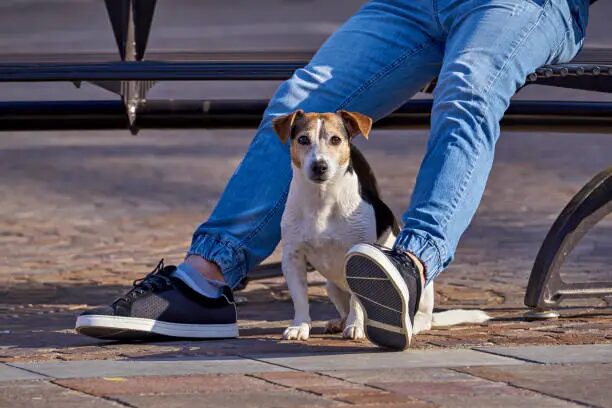
You settle onto the couch, start working at your desk, or sit down for dinner, and within seconds your dog parks themselves directly on your feet. Maybe they lean against your legs, curl up across your shoes, or follow you to another room only to do the same thing again. It can be sweet, inconvenient, confusing, and sometimes even concerning—especially if your dog has suddenly become much clingier than usual. Why do dogs sit on your feet? Are they showing love, looking for protection, feeling anxious, trying to guard you, or simply using your feet as a warm pillow? The answer depends less on the behavior itself and more on what your dog is doing before, during, and after it.
Here’s the quick answer: dogs usually sit on their owner’s feet because they want affection, security, comfort, warmth, attention, or physical closeness. Some dogs also learn that sitting there earns them petting or treats, while nervous dogs may use physical contact with a trusted person for reassurance. In most cases, there’s nothing to worry about. But if foot-sitting comes with trembling, excessive panting, growling, guarding, or a sudden personality change, there’s probably more going on. Your dog’s body language can help you figure out which explanation fits.
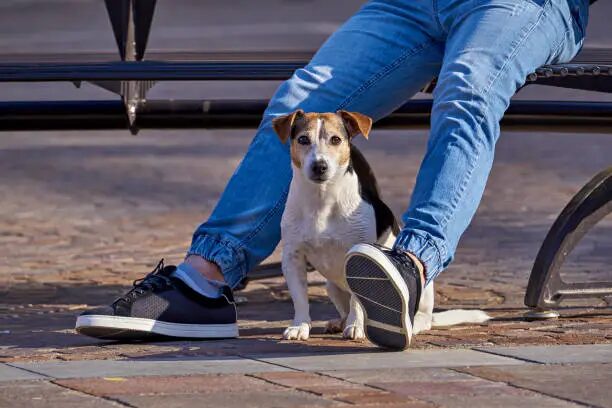
What Does It Mean When a Dog Sits on Your Feet?
Dogs don’t communicate with words, but they’re constantly communicating through body position, facial expressions, movement, vocalizations, and physical contact.
Sitting on your feet is one form of that physical communication.
For many dogs, being close to a trusted person simply feels good. Your dog recognizes your smell, voice, movements, and daily habits. Staying physically connected to you can therefore provide familiarity and reassurance.
That’s especially important with foot-sitting.
A Labrador snoozing across your slippers with loose muscles and closed eyes is communicating something very different from a dog pressing against your legs while trembling during a thunderstorm.
Sitting on Your Feet vs. Sitting Near Your Feet
There’s also a subtle difference between a dog choosing to lie near you and deliberately maintaining physical contact.
A dog sleeping a few feet away may simply want to be in the same social space. A dog repeatedly placing their body directly against your feet may have a stronger motivation for physical contact.
That motivation could still be perfectly innocent.
| What Your Dog Does | Possible Explanation |
|---|---|
| Lies calmly across your feet | Affection, comfort, warmth |
| Sits touching your legs | Closeness or reassurance |
| Pushes between your feet | Security, fear, or attention |
| Sits on your feet and stares at you | Wants attention, food, play, or interaction |
| Trembles while sitting against you | Fear or anxiety |
| Growls when someone approaches you | Possible guarding behavior |
| Sleeps deeply on your feet | Trust, comfort, warmth |
| Immediately follows when you move | Attachment, curiosity, or learned behavior |
Think of these as clues rather than definitive diagnoses. The situation surrounding the behavior matters just as much.
12 Reasons Why Dogs Sit on Your Feet
There isn’t one universal explanation for why dogs do this. Even the same dog may sit on your feet for different reasons at different times.
Here are 12 of the most common explanations.
1. Your Dog Is Showing Affection
The simplest explanation is often the right one: your dog likes you and wants to be close to you.
Dogs are social animals, and physical closeness can be part of the relationship they develop with humans. Some dogs climb into laps. Others lean against their owners. Some put their head across a person’s leg.
And some apparently decide that your feet belong to them.
When your dog rests directly against you, they’re maintaining physical contact without necessarily demanding active interaction.
Why Your Feet?
Your feet happen to be convenient.
If you’re sitting at a desk, eating dinner, watching television, or reading, your lap may not be accessible. Your feet, however, are right there at floor level.
For a larger dog, sitting on your lap isn’t exactly practical either.
A 75-pound German Shepherd may love you deeply, but fortunately for your ribs, they might settle for your feet.
Signs It’s Probably Affection
Foot-sitting is more likely to be affectionate when your dog:
- Has a loose, relaxed body
- Settles down or falls asleep
- Has soft-looking eyes
- Appears comfortable rather than alert
- Doesn’t react negatively when someone approaches
- Occasionally gets up and rests somewhere else
- Seeks physical contact in other relaxed situations
The biggest clue is relaxation.
A happy dog lying across your feet while you watch television usually isn’t communicating an emergency. They’re probably just enjoying being close.
Pros and Cons of Affectionate Foot-Sitting
| Pros | Cons |
| Can strengthen your sense of companionship | Large dogs can make it difficult to move |
| Gives your dog comfortable physical contact | You may accidentally trip when standing |
| Usually harmless | Constant attention can sometimes reinforce clinginess |
| Can help both of you relax | Not ideal if you don’t want the behavior becoming a habit |
If you enjoy it and your dog remains capable of relaxing independently, there’s usually no need to stop them.
2. Your Dog Feels Safe With You
Sometimes the message isn’t simply “I love you.”
It’s closer to “I feel safe here.”
Dogs develop strong associations with people, places, routines, smells, and experiences. If you’re one of the most predictable and trusted parts of your dog’s environment, staying close to you may provide a sense of security.
That’s particularly noticeable when a dog is resting.
Sleeping or deeply relaxing requires an animal to lower its guard. Choosing to sleep while touching you can therefore be a sign that your dog is comfortable in your presence.
Trust Plays a Major Role
Imagine two places your dog could sleep:
Option A: an unfamiliar corner of a room.
Option B: directly beside the person whose voice, scent, and routine they know extremely well.
For some dogs, Option B wins every time.
This doesn’t necessarily mean they’re frightened of the rest of the house. They may simply prefer the place where they feel most secure.
Security Isn’t the Same as Dependency
There’s an important distinction here.
A dog choosing to sleep beside you because they feel safe is generally fine.
A dog who cannot settle unless they’re touching you, panics when you leave, destroys things during your absence, or follows you frantically from room to room may need more attention.
The first is preference.
The second could potentially indicate anxiety or another behavioral issue.
3. Your Dog Is Seeking Comfort
Think about what people often do when they’re nervous, tired, or emotionally overwhelmed: we look for familiar people and familiar places.
Dogs can do something similar.
Your physical presence may act as a source of reassurance, particularly if your dog already has a strong relationship with you.
Sitting on your feet gives them immediate physical contact without requiring anything complicated from you.
They can simply settle down and feel that you’re there.
When Dogs May Seek Extra Comfort
You might notice more foot-sitting:
- After an unusually busy day
- Following travel
- In a new home
- When visitors are staying over
- After changes to the household
- In unfamiliar environments
- When normal routines have changed
- After an exciting or stressful experience
Some dogs are naturally more sensitive to environmental changes than others.
One dog may barely notice that you’ve rearranged the living room. Another may investigate every moved chair as though you’ve fundamentally altered the universe.
Is Comfort-Seeking Bad?
Usually, no.
Occasionally looking to a trusted person for reassurance is normal.
There can, however, be a balance.
Potential benefits:
- Helps your dog settle
- Provides familiar physical contact
- Can strengthen trust
- Makes stressful situations easier to manage
Potential drawbacks:
- Constant reassurance can become part of a repetitive attention-seeking pattern
- Extreme dependence may make independent relaxation difficult
- Comforting behavior alone won’t address the cause of chronic fear or anxiety
The goal isn’t to stop your dog from finding comfort in you. It’s to make sure they can also feel comfortable when they aren’t physically attached to your ankles.
4. Your Dog May Be Feeling Anxious or Scared
This is one of the most important reasons to understand because sitting on your feet can sometimes be a coping behavior.
Imagine there’s a loud crack of thunder.
Your dog suddenly gets up, walks across the room, squeezes against your legs, and sits directly on your feet.
In that situation, the timing provides a major clue.
Your dog may be using you as a safe point while something in the environment frightens them.
Common triggers include:
- Thunderstorms
- Fireworks
- Construction noises
- Vacuum cleaners
- Unfamiliar visitors
- Other dogs
- Car rides
- Veterinary clinics
- Moving to a new house
- Crowded environments
- Changes in routine
Look Beyond the Foot-Sitting
Don’t decide that your dog is anxious based solely on where they’re sitting.
Instead, look for multiple signals.
A frightened or stressed dog may also show:
- Trembling or shaking
- Heavy panting without exercise or heat
- A tucked tail
- Repeated lip licking
- Pacing
- Drooling
- Trying to hide
- Flattened or pulled-back ears
- Yawning
- Refusing treats
- Becoming unusually alert
- Trying to climb onto you
Affection vs. Anxiety: What’s the Difference?
This distinction is easier when you look at the whole dog.
| Affection/Relaxation | Possible Anxiety |
| Loose muscles | Tense posture |
| Soft eyes | Wide or highly alert eyes |
| Normal breathing | Excessive panting |
| Resting or sleeping | Pacing or inability to settle |
| Loose tail | Tucked tail |
| Comfortable ears | Ears pulled back |
| Can leave voluntarily | Seems desperate to maintain contact |
| Happens during normal relaxation | Appears around identifiable stressors |
If your dog calmly sleeps on your feet every evening, affection and comfort are reasonable explanations.
If they suddenly rush to your feet whenever fireworks begin, fear is much more likely to be involved.
5. Your Dog Wants Your Attention
Dogs are excellent students of human behavior.
Sometimes they’re better at training us than we are at training them.
Consider this sequence:
Your dog sits on your feet.
You look down.
You say, “Hey, buddy.”
You scratch behind their ears.
Maybe you even reach for a treat.
Your dog has just learned something useful:
Sitting on human feet = good things happen.
Repeat that interaction enough times and foot-sitting can become a reliable strategy for getting your attention.
Watch for Other Attention-Seeking Signals
Your dog may combine foot-sitting with:
- Staring at you
- Pawing your leg
- Nudging your hand
- Whining
- Bringing you a toy
- Resting their chin on you
- Moving closer whenever you stop petting them
Sometimes the meaning is obvious.
If your dog drops a tennis ball in your lap and then plants themselves on your feet, canine psychology probably isn’t required.
They want you to throw the ball.
The Pros and Cons of Responding
Pros:
- Interaction strengthens your relationship
- Attention and play can provide useful stimulation
- Responding appropriately helps you understand your dog’s needs
Cons:
- Responding every single time can reinforce demanding behavior
- Your dog may learn to interrupt you constantly
- Attention-seeking can escalate to pawing, barking, or whining if those behaviors also work
You don’t have to ignore your dog.
Instead, make sure you sometimes initiate attention yourself rather than teaching them that increasingly demanding behavior is the only way to get it.
6. Your Dog Wants to Stay Warm
Not every explanation requires complicated canine psychology.
Sometimes your feet are warm.
Dogs naturally seek comfortable resting places, and body heat makes physical contact appealing—particularly during cold weather.
You may notice this more often:
- During winter
- On cold floors
- At night
- In air-conditioned rooms
- After your dog comes inside from cold weather
Smaller dogs and dogs with shorter coats may be particularly interested in warm resting spots, although any dog can enjoy them.
Your feet provide three things at once:
warmth + familiarity + closeness.
That’s a pretty good deal from your dog’s perspective.
Give Them Another Comfortable Option
If your dog keeps lying across your feet and you would rather have some legroom, place a comfortable dog bed nearby.
A warm, inviting resting spot allows your dog to remain close without physically pinning you to your chair.
You can reinforce the alternative by rewarding them when they voluntarily settle on the bed.
7. Your Dog Wants to Stay Close So They Can Follow You
You stand up.
Your dog stands up.
You walk into the kitchen.
Your dog follows.
You go to the bathroom.
Apparently, that’s a group activity too.
Some dogs simply have a strong preference for keeping track of their humans.
Sitting on your feet gives them an extremely effective notification system.
The moment you move, they know.
The Classic “Velcro Dog”
People often use the informal term “Velcro dog” for dogs that prefer to stay close to their owners throughout the day.
This behavior can be influenced by:
- Individual personality
- Breed tendencies
- Previous experiences
- Daily routine
- Reinforcement
- How much time the dog normally spends with you
A dog who follows you around isn’t automatically suffering from separation anxiety.
That’s an important distinction.
A socially attached dog might follow you into the kitchen but remain perfectly calm when you leave the house.
A dog experiencing separation-related distress may show much more serious behaviors when separated from you.
When Following Becomes Excessive
Pay closer attention if your dog:
- Cannot relax in another room
- Becomes distressed when a door separates you
- Panics when you prepare to leave
- Vocalizes excessively when alone
- Destroys doors or exit areas
- Has accidents primarily during your absence
- Appears unable to function normally without constant access to you
Those behaviors go beyond simply enjoying your company.
Quick Recap: What Has Your Dog Told You So Far?
By this point, one thing should be clear: a dog sitting on your feet doesn’t have one fixed meaning.
Here’s a quick way to narrow it down:
| If Your Dog… | Consider… |
| Relaxedly sleeps on your feet | Affection, security, comfort |
| Comes over during cold weather | Warmth and comfort |
| Does it after you pet them | Learned attention-seeking |
| Rushes over during thunder | Fear or anxiety |
| Constantly follows you afterward | Strong attachment or “Velcro” behavior |
| Appears loose and content | Normal social closeness |
| Appears tense or frightened | Stress, fear, or anxiety |
And we’re only halfway through the possible explanations.
8. Your Dog Has Learned That Sitting on Your Feet Gets Rewards
Dogs are remarkably good at figuring out which behaviors produce desirable results.
If sitting on your feet consistently earns your dog petting, praise, treats, play, or attention, there’s a good chance they’ll do it again.
This is basic learning through reinforcement.
Imagine that every evening your dog walks over and sits on your feet while you’re watching TV. You automatically scratch their ears for a few minutes.
From your perspective, you’re simply being affectionate.
From your dog’s perspective, they’ve discovered a very reliable system:
Sit on feet → receive attention.
Do that hundreds of times and it can become an established habit.
You May Be Reinforcing It Without Realizing
Rewards don’t have to involve food.
For a social dog, simply looking at them can be rewarding.
You might accidentally reinforce foot-sitting by:
- Petting your dog
- Talking to them
- Scratching their ears
- Giving them treats
- Picking up their favorite toy
- Allowing them onto your lap afterward
- Giving them food from the table
- Laughing or reacting enthusiastically
Even pushing a particularly persistent dog away can sometimes provide the interaction they’re seeking.
Is Learned Foot-Sitting a Problem?
Usually, not at all.
If you enjoy having your dog beside you and they’re otherwise well-behaved, there’s no particular reason the habit needs to disappear.
There are both advantages and disadvantages, though.
| Pros | Cons |
|---|---|
| Can strengthen positive interaction | May develop into constant attention-seeking |
| Gives your dog a predictable way to approach you | Can become inconvenient with a large dog |
| Usually harmless | May encourage begging if food is involved |
| Easy to redirect if necessary | Dog may become frustrated when the expected reward doesn’t appear |
The key question is whether you control when attention happens or your dog constantly demands it.
If the behavior becomes disruptive, begin rewarding an alternative, such as lying calmly on a nearby bed.
9. Your Dog May Be Guarding You
Here’s where paying attention to body language becomes particularly important.
A dog sitting on your feet isn’t automatically being protective. In fact, most relaxed foot-sitting probably has nothing to do with guarding.
However, some dogs may position themselves close to a person because they are displaying resource-guarding or protective behavior.
In these situations, the person themselves can become something the dog wants to control access to.
For example, your dog might sit directly against you when another dog approaches and then:
- Stiffen their body
- Stare intensely
- Block the other dog
- Raise their lip
- Growl
- Bark
- Snap
- Push between you and another person
- Refuse to move away
Those signals deserve more attention than the foot-sitting itself.
Affection vs. Guarding
The difference is often visible in what happens when somebody approaches.
A relaxed dog might remain sprawled across your feet while your partner walks into the room.
A guarding dog may immediately become tense.
| Relaxed Closeness | Possible Guarding |
| Loose posture | Stiff posture |
| Soft facial expression | Hard stare |
| Doesn’t care who approaches | Watches approaching people or animals closely |
| Moves away easily | Refuses to move |
| Remains calm when you pet another dog | Pushes between you and another dog |
| Quiet and relaxed | Growling, barking, or snapping may occur |
The distinction matters because guarding behavior shouldn’t be encouraged simply because it looks protective.
A dog that feels responsible for controlling who can approach you may become increasingly reactive.
Is My Dog Trying to Protect Me?
Possibly—but don’t assume that every dog sitting at your feet has transformed into your personal bodyguard.
What looks like protection may actually be:
- Fear
- Insecurity
- Resource guarding
- Excitement
- Learned behavior
- Desire for attention
Look at what happens before and after another person or animal enters the dog’s space.
If your dog becomes aggressive or repeatedly guards access to you, consider speaking with a qualified behavior professional rather than attempting to punish the behavior.
Punishment can increase fear and make the underlying problem worse.
10. Your Dog May Be Seeking Protection
There’s an interesting flip side to the previous explanation.
Sometimes your dog isn’t sitting on your feet because they want to protect you.
They’re doing it because they want you to protect them.
Imagine taking your dog somewhere unfamiliar. There are strange people, unfamiliar smells, loud noises, and perhaps other animals nearby.
Your dog moves between your legs and stays there.
In that situation, your body may represent the safest place available.
Common Situations Where Dogs Seek Protection
You might notice this behavior:
- At the veterinarian
- Around unfamiliar dogs
- When strangers visit
- During fireworks
- During thunderstorms
- In crowded public places
- After hearing an unfamiliar noise
- When encountering something new
- During travel
- After moving to a new home
Some dogs naturally respond to uncertainty by increasing the distance between themselves and whatever worries them.
Others move closer to their trusted person.
How Can You Tell?
Again, look at the rest of the body.
A dog seeking protection may:
- Tuck their tail
- Lower their body
- Pull their ears backward
- Tremble
- Pant
- Try to hide behind your legs
- Avoid looking at whatever frightens them
- Refuse treats
- Repeatedly check your face
- Press tightly against you
If those signals appear alongside foot-sitting, simple affection probably isn’t the whole story.
Should You Comfort a Scared Dog?
You don’t need to deliberately ignore a frightened dog just because you’re worried about “rewarding fear.”
Instead, focus on making the situation safer and less overwhelming.
Depending on the circumstances, that might mean:
- Increasing distance from the trigger
- Giving your dog somewhere safe to retreat
- Staying calm
- Avoiding forced interactions
- Using treats when your dog is comfortable enough to eat
- Gradually building positive associations
- Getting professional help for persistent fears
The goal isn’t to force your dog to “face their fear.” It’s to help them learn that they can cope with the situation without becoming overwhelmed.
11. Your Dog May Simply Find It Comfortable
Sometimes the answer to “Why does my dog sit on my feet?” is wonderfully uncomplicated.
Your feet make a comfortable resting spot.
They are warm.
They smell familiar.
They’re close to you.
And they’re usually available.
Dogs develop favorite sleeping and resting locations just as people do. One dog might love the corner of the couch. Another claims the rug beside the door. Another decides that your ankles are premium real estate.
Your Scent Matters
Dogs experience their surroundings heavily through scent.
Your shoes, socks, clothing, furniture, and bedding carry familiar smells. Resting against your feet therefore puts your dog next to something strongly associated with you.
For a dog that enjoys your company, that’s hardly a bad place to take a nap.
Habit Can Make the Spot Even More Appealing
Suppose your puppy starts sleeping on your feet at three months old.
Nothing discourages the behavior.
Months pass.
Then years.
Eventually, sitting on your feet may simply become part of their normal routine.
Your dog isn’t necessarily making a complicated emotional decision each time.
They’re thinking the canine equivalent of:
“This is where I sleep.”
Pros and Cons of Letting Them Stay
| Pros | Cons |
| Comfortable for your dog | Can restrict your movement |
| Encourages relaxed companionship | Creates a potential tripping hazard |
| Usually harmless | Large dogs can become uncomfortable to sit around |
| May help your dog settle | Can become inconvenient around desks or dining tables |
If everyone is comfortable and the dog isn’t displaying problematic behavior, there’s generally no need to change the habit.
12. Your Dog Doesn’t Want to Miss What You’re Doing
Your dog has been lying peacefully across the room for an hour.
You stand up.
Suddenly, they’re awake.
Where are you going?
Kitchen?
Front door?
Walk?
Food?
Something interesting?
Many dogs pay close attention to their owners because human movement can predict something important or enjoyable.
Sitting on your feet puts your dog in an excellent position to notice the instant you move.
Dogs Become Experts at Reading Routines
Dogs can learn surprisingly subtle patterns.
Your dog might recognize that:
- Putting on certain shoes means a walk
- Picking up your keys means you’re leaving
- Walking toward the kitchen may mean food
- Opening a particular cupboard means treats
- Sitting at your desk means several quiet hours
- Turning off the television means bedtime
They don’t need a clock to recognize these patterns.
So if your dog wants to be involved in whatever happens next, staying directly beside you makes sense.
Social Dogs Don’t Like Missing the Action
Some dogs are simply curious.
If something is happening in the house, they want to know about it.
These dogs may follow family members between rooms, investigate deliveries, watch people cook, and supervise household chores with the seriousness of an unpaid manager.
Sitting at your feet keeps them close to the center of activity.
As long as your dog can also relax independently, this usually isn’t something to worry about.
Is Sitting on Your Feet a Sign of Dominance?
This question deserves its own section because one explanation has circulated for years:
“Your dog sits on your feet because they’re trying to dominate you.”
For ordinary foot-sitting, that’s generally not a useful conclusion.
The old idea that most everyday dog behaviors are attempts to become the household “alpha” has led people to interpret harmless actions—leaning, cuddling, walking through doors first, sleeping in certain places, or sitting on feet—as battles for social rank.
Modern approaches to canine behavior are much more nuanced.
A dog sitting on your feet is more reasonably interpreted according to context, emotional state, reinforcement history, and body language.
Why Dominance Is Usually an Unlikely Explanation
Consider what we’ve already covered.
Your dog could be sitting there because:
- They love being close to you.
- They feel secure around you.
- They’re seeking comfort.
- Something has frightened them.
- They want attention.
- They’re cold.
- They want to follow you.
- You’ve accidentally trained them to do it.
- They’re guarding access to you.
- They want you to protect them.
- Your feet are comfortable.
- They don’t want to miss whatever happens next.
These explanations provide much more useful information than simply labeling the dog “dominant.”
Dominance vs. Resource Guarding
It’s also important not to confuse the outdated dominance explanation with genuine resource guarding.
A dog who calmly sleeps on your feet isn’t necessarily trying to control you.
But a dog who sits against you and then growls whenever your partner approaches is showing behavior worth investigating.
The issue isn’t that the dog wants to become “alpha.”
The concern is that they may perceive access to you as a valuable resource and attempt to prevent others from approaching.
That requires a different behavioral strategy.
How to Tell Why Your Dog Is Sitting on Your Feet
Rather than asking only:
“Why is my dog sitting on me?”
Ask three questions:
- What happened immediately before my dog came over?
- What does my dog’s body language look like?
- What happens when I or someone else moves?
Those three observations can tell you a lot.
Look at Your Dog’s Body Language
Your dog’s whole body provides context.
Signs of a Relaxed Dog
Look for:
- Loose body posture
- Soft eyes
- Relaxed facial muscles
- Natural ear position
- Normal breathing
- Loose tail
- Comfortable resting position
- Ability to fall asleep
If your dog looks like they’re about to melt into the floor, they’re probably not sitting on your feet because they’re terrified.
Signs Your Dog May Be Stressed
Watch for combinations of:
- Excessive panting
- Trembling
- Tucked tail
- Pacing
- Repeated lip licking
- Drooling
- Ears held back
- Tense muscles
- Attempts to hide
- Difficulty settling
- Refusing food they normally enjoy
One stress signal doesn’t automatically prove anxiety.
Patterns matter more than individual behaviors.
Panting, for example, can indicate stress—but your dog may also simply be hot.
Pay Attention to When It Happens
Timing can provide one of the biggest clues.
While You’re Relaxing
If your dog routinely lies across your feet while you’re watching television and then falls asleep, affection, warmth, security, and comfort are likely possibilities.
When Strangers Visit
If your dog suddenly presses against you whenever unfamiliar people enter the house, look for signs of uncertainty, fear, or guarding.
During Thunderstorms or Fireworks
A dog that rarely sits on your feet but suddenly climbs onto them during loud noises is probably looking for security and reassurance.
At the Veterinarian
Many dogs move closer to their owners in unfamiliar or stressful environments.
If your dog hides between your legs in the waiting room, fear may be more relevant than affection.
Around Other Dogs
Pay particularly close attention here.
If your dog calmly stays beside you, there may be no issue.
If they stiffen, block another dog, stare, growl, or snap when another animal approaches you, resource guarding or fear could be involved.
When You’re Preparing to Leave
Does your dog sit on your feet the moment you put on your shoes or pick up your keys?
They may have learned that those cues predict your departure.
If the behavior is accompanied by significant distress, it could warrant closer attention.
A Simple Way to Decode Foot-Sitting
Here’s a practical cheat sheet:
| Situation | Most Likely Possibilities |
| Dog sleeps peacefully on your feet | Comfort, affection, security |
| Dog sits there after asking for petting | Attention or learned behavior |
| Dog approaches when the room is cold | Warmth |
| Dog presses against you during fireworks | Fear or reassurance |
| Dog hides between your feet at the vet | Seeking protection |
| Dog follows you whenever you stand | Attachment or curiosity |
| Dog growls when another person approaches | Possible resource guarding |
| Dog suddenly starts doing it frequently | Environmental, behavioral, or physical change |
| Dog sits there while watching everything you do | Curiosity and desire to stay involved |
The important takeaway is simple: don’t interpret foot-sitting in isolation.
Your dog’s posture, environment, routine, and behavior toward other people and animals provide the information needed to understand what they’re actually communicating.
Why Does My Dog Sit on My Feet and Lean on Me?
Some dogs take foot-sitting one step further.
They sit directly against your feet and then lean their body weight into your legs.
For many dogs, leaning is another way to maintain physical contact.
If your dog has:
- A loose body
- Soft eyes
- Relaxed breathing
- No signs of fear
- No defensive response toward approaching people
…the leaning is probably related to affection, comfort, or attention.
Some large dogs seem particularly fond of leaning because it’s easier than climbing into a lap.
Unfortunately, they don’t always appreciate that they’re 80 pounds.
When Leaning May Mean Something Else
Look at the environment.
If your dog starts leaning heavily against you while another dog approaches, they’re trembling, or their tail is tucked, they may be looking for reassurance.
If they lean against you and become stiff or aggressive when somebody approaches, guarding becomes a possibility.
Again, the physical contact itself doesn’t give you the complete answer.
The surrounding body language does.
Why Does My Dog Sit Between My Feet or Legs?
Dogs sometimes go beyond sitting on your feet and position themselves directly between your legs.
This creates even more physical enclosure.
For a relaxed dog, it may simply be comfortable or something they’ve learned gets attention.
For a nervous dog, however, standing or sitting between your legs can create a small safe zone.
Your body partially surrounds them, while they remain close to someone they trust.
You may notice this more frequently:
- In crowded areas
- Around unfamiliar dogs
- At veterinary clinics
- During loud events
- When strangers approach
- In new environments
If your dog occasionally does this and remains relaxed, there’s usually little reason for concern.
If they’re constantly hiding between your legs because the environment frightens them, focus on addressing the underlying fear rather than merely moving the dog away.
The Bottom Line So Far
Dogs don’t sit on human feet for one universal reason.
For most dogs, the explanation is pleasantly ordinary: your dog likes you, trusts you, feels comfortable beside you, or has simply learned that your feet are a pretty good place to hang out.
The behaviors that deserve closer attention are the ones accompanied by fear, sudden changes, inability to settle, guarding, growling, or aggression.
Why Does My Dog Sit on My Feet With Their Back to Me?
It can seem strange when your dog sits directly on your feet but faces away from you.
Some owners interpret this as rejection, annoyance, or even a lack of affection. In reality, it often means the opposite.
A dog that is comfortable enough to turn their back while maintaining physical contact may simply feel safe and relaxed around you.
They know you’re there. They can feel you behind them. At the same time, facing outward allows them to watch what’s happening in the room.
Your Dog May Be Watching the Environment
Dogs often position themselves based on what they want to monitor.
If your dog sits on your feet facing the doorway, hallway, window, or other people in the room, they may simply be keeping an eye on their surroundings.
That doesn’t automatically mean they’re guarding you.
A relaxed dog may just prefer to:
- Watch people moving around
- Observe another pet
- Keep track of sounds
- See who’s entering the room
- Stay physically connected to you
This can be especially common in alert or curious dogs.
Facing Away Can Actually Show Trust
Think about it from your dog’s perspective.
Turning their back puts them in a position where they cannot constantly watch you.
If they still choose to sit against you, they may feel secure enough that they don’t need to monitor your every move.
Signs that the behavior is relaxed include:
- Loose muscles
- Normal breathing
- Soft ears
- No growling or stiffness
- Comfortable sitting or lying posture
- Falling asleep
If your dog looks calm, facing away is usually nothing to worry about.
Why Does My Dog Lay or Sleep on My Feet?
Sleeping on your feet is one of the clearest examples of a dog combining closeness, warmth, familiarity, and security.
Dogs often choose sleeping areas based on where they feel safest and most comfortable.
Your feet offer several benefits at once.
They are:
- Warm
- Familiar
- Close to you
- Usually still when you’re relaxing
- Easy to notice if you get up
For some dogs, that’s an ideal sleeping location.
Sleeping Near You Can Reflect Trust
Sleep makes animals less aware of their surroundings.
A dog that chooses to fall deeply asleep while pressed against you is probably comfortable in that setting.
Again, this does not mean every dog that sleeps on your feet is making a dramatic emotional statement.
Sometimes it’s simply a preferred resting habit.
But in many cases, the behavior fits with a broader pattern of attachment and trust.
Why Some Dogs Choose Feet Instead of a Bed
Your dog may have a perfectly good bed ten feet away and still choose your feet.
Why?
Because the bed may be soft, but it doesn’t contain the same combination of:
your scent + your body heat + your presence.
Dogs don’t always choose the technically most comfortable location.
They choose the location that feels best to them.
Pros and Cons of Letting Your Dog Sleep on Your Feet
| Pros | Cons |
|---|---|
| Can help your dog relax | May make it difficult for you to move |
| Encourages calm companionship | Can cause you to trip when standing |
| Usually harmless | May be uncomfortable with a large dog |
| Provides warmth and closeness | Could reinforce excessive clinginess in some dogs |
| Can strengthen your bond | Not ideal if you need personal space |
If your dog can also sleep independently and doesn’t become distressed when you move away, there is generally no problem with allowing it.
Why Does My Dog Put Their Head on My Feet?
A dog resting their head across your feet is usually engaging in a gentler form of physical contact.
Instead of climbing onto you, they maintain just enough contact to stay connected.
This can indicate:
- Affection
- Relaxation
- Trust
- Attention-seeking
- Comfort
- Sleepiness
Some dogs use their head almost like an anchor.
They don’t need to be fully on top of you. They simply want to know you’re still there.
Your Dog May Want Attention
Pay attention to what happens next.
If your dog puts their head on your feet and then looks up at you, nudges you, or follows your hand, they may want petting or interaction.
If they put their head down and fall asleep, comfort is the simpler explanation.
Context Is Everything
Compare these two situations.
Situation 1: Your dog sighs, rests their head on your slippers, and closes their eyes.
Likely explanation: relaxation.
Situation 2: Your dog presses their head against your legs during fireworks while panting and trembling.
Likely explanation: reassurance.
Same physical contact.
Very different emotional context.
Why Does My Dog Suddenly Start Sitting on My Feet?
A sudden change deserves more attention than a behavior your dog has displayed for years.
If your dog has never cared about sitting on your feet and then abruptly starts doing it every day, ask what else has changed.
The behavior itself may still be harmless, but sudden changes can sometimes reflect stress, environmental changes, physical discomfort, or increased dependence.
Common Reasons for Sudden Foot-Sitting
Changes in the Home
Dogs are sensitive to routine.
Changes may include:
- Moving to a new house
- A new baby
- A new roommate
- A new pet
- Visitors staying over
- Furniture being moved
- Construction nearby
- A family member leaving the home
Even changes that seem minor to you may feel significant to your dog.
Changes in Your Routine
Dogs often learn their owners’ schedules very closely.
A change in work hours, school routines, sleeping patterns, travel, or time spent at home can affect behavior.
For example, a dog may become more attached after you’ve spent several weeks working from home.
Stress or Fear
New noises, unfamiliar people, neighborhood construction, fireworks, storms, or tension between pets can all increase comfort-seeking behavior.
Aging
Older dogs can become more dependent on familiar routines and people.
Age-related changes may affect:
- Vision
- Hearing
- Mobility
- Sleep
- Confidence
- Ability to navigate the home
An older dog may seek more physical contact because it provides reassurance.
Physical Discomfort
A dog that doesn’t feel well may become unusually clingy.
Pain, illness, digestive discomfort, injury, or fatigue can sometimes change behavior.
This doesn’t mean every suddenly affectionate dog is sick.
It means a clear, unexplained behavioral change deserves attention, especially if accompanied by other symptoms.
When Sudden Clinginess May Be Worth Investigating
Watch for other changes such as:
- Reduced appetite
- Sleeping much more than usual
- Difficulty walking
- Limping
- Whining
- Restlessness
- Heavy panting
- Hiding
- Vomiting or diarrhea
- Changes in bathroom habits
- Confusion
- Difficulty getting comfortable
If your dog has suddenly become much more clingy and also appears physically unwell, contact your veterinarian.
Behavior changes can sometimes be one of the earliest clues that something isn’t right.
Do Certain Dog Breeds Sit on Their Owners’ Feet More Often?
Some breeds are known for being highly people-oriented, but there is no rule stating that specific breeds will always sit on their owners’ feet.
Individual personality matters enormously.
Two dogs of the same breed can have completely different preferences.
One may sleep across your shoes every evening.
The other may prefer a bed on the opposite side of the room.
Companion Breeds
Dogs bred primarily for companionship may be especially interested in staying physically close to people.
These dogs often enjoy:
- Lap time
- Cuddling
- Following family members
- Sleeping nearby
- Frequent interaction
However, small companion dogs may prefer your lap instead of your feet simply because they fit there comfortably.
Working and Herding Breeds
Some working and herding breeds are naturally very aware of their owners’ movements.
They may follow you from room to room because they enjoy having something to monitor or because they are highly responsive to human activity.
That can result in frequent foot-sitting.
“Velcro” Dogs
The informal term Velcro dog is often used for dogs that seem glued to their owners.
Certain breeds may have a reputation for this behavior, but breed is only one factor.
Your dog’s closeness can also be influenced by:
- Early socialization
- Previous experiences
- Training
- Daily routine
- Age
- Confidence
- Individual temperament
- Reinforcement
So while genetics may contribute, don’t assume breed alone explains the behavior.
Is It Normal for My Dog to Sit on My Feet?
In most situations, yes.
A dog sitting or lying on your feet is generally a normal and harmless behavior.
It becomes especially easy to consider it normal when your dog:
- Looks relaxed
- Can move away voluntarily
- Doesn’t become upset when you move
- Doesn’t guard you from other people or pets
- Can rest independently
- Doesn’t show signs of fear
- Has always behaved this way
Many dogs simply have their own preferred way of showing closeness.
One dog may lean against you.
Another brings toys.
Another sleeps under your desk.
Another sits directly on your toes every chance they get.
There isn’t a single “correct” way for dogs to show attachment.
When Occasional Clinginess Is Usually Fine
Dogs can have more affectionate days just like people do.
Your dog may seek extra contact because:
- The weather is cold
- They’re tired
- You’ve been away
- The household has been busy
- They had an exciting day
- They’re adjusting to a temporary change
If the behavior is occasional, your dog is relaxed, and everything else seems normal, you usually don’t need to worry.
Pros and Cons of Allowing Normal Foot-Sitting
| Pros | Cons |
| Gives your dog physical closeness | Can inconvenience you |
| Usually supports calm bonding | May create a tripping risk |
| Doesn’t require correction if harmless | Can become an ingrained habit |
| May help your dog relax | Large dogs may take up too much space |
| Can be comforting for both dog and owner | Constant reinforcement can encourage attention-seeking |
The right choice depends partly on your household and personal boundaries.
When Should You Be Concerned?
The question isn’t simply whether your dog sits on your feet.
The more important question is:
What else is happening?
Foot-sitting becomes more concerning when it is part of a larger pattern involving fear, aggression, pain, or extreme dependence.
1. The Behavior Started Suddenly
Any major behavioral change deserves attention.
If your normally independent dog suddenly refuses to leave your side, consider whether anything has changed physically or emotionally.
A veterinary check may be appropriate if you cannot identify an obvious environmental cause.
2. Your Dog Seems Extremely Anxious
Pay attention if your dog cannot relax unless they are touching you.
Other signs may include:
- Constant pacing
- Heavy panting
- Trembling
- Whining
- Destructive behavior
- Panic when you leave
- Refusing to stay alone
- Following you frantically
That may indicate something more significant than ordinary attachment.
3. Your Dog Growls When Someone Approaches
This is one of the clearest warning signs.
If your dog sits on your feet and then becomes defensive when another person or pet comes near, they may be guarding access to you.
Watch for:
- Growling
- Snapping
- Stiff posture
- Blocking
- Hard staring
- Barking
- Lunging
This behavior shouldn’t be dismissed as your dog “loving you too much.”
It can become dangerous if it escalates.
4. Your Dog Cannot Relax Independently
Healthy attachment doesn’t require constant physical contact.
Your dog should ideally be able to spend some time:
- On their own bed
- In another area of the room
- In another room
- Relaxing without touching you
If your dog becomes distressed every time you create distance, consider whether anxiety is involved.
5. Your Dog Shows Signs of Pain or Illness
Clinginess can sometimes increase when a dog doesn’t feel well.
Look for physical symptoms including:
- Limping
- Appetite changes
- Unusual sleep
- Difficulty standing
- Sensitivity to touch
- Digestive problems
- Vocalizing
- Restlessness
When foot-sitting appears alongside physical symptoms, speak with a veterinarian.
Affection vs. Anxiety vs. Guarding: Quick Comparison
One of the easiest ways to interpret your dog’s behavior is to compare the overall pattern.
| Behavior | Affection | Anxiety | Guarding |
| Body posture | Loose | Tense or low | Stiff |
| Eyes | Soft | Wide or worried | Hard stare |
| Tail | Relaxed | Tucked or low | May be stiff |
| Breathing | Normal | Panting may occur | Often normal until trigger appears |
| Response to others | Calm | May hide | May block or growl |
| Ability to move away | Easy | Reluctant | May refuse |
| Common trigger | Relaxation | Fear or stress | Person/pet approaching |
| Main goal | Closeness | Reassurance | Control access |
This table is not a substitute for professional evaluation, but it can help you identify patterns.
Should You Let Your Dog Sit on Your Feet?
If the behavior is relaxed, harmless, and doesn’t bother you, yes, you can let your dog sit on your feet.
There is no general rule saying dogs should never be allowed to do this.
You don’t need to remove your dog simply to establish “dominance” or prove you’re in charge.
Instead, think in terms of boundaries and behavior.
Ask yourself:
- Is my dog relaxed?
- Can I move them easily?
- Do they respect other people and animals?
- Can they rest somewhere else?
- Is anyone uncomfortable?
- Does the behavior create a safety issue?
If the answers look good, there is probably no reason to make it a problem.
When You May Want to Discourage Foot-Sitting
Even normal behaviors can become inconvenient.
You may want to teach an alternative if:
- Your dog is very large
- You frequently trip over them
- You have mobility problems
- Your dog blocks your chair
- They sit under your desk while you work
- They constantly demand attention
- You have young children or elderly family members
- The behavior contributes to guarding
- You simply prefer more personal space
You’re allowed to have boundaries with your dog.
Teaching them to lie on a nearby bed is not rejecting them.
You’re simply teaching them another acceptable place to relax.
Should You Push Your Dog Away?
Physical punishment or harsh corrections are unnecessary.
If you don’t want your dog sitting on your feet, it’s more effective to teach them where you do want them.
For example:
Instead of repeatedly saying:
“No, get off.”
Teach:
“Go to your bed.”
Then reward the behavior you want.
Dogs generally learn faster when they are given a clear alternative instead of only being told what not to do.
What If My Dog Keeps Coming Back?
Consistency matters.
If five family members allow the dog to sit on their feet but one person tries to stop it, the rules can become confusing.
Decide what behavior is acceptable and reinforce it consistently.
You can:
- Place a dog bed near your usual chair
- Reward your dog for using it
- Offer a chew or toy there
- Give attention when they settle calmly
- Avoid rewarding persistent nudging or pawing
- Keep training sessions short and positive
Over time, the bed itself can become a comfortable alternative.
When Foot-Sitting Is Actually a Good Sign
Despite all the possible explanations, it’s worth remembering that this behavior is very often positive.
A relaxed dog voluntarily choosing to sit beside you may be telling you something simple:
“I like being here.”
That’s why context matters so much.
There’s a big difference between a dog peacefully sleeping across your slippers and a dog frantically pressing against your legs because they’re frightened.
One is normal companionship.
The other may require reassurance or professional support.
Understanding that distinction helps you respond to what your dog actually needs instead of assuming every instance means the same thing.
How to Stop Your Dog From Sitting on Your Feet
If you’d prefer your dog not to sit directly on you, use positive reinforcement and redirection.
Simply pushing your dog away every time they approach may not teach them what you actually want.
Instead of:
“Don’t sit here.”
Teach:
“Relax over there.”
That small difference gives your dog a clear alternative.
1. Teach a “Place” or “Bed” Command
One of the most useful solutions is teaching your dog to settle on a designated bed, mat, or blanket.
Choose somewhere reasonably close to you at first. If your dog wants companionship, placing their bed in another room immediately can make the alternative much less appealing.
A Simple Training Process
- Put a comfortable bed or mat near where you normally sit.
- Encourage your dog to approach it.
- Reward them when they step onto it.
- Gradually reward sitting or lying down there.
- Introduce a cue such as “place,” “bed,” or “settle.”
- Reward calm behavior on the bed.
- Gradually increase how long your dog stays there.
Keep early sessions short.
You want your dog to think:
“Going to my bed makes good things happen.”
Don’t expect them to stay there for an hour on the first attempt.
2. Reward Independent Resting
Owners often unintentionally pay attention to dogs only when those dogs approach them.
Try reversing that pattern.
When you notice your dog calmly relaxing independently, occasionally reward them with:
- Quiet praise
- A gentle stroke
- A treat
- A chew
- Calm attention
This helps teach your dog that independent relaxation is rewarding too.
Importantly, you don’t need to reward every moment of independent behavior forever. Once the habit becomes established, rewards can become less frequent.
3. Avoid Accidentally Reinforcing Foot-Sitting
If your dog sits on your feet because they want attention, check what you normally do immediately afterward.
Do you automatically:
- Pet them?
- Talk to them?
- Give them food?
- Pick up their toy?
- Scratch their ears?
- Move over so they can get closer?
If so, your dog may have learned that sitting on your feet works.
Instead, calmly redirect them to the behavior you prefer and reward that.
Be Consistent
Suppose you don’t want your dog sitting on your feet while you’re working.
If you redirect them Monday through Friday but cuddle them under the desk every weekend, progress may be slower.
Consistency makes the rule easier for your dog to understand.
4. Provide a Comfortable Bed Nearby
Sometimes the easiest solution is also the most practical.
Give your dog a better option.
If your floor is cold and your dog wants warmth, a thin mat across the room may not compete successfully with your feet.
Try a comfortable resting area close enough that your dog can still feel included.
Consider:
- A supportive dog bed
- A washable blanket
- A familiar mat
- An appropriate chew or toy
- A location near your desk or couch
Your dog doesn’t necessarily want to be on you.
They may simply want to be near you.
A nearby bed can satisfy both your dog’s desire for companionship and your need for personal space.
Pros and Cons of Redirecting Your Dog to a Bed
| Pros | Cons |
|---|---|
| Gives you more personal space | Requires consistent training |
| Reduces tripping hazards | Some dogs initially keep returning |
| Encourages independent relaxation | An anxious dog may need additional support |
| Gives your dog a predictable resting location | Finding the right bed/location can take experimentation |
| Useful when guests visit | Doesn’t address underlying fear by itself |
5. Increase Exercise and Mental Stimulation
A dog that constantly follows you or demands interaction may sometimes need more appropriate outlets for their energy.
Depending on your dog’s age, breed, health, and individual needs, useful activities can include:
- Walks
- Sniffing opportunities
- Training sessions
- Food puzzles
- Fetch
- Hide-and-seek
- Appropriate chew toys
- Scent games
- Interactive play
Mental exercise matters too.
A ten-minute training or scent-work session can be surprisingly engaging for some dogs.
However, don’t assume that every clingy dog simply needs more exercise. If your dog is frightened or experiencing separation-related distress, making them physically tired won’t necessarily solve the underlying emotional problem.
6. Address Fear or Anxiety
If your dog sits on your feet because they’re frightened, simply teaching “go to bed” may miss the actual problem.
Imagine your dog presses against you every time fireworks explode outside.
Moving them away doesn’t make the fireworks less frightening.
Instead, the focus should be on helping them feel safer.
Depending on the trigger, that could involve:
- Creating a quiet resting area
- Increasing distance from frightening situations
- Closing curtains
- Using background noise when appropriate
- Avoiding forced interactions
- Gradually building positive associations
- Working with a qualified professional
Persistent or severe fear should be discussed with a veterinarian or appropriately qualified behavior professional.
7. Use Positive Reinforcement Instead of Punishment
Don’t punish a dog simply for sitting on your feet.
Yelling, intimidating them, physically forcing them away, or using painful corrections can create unnecessary stress.
This is particularly problematic when the dog is already sitting close because they’re afraid.
Instead:
Redirect → reward the desired behavior → repeat consistently.
You aren’t rewarding fear or letting your dog “win.”
You’re teaching them what behavior works in your household.
When to Talk to a Veterinarian or Dog Behaviorist
Most foot-sitting doesn’t require professional intervention.
However, certain situations deserve more attention.
Sudden Behavioral Changes
If your normally independent dog suddenly becomes extremely clingy without an obvious explanation, consider talking to your veterinarian.
Behavior changes can sometimes accompany pain, illness, sensory changes, or age-related problems.
This is especially important if you also notice:
- Appetite changes
- Limping
- Unusual tiredness
- Restlessness
- Digestive symptoms
- Changes in sleep
- Difficulty moving
- Confusion
- Sensitivity to touch
Severe Separation-Related Distress
Following you around the house isn’t automatically separation anxiety.
More concerning signs include:
- Panic when you prepare to leave
- Excessive barking or howling when alone
- Destructive behavior near exits
- Attempts to escape
- Inability to settle during your absence
- House-soiling associated with being left alone
A veterinarian or qualified behavior professional can help determine what’s actually happening.
Persistent Fear
If your dog regularly uses your legs as a hiding place and appears frightened in everyday situations, professional guidance may help.
Chronic stress affects quality of life.
Aggression or Resource Guarding
Seek professional guidance if your dog:
- Growls when people approach you
- Snaps at family members
- Blocks people from getting near you
- Becomes aggressive toward other pets
- Guards your chair, bed, or body
- Lunges when someone approaches
Don’t deliberately provoke the behavior to “test” your dog.
Aggression and resource guarding can escalate, so a qualified professional should assess the situation.
FAQs About Why Dogs Sit on Your Feet
Why Does My Dog Always Sit on My Feet?
Your dog may consistently sit on your feet because they enjoy affection, comfort, warmth, security, or attention. It can also become a learned habit if you’ve regularly rewarded the behavior with petting or interaction.
If your dog looks relaxed and can comfortably rest elsewhere, it is usually normal.
Why Does My Dog Sit on My Feet When I’m Standing?
Standing between or on your feet can help your dog remain extremely close to you. Some dogs do this for security or attention, while others simply don’t want to miss where you’re going next.
Be careful when walking, particularly with smaller dogs, because this can create a tripping hazard.
Why Does My Dog Sit on My Feet When I’m Sitting Down?
When you’re sitting, your feet provide an easy resting location close to your body.
Your dog may be looking for warmth, affection, security, or comfortable physical contact.
Why Does My Dog Sit on My Feet When Other People Are Around?
Look closely at your dog’s body language.
A relaxed dog may simply prefer staying beside you. A nervous dog may be seeking reassurance around unfamiliar people.
If your dog becomes stiff, blocks people, growls, or snaps when they approach, guarding may be involved.
Why Does My Dog Sit on My Feet Around Other Dogs?
Your dog may feel safer beside you, especially if they’re uncertain around other dogs.
Alternatively, some dogs may guard access to their owner.
A loose, relaxed posture points more toward comfort, while stiffness, staring, blocking, or growling deserves closer attention.
Why Does My Dog Sit on My Feet When They’re Scared?
Your dog may view you as a source of security.
Sitting or hiding around your feet lets them maintain physical contact with a familiar person while dealing with something frightening.
Try to identify and reduce the trigger rather than simply moving your dog away.
Why Does My Dog Sit on My Feet When I Eat?
There may be a very simple explanation:
Food.
If you’ve ever given your dog food from the table, they may have learned that staying extremely close increases their chances of getting another piece.
Even without direct feeding, food smells can make the dining area interesting.
Teaching your dog to settle on a bed during meals can help.
Why Does My Dog Sit on My Feet in the Bathroom?
Because apparently privacy wasn’t included in the dog-owner agreement.
More seriously, your dog may follow you into the bathroom because following you has become part of their routine. They may enjoy your company, be curious about where you’re going, or simply prefer staying nearby.
Why Does My Dog Sit on My Feet and Stare at Me?
They’re probably trying to communicate something.
Possibilities include:
- Wanting attention
- Asking for food
- Wanting to play
- Needing to go outside
- Waiting for a familiar routine
- Seeking reassurance
Check the situation before assuming there’s one specific meaning.
Why Does My Dog Sit on My Feet and Lean Against Me?
Leaning often increases physical contact.
A relaxed dog may lean because they enjoy affection and closeness. A nervous dog may press against you for reassurance.
Look at posture, breathing, ears, eyes, and the surrounding environment.
Why Does My Dog Sit on My Feet With Their Back Toward Me?
Facing away doesn’t necessarily mean your dog is ignoring you.
They may feel secure enough to turn their back while still maintaining physical contact. They may also be watching what’s happening elsewhere in the room.
If their body is relaxed, it’s generally harmless.
Why Does My Dog Sleep on My Feet at Night?
Your feet provide warmth, familiar scent, closeness, and security.
Your dog may also like knowing when you move.
If everyone sleeps comfortably, there’s usually no reason to discourage the behavior.
Why Does My Dog Lay Their Head on My Feet?
Resting their head on you can be a gentle way of maintaining contact.
It commonly reflects comfort, affection, relaxation, or a desire for attention.
Does My Dog Sitting on My Feet Mean They Love Me?
It certainly can be a sign of affection and attachment, particularly if your dog looks relaxed and voluntarily seeks physical contact with you.
However, foot-sitting alone doesn’t prove one specific emotion.
Consider your dog’s overall behavior and relationship with you.
Is My Dog Trying to Protect Me by Sitting on My Feet?
Maybe, but don’t automatically assume protection.
Most dogs sitting calmly on their owners’ feet are more likely seeking closeness, comfort, security, or attention.
If your dog becomes stiff, blocks others, or growls when somebody approaches, guarding behavior may be involved.
Is Sitting on My Feet a Sign of Separation Anxiety?
Not by itself.
A dog can follow you everywhere and still cope perfectly well when left alone.
Separation-related distress generally involves significant difficulty when separated from the owner, potentially including panic, vocalization, destruction, escape attempts, or inability to settle.
Is Sitting on My Feet a Sign of Dominance?
Usually, no.
The idea that routine behaviors such as sitting on your feet are attempts to establish “alpha” status oversimplifies canine behavior.
Affection, reinforcement, comfort, warmth, security, and attention are generally more useful explanations to investigate.
Should I Discourage My Dog From Sitting on My Feet?
Only if you want or need to.
There’s usually no reason to discourage relaxed foot-sitting if:
- You don’t mind it
- Your dog isn’t guarding you
- They can relax independently
- Nobody is at risk of tripping
- The behavior isn’t disruptive
If you want more space, teach your dog to settle on a nearby bed instead.
Why Has My Dog Suddenly Become More Clingy?
Sudden clinginess can follow changes in routine, environment, stress levels, age, or physical well-being.
Consider what’s changed recently.
If the behavior is unexplained, persistent, or accompanied by physical symptoms, speak with your veterinarian.
How Can I Tell Whether My Dog Is Affectionate or Anxious?
Look at the whole body.
| Affection/Comfort | Possible Anxiety |
| Loose body | Tense body |
| Soft eyes | Wide or worried eyes |
| Relaxed tail | Tucked tail |
| Normal breathing | Excessive panting |
| Falls asleep | Struggles to settle |
| Can voluntarily leave | Desperate to maintain contact |
| Happens during calm periods | Appears around stressful triggers |
Context is often the deciding factor.
A dog sleeping on your feet during a quiet evening is probably comfortable.
A dog trembling against your feet while fireworks explode outside is probably seeking reassurance.
Conclusion
So, why do dogs sit on your feet?
Most of the time, the explanation is reassuringly simple.
Your dog may sit on your feet because they love being close to you, feel safe around you, want comfort, enjoy your warmth, are looking for attention, or have simply developed the habit. Some dogs stay there because it puts them in the perfect position to follow you the moment you stand up.
Occasionally, however, foot-sitting can tell you something more important.
A frightened dog may press against your feet for protection. An anxious dog may struggle to tolerate physical distance. A dog that stiffens, blocks, growls, or snaps when others approach may be displaying guarding behavior.
That’s why the best way to interpret this habit isn’t to focus only on where your dog is sitting.
Look at the whole picture:
- When does it happen?
- What happened immediately beforehand?
- Is your dog’s body relaxed or tense?
- How do they react when you move?
- How do they react when another person or dog approaches?
- Has their behavior suddenly changed?
If your dog is sprawled peacefully across your feet with soft eyes and relaxed muscles, you probably don’t need to analyze the moment too deeply.
They may simply have decided that, out of every comfortable spot in the house, the best one happens to be right next to you.