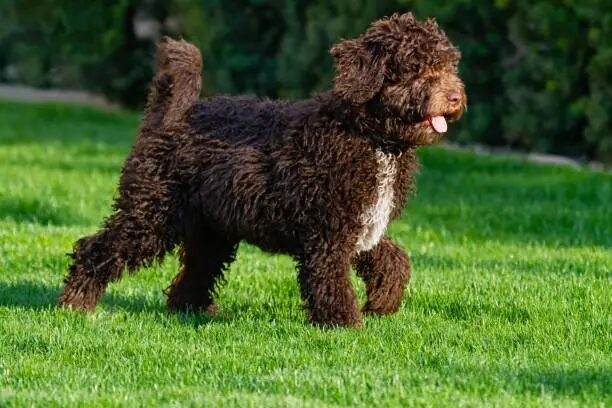
The Barbet dog is one of those breeds that can make people stop and ask, “What kind of dog is that?” With its shaggy, curly coat, long facial hair, and unmistakable beard, the Barbet has an appearance that can resemble a doodle at first glance. But this is a distinct, historic breed with deep roots in France and a long association with waterfowl hunting.
The Barbet, pronounced roughly “bar-bay,” is also known as the French Water Dog. The Fédération Cynologique Internationale (FCI) places it in Group 8, the retrievers, flushing dogs, and water dogs, and lists France as its country of origin.
This isn’t simply a dog with a curly coat that happens to enjoy swimming. The Barbet was developed as a working water dog capable of searching through aquatic vegetation, flushing hidden birds, and retrieving game from the water. The modern breed still carries many of those traits, including athleticism, intelligence, sociability, and an obvious enthusiasm for water.
Today, Barbets are increasingly appreciated as family companions, sporting dogs, and outdoor partners. The American Kennel Club recognized the breed fully in January 2020, bringing more attention to a dog that had already existed for centuries.
However, owning a Barbet isn’t all about cuddles and impressive photographs. Its dense curly coat requires substantial grooming, while its working background means it benefits from regular physical activity and mental stimulation. A Barbet can be an excellent companion for an active household, but it may not be the best choice for someone looking for a low-maintenance or highly sedentary dog.
This guide explores the Barbet’s history, appearance, size, coat, temperament, exercise needs, training, grooming, health, nutrition, puppy care, cost, and suitability for different households.
Quick Facts About the Barbet Dog
| Trait | Barbet |
|---|---|
| Breed Name | Barbet |
| Common Name | French Water Dog |
| Origin | France |
| Breed Group | Sporting |
| Size | Medium |
| Male Height | About 21–24.5 inches |
| Female Height | About 19–22.5 inches |
| Weight | Proportionate to height |
| Lifespan | Around 12–15 years* |
| Coat | Long, dense, curly |
| Colors | Black, gray, brown, fawn, with possible white markings |
| Energy Level | Moderate to high |
| Intelligence | High |
| Temperament | Cheerful, social, loyal, affectionate |
| Grooming Needs | High |
| Exercise Needs | Moderate to high |
| Training | Highly trainable |
| Water Ability | Excellent |
| Best For | Active families, outdoor owners, dog-sport enthusiasts |
*Lifespan estimates vary among sources and individual dogs.
The FCI standard describes the Barbet as a medium-sized French water dog with a thick, woolly coat that protects against cold and damp conditions. Its coat forms a beard on the chin, which is directly connected to the breed’s name.
What Is a Barbet Dog?
Barbet Breed Overview
The Barbet is a medium-sized French water dog originally developed for work around wetlands and waterways. It belongs to the Sporting Group in the AKC system and is classified by the FCI among retrievers, flushing dogs, and water dogs.
Although today’s Barbet may spend most of its time relaxing at home, its working heritage remains important. This breed was designed to cooperate closely with people, search for birds, flush them from vegetation, and retrieve them after they were shot.
That background helps explain many of the Barbet’s modern characteristics:
- Strong interest in water
- Good retrieving ability
- High trainability
- Athletic movement
- Social personality
- Curiosity and problem-solving ability
- A need for meaningful activity
The AKC describes the Barbet as an archetypic French water dog and notes its use in locating, flushing, and retrieving birds.
What Does the Name Barbet Mean?
The name Barbet comes from the French word “barbe,” meaning beard.
It’s an appropriate name because the breed’s curly facial hair can form a prominent beard around the chin and muzzle. The beard isn’t merely a decorative feature—it is one of the most recognizable characteristics of the breed.
The FCI standard specifically explains that the hair forms a beard on the chin and that this feature gave the breed its name.
Why Is the Barbet Called the French Water Dog?
The Barbet is commonly called the French Water Dog because it originated in France and was historically used for water-based hunting.
The breed was particularly valuable to hunters working around marshes, ponds, rivers, and other wet environments. Its dense coat provided protection from cold and damp conditions, while its swimming and retrieving abilities made it useful for waterfowl work.
The nickname also helps distinguish the Barbet from other curly-coated sporting breeds.
Is the Barbet a Sporting Dog?
Yes.
The Barbet is recognized by the AKC as a member of the Sporting Group, alongside breeds developed for activities such as locating, flushing, and retrieving game. The AKC describes Sporting dogs as naturally active and alert and notes that many water-retrieving breeds have coats adapted to wet environments.
This classification gives prospective owners an important clue: the Barbet isn’t simply a decorative companion breed.
It was bred to work.
That doesn’t mean every Barbet needs to hunt. It does mean that owners should expect a dog that enjoys having something interesting to do.
What Was the Barbet Bred For?
The primary historical purpose of the Barbet was waterfowl hunting.
According to the FCI standard, the Barbet was expected to search for and locate game hidden in aquatic vegetation, flush it out, and retrieve birds shot by its handler.
That combination of skills required several qualities:
- Good scenting ability
- Persistence
- Trainability
- Swimming ability
- Retrieving instinct
- Cooperation with the hunter
- Tolerance of cold and wet conditions
Many of these characteristics remain visible in modern Barbets.
Is the Barbet a Hunting Dog?
Historically, absolutely.
Modern Barbets may never see a hunting field, but their instincts reflect their original purpose. Some individuals retain a noticeable interest in birds and other moving animals, while others are primarily enthusiastic retrievers and family companions.
The degree of prey drive can vary from one dog to another.
For owners, that means training and supervision are still important around wildlife and in unsecured outdoor areas.
Is the Barbet a Water Retriever?
Yes. Water retrieval is one of the breed’s defining historical functions.
The Barbet was expected to enter water, locate birds, and bring them back to its handler. Its dense coat and webbed feet supported this work, and the breed developed a reputation for willingly entering cold water.
This history explains why many modern Barbets seem almost magnetically attracted to lakes, ponds, streams, and swimming pools.
If your ideal dog is one that happily jumps into the water and then tracks mud across the house, the Barbet may be worth investigating.
Why Is the Barbet Known for Its Beard?
The beard is one of the Barbet’s signature physical characteristics.
The dog’s long, curly facial hair gives it a distinctive expression and contributes to the shaggy appearance that sometimes causes people to mistake it for a mixed breed. The AKC has even noted that the breed can be mistaken for a doodle because of its dense, curly hair.
For owners, however, that beard comes with responsibility.
Food, water, mud, leaves, and debris can collect in long facial hair. Regular grooming is therefore especially important around the muzzle and beard.
Is the Barbet Related to the Poodle?
Yes, the breeds have a historical relationship.
The Barbet is widely considered an important ancestor in the development of several curly-coated breeds. The modern Poodle, in particular, shares historical connections with the Barbet.
Interestingly, the FCI’s current Poodle historical standard states that the Poodle descends from the Barbet and retained many of its characteristics.
That helps explain similarities in:
- Coat texture
- Water ability
- Retrieving behavior
- Intelligence
- Trainability
- Sporting background
However, the Barbet and Poodle are separate breeds, each with its own breed standard, history, structure, and temperament.
Barbet as a Family Companion
Although the Barbet has serious working credentials, it can also be a warm and engaging family dog.
The AKC describes the breed as playful, loving, loyal, smart, and family-oriented. It also notes that Barbets can be surprisingly calm when their physical and mental needs are properly met.
A well-exercised Barbet may happily settle down beside its family after an active day.
The important distinction is that calm does not mean inactive.
A Barbet that receives little exercise, training, or enrichment may find its own entertainment.
That could mean:
- Chewing household items
- Digging
- Barking
- Jumping on people
- Stealing objects
- Demanding attention
- Becoming restless
For this reason, the breed tends to work best with people who enjoy interacting with their dogs rather than simply having a dog in the house.
Barbet Intelligence and Working Ability
The Barbet’s intelligence is closely tied to its working history.
A waterfowl dog needed to pay attention to its handler, navigate difficult environments, search for game, and retrieve it. Modern Barbets often demonstrate the same eagerness to learn and participate.
They can enjoy activities such as:
- Obedience
- Rally
- Agility
- Retrieving
- Swimming
- Scent work
- Dock diving
- Disc sports
- Conformation
The AKC highlights the Barbet’s versatility and athleticism and notes its participation in several dog sports.
For an intelligent Barbet, training isn’t merely about teaching commands.
It’s also a way to provide mental exercise.
Barbet Dog History and Origin
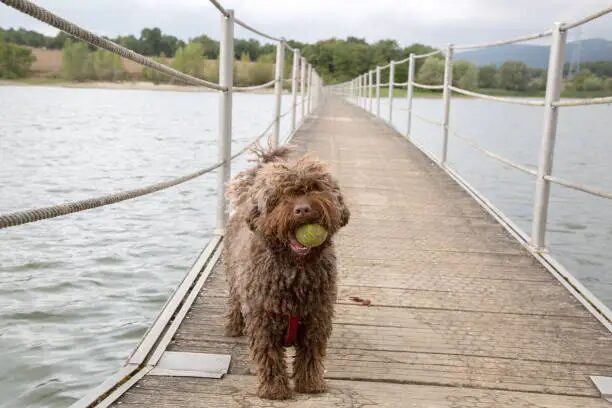
Where Did the Barbet Originate?
The Barbet originated in France.
The FCI officially lists France as the breed’s country of origin and recognizes it as a French water dog.
Unlike some relatively modern breeds, the Barbet has a history stretching back centuries.
Its exact early development is difficult to reconstruct because historical dog breeding was not documented with the same precision used today. Nevertheless, references to dogs resembling the Barbet appear in historical sources dating back many centuries.
How Old Is the Barbet Breed?
The Barbet is considered an ancient breed.
The FCI’s historical summary describes it as a very old French breed used for waterfowl hunting and notes references to it in works dating back to the 16th century.
The AKC provides an even earlier historical reference, noting a recorded mention dating to 1387.
Because historical records are incomplete, it is safer to describe the Barbet as a breed with centuries of documented history rather than assigning a precise birth date.
Early History of the French Water Dog
For centuries, France’s rivers, marshes, lakes, and wetlands provided important hunting environments.
A dog capable of entering cold water, searching dense vegetation, and retrieving birds could be an extremely useful working partner.
The Barbet developed around this need.
Its physical structure and temperament were shaped by practical requirements rather than appearance alone.
A successful water dog needed to be:
- Durable
- Cooperative
- Brave around water
- Persistent
- Trainable
- Physically capable
- Comfortable in wet environments
These traits helped establish the Barbet as an important French working dog.
The Barbet in Medieval France
The early history of the breed overlaps with the broader history of European water dogs.
Dogs with thick, curly coats were particularly useful in wet environments because their coats could provide protection against cold water and weather.
The Barbet eventually became closely associated with waterfowl hunting in France.
Historical descriptions should be interpreted carefully because modern breed standards did not exist in the same form during medieval times. Still, the breed’s long-standing relationship with water and hunting is well established.
The Barbet in 16th-Century France
The 16th century is particularly significant in Barbet history.
The FCI identifies references to the breed during this period, while the modern AKC also points to the breed’s long French history.
By this period, the Barbet was associated with hunting waterfowl and working around aquatic environments.
Its reputation as a versatile water dog continued for generations.
Historical References to the Barbet
Historical references help demonstrate that the Barbet isn’t a newly created “doodle-style” breed.
That distinction matters because the dog’s appearance can be misleading to people unfamiliar with it.
The Barbet is an established purebred dog with a long history, recognized internationally and maintained through breed standards and dedicated breeding programs.
The Barbet Club of America (BCA) serves as the AKC parent club for the breed in the United States and focuses on preservation, education, responsible breeding, and responsible ownership.
Barbet and French Waterfowl Hunting
The Barbet’s original work centered heavily on waterfowl.
It wasn’t simply expected to retrieve a bird after it landed in the water. The FCI standard explains that the dog was expected to search for game concealed in aquatic vegetation, flush it, and then retrieve the shot bird.
This is an important distinction.
The Barbet was a multi-purpose water dog, not merely a swimming retriever.
The Barbet’s Role in Marshes and Wetlands
Wetlands can be difficult environments for dogs.
There may be:
- Deep mud
- Thick vegetation
- Cold water
- Uneven ground
- Dense reeds
- Hidden wildlife
The Barbet’s coat and physical ability helped it work in these conditions.
Its historical purpose also explains why the breed tends to enjoy outdoor adventures today.
A Barbet that loves splashing through water isn’t necessarily displaying a random personality quirk.
It is expressing part of its working heritage.
How the Barbet’s Coat Developed
The Barbet’s thick, curly coat served a practical purpose.
The FCI standard describes the coat as thick and woolly and says it provides effective protection from cold and damp conditions.
The coat also contributes to the breed’s unmistakable appearance.
However, an effective working coat isn’t automatically an easy-care coat.
Modern owners need to understand that the same dense hair that helped protect the working Barbet can also mat, trap debris, and require regular grooming.
How World Wars Affected the Barbet
Like many European dog breeds, the Barbet faced severe challenges during the 20th century.
The World Wars disrupted breeding programs and reduced populations.
The AKC notes that the wars had a devastating impact on the breed and that the Barbet came close to extinction before dedicated enthusiasts helped rebuild it.
The breed’s survival is therefore closely connected to the work of committed breeders and enthusiasts who valued its historical identity.
How the Barbet Was Saved From Extinction
The revival of the Barbet required careful efforts to preserve remaining dogs and rebuild a viable breeding population.
This history is one reason modern responsible breeding matters so much.
When a breed has a relatively small population, breeding decisions can have long-term consequences.
The Barbet Club of America emphasizes preservation and encourages breeders to complete recommended health testing and share results through a public searchable database.
Development of the Modern Barbet
Today’s Barbet combines its traditional working heritage with the role of a companion and sporting dog.
Modern Barbets can be seen participating in activities including:
- Agility
- Obedience
- Dock diving
- Disc sports
- Retrieving
- Swimming
- Conformation
The breed’s versatility is one of its biggest attractions.
It can be a hunting dog, sporting partner, hiking companion, and family pet—provided its owner’s lifestyle matches its needs.
When Did the Barbet Come to America?
The Barbet was introduced to the United States in 1994, according to the AKC.
For many years, however, the breed remained relatively uncommon in the country.
That rarity is one reason people may still be unfamiliar with the Barbet or mistake one for a doodle mix.
When Did the AKC Recognize the Barbet?
The American Kennel Club granted the Barbet full recognition in January 2020.
This was a major milestone for the breed in the United States.
Recognition also increased public awareness and gave prospective owners another formal route for learning about the breed, its standard, and responsible ownership.
Barbet History in Modern America
The Barbet remains relatively uncommon compared with popular breeds such as the Labrador Retriever, Golden Retriever, or Poodle.
That rarity can be attractive to people looking for something unusual, but it also means prospective owners may need patience when looking for a responsible breeder.
The Barbet Club of America is an especially useful starting point for learning about the breed, health, ownership, and breed preservation.
Barbet Dog Appearance
What Does a Barbet Look Like?
The Barbet is a medium-sized, balanced, slightly rectangular dog with a substantial head, long tail, and dense curly coat.
Its most recognizable features include:
- A shaggy curly coat
- A prominent beard
- Long facial hair
- A broad, substantial head
- Drooping ears
- An athletic body
- A sweeping tail
The AKC breed description emphasizes the breed’s balanced proportions, substantial head, long sweeping tail, and long dense curly hair.
At a glance, a Barbet can look somewhat like a cross between several familiar curly-coated breeds.
But its overall structure is distinctive.
Barbet Body Structure
The Barbet has a medium-sized, athletic structure designed for movement rather than exaggerated proportions.
The FCI standard describes the body as slightly longer than the dog’s height at the withers.
This creates a slightly rectangular appearance.
The body should look capable of sustained activity rather than overly heavy or delicate.
Barbet Head Shape
The head is substantial and covered by the breed’s characteristic curly hair.
The facial furnishings can make the head appear larger than it actually is, particularly when the coat is allowed to grow naturally.
This shaggy facial appearance is part of what gives the Barbet its charming, slightly rustic look.
Barbet Muzzle
The muzzle is strong and functional.
According to the FCI standard, it is slightly shorter than the skull.
This contributes to the balanced appearance expected in the breed.
Barbet Beard and Facial Hair
The Barbet beard is perhaps its most famous feature.
Long curly hair grows around the chin and muzzle, creating the characteristic “bearded” appearance that inspired the breed’s name.
For owners, though, the beard is more than something to photograph.
It needs maintenance.
After meals or drinking, the facial hair can become damp or collect food particles. After swimming, it may also remain wet for some time.
Regular cleaning and grooming can help keep the area comfortable and healthy.
Barbet Eyes
The Barbet has expressive eyes that can be partly framed by its shaggy facial coat.
Keeping hair properly maintained around the face is important so that excessive growth doesn’t interfere with normal vision or eye cleanliness.
Owners should also monitor the eyes for redness, discharge, cloudiness, or persistent irritation and consult a veterinarian if abnormalities appear.
Barbet Ears
The ears are dropped and covered with hair.
This contributes to the breed’s soft appearance but also means owners should routinely inspect the ears.
Water-loving dogs can be particularly prone to moisture remaining around the ear area after swimming.
Regular checks are therefore a useful part of routine Barbet care.
Barbet Nose
The nose should complement the dog’s coat color and overall pigmentation.
More importantly for everyday owners, the nose should be free from unusual discharge, persistent crusting, or other changes that could indicate a health issue.
Barbet Neck
The neck is strong enough to support the breed’s athletic frame and working movement.
It transitions naturally into the shoulders and body rather than creating an exaggerated appearance.
Barbet Chest
The Barbet has a developed chest appropriate for an active sporting dog.
Good chest development supports efficient breathing and endurance during exercise.
Barbet Back and Body
The back should maintain the breed’s balanced, slightly rectangular outline.
The body is athletic rather than bulky, reflecting the Barbet’s historical role as a mobile water dog.
Barbet Legs
The legs are built for functional movement.
A healthy Barbet should be capable of walking, running, swimming, retrieving, and participating in athletic activities without appearing cumbersome.
Barbet Feet
The feet are particularly interesting because the breed is associated with webbed feet, a useful adaptation for swimming. The AKC highlights webbed feet alongside the breed’s dense water-repellent coat and retrieving ability.
This is another example of how the Barbet’s anatomy reflects its working history.
Barbet Tail
The tail is long and sweeping.
Its appearance contributes to the breed’s balanced silhouette and athletic profile.
Barbet Overall Proportions
A well-structured Barbet should look:
- Balanced
- Athletic
- Medium-sized
- Slightly rectangular
- Substantial without being heavy
- Capable of sustained activity
The FCI standard emphasizes medium proportions and a body that is slightly longer than the height at the withers.
What Makes the Barbet’s Appearance Unique?
The easiest way to recognize a Barbet is to combine several features rather than focusing on just one.
Think:
Curly coat + beard + medium athletic body + water-dog structure.
Barbet Dog Size and Weight
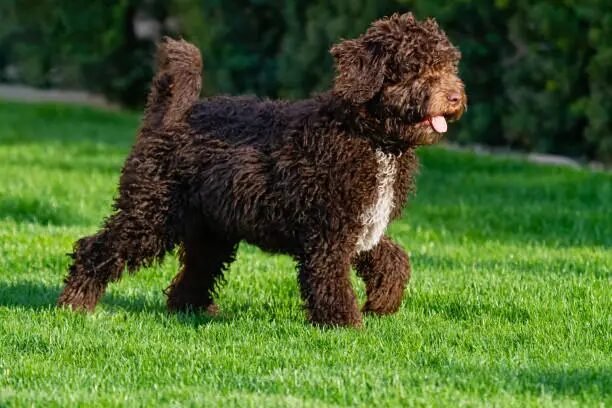
How Big Does a Barbet Get?
The Barbet is a medium-sized dog.
The AKC and FCI standards describe a dog with enough substance for demanding outdoor work without becoming excessively large.
According to the AKC standard information, males generally measure approximately 21–24.5 inches, while females measure approximately 19–22.5 inches.
Barbet Height
| Sex | Approximate Height |
|---|---|
| Male | 21–24.5 inches |
| Female | 19–22.5 inches |
Individual dogs can naturally vary, and puppies should not be judged solely by whether they are currently above or below an average.
Male Barbet Size
Male Barbets are generally somewhat taller and more substantial than females.
A mature male may have a more powerful overall appearance, particularly through the head, chest, and body.
However, healthy structure and proportion matter more than simply being large.
Female Barbet Size
Female Barbets are generally somewhat smaller than males while retaining the same overall breed characteristics.
They should still have the athletic structure and physical ability expected from a working water dog.
Barbet Weight
Weight is not best understood as a single target number.
The FCI standard emphasizes that weight should be proportionate to the dog’s height and build.
A healthy Barbet should have an appropriate body condition rather than simply reaching a particular number on the scale.
Factors affecting weight include:
- Sex
- Height
- Bone structure
- Muscle mass
- Age
- Activity level
- Diet
- Overall health
Male vs Female Barbet Size
There can be noticeable differences between individual males and females, but sex alone doesn’t determine a dog’s final size.
Genetics, nutrition, health, and growth patterns all contribute.
If you’re buying a Barbet puppy and want to estimate adult size, the breeder can often provide useful information about the puppy’s parents and previous litters.
Barbet Puppy Growth
Barbet puppies grow rapidly during their first months of life.
However, growth doesn’t happen at exactly the same speed for every puppy.
A puppy’s:
- Genetics
- Nutrition
- Health
- Exercise
- Overall development
can influence its growth pattern.
Rather than obsessing over a single number, owners should monitor steady development and healthy body condition with guidance from a veterinarian.
When Does a Barbet Stop Growing?
Most medium-sized dogs reach much of their adult height during their first year, but physical development can continue beyond that.
A Barbet may continue filling out and developing muscle after reaching much of its adult height.
Mental maturity can take longer still.
This distinction is important because a physically mature-looking Barbet may still behave like an energetic young dog.
Barbet Adult Size
A mature Barbet is large enough to be an athletic outdoor companion while remaining manageable for many households.
Its medium size can be appealing to people who want a sporting dog without the size of a much larger retriever.
However, don’t confuse medium-sized with low-maintenance.
A Barbet’s activity requirements and grooming needs can be considerably greater than its size might suggest.
Barbet Size Compared With Other Water Dogs
Barbets occupy a useful middle ground among water dogs.
They are generally:
- Smaller than many large retriever breeds
- Comparable in general size to some Portuguese Water Dogs
- Similar in height range to some Standard Poodles
- Larger than many small companion breeds
The best comparison depends on whether you’re considering height, weight, structure, energy, or grooming.
Barbet Dog Colors and Coat
What Colors Do Barbets Come In?
Barbets can occur in several recognized colors, including:
- Black
- Gray
- Brown
- Fawn
White markings may also occur.
The coat can create very different visual impressions depending on color, length, curl, and grooming style.
Black Barbet
A black Barbet can have a striking appearance, particularly when its dense curls are well maintained.
The contrast between the dark coat and expressive eyes can make the beard especially noticeable.
Gray Barbet
Gray Barbets can range from darker to lighter shades.
As with other coat colors, the appearance can change as the dog matures and as the coat grows.
Brown Barbet
Brown is another recognized Barbet coat color.
A brown Barbet often has a warm, rich appearance that becomes particularly distinctive when combined with a full curly coat.
Fawn Barbet
Fawn Barbets have a lighter overall coat color.
The exact appearance can vary considerably between individuals.
Barbet With White Markings
White markings may occur on some Barbets.
These markings can appear in different areas and amounts, giving individual dogs a slightly different appearance.
Black and White Barbet
A black-and-white Barbet combines dark pigmentation with white markings.
The pattern can make the facial beard and body curls particularly eye-catching.
Brown and White Barbet
Brown-and-white Barbets have a warm base color combined with areas of white.
Again, the amount and placement of white can vary.
Gray and White Barbet
Gray combined with white can produce a softer-looking coat pattern.
The dense curls can make these markings appear somewhat different depending on how the dog is groomed.
Fawn and White Barbet
Fawn-and-white Barbets have a lighter overall appearance.
As with all Barbet colors, coat color should be secondary to health, temperament, structure, and suitability when choosing a puppy.
Barbet Coat Genetics
Coat color is determined by genetics passed from the parents.
However, choosing a dog solely because of an attractive color can be a mistake.
A responsible breeder should prioritize:
- Health
- Temperament
- Sound structure
- Genetic diversity
- Working ability where appropriate
- Good placement with a suitable family
Color should come much later on that list.
Does Barbet Color Affect Price?
It can, depending on breeder demand and market conditions, but there is no good reason to assume that a particular color automatically makes a puppy healthier or better.
Be cautious if a seller describes a color as “ultra rare,” “exclusive,” or automatically superior and uses that claim to justify a dramatically higher price.
Barbet Coat Type and Texture
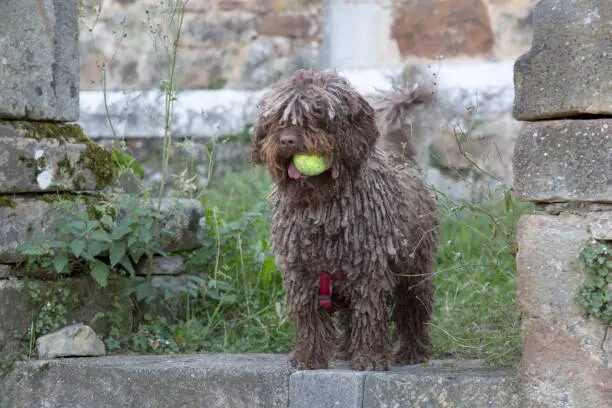
What Type of Coat Does a Barbet Have?
The Barbet has a long, dense, curly coat.
The FCI standard describes the coat as thick and woolly and notes its protective role against cold and damp conditions.
This coat is one of the breed’s defining characteristics.
It is also one of its biggest ownership responsibilities.
Why Is the Barbet Coat Curly?
The curly coat is closely associated with the Barbet’s historical water-dog function.
Dense hair provided protection while working in cold and wet environments.
Today, the same coat gives the Barbet its distinctive shaggy appearance.
Barbet Long Hair
A Barbet’s hair can grow relatively long if left untrimmed.
Long hair can make the dog look particularly fluffy, but it also increases the likelihood of tangles and mats.
Owners should therefore establish a grooming routine early.
Barbet Dense Coat
The coat is dense enough to trap:
- Dirt
- Leaves
- Grass
- Mud
- Moisture
- Debris
This becomes particularly noticeable after outdoor adventures.
A Barbet that loves swimming and hiking can come home looking dramatically different from the clean dog that left the house.
Barbet Water-Resistant Coat
The coat historically helped protect the dog from cold and wet environments.
That doesn’t mean a Barbet should be left wet for long periods.
After swimming or bathing, owners should ensure the coat is properly dried and checked for tangles.
Does the Barbet Shed?
The Barbet is generally considered a low-shedding breed, but low shedding doesn’t mean zero maintenance.
Loose hair can remain trapped within the curly coat instead of falling freely around the home.
That means the hair still needs to be removed through brushing and combing.
Is the Barbet Hypoallergenic?
The Barbet is sometimes promoted as a breed suitable for people with allergies.
However, no dog is completely allergen-free.
Dog allergies can involve proteins found in dander, saliva, and other materials rather than simply loose hair.
Therefore, someone with significant allergies should spend time around adult Barbets before deciding to bring one home.
The AKC has described the Barbet as potentially suitable for people with allergies, but that should not be interpreted as a guarantee that every allergy sufferer will tolerate the breed.
Is a Barbet Good for Allergy Sufferers?
It may be better tolerated by some individuals than heavily shedding breeds, but responses vary.
A sensible approach is to:
- Visit an adult Barbet
- Spend several hours around the dog
- Handle and pet the coat
- Observe your reaction
- Consult a medical professional if allergies are significant
Don’t rely solely on the phrase “hypoallergenic dog.”
Barbet Coat Changes From Puppy to Adult
A Barbet puppy’s coat can change significantly as it matures.
Texture, curl, density, and color can all develop over time.
This is another reason not to choose a puppy exclusively based on what its coat looks like at eight weeks.
The adult coat may look substantially different.
Why the Barbet Coat Requires Frequent Grooming
The biggest problem isn’t simply shedding.
It’s matting.
Curly, dense hair can tangle close to the skin, especially behind:
- The ears
- Legs
- Armpits
- Collar area
- Beard
- Tail
- Belly
Regular brushing and combing help prevent painful mats from forming.
The AKC describes Barbet grooming as a multi-step process involving brushing, combing, bathing, drying, and trimming.
Barbet Dog Temperament and Personality
What Is a Barbet’s Personality Like?
A typical Barbet is known for being cheerful, social, loyal, affectionate, and playful.
The FCI standard describes the breed as even-tempered, highly attached to its owners, very sociable, and fond of water.
The AKC similarly highlights its joyful, loving, playful, and family-oriented qualities.
Of course, individual temperament varies.
Genetics, early socialization, training, environment, and life experiences all influence behavior.
Are Barbets Affectionate?
Yes.
Many Barbets form strong bonds with their families.
They often enjoy being involved in household activities and may prefer staying near their people rather than spending long periods isolated.
That affectionate nature is wonderful for owners who want an interactive companion.
It can be less convenient for people who are away from home for most of the day.
Are Barbets Loyal?
The Barbet’s loyalty is closely related to its history as a cooperative working dog.
It was developed to work alongside a human handler, not independently of people.
As a result, many Barbets enjoy participating in activities with their owners.
Are Barbets Friendly?
Generally, yes.
The breed standard emphasizes sociability, while the AKC describes Barbets as social and family-oriented.
Early socialization still matters.
A friendly breed isn’t automatically friendly in every situation if a puppy is poorly socialized or exposed to frightening experiences.
Are Barbets Intelligent?
Yes.
Barbets are considered intelligent and highly trainable.
Their working background required them to understand and respond to their handlers while navigating challenging environments.
That intelligence is a major advantage—but it also creates a responsibility for owners.
Smart dogs need something to think about.
Are Barbets Playful?
Absolutely.
Their playful side can remain strong well into adulthood.
Games involving retrieving, swimming, scent work, training, and problem-solving can be particularly rewarding.
Are Barbets Calm?
They can be surprisingly calm when their needs are met.
This is an important point.
A Barbet isn’t necessarily hyperactive every moment of the day. With appropriate exercise, training, companionship, and mental stimulation, many can relax comfortably at home.
The problem arises when owners expect a working sporting breed to remain calm without providing enough activity.
Are Barbets Energetic?
Yes, particularly when compared with many companion breeds.
Their energy level reflects their sporting background.
They don’t necessarily need hours of intense exercise every day, but they benefit from a lifestyle that includes meaningful movement and mental engagement.
Are Barbets Sensitive?
Many Barbets respond well to gentle, consistent training.
Harsh methods can damage trust and may create fear or resistance.
Positive reinforcement—rewarding desirable behavior with food, toys, praise, play, or access to enjoyable activities—is generally a more productive approach.
Are Barbets Protective?
A Barbet can alert its owners to unusual activity, but it isn’t primarily bred as a protection or guard dog.
Its natural strengths are companionship, retrieving, water work, and sporting activities.
Are Barbets Good With Strangers?
Well-socialized Barbets can be friendly and comfortable around unfamiliar people.
However, every dog is an individual.
Puppies should be gradually introduced to different people, environments, sounds, surfaces, and situations so they can learn that unfamiliar experiences don’t automatically represent danger.
Are Barbets Good With Children?
They can be excellent companions for families with children, particularly when the dog receives appropriate training and supervision.
The AKC specifically describes the breed as family-oriented and notes its liking for children.
Still, children and dogs should never be left unsupervised.
Young Barbets may be enthusiastic and energetic enough to knock over a small child simply through excitement.
Are Barbets Good With Other Dogs?
They are generally considered social and can get along well with other dogs, especially when introduced properly.
The AKC notes that Barbets are known to be sociable and can get along well with other dogs.
Good introductions and ongoing socialization remain important.
Are Barbets Good With Cats?
A Barbet can live successfully with cats, but this depends heavily on the individual dog’s prey drive and early socialization.
A puppy raised carefully around a household cat may develop an excellent relationship with it.
That doesn’t mean every Barbet will automatically be safe around unfamiliar cats outdoors.
Do Barbets Have a Strong Prey Drive?
Some do.
Their history as hunting and retrieving dogs means that birds and other fast-moving animals can attract their attention.
The AKC notes that some Barbets have a strong prey drive and may chase or retrieve birds around water.
Owners should therefore establish a reliable recall and use appropriate leashes or secure fencing when necessary.
Does the Barbet Like Water?
Very much so, in many cases.
Water is part of the breed’s heritage.
The FCI standard specifically describes the Barbet as loving water, including very cold water.
That doesn’t mean every individual Barbet will immediately become an enthusiastic swimmer.
Some puppies need to be introduced to water gradually and positively.
Why Barbets Can Become Attached to Their Families
The Barbet was historically expected to cooperate with its human handler.
Modern Barbets often carry that social orientation into family life.
They may follow their owners from room to room, watch household activities, or insist on participating in whatever is happening.
This can be charming—but it also means the breed may not be ideal for someone seeking an independent dog that rarely demands interaction.
Barbet Independence vs Dependence
The Barbet generally leans toward social and people-oriented rather than highly independent.
That makes training and companionship enjoyable, but owners should teach puppies how to relax alone.
Gradual independence training can help reduce the risk of separation-related problems.
Barbet Social Needs
A Barbet needs more than physical exercise.
It also benefits from:
- Human interaction
- Training
- New experiences
- Problem-solving
- Play
- Appropriate canine socialization
- Environmental enrichment
A long walk followed by eight hours of isolation may not meet all of its needs.
The best Barbet lifestyle combines movement, mental stimulation, companionship, and downtime.
Barbet Dog Exercise Needs
A Barbet dog is not a breed that is happiest spending most of the day on the couch. This French water dog was developed to work, retrieve, and move through challenging wet environments. Modern Barbets may live primarily as family companions, but they still benefit from regular physical activity and mental challenges.
The good news is that exercise does not have to mean running for hours every day. A combination of walks, training, retrieving games, swimming, scent work, and interactive play can help keep a Barbet physically fit and mentally satisfied.
How Much Exercise Does a Barbet Need?
Adult Barbets generally need daily exercise, with the exact amount depending on age, health, temperament, and lifestyle.
A practical routine might include:
- A couple of daily walks
- Short obedience or trick-training sessions
- Interactive play
- Retrieving games
- Scent-based activities
- Occasional swimming or hiking
- Dog sports for particularly active individuals
Rather than focusing only on a specific number of minutes, pay attention to your dog’s behavior. A well-exercised Barbet should generally be able to settle comfortably at home.
Daily Exercise Requirements
A Barbet benefits from a balanced routine that combines physical and mental exercise.
For example:
| Activity | Benefit |
|---|---|
| Walking | Fitness and environmental enrichment |
| Fetch | Exercise and retrieving practice |
| Swimming | Full-body activity |
| Scent games | Mental stimulation |
| Obedience | Focus and impulse control |
| Hiking | Physical and environmental enrichment |
| Agility | Coordination and problem-solving |
| Dock diving | Athletic and water-based activity |
Young puppies should not be pushed into strenuous exercise simply because they have plenty of energy. Their developing bones and joints need age-appropriate activity.
Physical Exercise for Barbets
Walking is an easy foundation for an adult Barbet’s exercise program. You can vary the route to expose your dog to different sights, sounds, surfaces, and smells.
Other suitable activities can include:
- Hiking
- Swimming
- Retrieving
- Controlled games of fetch
- Leisurely jogging once physically mature
- Off-leash activity in secure areas
- Dog sports
Always consider weather conditions. A curly, dense coat can make hot-weather exercise particularly demanding.
Mental Stimulation for Barbets
Mental exercise is just as important as physical exercise.
Because Barbets are intelligent working dogs, repeating the same walk every day may not provide enough enrichment for some individuals.
Try:
- Puzzle feeders
- Scent games
- Hide-and-seek
- New obedience commands
- Trick training
- Food-dispensing toys
- Object discrimination
- Beginner nose work
Five to ten minutes of focused training can be surprisingly tiring for a dog that enjoys learning.
Walking a Barbet
Walking should not be treated only as a way to burn energy. It is also an opportunity for socialization and sensory enrichment.
Allow your Barbet to safely investigate appropriate smells and surroundings. Practicing loose-leash walking can turn an ordinary walk into a useful training session.
Hiking With a Barbet
An adult Barbet can be an excellent hiking companion. Its athletic build and working background make outdoor adventures a natural fit.
Before taking your dog on a long hike:
- Build endurance gradually.
- Carry sufficient water.
- Check the weather.
- Inspect paws afterward.
- Watch for overheating.
- Keep your dog under control around wildlife.
- Check the coat for burrs, seeds, and debris.
Swimming With a Barbet
Swimming is particularly appropriate for this breed because of its historical connection with waterfowl work.
However, never assume every dog automatically knows how to swim safely. Introduce water gradually and supervise your Barbet around pools, lakes, rivers, and other bodies of water.
Barbet Dog Training
The Barbet’s intelligence and willingness to participate make training one of the most enjoyable parts of ownership.
These dogs were developed to work alongside people, so they generally benefit from having a clear purpose. Training should be consistent, reward-based, and engaging rather than harsh or repetitive.
Are Barbets Easy to Train?
For many owners, yes. A well-socialized Barbet can be highly responsive to training.
However, intelligence does not automatically mean perfect obedience. Smart dogs can learn unwanted behaviors just as quickly as desirable ones.
If jumping gets attention, for example, a Barbet may quickly learn that jumping works.
Why Barbets Are Highly Trainable
Several characteristics work in the owner’s favor:
- High intelligence
- People-oriented temperament
- Working history
- Natural retrieving ability
- Curiosity
- Playfulness
- Ability to learn complex behaviors
The key is making training rewarding and interesting.
Positive Reinforcement Training
Reward-based training can include:
- Small treats
- Toys
- Praise
- Play
- Access to favorite activities
Instead of repeatedly punishing an unwanted behavior, teach the dog what you want it to do instead.
For example, rather than simply correcting jumping, reward your Barbet when all four paws remain on the floor.
Barbet Puppy Training
Training should begin soon after bringing a puppy home.
Early lessons can include:
- Responding to its name
- Coming when called
- Sitting
- Walking on a leash
- Settling calmly
- Crate training
- House training
- Gentle handling
- Appropriate chewing
- Basic impulse control
Short sessions are usually more effective than exhausting a young puppy with lengthy training.
Recall Training
A reliable recall is one of the most valuable skills you can teach a Barbet.
Begin in a controlled environment and gradually increase distractions. Use high-value rewards so returning to you becomes an extremely positive experience.
Never repeatedly call your puppy for something unpleasant, such as ending every fun activity immediately.
Leash Training
Teach loose-leash walking gradually.
Reward your Barbet for:
- Staying near you
- Checking in voluntarily
- Walking without pulling
- Responding to changes in direction
Consistency is important. If pulling occasionally gets the dog where it wants to go, pulling can become self-rewarding.
Crate Training
A crate can provide a safe resting area and help with house training.
The crate should never become a punishment zone. Introduce it gradually using treats, meals, toys, and calm rest periods.
House Training
Take a young puppy outside frequently, especially:
- After sleeping
- After eating
- After drinking
- After playing
- Before bedtime
Reward successful bathroom trips immediately.
Accidents are normal during puppyhood. Consistency and supervision are more useful than punishment.
Barbet Puppy
A Barbet puppy is usually an energetic, curious little dog that can grow into an active and devoted companion.
Because the breed combines intelligence, sensitivity, and a working background, early experiences can have a significant influence on adult behavior.
What Is a Barbet Puppy Like?
Barbet puppies can be playful, affectionate, inquisitive, and surprisingly determined.
They may spend one moment investigating everything in the room and the next falling asleep after an intense burst of play.
Their curly puppy coat can also make them look quite different from an adult Barbet.
Barbet Puppy Personality
A puppy’s individual personality matters more than broad breed stereotypes.
Some puppies may be:
- Bold
- Outgoing
- Calm
- Highly playful
- Sensitive
- Curious
- More independent
A responsible breeder should help match a puppy’s temperament with the prospective owner’s lifestyle.
Barbet Puppy Growth
Growth varies from one puppy to another. Genetics, nutrition, exercise, health, and overall care can all influence development.
Avoid trying to make a puppy grow faster through excessive feeding. Healthy, steady growth is more important than rapid growth.
Barbet Puppy Socialization
The early puppy period is an important opportunity to introduce new experiences safely.
A puppy can gradually encounter:
- Different people
- Household sounds
- Car rides
- Different surfaces
- Grooming equipment
- Calm, vaccinated dogs
- Appropriate children
- New environments
Experiences should be positive rather than overwhelming.
Barbet Puppy Exercise
Young Barbets need play and exploration, but they should not be treated like miniature endurance athletes.
Instead of long forced runs, prioritize:
- Short walks appropriate for age
- Free movement in safe areas
- Gentle play
- Short training sessions
- Sniffing opportunities
- Puzzle activities
As the puppy matures, activity can gradually increase.
Barbet Puppy Feeding
A growing Barbet needs a complete and balanced puppy diet appropriate for its expected adult size.
Follow feeding recommendations from the food manufacturer and your veterinarian, while monitoring body condition.
Avoid automatically feeding extra food simply because your puppy appears hungry.
Barbet Puppy Grooming
Start grooming lessons early.
Even if the puppy’s coat is relatively easy to manage at first, an adult Barbet’s dense curly coat can become difficult to handle if the dog never learns to tolerate brushing, combing, bathing, drying, and nail care.
Make grooming sessions:
- Short
- Calm
- Reward-based
- Consistent
Barbet Puppy Vaccinations
Your veterinarian can establish an appropriate vaccination and parasite-prevention schedule based on the puppy’s age, location, lifestyle, and existing records.
Ask the breeder for all available veterinary documentation before taking the puppy home.
How to Choose a Healthy Barbet Puppy
Look for a puppy that is:
- Bright and responsive
- Comfortable interacting with people
- Free from obvious discharge
- Breathing normally
- Walking normally
- In good body condition
- Living in a clean environment
- Raised with appropriate socialization
A puppy should also come with appropriate documentation and information about its parents.
How to Find a Responsible Barbet Breeder
A responsible breeder should be willing to discuss:
- Parent health testing
- Genetic risks
- Temperament
- Puppy socialization
- Veterinary care
- Contracts
- Registration
- Return policies
- Long-term breeder support
Be cautious if a seller refuses reasonable questions or pressures you to send money immediately.
Barbet Grooming
The beautiful curly coat is one of the Barbet’s defining characteristics—and one of its biggest ownership responsibilities.
Barbet grooming is not optional maintenance. Without regular care, the coat can develop tangles and mats.
Do Barbets Need a Lot of Grooming?
Yes.
The exact grooming routine depends on coat length, texture, lifestyle, and whether the dog regularly swims or spends time outdoors.
A Barbet that frequently plays in mud, water, grass, or wooded areas may require substantially more coat maintenance than a mostly indoor companion.
How Often Should You Brush a Barbet?
Regular brushing and combing are essential.
Many owners will need to groom the coat several times per week, while some dogs require attention even more frequently.
The goal is to prevent small tangles from becoming painful mats.
Barbet Brushing
Use grooming tools appropriate for a dense curly coat and work systematically through the hair.
Pay particular attention to:
- Behind the ears
- Neck
- Armpits
- Legs
- Tail
- Beard
- Areas where harnesses rub
Barbet Combing
Combing can help determine whether brushing has actually reached through the coat.
If a comb cannot pass comfortably through the hair, there may be tangles that need attention.
Barbet Bathing
Barbets may need baths when dirty or after particularly messy outdoor adventures.
Because the coat is dense, thorough drying is important. Leaving moisture trapped close to the skin can contribute to discomfort and skin problems.
Barbet Haircuts
Many owners keep the coat trimmed to a practical length.
A shorter maintenance trim can make brushing easier, especially for dogs that swim frequently or live active outdoor lifestyles.
The appropriate style depends on the dog’s needs and the owner’s grooming routine.
How to Prevent Barbet Coat Matting
Prevention is far easier than removing severe mats.
A good routine includes:
- Regular brushing
- Regular combing
- Checking the coat after outdoor activities
- Keeping high-friction areas manageable
- Maintaining a practical coat length
- Getting professional help when necessary
Barbet Beard Care
The breed’s beard is iconic, but it can collect:
- Food
- Water
- Dirt
- Plant material
Wipe and inspect the facial hair when necessary, particularly after meals or outdoor activities.
Barbet Ear Grooming
Regularly inspect the ears for redness, odor, discharge, or irritation.
Dogs that swim frequently may need especially careful ear monitoring. If anything appears abnormal, consult a veterinarian rather than repeatedly treating the ear at home.
Barbet Nail Trimming
Long nails can affect comfort and movement.
Introduce nail handling when your Barbet is young and reward calm cooperation.
Barbet Dental Care
Regular tooth brushing with dog-safe dental products can help maintain oral health. Your veterinarian can also recommend professional dental care when needed.
Barbet Nutrition and Diet
Good nutrition supports a Barbet’s growth, energy, coat condition, muscle development, and long-term health.
There is no single food that is automatically the best choice for every Barbet. Dietary requirements change according to age, activity level, body condition, and health.
What Should a Barbet Eat?
A quality commercial diet formulated for the dog’s life stage can provide a convenient nutritional foundation.
Choose a food that is:
- Complete and balanced
- Appropriate for the dog’s age
- Suitable for its activity level
- Made by a reputable manufacturer
- Fed according to the dog’s individual needs
Best Food for Barbets
An active adult Barbet may have higher energy requirements than a sedentary companion.
However, calories should be adjusted according to body condition rather than activity assumptions alone.
A dog that regularly swims, hikes, or participates in sports may need more calories than a dog taking relaxed neighborhood walks.
Barbet Puppy Food
Puppies require nutrition designed for growth.
Large amounts of unnecessary supplements should not be added to a complete puppy diet without veterinary guidance.
Adult Barbet Diet
An adult Barbet generally needs a balanced diet containing appropriate levels of:
- Protein
- Fat
- Carbohydrates
- Vitamins
- Minerals
- Essential fatty acids
Fresh water should always be available.
Preventing Barbet Obesity
Even active dogs can gain excess weight if treats and portions are not monitored.
Check your Barbet’s body condition regularly and adjust food intake when necessary.
Barbet Dog Health
Like every breed, Barbets can be affected by certain health conditions. This does not mean every Barbet will develop them, but prospective owners should understand the breed’s health considerations.
The American Kennel Club notes health concerns associated with the breed, including hip dysplasia, epilepsy, and progressive retinal atrophy.
Are Barbets Healthy Dogs?
Barbets can be healthy, active dogs when responsibly bred and appropriately cared for.
However, responsible ownership includes:
- Selecting breeders who perform appropriate health screening
- Maintaining a healthy body weight
- Providing proper nutrition
- Scheduling veterinary examinations
- Keeping vaccinations and parasite prevention current
- Monitoring changes in behavior or physical condition
Common Barbet Health Problems
Potential concerns can include:
- Hip dysplasia
- Elbow problems
- Epilepsy
- Progressive retinal atrophy
- Other eye disorders
- Certain inherited conditions
The prevalence and significance of individual conditions can vary, so buyers should discuss health testing with breeders and veterinarians.
Barbet Hip Dysplasia
Hip dysplasia involves abnormal development of the hip joint.
Potential signs can include:
- Difficulty rising
- Reduced willingness to exercise
- Limping
- Stiffness
- An altered gait
Maintaining an appropriate weight and avoiding inappropriate high-impact exercise during puppy development can support joint health.
Barbet Elbow Problems
Elbow disorders can also affect mobility.
Persistent lameness or discomfort deserves veterinary evaluation.
Barbet Epilepsy
Epilepsy can cause recurrent seizures.
If a dog experiences a seizure, particularly for the first time, veterinary guidance is important. Breeders should also be transparent about known seizure histories in their breeding lines.
Progressive Retinal Atrophy in Barbets
Progressive retinal atrophy, commonly abbreviated as PRA, refers to inherited retinal disorders that can progressively affect vision.
Responsible breeding programs may use available genetic testing and eye examinations to reduce the risk of producing affected puppies.
Barbet Eye Problems
Routine eye examinations can help identify certain abnormalities.
Owners should seek veterinary advice if they notice:
- Cloudiness
- Redness
- Squinting
- Excessive tearing
- Sudden changes in vision
- Unusual eye appearance
Barbet Skin Problems
The dense coat can make it harder to notice skin changes.
During grooming, check for:
- Redness
- Lumps
- Parasites
- Hot spots
- Irritation
- Unusual odor
Regular coat care doubles as an opportunity to inspect the skin.
Barbet Lifespan
A Barbet’s lifespan is often estimated at roughly 12–15 years, although individual longevity can vary.
Genetics, preventive healthcare, nutrition, weight, exercise, environment, and chance all play a role.
Factors Affecting Barbet Lifespan
Owners can support healthy aging by providing:
- Balanced nutrition
- Regular exercise
- Healthy body weight
- Preventive veterinary care
- Dental care
- Appropriate parasite prevention
- Mental stimulation
- A safe living environment
Caring for a Senior Barbet
As a Barbet ages, exercise may need to become gentler while remaining consistent.
Senior dogs can benefit from:
- Comfortable bedding
- Regular veterinary examinations
- Weight management
- Joint-friendly activity
- Mental enrichment
- Easier access around the home
Aging does not mean a Barbet should stop participating in family life. Activities can simply be adjusted to match its changing abilities.
Barbet Dog Behavior Problems
Most unwanted behavior has a reason. A Barbet that becomes destructive or restless may not be “bad”—it may simply need more appropriate outlets for its intelligence and energy.
Why Is My Barbet Hyper?
Excitement can be normal, especially in young dogs.
However, persistent restlessness may indicate insufficient:
- Exercise
- Mental stimulation
- Sleep
- Training
- Predictable routine
Puppies also need substantial rest, so constantly increasing exercise is not always the answer.
Barbet Separation Anxiety
Because Barbets are social dogs, some individuals may struggle when left alone.
Build independence gradually by teaching your dog that calm periods alone are safe and predictable.
Barbet Excessive Barking
First determine why the dog is barking.
Possible triggers include:
- Excitement
- Boredom
- Attention seeking
- Fear
- Territorial behavior
- Environmental stimulation
Addressing the underlying trigger is usually more effective than simply trying to suppress the sound.
Barbet Chewing
Puppies naturally explore with their mouths.
Provide appropriate chew toys and manage access to valuable household objects.
Barbet Digging
Digging may result from boredom, instinct, environmental stimulation, or simply enjoyment.
A designated digging area can sometimes redirect the behavior.
Barbet Jumping
Teach an alternative greeting behavior, such as sitting.
Everyone in the household should follow the same rule.
Barbet Pulling on the Leash
Pulling can be reduced through gradual leash training and rewards for staying near the handler.
Avoid turning walks into constant battles.
Barbet and Water
Few aspects of the Barbet’s identity are as closely connected to its history as water.
The breed was developed as a French water dog used in waterfowl work, and its physical characteristics helped it operate in wet environments.
Do Barbets Like Water?
Many Barbets enjoy water, although individual preferences vary.
A puppy should never be forced into water. Instead, introduce it gradually and make the experience positive.
Why Barbets Are Natural Water Dogs
The Barbet’s historical work involved locating, flushing, and retrieving birds in wet environments.
Its dense coat helped provide protection in cold water, while its overall athletic structure supported swimming and retrieving.
Barbet Swimming Ability
A healthy adult Barbet can be an excellent swimmer.
Still, swimming ability does not eliminate safety risks.
Use caution around:
- Fast-moving rivers
- Deep water
- Strong currents
- Cold water
- Unfamiliar lakes
- Swimming pools without safe exits
Safe Swimming for Barbets
Consider a properly fitted canine life jacket for unfamiliar or challenging water environments.
Never leave a dog unsupervised around water.
How to Dry a Barbet After Swimming
After swimming:
- Rinse the coat if necessary.
- Remove debris.
- Gently towel dry.
- Make sure the dense coat dries thoroughly.
- Check the ears.
- Brush or comb the coat once appropriate.
Regular grooming becomes especially important for a Barbet that swims frequently.
Barbet as a Hunting and Retrieving Dog
The Barbet’s history is closely connected to bird hunting and retrieving.
The breed was developed to locate, flush, and retrieve birds, particularly in watery environments.
Barbet Waterfowl Hunting History
French hunters valued dogs capable of working through marshes and wetlands.
The Barbet’s coat, swimming ability, intelligence, and retrieving instincts made it well suited to this environment.
Barbet Bird Retrieval
Retrieving combines several skills:
- Finding an object
- Following direction
- Carrying the object
- Returning to the handler
- Releasing it appropriately
These behaviors can also be developed through recreational retrieving games.
Barbet Prey Drive
Prey drive varies between individual dogs.
A Barbet may show interest in:
- Birds
- Small animals
- Moving objects
- Running wildlife
Good recall and impulse-control training are particularly important for dogs that show strong chasing behavior.
Barbet Dog Intelligence
The Barbet is more than a beautiful curly-coated dog. Its working history helped shape a breed that can be observant, responsive, and eager to participate.
How Intelligent Is a Barbet?
Barbets are generally considered intelligent and trainable.
However, intelligence should not be measured simply by how quickly a dog learns a command.
A truly capable working dog also needs to:
- Solve problems
- Adapt to new situations
- Work with people
- Stay focused
- Make decisions
- Remember learned behaviors
Barbet Problem-Solving Ability
Interactive games can give a Barbet opportunities to think.
Try hiding treats around a safe room or teaching the dog to locate a particular toy.
Barbet Working Drive
Not every Barbet has the same level of working motivation.
Some may be highly driven to retrieve or participate, while others may be perfectly happy with moderate family activities.
This is another reason temperament should be considered when selecting a puppy.
Mental Stimulation for Barbets
Rotate enrichment activities instead of offering the same toy every day.
A weekly rotation could include:
- Monday: obedience
- Tuesday: scent game
- Wednesday: puzzle feeder
- Thursday: retrieving
- Friday: trick training
- Saturday: hiking
- Sunday: relaxed walk and enrichment
Barbet vs Other Water Dogs
The Barbet shares characteristics with several other water-loving breeds, but each has its own history, appearance, temperament, and maintenance requirements.
| Trait | Barbet | Standard Poodle | Portuguese Water Dog |
|---|---|---|---|
| Origin | France | Germany/France | Portugal |
| Historical role | Waterfowl hunting/retrieving | Water retrieving | Fishing and water work |
| Size | Medium | Medium-large | Medium |
| Coat | Dense, curly | Curly/woolly | Curly or wavy |
| Energy | Moderate-high | High | High |
| Grooming | High | High | High |
| Water ability | Excellent | Excellent | Excellent |
| Trainability | High | Very high | High |
The best breed depends on what you want from a dog. Someone looking for an active companion may find several of these breeds appealing, while coat maintenance and exercise requirements can become deciding factors.
Barbet vs Poodle
The Barbet and Poodle can look remarkably similar at first glance because both have curly coats and a history involving water work.
However, they are distinct breeds.
Barbet vs Poodle Appearance
The Barbet generally has a more naturally rustic and shaggy appearance, while Poodles are often groomed in a variety of highly recognizable styles.
The Barbet’s beard is also an especially characteristic feature.
Barbet vs Poodle Temperament
Both breeds can be intelligent and trainable.
Poodles are often highly responsive and energetic, while Barbets are generally described as cheerful, social, and affectionate.
Individual temperament still matters greatly.
Barbet vs Poodle Grooming
Neither breed should be considered low-maintenance.
Both require regular coat care to prevent tangles and mats.
Which Is Better for Families?
There is no universal winner.
Consider:
- Grooming commitment
- Desired activity level
- Training experience
- Household environment
- Availability of responsible breeders
- Individual temperament
Barbet vs Portuguese Water Dog
The Portuguese Water Dog is another active water-oriented breed that can appeal to families looking for an athletic companion.
Both breeds can enjoy:
- Swimming
- Retrieving
- Hiking
- Training
- Dog sports
- Outdoor adventures
The right choice depends on the owner’s preferred temperament, size, coat, and activity level.
Barbet vs Goldendoodle
A Barbet may sometimes be mistaken for a doodle because of its curly, shaggy coat.
The distinction is important: the Barbet is an established purebred breed with a long French history, while a Goldendoodle is a cross between a Golden Retriever and a Poodle.
Barbet vs Goldendoodle Appearance
Both can have curly or wavy coats, but Goldendoodle appearance can vary considerably.
Barbets have a more predictable breed standard.
Barbet vs Goldendoodle Grooming
Both may require substantial grooming.
Coat maintenance should be considered before choosing either type of dog.
Barbet vs Goldendoodle Exercise Needs
Both can be active, intelligent companions, but individual dogs vary.
A prospective owner should evaluate the actual temperament and needs of the dog rather than choosing solely based on appearance.
Barbet Dog Cost
The purchase price is only one part of the financial commitment involved in owning a Barbet.
The breed can be relatively difficult to find, and puppies from responsible breeders may command a significant price.
How Much Does a Barbet Cost?
Historical AKC reporting has placed Barbet puppy prices around $2,500–$4,000, but current prices can differ substantially according to breeder, location, pedigree, demand, health testing, and availability.
Because prices change, prospective owners should contact reputable breeders directly rather than relying on an old online price.
Why Barbet Puppies Can Be Expensive
Potential factors include:
- Limited breeding population
- Health testing
- Veterinary expenses
- Responsible puppy raising
- Registration
- Socialization
- Breeder experience
- Pedigree
- Geographic availability
Lifetime Cost of Owning a Barbet
The purchase price can be dwarfed by the cost of caring for the dog over many years.
Budget for:
- Food
- Veterinary care
- Vaccinations
- Parasite prevention
- Grooming
- Training
- Toys
- Bedding
- Equipment
- Emergency care
- Pet insurance if desired
How to Find a Barbet Puppy
Finding a Responsible Barbet Breeder
Look for breeders who:
- Discuss health testing openly
- Explain their breeding goals
- Allow appropriate visits
- Know their dogs’ temperaments
- Provide veterinary records
- Use written contracts
- Ask buyers questions
- Remain available after the sale
A breeder who cares about where puppies go may actually ask you many questions before accepting a deposit.
That is generally a positive sign.
How to Avoid Barbet Puppy Scams
Be cautious when:
- Puppies are advertised at unusually low prices
- The seller refuses video calls
- The seller refuses an in-person visit
- Photos appear copied
- Payment must happen immediately
- Shipping is the only option
- Health documentation cannot be verified
- The seller has numerous unrelated breeds available
A beautiful website does not automatically prove that a breeder is legitimate.
Barbet Puppy Development
Understanding development helps new owners set realistic expectations.
Barbet Puppy at 8 Weeks
An eight-week-old puppy is still very young.
At this stage, the priorities are:
- Sleep
- Appropriate nutrition
- Gentle socialization
- Basic training
- Safe exploration
- Veterinary care
- Positive human interaction
Barbet Puppy at 10–12 Weeks
Training and socialization can become more structured.
Introduce:
- New environments
- Car rides
- Grooming
- Basic commands
- Different household sounds
- Appropriate social experiences
Barbet Puppy at 4 Months
You may notice increasing confidence and independence.
This is an excellent time to strengthen:
- Recall
- Leash manners
- Impulse control
- Grooming tolerance
- Calm behavior
Barbet Puppy at 6 Months
Adolescent behaviors may begin appearing.
Your puppy may suddenly seem to “forget” training or become more interested in distractions.
Stay consistent.
Barbet Puppy at 1 Year
A one-year-old Barbet may look close to adult size while still having plenty of youthful energy.
Mental maturity can take longer than physical growth.
Barbet Puppy Training and Socialization
Early socialization is about teaching a puppy that the world is safe and understandable.
Introducing a Barbet Puppy to Children
Children should be taught how to interact appropriately with dogs.
Supervise interactions and give the puppy a quiet place to retreat.
Introducing a Barbet Puppy to Other Dogs
Use controlled introductions with healthy, appropriately vaccinated dogs.
Avoid forcing interactions.
Introducing a Barbet Puppy to Cats
Keep initial interactions controlled.
Use barriers, leashes, and gradual exposure where appropriate.
Introducing a Barbet Puppy to Water
Start slowly.
Let the puppy investigate shallow water voluntarily rather than throwing or pushing it into a pool or lake.
Introducing a Puppy to Grooming
Touch paws, ears, beard, tail, and coat gently.
Pair handling with rewards.
This preparation can make professional grooming much easier later.
Barbet Dog Grooming Schedule
| Grooming Task | Suggested Frequency |
|---|---|
| Brushing | Several times per week or as needed |
| Combing | Regularly to prevent mats |
| Bathing | As needed |
| Professional grooming | Periodically |
| Nail trimming | Regularly |
| Ear checks | Weekly |
| Dental care | Several times weekly or as advised |
| Coat inspection | Frequently, especially after outdoor activities |
The exact schedule should be adjusted to your dog’s coat and lifestyle.
A Barbet that swims frequently may need substantially more maintenance than one that spends most of its time indoors.
Barbet Dog Living Environment
Can Barbets Live Indoors?
Yes. A Barbet can live as a house dog as long as its physical and mental needs are met.
A large yard is helpful, but a yard does not replace walks, training, and interaction.
Can Barbets Live in Apartments?
They can potentially adapt to apartment living if the owner provides sufficient daily activity.
Apartment living becomes challenging when the dog receives little exercise or stimulation.
Do Barbets Need a Large Yard?
Not necessarily.
A secure yard can be convenient, but quality of activity matters more than yard size.
Can Barbets Handle Hot Weather?
Care is important in hot conditions.
Schedule strenuous activities during cooler parts of the day and provide shade, water, and opportunities to rest.
Watch for signs of overheating such as:
- Excessive panting
- Weakness
- Unsteady movement
- Excessive drooling
- Confusion
- Collapse
Heat-related illness can become an emergency, so seek veterinary assistance when a dog shows concerning symptoms.
Barbet Dog Pros and Cons
Advantages of Owning a Barbet
- Friendly and social
- Loyal and affectionate
- Highly intelligent
- Versatile sporting ability
- Excellent water dog
- Good family companion
- Athletic and playful
- Distinctive appearance
- Eager to participate in many activities
Disadvantages of Owning a Barbet
- High grooming requirements
- Coat can mat easily
- Needs regular exercise
- Needs mental stimulation
- Relatively uncommon
- Puppies may be expensive
- Potential inherited health concerns
- Not ideal for owners who dislike grooming
Is a Barbet Right for You?
A Barbet can be an excellent choice for someone who wants an affectionate, intelligent, athletic companion and is willing to invest time in grooming and training.
Barbet for Active Families
Active families may enjoy having a Barbet because the breed can participate in walks, hikes, games, training, and water activities.
Barbet for Swimmers
If you enjoy spending time around water, the breed’s history makes it an especially interesting companion.
Barbet for Dog Sport Enthusiasts
The Barbet can potentially enjoy:
- Agility
- Obedience
- Rally
- Dock diving
- Retrieving
- Scent work
- Conformation
Barbet for First-Time Owners
A first-time owner can potentially succeed with a Barbet, but should not underestimate the breed’s grooming, exercise, and training requirements.
Working with an experienced trainer can be extremely helpful.
Who Should Not Own a Barbet?
The breed may be a poor match for someone who:
- Wants a very low-maintenance dog
- Dislikes grooming
- Has little time for exercise
- Leaves the dog alone for long periods
- Wants a completely independent companion
- Is unwilling to provide ongoing training
The best Barbet owner is not necessarily the person with the biggest house or yard. It is someone prepared to meet the dog’s physical, social, grooming, and mental needs.
Barbet Puppy Development
A Barbet puppy develops rapidly during the first year of life. While every dog grows at a slightly different rate, the early months are especially important for socialization, training, grooming habits, and healthy physical development.
Barbet Puppy at 8 Weeks
At around 8 weeks, a Barbet puppy is generally ready to begin life with its new family when properly weaned and prepared by the breeder.
At this age, the puppy should be curious, reasonably active, and interested in its surroundings. It should also have had opportunities to interact with its mother and littermates.
New owners should focus on:
- Gentle handling
- Safe environmental exposure
- Name recognition
- House-training routines
- Crate introduction
- Appropriate chewing
- Short training sessions
- Positive grooming experiences
The goal isn’t to teach dozens of commands immediately. Instead, build trust and establish good habits.
Barbet Puppy at 10 Weeks
By 10 weeks, many puppies become increasingly confident and adventurous. This is a useful period for introducing new sights, sounds, surfaces, people, and carefully managed experiences.
Training should remain short and positive.
A Barbet puppy can begin learning:
- Sit
- Come
- Leave it
- Down
- Wait
- Walking politely on a leash
This is also an excellent time to make brushing and handling part of everyday life.
Barbet Puppy at 12 Weeks
At approximately 12 weeks, the puppy may become more energetic and curious. Some puppies also begin testing boundaries.
Continue reinforcing household rules consistently.
Avoid allowing behaviors such as jumping, excessive biting, or stealing objects simply because the puppy is young. Gentle, consistent redirection helps prevent these behaviors from becoming habits.
Barbet Puppy at 4 Months
At four months, a Barbet is becoming more coordinated and independent.
Training can gradually become more structured, but physical exercise should still be appropriate for a growing puppy.
Mental activities can include:
- Scent games
- Basic retrieving
- Puzzle toys
- Short obedience sessions
- Food puzzles
- Controlled exploration
- Simple trick training
Barbet Puppy at 6 Months
Around six months, many Barbets are entering an adolescent stage. Their bodies may look increasingly mature while their judgment remains very much puppy-like.
This can be a challenging period.
A puppy that previously responded perfectly to recall may suddenly become distracted. A dog that was calm indoors may discover a new enthusiasm for chewing or exploring.
Don’t assume training has failed.
Consistency is especially important during adolescence.
Barbet Puppy at 1 Year
By one year, a Barbet may look close to its adult size, although physical and mental maturity can continue developing.
Continue providing:
- Regular exercise
- Training
- Social interaction
- Grooming
- Veterinary care
- Appropriate nutrition
- Mental stimulation
A one-year-old Barbet should not simply be treated as a finished product. Young adult dogs still benefit enormously from continued education.
Barbet Adolescence
Adolescence can bring temporary changes in behavior.
You may notice:
- Increased independence
- More excitement around distractions
- Testing boundaries
- Increased energy
- Selective listening
- Greater interest in other dogs
- Stronger environmental curiosity
The best approach is calm consistency rather than punishment.
When Does a Barbet Reach Adult Size?
The exact timeline varies, but Barbets generally continue developing beyond the earliest puppy months. Genetics, nutrition, activity, sex, and overall health all influence growth.
Rather than trying to force rapid growth, owners should aim for steady, healthy development.
When Does a Barbet Reach Mental Maturity?
Mental maturity usually takes longer than physical growth.
A Barbet may physically resemble an adult dog while still behaving like an adolescent. Continued training and appropriate mental stimulation help channel the breed’s intelligence into desirable behaviors.
Barbet Puppy Training and Socialization
A Barbet’s intelligence can make training rewarding, but intelligence doesn’t automatically mean obedience.
These dogs need a reason to participate.
Positive reinforcement, consistency, clear communication, and engaging activities can make training much more effective.
When Should Barbet Puppy Training Begin?
Training should begin as soon as the puppy comes home.
Early training doesn’t need to be complicated. Everyday activities can become learning opportunities.
For example:
- Reward the puppy for coming when called.
- Reward calm behavior.
- Teach the puppy to wait before eating.
- Reinforce appropriate chewing.
- Reward four paws on the floor.
- Practice short periods of separation.
Barbet Puppy Socialization
Socialization is more than meeting as many dogs as possible.
A well-socialized Barbet should gradually learn that different people, places, sounds, surfaces, vehicles, household objects, and experiences are normal and safe.
Good socialization can include exposure to:
- Adults
- Children
- Friendly dogs
- Household sounds
- Cars
- Different flooring
- Grooming equipment
- Veterinary handling
- Outdoor environments
- Water
- New objects
Experiences should be controlled and positive rather than overwhelming.
Introducing a Barbet Puppy to Children
Children should be taught how to interact respectfully with a puppy.
They should avoid:
- Pulling ears or hair
- Chasing the puppy
- Taking food away
- Climbing on the dog
- Disturbing the puppy while sleeping
Always supervise interactions between young children and puppies.
Introducing a Barbet Puppy to Other Dogs
Choose healthy, appropriately vaccinated dogs with suitable temperaments.
The goal isn’t for the puppy to greet every dog it sees. Instead, teach the puppy to remain comfortable and responsive around other animals.
Introducing a Barbet Puppy to Cats
If the puppy will live with cats, introductions should be gradual.
Use barriers and controlled interactions initially. Give the cat a safe area where the puppy cannot follow.
Reward calm behavior.
Introducing a Barbet Puppy to Water
Because the Barbet has a long history as a water dog, many individuals enjoy swimming.
However, never assume a puppy automatically knows how to swim safely.
Start with shallow, calm water and constant supervision.
Introducing a Puppy to Grooming
This is particularly important for Barbets.
Their curly coat can become difficult to manage if grooming is neglected.
Start by briefly touching:
- Paws
- Ears
- Beard
- Tail
- Legs
- Face
Pair handling with rewards.
Crate Training a Barbet Puppy
A crate should be a safe resting area, not a punishment.
Introduce it gradually using treats, meals, toys, and calm rest periods.
House Training a Barbet Puppy
Take the puppy outside frequently, particularly:
- After waking
- After eating
- After playing
- Before bedtime
- After drinking
- When the puppy starts sniffing or circling
Reward successful outdoor elimination immediately.
Bite Inhibition
Puppies naturally explore with their mouths.
If a Barbet puppy bites during play, calmly redirect it toward an appropriate toy. Consistent management and social learning can help reduce inappropriate biting.
Teaching Calm Behavior
An active breed also needs to learn how to settle.
Reward your Barbet for relaxing on a bed or mat instead of constantly demanding attention.
This skill can be just as valuable as teaching recall.
Preventing Separation Problems
Barbets are social dogs and may become strongly attached to their families.
Gradually teach your puppy that being alone for appropriate periods is normal.
Avoid suddenly leaving a puppy alone for long periods without preparation.
Barbet Dog Grooming Schedule
The Barbet’s beautiful curly coat is one of its defining features, but it requires commitment.
| Grooming Task | Suggested Frequency |
|---|---|
| Brushing | Several times per week or as needed |
| Combing | Regularly to prevent mats |
| Bathing | As needed |
| Professional Grooming | Periodically |
| Nail Trimming | Regularly |
| Ear Checks | Weekly |
| Dental Care | Several times weekly or as advised |
| Coat Inspection | Frequently, especially after outdoor activities |
Brushing and Combing
A Barbet’s dense curls can trap dirt, debris, and moisture.
Regular brushing helps remove loose material and reduces the chance of painful mats.
Pay particular attention to:
- Behind the ears
- Neck
- Armpits
- Legs
- Belly
- Tail
- Beard
Grooming After Swimming
Swimming can be wonderful exercise, but wet curly hair can become tangled.
After swimming:
- Rinse the coat if necessary.
- Check for debris.
- Gently towel dry.
- Ensure the ears are appropriately dried.
- Brush or comb as needed once the coat is manageable.
Professional Grooming
Many owners choose professional grooming because maintaining a Barbet’s coat can be time-consuming.
A groomer can help with:
- Coat trimming
- Face and beard shaping
- Nail care
- Bathing
- Drying
- Mat removal
- General coat maintenance
The exact grooming style is largely a matter of preference, provided the dog’s coat remains healthy and manageable.
Barbet Dog Living Environment
Can Barbets Live Indoors?
Yes.
In fact, a Barbet generally benefits from being part of family life rather than being isolated outdoors.
The breed’s social personality means companionship matters.
Can Barbets Live in Apartments?
Potentially, yes.
An apartment itself isn’t necessarily the problem. The bigger question is whether the owner can provide enough:
- Exercise
- Training
- Mental stimulation
- Outdoor activity
- Social interaction
A well-exercised Barbet may adapt to a smaller home better than an under-stimulated Barbet living in a large house.
Do Barbets Need a Large Yard?
Not necessarily.
A yard can be convenient, but a yard doesn’t replace exercise.
Simply allowing a Barbet outside isn’t equivalent to taking the dog for a walk, playing retrieving games, training, or exploring new environments.
Are Barbets Good Rural Dogs?
They can be excellent companions for rural households, especially where owners enjoy outdoor activities.
Their history as waterfowl dogs also makes them particularly interesting for people who enjoy retrieving and water-based activities.
Are Barbets Good City Dogs?
A city Barbet can thrive if its physical and mental needs are addressed.
Owners should plan daily activities rather than relying entirely on short bathroom walks.
Can Barbets Handle Cold Weather?
The dense coat provides some protection from cold conditions, but individual tolerance varies.
Wet, cold weather can still create risks, particularly when the dog is exhausted or unable to get warm.
Can Barbets Handle Hot Weather?
Hot weather deserves extra caution.
A thick coat and strenuous exercise can contribute to overheating.
During hot conditions:
- Exercise during cooler hours.
- Provide plenty of fresh water.
- Offer shade.
- Avoid intense activity during peak heat.
- Watch for signs of overheating.
Barbet Exercise in Hot Weather
Swimming can sometimes provide an enjoyable activity, but water safety remains essential.
Never leave a Barbet unattended around pools, lakes, or other bodies of water.
Barbet Safety Around Water
Being a water dog doesn’t make a Barbet immune to drowning.
Use appropriate supervision and consider a properly fitted canine life jacket for boating or unfamiliar water.
Barbet Dog Pros and Cons
Advantages of Owning a Barbet
- Friendly and social
- Loyal and affectionate
- Highly intelligent
- Versatile sporting ability
- Excellent water dog
- Good family companion
- Athletic and playful
- Distinctive appearance
- Eager to participate in activities
Disadvantages of Owning a Barbet
- High grooming requirements
- Can develop mats if neglected
- Needs regular exercise
- Needs mental stimulation
- Can be difficult to find
- Puppies may be expensive
- Potential inherited health concerns
- Not ideal for owners who dislike grooming
The Barbet isn’t necessarily difficult, but it is a breed that rewards owners who are willing to participate in its life.
Is a Barbet Right for You?
A Barbet can be an excellent choice for the right household.
Barbet for Active Families
Families that enjoy walking, hiking, swimming, training, and outdoor activities may find the Barbet a wonderful match.
Barbet for Swimmers
If you already enjoy spending time around safe water, the Barbet’s natural retrieving background can make it an especially enjoyable companion.
Barbet for Hikers
A healthy adult Barbet can be a capable hiking partner when conditioned appropriately.
Barbet for Hunters
Its historical background as a waterfowl hunting and retrieving dog makes it relevant to owners interested in working activities.
Barbet for Dog Sport Enthusiasts
The breed’s intelligence and athletic ability can translate well into activities such as:
- Agility
- Obedience
- Rally
- Dock diving
- Retrieving
- Scent work
- Disc sports
Barbet for Experienced Dog Owners
Experienced owners may appreciate the breed’s intelligence and versatility.
Barbet for First-Time Owners
A first-time owner can potentially succeed with a Barbet, but shouldn’t underestimate grooming, exercise, and training requirements.
Barbet for Apartment Dwellers
Apartment living can work when the owner provides sufficient activity outside the home.
Barbet for Seniors
Some active seniors may enjoy a Barbet, but the breed’s exercise and grooming requirements should be carefully considered.
Barbet for Families With Children
A properly socialized Barbet can be a loving family companion. However, children and dogs should always be supervised appropriately.
Barbet for Multi-Pet Homes
Early socialization and careful introductions can help a Barbet live successfully with other animals.
Who Should Not Own a Barbet?
The breed may be a poor match for someone who:
- Wants a very low-maintenance coat
- Prefers a sedentary lifestyle
- Doesn’t enjoy training
- Leaves a dog alone for long periods
- Wants a dog requiring little interaction
- Doesn’t want regular grooming
Barbet Adoption vs Buying From a Breeder
There is no single correct way to add a Barbet to your household.
Should You Adopt a Barbet?
Adoption can be an excellent choice, although Barbets are relatively uncommon and may not frequently appear in general shelters.
Breed-specific rescue organizations may occasionally have adults or younger dogs available.
Should You Buy From a Barbet Breeder?
For people specifically seeking a Barbet puppy, a responsible breeder may be the most realistic option.
A reputable breeder should be transparent about:
- Parent health
- Pedigree
- Temperament
- Puppy development
- Socialization
- Veterinary care
- Contracts
- Return policies
Finding Barbet Rescue Dogs
Search breed-specific rescue groups and broader dog rescue organizations.
Availability may be limited, so patience is important.
Finding Adult Barbets
Don’t overlook adult dogs.
An adult Barbet can provide valuable advantages because its:
- Size is already established.
- Temperament is easier to evaluate.
- Grooming needs are apparent.
- Activity level is easier to assess.
Advantages of Adoption
Adoption can:
- Give a dog another opportunity
- Offer an alternative to purchasing a puppy
- Sometimes provide a lower initial acquisition cost
- Allow you to choose an adult dog
Advantages of Responsible Breeder Purchase
A carefully selected breeder may provide:
- Known parentage
- Health records
- Early socialization
- Predictable breed characteristics
- Puppy development information
- Ongoing breeder support
Adoption Costs vs Puppy Prices
Adoption fees are generally structured differently from breeder puppy prices.
However, the initial fee should not be the only financial consideration. Veterinary care, grooming, food, training, equipment, and insurance can all add to the long-term cost.
Adult Barbet vs Barbet Puppy
A puppy offers the experience of raising a dog from the beginning.
An adult may provide greater predictability.
The right choice depends on your lifestyle and expectations.
Barbet Health Testing and Responsible Breeding
Responsible breeding is one of the most important parts of maintaining a healthy Barbet population.
Why Health Testing Matters
A breeder should not rely only on the apparent health of the parents.
Some inherited conditions may not be obvious without appropriate screening.
Hip Testing
Hip screening can help identify structural abnormalities and reduce the likelihood of breeding dogs with significant hip problems.
Elbow Testing
Elbow evaluation may also be recommended as part of responsible breeding practices.
Eye Testing
Eye examinations can help identify certain inherited or acquired eye problems.
Genetic Testing
DNA tests can identify specific inherited variants where validated tests are available.
However, DNA testing is only one part of a complete breeding-health program.
Epilepsy Screening
Epilepsy is among the health concerns associated with the breed.
Because not every health issue can be predicted through a single DNA test, breeders should maintain detailed family health histories.
Progressive Retinal Atrophy Testing
Progressive retinal atrophy, commonly abbreviated as PRA, refers to inherited retinal diseases that can cause progressive vision loss.
Appropriate screening can be important when relevant genetic variants are known.
Reviewing Parent Health Records
Before purchasing a puppy, ask the breeder for documentation rather than accepting vague assurances.
Questions include:
- What examinations were performed?
- When were they performed?
- Which organization performed or recorded them?
- What were the results?
- Can I independently verify them?
Questions to Ask a Barbet Breeder
A thoughtful breeder should be comfortable discussing health honestly.
Be cautious if someone avoids questions or insists that their dogs are automatically healthy because they have never “looked sick.”
Why DNA Testing Is Not the Only Health Check
Genetics, physical structure, environment, nutrition, and preventive healthcare all contribute to a dog’s health.
A responsible breeder considers the whole dog, not a single laboratory report.
Responsible Barbet Breeding Practices
Good breeding programs generally focus on:
- Health
- Temperament
- Structure
- Genetic diversity
- Working ability
- Breed characteristics
- Appropriate puppy placement
The objective should be to produce healthy, stable companions—not simply as many puppies as possible.
Barbet Dog Activities and Sports
The Barbet’s working heritage gives it considerable versatility.
Barbet Agility
Agility combines obedience, speed, body awareness, and problem-solving.
A Barbet can enjoy navigating jumps, tunnels, weave poles, and other obstacles.
Barbet Obedience
Formal obedience gives intelligent dogs an opportunity to learn precise behaviors.
Barbet Dock Diving
Because many Barbets enjoy water and retrieving, dock diving can be an exciting activity for suitable dogs.
Always prioritize safe conditioning and appropriate water temperature.
Barbet Disc Dog
Some Barbets may enjoy disc-based games, provided physical development and conditioning are considered.
Barbet Retrieving
Retrieving connects directly with the breed’s historical role.
It can also be an excellent form of mental stimulation.
Barbet Swimming
Swimming provides exercise while allowing many dogs to engage in a natural activity.
Barbet Hunting
Some Barbets may still participate in hunting-related work, particularly retrieving.
Training should be conducted appropriately and according to applicable laws.
Barbet Therapy Work
A stable, friendly Barbet may potentially participate in therapy-related activities after suitable training and temperament evaluation.
Barbet Conformation
Conformation events evaluate dogs against breed standards, including structure, movement, coat, and overall type.
Barbet Scent Work
Scent games are particularly useful for mentally stimulating intelligent dogs.
Barbet Rally
Rally combines obedience skills with movement through a course.
Why Barbets Excel at Dog Sports
The breed combines:
Intelligence + athleticism + trainability + enthusiasm + versatility.
That combination can make the Barbet a rewarding sporting partner.
Frequently Asked Questions About Barbet Dogs
What is a Barbet dog?
The Barbet is an old French water dog historically used to locate, flush, and retrieve birds. Today, it can serve as an active family companion and participate in many dog sports.
Is the Barbet a French dog?
Yes. The breed has deep historical roots in France and is commonly called the French Water Dog.
What was the Barbet bred for?
The Barbet was primarily developed for water-related hunting work, particularly locating, flushing, and retrieving birds.
Is the Barbet a water dog?
Yes. Water work is central to the breed’s history.
Are Barbets good family dogs?
They can be excellent family companions for households prepared to provide adequate exercise, grooming, training, and companionship.
Are Barbets good with children?
A properly socialized Barbet can be affectionate and playful with children. Interactions should always be supervised.
Are Barbets good with other dogs?
Many Barbets can live successfully with other dogs when properly socialized and introduced.
Are Barbets good with cats?
Individual temperament matters. Early socialization and controlled introductions are important.
Are Barbets aggressive?
Aggression is not a defining characteristic of the breed. However, any individual dog can develop behavioral problems depending on genetics, socialization, training, environment, and experiences.
Are Barbets easy to train?
Generally, yes. Their intelligence and working background can make them highly trainable, particularly with positive reinforcement.
Are Barbets intelligent?
Yes. Barbets are intelligent, adaptable working dogs that generally enjoy learning and participating with their owners.
Do Barbets shed?
Barbets can shed, although their curly coat may retain loose hair rather than releasing it throughout the home like some heavily shedding breeds.
Are Barbets hypoallergenic?
No dog is completely hypoallergenic. People with allergies should spend time around the breed before deciding whether they can comfortably live with one.
How often does a Barbet need grooming?
The exact schedule varies with coat length and lifestyle, but regular brushing and combing are essential to prevent tangles and mats.
How big does a Barbet get?
Adult males are approximately 21–24.5 inches tall, while females are approximately 19–22.5 inches, according to the AKC standard.
How much does a Barbet weigh?
Weight should be proportionate to the dog’s height and body condition rather than determined by a single ideal number.
How long do Barbets live?
Many sources estimate approximately 12–15 years, although individual lifespan varies.
What colors do Barbets come in?
Recognized colors include black, gray, brown, and fawn, with possible white markings.
Do Barbets like water?
Many do, thanks to their historical role as waterfowl dogs, although individual preferences vary.
Can Barbets swim?
Many Barbets are capable swimmers, but every dog should be introduced to water gradually and supervised.
How much exercise does a Barbet need?
The breed needs regular physical activity combined with mental stimulation. The exact amount depends on age, health, conditioning, and individual temperament.
Can Barbets live in apartments?
Potentially. Apartment size matters less than whether the owner consistently meets the dog’s exercise and mental-stimulation needs.
Are Barbets good for first-time owners?
They can be, but their grooming, training, and exercise requirements make them easier for owners who are prepared to be actively involved.
How much does a Barbet puppy cost?
Prices vary substantially by breeder, location, pedigree, health testing, demand, and availability. Historical AKC information has placed prices around $2,500–$4,000, but buyers should verify current local pricing rather than relying on an old average.
Why are Barbet puppies so rare?
The Barbet remains less common than many established sporting and companion breeds, so responsible breeders may produce relatively few litters.
Where can I find Barbet puppies?
Start with recognized breed organizations, reputable breeder networks, and responsible breeders. Avoid choosing a seller simply because they have puppies immediately available.
What health problems do Barbets have?
Potential concerns include hip dysplasia, epilepsy, progressive retinal atrophy, and other eye or inherited conditions. Appropriate health screening can help responsible breeders make informed breeding decisions.
Are Barbets related to Poodles?
The Barbet and Poodle share historical connections within the broader development of European water dogs, but they are distinct breeds.
Is a Barbet the same as a French Water Dog?
Yes. French Water Dog is a common name for the Barbet.
What is the difference between a Barbet and a Poodle?
Both have curly coats and water-dog histories, but they are distinct breeds with differences in appearance, temperament, structure, and breed history.
What is the difference between a Barbet and a Portuguese Water Dog?
Both are water dogs, but the Barbet originated in France while the Portuguese Water Dog originated in Portugal. They also differ in coat, proportions, historical roles, and breed characteristics.
Is a Barbet a good hunting dog?
Historically, yes. The Barbet was developed as a waterfowl hunting and retrieving dog.
Is the Barbet a good swimming dog?
Its history and physical characteristics make it well suited to water activities, although individual dogs should still be introduced to swimming safely.
Do Barbets need professional grooming?
Professional grooming isn’t necessarily mandatory, but many owners find it helpful because the breed’s dense curly coat requires substantial maintenance.
Final Verdict: Is the Barbet a Good Dog?
The answer depends on the owner.
The Barbet can be an exceptional dog for someone who appreciates an active, intelligent, social companion and is prepared for regular coat care.
Who Will Love Living With a Barbet?
The breed can be a great match for people who:
- Enjoy outdoor adventures
- Like training dogs
- Appreciate water activities
- Want an affectionate companion
- Have time for grooming
- Enjoy dog sports
- Prefer an intelligent, interactive breed
Who Should Consider Another Breed?
Consider another breed if you specifically want:
- Minimal grooming
- Very low exercise needs
- An independent dog that rarely needs attention
- A dog comfortable being alone most of the day
- A breed that is easy to find locally
The Biggest Strengths of the Barbet
The breed’s greatest strengths include:
Intelligence, versatility, sociability, athleticism, trainability, and its natural affinity for water.
The Biggest Challenges of Barbet Ownership
The biggest challenges are usually:
Grooming, exercise, mental stimulation, puppy availability, and finding a responsible breeder.
Is the Barbet Good for Families?
It can be.
However, a family should be prepared to make the dog part of its daily routine rather than treating it as a low-maintenance pet.
Is the Barbet Good for Active Owners?
Absolutely.
Hiking, retrieving, swimming, scent work, obedience, agility, and other activities can provide excellent outlets.
Is the Barbet Worth the Grooming Commitment?
For owners who love the breed, the answer can certainly be yes.
But prospective owners should understand the commitment before bringing one home.
Is a Barbet Worth the Cost?
A Barbet can be expensive to acquire and maintain. However, the purchase price is only one part of ownership.
Budget for:
- Quality food
- Veterinary care
- Preventive medicine
- Grooming
- Training
- Equipment
- Emergency expenses
- Potential insurance
Final Barbet Ownership Checklist
Before bringing home a Barbet, ask yourself:
- Can I provide daily exercise?
- Can I provide mental stimulation?
- Can I commit to regular grooming?
- Can I afford veterinary care?
- Can I provide consistent training?
- Will the dog receive enough companionship?
- Have I researched the breed thoroughly?
- Have I investigated the breeder?
- Have I reviewed health testing?
- Am I prepared for a 12-plus-year commitment?
If the answer to these questions is yes, the Barbet may be a fascinating breed to consider.
Conclusion
The Barbet Is a Unique French Water Dog
The Barbet stands apart because of its combination of ancient French history, water-working ability, intelligence, sociability, and distinctive curly coat.
It isn’t simply a dog that happens to enjoy swimming. Water work is deeply connected to the breed’s original purpose.
Its History Explains Its Love of Water and Activity
The Barbet was developed for practical work around wetlands and waterfowl.
That background helps explain why modern Barbets often enjoy retrieving, swimming, outdoor adventures, and dog sports.
Intelligence Makes the Barbet Highly Trainable
A Barbet can be an enthusiastic student when training is engaging and rewarding.
Owners should take advantage of that intelligence through positive reinforcement, obedience training, scent games, retrieving, and other mentally challenging activities.
The Curly Coat Requires Significant Grooming
The beautiful Barbet coat is also one of the breed’s biggest responsibilities.
Regular brushing, combing, bathing, drying, and trimming may be necessary to keep the coat comfortable and healthy.
A beautiful Barbet coat doesn’t happen by accident.
Exercise and Mental Stimulation Are Essential
This isn’t an ideal breed for an inactive lifestyle.
Daily walks are useful, but many Barbets benefit from additional activities that make them think, explore, retrieve, or work alongside their owners.
Health Screening Matters When Choosing a Puppy
Anyone considering a Barbet puppy should investigate the health of the parents.
Ask about appropriate hip, elbow, eye, and genetic testing, and request documentation whenever possible.
A reputable breeder should welcome informed questions.
The Barbet Can Make an Excellent Family Companion
With appropriate training and socialization, the Barbet can become a loving member of an active household.
Its cheerful personality and desire to participate can make everyday life more enjoyable for owners who appreciate an interactive dog.