The Basenji breed of dog is unlike almost any other companion dog. Small, athletic, intelligent, and remarkably clean, the Basenji has earned worldwide attention for one unusual characteristic: it generally does not bark like a typical dog. Instead, it can produce an unmistakable collection of yodels, chortles, whines, and other expressive sounds.
Often called Africa’s “Barkless Dog,” the Basenji originated in Central Africa, where it was valued as a versatile hunting companion. Its ability to use sight and scent, move quickly through difficult terrain, and work independently made it useful to hunters for generations. The American Kennel Club classifies the Basenji within the Hound Group and describes it as a compact hunting dog with intelligence, poise, and an independent nature.
The breed is also famous for its cat-like personality. Basenjis often groom themselves, have relatively little doggy odor, and can be selective about when they want attention. They are affectionate with their families but are not usually the type of dog that blindly follows every command.
That combination makes the Basenji fascinating—but it can also make ownership challenging.
A Basenji needs daily exercise, mental stimulation, consistent training, secure outdoor areas, and early socialization. Its strong hunting instincts mean that allowing one to roam freely in an unsecured area can be risky. AKC specifically recommends keeping Basenjis securely fenced or on lead outdoors because their instinct to chase can be extremely strong.
So, is a Basenji a good family dog? It can be, particularly for an active and knowledgeable household that understands the breed’s independent temperament. However, the Basenji is not necessarily the easiest choice for someone looking for a highly obedient, low-energy companion.
This complete guide explores the Basenji breed of dog, including its African history, appearance, size, colors, coat, personality, exercise needs, training, health, grooming, puppy care, costs, and suitability for different families.
Quick Facts About the Basenji Dog
| Trait | Basenji |
|---|---|
| Breed Name | Basenji |
| Common Names | Barkless Dog, African Bush Dog |
| Origin | Central Africa |
| Breed Group | Hound |
| Size | Small to medium |
| Male Height | About 17 inches |
| Female Height | About 16 inches |
| Weight | About 20–24 pounds |
| Lifespan | Around 13–14 years |
| Coat | Short, fine, smooth |
| Common Colors | Red and white, black and white, brindle and white, tricolor |
| Energy Level | High |
| Intelligence | High |
| Temperament | Independent, alert, curious, energetic |
| Grooming Needs | Low |
| Exercise Needs | Moderate to high |
| Trainability | Moderate; intelligent but independent |
| Vocalization | Yodels, chortles, whines; rarely traditional barking |
| Prey Drive | High |
| Best For | Active and experienced dog owners |
Individual dogs can vary considerably in size, temperament, health, and activity level.
What Is a Basenji Dog?
Basenji Breed Overview
The Basenji is a small, short-haired hunting dog originating in Central Africa. It is recognized for its elegant body, erect ears, tightly curled tail, wrinkled forehead, almond-shaped eyes, and graceful movement.
The official AKC breed standard describes the Basenji as a small, lightly built African hunting dog that hunts using both sight and scent. Its short back, high-set curled tail, and alert expression are among its defining physical characteristics.
Although compact, the Basenji is not a fragile lapdog. It is athletic, agile, curious, and capable of impressive bursts of speed.
What Does the Name Basenji Mean?
The word Basenji is commonly associated with the breed’s African origins, although several local names and descriptions have historically been used for these dogs.
One fascinating traditional description translates roughly to “the jumping-up-and-down dog,” reflecting the breed’s ability to leap vertically while working or surveying its surroundings.
Why Is the Basenji Called the Barkless Dog?
The nickname “Barkless Dog” comes from the Basenji’s unusual vocal anatomy and behavior.
Unlike most dogs, the Basenji does not typically produce a conventional repetitive bark. However, calling it completely silent would be inaccurate.
A Basenji can make a surprisingly broad range of sounds, including:
- Yodels
- Chortles
- Whines
- Whimpers
- Growls
- Howls
- Excited vocalizations
AKC describes the characteristic sound as something between a chortle and a yodel.
Does a Basenji Really Never Bark?
The safest answer is not usually, but not absolutely never.
The Basenji is famous because its normal vocal behavior differs dramatically from that of breeds such as Beagles, German Shepherds, or Terriers. Its unusual laryngeal structure makes the classic dog bark difficult, but individual Basenjis can still produce bark-like sounds under certain circumstances.
In other words, “barkless” does not mean “mute.”
What Sounds Does a Basenji Make?
Basenji vocalizations can be surprisingly expressive.
A happy or excited dog may produce a distinctive yodel, while an unhappy dog may whine or vocalize in a different tone. Owners often learn to recognize their individual dog’s sounds and associate them with particular situations.
This unusual communication style is one reason the Basenji has such a devoted following.
Is the Basenji an Ancient Dog Breed?
Yes. The Basenji is widely regarded as an ancient breed type, with evidence connecting Basenji-like dogs to very early African and Egyptian dog populations.
AKC notes that dogs resembling Basenjis appear in ancient artwork, including depictions associated with ancient Egypt. The breed’s genetic history is also unusually distinct from many modern breeds.
That does not mean today’s individual Basenjis are literally unchanged from prehistoric dogs. Rather, the breed represents an unusually old lineage that retained characteristics associated with its traditional African working role.
Is the Basenji a Hound?
Yes. The Basenji belongs to the Hound Group.
It was developed primarily as a hunting dog and has both sight and scent abilities. Its combination of speed, agility, alertness, and curiosity helped it function effectively in challenging African environments.
What Was the Basenji Bred For?
The traditional Basenji was bred as a hunting and game-flushing dog.
Rather than simply sitting beside a hunter waiting for instructions, these dogs could work at a distance and help locate or flush small animals.
Historical accounts describe Basenjis working in dense vegetation and helping hunters drive game toward waiting nets. Some dogs were fitted with bells so hunters could track their location while they worked out of sight.
Basenji Hunting Ability
The Basenji’s hunting heritage remains important to understanding its modern behavior.
A family may see a small, elegant dog relaxing on the sofa, but underneath that calm appearance is a purpose-bred hunter.
This helps explain why many Basenjis:
- Chase moving objects
- Notice small animals quickly
- Enjoy scent games
- React strongly to squirrels and rodents
- Can become intensely focused on prey
- May ignore commands when chasing something interesting
The breed’s hunting instinct is one reason secure fencing and leash control are so important.
Basenji Scenting Ability
Although the Basenji is visually impressive, it is not dependent only on sight.
The breed hunts using both sight and scent, giving it a versatile sensory toolkit.
This makes scent-based enrichment particularly useful. Hiding treats, using scent puzzles, or allowing a Basenji to investigate safe smells during walks can provide valuable mental stimulation.
Basenji Sight and Speed
The Basenji has an athletic body designed for efficient movement.
Its long, smooth stride and lightweight build allow it to move rapidly. AKC describes its movement as resembling that of a small racehorse when running at speed.
This athleticism also explains why a Basenji should not be judged by its relatively small size. Small does not mean low-energy.
Basenji Intelligence
Basenjis are intelligent dogs, but their intelligence comes with an important qualification: they are independent thinkers.
A Basenji may understand exactly what you want and still decide that something else is more interesting.
This is why traditional ideas about obedience do not always work well with the breed.
Short, reward-based training sessions tend to be more productive than repetitive drills. AKC recommends positive training and notes that Basenjis can lose interest quickly, making short sessions particularly useful.
Basenji Independence
Independence is one of the defining traits of the Basenji.
This dog was historically expected to work with a degree of freedom rather than constantly waiting for human instructions. As a result, modern Basenjis often retain a strong sense of self-direction.
For the right owner, that independence is charming.
For someone expecting unquestioning obedience, it can become frustrating.
Why Basenjis Have a Cat-Like Personality
The Basenji is frequently described as cat-like, and the comparison goes beyond its independent attitude.
Many Basenjis:
- Groom themselves
- Prefer to stay clean
- Have relatively little body odor
- Enjoy observing their surroundings
- Can be selective about affection
- Are curious about everything
- May dislike being restrained
- Often behave as though they have their own agenda
AKC specifically highlights the breed’s fastidious habits and tendency to groom itself like a cat.
Basenji as a Family Companion
Despite its independent personality, the Basenji can form strong bonds with its people.
A well-socialized Basenji may be affectionate, playful, entertaining, and deeply attached to its household.
However, it is important to understand that affectionate does not necessarily mean clingy. Some Basenjis prefer companionship on their own terms.
For families, early socialization, appropriate supervision, training, and enough physical and mental activity are essential.
Basenji Intelligence and Working Ability
The Basenji’s intelligence is best appreciated when it has something meaningful to do.
Activities such as:
- Scent work
- Agility
- Lure coursing
- Tracking
- Obedience
- Trick training
- Interactive puzzle games
can turn the breed’s curiosity and problem-solving ability into productive outlets.
AKC notes that Basenjis can excel in activities including lure coursing, tracking, obedience, and agility.
Basenji History and Origin
Where Did the Basenji Originate?
The Basenji originated in Central Africa, particularly regions associated with the Congo basin and surrounding areas.
For centuries, local communities valued these dogs as practical hunting companions rather than as companion animals in the modern Western sense.
Their compact bodies, agility, intelligence, and ability to work independently were valuable in challenging environments.
How Old Is the Basenji Breed?
The Basenji is considered one of the world’s oldest dog breeds or ancient breed types.
Ancient artwork provides intriguing evidence of dogs with characteristics resembling the Basenji. AKC notes that cave paintings in Libya dating to around 6000 B.C. depict hunters with dogs showing curled tails, while Basenji-like dogs also appear in ancient Egyptian artifacts.
These historical clues are fascinating, although they should not be interpreted as proof that every ancient depiction represents the modern standardized Basenji.
Early History of the African Hunting Dog
Traditional Basenjis were valued for their ability to hunt in difficult terrain.
They could:
- Search for game.
- Move rapidly through vegetation.
- Use sight and scent.
- Flush animals toward hunters.
- Work with considerable independence.
- Return to their handlers after pursuing game.
Their unusual lack of a conventional bark may also have been useful in hunting situations.
Historical accounts describe African hunters using bells attached to dogs so their location could be followed through dense vegetation.
Basenjis in the Congo
The Congo region played an important role in the development and preservation of the breed.
For generations, Basenjis remained relatively isolated from the selective breeding practices that shaped many European breeds. This helped preserve characteristics that are now considered hallmarks of the breed.
Modern genetic research has also reinforced the idea that the Basenji represents a highly distinctive canine lineage.
Why Basenjis Were Valuable Hunting Companions
A hunting dog in Central Africa needed to be more than fast.
It needed to be:
- Alert
- Agile
- Independent
- Courageous
- Adaptable
- Intelligent
- Responsive to its environment
The Basenji possessed this combination.
Its ability to operate away from the hunter meant that it could make decisions independently while searching for game.
That same independence remains visible in the modern household.
Early Attempts to Bring Basenjis to Europe
The Basenji was a relative newcomer to Western dog culture despite its ancient African history.
Early attempts to bring the breed to Britain were unsuccessful. AKC historical accounts describe an attempt in the late 19th century in which imported dogs died from distemper. Later attempts also faced serious challenges before the breed became established.
Eventually, successful imports allowed British breeders to establish a more sustainable population.
Basenji Introduction to England
Basenjis were successfully established in England during the 1930s.
This was an important turning point because the breed began moving from relatively isolated African hunting populations into organized Western breeding programs.
By the late 1930s, breeders had established the breed sufficiently for it to gain greater recognition in Britain.
Basenji Introduction to the United States
The Basenji reached the United States soon afterward.
The breed attracted attention because it looked unusual, behaved differently from familiar dog breeds, and possessed its famous vocal characteristics.
AKC historical material identifies “Bois” and “Congo” as important early Basenjis in the development of the American population.
When Did the AKC Recognize the Basenji?
The Basenji received official AKC recognition in 1943.
That recognition helped establish the breed within the organized American purebred-dog community.
However, the modern Basenji population has continued to benefit from carefully selected African imports.
Basenji Club of America
The Basenji Club of America is the official AKC parent club for the breed. It provides resources related to breed preservation, health, responsible ownership, and other aspects of Basenji life.
For anyone researching Basenji puppies, breeders, health testing, or breed history, a recognized breed-club resource is a useful starting point.
Modern Basenji History
One of the most interesting aspects of modern Basenji history is the continued connection between Western breeding programs and African populations.
In 1990, the Basenji Club of America petitioned the AKC to reopen the studbook, allowing carefully evaluated African imports to enter the American gene pool. Multiple successful Basenji “safaris” followed.
This approach helped broaden genetic diversity while preserving the breed’s distinctive characteristics.
Basenji Appearance
What Does a Basenji Look Like?
A typical Basenji is immediately recognizable.
It has a small, elegant, athletic body, upright ears, a tightly curled tail, short coat, wrinkled forehead, and expressive almond-shaped eyes.
The breed standard emphasizes poise and alertness rather than heaviness or excessive muscle.
Basenji Body Shape
The Basenji has a relatively short back and a lightweight, balanced frame.
It should look athletic rather than bulky.
Basenji Head
The head is finely formed with characteristic wrinkles, particularly when the dog is alert.
Those forehead wrinkles contribute significantly to the Basenji’s expressive appearance.
Basenji Muzzle
The muzzle is relatively narrow and refined, complementing the breed’s elegant head.
Basenji Eyes
Basenjis have dark, almond-shaped eyes that often give them an almost human-like expression.
Their eyes can appear especially intense when they are concentrating on something interesting.
Basenji Ears
The ears are upright, pointed, and alert.
They contribute to the breed’s distinctive silhouette and help give the Basenji its constantly attentive appearance.
Basenji Tail
One of the breed’s most recognizable features is its tightly curled tail.
The tail is carried high and typically curls toward the back or side.
The curled tail is not simply decorative. It is one of the physical traits that has long distinguished the breed.
Basenji Wrinkles
Basenjis are particularly known for wrinkles across the forehead.
These wrinkles may become more noticeable when the dog is curious, concerned, or intensely focused.
Basenji Athletic Build
The breed’s body is designed for movement.
Basenjis can accelerate quickly, jump impressively, and navigate obstacles with surprising agility.
This physical ability should always be considered when planning outdoor safety.
What Makes the Basenji Appearance Unique?
The combination of:
- Pointed ears
- Curled tail
- Wrinkled forehead
- Almond-shaped eyes
- Short coat
- Elegant body
- Athletic movement
makes the Basenji one of the easiest breeds to recognize.
Basenji Size and Weight
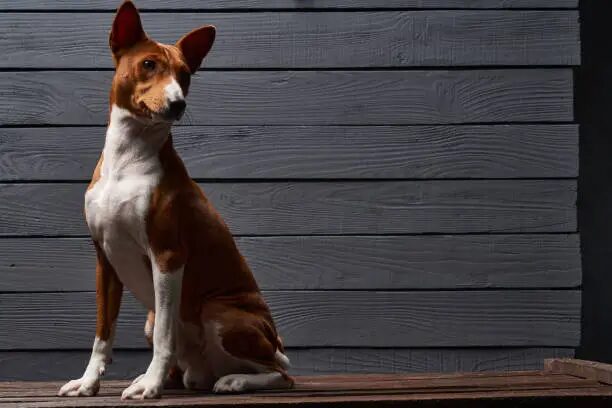
How Big Does a Basenji Get?
The Basenji is a small-to-medium-sized dog, although its athletic proportions can make it appear taller and more substantial than its weight suggests.
The AKC breed standard gives an ideal height of approximately 17 inches for males and 16 inches for females.
Male Basenji Size
A mature male Basenji generally stands around 17 inches at the shoulder and weighs approximately 24 pounds, although individual dogs can vary.
Female Basenji Size
Females are generally slightly smaller, with an ideal height of approximately 16 inches and a typical weight around 22 pounds.
Basenji Puppy Growth
Basenji puppies grow quickly during their first several months.
Growth is influenced by:
- Genetics
- Nutrition
- Activity
- Overall health
- Individual development
Rather than focusing on a single weight at a specific age, owners should monitor body condition and follow veterinary guidance.
When Does a Basenji Stop Growing?
Most Basenjis approach their adult height during the first year, although muscle development and overall maturity continue beyond that point.
Individual development can vary, so a veterinarian can provide a more useful assessment for a particular puppy.
Basenji Colors and Coat
What Colors Do Basenjis Come In?
Basenjis are available in several recognized color patterns.
Common patterns include:
- Red and white
- Black and white
- Brindle and white
- Black, tan, and white
AKC also lists additional recognized color registrations, including black brindle and white, cream and white, mahogany tan and white, sable and white, and blue cream and white.
Red and White Basenji
The red and white Basenji is one of the most recognizable varieties.
The reddish coat contrasts with white markings commonly seen on the feet, chest, and tail tip.
Black and White Basenji
The black and white Basenji has a predominantly black coat with characteristic white areas.
This color combination gives the breed a particularly crisp appearance.
Brindle and White Basenji
A brindle Basenji has darker striping over a lighter base color.
The pattern can vary substantially between individual dogs.
Tricolor Basenji
Tricolor Basenjis combine black, tan, and white markings.
The distribution of these colors contributes to the breed’s distinctive facial and body pattern.
Basenji Coat Markings
White markings are an important feature of the breed.
They commonly appear around the:
- Feet
- Chest
- Tail tip
- Facial areas
Do Basenji Colors Affect Price?
Coat color can sometimes influence buyer preferences and therefore affect market pricing, but color should not be the main reason for choosing a Basenji puppy.
Health, temperament, responsible breeding, socialization, and genetic screening are far more important considerations.
Basenji Coat and Shedding
What Type of Coat Does a Basenji Have?
The Basenji has a short, fine, smooth coat.
Compared with curly-coated or long-haired breeds, its coat is relatively simple to maintain.
Do Basenjis Shed?
Yes. Basenjis do shed.
Their short coat can make shedding less noticeable than it is with some heavily coated breeds, but owners should not expect a completely hair-free home.
Are Basenjis Low-Maintenance Dogs?
In terms of grooming, yes—relatively speaking.
AKC recommends roughly weekly brushing with an appropriate grooming tool and notes that Basenjis are naturally fastidious.
However, low grooming needs should not be confused with low overall maintenance.
A Basenji may require little coat care while still requiring substantial attention to:
- Exercise
- Training
- Mental stimulation
- Secure outdoor access
- Socialization
- Dental care
- Preventive veterinary care
Are Basenjis Hypoallergenic?
No dog is completely hypoallergenic.
The Basenji may appeal to people looking for a relatively clean, short-coated breed, but people with allergies can still react to dog dander, saliva, skin particles, or other allergens.
Anyone with significant allergies should spend time around adult Basenjis before deciding whether the breed is suitable.
Why Basenjis Groom Themselves
One of the breed’s most amusing characteristics is its tendency to groom itself like a cat.
This fastidious behavior helps explain why many owners find Basenjis unusually clean.
AKC also notes that the breed generally lacks the strong “doggy” odor associated with some other dogs.
Basenji Temperament and Personality
What Is a Basenji’s Personality Like?
The Basenji personality is a mixture of intelligence, curiosity, independence, energy, alertness, and affection.
This is not a dog that simply waits around for instructions.
Instead, Basenjis often want to investigate their environment and make their own decisions.
Are Basenjis Affectionate?
Yes, many Basenjis form strong bonds with their families.
However, affection may be expressed differently from breed to breed and dog to dog. Some Basenjis enjoy close contact, while others prefer to sit nearby rather than constantly being handled.
Are Basenjis Loyal?
Basenjis can be deeply loyal to the people they know and trust.
They may be reserved around unfamiliar people while becoming playful and affectionate with familiar family members.
Are Basenjis Intelligent?
Absolutely.
Their intelligence is one of their greatest strengths—and one reason they can be challenging.
A clever Basenji may quickly learn how to open doors, investigate cabinets, manipulate toys, or escape from an inadequate enclosure.
The smarter the dog, the more creative the owner sometimes needs to be.
Are Basenjis Independent?
Yes.
Independence is one of the breed’s defining personality traits.
A Basenji may understand a command without seeing any reason to obey it at that moment.
That is why positive reinforcement, motivation, consistency, and short training sessions are so important.
Are Basenjis Playful?
Most Basenjis are energetic and playful, particularly when young.
They may enjoy chasing toys, exploring the house, running outdoors, solving food puzzles, and playing interactive games.
Are Basenjis Energetic?
Yes. Despite their relatively small size, Basenjis can be surprisingly active.
A bored Basenji may look for its own entertainment—and that can mean chewing, digging, climbing, or attempting an escape.
Are Basenjis Good With Strangers?
Basenjis can be reserved or cautious around unfamiliar people.
Early and ongoing socialization can help them become more comfortable with different people, environments, sounds, and experiences.
A Basenji should not be forced into interactions it finds uncomfortable.
Why Basenjis Behave Like Cats
The cat comparison is surprisingly accurate.
Their independence, cleanliness, self-grooming, curiosity, and selective affection all contribute to the stereotype.
But remember: a Basenji is still a high-energy hunting hound.
The cat-like personality does not mean the breed is sedentary.
Are Basenjis Good Family Dogs?
A Basenji can be a wonderful family companion, but it is better to think of the breed as a specialized family dog rather than an effortless one.
A household that enjoys outdoor activities, training games, and an independent canine personality may find the Basenji fascinating.
A household looking for a quiet, highly obedient dog that requires little stimulation may be disappointed.
Basenjis and Children
Basenjis can live successfully with children when properly socialized and supervised.
Older children who understand how to respect a dog’s boundaries may be particularly good companions.
Young children should never be left unsupervised with a dog, regardless of breed.
Basenjis and Other Dogs
Early socialization can improve a Basenji’s ability to live comfortably with other dogs.
However, individual temperament matters greatly.
Basenjis and Cats
A Basenji’s relationship with cats can be complicated because of its prey drive.
Some individuals can live peacefully with cats, especially when raised with them. Others may view smaller animals as something to chase.
Careful introductions and supervision are essential.
Who Should Not Own a Basenji?
A Basenji may not be the best choice for someone who:
- Wants an extremely obedient dog
- Has little time for exercise
- Dislikes independent behavior
- Cannot provide secure outdoor access
- Has several vulnerable small pets
- Wants a completely silent dog
- Expects a dog that requires minimal mental stimulation
For the right owner, however, these same characteristics can make the Basenji incredibly rewarding.
Basenji Size, Colors, Coat, Temperament, and Family Life
Basenji Appearance
The Basenji dog has an unmistakable appearance. It is small enough to be manageable in many homes, yet athletic enough to keep up with an active owner. The breed has a graceful, balanced body, upright ears, a tightly curled tail, and a short, fine coat.
One of the most recognizable features is the Basenji’s wrinkled forehead. These wrinkles are especially noticeable when the dog is alert or curious. Combined with its erect ears and almond-shaped eyes, they give the Basenji an expressive, almost thoughtful appearance.
The breed standard emphasizes a dog that is lightly built but muscular, with a smooth, effortless gait. A healthy Basenji should look athletic rather than bulky.
Basenji Head and Face
The Basenji’s head is proportionate to its body and has a relatively flat skull. Its muzzle tapers toward the nose without appearing overly narrow.
The ears are small, pointed, and erect, helping give the breed its alert expression. They are usually carried forward when the dog is interested in something.
The eyes are typically dark and almond-shaped. They contribute to the breed’s characteristic intelligent and slightly mischievous expression.
Basenji Curly Tail
The curled tail is another defining characteristic. It is carried tightly over the back, usually forming one or more curls.
The exact appearance of the curl can vary from dog to dog. Some Basenjis have a very tight single curl, while others may have a looser or double curl.
Basenji Athletic Build
Although the Basenji is not a large dog, it has an impressive level of athletic ability. Its long legs, compact body, and efficient movement reflect its history as a hunting dog.
This athletic structure allows a Basenji to:
- Run quickly
- Turn sharply
- Jump surprisingly high
- Navigate difficult terrain
- Chase moving objects
- Participate in dog sports
Owners should not mistake the Basenji’s relatively small size for low exercise requirements.
Basenji Size and Weight
A fully grown Basenji is generally around 16–17 inches tall at the shoulder.
According to the breed standard, males are typically slightly larger than females.
| Trait | Male Basenji | Female Basenji |
|---|---|---|
| Height | About 17 inches | About 16 inches |
| Weight | Around 24 lb | Around 22 lb |
| Build | Compact and athletic | Compact and athletic |
| Growth | Rapid during puppyhood | Rapid during puppyhood |
Individual dogs can fall somewhat outside these averages. Body condition is more important than trying to make every Basenji match one particular number.
When Does a Basenji Stop Growing?
Most Basenjis reach close to their adult height during their first year. However, they can continue developing muscle and filling out as they mature.
Mental maturity often takes longer than physical growth. A young Basenji may look like an adult while still behaving like an energetic puppy.
Basenji vs Shiba Inu Size
Basenjis and Shiba Inus are sometimes compared because both are compact, independent breeds with strong hunting instincts.
The Shiba Inu is generally heavier and more substantial, while the Basenji tends to have a more lightly built, elegant appearance.
Basenji Colors and Coat
Basenjis have a short, smooth coat that is relatively easy to maintain.
Common recognized color patterns include:
- Red and white
- Black and white
- Brindle and white
- Black, tan, and white
- Tricolor patterns
White markings commonly appear on the feet, chest, and tail tip.
Red and White Basenji
The red and white Basenji is one of the most recognizable color varieties. The body has a rich reddish or chestnut-colored coat contrasted by white markings.
Black and White Basenji
A black and white Basenji has a predominantly black coat with clearly defined white areas.
Brindle and White Basenji
Brindle Basenjis have dark striping over a reddish or fawn-colored background. The pattern creates a distinctive tiger-striped appearance.
Tricolor Basenji
Tricolor Basenjis combine black, tan, and white markings. Tan areas are commonly seen around the eyes, muzzle, and legs.
Does Basenji Color Affect Health?
Coat color by itself should not be treated as a reliable indicator of health or temperament.
A responsible breeder should prioritize:
- Genetic health
- Temperament
- Structure
- Responsible breeding practices
- Appropriate health screening
rather than breeding primarily for unusual appearance.
Basenji Coat and Shedding
The Basenji’s coat is one of its biggest advantages for owners who dislike intensive grooming.
It is:
- Short
- Fine
- Smooth
- Relatively easy to keep clean
Basenjis do shed, although their short hair is generally less noticeable around the home than the long hair produced by many other breeds.
Do Basenjis Shed?
Yes. Basenjis shed, despite their reputation as exceptionally clean dogs.
Their short hairs can still appear on furniture, bedding, clothing, and floors.
Regular brushing can help remove loose hair before it ends up around the house.
Are Basenjis Hypoallergenic?
No dog is completely hypoallergenic.
People who are allergic to dogs typically react to proteins found in dander, saliva, and other biological materials rather than simply to the length of the coat.
A Basenji may be easier for some allergy-sensitive households to manage because of its short coat and relatively clean habits, but individual reactions vary.
If allergies are a concern, spending time around adult Basenjis before bringing one home is a sensible precaution.
Why Do Basenjis Groom Themselves?
Basenjis are famous for their cat-like cleanliness.
Many individuals spend considerable time licking and cleaning themselves. This behavior, combined with the breed’s short coat, can help keep the dog looking neat.
However, self-grooming does not replace basic care. Owners still need to inspect the ears, trim nails, brush teeth, and monitor the skin.
Basenji Temperament and Personality
The Basenji’s personality is perhaps even more distinctive than its appearance.
This is not typically a dog that lives to obey every command. Instead, the breed is known for being intelligent, curious, independent, energetic, and confident.
A Basenji may understand exactly what you want and still decide that something else is more interesting.
That independent streak is one reason experienced owners often find the breed fascinating.
Are Basenjis Affectionate?
Basenjis can form strong bonds with their families.
They may enjoy being near their favorite people, participating in household activities, or resting in the same room. However, affection is often expressed on the Basenji’s terms.
Some individuals love cuddling, while others prefer sitting beside you rather than being held.
Are Basenjis Loyal?
Yes. Basenjis can become strongly attached to their household.
Their loyalty does not necessarily look like the constant obedience associated with some working breeds. Instead, it may appear as:
- Following family members around the home
- Checking what people are doing
- Seeking attention from familiar people
- Staying close during relaxing periods
- Showing excitement when trusted people return
Are Basenjis Intelligent?
Very much so.
But Basenji intelligence needs to be understood correctly.
A highly intelligent dog is not automatically highly obedient. The Basenji can learn quickly while simultaneously questioning whether performing a behavior is worth the effort.
This is why training should be:
- Short
- Consistent
- Reward-based
- Interesting
- Appropriate to the individual dog
Are Basenjis Stubborn?
Many owners describe Basenjis as stubborn, but independent is often a more useful description.
The breed was developed to work in hunting environments and make decisions. That history likely contributes to its willingness to investigate situations independently.
Rather than repeatedly forcing a command, owners usually get better results by finding something that motivates the dog.
Why Do Basenjis Behave Like Cats?
The comparison between Basenjis and cats comes from several behaviors.
Basenjis may:
- Groom themselves
- Be selective about affection
- Climb or jump onto elevated surfaces
- Investigate everything
- Display independence
- Keep themselves remarkably clean
They are still dogs, of course, but their personality can feel quite different from that of a highly biddable retriever or herding breed.
Are Basenjis Good Family Dogs?
A Basenji can be an excellent family companion, but it is not automatically the right choice for every household.
The biggest factors are the family’s lifestyle, children’s ages, training experience, supervision, and ability to provide physical and mental stimulation.
Are Basenjis Good With Children?
Basenjis can live successfully with children, especially when the dog is properly socialized and children are taught how to interact respectfully with dogs.
Older children who understand boundaries may be particularly good companions for a Basenji.
Young children require closer supervision because unpredictable grabbing, chasing, or rough handling can make many dogs uncomfortable.
Children should learn not to:
- Pull the dog’s ears or tail
- Take food away
- Disturb the dog while sleeping
- Chase the dog
- Climb on the dog
- Force physical contact
No matter how friendly a dog appears, children and dogs should be supervised together.
Are Basenjis Good With Other Dogs?
Early socialization can help Basenjis become comfortable around other dogs.
However, individual temperament matters enormously.
A well-socialized Basenji may enjoy canine companions, while another may prefer more personal space. Introductions should be gradual and controlled.
Are Basenjis Good With Cats?
This question is more complicated.
Because Basenjis have a strong prey drive, living with cats or other small animals requires careful management.
A Basenji raised alongside a confident household cat may learn to coexist peacefully. But owners should never assume that early exposure completely eliminates hunting instincts.
Extra caution is needed around:
- Rabbits
- Guinea pigs
- Hamsters
- Birds
- Ferrets
- Outdoor cats
Are Basenjis Good for First-Time Owners?
A first-time owner can successfully live with a Basenji, but the breed is generally better suited to someone willing to learn about independent dog behavior and positive training methods.
If your ideal first dog is extremely obedient, eager to please, and naturally responsive to commands, another breed may be easier.
If you enjoy a clever dog with a strong personality, the Basenji can be incredibly rewarding.
Basenji Exercise Needs
Don’t let the Basenji’s small size fool you.
This is an active, athletic breed that needs regular physical activity and mental stimulation.
A healthy adult Basenji generally benefits from daily walks combined with opportunities to run, play, explore, and use its brain.
Daily Basenji Exercise
A good routine may include:
- A morning walk
- Short training exercises
- Interactive play
- A second walk or active outing
- Scent or puzzle activities
The exact amount depends on the dog’s age, health, temperament, and fitness.
Walking a Basenji
Walking provides more than physical exercise.
Allowing a Basenji to safely sniff and investigate can provide valuable mental stimulation.
However, because of its prey drive and independent nature, a Basenji should generally be kept on a leash outside secure areas.
Running With a Basenji
Healthy adult Basenjis can enjoy running, but owners should build endurance gradually.
Puppies should not be pushed into repetitive long-distance running while their bones and joints are still developing.
Hiking With a Basenji
Hiking can be an excellent activity for a Basenji.
The breed’s athleticism and curiosity make exploring new environments particularly appealing.
During hikes, pay attention to:
- Temperature
- Paw condition
- Wildlife
- Water availability
- Leash safety
- Terrain
- Signs of fatigue
Scent Games
You don’t always need a huge yard to exercise a Basenji.
Scent games can tire the brain as well as the body.
Try hiding treats around a safe room and encouraging your dog to find them. You can gradually make the game more difficult.
Puzzle Toys
Food puzzles and interactive toys can help prevent boredom.
Rotate toys instead of leaving every toy available all the time. This can make familiar objects feel more interesting.
Signs Your Basenji Is Bored
A bored Basenji may become creative in ways you would rather avoid.
Possible signs include:
- Chewing furniture
- Digging
- Excessive mischief
- Pacing
- Attention-seeking
- Escaping attempts
- Destructive play
When unwanted behavior appears, first ask whether the dog’s physical and mental needs are being met.
Basenji Training
Training a Basenji is rarely about simply repeating commands until the dog complies.
Instead, it is about building motivation and cooperation.
Are Basenjis Easy to Train?
Basenjis are intelligent but are not generally considered among the easiest breeds to train.
Their challenge is not a lack of intelligence. It is their independence.
A Basenji may learn a command quickly but decide that the reward isn’t worth performing it.
Positive Reinforcement Training
Reward-based training is especially useful.
Rewards may include:
- Small treats
- Favorite toys
- Play
- Praise
- Access to something the dog wants
Keep sessions short and finish while the dog is still engaged.
Basenji Puppy Training
Start teaching basic behaviors from the beginning.
Important early skills include:
- Responding to its name
- Coming toward you
- Walking on a leash
- Sitting
- Waiting briefly
- Settling calmly
- Accepting handling
- Going into a crate
- Being comfortable with grooming
Recall Training
Recall is particularly important for Basenjis.
Because of their prey drive and independent nature, off-leash reliability can be difficult.
Practice recall in increasingly distracting environments, starting indoors and progressing to securely fenced spaces.
Never rely on a developing recall near traffic or wildlife.
Leash Training
A Basenji that spots something interesting may suddenly want to investigate.
Loose-leash training should therefore begin early.
Reward your dog for checking in with you, walking near you, and choosing not to pull.
Crate Training
A crate can provide a safe resting space when introduced positively.
Never use the crate as punishment.
Make it comfortable with appropriate bedding, safe toys, and calm routines.
House Training
Consistency is the key.
Take puppies outside frequently, particularly:
- After waking
- After eating
- After drinking
- After playing
- Before bedtime
Reward successful elimination immediately.
Basenji Puppy
A Basenji puppy is adorable, energetic, curious—and often remarkably inventive.
Those qualities can become wonderful adult traits when they are guided correctly.
Basenji Puppy Personality
Young Basenjis tend to investigate everything.
A puppy may explore:
- Shoes
- Furniture
- Plants
- Bags
- Cables
- Doors
- Shelves
Puppy-proofing is therefore essential.
Basenji Puppy Socialization
Early socialization should expose a puppy gradually and positively to a variety of experiences.
A useful socialization checklist includes:
- Different people
- Friendly vaccinated dogs
- Household sounds
- Cars
- Veterinary handling
- Grooming
- Different floor surfaces
- Safe outdoor environments
- Gentle handling of paws and ears
- Appropriate new objects
The goal isn’t to overwhelm the puppy. The goal is to teach the puppy that new experiences can be safe.
Basenji Puppy Exercise
Puppies need activity, but more is not always better.
Avoid forcing a young puppy into strenuous repetitive exercise. Instead, provide short play sessions, age-appropriate walks, exploration, and training.
Mental enrichment can be just as valuable as physical activity.
Basenji Grooming
One of the easiest things about owning a Basenji is its grooming routine.
Unlike long-haired breeds that require frequent brushing and professional trimming, the Basenji has a short, naturally clean coat.
How Often Should You Brush a Basenji?
A weekly brushing session is usually sufficient for many Basenjis, although brushing frequency can increase during heavier shedding periods.
A soft-bristle brush or grooming mitt can remove loose hair while providing a pleasant bonding experience.
Bathing a Basenji
Basenjis generally don’t need frequent baths.
Bathe your dog when it is genuinely dirty or when recommended by your veterinarian for a skin condition.
Over-bathing can unnecessarily dry the skin.
Nail Trimming
Keep nails at a comfortable length.
Overgrown nails can affect posture and movement and may become painful.
If your Basenji dislikes nail trimming, introduce the process gradually:
- Touch the paw.
- Reward calm behavior.
- Show the nail clippers.
- Reward again.
- Trim one nail.
- Gradually increase the number of nails.
Dental Care
Dental care should not be overlooked.
Regular tooth brushing is one of the best ways to help maintain oral health. Use products specifically designed for dogs.
Veterinary dental examinations can identify problems that aren’t obvious during routine home care.
Basenji Grooming Schedule
| Grooming Task | Suggested Frequency |
|---|---|
| Brushing | About weekly or as needed |
| Bathing | As needed |
| Nail trimming | Regularly |
| Ear checks | Weekly |
| Dental care | Ideally daily |
| Coat inspection | Regularly |
Basenji Nutrition and Diet
A Basenji needs a complete and balanced diet appropriate for its age, size, activity level, and health status.
There isn’t one universally perfect food for every Basenji.
Basenji Puppy Food
Growing puppies need nutrition designed specifically for growth.
Feed puppies according to the manufacturer’s guidance and your veterinarian’s recommendations, while monitoring body condition.
Adult Basenji Diet
An adult Basenji’s diet should provide appropriate levels of:
- High-quality protein
- Fat
- Carbohydrates
- Essential fatty acids
- Vitamins
- Minerals
The correct amount depends on calorie density and the individual dog’s needs.
Preventing Basenji Obesity
Even an active dog can gain weight when it regularly consumes more calories than it uses.
Monitor:
- Body condition
- Treat intake
- Meal portions
- Activity levels
Training treats should be included in the daily calorie budget.
Fresh Water
Clean, fresh water should be available throughout the day.
Water needs can increase after exercise and during hot weather.
Foods Basenjis Should Avoid
Never intentionally feed dogs toxic foods such as:
- Chocolate
- Grapes and raisins
- Xylitol-containing products
- Onions
- Garlic
- Alcohol
- Excessively fatty foods
If your dog accidentally consumes a potentially toxic substance, contact a veterinarian promptly rather than waiting for symptoms.
Basenji Health
The Basenji is generally a robust breed, but responsible owners should understand its known hereditary health concerns.
One of the most important conditions associated with the breed is Fanconi syndrome, a kidney disorder affecting the way the kidneys handle certain substances.
Other concerns can include eye disease, hip dysplasia, hypothyroidism, and IPSID.
Fanconi Syndrome in Basenjis
Fanconi syndrome affects the kidneys’ ability to properly reabsorb substances that should normally remain in the body.
Symptoms can include:
- Excessive thirst
- Frequent urination
- Weight loss
- Poor appetite
- Weakness
- Changes in blood chemistry
Early recognition matters because veterinary management can help support affected dogs.
Fanconi DNA Testing
A genetic test is available for a specific Fanconi-associated mutation.
However, owners should understand that DNA testing is not the same as diagnosing every possible kidney problem.
Responsible breeders use available genetic information alongside broader health screening and breeding decisions.
Progressive Retinal Atrophy
Progressive retinal atrophy (PRA) refers to inherited retinal diseases that can gradually affect vision.
Depending on the specific condition, affected dogs may experience:
- Difficulty seeing in dim light
- Increasing bumping into objects
- Dilated pupils
- Progressive vision loss
Eye screening and appropriate genetic testing can help responsible breeders reduce inherited disease risk.
Hip Dysplasia
Although the Basenji is relatively small, hip dysplasia can still occur.
Maintaining a healthy body weight and appropriate exercise can support joint health.
Hypothyroidism
Hypothyroidism occurs when the thyroid gland does not produce adequate thyroid hormones.
Possible signs include:
- Weight gain
- Low energy
- Skin or coat changes
- Cold intolerance
These signs can have many causes, so diagnosis should be performed by a veterinarian.
Routine Veterinary Care
Preventive veterinary care should include:
- Regular physical examinations
- Vaccinations as recommended
- Parasite prevention
- Dental evaluation
- Weight monitoring
- Appropriate blood testing when indicated
Basenji Lifespan
A healthy Basenji commonly lives into its early-to-mid teens, although individual lifespan varies.
Genetics are important, but they are only part of the picture.
Factors that can support longevity include:
- Appropriate nutrition
- Healthy body weight
- Regular exercise
- Preventive veterinary care
- Dental care
- Responsible breeding
- Early recognition of illness
- Safe outdoor management
As a Basenji enters its senior years, exercise may need to become gentler while mental stimulation remains important.
Why Is the Basenji Called the Barkless Dog?
The phrase “barkless dog” is one of the first things people discover when researching the breed.
But it does not mean the Basenji is silent.
Do Basenjis Actually Bark?
Basenjis generally do not produce the conventional repetitive bark associated with many other dogs.
Instead, they are famous for a distinctive yodel-like vocalization.
Basenji Yodel
The Basenji yodel is often called a “barroo.”
It can sound like a mixture of a yodel, chortle, howl, and unusual singing noise.
Different Basenjis have different vocal personalities.
Some are relatively quiet, while others happily express themselves when excited.
Basenji Chortle and Whine
A Basenji may also:
- Whine
- Grumble
- Chortle
- Howl
- Yodel
- Make soft conversational sounds
So if you’re looking for a completely silent dog, a Basenji may surprise you.
The better description is a dog that generally does not bark in the traditional way.
Basenji and Children
Basenjis can become wonderful companions for families, but supervision is essential.
Their independent personality means they may not tolerate every type of interaction.
Basenji and Toddlers
Toddlers should never be left alone with a Basenji.
Children at this age may unintentionally:
- Grab fur
- Pull ears
- Take toys
- Disturb sleeping
- Hug tightly
- Chase the dog
A Basenji should always have access to a quiet place where it can retreat.
Basenji and Older Children
Older children who understand canine body language may have an easier time building a positive relationship with the breed.
Activities such as supervised training, puzzle games, and appropriate play can help children and dogs bond.
Basenji and Other Pets
The Basenji’s prey drive deserves serious consideration in multi-pet homes.
Basenjis and Other Dogs
Many Basenjis can coexist with other dogs, particularly when introduced gradually and socialized appropriately.
Individual personality remains important.
Basenjis and Cats
Some Basenjis successfully live with cats, especially when raised with them.
However, owners should never assume that a Basenji will automatically ignore a fleeing cat.
Management and supervision remain important.
Basenjis and Small Animals
Extra caution is necessary with:
- Rabbits
- Guinea pigs
- Hamsters
- Birds
- Chickens
A strong hunting instinct can be difficult to eliminate completely.
Basenji Living Environment
A Basenji can adapt to different housing situations, including apartments, provided its physical and mental needs are met.
Can Basenjis Live in Apartments?
Yes, but apartment living requires commitment.
The most important question isn’t simply whether you have a yard. It’s whether you can provide enough daily exercise, enrichment, training, and companionship.
Do Basenjis Need a Yard?
A yard can be useful, but it does not replace walks and enrichment.
If you have a yard, it should be securely fenced.
Basenjis are athletic, curious, and capable escape artists.
Why Secure Fencing Matters
A Basenji that spots a squirrel, bird, cat, or other exciting target may act before thinking about your recall command.
For this reason:
Never assume a Basenji is safe off-leash simply because it has been obedient in the backyard.
Controlled environments are much safer.
Basenji Care Routine
| Care Area | Recommended Approach |
|---|---|
| Exercise | Daily physical activity and play |
| Mental stimulation | Training, scent games, puzzles |
| Grooming | Minimal coat maintenance |
| Dental care | Regular brushing |
| Ear care | Regular inspection |
| Nail care | Trim as needed |
| Training | Consistent positive reinforcement |
| Socialization | Ongoing throughout life |
| Veterinary care | Routine preventive examinations |
| Outdoor safety | Leash or secure fencing |
Basenji Behavior Problems
The Basenji’s intelligence and independence can be entertaining, but those same traits may create challenges if the dog does not receive enough exercise, structure, and mental stimulation.
A Basenji that is bored may invent its own activities, which can include chewing, digging, climbing, escaping, chasing, or exploring places it should not enter.
Why Is My Basenji Destructive?
Destructive behavior is often linked to boredom, excess energy, frustration, or lack of supervision. Providing daily exercise, interactive toys, training games, and appropriate chewing outlets can help.
Basenji Separation Anxiety
Some Basenjis may struggle when left alone for long periods. Gradually teaching a puppy to remain comfortable alone can reduce the risk of separation-related behaviors.
If your dog suddenly becomes distressed when alone, speak with a veterinarian or qualified behavior professional rather than assuming it is simply stubbornness.
Basenji Excessive Vocalization
Although Basenjis are famous for being barkless, they are not silent. A Basenji may yodel, whine, chortle, growl, or make other unusual sounds.
Changes in vocalization can sometimes indicate excitement, frustration, fear, or discomfort.
Basenji Yodeling
The famous Basenji yodel is sometimes called a “baroo.” It can happen when a dog is excited, greeting someone, anticipating an activity, or responding to its surroundings.
Basenji Chewing
Puppies naturally explore with their mouths, but adult Basenjis can also chew when bored. Keep valuable objects out of reach and provide safe, appropriate chew items.
Basenji Digging
Digging can be part of natural exploratory behavior. Instead of relying entirely on punishment, give your Basenji acceptable outlets for digging and increase mental stimulation.
Basenji Escaping
Escaping is one of the most important safety concerns for this breed. A Basenji can be clever, agile, curious, and surprisingly determined.
Use secure fencing, supervise outdoor time, and avoid assuming that an ordinary yard is automatically escape-proof.
Basenji Chasing
A moving squirrel, cat, bird, or other small animal can trigger the Basenji’s prey drive.
Reliable recall is valuable, but owners should still avoid allowing an unsecured Basenji to roam freely.
Basenji Prey Drive
The breed’s hunting background means prey drive can be strong. Early socialization and careful management are particularly important in homes with small animals.
Why Does My Basenji Ignore Me?
Usually, it is not because the dog does not understand you.
Basenjis can understand a cue while deciding that another option is more interesting. Motivation, timing, rewards, consistency, and environmental distractions all affect training success.
Basenji Living Environment
A Basenji can adapt to different homes, but the quality of the environment matters more than simply having a large house.
Can Basenjis Live in Apartments?
Yes, a Basenji can live in an apartment if its exercise and mental stimulation needs are met.
Apartment living can actually work well when the owner provides structured walks, training, scent games, and other activities.
Can Basenjis Live in Small Homes?
A small home is not necessarily a problem. A bored Basenji in a large house can have more problems than a well-exercised Basenji in a smaller home.
Do Basenjis Need a Yard?
A yard is helpful but not essential. If you have one, it should be securely fenced.
A yard should not replace walks and mental enrichment because simply allowing a Basenji outside does not guarantee meaningful exercise.
Are Basenjis Good City Dogs?
They can be, provided they are gradually socialized to traffic, people, noises, elevators, sidewalks, and other urban distractions.
Can Basenjis Handle Hot Weather?
Basenjis originated in Central Africa and have a short coat, but that does not make them immune to overheating.
During hot weather:
- Exercise during cooler parts of the day.
- Provide plenty of fresh water.
- Avoid hot pavement.
- Offer shade and a cool indoor area.
- Watch for signs of heat stress.
Can Basenjis Handle Cold Weather?
Their short coat provides less insulation than a thick double coat. In cold conditions, use common sense and monitor your dog for discomfort.
Why Secure Fencing Matters
A secure fence is particularly important because of the Basenji’s prey drive, curiosity, athleticism, and tendency to investigate opportunities for escape.
A leash or secure enclosed area is generally safer than relying on an unreliable recall.
Basenji Intelligence
How Intelligent Is a Basenji?
Basenjis are intelligent dogs capable of learning routines, solving problems, and understanding training cues.
However, intelligence should not be confused with automatic obedience.
A dog can be extremely intelligent while still asking, “What’s in it for me?”
Basenji Problem-Solving Ability
Basenjis often enjoy figuring out how things work. Puzzle feeders, scent games, trick training, and interactive toys can give this natural curiosity a productive outlet.
Basenji Memory
A Basenji can remember patterns and experiences, including both positive and negative associations.
This makes early socialization especially valuable.
Basenji Learning Ability
Short training sessions can be more productive than long repetitive sessions.
Try:
- Choose one behavior.
- Use a clear cue.
- Reward the correct response immediately.
- Keep sessions brief.
- Gradually increase distractions.
Why Intelligent Basenjis Can Be Mischievous
An under-stimulated intelligent dog may find its own entertainment.
That could mean opening cabinets, stealing objects, investigating countertops, digging, or finding ways around barriers.
Mental stimulation is therefore not an optional luxury—it is an important part of responsible Basenji ownership.
Basenji Hunting Instinct and Prey Drive
What Was the Basenji Bred to Hunt?
The Basenji was developed as a hunting dog in Central Africa. Hunters valued the breed’s speed, alertness, agility, intelligence, and ability to navigate challenging environments.
Basenji Hunting History
The breed’s traditional role helps explain many modern behaviors.
The same instincts that once made the Basenji useful in hunting can appear today as:
- Chasing squirrels
- Watching birds
- Investigating scents
- Pursuing moving objects
- Sudden bursts of running
- Intense interest in small animals
Can Basenjis Hunt Today?
A modern Basenji may still display strong hunting instincts, but household pets should not be allowed to chase wildlife or roam freely.
Instead, owners can channel these instincts into controlled activities.
Basenji Lure Coursing
Lure coursing can provide an appropriate outlet for dogs that enjoy chasing moving targets. It also combines speed, focus, and athleticism.
Basenji Scent Work
Scent games are another excellent choice. Hide treats around a safe area and encourage your dog to search for them.
Managing Prey Drive at Home
Never assume that socialization will completely remove prey drive.
Management remains important, especially around:
- Rabbits
- Guinea pigs
- Hamsters
- Birds
- Outdoor cats
- Other small animals
Basenji vs Other Dog Breeds
Choosing between similar breeds becomes easier when you compare temperament, exercise, grooming, trainability, and vocalization rather than appearance alone.
| Trait | Basenji | Shiba Inu | Beagle |
|---|---|---|---|
| Origin | Central Africa | Japan | England |
| Group | Hound | Non-Sporting | Hound |
| Size | Small-medium | Small-medium | Small-medium |
| Coat | Short | Short double coat | Short |
| Grooming | Low | Moderate | Low-moderate |
| Energy | High | Moderate-high | High |
| Prey drive | High | High | High |
| Trainability | Moderate | Moderate | Moderate |
| Vocalization | Yodels/chortles | Vocal | Often vocal |
| Personality | Independent | Independent | Social |
Basenji vs Shiba Inu
Both breeds are known for independence, intelligence, athleticism, and a degree of stubbornness.
The Basenji is generally smaller and has a much shorter, finer coat, while the Shiba Inu has a dense double coat and tends to shed more noticeably.
Neither breed should automatically be considered an easy first dog.
Basenji vs Beagle
Beagles are typically more socially outgoing and are known for their distinctive vocal nature.
Basenjis are generally quieter in terms of traditional barking but can be more independent.
Both breeds can have substantial prey drive and benefit from secure outdoor management.
Basenji vs Jack Russell Terrier
The Jack Russell Terrier is another energetic and highly intelligent dog with strong hunting instincts.
Both breeds need owners who can provide physical exercise and mental challenges.
The major difference is often working style and temperament: Jack Russells can be intensely energetic and responsive, while Basenjis often approach training with greater independence.
Basenji Cost
How Much Does a Basenji Cost?
The purchase price of a Basenji varies significantly according to location, breeder reputation, pedigree, health testing, registration, lineage, and availability.
Basenjis can be relatively expensive because they are less common than many popular dog breeds.
Basenji Puppy Price
A responsible breeder may charge substantially more than a casual seller because responsible breeding involves expenses such as:
- Health testing
- Veterinary examinations
- Vaccinations
- Proper nutrition
- Puppy care
- Registration
- Socialization
- Genetic screening
- Breeding and pregnancy-related costs
Basenji Adoption Fees
Adopting an adult Basenji or Basenji mix can be less expensive initially than purchasing a puppy, although adoption fees vary between organizations.
Lifetime Cost of Owning a Basenji
The purchase price is only one part of ownership.
A realistic budget should include:
| Expense | Examples |
| Food | Quality age-appropriate diet |
| Veterinary care | Exams, vaccines and preventive care |
| Training | Puppy classes or professional support |
| Supplies | Crate, leash, collar, toys and bedding |
| Dental care | Toothbrushes and veterinary dental care |
| Emergency care | Unexpected illness or injury |
| Insurance | Optional pet insurance |
| Grooming | Mostly basic at-home care |
How to Find a Basenji Puppy
Finding a puppy should begin with researching the breeder, health practices, living conditions, and temperament of the parents, rather than simply searching for the lowest price.
Finding a Responsible Basenji Breeder
A responsible breeder should be willing to discuss health screening, pedigrees, temperament, puppy socialization, and breed-specific health concerns.
The Basenji Club of America is a useful starting point for breed-specific information and breeder resources.
Basenji Breed Clubs
Breed clubs can help prospective owners learn about:
- Responsible breeding
- Breed standards
- Health information
- Events
- Rescue
- Breed-specific organizations
Basenji Rescue Organizations
Rescue can be an excellent option for someone open to adopting an adult Basenji.
An adult dog may also make it easier to understand its established personality and energy level.
How to Avoid Basenji Puppy Scams
Be cautious when a seller:
- Refuses video or in-person communication
- Offers an unusually low price
- Wants immediate payment
- Cannot provide health records
- Has many breeds constantly available
- Uses stolen-looking photographs
- Avoids questions about the parents
- Wants to ship a puppy without meaningful discussion
Questions to Ask a Basenji Breeder
Ask:
- What health tests have been performed on the parents?
- Can I see the health documentation?
- Can I meet the mother?
- What is the puppy’s socialization routine?
- What veterinary care has the puppy received?
- What food is the puppy eating?
- What happens if I can no longer keep the dog?
- Do you provide a written contract?
- Can you explain the breed’s health risks?
- Are you willing to remain available after the puppy goes home?
Basenji Puppy Health Checklist
A healthy puppy should generally appear bright, alert, active, and appropriately social for its age.
Look for:
- Clear eyes
- Clean ears
- Healthy skin
- A clean coat
- Normal breathing
- Appropriate body condition
- Good appetite
- Normal energy
- Clean living conditions
- Healthy-looking mother and littermates
Before taking a puppy home, request copies of relevant:
- Veterinary records
- Vaccination records
- Deworming records
- Microchip information
- Health certificates
- Parent health-testing documentation
A veterinary examination after bringing a puppy home is also an important part of responsible ownership.
Basenji Health Testing and Responsible Breeding
Why Health Testing Matters
Responsible health testing can reduce the likelihood of producing puppies affected by certain inherited disorders.
It does not guarantee that a dog will never become ill, but it provides valuable information for breeding decisions.
Fanconi Syndrome Testing
Fanconi syndrome is an important breed-specific health concern. Genetic testing can help breeders identify dogs according to their genetic status for the known inherited form.
Prospective puppy buyers should ask breeders for documentation rather than relying on verbal assurances.
PRA Testing
Progressive retinal atrophy, or PRA, involves inherited retinal degeneration that can affect vision.
Eye examinations and appropriate genetic screening can help responsible breeders make informed decisions.
Hip Testing
Hip screening can provide information about joint structure and help breeders make better breeding choices.
Eye Testing
Routine or breeding-related eye examinations may identify certain ocular concerns.
Thyroid Testing
Hypothyroidism is another health concern for which responsible breeders may perform screening.
Why DNA Testing Alone Is Not Enough
DNA testing is valuable, but responsible breeding involves more than a single laboratory result.
A broader approach may include:
- Genetic testing
- Physical examinations
- Eye examinations
- Hip evaluations
- Thyroid assessment
- Pedigree analysis
- Family health history
- Temperament evaluation
Basenji Puppy Development
Basenjis change rapidly during their first year.
Basenji Puppy at 8 Weeks
At around eight weeks, puppies are beginning an important stage of social learning. Gentle exposure to people, safe environments, household sounds, handling, and appropriate experiences can be valuable.
Basenji Puppy at 10–12 Weeks
Training should continue through positive experiences.
This is an excellent period for introducing:
- Basic cues
- Leash walking
- Crate routines
- Grooming handling
- Car rides
- New surfaces
- Safe social experiences
Basenji Puppy at 4–6 Months
Adolescence begins to bring more independence. A puppy that previously responded beautifully may suddenly become selective about listening.
Stay consistent without becoming harsh.
Basenji Puppy at 1 Year
By one year, a Basenji may look close to adult size but can still be developing emotionally and behaviorally.
Continue training and socialization beyond puppyhood.
Basenji Puppy Training and Socialization
When Should Basenji Puppy Training Begin?
Training should begin as soon as the puppy comes home.
Keep sessions short and enjoyable.
Basenji Puppy Socialization
Socialization means gradually teaching the puppy that the world contains many normal sights, sounds, people, animals, surfaces, and experiences.
The goal is confidence, not forcing a puppy into overwhelming situations.
Crate Training
A crate can provide a safe resting area when introduced positively.
Never use the crate as punishment.
House Training
Establish a predictable routine around:
- Waking
- Eating
- Playing
- Sleeping
- Going outside
Reward successful bathroom trips immediately.
Preventing Chasing
Teach your puppy early that checking in with you is rewarding.
Management is still important because prey drive may remain strong even after extensive training.
Building a Reliable Recall
Recall training is particularly important for an athletic, curious breed.
Start indoors, then gradually increase distractions in controlled environments.
Even a well-trained Basenji should not be trusted off-leash in an unsecured area.
Basenji Living With Children
Basenjis and children can live successfully together when both are taught appropriate behavior.
Basenji Puppy and Children
Puppies can be excitable and mouthy. Children should learn not to pull ears, grab tails, chase the puppy, or disturb it while eating or sleeping.
Basenjis and Toddlers
Toddlers should always be supervised around dogs.
A Basenji should have a quiet area where it can retreat without being followed.
Basenjis and Older Children
Older children can participate in appropriate activities such as:
- Training games
- Fetch
- Puzzle games
- Supervised walks
- Basic grooming
Teaching children to respect the dog’s boundaries helps create a healthier relationship.
Basenji Adoption vs Buying From a Breeder
There is no single correct choice for every household.
Advantages of Adoption
Adoption can provide a home for a dog that already needs one.
An adult Basenji may also have a more established personality and behavior pattern.
Advantages of a Responsible Breeder
A responsible breeder can provide information about:
- Parentage
- Genetic health
- Early socialization
- Puppy development
- Family health history
Adult Basenji vs Basenji Puppy
| Factor | Puppy | Adult |
| Training | More work | May have established habits |
| Personality | Still developing | Easier to evaluate |
| Energy | Often very high | More predictable |
| Socialization | Owner must continue it | Existing history may be known |
| House training | Must be taught | May already be trained |
The right option depends on your lifestyle, experience, availability, and willingness to manage a young dog’s development.
Basenji Dog Activities and Sports
Basenjis are athletic dogs that can enjoy activities that challenge both body and mind.
Basenji Agility
Agility can provide physical exercise while teaching dogs to follow cues and navigate obstacles.
Basenji Lure Coursing
Lure coursing can appeal strongly to dogs with a natural desire to chase.
Basenji Scent Work
Scent work gives the dog’s nose a productive job.
Basenji Running and Hiking
Healthy adult Basenjis can make enjoyable companions for active owners when exercise is introduced appropriately and weather conditions are safe.
Basenji Trick Training
Trick training is an excellent way to keep an intelligent dog mentally engaged.
The key is to make training rewarding rather than repetitive.
Basenji Dog Pros and Cons
Advantages of Owning a Basenji
- Very clean
- Low grooming requirements
- Short, easy-care coat
- Athletic and agile
- Intelligent
- Independent
- Distinctive appearance
- Usually less traditionally vocal than many breeds
- Playful and entertaining
- Excellent companion for active owners
Disadvantages of Owning a Basenji
- Can be stubborn
- Strong prey drive
- May be difficult for inexperienced owners
- Can escape through opportunities that other dogs might ignore
- Requires regular exercise
- Needs mental stimulation
- May become destructive when bored
- Can be reserved with unfamiliar people
- Requires careful outdoor management
- Breed-specific health screening is important
Is a Basenji Right for You?
The best Basenji owner understands that this is not simply a small, quiet, low-grooming dog.
It is an intelligent hunting breed with independence, athletic ability, curiosity, and strong instincts.
Basenji for Active Families
An active household that enjoys walks, training, outdoor adventures, and interactive games may be an excellent match.
Basenji for Runners and Hikers
Healthy adult Basenjis can enjoy running and hiking, provided activity is introduced gradually and environmental conditions are appropriate.
Basenji for Experienced Dog Owners
Experienced owners may appreciate the breed’s independent personality and understand that training requires creativity and consistency.
Basenji for First-Time Dog Owners
A first-time owner can successfully raise a Basenji, but it may be more challenging than choosing a breed known for easy obedience.
Basenji for Apartment Dwellers
Apartment living can work if daily physical and mental needs are satisfied.
Basenji for Seniors
A Basenji may not be ideal for every senior because the breed can be energetic, athletic, and difficult to manage off-leash.
Basenji for Families With Children
Families should consider the children’s ages, supervision ability, dog experience, and willingness to respect the dog’s boundaries.
Who Should Not Own a Basenji?
The breed may be a poor choice for someone who wants:
- An effortlessly obedient dog
- A completely silent dog
- A sedentary companion
- A dog that can roam off-leash
- A dog that requires almost no mental stimulation
Basenji Dog Care Routine
| Care Area | Recommended Approach |
| Exercise | Daily physical activity and play |
| Mental stimulation | Training, scent games and puzzles |
| Grooming | Minimal coat maintenance |
| Dental care | Regular brushing |
| Ear care | Regular inspection |
| Nail care | Trim as needed |
| Training | Consistent positive reinforcement |
| Socialization | Continue throughout life |
| Veterinary care | Routine preventive examinations |
| Outdoor safety | Leash or secure fencing |
A consistent routine can make life easier for both the dog and owner.
Basenji Dog Grooming Schedule
Basenjis are among the easier breeds to maintain from a coat-care perspective.
Weekly Basenji Grooming Routine
A simple routine can include:
- Brushing
- Ear inspection
- Coat inspection
- Nail checks
- Dental care
- Checking paws
Brushing
A soft brush or grooming mitt can help remove loose hair and keep the coat looking neat.
Nail Trimming
Keep nails at an appropriate length. Long nails can interfere with comfortable movement.
Ear Inspection
Check the ears regularly for unusual odor, redness, discharge, or irritation.
Dental Care
Regular tooth brushing is one of the most useful at-home preventive-care habits you can establish.
Bathing
Basenjis generally do not require frequent bathing unless they become dirty or develop a specific veterinary reason for more frequent washing.
Basenji Dog in Hot and Cold Weather
Basenji Summer Care
During hot weather:
- Exercise early or late in the day.
- Keep water available.
- Avoid hot pavement.
- Provide shade.
- Watch closely for overheating.
Basenji Winter Care
During cold conditions:
- Limit prolonged outdoor exposure.
- Monitor your dog for shivering or discomfort.
- Provide a warm resting area.
- Consider protective clothing when appropriate.
Signs of Overheating
Potential warning signs include:
- Excessive panting
- Weakness
- Drooling
- Confusion
- Unusual lethargy
- Collapse
Heat-related illness can become an emergency quickly, so seek veterinary assistance when serious symptoms occur.
Frequently Asked Questions About Basenji Dogs
What is a Basenji dog?
The Basenji is a small-to-medium African hunting breed known for its independence, athletic ability, short coat, curled tail, and unusual vocalizations.
Where did the Basenji originate?
The Basenji originated in Central Africa, particularly regions associated with the Congo Basin.
Why is the Basenji called a barkless dog?
Basenjis are called barkless because they generally do not produce the conventional repetitive bark associated with many domestic dogs.
Does a Basenji really not bark?
Basenjis can bark, but traditional barking is relatively uncommon. They are better known for yodel-like sounds, chortles, whines, and other vocalizations.
Are Basenjis good family dogs?
They can be good family companions for suitable households, particularly when owners understand their exercise, socialization, supervision, and training requirements.
Are Basenjis good with children?
They can live with children, but interactions should be supervised and children should be taught appropriate dog-handling behavior.
Are Basenjis aggressive?
Basenjis are not inherently aggressive. However, individual temperament varies, and appropriate socialization and responsible management are important.
Are Basenjis easy to train?
They are intelligent but independent. Their trainability is moderate, and they often respond best to short, engaging, reward-based sessions.
Do Basenjis shed?
Yes. Basenjis shed, although their short coat makes loose hair relatively easy to manage.
Are Basenjis hypoallergenic?
No dog is completely hypoallergenic. People with allergies may react to dander, saliva, and other allergens rather than simply the length of a dog’s coat.
How big does a Basenji get?
Adult Basenjis are generally around 16–17 inches tall, with males typically being slightly taller than females.
How long do Basenjis live?
A typical Basenji lifespan is around 13–14 years, although individual dogs can live shorter or longer lives.
How much exercise does a Basenji need?
Basenjis need regular daily physical activity plus mental stimulation. Walks, games, scent work, training, and dog sports can all contribute.
Are Basenjis good apartment dogs?
They can adapt to apartment living if their exercise and mental stimulation requirements are met.
Are Basenjis good for first-time dog owners?
They can be challenging for first-time owners because of their independence, prey drive, energy, and escape tendencies.
How much does a Basenji puppy cost?
Prices vary considerably by location, breeder, pedigree, health testing, registration, and availability. Prospective owners should compare responsible breeders rather than selecting a puppy based solely on price.
What health problems do Basenjis have?
Breed-related concerns can include Fanconi syndrome, progressive retinal atrophy, hip dysplasia, hypothyroidism, and IPSID, among others.
What is Fanconi syndrome in Basenjis?
Fanconi syndrome is a kidney-related disorder affecting the way the renal tubules handle substances such as glucose and electrolytes. A known inherited form can be screened genetically.
Are Basenjis clean dogs?
Yes. Basenjis are famous for being exceptionally clean and may spend considerable time grooming themselves.
Do Basenjis smell?
They tend to have relatively little typical dog odor compared with some breeds, particularly when their coat and skin are healthy.
Do Basenjis have a high prey drive?
Yes. Their hunting history contributes to a potentially strong prey drive.
Can Basenjis live with other dogs?
Many can, especially when properly socialized, although individual compatibility varies.
Can Basenjis live with cats?
Some Basenjis can coexist with cats, particularly when raised and introduced carefully. However, their prey drive means caution is necessary.
Can Basenjis swim?
Some Basenjis can swim, but individual dogs differ. Never assume a dog is automatically safe around water.
Are Basenjis good hunting dogs?
They retain many characteristics of their traditional hunting role, including speed, alertness, agility, and prey drive.
What is the difference between a Basenji and a Shiba Inu?
Both are independent breeds, but the Basenji originated in Central Africa and is famous for its unusual vocalizations, while the Shiba Inu originated in Japan and has a dense double coat.
What is the difference between a Basenji and a Beagle?
The Beagle is generally more socially outgoing and traditionally vocal, while the Basenji is more independent and famous for its yodel-like sounds.
How do you train a stubborn Basenji?
Use positive reinforcement, short sessions, valuable rewards, consistency, and mental stimulation. Avoid relying on harsh punishment.
How do you stop a Basenji from escaping?
Use secure fencing, supervision, appropriate gates, leash control, and environmental management. Do not rely entirely on recall.
Should a Basenji be allowed off leash?
Generally, only in a securely enclosed area. Strong prey drive and curiosity can make unsecured off-leash situations dangerous.
Final Verdict: Is the Basenji a Good Dog?
The Basenji can be an extraordinary companion, but it is not the right breed for everyone.
Who Will Love Living With a Basenji?
The breed is particularly appealing to people who enjoy:
- Intelligent dogs
- Independent personalities
- Outdoor activities
- Training challenges
- Low-maintenance coats
- Unusual and distinctive breeds
Who Should Consider Another Breed?
Someone seeking an extremely obedient, low-energy, highly predictable dog may find another breed easier.
The Biggest Strengths of the Basenji
The Basenji combines a fascinating history with a unique personality.
Its major strengths include:
- Cleanliness
- Low grooming needs
- Athleticism
- Intelligence
- Distinctive appearance
- Entertaining personality
- Relatively quiet traditional barking
- Strong bond with its household
The Biggest Challenges of Basenji Ownership
The main challenges are:
- Independence
- Prey drive
- Escape behavior
- Exercise requirements
- Mental stimulation needs
- Training difficulty
- Breed-specific health considerations
Is the Basenji Good for Families?
It can be, provided the family understands the breed and supervises interactions appropriately.
Is the Basenji Good for Active Owners?
Yes. Active owners may find the breed especially rewarding.
Is the Basenji Easy to Groom?
Yes. Its short, fine coat requires relatively little maintenance.
Is the Basenji Easy to Train?
Not necessarily. Intelligent does not mean automatically obedient. Basenjis often require creative, motivational training.
Is a Basenji Worth the Cost?
For the right owner, absolutely. However, prospective owners should budget for food, veterinary care, training, supplies, preventive healthcare, and possible unexpected expenses.
Is the Basenji a Good First Dog?
It can be done, but the breed is generally better suited to owners who are prepared to understand and manage an independent hunting dog.
Final Basenji Ownership Checklist
Before bringing home a Basenji, ask yourself:
- Can I provide daily exercise?
- Can I provide mental stimulation?
- Do I have secure outdoor fencing?
- Can I commit to consistent positive training?
- Can I supervise the dog around children?
- Can I safely manage strong prey drive?
- Am I comfortable with an independent personality?
- Can I afford routine and emergency veterinary care?
- Have I researched breed-specific health testing?
- Am I prepared for a dog that may not obey simply because I asked?
- Can I provide lifelong socialization and enrichment?
If you can confidently answer these questions, a Basenji may be a fascinating and rewarding addition to your household.
Conclusion
The Basenji Is a Truly Unique Dog Breed
The Basenji breed of dog stands apart from many modern companion breeds. Its ancient African heritage, athletic body, curled tail, short coat, intelligence, and unusual vocalizations make it immediately recognizable.
But its uniqueness goes much deeper than appearance.
Its African History Explains Its Hunting Instincts
The Basenji was developed as a hunting companion, and many of its original characteristics remain visible today.
Its prey drive, speed, alertness, curiosity, and independence are not accidental behavioral quirks. They are part of the breed’s heritage.
Understanding that history can help owners better understand their dogs.
The “Barkless” Dog Is Not Completely Silent
The nickname may suggest a completely silent dog, but that is not accurate.
Basenjis can produce fascinating sounds, including yodels, chortles, whines, and other vocalizations.
Their unusual voice is one of the qualities that makes the breed so memorable.
Intelligence Does Not Always Mean Easy Obedience
One of the most important lessons for prospective owners is that intelligence and obedience are different qualities.
A Basenji can learn quickly while still being independent about whether it wants to perform a behavior.
Positive reinforcement, consistency, patience, and good motivation are therefore essential.
Basenjis Need Exercise and Mental Stimulation
A Basenji is not a breed that should spend most of the day doing nothing.
Daily walks, games, scent activities, training, puzzles, agility, lure coursing, and other appropriate activities can help prevent boredom.
A mentally and physically satisfied Basenji is much easier to live with than one that has to create its own entertainment.
Their Short Coat Makes Grooming Relatively Easy
Grooming is one area where Basenji ownership is relatively simple.
The short coat requires little maintenance, and Basenjis are naturally clean dogs.
Owners should still maintain dental care, nail care, ear checks, skin checks, and routine veterinary care.
Health Screening Matters When Choosing a Puppy
Anyone considering a Basenji puppy should learn about breed-specific health concerns, particularly Fanconi syndrome, progressive retinal atrophy, hip dysplasia, hypothyroidism, and IPSID.
Health testing does not eliminate every possible health problem, but it can help responsible breeders make better decisions.