
Why Guessing Your Dog’s Food is Risky (And How a Calculator Actually Helps)
Dog Feeding Calculator Decoded. That moment when you’re scooping kibble into your dog’s bowl and wonder, “Is this really enough?” – or worse, “Is this too much?” Yeah, that gut feeling? Listen to it. The numbers don’t lie: Over half of all dogs in the U.S. are carrying extra weight right now. According to the Association for Pet Obesity Prevention, we’re looking at a whopping 56%. Let that sink in. What does that actually mean for our furry family members? We’re talking about painful arthritis creeping in years early, scary diabetes diagnoses, and worst of all – potentially missing out on precious years together. And honestly? Dealing with a dog that’s always begging like they’ve never been fed or bouncing off the walls one minute and crashed out the next? It’s exhausting. Here’s the real kicker: Those feeding guidelines printed on your dog food bag? They’re basically designed to fail. Why? Because they treat every single dog like an identical clone, completely ignoring whether your hyperactive Aussie spends hours at the dog park or your ancient Chihuahua considers a lap around the living room a marathon. But here’s the good news: You can ditch the guesswork. A solid, science-backed Dog Feeding Calculator Decoded cuts through the confusion by building a custom meal plan designed specifically for YOUR dog. Imagine having a veterinary nutritionist whispering in your ear, doing all the complex math so you don’t have to sweat it.
These clever tools translate biology into simple, actionable feeding instructions. Sounds perfect, right? Well, hold up. Not every Dog Feeding Calculator Decoded is trustworthy, and using them carelessly can actually make things worse. Stick with me – by the end of this, you’ll be using these tools like a seasoned pro, avoiding the common traps that snag so many well-intentioned owners.

What Info Does a Dog Feeding Calculator Really Need? Let’s Get Specific.
Listen up: These Dog Feeding Calculator Decoded are only as brilliant as the details you give them. Feed them junk info, and you’ll get junk results. Every single time. To get something you can actually bank on, you’ll need to gather seven key pieces of the puzzle about your furry pal:
- Weight – The Real Deal, Both Now and Goal:
- Why both? Knowing what your dog weighs right this second is just step one. Figuring out what they should weigh? That’s the golden ticket. An overweight Corgi needing to slim down has completely different calorie needs than one chilling at their perfect weight. Big difference!
- Pro tip: Forget eyeballing it on the bathroom scale – that’s a recipe for disaster. Grab a proper digital pet scale if possible. And be militant about units – pounds (lbs) or kilograms (kg). Pick your fighter and stick to it religiously.
- Age & Life Stage – It’s Not Just a Number:
Puppies? Little calorie furnaces, burning through fuel like it’s going out of style to build those bones and muscles. Senior dogs? Their internal engine often idles way lower. And a pregnant or nursing mama dog? Her nutritional needs are off the charts. Dog Feeding Calculator Decoded use different multipliers for these life chapters:- Puppy (<1 year): Needs 2.0–3.0 times their base calorie requirement (called RER, we’ll get to it!)*. Heads up: Giant breed pups (Great Danes, Mastiffs) need slow growth – stuffing them leads to painful joint problems later. Seriously.
- Adult (1–7 years): Needs 1.6–2.0 times RER. This swings wildly based on whether they’re couch surfers or agility stars.
- Senior (>7 years): Needs 1.2–1.6 times RER. Keep an eye out for muscle wasting – it’s sneaky.
- Pregnant/Lactating: Needs 2.0–6.0 times RER, maxing out when she’s feeding a big litter. It’s intense!
- Activity Level – Time for Brutal Honesty!:
Let’s get real. A Malinois running patrols and your neighbor’s napping Bulldog live in completely different universes. You gotta classify your dog realistically, no fluff:- Sedentary: Think short, sniff-filled strolls. Seniors, dogs with health stuff, or apartment pups with limited outdoor time fit here.
- Moderate: Gets a solid 30–60 minutes of real activity daily – walks, playtime, maybe some fetch. This is most family dogs.
- Active: 1–2+ hours of running, hiking, hardcore play, or training. Think Border Collies, Vizslas, Siberian Huskies – the energizer bunnies.
- Working: The real deal – police dogs, search and rescue, serious herding dogs, sled dogs pulling weight, high-level sport competitors. These guys are athletes.
- Body Condition Score (BCS) – The Truth Teller:
Weight alone? It’s a dirty liar. A ripped, muscular Doberman can step on the scale at the same number as a pudgy one! That’s why vets swear by the 9-point Body Condition Score. It’s about what you feel and see:- 1–3 (Way Too Thin): Ribs, spine, hip bones stick out glaringly. Zero body fat. Looks frail.
- 4–5 (Just Right – Goldilocks Zone!): Ribs easy to feel with light finger pressure. Clear waist visible from above. Belly nicely tucked up from the side. Feels firm, not bony or squishy.
- 6–9 (Heavy Hitter): Ribs buried under padding – hard to find. Waist? Gone. Belly sags or has a noticeable fat pad. Feels soft.
(Picture a simple chart showing dog shapes from skinny skeleton to roly-poly) - Why this matters SO much: A dog scoring a BCS 7 needs way fewer calories than a BCS 5 dog, even if the scale shouts the same number. Ignoring BCS is a surefire way to miss the mark.
- Breed Size – It’s Not Just About Pounds:
A Great Dane isn’t just a scaled-up Beagle. Their inner workings are fundamentally different.- Toy/Small Breeds (<20 lbs): Speedy little metabolisms! They can crash fast if they skip a meal (watch for hypoglycemia shakes).
- Medium Breeds (21–50 lbs): Usually pretty predictable, balanced needs. Think your classic Labs, Goldens (though some lines run big!), Aussies.
- Large/Giant Breeds (>50 lbs): Slower-burning engines. HUGE Warning: Overfeeding giant breed puppies (Danes, Mastiffs, St. Bernards) causes devastating, often irreversible joint damage like hip dysplasia. Go slow!
- Neutered/Spayed? – The Hormone Shift is Real:
Getting fixed changes their internal thermostat. Spaying/neutering typically slows their metabolic rate down by a significant 20–30%. Most decent Dog Feeding Calculator Decoded automatically apply a 0.8x multiplier to the base calories (RER) for fixed pets. Blowing this off? That’s how you accidentally build a furry football.
How These Dog Feeding Calculator Decoded Actually Work (Seriously, It’s Not Rocket Science)
Alright, you plug in all those details and hit “Calculate.” What’s really going on behind the screen? It’s not witchcraft, it’s science – but relax, we’ll keep it simple. Here’s the step-by-step breakdown, no lab coat required:
- Resting Energy Requirement (RER): The Bare-Bones Basics:
This is the absolute minimum calories your dog burns just to exist – breathing, heart beating, staying warm. Think coma patient levels of activity. The standard formula vets use is:RER = 70 × (Your Dog's Weight in kg)^0.75- Real World Example: Take a 10kg dog (that’s about 22lbs). Their RER = 70 × (10)^0.75 ≈ 400 kcal/day. That’s their survival mode intake. Not exactly living their best life!
- Maintenance Energy Requirement (MER): Adding Real Dog Life:
RER is the foundation, but dogs actually do stuff! This is where those multipliers you carefully entered jump into action. The Dog Feeding Calculator Decoded stacks them onto the RER:- Life Stage Multiplier × Activity Level Multiplier × Neuter Status Multiplier × (Sometimes a BCS Adjustment)
- Back to our 10kg dog: Let’s say it’s an active, neutered adult at an ideal weight (BCS 5). The math might look like: RER (400 kcal) × 1.8 (Active) × 0.8 (Neutered) = 576 kcal/day. Boom. That’s what they need daily to maintain their awesome shape with their busy lifestyle.
- The Crucial Conversion: Calories to Actual Scoops:
Here’s where tons of folks trip up. The Dog Feeding Calculator Decoded spits out a calorie target (MER). Now you must convert that into actual scoops of your specific dog food. This step is non-negotiable:- Find the kcal per cup (or kcal per gram/kg) ON YOUR DOG FOOD BAG. Look for “Metabolizable Energy” or “Calorie Content.” Often in tiny print! Do NOT skip this or guess! Brand A and Brand B can be wildly different.
- Divide your dog’s MER by your food’s kcal per cup:
576 kcal needed / 350 kcal per cup (in your food) = ~1.65 cups per day total.
See the Journey:
[Your Dog's Unique Stats: Weight, Age, Activity, Neutered, etc.]
        |
        |
        V
    Calculate RER (The Bare Minimum)
    (70 x Weight_kg^0.75)
        |
        |
        V
    Layer On The REAL LIFE Factors:
    Life Stage? x Activity Level? x Fixed? x Body Condition?
        |
        |
        V
    MER = RER x All Those Multipliers (The Real Daily Need)
        |
        |
        V
    The Final Leap: Convert Calories to YOUR FOOD
    MER ÷ (Your Food's Calories per Cup)
        |
        |
        V
    [Your Dog's Personalized Daily Portion!]
This intricate process is exactly why generic bag recommendations fall flat. They skip over everything that makes your dog wonderfully unique.
The Real Scoop: The Good, The Bad, and The “Meh” of Dog Feeding Calculator Decoded
Before you rush off to calculate, let’s be brutally honest about what these tools deliver – and where they fall short:
Why They Can Be Awesome (The Pros):
- ✅ Custom Fit, Finally!: Dumps the useless “one-size-fits-none” bag charts. Actually considers your dog’s real age, true size, actual energy output, and current body shape. Revolutionary!
- ✅ Weight Warrior: Solid research (like Purina’s studies) shows precise portions can slash obesity risk by 40% or more. That’s huge for their health and longevity.
- ✅ Saves Cash & Sanity: Stops you pouring money (and food) straight into the trash via overfeeding. Cuts down on the soul-piercing begging eyes and the manic-to-crashed energy rollercoaster. Peace at mealtime? Priceless.
- ✅ Puts You in Control: Gives you a legit, science-based starting point. Takes the “Am I starving them?” or “Am I making them fat?” anxiety down several notches.
Where They Can Stumble (The Cons & Caveats):
- ❌ Junk In, Junk Out: Put in a wrong weight, overestimate activity, or ignore BCS? The output will be garbage. Accuracy is 100% your responsibility.
- ❌ Sick Pup? Vet. Now.: Dog Feeding Calculator Decoded are useless (and frankly dangerous) for dogs with diabetes, kidney disease, thyroid issues, liver problems, heart disease, etc. These need a vet-designed prescription diet plan, period. Full stop.
- ❌ The Calorie Hunt Hassle: You absolutely must find the specific kcal/cup for your exact food. Sometimes it’s microscopic on the bag, buried deep on the website, or requires an annoying customer service call. Annoying, but essential.
- ❌ Breed Blind Spots: They won’t automatically tweak for deep-chested breeds prone to deadly bloat (like Danes needing smaller, more frequent meals) or the ultra-specific growth needs of giant breed puppies. You need breed-specific knowledge too.
Your No-Fluff Guide to Actually Using a Dog Feeding Calculator Decoded (Without Messing It Up)
So you’re ready to ditch the guessing game. Awesome! Now comes the real work: actually using one of these Dog Feeding Calculator Decoded without falling face-first into the common pitfalls. Let’s be brutally honest – I’ve seen too many well-intentioned dog owners trip up here. They plug in wishful thinking, skip critical details, or treat the first number that pops up like gospel. Your pup’s health literally depends on nailing this. Follow these steps like your dog’s vet is peering over your shoulder.
Step 1: The Great Calorie Scavenger Hunt (Find YOUR Food’s Magic Number)
This is where most people drop the ball, rendering the whole fancy calculation pointless. That generic “3-4 cups per day” suggestion on your kibble bag? It’s utterly meaningless unless you know how many calories are packed into each of those cups.
- Where the Heck is It? (The Hide-and-Seek Spots):
- Bag Archaeology: Flip that bag over. Get your reading glasses. Scour the “Guaranteed Analysis” panel like a detective. Look hard for “Metabolizable Energy (ME)” or “Calorie Content.” It might be buried in tiny font saying something like “3,520 kcal/kg” or “365 kcal per cup (measured by an 8 oz cup).” Sometimes it’s hiding near the feeding guidelines or ingredients list.
- Website Deep Dive: Bag blank? No worries. Head straight to your dog food brand’s website. Search for your exact formula name and flavor – seriously, chicken & rice vs. salmon & sweet potato matters! Check the product page details or hunt for a downloadable “Nutritional Information” PDF.
- Call in the Cavalry: Still coming up empty? Pick up the phone or fire off an email to the manufacturer. Have your bag’s UPC code handy (that little barcode number). They should be able to give you the digits.
- Non-Negotiable Warning: DO. NOT. GUESS. DO NOT pull an “average” calorie number off some random blog. Dry kibble vs. wet pâté? Massive difference. “Weight Management” vs. “Performance”? Huge gap. Budget brand vs. premium? Calories swing wildly. Your entire calculation stands or falls on THIS number being spot-on. If you feed Brand X but use Brand Y’s calories, you might as well be flipping a coin.
- Pro Move: Notice if it’s per cup or per gram/kilogram. If it’s per kg or gram (common for European brands or some premium lines), you might need to grab your kitchen scale for accuracy. Most US Dog Feeding Calculator Decoded prefer kcal/cup, so you might need to convert (or just weigh the food – honestly, it’s more precise!).
Step 2: Choosing Your Weapon (Picking a Dog Feeding Calculator Decoded That Doesn’t Suck)
Google “Dog Feeding Calculator Decoded,” and prepare for an avalanche. Some are brilliant tools; others are digital snake oil. Cutting through the noise:
- Major Pet Food Brand Dog Feeding Calculator Decoded (Purina Pro Plan, Hill’s, Royal Canin):
- The Good: Super easy to use, built specifically for their foods (so the calorie data is baked in), might include handy breed/size filters. Great if you’re loyal to one brand.
- The Gotcha: Only truly accurate for their products. Might feel a little… pushy… towards their own lines. Less flexibility if your dog has quirky needs.
- Verdict: Perfect if you feed that specific brand, otherwise proceed cautiously.
- Veterinary Hospital/University Dog Feeding Calculator Decoded (Ohio State, Tufts Cummings School):
- The Good: This is the gold standard. Unbiased, rigorously science-backed formulas. Often the most detailed, letting you fine-tune inputs. No sneaky sales agenda.
- The Gotcha: Can look a bit more “academic” or feel slightly clunky compared to the shiny brand ones. Might overwhelm you with options if you just want a quick answer.
- Verdict: My top pick for accuracy and trustworthiness, especially for weight management or complex cases.
- Reputable Pet Nutrition Sites (Pet Nutrition Alliance, PetMD):
- The Good: Hits a sweet spot – solid science behind the scenes presented in a user-friendly way. Usually unbiased. Often throws in helpful extras like built-in BCS charts or explanations.
- The Gotcha: Formulas might be a tiny bit simplified compared to vet school tools. Quality varies – stick to big, known names you trust.
- Verdict: A fantastic, reliable starting point for most owners.
- Random Blog/Generic Online Tool:
- The Good: Ummm… they load fast?
- The Gotcha: Formulas could be outdated, flat-out wrong, or influenced by who’s paying for ads. Accuracy is a gamble. Often plastered with annoying pop-ups.
- Verdict: Just… skip it. Seriously. Not worth the risk.
My Practical Advice: Need quick and easy and feed a major brand? Use their Dog Feeding Calculator Decoded. Want the best possible accuracy, especially for weight goals? Go straight to Ohio State’s or the Pet Nutrition Alliance tool. Found one on Pet MD? Also a solid bet.

Step 3: Data Entry – Time for Uncomfortable Honesty
This is where self-delusion wrecks everything. You gotta check your feelings at the door and be ruthlessly objective. Your dog’s waistline depends on it.
- Weight: When did you last weigh them? Using the vet’s number from their parvo shot 8 months ago? Grab your dog, step on the bathroom scale, note it. Put dog down, step on again. Subtract. Do this NOW. Puppies? Weigh weekly. Adults? At least monthly.
- Activity Level: Be real. Is your “super active” Border Collie actually getting 90+ minutes of hard running, herding, or agility daily? Or is it 45 minutes of neighborhood sniffing with a 5-minute zoomie burst? Overestimating activity is the single biggest mistake I see. Be critical.
- Body Condition Score (BCS): Stop looking, start FEELING! Run your hands firmly but gently over their ribs. Can you feel them easily like the back of your knuckles? Or is there a squishy layer? Can you see a waist from above? Does their belly tuck up? Don’t skip this input if the Dog Feeding Calculator Decoded offers it – it’s crucial context weight alone misses.
- Life Stage: Is your super-fit 10-year-old Labrador truly a “senior” needing reduced calories? Maybe not. Is your 14-month-old Great Dane puppy still needing puppy settings? Absolutely yes. Choose based on physiology, not just the birthday on the calendar.
- Unit Check, Unit Check!: Pounds or kilos? Cups or grams? One wrong toggle here torpedoes the whole effort. Slow down, double-check before hitting calculate.
Step 4: That Number Popped Up! Now What? (It’s a Starting Point)
The number flashing on your screen? It’s an EDUCATED GUESS. A hypothesis based on science and averages. Treat it like your first draft, not the final word.
- What You See: You’ll get a Total Daily Amount (something like “1.72 cups” or “412 grams”).
- The Range is Your Friend: Good Dog Feeding Calculator Decoded often give a range (e.g., 1.6 – 1.85 cups). HERE’S THE PRO MOVE: START AT THE LOWER END OF THAT RANGE. Why? It’s infinitely easier (and safer) to add a tiny bit more food if your dog seems hungry or loses a smidge of weight than it is to wrestle calories away from a dog who’s already gaining.
- Splitting the Spoils: Don’t just dump the whole day’s ration in one bowl like a buffet!
- Puppies (under 6 months): 3-4 meals a day is crucial. Their little bodies burn fuel fast and are prone to blood sugar crashes.
- Most Adults: 2 meals a day is the sweet spot. Helps prevent bloat in susceptible breeds and keeps energy levels steadier.
- Seniors, Giants, Bloat-Prone Breeds: Often do better with 2-3 smaller meals spread out. Easier on digestion.
- Example: That 1.72 cups daily? For a typical adult dog: Split into roughly 0.86 cups per meal, served twice a day.
Step 5: Watch, Wait, and Tweak (The Part Everyone Forgets)
Here’s the kicker: The Dog Feeding Calculator Decoded gives you a number, but your dog’s metabolism isn’t set in stone. Feed it blindly forever, and you’ll likely end up confused when Fido gains or loses unexpectedly. Tracking is NOT optional.
- Embrace the Scale: Weigh your dog every 2 weeks, ideally on the same scale, at roughly the same time of day (before breakfast is best). Write it down! Use your phone notes, a spreadsheet, a dedicated notebook – whatever works. Seeing the trend is everything.
- Reassess the Feel Monthly: Get hands-on! Run your fingers over those ribs and along their spine. Check their waist from above and profile. Is it easier or harder to feel bones? Is the tuck more or less obvious? Compare to that BCS chart.
- What Changes Mean & How to Adjust:
- Goal: Maintain Weight (BCS 4-5): Weight stable? BCS stable looking and feeling? Perfect! You’ve found the sweet spot. Keep cruising.
- Uh Oh, Weight Creeping UP (Scale rising, BCS feeling softer): Cut back the daily total by 5-10%. Example: Was feeding 2 cups? Try 1.9 or 1.8 cups. Re-weigh in 2 weeks. Still gaining? Trim another 5%.
- Whoops, Losing Too Much (Scale dropping, ribs getting sharper): Bump up the daily total by 5-10%. Example: Was 2 cups? Try 2.1 or 2.2 cups. Re-check in 2 weeks.
- The “Why Isn’t This Working?!” Reality Check:
- TREATS! Did you forget the training biscuits, the dental chews, the peanut butter in the Kong, the scraps from dinner? Those add up INSANELY fast. They should ideally make up less than 10% of your dog’s daily calories. If you’re generous with treats, you MUST cut back the main meals accordingly. This is HUGE.
- Activity Shift? Did winter hit and walks get shorter? Did summer arrive and park playdates double? Did an injury slow them down? Life changes = calorie needs change.
- Switched Foods? New bag, new formula? RECALCULATE! Different food = different calories per cup. Don’t assume.
- Health Glitch? If you’re adjusting food diligently (up or down) and the scale/BCS isn’t budging, or your dog seems off, call your vet. There could be an underlying thyroid issue, diabetes, or something else needing medical attention.
Cracking the Tricky Cases: Puppies, Seniors, Weight Shifts & Label Decoder Rings
Alright, you’ve got the Dog Feeding Calculator Decoded basics down. Now let’s tackle the scenarios that make even seasoned dog owners sweat bullets. We’re diving into the whirlwind world of puppy growth, the slowing rhythms of senior life, and the high-stakes game of healthy weight shifts. This is where generic advice crashes and burns—and your Dog Feeding Calculator Decoded becomes your secret weapon. Plus, we’re cracking the Da Vinci Code of dog food labels. Because feeding perfect portions of the wrong fuel? That’s like putting premium gas in a lawnmower.
Puppy Fuel: Growing Right, Not Just Fast
Let’s cut the fluff: Puppies are tiny metabolic tornadoes. But here’s the gut-check—especially for big breeds—shoveling in too many calories warps developing joints. Precision isn’t optional; it’s protective.
- Dog Feeding Calculator Decoded Hacks for Puppy Parents:
- “Puppy” Button = Non-Negotiable: Always select this. It triggers that 2.0–3.0x calorie multiplier for growth spurts.
- Breed Size? Make or Break: Giants (Danes, Mastiffs) need slow growth multipliers (closer to 2.0x). Toys (Chihuahuas) burn hotter (up to 3.0x). Ignore this = joint timebomb.
- Weigh Weekly. No Excuses: That 8-week-old fluffball gains ounces daily. Update the Dog Feeding Calculator Decoded every 7 days—or risk over/underfeeding.
- Meal Frequency Saves Lives: 3–4 meals/day for pups under 6 months. Prevents hypoglycemia (toy breeds can crash scarily fast).
- Giant Breed Reality Check:
Overfeeding = hip dysplasia, elbow pain, OCD (osteochondrosis). Period. Beyond the Dog Feeding Calculator Decoded:- Use Large Breed Puppy Food: Controlled minerals (calcium/phosphorus), optimal calories.
- See Ribs? Good. A lean puppy (BCS 4–5) > a roly-poly one. Muscle, not fluff.
Senior Hacks: Fighting Flab and Fading Muscle
Senior dogs (7+ years) face a double whammy: slower metabolism + sneaky muscle loss (sarcopenia). Cutting calories blindly makes things worse.
- Dog Feeding Calculator Decoded Tweaks for Silver Muzzles:
- “Senior” Mode Engaged: Lowers multipliers (1.2–1.6x). Their engine idles lower.
- Activity Audit: Your 12-yr-old Lab who was “Active”? If arthritis limits walks, call it “Moderate” or “Sedentary.” Denial = weight gain.
- Muscle > Scale: Run hands over shoulders/thighs monthly. Spongy? That’s muscle wasting. Requires HIGHER protein (25–30%+), not less food.
- Start LOW, Adjust Fast: Seniors gain easily. Use Dog Feeding Calculator Decoded output → immediately trim 5–10% if weight creeps up.
- The Protein Paradox:
Most “Senior” foods cut protein (bad!). Prioritize labels with:- Real meat/eggs/fish top 3 ingredients
- “Senior” or “Vitality” formulas with >28% protein
- Low phosphorus (helps kidneys)
Weight Shifts: Loss & Gain Without the Guesswork
Crash diets wreck livers. Rapid gain masks tumors. Your Dog Feeding Calculator Decoded is the GPS for safe, vet-approved change.
- Weight LOSS: The Slow Lane WinsStepActionWhy1. Vet Check Rule out thyroid/kidney issues FIRST50% of “chunky” dogs have medical causes!2. Dog Feeding Calculator Decoded Setup Input CURRENT weight → Target IDEAL weight Calculates safe deficit calories3. Pace Yourself1–2% body weight loss/week MAX (e.g., 0.5–1 lb for 50 lb dog)Faster loss = muscle waste + liver stress4. Start HIGH Use TOP of calculator’s suggested range Easier to cut back than claw back calories!5. Treat Audit>10% of calories from treats? STOP. Use carrots/apple slices instead Hidden calories torpedo progress
- Weight GAIN: Rule Out Disaster FIRSTRed FlagLikely CulpritVet Tests NeededSudden weight lossDiabetes, cancer, parasitesBloodwork, ultrasound, fecal testRavenous but thinHyperthyroidism, malabsorptionT4 test, pancreatic functionPicky eater + weight dropDental pain, nausea, organ diseaseOral exam, blood chemistryOnly after vet clearance:
- Dog Feeding Calculator Decoded: Input CURRENT → Target IDEAL weight
- Start at HIGH end of calorie range
- Use calorie-dense foods (performance kibble, salmon oil drizzle)
Dog Food Labels: Your Dog Feeding Calculator Decoded Secret Decoder Ring
That calorie number isn’t a suggestion—it’s your Dog Feeding Calculator Decoded oxygen. Miss it, and everything fails.
- Find the ME (Metabolizable Energy):
- Where: Guaranteed Analysis panel (tiny print!), brand website, or call the 1-800 number.
- Crucial Format: “kcal/cup” or “kcal/kg” + “as fed” (ignore “dry matter” mumbo-jumbo).
- Example: *“ME: 3,820 kcal/kg; 398 kcal per 8 oz cup”*
- Guaranteed Analysis Cheat Sheet: Term What It Means Dog Feeding Calculator Decoded Relevance Crude Protein (Min)Minimum % protein Quality matters (meat > meal > by-products)Crude Fat (Min)Minimum % fat Energy source; too low = dull coat Crude Fiber (Max)Maximum % fiber High fiber = lower calories (good for dieting)Moisture (Max)Maximum % water Wet food: 75%+ water = fewer calories/cup
Your Game Plan – Real Talk on FAQs, Myth-Busting & The Ultimate Checklist
You’ve made it this far – now let’s cut through the noise and make this work for your dog. Forget textbook perfection. We’re tackling the messy, real-world questions that keep dog owners up at night, vaporizing dangerous myths, and giving you a no-nonsense action plan. This isn’t about theory; it’s about transforming your dog’s bowl from a guessing game into confidence.
Your Burning Dog Feeding Questions – Answered Honestly
“Just tell me how many cups for my 50-pound dog!”
- The raw truth? There’s no magic number.
- Here’s why your neighbor’s answer is useless:
A 50 lb neutered, moderately active Golden at a healthy weight might need 2.5 cups/day of a premium kibble (say, 400 kcal/cup).
But that same dog…- Packing extra pounds? Maybe 2 cups.
- Intact and herding sheep daily? Could be 3+ cups.
- Eating budget kibble (320 kcal/cup)? Suddenly it’s over 3 cups!
→ Stop looking for shortcuts. Plug your dog + your food into the Dog Feeding Calculator Decoded. Period.
“Are the feeding charts on dog food bags ever accurate?”
- Rarely. They’re designed for a mythical “average” dog eating that exact food – and often overshoot to sell more bags.
- Only use them if: You’re stranded without internet and your bag’s calorie info is MIA. (But seriously, find those calories!).
“How often should I recalculate? Is this a one-time thing?”
- Recalculate IMMEDIATELY if:
- Your dog gains/loses significant weight (>5%)
- You switch foods (NEW CALORIES = NEW MATH!)
- They get spayed/neutered
- Major health diagnosis (diabetes, kidney disease)
- Pregnancy starts or ends
- Revisit every 3-6 months or if you notice:
- Unexplained weight shifts
- Big energy changes (slowing down with age, post-surgery)
- Ribs feeling harder/easier to find
- Seasons changing activity (winter couch potato vs. summer hiker)
“I used the Dog Feeding Calculator Decoded… but my dog acts like I’m STARVING them! Help!”
- First, rule out the scary stuff:
- Medical issues: Worms? Thyroid problems? Diabetes? Vet. Now.
- Boredom: Is food their only highlight? Try more play, training, adventures.
- Crappy food: Low protein/high carb junk food = blood sugar rollercoaster → constant hunger.
- Smart fixes without overfeeding:
- Bulk up meals: Dump a handful of frozen green beans, broccoli florets, or air-popped plain popcorn (yes, really!) into their kibble.
- Make ’em work: Use puzzle feeders, snuffle mats, or scatter kibble in the grass. Drags out mealtime.
- Try three smaller meals: Spreading food out can curb the “I’m dying!” dramatics.
- Upgrade the fuel: Aim for >25% protein and 3-5% fiber. Better food = better satisfaction.
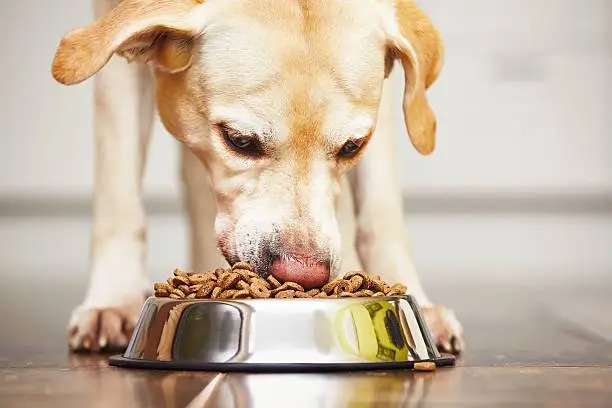
Dog Nutrition Myths – Obliterated
Myth 1: “Free-Feeding is Natural! Dogs Self-Regulate!”
- Reality check: Maybe for that one freakishly disciplined Border Collie you know. For 90% of dogs? It’s an obesity buffet. Wolves feast when they kill – they don’t graze daintily. Structure saves waistlines. Dog Feeding Calculator Decoded provide guardrails.
Myth 2: “My Dog’s Super Active! Calories Don’t Count!”
- Hard truth: Even Iditarod sled dogs have meticulously calculated meal plans. Unlimited fueling leads to diarrhea, sluggish performance, and long-term joint damage. Energy ≠ a license to overfeed.
Myth 3: “Senior Dogs Need LESS Protein”
- Dangerous nonsense! Aging dogs lose muscle fast (sarcopenia). Slashing protein accelerates frailty. They need MORE high-quality, digestible protein (think real chicken, eggs, fish) to stay strong. Ignore “senior” foods with low protein!
Myth 4: “Wet Food is Always Healthier/Lower Calorie”
- Not so fast: That gourmet pâté could be 450+ calories per can! Some wet foods are calorie bombs. ALWAYS check kcal/can or kcal/kg. Hydration bonus? Yes. Automatic diet food? Nope.
Myth 5: “The Dog Feeding Calculator Decoded Number is Gospel”
- Wake-up call: Dog Feeding Calculator Decoded are launch pads, not prophecy. Your dog’s body – those ribs, that waist, their spark – is the ultimate report card. Adjust based on them, not just a screen.
✅ Your No-BS Dog Feeding Mastery Checklist
Do This Every. Single. Meal:
- ☑️ Measure Like a Scientist: Ditch the coffee mug. Use a standard measuring cup. Better yet? A $10 kitchen scale (grams don’t lie).
- ☑️ Split Smartly:
- Puppies: 3-4 meals
- Adults: 2 meals
- Seniors/Giants/Bloat Risks: 2-3 smaller meals
Do This Monthly (Set a Phone Reminder!):
3. ☑️ Hands-On Body Scan: Feel those ribs! Visible waist? Belly tuck? Still a BCS 4-5? Don’t just look – touch.
4. ☑️ Treat Intervention: Are snacks >10% of daily calories? Swap biscuits for cucumber slices or blueberries. Be ruthless.
Do This Every 2-3 Months (or After Life Changes):
5. ☑️ Weigh-In: Bathroom scale hack (weigh yourself, then hold dog). Track it in your phone notes. Trends matter more than single numbers.
6. ☑️ Dog Feeding Calculator Decoded Reboot: Activity dipped? Food switched? Weight shifted? Update the inputs!
Non-Negotiable:
7. ☑️ Vet Chat (Now & Yearly): Bring your Dog Feeding Calculator Decoded results, food bag, and concerns. Critical for: Puppies, seniors, weight struggles, or any health hiccup.
The Golden Rule:
8. ☑️ Trust Your Dog More Than the Algorithm: Ribs getting sharp? Bump food up 5-10%. Waist vanishing? Cut back 5-10%. The Dog Feeding Calculator Decoded starts the chat – your dog’s body finishes it.
The Final Word: Your Dog’s Health is in Your Hands (And Dog Feeding Calculator Decoded)
This wasn’t about memorizing formulas. It was about ditching guilt and guesswork. You now wield a powerful combo:
- The science behind your dog’s needs
- The tool to personalize it (👉 [Pet Nutrition Alliance Dog Feeding Calculator Decoded Link])
- The eyes and hands to read your dog’s signals
The payoff? Fewer vet bills. More years of tail wags. Energy that lasts. And that soul-crushing “Am I failing you?” look replaced by a contented sigh after meals.
You’ve got this. Grab the food bag. Find those calories. Feel those ribs. Calculate. Adjust. Repeat.
Your dog’s vibrant health isn’t luck – it’s your next meal scoop. Now go nail it.
Stuck on something specific? Throw your feeding challenge in the comments! Let’s troubleshoot together.