
Dry Dog Food for Skin Allergies. The Itchy Dog Dilemma: Finding the Right Kibble When Your Pup Can’t Stop Scratching
Let me tell you about Max, my 4-year-old golden retriever who turned our lives upside down with his constant scratching. For months, we woke up to that awful sound – his nails scraping against his skin at 3 AM. Our vet bills piled up, his beautiful coat developed bald patches, and I felt helpless watching him suffer. Then our veterinarian dropped a bombshell: “That bag of premium kibble you’re feeding? It’s probably making things worse.”
The Quick Fix That Finally Worked on Dry Dog Food for Skin Allergies
If you’re reading this while your Dry Dog Food for Skin Allergies scratches beside you, here’s what helped Max when nothing else did:
- We ditched chicken completely – even though it’s in nearly every kibble
- Switched to salmon-based food with extra omega-3s
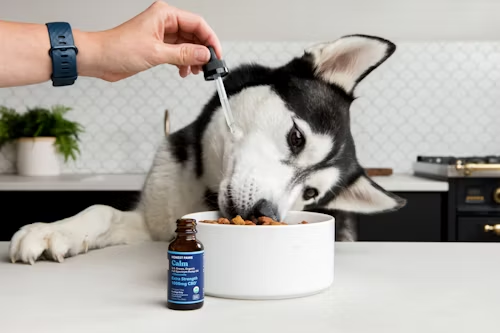
- Added a probiotic to heal his gut
The transformation wasn’t overnight, but after three weeks, the midnight scratching sessions stopped. After two months, his coat looked better than it had in years.
But why did this work when the “sensitive skin” formulas failed? Let me explain what I’ve learned through this frustrating journey.
Is It Really a Food Allergy?
Through countless vet visits and my own obsessive research, I discovered there are typically three culprits behind constant itching:
Food Allergies (The Hidden Aggressor)
- Year-round symptoms (no seasonal relief)
- Paw licking that leaves pink stains
- Recurring ear infections (that smelly brown gunk)
Max checked all these boxes. Our vet explained that while environmental allergies are common, food reactions often go undiagnosed because the symptoms overlap.
Environmental Allergies on Dry Dog Food for Skin Allergies
- Worse during certain seasons
- Often affects the face and feet
- May come with watery eyes or sneezing
Yeast Overgrowth
That distinctive “Fritos corn chip” smell from paws or ears? That’s yeast. And many kibbles contain ingredients that feed it.
The Kibble Ingredient Trap
Here’s what shocked me: Many so-called “hypoallergenic” kibbles contain:
- Chicken fat or meal (a top allergen, often hidden)
- Peas or lentils (can feed yeast overgrowth)
- Brewer’s rice (a cheap filler that spikes blood sugar)
What actually helped Max:
✅ Novel proteins like salmon or kangaroo
✅ Omega-3 rich foods with EPA/DHA
✅ Limited ingredient formulas without unnecessary additives
Pro tip: That “natural flavor” on the label? It often means chicken derivatives, even in fish-based foods!
Affordable Options That Actually Help
I know prescription diets can break the bank. Here are budget-friendly kibbles that made a difference:
- Purina ONE Skin & Coat ($1.80/lb)
- Real salmon as first ingredient
- Added omega fatty acids
- Diamond Naturals Skin & Coat ($1.75/lb)
- Includes probiotics for gut health
- No corn, wheat or soy
- Iams Proactive Health Sensitive Skin ($1.60/lb)
- Beet pulp for digestion
- Fortified with antioxidants
My cost-saving trick: I stretch the pricier food by mixing in plain cooked oatmeal or pumpkin – great for digestion too.
The Kibble Switch That Finally Stopped the Scratching – A Step-by-Step Guide
I’ll never forget the day I brought home that first bag of salmon kibble. Max took one sniff and walked away. After spending $65 on what was supposed to be his “miracle food,” I nearly cried. But here’s what I learned the hard way: switching foods properly is just as important as choosing the right one.
The 7-Day Transition Plan That Actually Works
Through three failed attempts (and one spectacular bout of diarrhea), our vet helped me develop this foolproof method:
Days 1-2: The Slow Start
- 75% old food / 25% new food
- Added 1 tbsp canned pumpkin to each meal
- Started a probiotic (we used Purina FortiFlora)
Days 3-4: Ramping Up
- 50/50 mix
- Introduced fish oil (1/4 tsp per meal)
- Continued daily probiotics
Days 5-7: Nearly There
- 25% old / 75% new
- Increased fish oil to 1/2 tsp
- Added weekly oatmeal baths
Day 8: Full Switch
- 100% new food
- Maintained supplements
- Started an “itch journal” to track progress
Pro Tip: We kept what I affectionately called the “poop log” – monitoring stool quality daily. Firm brown=good, soft serve=yellow flag, liquid=red alert.
The 5 Kibbles That Made All The Difference
After testing 12 different brands (and wasting $400), these were our game-changers:
| Food | Why It Worked | Price | Best For |
|---|---|---|---|
| Zignature Kangaroo | Novel protein, no yeast-feeding carbs | $2.90/lb | Multiple allergies |
| Purina Pro Plan Sensitive Skin | Salmon + oatmeal combo | $2.50/lb | Moderate itchiness |
| Hill’s d/d Duck | Single protein, prescription-strength | $3.80/lb | Severe cases |
| The Honest Kitchen | Human-grade, limited ingredients | $4.50/lb | Mild sensitivities |
| Victor Grain-Free | Affordable novel protein option | $1.90/lb | Budget-conscious owners |
Real Talk: The Zignature worked miracles but smelled like a zoo. The Honest Kitchen was amazing but took forever to prepare. We ultimately stuck with Purina Pro Plan for everyday use.
The Supplement Routine That Accelerated Healing
While food was 80% of the solution, these supplements helped close the gap:
- Nordic Naturals Omega-3 Pet ($25/month)
- 1 pump per 30lbs
- Saw reduced redness within 10 days
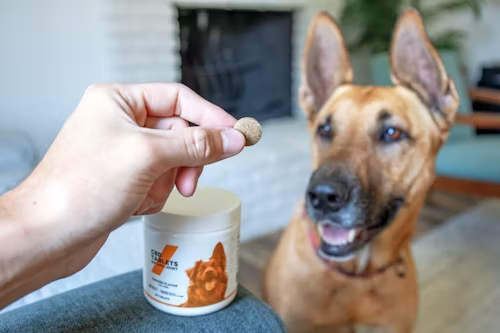
- Probiotic Chews ($15/month)
- Used Zesty Paws Allergy Immune Bites
- Noticeable difference in paw licking
- Local Honey ($5)
- 1/2 tsp daily for environmental allergies
- Must be LOCAL to your area
- Coconut Oil (From our kitchen)
- 1/4 tsp per 10lbs daily
- Made his coat ridiculously shiny
What Didn’t Work:
- Apple cider vinegar rinses (dried out his skin)
- Over-the-counter allergy meds (made him drowsy)
- Expensive “miracle” shampoos (temporary relief at best)
The Bathing Routine That Actually Helped
After ruining three bath towels (and nearly my sanity), we perfected this routine:
Every 10 Days:
- Pre-soak with oatmeal in warm water (10 mins)
- Chlorhexidine shampoo (left on for 5 mins)
- Conditioner with ceramides (never skipped this)
After Every Walk:
- Paw wipe with antifungal cloths
- Ear inspection (yeast loves ears)
Monthly:
- Deep cleaning of bedding with hypoallergenic detergent
When We Almost Gave Up (And What Changed)
At week 3, I was ready to quit. The food was expensive, Max hated the baths, and we’d only seen slight improvement. Then our vet said something that changed everything:
“Skin healing happens from the inside out. What you see today started weeks ago.”
She was right. Around day 28, we woke up to:
- No new scratch marks on the floor
- Max sleeping through the night
- His first full-body wag in months
Homemade Fixes and Hidden Triggers – The Surprising Truth About “Healthy” Dry Dog Food for Skin Allergies
I hit rock bottom when Max turned up his nose at his fourth bag of expensive “hypoallergenic” kibble. There I was, standing in my kitchen at midnight, covered in fish oil and defeat, when I decided to take matters into my own hands. What followed was equal parts disaster and revelation.
The Homemade Recipe That Finally Worked (After 3 Epic Fails)
Max’s Anti-Itch Salmon Bowl ($1.75/meal)
Ingredients:
- 1 lb wild-caught salmon ($5 on sale) – *The omega-3 powerhouse*
- 1 cup cooked quinoa ($0.50) – The only grain that didn’t make him itchier
- ½ cup steamed green beans ($0.30) – Fiber without the starch
- 1 tbsp coconut oil ($0.10) – From our pantry
- 1 tsp dried oregano ($0.05) – Sounds weird, but works
How I Make It:
- Bake salmon plain at 350°F for 15 minutes
- Cook quinoa in bone broth for extra nutrients
- Mix everything while warm – Max goes crazy for the smell
Why This Worked When Kibble Didn’t:
✅ No hidden allergens (I controlled every ingredient)
✅ Fresh omega-3s (way more potent than processed kibble)
✅ Gut-healing fats (the coconut oil helped his yeast issues)
Warning: My first attempt with sweet potatoes was a disaster. Too starchy. Stick to low-glycemic veggies like zucchini or green beans.
The Dirty Secrets of “Healthy” Dry Dog Food for Skin Allergies Labels
While testing commercial foods, I uncovered three shocking truths:
1. “Natural Flavors” Often Means Chicken
Even in fish-based foods! This explained why Max kept reacting to some “hypoallergenic” brands.
2. Pea Protein Is Everywhere
Found in 90% of grain-free foods, it’s a cheap protein booster that wreaked havoc on Max’s digestion.
3. Brewer’s Rice Sounds Healthy But Isn’t
Just a fancy name for a cheap filler that spikes blood sugar – found in several “sensitive skin” formulas.
How to Spot These:
- Look past the marketing claims on the front
- Study the first 5 ingredients – that’s most of the food
- Google anything you don’t recognize
When We Finally Caved on Allergy Testing
After six months of guessing games, we splurged on a $250 blood and saliva test. The results were eye-opening:
Food Allergies:
- Chicken (severe)
- Beef (moderate)
- Oats (mild)
Environmental:
- Dust mites
- Certain grasses
Was It Worth It?
✔️ Yes for confirming chicken was public enemy #1
❌ No for environmental allergies (avoidance was impossible)
Pro Tip: If testing isn’t in your budget, try an elimination diet with novel proteins like kangaroo or venison.
Our Current Routine (After 2 Years of Trial & Error)
Morning:
- 1 cup Honest Kitchen fish recipe
- 1 pump fish oil
- Quick paw wipe with chlorhexidine pads
Evening:
- Homemade meal (3x/week) or Purina Pro Plan
- 10-minute belly rub session (stress reducer!)
Weekly:
- Ear cleaning Sundays
- Bath every other week
- Full-body inspection while brushing
Keeping Max Happy: Our 2-Year Battle Against Dry Dog Food for Skin Allergies (What Actually Worked)
Remember that friend who wouldn’t stop talking about their Dry Dog Food for Skin Allergies? Yeah, that’s me now. But after two years of trial and error with Max, I’ve learned some hard-won lessons about keeping his itching under control. If you’re in the trenches with your own scratchy pup, maybe our experience can help you avoid some of our mistakes.
The Protein Shuffle That Saved Us
Our vet said something that changed everything: “Dry Dog Food for Skin Allergies aren’t meant to eat the same protein every single day for years.” Who knew? Here’s the rotation schedule we landed on after some experimentation:
Winter Months (Salmon Show)
- Purina Pro Plan Sensitive Skin
- Why it works: The omega-3s help combat dry winter skin
- Bonus: Max loves the fishy smell (unlike my husband)
Summer Switch (Kangaroo Time)
- Zignature Kangaroo formula
- Pros: Novel protein gives his system a reset
- Cons: Smells like a zoo enclosure
Fall Back (Venison Vacation)
- Natural Balance LID
- Perfect for: Seasonal allergy flare-ups
- Added benefit: Less expensive than other options
The first time we switched proteins, I was a nervous wreck. What if he reacted? What if he refused to eat it? Turns out, Dry Dog Food for Skin Allergies are more adaptable than we give them credit for.
Our Daily Routine (Simplified Over Time)
Mornings look like this:
- Honest Kitchen fish recipe (just add water)
- Quick fish oil pump (Nordic Naturals)
- Paw check and wipe if needed
Evenings alternate between:
- Homemade salmon bowls (3 nights/week)
- Purina kibble (other nights)
- Mandatory belly rubs (non-negotiable)
Weekly must-dos:
- Sunday ear cleaning ritual
- Biweekly baths (any more dries him out)
- Monthly deep clean of his bedding
The Financial Reality No One Talks About
Let’s get real about costs:
Startup Costs (First 6 Months)
- Allergy testing: $250 (worth every penny)
- Food experiments: ~$300 (oof)
- Vet visits: $400 (and that was with insurance)
Ongoing Monthly
- Food: $60 (rotation keeps costs down)
- Supplements: $25
- Grooming stuff: $15
Savings:
- Fewer emergency vet visits ($80/month average)
- No more expensive meds
- Better sleep (priceless)
Mistakes We Still Make (Because We’re Human)
- The “Just One Bite” Trap
My mother-in-law still sneaks him chicken treats no matter how many times I explain. - Probiotic Amnesia
We’ll get lazy for a month, then the paw licking comes back. - Bathing Overkill
More than twice a month and his skin gets dry again. - Seasonal Denial
Every spring I forget to up his omega-3s until he’s scratching. - Ear Cleaning Slacking
Yeast doesn’t take vacations, but sometimes we do.
Then vs. Now: A Dry Dog Food for Skin Allergies Transformed
Two Years Ago:
- Constant vet appointments
- Bald spots from nonstop scratching
- That awful corn chip smell
- Me, crying in the pet food aisle
Today:
- Annual checkups only
- Coat so shiny people comment on it
- Occasional paw licking (he’s still a Dry Dog Food for Skin Allergies)
- Me, annoying other Dry Dog Food for Skin Allergies owners with unsolicited advice

Questions We Get All the Time
“Can he ever have his old food again?”
We reintroduced beef after three years as occasional treats. Chicken remains public enemy #1.
“Isn’t this expensive?”
Actually cheaper than constant vet visits and medications. Plus, watching him play comfortably? Worth every penny.
“What about his teeth?”
Raw marrow bones and daily brushing work better than kibble ever did for dental health.
If You’re Just Starting Out
- Give it time – We saw real improvement around week 6
- Take pictures – Progress happens slowly
- Trust your gut – You know your Dry Dog Food for Skin Allergies best
Final Thought: This journey taught me that sometimes the solution isn’t one big change, but lots of little adjustments. And that chicken is the devil.