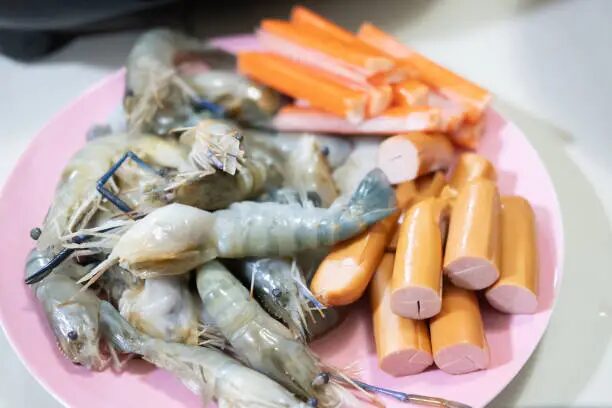
If your dog has ever hovered around the kitchen while you were peeling shrimp, you probably know how quickly those curious eyes can turn a seafood dinner into a begging opportunity. That naturally raises an important question: can dogs eat shrimp tails?
The short answer is no—shrimp tails should generally be removed before you give shrimp to your dog.
Plain, fully cooked shrimp meat can be an appropriate occasional treat for many healthy dogs. But the tail is different. It is part of the shrimp’s hard outer shell, or exoskeleton, and it can create physical hazards that simply aren’t worth the risk. The American Kennel Club recommends that shrimp fed to dogs be fully cooked with the shell, including the tail, head, and legs, completely removed.
The biggest concerns with a shrimp tail are choking, sharp or hard shell fragments, mouth and throat irritation, and possible intestinal obstruction. Shell fragments can also become lodged between a dog’s teeth and irritate the gums. Great Pet Care’s veterinary-reviewed guidance specifically recommends removing shrimp shells and tails before feeding shrimp to dogs.
That doesn’t mean every dog that accidentally swallows a shrimp tail will become sick. Dogs differ in size, eating habits, and sensitivity. A large dog that swallows a tiny shell fragment may have no complications at all. On the other hand, a small puppy that gulps down a relatively large tail may face a much greater risk.
There is also a difference between shrimp meat and shrimp shell. Shrimp meat is soft and nutritious when fully cooked. The tail is largely made of hard shell material, including chitin, and does not provide a compelling nutritional reason to accept the physical risks associated with it.
In this guide, we’ll look at can dogs eat shrimp tails, whether dogs can digest them, what happens if a dog eats one accidentally, symptoms of a possible obstruction, whether cooked or raw tails are different, and how to safely prepare shrimp for dogs.
We’ll also cover shrimp shell for dogs, shrimp tail shell for dogs, small dogs, puppies, senior dogs, freeze-dried shrimp tails, and the safest way to give your dog shrimp without the tail.
Quick Answer: Can Dogs Eat Shrimp Tails?
No, dogs should generally not be fed shrimp tails.
A shrimp tail is part of the hard shell structure. While some dogs may chew and pass small shell pieces without any trouble, the tail can still present a choking hazard or intestinal obstruction risk. It can also become trapped around the teeth or irritate the gums.
The risk depends on several factors.
| Factor | Why It Matters |
|---|---|
| Dog size | A shell fragment may represent a larger physical hazard for a small dog |
| Tail size | Larger or harder pieces may be more difficult to swallow |
| Number swallowed | Several tails increase the amount of shell material involved |
| Raw vs. cooked | Raw shrimp adds potential pathogen concerns |
| Whole vs. fragmented | Jagged fragments may irritate or become lodged |
| Eating habits | Dogs that gulp food may be more likely to swallow large pieces |
So, there is an important distinction:
Accidentally eating a small tail does not automatically mean an emergency.
But intentionally feeding your dog shrimp tails isn’t recommended.
The much safer approach is to give plain, fully cooked shrimp with the shell and tail completely removed. The AKC describes small amounts of fully cooked, shell-free shrimp as an occasional treat for dogs.
If your dog has accidentally swallowed a shrimp tail, don’t immediately assume something terrible has happened. Instead, determine how much was swallowed, monitor closely, and know the warning signs that warrant veterinary attention.
Why Are Shrimp Tails Dangerous for Dogs?
Shrimp tails are not poisonous in the conventional sense. The concern is primarily physical and food-safety related.
The tail is hard compared with the soft shrimp meat, and pieces can behave differently once swallowed.
Choking Hazard
One of the first concerns is choking.
A hard tail can become lodged in the mouth or throat, especially if a dog tries to swallow it without chewing it properly.
The risk may be greater for:
- Small dogs
- Puppies
- Dogs that gulp food
- Dogs eating large shrimp
- Dogs that swallow treats whole
A dog that is choking may show signs such as:
- Sudden coughing
- Gagging
- Pawing at the mouth
- Repeated swallowing
- Difficulty breathing
- Panic or restlessness
- Blue or pale gums in severe cases
If a dog is having difficulty breathing, this is an emergency and veterinary help should be obtained immediately.
The reason for removing the tail is simple: your dog gets the useful part—the shrimp meat—without needing the hard shell attached.
Intestinal Obstruction
Another concern is intestinal obstruction.
An obstruction occurs when something becomes lodged in the gastrointestinal tract and prevents normal movement of food and digestive contents.
Not every shrimp tail causes an obstruction. Some dogs may swallow a small piece and pass it normally. However, larger pieces, multiple pieces, or fragments that don’t move properly can potentially cause problems.
Veterinary sources identify shrimp shells and tails as potential choking and obstruction hazards.
Signs that may be consistent with a gastrointestinal problem include:
- Repeated vomiting
- Loss of appetite
- Abdominal pain
- Lethargy
- Straining to defecate
- Little or no stool
- Abdominal discomfort
- Weakness
An intestinal obstruction can become serious because the affected section of intestine may lose its normal blood supply or become damaged.
That’s why repeated vomiting, severe abdominal pain, collapse, or marked weakness after swallowing a hard object should never be ignored.
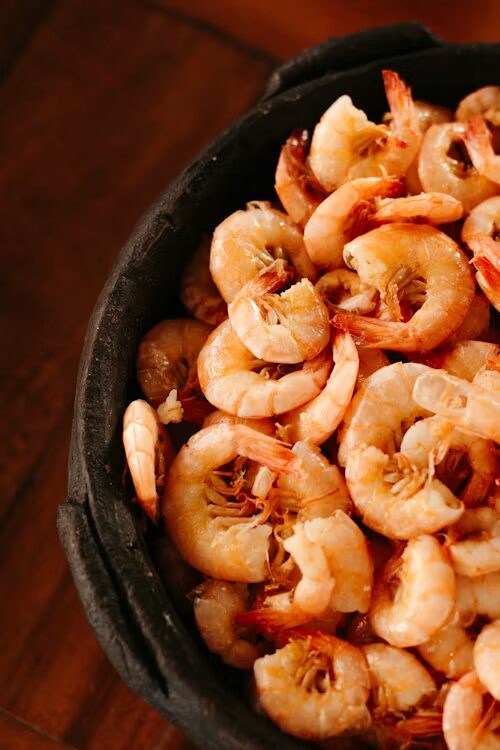
Sharp or Hard Edges
When a shrimp tail breaks apart, it can create hard, irregular fragments.
These fragments don’t behave like soft shrimp meat.
They may irritate areas of the digestive tract or become lodged in the mouth.
This is particularly relevant when someone says, “My dog chewed it, so it must be safe.”
Chewing may reduce the size of the shell, but it doesn’t guarantee that every fragment becomes harmless.
A jagged piece can still be uncomfortable or potentially problematic.
This is another reason to remove shells and tails before your dog gets the shrimp.
Difficulty Digesting Shell Material
Shrimp shell contains chitin, a structural material that makes up much of the crustacean exoskeleton.
Chitin is very different from the soft muscle tissue that makes up shrimp meat.
Dogs may be able to move and pass some shell material through the digestive system, so it would be inaccurate to say that every shrimp tail will simply remain undigested or cause a blockage.
The real issue is that digestion isn’t the only consideration.
The size, shape, hardness, and quantity of shell material can affect what happens after swallowing.
A tiny fragment may pass without incident.
A larger sharp fragment may behave very differently.
So rather than gambling on your dog’s ability to handle shell material, it’s safer to remove the shell in the first place.
Shell Fragments Getting Stuck in Teeth
There is another less dramatic but still unpleasant possibility: shell fragments can become caught between teeth.
Great Pet Care specifically notes that shrimp shells and tails may become lodged between teeth and irritate a dog’s gums.
You might notice:
- Pawing at the mouth
- Excessive drooling
- Chewing differently
- Bad breath
- Gum irritation
- Reluctance to eat
- Repeated licking
If you can clearly see a tiny loose fragment at the front of the mouth, you may be able to inspect the area safely. However, don’t force your fingers into your dog’s mouth or attempt to pull out something that appears deeply embedded.
A veterinarian can safely examine and remove a problematic fragment.
Can Dogs Eat the Shrimp Tail Shell?
When people talk about a shrimp tail, they’re usually referring to the hard shell structure remaining at the end of the shrimp.
This is not the same as the soft meat.
Understanding the difference is important.
Shrimp meat
This is the soft edible portion inside the shell.
When it is fully cooked, plain, peeled, and appropriately portioned, it can be an acceptable occasional treat for many healthy dogs.
Shrimp tail shell
This is part of the hard outer structure.
It provides no compelling reason to leave it attached when feeding a dog and may create choking, dental, or obstruction concerns.
Tail fan
The flat, fan-shaped section at the end is also part of the shell structure and should be removed.
Shell fragments
These are pieces left behind after the shell breaks. They can be hard or jagged and shouldn’t intentionally be mixed into a dog’s food.
So when searching for shrimp shell for dogs, the practical advice is straightforward:
Remove the shell completely.
And if you’re specifically asking, can dogs eat shrimp shell?, the safer answer is to avoid intentionally feeding it.
Can Dogs Digest Shrimp Tails?
This question comes up frequently because some dogs appear completely normal after swallowing shrimp shells.
The answer is that dogs may be able to pass small pieces of shell material, but this doesn’t make feeding shrimp tails a good idea.
Shrimp shells contain chitin and are considerably harder than shrimp meat. Depending on the size and shape of the fragment, some material may pass through the digestive system without causing trouble.
But there are several possibilities after swallowing a shell fragment:
- It may pass naturally.
- It may irritate the digestive tract.
- It may become caught in the mouth or throat.
- It may contribute to an obstruction.
- It may cause temporary digestive upset.
The risk isn’t identical for every dog.
That’s why it would be misleading to say, “All shrimp tails will cause an obstruction.”
They won’t.
But it would be equally misleading to say, “Dogs can digest shrimp tails, so they’re safe.”
Digestibility isn’t the same as safety.
The safest approach is still to serve shrimp without the shell or tail.
Can Dogs Eat Cooked Shrimp Tails?
They should still be removed, even when the shrimp is cooked.
Cooking is valuable because it reduces the risk associated with harmful microorganisms in raw seafood.
However, cooking does not make the hard shell disappear.
A cooked shrimp tail can still be:
- Hard
- Sharp
- Difficult to chew
- A choking hazard
- A possible obstruction hazard
- A source of dental irritation
The AKC specifically recommends completely removing shrimp shells, including the tail, before feeding shrimp to dogs.
This is an important point:
Cooking makes shrimp meat safer to eat; it does not turn a shrimp tail into an appropriate chew.
So don’t confuse cooked with safe to swallow whole.
The safest preparation is fully cooked shrimp with the entire shell removed.
Can Dogs Eat Raw Shrimp Tails?
No. Raw shrimp tails should not be intentionally fed to dogs.
They combine two separate concerns:
Physical hazard
The tail is still hard and may create a choking or obstruction risk.
Food-safety hazard
Raw shellfish can carry potentially harmful bacteria or parasites. The AKC recommends cooking shrimp before feeding it to dogs because raw shellfish may contain harmful pathogens.
So raw shrimp tails aren’t a shortcut to a “natural” treat.
They create a problem that is easily avoided:
Cook the shrimp. Remove the shell. Remove the tail.
If you’re specifically searching for can dogs eat raw shrimp tails, the answer should be a clear no.
Can Dogs Eat Fried Shrimp Tails?
No, fried shrimp tails are particularly unsuitable.
Frying does not make shell material safer to swallow.
Instead, you now have the shell hazard combined with a rich preparation.
Fried shrimp may contain:
- Oil
- Fat
- Breading
- Salt
- Seasonings
- Sauces
- Garlic or onion
Fried foods can also cause digestive upset, and high-fat meals may be especially inappropriate for dogs prone to pancreatitis. Great Pet Care’s veterinary-reviewed shrimp guidance advises avoiding fried, coconut, popcorn, and breaded shrimp because of their high-fat preparations.
There is a difference between an accidental bite and deliberately offering fried shrimp.
If your dog steals one small piece, don’t automatically assume an emergency. But fried shrimp—especially with the tail still attached—should not be considered a dog treat.
Can Dogs Eat Shrimp Tails From Grilled Shrimp?
Grilling does not remove the physical risks associated with the tail.
The tail should still be removed.
There’s also another issue with grilled shrimp: marinades.
Human recipes frequently contain:
- Garlic
- Onion
- Butter
- Salt
- Chili
- Spicy sauces
- Soy sauce
Those ingredients can make the overall dish less suitable for dogs.
A better approach
If you’re grilling shrimp for yourself, set aside a few pieces for your dog before adding the marinade or seasonings.
Cook them thoroughly, remove the shell and tail, allow them to cool, and then offer a small amount.
Plain grilled shrimp meat is very different from a heavily seasoned restaurant-style seafood dish.
Can Dogs Eat Shrimp Shells and Tails Together?
No, dogs should not intentionally be fed shell-on or tail-on shrimp.
Keeping the entire shell attached simply increases the amount of hard material your dog has to chew and swallow.
Here’s the difference:
| Shrimp Preparation | General Recommendation | Main Concern |
| Peeled cooked shrimp | ✅ Suitable in moderation | Portion size |
| Tail-on shrimp | ❌ Avoid | Choking/obstruction |
| Shell-on shrimp | ❌ Avoid | Hard/sharp shell material |
| Whole shrimp | ❌ Avoid | Multiple shell parts |
| Head-on shrimp | ❌ Avoid | Hard structures/choking |
| Shell-free cooked shrimp | ✅ Best option | Still feed moderately |
Small dogs deserve particular caution because a shell fragment can represent a larger physical hazard relative to the size of their mouth and digestive tract.
But large dogs aren’t automatically safe.
Even a big dog can gulp a hard shell fragment the wrong way.
What Happens If a Dog Eats a Shrimp Tail?
This is the question many owners ask after the accident has already happened.
The first thing to remember is:
Don’t panic.
A small accidental tail doesn’t automatically mean that your dog will develop an obstruction.
Great Pet Care advises monitoring a dog that accidentally eats a shrimp shell or tail and contacting a veterinarian if the dog acts sick.
The best response depends on the circumstances.
If the Dog Ate One Small Tail
If your dog is acting completely normal and swallowed one relatively small piece, carefully monitor them.
Pay attention to:
- Appetite
- Energy
- Vomiting
- Stool
- Abdominal comfort
- Swallowing
- Breathing
Don’t force food or water to try to “push” the shell through.
If the Dog Ate Several Tails
Swallowing multiple tails creates more concern because there is simply more hard shell material involved.
Contact your veterinarian for advice, especially if your dog is small or tends to gulp food.
The veterinarian may want to know:
- Your dog’s weight
- How many tails were swallowed
- Approximate tail size
- When the ingestion occurred
- Whether the shrimp was raw or cooked
- Whether the shrimp was fried or seasoned
- Whether the dog has any existing health conditions
If the Dog Swallowed a Large or Sharp Tail
A large or jagged piece deserves more caution.
Don’t try to make the dog vomit unless a veterinarian specifically instructs you to do so.
A sharp or hard object can potentially cause additional injury as it comes back up.
Instead, contact a veterinarian and describe exactly what happened.
If the Tail Was Raw
Now there are two issues to monitor:
- The physical risk from the shell.
- The potential food-safety risk from raw shrimp.
Watch for digestive or illness signs such as:
- Vomiting
- Diarrhea
- Fever
- Loss of appetite
- Abdominal discomfort
- Lethargy
Raw shellfish can carry harmful pathogens, so veterinary advice is appropriate if your dog becomes sick after eating raw shrimp.
Symptoms to Watch For After a Dog Eats a Shrimp Tail
Some dogs may show no symptoms at all.
Others may develop signs that suggest irritation, digestive upset, or a more serious problem.
Watch your dog closely for:
- Gagging
- Coughing
- Difficulty swallowing
- Excessive drooling
- Repeated swallowing
- Vomiting
- Abdominal discomfort
- A bloated or painful abdomen
- Loss of appetite
- Constipation
- Straining to defecate
- Lethargy
- Weakness
- Blood in vomit or stool
Irritation vs. possible obstruction
A little temporary digestive upset is not necessarily the same thing as an intestinal obstruction.
For example, one episode of loose stool after eating an unusual food may simply indicate that the food didn’t agree with the dog.
By contrast, repeated vomiting, severe abdominal pain, refusal to eat, marked lethargy, or inability to pass stool is more concerning.
When symptoms become persistent or severe, don’t wait for them to resolve on their own.
Emergency Signs After Eating a Shrimp Tail
Certain signs require urgent veterinary attention.
Seek emergency care if your dog develops:
- Difficulty breathing
- Choking
- Persistent gagging
- Repeated vomiting
- Severe abdominal pain
- A markedly distended abdomen
- Collapse
- Extreme weakness
- Blood in vomit or stool
Breathing difficulty is particularly urgent because a foreign object can potentially obstruct the airway.
Similarly, repeated vomiting combined with abdominal pain or weakness can be consistent with a serious gastrointestinal problem.
One important rule
Do not deliberately induce vomiting at home after a dog swallows a sharp or hard object unless a veterinarian specifically directs you to do so.
Trying to force an object back through the throat can create additional injury.
What to Do If Your Dog Ate a Shrimp Tail
If you’ve just watched your dog swallow a shrimp tail, take a breath and work through the situation methodically.
Step 1: Stay Calm
Panicking won’t help you assess the situation.
Make sure the dog is breathing normally and isn’t actively choking.
Step 2: Remove Remaining Shrimp
Take away any remaining shrimp, shells, tails, sauces, or leftovers.
You don’t want your dog swallowing more.
Step 3: Determine How Much Was Eaten
Try to figure out whether your dog swallowed:
- One tiny tail
- A large tail
- Several tails
- Whole shrimp
- Shell fragments
Step 4: Check How the Shrimp Was Prepared
Was it:
- Raw?
- Boiled?
- Steamed?
- Grilled?
- Fried?
- Breaded?
- Covered in garlic?
- Covered in onion?
- Cooked in butter?
This information can help your veterinarian assess the situation.
Step 5: Monitor for Symptoms
Keep an eye on your dog and watch their behavior, appetite, stool, and signs of discomfort.
Step 6: Contact Your Veterinarian if Symptoms Appear
Don’t wait for mild symptoms to become severe if your dog is clearly unwell.
Step 7: Seek Emergency Care for Serious Signs
Breathing difficulty, collapse, severe pain, persistent vomiting, or choking require urgent attention.
What Information Should You Give Your Veterinarian?
If you call your veterinarian, having specific information ready can make the conversation easier.
Tell them:
- Your dog’s weight
- Age
- Number of tails swallowed
- Approximate size of each tail
- Time of ingestion
- Whether the shrimp was raw or cooked
- Whether the shrimp was fried or seasoned
- Whether shell or head pieces were swallowed
- Any symptoms you’ve noticed
This is much more useful than simply saying, “My dog ate seafood.”
Can a Dog Poop Out a Shrimp Tail?
It is possible for some swallowed food material to pass naturally.
If a dog swallows a small shell fragment and it moves through the digestive system normally, it may eventually appear in the stool.
But don’t make the mistake of assuming:
“If it can come out in poop, it can’t cause a problem.”
Some foreign materials pass uneventfully. Others can become stuck.
That’s why owners shouldn’t rely exclusively on waiting to see the tail in the stool.
Monitor for symptoms.
If your dog remains comfortable, continues eating, drinks normally, has normal energy, and passes stool normally, that’s reassuring.
However, persistent vomiting, abdominal pain, appetite loss, lethargy, or inability to pass stool should prompt veterinary advice.
Can Shrimp Tails Cause Intestinal Blockage in Dogs?
Yes, shrimp shells and tails can potentially contribute to intestinal obstruction, which is one of the reasons veterinary guidance recommends removing them.
An obstruction can occur when a swallowed object becomes lodged instead of moving normally through the gastrointestinal tract.
Risk can be influenced by:
- Size of the object
- Shape
- Number of pieces
- Dog’s body size
- Whether the dog gulps food
- Existing gastrointestinal problems
Signs that may suggest obstruction
- Repeated vomiting
- Refusing food
- Abdominal pain
- Lethargy
- Straining to defecate
- Little or no stool
- Abdominal swelling
- Weakness
A veterinarian may need to perform an examination and, depending on the circumstances, use diagnostic imaging to determine whether an obstruction is present.
Can Shrimp Tails Hurt a Dog’s Stomach?
They can potentially irritate the digestive system because they are much harder than shrimp meat.
A dog that swallows an unusual shell fragment may experience temporary digestive upset.
Possible signs include:
- Vomiting
- Soft stool
- Diarrhea
- Gas
- Abdominal discomfort
- Reduced appetite
However, these symptoms don’t prove the tail caused the problem.
Dogs can develop vomiting or diarrhea for many reasons, including dietary changes, spoiled food, infections, or other medical problems.
That’s why severity and duration matter.
One mild digestive change is different from repeated vomiting and severe abdominal pain.
Can Shrimp Tails Cause Constipation?
There isn’t a guarantee that shrimp tails will cause constipation, but swallowing unusual hard material can potentially contribute to difficult stool passage in some circumstances.
Constipation can also have many unrelated causes, including:
- Dehydration
- Lack of fiber
- Reduced activity
- Certain medications
- Pain
- Dietary changes
- Foreign-body ingestion
Watch for:
- Repeated straining
- Small, hard stools
- Discomfort during defecation
- No bowel movement
- Reduced appetite
- Vomiting
If your dog repeatedly strains without producing stool or appears painful, contact your veterinarian.
Can Shrimp Tails Cause Diarrhea?
A shrimp tail itself is not the most common reason a dog develops diarrhea. More often, diarrhea after eating shrimp is related to a sudden dietary change, contaminated seafood, rich preparation, or seasonings and sauces.
For example, a dog may react after eating shrimp cooked with butter, oil, garlic, or a spicy sauce even though plain shrimp would normally be tolerated.
Raw shrimp creates another concern because it can carry harmful microorganisms.
Possible reasons your dog develops diarrhea after shrimp include:
- Eating too much shrimp
- Suddenly trying a new food
- Eating raw or spoiled shrimp
- Eating greasy fried shrimp
- Consuming rich sauces
- Food intolerance
- Food allergy
- Another unrelated gastrointestinal problem
If diarrhea is mild and short-lived, monitor your dog closely and provide access to fresh water.
However, persistent, severe, or bloody diarrhea should not be ignored.
Veterinary attention is particularly important when diarrhea occurs together with vomiting, weakness, dehydration, abdominal pain, or loss of appetite.
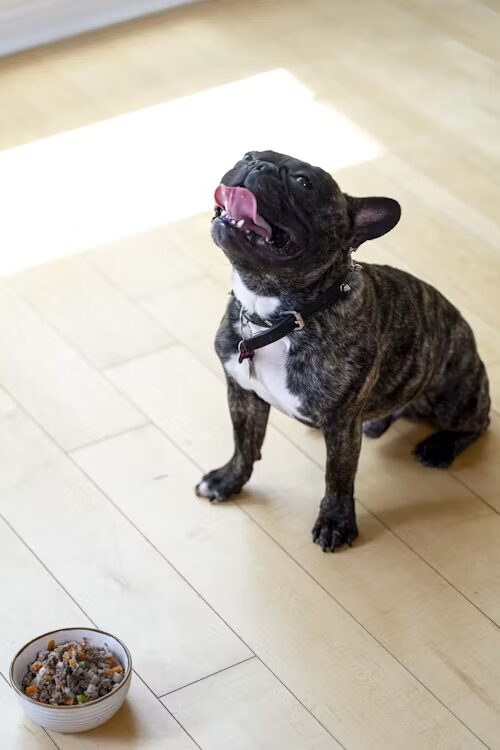
Can Shrimp Tails Get Stuck in a Dog’s Teeth?
Yes, shell fragments can become lodged between a dog’s teeth or around the gums.
This is another reason to remove shrimp shells and tails before sharing shrimp.
Dogs may show subtle signs that something is bothering their mouth, including:
- Pawing at the face
- Excessive drooling
- Repeated licking
- Chewing on one side
- Difficulty eating
- Bad breath
- Whining
- Gum irritation
Great Pet Care notes that shrimp shells and tails can become caught between teeth and irritate the gums. (greatpetcare.com)
What should you do?
You can gently look at the front of your dog’s mouth if they are calm and allow it.
Don’t force their mouth open or put your fingers deep inside.
If a shell fragment is deeply embedded, causes bleeding, or cannot be removed easily, let a veterinarian examine it.
Trying to pull out a sharp fragment forcefully can cause more injury.
Are Shrimp Tails Safe for Small Dogs?
No. Small dogs should not intentionally be given shrimp tails.
A shrimp tail that looks tiny to a person can still be relatively large compared with a small dog’s mouth and digestive tract.
Small dogs may also be more likely to experience problems from:
- Choking
- Gagging
- Swallowing large shell pieces
- Intestinal obstruction
This makes the answer to can small dogs eat shrimp tails particularly clear:
Remove the tail completely.
Small dogs can still enjoy shrimp meat when it is:
- Fully cooked
- Plain
- Peeled
- Tail-free
- Appropriately portioned
The size of the dog changes the risk level, but it doesn’t make the shell suddenly safe.
Are Shrimp Tails Safe for Large Dogs?
Large dogs may be physically better equipped to chew larger food pieces, but shrimp tails still aren’t recommended.
It’s tempting to think:
“My Labrador is huge, so a shrimp tail won’t hurt.”
That’s not a reliable assumption.
A large dog can still:
- Gulp a shell without chewing
- Choke
- Swallow a sharp fragment
- Develop gastrointestinal irritation
- Experience an obstruction
The tail also provides little useful nutritional benefit compared with the shrimp meat itself.
So even for a large dog, the sensible approach is:
Remove the tail and serve the meat.
Can Puppies Eat Shrimp Tails?
No, puppies should not be given shrimp tails.
Puppies can be enthusiastic eaters and may swallow objects without properly chewing them.
Their smaller airways and digestive tracts can make foreign-object problems particularly concerning.
They also need carefully balanced nutrition while growing.
If you want to give shrimp to a puppy:
Choose a small amount of:
- Fully cooked shrimp
- Completely peeled
- Tail-free
- Head-free
- Leg-free
- Plain
Start with a tiny piece and monitor how the puppy responds.
Do not use shrimp as a substitute for a complete puppy diet.
And never assume that because an adult dog tolerated a shell or tail, a puppy will do the same.
Can Senior Dogs Eat Shrimp Tails?
No. Age does not make shrimp tails safer.
In fact, some senior dogs may have additional concerns that make hard shell material even less desirable.
Older dogs can experience:
- Dental disease
- Weaker teeth
- Gum problems
- Reduced digestive efficiency
- Kidney disease
- Heart disease
- Pancreatitis
- Reduced appetite
A hard shrimp tail can be especially unpleasant for a senior dog with dental problems.
If you want to offer shrimp to an older dog, plain, fully cooked, peeled shrimp is the safer choice.
Can Dogs With Health Conditions Eat Shrimp Tails?
In general, no dog needs the tail, regardless of health status.
The shell itself does not provide enough practical nutritional benefit to justify accepting a potential physical hazard.
This is even more important for dogs with medical conditions.
Dogs With Pancreatitis
Avoid rich shrimp dishes containing:
- Butter
- Oil
- Cream
- Cheese
- Fried coating
The shrimp tail itself isn’t the primary pancreatitis concern, but the overall meal may be.
Dogs With Kidney Disease
Dogs with kidney disease may need carefully controlled levels of phosphorus, protein, sodium, and other nutrients.
If your dog follows a therapeutic renal diet, avoid adding shrimp or shell material without veterinary guidance.
Dogs With Heart Disease
Processed or seasoned shrimp can contain significant sodium.
A tail isn’t useful enough nutritionally to justify the added risk of a shell fragment.
Dogs With Obesity
Extra treats should be carefully portioned.
Plain shrimp meat may occasionally be useful as a lower-calorie treat, but the tail should still be discarded.
Dogs With Gastrointestinal Disease
A dog with chronic vomiting, constipation, inflammatory bowel problems, or other digestive disease may have a greater reason to avoid hard shell fragments.
Your veterinarian can tell you what treats fit the dog’s particular diet.
Can Dogs Eat Shrimp Without the Tail?
Yes.
This is actually the preferred way to give shrimp to a dog.
Plain, fully cooked shrimp meat can provide:
- Protein
- Vitamin B12
- Niacin
- Several minerals
- Small amounts of omega-3 fatty acids
The main thing is to keep the portion appropriate.
Safe options include:
- Boiled shrimp
- Steamed shrimp
- Baked shrimp
- Plain grilled shrimp
The shrimp should be:
Fully cooked + peeled + tail-free + plain + appropriately portioned.
Removing the tail eliminates an unnecessary physical hazard without taking away the main nutritional value you’re trying to provide.
How to Safely Prepare Shrimp for Dogs
Preparing shrimp safely takes only a few minutes.
Step 1: Choose Plain Shrimp
Select shrimp without marinade, heavy seasoning, garlic, onion, or sauce.
Fresh or plain frozen shrimp can work.
Step 2: Thaw Safely if Frozen
Thaw frozen shrimp in the refrigerator or using another appropriate food-safe method.
Do not leave raw shrimp sitting at room temperature for an extended period.
Step 3: Remove the Shell
Peel the shrimp completely.
Don’t leave small shell fragments attached.
Step 4: Remove the Tail
Pull away the entire tail section.
Check for remaining hard pieces.
Step 5: Remove the Head and Legs
If you purchased whole shrimp, remove these parts too.
Step 6: Devein
The dark line along the back is part of the digestive tract.
Removing it is primarily a cleanliness and food-preparation preference.
Step 7: Cook Thoroughly
Cook until the shrimp is fully done.
Suitable methods include:
- Steaming
- Boiling
- Baking
- Plain grilling
Step 8: Avoid Seasoning
Keep the shrimp plain.
Don’t add:
- Salt
- Garlic
- Onion
- Butter
- Hot sauce
- Chili
- Soy sauce
- Rich marinades
Step 9: Cool Before Serving
Let the shrimp cool to a safe temperature.
Step 10: Cut Into Small Pieces
Smaller pieces are easier for dogs to eat and make portion control simpler.
Step 11: Serve a Small Portion
Start with less, especially if shrimp is new to your dog.
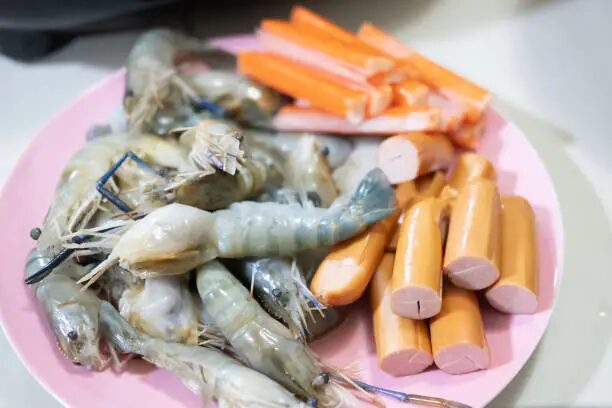
Can Dogs Eat Shrimp Shells Without the Tail?
It is still better to remove the entire shell.
Removing the tail fan but leaving the remaining shell doesn’t eliminate the physical hazard.
Shell fragments can still:
- Be sharp
- Get caught in teeth
- Irritate the mouth
- Be difficult to swallow
- Potentially contribute to obstruction
When you’re preparing shrimp for a dog, don’t aim for “mostly peeled.”
Aim for completely peeled.
Can Dogs Eat Shrimp Heads and Legs?
It’s safer to remove the head and legs before feeding shrimp.
Whole shrimp can contain several hard or rigid structures, and there is no nutritional reason for a dog to swallow them.
Remove:
- Head
- Shell
- Tail
- Legs
Then serve the cooked shrimp meat.
This is particularly important for small dogs, puppies, and dogs that tend to swallow food quickly.
Can Dogs Eat the Shrimp Vein?
The shrimp “vein” isn’t actually a blood vessel. It is part of the shrimp’s digestive tract.
It isn’t considered the same kind of physical hazard as a tail or shell.
Nevertheless, deveining shrimp is a sensible preparation step because it improves cleanliness and removes digestive-tract material.
Just remember:
Removing the vein does not make the tail safe.
You still need to remove the shell and tail before serving.
Shrimp Meat vs. Shrimp Tail: Which Is Safer for Dogs?
The difference is simple.
| Part of Shrimp | Dog-Friendly? | Main Concern |
|---|---|---|
| Plain cooked shrimp meat | ✅ Yes, in moderation | Portion size |
| Shrimp tail | ❌ Avoid | Choking or obstruction |
| Shrimp shell | ❌ Avoid | Sharp fragments or obstruction |
| Shrimp head | ❌ Avoid | Hard parts and choking |
| Shrimp legs | ❌ Avoid | Hard or sharp structures |
| Shrimp vein | ⚠️ Remove when preparing | Cleanliness |
The shrimp meat is where most of the nutritional value you’re interested in lies.
There is simply no compelling reason to leave the shell attached.
Raw Shrimp Tail vs. Cooked Shrimp Tail
A common misconception is that cooking automatically makes every part of shrimp safe.
It doesn’t.
| Factor | Raw Shrimp Tail | Cooked Shrimp Tail |
| Shell hazard | Present | Present |
| Choking risk | Present | Present |
| Obstruction risk | Present | Present |
| Pathogen concern | Higher | Lower when properly cooked |
| Recommended | ❌ No | ❌ Still avoid |
Cooking improves the safety of the shrimp meat by reducing pathogen exposure.
But the hard shell remains hard.
So the practical rule is:
Cook the shrimp. Remove the tail. Serve the meat.
What About Freeze-Dried Shrimp Tails?
You may occasionally see freeze-dried shrimp tails or whole shrimp products marketed as natural dog treats.
Don’t automatically assume “freeze-dried” means risk-free.
Freeze-drying changes the moisture content and texture, but it does not turn hard shell material into soft meat.
The physical concerns remain:
- Hard texture
- Choking risk
- Sharp fragments
- Possible obstruction
If you’re considering a commercial shrimp-based dog treat, check the packaging carefully.
A product specifically formulated and labeled as a complete dog treat may have different processing and safety considerations from simply giving your dog a whole freeze-dried shrimp with the shell attached.
When in doubt, choose a product designed specifically for dogs or simply use plain cooked, peeled shrimp meat.
Can Dogs Eat Shrimp Tails as a Dental Chew?
No, shrimp tails are not an appropriate dental chew.
Some owners assume that a hard shell will naturally scrape plaque from the teeth.
That’s not a good reason to give dogs shrimp tails.
A hard object can potentially:
- Irritate the gums
- Become lodged between teeth
- Damage delicate oral tissue
- Be swallowed
- Create choking concerns
Veterinary dental chews are specifically designed with safety and oral-health considerations in mind.
A shrimp tail is simply a food shell.
Don’t use it as a substitute for a proper dental-care product.
Can Dogs Eat Shrimp Tails for Calcium?
Shrimp shells contain minerals, but shrimp tails should not be used as a calcium supplement.
The problem is dosage.
A tail isn’t a standardized nutritional supplement. You don’t know exactly how much calcium you’re giving your dog, and the shell comes with physical risks.
If a dog genuinely needs additional calcium, a veterinarian or veterinary nutritionist can recommend a measurable and appropriate supplement based on the complete diet.
This is especially important for:
- Puppies
- Homemade diets
- Dogs with nutritional deficiencies
- Dogs with kidney disease
- Dogs on therapeutic diets
Simply saying “shrimp shells contain calcium” isn’t enough to justify feeding them.
Can Dogs Eat Shrimp Tails Every Day?
No.
Shrimp tails shouldn’t be fed intentionally at all.
If you’re asking about shrimp meat rather than the tail, plain cooked shrimp is still best treated as an occasional treat for most dogs.
The distinction is important:
Shrimp meat: potentially appropriate in moderation.
Shrimp tail: unnecessary physical hazard.
You don’t gain enough nutritional value from the tail to justify including it in your dog’s routine diet.
Can Dogs Be Allergic to Shrimp?
Yes. A dog can have a food allergy or intolerance to shrimp.
Possible reactions include:
- Itching
- Hives
- Facial swelling
- Vomiting
- Diarrhea
- Ear irritation
- Skin redness
- Breathing difficulty
A reaction isn’t necessarily caused by the shrimp itself, especially if the dog ate a seasoned human dish.
The trigger could be:
- Shrimp protein
- Garlic
- Onion
- Dairy
- Sauce
- Seasoning
- Another ingredient
When Is an Allergy an Emergency?
Difficulty breathing, significant facial swelling, collapse, or severe weakness requires urgent veterinary attention.
For milder signs such as itching or vomiting, stop feeding the food and contact your veterinarian for guidance.
Don’t repeatedly expose your dog to shrimp to “test” whether the reaction happens again.
Can Dogs Get Salmonella From Shrimp Tails?
The risk comes primarily from raw or contaminated shrimp, rather than the shell magically creating Salmonella.
Raw seafood can carry harmful bacteria, and dogs may become ill after consuming contaminated food.
The combination of raw shrimp and shell therefore creates two categories of concern:
Physical risk
- Choking
- Sharp shell fragments
- Obstruction
Food-safety risk
- Bacterial contamination
- Gastrointestinal illness
Cooking shrimp thoroughly reduces the food-safety risk, while removing the shell and tail reduces the physical risk.
That’s why preparation matters so much.
Common Mistakes When Feeding Shrimp to Dogs
Leaving the Tail Attached
This is probably the easiest mistake to avoid.
Simply remove it before serving.
Leaving Shell Fragments
Check the shrimp after peeling. Small shell pieces can remain attached.
Feeding Whole Shrimp
Whole shrimp may contain the head, legs, shell, and tail.
Give your dog the meat, not the entire animal.
Feeding Raw Shrimp
Raw shellfish creates unnecessary food-safety concerns.
Serving Fried Shrimp
Fried food adds fat and calories.
Giving Garlic Butter Shrimp
Garlic is unsafe for dogs, while butter adds unnecessary fat.
Adding Onion
Fresh onion and concentrated onion powders should be avoided.
Using Cocktail Sauce
Sauces may contain salt, sugar, garlic, onion, and other ingredients your dog doesn’t need.
Serving Restaurant Leftovers
Restaurant shrimp often contain several hidden ingredients.
Giving Large Portions
Even plain shrimp should be fed in moderation.
Assuming Large Dogs Can Safely Eat Tails
Size changes risk but does not make the tail a recommended food.
Giving Tails as Chew Toys
Shrimp tails aren’t dental chews.
Ignoring Symptoms
If your dog develops repeated vomiting, severe pain, difficulty breathing, or other concerning signs after eating shrimp or a tail, seek veterinary advice.
Myths About Dogs Eating Shrimp Tails
Myth 1: Dogs Can Eat Shrimp Tails Because They Eat Bones
False.
Shrimp shells and bones are different materials, and neither should automatically be treated as safe chew items.
Myth 2: Cooking Makes Shrimp Tails Safe
False.
Cooking reduces pathogen risk, but it doesn’t remove the physical hazard of a hard shell.
Myth 3: Large Dogs Can Safely Eat Shrimp Tails
Not necessarily.
Large dogs may have more room to chew, but they can still gulp shell pieces and develop problems.
Myth 4: Shrimp Tails Provide Useful Calcium
The shell contains minerals, but that doesn’t make the tail an appropriate calcium supplement.
A controlled supplement is safer when supplementation is actually needed.
Myth 5: Dogs Can Digest Shrimp Shells Completely
This is too simplistic.
Some small pieces may pass, but shell material is different from shrimp meat and can still create physical risks.
Myth 6: A Small Tail Can Never Cause an Obstruction
A small piece may pass normally, but no foreign object should be described as absolutely risk-free.
Myth 7: Freeze-Dried Shrimp Tails Are Always Safe
Freeze-drying doesn’t eliminate the hard-shell problem.
The physical hazard can remain.
Myth 8: Dogs Need to Chew Shells to Clean Their Teeth
No.
Shrimp tails are not a substitute for appropriate canine dental care.
Myth 9: Raw Shrimp Tails Are Safe Because Dogs Eat Raw Meat
Not necessarily.
Raw shellfish can carry pathogens, and shell material creates a separate physical hazard.
Myth 10: If a Dog Seems Fine, There Is Never Any Risk After Swallowing a Tail
A dog that remains normal is certainly reassuring, but some gastrointestinal problems may take time to become obvious.
Continue monitoring, particularly if a large or multiple tails were swallowed.
Frequently Asked Questions About Dogs and Shrimp Tails
Can dogs eat shrimp tails?
Dogs should generally not eat shrimp tails. Remove the shell and tail before giving cooked shrimp to your dog.
Are shrimp tails safe for dogs?
They are not recommended because hard shell material can create choking, dental, or obstruction risks.
Can dogs digest shrimp tails?
Some dogs may pass small shell fragments, but this doesn’t mean feeding tails is safe or advisable.
Can dogs eat cooked shrimp tails?
It’s better to remove them. Cooking reduces pathogen risk but does not eliminate the physical hazard of the shell.
Can dogs eat raw shrimp tails?
No. Raw shrimp adds potential pathogen concerns to the existing shell hazard.
Can dogs eat fried shrimp tails?
No. Fried tails combine shell risks with added fat, calories, breading, and seasonings.
Can small dogs eat shrimp tails?
No. Small dogs may face greater choking and obstruction concerns.
Can large dogs eat shrimp tails?
They still shouldn’t be intentionally fed. Large size does not eliminate the risk.
Can puppies eat shrimp tails?
No. Puppies should receive plain, fully cooked shrimp with all shell material removed if shrimp is introduced as an occasional treat.
Can senior dogs eat shrimp tails?
No. Senior status doesn’t make a tail safer. Dental and gastrointestinal problems can make shell fragments especially undesirable.
What happens if my dog eats a shrimp tail?
A small accidental piece may pass without incident, but monitor for gagging, vomiting, abdominal pain, appetite loss, lethargy, or difficulty swallowing.
What should I do if my dog swallowed a shrimp tail?
Determine how much was eaten, whether it was raw or cooked, and monitor closely. Contact a veterinarian if symptoms develop or if a large or sharp piece was swallowed.
Can a shrimp tail cause an intestinal blockage in a dog?
Potentially, yes. Shell pieces can contribute to gastrointestinal obstruction, although not every swallowed piece causes a blockage.
Can shrimp tails cause constipation in dogs?
They may contribute to digestive problems in some cases, but constipation can have many other causes.
Can shrimp tails cause diarrhea in dogs?
Diarrhea is more commonly related to dietary changes, contaminated shrimp, rich food, or seasonings than the shell itself.
Can shrimp tails get stuck in a dog’s throat?
Yes, a hard shell fragment can potentially become lodged and cause choking or difficulty swallowing.
Can shrimp tails get stuck in a dog’s teeth?
Yes. Shell fragments can become caught between teeth or around the gums.
Can dogs eat shrimp shells?
It’s better to remove the entire shell. Shell fragments can create choking, dental, and obstruction risks.
Can dogs eat shrimp heads?
It’s safer to remove the head before serving. It contains hard structures and provides no compelling benefit as a dog treat.
Can dogs eat shrimp legs?
It’s best to remove them because they are hard and unnecessary to eat.
Can dogs eat shrimp without the tail?
Yes. Plain, fully cooked, peeled shrimp without the tail can be an appropriate occasional treat for many healthy dogs.
Is shrimp meat safe for dogs?
Generally yes, when fully cooked, plain, peeled, and fed in moderation.
How should I prepare shrimp for my dog?
Cook it thoroughly, remove the shell and tail, remove the head and legs, devein it, let it cool, and serve a small plain portion.
Can dogs eat shrimp tails for calcium?
No. A shrimp tail is not an appropriate or controlled calcium supplement.
Are shrimp tails a good dental chew for dogs?
No. They can get caught in teeth or cause oral irritation and aren’t designed as dental chews.
Can dogs eat freeze-dried shrimp tails?
It’s safer to avoid whole freeze-dried tails because the hard shell remains a physical hazard.
Can dogs get Salmonella from shrimp tails?
Potentially through contaminated raw shrimp. Cooking shrimp thoroughly reduces pathogen exposure.
Can dogs be allergic to shrimp?
Yes. Dogs can develop food allergies or intolerances involving shrimp.
How much cooked shrimp can a dog eat?
Portion size depends on body size, health, calorie needs, and the rest of the diet. Start with a small amount.
Are shrimp tails more dangerous for small dogs?
Small dogs may face a greater relative choking or obstruction risk, but tails aren’t recommended for large dogs either.
Are cooked shrimp tails safer than raw shrimp tails?
Cooked tails have less pathogen risk than raw tails, but both should generally be removed because the physical shell hazard remains.
Shrimp Tail Safety Checklist for Dog Owners
✅ Do
- Remove the tail completely
- Remove all shell fragments
- Serve fully cooked shrimp meat
- Keep shrimp plain
- Devein the shrimp
- Cut large shrimp into small pieces
- Start with a small portion
- Monitor your dog after introducing shrimp
❌ Don’t
- Feed shrimp tails intentionally
- Feed shell-on shrimp
- Feed raw shrimp
- Give tails as chew toys
- Serve fried or heavily seasoned shrimp
- Add garlic
- Add onion
- Assume cooking makes shell safe
- Ignore choking or obstruction symptoms
Safe vs. Unsafe Shrimp Preparations for Dogs
| Preparation | Dog-Friendly? | Main Concern |
| Plain peeled steamed shrimp | ✅ Yes | Serve in moderation |
| Plain boiled shrimp | ✅ Yes | Remove tail and shell |
| Plain baked shrimp | ✅ Yes | Fully cook |
| Plain grilled shrimp | ✅ Yes | Avoid marinades |
| Shrimp with tail | ❌ Avoid | Choking/obstruction |
| Shell-on shrimp | ❌ Avoid | Sharp shell fragments |
| Raw shrimp | ❌ No | Pathogens |
| Fried shrimp | ❌ Avoid | Fat/oil |
| Breaded shrimp | ❌ Avoid | Fat, calories, seasoning |
| Garlic shrimp | ❌ No | Garlic toxicity |
| Onion shrimp | ❌ No | Onion toxicity |
| Shrimp tempura | ❌ Avoid | Fried/breaded |
| Coconut shrimp | ❌ Avoid | Breading, fat, sauces |
What Is the Safest Way to Feed Shrimp to a Dog?
The safest approach is simple:
Fully cooked + plain + peeled + tail-free + head-free + leg-free + appropriately portioned.
You don’t need to create a complicated seafood recipe.
A few small pieces of plain boiled or steamed shrimp can make a nice occasional treat.
The shell and tail, on the other hand, should go straight into the trash or compost rather than your dog’s bowl.
Removing the tail is one of the easiest ways to eliminate a completely unnecessary physical hazard.
Conclusion: Can Dogs Eat Shrimp Tails?
So, can dogs eat shrimp tails? The safest answer is no—shrimp tails should generally be removed before giving shrimp to your dog.
The shrimp meat itself can be a nutritious occasional treat for many healthy dogs when it is fully cooked, plain, peeled, and properly portioned. The tail, however, is part of the hard shell structure and provides little practical nutritional benefit while creating unnecessary risks.
The main concerns are choking, sharp shell fragments, mouth or gum irritation, and possible intestinal obstruction. These risks can be greater for puppies, small dogs, and dogs that tend to gulp their food. Cooking the shrimp reduces food-safety risks associated with raw seafood, but it does not make the hard tail safe to swallow.
If your dog accidentally eats one small shrimp tail, don’t immediately panic. Many dogs may pass a small fragment without complications. Monitor your dog for gagging, repeated swallowing, vomiting, abdominal pain, difficulty swallowing, loss of appetite, constipation, lethargy, or weakness.