Pomeranians may be small in size, but their nutritional needs are anything but “small dog simple.” These fluffy, energetic companions have a fast metabolism, delicate digestion, and a strong need for nutrient-dense food to maintain their signature coat and lively personality.
Choosing the best dog food for Pomeranians is one of the most important decisions you can make as an owner because it directly affects:
- Energy levels
- Coat thickness and shine
- Dental health
- Brain function
- Weight management
Unlike larger breeds, Pomeranians cannot afford nutritional mistakes. Their small stomachs mean every bite must deliver maximum nutrition with minimal filler.
Why Pomeranians Need a Specialized Diet Compared to Larger Breeds
A Great Dane and a Pomeranian cannot eat the same way—and the difference goes far beyond size.
Pomeranians require:
- Higher calorie density per gram of food
- Smaller kibble size for proper chewing
- Faster digestion support
- More frequent meals in smaller portions
Because of their tiny size, even small feeding mistakes can quickly lead to:
- Hypoglycemia (low blood sugar)
- Obesity
- Digestive issues
- Skin and coat problems
Small Breed Metabolism: Fast Energy Burn & Small Stomach Capacity
Pomeranians have a high-speed metabolism, meaning they burn energy quickly—even while resting.
This creates a unique challenge:
- They need frequent energy intake
- But can only eat small amounts at a time
This is why nutrient density is more important than food quantity.
A high-quality diet ensures:
- Stable blood sugar levels
- Consistent energy throughout the day
- Healthy weight maintenance
Common Feeding Mistakes Pomeranian Owners Make
Even well-meaning owners often make mistakes such as:
- Overfeeding due to their “tiny food portions look too small”
- Feeding low-quality kibble with fillers like corn and soy
- Giving table scraps (high salt + fat content)
- Ignoring kibble size suitability
- Not adjusting food for age (puppy vs adult vs senior)
These mistakes often lead to:
- Weight gain
- Dull coat
- Digestive problems
- Low energy
Importance of Choosing the Best Dog Food Early
Early nutrition shapes a Pomeranian’s lifelong health.
A proper diet from puppyhood helps:
- Build strong bones
- Develop a thick, healthy coat
- Strengthen immunity
- Prevent obesity
- Support long-term dental health
Poor early nutrition often results in lifelong issues that are hard to reverse later.
What This Guide Will Cover
This complete guide will walk you through everything you need:
✔ Nutritional requirements for Pomeranians
✔ Best food types (kibble, wet, raw, homemade)
✔ Top dog food brands for different needs
✔ Feeding charts by age and weight
✔ Coat health nutrition strategies
✔ Health issues and diet solutions
✔ Ingredients to avoid
✔ Homemade food recipes
✔ Diet comparison (dry vs wet vs raw)
✔ FAQs for quick answers
For general dog nutrition reference, you can also explore:
2. Understanding Pomeranian Nutritional Needs
To choose the right food, you must first understand what a Pomeranian’s body actually needs.
Despite their small size, they are high-energy companion dogs with demanding nutritional requirements.
2.1 Small Breed Metabolism and High Energy Requirements
Pomeranians burn calories faster than larger dogs relative to their body size.
This means they need:
- Energy-rich food
- Frequent meals
- High digestibility nutrition
Without proper feeding, they may quickly experience:
- Fatigue
- Weakness
- Blood sugar drops
2.2 Importance of Calorie-Dense Food in Small Portions
Since Pomeranians can only eat small amounts, every bite must count.
✔ Ideal food characteristics:
- High calorie per gram
- Nutrient-rich ingredients
- Minimal fillers
Avoid:
- Low-calorie bulk foods
- Corn-heavy kibble
- Excess fiber that reduces calorie intake
The goal is maximum nutrition in minimum volume

2.3 Protein Needs for Coat, Muscle & Energy
Protein is essential for:
- Muscle maintenance
- Tissue repair
- Hair growth
- Immune system strength
Best protein sources:
- Chicken
- Turkey
- Salmon
- Lamb
Pomeranians benefit from 25%–30% protein in their diet, depending on age and activity level.
2.4 Fat Requirements for Energy and Fluffy Coat Health
Fat is not the enemy—it is a critical energy source for small breeds.
Benefits of healthy fats:
- Long-lasting energy
- Thick, shiny coat
- Skin hydration
- Brain development support
Best fat sources:
- Fish oil
- Chicken fat
- Flaxseed oil
2.5 Vitamins and Minerals (Skin, Teeth & Immunity)
Pomeranians need a balanced mix of micronutrients for overall health.
Key nutrients include:
| Nutrient | Benefit |
|---|---|
| Calcium | Bone & teeth strength |
| Phosphorus | Bone structure support |
| Vitamin A | Skin & vision health |
| Vitamin E | Coat protection |
| Zinc | Skin healing & immunity |
3. What Makes the Best Dog Food for Pomeranians?
Not all “small breed” foods are equal. The best dog food must match the breed’s biology, not just marketing labels.
3.1 High-Quality Animal Protein as First Ingredient
The first ingredient tells you everything.
✔ Good:
- Chicken
- Salmon
- Lamb
Bad:
- “Meat meal” (unspecified source)
- Corn
- Wheat gluten
Real meat should always come first.
3.2 Small Breed-Specific Kibble Size Importance
Pomeranians have tiny mouths and delicate teeth.
✔ Ideal kibble features:
- Small bite-sized pieces
- Easy to chew
- Crunchy texture for dental support
3.3 Ideal Protein and Fat Ratios
For healthy Pomeranians:
| Nutrient | Range |
|---|---|
| Protein | 25%–30% |
| Fat | 14%–20% |
| Carbs | Moderate (high-quality sources only) |
3.4 Digestibility and Gut Health Importance
A sensitive stomach is common in Pomeranians.
✔ Easy-to-digest ingredients:
- Rice
- Sweet potatoes
- Pumpkin
- Oats
These help maintain stable digestion and stool quality.
3.5 Avoiding Fillers (Corn, Soy, Wheat, By-products)
Fillers reduce food quality and increase health risks.
Common fillers:
- Corn
- Soy
- Wheat
- Animal by-products
These often lead to:
- Gas
- Allergies
- Low nutrient absorption
3.6 Importance of Omega Fatty Acids for Coat Health
A Pomeranian’s coat is its identity.
Omega benefits:
- Reduces shedding
- Improves shine
- Prevents dry skin
- Supports coat density
3.7 Role of Probiotics for Digestion
Gut health directly affects overall health.
Benefits:
- Better digestion
- Reduced bloating
- Stronger immunity
4. Best Dog Food Types for Pomeranians
Now that you understand what Pomeranians need nutritionally, the next step is choosing the right feeding format. Small breeds like Pomeranians respond differently to food types because of their tiny stomach capacity and fast metabolism.
Let’s break down each option clearly.
4.1 Dry Kibble (Small Breed Formulas)
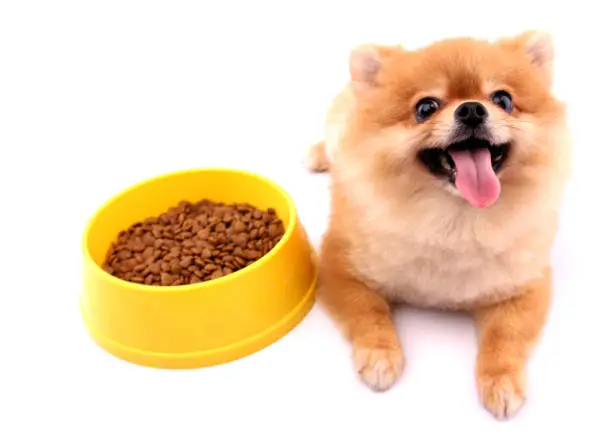
Dry kibble is the most commonly used food for Pomeranians, especially when it is designed for small breeds.
✔ Advantages:
- Easy to measure and store
- Balanced nutrition in every bite
- Helps reduce tartar buildup
- Cost-effective for daily feeding
- Available in breed-specific formulas
Disadvantages:
- Some brands contain fillers
- Low moisture content
- Poor-quality kibble can cause skin or digestion issues
Always choose small breed-specific high-quality kibble, not generic adult formulas.
4.2 Wet / Canned Dog Food
Wet food is often more palatable for picky eaters like Pomeranians.
✔ Benefits:
- High moisture content (good for hydration)
- Easier to chew for small teeth
- Strong aroma improves appetite
- Often higher protein content
Downsides:
- More expensive
- Short shelf life once opened
- Can contribute to dental plaque if used alone
Many owners mix wet food with kibble for balance.
4.3 Raw Diet for Pomeranians (Pros and Risks)
The raw diet (BARF – Biologically Appropriate Raw Food) is sometimes used for small breeds.
Includes:
- Raw meat (chicken, beef, lamb)
- Organ meat (liver, kidney)
- Raw bones (never cooked)
- Small portion vegetables
Potential benefits:
- High protein absorption
- Natural nutrient profile
- Improved coat quality in some dogs
Risks:
- Bacterial contamination (Salmonella, E. coli)
- Nutritional imbalance if not properly planned
- Difficult portion control for small dogs
- Not ideal for beginners
Raw diets should only be used with veterinary guidance.
4.4 Freeze-Dried & Dehydrated Food
This is a modern option that sits between raw and kibble.
Advantages:
- Retains raw-like nutrients
- Long shelf life
- Easy preparation (add water)
- High protein quality
Disadvantages:
- Expensive
- Limited availability
- Requires rehydration in most cases
4.5 Homemade Dog Food for Pomeranians
Homemade diets give full control over ingredients but must be carefully balanced.
Safe ingredients:
- Boiled chicken
- Lean turkey
- Rice or oats
- Carrots and pumpkin
- Eggs (excellent protein source)
Dangerous ingredients:
- Onion and garlic
- Chocolate
- Cooked bones
- Excess salt or spices
Homemade food must include supplements like calcium and omega oils to stay nutritionally complete.
5. Best Dog Food Brands for Pomeranians
Choosing the right brand ensures consistent nutrition, especially for small dogs with sensitive digestion and coat needs.
5.1 Premium Small Breed Dog Food Brands
Royal Canin Pomeranian Adult Dry Dog Food
- Specifically designed for Pomeranians
- Supports coat health and digestion
- Small kibble size for easy chewing
- Balanced nutrients for small breeds
Hill’s Science Diet Small Paws
- Veterinarian-recommended formula
- Highly digestible ingredients
- Supports skin, coat, and immunity
- Good for sensitive stomachs
Blue Buffalo Small Breed Dog Food
- High-quality protein sources
- Includes antioxidants for immunity
- Omega fatty acids for coat health
- Popular among small breed owners
5.2 High-Protein Small Breed Formulas
Wellness CORE Small Breed Dog Food
- High protein content for energy
- Grain-free options available
- Supports lean muscle maintenance
- Good for active Pomeranians
Nutro Ultra Small Breed Dog Food
- Blend of multiple protein sources
- Supports skin and coat health
- Balanced nutrition for small dogs
- Good digestibility
5.3 Budget-Friendly Pomeranian Dog Food Options
Budget foods can still work if they meet basic requirements:
- Named meat as first ingredient
- No artificial fillers
- Moderate protein levels
Avoid extremely cheap kibble with unknown meat sources.
5.4 Best Grain-Free Options for Pomeranians
Grain-free diets are often used for dogs with:
- Wheat sensitivity
- Skin allergies
- Digestive issues
Common grain-free ingredients:
- Sweet potatoes
- Peas
- Lentils
Grain-free is not always necessary—focus on ingredient quality first.
5.5 Best Food for Pomeranian Puppies
Puppies need:
- Higher DHA for brain development
- More calories per meal
- Smaller kibble size
- Frequent feeding schedules
5.6 Best Food for Senior Pomeranians
Senior dogs require:
- Lower calories
- Joint support (glucosamine & chondroitin)
- Easy-to-digest ingredients
- Strong immune support
5.7 Best Food for Sensitive Stomach Pomeranians
Sensitive digestion is common in Pomeranians.
✔ Recommended features:
- Limited ingredient diets
- Single protein sources
- Added probiotics
- Simple carbohydrates (rice, pumpkin)
5.8 Best Food for Coat Shine & Fur Health
A Pomeranian’s coat is one of its most important features.
Key nutrients:
- Omega-3 fatty acids
- Omega-6 balance
- Biotin
- Zinc
- Vitamin E
These nutrients directly affect coat fluffiness and shine.
6. Feeding Guide for Pomeranians
Proper feeding is just as important as choosing the right food.
6.1 Daily Calorie Requirements (By Weight)
| Weight | Activity Level | Calories per Day |
|---|---|---|
| 1.5–2.5 kg | Low | 100–150 kcal |
| 2.5–4 kg | Moderate | 150–250 kcal |
| 4–6 kg | Active | 250–350 kcal |
6.2 Portion Size for Small Breeds
| Weight | Daily Food Amount |
|---|---|
| 1.5–2.5 kg | 30–60g |
| 2.5–4 kg | 60–100g |
| 4–6 kg | 100–140g |
Adjust based on activity level and metabolism.
6.3 Feeding Frequency
| Age | Meals per Day |
|---|---|
| Puppy (2–3 months) | 4 meals |
| Puppy (3–6 months) | 3–4 meals |
| Adult | 2 meals |
| Senior | 2 small meals |
6.4 Treat Management
Pomeranians gain weight easily, so treats must be controlled.
✔ Safe treat rules:
- Max 10% of daily calories
- Low-fat options
- Single-ingredient treats
6.5 Overfeeding vs Underfeeding Signs
Overfeeding:
- Weight gain
- Lazy behavior
- Soft belly fat
Underfeeding:
- Rib visibility
- Low energy
- Excessive begging
7. Best Food for Senior Pomeranians
As Pomeranians age (usually 7+ years), their metabolism slows down and their nutritional needs shift from energy and growth to maintenance, joint support, and easy digestion.
Senior Pomeranians are more sensitive, so food quality becomes even more important.
7.1 Joint Support Ingredients
Older Pomeranians often face joint stiffness or reduced mobility.
Key ingredients:
- Glucosamine → supports joint cartilage
- Chondroitin → improves flexibility
- Omega-3 fatty acids → reduces inflammation
These nutrients help maintain comfort and mobility in aging dogs.
7.2 Lower Calorie Diet for Aging Dogs
Senior dogs burn fewer calories, so their diet must adjust.
✔ Benefits of lower-calorie food:
- Prevents obesity
- Reduces strain on joints
- Supports heart health
- Maintains healthy weight
Overfeeding is one of the most common problems in senior Pomeranians.
7.3 Easy-to-Digest Food Options
Senior Pomeranians need gentle nutrition.
✔ Best ingredients:
- Chicken
- Fish (salmon)
- Rice
- Pumpkin
- Sweet potatoes
These help reduce digestive stress and improve nutrient absorption.
7.4 Immune System Support
Older dogs have weaker immunity.
Important nutrients:
- Vitamin E
- Zinc
- Antioxidants
- Probiotics
These help fight infections and improve overall resilience.
8. Common Health Issues in Pomeranians & Diet Solutions
Pomeranians are small but can face several diet-related health problems.
8.1 Obesity and Weight Gain Issues
Pomeranians gain weight easily due to small body size.
Causes:
- Overfeeding
- High-calorie treats
- Lack of exercise
✔ Solutions:
- Portion control
- Low-fat diets
- Scheduled feeding
8.2 Hypoglycemia (Low Blood Sugar)
This is a serious risk in small breeds, especially puppies.
Symptoms:
- Weakness
- Shaking
- Confusion
- Collapse in severe cases
✔ Prevention:
- Frequent small meals
- High-quality calorie-dense food
- Avoid long fasting periods
8.3 Dental Problems and Kibble Size Importance
Pomeranians have tiny jaws and prone to dental issues.
Solutions:
- Small breed kibble
- Crunchy texture for plaque control
- Regular dental treats
8.4 Skin Allergies and Coat Issues
Poor diet can cause:
- Dry skin
- Hair thinning
- Dull coat
✔ Fix:
- Omega-3 rich diet
- High-quality protein
- No fillers
8.5 Digestive Sensitivity
Common signs:
- Gas
- Loose stool
- Vomiting
✔ Solutions:
- Limited ingredient diets
- Probiotics
- Simple carbs (rice, pumpkin)
9. Ingredients to Avoid in Pomeranian Dog Food
Not all dog foods are safe for long-term health.
9.1 Artificial Preservatives and Colors
Avoid:
- BHA
- BHT
- Artificial dyes
These can affect long-term organ and immune health.
9.2 Corn, Wheat, and Soy Fillers
Problems:
- Low nutritional value
- Digestive issues
- Allergic reactions
9.3 Meat By-Products
Often low-quality and inconsistent.
Always prefer named meat sources like chicken or salmon.
9.4 Excess Salt or Sugar
Small dogs are very sensitive to sodium and sugar.
Risks:
- Kidney strain
- Weight gain
- Energy spikes and crashes
9.5 Low-Quality Fats and Oils
Avoid unnamed animal fats.
Better alternatives:
- Fish oil
- Chicken fat
- Flaxseed oil
10. Coat Care & Nutrition for Pomeranians (SEO Booster)
A Pomeranian’s coat is its signature feature.
10.1 Foods That Improve Fluffy Coat Health
Best foods:
- Salmon
- Eggs
- Chicken
- Sweet potatoes
10.2 Omega-3 and Omega-6 Role
Benefits:
- Reduces shedding
- Improves shine
- Supports skin hydration
- Strengthens fur follicles
10.3 Skin Hydration Through Diet
Hydration is not just water—it’s also food.
✔ Hydrating foods:
- Wet food
- Pumpkin
- Fish-based diets
10.4 Supplements for Coat Shine
- Fish oil capsules
- Biotin
- Vitamin E
- Zinc
11. Homemade Dog Food for Pomeranians
Homemade diets can be healthy if properly balanced.
11.1 Chicken and Rice Recipe
Ingredients:
- Boiled chicken
- Rice
- Carrots
- Spinach
✔ Easy digestion
✔ Good for sensitive stomach
11.2 Fish and Vegetable Meal
Ingredients:
✔ Great for coat health
11.3 Egg-Based Protein Mix
Ingredients:
- Boiled eggs
- Oats
- Small vegetable mix
✔ High protein + energy support
11.4 Safe Supplements
- Fish oil → coat health
- Probiotics → digestion
- Multivitamins → immunity
11.5 Foods to Avoid in Homemade Diets
- Onion
- Garlic
- Chocolate
- Cooked bones
- Excess salt/spices
12. Dry vs Wet vs Raw Diet for Pomeranians
Nutritional Comparison
| Diet Type | Nutrition Quality | Convenience | Cost | Safety |
|---|---|---|---|---|
| Dry Food | High (premium) | Very easy | Medium | High |
| Wet Food | High | Medium | High | High |
| Raw Diet | Very high | Hard | High | Medium |
Digestibility Differences
- Dry food → stable digestion
- Wet food → easiest digestion
- Raw food → highest nutrient absorption (but riskier)
Cost Comparison
- Dry food → most affordable
- Wet food → moderate
- Raw diet → expensive
Safety Considerations
- Dry food → safest long-term
- Wet food → safe but perishable
- Raw food → requires strict hygiene
Best Choice for Most Pomeranians
High-quality small breed dry kibble + occasional wet food is the safest and most balanced option.
13. Frequently Asked Questions (FAQs)
13.1 What is the best dog food for Pomeranians?
High-quality small breed formulas like:
- Royal Canin Pomeranian
- Hill’s Science Diet Small Paws
- Blue Buffalo Small Breed
13.2 How much should a Pomeranian eat daily?
Typically:
- 100–350 kcal per day depending on size and activity
13.3 Can Pomeranians eat grain-free food?
Yes, but only if:
- Ingredients are high quality
- Protein source is clean
13.4 What food helps Pomeranian coat become fluffy?
- Salmon-based diets
- Omega-3 rich foods
- Eggs and fish oil
13.5 Is wet or dry food better for Pomeranians?
- Dry food → better for teeth
- Wet food → better for hydration
A mix is often ideal.
13.6 What foods should Pomeranians avoid?
- Corn
- Soy
- Wheat
- Artificial additives
- Low-quality meat by-products
14. Conclusion
Pomeranians may be small, but their nutritional needs are highly specific and extremely important for long-term health.
- Small breed metabolism requires nutrient-dense food
- Protein supports muscle and coat health
- Healthy fats improve energy and fluffiness
- Portion control prevents obesity
- Ingredient quality matters more than brand name