If your dog has ever stolen a bite from your dinner plate, you may have wondered, can dogs eat garlic? Garlic is found in countless everyday foods, from pasta sauces and soups to garlic bread, marinades, seasoned meats, and restaurant meals. Because it is such a common ingredient, accidental exposure is much easier than many dog owners realize.
The answer, however, is straightforward:
No, dogs should not eat garlic.
Garlic is considered toxic to dogs in raw, cooked, dried, and powdered forms. It belongs to the Allium group of plants, along with onions, leeks, chives, and shallots. Compounds in these plants can damage a dog’s red blood cells and, in sufficiently large exposures, lead to hemolytic anemia. Garlic can also irritate the gastrointestinal tract and cause vomiting, diarrhea, drooling, and abdominal discomfort.
Garlic can also hide in foods you might not immediately think of as dangerous. A dog could be exposed through garlic powder, garlic salt, seasoning blends, sauces, gravies, processed meat, garlic bread, or restaurant leftovers. Concentrated forms such as garlic powder can be especially concerning because more of the potentially harmful compounds are packed into a smaller amount.
This doesn’t mean every tiny accidental lick is going to cause severe poisoning. Toxicity depends on factors such as how much was consumed, the dog’s size, the form of garlic, whether exposure was repeated, and the dog’s individual health.
In this guide, we’ll explain exactly why garlic is dangerous, whether cooked garlic is safe, how garlic powder differs from fresh garlic, what symptoms to watch for, what to do if your dog eats garlic, and why garlic should never be used as a homemade flea remedy.
We’ll also cover garlic bread, garlic-seasoned meat, garlic supplements, puppies, senior dogs, dogs with anemia or liver disease, treatment, prevention, and the most common myths surrounding garlic and dogs.
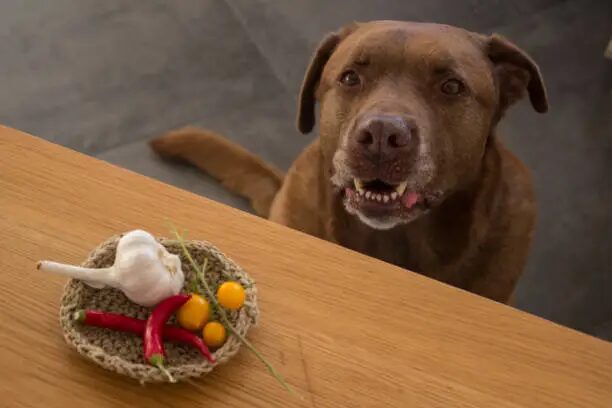
Quick Answer: Can Dogs Eat Garlic?
No. Dogs should not intentionally eat garlic.
Garlic contains sulfur-containing compounds that can cause oxidative damage to red blood cells. When enough red blood cells are damaged or destroyed, a dog can develop hemolytic anemia, which reduces the blood’s ability to carry oxygen around the body. Severe poisoning can become life-threatening.
Garlic can also act as a gastrointestinal irritant.
A dog exposed to garlic may develop:
- Vomiting
- Diarrhea
- Drooling
- Abdominal discomfort
- Reduced appetite
- Depression or lethargy
More serious signs can develop later if red blood cell damage occurs. These may include pale gums, weakness, rapid breathing, rapid heart rate, dark or reddish-brown urine, poor coordination, collapse, and jaundice.
Does the form of garlic matter?
Yes.
All of these should be considered unsafe for intentional feeding:
- Raw garlic
- Cooked garlic
- Dried garlic
- Garlic flakes
- Garlic powder
- Garlic salt
- Garlic extracts
- Garlic supplements
- Foods heavily seasoned with garlic
Concentrated forms deserve particular attention. The AKC notes that garlic powder and concentrated extracts can be especially dangerous because they deliver more of the toxic compounds in smaller quantities.
What if my dog ate only a tiny amount?
A tiny accidental exposure does not automatically mean severe poisoning.
That’s why there isn’t a good reason to intentionally feed garlic, even in small quantities.
If your dog has eaten a known amount of garlic, particularly garlic powder or a concentrated product, contact a veterinarian for advice rather than trying to calculate a “safe dose” yourself.
Why Is Garlic Toxic to Dogs?
To understand why garlic is bad for dogs, it helps to look at what garlic does inside the body.
The main concern is not that garlic is simply “hard to digest.” The more serious problem is that its compounds can cause oxidative damage to red blood cells.
Garlic Belongs to the Allium Family
Garlic belongs to the Allium family of plants.
Other common members include:
- Onions
- Leeks
- Chives
- Shallots
These plants contain sulfur-containing compounds that can be harmful to dogs. The ASPCA identifies garlic as toxic to dogs and lists red blood cell breakdown, hemolytic anemia, weakness, increased heart rate, panting, and blood in the urine among possible clinical signs.
The important point is that garlic isn’t an isolated exception.
If you’re trying to remember which common cooking ingredients belong in the “don’t feed this to my dog” category, garlic and onions should be firmly on that list.
How Garlic Damages Red Blood Cells
Red blood cells have an extremely important job: they carry oxygen throughout the body.
When a dog consumes enough garlic, compounds associated with the plant can cause oxidative damage to those cells.
Damaged red blood cells may become fragile and break apart. This process is known as hemolysis.
When red blood cells are destroyed faster than the body can replace them, the dog can develop hemolytic anemia.
Why is anemia dangerous?
Anemia means there are fewer healthy red blood cells available to transport oxygen.
That can lead to:
- Weakness
- Lethargy
- Pale gums
- Fast breathing
- Increased heart rate
- Exercise intolerance
- Collapse in severe cases
This is why garlic should never be treated as an ordinary vegetable that dogs can eat simply because humans commonly consume it.
Garlic as a Gastrointestinal Irritant
Red blood cell damage is the more serious concern, but garlic can also irritate a dog’s digestive system.
A dog may develop symptoms such as:
ASPCA lists vomiting, hemolytic anemia, blood in the urine, weakness, increased heart rate, and panting among signs associated with garlic toxicity.
Digestive symptoms may occur before more obvious signs of anemia.
That can make the situation confusing for owners because a dog might initially appear to have nothing more than an upset stomach.
If garlic exposure has occurred, don’t assume that vomiting or diarrhea is necessarily the entire story.
Why Garlic Can Be More Dangerous Than It Looks
Garlic may appear harmless because a single clove is relatively small.
But the concentration and form matter.
Fresh garlic, dried garlic, garlic powder, and concentrated extracts do not necessarily expose a dog to the same amount of garlic compounds by volume.
For example, a sprinkle of garlic powder may seem insignificant compared with a whole garlic clove. But the powder is concentrated, meaning a seemingly small quantity can represent a substantial amount of garlic material. The AKC specifically warns about powdered and concentrated forms.
Garlic can also hide in ingredient lists under different descriptions.
You may see:
- Garlic powder
- Dehydrated garlic
- Garlic flakes
- Garlic extract
- Garlic seasoning
- Garlic salt
That is why checking labels matters, especially when feeding your dog leftovers or packaged foods.
Is Garlic More Toxic Than Onions for Dogs?
Yes, garlic is generally considered more toxic by weight than onions.
But this comparison needs an important qualification.
You should not interpret “garlic is more toxic than onion” as “a little onion is fine” or “a tiny amount of garlic is safe.”
Both are Allium plants and both can cause problems.
The safer rule is:
Don’t intentionally feed dogs garlic or onion, regardless of which one is more toxic.
What about Akitas and Shiba Inus?
Certain breeds, particularly Akitas and Shiba Inus, may be genetically more susceptible to oxidative damage affecting red blood cells.
The AKC notes that these breeds may have increased sensitivity to Allium-related red blood cell damage. Dogs with existing anemia or certain health problems may also be at higher risk.
That doesn’t mean other breeds are safe.
Every dog should avoid intentional garlic exposure.
Breed sensitivity is one factor among many, not a reason to assume that garlic is harmless to other dogs.
Is Any Form of Garlic Safe for Dogs?
The safest answer is no form of garlic should be intentionally fed to dogs.
The cooking or processing method doesn’t turn toxic garlic into a dog-safe ingredient.
Raw Garlic
No.
Raw garlic contains compounds capable of damaging red blood cells.
A dog that eats raw garlic should be monitored according to veterinary advice, especially if the amount consumed is significant.
Cooked Garlic
No.
Cooking does not make garlic safe for dogs.
Garlic can remain harmful when it is:
- Roasted
- Boiled
- Fried
- Baked
- Stir-fried
- Added to sauces
This is particularly important because many owners assume that cooking makes potentially dangerous ingredients harmless.
It doesn’t in this case.
Dried Garlic
No.
Dried garlic is more concentrated than fresh garlic because much of the water has been removed.
That means a small quantity can represent more garlic material than the same visual amount of fresh garlic.
Avoid giving your dog dried garlic flakes or dehydrated garlic.
Garlic Powder
No—garlic powder deserves particular caution.
Garlic powder is a common ingredient in household seasoning blends, packaged foods, gravies, soups, snack foods, processed meats, and commercial products.
The problem is that powder can deliver a relatively concentrated dose.
The AKC specifically identifies powders, flakes, and soup mixes containing garlic as particularly potent forms because they can pack more toxic compounds into a smaller amount.
This makes garlic powder an especially important ingredient to look for when checking food labels.
Garlic Salt
No.
Garlic salt combines two concerns:
Garlic + sodium.
The garlic component is toxic to dogs, while excessive sodium can also be problematic.
It is therefore not a suitable seasoning for dog food.
If you’re cooking meat for your dog, use no garlic salt at all.
Garlic Supplements
Garlic supplements may be marketed as “natural” products for immune support, heart health, parasites, or flea control.
But natural doesn’t automatically mean safe.
Concentrated supplements may contain significant amounts of garlic-derived compounds, and there is no need to expose your dog to a known toxic ingredient when safer alternatives are available.
Don’t give your dog a garlic supplement unless a veterinarian specifically recommends a product and dose for a particular medical reason.
Can Dogs Eat a Small Amount of Garlic?
This is where the answer requires some nuance.
A tiny accidental amount does not necessarily mean your dog will develop severe poisoning.
So if your dog licks a tiny amount of food that happened to contain garlic, there isn’t necessarily a reason to assume the worst.
At the same time, there is no benefit in deliberately feeding small amounts.
Risk depends on several factors
- Amount consumed
- Dog’s body weight
- Fresh vs. powdered garlic
- Single exposure vs. repeated exposure
- Breed
- Age
- Existing medical conditions
- Whether other Allium foods were consumed
A large dog and a tiny dog cannot be expected to respond identically to the same amount of garlic.
Likewise, one small exposure is different from repeated exposure over several days.
Why repeated small amounts matter
Garlic toxicity may be cumulative.
For that reason, the best feeding policy is simple:
Don’t add garlic to your dog’s food at all.
How Much Garlic Is Toxic to Dogs?
This is one of the most frequently searched questions, but it is also one of the easiest to oversimplify.
You may find numbers online describing toxic doses in grams per kilogram or grams per pound. Those numbers can be useful in veterinary toxicology, but they are not a reliable “safe amount” calculator for dog owners.
Why a simple number can be misleading
A garlic clove isn’t a standardized unit.
Cloves vary in:
- Size
- Weight
- Concentration
- Freshness
And garlic powder, dried garlic, extracts, and supplements can be much more concentrated.
Factors affecting toxicity
| Factor | Why It Matters |
|---|---|
| Dog’s weight | Smaller dogs may receive a larger dose relative to body size |
| Amount consumed | Larger exposures increase risk |
| Form of garlic | Powder and concentrated products can deliver more compounds in less volume |
| Frequency | Repeated exposure can contribute to cumulative toxicity |
| Breed | Certain breeds may be more sensitive |
| Age | Puppies and older dogs may require additional caution |
| Existing health | Anemia and certain illnesses can increase concern |
| Other Allium foods | Onion, leeks, and chives can add to total exposure |
So, rather than asking, “How much garlic can my dog safely eat?”, the safer question is:
“My dog ate this particular amount of this particular garlic product—what should I do?”
That is information a veterinarian can use to assess the actual risk.
Garlic Poisoning in Dogs: Symptoms
One of the most important things dog owners should know about garlic toxicity is that symptoms aren’t always immediate.
Some dogs develop gastrointestinal signs first. More serious anemia-related signs may appear later.
Early Gastrointestinal Signs
Early or relatively mild signs may include:
- Vomiting
- Diarrhea
- Drooling
- Abdominal discomfort
- Reduced appetite
- Depression
- General stomach upset
These signs may occur after exposure to garlic or other Allium foods.
Delayed Signs of Red Blood Cell Damage
As damaged red blood cells break down, more serious symptoms can emerge.
Watch for:
- Lethargy
- Weakness
- Pale gums
- Rapid heart rate
- Rapid breathing
- Dark or reddish-brown urine
- Exercise intolerance
- Poor coordination
- Collapse
- Jaundice
- Blue or grayish gums in severe cases
Why pale gums matter
Healthy dog gums are generally pink.
If a dog’s gums become noticeably pale, white, gray, or bluish, that can indicate poor oxygen delivery or another serious problem.
A dog with pale gums after a known garlic exposure should receive prompt veterinary attention.
Why Are Garlic Poisoning Symptoms Sometimes Delayed?
This delayed pattern is one of the most important details in understanding garlic poisoning in dogs.
The initial ingestion occurs first, but red blood cell damage and destruction may continue afterward.
That means a dog can look fine immediately after eating garlic and then become sick later.
This is why “My dog looks fine right now” isn’t always enough reassurance after a significant ingestion.
A simplified timeline
Exposure → possible stomach upset → red blood cell damage → delayed anemia-related signs
Not every dog will follow this exact sequence, and some dogs exposed to small quantities may develop no noticeable symptoms.
But the possibility of delayed effects is precisely why owners should take known significant exposure seriously.
What Should I Do If My Dog Eats Garlic?
If your dog has eaten garlic, the most important thing is to avoid guessing.
The appropriate response depends on the amount, form, timing, and size of the dog.
Step 1: Remove Remaining Garlic
Take away the food and anything else containing garlic.
Don’t let your dog continue eating the source.
Step 2: Identify the Form
Try to determine whether your dog ate:
- Fresh garlic
- Cooked garlic
- Dried garlic
- Garlic powder
- Garlic salt
- Garlic bread
- A sauce
- A supplement
- Food containing garlic
The form matters because concentrated products may pose a greater risk.
Step 3: Estimate the Amount
Try to determine how much was consumed.
Don’t worry about getting the estimate perfect.
Even a rough estimate can help a veterinarian assess the exposure.
Step 4: Determine When It Was Eaten
Write down approximately when the ingestion occurred.
Timing can influence what a veterinarian recommends.
Step 5: Contact a Veterinarian
After known ingestion—especially a significant or unknown amount—contact your veterinarian and provide the details.
Step 6: Follow Professional Instructions
A veterinarian may recommend monitoring at home or may advise an examination, depending on the exposure.
Don’t assume that treatment is necessary in every case, but don’t assume that no treatment is necessary either.
Step 7: Monitor for Delayed Symptoms
Continue watching your dog for gastrointestinal and anemia-related symptoms according to your veterinarian’s advice.
Information your veterinarian may ask for
Have these details ready:
- Dog’s weight
- Age
- Type of garlic
- Approximate amount
- Time consumed
- Whether onion or other Allium ingredients were also involved
- Current symptoms
- Any existing medical conditions
Don’t induce vomiting on your own
Do not make your dog vomit unless a veterinarian specifically tells you to do so.
When Is Garlic Poisoning an Emergency?
Not every garlic exposure results in a medical emergency, but some situations deserve urgent veterinary care.
Seek prompt veterinary attention if:
- A large or unknown quantity was consumed.
- Your dog ate garlic powder or a concentrated product.
- Multiple garlic-containing foods were consumed.
- Your dog develops severe vomiting or diarrhea.
- Your dog becomes extremely weak.
- Gums become pale, white, gray, or blue.
- Breathing becomes rapid or difficult.
- Urine becomes dark or reddish-brown.
- Your dog becomes uncoordinated.
- Your dog collapses.
- Your dog becomes unusually sleepy or difficult to rouse.
When severe symptoms appear, don’t wait for them to pass at home.
Can Dogs Eat Cooked Garlic?
No.
Cooking garlic does not make it safe for dogs.
Garlic can remain harmful after being:
- Roasted
- Baked
- Boiled
- Fried
- Grilled
- Mixed into sauces
This is important because many household meals contain garlic in cooked form.
Common examples include:
- Cooked meat
- Pasta sauce
- Soup
- Stew
- Stir-fry
- Roasted vegetables
- Rice dishes
- Gravy
- Restaurant meals
If you’re preparing food for yourself and it contains garlic, don’t assume that giving the dog the cooked portion is safe simply because the garlic is no longer raw.
Cooked garlic is still garlic.
Can Dogs Eat Garlic Powder?
No, and garlic powder deserves particular caution.
Garlic powder is concentrated, which means a small-looking quantity can deliver a substantial amount of garlic compounds.
The AKC identifies garlic powder, flakes, and concentrated garlic products as especially concerning.
Garlic powder is also easy to overlook.
You may not see chunks of garlic in the food, but the powder may be mixed throughout the dish.
Common sources include:
- Seasoning blends
- Gravy mixes
- Instant soups
- Chips
- Crackers
- Meat rubs
- Processed foods
- Sausages
- Prepared sauces
- Commercial treats
This is why reading ingredient labels can be important when you’re trying to keep your dog away from garlic.
Can Dogs Eat Garlic Salt?
No.
Garlic salt should be kept away from dogs because it combines:
Garlic toxicity + concentrated sodium
The garlic component is the primary poisoning concern, but excess sodium is another reason not to use this seasoning in dog food.
Garlic salt can also be hidden in:
- Meat seasoning
- French fries
- Restaurant food
- Spice blends
- Packaged sauces
- Processed snacks
When cooking for your dog, there is no reason to use garlic salt.
A plain, unseasoned portion is always easier to evaluate.
Can Dogs Eat Garlic Bread?
Dogs should not be given garlic bread.
Garlic bread can expose a dog to several unnecessary ingredients at once:
- Garlic
- Butter
- Fat
- Salt
- Seasonings
- High calories
What if your dog steals one tiny bite?
A tiny accidental bite does not automatically mean serious poisoning.
The appropriate response depends on:
- How much was eaten
- How much garlic was used
- Dog’s size
- Whether garlic powder was involved
- Whether additional garlic foods were consumed
When there is a known significant ingestion, contact your veterinarian rather than waiting for symptoms.
Can Dogs Eat Food Cooked With Garlic?
Generally, dogs should not be given food intentionally prepared with garlic.
Garlic can appear in many everyday meals, including:
- Sauces
- Marinades
- Meat
- Rice dishes
- Pasta
- Soups
- Gravies
- Stir-fries
- Restaurant foods
One common mistake is to remove visible garlic pieces and assume the remaining food is completely safe.
That’s not necessarily reliable.
Garlic may have been:
- Finely minced
- Crushed
- Powdered
- Cooked into oil
- Mixed throughout a sauce
So simply picking out the obvious pieces may not remove the dog’s exposure to garlic-derived compounds.
The safest policy is to avoid feeding garlic-seasoned food altogether.
Can Dogs Eat Garlic-Seasoned Meat?
No, garlic-seasoned meat should generally be avoided.
Meat itself can be a suitable food for dogs when it is plain and properly prepared, but seasonings can change the picture.
Common ingredients to watch for include:
- Garlic powder
- Garlic salt
- Onion powder
- Spice blends
- Marinades
- Sauces
Common examples
- Garlic chicken
- Garlic steak
- Garlic shrimp
- Garlic sausage
- Garlic meatballs
The meat isn’t necessarily the problem.
The seasoning is.
If you’re preparing meat for the family, set aside an unseasoned portion for the dog before adding garlic or other seasonings.
Can Dogs Eat Garlic-Flavored Foods?
It’s safest to assume garlic-flavored foods are not appropriate for dogs unless you have checked the ingredients and confirmed there is no garlic or concentrated garlic ingredient.
“Garlic-flavored” can mean the product contains:
- Garlic powder
- Garlic extract
- Dried garlic
- Garlic seasoning
- Garlic oil or flavoring
Examples include:
- Garlic crackers
- Garlic chips
- Garlic sauces
- Garlic pasta
- Garlic dips
- Garlic-flavored meat snacks
The practical rule is easy:
When the label says garlic, keep it away from your dog.
Can Dogs Have Garlic for Fleas?
No. Garlic should not be used as a flea treatment for dogs.
Garlic has long been promoted in some natural-pet-care circles as a home remedy for fleas and ticks.
However, there isn’t good scientific evidence that feeding garlic provides reliable flea prevention, and the amount needed to have a supposed repellent effect is not standardized.
The basic problem is simple:
Why expose a dog to a toxic substance when safer flea-control products exist?
Talk with your veterinarian about a flea and tick preventive appropriate for your dog’s age, size, lifestyle, and health.
Is Garlic Good for Dogs in Small Doses?
You may have heard claims that tiny quantities of garlic support a dog’s:
- Heart health
- Immune system
- Digestion
- Parasite resistance
- Flea protection
These claims are often used to justify adding garlic to homemade dog food.
But garlic is not a required nutrient for dogs, and the potential risks make intentional feeding a poor choice.
There are many safe ways to support a dog’s health without using a known toxic ingredient.
A balanced diet, appropriate exercise, veterinary care, parasite prevention, and properly formulated supplements when indicated are much more sensible strategies.
The important distinction is:
A substance doesn’t need to be completely harmless in every circumstance to be something you should avoid feeding intentionally.
With garlic, there is simply no nutritional necessity that makes the risk worthwhile.
Can Dogs Eat Garlic Supplements?
Garlic supplements should generally be avoided unless a veterinarian specifically recommends a particular product.
Supplements can be more concentrated than ordinary food.
They may contain:
- Garlic powder
- Garlic extract
- Aged garlic
- Concentrated garlic compounds
This means a product that looks like a tiny pill or capsule may contain a more concentrated exposure than an owner expects.
Don’t assume a product is safe just because the label says:
- Natural
- Herbal
- Organic
- Holistic
- Supplement
Natural does not equal safe for dogs.
If you’re considering a supplement for fleas, immunity, digestion, or another purpose, discuss safer options with your veterinarian.
Garlic Toxicity vs. Garlic Allergy in Dogs
When a dog becomes sick after eating something, owners often assume the problem must be an allergy. With garlic, however, the situation is different.
Garlic poisoning is a toxic reaction, not a conventional food allergy.
Garlic contains compounds that can cause oxidative damage to red blood cells. A food allergy, on the other hand, involves the immune system reacting to a particular protein.
Garlic toxicity may cause:
- Vomiting
- Diarrhea
- Drooling
- Abdominal discomfort
- Lethargy
- Weakness
- Pale gums
- Dark urine
- Rapid breathing
- Collapse in severe cases
An allergic reaction may more commonly involve:
- Hives
- Sudden itching
- Facial swelling
- Red or irritated skin
- Vomiting
- Diarrhea
- Breathing difficulties in severe reactions
These symptoms can overlap, so you should not try to diagnose the cause based on symptoms alone.
For example, facial swelling after eating a garlic-containing food could indicate an allergic reaction to another ingredient rather than garlic toxicity itself.
Either way, severe symptoms require veterinary attention.
The important distinction is that a dog doesn’t need to be “allergic” to garlic for garlic to be dangerous. The toxic effect can occur because of the compounds in garlic itself.
Which Dogs Are More Vulnerable to Garlic Toxicity?
Garlic should be avoided by all dogs, but certain dogs may deserve particular caution after exposure.
Dogs that may warrant extra concern include:
- Small dogs
- Puppies
- Senior dogs
- Dogs with anemia
- Dogs with certain liver problems
- Dogs with other chronic illnesses
- Dogs with previous Allium exposure
- Certain genetically susceptible breeds
The amount of garlic a dog consumes relative to body size matters. A small dog can receive a much larger dose per kilogram from the same bite of food than a large dog.
What about Akitas and Shiba Inus?
Some Japanese dog breeds, particularly Akitas and Shiba Inus, are recognized as having increased susceptibility to oxidative red blood cell damage. The AKC notes that these breeds may be more vulnerable to Allium-related toxicity. (akc.org)
However, this does not mean other breeds are immune.
A Labrador, Golden Retriever, German Shepherd, Dachshund, Chihuahua, or mixed-breed dog can also become ill after sufficient garlic exposure.
The practical rule remains:
Keep garlic away from every dog, regardless of breed or size.
Can Puppies Eat Garlic?
No. Puppies should not eat garlic.
Puppies are still growing, and their diets need to provide carefully balanced nutrition. There is no nutritional reason to introduce a known toxic ingredient into their food.
Their smaller body size can also make accidental exposure more concerning.
For example, a single piece of garlic-containing food can represent a much larger dose relative to a puppy’s body weight than it would for a large adult dog.
Keep these foods away from puppies:
- Garlic cloves
- Garlic powder
- Garlic salt
- Garlic bread
- Garlic sauces
- Seasoned meat
- Leftover restaurant food
- Garlic supplements
Puppies also tend to explore their environment with their mouths, so safe kitchen storage is especially important.
Can Senior Dogs Eat Garlic?
No. Senior dogs should not be intentionally fed garlic either.
Age doesn’t make garlic safer.
In fact, older dogs may have conditions that make accidental ingestion more concerning, including:
- Anemia
- Kidney disease
- Liver disease
- Heart disease
- Gastrointestinal problems
- Reduced metabolic reserve
A senior dog may also be taking medications or eating a prescription diet.
For that reason, known garlic exposure in an older dog deserves careful attention, especially if the quantity is significant or unknown.
Can Dogs With Anemia Eat Garlic?
Absolutely not.
This is one of the situations where garlic exposure deserves particular caution.
Garlic can damage red blood cells, and anemia already means the dog has fewer healthy red blood cells available to transport oxygen.
Adding a substance capable of causing additional red blood cell destruction is clearly undesirable.
Signs of anemia may include:
- Pale gums
- Weakness
- Lethargy
- Fast breathing
- Rapid heart rate
- Exercise intolerance
- Collapse
- Dark urine
If a dog with known anemia eats garlic, contact the veterinarian promptly rather than waiting for symptoms.
The veterinarian may decide that closer monitoring or testing is needed.
Can Dogs With Liver Disease Eat Garlic?
Garlic should be avoided in dogs with liver disease.
A dog with liver disease already needs individualized nutritional and medical management.
Garlic does not provide a necessary nutrient that would justify adding another potential toxic exposure.
If your dog has liver disease, use only foods and supplements that your veterinarian has approved.
Avoid experimenting with:
- Garlic supplements
- Herbal garlic products
- Garlic-based flea remedies
- Homemade garlic recipes
If accidental ingestion occurs, tell your veterinarian about the dog’s existing liver condition because it may influence how the exposure is assessed.
Can Dogs Eat Garlic if They Have Pancreatitis?
No. Garlic is unsafe regardless of whether a dog has pancreatitis.
Pancreatitis adds another concern because many garlic-containing foods are also rich in fat.
Think about popular foods such as:
- Garlic bread
- Garlic butter shrimp
- Garlic butter steak
- Creamy garlic pasta
- Garlic cheese bread
These foods may contain garlic plus butter, oil, cheese, cream, or other high-fat ingredients.
That combination can be especially inappropriate for a dog with a history of pancreatitis.
So while garlic itself is already enough reason to avoid the food, rich preparation can create additional dietary problems.
What Happens If a Dog Eats Garlic Bread?
Garlic bread is one of the most common ways dogs accidentally encounter garlic.
It can contain:
- Fresh garlic
- Garlic powder
- Butter
- Oil
- Salt
- Herbs
- Cheese
That means you’re potentially dealing with more than one dietary concern.
If your dog ate one tiny bite
Don’t automatically assume severe poisoning.
Try to determine:
- How large the bite was
- How much garlic was used
- Whether garlic powder was involved
- Your dog’s weight
- Whether more garlic-containing food was consumed
If your dog ate several pieces
Contact a veterinarian for advice, especially if the dog is small or the garlic content is unknown.
Watch for:
- Vomiting
- Diarrhea
- Lethargy
- Pale gums
- Weakness
- Dark urine
- Rapid breathing
Remember that serious signs can be delayed.
What Happens If a Dog Eats Garlic Powder?
Garlic powder deserves particular attention because it is concentrated.
A dog may not have eaten an obvious clove of garlic. Instead, they might have consumed garlic powder mixed into:
- Gravy
- Seasoning
- Meat rub
- Soup
- Chips
- Crackers
- Processed meat
- Commercial food
- Another spice blend
The difficulty is that the owner may not know exactly how much garlic powder was present.
What should you do?
If your dog eats a significant or unknown amount of garlic powder:
- Remove the remaining food.
- Keep the packaging or ingredient list.
- Estimate how much was eaten.
- Note when it happened.
- Contact your veterinarian.
- Follow the veterinarian’s instructions.
- Continue monitoring for delayed symptoms.
Don’t assume that “it was only seasoning” means the exposure is insignificant.
The concentration of the product matters.
What Happens If a Dog Eats Onion and Garlic Together?
Both onion and garlic are Allium plants and both can damage red blood cells.
A dish containing both may therefore represent a greater concern than exposure to one tiny amount of either ingredient alone.
Common foods containing both include:
- Pizza
- Pasta sauces
- Soups
- Gravies
- Meatballs
- Seasoned meats
- Restaurant leftovers
- Stir-fry
- Garlic bread with onion seasoning
If your dog ate food containing both onion and garlic, tell your veterinarian exactly that.
Don’t assume the dog is fine simply because no visible pieces of garlic or onion remain.
Powdered forms can be mixed throughout the food.
Garlic and Other Allium Foods Dogs Should Avoid
Garlic isn’t the only Allium plant that can cause problems.
| Food | Safe for Dogs? | Main Concern |
|---|---|---|
| Garlic | ❌ No | Red blood cell damage |
| Garlic powder | ❌ No | Concentrated garlic |
| Garlic salt | ❌ No | Garlic + sodium |
| Onion | ❌ No | Red blood cell damage |
| Onion powder | ❌ No | Concentrated onion |
| Leeks | ❌ No | Allium toxicity |
| Chives | ❌ No | Allium toxicity |
| Shallots | ❌ No | Allium toxicity |
A useful kitchen rule
If a recipe contains garlic, onion, leeks, chives, or shallots, don’t share it with your dog unless your veterinarian has specifically advised otherwise.
How Veterinarians Treat Garlic Poisoning
Treatment depends on how much was consumed, how recently it happened, the form of garlic, and whether symptoms have developed.
There is no reliable home antidote for garlic poisoning.
Possible Early Treatment
If the exposure occurred recently and the veterinarian considers it appropriate, they may perform decontamination.
This may include:
- Veterinary-induced vomiting
- Activated charcoal in selected cases
These procedures should be performed or directed by a veterinary professional.
Do not attempt them yourself.
Diagnostic Testing
Veterinarians may recommend:
- Complete blood count
- Blood chemistry testing
- Urinalysis
- Additional monitoring of red blood cell health
Bloodwork can help identify anemia and other changes.
Supportive Care
Depending on severity, treatment may include:
- IV fluids
- Oxygen therapy
- Hospital monitoring
- Nutritional support
- Treatment for vomiting or other symptoms
- Blood transfusion in severe cases
The exact treatment is always based on the individual patient.
How Long Does Garlic Poisoning Last in Dogs?
There’s no single timeline that applies to every case.
The amount consumed and the dog’s individual response can significantly affect the course.
A general pattern may look like this:
Exposure → possible gastrointestinal symptoms → delayed red blood cell damage → anemia-related signs
This delay happens because red blood cell destruction does not necessarily become obvious immediately after the dog eats the garlic.
How long does recovery take?
Recovery depends on:
- Quantity eaten
- Form of garlic
- Severity of anemia
- Speed of treatment
- Overall health
- Whether complications developed
Mild exposures may cause little or no illness, while serious poisoning can require hospitalization and prolonged monitoring.
How to Prevent Garlic Poisoning in Dogs
Prevention is much easier than treating poisoning.
You don’t need a complicated system. A few kitchen habits can dramatically reduce accidental exposure.
Store Garlic Securely
Don’t leave garlic cloves, garlic powder, or seasoning containers where a dog can reach them.
A countertop may not be a safe storage location for a determined dog.
Keep Kitchen Scraps Out of Reach
Garlic-containing leftovers can smell extremely appealing.
Use a covered trash can or dispose of scraps in a place your dog cannot access.
Don’t Share Seasoned Human Food
Instead of removing garlic from a finished dish and giving your dog the rest, prepare an unseasoned portion before cooking.
Check Ingredient Labels
This is particularly important with:
- Processed meat
- Treats
- Gravy
- Broth
- Sauces
- Seasoning mixes
- Packaged foods
Store Garlic Powder and Garlic Salt in Closed Cabinets
These concentrated products are especially easy for a curious dog to knock over or ingest.
Teach Children Not to Share Food
Children may not know that garlic is dangerous for dogs.
Explain clearly that garlic-containing foods should never be offered to the family pet.
Use Veterinary-Approved Flea Prevention
Don’t experiment with garlic as a home flea remedy.
Your veterinarian can recommend products with established safety and effectiveness.
Common Foods That May Contain Hidden Garlic
Garlic doesn’t always appear as an obvious piece of food.
It can be mixed into recipes in powdered, dried, minced, or extract form.
Common examples include:
- Pizza
- Pasta sauces
- Garlic bread
- Soups
- Gravies
- Stir-fries
- Marinades
- Meat rubs
- Sausages
- Processed meats
- Dips
- Hummus
- Seasoned rice
- Restaurant leftovers
- Spice blends
- Commercial treats
Why this matters
You might look at a piece of chicken and think, “I don’t see any garlic.”
But the chicken may have been cooked in a garlic marinade.
Likewise, a sauce may contain garlic powder even though no visible pieces are present.
This is why ingredient labels and preparation history matter.
Common Mistakes Dog Owners Make With Garlic
1. Giving Tiny Amounts Intentionally
Some owners believe a pinch is healthy.
There’s no nutritional need to take that risk.
2. Assuming Cooked Garlic Is Safe
Cooking doesn’t remove the toxicity.
3. Using Garlic Powder as a Seasoning
Powder is concentrated and can be easier to accidentally overfeed.
4. Giving Garlic Bread
This combines garlic with fat and other ingredients.
5. Using Garlic to Repel Fleas
There are safer and more reliable options.
6. Assuming Garlic Supplements Are Healthy
A supplement can deliver concentrated amounts.
7. Ignoring Garlic in Leftovers
Restaurant foods often contain more garlic and seasoning than owners realize.
8. Waiting for Symptoms After a Significant Exposure
Symptoms may be delayed.
9. Inducing Vomiting Without Veterinary Guidance
This can create additional risks.
10. Assuming a Large Dog Can Safely Eat Garlic
Body size changes dose exposure but doesn’t make garlic a safe food.
Myths About Garlic and Dogs
Myth 1: A Little Garlic Is Healthy for Dogs
There is no reason to intentionally feed garlic.
Dogs do not require garlic as a nutritional supplement.
Myth 2: Cooking Garlic Makes It Safe
False.
Garlic remains toxic after cooking.
Myth 3: Garlic Prevents Fleas
Not a reliable or recommended strategy.
Veterinary-approved flea and tick preventives are safer options.
Myth 4: Garlic Powder Is Safer Than Fresh Garlic
The opposite may be true from a concentration standpoint.
Powdered garlic can pack more garlic compounds into a smaller amount.
Myth 5: Large Dogs Can Eat Garlic Safely
False.
Large dogs may need more garlic to reach the same dose per kilogram, but garlic is still not a safe food.
Myth 6: Garlic Bread Is Fine if the Dog Eats Only the Bread
Not necessarily.
Garlic may have been spread throughout the bread or mixed with the butter.
Myth 7: Garlic Is Safe Because It Is Natural
“Natural” doesn’t equal “safe for dogs.”
Many natural substances can be harmful to pets.
Myth 8: Dogs Only Get Sick Immediately After Eating Garlic
False.
Some serious signs can be delayed for several days.
Myth 9: Garlic Supplements Are Always Safe
A supplement can contain concentrated garlic compounds.
The label “natural” isn’t a guarantee of safety.
Myth 10: Garlic Is Less Dangerous Than Onion
Garlic is generally considered more toxic by weight than onion, but both should be avoided.
The comparison doesn’t establish a safe amount of either ingredient.
Garlic vs. Onion Toxicity in Dogs
Garlic and onions belong to the same plant family and share important toxic effects.
| Factor | Garlic | Onion |
| Toxic to dogs | ✅ Yes | ✅ Yes |
| Allium family | ✅ Yes | ✅ Yes |
| Can damage red blood cells | ✅ Yes | ✅ Yes |
| Can cause anemia | ✅ Yes | ✅ Yes |
| Powdered form concerning | ✅ Yes | ✅ Yes |
| Safe to feed intentionally | ❌ No | ❌ No |
Garlic is generally considered more toxic by weight, but neither should be deliberately added to a dog’s diet.
This distinction matters because owners sometimes hear that garlic is “more powerful” and then assume onions are therefore safe.
They’re not.
Fresh Garlic vs. Garlic Powder for Dogs
The form of garlic matters because concentration can differ substantially.
| Form | Dog-Friendly? | Main Concern |
| Fresh garlic | ❌ No | Toxic compounds |
| Cooked garlic | ❌ No | Remains toxic |
| Dried garlic | ❌ No | More concentrated |
| Garlic powder | ❌ No | Highly concentrated |
| Garlic salt | ❌ No | Garlic + sodium |
| Garlic extract/supplement | ❌ Avoid | Concentrated compounds |
This table is worth remembering when reading food labels.
A small amount of garlic powder can be easy to overlook because it doesn’t look like much.
What to Do if Your Dog Accidentally Eats Garlic
Accidental ingestion is the situation that worries owners most.
Here’s a practical response.
1. Stay Calm
Don’t assume the worst immediately.
2. Remove Access
Prevent your dog from eating more.
3. Identify What Was Eaten
Was it:
- A clove?
- Garlic bread?
- Garlic powder?
- Garlic salt?
- A sauce?
- A supplement?
- Onion and garlic together?
4. Estimate the Amount
Try to work out approximately how much was consumed.
5. Record the Time
Write down when you think the ingestion happened.
6. Contact Your Veterinarian
Especially important if:
- The amount is significant.
- The amount is unknown.
- Garlic powder or extract was involved.
- The dog is small.
- The dog has anemia or another illness.
- Multiple Allium foods were eaten.
7. Follow Veterinary Instructions
Your veterinarian may recommend monitoring or may want the dog examined.
8. Watch for Delayed Symptoms
Keep monitoring even if your dog seems normal immediately afterward.
Emergency Symptoms
Get urgent veterinary care if your dog develops:
- Difficulty breathing
- Pale, white, gray, or blue gums
- Severe weakness
- Collapse
- Repeated vomiting
- Dark or reddish-brown urine
- Severe lethargy
- Difficulty walking
Frequently Asked Questions About Dogs and Garlic
Can dogs eat garlic?
No. Dogs should not intentionally eat garlic. Garlic belongs to the Allium family and can damage red blood cells, potentially causing hemolytic anemia. It can also cause gastrointestinal upset.
Is garlic toxic to dogs?
Yes. Garlic is toxic to dogs, and significant exposure can damage red blood cells. The severity depends on the amount consumed, the dog’s size, the form of garlic, and other individual factors.
Can dogs eat cooked garlic?
No. Cooking does not make garlic safe for dogs. Garlic can remain harmful after being baked, roasted, boiled, grilled, or fried.
Can dogs eat raw garlic?
No. Raw garlic should not be intentionally fed to dogs because it contains compounds that can cause toxic effects.
Can dogs eat garlic powder?
No. Garlic powder is particularly concerning because it is concentrated and can deliver a relatively large amount of garlic compounds in a small quantity.
Can dogs eat garlic salt?
No. Garlic salt contains garlic as well as added sodium. Neither makes it an appropriate seasoning for dogs.
Can dogs eat garlic bread?
No. Garlic bread can contain garlic, garlic powder, butter, salt, and other ingredients. A tiny accidental bite does not automatically mean severe poisoning, but larger exposures should be discussed with a veterinarian.
Can dogs eat food cooked with garlic?
It’s best to avoid intentionally feeding food cooked with garlic. Garlic may be distributed throughout sauces, marinades, oils, gravies, and other dishes even when visible garlic pieces have been removed.
Can dogs eat garlic-seasoned meat?
No. Garlic-seasoned chicken, steak, sausage, meatballs, or other meats should not be deliberately fed to dogs.
Can dogs eat garlic sauce?
It is safest to avoid garlic sauces because they may contain garlic, garlic powder, onion, salt, spices, butter, or other ingredients that aren’t appropriate for dogs.
What happens if a dog eats garlic?
Possible symptoms include vomiting, diarrhea, drooling, abdominal discomfort, loss of appetite, lethargy, weakness, pale gums, rapid breathing, and dark urine. Serious signs can be delayed.
What should I do if my dog eats garlic?
Remove any remaining garlic-containing food, identify the type and approximate amount consumed, note when it happened, and contact your veterinarian for advice. Don’t induce vomiting unless specifically instructed by a veterinarian.
How much garlic is toxic to dogs?
There isn’t a simple household amount that should be treated as a universal safe limit. Risk depends on the dog’s weight, the amount consumed, the garlic’s form, repeated exposure, and individual susceptibility.
How much garlic can a dog eat safely?
The safest intentional amount is none. Garlic is not a necessary part of a dog’s diet, so there is no nutritional reason to deliberately feed it.
Can one garlic clove hurt a dog?
It can, depending on the dog’s size and the circumstances. One clove does not guarantee poisoning, but owners shouldn’t assume a clove is harmless. If a dog consumes garlic, especially a small dog or a concentrated form, seek veterinary guidance.
Can dogs eat garlic for fleas?
No. Garlic should not be used as a flea or tick treatment. Veterinarian-approved parasite preventives are safer and more reliable.
Is garlic good for dogs?
No nutritional need makes garlic worth intentionally feeding to dogs. Claims about garlic improving immunity, heart health, or preventing fleas do not justify exposing dogs to a known toxic ingredient.
Are garlic supplements safe for dogs?
They should generally be avoided unless a veterinarian specifically recommends a particular product. Supplements can contain concentrated garlic compounds.
Can puppies eat garlic?
No. Puppies should not be intentionally exposed to garlic. Their smaller body size makes accidental exposure potentially more significant.
Can senior dogs eat garlic?
No. Senior dogs should avoid garlic just like adult dogs. Older dogs may also have medical conditions that make accidental exposure more concerning.
Can dogs with anemia eat garlic?
Absolutely not. Garlic can damage red blood cells, which is especially concerning in a dog that already has anemia.
Can dogs with liver disease eat garlic?
Garlic should be avoided. Dogs with liver disease often require individualized nutritional and medical management, and there is no reason to add a toxic ingredient.
Can dogs with pancreatitis eat garlic?
No. Garlic is toxic regardless of pancreatitis status, and many garlic-containing foods also contain rich ingredients such as butter and oil.
Can dogs eat onion and garlic?
No. Both onion and garlic belong to the Allium family and can damage red blood cells.
What are the signs of garlic poisoning in dogs?
Early signs can include vomiting, diarrhea, drooling, abdominal discomfort, and reduced appetite. Delayed signs may include weakness, lethargy, pale gums, rapid breathing, dark urine, jaundice, and collapse.
How long after eating garlic do symptoms appear?
Some gastrointestinal signs may appear relatively soon, but anemia-related signs can be delayed for several days.
Can garlic poisoning be fatal in dogs?
Severe Allium poisoning can become life-threatening, particularly when significant red blood cell destruction occurs. Prompt veterinary evaluation improves the chance of appropriate treatment.
How is garlic poisoning treated in dogs?
Treatment depends on the timing and severity of exposure. Veterinary care may include decontamination when appropriate, bloodwork, urine testing, supportive care, oxygen, hospitalization, and blood transfusion in severe cases.
Can a dog recover from garlic poisoning?
Yes, many dogs can recover with appropriate veterinary care, particularly when exposure is recognized and managed promptly. Recovery time depends on the amount consumed and whether significant anemia or other complications developed.
Is garlic powder more dangerous than fresh garlic?
Garlic powder can be more concerning because it is more concentrated. A small quantity can contain a relatively large amount of garlic compounds.
Are garlic and onion equally toxic to dogs?
Both are toxic, but garlic is generally considered more toxic by weight than onion. This should not be interpreted as meaning that small quantities of either are safe to feed.
Garlic Toxicity Safety Checklist
When it comes to garlic and dogs, prevention is much easier than treatment.
✅ Do
- Keep fresh garlic out of your dog’s reach.
- Store garlic powder and garlic salt in closed cabinets.
- Read labels on sauces, gravies, treats, and processed foods.
- Tell your veterinarian which form of garlic your dog consumed.
- Estimate the amount eaten as accurately as possible.
- Record approximately when the ingestion happened.
- Monitor for delayed symptoms when advised.
- Use veterinarian-approved flea and tick prevention.
- Keep kitchen scraps in a secure container.
❌ Don’t
- Feed garlic intentionally.
- Add garlic to homemade dog food.
- Use garlic powder as a dog-food seasoning.
- Give garlic bread as a treat.
- Give garlic salt.
- Use garlic as a flea remedy.
- Assume cooked garlic is safe.
- Assume garlic supplements are automatically harmless.
- Wait for severe symptoms after a significant exposure.
- Induce vomiting unless a veterinarian specifically instructs you to do so.
Fresh Garlic vs. Garlic Powder: Which Is More Concerning?
Both should be avoided, but concentrated forms deserve special attention.
| Form | Safe for Dogs? | Main Concern |
|---|---|---|
| Fresh garlic | ❌ No | Toxic Allium compounds |
| Cooked garlic | ❌ No | Remains toxic |
| Dried garlic | ❌ No | More concentrated |
| Garlic powder | ❌ No | Highly concentrated |
| Garlic salt | ❌ No | Garlic plus sodium |
| Garlic extract | ❌ No | Concentrated compounds |
| Garlic supplement | ❌ Avoid | Concentrated exposure |
The most important takeaway isn’t which form is “worst.”
It is that none of these should be intentionally included in your dog’s diet.
Garlic vs. Onion: What Should Dog Owners Remember?
Garlic and onion are closely related and can cause similar toxic effects.
| Feature | Garlic | Onion |
| Allium plant | ✅ | ✅ |
| Toxic to dogs | ✅ | ✅ |
| Can damage red blood cells | ✅ | ✅ |
| Can cause hemolytic anemia | ✅ | ✅ |
| Powdered form concerning | ✅ | ✅ |
| Appropriate as a dog-food ingredient | ❌ | ❌ |
Garlic is generally more toxic by weight, but that comparison should not encourage owners to experiment with either food.
A much easier rule is:
Keep garlic, onions, onion powder, garlic powder, chives, leeks, and shallots out of your dog’s food.
How to Prevent Accidental Garlic Exposure at Home
Accidents usually happen because garlic is common rather than because owners intentionally feed it.
A few simple habits can help.
Keep the kitchen secure
Dogs are surprisingly talented at finding food left on counters.
Don’t leave:
- Garlic cloves
- Garlic bread
- Seasoned meat
- Sauces
- Garlic powder
- Spice containers
within reach.
Prepare a plain portion before seasoning
Cooking chicken for the family?
Set aside your dog’s portion before adding garlic, onion, salt, sauces, or spices.
This is much safer than trying to pick garlic pieces out afterward.
Read ingredient labels
Pay particular attention to:
- Treats
- Broths
- Gravies
- Processed meats
- Seasoning packets
- Sauces
- Human snacks
Secure the trash
Garlic-containing leftovers can smell extremely appealing to dogs.
Use a covered trash can or another secure disposal method.
A Simple Rule for Garlic and Dogs
When you’re uncertain about a food, ask yourself one question:
Does it contain garlic, onion, or a concentrated form of either?
If the answer is yes, don’t share it with your dog.
You don’t need to memorize every recipe or restaurant menu.
For example:
| Human Food | Give to Dog? | Why |
| Plain cooked chicken | ✅ Potentially | No garlic/seasoning and portion controlled |
| Garlic chicken | ❌ No | Garlic exposure |
| Plain cooked rice | ✅ Potentially | Depends on overall diet |
| Garlic fried rice | ❌ No | Garlic + possible seasoning |
| Plain cooked beef | ✅ Potentially | If appropriately prepared |
| Garlic steak | ❌ No | Garlic + often butter/seasoning |
| Plain vegetables suitable for dogs | ✅ Potentially | Depends on the vegetable |
| Garlic-roasted vegetables | ❌ No | Garlic exposure |
| Plain cooked shrimp | ✅ Potentially | Garlic-free and fully cooked |
| Garlic shrimp | ❌ No | Garlic and often butter/oil |
This makes the distinction easy.
It’s not necessarily the meat, rice, or vegetable that’s dangerous.
It’s the garlic and other ingredients added to it.
Final Practical Guide: If Your Dog Eats Garlic
Use this quick decision framework.
Your dog licked a tiny amount of garlic-containing food
Don’t automatically panic. Remove the food and monitor. If you’re concerned, contact your veterinarian.
Your dog ate a known amount of fresh garlic
Contact your veterinarian and provide the dog’s weight, the approximate amount, and the time of ingestion.
Your dog ate garlic powder
Take the exposure seriously because powder is concentrated. Contact your veterinarian promptly.
Your dog ate several pieces of garlic bread
Contact your veterinarian, especially if the dog’s size is small or the garlic content is unknown.
Your dog ate a garlic supplement
Contact your veterinarian and keep the product packaging available so the ingredients and strength can be identified.
Your dog shows pale gums, dark urine, weakness, rapid breathing, collapse, or severe vomiting
Seek urgent veterinary care.
Don’t wait for symptoms to disappear on their own.
Can Dogs Eat Garlic?
The answer is clear:
Dogs should not intentionally eat garlic.
Remember these essential points:
- Raw garlic is unsafe.
- Cooked garlic is unsafe.
- Dried garlic is unsafe.
- Garlic powder is unsafe and can be especially concentrated.
- Garlic salt is unsafe.
- Garlic supplements should generally be avoided.
- Garlic bread and garlic-seasoned foods are also concerns.
- Garlic should never be used as a homemade flea treatment.
- Symptoms may be delayed for several days.
- A significant or unknown exposure deserves veterinary advice.
- Pale gums, weakness, rapid breathing, dark urine, collapse, or severe symptoms are emergency warning signs.
The safest approach is not to search for a tiny “healthy” amount of garlic.
Instead, simply keep garlic out of your dog’s diet.
Conclusion: Can Dogs Eat Garlic?
So, can dogs eat garlic? No. Garlic should not be intentionally fed to dogs in any form.
That includes raw garlic, cooked garlic, dried garlic, garlic powder, garlic salt, garlic extracts, supplements, garlic bread, and foods heavily seasoned with garlic. The reason isn’t simply that garlic might upset your dog’s stomach. The more serious concern is that garlic can damage red blood cells and potentially cause hemolytic anemia, while also causing gastrointestinal irritation.
That doesn’t mean every accidental lick is a disaster. Risk depends on the dog’s size, the amount consumed, the form of garlic, whether exposure was repeated, and individual health factors. But because garlic provides no essential nutritional benefit to dogs, there is no good reason to deliberately include it in their food.
Be particularly careful with garlic powder and concentrated products, which can deliver a considerable amount of garlic compounds in a surprisingly small quantity. Also remember that garlic can hide in everyday foods such as sauces, gravies, processed meats, seasoning blends, restaurant leftovers, garlic bread, and flavored snacks.