If your dog gives you those irresistible puppy-dog eyes every time you eat watermelon, you may wonder, “Can dogs eat watermelon?” The good news is that most healthy dogs can enjoy plain watermelon in moderation, as long as you prepare it properly.
Watermelon can be a refreshing summer treat because it contains more than 90% water and provides nutrients such as vitamin A, vitamin B6, vitamin C, and potassium. It is also relatively low in calories compared with many traditional treats.
However, you should not simply hand your dog a whole slice and let them figure it out. The watermelon rind and seeds should be removed before serving. The rind can be difficult to digest and may create a choking or intestinal-obstruction risk, while large quantities of seeds can also cause problems.
Portion size matters, too. Even healthy foods can cause diarrhea, gas, bloating, or stomach discomfort when a dog eats too much. Watermelon should be treated as an occasional snack rather than a replacement for your dog’s regular, complete and balanced food.
In this guide, we’ll look at whether watermelon is safe for dogs, its potential benefits, watermelon seeds and rind, appropriate serving sizes, puppies, digestive problems, frozen watermelon, watermelon juice, and the safest ways to serve this juicy fruit.
Quick Answer: Can Dogs Eat Watermelon?
Yes, most healthy dogs can eat watermelon, provided it is served correctly and in moderation.
The safest option is plain, fresh watermelon flesh with the seeds and rind removed. Cut the fruit into small, bite-sized pieces appropriate for your dog’s size.
What part of watermelon can dogs eat?
Dogs can generally eat:
- Fresh watermelon flesh
- Seedless watermelon flesh
- Small pieces of plain watermelon
- Frozen watermelon pieces
- Mashed or pureed watermelon
What parts should dogs avoid?
Dogs should not intentionally eat:
- Watermelon rind
- Large quantities of watermelon seeds
- Sugary watermelon drinks
- Watermelon candy or gummies
- Products containing potentially harmful sweeteners or other unsuitable ingredients
Veterinary-reviewed guidance from PetMD, AKC, and Purina agrees that watermelon flesh can be a suitable occasional dog treat when the rind and seeds are removed.
One important rule is to remember that watermelon is a treat, not a meal. Treats should generally account for no more than about 10% of a dog’s daily calorie intake, with the rest coming from nutritionally complete dog food.
So, if you’re wondering whether you can share a few pieces of your summer watermelon with your four-legged friend, the answer is usually yes—but prepare it first and keep the portion small.
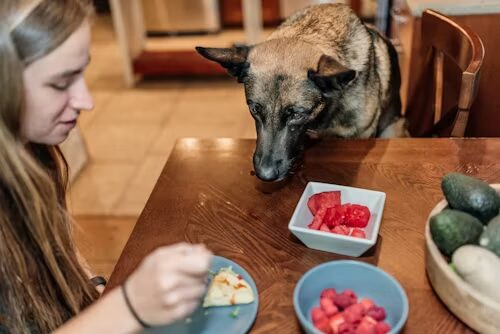
Is Watermelon Safe for Dogs?
For most healthy dogs, plain watermelon flesh is safe when given in moderation. The important part is making sure the fruit is prepared properly.
A dog’s digestive system can handle many plant foods, but that does not mean every part of every fruit is appropriate. With watermelon, the soft interior is the part you want to share—not the hard outer covering.
When watermelon is safe
Watermelon is generally a good occasional treat when it is:
- Fresh
- Plain
- Free of seeds
- Free of rind
- Cut into small pieces
- Given in an appropriate portion
Before giving your dog watermelon for the first time, start with just a small piece. This gives you a chance to see how your dog reacts.
Some dogs have sensitive stomachs and may respond differently to new foods. Even a food that is perfectly safe for one dog can cause digestive upset in another.
When watermelon may become unsafe
Watermelon becomes less suitable when:
- Your dog eats too much at once
- Seeds are left in the fruit
- Your dog eats the tough rind
- Pieces are too large
- The watermelon contains added sugar or other ingredients
- The dog has a health condition requiring dietary restrictions
Too much watermelon can result in loose stool, diarrhea, gas, bloating, or stomach discomfort, particularly in dogs that are not accustomed to fruit.
The biggest mistake is assuming that because the fruit is healthy, more must be better. It isn’t.
A few appropriately sized pieces can be a pleasant treat. Half a watermelon is another story.
Can all dogs eat watermelon?
Not necessarily.
A healthy adult dog will usually have fewer dietary restrictions than a dog with a medical condition. Before introducing watermelon, be more cautious if your dog:
- Has diabetes
- Is overweight or obese
- Has a sensitive digestive system
- Has a history of gastrointestinal disease
- Has food sensitivities or allergies
- Is following a prescription diet
- Has another condition requiring controlled nutrition
Watermelon contains naturally occurring sugar, so dogs with diabetes or other conditions affected by sugar intake may need a different approach. Dogs on prescription diets should also receive foods outside that diet only with veterinary approval.
When in doubt, ask your veterinarian before adding a new human food to your dog’s diet.
Is Watermelon Good for Dogs?
Watermelon isn’t a nutritional necessity for dogs. A complete and balanced dog food should provide the nutrients they need.
Still, properly prepared watermelon can be a tasty and refreshing treat. It offers several nutritional characteristics that make it appealing as an occasional snack.
Watermelon Is High in Water
One of watermelon’s biggest advantages is right in its name: it contains a lot of water.
Watermelon is approximately 92% water, making it a juicy and refreshing food.
That high water content can make watermelon particularly appealing during warm weather. A few chilled pieces may be a fun way to give your dog a different texture and flavor while also adding some water to their diet.
However, don’t misunderstand this benefit.
Watermelon should never replace your dog’s drinking water.
Your dog should always have access to clean, fresh drinking water. A few pieces of watermelon can supplement fluid intake, but they cannot take the place of normal hydration.
This is especially important after exercise, during hot weather, or whenever your dog is spending time outdoors.
Watermelon Is Low in Calories
Watermelon is also relatively low in calories. One cup contains roughly 50 calories, according to AKC and Purina guidance.
That can make it an attractive alternative to some calorie-dense treats.
For example, if your dog loves food and you are trying to keep treats modest, a few tiny watermelon pieces may provide variety without adding a large number of calories.
But low-calorie does not mean unlimited.
Watermelon still contains natural sugars, and calories from treats add up over time. Dogs that are overweight still need controlled portions.
Vitamins and Minerals in Watermelon
Watermelon contains several vitamins and minerals that contribute to its nutritional profile.
These include:
| Nutrient | Why It Matters |
|---|---|
| Vitamin A | Supports normal vision, immune function, and other body processes |
| Vitamin B6 | Involved in normal metabolism and nervous-system function |
| Vitamin C | An antioxidant involved in normal cellular and immune functions |
| Potassium | Important for normal muscle and cellular function |
| Water | Helps make watermelon a refreshing, hydrating snack |
AKC and PetMD specifically identify vitamins A, B6, and C and potassium among watermelon’s nutrients.
That sounds impressive, but it’s important to keep the benefits in perspective.
Your dog does not need watermelon to obtain these nutrients. A nutritionally complete dog food should already supply the nutrients required for good health.
Think of watermelon as a treat with nutritional value, rather than a supplement or health treatment.
Is Watermelon Good for Hydration?
It can contribute to hydration because of its very high water content.
This makes it particularly useful as a warm-weather dog treat. For example, you could offer a few chilled or frozen pieces after a walk, provided your dog is otherwise healthy and has normal access to drinking water.
Still, fresh water comes first.
If your dog appears unusually thirsty, weak, lethargic, overheated, or dehydrated, don’t rely on watermelon to solve the problem. Those signs can indicate a medical issue requiring veterinary attention.
Can Dogs Eat Watermelon Seeds?
This is one of the most common questions dog owners have.
The simple answer is: it’s best not to let your dog eat watermelon seeds intentionally.
Seeds are one of the reasons you should prepare watermelon before sharing it with your dog.
Are Watermelon Seeds Toxic to Dogs?
Watermelon seeds are not considered a practical source of poisoning in the tiny amounts a dog might accidentally swallow, although they contain trace amounts of cyanide compounds. The more relevant concern is physical risk, particularly choking or intestinal obstruction if a dog consumes a large number of seeds.
This distinction is important.
A dog accidentally swallowing one or two seeds is very different from a small dog eating a large amount of seeded watermelon.
So don’t panic if you notice your dog swallowed a stray seed. Instead, avoid making a habit of feeding seeded watermelon and remove the seeds before serving.
What Happens If a Dog Eats a Few Watermelon Seeds?
If your dog accidentally swallows a few seeds, there is usually little reason to panic.
Most healthy dogs will pass a small number of accidentally swallowed seeds without developing a serious problem.
However, keep an eye on your dog, particularly if you know they consumed a significant number of seeds.
Contact your veterinarian if your dog develops symptoms such as:
- Repeated vomiting
- Loss of appetite
- Abdominal discomfort
- Weakness or unusual lethargy
- Difficulty passing stool
- Persistent diarrhea
- Other unusual behavior
The concern becomes greater when a large quantity of seeds has been consumed, especially by a small dog.
Can Watermelon Seeds Cause Intestinal Blockage?
Potentially, yes.
Large quantities of seeds can contribute to an intestinal blockage, and smaller dogs may be more vulnerable to problems from swallowed foreign material.
An intestinal obstruction can become serious. Signs can include vomiting, abdominal pain, loss of appetite, weakness, and difficulty passing stool.
If your dog has eaten a large quantity of seeds and begins showing these symptoms, don’t wait to see whether the problem resolves on its own. Contact a veterinarian promptly.
How to Remove Watermelon Seeds for Dogs
Preparing watermelon safely is simple.
- Cut the watermelon into manageable sections.
- Remove the green outer rind.
- Separate the soft flesh.
- Pick out visible black seeds.
- Cut the flesh into small pieces.
- Check each piece before giving it to your dog.
Seedless watermelon can make preparation easier, but don’t assume that every piece is completely seed-free. It’s still worth checking the fruit.
Can Dogs Eat Watermelon Rind?
No. Dogs should not intentionally eat watermelon rind.
While the soft red flesh is generally safe, the rind is much tougher and more difficult to chew and digest.
This is one of the most important safety rules when feeding watermelon to dogs.
Why Dogs Should Not Eat Watermelon Rind
The rind can create several problems, including:
- Choking risk
- Difficulty chewing
- Gastrointestinal irritation
- Difficulty digesting
- Potential intestinal obstruction
A determined dog may happily bite through the green skin without realizing that it isn’t an appropriate part of the treat.
Veterinary sources specifically warn that watermelon rind can cause gastrointestinal problems and may contribute to choking or intestinal blockage.
That’s why it’s better to remove the rind completely rather than expecting your dog to eat around it.
What Happens If a Dog Eats Watermelon Rind?
It depends on how much rind was eaten and how large the piece was.
A tiny piece may pass without an obvious problem, but a large chunk can be more concerning.
Watch for:
| Symptom | Why It Matters |
|---|---|
| Vomiting | May indicate gastrointestinal distress or obstruction |
| Loss of appetite | Can occur when a dog is experiencing digestive discomfort |
| Abdominal pain | May signal a more significant gastrointestinal problem |
| Lethargy | Can accompany illness or discomfort |
| Diarrhea | May indicate digestive irritation |
| Difficulty passing stool | Can be concerning for an obstruction |
If your dog has swallowed a substantial piece of rind, particularly if it was swallowed whole, consider contacting your veterinarian for advice rather than waiting for symptoms to become severe.
What Should You Do If Your Dog Swallows Watermelon Rind?
First, don’t panic.
Try to determine:
- How much rind your dog ate
- Whether it was a small strip or a large chunk
- Whether your dog chewed it
- Approximately when it happened
- Whether your dog is currently showing symptoms
Then monitor your dog carefully.
If vomiting, abdominal pain, weakness, loss of appetite, persistent diarrhea, or difficulty passing stool develops, seek veterinary advice promptly. An intestinal blockage can become a serious emergency.
Do not try to make your dog vomit at home unless a veterinarian specifically tells you to do so.
How Much Watermelon Can Dogs Eat?
There isn’t one perfect serving size that applies to every dog.
The right amount depends on your dog’s size, weight, age, activity level, health, and overall diet.
The safest approach is to start small.
For a dog trying watermelon for the first time, a few appropriately sized pieces are enough to see whether they tolerate it.
How Much Watermelon Can a Small Dog Eat?
Small dogs have smaller stomachs and generally need much smaller portions.
Start with a few tiny, bite-sized pieces rather than a large handful.
For very small dogs, even a couple of small pieces may be enough for the first introduction.
How Much Watermelon Can a Medium Dog Eat?
A medium-sized dog can generally handle a few small pieces as an occasional treat.
Don’t judge the serving by how much watermelon the dog wants. Dogs often have excellent enthusiasm for foods that aren’t necessarily good for them in large quantities.
How Much Watermelon Can a Large Dog Eat?
Large dogs can generally have somewhat larger portions, but size alone doesn’t mean unlimited watermelon is appropriate.
A few bite-sized pieces are a sensible starting point. If your dog tolerates them well, watermelon can remain an occasional treat.
General Watermelon Serving Guide
| Dog Size | Suggested Starting Portion | Important Consideration |
|---|---|---|
| Extra-small | A few tiny pieces | Start very small |
| Small | A few bite-sized pieces | Monitor digestion |
| Medium | Several small pieces | Keep portions moderate |
| Large | Several bite-sized pieces | Avoid overfeeding |
| Extra-large | A small serving | Treat calories still count |
These are general starting guidelines rather than veterinary prescriptions. Individual dogs may need substantially different portions.
PetMD notes that treats, including watermelon, should make up no more than 10% of daily calories.
How Often Can Dogs Eat Watermelon?
Watermelon is best treated as an occasional snack.
Some healthy dogs can tolerate small amounts more regularly, but there is no nutritional need to feed watermelon every day. Your dog’s primary diet should remain complete and balanced.
Can Dogs Eat Watermelon Every Day?
They may tolerate small amounts, but daily watermelon isn’t necessary.
If you decide to offer it frequently, keep portions very small and make sure treats remain within your dog’s overall calorie needs.
For most dogs, variety is more sensible than making one fruit a daily staple.
Can Puppies Eat Watermelon?
Yes, puppies can eat properly prepared watermelon in small amounts, but there are a few extra considerations.
Puppies are growing rapidly and have different nutritional requirements from adult dogs. Their main food should be specifically designed to provide the calories and nutrients needed for healthy growth.
Purina notes that puppies can have more fragile digestive systems and recommends discussing new foods with a veterinarian, particularly when introducing people foods.
Is Watermelon Safe for Puppies?
For a healthy puppy, a tiny amount of seedless, rind-free watermelon flesh can be offered as an occasional treat.
However, don’t make fruit a significant part of a puppy’s diet.
Their nutritional foundation should remain a complete puppy food appropriate for their age and size.
How Much Watermelon Can a Puppy Have?
Start with one or two very small pieces.
Wait and observe your puppy.
If there is no vomiting, diarrhea, excessive gas, or other unusual reaction, watermelon can occasionally be offered again in a small amount.
Introducing new foods gradually makes it easier to identify which food caused a problem if digestive upset occurs.
Can Watermelon Cause Diarrhea in Puppies?
Yes.
Too much watermelon can cause digestive upset because puppies can have more sensitive gastrointestinal systems. The fruit’s water content and natural sugars may contribute to loose stool when consumed in excessive amounts.
If your puppy develops significant or persistent diarrhea, especially if accompanied by vomiting, weakness, poor appetite, or signs of dehydration, contact your veterinarian.
When Should You Avoid Giving a Puppy Watermelon?
Be more cautious if your puppy:
- Already has diarrhea or vomiting
- Has a sensitive digestive system
- Has been diagnosed with a medical condition
- Is following a veterinarian-directed diet
- Has known food sensitivities
When your puppy is already unwell, introducing a new food can make it harder to determine what is causing the symptoms.
Can Watermelon Cause Diarrhea in Dogs?
Yes, watermelon can cause diarrhea in dogs, especially when they eat too much at once.
This doesn’t necessarily mean your dog is allergic to watermelon or that the fruit is inherently harmful. More often, digestive upset happens because a dog’s stomach isn’t accustomed to a large amount of fruit, water, or natural sugar.
A small serving may be perfectly fine, while a large bowl can leave your dog with loose stools later in the day.
Why Too Much Watermelon Can Cause Diarrhea
Several factors can contribute to digestive upset:
- High water content: Watermelon contains a large amount of water, so eating a lot can affect stool consistency.
- Natural sugars: Like other fruits, watermelon contains naturally occurring sugars.
- Sudden dietary change: Introducing any unfamiliar food too quickly can upset digestion.
- Individual sensitivity: Some dogs simply tolerate certain fruits better than others.
- Large portions: Even healthy foods can cause problems when fed excessively.
For this reason, it’s best to introduce watermelon gradually.
If your dog has never eaten watermelon before, don’t give them a large serving simply because they seem to enjoy it. Start with a few small pieces and see how their digestive system responds.
Can Watermelon Cause Gas or Bloating?
It can.
Eating too much watermelon may cause gas, bloating, stomach noises, or general digestive discomfort in some dogs.
These symptoms are usually more likely after excessive consumption rather than a few properly sized pieces.
Dogs can also swallow air when eating quickly, which can contribute to temporary gas. If your dog gulps down food, offer watermelon pieces slowly instead of putting a large amount in their bowl.
However, severe or persistent abdominal swelling should not automatically be blamed on watermelon. If your dog’s abdomen appears unusually distended, they are restless, repeatedly trying to vomit without producing anything, or seem severely uncomfortable, seek emergency veterinary care.
What to Do If Your Dog Gets Diarrhea After Eating Watermelon
If your dog develops mild diarrhea after eating watermelon:
- Stop giving watermelon for the time being.
- Make sure your dog has access to fresh drinking water.
- Monitor their energy level and appetite.
- Keep track of whether the diarrhea improves.
- Avoid introducing additional new foods while you’re trying to identify the cause.
If diarrhea is persistent, severe, bloody, or accompanied by vomiting, weakness, dehydration, abdominal pain, or loss of appetite, contact your veterinarian.
Puppies, senior dogs, and dogs with existing health problems may need veterinary attention sooner because dehydration can become more concerning.
Can Dogs Be Allergic to Watermelon?
Food allergies can occur in dogs, although watermelon allergy is not considered common.
If your dog develops a reaction shortly after eating watermelon, don’t assume that the fruit is definitely responsible. Other foods, environmental allergens, medications, or unrelated health conditions can cause similar symptoms.
Still, a reaction after eating a new food is worth taking seriously.
Is Watermelon Allergy Common in Dogs?
No, watermelon isn’t among the foods most commonly associated with canine food allergies.
Most dogs that experience digestive problems after watermelon have likely eaten too much fruit or experienced a dietary upset, rather than having a true allergy.
A food allergy involves an immune response, while simple food intolerance generally causes digestive symptoms without the same immune mechanism.
Symptoms of a Possible Food Allergy
Potential signs of an allergic reaction can include:
- Itching
- Red or irritated skin
- Hives
- Facial swelling
- Vomiting
- Diarrhea
- Excessive licking or scratching
A serious allergic reaction can affect breathing and become an emergency.
What to Do If Your Dog Reacts to Watermelon
Stop feeding watermelon and contact your veterinarian if your dog develops concerning symptoms.
If your dog has difficulty breathing, significant facial swelling, collapse, severe weakness, or other signs of a potentially serious allergic reaction, seek emergency veterinary care immediately.
Don’t give your dog human allergy medication unless your veterinarian has specifically told you which medication and dose are appropriate.
How to Prepare Watermelon for Dogs
Preparing watermelon for your dog doesn’t have to be complicated. In fact, the safest preparation method is quite simple.
The goal is to give your dog plain watermelon flesh without seeds or rind.
Step 1 — Wash the Watermelon
Wash the outside of the watermelon under clean running water before cutting it.
Even though your dog won’t eat the outside, washing the fruit helps reduce dirt and contaminants that could be transferred to the flesh while cutting.
Use a clean knife and cutting surface.
Step 2 — Remove the Rind
Cut away the green outer skin and the lighter-colored layer immediately beneath it.
Don’t leave a large strip of rind attached just because your dog seems able to chew it.
The safest approach is to remove it completely.
Step 3 — Remove the Seeds
If you’re using traditional seeded watermelon, remove the visible black seeds.
Seedless watermelon is often more convenient, but inspect the pieces anyway. Small pale seeds or stray seeds can occasionally remain.
Step 4 — Cut Into Small Pieces
Cut the watermelon flesh into small, bite-sized pieces.
The appropriate size depends on your dog.
A Chihuahua needs much smaller pieces than a Labrador Retriever, for example.
Avoid giving your dog a huge wedge that they can bite into and swallow quickly.
Step 5 — Give a Small Portion
Start with a modest amount.
If watermelon is new to your dog, a few small pieces are enough for the first serving.
There’s no advantage to giving a large portion simply because watermelon is mostly water.
Step 6 — Monitor Your Dog
After your dog eats watermelon for the first time, pay attention to how they respond.
Look for:
- Normal appetite
- Normal energy
- Normal bowel movements
- No vomiting
- No excessive gas
- No signs of abdominal discomfort
If everything looks normal, you can continue offering small portions occasionally.
Best Ways to Serve Watermelon to Dogs
Once you’ve removed the rind and seeds, there are several simple ways to turn watermelon into a dog-friendly summer treat.
Fresh Watermelon Pieces
This is the simplest and safest option.
Cut seedless, rind-free watermelon into small pieces and serve it fresh.
You don’t need to add anything.
In fact, keeping it plain is preferable.
Avoid adding:
- Sugar
- Syrup
- Salt
- Spices
- Chocolate
- Artificial sweeteners
- Other unnecessary ingredients
Your dog already gets plenty of flavor from the fruit itself.
Frozen Watermelon
Frozen watermelon can make a refreshing treat on a hot day.
Simply:
- Remove the rind and seeds.
- Cut the flesh into small pieces.
- Place the pieces in a suitable container or tray.
- Freeze them.
- Offer an appropriately sized piece to your dog.
Frozen treats can also provide enrichment because dogs may enjoy licking and chewing them slowly.
Just remember that a frozen piece should still be an appropriate size. Bigger isn’t better.
Mashed Watermelon
For dogs that prefer softer foods, you can mash a small amount of seedless, rind-free watermelon with a fork.
This can be useful for:
- Puppies
- Dogs with smaller mouths
- Dogs that don’t like chewing frozen fruit
- Mixing a tiny amount into another appropriate food
Keep the serving small.
Watermelon Puree
Watermelon can also be blended into a simple puree.
There is no need to add sugar or other ingredients.
You can serve a small amount directly or freeze the puree into tiny portions for a homemade summer dog treat.
If you make a large batch, keep it refrigerated for an appropriate period and discard anything that develops an unusual smell, appearance, or texture.
Frozen Watermelon Cubes
Small frozen watermelon cubes can be a fun alternative to commercial treats.
However, don’t make the cubes too large or excessively hard for your particular dog.
For small dogs, make smaller pieces. For larger dogs, you can use somewhat larger pieces while still maintaining reasonable portion control.
Can Dogs Eat Frozen Watermelon?
Yes, dogs can generally eat plain frozen watermelon if it has been properly prepared.
Frozen watermelon can be especially appealing during hot weather because it is cold, juicy, and provides a different texture from ordinary treats.
How to Make Frozen Watermelon for Dogs
The process is straightforward:
- Choose fresh watermelon.
- Wash the outside.
- Remove the rind.
- Remove visible seeds.
- Cut the flesh into small pieces.
- Freeze the pieces.
- Offer a small portion.
PetMD and AKC both identify frozen or otherwise simply prepared watermelon as an option for dogs. (petmd.com)
Is Frozen Watermelon Better Than Fresh Watermelon?
Not necessarily.
Freezing doesn’t make watermelon dramatically more nutritious.
It’s mainly a different way to serve the same fruit.
Fresh watermelon may be easier for some dogs to chew, while frozen watermelon can provide a cooling treat during warm weather.
Choose whichever your dog handles comfortably.
Can Frozen Watermelon Cause Problems?
It can if you give excessively large pieces or too much fruit.
Keep portions reasonable and supervise your dog, especially if they tend to swallow treats without chewing.
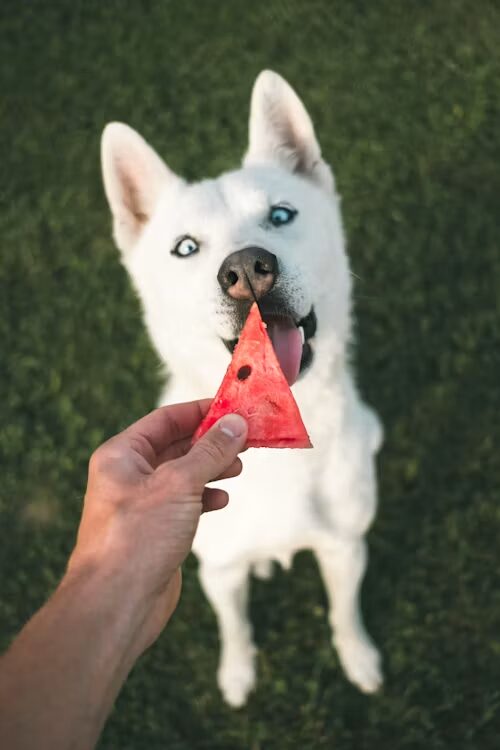
Can Dogs Eat Seedless Watermelon?
Yes. Seedless watermelon flesh is generally a convenient option for dogs.
It eliminates much of the work involved in removing large black seeds, but it does not mean you can skip the rest of the preparation.
Why Seedless Watermelon Is Convenient
Seedless watermelon can make preparation easier because there are fewer mature seeds to remove.
You still need to:
- Remove the rind
- Check the flesh for stray seeds
- Cut it into appropriate pieces
- Control the portion size
Is Seedless Watermelon Completely Seed-Free?
Not always.
Seedless watermelon can contain small, soft, undeveloped seeds or occasional remnants.
They’re generally much less noticeable than mature black seeds, but it’s still good practice to inspect the fruit before serving.
Does “Seedless” Mean the Rind Is Safe?
No.
This is an important distinction.
“Seedless” describes the fruit’s seeds. It doesn’t change the texture of the rind.
Even seedless watermelon should be served without the rind.
Can Dogs Eat Watermelon With Seeds and Rind?
No, you should not intentionally feed dogs watermelon with the seeds and rind still attached.
The safest part is the soft interior flesh.
Why Seeds Are Removed
Seeds can become a physical concern when consumed in larger quantities.
A dog that accidentally swallows a stray seed is unlikely to experience poisoning from that tiny amount, but there’s no benefit to deliberately feeding large quantities of seeds.
Removing them is an easy precaution.
Why Rind Is Removed
The rind is tough and more difficult to digest.
A large swallowed piece may create a choking or gastrointestinal obstruction risk.
That’s why preparing watermelon before feeding it is important.
The Safest Part of Watermelon for Dogs
The basic rule is easy to remember:
Plain, seed-free, rind-free watermelon flesh is the safest part to share with your dog.
That simple rule eliminates most of the avoidable risks associated with watermelon.
Can Dogs Eat Different Types of Watermelon?
There are several varieties of watermelon, and most of the important safety considerations are the same.
The key isn’t whether the flesh is red, yellow, seeded, or seedless. The key is how you prepare it.
Red Watermelon
Traditional red watermelon is perfectly suitable as an occasional dog treat when the rind and seeds are removed.
Its familiar sweet flavor and high water content make it a popular summer snack.
Yellow Watermelon
Yellow watermelon has yellow flesh instead of the familiar red color.
PetMD notes that yellow watermelon can also provide nutrients and water when properly prepared. (petmd.com)
There is no need to treat yellow watermelon as a completely different food from a safety perspective.
Remove the rind and seeds and keep the portion appropriate.
Seedless Watermelon
Seedless varieties are particularly convenient because they require less preparation.
However, seedless doesn’t mean rind-safe, so the outer skin should still be removed.
Seeded Watermelon
Seeded watermelon can be fed after the mature seeds are removed.
If you’re choosing watermelon specifically for your dog, a seedless variety may simply save you some preparation time.
Can Dogs Eat Watermelon-Flavored Products?
This is where things can get confusing.
A watermelon-flavored product is not necessarily equivalent to fresh watermelon.
A piece of fresh watermelon contains a relatively simple list of ingredients: watermelon.
A watermelon-flavored human snack may contain sugar, artificial sweeteners, preservatives, dairy, fats, or other ingredients that aren’t appropriate for dogs.
Watermelon Juice
Plain watermelon juice may sound harmless, but it’s generally better to give dogs whole watermelon flesh.
Juicing removes some of the fruit’s structure and makes it easier to consume a larger quantity quickly.
Commercial watermelon drinks can also contain added sugar or other ingredients.
Watermelon Ice Cream
Regular ice cream is not an appropriate everyday treat for dogs.
It can contain:
- High amounts of sugar
- Fat
- Dairy
- Artificial ingredients
- Potentially dangerous sweeteners in some products
A dog-friendly frozen watermelon treat made from plain watermelon is a much simpler option.
Watermelon Candy
Don’t give watermelon candy to dogs.
Candy can contain excessive sugar and other ingredients that dogs don’t need.
Some sugar-free products may contain xylitol, an ingredient that can be extremely dangerous to dogs.
Always check ingredients rather than assuming a food is safe simply because it says “watermelon.”
Watermelon Gummies
Watermelon gummies are another example of a human snack that shouldn’t automatically be considered dog-friendly.
They may contain concentrated sugar, sweeteners, flavorings, and other additives.
Stick to the actual fruit instead.
Watermelon-Flavored Dog Treats
Some commercially produced dog treats are specifically formulated for dogs and may contain watermelon flavor or watermelon ingredients.
These are different from human watermelon candy or gummies.
Still, check the ingredient list and feeding instructions, and count them toward your dog’s daily treat intake.
Watermelon Smoothies
A smoothie made for humans isn’t necessarily suitable for dogs.
It might contain:
- Added sugar
- Milk or cream
- Sweeteners
- Chocolate
- Grapes or raisins
- Other ingredients unsuitable for dogs
If you want to make a dog-friendly watermelon smoothie, keep the ingredients extremely simple and use only foods known to be safe for your dog.
Can Dogs Eat Watermelon Juice?
Plain watermelon juice isn’t usually necessary for dogs.
Whole watermelon is generally the better choice because it provides the fruit’s flesh rather than making it easier to consume a large quantity of liquid calories and sugar.
If you do offer a small amount of homemade watermelon juice, it should be:
- Plain
- Unsweetened
- Free from seeds
- Free from rind
- Free from artificial sweeteners
Avoid commercial watermelon beverages unless you’ve carefully checked the ingredients.
Why Whole Watermelon Is Usually Better
Whole fruit allows you to control the portion more easily.
Your dog also gets the natural texture of the fruit rather than a concentrated drink.
And most importantly, your dog doesn’t need watermelon juice to stay hydrated.
Fresh drinking water should always be available.
Can Dogs Eat Watermelon With Other Fruits?
Yes, watermelon can be combined with certain other dog-safe foods to create an occasional homemade treat.
The important thing is to keep every ingredient safe and the total serving small.
Watermelon and Strawberries
Plain strawberries can be combined with watermelon in small amounts.
Wash the strawberries, remove the leafy tops, and cut them into appropriate pieces.
Watermelon and Blueberries
Blueberries and watermelon can make a simple fruit-based treat.
Blueberries are small, which can make them convenient for mixing into tiny portions of watermelon.
Watermelon and Banana
Dogs can eat banana in moderation, but bananas contain more calories and sugar than watermelon.
If combining them, keep the banana portion particularly small.
Watermelon and Plain Yogurt
A small amount of plain, unsweetened yogurt can be mixed with watermelon for some dogs.
However, dairy doesn’t agree with every dog.
Avoid sweetened yogurt and carefully check the ingredient list for xylitol or other unsuitable sweeteners.
Homemade Watermelon Dog Treat Ideas
You don’t need an elaborate recipe to make watermelon interesting.
Try:
- Frozen watermelon cubes
- Watermelon and blueberry mini bites
- Mashed watermelon served in a small portion
- Watermelon puree frozen into tiny treats
- Plain watermelon mixed with a small amount of dog-safe fruit
The best homemade dog treats are often the simplest.
No sugar, no syrup, no seasoning, and no unnecessary ingredients.
Watermelon Serving Checklist
Before handing your dog a piece of watermelon, quickly run through this checklist:
| Question | Safe Choice |
|---|---|
| Is it plain? | Yes |
| Is the rind removed? | Yes |
| Are visible mature seeds removed? | Yes |
| Is the piece appropriately sized? | Yes |
| Is the portion small? | Yes |
| Does it contain added sugar? | No |
| Does it contain xylitol? | Absolutely no |
| Is fresh drinking water available? | Yes |
If all the important boxes are checked, watermelon can be a refreshing occasional dog treat for many healthy dogs.
Watermelon for Dogs With Health Conditions
For a healthy dog, a few pieces of properly prepared watermelon are usually an easy treat to manage. But things can be different when a dog has a medical condition.
Not every dog has the same nutritional needs. A food that works well for one dog may need to be limited or avoided for another.
If your dog has a diagnosed health condition or eats a prescription diet, it’s best to ask your veterinarian before making watermelon a regular treat.
Can Dogs With Diabetes Eat Watermelon?
Dogs with diabetes need careful management of their diet, including their overall carbohydrate and calorie intake.
Watermelon contains naturally occurring sugar, so portion size matters.
That doesn’t automatically mean watermelon is forbidden for every diabetic dog. However, you shouldn’t assume that a fruit is appropriate simply because it is natural.
If your dog has diabetes:
- Ask your veterinarian before introducing watermelon.
- Keep portions very small if your veterinarian approves it.
- Avoid sweetened watermelon products.
- Don’t give watermelon juice or sugary treats.
- Monitor your dog’s overall treat intake.
- Keep the dog’s regular diabetic diet consistent.
For a diabetic dog, consistency is often more important than offering lots of different treats.
Can Overweight Dogs Eat Watermelon?
Watermelon can be useful as an occasional low-calorie treat for some overweight dogs, particularly when compared with calorie-dense snacks.
However, it isn’t a weight-loss food.
Even low-calorie foods contribute calories when eaten in large quantities.
If your dog is overweight, consider:
- Measuring treats rather than estimating them.
- Keeping watermelon portions small.
- Reducing other treats when appropriate.
- Using part of your dog’s normal food as training rewards.
- Following a veterinarian-guided weight-management plan.
A few small watermelon pieces may fit into a healthy weight-management strategy, but portion control remains essential.
Can Dogs With Sensitive Stomachs Eat Watermelon?
Some dogs have naturally sensitive digestive systems.
If your dog frequently experiences loose stools, vomiting, gas, or other digestive problems, introduce watermelon cautiously—or ask your veterinarian first.
Start with a tiny piece rather than a full serving.
If your dog develops digestive upset, discontinue the fruit and monitor them.
Can Dogs With Digestive Problems Eat Watermelon?
If your dog is already experiencing vomiting or diarrhea, watermelon probably isn’t the food to experiment with.
Adding a new food can make it harder to determine what is causing the problem.
Instead, follow your veterinarian’s advice about what your dog should eat while recovering.
Can Dogs on Prescription Diets Eat Watermelon?
This is particularly important.
Prescription diets are often designed around a dog’s specific medical needs. Adding table foods, fruits, or treats without professional guidance may interfere with the diet’s nutritional goals.
If your dog is on a prescription diet, ask your veterinarian before offering watermelon.
What Happens If a Dog Eats Too Much Watermelon?
A few pieces of watermelon can be perfectly fine. A huge amount can be a different story.
When dogs overeat watermelon, the most likely problems are related to digestive upset and excessive treat consumption.
Possible signs include:
- Diarrhea
- Loose stool
- Gas
- Bloating
- Stomach discomfort
- Vomiting
- Reduced appetite
- General digestive upset
The risk depends on the amount eaten and the individual dog.
Why Does Too Much Watermelon Cause Problems?
Watermelon contains lots of water and natural sugars. A large quantity can introduce considerably more food and fluid than your dog’s digestive system is accustomed to handling.
Dogs that suddenly eat a large amount of any unfamiliar food can develop gastrointestinal upset.
This is why the best approach is simple:
Start small and increase only if your dog tolerates it well.
How Long Does Watermelon-Related Diarrhea Last?
There isn’t a specific time period that applies to every dog.
Mild digestive upset from eating too much of a new food may resolve as the food passes through the digestive system. But persistent diarrhea shouldn’t automatically be blamed on watermelon.
Other causes can include:
- Dietary indiscretion
- Parasites
- Infection
- Food intolerance
- Other dietary changes
- Underlying illness
If diarrhea continues, becomes severe, contains blood, or occurs alongside vomiting, weakness, pain, dehydration, or poor appetite, contact your veterinarian.
When Should You Call the Vet?
Contact a veterinarian promptly if your dog develops:
- Repeated vomiting
- Severe or persistent diarrhea
- Blood in stool or vomit
- Significant abdominal pain
- Marked weakness or lethargy
- Loss of appetite
- Signs of dehydration
- Difficulty passing stool
- A swollen or painful abdomen
If your dog ate a large amount of watermelon rind or a substantial quantity of seeds, seek veterinary advice even if symptoms haven’t appeared yet.
What to Do If Your Dog Accidentally Eats Watermelon
Dogs aren’t always polite about asking for snacks.
You may turn around for a second and discover that your dog has helped themselves to watermelon from the kitchen counter.
What should you do?
The answer depends largely on what part of the watermelon they ate and how much.
Dog Ate a Small Piece of Watermelon
If your healthy dog ate a small piece of plain watermelon flesh, there is usually little reason to worry.
Simply monitor them.
Watch for any unusual digestive symptoms, especially if watermelon is new to them.
Dog Ate Several Pieces
If your dog ate several pieces of rind-free watermelon flesh, monitor the situation and avoid giving additional treats for the moment.
A larger amount may result in diarrhea or stomach upset.
Make sure fresh water is available.
Dog Ate Watermelon Seeds
If your dog swallowed one or a few seeds accidentally, don’t panic.
A few stray seeds are unlikely to cause a serious problem in most dogs.
However, if your dog consumed a large quantity of seeded watermelon, particularly if they are very small, contact your veterinarian for advice.
Watch for:
- Vomiting
- Abdominal pain
- Loss of appetite
- Lethargy
- Difficulty passing stool
- Other unusual behavior
Dog Ate the Watermelon Rind
A small amount of rind may pass without incident, but a large or swallowed piece can be more concerning because of the potential for gastrointestinal obstruction.
If your dog swallowed a large piece, contact your veterinarian and tell them:
- Your dog’s approximate weight
- How much rind was eaten
- Approximately when it happened
- Whether the rind was chewed
- Whether your dog currently has symptoms
Don’t induce vomiting unless your veterinarian specifically instructs you to do so.
Dog Ate a Large Amount of Watermelon
If your dog consumed a very large quantity of watermelon flesh, the main concern may be gastrointestinal upset.
Keep an eye on your dog and don’t offer more food treats.
If vomiting, severe diarrhea, abdominal discomfort, weakness, or other concerning signs develop, contact your veterinarian.
Dog Is Showing Symptoms
The symptoms matter more than simply the fact that watermelon was eaten.
A dog that eats watermelon and continues to act completely normal is very different from a dog that becomes lethargic, repeatedly vomits, refuses food, or appears painful.
When symptoms are significant or worsening, don’t assume watermelon is the only possible cause.
Veterinary evaluation is the safest option.

Watermelon vs Other Fruits for Dogs
Watermelon isn’t the only fruit dogs can enjoy.
Several fruits can be offered in moderation, but each has its own preparation and safety considerations.
| Fruit | Generally Safe? | Main Concern |
|---|---|---|
| Watermelon | Yes, prepared correctly | Seeds, rind, excessive portions |
| Blueberries | Yes | Portion size |
| Strawberries | Yes | Portion size and natural sugar |
| Apples | Yes, prepared correctly | Seeds, core, stem |
| Bananas | Yes, in moderation | Higher sugar and calories |
| Grapes | No | Potentially severe toxicity |
| Raisins | No | Potentially severe toxicity |
The fact that one fruit is safe doesn’t mean every fruit is safe. Grapes and raisins should not be fed to dogs, and accidental ingestion should be treated seriously.
Healthy Alternatives to Watermelon for Dogs
Dogs don’t need fruit to have a healthy diet, but safe fruits and vegetables can add variety to an otherwise balanced feeding routine.
Some options include:
Blueberries
Blueberries are small, convenient, and can be offered as occasional treats.
They’re particularly useful for training because you can give one or two at a time.
Strawberries
Fresh strawberries can be offered in small pieces.
Wash them and remove the leafy tops before serving.
Because strawberries contain natural sugar, moderation still matters.
Apple Pieces
Dogs can generally eat plain apple flesh when the seeds, core, and stem are removed.
Cut apples into appropriately sized pieces to reduce choking risk.
Carrots
Carrots are another popular dog-friendly snack.
They can be served raw or cooked without added salt, butter, spices, or sauces, depending on your dog’s preferences and ability to chew them safely.
Green Beans
Plain green beans can also work as an occasional treat for many dogs.
Avoid versions prepared with butter, heavy sauces, salt, onions, or garlic.
Commercial Dog Treats
A complete diet doesn’t need to include human foods at all.
Commercial treats formulated specifically for dogs can make portion control easier, especially when you’re training.
Whatever treat you choose, remember that treats should complement—not replace—your dog’s nutritionally complete food.
Common Mistakes Owners Make When Feeding Watermelon
Watermelon is relatively simple to prepare, yet dog owners can still make a few common mistakes.
1. Giving the Rind
The green skin should be removed.
Don’t assume your dog can safely chew through it just because they have strong teeth.
2. Leaving Seeds in the Fruit
Remove visible mature seeds before serving.
A seedless variety can make this easier.
3. Giving Huge Chunks
Large pieces may be difficult for some dogs to chew properly.
Small, bite-sized pieces are safer and easier to portion.
4. Feeding Too Much at Once
A dog may happily eat far more watermelon than their stomach needs.
Start small.
5. Offering Sugary Watermelon Products
Fresh watermelon is very different from watermelon candy, ice cream, gummies, or sweetened drinks.
Stick to the fruit itself whenever possible.
6. Assuming Seedless Means Everything Is Safe
Seedless watermelon can still have rind.
Remove the rind regardless of the variety.
7. Replacing Regular Water With Watermelon
Watermelon can contribute some fluid, but it should never replace access to clean drinking water.
8. Ignoring Digestive Symptoms
If your dog develops persistent vomiting, diarrhea, pain, or other concerning symptoms, don’t simply keep feeding watermelon and hope for the best.
9. Giving Watermelon Without Considering the Dog’s Health
A healthy adult dog and a dog with diabetes or a veterinarian-prescribed diet may have very different nutritional requirements.
Frequently Asked Questions About Dogs and Watermelon
Can dogs eat watermelon?
Yes. Most healthy dogs can eat plain watermelon flesh in moderation. Remove the seeds and rind first, and cut the fruit into appropriately sized pieces.
Is watermelon good for dogs?
Watermelon can be a refreshing, water-rich, relatively low-calorie treat that provides nutrients such as vitamins A, B6, and C and potassium. It isn’t nutritionally necessary if your dog already eats a complete and balanced diet.
Can dogs eat watermelon seeds?
It’s best to remove the seeds. A few accidentally swallowed seeds are unlikely to cause a problem in most dogs, but consuming many seeds can create a physical gastrointestinal concern.
Can dogs eat watermelon rind?
Dogs should not intentionally eat watermelon rind. It is tough and can present choking or gastrointestinal obstruction concerns.
Can puppies eat watermelon?
Yes, healthy puppies can generally have tiny amounts of properly prepared watermelon. Introduce it gradually because puppies have smaller stomachs and specific nutritional requirements.
How much watermelon can a dog eat?
There is no single portion that fits every dog. Start with a few small pieces and adjust according to your dog’s size, diet, and individual tolerance. Treats should generally remain within about 10% of daily calories.
Can dogs eat watermelon every day?
Small amounts may be tolerated by some dogs, but there is no need to feed watermelon every day. A complete and balanced dog food should remain the nutritional foundation.
Can dogs eat frozen watermelon?
Yes. Plain, seedless, rind-free watermelon can be frozen and offered as an occasional summer treat. Make sure pieces are appropriately sized.
Can dogs eat seedless watermelon?
Yes. Seedless watermelon flesh is a convenient choice for dogs, but remove the rind and inspect the pieces before serving.
Can watermelon cause diarrhea in dogs?
Yes. Eating too much watermelon or introducing it suddenly can cause diarrhea, gas, or other digestive upset in some dogs.
Can dogs eat watermelon skin?
No. The tough green skin is the watermelon rind and should be removed before serving.
Can dogs eat watermelon juice?
It’s better to offer whole watermelon flesh. If homemade juice is offered, it should be plain and unsweetened, with no seeds, rind, or potentially dangerous sweeteners.
Can diabetic dogs eat watermelon?
Diabetic dogs have specific nutritional requirements. Because watermelon contains natural sugars, ask your veterinarian whether it fits your dog’s diet and how much is appropriate.
Can small dogs eat watermelon?
Yes, healthy small dogs can eat watermelon, but their portions should be much smaller than those given to large dogs.
Can large dogs eat watermelon?
Yes, large dogs can generally enjoy properly prepared watermelon in moderation. Their larger size doesn’t mean they should receive unlimited amounts.
Can dogs be allergic to watermelon?
A true watermelon allergy appears to be uncommon, but dogs can have adverse reactions to foods. Itching, hives, vomiting, diarrhea, or facial swelling should be taken seriously.
Is watermelon hydrating for dogs?
Watermelon has a very high water content, so it can contribute some fluid to a dog’s diet. However, fresh drinking water should always be available.
What should I do if my dog ate watermelon rind?
Determine approximately how much was eaten and monitor your dog. If a large piece was swallowed or your dog develops vomiting, abdominal pain, loss of appetite, lethargy, or difficulty passing stool, contact a veterinarian.
What happens if my dog eats watermelon seeds?
A few seeds accidentally swallowed are unlikely to cause serious problems in most dogs. A large quantity may be more concerning, particularly for small dogs. Monitor for digestive or obstruction-related symptoms.
What fruits are safe for dogs?
Several fruits, including watermelon, blueberries, strawberries, and properly prepared apples, can be suitable in moderation. However, grapes and raisins should not be given to dogs.
Conclusion
So, can dogs eat watermelon?
For most healthy dogs, yes. Plain watermelon can be a tasty and refreshing occasional treat, particularly during warm weather. Its high water content and nutrients make it an appealing alternative to some calorie-dense snacks.
But preparation is what makes the difference.
Before giving watermelon to your dog, remove the rind and seeds, cut the flesh into small pieces, and offer an appropriate portion. If your dog has never tried watermelon, begin with just a few pieces and see how they respond.
It’s also important not to confuse fresh watermelon with watermelon-flavored human foods. Candy, gummies, ice cream, sweetened drinks, and other processed products can contain ingredients dogs don’t need and may sometimes contain ingredients that are dangerous to them.
And remember: watermelon is a treat, not a dietary requirement. Your dog’s main nutrition should come from a complete and balanced diet.