If your dog gives you those irresistible puppy-dog eyes while you’re eating a juicy plum, you may wonder, “Can dogs eat plums?” The answer isn’t as simple as a straight yes or no.
The flesh of a ripe plum is generally not considered directly toxic to dogs when offered in a small amount and prepared correctly. However, a plum comes with parts that can be dangerous. The pit, stem, and leaves deserve much more caution than the fruit itself.
The biggest concern is the plum pit, also called the stone. It can become a choking hazard or cause a potentially serious intestinal blockage if swallowed. Plum pits also contain cyanogenic compounds that can release cyanide when the pit is sufficiently chewed or crushed.
That distinction is important because you may see conflicting information online. Some sources describe plums as toxic to dogs, while others say dogs can eat plum flesh. Both statements can make sense when you consider which part of the plum is being discussed.
So, should you share your plum with your dog? Only the flesh, in a small amount, with the pit and other risky parts completely removed.
This guide explains everything you need to know—from plum flesh and skin to pits, prunes, plum trees, poisoning symptoms, and what to do if your dog accidentally swallows a pit.
Quick Answer: Can Dogs Eat Plums?
Yes, dogs can eat a small amount of ripe plum flesh if the pit, stem, and leaves have been completely removed. However, plums aren’t necessary for a dog’s diet, and the whole fruit should never be given to a dog because of the pit.
Here’s the quick breakdown:
| Plum Part | Safe for Dogs? | Main Concern |
|---|---|---|
| Ripe flesh | Generally safe in small amounts | Sugar and digestive upset |
| Skin | Generally not toxic | May cause digestive upset |
| Pit/stone | No | Choking, blockage, cyanogenic compounds |
| Stem | Avoid | Cyanogenic compounds |
| Leaves | Avoid | Cyanogenic compounds |
| Whole plum | Avoid | Dog may swallow the pit |
Featured Snippet Answer
Dogs can eat a small amount of ripe plum flesh if the pit, stem, and leaves are completely removed, but plums are not an essential part of a dog’s diet. Plum pits are particularly dangerous because they can cause choking or intestinal blockage and contain cyanogenic compounds.
The FDA notes that fruit pits from stone fruits such as plums can cause gastrointestinal obstruction, while cyanide poisoning is more associated with pits that are chewed or crushed and consumed in sufficient quantities.
That means you shouldn’t panic simply because your dog grabbed a piece of plum flesh. But if your dog swallowed or chewed the pit, that’s a different situation and deserves prompt attention.

Are Plums Safe for Dogs?
Whether plums are safe depends largely on what part of the fruit your dog eats.
A properly prepared piece of ripe plum flesh is very different from a whole plum containing its stone. The flesh contains water, carbohydrates, fiber, vitamins, and plant compounds, while the pit, leaves, and stem contain compounds that can create serious problems.
Is Plum Flesh Toxic to Dogs?
Ripe plum flesh itself is generally considered non-toxic to dogs.
That doesn’t mean dogs should eat unlimited amounts. Like many fruits, plums contain natural sugars and fiber. A large serving may cause gas, loose stools, diarrhea, or stomach discomfort, particularly in dogs that aren’t accustomed to fruit.
For most healthy dogs, the safest approach is to treat plum flesh as an occasional treat rather than a regular food.
The key is preparation: wash the fruit, remove the pit completely, remove the stem, and offer only a small piece of flesh.
Are Plum Skins Safe for Dogs?
The skin of a ripe plum is generally not considered poisonous to dogs. If you give your dog a small piece of properly washed plum with the skin attached, the skin itself isn’t usually the primary concern.
However, some dogs have sensitive digestive systems and may have trouble with the extra fiber.
If your dog develops:
- Loose stool
- Gas
- Vomiting
- Abdominal discomfort
- Reduced appetite
after eating plum, stop offering it and monitor your pet.
There’s also no nutritional requirement for dogs to eat plum skin. If your dog has a particularly sensitive stomach, peeling the fruit can be a simple way to make the treat easier to tolerate.
Why the Plum Pit Is the Main Concern
The plum pit is the part dog owners need to worry about most.
A plum pit can present two major types of risk:
- Physical risk – choking or intestinal obstruction.
- Chemical risk – cyanogenic compounds that can potentially release cyanide when the pit is chewed or crushed.
The FDA specifically warns that pits from fruits such as plums can become gastrointestinal foreign bodies. In other words, even if the pit doesn’t cause poisoning, it can still become lodged somewhere in the digestive tract.
This is why you should never intentionally give your dog a plum with the pit still inside.
Are Plum Stems Toxic to Dogs?
Plum stems should not be given to dogs.
According to the ASPCA, stems from plum plants contain cyanogenic glycosides, compounds associated with cyanide toxicity.
If you’re preparing a plum for your dog, simply remove the stem along with the pit.
Are Plum Leaves Toxic to Dogs?
Yes, plum leaves should be considered unsafe for dogs.
Plum leaves, like the stems and seeds, can contain cyanogenic compounds. This becomes particularly relevant for dogs that have access to plum trees in gardens or yards.
A dog doesn’t necessarily understand that the juicy fruit is different from the leaves surrounding it. If you have a plum tree, keep an eye on your dog outdoors and prevent chewing on fallen plant material.
Which Parts of a Plum Are Safe and Unsafe?
The following table provides a simple way to remember the difference:
| Part of Plum | Safe for Dogs? | Main Concern |
|---|---|---|
| Ripe flesh | Generally non-toxic | Sugar/digestive upset |
| Skin | Generally not toxic | Digestive upset |
| Pit/stone | Avoid | Cyanogenic compounds, choking, blockage |
| Stem | Avoid | Cyanogenic compounds |
| Leaves | Avoid | Cyanogenic compounds |
| Whole plum | Avoid | Dog may swallow the pit |
The ASPCA lists plum as toxic because of the cyanogenic compounds in the seeds, stems, and leaves, while the FDA emphasizes the additional physical danger posed by swallowed fruit pits.
Can Dogs Eat Plum Flesh?
For most healthy dogs, a small amount of ripe, pitted plum flesh can be an occasional treat.
The important words here are small amount and pitted.
Dogs don’t need fruit to meet their basic nutritional requirements. A complete and balanced dog food should provide the nutrients they need. Fruit can simply be an occasional addition for variety.
Is Ripe Plum Flesh Safe?
Yes, ripe plum flesh without the pit is generally safe in moderation.
Choose a fresh, ripe plum rather than one that is unripe, spoiled, fermented, or covered in sauces and sweeteners.
Before offering it:
- Wash the plum thoroughly.
- Remove the stem.
- Cut the plum open.
- Remove the entire pit.
- Check that no hard fragments remain.
- Cut the flesh into small pieces.
- Give your dog only a modest portion.
This preparation removes the primary hazards associated with the fruit.
Can Dogs Eat Fresh Plum?
A healthy dog can generally have a small amount of fresh plum flesh after the pit and stem have been removed.
Fresh fruit is preferable to many processed plum products because you can control exactly what your dog is eating.
Avoid giving your dog plum that has been prepared with:
- Added sugar
- Syrup
- Chocolate
- Artificial sweeteners
- Excessive salt
- Spices
- High-fat ingredients
The simpler the fruit, the easier it is to control the ingredients.
Can Dogs Eat Plum Without the Pit?
Yes, in moderation.
Removing the pit makes a significant difference because it eliminates the primary choking and foreign-body concern.
But removing the pit doesn’t turn plum into an unlimited food. The fruit still contains natural sugar and fiber, and too much can upset your dog’s digestive system.
Think of pitted plum as an occasional snack, not a replacement for your dog’s normal meals.
How Much Plum Flesh Can a Dog Eat?
There’s no single plum serving size that’s appropriate for every dog.
A Chihuahua and a Great Dane obviously don’t have the same calorie requirements. Portion size should depend on your dog’s:
- Body size
- Age
- Weight
- Activity level
- Overall health
- Existing diet
- Treat intake
- Digestive sensitivity
For a first taste, start with one or two small pieces rather than a large serving.
Then watch your dog for any digestive reaction.
If everything is normal, plum can remain an occasional treat. If your dog develops diarrhea or vomiting, there’s little reason to continue offering it.
Does Plum Flesh Have Any Nutritional Benefits?
Plums contain several nutrients and plant compounds, including vitamin C, vitamin K, fiber, water, and antioxidants.
The fruit also contains natural sugars and carbohydrates.
These nutrients aren’t necessarily a reason to add plums to your dog’s diet, however. Dogs can obtain the nutrients they need from a properly formulated complete and balanced diet.
Fruit is best viewed as an optional treat, not a nutritional requirement.
Can Plum Flesh Cause Diarrhea?
Yes.
Eating too much plum can cause loose stool or diarrhea, particularly in dogs with sensitive digestive systems.
The combination of natural sugar, water, and fiber can be more than your dog’s stomach is accustomed to handling.
If your dog eats a large amount of plum flesh and develops mild diarrhea, make sure fresh water is available and monitor them. If symptoms are severe, persistent, or accompanied by other concerning signs, contact your veterinarian.
Should Dogs Eat Plum as a Regular Treat?
Not necessarily.
There’s nothing wrong with occasionally offering a small piece of pitted plum to a dog that tolerates it, but there’s also no nutritional reason to make plum a daily treat.
If you’re looking for fruit-based rewards, there are many options you can rotate through, provided they’re prepared safely and given in moderation.
Why Are Plum Pits Dangerous for Dogs?
If there’s one part of this article you remember, make it this:
Don’t let your dog eat a plum pit.
The pit creates a combination of risks that the soft fruit flesh doesn’t.
Do Plum Pits Contain Cyanide?
Plum pits contain cyanogenic compounds. These compounds can potentially release hydrogen cyanide when the plant material is broken down, particularly when the pit is chewed or crushed.
The ASPCA identifies cyanogenic glycosides in the seeds, stems, and leaves of plum plants.
However, it’s important not to exaggerate the risk.
A swallowed pit does not automatically mean your dog will develop fatal cyanide poisoning.
The FDA explains that cyanide poisoning from fruit pits is relatively uncommon unless pits are consumed in quantity and chewed or crushed, but the physical obstruction risk remains important.
That’s an important distinction for worried dog owners.
How Does Amygdalin in Plum Pits Relate to Cyanide?
Stone-fruit seeds and pits can contain compounds such as amygdalin.
When cyanogenic plant material is broken down, it can potentially release cyanide. Chewing or crushing the pit can increase exposure to the compounds inside.
That’s why a chewed or broken pit can present a different chemical risk than an intact pit that has been swallowed whole.
But both situations warrant attention for different reasons.
Can a Plum Pit Cause Cyanide Poisoning?
It is possible, but the risk depends on factors such as how much was consumed and whether the pits were chewed or crushed.
The more immediate concern after a dog swallows an intact pit may be choking or gastrointestinal obstruction.
If a dog chewed the pit, however, the potential exposure to cyanogenic material becomes more concerning.
If you know your dog chewed a plum pit, contact your veterinarian promptly rather than waiting to see whether symptoms appear.
Does a Dog Have to Chew the Pit for Cyanide to Be Released?
Chewing or crushing the pit makes the cyanogenic material more accessible.
An intact pit is primarily a physical foreign-body hazard, while a broken or thoroughly chewed pit can create additional chemical exposure.
That doesn’t mean an intact pit is harmless.
A whole pit can still become stuck in the esophagus, stomach, or intestines.
Plum Pit vs. Choking Hazard
A plum pit is hard, smooth, and relatively large compared with the size of many dogs’ airways.
If a dog attempts to swallow a pit, it can potentially become lodged and interfere with breathing.
This is particularly concerning for:
- Small dogs
- Puppies
- Dogs that gulp food
- Dogs that habitually swallow objects
- Dogs with certain anatomical conditions
If your dog is choking or struggling to breathe, treat it as an emergency and seek immediate veterinary care.
Plum Pit vs. Intestinal Blockage
Even when a dog successfully swallows a pit, the problem may not be over.
The pit can potentially move into the digestive tract and become lodged, causing a foreign-body obstruction.
An intestinal blockage can become serious and may require diagnostic imaging and, in some cases, surgery. The FDA specifically highlights gastrointestinal obstruction as a significant danger associated with swallowed fruit pits.
Can a Plum Pit Damage a Dog’s Teeth?
Yes, potentially.
Plum pits are very hard, and chewing them can put significant pressure on the teeth.
A dog that repeatedly bites down on hard fruit stones can potentially fracture or damage a tooth.
So even apart from cyanide exposure and obstruction, allowing a dog to chew pits isn’t a safe practice.
Why Small Dogs May Be at Greater Risk of Obstruction
A pit that might pass through the digestive tract of one dog could become lodged in another.
Body size matters, but it isn’t the only factor.
The shape and size of the pit, the dog’s anatomy, and where the pit becomes lodged all influence the risk.
For this reason, don’t assume that a small swallowed pit is automatically safe just because your dog appears comfortable immediately afterward.
Can One Plum Pit Kill a Dog?
It’s not accurate to claim that one plum pit will always kill a dog.
The outcome depends on factors including whether the pit was chewed, how much cyanogenic material was exposed, the dog’s size, and whether the pit causes an obstruction.
The FDA notes that cyanide poisoning from fruit pits is uncommon unless pits are consumed in quantity and chewed or crushed.
However, one pit can still potentially cause a serious problem, particularly if it becomes lodged or causes an obstruction.
That’s why any known pit ingestion should be discussed with a veterinarian.
How Many Plum Pits Are Dangerous?
There isn’t a simple number that applies safely to every dog.
Risk varies according to:
- Dog size
- Pit size
- Whether the pit was swallowed whole
- Whether it was chewed or crushed
- Number of pits consumed
- Individual health factors
Avoid using an online “safe number” as a substitute for veterinary advice.
If your dog has eaten multiple pits—or you aren’t sure how many were consumed—contact a veterinarian promptly.
Can Dogs Eat Plum Skin?
For most dogs, plum skin isn’t the dangerous part of the fruit.
The major concern remains the pit, followed by the stem and leaves.
Is Plum Skin Toxic?
Plum skin itself is generally not considered toxic.
Still, wash fresh fruit before giving it to your dog, especially if the fruit has dirt, debris, or other contaminants on its surface.
Can Dogs Digest Plum Skin?
Many dogs can digest small amounts without a problem.
However, dogs vary. Some may be more sensitive to the additional fiber in fruit skins.
If your dog has a history of digestive problems, start with a tiny amount of peeled fruit—or choose another treat that your veterinarian recommends.
Can Plum Skin Cause an Upset Stomach?
It can, particularly when a dog eats a large quantity of fruit.
Signs can include:
- Gas
- Soft stool
- Diarrhea
- Mild abdominal discomfort
If your dog repeatedly develops digestive problems after eating plum, stop offering it.
Should You Peel a Plum Before Giving It to a Dog?
You don’t necessarily have to peel a plum, provided it is washed and the pit and stem are completely removed.
However, peeling it can make the fruit simpler for dogs with sensitive stomachs.
The most important preparation step is removing the pit completely, not removing the skin.
Is Organic Plum Skin Safer?
Organic fruit can reduce exposure to certain agricultural chemicals, but it doesn’t make the pit, stem, or leaves safe.
An organic plum still has a pit that can cause choking or obstruction and contains the same naturally occurring plant compounds of concern.
So regardless of whether a plum is organic or conventionally grown, remove the pit and stem before giving any flesh to your dog.
Can Dogs Eat Different Types of Plums?
You may wonder whether a red, black, purple, or green plum is safer than another variety.
In general, the same basic rule applies:
The plum variety doesn’t eliminate the pit, stem, and leaf hazards.
Can Dogs Eat Red Plums?
A small amount of ripe, pitted red plum flesh can generally be offered as an occasional treat.
Remove the pit and stem first.
Can Dogs Eat Black Plums?
Yes, the same principle applies to black plums. The flesh can generally be offered in moderation, but the pit should never be given.
Can Dogs Eat Purple Plums?
Purple-skinned plum varieties can also be treated the same way.
Wash the fruit, remove the pit and stem, and serve only a small quantity of flesh.
Can Dogs Eat Japanese Plums?
“Japanese plum” can refer to varieties of plum grown from Prunus salicina. If you’re feeding this type of plum, the same safety precautions apply.
Remove the pit completely.
Can Dogs Eat European Plums?
European plum varieties can also provide edible flesh for an occasional dog treat when properly prepared.
Again, the pit is the important hazard.
Can Dogs Eat Green Plums?
Color alone doesn’t determine safety.
If a green plum is simply a ripe green-skinned variety, its pitted flesh can generally be treated like other plum flesh.
Very unripe or sour fruit, however, may be more likely to cause digestive upset.
Can Dogs Eat Mirabelle Plums?
Mirabelle plums are small plum varieties. If offered at all, give only a small amount of ripe flesh with the pit completely removed.
Because the fruit is small, don’t let your dog eat it whole.
Can Dogs Eat Damson Plums?
Damson plums are another type of plum. The same preparation rules apply: remove the pit and stem and offer only a small amount of flesh.
Can Dogs Eat Santa Rosa Plums?
Santa Rosa is a popular plum variety, but its name doesn’t change the basic safety considerations.
The flesh can generally be offered in moderation after the pit and stem have been removed.
Can Dogs Eat Plums From a Plum Tree?
Dogs should not be allowed to freely eat plums directly from a tree.
A dog may swallow the fruit whole, chew the pit, or eat fallen fruit along with stems and leaves.
If you have a plum tree in your yard, it’s safer to pick ripe fruit yourself and keep fallen plums cleaned up.
Can Dogs Eat Dried Plums or Prunes?
When people ask whether dogs can eat plums, they sometimes forget that prunes are simply dried plums. However, dried fruit isn’t necessarily a better option for dogs.
Fresh plum flesh contains considerable water. During drying, much of that water is removed, leaving a more concentrated source of natural sugar and fiber. This means a dog can consume more sugar and fiber from a relatively small piece of prune.
Can Dogs Eat Prunes?
Prunes are not recommended as a regular dog treat.
A tiny amount of plain prune is unlikely to be poisonous to an otherwise healthy dog, provided it doesn’t contain a pit or other harmful ingredients. However, prunes are particularly high in fiber and can have a laxative effect.
Eating several prunes may result in:
- Diarrhea
- Gas
- Abdominal discomfort
- Increased bowel movements
- Vomiting in some dogs
For that reason, there are better fruit choices for dogs.
Are Dried Plums Safe for Dogs?
Plain, pitted dried plums aren’t considered a good routine treat for dogs.
The problem isn’t simply toxicity. The concentrated sugar and fiber can upset the digestive system, while some commercially prepared dried fruits contain added sugar or other ingredients.
Always check the ingredient label if your dog accidentally gets into packaged dried fruit.
Are Prunes Toxic to Dogs?
Prunes aren’t generally considered inherently poisonous in the same way that plum pits, stems, and leaves are a concern.
However, “not toxic” doesn’t automatically mean “good for dogs.”
A food can be non-toxic but still cause digestive problems or provide excessive calories.
Why Prunes Can Cause Diarrhea
Prunes are naturally rich in fiber and contain compounds that can stimulate bowel movements.
A dog eating several prunes may therefore develop loose stool or diarrhea.
Dogs with sensitive stomachs may react even to smaller amounts.
Prunes vs. Fresh Plums
| Feature | Fresh Plum Flesh | Prunes/Dried Plums |
|---|---|---|
| Water content | High | Low |
| Sugar concentration | Lower per gram | Higher |
| Fiber | Moderate | Concentrated |
| Digestive upset risk | Usually low in small amounts | Higher |
| Recommended as regular treat? | No | No |
| Pit concern | Yes, if not removed | Depends on product |
If you’re choosing between the two, a small piece of fresh, properly pitted plum is generally a better occasional treat than several prunes.
Can Dogs Eat Prune Juice?
Prune juice isn’t recommended for dogs.
It contains concentrated natural sugar and doesn’t provide any important nutritional advantage over your dog’s normal diet.
If you’re considering prune juice because your dog is constipated, don’t use it as a home treatment without veterinary guidance. Constipation can have many causes, and some require medical attention.
What Happens If a Dog Eats Several Prunes?
Several prunes may cause significant digestive upset.
Watch for:
- Diarrhea
- Vomiting
- Excessive gas
- Abdominal discomfort
- Reduced appetite
- Lethargy
If the prunes contained pits, or if your dog ate a large quantity, contact your veterinarian for specific advice.
Can Dogs Eat Cooked Plums?
Plain cooked plum flesh isn’t automatically toxic simply because it has been heated. However, what is added during cooking matters enormously.
A plain plum that has been cooked without sugar or harmful ingredients is very different from plum pie, jam, sauce, or a heavily sweetened dessert.
Are Cooked Plums Safe for Dogs?
A small amount of plain cooked plum flesh may be acceptable if the pit, stem, and leaves have been removed.
However, cooking doesn’t make the pit safe.
Never assume that heating a whole plum eliminates the danger associated with its stone.
Can Dogs Eat Baked Plums?
If the baked plum is plain, pitted, and free of harmful ingredients, a small amount of flesh is unlikely to be problematic for most healthy dogs.
But baked plum desserts often contain:
- Sugar
- Butter
- Cream
- Chocolate
- Spices
- Artificial sweeteners
- Dough or pastry
These additional ingredients can make the dessert inappropriate—or potentially dangerous—for dogs.
Can Dogs Eat Boiled Plums?
Plain boiled plum flesh can generally be treated similarly to fresh flesh, provided the pit and stem have been removed.
Don’t give your dog the cooking liquid if it contains sugar, sweeteners, or other unsuitable ingredients.
Can Dogs Eat Plum Sauce?
It’s better not to give dogs plum sauce.
Commercial plum sauces may contain considerable amounts of:
- Sugar
- Salt
- Sodium
- Spices
- Preservatives
- Other ingredients
Some sauces may also contain garlic or onion, both of which are unsafe for dogs.
A small accidental lick isn’t necessarily an emergency, but deliberately feeding plum sauce isn’t a good choice.
Can Dogs Eat Plum Jam?
Plum jam isn’t a suitable dog treat.
Jam typically contains a substantial amount of added sugar. Dogs don’t need that extra sugar, and consuming too much can contribute to digestive upset and unnecessary calorie intake.
Always check the ingredients because some human foods may also contain sweeteners that are dangerous to dogs.
Can Dogs Eat Plum Pie?
No, plum pie should not be given to dogs.
The plum itself isn’t the main issue. Pie can contain:
- Large amounts of sugar
- Butter
- Fat
- Pastry
- Salt
- Spices
- Artificial sweeteners
- Other ingredients unsuitable for dogs
A dog that steals a tiny crumb doesn’t necessarily need emergency treatment, but plum pie should not be intentionally offered.
Can Dogs Eat Plum Desserts?
Most plum desserts are best kept away from dogs.
The fruit becomes much less relevant once it’s surrounded by sugar, fat, chocolate, cream, sweeteners, or other ingredients.
Why Added Sugar Makes Plum Desserts a Poor Choice
Dogs don’t need added sugar.
Regularly feeding sugary foods can make it easier for a dog to consume excessive calories and may contribute to weight gain and dental problems.
For an occasional fruit treat, plain fresh fruit is a much better choice.
Why Artificial Sweeteners Are a Concern
One ingredient deserves special attention: xylitol.
Xylitol is highly dangerous to dogs and can cause potentially life-threatening poisoning. It can appear in some sugar-free foods and products.
If your dog eats a sugar-free plum product, check the ingredient list immediately and contact a veterinarian or animal poison-control service if xylitol is present or suspected.
Can Dogs Eat Plums From a Tree?
A plum tree can look like an all-you-can-eat buffet to a curious dog.
Unfortunately, allowing a dog to wander beneath a plum tree and eat whatever falls isn’t safe.
Are Plums Growing in the Backyard Safe?
The ripe flesh of a plum may be suitable in moderation when prepared properly, but backyard fruit presents additional risks.
Your dog may:
- Eat an entire plum
- Swallow the pit
- Chew fallen pits
- Eat stems
- Chew leaves
- Consume spoiled or fermented fruit
So it’s better to control access rather than allowing free feeding.
Why Fallen Plums Are Dangerous
Fallen fruit can become particularly problematic because dogs may eat it quickly and without supervision.
A fallen plum may contain the entire pit, and multiple fallen fruits can be consumed before an owner realizes what happened.
Spoiled fruit may also cause gastrointestinal upset.
Can Dogs Eat Plums Directly From a Plum Tree?
It’s safer to pick the plum yourself, wash it, remove the pit and stem, and give your dog a small amount of flesh.
Don’t encourage your dog to pick fruit from the tree.
What About Plum Tree Leaves?
Don’t allow your dog to eat plum tree leaves.
The ASPCA identifies plum leaves as containing cyanogenic glycosides, which are associated with cyanide toxicity.
What About Plum Tree Stems?
Plum stems should also be kept away from dogs for the same reason.
The safest approach is straightforward: fruit flesh only, and only after careful preparation.
Why Dogs Shouldn’t Eat Fallen Fruit
Fallen fruit creates a combination of problems:
- Pits are easily swallowed.
- Dogs may consume several fruits quickly.
- Fruit can become spoiled.
- Fermented fruit can contain alcohol.
- Leaves and stems may be mixed with the fruit.
This is especially important for dogs that routinely scavenge outdoors.
How to Prevent Dogs From Eating Fallen Plums
If you have a plum tree:
- Pick fallen plums regularly.
- Keep the yard clean.
- Fence off areas containing fruit trees if necessary.
- Supervise your dog outdoors.
- Teach a reliable “leave it” command.
- Keep harvested plums somewhere your dog cannot access.
Prevention is much easier than dealing with a swallowed fruit pit later.
Health Benefits of Plums for Dogs
Once the pit is removed, plum flesh does contain several nutrients that sound attractive from a human nutrition perspective.
But it’s important to keep expectations realistic.
Dogs don’t need plums to stay healthy.
Fiber in Plums
Plums contain dietary fiber, which can contribute to normal digestive function.
However, too much fiber at once may have the opposite effect and cause loose stool or diarrhea.
That’s why moderation matters.
Vitamin C
Plums provide vitamin C.
Healthy dogs generally don’t need fruit as their vitamin C source because dogs can synthesize vitamin C themselves.
Therefore, the vitamin C in plum is a nutritional bonus rather than a dietary necessity.
Vitamin K
Plums also contain vitamin K, a nutrient involved in normal blood clotting and other physiological functions.
Again, a complete and balanced diet should already provide the nutrients your dog needs.
Antioxidants
Plums contain various plant compounds with antioxidant activity.
Antioxidants are commonly discussed in relation to protecting cells from oxidative stress, but this doesn’t mean feeding your dog large quantities of plums will automatically improve their health.
Water Content
Fresh plums have a relatively high water content.
A small amount can contribute some hydration, but fresh drinking water should always be your dog’s primary source of hydration.
Natural Sugars
Plums naturally contain sugar.
Natural sugar isn’t the same thing as added table sugar, but dogs still consume calories from it.
This is one reason fruit should remain a small part of the overall diet.
Are These Benefits Significant for Dogs?
For most dogs, not particularly.
The nutritional benefits of a few pieces of plum are relatively small compared with the nutrition supplied by a complete and balanced dog food.
Fruit can be enjoyable and provide variety, but it’s not a nutritional requirement.
Do Dogs Actually Need Fruit?
No.
Dogs don’t need fruit to have a healthy diet.
Fruits and vegetables can be used as occasional treats, but a properly formulated complete and balanced dog food should provide the nutrients necessary for normal health.
Are Plums Healthier Than Other Fruits for Dogs?
Not necessarily.
Plums aren’t uniquely beneficial compared with other dog-safe fruits.
If your dog enjoys fruit, options such as blueberries, strawberries, apples without seeds/core, or seedless watermelon may be easier to portion and prepare.
The most important consideration isn’t finding the “healthiest” fruit—it’s choosing a safe food and offering it appropriately.

Risks of Feeding Plums to Dogs
Even properly prepared plum flesh isn’t appropriate for every dog.
There are several potential risks to consider.
Cyanide Poisoning
This concern primarily relates to the pit, stem, and leaves, rather than the ripe flesh.
Cyanogenic compounds can potentially release cyanide when plant material is sufficiently broken down.
If your dog chewed a plum pit, contact your veterinarian promptly.
Choking
A plum pit can become lodged in the throat.
A dog attempting to swallow a whole plum is therefore at greater risk than a dog receiving a few small pieces of pitted flesh.
Intestinal Blockage
A swallowed pit can potentially become a foreign body in the gastrointestinal tract.
Obstruction can cause serious illness and may require veterinary intervention or surgery.
Digestive Upset
Even safe plum flesh can cause stomach problems if your dog eats too much.
Possible signs include:
- Gas
- Loose stool
- Diarrhea
- Vomiting
- Abdominal discomfort
Vomiting
Dogs may vomit after eating too much fruit, particularly if they’re not accustomed to it.
Repeated vomiting, however, should not be ignored.
Diarrhea
The fiber and natural sugar in plums can contribute to diarrhea when consumed in excessive amounts.
If diarrhea is severe, persistent, or accompanied by weakness or other symptoms, consult your veterinarian.
Excess Sugar
Although plum sugar is naturally occurring, it still contributes calories.
Dogs that frequently consume sugary treats may be more likely to gain excess weight.
Tooth Damage From Hard Pits
A dog that bites down hard on a plum pit can potentially fracture a tooth.
This is another reason not to let dogs chew fruit stones.
Risks for Dogs With Diabetes
Dogs with diabetes require careful dietary management.
Because plums contain natural sugar, don’t introduce them into a diabetic dog’s diet casually.
Ask your veterinarian whether a particular fruit fits your dog’s nutritional and blood-glucose management plan.
Risks for Dogs With Obesity
If your dog is overweight, high-calorie treats should be limited.
A few pieces of plum may not seem like much, but treats can add up throughout the day.
Risks for Dogs With Sensitive Stomachs
Dogs with sensitive digestion may experience diarrhea or gas after eating fruit.
If your dog frequently reacts to new foods, it’s best to introduce any new treat slowly and discuss dietary choices with your veterinarian.
Risks for Dogs With Digestive Conditions
Dogs with existing gastrointestinal conditions may require specific diets.
In these cases, even seemingly harmless treats may interfere with dietary management.
Follow your veterinarian’s recommendations if your dog is on a therapeutic or prescription diet.
Symptoms of Plum Pit Poisoning in Dogs
If your dog has eaten a plum pit, don’t wait for symptoms before deciding whether to seek advice.
Signs depend on the problem involved—cyanide exposure, choking, gastrointestinal irritation, or obstruction.
Early Symptoms
Potential gastrointestinal or general signs can include:
- Vomiting
- Diarrhea
- Drooling
- Loss of appetite
- Abdominal discomfort
- Weakness
- Lethargy
These signs aren’t specific to plum poisoning. Many illnesses can cause them.
Possible Cyanide Poisoning Symptoms
Cyanogenic plant poisoning can produce more serious symptoms.
According to the ASPCA, concerning signs can include:
- Difficulty breathing
- Rapid breathing
- Panting
- Dilated pupils
- Weakness
- Bright or brick-red mucous membranes
- Collapse
- Shock
These are emergency signs.
If your dog develops difficulty breathing, collapses, or shows other severe symptoms after eating a plum pit or plant material, seek emergency veterinary care immediately.
Symptoms of Intestinal Blockage
A gastrointestinal obstruction may cause:
- Repeated vomiting
- Loss of appetite
- Abdominal pain
- Lethargy
- Straining to defecate
- Changes in bowel movements
The signs can vary depending on where the obstruction occurs and how complete it is.
A dog can sometimes appear relatively normal initially, which is why known pit ingestion shouldn’t simply be ignored.
How Quickly Do Plum Pit Symptoms Appear?
Timing can vary.
Chemical poisoning and physical obstruction don’t necessarily develop on the same schedule. Some toxic effects can occur relatively quickly, while an obstruction may take longer to become obvious.
That’s why “my dog seems fine right now” isn’t enough to rule out a problem.
Can Symptoms Be Delayed?
Yes.
A swallowed foreign object can take time to cause an obstruction.
Likewise, symptoms can depend on the amount and type of material consumed.
If you know your dog swallowed a plum pit, contact your veterinarian even if your dog currently appears normal.
Why You Shouldn’t Wait for Symptoms
Once serious symptoms develop, the situation may be more difficult to manage.
Early veterinary advice allows a professional to assess:
- What was eaten
- How much was eaten
- Whether the pit was chewed
- The dog’s size and health
- Whether monitoring or further treatment is appropriate
When in doubt, call your veterinarian rather than trying to diagnose the situation at home.
What Should You Do If Your Dog Eats a Plum?
Finding your dog eating a plum can be alarming, especially if you’re unsure whether the pit was swallowed. The right response depends on exactly what your dog consumed.
If your dog only ate a small piece of ripe plum flesh with no pit, stem, or leaves, the situation is usually much less concerning. If a pit was swallowed or chewed, however, you should contact your veterinarian for guidance.
Step 1: Determine What Part of the Plum Was Eaten
First, try to establish what your dog actually consumed.
Ask yourself:
- Did your dog eat only the flesh?
- Was the skin eaten?
- Was the pit swallowed?
- Was the pit chewed or crushed?
- Did your dog eat the stem or leaves?
- Could your dog have eaten more than one plum?
This information can help your veterinarian determine the appropriate next step.
Step 2: Find Out Whether the Pit Was Swallowed
Look around the area for the plum pit.
If you find an intact pit, that’s useful information. If you can’t find it, don’t automatically assume your dog swallowed it—but you should take the possibility seriously.
If you saw your dog chewing or swallowing the pit, contact your veterinarian promptly.
Step 3: Remove Any Remaining Plum Pieces
Take away any remaining fruit, pits, stems, or leaves so your dog cannot consume more.
If there are several plums within reach, move them somewhere secure.
Step 4: Contact Your Veterinarian
If a pit was swallowed or chewed, contact your veterinarian and provide as much information as possible.
Tell them:
- Your dog’s approximate weight
- The type of plum
- How many plums or pits may have been eaten
- Whether the pit was swallowed whole or chewed
- Approximately when it happened
- Whether your dog is showing symptoms
Your veterinarian can determine whether your dog needs immediate examination or monitoring at home.
Step 5: Contact an Animal Poison-Control Service if Recommended
If your veterinarian recommends it, an animal poison-control service can help assess the potential toxic exposure.
Keep the fruit or a photograph of the plum available if identification is necessary.
What If Your Dog Swallowed the Pit Whole?
A whole pit can still cause a choking or gastrointestinal obstruction risk, even if it wasn’t chewed.
Don’t assume that an intact pit is harmless simply because the cyanide-related risk may be lower than with a crushed pit.
Contact your veterinarian for individualized advice.
What If Your Dog Chewed the Pit?
A chewed or crushed pit deserves particular attention because breaking the pit can make its cyanogenic contents more accessible.
Call your veterinarian promptly rather than waiting for symptoms.
What If Your Dog Ate Several Plum Pits?
Multiple pits increase the potential exposure and physical foreign-body risk.
Contact your veterinarian or an appropriate animal poison-control service promptly and tell them approximately how many pits may have been consumed.
What If Your Dog Ate Only the Flesh?
If your dog ate a small amount of ripe plum flesh with the pit, stem, and leaves removed, serious poisoning is generally not expected.
However, eating a large amount may cause:
- Diarrhea
- Vomiting
- Gas
- Abdominal discomfort
Monitor your dog and contact your veterinarian if symptoms are severe or persistent.
What If You Don’t Know Whether the Pit Was Swallowed?
This is one of the most frustrating situations for dog owners.
If the pit is missing and your dog had access to the whole plum, call your veterinarian rather than guessing.
It’s much better to explain what happened and receive professional guidance than to wait for a possible obstruction to develop.
Should You Make Your Dog Vomit?
No—not unless a veterinarian or qualified animal poison-control professional specifically instructs you to do so.
Trying to induce vomiting at home can sometimes cause additional complications.
A veterinarian will consider the substance involved, timing, your dog’s condition, and the potential risks before deciding whether vomiting should be induced.
What Happens If a Dog Swallows a Plum Pit?
A swallowed plum pit may pass through the digestive system, but it can also become lodged and cause a foreign-body obstruction.
The outcome can’t reliably be predicted simply by looking at the size of the pit.
Can a Dog Digest a Plum Pit?
No, plum pits aren’t something dogs can safely digest like ordinary food.
An intact pit may pass through the gastrointestinal tract, but there’s no guarantee that it will.
Its hard structure can create a physical obstruction.
Can a Plum Pit Pass Naturally?
Yes, some swallowed pits may pass naturally, but you shouldn’t assume that yours will.
Whether it passes depends on factors such as:
- Pit size
- Dog size
- Digestive anatomy
- Location of the pit
- Whether the pit was chewed
- Whether additional foreign material was swallowed
Your veterinarian can help determine whether observation is appropriate.
How Veterinarians Assess a Swallowed Pit
A veterinarian may ask questions about the ingestion and perform a physical examination.
Depending on the situation, diagnostic imaging may be recommended to determine whether a foreign object is present and where it is located.
When Does a Plum Pit Become an Emergency?
Seek urgent veterinary attention if your dog develops signs such as:
- Difficulty breathing
- Choking
- Collapse
- Repeated vomiting
- Severe abdominal pain
- Extreme weakness
- Severe lethargy
- Inability to keep water down
- Signs of shock
Known ingestion of a chewed pit also warrants prompt professional advice because of the potential cyanogenic exposure.
How Vets Check for an Intestinal Blockage
If obstruction is suspected, a veterinarian may use X-rays, ultrasound, blood tests, or other diagnostic methods depending on the circumstances.
The goal is to determine whether the pit is causing an obstruction and whether the digestive tract has been affected.
X-Rays and Other Diagnostic Tests
Imaging can help veterinarians locate foreign material and evaluate the digestive tract.
The exact diagnostic approach depends on your dog’s symptoms and what the veterinarian suspects.
When Surgery May Be Necessary
If a foreign body becomes lodged and cannot safely pass, surgery may sometimes be necessary.
Not every swallowed pit requires surgery. Some may pass without intervention. But an obstruction can become a serious medical problem if treatment is delayed.
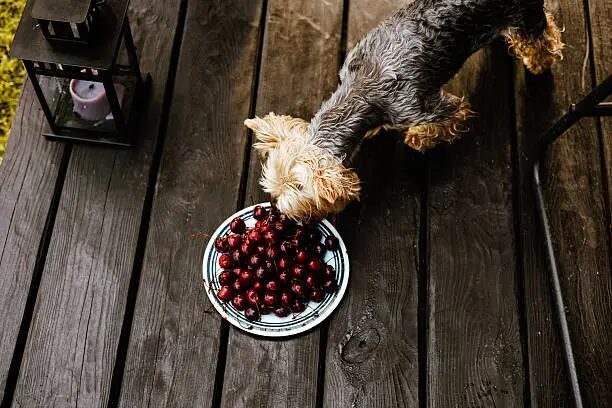
What Happens If a Dog Chews a Plum Pit?
Chewing changes the situation because it can break open the hard outer structure of the pit.
Why Chewing Changes the Risk
A dog that swallows a pit whole primarily faces a physical foreign-body risk.
A dog that chews or crushes the pit may face both:
- Physical gastrointestinal risk
- Potential exposure to cyanogenic compounds
Amygdalin and Cyanide Release
Plum pits can contain cyanogenic compounds such as amygdalin. When the relevant plant material is broken down, cyanide can potentially be released.
The FDA notes that fruit pits generally need to be chewed or crushed for their cyanide-containing material to be released, while swallowed pits also present a gastrointestinal obstruction concern.
Signs of Cyanide Toxicity
Potential signs include:
- Rapid or difficult breathing
- Panting
- Dilated pupils
- Weakness
- Bright or brick-red gums
- Collapse
- Shock
The ASPCA identifies these types of signs in cyanogenic plant poisoning.
Why Chewed Pits Need Prompt Veterinary Attention
You can’t determine at home how much of the pit’s contents your dog consumed.
If you know your dog crushed or chewed a plum pit, call your veterinarian promptly, even if your dog appears normal.
Whole Pit vs. Crushed or Chewed Pit
| Situation | Primary Concern |
|---|---|
| Small piece of pitted plum flesh | Usually low risk |
| Whole intact pit swallowed | Choking/obstruction |
| Pit partially chewed | Obstruction + possible cyanogenic exposure |
| Pit thoroughly crushed | Potential cyanogenic exposure + obstruction |
| Multiple pits | Increased physical and potential toxic exposure |
The important point is that “swallowed whole” doesn’t mean “safe.”
Can Dogs Eat Plums With the Pit Removed?
Yes. For a healthy dog, a small amount of ripe plum flesh with the pit completely removed can generally be offered as an occasional treat.
Is Pitted Plum Safe?
Properly pitted plum is much safer than a whole plum.
However, moderation still matters because too much fruit can cause digestive upset and add unnecessary calories.
How to Remove the Pit Safely
To prepare a plum:
- Wash the fruit.
- Cut it around the stone.
- Separate the two halves.
- Remove the pit completely.
- Check the flesh for hard fragments.
- Remove the stem.
- Cut the flesh into small pieces.
Never assume that a pit has been removed simply because you don’t see it immediately. Check carefully.
Cut the Flesh Into Small Pieces
Small pieces are easier for dogs to eat and allow you to control the amount they consume.
This is particularly important for small dogs and puppies.
Recommended Portion Size
There’s no universal number of plum pieces that every dog should receive.
A reasonable approach is to start with a very small amount, especially the first time.
Consider your dog’s:
- Size
- Weight
- Age
- Health
- Activity
- Existing treats
- Daily calorie requirements
How Often Can Dogs Have Plum?
Plum should be considered an occasional treat, not a daily nutritional requirement.
If your dog tolerates it well, there’s still no need to make it a major part of the diet.
Should Plum Be an Occasional Treat?
Yes.
The safest way to think about plum is as a small bonus rather than a dietary staple.
How Much Plum Can a Dog Eat?
The right amount varies significantly from one dog to another.
A tiny piece may be appropriate for a small dog, while a larger dog may tolerate a somewhat greater amount. But even large dogs don’t need large servings.
Plum Serving Size for Small Dogs
For small dogs, begin with one or two small pieces of pitted plum flesh.
Watch for digestive changes before offering more on another occasion.
Plum Serving Size for Medium Dogs
A medium-sized dog can generally tolerate a few small pieces of pitted plum flesh if it has no dietary restrictions.
Keep the serving modest.
Plum Serving Size for Large Dogs
Large dogs may be able to eat a somewhat larger portion, but this doesn’t mean they should eat an entire plum.
The pit remains dangerous regardless of the dog’s size.
Why Puppies Need Smaller Portions
Puppies have developing digestive systems and may be more sensitive to sudden dietary changes.
Their diets should primarily consist of food formulated for their growth requirements.
Fruit should therefore be introduced carefully and only in small amounts.
Why Too Much Plum Can Cause Diarrhea
The combination of fiber, water, and natural sugars can upset a dog’s digestive system when consumed in excess.
If your dog develops diarrhea after eating plum, stop offering the fruit.
How Treat Calories Fit Into a Dog’s Diet
Treats—including fruit—shouldn’t displace a dog’s complete and balanced meals.
When deciding whether to give plum, consider everything else your dog eats throughout the day.
Can Puppies Eat Plums?
Puppies can potentially eat a tiny amount of properly prepared plum flesh, but there’s little reason to make it a regular puppy treat.
Are Plums Safe for Puppies?
Small amounts of pitted ripe plum flesh may be tolerated by some puppies.
However, puppies can be more sensitive to new foods, and their nutritional needs are especially important during growth.
Why Plum Pits Are Especially Concerning for Puppies
A pit that is large relative to a puppy’s digestive tract can create a significant foreign-body risk.
Never give a puppy a whole plum.
Puppies and Choking Risks
Puppies often explore objects with their mouths and may gulp unfamiliar foods.
For that reason, always remove hard pits and cut edible fruit into appropriately small pieces.
Puppies and Digestive Upset
A sudden introduction of fruit can cause:
- Loose stool
- Gas
- Vomiting
- Reduced appetite
Introduce new foods cautiously.
Safer Fruit Alternatives for Puppies
If your veterinarian approves fruit treats, small amounts of seedless watermelon, blueberries, or strawberries may be easier options.
Always prepare fruit appropriately and avoid seeds, pits, cores, and other dangerous parts.
Should You Ask Your Veterinarian First?
If your puppy has dietary restrictions, digestive problems, poor growth, or another health concern, ask your veterinarian before introducing new treats.
Can Senior Dogs Eat Plums?
Older dogs can potentially eat small amounts of pitted plum flesh, but their individual health matters more than their age alone.
Are Plums Safe for Older Dogs?
A healthy senior dog may tolerate a small piece of pitted plum.
But older dogs are more likely to have conditions that require dietary management.
Senior Dogs With Sensitive Digestion
If your older dog already experiences digestive upset, plum may not be worth introducing.
Senior Dogs With Diabetes
Because plums contain natural sugar, diabetic dogs should only receive them if they fit their veterinarian-approved diet.
Senior Dogs With Obesity
For overweight dogs, low-calorie treats may be preferable.
Even healthy fruit contributes calories.
Senior Dogs With Kidney or Liver Problems
Dogs with kidney or liver disease may have specific dietary requirements.
Don’t assume that a fruit is appropriate simply because it’s considered safe for healthy dogs.
Senior Dogs on Prescription Diets
If your senior dog eats a therapeutic or prescription diet, ask your veterinarian before adding fruit treats.
Can Dogs With Diabetes Eat Plums?
This question deserves special consideration.
Natural Sugar in Plums
Plums contain naturally occurring sugar.
While this isn’t the same as feeding candy or syrup, it can still contribute carbohydrates and calories.
How Fruit Can Affect Blood Sugar
Food can affect blood-glucose levels differently depending on its carbohydrate content, serving size, and the individual dog’s health.
Should Diabetic Dogs Avoid Plums?
Not necessarily in every case, but don’t introduce plum without veterinary guidance if your dog has diabetes.
Why Veterinary Guidance Matters
A veterinarian can consider your dog’s:
- Blood-glucose control
- Medication
- Weight
- Diet
- Treat allowance
- Overall health
Can Dogs With Sensitive Stomachs Eat Plums?
Dogs with sensitive digestion may be less tolerant of fruit.
Plum Fiber and Digestive Upset
Fiber can be beneficial in appropriate amounts but may cause problems when suddenly introduced in larger quantities.
Can Plums Cause Gas?
Yes, some dogs may develop gas or bloating after eating unfamiliar fruit.
Can Plums Cause Diarrhea?
Yes.
This is one of the more common potential reactions to eating too much fruit.
Can Plums Cause Vomiting?
They can, particularly if a dog eats a large quantity or has an intolerance.
Repeated vomiting requires veterinary attention.
When to Stop Giving Plum
Stop offering plum if your dog repeatedly develops:
- Diarrhea
- Vomiting
- Gas
- Abdominal discomfort
- Loss of appetite
How to Feed Plums to Dogs Safely
If you’ve decided to offer your dog a little plum, preparation is simple.
Choose a Fresh, Ripe Plum
Select a fresh, ripe fruit without obvious spoilage.
Wash the Plum
Wash the outside before cutting it.
Remove the Pit Completely
This is the most important step.
Make sure the entire pit is removed.
Remove the Stem
Don’t leave the stem attached to the piece you give your dog.
Don’t Give Leaves
Keep plum leaves away from your dog.
Cut the Flesh Into Small Pieces
Small pieces make portion control easier.
Give Only a Small Amount
Start conservatively.
Avoid Added Sugar
Plain fruit is preferable to sweetened fruit.
Avoid Syrups and Sauces
Commercial sauces and syrups can contain excessive sugar, salt, spices, or other problematic ingredients.
Don’t Give Whole Plums
A whole plum creates an unnecessary opportunity for your dog to swallow the pit.
Monitor Your Dog After Trying Plum
Pay attention to your dog’s stool, appetite, and overall behavior after introducing the fruit.
Can Dogs Eat Plum Products?
Here’s a quick reference:
| Plum Product | Can Dogs Eat It? | Main Concern |
|---|---|---|
| Fresh plum flesh | Small amount | Sugar/digestive upset |
| Whole plum | No | Pit hazard |
| Plum pit | No | Cyanogenic compounds + obstruction |
| Plum stem | No | Cyanogenic compounds |
| Plum leaves | No | Cyanogenic compounds |
| Dried plums/prunes | Not recommended | Sugar, fiber, diarrhea |
| Plum juice | Not recommended | Concentrated sugar |
| Plum jam | Not recommended | Added sugar |
| Plum sauce | Not recommended | Sugar, salt, other ingredients |
| Plum pie | No | Sugar, fat, ingredients |
| Plum candy | No | Sugar/artificial ingredients |
Plums vs. Other Stone Fruits for Dogs
Plums aren’t the only stone fruit that requires careful preparation.
Can Dogs Eat Peaches?
Dogs can generally eat small amounts of peach flesh when the pit, stem, and leaves are removed.
Peach pits also present physical and cyanogenic concerns.
Can Dogs Eat Nectarines?
Similarly, properly prepared nectarine flesh can be offered in moderation, but the pit should never be given.
Can Dogs Eat Cherries?
Cherries require considerable caution because their pits, stems, and leaves can be hazardous.
It’s generally easier to choose a fruit that doesn’t come with a dangerous stone.
Can Dogs Eat Apricots?
Small amounts of properly prepared apricot flesh may be tolerated, but the pit and other plant parts should be avoided.
Why Stone Fruit Pits Are a Common Concern
Plums, peaches, nectarines, cherries, and apricots all belong to the broader group of stone fruits.
Their hard pits can create:
- Choking hazards
- Foreign-body obstruction
- Dental damage
- Potential cyanogenic exposure
PetMD highlights the importance of removing pits, stems, and other inedible parts when dogs are offered stone fruits.
Safer Fruit Alternatives to Plums for Dogs
If you’re looking for a fruit treat, you have plenty of options.
Apples
Small pieces of apple can be offered after removing the core and seeds.
Blueberries
Blueberries are convenient because they don’t have a large stone and can be offered individually.
Strawberries
Fresh strawberries can make a tasty occasional treat when washed and cut appropriately.
Bananas
Bananas are soft and easy to portion, although they’re relatively high in carbohydrates, so moderation still matters.
Watermelon
Seedless watermelon flesh can provide a refreshing treat. Remove the seeds and rind.
Mango
Mango flesh can be offered in small quantities, but the large pit must be completely removed.
Pumpkin
Plain, cooked pumpkin without added sugar or spices is another food many dogs can tolerate.
How to Prepare Fruit Safely for Dogs
A useful rule is:
Wash it, remove dangerous parts, cut it appropriately, and serve a small amount.
Why Seeds, Pits, Cores, and Rinds Should Be Removed
Hard or indigestible parts can create choking, dental, or gastrointestinal problems.
How to Prevent Dogs From Eating Plum Pits
Prevention is one of the easiest ways to avoid a stressful emergency.
Keep Fresh Plums Out of Reach
Store fresh plums somewhere your dog can’t access.
Store Plums in the Refrigerator or a Secure Location
Don’t leave a bowl of whole plums on a low table where your dog can grab them.
Dispose of Plum Pits in a Secure Trash Can
Dogs are excellent scavengers.
A discarded pit can be just as tempting as a fresh plum.
Pick Up Fallen Plums From the Yard
If you have plum trees, check the yard regularly.
Keep Dogs Away From Plum Trees
Use fencing or supervision if your dog repeatedly tries to eat fruit or plant material.
Supervise Dogs Outdoors
Especially during plum season, watch for fallen fruit.
Teach the “Leave It” Command
A reliable “leave it” cue can prevent dogs from eating potentially dangerous objects.
Keep Children From Sharing Whole Plums With Dogs
Children may innocently offer a dog a whole plum.
Teach everyone in the household that dogs should receive only prepared, pit-free fruit.
Frequently Asked Questions About Dogs and Plums
Can dogs eat plums?
Yes, a small amount of ripe plum flesh can generally be given to a healthy dog if the pit and stem are completely removed.
Are plums toxic to dogs?
The plum plant’s seeds, stems, and leaves contain cyanogenic compounds and are considered hazardous. Ripe plum flesh is generally treated differently and can be offered in moderation.
Can dogs eat plum flesh?
Yes, small amounts of ripe, pitted plum flesh can generally be offered as an occasional treat.
Can dogs eat plum skin?
Generally, yes. Plum skin isn’t considered the primary toxic concern, although some dogs may experience digestive upset.
Can dogs eat plum pits?
No. Plum pits can cause choking, dental damage, intestinal obstruction, and potential cyanogenic exposure.
Are plum pits poisonous to dogs?
They can be hazardous because they contain cyanogenic compounds, but the risk of cyanide poisoning depends on factors such as how the pit was consumed. Physical obstruction is also a major concern.
Do plum pits contain cyanide?
Plum pits contain cyanogenic compounds that can potentially release cyanide when sufficiently chewed or crushed.
What happens if my dog eats a plum pit?
A swallowed pit can potentially cause choking or gastrointestinal obstruction. If it was chewed, there is also concern about cyanogenic exposure. Contact your veterinarian for advice.
What should I do if my dog swallowed a plum pit?
Call your veterinarian promptly and tell them your dog’s size, when the ingestion occurred, and whether the pit was swallowed whole or chewed.
What if my dog chewed a plum pit?
Contact your veterinarian promptly because chewing can increase exposure to cyanogenic material.
Can one plum pit hurt a dog?
Yes. One pit can potentially cause a physical obstruction or other complications, although it is incorrect to claim that one pit will always cause fatal poisoning.
Can a plum pit cause an intestinal blockage?
Yes. Fruit pits can act as gastrointestinal foreign bodies and may cause an obstruction.
Can dogs eat plums without the pit?
Yes. Pitted ripe plum flesh can generally be offered in small amounts.
Can puppies eat plums?
A puppy may tolerate a small piece of pitted plum flesh, but puppies have sensitive digestive systems and don’t need fruit as a nutritional requirement.
Can senior dogs eat plums?
Healthy senior dogs may tolerate small amounts, but dogs with diabetes, obesity, digestive disease, or prescription diets should be evaluated individually.
Can dogs eat dried plums?
Dried plums aren’t recommended as a routine treat because they’re concentrated in sugar and fiber.
Can dogs eat prunes?
Prunes aren’t generally a good choice for dogs because they can cause diarrhea and digestive upset.
Can dogs eat cooked plums?
Plain cooked plum flesh may be acceptable in small amounts if the pit and stem are removed. Avoid recipes containing sugar or unsafe ingredients.
Can dogs eat plum sauce?
It’s best to avoid plum sauce because commercial products may contain sugar, salt, spices, garlic, onion, or other unsuitable ingredients.
Can dogs eat plum jam?
No, plum jam isn’t a recommended dog treat because it generally contains a lot of added sugar.
Can dogs eat plums from a tree?
Don’t let dogs freely eat fruit from plum trees. Fallen or whole plums may contain pits, stems, or leaves.
Are plum leaves poisonous to dogs?
Plum leaves contain cyanogenic glycosides and should be kept away from dogs.
Are plum stems poisonous to dogs?
Plum stems also contain cyanogenic compounds and should not be given to dogs.
How much plum can a dog eat?
There’s no universal serving size. Start with a small amount of pitted flesh and consider your dog’s size, health, diet, and calorie requirements.
What are the symptoms of plum pit poisoning?
Possible concerning signs include difficulty breathing, panting, dilated pupils, brick-red mucous membranes, weakness, collapse, and shock.
How long does plum pit poisoning take?
The timing can vary depending on the type and amount of exposure. Don’t wait for symptoms if you know your dog chewed a pit.
Should I make my dog vomit after eating a plum pit?
No. Do not induce vomiting unless specifically instructed by a veterinarian or animal poison-control professional.
When should I take my dog to the emergency vet?
Seek emergency care for difficulty breathing, choking, collapse, severe weakness, repeated vomiting, severe abdominal pain, or other serious symptoms.
Conclusion
So, can dogs eat plums?
The answer is yes—with an important qualification.
A healthy dog can generally have a small amount of ripe plum flesh, but the fruit needs to be prepared carefully. Wash it, remove the stem, and most importantly, remove the entire pit before giving your dog any plum.
The pit is where the situation becomes much more serious. Plum pits can cause choking, tooth damage, and intestinal obstruction, and they contain cyanogenic compounds that may release cyanide when the pit is chewed or crushed. The stems and leaves of the plum plant should also be kept away from dogs.
It’s also worth remembering that plums aren’t an essential part of canine nutrition. Your dog’s primary diet should provide the nutrients they need, while fruits are best treated as occasional extras.