Eggs are one of those foods that seem simple enough to share with a dog. They’re inexpensive, packed with nutrients, and many dogs absolutely love them. You may have seen people crack a raw egg over their dog’s food and wondered, can dogs eat eggs raw, or whether cooking the egg is actually necessary.
The answer is important because there is a big difference between raw eggs and fully cooked eggs when it comes to food safety.
Eggs can provide dogs with high-quality protein, healthy fats, vitamins, and minerals. When they are fully cooked and served plain, they can be a nutritious occasional treat for many healthy dogs. However, raw eggs come with avoidable risks, particularly exposure to bacteria such as Salmonella and, with repeated consumption of raw egg whites, reduced absorption of biotin because of a protein called avidin.
That does not mean that a dog who accidentally steals a raw egg is automatically going to become sick. Dogs vary, and a single exposure is not the same thing as routinely feeding raw eggs. Still, there is little reason to take the risk when cooking the egg can make it considerably safer while preserving its nutritional value.
In this guide, we’ll look at whether dogs can eat raw eggs, why raw eggs can be risky, what nutrients eggs provide, what happens if your dog eats one by accident, and why cooked eggs are generally the better option.
We’ll also cover raw egg yolks and whites, cooked egg preparations, portion sizes, puppies, senior dogs, allergies, and dogs with medical conditions in the sections that follow.
Quick Answer: Can Dogs Eat Eggs Raw?
Raw eggs are generally not recommended for dogs.
While eggs themselves can be a nutritious food, veterinary and pet-nutrition sources commonly recommend serving them fully cooked rather than raw or undercooked. The main concerns are bacterial contamination and the effect raw egg whites can have on biotin absorption when consumed regularly.
There are three main reasons to avoid feeding raw eggs.
1. Salmonella Risk
Raw eggs can contain Salmonella, a type of bacteria that can cause gastrointestinal illness. Dogs can become infected, and handling contaminated raw food can also create a risk for people in the household.
2. Raw Egg Whites Contain Avidin
Raw egg whites contain avidin, a protein that binds to biotin, also known as vitamin B7. Regularly eating large amounts of raw egg white can interfere with biotin absorption. Biotin deficiency is uncommon, but it is one reason experts recommend cooking eggs before feeding them to dogs.
3. Digestive Upset Is Possible
Any new food can upset a dog’s stomach, and raw animal foods can introduce additional bacterial and digestive concerns. Vomiting, diarrhea, decreased appetite, or lethargy may occur if a dog becomes ill after eating contaminated food.
The safer approach is straightforward: cook the egg thoroughly, keep it plain, and offer it in moderation.
Are Eggs Good for Dogs?
Yes. Plain, fully cooked eggs can be a healthy occasional treat for many dogs.
Eggs are especially appealing because they contain a useful combination of protein, fats, vitamins, and minerals. Purina describes eggs as an excellent protein source and notes that they also provide nutrients associated with skin and coat health.
The important distinction is that healthy does not mean unlimited.
An egg should complement your dog’s normal diet rather than replace a complete and balanced dog food.
Nutritional Benefits of Eggs for Dogs
Eggs contain a variety of nutrients that can contribute to a dog’s overall diet.
| Nutrient | Why It Matters |
|---|---|
| Protein | Supports muscle maintenance, growth, and tissue repair |
| Vitamin A | Helps support vision, skin, and normal immune function |
| Vitamin B12 | Important for the nervous system and normal blood-cell formation |
| Riboflavin | Helps the body use nutrients and produce energy |
| Folate | Supports normal cell growth and metabolism |
| Iron | Helps support oxygen transport in the body |
| Selenium | An important trace mineral involved in antioxidant protection |
| Fatty acids | Support healthy skin and coat |
| Healthy fats | Provide energy and help with nutrient absorption |
The American Kennel Club lists protein, fatty acids, folate, iron, riboflavin, selenium, vitamin A, and vitamin B12 among the nutrients found in eggs.
For a dog owner, the practical takeaway is simple: an egg can be a nutrient-dense treat, particularly when it is prepared without ingredients that dogs should avoid.
Can Eggs Support a Dog’s Skin and Coat?
They can contribute to a healthy skin and coat because eggs contain protein, fatty acids, vitamin A, and other nutrients involved in normal skin and tissue function.
Protein is particularly important because hair and skin rely heavily on protein-based structures. However, adding an egg to a dog’s meals is not a magic fix for dry skin, excessive shedding, itching, or coat problems.
If your dog suddenly develops a dull coat, persistent itching, hair loss, or recurring skin problems, the cause could be anything from allergies to parasites or an underlying medical condition. In those cases, changing foods without veterinary advice may delay the right treatment.
Are Eggs a Complete Food for Dogs?
No.
Eggs are nutritious, but they are not designed to replace a commercially prepared complete and balanced dog diet.
Think of an egg as an extra rather than the foundation of the meal. If your dog already eats a nutritionally complete food, adding too many eggs can contribute unnecessary calories and may interfere with the balance of the overall diet. Both AKC and Purina emphasize moderation when feeding eggs.
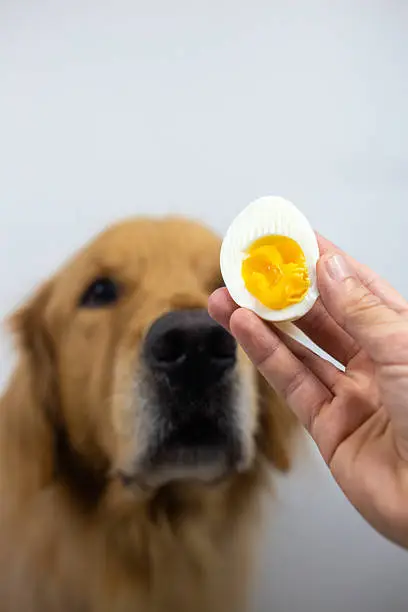
Why Should Dogs Not Eat Raw Eggs?
The idea of a dog eating an egg straight from a nest can sound natural. After all, wild canids may encounter eggs in nature. But the fact that something is natural does not automatically mean it is the safest choice for a modern pet.
Today, dogs have access to carefully formulated diets, and there is generally no nutritional reason to accept the added food-safety risk associated with raw eggs.
Salmonella Risk
The biggest concern with raw eggs is Salmonella.
Salmonella is a bacterium that can cause an infection called salmonellosis. Contamination can occur on the outside of an egg and, in some cases, inside it as well. Purina specifically advises against feeding dogs raw or undercooked eggs because they can be a source of Salmonella.
A dog exposed to Salmonella may develop symptoms such as:
- Vomiting
- Diarrhea
- Fever
- Lethargy
- Loss of appetite
- General weakness
Some infected dogs may not show obvious symptoms. That matters because a dog can potentially appear normal while still being exposed to or carrying bacteria.
There is also a household concern. Raw food contamination is not only a canine issue. People can come into contact with bacteria while preparing the food, cleaning bowls, handling contaminated surfaces, or interacting with a pet carrying bacteria.
That is one reason food safety matters even when a particular dog seems perfectly healthy.
Other Bacterial Contamination
Salmonella is not the only reason to handle raw eggs carefully.
Raw animal foods can become contaminated with bacteria during production, handling, storage, or preparation. As eggs deteriorate, bacterial growth can also become a concern. Purina specifically notes that eggs can develop additional bacteria as they go bad.
Cooking is a simple way to reduce this risk.
For a dog owner deciding between a raw egg and a cooked egg, the choice is usually easy: why take a preventable food-safety risk when the nutritional benefits can still be enjoyed after cooking?
Raw Egg Whites and Avidin
The second major concern involves avidin, a protein found in raw egg whites.
Avidin binds to biotin (vitamin B7) and can reduce how much biotin the body is able to absorb. Biotin is involved in normal metabolism, cell function, and healthy skin and coat. Long-term feeding of substantial amounts of raw egg white can therefore create a nutritional concern.
This is not something to panic about after a dog takes one lick of raw egg.
The issue is more relevant to regular or excessive consumption of raw egg whites. The concern is also easily avoided because cooking deactivates avidin.
In other words, there is no real advantage to feeding the egg raw when a simple cooking step can remove this particular concern.
Does Cooking Eggs Remove Their Nutritional Value?
Not in any way that makes cooked eggs useless.
Cooking can change some nutrients and the texture of food, but cooked eggs still provide protein, fats, vitamins, and minerals. Veterinary and pet-nutrition sources specifically recommend fully cooked eggs as a safer option for dogs.
The common belief that raw eggs automatically provide superior nutrition is not a good reason to feed them to a dog.
In practice, the safety benefits of cooking outweigh any supposed advantage of serving eggs raw.
Raw Eggs vs. Cooked Eggs for Dogs
The difference becomes much clearer when the two options are compared side by side.
| Factor | Raw Eggs | Fully Cooked Eggs |
| Protein | Yes | Yes |
| Vitamins and minerals | Yes | Yes |
| Salmonella concern | Higher | Much lower when properly cooked |
| Avidin concern | Present in raw whites | Deactivated through cooking |
| Digestibility | May vary | Generally well tolerated when plain |
| Recommended for dogs | Generally no | Yes, in moderation |
The safest choice is therefore plain, fully cooked egg.
Boiled or plain scrambled eggs can be particularly convenient because you can control exactly what goes into them. The important part is to avoid turning a healthy egg into a heavily seasoned human breakfast.
What Happens If a Dog Eats a Raw Egg?
Suppose your dog jumps onto the kitchen counter, steals an egg, and manages to crack it before you can stop them.
Don’t panic.
Accidentally eating one raw egg does not automatically mean your dog will become sick. However, it is sensible to keep an eye on them afterward.
The AKC recommends monitoring a dog that has eaten a raw egg for signs of illness and contacting a veterinarian if concerning symptoms appear.
What Should You Do Immediately?
First, remove any remaining raw egg and clean the area.
Then:
- Do not deliberately induce vomiting unless a veterinarian specifically tells you to do so.
- Make sure your dog has access to fresh water.
- Monitor your dog for changes in behavior or digestion.
- Keep an eye out for symptoms over the following period.
- Contact your veterinarian if your dog becomes unwell or has additional risk factors.
You can also wash your hands thoroughly after cleaning up raw egg and wash food bowls or surfaces that may have come into contact with it.
Signs to Watch For After Eating a Raw Egg
Pay particular attention to:
- Vomiting
- Diarrhea
- Loss of appetite
- Lethargy
- Fever
- Abdominal discomfort
- Signs of dehydration
- Unusual weakness or behavior
A single mild digestive change does not necessarily mean Salmonella infection, but worsening or persistent symptoms deserve veterinary attention.
When Is a Vet Visit Necessary?
Contact your veterinarian if your dog develops severe or persistent vomiting or diarrhea, becomes unusually weak, refuses food or water, appears dehydrated, or develops blood in the stool.
You should also be especially cautious with puppies, older dogs, pregnant dogs, or dogs with underlying medical or immune-related problems, because they may be more vulnerable to complications from illness.
When you’re unsure, it is better to describe the situation to your veterinarian than to guess at home.
Can Dogs Eat Raw Egg Yolks?
The yolk is often the part dog owners are most tempted to give because it contains many nutrients, including fats, vitamins, and minerals.
However, the fact that the yolk is nutritious does not make it safer when raw.
Cooked egg yolk is the better option.
Yolks are also relatively calorie-dense, so portions matter. A dog that is overweight or already eating a calorie-rich diet may not benefit from large portions of egg.
Dogs with certain health problems may need even more careful dietary planning. For example, a veterinarian may recommend specific limits on calories, fat, or certain nutrients depending on the dog’s condition.
So while the yolk itself is not something you need to avoid entirely, there is little benefit to serving it raw.
Can Dogs Eat Raw Egg Whites?
Raw egg whites deserve special attention because they contain avidin.
As discussed earlier, avidin can bind to biotin and reduce its absorption. Regularly feeding raw egg whites is therefore not recommended.
Cooked egg whites are a safer choice because cooking deactivates avidin.
A tiny accidental exposure is unlikely to cause a sudden biotin deficiency. The concern is primarily with ongoing consumption, particularly larger amounts.
For that reason, if you’re preparing an egg for your dog, there is no need to separate the white and yolk. Simply cook the whole egg thoroughly and serve it plain.
Can Dogs Eat Cooked Eggs?
Yes. Fully cooked eggs can be a safe and nutritious occasional treat for many dogs.
The preparation method matters, though. Dogs do not need the same seasonings and toppings people often put on breakfast eggs.
Can Dogs Eat Boiled Eggs?
Yes, plain boiled eggs are one of the easiest options.
A hard-boiled egg can be cooled, chopped into small pieces, and offered as a treat or occasional food topper.
Make sure the egg is completely cooked and remove the shell before serving.
Can Dogs Eat Scrambled Eggs?
Yes, provided they are plain and fully cooked.
Avoid preparing your dog’s scrambled eggs with:
- Butter
- Large amounts of oil
- Salt
- Garlic
- Onion
- Heavy spices
- Rich sauces
A small amount of plain scrambled egg can be mixed into your dog’s regular meal if it fits their overall calorie needs.
Can Dogs Eat Poached Eggs?
They can have fully cooked poached eggs, but the egg should not be left runny.
The goal is the same regardless of cooking method: cook the white and yolk thoroughly and avoid ingredients that are unnecessary or potentially harmful to dogs.
Can Dogs Eat Fried Eggs?
A plain fried egg may seem harmless, but frying often means adding oil, butter, salt, or seasonings.
That extra fat and seasoning is unnecessary. Boiled or simply scrambled eggs are generally easier choices because you have better control over the ingredients.
Can Dogs Eat Hard-Boiled Eggs?
Yes. Hard-boiled eggs are a convenient option as long as they are completely cooked and served without salt or seasoning.
You can cut one into small bites and use a few pieces as a treat rather than giving the entire egg at once.
How to Prepare Eggs Safely for Dogs
Serving eggs safely does not require a complicated recipe.
1. Cook Eggs Thoroughly
Cook both the egg white and yolk until fully set.
Avoid raw, runny, or undercooked eggs if you’re preparing food specifically for your dog.
2. Keep Eggs Plain
A dog’s egg does not need the ingredients that make a human breakfast tasty.
Avoid:
- Salt
- Pepper
- Garlic
- Onion
- Spicy seasonings
- Butter
- Excess oil
- Sauces
- Heavy cheese or rich toppings
Plain is better.
3. Cool and Portion Before Serving
Allow the cooked egg to cool before giving it to your dog. Then cut it into manageable pieces appropriate for your dog’s size.
Start with a small amount, especially if eggs are new to your dog’s diet.
This makes it easier to notice digestive upset or possible food sensitivity before you offer a larger portion.
How Many Eggs Can a Dog Eat?
There is no single egg allowance that works for every dog.
The appropriate amount depends on factors such as:
- Body size
- Age
- Activity level
- Current diet
- Weight
- Overall health
- Daily calorie needs
AKC specifically notes that a dog’s size, age, activity, and health can all affect how much egg is appropriate. Too many eggs can add unnecessary calories and potentially disrupt an otherwise balanced diet.
As a general starting point, you might think in terms of small portions rather than full eggs:
| Dog Size | General Starting Portion |
| Small dogs | A few small pieces or a fraction of an egg |
| Medium dogs | Around ½ egg as an occasional treat |
| Large dogs | Around 1 egg as an occasional treat |
| Extra-large dogs | Portion based on individual calorie needs |
These are general examples, not universal feeding rules. A large, highly active dog and an overweight dog of the same breed may have very different nutritional needs.
Eggs should also fit within the calories your dog gets from treats and extras throughout the day.
Can Dogs Eat Eggs Every Day?
For most dogs, eggs are better treated as an occasional addition rather than a food that automatically belongs in every meal.
A healthy egg can provide useful protein and nutrients, but your dog’s main diet should still provide the complete and balanced nutrition they need. Adding eggs every day without considering the dog’s total calorie intake can gradually contribute too many calories.
This is especially relevant for smaller dogs. Even a food that seems harmless can represent a significant portion of a small dog’s daily calorie allowance.
What Can Happen If a Dog Eats Too Many Eggs?
Feeding excessive amounts of egg may contribute to:
- Weight gain
- Extra calories
- Digestive upset
- Loose stools
- Reduced appetite for regular food
- An imbalance if treats and toppers make up too much of the diet
Eggs may also contain more fat than some dogs should have, depending on their individual nutritional needs.
Rather than thinking, “How many eggs can my dog eat every day?” a better question is:
How can I include a small amount of cooked egg without disrupting my dog’s balanced diet?
For some dogs, a small amount once in a while is perfectly reasonable. For others, particularly dogs with medical conditions or weight concerns, their veterinarian may recommend a different approach.
Can Puppies Eat Eggs?
Puppies have different nutritional requirements from adult dogs because they are growing rapidly. Their diets need to provide appropriate amounts of energy, protein, vitamins, minerals, and other nutrients for healthy development.
That makes portion control particularly important.
Can Puppies Eat Raw Eggs?
Raw eggs are not recommended for puppies.
The same concerns that apply to adult dogs—particularly bacterial contamination and the presence of avidin in raw egg whites—also apply to puppies.
Because puppies are still developing, it is particularly important that the majority of their diet comes from food specifically formulated for their growth requirements.
Giving a puppy raw egg also introduces an unnecessary food-safety risk when the egg can simply be cooked.
Can Puppies Eat Cooked Eggs?
Some puppies can have a small amount of plain, fully cooked egg as an occasional treat.
However, the amount should be modest. A puppy does not need a whole egg simply because they enjoy it.
Start with a very small portion and observe how your puppy responds.
If there is no digestive upset, eggs can occasionally be included as a treat, provided the puppy’s primary food remains nutritionally complete.
How Much Egg Can a Puppy Have?
There is no universal portion for every puppy.
Consider:
- Puppy size
- Age
- Breed
- Growth rate
- Current food
- Activity level
- Total daily calories
For a young puppy, even a few bites may be enough to start.
It is also wise to introduce one new food at a time. That way, if diarrhea, vomiting, itching, or another reaction occurs, you have a better idea of what caused it.
Can Senior Dogs Eat Eggs?
Senior dogs can often enjoy small amounts of plain, cooked egg, but their nutritional needs may be different from those of younger adult dogs.
Older dogs may become less active, which can reduce their daily calorie requirements. At the same time, some senior dogs develop conditions that require specific dietary adjustments.
Eggs provide high-quality protein, which can be useful as part of an appropriate diet. But that does not mean every senior dog should receive eggs regularly.
What About Senior Dogs With Health Problems?
A senior dog may have:
- Kidney disease
- Liver disease
- Pancreatitis
- Diabetes
- Obesity
- Digestive disorders
- Dental problems
In these situations, adding human foods should be discussed with your veterinarian.
For example, a dog with kidney disease may need a carefully controlled diet involving specific levels of protein, phosphorus, sodium, and other nutrients. An additional food that is perfectly reasonable for a healthy dog may not be appropriate for that particular pet.
The same principle applies to dogs with pancreatitis or other conditions affected by dietary fat.
The best rule is simple:
Healthy senior dogs may tolerate cooked eggs in moderation, but medically complex senior dogs need individualized nutritional advice.

Can Dogs With Health Conditions Eat Eggs?
Eggs are not automatically dangerous for dogs with health problems, but their nutritional profile means that they may not fit every therapeutic diet.
If your dog has been diagnosed with a medical condition, don’t assume a food is safe simply because it is considered healthy for dogs in general.
Eggs for Dogs With Pancreatitis
Dogs with pancreatitis may need a lower-fat diet, particularly during or after an episode.
Because egg yolks contain fat, feeding large quantities of eggs may not be appropriate for a dog prone to pancreatitis.
This does not necessarily mean that eggs are permanently forbidden. It means the amount and preparation should be based on your veterinarian’s recommendations.
Avoid adding butter, oil, cheese, or other rich ingredients to an egg for a dog with a history of digestive or pancreatic problems.
If your veterinarian has prescribed a therapeutic diet, that diet should remain the priority.
Eggs for Dogs With Kidney Disease
Kidney disease is another situation where diet needs to be carefully managed.
Dogs with chronic kidney disease may require controlled amounts of protein, phosphorus, sodium, and other nutrients, depending on the stage of disease and their individual bloodwork.
Because eggs contribute protein and phosphorus, they should not simply be added to a kidney diet without discussing the idea with a veterinarian.
A food that is nutritious for a healthy dog can still be inappropriate when a dog has impaired kidney function.
If your dog has chronic kidney disease, ask your veterinarian or a veterinary nutrition professional whether egg fits into the prescribed diet.
Eggs for Dogs With Diabetes
Dogs with diabetes generally benefit from consistent, carefully managed nutrition.
Adding random treats or large portions of calorie-dense foods can make dietary management more complicated.
Plain cooked egg may be appropriate in some diabetic dogs, but the quantity should fit into the dog’s overall feeding plan.
Instead of making eggs a daily habit without guidance, discuss suitable treat options with your veterinarian.
Consistency can be particularly important for dogs whose food intake and medication schedule need to work together.
Eggs for Overweight Dogs
An overweight dog does not need to avoid every nutritious food, but portion size becomes especially important.
Eggs contain calories, and those calories count just like calories from treats or other foods.
If your dog is trying to lose weight, a few bites of egg may be more appropriate than routinely feeding an entire egg.
Consider using tiny pieces of cooked egg as a training reward rather than adding a large portion to a meal.
Weight management is ultimately about the total diet and energy balance.
Can Dogs Be Allergic to Eggs?
Yes. Egg allergies can occur in dogs, although any suspected food allergy should be properly evaluated rather than assumed based on a single symptom.
A dog may react to a food with signs involving the skin, ears, digestive system, or other parts of the body.
Possible Signs of an Egg Allergy
Watch for:
- Persistent itching
- Red or irritated skin
- Recurrent ear problems
- Paw licking
- Vomiting
- Diarrhea
- Gastrointestinal discomfort
- Repeated skin flare-ups
However, these symptoms do not prove that eggs are the cause.
Dogs can develop allergies to many ingredients, and environmental allergies, parasites, infections, and other medical issues can cause similar symptoms.
Food Allergy vs. Food Intolerance
These terms are sometimes used interchangeably, but they are not the same.
A food allergy involves an immune-system response to a food protein.
A food intolerance generally refers to difficulty tolerating a food without the same immune mechanism.
For example, one dog might experience diarrhea after eating a new food because the food does not agree with their digestive system, while another dog may develop a more persistent allergic reaction.
If you suspect eggs are causing a problem, stop offering them and talk with your veterinarian rather than repeatedly testing the food at home.
Can Dogs Eat Eggshells?
Eggshells are rich in calcium, which has led some pet owners to grind them and add the powder to homemade dog food.
However, eggshells should not automatically be treated as a safe calcium supplement.
Are Eggshells Safe?
There are several things to consider.
First, the shell can carry bacteria if it has been contaminated.
Second, the amount of calcium a dog needs depends on the rest of their diet. Adding extra calcium without calculating the total nutritional intake can create an imbalance.
This is especially important for puppies, whose mineral requirements are closely connected to normal bone development.
Third, large pieces of shell are not appropriate for a dog to simply chew and swallow.
If you have been advised to add eggshell powder to a homemade diet, your veterinarian or a qualified veterinary nutrition professional can help determine whether it is necessary and how much is appropriate.
How to Prepare Eggshells for Dogs
If a veterinarian specifically recommends eggshell supplementation, the shell should be properly cleaned, cooked or otherwise appropriately treated, and finely ground rather than offered in sharp or large pieces.
The important point is that eggshell should be viewed as a calcium supplement requiring appropriate dosing, not as a free treat.
Can Dogs Eat Raw Eggs as Part of a Raw Diet?
Some raw-feeding programs include raw eggs, and some dog owners believe that uncooked foods are inherently more natural.
That does not change the food-safety concerns.
There is an important difference between saying “some people feed raw eggs” and saying “raw eggs are the safest option.”
They are not the same claim.
Raw diets can expose both pets and people to harmful bacteria, and veterinary organizations have raised concerns about the safety of feeding raw animal products.
If someone chooses a raw feeding approach, it is particularly important that the diet be complete and balanced and that food handling practices reduce contamination risks as much as possible.
But from a safety perspective, adding a raw egg to a dog’s food is not necessary to provide the nutritional benefits of eggs.
A fully cooked egg can provide protein and other nutrients without requiring the same exposure to raw-food bacteria.
Is Raw Food Always Better Because Dogs Evolved to Eat It?
Not necessarily.
Domestic dogs have lived alongside humans for thousands of years, and modern companion dogs can thrive on complete, balanced diets formulated according to established nutritional standards.
The fact that wild animals consume raw prey does not mean every raw food is ideal for every household pet.
Natural and safe are not always synonyms.
Can Dogs Get Salmonella From Raw Eggs?
Yes, dogs can be exposed to Salmonella through contaminated raw food, including raw eggs.
Not every exposed dog becomes visibly ill, but that does not eliminate the concern.
Possible Signs of Salmonella Infection
A dog that develops salmonellosis may experience:
- Diarrhea
- Vomiting
- Fever
- Poor appetite
- Lethargy
- Abdominal discomfort
- Dehydration
In severe cases, illness can become more serious.
One important complication is that some dogs may carry bacteria without showing dramatic symptoms. This can make it harder for owners to know whether a dog has been exposed.
That is one reason food hygiene matters even when a dog appears completely healthy.
How Does Salmonella Get Into Raw Eggs?
Bacteria can contaminate eggs at different stages of production and handling.
Eggs may be contaminated on the shell, and contamination can also occur internally.
Proper cooking reduces bacterial risk.
That’s why food-safety advice commonly emphasizes thoroughly cooking eggs rather than consuming them raw or undercooked.
Can Humans Get Salmonella From a Dog That Ate Raw Eggs?
Potentially, yes.
The concern is not that every dog who eats a raw egg suddenly becomes a source of infection. Rather, the issue is that raw-food bacteria can move from contaminated food to hands, surfaces, bowls, or animals.
This is especially important in households where someone may be particularly vulnerable to foodborne illness.
Extra care is sensible around:
- Young children
- Older adults
- Pregnant people
- People with weakened immune systems
- People with certain chronic illnesses
How to Reduce Household Risk
If your dog has eaten raw egg:
- Wash your hands thoroughly with soap and water.
- Clean food bowls after use.
- Disinfect surfaces that contacted raw egg.
- Dispose of contaminated food safely.
- Avoid allowing your dog to lick faces immediately after eating raw animal foods.
- Clean up any vomit or diarrhea promptly while using appropriate hygiene precautions.
The same basic food-safety habits you would use when handling raw eggs for human meals are sensible when preparing food for pets.

How to Introduce Eggs Into Your Dog’s Diet
If your dog has never eaten egg before, there’s no need to start with an entire serving.
A gradual approach is easier on the digestive system and makes it easier to identify a reaction.
Step 1: Start With a Small Amount
Give only a few small pieces of plain cooked egg.
There is no advantage to testing tolerance with a large serving.
Step 2: Use Fully Cooked, Plain Egg
Cook the egg thoroughly and avoid:
- Salt
- Garlic
- Onion
- Spices
- Heavy oils
- Butter
- Sauces
Simple preparation is best.
Step 3: Monitor for Digestive Problems
After introducing the food, watch for:
- Loose stool
- Diarrhea
- Vomiting
- Gas
- Reduced appetite
- Abdominal discomfort
A mild digestive change may simply mean the new food did not agree with your dog.
Persistent or severe symptoms warrant veterinary advice.
Step 4: Watch for Allergy Symptoms
Also look for:
- Itching
- Paw licking
- Ear irritation
- Skin redness
- Recurrent digestive problems
If you suspect an allergy, stop feeding the egg and speak with your veterinarian.
Step 5: Keep Portions Appropriate
Even when a dog tolerates egg well, that does not mean more is better.
Egg should remain an occasional food or treat unless your veterinarian has recommended another feeding plan.
Step 6: Stop Feeding and Contact Your Veterinarian if Problems Occur
Don’t keep offering egg simply to “see if the symptoms go away.”
If your dog becomes sick after eating a new food, your veterinarian can help determine whether the food is responsible and whether further testing is needed.
Common Mistakes When Feeding Eggs to Dogs
Eggs themselves are not necessarily the problem. Often, the problem is how they are prepared, how much is fed, or how frequently they are offered.
1. Feeding Raw Eggs
This introduces avoidable bacterial and nutritional concerns.
2. Feeding Too Many Eggs
Large portions add calories and can upset the digestive system.
3. Adding Salt or Seasonings
Dogs don’t need heavily seasoned eggs.
4. Using Butter or Excess Oil
These ingredients increase calorie and fat content without providing a meaningful benefit.
5. Adding Onion or Garlic
These ingredients should not be used in dog food.
6. Giving Eggshells Without Proper Preparation
Raw shells or large shell fragments are not an appropriate casual treat.
7. Replacing Balanced Dog Food With Eggs
Eggs are an addition, not a substitute for a nutritionally complete diet.
8. Introducing a Large Amount Suddenly
A dog with a sensitive digestive system may react poorly to an abrupt dietary change.
9. Ignoring Existing Medical Conditions
Dogs with kidney disease, pancreatitis, diabetes, obesity, or other health problems may require specialized feeding plans.
10. Assuming Every Dog Has the Same Nutritional Needs
A Chihuahua, Great Dane, growing puppy, and senior dog do not have identical calorie or nutrient requirements.
Myths About Dogs Eating Raw Eggs
Myth 1: Dogs Naturally Eat Raw Eggs, So Raw Eggs Are Always Safe
Not necessarily.
Dogs may eat raw foods in nature, but domestic dogs also benefit from modern food-safety practices.
Natural does not automatically mean risk-free.
Myth 2: Raw Eggs Give Dogs More Protein
Raw and cooked eggs both contain protein.
Cooking does not turn an egg into a protein-free food. The nutritional value remains substantial after cooking.
Myth 3: Raw Eggs Make a Dog’s Coat Shiny
Eggs contain nutrients that support healthy skin and coat, but there is no need to feed them raw to get those nutrients.
A healthy coat depends on overall nutrition, grooming, genetics, parasite control, and general health.
Myth 4: Cooking Removes All the Benefits of Eggs
False.
Fully cooked eggs still provide protein, fats, vitamins, and minerals.
Cooking is primarily a way to make the food safer, not a way to destroy all its nutritional value.
Myth 5: One Raw Egg Will Definitely Make a Dog Sick
Also false.
A dog that accidentally eats one raw egg may remain completely normal.
The correct response is to monitor the dog rather than panic and contact a veterinarian if symptoms develop.
Myth 6: All Dogs Can Eat Eggs Every Day
There is no universal rule that every dog should eat eggs daily.
Daily feeding may be inappropriate for some dogs because of calorie intake, fat levels, allergies, digestive sensitivity, or medical conditions.
Myth 7: Raw Eggshells Are Automatically a Good Calcium Supplement
Not necessarily.
Eggshell contains calcium, but giving calcium without considering the dog’s complete diet can create nutritional imbalance.
For puppies and dogs on therapeutic diets, inappropriate supplementation can be particularly problematic.
Frequently Asked Questions About Dogs and Raw Eggs
Can dogs eat eggs raw?
Raw eggs are generally not recommended for dogs. Fully cooked, plain eggs are the safer choice because cooking reduces bacterial risks and deactivates avidin in raw egg whites.
Is one raw egg bad for a dog?
One accidentally eaten raw egg does not automatically mean your dog will become sick. Monitor your dog for vomiting, diarrhea, lethargy, loss of appetite, or other signs of illness.
What should I do if my dog ate a raw egg?
Clean up the remaining egg, make sure your dog has access to water, and monitor them. Do not induce vomiting unless a veterinarian specifically instructs you to do so.
Can dogs eat raw egg yolks?
Although yolks contain useful nutrients, cooked yolks are preferable to raw yolks because cooking reduces food-safety concerns.
Can dogs eat raw egg whites?
It is best to avoid them. Raw egg whites contain avidin, which can interfere with biotin absorption when consumed regularly.
Can puppies eat raw eggs?
Puppies should not be routinely fed raw eggs. If eggs are introduced, plain, fully cooked egg should be offered only in small amounts.
Can dogs eat cooked eggs?
Yes. Plain, fully cooked eggs can be an appropriate occasional treat for many healthy dogs.
Are scrambled eggs safe for dogs?
Yes, when they are plain and fully cooked. Avoid butter, excessive oil, salt, onion, garlic, and heavy seasonings.
Can dogs eat boiled eggs?
Yes. Plain boiled eggs are one of the easiest ways to prepare eggs safely for a dog.
How many eggs can a dog eat?
The appropriate amount depends on the dog’s size, age, activity, health, and existing diet. Start with a small portion and treat egg as an occasional addition.
Can dogs eat eggs every day?
Some dogs may tolerate small amounts regularly, but there is no need to make eggs a daily food for every dog. The dog’s total diet and calorie needs matter more.
Can dogs eat eggshells?
Eggshells contain calcium, but they should not be routinely given as a supplement without appropriate preparation and veterinary guidance.
Can eggs cause diarrhea in dogs?
Yes. A new food, large portion, high-fat preparation, or individual intolerance can cause digestive upset, including diarrhea.
Can dogs be allergic to eggs?
Yes. Dogs can develop food allergies involving egg proteins. Possible signs include itching, recurrent ear problems, skin issues, vomiting, and diarrhea.
Can raw eggs give dogs Salmonella?
Yes. Raw eggs can be contaminated with Salmonella, which is one of the main reasons they are not generally recommended for dogs.
Do raw eggs cause biotin deficiency in dogs?
Regular consumption of substantial amounts of raw egg white can interfere with biotin absorption because of avidin. This is another reason cooked egg is preferred.
Are eggs good for a dog’s coat?
Eggs contain protein, fats, and several nutrients that support normal skin and coat health. However, a dog with ongoing skin problems needs a proper medical evaluation rather than simply more eggs.
Are eggs good for dogs with sensitive stomachs?
It depends on the individual dog. Some dogs tolerate plain cooked egg well, while others may experience digestive upset. Introduce it in a small amount.
Can dogs eat eggs if they have pancreatitis?
A dog with pancreatitis may need a carefully managed, lower-fat diet. Ask your veterinarian before adding eggs, particularly egg yolks.
Are eggs safe for senior dogs?
Healthy senior dogs can often tolerate small portions of plain cooked egg. However, seniors with kidney disease, diabetes, pancreatitis, obesity, or other conditions may need individualized dietary advice.
Raw Egg Safety Checklist for Dog Owners
Safer Choices
- ✅ Fully cook the egg
- ✅ Serve it plain
- ✅ Start with a small amount
- ✅ Keep portions appropriate
- ✅ Introduce new foods gradually
- ✅ Monitor for digestive or allergy symptoms
- ✅ Clean surfaces and bowls after handling raw eggs
Avoid
- ❌ Raw eggs
- ❌ Undercooked eggs
- ❌ Onion or garlic
- ❌ Excess salt
- ❌ Heavy seasonings
- ❌ Large amounts of butter or oil
- ❌ Excessive egg portions
- ❌ Unsupervised eggshell supplementation
- ❌ Replacing balanced dog food with eggs
Raw Eggs vs. Other Common Egg Preparations
| Egg Preparation | Suitable for Dogs? | Main Consideration |
|---|---|---|
| Raw egg | ❌ Generally avoid | Foodborne bacteria and avidin |
| Soft-boiled egg | ⚠️ Not ideal if undercooked | Yolk and/or white may remain undercooked |
| Hard-boiled egg | ✅ Yes | Fully cook and serve plain |
| Plain scrambled egg | ✅ Yes | Avoid butter, salt, onion, garlic, and excess oil |
| Poached egg | ✅ If fully cooked | Avoid runny or undercooked egg |
| Fried egg | ⚠️ Better to avoid rich preparations | Oil, butter, salt, and seasonings can add unnecessary calories |
| Baked egg | ✅ If fully cooked and plain | Avoid harmful ingredients |
| Eggshell | ⚠️ Only with guidance | Calcium supplementation requires appropriate preparation and dosage |
The general pattern is easy to remember:
Cook it. Keep it plain. Feed a small amount.
Benefits of Choosing Cooked Eggs Instead of Raw Eggs
Choosing cooked eggs gives dogs access to many of the same nutritional benefits while reducing several avoidable concerns.
Lower Food-Safety Risk
Thorough cooking helps reduce bacterial contamination.
Less Concern About Salmonella
Properly cooked eggs are much safer from a bacterial standpoint than raw eggs.
Avidin Is Deactivated
Cooking reduces the concern surrounding avidin in raw egg whites and biotin absorption.
Often Easier to Digest
Cooked egg may be better tolerated by some dogs than raw egg, especially when served plain and in moderate quantities.
Still Nutritious
Cooking does not eliminate the protein, fats, vitamins, and minerals that make eggs useful as an occasional treat.
Easier Portion Control
A cooked egg can be chopped into small pieces, making it easier to use as a topper or training reward.
The Best Way to Feed Eggs to Dogs
The safest and simplest approach is:
Fully cooked + plain + small portion + occasional treat.
For most healthy dogs, there is no nutritional reason to accept the added risks associated with feeding raw eggs.
A boiled egg, plain scrambled egg, or another thoroughly cooked preparation can provide the nutritional benefits you are looking for without the unnecessary concern associated with uncooked egg.
Conclusion: Can Dogs Eat Eggs Raw?
So, can dogs eat eggs raw? The safest answer is no—raw eggs are generally not recommended for dogs. Although eggs contain valuable nutrients such as protein, vitamins, minerals, and healthy fats, there is little reason to serve them raw when cooking makes them safer.
Raw eggs may carry harmful bacteria such as Salmonella, which can cause digestive illness in dogs and create food-safety concerns for people in the household. Raw egg whites also contain avidin, which can interfere with biotin absorption when consumed regularly. Cooking the egg helps address these concerns while still providing many of its nutritional benefits.