Seeing your dog with red, watery, or itchy eyes can be worrying. One minute their eyes look completely normal, and the next they may be blinking constantly, rubbing their face on the carpet, or sitting there with tears running down their cheeks. While allergies are one possible explanation, eye problems in dogs can have several different causes.
Dog eye allergies, sometimes called allergic conjunctivitis, happen when the immune system reacts to an otherwise harmless substance. Pollen, dust, mold, grass, and other airborne particles can irritate the surface of the eye and trigger inflammation. Dogs may respond with increased tearing, redness, itching, swelling, or discharge.
The tricky part is that dog eye allergies can look a lot like an eye infection. Redness and discharge are not enough to tell the difference at home. A scratched cornea, dry eye, foreign object, glaucoma, or another eye condition may produce similar signs.
That is why it helps to know what allergy-related eye irritation usually looks like, what can trigger it, and which symptoms mean your dog should be examined by a veterinarian.
Important: Never assume a painful, cloudy, severely red, or suddenly abnormal eye is “just an allergy.” Some eye conditions can become serious quickly and need prompt veterinary attention.
What Are Dog Eye Allergies?
What Is Allergic Conjunctivitis in Dogs?
Allergic conjunctivitis is inflammation of the conjunctiva, the thin tissue surrounding the eye and lining the inside of the eyelids. When an allergen comes into contact with the eye, the immune system may react as though it were something harmful.
The result can be a familiar pattern: the eye becomes red, watery, swollen, and itchy. Your dog may blink repeatedly, squint, wince, or rub their face because the eye feels uncomfortable.
Pollen is a particularly common trigger for eye allergies, but dogs can react to many substances in their surroundings, including dust, mold, airborne spores, aerosolized products, and certain plants.
Unlike a bacterial infection, an allergy is an immune response rather than an infection itself. However, constant rubbing and scratching can irritate the eye further and may create additional problems.
For more information about the broader signs of canine allergies, see this guide to dog allergies, symptoms, testing, and treatment.
Are Dog Eye Allergies Common?
Dogs of any breed, age, or sex can develop allergies. Some dogs experience symptoms only during particular seasons, while others have problems throughout the year.
For example, a dog may seem perfectly comfortable during winter but start rubbing their eyes every spring when trees and grasses release pollen. Another dog may have year-round symptoms because the trigger is something indoors, such as dust mites or mold.
Allergies can also involve more than the eyes. A dog with environmental allergies may also have:
- Itchy or irritated skin
- Paw licking or chewing
- Recurrent ear problems
- Face rubbing
- Sneezing
- Recurrent skin infections
- Red or inflamed areas of skin
This combination can be a useful clue that the eye problem may be part of a broader allergic condition rather than an isolated eye issue.
Can Dogs Get Allergies Just in Their Eyes?
Yes. A dog can show mostly eye-related symptoms, particularly after direct exposure to an airborne or environmental allergen.
Still, many dogs with allergies have symptoms elsewhere too. You might notice your dog scratching their ears, licking their paws, rubbing their muzzle, or chewing at their skin at the same time they are dealing with watery eyes.
The timing of the symptoms can also be helpful. If your dog consistently develops red, itchy eyes after spending time outdoors, especially during a high-pollen period, an environmental allergy may be one possibility.
That does not prove the diagnosis, though. Eye redness and tearing have many potential causes, so persistent or uncomfortable symptoms deserve veterinary evaluation.
Can Puppies and Older Dogs Develop Eye Allergies?
Yes. Puppies and senior dogs can develop allergies, just like adult dogs.
However, age can affect the list of conditions a veterinarian considers. A puppy with eye discharge may have an infectious or developmental problem rather than allergies. Likewise, a senior dog with newly developed red or cloudy eyes should not automatically be assumed to have allergies.
When the symptoms are new, severe, recurring, or different from your dog’s usual pattern, a veterinary examination can help determine what is actually happening.
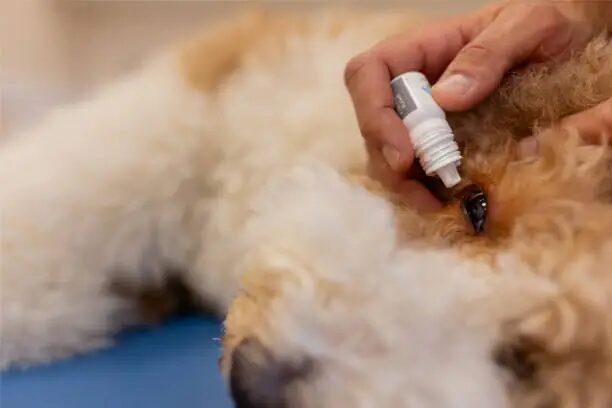
Dog Eye Allergy Symptoms
What do dog eye allergies look like?
There is no single symptom that confirms an allergy. Instead, dogs often develop a combination of eye irritation and inflammation.
PetMD lists redness, swelling, itching, discharge, frequent blinking, squinting, and rubbing the face or eyes among common signs.
Red or Pink Eyes
One of the most noticeable signs is redness around or within the eye.
The whites of the eyes may appear pinker than usual, and the tissue around the eye can become irritated. Mild redness may occur with allergies, but pronounced redness can also happen with infections, trauma, dry eye, glaucoma, or other conditions.
Watery Eyes
Dogs with allergies may produce more tears as the eye tries to flush away the irritating substance.
You may notice clear tears running down the face, damp fur beneath the eyes, or repeated blinking. Excessive tearing is also known as epiphora and is not specific to allergies, so recurring watery eyes should not automatically be blamed on pollen.
Itchy Eyes
Itching is one of the classic allergy symptoms.
Your dog may rub their eyes against furniture, carpets, bedding, or your legs. Some dogs use their paws to scratch at the area, which can make the irritation worse.
Excessive Blinking
If your dog suddenly starts blinking much more than normal, pay attention.
Frequent blinking can happen when the eyes are itchy or irritated, but it can also be a sign of pain or a problem on the surface of the eye. This is one reason persistent blinking should not be ignored.
Squinting or Keeping the Eye Closed
A dog that repeatedly squints or keeps an eye partially closed may be uncomfortable.
Allergies can cause this behavior, but squinting is especially important because painful eye conditions such as corneal injuries and ulcers can produce the same sign.
Swollen Eyelids
Allergic inflammation can cause the tissues around the eye to become puffy or swollen.
Mild swelling may occur during an allergic flare-up. Sudden or severe facial swelling, especially when accompanied by difficulty breathing, widespread hives, vomiting, collapse, or other systemic symptoms, requires urgent veterinary care because it may represent a more serious allergic reaction.
Clear Eye Discharge
Clear or watery discharge can fit an allergy pattern, particularly when it occurs alongside itching and redness.
However, discharge alone cannot tell you whether the cause is an allergy, infection, irritation, or another eye problem.
Cloudy or Mucus-Like Discharge
Some dogs may develop thicker or cloudy discharge.
The important point is that discharge color and consistency are not a reliable home diagnosis. Yellow or green material can be more concerning for infection or significant inflammation, but an eye can produce different types of discharge for several reasons.
Rubbing the Face or Pawing at the Eyes
Your dog may repeatedly:
- Rub their face on the floor
- Paw at the eye
- Push their head against furniture
- Scratch around the eyelids
- Drag their face across bedding
This behavior often means the eye is itchy, irritated, or painful.
Because repeated rubbing can injure the cornea, preventing your dog from scratching an uncomfortable eye is important.
Tear Staining Under the Eyes
Constant tearing can leave brown, reddish, or rust-colored stains on the fur below the eyes, particularly in dogs with light-colored coats.
Tear staining does not necessarily mean your dog has allergies. Excess tearing can also be related to tear drainage problems, facial anatomy, irritation, or other eye conditions.
Increased Tearing
Some dogs simply start producing far more tears than usual.
If your dog’s eyes suddenly become unusually wet, look for other changes such as redness, swelling, squinting, discharge, or pawing. The combination of symptoms is more informative than excessive tearing by itself.
Sensitivity to Light
A dog that avoids bright light or turns away when you expose their eyes to normal room lighting may be uncomfortable.
Light sensitivity, particularly when significant or accompanied by squinting or pain, should be taken seriously because it can occur with conditions other than allergies.
Irritated or Inflamed Conjunctiva
The conjunctiva may appear red, swollen, or irritated during an allergic reaction.
This is essentially what allergic conjunctivitis means: inflammation of the conjunctival tissues caused by an allergic response.
What Do a Dog’s Eyes Look Like With Allergies?
A dog with eye allergies often has eyes that look red and watery, with some swelling or irritation around the eyelids. The dog may also blink frequently, squint, or rub their face.
A useful rule of thumb is to look at the whole picture rather than one symptom.
Mild, allergy-like irritation may be more consistent with:
- Both eyes becoming watery
- Itching and face rubbing
- Seasonal flare-ups
- Clear discharge
- Other allergy symptoms such as itchy paws or skin
More concerning signs include:
- Severe pain
- Persistent or intense squinting
- A cloudy-looking eye
- Sudden vision changes
- Major swelling
- Symptoms after an injury
- A rapidly worsening eye
Those signs can point toward conditions that need veterinary attention rather than simple allergy management.
For additional background, you can read this veterinary overview of conjunctivitis in dogs and its common causes.
What Causes Eye Allergies in Dogs?
The eyes are constantly exposed to the environment, so airborne particles can easily come into contact with them. When a sensitive dog encounters an allergen, the resulting immune response may cause inflammation, tearing, and itching.
Pollen Allergies
Pollen is one of the most common triggers of seasonal eye allergies in dogs.
Pollen can come from:
- Trees
- Grass
- Weeds
- Flowering plants
A dog may develop symptoms after spending more time outdoors or during periods when pollen levels are high. Spring and fall can be particularly troublesome in many locations, although the exact timing varies with climate and local vegetation.
Dust and Dust Mites
Dust and dust mites can contribute to environmental allergies.
Because these allergens may be present indoors, symptoms can continue even when your dog has not been outside. Regular cleaning, washing bedding, and reducing dust buildup may help reduce exposure.
Mold and Fungal Spores
Mold and airborne spores can act as environmental allergens.
Mold may be more noticeable around damp areas, poorly ventilated spaces, basements, bathrooms, or places where organic material stays wet.
Grass and Plants
Grass can be a trigger in more than one way. Pollen from grasses can become airborne, while direct contact with plants may also irritate sensitive skin or eyes.
A dog that develops symptoms shortly after running through grass may have been exposed to pollen or another irritant.
Smoke and Airborne Irritants
Not every irritated eye is caused by a true allergy.
Smoke, dust, fumes, and other airborne irritants can inflame the eye even without a classic allergic reaction. Cigarette smoke, fire smoke, and strong airborne particles can be particularly irritating.
Aerosol Products and Household Chemicals
Sprays, cleaning products, air fresheners, and other aerosolized substances can expose your dog to particles that irritate the eyes.
It is best to keep pets away while using strong products and allow the area to air out properly before bringing them back into the room.
Perfumes and Fragrances
Strong perfumes, sprays, scented products, and fragrances can bother dogs with sensitive airways or eyes.
If symptoms consistently appear after using a particular scented product, removing the suspected trigger is a practical first step.
Cleaning Products
Floor cleaners, disinfectants, and other household chemicals can irritate sensitive eyes if dogs are exposed to them while surfaces are wet or fumes are concentrated.
Always follow the product label and keep cleaning chemicals stored safely away from pets.
Flea Allergies
Flea allergy dermatitis is another important type of allergy in dogs. Some dogs become highly sensitive to proteins in flea saliva, and even a bite can trigger a significant allergic reaction.
The main signs are usually skin-related itching and inflammation, but dogs with broader allergic disease may also have facial and eye symptoms.
Food Allergies and Eye Symptoms
Dogs can also develop allergies to food ingredients. Food allergies more commonly cause skin and gastrointestinal symptoms, although a dog can have several allergy-related problems at the same time.
If eye irritation is accompanied by persistent itching, paw licking, ear problems, vomiting, diarrhea, or recurring skin problems, tell your veterinarian about the complete pattern rather than focusing only on the eyes.
Contact Allergies
Sometimes the problem comes from something that directly touches the dog.
Possible contact triggers include certain plants, materials, chemicals, grooming products, or other substances. Contact reactions generally affect the area exposed to the trigger.
Environmental Allergies
Environmental allergies are among the most common explanations for recurring allergy symptoms in dogs.
Common triggers include pollen, grass, weeds, dust mites, mold, plants, and trees. These allergies may be seasonal or continue throughout the year depending on what the dog is exposed to.
Seasonal Eye Allergies in Dogs
Dog Eye Allergies in Spring
Spring can be difficult for allergy-prone dogs because trees, grasses, and other plants begin releasing pollen.
You may notice more watery eyes, face rubbing, sneezing, and itching as outdoor allergen exposure increases.
Dog Eye Allergies in Summer
Summer can bring continued exposure to grass pollen, weeds, dust, and outdoor irritants.
Dogs that spend a lot of time running through fields, parks, or grassy areas may collect allergens on their coat and paws and then bring them indoors.
Dog Eye Allergies in Fall
Fall can also be a troublesome season. Certain weeds and other plants release pollen later in the year, and seasonal allergy symptoms may continue before eventually improving with changes in weather and allergen exposure.
Can Winter Cause Eye Allergies in Dogs?
It is possible.
Winter may reduce some outdoor pollen exposure, but dogs can still encounter dust, dust mites, mold, indoor chemicals, smoke, and other household irritants.
Some dogs with year-round allergies may therefore continue to have symptoms during colder months.
Why Pollen Can Cause Watery and Itchy Eyes
When pollen reaches the surface of a sensitive dog’s eye, the immune system may respond with inflammation. Increased tear production can then help wash away the particles, while inflammatory chemicals contribute to the itching, redness, and swelling that owners notice.
How to Reduce Your Dog’s Exposure to Seasonal Allergens
A few simple habits may reduce exposure during allergy season:
- Wipe your dog’s paws after outdoor walks.
- Gently clean dirt and pollen from the coat when appropriate.
- Keep bedding clean and wash it regularly.
- Reduce dust accumulation inside the home.
- Consider an air purifier with a HEPA filter.
- Keep windows closed during periods of heavy pollen exposure when practical.
- Ask your veterinarian about an appropriate allergy-management plan for recurring symptoms.
AAHA also recommends measures such as limiting outdoor exposure during peak pollen periods, wiping paws and skin after walks, and using air filtration to help reduce environmental allergen exposure.
Dog Eye Allergies vs. Eye Infection
One of the hardest things for dog owners is figuring out whether a red, watery eye is caused by allergies or an infection. The two can look surprisingly similar.
Both problems can cause redness, discharge, swelling, increased blinking, and discomfort. Allergies can also cause conjunctivitis, which means inflammation of the conjunctiva—the tissue around the eye. (PetMD)
Because several eye conditions can produce similar symptoms, appearance alone is not always enough to identify the cause. Merck Veterinary Manual notes that the appearance of the conjunctiva by itself generally cannot establish a specific diagnosis.
How Can You Tell if a Dog Has Allergies or an Eye Infection?
There are some clues that may help, but they should not be treated as a substitute for a veterinary examination.
Allergies are more likely to involve itching, rubbing, watery discharge, and irritation in both eyes, particularly when there are other allergy symptoms such as itchy skin or paws. An infection or localized eye problem may affect only one eye, although infections can also affect both.
The timing can provide another clue. If your dog’s eyes become irritated every spring after spending time outdoors, environmental allergies may be involved. If the problem develops suddenly in one eye after running through grass, however, a foreign object or corneal injury should also be considered.
Allergy Symptoms vs. Infection Symptoms
| Sign | Eye Allergies | Possible Infection |
|---|---|---|
| Redness | Common | Common |
| Watery/clear discharge | Common | Possible |
| Itching/rubbing | Common | Possible |
| Yellow/green discharge | Can occur, but not specific | Can be associated with infection |
| Squinting | Possible | Possible and can indicate pain |
| One eye affected | Possible | May suggest a localized problem |
| Both eyes affected | Common | Can occur |
| Swelling | Possible | Possible |
| Other allergy symptoms | Often present | Not necessarily present |
| Sudden severe pain | Less typical | Concerning for another eye problem |
A particularly important point is that yellow or green discharge does not automatically prove a bacterial infection. Likewise, clear discharge does not guarantee that allergies are responsible.
Can Dog Allergies Cause Conjunctivitis?
Yes. Allergies can cause allergic conjunctivitis, in which the conjunctiva becomes inflamed after exposure to an allergen.
This can produce the classic combination of redness, tearing, itching, swelling, blinking, and face rubbing. However, conjunctivitis itself is a description of inflammation rather than one single disease. It can result from allergies, infections, trauma, irritants, dry eye, eyelid problems, and other underlying conditions.
Can Allergies Cause Yellow or Green Eye Discharge?
They can sometimes cause colored discharge, but discharge color alone cannot identify the cause.
Thick discharge may occur when an eye is significantly inflamed or when another condition is present. An eye producing yellow or green material—especially with pain, marked redness, swelling, or persistent squinting—should be examined rather than treated at home based only on the discharge color.
Why Eye Discharge Color Alone Cannot Diagnose the Cause
It is tempting to use eye discharge as a simple checklist:
Clear = allergies
Green = infection
Real-life eye disease is not that straightforward.
Veterinarians consider the full combination of symptoms, medical history, physical findings, and eye-test results before deciding on treatment. Giving antibiotics when they are unnecessary will not fix an allergic problem, while treating an allergy when a corneal ulcer is present could delay appropriate care.
Other Problems That Can Look Like Dog Eye Allergies
Several eye conditions can look similar to allergies, including:
- Corneal scratches or ulcers
- Dry eye
- Foreign objects
- Glaucoma
- Uveitis
- Eyelid abnormalities
- Tear duct disorders
- Eye trauma
- Certain infections
This is why persistent redness, significant squinting, or a visibly abnormal eye should not simply be labeled an allergy.
Can Dog Eye Allergies Affect One Eye or Both Eyes?
Dog Allergy in One Eye
Allergies can affect one eye, particularly when an irritant directly contacts that eye.
However, one-sided eye problems deserve extra attention because localized problems such as a foreign body, scratch, blocked tear duct, or another source of inflammation may also be responsible. Merck notes that conjunctivitis confined to one eye can occur with problems such as foreign objects, tear-sac inflammation, or dry eye.
Dog Allergy in Both Eyes
When both eyes become red, itchy, and watery, allergies become one possible explanation, especially if the symptoms are accompanied by skin or paw itching and occur after environmental exposure.
Still, bilateral symptoms do not automatically mean allergies. Some infectious and inflammatory eye disorders can affect both eyes as well.
What Does One Red Eye in a Dog Mean?
A single red eye can have many explanations.
Your dog might have picked up a piece of grass or dust, scratched the cornea, developed inflammation, or experienced another localized problem. A red eye should therefore be viewed as a symptom rather than a diagnosis.
When a One-Sided Eye Problem Needs Veterinary Attention
Arrange veterinary care promptly when a single eye is:
- Very red
- Painful
- Constantly squinting
- Kept closed
- Swollen
- Producing substantial discharge
- Suddenly cloudy
- Different in appearance from the other eye
These symptoms can occur with conditions that require treatment beyond allergy management.
Other Conditions That May Cause Red or Watery Eyes in Dogs
Conjunctivitis
Conjunctivitis occurs when the conjunctiva becomes inflamed. Allergies are one cause, but infection, irritation, trauma, dry eye, parasites, and eyelid problems can also contribute.
Dry Eye / Keratoconjunctivitis Sicca
Keratoconjunctivitis sicca (KCS), commonly called dry eye, occurs when the eyes do not produce enough tears.
Instead of simply having watery eyes, affected dogs may develop thick mucus, redness, discomfort, and inflammation. A Schirmer tear test can help veterinarians determine whether tear production is reduced.
Corneal Ulcer or Scratch
The cornea is the clear outer surface of the eye. A scratch or ulcer can be extremely uncomfortable.
Signs may include:
- Squinting
- Excessive tearing
- Pawing at the eye
- Light sensitivity
- Redness
- Keeping the eye closed
A fluorescein stain is commonly used to check for corneal scratches and ulcers.
Foreign Objects in the Eye
Grass seeds, dust, plant material, hair, or other debris can become trapped around the eye.
A foreign body may cause sudden tearing, blinking, rubbing, and squinting, sometimes affecting only one eye.
Glaucoma
Glaucoma involves abnormally increased pressure inside the eye and can threaten vision.
A painful red eye, enlarged or cloudy-looking eye, or sudden change in vision should never be assumed to be an allergy. Veterinarians use tonometry to measure eye pressure.
Uveitis
Uveitis is inflammation involving internal structures of the eye. It may cause redness, squinting, tearing, light sensitivity, and changes in the appearance of the eye.
Because red eye is common to many conditions, diagnosis requires an appropriate eye examination and testing.
Blocked Tear Ducts
A dog with a tear drainage problem may have persistent watery eyes and tear staining.
This can be particularly noticeable in dogs with facial structures that affect normal tear drainage.
Eyelid Abnormalities
Eyelids that turn inward or outward, or eyelashes that rub against the eye, can create ongoing irritation.
A dog may appear to have allergies when the real problem is mechanical irritation from the eyelids or surrounding hairs.
Tear-Staining and Epiphora
Epiphora means excessive tearing. Tear staining may develop beneath the eyes when tears continually wet the surrounding fur.
Allergies can cause excessive tearing, but tear-staining alone does not establish an allergy diagnosis.
Eye Trauma
An injury from another animal, a plant, rough play, or an accident can cause sudden redness, tearing, pain, or swelling.
After obvious trauma, veterinary evaluation is preferable to trying random eye drops at home.
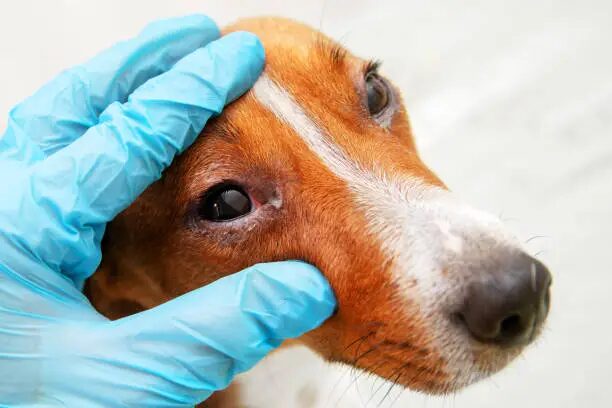
How Veterinarians Diagnose Dog Eye Allergies
A veterinarian does not diagnose an eye allergy simply by looking at redness. The goal is first to determine whether the eye is experiencing allergic inflammation or another condition that requires different treatment.
Medical History and Symptom Review
Your veterinarian may ask:
- When did the eye problem start?
- Is one eye affected or both?
- Does it happen during a particular season?
- Has your dog recently been outdoors?
- Is your dog scratching or licking their paws?
- Has there been any trauma?
- Have you used any medications or eye drops?
- Has your dog experienced similar symptoms before?
Those details can be surprisingly useful.
Physical and Eye Examination
The veterinarian will examine the eyes for redness, discharge, swelling, pupil changes, foreign material, eyelid abnormalities, and other visible problems.
The history and physical findings help determine which tests are appropriate.
Ophthalmoscope Examination
An ophthalmoscope allows the veterinarian to examine structures inside and around the eye.
This may help identify abnormalities that cannot be seen clearly with the naked eye.
Schirmer Tear Test
The Schirmer tear test uses a small paper strip placed near the eyelid to measure tear production.
It can help identify dry eye, which may otherwise resemble allergies because both problems can cause redness, discharge, and discomfort.
Fluorescein Eye Stain
A fluorescein stain is commonly used to detect damage to the cornea.
The dye highlights scratches and ulcers that may not be obvious during a routine visual examination. This test is especially important before certain anti-inflammatory eye medications are considered.
Tonometry / Eye Pressure Testing
Tonometry measures pressure inside the eye.
This can help veterinarians evaluate for conditions such as glaucoma and uveitis, both of which may produce redness and discomfort.
Tests to Rule Out Infection or Eye Injury
Depending on the situation, a veterinarian may recommend additional testing such as:
- Conjunctival sampling
- Cytology
- Bacterial culture
- Tear duct evaluation
- Additional imaging or specialized eye examination
Allergy Testing for Dogs
When allergies are suspected as part of a larger chronic problem, allergy testing may sometimes be considered.
Testing is generally used as part of a broader allergy-management strategy, rather than as a simple test that explains every episode of red eyes.
Diagnosing Food Allergies
Food allergies are usually approached differently from environmental allergies.
A veterinarian may recommend an appropriately designed elimination diet followed by a controlled food challenge when a food allergy is suspected. Randomly changing foods several times can make it difficult to determine what ingredient is actually responsible.
Elimination Diet and Food Challenge
During an elimination diet, the dog receives a carefully selected diet for a defined period under veterinary guidance. If symptoms improve, the veterinarian may use a controlled challenge to determine whether the suspected food trigger is genuinely involved.
This process is much more reliable than simply switching between commercial foods whenever itching appears.
When Referral to a Veterinary Ophthalmologist May Be Needed
A veterinary ophthalmologist may be recommended when a dog has persistent, severe, recurrent, complicated, or difficult-to-diagnose eye disease.
Referral can be particularly useful when there are concerns involving the cornea, intraocular pressure, vision, chronic inflammation, or structural abnormalities.
How to Treat Dog Eye Allergies
Treatment depends on why the dog’s eyes are irritated and how severe the problem is. There is no single “best” treatment for every dog.
Veterinary Treatment for Eye Allergies
Depending on the diagnosis, treatment may include eye medication, systemic allergy treatment, trigger avoidance, lubrication, or treatment of an underlying condition.
Allergy Eye Drops for Dogs
Some veterinary eye medications are designed to reduce inflammation or control the allergic response.
Certain topical antihistamine or mast-cell-stabilizing medications can be used for allergic conjunctivitis. Merck Veterinary Manual describes topical antihistamines and dual-action agents as options for allergic conjunctivitis in veterinary medicine.
The exact medication and dosing schedule should come from a veterinarian.
Prescription Anti-Inflammatory Eye Medication
Veterinarians may prescribe anti-inflammatory eye medication when allergic inflammation is responsible for the symptoms.
However, anti-inflammatory medications are not suitable for every red eye. A corneal ulcer or another underlying condition may change which treatments are considered safe.
Antihistamines for Dogs
Some dogs may benefit from antihistamines as part of allergy management.
Benadryl (diphenhydramine) and cetirizine are examples that veterinarians may sometimes recommend, depending on the dog and the cause of the symptoms.
Oral Allergy Medications
For dogs with broader environmental allergies, treatment may involve medications that work throughout the body rather than only on the eyes.
These may be particularly useful when eye irritation occurs together with itchy skin, paw licking, ear problems, or other allergy signs.
Managing the Underlying Allergy
Treating only the eye may not be enough when the dog continues encountering the allergen.
Long-term management may involve:
- Reducing environmental exposure
- Managing fleas
- Veterinary-directed allergy medication
- Skin care
- Dietary trials when food allergy is suspected
- Immunotherapy for selected dogs
Treating Secondary Infections
A dog with significant inflammation or self-trauma may develop additional problems. When a secondary infection is actually diagnosed, the veterinarian may add appropriate treatment.
Antibiotics should not be used simply because an eye looks red or has discharge. The underlying cause matters.
Allergy Immunotherapy
Some dogs with chronic environmental allergies may be candidates for allergen-specific immunotherapy.
Unlike medications that simply control symptoms, immunotherapy is designed to gradually alter the immune response to selected allergens. Whether it is appropriate depends on the individual dog’s allergy history and veterinary assessment.
Treating Seasonal vs. Year-Round Allergies
Seasonal allergies may improve when the responsible pollen decreases, while year-round allergies can require longer-term management.
Keeping track of when symptoms appear, where your dog has been, and what other signs occur can help your veterinarian identify patterns and build a better treatment plan.
What Eye Drops Can I Use for My Dog’s Allergies?
This is one of the most common questions owners ask, and the safest answer is: use only an eye product your veterinarian has determined is appropriate for your dog’s particular eye problem.
Can Dogs Use Veterinary Eye Wash?
A veterinarian-approved eye wash may be useful for gently flushing irritants or allergens from the eye in some situations.
Artificial Tears for Dogs
Veterinary lubricating products may be recommended when an eye needs additional moisture or comfort.
They should be used according to veterinary instructions, especially when the cause of eye irritation has not yet been established.
Prescription Eye Drops
Prescription drops may contain anti-inflammatory, antihistamine, antibiotic, immunomodulating, or other medications depending on the diagnosis.
The correct product for an allergic eye may be completely inappropriate for an ulcerated, infected, or otherwise damaged eye.
When Steroid Eye Drops May Be Used
Steroid eye drops can reduce inflammation, but they should only be used when a veterinarian has determined they are appropriate.
One major reason is that topical steroids can be dangerous in certain corneal conditions. A fluorescein stain may therefore be performed to look for an ulcer before steroid treatment is started.
Why a Corneal Ulcer Must Be Ruled Out Before Certain Eye Medications
A corneal ulcer is an open defect in the corneal surface. Because some medications can interfere with healing or worsen certain eye conditions, identifying an ulcer first is extremely important.
Can You Use Human Eye Drops on Dogs?
Do not assume that an eye drop made for people is automatically safe for dogs.
Some ingredients may be inappropriate, and redness caused by glaucoma, an ulcer, dry eye, uveitis, or another disease requires completely different treatment.
Why Leftover Eye Medication Can Be Dangerous
A medication that helped during a previous episode might be harmful during a new episode.
VCA specifically warns that administering medication from an earlier bout of conjunctivitis may not help and may actually be harmful when the underlying cause is different.
The safest approach is to have the eye assessed before starting an old prescription or someone else’s medication.
Do Antihistamines Help Dog Eye Allergies?
Can Benadryl Help a Dog With Eye Allergies?
Benadryl may help some dogs with allergy-related symptoms, but it is not an appropriate treatment for every red or watery eye.
Whether diphenhydramine is suitable depends on your dog’s health, other medications, the formulation being used, and the actual cause of the symptoms.
Can Zyrtec Help Dogs With Allergies?
Cetirizine (Zyrtec) may be used in some dogs under veterinary direction. Veterinary references also describe cetirizine as an antihistamine used in canine allergy management.
Which Antihistamines Are Sometimes Used for Dogs?
Depending on the individual case, veterinarians may consider medications such as:
- Diphenhydramine
- Cetirizine
- Other prescription antihistamines
- Topical ophthalmic antihistamine medications
Do not use a combination cold, flu, or allergy product without veterinary guidance. Products containing additional active ingredients may be unsafe for dogs.
Why Antihistamines Do Not Treat Every Cause of Red Eyes
An antihistamine may help when histamine-driven allergy symptoms are involved, but it will not repair a corneal ulcer, lower dangerously high eye pressure, remove a foreign body, or treat every type of infection.
That is why identifying the underlying problem comes first.
Why You Should Ask a Veterinarian Before Giving Allergy Medication
Veterinarians consider the dog’s age, weight, medical history, current medications, and the specific formulation before recommending a medication.
This is particularly important for puppies, senior dogs, dogs with chronic medical conditions, and dogs taking other medicines.
Avoid Combination Allergy Products
Never assume that a product marketed for humans is safe simply because its main ingredient is an antihistamine.
Some human products contain decongestants, pain relievers, stimulants, or other ingredients that are not appropriate for dogs.
For a deeper look at diphenhydramine and canine itching, see this guide on whether Benadryl is appropriate for dogs with itching.
Dog Eye Allergy Home Remedies
When your dog’s eyes are mildly irritated and a veterinarian has determined that allergies are responsible, there are several simple things you can do at home to reduce exposure to triggers and keep your dog more comfortable.
Home care should support veterinary treatment, not replace it. A red eye can have several causes, and some conditions need medication or urgent treatment.
Gently Cleaning Eye Discharge
If your dog’s eyes have a small amount of discharge, gently cleaning the area can help keep the surrounding fur comfortable.
Use a clean, soft cloth or sterile material moistened with appropriate water or a veterinarian-approved eye-cleaning product. Wipe gently around the eye rather than rubbing the eyeball.
Use a fresh section of the cloth for each eye to avoid transferring debris from one side to the other.
Never force the eyelids open if your dog is squinting or appears painful.
Using Vet-Approved Eye Wash
A veterinarian-approved eye wash may help flush pollen, dust, and other irritants from the surface of the eye.
This can be particularly useful after outdoor activities when environmental allergens may have collected around the face.
However, an eye wash does not treat every underlying eye disorder. If the eye remains red, painful, cloudy, or swollen, veterinary assessment is more important than repeatedly flushing it.
Reducing Pollen Exposure
When pollen is suspected, small changes to your dog’s routine can make a noticeable difference.
Consider reducing prolonged outdoor exposure during periods when pollen levels are particularly high. After walks, wipe your dog’s paws and, when appropriate, clean their coat to remove particles that could later reach the face.
The goal is not to keep your dog indoors all day. Instead, it is to reduce unnecessary allergen exposure while maintaining normal exercise and enrichment.
Keeping Your Home Free of Dust
Dust can accumulate on floors, furniture, bedding, and other surfaces.
Regular vacuuming and dusting can help reduce the amount of airborne and surface debris your dog encounters.
Pay particular attention to places where your dog spends a lot of time, such as:
- Their bed
- Blankets
- Rugs
- Sofas
- Crates
- Favorite resting areas
Using Air Filtration
An appropriately sized HEPA air purifier may help reduce airborne particles in indoor environments.
Air filtration is not a cure for canine allergies, but it can be one part of a broader strategy for reducing exposure to environmental allergens.
Make sure filters are maintained according to the manufacturer’s instructions.
Washing Your Dog After Outdoor Exposure
Pollen and other particles can collect on the coat during outdoor activities.
Depending on your dog’s skin and allergy-management plan, regular bathing with a veterinarian-approved shampoo may help remove allergens from the coat.
Do not over-bathe your dog with harsh products, however. Excessive washing can dry and irritate the skin, which may make allergy-related discomfort worse.
Cleaning Your Dog’s Paws After Walks
Your dog’s paws can pick up grass pollen, dirt, dust, and other environmental particles.
Wiping the paws after walks is a simple way to reduce what gets carried into the home. It may also decrease the amount of allergen your dog later transfers to their face when grooming.
Keeping Hair Away From the Eyes
Long facial hair can sometimes collect debris or rub against the eye.
Ask a professional groomer or veterinarian about keeping hair around the eyes appropriately trimmed when necessary. Avoid attempting to cut hair close to the eyeball yourself if your dog is nervous or difficult to handle.
Preventing Your Dog From Rubbing the Eyes
A dog that repeatedly scratches or rubs an eye can cause additional trauma.
Depending on the situation, a veterinarian may recommend a protective recovery cone, especially when the dog cannot stop pawing at the affected area.
Keeping nails appropriately trimmed can also reduce the damage caused by accidental scratching.
Using a Recovery Cone When Recommended
A cone may look uncomfortable, but it can serve an important purpose: preventing self-trauma while the eye heals.
If your dog has been prescribed eye medication or treatment, preventing rubbing can make it easier for the treatment to work without additional injury.
What NOT to Put in a Dog’s Eye
A dog’s eye is delicate, so experimenting with homemade treatments can create unnecessary risk.
Avoid putting the following into your dog’s eyes unless a veterinarian specifically recommends them:
- Human medications
- Unapproved eye drops
- Essential oils
- Household chemicals
- Homemade herbal mixtures
- Old prescription eye medication
- Another pet’s medication
The fact that something is “natural” does not automatically make it safe for the eye.
How to Prevent Dog Eye Allergies
You may not be able to eliminate every allergen from your dog’s environment, but reducing exposure and controlling recurring allergy symptoms can make a difference.
Identify and Avoid the Trigger
The most useful long-term step is determining what seems to trigger your dog’s symptoms.
Keep notes about:
- When the symptoms occur
- Where your dog has been
- Whether symptoms are seasonal
- What your dog has eaten
- New cleaning or grooming products
- Changes in the home
- Outdoor activities
- Other allergy symptoms
Patterns can give your veterinarian useful information.
Reduce Pollen Exposure
When pollen appears to be a trigger, reduce unnecessary exposure during periods of heavy pollen.
You might choose shorter outdoor sessions during peak pollen periods while maintaining exercise indoors through games, training, puzzle feeders, and other enrichment.
Keep Windows Closed During High-Pollen Periods
If pollen is contributing to symptoms, keeping windows closed during periods of high outdoor pollen may reduce the amount entering your home.
This is especially useful when combined with regular cleaning and air filtration.
Use a HEPA Air Purifier
A HEPA air purifier can help reduce certain airborne particles indoors.
It works best as part of a broader approach rather than as a stand-alone treatment.
Vacuum and Dust Regularly
Regular cleaning can help reduce dust and allergen accumulation.
Wash bedding frequently, vacuum carpets and upholstered furniture, and clean areas where your dog spends most of their time.
Clean Your Dog After Outdoor Activities
Removing allergens from the dog’s coat and paws after outdoor activities can reduce the amount they carry indoors.
A simple wipe-down may be appropriate for some dogs, while others may benefit from bathing according to a veterinary skin-care plan.
Keep Bedding Clean
Wash your dog’s bedding regularly using a pet-safe laundry routine.
This can help reduce the accumulation of dust, pollen, skin flakes, and other particles in an area where your dog spends many hours.
Maintain Proper Eye and Facial Hygiene
Dogs with facial folds or long facial hair may need regular cleaning around the eyes.
Use only products appropriate for the area around the eyes and follow veterinary or grooming advice.
Follow Your Veterinarian’s Allergy Management Plan
Chronic allergies often require more than one solution.
Depending on the dog, a management plan may include environmental control, parasite prevention, prescription medications, skin care, dietary trials, or immunotherapy.
The goal is generally to control the allergy while minimizing unnecessary irritation and medication side effects.
Can Food Allergies Cause Eye Problems in Dogs?
Food allergies are often discussed when a dog has recurring itching, but it is important not to assume that watery or red eyes automatically mean a food allergy.
Food Allergies vs. Environmental Allergies
Environmental allergies are often associated with things such as:
- Pollen
- Grass
- Weeds
- Dust mites
- Mold
Food allergies involve an adverse immune response to specific food components and are evaluated differently.
Dogs with food allergies commonly develop itching and skin problems, with the ears and paws frequently involved. Gastrointestinal signs may also occur in some dogs.
Signs of Food Allergies in Dogs
Possible signs include:
- Persistent itching
- Recurrent ear problems
- Paw licking
- Skin inflammation
- Recurrent skin infections
- Gastrointestinal problems in some dogs
Eye symptoms can occur in dogs with allergic disease, but isolated red eyes should not automatically be attributed to food.
Can Food Allergies Cause Red or Watery Eyes?
They may be associated with broader allergic inflammation, but red or watery eyes alone are not a reliable indicator of a food allergy.
When the eyes are the primary problem, your veterinarian will consider other possible causes as well.
How Veterinarians Diagnose Food Allergies
Food allergies are generally diagnosed through a carefully controlled elimination diet followed by a food challenge.
Veterinary guidance is important because accidental exposure to the suspected allergen can interfere with the process.
Elimination Diets for Suspected Food Allergies
An elimination diet usually involves feeding a carefully selected diet for a defined period.
Your veterinarian may recommend a prescription hydrolyzed or novel-protein diet, depending on the dog’s history.
The diet must be followed consistently. Treats, flavored medications, table scraps, chews, and other foods can unintentionally undermine the trial.
Why Changing Food Randomly May Not Identify the Allergen
Switching between several foods without a structured plan can make it difficult to know what caused an improvement or worsening.
A controlled dietary trial provides much better information than repeatedly changing brands based on guesswork.
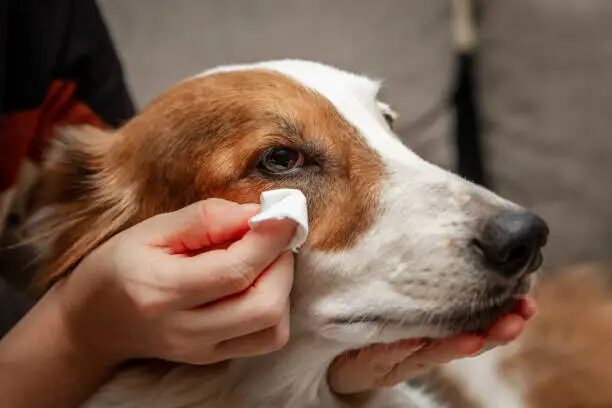
Dog Eye Allergies and Other Allergy Symptoms
Eye symptoms can sometimes be one part of a larger pattern.
Itchy Skin and Red Eyes
A dog with itchy skin plus red, watery eyes may be dealing with an underlying allergy that affects multiple body systems.
Environmental allergies commonly cause skin-related itching, while eye irritation may appear at the same time.
Paw Licking and Eye Allergies
Dogs with allergies may frequently lick or chew their paws.
When paw licking occurs together with seasonal eye irritation, it is worth mentioning the combination to your veterinarian because it may provide useful clues about the underlying allergy pattern.
Ear Infections and Eye Allergies
Recurring ear inflammation is another common problem in dogs with allergic skin disease.
A dog that repeatedly develops itchy ears, skin problems, paw licking, and eye irritation may need a broader allergy assessment rather than treatment aimed only at the eyes.
Sneezing and Watery Eyes
Some dogs may sneeze or have nasal irritation when exposed to environmental allergens.
When sneezing happens at the same time as watery, itchy eyes, an environmental trigger becomes one possible explanation.
However, respiratory symptoms can also have infectious or other causes.
Face Rubbing
Face rubbing can become a vicious cycle.
An allergen may make the face itchy, the dog rubs the face, the rubbing increases irritation, and the increased irritation makes the dog want to rub again.
Breaking this cycle is important for protecting the skin and eyes.
Recurrent Skin Infections
Allergy-related scratching can damage the skin barrier and contribute to secondary infections.
If your dog repeatedly needs treatment for skin or ear infections, talk with your veterinarian about whether an underlying allergy is contributing to the pattern.
Seasonal Allergy Flare-Ups
A predictable pattern can be particularly useful.
For example, if your dog develops itchy paws, red eyes, and face rubbing every spring, the timing may suggest an environmental trigger such as pollen.
A symptom diary can help identify these recurring patterns.
Dog Breeds More Prone to Allergies or Eye Problems
Are Some Dogs More Prone to Allergies?
Some breeds are recognized as being more susceptible to allergic skin disease, but breed alone does not diagnose a dog’s condition.
Genetics can play a role, while environmental exposure and the individual dog’s immune response also matter.
Does Breed Affect Eye Problems?
Yes, in some cases.
Breed-related facial structure, eyelid shape, hair growth, and tear drainage anatomy can affect a dog’s risk of certain eye problems.
This is not the same as saying that a particular breed necessarily has eye allergies.
Brachycephalic Dogs and Eye Irritation
Flat-faced or brachycephalic dogs may have anatomical features that make them more susceptible to certain eye injuries and surface problems.
Their facial structure can affect eyelid closure, tear distribution, and exposure of the eye surface.
Dogs With Prominent Eyes
Dogs with prominent eyes may be more vulnerable to trauma or exposure-related eye problems.
An apparently minor irritation can become more significant when the eye is not adequately protected by surrounding facial structures.
Breed-Related Tear Drainage Problems
Some dogs are predisposed to excessive tearing because of facial anatomy or tear drainage issues.
This can lead to persistent wetness and tear staining, even when allergies are not the primary problem.
Dog Eye Allergies in Puppies
Puppies can certainly experience irritation and allergic disease, but new eye symptoms in a young dog deserve careful attention.
Can Puppies Have Seasonal Allergies?
Yes, although the exact cause of a puppy’s symptoms should be established before assuming that pollen is responsible.
Other causes of eye discharge, redness, or irritation may need to be ruled out.
Red Eyes in Puppies
A puppy with red eyes may simply have mild irritation, but redness can also occur with infection, trauma, foreign material, or other eye disorders.
Because puppies may rub or scratch their faces aggressively, problems can worsen quickly.
Puppy Eye Discharge vs. Allergies
A small amount of tearing is different from persistent or heavy discharge.
Thick discharge, swelling, squinting, pain, or a cloudy eye should prompt veterinary attention rather than repeated home treatment.
Why Puppy Eye Problems Should Be Evaluated Carefully
Puppies explore their surroundings with enthusiasm. Grass, dirt, dust, toys, and other objects can come into contact with the eyes.
They may also be exposed to infectious diseases or develop problems unrelated to allergies.
Safe Eye Care for Puppies
Avoid experimenting with human eye medications or leftover prescriptions.
When a puppy has a new eye problem, a veterinarian can determine whether simple cleaning is appropriate or whether treatment is necessary.
How Long Do Dog Eye Allergies Last?
There is no universal answer.
How Long Does an Allergy Flare-Up Last?
A mild episode may improve once the trigger is removed, while chronic allergies can continue or recur whenever the dog is exposed.
The duration depends on the underlying cause, severity, trigger, and treatment.
How Quickly Does Allergy Treatment Work?
Some dogs may begin to feel better within a relatively short period after appropriate treatment, but the timeline varies.
PetMD notes that many dogs with eye allergies improve within days when the appropriate treatment is used. (PetMD)
A lack of improvement is a reason to contact your veterinarian rather than repeatedly adding new treatments at home.
Seasonal Eye Allergies
Seasonal symptoms may improve when the environmental trigger becomes less prevalent.
However, symptoms can return the following year if the dog remains sensitive to the same allergen.
Chronic or Recurring Eye Allergies
Dogs with recurring symptoms often need a long-term allergy management strategy.
This may include environmental changes and prescription treatment rather than treating each episode as an isolated problem.
Why Symptoms May Return After Treatment
Treatment can control inflammation without permanently removing the allergen.
For example, if pollen triggers the problem, your dog may improve with treatment but develop symptoms again during the next high-pollen period.
Can Dog Eye Allergies Go Away on Their Own?
Mild Allergy Symptoms
Mild irritation may improve when exposure to the trigger stops.
For example, an eye that becomes mildly watery after exposure to airborne pollen may settle once the dog is removed from the triggering environment.
When Environmental Allergens Disappear
Seasonal allergy symptoms can sometimes decline as pollen levels change.
That does not necessarily mean the allergy has disappeared permanently.
Why Recurring Symptoms Should Not Be Ignored
If your dog’s eyes repeatedly become red or watery, it is worth finding out why.
Repeated episodes could reflect chronic allergies, but they could also indicate an untreated eye disorder, tear drainage problem, dry eye, eyelid abnormality, or another condition.
When Home Monitoring Is Not Enough
Do not rely on home observation when the eye is painful, cloudy, severely swollen, injured, or changing rapidly.
Those signs require professional assessment.
When Should I Take My Dog to the Vet for Eye Allergies?
Eye symptoms deserve attention because dogs cannot tell us whether they are experiencing simple itching or significant pain.
Persistent Redness
Redness that does not improve or keeps returning should be checked.
Severe Squinting
Severe or continuous squinting is particularly important because it can indicate pain.
Dog Keeps Eye Closed
A dog repeatedly keeping one eye closed should be evaluated, especially if the behavior appeared suddenly.
Significant Swelling
Marked swelling around the eye or eyelids warrants veterinary attention.
Cloudiness or a Change in the Appearance of the Eye
A cloudy, bluish, enlarged, or otherwise unusual-looking eye should not be assumed to be an allergy.
Yellow or Green Discharge
Colored discharge can be associated with infection or significant inflammation and is more concerning when persistent or accompanied by pain or redness.
Pain or Severe Rubbing
If your dog cannot stop rubbing their eye or appears painful, seek veterinary advice.
Sudden Vision Problems
Sudden difficulty seeing is an urgent concern.
You may notice your dog bumping into objects, becoming hesitant in familiar areas, or suddenly behaving as though they cannot see properly.
Symptoms After Trauma
After a fight, scratch, collision, foreign-body exposure, or other obvious injury, the eye should be assessed promptly.
Symptoms That Rapidly Get Worse
A rapidly worsening eye problem should never be treated as “just allergies.”
Are Dog Eye Allergies an Emergency?
Most mild allergy-related eye problems are not emergencies, but certain eye symptoms require prompt veterinary care.
Signs That Need Same-Day Veterinary Attention
Contact a veterinarian promptly when your dog develops:
- Significant eye pain
- Persistent squinting
- A tightly closed eye
- Major swelling
- Sudden cloudiness
- Sudden vision changes
- Severe redness
- A rapidly worsening eye problem
- Eye symptoms following trauma
Eye Injury or Possible Corneal Ulcer
Corneal injuries can worsen if they are not treated appropriately.
Because a corneal ulcer may not be obvious to an owner, persistent squinting or eye pain deserves professional evaluation.
Sudden Cloudy Eye
A suddenly cloudy eye can be associated with several serious conditions and should not be managed as a routine allergy.
Severe Pain or Squinting
Pain is one of the biggest clues that something more than mild allergy irritation may be happening.
Sudden Vision Changes
Any sudden change in vision should be treated as an urgent veterinary problem.
Why Eye Problems Can Become Serious Quickly
The eye is a delicate organ, and some conditions can progress rapidly or cause permanent vision damage if treatment is delayed.
That is why it is better to have a questionable eye examined than to spend several days trying different home remedies.
Common Mistakes Dog Owners Make With Eye Allergies
Assuming Every Red Eye Is an Allergy
This is perhaps the most important mistake to avoid.
Redness is a symptom, not a diagnosis.
Using Human Eye Drops
Human eye drops are not automatically suitable for dogs. The ingredients and intended uses may differ, and a medication that helps one type of eye condition may make another worse.
Using Old Prescription Medication
A medication prescribed for a previous eye problem may not be appropriate for today’s problem.
Never assume that two episodes of red eyes have the same cause.
Ignoring One-Sided Eye Problems
One affected eye can occur with allergies, but it can also indicate a foreign body, injury, blocked drainage, or another localized problem.
Waiting Too Long When Symptoms Are Severe
Delaying care because you expect an allergy to “clear up” can be risky when the eye is painful or changing rapidly.
Treating Symptoms Without Finding the Trigger
Repeatedly treating watery eyes without addressing an underlying allergy can lead to recurring episodes.
Letting the Dog Continue Rubbing the Eye
Constant scratching can cause additional trauma, so preventing self-rubbing is an important part of eye care.
Dog Eye Allergies vs. Other Common Eye Problems — Quick Comparison
| Condition | Typical Signs | Possible Cause | Veterinary Evaluation |
|---|---|---|---|
| Eye allergies | Red, itchy, watery eyes | Environmental or other allergens | Often recommended |
| Conjunctivitis | Redness, discharge, swelling | Allergy, infection, irritation, other causes | Recommended |
| Dry eye | Redness, mucus, discomfort | Reduced tear production | Needed |
| Corneal injury | Squinting, pain, tearing | Scratch or trauma | Prompt |
| Glaucoma | Pain, redness, cloudy eye, vision changes | Increased eye pressure | Urgent |
| Foreign body | Sudden irritation, tearing, squinting | Grass, dust, debris | Prompt |
| Tear drainage problem | Watery eyes, staining | Poor or blocked drainage | Evaluation may be needed |
| Uveitis | Redness, pain, tearing, light sensitivity | Internal eye inflammation | Prompt |
The most important lesson is that several different eye disorders can look alike from the outside. A veterinarian may need specialized tests to distinguish them.
Frequently Asked Questions About Dog Eye Allergies
What are the signs of eye allergies in dogs?
Common signs include redness, watery eyes, itching, swelling, excessive blinking, squinting, clear discharge, and face rubbing. Some dogs also have itchy skin, paws, or ears when allergies affect multiple areas.
How do I know if my dog’s red eyes are allergies?
You cannot reliably diagnose the cause from redness alone. Allergies become more plausible when redness occurs with itching, watery discharge, face rubbing, and a seasonal or environmental pattern. A veterinary examination is recommended when symptoms persist or are uncomfortable.
Can dogs have allergies in their eyes?
Yes. Dogs can develop allergic conjunctivitis, in which an allergic reaction causes inflammation of the conjunctiva.
Can pollen cause red eyes in dogs?
Yes. Pollen can trigger an allergic response in susceptible dogs and may cause red, watery, itchy eyes, especially during seasonal flare-ups.
Can allergies make a dog’s eyes watery?
Yes. Increased tearing is a common response to eye irritation and can occur with allergies.
Can allergies cause dog eye discharge?
They can cause eye discharge, particularly watery or clear discharge. However, discharge can also occur with infection, dry eye, injury, and other problems.
Can dog eye allergies cause conjunctivitis?
Yes. Allergies are one potential cause of conjunctivitis, although conjunctivitis can have many other causes.
Can I give my dog Benadryl for eye allergies?
A veterinarian may recommend diphenhydramine (Benadryl) for some dogs with allergy-related symptoms, but it is not appropriate for every dog or every eye condition. The exact product and suitability should be confirmed with your veterinarian.
Can I use human eye drops for my dog’s allergies?
Do not use human eye drops unless your veterinarian specifically tells you to use a particular product. Different eye conditions require different treatments.
What is the best eye drop for dog allergies?
There is no single best eye drop for every dog. The appropriate product depends on the underlying cause and may include a veterinary lubricating, antihistamine, anti-inflammatory, or other ophthalmic medication.
How do I treat my dog’s itchy eyes?
Treatment depends on the cause. Veterinary evaluation may lead to allergy medication, appropriate eye drops, environmental management, or treatment of another eye disorder.
How can I clean my dog’s eyes at home?
Gently clean discharge from the surrounding fur with a clean, soft, damp cloth or a veterinarian-approved eye-cleaning product. Do not scrub the eye or force open a painful eyelid.
How long do dog eye allergies last?
Some mild episodes improve after the trigger is removed, while chronic or seasonal allergies may recur. Treatment response varies between dogs.
Can dog eye allergies go away without treatment?
Mild irritation can sometimes improve after exposure ends, but persistent or recurring symptoms should be evaluated because other eye conditions can look like allergies.
Can food allergies cause eye problems in dogs?
Food allergies primarily cause skin and sometimes gastrointestinal problems, but allergy-related eye signs may occur. A structured elimination diet may be recommended when food allergy is suspected.
Why does my dog have red eyes but no discharge?
Red eyes without discharge can have many causes, including allergies, irritation, dry eye, inflammation, glaucoma, or injury. Absence of discharge does not rule out a significant eye problem.
Why is my dog’s eye watering but not red?
Excessive tearing may result from mild irritation, allergies, blocked tear drainage, facial anatomy, a foreign object, or other eye conditions.
Why is my dog rubbing one eye?
One-sided rubbing can occur with an allergen or irritant, but it may also indicate a foreign body, corneal scratch, injury, or another painful condition.
When are red eyes in dogs an emergency?
Red eyes accompanied by severe pain, persistent squinting, a closed eye, cloudiness, sudden vision changes, significant swelling, or trauma should receive prompt veterinary attention.
Should I take my dog to the vet for watery eyes?
Occasional mild tearing may not be an emergency, but persistent, excessive, recurring, or one-sided watery eyes should be discussed with your veterinarian, particularly when other symptoms are present.
Final Thoughts on Dog Eye Allergies
Dog eye allergies can be uncomfortable, but the symptoms are not always easy to distinguish from other eye conditions. Redness, watery eyes, itching, swelling, excessive blinking, and face rubbing can all occur with allergic conjunctivitis, particularly when a dog has been exposed to pollen, grass, dust, mold, or another environmental trigger.
The most helpful approach is to look at the entire pattern. Seasonal symptoms, itchy paws, recurrent skin problems, ear irritation, and face rubbing may point toward an underlying allergy. On the other hand, a sudden one-sided problem, significant pain, severe squinting, cloudiness, or a dramatic change in the eye may indicate something that needs prompt veterinary assessment.
At home, you can help by reducing exposure to suspected allergens, keeping bedding and living areas clean, wiping your dog’s paws after walks, and using only veterinarian-approved eye products. Avoid homemade eye remedies and human medications unless your veterinarian specifically recommends them.
Most importantly, do not assume every red or watery eye is an allergy. The sooner the actual cause is identified, the sooner your dog can receive the right treatment and get back to being comfortable.