
If your dog is scratching more than usual, licking their paws constantly, chewing at their skin, or rubbing their body against furniture, there is probably a reason behind it. Itchy dog skin is one of the most common skin problems pet owners notice, but figuring out why a dog is itchy is not always straightforward.
A little scratching from time to time is perfectly normal. Dogs, just like people, occasionally scratch an itch, groom themselves, or react to something that briefly irritates their skin. The concern begins when scratching becomes frequent, intense, or difficult for your dog to stop.
Veterinarians use the term pruritus to describe itching. Importantly, pruritus is not a disease by itself. It is a symptom that can have many different causes, including fleas, allergies, parasites, bacterial infections, yeast infections, environmental irritants, and other skin conditions.
That distinction matters. Simply stopping the scratching may provide temporary relief, but it may not solve the underlying problem. For example, a dog scratching because of fleas needs effective parasite control, while a dog with a bacterial or yeast infection may need specific treatment. Similarly, dogs with environmental allergies may require long-term management rather than a one-time remedy.
The good news is that most causes of itchy skin can be managed successfully when the underlying trigger is identified.
In this guide, we’ll look at why dogs develop itchy skin, the symptoms to watch for, common causes, allergies, fleas, infections, home care, veterinary diagnosis, treatment options, and ways to prevent the problem from returning.
Quick Answer: Why Is My Dog’s Skin So Itchy?
Dogs can develop itchy skin because of fleas, allergies, mites and other parasites, bacterial or yeast infections, dry skin, contact irritants, or other skin conditions. The exact treatment depends on what is causing the itching.
If your dog is scratching constantly, losing hair, developing red or damaged skin, or creating open sores, it is best to have them examined by a veterinarian. Persistent itching can damage the skin and may lead to secondary infections.
Common causes include:
| Cause | Typical Clues |
|---|---|
| Fleas | Intense itching, especially around the tail and rear |
| Environmental allergies | Seasonal itching, paw licking, face rubbing |
| Food allergies | Persistent itching, especially ears and paws |
| Mites/mange | Severe itching, hair loss, crusts or irritated skin |
| Yeast infection | Itching, greasy skin, redness, unpleasant odor |
| Bacterial infection | Redness, scabs, pustules, discharge |
| Dry skin | Flaking, mild itching, rough coat |
| Contact dermatitis | Irritation where skin contacts an allergen or irritant |
What Is Itchy Dog Skin?
What Is Pruritus in Dogs?
Pruritus is the medical term for itching. It describes an uncomfortable sensation that makes a dog want to scratch, lick, bite, chew, or rub their skin.
Pruritus can affect one small area or the entire body. Some dogs mainly scratch their ears, while others repeatedly lick their paws or chew the skin around their legs, belly, or tail.
According to the Merck Veterinary Manual, the most common broad categories behind itching in dogs are parasites, infections, and allergic skin diseases.
This is why saying that a dog simply has “itchy skin” does not tell you exactly what is wrong. The itching is a clue that something is irritating the skin or causing inflammation.
Is Dog Itching Normal?
Yes, occasional scratching is normal.
A dog may scratch after lying on grass, after being bitten by a harmless insect, or simply because a small area of skin feels irritated. Dogs also lick and groom themselves as part of normal behavior.
The problem is frequency and intensity.
If your dog scratches once or twice and goes back to playing, eating, sleeping, or relaxing, there may not be a significant problem. But if scratching becomes a repeated part of the day, interrupts sleep, or causes your dog to stop normal activities, it deserves attention.
Pay particular attention if you notice other symptoms such as:
- Red or inflamed skin
- Hair loss
- Scabs or crusts
- Bad odor
- Excessive paw licking
- Constant ear scratching
- Head shaking
- Open wounds
- Moist or oozing skin
- Thickened or darkened skin
These signs can indicate that the original irritation has progressed or that an infection has developed.
How Much Scratching Is Too Much?
There is no universal number of scratches that automatically means a dog has a medical problem. Instead, look at the pattern and effect of the behavior.
Your dog may have a problem if they:
- Scratch repeatedly throughout the day
- Wake up at night because of itching
- Stop playing to scratch or lick
- Chew their feet frequently
- Rub their face on carpets or furniture
- Create bald patches
- Break the skin with their claws
- Develop red, swollen, or painful areas
- Seem restless or uncomfortable
A useful rule is simple: if the itching is persistent enough that you notice a change in your dog’s normal behavior, investigate it.
Why Dogs Scratch, Lick, Bite, or Rub Their Skin
Scratching is not the only way dogs respond to itchy skin.
Depending on where the irritation occurs, a dog may:
- Scratch with their hind legs
- Lick their paws
- Chew their legs or tail
- Bite irritated areas
- Rub their face against the floor
- Scoot or rub their rear
- Shake their head
- Constantly lick their belly
- Rub their body against furniture
Dogs with allergies, for example, may show a combination of scratching, paw licking, facial rubbing, and recurrent ear problems.
Unfortunately, these behaviors can create a vicious cycle.
Itch → scratching → skin damage → inflammation → more itching.
Once the protective skin barrier is damaged, bacteria or yeast may also multiply more easily. That can make the original problem considerably harder to control.
Why Itchy Skin Can Become a Bigger Problem
Itchy skin should not be ignored when it continues for days or keeps returning.
Repeated scratching and licking can cause:
- Broken skin
- Hair loss
- Scabs
- Hot spots
- Skin thickening
- Dark pigmentation
- Bacterial infections
- Yeast overgrowth
- Pain and discomfort
In some dogs, an underlying allergy creates the initial itch, but secondary infections become responsible for much of the redness, odor, discharge, and worsening discomfort.
That is one reason treating the underlying cause is more effective than simply trying to stop your dog from scratching.

What Causes Itchy Skin in Dogs?
There are many possible causes of itchy dog skin, and more than one can occur at the same time.
For example, a dog may have an environmental allergy that causes itching, then develop a yeast infection because constant licking and inflammation damage the skin barrier.
The major causes include fleas, allergies, mites, infections, dry skin, and contact irritation.
Fleas and Flea Allergy Dermatitis
Fleas are one of the first things veterinarians consider when investigating an itchy dog.
Can One Flea Bite Make a Dog Extremely Itchy?
Yes.
Some dogs develop an allergic reaction to substances in flea saliva. This condition is known as flea allergy dermatitis.
For a sensitive dog, even a small number of flea bites can cause significant itching. You may not actually see fleas crawling through the coat, especially if your dog is constantly scratching or grooming.
This creates a common situation where an owner says:
“My dog is scratching constantly, but I can’t find any fleas.”
Not seeing fleas does not necessarily rule them out.
What Is Flea Dirt?
Flea dirt is essentially flea feces and may look like tiny black or dark-brown specks in your dog’s coat.
It is often easier to notice around areas where fleas commonly feed, such as the:
- Base of the tail
- Lower back
- Abdomen
- Inner thighs
- Rear legs
If you suspect fleas, a veterinarian can help determine whether parasite control is necessary.
Where Does Flea-Related Itching Usually Appear?
Flea allergy dermatitis often produces intense itching around the lower back, tail base, hips, and rear legs.
Dogs may bite or chew these areas so aggressively that hair disappears and the skin becomes irritated.
Flea Allergy vs. Ordinary Flea Infestation
A dog without a flea allergy may have fleas and show relatively mild irritation.
A dog with flea allergy dermatitis can have a much stronger reaction to a small number of bites.
This is why flea prevention is important even when you rarely see fleas. Effective flea control may involve treating the affected dog and addressing exposure in the household environment and other pets.
Environmental Allergies
Environmental allergies are another major cause of itchy dog skin.
Dogs can react to substances found in their surroundings, including:
- Pollen
- Grass
- Mold
- Dust mites
- Household allergens
- Dander
- Other environmental particles
This type of allergic skin disease is commonly called atopic dermatitis or atopy.
Cornell University’s College of Veterinary Medicine notes that atopic dermatitis is characterized by excessive itching and can be associated with environmental allergens such as pollens, molds, and dust mites.
Pollen
Some dogs become particularly itchy during periods when pollen levels are high.
You may notice your dog scratching more after spending time outdoors, particularly after running through grass or areas with flowering plants.
Grass
Grass itself can sometimes contribute to irritation or exposure to environmental allergens.
Dogs that repeatedly walk through grass may lick their paws afterward, particularly between the toes.
However, paw licking is not automatically proof of a grass allergy. Parasites, infections, and other allergies can cause similar behavior.
Mold
Mold spores are another potential environmental trigger.
Dogs sensitive to environmental allergens may experience symptoms that become worse during certain seasons or in particular environments.
Dust Mites
Dust mites live in indoor environments and can contribute to year-round allergic skin disease in susceptible dogs.
This can make the situation confusing because the dog may appear itchy even when they rarely go outdoors.
Household Allergens
A dog’s environment contains many potential irritants and allergens.
These may include:
- Dust
- Cleaning products
- Laundry products
- Fragrances
- Certain fabrics
- Household particles
If itching suddenly starts after introducing a new product, consider whether there is a connection.
Seasonal Allergies
Some dogs experience seasonal itching, while others develop symptoms throughout the year.
Seasonal patterns may suggest exposure to allergens that vary during the year, although the timing alone cannot establish a diagnosis. Atopic dermatitis can also become a year-round problem in some dogs.
Food Allergies
Food allergies can also cause itchy dog skin, although they are not the only explanation for a dog that scratches.
A food allergy occurs when the immune system reacts to a particular food component.
Possible signs can include:
- Persistent itching
- Paw licking
- Itchy ears
- Recurrent ear problems
- Red or inflamed skin
- Digestive problems in some dogs
Food Allergy vs. Food Intolerance
These terms are often used interchangeably, but they are not exactly the same.
A food allergy involves an immune response, while a food intolerance does not necessarily involve the immune system in the same way.
This distinction matters because a dog with an upset stomach after eating something does not automatically have a food allergy.
Common Foods Associated With Allergies
Dogs can potentially become allergic to ingredients they have eaten repeatedly.
Depending on the dog’s diet, veterinarians may consider ingredients such as:
- Beef
- Chicken
- Dairy products
- Eggs
- Other animal proteins
- Certain plant-based ingredients
The important point is that there is no single food that causes allergies in every dog.
Can Chicken Cause Itchy Skin in Dogs?
It can, but chicken should not automatically be blamed whenever a dog is itchy.
If a food allergy is suspected, veterinarians generally rely on a properly managed elimination diet trial rather than simply removing one ingredient at random.
During a diet trial, the dog must follow the prescribed diet carefully, including avoiding treats and other foods that could interfere with the results.
Can Beef Cause Itchy Skin in Dogs?
Beef can be an allergen for some dogs, just as other ingredients can be.
However, switching from beef to chicken—or from chicken to another food—without veterinary guidance does not prove that food was responsible.
Can Grains Cause Itchy Skin?
Grains are often blamed for dog allergies, but itchy skin should not automatically be attributed to grains.
A veterinarian can help determine whether a genuine food allergy exists and which ingredient may be responsible.
Mites and Mange
Mites are tiny parasites that can cause significant skin irritation.
Two important types of mange in dogs are sarcoptic mange and demodectic mange.
Sarcoptic Mange
Sarcoptic mange is caused by mites that burrow into the skin and can produce intense itching.
Dogs may develop:
- Severe scratching
- Hair loss
- Crusts
- Redness
- Irritated skin
Sarcoptic mange can also spread between animals, making veterinary diagnosis and treatment particularly important.
Demodectic Mange
Demodectic mange is associated with Demodex mites.
These mites can be present in small numbers without causing disease, but problems can occur when their numbers increase abnormally.
The severity and presentation can vary considerably between dogs.
Signs of Mite Infestation
Possible signs include:
- Severe itching
- Hair loss
- Red or inflamed skin
- Crusting
- Scaling
- Sores
Because several skin conditions can look similar, a veterinarian may need skin scrapings or other tests to determine whether mites are involved.
Are Mites Contagious?
Some types of mites can spread between animals, while others are not generally transmitted in the same way.
That is another reason not to assume that every itchy dog has the same type of mange. Proper identification of the parasite is important before deciding how the dog and household should be managed.
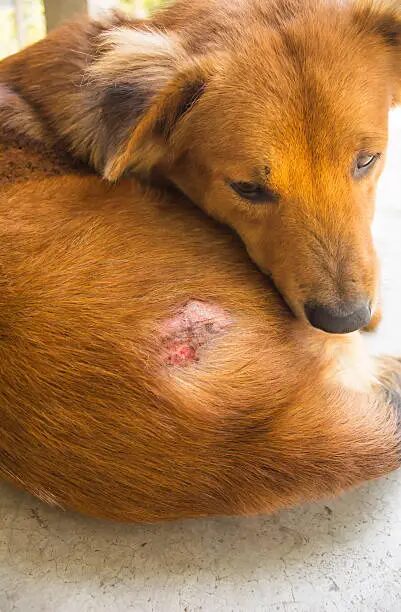
Bacterial Skin Infections
Bacterial infections can cause or worsen itchy dog skin.
One commonly discussed condition is pyoderma, a bacterial skin infection that may develop when the normal protective barrier of the skin becomes damaged.
Possible signs include:
- Red skin
- Small bumps or pustules
- Scabs
- Crusts
- Hair loss
- Moist or irritated areas
- Discharge
- Unpleasant odor
Bacterial skin infections can sometimes develop as a secondary problem after allergies, parasites, or repeated scratching damage the skin.
If you notice pus, spreading redness, open sores, significant pain, or a worsening odor, your dog should be evaluated rather than treated with random over-the-counter products.
Yeast Infections
Yeast can also contribute to itchy and irritated skin.
Dogs with yeast overgrowth may develop:
- Intense itching
- Redness
- Greasy skin
- A musty or unpleasant odor
- Darkened skin
- Thickened skin
- Itchy paws
- Recurrent ear problems
Yeast problems frequently occur alongside allergies.
In these cases, treating only the yeast may improve symptoms temporarily while the underlying allergy continues to trigger inflammation.
Merck Veterinary Manual notes that bacterial and yeast infections can be important causes of pruritus and may occur as secondary complications of other skin diseases.
Dry Skin
Not every itchy dog has an infection or allergy.
Sometimes dry skin contributes to irritation and mild itching.
Potential factors include:
- Cold weather
- Low humidity
- Excessive bathing
- Harsh shampoos
- Poor skin care
- Certain nutritional problems
A dog with dry skin may have visible flakes or a dull, rough coat.
However, severe or persistent itching should not automatically be blamed on dryness. If your dog is scratching constantly, there may be another underlying cause that needs attention.
Contact Dermatitis
Contact dermatitis occurs when the skin reacts to something that touches it.
Potential triggers include:
- New shampoos
- Cleaning products
- Detergents
- Fertilizers
- Lawn chemicals
- Certain plants
- Fabrics or materials
The irritation may be most noticeable in areas that directly contacted the trigger.
If your dog’s itching began shortly after a new product was introduced, consider stopping exposure and discuss the symptoms with your veterinarian.
Other Possible Causes of Itchy Dog Skin
Although fleas, allergies, parasites, and infections are among the most common causes, they are not the entire list.
Less common possibilities can include:
- Hormonal disorders
- Autoimmune skin disease
- Certain skin tumors
- Other systemic diseases
- Stress-related licking or chewing
- Secondary skin inflammation
Some diseases may not initially cause itching but can become itchy when secondary infections or inflammation develop.
For this reason, persistent itching deserves more than guesswork—especially if basic flea control and routine skin care do not make a difference.
Common Symptoms of Itchy Skin in Dogs
Itchy skin can look different from one dog to another. Some dogs scratch constantly, while others barely scratch but spend hours licking their paws.
Excessive Scratching
Frequent scratching is one of the clearest signs of pruritus.
Watch for scratching that happens repeatedly throughout the day or interferes with eating, sleeping, playing, or relaxing.
Constant Licking
Dogs often lick an itchy area instead of scratching it.
Paw licking is especially common in dogs with allergies, although infections, parasites, injuries, and other problems can cause it too.
Biting or Chewing the Skin
A dog may bite at the tail, legs, paws, hips, or other irritated areas.
Repeated chewing can quickly damage the skin.
Rubbing Against Furniture or Floors
Some dogs rub their face or body against carpets, furniture, walls, or the floor to relieve an itch.
Facial rubbing can be particularly noticeable in dogs with allergies.
Red or Inflamed Skin
Redness often indicates inflammation.
The belly, paws, ears, face, armpits, and other areas may become visibly irritated depending on the underlying cause.
Hair Loss
Repeated scratching, licking, and chewing can cause patchy hair loss.
Hair loss combined with redness, scabs, or intense itching deserves veterinary attention.
Scabs and Crusts
Scabs may develop after scratching breaks the skin.
Crusting can also occur with infections, parasites, or other dermatological conditions.
Hot Spots
Hot spots are irritated, moist areas that can develop rapidly when a dog repeatedly licks, chews, or scratches one spot.
They can become painful and infected if left untreated.
Dry or Flaky Skin
Flaking can occur with dry skin, allergies, infections, or other dermatological problems.
Bad Skin Odor
A strong or unusual odor may accompany bacterial or yeast overgrowth.
It is particularly important when odor occurs together with redness, greasy skin, discharge, or intense itching.
Darkened or Thickened Skin
Long-term inflammation can cause the skin to become thicker and darker.
This is often a sign that the skin problem has been present for some time rather than being a brief irritation.
Brown Staining Around the Paws
Dogs that repeatedly lick their paws can develop reddish-brown or brown staining around the fur.
Saliva staining can occur with chronic licking, including in dogs affected by allergic skin disease.
Repeated Ear Infections
Recurring ear infections can sometimes occur alongside underlying allergies.
If your dog repeatedly scratches their ears, shakes their head, or develops ear discharge, the ears should be examined.
Head Shaking
Frequent head shaking may indicate an itchy or painful ear problem rather than ordinary skin itching.
Paw Licking
Persistent paw licking is one of the signs commonly seen with allergic skin disease, but it can also occur because of yeast, bacteria, foreign material, injury, or other irritation.
Where Is Your Dog Itching?
The location of itching can provide useful clues, although it cannot reliably diagnose the cause by itself.
| Itchy Area | Possible Causes |
|---|---|
| Ears | Allergies, yeast, bacteria, parasites |
| Paws | Allergies, yeast, irritation, foreign material |
| Between toes | Allergies, infection, irritation |
| Belly | Allergies, contact irritation, parasites |
| Armpits | Allergies, irritation, skin infection |
| Back | Fleas, allergies, parasites |
| Base of tail | Fleas and flea allergy dermatitis |
| Face | Allergies, irritation, parasites |
| Legs | Allergies, parasites, irritation |
| All over | Allergies, fleas, parasites, infections, systemic causes |
Dog Itchy Skin Around the Ears
Itchy ears may occur with allergies, yeast infections, bacterial infections, or parasites.
Dogs may scratch their ears, shake their heads, rub their faces, or develop discharge.
Dog Itchy Paws
Dogs that constantly lick or chew their paws may be reacting to environmental allergens, but infections and physical irritation are also possible.
Dog Itching Between Toes
The spaces between the toes can trap moisture and become irritated.
Persistent itching in this area may be associated with allergies, infection, irritation, or other paw problems.
Dog Itchy Belly
The belly can come into contact with grass, plants, floors, and other substances.
Redness or itching here may occur with allergies, contact irritation, parasites, or infection.
Dog Itchy Armpits
The armpits are areas where skin rubs against skin and can remain relatively warm and moist.
Allergic skin disease and secondary infections can affect these areas.
Dog Itchy Back
Itching along the back, especially toward the rear and tail base, can raise suspicion of fleas or flea allergy dermatitis.
Dog Itching at the Base of the Tail
This is a classic location for flea-related irritation.
A dog that repeatedly bites or scratches the base of its tail should be checked for fleas and other causes.
Dog Itchy Neck
Neck irritation can result from allergies, parasites, contact irritation, or other skin problems.
Dog Itchy Face
Facial rubbing and scratching can occur with allergies and may sometimes accompany ear problems.
Dog Itchy Legs
Repeated licking or chewing of the legs may be related to allergies, parasites, infections, or irritation.
Dog Itching All Over
When a dog is itchy from head to tail, possibilities include fleas, environmental allergies, food allergies, parasites, widespread infection, or other systemic problems.
The more widespread and persistent the itching, the more important it becomes to identify the underlying cause rather than relying solely on home remedies.
How to Tell What Is Causing Your Dog’s Itchy Skin
Figuring out why your dog is itchy can take some detective work. Several skin conditions produce almost identical symptoms, and it is possible for a dog to have more than one problem at the same time.
For example, a dog may initially develop itching because of an allergy. Constant scratching can then damage the skin, allowing bacteria or yeast to multiply. The result is a dog that is suddenly much itchier than before.
Instead of focusing only on stopping the scratching, try to look for patterns.
Look for Fleas and Flea Dirt
Start by checking your dog’s coat carefully, especially around the:
- Base of the tail
- Lower back
- Abdomen
- Inner thighs
- Rear legs
Fleas are tiny and can be difficult to spot, particularly when a dog has a thick coat or grooms frequently.
You may have a better chance of finding flea dirt, which looks like tiny dark or black particles.
If you are unsure whether what you are seeing is flea dirt, your veterinarian can help confirm whether fleas are contributing to your dog’s itching.
Remember that not seeing fleas does not automatically mean fleas are not responsible. Dogs can groom away evidence of fleas, and highly sensitive dogs may have a strong reaction to relatively few bites.
Check the Skin for Redness and Sores
Part the fur and look at the skin underneath.
Healthy skin should generally not be covered in widespread redness, bleeding, crusts, or open sores.
Look for:
- Red patches
- Small bumps
- Pustules
- Scabs
- Moist areas
- Crusts
- Scratches
- Open wounds
- Swelling
If your dog has significant skin damage, avoid experimenting with multiple products at home. Damaged skin can be painful and may become infected.
Look for Hair Loss
Hair loss can provide another useful clue.
A dog may lose hair because of excessive scratching and chewing, but parasites, infections, allergies, hormonal disorders, and other skin conditions can also cause hair loss.
Notice whether the hair loss is:
- In one specific spot
- Around the tail
- On the paws
- Around the ears
- On the belly
- In symmetrical patches
- Spread across the body
The pattern can help your veterinarian narrow down the possible causes.
Check the Ears and Paws
Do not focus only on the area your dog is scratching.
The ears and paws are especially important when investigating allergies.
Check for:
- Redness
- Swelling
- Odor
- Discharge
- Excessive licking
- Brown staining
- Crusts
- Frequent head shaking
Dogs with allergic skin disease can develop recurrent ear and paw problems, sometimes along with itching elsewhere on the body.
Consider When the Itching Started
Timing can provide valuable information.
Ask yourself:
When did the itching begin?
Did it start:
- Suddenly?
- After going outside?
- After a bath?
- After changing food?
- After moving to a new home?
- After using a new cleaning product?
- During a particular season?
- After missing flea prevention?
A sudden change may point toward a recent exposure, while itching that has continued for months may suggest a chronic condition such as allergies.
Is the Itching Seasonal or Year-Round?
Seasonality can sometimes provide clues.
If your dog becomes itchy every spring or summer, environmental allergens may be involved. If the itching continues throughout the entire year, possibilities may include indoor allergens, food allergies, parasites, chronic skin disease, or a combination of problems.
However, seasonal itching does not automatically mean your dog has seasonal allergies. Fleas and infections can also become more noticeable during certain times of year.
Has Your Dog’s Diet Changed?
Think about everything your dog eats, not just their main food.
Include:
- Dog food
- Treats
- Dental chews
- Table scraps
- Supplements
- Flavored medications
- New snacks
If food allergy is suspected, simply switching foods randomly can make the situation harder to evaluate.
A veterinarian may recommend a controlled elimination diet trial instead.
Has Your Dog Been Outside More Often?
Outdoor exposure can increase contact with:
- Grass
- Pollen
- Plants
- Insects
- Parasites
- Mold
- Other environmental allergens
If itching appears shortly after outdoor activities, tell your veterinarian.
Has a New Shampoo or Cleaning Product Been Used?
Think beyond your dog.
A new laundry detergent, floor cleaner, carpet product, air freshener, or grooming product may expose your dog to something that irritates their skin.
If the timing fits, stop unnecessary exposure and discuss persistent symptoms with your veterinarian.
Keep an Itching and Symptom Diary
For dogs with recurring skin problems, a simple diary can be surprisingly useful.
Record:
| What to Record | Example |
|---|---|
| Date | September 8 |
| Itching level | Mild/moderate/severe |
| Main itchy areas | Paws and ears |
| Outdoor exposure | Long grass walk |
| Food | Regular diet |
| New products | New shampoo |
| Flea prevention | Date given |
| Other symptoms | Head shaking |
Over several weeks, patterns may become easier to recognize.
Itchy Dog Skin From Allergies
Allergies are a major reason dogs develop chronic itching.
A dog’s immune system can react excessively to substances that are normally harmless. When that reaction involves the skin, the result can be inflammation, itching, redness, licking, and scratching.
Common categories include flea allergies, environmental allergies, food allergies, and contact allergies.
What Are Dog Skin Allergies?
A dog with an allergic skin condition may experience an itch that seems to have no obvious explanation.
They may:
- Scratch frequently
- Lick their paws
- Chew their legs
- Rub their face
- Shake their head
- Develop recurrent ear problems
- Develop red skin
- Lose hair
Allergies can also make the skin more vulnerable to secondary bacterial or yeast infections.
This means a dog may have an underlying allergy and an infection at the same time.
Flea Allergies
Flea allergy dermatitis is an allergic reaction to substances in flea saliva.
Some dogs are highly sensitive and can develop intense itching after only a small number of bites.
Typical areas include the:
- Lower back
- Tail base
- Hips
- Rear legs
Consistent flea prevention is therefore important for dogs with suspected flea allergy.
Environmental Allergies
Environmental allergies are commonly associated with atopic dermatitis.
Potential triggers include:
- Pollen
- Grass
- Mold
- Dust mites
- Other environmental substances
Dogs may lick their paws, scratch their body, rub their faces, or develop recurrent ear problems.
Food Allergies
Food allergies can cause persistent skin itching.
They may also be associated with:
- Ear problems
- Paw licking
- Skin redness
- Gastrointestinal symptoms in some dogs
Importantly, food allergies are not diagnosed simply because a dog becomes itchy after eating a particular meal.
A veterinarian may recommend a properly controlled elimination diet followed by a dietary challenge to determine whether food is actually responsible.
Contact Allergies
Contact reactions occur when the skin comes into contact with an irritating or allergenic substance.
Possible sources include:
- Shampoos
- Cleaning products
- Certain plants
- Fabrics
- Lawn products
- Chemicals
Contact irritation may affect areas that directly touch the substance, although the exact presentation varies.
Seasonal vs Year-Round Allergies
Seasonal itching may occur when environmental allergens are more abundant.
A dog might itch more during certain months because of increased exposure to pollen, grasses, molds, or other environmental triggers.
Other dogs may have symptoms throughout the year.
Seasonality is a clue, not a diagnosis.
Your veterinarian may need to rule out fleas, infections, mites, food allergies, and other causes before concluding that environmental allergies are responsible.
Signs Your Dog May Have Allergies
Possible signs include:
- Chronic itching
- Paw licking
- Face rubbing
- Red skin
- Recurrent ear infections
- Hair loss
- Skin infections
- Chewing at the legs
- Itching that comes and goes
- Seasonal flare-ups
A combination of these symptoms makes an allergic condition worth discussing with your veterinarian.
Can Dogs Outgrow Allergies?
Some dogs may experience changes in their symptoms over time, but chronic allergic skin disease often requires ongoing management.
Rather than waiting for an allergy to disappear on its own, it is better to identify the triggers and develop a management strategy with your veterinarian.
Are Dog Allergies Curable?
It depends on the type of allergy.
Some triggers can be controlled or avoided. Others, particularly environmental allergies, may be managed rather than permanently cured.
The goal is to reduce itching, protect the skin barrier, prevent secondary infections, and help the dog maintain a comfortable quality of life.
Itchy Dog Skin From Fleas
Fleas deserve special attention because they are common, easy to overlook, and capable of causing severe itching.
How Fleas Cause Itching
When a flea bites a dog, it feeds on blood and introduces saliva into the skin.
Some dogs react strongly to components in that saliva.
For dogs with flea allergy dermatitis, the immune response can result in intense itching and inflammation.
A dog may continue scratching even after you stop seeing fleas because the skin can remain irritated.
What Is Flea Allergy Dermatitis?
Flea allergy dermatitis (FAD) is an allergic skin reaction to flea bites.
It is one of the important causes to consider when a dog has severe itching around the rear portion of the body.
Common signs include:
- Intense scratching
- Biting at the skin
- Hair loss
- Redness
- Scabs
- Crusts
- Irritation around the tail base and lower back
Signs of Flea Allergy Dermatitis
A classic pattern is intense itching around the:
Tail base → lower back → hips → rear legs
However, dogs can develop more widespread symptoms when the condition becomes severe.
Repeated scratching may also result in secondary bacterial infections.
Where Flea Allergies Usually Cause Itching
The base of the tail and lower back are particularly important areas to inspect.
If your dog repeatedly turns around to bite the rear portion of their body, flea exposure should be considered.
That does not mean fleas are definitely responsible. Other conditions can produce similar symptoms.
Can You Have Fleas Without Seeing Them?
Absolutely.
Fleas are small and fast, and dogs may remove them through grooming.
A dog with a thick coat can also make visual inspection difficult.
This is why a veterinarian may recommend appropriate flea control even when the owner has not personally seen a live flea.
How to Check Your Dog for Fleas
Use good lighting and inspect the coat carefully.
Pay particular attention to:
- Tail base
- Lower back
- Abdomen
- Inner thighs
A flea comb can help collect small particles from the coat.
If you find dark specks, they may be flea dirt, but identification can be difficult without experience.
Treating Fleas on Your Dog
Flea treatment should be selected based on your dog’s:
- Age
- Weight
- Health
- Species
- Lifestyle
- Other medications
There are numerous flea-control products available, but not every product is appropriate for every dog.
Use products according to veterinary or label directions rather than combining multiple parasite treatments without guidance.
Treating Fleas in Your Home
Treating only the dog may not be enough.
Flea life stages can exist in the surrounding environment, including bedding, carpets, furniture, and other areas where pets spend time.
Depending on the severity of the infestation, environmental cleaning and treatment may be necessary.
Other pets in the household may also need appropriate flea prevention.
Preventing Flea Reinfestation
Prevention is usually easier than repeatedly dealing with an established infestation.
Ask your veterinarian about a flea-prevention program appropriate for your dog.
Consistency matters.
Skipping doses or using prevention only after seeing fleas can allow the flea population to return.

Itchy Dog Skin From Food Allergies
Food is often blamed when dogs itch, but true food allergies are only one possible explanation.
Signs of a Possible Food Allergy
A food allergy may be considered when a dog develops:
- Persistent itching
- Paw licking
- Recurrent ear problems
- Skin inflammation
- Repeated skin infections
- Sometimes digestive symptoms
Unlike some environmental allergies, food-related symptoms may occur throughout the year.
However, year-round itching does not automatically mean food is responsible.
Food Allergy vs Food Intolerance
A food allergy involves an immune response to a food component.
Food intolerance is different and can involve digestive or other reactions without the same immune mechanism.
This distinction is important because not every dog that reacts badly to a food has a food allergy.
Common Food Ingredients Associated With Allergies
Dogs can potentially become allergic to ingredients they have been exposed to repeatedly.
Depending on the individual dog’s diet, possible allergens include:
- Beef
- Chicken
- Dairy
- Eggs
- Other animal proteins
- Certain plant-based ingredients
There is no universal “best allergy food” that works for every dog.
Can Chicken Cause Itchy Skin in Dogs?
Chicken can be an allergen for some individual dogs, but that does not mean chicken is the cause of every itchy dog’s symptoms.
If your dog is eating chicken and scratching, there are still many other possibilities, including fleas, environmental allergies, yeast, bacteria, and mites.
A properly conducted elimination diet is more useful than guessing.
Can Beef Cause Itchy Skin in Dogs?
Beef can also cause an allergic reaction in some dogs.
Again, removing beef from the diet without a structured diagnostic plan does not prove that beef caused the problem.
Can Grains Cause Itchy Skin?
Grains are frequently blamed for skin allergies, but grain-free does not automatically mean allergy-free.
Dogs can react to various ingredients, and a veterinarian should guide dietary testing when a food allergy is suspected.
How Vets Diagnose Food Allergies
There is no simple home test that can reliably determine whether a dog has a food allergy.
Veterinarians commonly use a strict elimination diet trial.
The dog receives a carefully selected diet for a prescribed period while other foods, treats, flavored medications, and supplements that could interfere with the trial are avoided.
If symptoms improve, the veterinarian may then perform a controlled dietary challenge to determine whether the original food triggers the reaction.
Elimination Diet Trials
An elimination diet only works when it is followed carefully.
That means avoiding the temptation to give:
- Extra treats
- Table food
- Chews
- Leftovers
- Unapproved supplements
- Flavored snacks
Even a small amount of another ingredient can complicate the results.
Your veterinarian can recommend the most appropriate diet and explain how long the trial should continue.
Why Randomly Changing Dog Food May Not Solve the Problem
Switching from one commercial food to another may seem like an easy solution, but it does not reliably diagnose a food allergy.
You may accidentally switch from one suspected allergen to another.
A structured approach is much more useful because it gives you and your veterinarian a clearer way to evaluate whether food is actually contributing to the itching.
Itchy Dog Skin From Yeast or Bacterial Infections
Sometimes the original problem is not an infection—but an infection becomes part of the problem.
For example:
Allergy → itching → scratching/licking → damaged skin → bacterial or yeast overgrowth → increased itching
This cycle can make a relatively manageable skin condition much more uncomfortable.
Signs of a Yeast Infection
Possible signs include:
- Musty or unusual odor
- Redness
- Greasy skin
- Darkened skin
- Thickened skin
- Intense itching
- Paw licking
- Recurrent ear problems
Yeast can thrive in warm, moist areas, although infections can occur in many locations.
Signs of a Bacterial Infection
Bacterial skin infections may cause:
- Redness
- Small pustules
- Scabs
- Crusts
- Hair loss
- Moist lesions
- Discharge
- Pain
- Unpleasant odor
The appearance alone does not always tell you whether bacteria, yeast, parasites, allergies, or another condition is involved.
Can Infections Cause Severe Itching?
Yes.
Both bacterial and yeast-related skin disease can produce substantial discomfort.
A dog that becomes progressively itchier, develops a strong odor, or develops moist, painful, crusted, or oozing lesions should be evaluated.
Why Allergies and Skin Infections Often Occur Together
Allergies can weaken the skin barrier and cause chronic inflammation.
A dog that repeatedly scratches or licks can also damage that barrier.
Once the skin is compromised, microorganisms that normally live on or around the skin may multiply excessively.
This is why treating a secondary infection without addressing the underlying trigger can sometimes result in another flare-up later.
When a Skin Infection Needs Veterinary Treatment
Seek veterinary advice when you notice:
- Pus
- Open sores
- Rapidly spreading redness
- Significant swelling
- Strong odor
- Pain
- Extensive hair loss
- Repeated infections
- Severe itching
Depending on the situation, the veterinarian may examine skin cells under a microscope or perform other diagnostic tests.
Can a Skin Infection Come Back?
Yes.
Recurring infections are often a sign that something else is driving the problem.
Possible underlying contributors include:
- Allergies
- Fleas
- Chronic inflammation
- Moisture
- Parasites
- Hormonal disease
- Other skin disorders
Repeated infections should therefore prompt a search for the underlying cause rather than simply repeating the same treatment indefinitely.
How Veterinarians Diagnose Itchy Skin in Dogs
There is no single test that identifies every cause of itchy dog skin.
Veterinarians usually combine the dog’s history, physical examination, and targeted diagnostic tests.
Medical History
Your veterinarian may ask:
- When did the itching begin?
- Is it seasonal?
- Where does your dog itch?
- What flea prevention are you using?
- What does your dog eat?
- Have you changed foods recently?
- Are there other pets in the home?
- Has your dog traveled?
- Have you introduced new shampoos or cleaning products?
- Has this happened before?
Detailed answers can make the diagnostic process much easier.
Physical Examination
The veterinarian will examine the skin and coat and may pay particular attention to the:
- Ears
- Paws
- Face
- Belly
- Armpits
- Tail base
- Back
- Legs
They may also look for fleas, parasites, infections, wounds, hair loss, and other abnormalities.
Flea and Parasite Checks
A veterinarian may examine the coat for fleas or flea dirt and may recommend tests for mites or other parasites.
Skin Scraping
Skin scrapings can be used to look for certain mites.
This can be particularly useful when mange or another parasitic skin condition is suspected.
Cytology
Skin cytology involves examining cells or material from the skin under a microscope.
It can help identify organisms such as bacteria or yeast and can provide valuable information about inflammation.
Fungal Testing
If a fungal infection such as ringworm is suspected, the veterinarian may recommend appropriate fungal testing.
Ringworm is particularly important because it can sometimes spread to people and other animals.
Bacterial Testing and Culture
For recurrent or complicated infections, additional testing may be recommended to determine which bacteria are present and which treatments are likely to be effective.
Allergy Evaluation
Once parasites and infections have been considered or ruled out, the veterinarian may investigate allergies.
The approach depends on the suspected allergy.
Environmental allergies are generally diagnosed through a combination of history, clinical signs, and exclusion of other causes rather than relying on one simple test.
Food Elimination Trial
When food allergy is suspected, a carefully controlled elimination diet can be used.
The dog must follow the diet strictly for the recommended period.
Why Diagnosis Is Important Before Treatment
Different causes require different solutions.
A flea problem needs effective flea control.
A bacterial infection may require antibacterial treatment.
A yeast infection requires appropriate antifungal management.
An allergy may require long-term environmental, dietary, topical, or medical management.
Treating the wrong cause can waste time, money, and leave your dog uncomfortable.
How Is Itchy Dog Skin Treated?
The best treatment depends on what is actually causing the itching.
There is no single medicine, shampoo, supplement, or home remedy that works for every itchy dog.
Treating Fleas and Parasites
If fleas or mites are responsible, your veterinarian can recommend an appropriate parasite-control program.
For flea allergy dermatitis, controlling flea exposure is particularly important because even occasional bites can trigger significant itching in sensitive dogs.
Treating Bacterial Infections
Bacterial infections may require topical treatment, systemic medication, or a combination depending on the severity and location.
Veterinary guidance is particularly important for recurrent or severe infections.
Treating Yeast Infections
Yeast overgrowth may be managed using appropriate topical or other veterinary-prescribed treatments.
The underlying reason for recurrent yeast infections should also be investigated.
Managing Environmental Allergies
Environmental allergies often require long-term management.
Strategies may include:
- Reducing exposure to known triggers
- Regular bathing
- Paw cleaning
- Skin-barrier support
- Prescription anti-itch medication
- Treatment of secondary infections
- Allergen-specific immunotherapy in appropriate cases
There is usually no single approach that works equally well for every dog.
Managing Food Allergies
Dogs with confirmed food allergies generally need to avoid the triggering ingredient.
This may involve a veterinary therapeutic diet or another carefully selected diet.
The important part is consistent avoidance.
Medicated Shampoos
Veterinary shampoos can be useful for certain skin conditions.
Depending on the diagnosis, a veterinarian may recommend products designed to:
- Remove allergens
- Reduce microorganisms
- Control excess oil
- Soothe irritated skin
- Support the skin barrier
The wrong shampoo, however, can sometimes make irritated skin worse.
Prescription Anti-Itch Medications
Veterinarians have several options for controlling itching.
The appropriate choice depends on factors such as:
- Your dog’s age
- Health status
- Cause of itching
- Severity
- Other medications
- Presence of infection
Never give your dog human medication simply because it is marketed as an anti-itch product.
Topical Treatments
Some dogs benefit from localized topical treatment.
This can include products prescribed or recommended for specific conditions.
Topical therapy can be particularly useful when only a small area is affected.
Omega-3 Fatty Acids and Skin Support
Omega-3 fatty acids may play a role in supporting healthy skin and managing inflammation in some dogs.
However, supplements should not be viewed as a replacement for diagnosing fleas, infections, allergies, or other medical causes.
Ask your veterinarian before adding a supplement, particularly if your dog takes other medications or has an underlying health condition.
Allergen-Specific Immunotherapy
For selected dogs with environmental allergies, allergen-specific immunotherapy may be considered.
The aim is to gradually modify the immune response to relevant allergens.
It is generally a long-term strategy rather than a quick fix.
Treating Secondary Skin Damage
If scratching has produced wounds, hot spots, bacterial infections, or yeast overgrowth, those problems may need treatment alongside the original cause.
Home Remedies for Itchy Dog Skin
If your dog’s itching is mild and there are no open wounds, severe redness, swelling, or signs of infection, some supportive home-care measures may help soothe the skin. However, home remedies do not treat every underlying cause of pruritus.
If the itching continues, becomes severe, or keeps returning, your dog should be examined by a veterinarian.
1. Give a Gentle, Dog-Safe Bath
Bathing can remove allergens, dirt, pollen, and other irritants from the coat and skin.
Use a gentle shampoo made specifically for dogs. A veterinarian may recommend a soothing or medicated shampoo depending on your dog’s skin condition.
Avoid frequent bathing with harsh shampoos because this can further irritate the skin or interfere with the skin barrier.
2. Consider a Veterinary-Approved Oatmeal Shampoo
A colloidal oatmeal dog shampoo may provide temporary relief from mild dryness and irritation.
Follow the product instructions carefully and rinse thoroughly. Oatmeal can soothe irritated skin, but it will not eliminate fleas, mites, bacterial infections, yeast infections, or allergies.
3. Rinse Your Dog’s Paws After Outdoor Activities
If environmental allergens appear to contribute to your dog’s itching, gently wiping or rinsing the paws after walks may reduce exposure to substances such as pollen, grass, and dirt.
Dry the paws afterward, especially between the toes.
4. Wash Bedding Regularly
Your dog’s bed can collect:
- Dust
- Pollen
- Dirt
- Dander
- Flea debris
Wash bedding regularly using a pet-safe detergent and keep sleeping areas clean.
5. Maintain Consistent Flea Prevention
Even when you do not see fleas, they can still cause significant itching, particularly in dogs with flea allergy dermatitis.
Use flea prevention recommended by your veterinarian and follow the product schedule consistently.
6. Support Healthy Skin With Good Nutrition
A complete and balanced diet provides nutrients needed for normal skin and coat health.
Some dogs may also benefit from omega-3 fatty acids, but supplements should be discussed with your veterinarian. The correct product and amount depend on the individual dog.
7. Prevent Excessive Scratching and Licking
Constant scratching and licking can damage the skin and create an opportunity for bacteria or yeast to multiply.
If your dog is causing significant damage to the skin, contact your veterinarian rather than relying only on home treatment.
What Not to Put on Your Dog’s Itchy Skin
Not every human or household remedy is safe for dogs.
Avoid Using These Without Veterinary Advice
- Human anti-itch creams
- Human steroid creams
- Essential oils
- Vinegar solutions
- Harsh soaps
- Strong disinfectants
- Random antibiotics
- Random antifungal medications
- Human medications without veterinary guidance
Dogs can lick topical products from their skin, potentially causing additional problems.
Essential oils deserve particular caution because some oils can be harmful to dogs when improperly concentrated, applied, or ingested.
Likewise, do not assume that a medication that is safe for people is automatically safe for dogs.
When Should You Take an Itchy Dog to the Vet?
A little scratching occasionally can be normal. Persistent or intense itching is different.
Contact your veterinarian if your dog has:
- Severe or constant scratching
- Significant hair loss
- Red or inflamed skin
- Open sores
- Bleeding
- Scabs or crusts
- Pus or discharge
- A strong skin odor
- Painful skin
- Swelling
- Repeated ear infections
- Constant paw licking
- Recurring hot spots
- Darkened or thickened skin
- Itching that repeatedly comes back
- Difficulty sleeping because of itching
A veterinary examination is especially important when itching has become a cycle:
itching → scratching → skin damage → infection → more itching
When Is Itchy Skin an Emergency?
Seek urgent veterinary care if itching occurs together with signs of a potentially serious allergic reaction, such as:
- Difficulty breathing
- Facial or throat swelling
- Collapse or extreme weakness
- Severe vomiting or diarrhea
- Rapidly worsening symptoms
A severe allergic reaction can require immediate treatment.
How to Prevent Itchy Skin in Dogs
You cannot prevent every skin condition, but good routine care can reduce many common problems.
1. Maintain Flea and Parasite Prevention
Use veterinarian-recommended parasite prevention consistently.
This is particularly important for dogs that develop severe reactions to flea bites.
2. Groom Your Dog Regularly
Regular brushing can help remove dirt, loose hair, and potential irritants while giving you an opportunity to inspect the skin.
Look for:
- Redness
- Fleas
- Flea dirt
- Lumps
- Scabs
- Hair loss
- Moist areas
- Unusual odor
3. Avoid Over-Bathing
Bathing should match your dog’s coat, skin condition, lifestyle, and veterinary recommendations.
Using the wrong shampoo or bathing too frequently may worsen dryness and irritation.
4. Keep Bedding Clean
Wash bedding regularly and clean areas where your dog spends significant time.
5. Address Ear Problems Early
Skin allergies and ear problems can occur together. Repeated ear infections, head shaking, or persistent ear scratching should not be ignored.
6. Feed a Complete and Balanced Diet
Proper nutrition supports healthy skin and coat.
If you suspect a food allergy, avoid repeatedly changing foods randomly. A veterinarian may recommend a structured elimination diet trial instead.
7. Monitor Changes in Your Dog’s Skin
Early attention can prevent minor irritation from developing into a larger skin problem.
Itchy Dog Skin by Season
Some dogs experience more itching during particular times of the year.
| Season | Possible Triggers |
|---|---|
| Spring | Pollen, grass, plants, increased outdoor exposure |
| Summer | Fleas, grass, pollen, heat, outdoor allergens |
| Fall | Outdoor allergens, plants, mold |
| Winter | Dry air, indoor heating, dry skin |
Seasonal itching can suggest an environmental component, but it does not automatically prove that allergies are responsible.
A dog with environmental allergies may eventually develop symptoms throughout the year.
Itchy Skin in Puppies vs. Adult Dogs
Itching can affect dogs of any age, but the likely causes may differ.
Itchy Skin in Puppies
Puppies can experience itching from:
- Fleas
- Mites
- Skin infections
- Environmental irritation
- Allergies
- Contact with irritating substances
Because puppies are still developing and can become unwell quickly, severe itching, extensive hair loss, sores, or signs of infection deserve prompt veterinary attention.
Itchy Skin in Adult Dogs
Adult dogs may develop or continue to experience:
- Flea allergies
- Environmental allergies
- Food allergies
- Yeast infections
- Bacterial infections
- Parasites
- Dry skin
- Contact dermatitis
- Other dermatological or systemic conditions
If itching starts suddenly in an adult dog, consider recent changes such as a new food, shampoo, medication, environment, bedding, or increased outdoor exposure.
Dog Breeds More Prone to Allergic Skin Problems
Some breeds and breed families appear to have a greater tendency toward allergic skin disease.
Examples commonly associated with atopic dermatitis or allergic skin problems include:
- Labrador Retrievers
- Golden Retrievers
- West Highland White Terriers
- Soft-Coated Wheaten Terriers
- Bulldogs
- Boston Terriers
- Boxers
- Shih Tzus
- Shar-Peis
- Weimaraners
- Jack Russell Terriers
- Some mixed-breed dogs
However, breed predisposition is not a diagnosis.
A dog from a breed commonly associated with allergies may never develop significant skin disease, while another dog with no recognized breed predisposition may experience severe itching.
Itchy Dog Skin vs. Other Skin Problems
Different skin conditions can look similar, which is one reason veterinary diagnosis can be important.
| Condition | Common Signs | Possible Cause | Veterinary Evaluation |
|---|---|---|---|
| Fleas | Intense itching, flea dirt, hair loss | Flea infestation or allergy | Often recommended |
| Allergies | Itching, paw licking, redness, ear problems | Immune reaction to allergens | Often recommended |
| Yeast infection | Itching, odor, greasy skin, redness | Yeast overgrowth | Usually recommended |
| Bacterial infection | Redness, scabs, pustules, discharge | Bacteria | Usually recommended |
| Dry skin | Flaking, mild itching | Dry environment or skin irritation | Depends on severity |
| Mange | Severe itching, hair loss, crusting | Mites | Yes |
| Contact dermatitis | Localized redness and itching | Irritant or allergen | Depends on severity |
These signs can overlap. For example, an allergic dog can develop a secondary yeast or bacterial infection.
Frequently Asked Questions About Itchy Dog Skin
Why Is My Dog Itchy but Has No Fleas?
Fleas are only one possible cause.
Your dog may be itchy because of environmental allergies, food allergies, mites, yeast, bacterial infections, dry skin, contact irritation, or another skin condition.
Also, not seeing fleas does not always rule out flea allergy dermatitis.
What Is the Most Common Cause of Itchy Skin in Dogs?
There is no single cause that applies to every dog. Parasites, allergies, and skin infections are among the major causes veterinarians investigate.
The dog’s age, history, environment, season, skin appearance, and other symptoms help narrow down the possibilities.
How Can I Stop My Dog From Itching?
The most effective approach is to identify and treat the underlying cause.
For example:
- Fleas require effective flea control.
- Mites require appropriate parasite treatment.
- Bacterial infections may require veterinary treatment.
- Yeast infections require appropriate antifungal management.
- Allergies may require long-term management.
Simply suppressing itching without addressing the cause may allow the problem to return.
What Can I Give My Dog for Itching?
Do not give your dog human medication without first speaking with a veterinarian.
Veterinarians have several options for controlling itch, but the appropriate treatment depends on the cause and your dog’s overall health.
What Can I Put on My Dog’s Itchy Skin?
For mild irritation, a dog-safe soothing shampoo may help.
However, open wounds, severe redness, discharge, strong odor, widespread irritation, or persistent itching should be evaluated by a veterinarian rather than treated with household products.
Can Dry Skin Make a Dog Itchy?
Yes. Dry skin can cause flaking and mild to moderate itching.
Cold weather, low humidity, excessive bathing, irritating shampoos, and other factors can contribute to dryness.
However, persistent itching should not automatically be blamed on dry skin.
Can Dog Food Cause Itchy Skin?
Yes. Some dogs develop food allergies, which can cause itching and may be accompanied by recurrent ear or skin problems.
A veterinarian may recommend a carefully controlled elimination diet trial to determine whether food is contributing to the symptoms.
Can Chicken Cause Itching in Dogs?
Chicken can be an allergen for some individual dogs, but you should not assume chicken is the cause simply because your dog is itchy.
Other ingredients and non-food causes are also possible.
A proper elimination diet is more useful than repeatedly switching foods without a plan.
Can Grain Cause Itchy Skin in Dogs?
Food allergies can involve different ingredients. Grains are not automatically the cause of itching.
If you suspect a food allergy, discuss a structured dietary trial with your veterinarian rather than eliminating multiple ingredients unnecessarily.
Can Allergies Cause Constant Itching in Dogs?
Yes. Dogs with environmental or other allergies can experience chronic or recurring pruritus.
Atopic dermatitis can be a long-term condition requiring ongoing management rather than a one-time cure.
How Do I Know If My Dog Has Fleas?
Look for:
- Live fleas
- Small dark specks that may be flea dirt
- Scratching around the tail base
- Biting or chewing the skin
- Hair loss
- Red bumps or irritated skin
However, a flea-allergic dog may itch intensely even when fleas are difficult to find.
How Do I Know If My Dog Has a Yeast Infection?
Possible signs include:
- Musty or unusual odor
- Red skin
- Greasy skin
- Darkened skin
- Paw licking
- Ear problems
- Persistent itching
These signs can overlap with other conditions, so veterinary testing may be needed to confirm yeast overgrowth.
Is Coconut Oil Good for Itchy Dog Skin?
Coconut oil is sometimes promoted as a home remedy, but it should not be considered a reliable treatment for unexplained itching.
Applying oily substances can also create problems if a dog repeatedly licks them.
If your dog has persistent itching, identifying the cause is more important than experimenting with household remedies.
Is Oatmeal Good for Itchy Dogs?
A veterinarian-approved colloidal oatmeal shampoo may soothe some mild skin irritation.
It is supportive care rather than a treatment for conditions such as fleas, mange, bacterial infections, or significant allergies.
Can I Give My Dog Antihistamines for Itching?
Some antihistamines may be used in dogs in specific circumstances, but the correct medication, formulation, and dose depend on the dog.
Do not give human allergy medicine without veterinary guidance, especially combination products containing additional ingredients.
How Long Does Itchy Skin Take to Go Away?
The recovery time depends entirely on the cause.
Mild irritation may improve relatively quickly after the trigger is removed. Parasites, infections, allergies, and chronic skin disease can require longer treatment and follow-up.
If your dog’s itching is not improving or keeps returning, veterinary evaluation is appropriate.
Should I Take My Dog to the Vet for Itchy Skin?
Yes, if the itching is severe, persistent, recurrent, or accompanied by skin damage.
Veterinary evaluation is especially important when you notice open sores, bleeding, pus, significant hair loss, strong odor, painful skin, swelling, or repeated infections.
Conclusion: Understanding and Treating Itchy Dog Skin
Itchy dog skin can be frustrating for both dogs and their owners, especially when the scratching seems to have no obvious cause. While occasional scratching is normal, persistent or intense itching should not be ignored.
Fleas, flea allergy dermatitis, environmental allergies, food allergies, mites, bacterial infections, yeast overgrowth, contact irritation, and dry skin can all contribute to pruritus. Some dogs may even have more than one problem at the same time.
The most important step is to determine why your dog is itchy rather than simply trying to stop the scratching. A veterinarian may use the dog’s history, physical examination, parasite checks, skin testing, cytology, and other diagnostic methods to identify the underlying problem.
Simple measures such as regular grooming, appropriate bathing, clean bedding, flea prevention, paw cleaning, and good nutrition can support healthy skin. But if your dog develops severe itching, wounds, hair loss, discharge, odor, swelling, or recurring skin problems, professional veterinary care is the safest approach.