If your dog has ever grabbed something from the kitchen floor or backyard before you could stop them, you may have wondered: can dogs eat walnuts?
The short answer is not really. Walnuts are not a good choice for a regular dog treat, and some types can be genuinely dangerous. The important thing to understand is that not all walnuts carry exactly the same risk.
A small amount of a plain English walnut is generally not considered directly toxic to dogs. However, walnuts are high in fat and calories, and eating too many can cause digestive upset and potentially contribute to pancreatitis. Whole walnuts can also present choking or intestinal blockage risks.
The situation becomes much more serious with black walnuts. The ASPCA lists black walnut (Juglans nigra) as toxic to dogs, while veterinary sources warn that moldy walnuts can contain mycotoxins capable of causing neurological problems such as tremors and seizures.
This is particularly important for dogs that like to explore the yard. Fallen walnuts can become damp, contaminated with mold, or difficult to identify. A walnut picked up from underneath a tree is therefore not necessarily equivalent to a fresh, shelled walnut from your kitchen.

4
In this guide, we’ll look at English walnuts vs. black walnuts, moldy walnuts, walnut shells, walnut butter, salted and roasted walnuts, walnut desserts, symptoms of walnut poisoning, pancreatitis risks, and what to do if your dog already ate one.
Quick Safety Takeaway
Walnuts are best avoided as a routine dog treat. If a dog accidentally eats a tiny piece of a plain English walnut, serious poisoning is unlikely, but the situation is different if the walnut was black, moldy, shelled, seasoned, or eaten in a large quantity.
Quick Answer: Can Dogs Eat Walnuts?
Dogs should generally not be fed walnuts. A small piece of a plain English walnut is usually not considered toxic, but walnuts are high in fat and can cause digestive problems. Large quantities may increase the risk of pancreatitis, while whole walnuts can cause choking or intestinal blockage.
Black walnuts are toxic to dogs, and moldy walnuts can contain dangerous mycotoxins that may cause tremors, seizures, vomiting, and other serious symptoms.
So, if you’re asking whether you should intentionally give your dog walnuts as a snack, there are better and safer choices.
Can Dogs Eat English Walnuts?
A small amount of a plain, shelled English walnut is generally tolerated by dogs. PetMD specifically notes that one or two pieces may be okay for some dogs. However, this does not mean walnuts should become part of your dog’s regular diet.
Are Walnuts Poisonous to Dogs?
Some are, and some are not considered directly toxic.
The distinction matters:
- English walnuts: Generally not directly toxic in tiny amounts, but high in fat and associated with other risks.
- Black walnuts: Toxic to dogs.
- Moldy walnuts: Potentially dangerous because of toxic molds and mycotoxins.
- Walnut shells: Can cause choking or intestinal obstruction.
- Salted or seasoned walnuts: May contain excessive salt or unsafe ingredients such as garlic or onion.
Can Dogs Eat Raw Walnuts?
A small piece of a fresh, plain English walnut is generally less concerning than a black or moldy walnut. However, raw does not automatically mean safe.
The walnut’s species, freshness, amount, shell status, and the individual dog’s health all matter.
Can Dogs Eat Walnuts With Shells?
No. The shell can become a choking hazard or contribute to a gastrointestinal obstruction. Hard nut shells are particularly concerning for small dogs and dogs that swallow food without chewing properly.
Can Dogs Eat Salted Walnuts?
It’s best to avoid them. Excessive salt is not appropriate for dogs, and seasoned nuts may contain ingredients that are harmful to them.
Should Dogs Eat Walnuts Regularly?
No. Even when a walnut isn’t poisonous, dogs don’t need it nutritionally. There are many lower-fat treats that are easier to portion and less likely to create problems.
Are Walnuts Safe for Dogs?
The answer depends on which walnut, how much was eaten, whether it was fresh or moldy, and whether the dog swallowed the shell.
This is why simply saying “walnuts are safe” or “walnuts are poisonous” can be misleading.
Are Walnuts Toxic to Dogs?
English walnuts are generally not considered directly toxic in very small quantities, but they still have several potential hazards.
Black walnuts are a different story. The ASPCA specifically lists black walnut as toxic to dogs. Moldy nuts and hulls can cause neurological signs, including tremors and seizures.
The safest approach is therefore to avoid deliberately feeding walnuts to your dog.
Are English Walnuts Safe for Dogs?
English walnuts are the common walnuts people purchase from grocery stores and use in baking. PetMD states that dogs can generally tolerate one or two small pieces of an English walnut, although this should not be interpreted as a recommendation to feed walnuts regularly.
The concern is that walnuts contain substantial amounts of fat and calories. Eating more than a small amount may result in vomiting, diarrhea, or other gastrointestinal problems and may contribute to pancreatitis risk.
Why Walnuts Are Not Recommended as a Regular Treat
There are several reasons walnuts don’t make an especially useful dog treat:
- High fat content
- High calorie density
- Potential for digestive upset
- Risk of pancreatitis after excessive fatty food intake
- Potential choking hazard
- Risk of intestinal obstruction
- Possibility of mold contamination
- Toxicity concerns with black walnuts
- Additional dangers from salt, spices, sugar, chocolate, or other ingredients
In other words, even when a particular walnut isn’t poisonous, there are plenty of reasons to choose something else.
Are Black Walnuts Toxic to Dogs?
Yes.
Black walnut (Juglans nigra) is specifically listed by the ASPCA as toxic to dogs. Veterinary references associate black walnut exposure with gastrointestinal and neurological problems, particularly when moldy nuts or hulls are involved.
If your dog has eaten a black walnut from the yard, contact your veterinarian rather than assuming it is the same as an ordinary grocery-store walnut.
Are Moldy Walnuts Dangerous?
Yes. Moldy walnuts can be especially dangerous.
Certain molds can produce mycotoxins, substances capable of causing serious illness in animals. One mycotoxin of particular concern in moldy walnuts is penitrem A, which has been associated with tremors, seizures, and vomiting in dogs. A published veterinary case report documented penitrem A in moldy walnuts involved in a dog’s intoxication.
Mold contamination isn’t always obvious. That’s another reason dogs should not be allowed to eat old or fallen walnuts.
Why the Type of Walnut Matters
Think of the word “walnut” as a category rather than a single exposure.
A fresh English walnut kernel and a moldy black walnut lying under a tree are very different situations.
The risk can change based on:
- Species — English versus black walnut.
- Condition — fresh versus moldy.
- Part eaten — kernel, shell, hull, or entire nut.
- Quantity — a tiny piece versus several walnuts.
- Preparation — plain versus salted, seasoned, candied, or baked.
- Dog’s health — especially previous pancreatitis or dietary restrictions.
Why the Amount Your Dog Eats Matters
There isn’t one universal number of walnuts that is safe or toxic for every dog.
A 5-pound dog and a 90-pound dog don’t have the same exposure when they eat the same number of walnuts. The type and condition of the walnut matter, too.
For this reason, don’t rely on internet rules such as “one walnut is always safe” or “five walnuts are toxic.” Exposure should be evaluated based on the actual circumstances.
Which Parts of a Walnut Are Dangerous?
Here’s a simple overview:
| Walnut Type/Part | Safe for Dogs? | Main Concern |
|---|---|---|
| Plain English walnut kernel | Not recommended | High fat, GI upset |
| Black walnut | No | Toxicity, mold |
| Moldy walnut | No | Mycotoxins, tremors, seizures |
| Walnut shell | No | Choking, intestinal blockage |
| Walnut hull | Avoid | Toxicity/mold contamination |
| Salted walnuts | Avoid | Excess sodium |
| Seasoned walnuts | Avoid | Garlic, onion, spices |
| Walnut dessert | Avoid | Sugar, fat, toxic ingredients |
| Walnut butter | Usually not recommended | Fat, calories, additives |
PetMD notes that English walnuts may be tolerated in very small portions, while black walnuts are toxic. Other veterinary sources also emphasize the risks created by high fat, shells, mold, and preparation ingredients.
Can Dogs Eat English Walnuts?
What Are English Walnuts?
English walnuts are the variety most people commonly buy for cooking and snacking. They are also sometimes called Persian walnuts.
They have a relatively mild flavor and are frequently used in:
- Cakes
- Cookies
- Banana bread
- Brownies
- Salads
- Cereals
- Nut mixes
- Homemade snacks
They’re very different from the black walnuts that commonly fall from trees in some yards.
Are English Walnuts Toxic to Dogs?
Generally, plain English walnut meat isn’t considered directly toxic in tiny amounts.
That’s an important distinction. “Not toxic” does not mean “healthy” or “recommended.”
The high fat content remains a concern, particularly if a dog eats several walnuts at once.
Can Dogs Eat a Small Amount of English Walnut?
A small piece of a plain, fresh, shelled English walnut is unlikely to cause serious poisoning in an otherwise healthy dog.
PetMD specifically indicates that one or two pieces can generally be tolerated.
However, if your dog has a history of pancreatitis, obesity, digestive disease, or a veterinarian-prescribed diet, don’t assume that even a small amount is appropriate.
Can One English Walnut Hurt a Dog?
For most healthy dogs, accidentally eating one plain English walnut is unlikely to result in serious toxicity.
Still, monitor your dog for unusual symptoms, particularly if the walnut was:
- Moldy
- Black walnut
- In the shell
- Heavily seasoned
- Part of a dessert
- Accompanied by other potentially toxic ingredients
If symptoms develop, contact your veterinarian.
Are Raw English Walnuts Safe?
Fresh, plain raw English walnut meat is generally less concerning than a contaminated or flavored product.
But raw doesn’t make walnuts necessary or beneficial for dogs.
Your dog’s nutritional requirements are better met by a complete and balanced diet formulated for dogs.
Are Shelled English Walnuts Safer?
Shelled walnuts are safer than whole walnuts with hard shells, because removing the shell eliminates one choking and obstruction hazard.
That doesn’t remove the concerns about fat, calories, mold, or excessive consumption.
Why English Walnuts Still Aren’t a Good Dog Treat
Imagine giving your dog a snack that offers no nutritional advantage they can’t get elsewhere, while also carrying several avoidable risks.
That’s essentially the problem with walnuts.
Your dog doesn’t need walnuts to get healthy fats, protein, vitamins, or minerals. A properly formulated dog food already supplies essential nutrients, while appropriate treats can provide a simpler way to reward your pet.
What Happens If a Dog Eats Several English Walnuts?
Eating several walnuts can be more concerning than eating a tiny piece.
Potential problems include:
- Vomiting
- Diarrhea
- Loss of appetite
- Lethargy
- Abdominal discomfort
- Increased risk of pancreatitis
- Choking or obstruction if whole nuts or shells were swallowed
AKC notes that walnuts are high in oil and fat and that larger quantities can increase pancreatitis risk.
If your dog has eaten a large quantity, don’t wait for symptoms before seeking professional advice.
Can Dogs Eat Black Walnuts?
This is where the answer changes from “not recommended” to “avoid completely.”
What Are Black Walnuts?
Black walnuts are produced by the black walnut tree, scientifically known as Juglans nigra.
They may be encountered outdoors, particularly as fallen nuts in yards, parks, or areas where black walnut trees grow.
Unlike the ordinary English walnuts commonly purchased at stores, black walnuts have specific toxicity concerns for dogs.
Why Are Black Walnuts Dangerous for Dogs?
The ASPCA classifies black walnut as toxic to dogs. Exposure can involve gastrointestinal problems and, particularly when moldy material is involved, serious neurological signs.
Black walnuts can also become contaminated with mold after falling outdoors, creating an additional layer of risk.
Are Black Walnuts Poisonous to Dogs?
Yes. Black walnuts should be considered poisonous to dogs.
If your dog eats a black walnut, especially one picked up outside, it’s best to contact your veterinarian promptly rather than waiting to see whether symptoms appear.
What Is Juglone?
Juglone is a naturally occurring compound associated with walnut trees, including black walnuts.
Some veterinary sources identify juglone as one of the compounds associated with black walnut toxicity. However, the exact toxic principle responsible for all black walnut poisoning in dogs is not fully established by the ASPCA, which lists the toxic principle as unknown.
So it’s better not to oversimplify the problem as “juglone is the only toxin.”
Do Black Walnuts Contain Juglone?
Yes, black walnuts can contain juglone. Veterinary sources have associated black walnuts with gastrointestinal illness and other adverse effects.
The bigger practical point for dog owners is simple: don’t allow your dog to chew or eat black walnuts.
What Symptoms Can Black Walnuts Cause?
Possible signs following toxic walnut exposure can include:
- Vomiting
- Diarrhea
- Weakness
- Loss of coordination
- Tremors
- Muscle twitching
- Seizures
ASPCA specifically notes tremors and seizures associated with moldy nuts or hulls and incoordination with ingestion of shavings.
Can Black Walnuts Cause Seizures?
Yes, seizures can occur with toxic black walnut/mold exposure.
Seizures are an emergency sign. If your dog develops seizures, severe tremors, difficulty walking, collapse, or significant weakness after eating a walnut, seek emergency veterinary care.
Can Black Walnuts Cause Tremors?
Yes. Tremors are one of the major neurological warning signs associated with toxic or mold-contaminated walnut exposure.
Can Black Walnuts Kill a Dog?
Severe toxic exposure can potentially become life-threatening, particularly when mold toxins are involved.
However, it’s important not to assume that every black walnut exposure will be fatal. The outcome depends on factors such as the type and condition of the walnut, amount consumed, dog’s size and health, and how quickly treatment is provided.
What Should You Do If Your Dog Eats a Black Walnut?
If you’re confident your dog ate a black walnut, contact your veterinarian promptly.
Have as much information ready as possible:
- What type of walnut it was
- Whether it was fresh or moldy
- Whether the shell or hull was swallowed
- Approximately how much was eaten
- When it happened
- Your dog’s approximate weight
- Any symptoms you’re seeing
If tremors, seizures, repeated vomiting, severe weakness, collapse, or breathing difficulties occur, treat the situation as an emergency.
Can Dogs Eat Moldy Walnuts?
No. Moldy walnuts should never be given to dogs.
In fact, this is one of the most important safety points for dogs that spend time outdoors.
Why Moldy Walnuts Are Dangerous
Mold can produce mycotoxins, chemical substances that can make animals seriously ill.
Moldy walnuts may contain tremorgenic mycotoxins associated with neurological symptoms such as:
- Tremors
- Muscle twitching
- Agitation
- Vomiting
- Seizures
- Weakness
AKC specifically warns that moldy walnuts may contain penitrem A, which can cause muscle tremors, seizures, and vomiting.
What Types of Mold Grow on Walnuts?
Different molds can contaminate nuts under suitable environmental conditions. One documented case of moldy walnut toxicosis in a dog involved Penicillium crustosum and the mycotoxin penitrem A.
The important lesson isn’t that dog owners need to identify the exact species of mold.
It’s this:
If a walnut looks spoiled, damp, old, discolored, or questionable, keep it away from your dog.
What Are Mycotoxins?
Mycotoxins are toxic substances produced by certain fungi.
Different molds produce different toxins, and the effects can range from gastrointestinal illness to neurological problems or liver damage.
For example, the FDA notes that aflatoxins produced by certain molds can cause loss of appetite, vomiting, liver damage, and potentially death in pets.
What Is Penitrem A?
Penitrem A is a tremorgenic mycotoxin associated with certain molds.
Its name may sound technical, but its effects are important for dog owners because exposure can produce tremors and seizures.
A published veterinary case report identified penitrem A in moldy walnuts involved in a dog’s intoxication.
Can Moldy Walnuts Cause Tremors?
Yes.
Tremors are one of the major warning signs associated with moldy walnut toxicity.
A dog that suddenly begins shaking or developing muscle tremors after eating something moldy should receive prompt veterinary attention.
Can Moldy Walnuts Cause Seizures?
Yes. Severe mycotoxin exposure can cause seizures.
A seizure is never something to monitor casually at home. Seek emergency veterinary assistance if your dog develops this symptom.
Can Moldy Walnuts Cause Vomiting?
Yes. Vomiting can occur with toxic walnut exposure, including exposure to mold-contaminated nuts.
Vomiting alone doesn’t prove walnut poisoning because many conditions can cause it. But vomiting after a known exposure is important information for your veterinarian.
Can Moldy Walnuts Be Fatal?
Severe mycotoxin poisoning can potentially be fatal.
For example, the FDA notes that significant aflatoxin exposure can cause serious liver disease and death in pets.
That doesn’t mean every moldy walnut contains a fatal dose of toxin. It means mold-contaminated food should never be considered safe simply because the dog appears normal immediately afterward.
Why Fallen Walnuts Are Especially Risky
Fallen walnuts deserve special attention.
Once nuts are lying outdoors, they can be exposed to:
- Rain
- Moisture
- Soil
- Warm temperatures
- Decaying plant material
- Mold
- Animal waste
AKC warns that nuts lying on the ground can become moist and develop molds that are toxic to dogs.
This is why the question “my dog ate a walnut from the ground” deserves more caution than “my dog accidentally ate a small piece of a fresh English walnut.”
How to Tell if a Walnut Is Moldy
Mold may appear as:
- Fuzzy growth
- White, green, gray, or dark discoloration
- Unusual spots
- A musty smell
- A soft or deteriorated texture
But don’t depend entirely on visual inspection. Toxins may be present even when obvious mold isn’t visible. The FDA notes that aflatoxins can sometimes be present without visible mold.
Should Dogs Eat Walnuts Found Outside?
No.
Dogs should not be allowed to scavenge fallen walnuts, particularly black walnuts or nuts that have been sitting outdoors.
If you have walnut trees near your home, regularly inspect the yard and remove fallen nuts before your dog can reach them.
Why Are Walnuts Bad for Dogs?
Even when we’re talking about plain English walnuts rather than toxic black walnuts, there are several reasons to avoid them.
High Fat Content
Walnuts contain a substantial amount of fat.
Fat isn’t automatically harmful to dogs, but large amounts of rich, fatty food can cause digestive problems and may increase pancreatitis risk.
High Calorie Content
Nuts are also calorie dense.
Giving calorie-heavy human foods frequently can make it harder to maintain a healthy body weight, particularly in small dogs.
Risk of Pancreatitis
A large amount of fatty food can contribute to pancreatitis in susceptible dogs.
This is one of the main reasons that “not poisonous” shouldn’t be confused with “healthy.”
Digestive Upset
Some dogs may develop:
- Vomiting
- Diarrhea
- Gas
- Abdominal discomfort
- Reduced appetite
after eating rich foods.
Choking Hazard
Whole walnuts are relatively hard and can become lodged in the airway, especially in small dogs or dogs that gulp food.
Intestinal Blockage
If a dog swallows a whole walnut or pieces of hard shell, the material may potentially become lodged in the gastrointestinal tract.
An obstruction can become a serious medical problem requiring veterinary treatment.
Mold Toxicity
Mold adds an entirely different risk. Contaminated walnuts can contain mycotoxins capable of causing neurological signs such as tremors and seizures.
Black Walnut Toxicity
Black walnuts are specifically listed as toxic to dogs by the ASPCA.
Salt and Seasoning Risks
Salted or seasoned walnuts introduce additional problems.
Some products may contain garlic or onion, which are unsafe for dogs. Excessive salt can also cause increased thirst and urination and, in severe cases, neurological signs.
Why Dogs Don’t Need Walnuts
Perhaps the simplest reason to skip walnuts is that your dog doesn’t need them.
A complete and balanced dog food provides the nutrients your pet requires. A dog can enjoy plenty of safer treats without taking on the unnecessary risks associated with walnuts.
Can Walnuts Cause Pancreatitis in Dogs?
One of the biggest concerns with feeding dogs walnuts isn’t necessarily poisoning. It’s the high fat content.
Walnuts are calorie-dense and contain a significant amount of fat. A dog that eats a large quantity may develop gastrointestinal upset, and high-fat foods can contribute to pancreatitis, especially in dogs that are already susceptible.
What Is Pancreatitis in Dogs?
Pancreatitis is inflammation of the pancreas, an organ involved in digestion and blood-sugar regulation.
When the pancreas becomes inflamed, digestive enzymes can become activated inappropriately and cause significant irritation and tissue damage.
Pancreatitis can range from mild to severe, and severe cases can require hospitalization.
Why High-Fat Foods Can Trigger Pancreatitis
A large, sudden intake of fatty food can place considerable stress on a dog’s digestive system.
This is why foods such as:
- Walnuts
- Fatty meat scraps
- Greasy leftovers
- Fried foods
- Rich sauces
- Butter-heavy foods
aren’t ideal treats for dogs.
Not every dog that eats a fatty food develops pancreatitis, but excessive fat intake can increase the risk.
Are Walnuts High in Fat?
Yes. Walnuts are naturally rich in fat, which is one reason they are a calorie-dense human food.
For humans, the fats in walnuts can be part of a nutritious diet. But dogs don’t need to get these nutrients from walnuts. Their nutritional requirements should come primarily from an appropriate complete and balanced diet.
Can One Walnut Cause Pancreatitis?
It’s impossible to say that one walnut will cause pancreatitis in every dog.
For most healthy dogs, accidentally eating a small piece of a plain English walnut is unlikely to result in pancreatitis. However, dogs vary considerably in their sensitivity to dietary changes.
A dog with a history of pancreatitis may need a much more careful diet than a healthy dog.
Does the Risk Depend on the Amount Eaten?
Yes.
Generally, eating a larger quantity of a high-fat food creates more concern than accidentally swallowing a tiny piece.
But there is no universal number of walnuts that guarantees pancreatitis. The dog’s size, health, diet, individual sensitivity, and amount consumed all matter.
Dogs That Have Had Pancreatitis Before
If your dog has previously experienced pancreatitis, it’s particularly important to avoid experimenting with high-fat human foods.
For these dogs, even foods that aren’t technically poisonous can be inappropriate.
Follow your veterinarian’s dietary recommendations rather than using general internet advice about what’s “safe.”
Breeds Prone to Pancreatitis
Some dogs may be predisposed to pancreatitis, but pancreatitis can occur in any breed.
Risk is influenced by factors such as diet, body condition, age, underlying disease, and individual susceptibility. Breed alone shouldn’t be used to decide whether a dog can eat walnuts.
Symptoms of Pancreatitis After Eating Walnuts
Possible signs include:
- Vomiting
- Diarrhea
- Loss of appetite
- Lethargy
- Weakness
- Abdominal pain
- Dehydration
A dog with abdominal pain may appear restless, adopt a hunched posture, or be reluctant to move.
If your dog develops repeated vomiting, severe abdominal pain, marked weakness, collapse, or other concerning symptoms after eating walnuts, contact a veterinarian promptly.
Can Dogs Eat Walnuts With Shells?
Are Walnut Shells Safe for Dogs?
No.
Even if the walnut itself is an English walnut, the hard shell creates a separate hazard.
A dog may try to chew the shell into pieces or swallow it whole. Either situation can create problems.
Why Walnut Shells Are a Choking Hazard
A whole walnut in its shell can become lodged in a dog’s throat.
The risk is especially concerning for:
- Small dogs
- Puppies
- Dogs that gulp food
- Dogs that chew and swallow objects quickly
A choking emergency requires immediate veterinary attention.
Can Walnut Shells Cause Intestinal Blockage?
Yes.
If swallowed, pieces of shell may potentially become lodged somewhere in the gastrointestinal tract. A foreign-body obstruction can prevent food and fluid from moving normally through the digestive system.
Potential warning signs include:
- Repeated vomiting
- Loss of appetite
- Abdominal pain
- Lethargy
- Difficulty passing stool
- Straining to defecate
These symptoms can develop for many reasons, so veterinary examination is important when obstruction is suspected.
Can Dogs Digest Walnut Shells?
Dogs are not designed to safely digest hard walnut shells.
The shell can remain physically intact or break into hard pieces as the dog chews it. That’s why swallowing the shell should not be treated as equivalent to eating a small piece of walnut meat.
Can Walnut Shells Damage the Digestive Tract?
Hard or sharp fragments can potentially irritate the gastrointestinal tract.
The major concerns are choking and obstruction, but physical injury is another reason not to allow dogs to chew on nut shells.
What If My Dog Swallowed a Walnut Shell?
If you know or strongly suspect that your dog swallowed a walnut shell, contact your veterinarian for advice, especially if the dog is small, swallowed a large piece, or is showing symptoms.
Don’t wait for severe symptoms if you’re concerned about a foreign-body obstruction.
Why Small Dogs Are at Greater Risk
A shell or whole walnut that might pass uneventfully in one large dog could create a more significant physical hazard in a smaller dog.
That’s why the dog’s size and the size of the swallowed object are important when evaluating an ingestion.
Can Dogs Eat Walnut Husks or Hulls?
What Is a Walnut Hull?
The hull is the green or outer fleshy covering surrounding the hard walnut shell before the nut is fully processed.
It’s different from the hard shell and different again from the edible kernel inside.
Are Walnut Hulls Toxic to Dogs?
Walnut hulls should not be considered safe for dogs.
This becomes especially important with black walnuts, where the ASPCA identifies the plant as toxic to dogs and notes neurological problems associated with moldy nuts and hulls.
Black Walnut Hulls and Toxicity
If your dog eats material from a black walnut tree, don’t assume that only the nut kernel matters.
The hull and surrounding plant material can also be problematic, particularly when mold contamination is present.
Mold on Walnut Hulls
Fallen walnut hulls can remain outdoors where they are exposed to moisture and environmental conditions that encourage mold growth.
Mold contamination introduces the possibility of mycotoxin exposure.
Symptoms After Eating Walnut Hulls
Depending on the exposure, concerning symptoms can include:
- Vomiting
- Diarrhea
- Weakness
- Tremors
- Muscle twitching
- Difficulty walking
- Seizures
Neurological symptoms are particularly concerning and warrant urgent veterinary care.
What to Do if a Dog Eats Walnut Hulls
Contact your veterinarian and provide as much information as possible.
Tell them:
- Whether it was an English or black walnut, if known.
- Whether the material looked moldy.
- Whether the dog swallowed the hull, shell, kernel, or entire nut.
- Approximately how much was consumed.
- When the ingestion happened.
- Your dog’s approximate size and weight.
- Whether any symptoms are present.
Can Dogs Eat Salted Walnuts?
Are Salted Walnuts Safe for Dogs?
It’s best to avoid them.
Salted walnuts have the same fat-related concerns as plain walnuts, plus the additional issue of excess sodium.
Dogs require sodium in their diet, but that doesn’t mean heavily salted human snacks are appropriate for them.
Why Too Much Salt Is Dangerous
Excessive salt intake can cause problems ranging from increased thirst and gastrointestinal upset to more serious sodium-related illness in significant exposures.
The severity depends on the amount consumed and the dog’s size and health.
Can Salted Walnuts Cause Excessive Thirst?
They can contribute to increased thirst because of their higher sodium content.
If your dog has consumed a large quantity of a salty food, contact your veterinarian for guidance rather than trying to estimate the risk yourself.
Salt and Sodium Toxicity in Dogs
Severe sodium poisoning can produce signs such as:
- Vomiting
- Diarrhea
- Excessive thirst
- Weakness
- Tremors
- Seizures
A large salt ingestion requires prompt professional assessment.
Why Plain Walnuts Are Still Not Ideal
Removing the salt doesn’t suddenly turn walnuts into an ideal dog snack.
Plain English walnuts still contain substantial fat and calories and can pose choking, obstruction, and mold-related concerns.
Can Dogs Eat Roasted Walnuts?
Are Plain Roasted Walnuts Safe?
Plain roasted English walnuts aren’t generally considered directly poisonous simply because they’ve been roasted.
However, they’re still not recommended as a routine dog treat because roasting doesn’t eliminate the high-fat content or physical hazards.
Raw vs. Roasted Walnuts for Dogs
The more important question isn’t always whether the walnut was raw or roasted.
Consider:
- What type of walnut was it?
- Was it moldy?
- Was it salted?
- Was it seasoned?
- Was the shell swallowed?
- How much did the dog eat?
These factors can be more important than the cooking method itself.
Why Seasonings Matter More Than Cooking
A plain walnut and a flavored snack containing walnuts can have very different risk profiles.
Seasoned walnuts may contain ingredients dogs shouldn’t eat.
Can Dogs Eat Honey-Roasted Walnuts?
No, they’re best avoided.
Honey-roasted walnuts can contain added sugar and substantial fat. Commercial products may also contain salt or other ingredients.
There is no nutritional reason to give your dog this type of snack.
Can Dogs Eat Cinnamon Walnuts?
It’s better not to give dogs flavored cinnamon walnuts.
The walnut itself already offers limited benefit and the added ingredients may make the product less suitable.
Can Dogs Eat Spicy Walnuts?
No.
Spicy or heavily seasoned foods can cause digestive irritation and may contain ingredients unsuitable for dogs.
Can Dogs Eat Garlic-Seasoned Walnuts?
Avoid them completely.
Garlic belongs to the Allium family and can be toxic to dogs. Onion and related ingredients are also problematic.
So if your dog eats garlic-seasoned walnuts, the concern isn’t just the walnut anymore.
Can Dogs Eat Walnut Butter?
Is Walnut Butter Safe for Dogs?
Walnut butter isn’t a good choice for dogs.
A small amount of a plain product may not necessarily cause poisoning, but nut butters can be extremely calorie dense and may contain added ingredients.
Is Walnut Butter High in Fat?
Yes.
The fat concentration can make nut butter particularly rich. For dogs that are sensitive to fatty foods, overweight, or have a history of pancreatitis, this can be an especially poor choice.
Can Walnut Butter Cause Pancreatitis?
A fatty food can contribute to pancreatitis risk, particularly when a dog consumes a large quantity.
That doesn’t mean a tiny lick of plain walnut butter automatically causes pancreatitis. It means large or repeated amounts are unnecessary risks.
Added Sugar in Walnut Butter
Some commercial nut butters contain added sugar.
Dogs don’t need added sugar in their diets, and frequent high-calorie treats can contribute to unwanted weight gain.
Salt in Walnut Butter
Check the nutrition label for sodium.
A product intended for human consumption may contain considerably more salt than you would want to intentionally give your dog.
Artificial Sweeteners in Nut Butter
This is one of the most important label-checking steps.
Some sugar-free products can contain artificial sweeteners that are unsafe for dogs.
Why Xylitol Is Extremely Dangerous for Dogs
Xylitol is highly toxic to dogs.
It can cause a rapid release of insulin, resulting in dangerously low blood sugar. It can also cause severe liver injury.
If a dog has eaten a product containing xylitol, contact a veterinarian or animal poison-control service immediately.
Don’t wait for symptoms to appear.
How to Read a Nut Butter Ingredient Label
Before giving any nut butter to a dog, examine the ingredient list.
Avoid products containing:
- Xylitol
- Added sugar
- Excessive salt
- Chocolate
- Cocoa
- Macadamia nuts
- Artificial or unfamiliar ingredients
But even if the label appears simple, walnut butter is still not necessary for your dog’s diet.
Can Dogs Eat Walnuts in Desserts?
A walnut becomes much more complicated when it is an ingredient in a human dessert.
Can Dogs Eat Walnut Cake?
No, walnut cake isn’t an appropriate dog treat.
Cake typically contains significant amounts of sugar and fat, and some recipes contain ingredients that are potentially toxic to dogs.
Can Dogs Eat Walnut Brownies?
No.
Brownies may contain chocolate or cocoa, which can be toxic to dogs.
The combination of chocolate, fat, sugar, and walnuts makes brownies particularly unsuitable.
Can Dogs Eat Walnut Cookies?
It’s best not to give dogs walnut cookies.
Cookies may contain:
- Sugar
- Butter
- Chocolate
- Raisins
- Artificial sweeteners
- Excessive fat
Any of these can create additional concerns.
Can Dogs Eat Banana Walnut Bread?
A small accidental bite may not necessarily cause poisoning, but banana walnut bread isn’t a recommended dog food.
The recipe may contain large amounts of sugar, butter, oil, or other ingredients.
Most importantly, check whether the bread contains raisins or grapes, which are dangerous for dogs.
Can Dogs Eat Baklava With Walnuts?
No.
Baklava is generally very rich in sugar and fat and may contain syrups, butter, and other ingredients unsuitable for dogs.
Can Dogs Eat Walnut Ice Cream?
Walnut ice cream is not appropriate for dogs.
It may contain:
- High amounts of sugar
- High amounts of fat
- Dairy
- Chocolate
- Artificial sweeteners
- Other flavorings
Why Chocolate and Walnuts Are a Dangerous Combination
Chocolate is independently toxic to dogs because of compounds such as theobromine and caffeine.
Therefore, if your dog eats a chocolate-walnut dessert, don’t focus only on the walnut. The chocolate exposure may be the more urgent concern.
Why Sugar and Fat Make Walnut Desserts Poor Dog Treats
Dogs don’t benefit from large amounts of added sugar.
Likewise, rich desserts can deliver far more fat and calories than a dog needs from a treat.
A dessert designed for humans is generally not a suitable snack for dogs, even if it contains an ingredient that isn’t itself toxic.
What Other Ingredients in Desserts Can Be Toxic to Dogs?
Watch for:
- Chocolate
- Xylitol
- Raisins
- Grapes
- Macadamia nuts
- Coffee or caffeine
- Alcohol
- Large amounts of certain spices or flavorings
If your dog eats a dessert containing one of these ingredients, contact your veterinarian for specific advice.
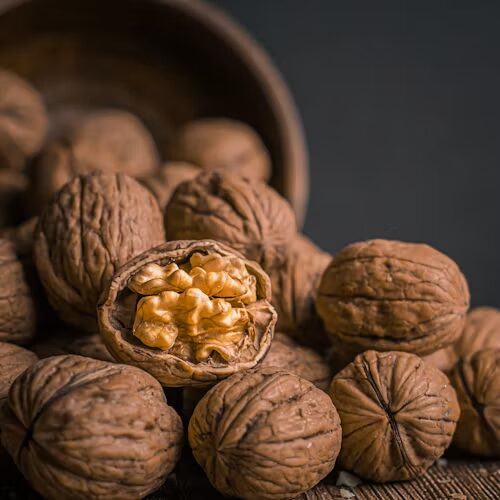
Can Dogs Eat Walnuts From a Tree?
This is a particularly important question for dog owners with walnut trees nearby.
Are Walnuts Growing in the Backyard Safe?
Don’t allow your dog to eat walnuts directly from a tree or the ground.
You may not know the variety, and fallen nuts can become contaminated with mold.
Can Dogs Eat Fallen Walnuts?
They shouldn’t.
A fallen walnut can be:
- Moldy
- Damaged
- Partially decomposed
- Infested
- Covered in soil
- Still surrounded by a hull
- Difficult to identify
Why Fallen Walnuts Can Become Moldy
Outdoor walnuts are exposed to moisture and changing temperatures.
Once damaged or wet, they can provide conditions favorable to mold growth.
This is particularly concerning because some molds produce tremorgenic mycotoxins.
Can Dogs Eat Black Walnuts From the Yard?
No.
If black walnut trees are present in your yard, make fallen nuts inaccessible to your dog.
The ASPCA specifically identifies black walnut as toxic to dogs.
Walnut Shells and Hulls in the Yard
Don’t assume that a dog will naturally know which parts of the walnut are edible.
Dogs may chew or swallow the entire object.
That means the kernel, shell, hull, mold, and species can all become relevant.
Why Dogs Shouldn’t Scavenge Under Walnut Trees
Scavenging makes it impossible to know exactly what your dog has eaten.
You might see your dog pick up a “walnut,” but you may not know:
- Whether it was black or English walnut
- Whether it was moldy
- Whether the shell was swallowed
- How much was consumed
Prevention is much easier than treating poisoning or an intestinal obstruction.
How to Prevent Dogs From Eating Fallen Walnuts
If walnut trees are near your home:
- Inspect the yard regularly.
- Pick up fallen walnuts promptly.
- Keep your dog away while cleaning.
- Dispose of nuts securely.
- Consider fencing off areas with heavy nut fall.
- Teach a reliable “leave it” command.
- Supervise dogs that like to scavenge outdoors.
Cleaning Up Walnuts From the Yard
Regular cleanup is especially important during periods when walnuts are falling.
Don’t leave piles of old nuts where dogs can investigate them later.
The safest walnut for a dog is one they never eat.
Symptoms of Walnut Poisoning in Dogs
Not every dog that eats a walnut develops poisoning. Symptoms depend heavily on what was eaten.
A plain English walnut may cause no symptoms at all in a small accidental exposure, while moldy or black walnut material can create much more serious problems.
Early Symptoms
Possible gastrointestinal signs include:
- Vomiting
- Diarrhea
- Loss of appetite
- Lethargy
- Weakness
- Abdominal discomfort
These symptoms are not specific to walnut poisoning, but they should be taken seriously after a known ingestion.
Neurological Symptoms
Neurological signs are particularly concerning after suspected toxic or moldy walnut exposure.
Watch for:
- Tremors
- Muscle twitching
- Incoordination
- Difficulty walking
- Muscle rigidity
- Seizures
ASPCA identifies tremors and seizures among the important signs associated with moldy black walnut material.
Symptoms of Mold Toxicity
Mold-related poisoning may produce:
- Vomiting
- Tremors
- Agitation
- Muscle rigidity
- Seizures
- Weakness
Neurological symptoms should be treated as an emergency.
Symptoms of Pancreatitis
A dog developing pancreatitis may show:
- Vomiting
- Diarrhea
- Abdominal pain
- Loss of appetite
- Lethargy
- Dehydration
The timing can vary, so don’t assume that a dog is safe simply because it appears normal immediately after eating a fatty food.
Symptoms of Intestinal Blockage
A swallowed shell or whole walnut can potentially cause a gastrointestinal obstruction.
Warning signs include:
- Repeated vomiting
- Loss of appetite
- Abdominal pain
- Lethargy
- Difficulty passing stool
- Straining to defecate
A suspected obstruction needs veterinary assessment.
How Quickly Do Walnut Poisoning Symptoms Appear?
There isn’t one predictable timeline for every walnut-related problem.
The onset can depend on the toxin involved, amount consumed, the dog’s health, and whether the problem is poisoning, digestive upset, pancreatitis, or physical obstruction.
Can Symptoms Be Delayed?
Yes.
Some complications may not become obvious immediately.
That’s why a dog that has consumed a suspicious walnut shouldn’t automatically be considered safe just because it looks normal at first.
Why You Shouldn’t Wait for Symptoms
Early veterinary advice can help determine whether monitoring at home is appropriate or whether examination and treatment are necessary.
This is especially important after:
- Black walnut ingestion
- Moldy walnut ingestion
- Shell ingestion
- Large quantities
- Unknown walnut exposure
- Any neurological symptoms
What Should I Do If My Dog Ate a Walnut?
If you’re searching “my dog ate a walnut,” don’t panic—but don’t ignore the details either.
Step 1: Find Out What Type of Walnut Was Eaten
Determine whether possible:
- English walnut
- Black walnut
- Unknown walnut
If it came from a tree, take note of the tree and surrounding area.
Step 2: Determine Whether It Was Moldy
Look for visible mold, discoloration, dampness, or decomposition.
Remember that you can’t reliably rule out toxins just by looking at the nut.
Step 3: Check Whether the Shell Was Swallowed
Tell your veterinarian whether your dog ate:
- Kernel only
- Shell
- Hull
- Entire walnut
Step 4: Estimate How Many Walnuts Were Eaten
Don’t worry about getting the number perfectly exact.
An estimate is still useful.
Step 5: Determine When Your Dog Ate Them
Record approximately when the ingestion happened.
This can help the veterinarian determine what steps, if any, are appropriate.
Step 6: Contact Your Veterinarian
When in doubt, call your veterinarian.
Have information about the walnut, amount, timing, dog size, and symptoms available.
What If My Dog Ate One English Walnut?
If it was a small amount of a plain, fresh English walnut and your dog is otherwise healthy, serious toxicity is unlikely.
Still, monitor your dog and contact your veterinarian if symptoms appear or if you aren’t sure what type of walnut was eaten.
What If My Dog Ate Several Walnuts?
Several walnuts create greater concern because of the fat and calorie load, as well as potential choking or obstruction if whole walnuts were swallowed.
Call your veterinarian for individualized advice.
What If My Dog Ate a Black Walnut?
Contact your veterinarian promptly.
Black walnuts are toxic to dogs, according to the ASPCA.
What If My Dog Ate a Moldy Walnut?
Treat this as more urgent.
Moldy walnuts can contain tremorgenic mycotoxins capable of causing neurological signs.
What If My Dog Ate a Walnut Shell?
Contact your veterinarian, particularly if your dog swallowed the shell rather than simply chewing it.
Watch closely for vomiting, abdominal pain, loss of appetite, lethargy, or difficulty passing stool.
Should I Make My Dog Vomit?
Do not induce vomiting at home unless a veterinarian or qualified animal poison-control professional specifically instructs you to do so.
Some situations make vomiting inappropriate or dangerous.
If your dog has eaten something potentially toxic, the safest first step is to contact a veterinary professional for instructions.
What Happens If a Dog Eats a Walnut?
The outcome depends on the exact exposure.
| Situation | Potential Concern | Recommended Response |
|---|---|---|
| Small piece of plain English walnut | Usually low toxicity concern | Monitor and ask vet if concerned |
| Several English walnuts | GI upset, high fat, pancreatitis risk | Contact veterinarian for advice |
| Black walnut | Toxicity | Contact veterinarian promptly |
| Moldy walnut | Mycotoxin poisoning | Seek prompt veterinary advice |
| Walnut shell | Choking/obstruction | Contact veterinarian |
| Salted walnut | Excess sodium | Monitor; seek advice after significant exposure |
| Seasoned walnut | Unsafe added ingredients | Check ingredients and contact vet if needed |
| Walnut dessert | Sugar, fat, chocolate, raisins, etc. | Evaluate all ingredients |
How Many Walnuts Are Toxic to Dogs?
There is no single number that applies to every dog.
This is one of the most important points to remember.
Is There a Toxic Dose for English Walnuts?
There isn’t a simple universal toxic dose for English walnut kernels.
A small accidental piece is very different from eating a large quantity.
How Many Black Walnuts Are Dangerous?
Don’t try to calculate a “safe number” of black walnuts.
Because black walnuts are considered toxic, any known ingestion warrants veterinary advice, particularly if the walnut was moldy or the dog is showing symptoms.
How Many Moldy Walnuts Are Dangerous?
Again, there isn’t a reliable household number.
The concentration of mycotoxins can vary significantly between contaminated foods.
Does Dog Size Affect Risk?
Yes.
A particular amount represents a different exposure for a tiny puppy than for a large adult dog.
Does the Type of Walnut Affect Risk?
Absolutely.
English walnuts and black walnuts should not be treated as interchangeable.
Does Chewing or Crushing Matter?
For certain stone-fruit pits and other cyanogenic plant materials, crushing can affect toxin release. With walnuts, however, the more immediate practical concerns are walnut species, mold contamination, amount, fat content, and physical obstruction.
Why There Is No Universal “Safe Number”
Because risk depends on:
- Walnut variety
- Mold contamination
- Dog size
- Quantity
- Shell/hull ingestion
- Preparation
- Existing health conditions
- Individual sensitivity
A fixed number would create a false sense of security.
Can Dogs Die From Eating Walnuts?
The good news is that a small accidental amount of plain English walnut is unlikely to be fatal for a healthy dog. However, that doesn’t mean every walnut exposure is harmless.
The risk becomes considerably more serious when a dog eats black walnuts, moldy walnuts, large quantities of walnuts, walnut shells, or foods containing other toxic ingredients.
Can Black Walnuts Be Fatal?
Black walnuts are listed as toxic to dogs, and severe exposure can cause serious illness. Mold contamination can make the situation even more dangerous because certain molds produce neurological toxins.
If your dog has eaten a black walnut, contact your veterinarian rather than waiting for symptoms.
Can Moldy Walnuts Be Fatal?
Severe mycotoxin exposure can potentially be life-threatening.
Moldy nuts may contain substances such as tremorgenic mycotoxins, which can cause tremors and seizures. Certain molds can also produce aflatoxins, which may cause serious liver damage.
Can Pancreatitis Become Life-Threatening?
Yes.
Although not every dog that eats fatty food develops pancreatitis, severe pancreatitis can require intensive veterinary treatment and may become life-threatening.
This is one reason to take large walnut consumption seriously even when the walnuts themselves aren’t a toxic variety.
Can a Walnut Cause Intestinal Obstruction?
A whole walnut or shell can potentially become lodged in the gastrointestinal tract.
An obstruction may prevent food and fluids from moving normally through the digestive system and can become a medical emergency.
Can Walnut Shells Be Fatal?
A swallowed shell can potentially cause choking or gastrointestinal obstruction.
The risk isn’t that every swallowed shell will cause a fatal problem, but because an obstruction or airway blockage can become life-threatening, shell ingestion should not be dismissed.
When Is Walnut Ingestion an Emergency?
Seek urgent veterinary care if your dog develops:
- Tremors
- Seizures
- Difficulty breathing
- Collapse
- Severe weakness
- Repeated vomiting
- Severe abdominal pain
- Significant loss of coordination
- Extreme lethargy
You should also seek prompt professional advice after known black walnut, moldy walnut, or significant shell ingestion.
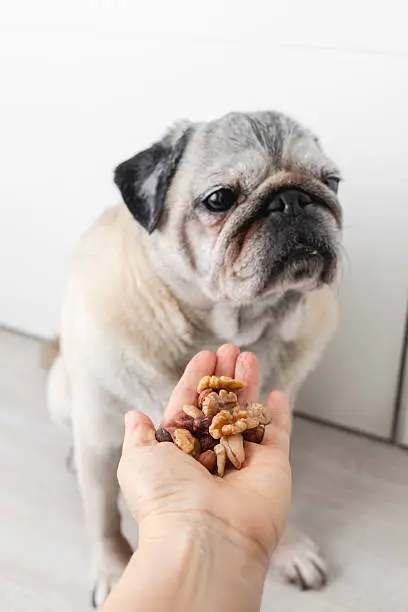
Can Puppies Eat Walnuts?
Puppies are curious, fast-moving, and often willing to put almost anything in their mouths.
That makes walnuts a particularly poor choice.
Are Walnuts Safe for Puppies?
It’s best not to give puppies walnuts.
Even if a tiny piece of plain English walnut isn’t considered directly toxic, puppies have smaller bodies and can be more vulnerable to choking and inappropriate foods.
Why Puppies Are More Vulnerable to Choking
A whole walnut can be a physical hazard for a small puppy.
Puppies also tend to chew and swallow objects they find interesting, making nuts, shells, and fallen walnuts especially problematic.
Puppy Digestive Systems and High-Fat Foods
Puppies need carefully balanced nutrition to support growth.
A fatty human snack can cause digestive upset and add unnecessary calories to their diet.
Puppies and Pancreatitis Risk
A large amount of fatty food can contribute to pancreatitis risk in dogs, and there is no nutritional reason to expose a growing puppy to that risk intentionally.
Can Puppies Eat English Walnuts?
A tiny accidental piece of fresh English walnut is unlikely to cause poisoning in most puppies, but intentional feeding isn’t recommended.
If a puppy ate several walnuts or swallowed a whole walnut or shell, contact your veterinarian.
Can Puppies Eat Black Walnuts?
No.
Black walnuts are toxic to dogs and should be kept away from puppies.
Safer Treats for Puppies
Depending on your veterinarian’s recommendations and the puppy’s age, better options may include appropriately sized:
- Puppy training treats
- Small pieces of plain cooked chicken
- Carrots
- Green beans
- Small portions of suitable fruit
Treats should complement—not replace—a puppy’s complete and balanced food.
Should You Ask Your Veterinarian Before Introducing Nuts?
If you are considering giving your puppy an unusual human food, asking your veterinarian is a good idea.
For puppies with digestive problems, food allergies, or special nutritional requirements, professional guidance is particularly important.
Can Senior Dogs Eat Walnuts?
Older dogs can have different nutritional needs and may be less tolerant of rich foods.
Are Walnuts Safe for Older Dogs?
There is no particular benefit to giving senior dogs walnuts.
A tiny piece of plain English walnut may not be toxic, but walnuts remain an unnecessarily fatty, calorie-dense treat.
Senior Dogs and Digestive Sensitivity
Some older dogs develop more sensitive digestive systems.
A sudden high-fat snack can result in:
- Vomiting
- Diarrhea
- Reduced appetite
- Abdominal discomfort
Senior Dogs With Pancreatitis
If your senior dog has a history of pancreatitis, follow the veterinarian-recommended diet carefully.
Don’t add walnuts without veterinary approval.
Senior Dogs With Obesity
Older dogs may become less active, making calorie control even more important.
Walnuts pack many calories into a relatively small amount, so they aren’t an efficient treat choice for a dog trying to maintain a healthy weight.
Senior Dogs With Diabetes
Dogs with diabetes often require carefully controlled diets and meal schedules.
Human snacks containing sugar, fat, or unpredictable calories aren’t ideal additions unless your veterinarian recommends them.
Senior Dogs With Kidney or Liver Disease
Dogs with kidney or liver disease may have specific dietary requirements.
Don’t assume that a food considered harmless for a healthy dog is appropriate for a dog with chronic disease.
Senior Dogs on Prescription Diets
If your dog eats a prescription veterinary diet, avoid introducing walnuts or other human snacks unless your veterinarian says they’re compatible with the diet.
Can Dogs With Pancreatitis Eat Walnuts?
Why Walnuts Are a Poor Choice for Dogs With Pancreatitis
Walnuts are naturally rich in fat.
For a dog that has already experienced pancreatitis, adding a high-fat human snack provides little benefit and potentially unnecessary risk.
High-Fat Foods and Pancreatic Inflammation
High-fat foods can be problematic for susceptible dogs.
That’s why veterinary dietary recommendations for dogs with pancreatitis often emphasize carefully controlled nutrition.
Can One Walnut Trigger Problems?
There is no reliable rule that one walnut will trigger pancreatitis.
However, if your dog has a history of pancreatitis, don’t deliberately test that theory.
Dogs With a History of Pancreatitis
These dogs should generally receive treats that fit the dietary plan created by their veterinarian.
A snack being “safe for most dogs” doesn’t necessarily mean it’s safe for a dog with a medical condition.
Safer Low-Fat Treat Options
Depending on your veterinarian’s recommendations, options may include:
- Small pieces of carrot
- Green beans
- Low-fat veterinary treats
- Appropriate prescription-diet treats
- Small amounts of plain, cooked lean protein
Always consider the dog’s overall daily calorie and fat intake.
Can Overweight Dogs Eat Walnuts?
Calories in Walnuts
Walnuts are energy dense, meaning a small amount can contribute a surprising number of calories.
For an overweight dog, unnecessary calorie-dense snacks can make weight management harder.
Why Nuts Are Calorie Dense
Nuts naturally contain substantial amounts of fat.
While dietary fat has important functions, excessive calories can contribute to weight gain.
Walnuts and Weight Gain
A dog doesn’t need walnuts to maintain a healthy coat, muscles, or energy levels.
Those nutritional needs are better met through a properly formulated diet.
Healthy Treat Choices for Overweight Dogs
Consider lower-calorie options such as:
- Carrot pieces
- Green beans
- Small pieces of cucumber
- Appropriate low-calorie dog treats
- Ice cubes for dogs that enjoy crunchy treats
Treat Calories and the 10% Rule
A commonly used veterinary nutrition guideline is that treats and other extras should make up only a small portion of a dog’s daily calories, often around 10%.
For overweight dogs, your veterinarian may recommend an even more carefully controlled approach.
Can Dogs With Sensitive Stomachs Eat Walnuts?
Can Walnuts Cause Diarrhea?
Yes.
The rich fat content can contribute to gastrointestinal upset, particularly when a dog eats more than a tiny amount.
Can Walnuts Cause Vomiting?
Yes. Vomiting is among the possible signs after eating too many walnuts or contaminated walnuts.
Can Walnuts Cause Gas?
A sudden dietary change can cause gas or digestive discomfort in some dogs.
Can Walnuts Cause Abdominal Pain?
Potentially, particularly if significant gastrointestinal upset, pancreatitis, or an obstruction develops.
Why High-Fat Foods Can Upset Sensitive Dogs
Some dogs simply don’t tolerate rich foods well.
If your dog has a history of vomiting or diarrhea after fatty treats, walnuts are a particularly poor choice.
When to Stop Giving Walnuts
The simplest answer is: don’t use walnuts as a routine treat.
If your dog develops vomiting, diarrhea, loss of appetite, lethargy, or abdominal discomfort after eating walnuts, stop offering them and contact your veterinarian if symptoms are persistent, severe, or concerning.
Are Walnuts Healthy for Dogs?
This is where human nutrition can create confusion.
Walnuts contain nutrients that can be valuable in a human diet, including fats, protein, fiber, and various micronutrients. But that doesn’t automatically mean they are beneficial for dogs.
Protein in Walnuts
Walnuts contain plant protein, but dogs don’t need walnuts as a protein source.
A properly formulated dog food provides appropriate protein in a form designed to meet canine nutritional requirements.
Healthy Fats and Omega-3 Fatty Acids
Walnuts contain fats, including omega-3 fatty acids.
However, more fat isn’t necessarily better for dogs.
The quantity and overall balance of nutrients matter, particularly for dogs with pancreatitis or weight problems.
Fiber in Walnuts
Walnuts contain dietary fiber, but dogs can obtain appropriate fiber from their complete diet and from safer foods.
Antioxidants
Walnuts contain antioxidant compounds.
Again, this doesn’t mean dogs need walnuts to obtain antioxidants.
Vitamins and Minerals
Walnuts provide various vitamins and minerals, but these aren’t reasons to add them to a dog’s diet.
Do Dogs Actually Need These Nutrients From Walnuts?
No.
Dogs require specific nutrients, not particular human foods.
A complete and balanced dog food is designed to provide those nutrients in appropriate amounts.
Are Walnut Benefits Worth the Risks?
For most dogs, no.
There are plenty of other treats that are easier to portion, lower in fat, and less likely to create choking, obstruction, mold, or toxicity concerns.
Can Dogs Eat Different Types of Walnuts?
Not all walnuts should be treated identically.
| Walnut Type | For Dogs? | Main Consideration |
|---|---|---|
| English walnut | Small accidental amount generally low toxicity | Fat, calories, mold |
| Black walnut | No | Toxicity |
| California walnut | Generally refers to English walnut varieties | Fat, mold, preparation |
| Persian walnut | Usually English walnut | Fat, calories |
| Japanese walnut | Avoid intentional feeding | Variety and identification |
| Fresh walnut | Not recommended as routine treat | Fat |
| Dried walnut | Not recommended | Fat/calories |
| Raw walnut | Not recommended | Fat, mold |
| Roasted walnut | Not recommended | Fat, salt/seasonings |
| Shelled walnut | Not recommended | Fat/calories |
| Walnut in shell | No | Choking/obstruction |
Can Dogs Eat English Walnuts?
A tiny amount of plain English walnut may be tolerated, but it’s not necessary or recommended as a routine snack.
Can Dogs Eat Black Walnuts?
No. Black walnuts are toxic to dogs.
Can Dogs Eat California Walnuts?
“California walnuts” generally refers to English walnut varieties grown commercially in California.
The same basic precautions apply: plain English walnut isn’t generally considered directly toxic in tiny amounts, but walnuts remain high in fat and can carry mold and physical hazards.
Can Dogs Eat Persian Walnuts?
Persian walnut is another name associated with the English walnut.
Again, small accidental exposure is different from intentional feeding.
Can Dogs Eat Japanese Walnuts?
It’s safest not to feed unfamiliar walnut varieties to dogs.
If your dog ate a nut from a tree and you’re uncertain what species it was, tell your veterinarian exactly where it came from.
Can Dogs Eat Fresh Walnuts?
Freshness reduces one concern—mold—but doesn’t eliminate fat, calorie, choking, or obstruction risks.
Can Dogs Eat Dried Walnuts?
Dried walnuts remain high in fat and calories.
“Dry” does not mean “low risk.”
Can Dogs Eat Raw Walnuts?
A small piece of plain English walnut isn’t generally considered toxic, but raw walnuts still aren’t a recommended routine treat.
Can Dogs Eat Roasted Walnuts?
Plain roasted English walnuts aren’t inherently transformed into a poison by roasting, but added salt, oils, sugar, or seasonings can create additional concerns.
Can Dogs Eat Shelled Walnuts?
A shelled walnut eliminates the hard-shell hazard but doesn’t eliminate fat and calorie concerns.
Can Dogs Eat Walnuts in the Shell?
No.
Whole walnuts can pose choking and gastrointestinal obstruction risks.
Can Dogs Eat Walnut Products?
Walnut-containing products can be even more problematic than plain walnut kernels.
| Walnut Product | Can Dogs Eat It? | Main Concern |
|---|---|---|
| Plain English walnut | Not recommended | Fat/calories |
| Black walnut | No | Toxicity |
| Moldy walnut | No | Mycotoxins |
| Walnut shell | No | Choking/blockage |
| Salted walnuts | Avoid | Excess sodium |
| Roasted walnuts | Not recommended | Fat/seasonings |
| Walnut butter | Not recommended | Fat/additives |
| Walnut oil | Not recommended | Very high fat |
| Walnut cake | No | Sugar/fat |
| Walnut brownies | No | Chocolate/fat |
| Walnut cookies | No | Sugar/fat |
| Banana walnut bread | Not recommended | Sugar/fat/ingredients |
| Walnut ice cream | No | Dairy/sugar/fat |
| Candied walnuts | No | Added sugar |
| Spiced walnuts | No | Seasonings |
Walnuts vs. Other Nuts for Dogs
Walnuts aren’t the only nuts that require caution.
Can Dogs Eat Peanuts?
Plain, unsalted peanuts are generally not considered toxic to dogs, but they are high in fat and calories.
Avoid peanut products containing xylitol.
Can Dogs Eat Cashews?
Plain cashews aren’t generally toxic to dogs, but their fat and calorie content means they should not become a major part of the diet.
Can Dogs Eat Almonds?
Sweet almonds aren’t generally considered toxic, but whole almonds can present a choking or obstruction risk, particularly for small dogs.
Can Dogs Eat Pecans?
Pecans aren’t a recommended dog treat because of their high fat content and potential mold concerns.
Can Dogs Eat Pistachios?
Plain pistachios aren’t generally considered directly toxic, but shells, salt, fat, and mold can create problems.
Can Dogs Eat Macadamia Nuts?
No.
Macadamia nuts are toxic to dogs and can cause neurological and gastrointestinal signs.
Which Nuts Are Toxic to Dogs?
Important examples include:
- Macadamia nuts
- Black walnuts
Mold-contaminated nuts can also create significant toxicity concerns.
Which Nuts Are Choking Hazards?
Many whole nuts can potentially become choking hazards.
The risk is greater when:
- The dog is small
- The nut is large
- The dog swallows food quickly
- The shell is present
Why Most Nuts Aren’t Ideal Dog Treats
Even when a nut isn’t poisonous, many nuts are high in fat and calories.
Dogs can get everything they need from nutritionally appropriate food and safer treats.
| Nut | Generally Toxic? | Major Concern |
|---|---|---|
| English walnut | Generally no | Fat, mold, choking |
| Black walnut | Yes | Toxicity |
| Macadamia | Yes | Toxicity |
| Peanut | Generally no | Fat, salt, additives |
| Cashew | Generally no | Fat/calories |
| Almond | Generally no | Choking, fat |
| Pistachio | Generally no | Fat, shell/choking |
| Pecan | Avoid | Fat, mold/toxins |
Safer Treat Alternatives to Walnuts for Dogs
If you’re looking for something to reward your dog, there are plenty of simpler choices.
Blueberries
A few plain blueberries can make a convenient, bite-sized treat for many dogs.
Strawberries
Strawberries can also be offered in small, appropriately sized pieces.
Apples Without Seeds and Core
Plain apple flesh can be a crunchy treat.
Remove the core and seeds and cut the apple into suitable pieces.
Bananas
Small pieces of banana can be offered occasionally because bananas contain natural sugar and calories.
Carrots
Carrots are a popular low-calorie treat option for many dogs.
Green Beans
Plain, cooked or appropriately prepared green beans can provide a crunchy, lower-calorie option.
Plain Cooked Chicken
Small pieces of plain, fully cooked chicken can work well as a high-value treat.
Avoid seasoning, garlic, onion, and excessive fat.
Plain Pumpkin
Plain pumpkin can be useful as an occasional food addition for some dogs, but avoid pumpkin pie filling, which contains added ingredients.
Why Low-Fat Treats May Be Better
For dogs prone to weight gain or pancreatitis, lower-fat treats may be a much better choice than nuts.
How to Introduce New Foods Safely
Whenever you introduce a new food:
- Give a small amount.
- Avoid introducing several new foods at once.
- Watch for vomiting or diarrhea.
- Stop if your dog develops a reaction.
- Ask your veterinarian if your dog has a medical condition or special diet.
How to Prevent Dogs From Eating Walnuts
Prevention is especially important if you have walnut trees near your home.
Keep Walnuts Out of Reach
Store packaged walnuts in a secure cupboard or sealed container.
Store Walnuts in Secure Containers
Dogs can be surprisingly persistent when they smell human food.
Don’t leave an open bag of walnuts on a countertop or low table.
Keep Dogs Away From Walnut Trees
If your yard contains walnut trees, supervise your dog during periods of heavy nut fall.
Pick Up Fallen Walnuts
Regularly remove fallen walnuts, shells, and hulls from the yard.
Remove Black Walnuts From the Yard
Black walnuts deserve particular attention because they are toxic to dogs.
Don’t Leave Nut Bowls on Low Tables
A dog can easily knock over a bowl of nuts while exploring.
Keep Walnut Desserts Away From Dogs
Store cakes, brownies, cookies, and breads containing walnuts safely away from pets.
Secure the Trash Can
Dogs may find discarded walnut shells, desserts, or spoiled food in the garbage.
Teach the “Leave It” Command
A reliable “leave it” command can help prevent dogs from eating dangerous objects outdoors.
Supervise Dogs Outdoors
Supervision is particularly important for dogs that naturally scavenge.
Frequently Asked Questions About Dogs and Walnuts
Can dogs eat walnuts?
Dogs should not be routinely fed walnuts. A small amount of plain English walnut is generally not considered directly toxic, but walnuts are high in fat and carry choking, obstruction, and mold-related risks.
Are walnuts poisonous to dogs?
Some walnuts are. Black walnuts are toxic, while plain English walnuts aren’t generally considered directly toxic in tiny amounts.
Are English walnuts safe for dogs?
A small piece may be tolerated by many healthy dogs, but English walnuts aren’t recommended as a regular treat.
Can dogs eat black walnuts?
No. Black walnuts are toxic to dogs.
Are black walnuts poisonous to dogs?
Yes. The ASPCA lists black walnut as toxic to dogs.
Can dogs eat moldy walnuts?
No. Moldy walnuts can contain mycotoxins that may cause serious illness.
Why are moldy walnuts dangerous to dogs?
Certain molds produce toxins that can cause vomiting, tremors, muscle rigidity, and seizures.
Can walnuts cause seizures in dogs?
Moldy or toxic walnut exposure can be associated with seizures. Seizures require emergency veterinary attention.
Can walnuts cause tremors in dogs?
Yes. Tremors are an important warning sign associated with toxic or moldy walnut exposure.
Can walnuts cause pancreatitis in dogs?
A large amount of high-fat food can increase pancreatitis risk, especially in susceptible dogs.
Can one walnut hurt a dog?
One small piece of plain English walnut is unlikely to seriously harm most healthy dogs, but a whole walnut, black walnut, moldy walnut, or walnut with shell is a different situation.
How many walnuts can a dog eat?
There is no universal recommended serving size. Walnuts are best avoided as a routine treat.
How many walnuts are toxic to dogs?
There is no single number that applies to all dogs. Risk depends on walnut type, mold, quantity, shell, dog size, and health.
Can dogs eat walnut shells?
No. Walnut shells can create choking and gastrointestinal obstruction risks.
Can dogs digest walnut shells?
Dogs should not be expected to safely digest hard walnut shells.
Can walnut shells cause intestinal blockage?
Yes. A swallowed shell or whole walnut can potentially cause a gastrointestinal obstruction.
Can dogs eat salted walnuts?
It’s best to avoid them because of their high sodium content and potential additional ingredients.
Can dogs eat roasted walnuts?
Plain roasted English walnuts aren’t considered inherently poisonous, but they’re still not recommended as a regular treat. Seasoned or salted varieties should be avoided.
Can dogs eat walnut butter?
Walnut butter is generally not recommended because it is calorie dense and may contain salt, sugar, or unsafe sweeteners.
Can dogs eat walnuts in desserts?
No. Walnut desserts may contain chocolate, raisins, xylitol, excessive sugar, butter, or other ingredients dangerous to dogs.
Can dogs eat walnuts from a tree?
Dogs shouldn’t eat walnuts directly from trees or the ground because you may not know the species or whether the nut is moldy.
Can dogs eat fallen walnuts?
No. Fallen walnuts can become moldy and may also contain shells or hulls.
What happens if my dog eats a walnut?
A small piece of plain English walnut may cause no problems, while larger quantities can cause gastrointestinal upset. Black, moldy, or shelled walnuts require greater concern.
What should I do if my dog ate a walnut?
Determine the type of walnut, amount, whether it was moldy or shelled, and when it was eaten. Contact your veterinarian if the exposure is significant or uncertain.
What if my dog ate a black walnut?
Contact your veterinarian promptly because black walnuts are toxic to dogs.
What if my dog ate a moldy walnut?
Contact a veterinarian promptly, particularly if your dog develops vomiting, tremors, weakness, or seizures.
What if my dog swallowed a walnut shell?
Contact your veterinarian for advice because of the potential for choking or intestinal obstruction.
Should I make my dog vomit after my dog eats walnuts?
Do not induce vomiting unless a veterinarian or animal poison-control professional specifically tells you to do so.
How long does walnut poisoning take?
There isn’t one fixed timeline. It depends on the type of exposure and toxin involved. Symptoms may not appear immediately.
Can walnut poisoning kill dogs?
Severe toxic exposure can potentially be fatal, especially with mold toxins or black walnuts. A small accidental amount of plain English walnut is much less concerning.
Can puppies eat walnuts?
Puppies should not be intentionally fed walnuts. Their smaller size and tendency to swallow objects increase choking and obstruction concerns.
Can senior dogs eat walnuts?
Walnuts aren’t necessary for senior dogs and may be particularly inappropriate for older dogs with obesity, pancreatitis, or other dietary restrictions.
Can dogs with pancreatitis eat walnuts?
Walnuts are generally a poor choice for dogs with pancreatitis because of their high fat content.
Can overweight dogs eat walnuts?
They are not a good treat for overweight dogs because walnuts are calorie dense.
Are walnuts healthy for dogs?
Walnuts contain nutrients, but dogs don’t need them to obtain those nutrients. Safer, lower-fat treats are usually a better choice.
What nuts are safe for dogs?
Some nuts, such as plain peanuts and cashews, aren’t generally toxic, but most nuts are high in fat and calories and aren’t ideal regular treats.
What nuts are poisonous to dogs?
Macadamia nuts and black walnuts are important examples of nuts that should be avoided because of toxicity concerns.
Conclusion: Can Dogs Eat Walnuts?
So, can dogs eat walnuts?
The safest answer is dogs generally shouldn’t be given walnuts intentionally.
A tiny piece of a plain English walnut is generally not considered directly toxic to most healthy dogs, so accidental ingestion isn’t automatically a reason to panic. However, walnuts are high in fat and calories, and eating too many can lead to digestive upset and potentially increase the risk of pancreatitis. They can also become a choking or intestinal obstruction hazard when swallowed whole.
Black walnuts are different. They are considered toxic to dogs and should be kept completely away from your pet. Moldy walnuts can be even more concerning because certain molds produce mycotoxins capable of causing neurological signs such as tremors and seizures.
The same caution applies to walnuts found outside. Fallen walnuts may be black walnuts, may have their shells or hulls attached, and may have developed mold after exposure to moisture. For a dog that loves scavenging, a pile of fallen walnuts can therefore become a genuine hazard.
Walnut products aren’t a good workaround either. Salted walnuts, seasoned walnuts, walnut butter, cakes, brownies, cookies, and other desserts may contain excessive fat, sugar, salt, chocolate, xylitol, raisins, garlic, onion, or other ingredients that can cause additional problems.
If your dog accidentally ate one small piece of plain English walnut, serious poisoning is unlikely. But if the walnut was black, moldy, in the shell, heavily seasoned, or consumed in a large quantity, contact your veterinarian for guidance.