If you have ever eaten a hot dog around your dog, you probably know exactly what happens next. Your furry friend may sit beside you, stare at the food, wag their tail, or give you that unmistakable look that says, “Surely you’re going to share that.”
Dogs are naturally curious about human food, especially foods with strong smells and rich flavors. Hot dogs are no exception. They are meaty, soft, easy to chew, and often smell irresistible to dogs. But just because your dog wants a bite doesn’t mean a hot dog is a good choice for them.
So, can dogs eat hot dogs? The short answer is: dogs should generally not be fed hot dogs, especially raw hot dogs. A tiny amount of plain, cooked hot dog may not cause a problem in an otherwise healthy dog, but hot dogs are highly processed and can contain large amounts of sodium, fat, preservatives, and seasonings. Some products may also contain ingredients such as onion or garlic that are unsafe for dogs.
Raw hot dogs deserve additional caution. Although many commercially packaged hot dogs are technically precooked before packaging, they can still be contaminated after processing and should be handled according to the package’s food-safety instructions. Feeding them raw also doesn’t eliminate the concerns about their high salt, fat, and additive content.
There’s an important distinction between something being “not immediately toxic” and being “healthy or recommended.” A small bite might not poison your dog, but that doesn’t mean hot dogs belong in their regular diet.
In this guide, we’ll look at whether dogs can eat raw or cooked hot dogs, why these processed meats can be problematic, what happens if your dog eats one, how much might be too much, and which healthier treats you can offer instead.
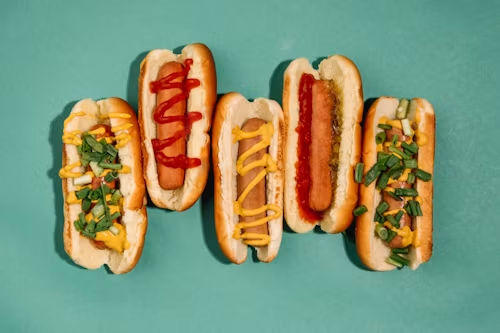
Quick Answer: Can Dogs Eat Hot Dogs?
Can dogs eat hot dogs? Technically, a healthy adult dog may tolerate a small amount of plain, fully cooked hot dog, but hot dogs are not recommended as a regular dog treat. They are often high in sodium and fat and may contain preservatives, artificial ingredients, onion, garlic, or other seasonings.
Raw hot dogs are best avoided. Even though many hot dogs are precooked during manufacturing, eating them straight from the package can still carry food-safety concerns depending on the product and how it has been handled.
For a simple answer:
Dogs should not be fed raw hot dogs. A small piece of plain, fully cooked hot dog may be tolerated by some healthy dogs, but hot dogs are generally a poor treat choice because they can be high in sodium, fat, preservatives, and potentially harmful seasonings.
Are Hot Dogs Toxic to Dogs?
Most plain hot dogs aren’t inherently poisonous in the same way that foods such as chocolate, grapes, or certain forms of xylitol can be. However, their ingredients can create problems.
For example, a hot dog may contain:
- High levels of sodium
- Significant amounts of fat
- Preservatives
- Artificial flavorings
- Onion or garlic powder
- Spices and seasonings
- Added sugars
- Other ingredients that aren’t necessary in a dog’s diet
The exact risk depends on the brand, ingredients, amount eaten, and size and health of the dog.
A large dog that steals a small piece may experience nothing more than a little stomach upset—or nothing at all. A tiny dog that eats several hot dogs, however, has a much greater reason for concern.
Can One Small Piece Hurt a Healthy Dog?
Usually, one tiny piece is unlikely to cause serious problems in an otherwise healthy adult dog, particularly if it is plain and fully cooked.
That doesn’t mean you should make a habit of sharing your hot dog.
Think of it this way: one bite of a salty processed food isn’t necessarily a disaster, but repeatedly feeding it can add unnecessary sodium, fat, and calories to your dog’s diet.
If your dog accidentally grabbed a small piece from your plate, there’s generally no reason to panic. Remove the remaining food, check the ingredients if possible, provide access to fresh water, and keep an eye on your dog.
The situation changes if your dog:
- Ate several hot dogs
- Is very small
- Ate a whole hot dog quickly
- Ate hot dogs containing onion or garlic
- Has an existing medical condition
- Develops vomiting, diarrhea, weakness, or other concerning symptoms
In those situations, contacting your veterinarian is the safest approach.
Why Do Veterinarians Generally Recommend Avoiding Hot Dogs?
The main issue isn’t that every hot dog contains one extremely dangerous ingredient. Instead, several less-desirable characteristics can occur together.
Hot dogs are processed meats rather than nutritionally balanced dog treats. They can be calorie-dense, salty, fatty, and heavily seasoned.
Your dog can get protein from much healthier sources, such as plain cooked chicken or turkey, without all the extra ingredients commonly found in processed meat.
That’s why a veterinarian may recommend choosing a dog-specific treat or plain, unseasoned meat instead of giving your dog a hot dog.
When Might a Small Amount Be Tolerated?
If a healthy adult dog receives a very small piece of plain, fully cooked hot dog, it may not cause any noticeable reaction.
If hot dog is used occasionally as a particularly high-value training reward, the piece should be very small rather than giving the dog an entire sausage.
However, there’s no universal serving size that’s appropriate for every dog. A Chihuahua and a Great Dane don’t have the same nutritional needs, and a dog with kidney disease or another health condition may need a much stricter diet.
Are Hot Dogs Safe for Dogs?
Whether a hot dog is safe depends on several factors, including what is in the hot dog, how much your dog ate, whether it was cooked, and your dog’s individual health.
A plain hot dog may not contain a classic canine toxin, but it still isn’t an ideal food for dogs.
The biggest concerns include sodium, fat, processing, additives, seasonings, and choking.
And when the question specifically is “can dogs eat hot dogs raw?”, the answer should be even more cautious: don’t intentionally feed raw hot dogs to your dog.
Are Hot Dogs Toxic to Dogs?
A standard plain hot dog isn’t automatically toxic to dogs.
The problem is that “not toxic” doesn’t mean “healthy.”
Consider plain cooked chicken. It can provide useful protein without requiring a long list of ingredients. A typical processed hot dog, on the other hand, may contain meat or meat products along with salt, preservatives, flavorings, spices, and other additives.
Some hot dogs can also contain onion or garlic, both of which belong to the Allium family and can be harmful to dogs.
Therefore, always consider the ingredient list, rather than assuming that every hot dog is the same.
Why Hot Dogs Are Not a Healthy Dog Treat
Dogs need a balanced diet that supplies appropriate amounts of protein, fat, vitamins, minerals, and other nutrients.
Hot dogs don’t provide a nutritional advantage that dogs can’t get elsewhere.
While they can contain protein, they may also bring along:
- Excess sodium
- Unnecessary calories
- High amounts of fat
- Preservatives
- Flavorings
- Seasonings
- Potentially harmful ingredients
This makes hot dogs a poor choice when healthier options are readily available.
Your dog doesn’t need to eat perfectly every single day, but treats should ideally contribute something useful—or at least avoid unnecessary nutritional drawbacks.
The Difference Between Toxic Foods and Unhealthy Foods
This is one of the most important points for dog owners to understand.
Some foods are toxic to dogs. Even relatively small quantities can potentially cause serious poisoning depending on the food and dose.
Other foods are simply unhealthy or inappropriate.
Hot dogs generally fall into the second category, although certain ingredients added to a particular product can create a genuine toxicity concern.
For example:
| Food characteristic | Potential concern |
|---|---|
| High sodium | Excessive salt intake |
| High fat | Digestive upset and pancreatitis risk |
| Onion/garlic | Potential toxicity |
| Large pieces | Choking risk |
| Preservatives | Unnecessary processed ingredients |
| High calories | Weight gain over time |
| Raw/poorly handled product | Food-safety concerns |
So if your dog eats one small bite of a plain hot dog, don’t automatically assume they’ve been poisoned.
At the same time, don’t interpret that as permission to make hot dogs a daily snack.
Why the Ingredients Matter More Than the Meat Itself
The word “meat” can make a hot dog sound naturally healthy for a dog.
But the finished product is much more complicated than a piece of plain meat.
Compare:
Plain cooked chicken:
Chicken + heat
Processed hot dog:
Meat or meat ingredients + salt + fat + preservatives + flavorings + seasonings + other additives
The ingredients vary by manufacturer, so reading the label is important.
If you’re wondering whether your particular hot dog is suitable for your dog, don’t rely only on whether it is labeled beef, chicken, turkey, or pork. Check the entire ingredient list.
Why Are Hot Dogs Bad for Dogs?
There are several reasons hot dogs aren’t considered an ideal food for dogs. The biggest concerns involve sodium and fat, but the processing method and additional ingredients matter too.
Let’s take a closer look.
Hot Dogs Are High in Sodium
One of the biggest concerns with hot dogs is salt.
Humans commonly eat salty foods, but dogs don’t need the same amount of sodium found in many processed human foods.
A hot dog can contain a surprisingly large amount of sodium relative to its small size. If a dog eats multiple hot dogs, the total sodium intake can add up quickly.
How Much Sodium Can a Hot Dog Contain?
The exact amount varies significantly between brands and recipes. Some products contain several hundred milligrams of sodium in a single serving.
That’s one reason you shouldn’t assume that a small sausage is nutritionally insignificant.
Always check the Nutrition Facts label if you’re trying to determine how much sodium your dog may have consumed.
Why Dogs Need Much Less Sodium Than Humans
Sodium is an essential mineral, so dogs do need some of it.
The problem is excessive intake.
A complete and balanced commercial dog food already supplies the sodium your dog needs. Adding salty processed foods on top of that can unnecessarily increase their intake.
For this reason, treats should generally make up only a small portion of your dog’s overall calories and shouldn’t be loaded with salt.
Excessive Salt and Dehydration
Too much salt can increase thirst and cause your dog to drink more water.
A dog that has eaten a particularly salty meal may seem unusually thirsty afterward.
Large amounts of sodium can become much more serious, potentially causing significant disturbances in the body’s fluid and electrolyte balance.
Sodium and Increased Thirst
After eating salty food, your dog may:
- Drink more water than usual
- Urinate more frequently
- Seem restless
- Experience digestive upset
Mild thirst isn’t necessarily an emergency, but large amounts of salt can be dangerous, especially in smaller dogs.
Risks of Excessive Sodium Intake
Severe sodium exposure can potentially cause:
If your dog consumes a large quantity of very salty food or develops serious symptoms, contact a veterinarian promptly.
Hot Dogs Can Be High in Fat
Another reason hot dogs aren’t ideal for dogs is their fat content.
Fat itself isn’t inherently bad for dogs. Dogs need dietary fat as part of a balanced diet. The issue is that many human foods provide far more fat than your dog needs from a treat.
Why Fatty Foods Can Upset a Dog’s Stomach
A sudden intake of rich or fatty food can cause gastrointestinal upset.
Your dog may develop:
- Gas
- Loose stool
- Diarrhea
- Vomiting
- Abdominal discomfort
Dogs that aren’t accustomed to rich foods can be particularly sensitive.
Fat and Obesity
Calories matter, even when the food is given as a treat.
If you regularly give your dog hot dogs in addition to their normal meals, those extra calories can contribute to weight gain over time.
Obesity can affect a dog’s mobility, stamina, and overall health, so treats should be considered part of their total daily calorie intake.
Fat and Pancreatitis
High-fat foods can also be a concern because dietary indiscretion is associated with episodes of pancreatitis in dogs.
Pancreatitis is inflammation of the pancreas and can cause symptoms such as vomiting, abdominal pain, loss of appetite, and lethargy.
A single small bite doesn’t mean your dog will develop pancreatitis. However, repeatedly giving rich, fatty foods isn’t a sensible choice—particularly for dogs that have previously experienced pancreatitis.
Why Dogs With Pancreatitis Should Avoid Hot Dogs
If your dog has a history of pancreatitis or has been placed on a low-fat diet by a veterinarian, don’t give them hot dogs unless your veterinarian specifically approves them.
A treat that seems tiny to you can still contain more fat than is appropriate for a dog following a carefully controlled diet.
Hot Dogs Are Highly Processed
Hot dogs are classified as processed meat, meaning they have undergone processing beyond simply cutting or cooking a fresh piece of meat.
Depending on the product, processing can involve curing, smoking, seasoning, emulsifying, and adding preservatives.
What Processed Meat Means
The exact manufacturing process varies, but the goal is generally to create a product with a consistent texture, flavor, shelf life, and appearance.
That convenience is useful for humans, but it doesn’t make hot dogs nutritionally ideal for dogs.
Dogs can obtain protein from less processed sources without needing all those additional ingredients.
Preservatives
Many hot dogs use preservatives or curing agents to maintain quality and extend shelf life.
These ingredients are permitted for use in human foods within regulated limits, but that doesn’t mean a dog needs them as part of its daily diet.
The more frequently you offer processed human foods, the more unnecessary ingredients you introduce into your dog’s overall diet.
Nitrates and Nitrites
Some processed meats contain nitrates or nitrites, which are commonly associated with curing and preservation.
Their presence is one more reason hot dogs aren’t a first-choice treat for dogs.
If you’re choosing between a tiny piece of plain cooked chicken and a processed sausage containing multiple additives, the plain chicken is usually the more sensible option.
Artificial Ingredients
Depending on the brand, a hot dog can contain various:
- Flavorings
- Stabilizers
- Preservatives
- Colorings
- Seasonings
- Other additives
Not every additive is necessarily poisonous to dogs, but there’s little nutritional reason to make these ingredients part of your dog’s routine.
Why Processed Meat Isn’t an Ideal Dog Treat
The simplest approach is often the best.
A dog doesn’t need a processed sausage to enjoy a tasty reward. Plain, lean, cooked meat can provide a much simpler alternative.
Hot Dogs May Contain Garlic or Onion
This is an especially important reason to read the label.
Some hot dogs and flavored sausages contain onion powder, garlic powder, or related ingredients.
Garlic Powder
Garlic and concentrated garlic products can be harmful to dogs. Garlic powder can be particularly easy to overlook because it may appear among many other ingredients on a label.
Onion Powder
The same concern applies to onion powder.
A dog owner might look at a hot dog and see only meat, without realizing that a seasoning blend contains onion.
Why Allium Ingredients Are Dangerous for Dogs
Onions, garlic, chives, leeks, and related plants belong to the Allium family.
These foods can damage red blood cells in dogs and may lead to anemia after sufficient exposure.
The risk depends on the type and amount consumed, so if your dog eats a product containing onion or garlic, don’t guess about whether the amount was safe.
Hidden Ingredients on Labels
Ingredients such as onion powder and garlic powder can be easy to miss.
Before sharing any processed food with your dog, check the label for terms such as:
- Onion
- Onion powder
- Garlic
- Garlic powder
- Chives
- Shallots
- Leeks
When in doubt, choose a different treat.
Artificial Sweeteners and Other Additives
Hot dogs can contain more than meat, salt, and preservatives.
Some processed foods may contain sweeteners, flavor enhancers, or other additives.
Artificial Sweeteners
Sweeteners deserve special attention because some are dangerous for dogs.
The most important one for dog owners to recognize is xylitol, also known as birch sugar in some products.
Xylitol can cause a rapid drop in blood sugar and potentially serious illness in dogs. It is more commonly found in products such as sugar-free foods, gum, candy, and some other human products than in ordinary hot dogs, but checking ingredient labels is still a good habit.
If you discover that your dog has eaten a product containing xylitol, contact a veterinarian or animal poison service immediately.
MSG
Some processed foods contain monosodium glutamate (MSG) or other flavor enhancers.
MSG itself is not the primary reason hot dogs are discouraged for dogs. The bigger issue is the overall formulation: high sodium, fat, processing, and seasonings.
Added Sugars
Sugar isn’t a useful ingredient for your dog.
Although a small amount generally isn’t poisonous, routinely giving sugary human foods can add unnecessary calories and contribute to weight gain.
Flavorings and Seasonings
Seasonings are another reason to be cautious.
A plain product may be very different from a heavily flavored sausage containing spices, onion, garlic, or other ingredients.
When it comes to dogs, simple is usually better.
Nutritional Value of Hot Dogs for Dogs
At first glance, a hot dog may seem like a reasonable source of protein. After all, it contains meat.
But nutrition isn’t only about protein.
When deciding whether a food is a good treat for your dog, you should also consider fat, sodium, calories, ingredients, and overall nutritional quality.
Do Hot Dogs Provide Protein?
Yes, hot dogs generally contain protein.
Protein is important for dogs because it supports muscles, tissues, enzymes, hormones, and many normal body functions.
The problem is that your dog can get high-quality protein from better sources.
Plain cooked chicken, turkey, lean beef, and appropriately formulated dog treats can provide protein without relying on a heavily processed sausage.
How Much Fat Is in a Typical Hot Dog?
The amount varies considerably by product.
Some hot dogs are relatively fatty, while lower-fat chicken or turkey versions may contain less.
However, “lower fat” doesn’t automatically mean healthy for dogs.
A turkey hot dog may still be high in sodium or contain seasonings that you don’t want your dog consuming.
Always evaluate the entire product rather than focusing on one nutritional number.
How Much Sodium Is in a Hot Dog?
Sodium content can be significant.
Because the exact amount varies by brand and size, check the package label rather than relying on a generic number.
If your dog has eaten several hot dogs, knowing the product’s sodium content can be useful information to provide your veterinarian.
Are Hot Dogs High in Calories?
They can be.
A hot dog may look small, but calories from treats can accumulate quickly, particularly in small dogs.
For example, giving several pieces throughout the day may seem insignificant, but those pieces are added to your dog’s normal meals.
Do Hot Dogs Provide Any Important Nutrients?
Hot dogs can provide protein, fat, and certain nutrients naturally present in meat.
However, they aren’t nutritionally necessary.
A complete and balanced dog food should already provide the nutrients your dog needs. Treats should complement that diet rather than replace it.
Why Nutritional Benefits Don’t Outweigh the Risks
The biggest issue is opportunity cost.
If your dog loves meat, why choose a salty processed sausage when you can offer a small amount of plain cooked chicken or another dog-appropriate treat?
For most dogs, the healthier alternative provides the better balance of taste and nutrition.
Hot Dog Nutrition at a Glance
| Nutritional Factor | Hot Dogs | Why It Matters for Dogs |
|---|---|---|
| Protein | Moderate | Dogs need quality protein |
| Fat | Often high | May contribute to digestive problems and excess calories |
| Sodium | Often high | Excessive intake can be harmful |
| Calories | Moderate to high | Can contribute to weight gain |
| Preservatives | Common | Not necessary as a routine treat |
| Seasonings | Varies | Some ingredients may be harmful |
The takeaway is simple: a hot dog may contain protein, but that doesn’t make it a good protein source for your dog.
Can Dogs Eat Hot Dogs in Small Amounts?
This is where many dog owners become confused.
If hot dogs aren’t recommended, does eating one tiny piece automatically mean your dog is in danger?
No.
For most healthy adult dogs, accidentally eating a small amount of plain hot dog isn’t likely to result in serious illness. The concern is more about quantity, frequency, ingredients, and individual health.
Is One Bite of Hot Dog Safe?
For a healthy adult dog, a tiny bite of plain hot dog may be tolerated without any obvious problems.
Still, don’t deliberately make it a regular treat.
If you’re sharing food with your dog, a small piece of plain cooked chicken is generally a better choice.
How Much Hot Dog Can a Dog Eat?
There isn’t one universal amount that applies to every dog.
A dog’s:
- Body size
- Age
- Weight
- Overall health
- Diet
- Activity level
- Sensitivity to rich foods
all matter.
A large dog and a tiny toy breed should never be treated as though they have identical nutritional requirements.
Why Portion Size Matters
Even foods that aren’t toxic can become problematic when eaten in excessive amounts.
A small bite may contain relatively little sodium and fat. Several whole hot dogs are a very different situation.
Large quantities also increase the risk of:
- Stomach upset
- Excessive sodium intake
- Excess calories
- Fat-related digestive problems
- Choking or obstruction
Small Dogs vs. Large Dogs
Small dogs need extra caution.
A single hot dog represents a much larger proportion of a Chihuahua’s body weight and daily calorie needs than it does for a large breed.
This doesn’t make large dogs immune to problems. It simply means that dose relative to body size matters.
Why Hot Dogs Should Only Be an Occasional Treat
If you decide to use a tiny piece of hot dog as a high-value reward, think of it as an exception rather than part of your dog’s normal diet.
Frequent treats can:
- Add unnecessary calories
- Increase sodium intake
- Displace healthier foods
- Encourage begging
- Contribute to weight gain
Your dog’s primary nutrition should come from a complete and balanced diet.
How Often Can Dogs Have Hot Dogs?
Ideally, as rarely as possible.
There’s no nutritional reason for a dog to eat hot dogs regularly.
If your veterinarian agrees that tiny pieces can occasionally be used for training, keep portions very small and choose a product without potentially harmful seasonings.
For everyday rewards, dog-specific training treats or tiny pieces of plain cooked meat are better options.
Can Dogs Eat Cooked Hot Dogs?
If you’re wondering whether cooked hot dogs are safer for dogs than raw hot dogs, there is an important distinction to make. Many commercially sold hot dogs are already cooked during manufacturing, but that does not mean they are automatically a healthy treat for your dog.
Cooking can address certain food-safety concerns, but it doesn’t remove the sodium, fat, preservatives, or seasonings found in the product.
Are Cooked Hot Dogs Safer Than Raw Hot Dogs?
Generally, fully reheated hot dogs are a safer choice than eating them raw, particularly from a food-safety perspective.
The cooking or reheating process can reduce the risk associated with certain bacteria. However, you should still follow the preparation instructions on the package.
For dogs, cooking doesn’t transform a processed meat into a healthy food. A cooked hot dog may still contain:
- High sodium
- High fat
- Preservatives
- Onion or garlic powder
- Other seasonings
- Artificial ingredients
So, if you’re going to give your dog a tiny piece as an occasional treat, plain and fully cooked is preferable to raw.

Why Hot Dogs Should Be Fully Cooked
Even though many hot dogs are precooked, they can become contaminated during processing, packaging, storage, or handling.
Foodborne bacteria can cause illness in both humans and animals.
For that reason, don’t intentionally feed your dog an uncooked hot dog simply because it came from a sealed package.
If the package instructs you to heat the product before eating, follow those instructions.
Should You Let a Hot Dog Cool Before Giving It to Your Dog?
Yes.
Never give your dog a hot piece of food directly after cooking.
Allow the hot dog to cool to a comfortable temperature before offering even a small piece. Dogs can burn their mouths just as people can.
It’s also easier to cut a cooled hot dog into appropriately tiny pieces.
How to Cut Hot Dogs for Dogs
If your veterinarian has said an occasional small amount is acceptable, cut the hot dog into very small pieces.
Avoid giving your dog:
- An entire hot dog
- Large cylindrical pieces
- Thick chunks
- A whole sausage that can be swallowed quickly
For small dogs, pieces should be particularly tiny.
The goal is to reduce the risk of choking while also limiting the total amount of processed meat your dog consumes.
Why Large Pieces Can Be Dangerous
Hot dogs are soft and cylindrical, which can make them surprisingly easy for some dogs to swallow without chewing properly.
A dog that gulps down a large piece may potentially choke.
This is especially concerning for:
- Puppies
- Toy breeds
- Dogs that eat very quickly
- Dogs with dental problems
- Dogs that tend to swallow treats whole
Small pieces are much safer than an entire hot dog.
Can Dogs Eat Raw Hot Dogs?
Now to the question many dog owners specifically ask: can dogs eat hot dogs raw?
The safest answer is no—don’t intentionally feed your dog raw hot dogs.
Even when a hot dog is labeled as ready-to-eat or has already been cooked during manufacturing, there can still be food-safety concerns if it is eaten straight from the package. Additionally, raw or cold hot dogs provide no nutritional advantage over safer alternatives.
Are Uncooked Hot Dogs Safe?
Raw or uncooked hot dogs aren’t a good choice for dogs.
Many hot dogs are technically precooked, but that doesn’t mean they should be treated like fresh, ready-to-eat meat without considering handling and storage.
If a product needs to be heated, heat it properly.
More importantly, don’t assume that cooking solves every problem. Even after heating, hot dogs can still be:
- High in sodium
- High in fat
- Highly processed
- Seasoned
- Calorie-dense
So the best approach is to avoid raw hot dogs altogether and use healthier treats instead.
Bacterial Contamination Risks
Raw or improperly handled meat products can potentially carry harmful bacteria.
Depending on the organism involved, foodborne bacteria can cause symptoms such as:
- Vomiting
- Diarrhea
- Abdominal discomfort
- Weakness
- Loss of appetite
- Fever
Dogs can sometimes carry or shed certain bacteria without obvious symptoms, which is another reason food hygiene matters when handling human foods around pets.
Keep hot dogs refrigerated as directed, wash your hands after handling them, and don’t leave opened packages sitting at room temperature for extended periods.
Raw vs. Cooked Hot Dogs
| Factor | Raw/Unheated Hot Dog | Fully Cooked/Reheated Hot Dog |
|---|---|---|
| Food-safety concern | Higher | Lower when properly handled |
| Sodium | Still high | Still high |
| Fat | Still present | Still present |
| Preservatives | Still present | Still present |
| Onion/garlic risk | Possible | Possible |
| Choking risk | Possible | Possible |
| Recommended as regular food? | No | No |
The important point is that cooking changes the food-safety profile, not the nutritional quality.
What to Do If Your Dog Eats a Raw Hot Dog
If your dog grabs a single cold or unheated hot dog, don’t immediately panic.
First, determine:
- How much did your dog eat?
- Was the product actually raw, or was it commercially precooked?
- What ingredients are listed?
- How large is your dog?
- Does your dog have any existing health conditions?
Monitor your dog for signs of gastrointestinal illness.
If your dog ate several hot dogs, consumed a product containing potentially harmful ingredients, or develops significant symptoms, contact your veterinarian.
And if your dog is choking or having difficulty breathing, that’s an emergency.
Can Puppies Eat Hot Dogs?
Puppies may be even more vulnerable to inappropriate treats because they are growing rapidly and need carefully balanced nutrition.
So, can puppies eat hot dogs? It’s best to avoid them.
Are Hot Dogs Safe for Puppies?
A tiny accidental piece of hot dog doesn’t necessarily mean a puppy will become seriously ill. However, intentionally feeding puppies hot dogs isn’t recommended.
Puppies have relatively small stomachs, and treats can quickly take up a significant portion of their daily calorie intake.
Instead of processed meat, choose treats that are:
- Appropriate for puppies
- Small enough to chew safely
- Low in unnecessary sodium
- Easy to digest
- Appropriate for their developmental stage
Why Puppies Have Different Nutritional Needs
Puppies need carefully balanced amounts of:
- Protein
- Fat
- Calcium
- Phosphorus
- Vitamins
- Minerals
- Calories
These nutrients support the development of their bones, muscles, organs, immune system, and nervous system.
A hot dog doesn’t provide the balanced nutrition a growing puppy needs.
Giving too many human-food treats can also interfere with the puppy’s regular diet.
Hot Dogs and Puppy Digestion
Puppies can have sensitive digestive systems.
A sudden serving of fatty or salty processed meat may result in:
- Loose stool
- Diarrhea
- Vomiting
- Gas
- Stomach discomfort
A puppy experiencing repeated vomiting or diarrhea can become dehydrated more quickly than an adult dog, so persistent symptoms should be taken seriously.
Choking Risks for Puppies
Puppies are curious and enthusiastic eaters.
A soft hot dog may seem easy for them to swallow, but that’s precisely what can make it risky. A puppy may gulp down a large piece instead of chewing it.
Never give a puppy a whole hot dog.
If you’re using food rewards during puppy training, choose tiny, puppy-appropriate treats.
Healthier Puppy Treat Options
Better options can include:
- Puppy training treats
- Small pieces of plain cooked chicken
- Small pieces of plain turkey
- Appropriate commercial dog treats
- Certain dog-safe fruits or vegetables
Treats should remain a small part of the puppy’s overall diet.
Can Dogs Eat Beef Hot Dogs?
Beef hot dogs may sound healthier simply because they are made from beef, but the word “beef” doesn’t automatically make a processed hot dog healthy for dogs.
Are Beef Hot Dogs Safe for Dogs?
A plain beef hot dog isn’t necessarily toxic to dogs, but it can still be high in sodium and fat.
The safest approach is to avoid making beef hot dogs a regular treat.
If your dog accidentally eats a small piece, monitor them and check the ingredient label.
Beef Hot Dogs vs. Regular Hot Dogs
The main difference is the type of meat used.
However, both can contain:
- Salt
- Fat
- Preservatives
- Seasonings
- Flavorings
Therefore, switching from a regular hot dog to a beef hot dog doesn’t automatically solve the concerns.
Sodium and Fat in Beef Hot Dogs
Beef hot dogs can contain substantial amounts of sodium and saturated fat.
For dogs, excessive dietary fat can contribute to digestive upset and unnecessary calorie intake.
Meanwhile, excessive sodium is another reason to limit processed meats.
What to Check on the Ingredient Label
If you’re evaluating a particular beef hot dog, look for:
- Sodium content
- Total fat
- Saturated fat
- Onion
- Garlic
- Onion powder
- Garlic powder
- Sweeteners
- Other seasonings
Remember that a product with fewer ingredients isn’t automatically safe, but knowing what’s inside gives you a much better idea of what your dog consumed.

Can Dogs Eat Chicken or Turkey Hot Dogs?
Chicken and turkey hot dogs are sometimes marketed as lighter alternatives to traditional beef or pork products.
But “chicken” or “turkey” on the package doesn’t necessarily mean the food is suitable for dogs.
Are Chicken Hot Dogs Better for Dogs?
Chicken hot dogs may contain less fat than some traditional varieties.
However, they can still contain considerable sodium, preservatives, and seasonings.
If your dog needs a lower-fat treat, plain cooked chicken is generally a much simpler choice.
Plain chicken contains protein without the need for all the processing commonly used in hot dogs.
Are Turkey Hot Dogs Healthier?
Turkey hot dogs can sometimes be lower in fat, depending on the product.
But again, lower fat doesn’t automatically mean low sodium or minimally processed.
Always check the nutrition label and ingredients.
Lower-Fat Doesn’t Always Mean Low-Sodium
This is a common marketing trap.
A product can be:
Lower in fat + still high in sodium.
That’s why looking at only one number doesn’t tell you whether a food is a good choice for your dog.
Why You Still Need to Read the Label
Whether it’s beef, pork, chicken, or turkey, check the complete ingredient list.
If the product contains onion, garlic, or other questionable ingredients, don’t give it to your dog.
Can Dogs Eat Hot Dogs With Toppings?
Even if a small amount of plain hot dog might be tolerated, toppings can make the situation considerably worse.
A classic hot dog may be served with ketchup, mustard, relish, cheese, onions, garlic-containing sauces, chili, or other ingredients.
Some of these are high in salt, fat, sugar, or potentially harmful seasonings.
Can Dogs Eat Hot Dogs With Ketchup?
It’s best not to share a ketchup-covered hot dog with your dog.
Ketchup can contain:
- Added sugar
- Salt
- Spices
- Flavorings
Some formulations may also contain onion or garlic.
A tiny lick isn’t necessarily an emergency, but ketchup adds no nutritional benefit for your dog.
Can Dogs Eat Hot Dogs With Mustard?
Mustard isn’t a good dog treat.
Mustard can contain spices and other ingredients that may irritate your dog’s digestive system.
There’s no reason to add mustard to a treat your dog doesn’t need in the first place.
Can Dogs Eat Hot Dogs With Relish?
Relish often contains a combination of vegetables, vinegar, sugar, salt, and seasonings.
Sweet pickle relish may contain substantial added sugar and sodium.
Rather than sharing the fully loaded hot dog, offer your dog a separate, appropriate treat.
Can Dogs Eat Hot Dogs With Cheese?
Cheese isn’t necessarily toxic to dogs, but it’s generally high in fat and calories.
Combining cheese with a fatty processed hot dog can create a particularly rich snack.
Dogs with sensitive stomachs or a history of pancreatitis should be especially cautious with fatty foods.
Can Dogs Eat Hot Dogs With Onions?
No.
Onions can be harmful to dogs, whether they’re raw, cooked, dried, or powdered.
This includes onions used as hot dog toppings.
If your dog eats a hot dog covered with onions, contact your veterinarian for guidance, particularly if a significant amount was consumed.
Can Dogs Eat Hot Dogs With Garlic?
Garlic should also be avoided.
Garlic can appear in sauces, seasoning mixes, and powders.
Never assume that garlic powder is harmless simply because you can’t see individual garlic pieces.
Can Dogs Eat Hot Dogs With Chili or Spicy Sauce?
Spicy sauces aren’t appropriate dog treats.
Chili peppers and spicy sauces can irritate the gastrointestinal tract and may result in:
- Stomach pain
- Vomiting
- Diarrhea
- Excessive thirst
- Drooling
Your dog doesn’t need spicy food to enjoy a reward.
Can Dogs Eat Hot Dog Buns?
The sausage isn’t the only part of the classic hot dog that dog owners may wonder about.
Is Plain Hot Dog Bread Safe for Dogs?
A small amount of plain, fully baked bread is generally not toxic to most dogs.
However, that doesn’t mean a hot dog bun is a useful addition to your dog’s diet.
Plain bread mostly contributes carbohydrates and calories.
Hot Dog Buns and Extra Calories
If you give your dog the sausage and the bun, you’re adding more calories to an already processed treat.
This can be especially significant for small dogs.
A better option is to give your dog a purpose-made treat rather than turning a human meal into a dog meal.
Why Buns Are Not Nutritionally Necessary
Your dog doesn’t need bread to enjoy a reward.
Their regular food should provide their nutritional foundation.
If you want to offer a carbohydrate-containing treat, there are other dog-appropriate options that may provide more nutritional value.
What About Buttered or Seasoned Buns?
Avoid these.
Butter adds unnecessary fat, while seasoned breads can contain ingredients such as:
- Garlic
- Onion
- Excess salt
- Herbs or spices
Plain is safer than seasoned, but the bun still isn’t necessary.
Hot Dog Choking Hazard for Dogs
One of the most overlooked concerns with hot dogs is choking.
Because hot dogs are soft and cylindrical, dogs can sometimes swallow them rapidly.
Why Whole Hot Dogs Can Cause Choking
A whole hot dog can potentially block the airway if swallowed incorrectly.
This risk is particularly concerning because many dogs don’t chew food thoroughly before swallowing.
Never toss a whole hot dog to your dog as a “quick treat.”
Why Small Dogs Are Especially Vulnerable
A piece that might be manageable for a large dog can be much more dangerous for a tiny breed.
Small dogs have smaller airways, so appropriately sized treats are particularly important.
How to Cut a Hot Dog Safely
If your veterinarian has approved occasional hot dog pieces, cut them into very small pieces.
For dogs that gulp food, making pieces even smaller may be appropriate.
Always supervise your dog while they’re eating.
Signs Your Dog May Be Choking
A choking dog may show signs such as:
- Difficulty breathing
- Pawing at the mouth
- Gagging
- Excessive drooling
- Repeated attempts to cough
- Blue or pale gums
- Panic or distress
- Collapse
A dog that cannot breathe normally needs immediate emergency veterinary attention.
What to Do if Your Dog Is Choking
If you believe your dog is choking, treat the situation as an emergency.
Contact an emergency veterinarian immediately while following appropriate pet first-aid guidance.
Don’t spend time trying to determine whether the food was “toxic.” Airway obstruction is the immediate danger.
If your dog becomes unconscious, emergency care is critical.
What Happens If a Dog Eats a Hot Dog?
What happens next depends heavily on how much was eaten and what’s in the product.
If Your Dog Eats One Small Piece
If your healthy adult dog eats a small piece of plain hot dog, there’s a good chance they will be completely fine.
Still, monitor them for digestive upset.
You may notice no symptoms at all.
If Your Dog Eats One Whole Hot Dog
One whole hot dog is more concerning than a tiny piece, particularly for a small dog.
Potential problems include:
- Stomach upset
- Excessive sodium intake
- Excess calories
- Fat-related digestive problems
- Choking or swallowing problems
Check the package to determine the ingredients and nutritional content.
If Your Dog Eats Several Hot Dogs
Eating several hot dogs deserves more attention.
The amount of sodium and fat can become significant, particularly relative to a small dog’s body size.
Call your veterinarian for advice if your dog has eaten multiple hot dogs, especially if they are a small breed or have an underlying health condition.
Symptoms to Watch For
After eating hot dogs, watch for:
- Vomiting
- Diarrhea
- Gas
- Abdominal discomfort
- Excessive thirst
- Increased urination
- Loss of appetite
- Lethargy
- Weakness
More serious signs such as tremors, seizures, severe weakness, breathing difficulties, or collapse require urgent veterinary attention.
How Long Do Symptoms Last?
There isn’t a single timeline because symptoms depend on:
- Amount eaten
- Ingredients
- Dog’s size
- Age
- Overall health
- Individual sensitivity
Some dogs may experience mild digestive upset that resolves relatively quickly, while more serious reactions can require veterinary treatment.
Don’t wait for symptoms to become severe if you know your dog has consumed a large amount of potentially problematic food.
When Should You Call Your Veterinarian?
Contact your veterinarian if:
- Your dog ate multiple hot dogs
- Your dog is very small
- The hot dogs contained onion or garlic
- Your dog has a medical condition requiring dietary restrictions
- Your dog is vomiting repeatedly
- Your dog develops severe diarrhea
- Your dog becomes weak or lethargic
- Your dog seems painful
- You notice tremors or seizures
If your dog is choking or struggling to breathe, seek emergency veterinary care immediately.
Can Hot Dogs Cause Pancreatitis in Dogs?
One concern that often comes up when discussing hot dogs for dogs is pancreatitis. Hot dogs aren’t guaranteed to cause pancreatitis, but their relatively high fat content can make them an unsuitable choice, especially for dogs that are already prone to digestive problems.
Pancreatitis occurs when the pancreas becomes inflamed. It can range from mild to potentially life-threatening, so it’s important not to ignore significant symptoms after your dog eats a large amount of fatty food.
What Is Pancreatitis?
The pancreas is an organ involved in digestion and blood-sugar regulation. When it becomes inflamed, digestive enzymes can become activated too early, causing irritation and damage.
Dogs with pancreatitis may show:
- Vomiting
- Loss of appetite
- Lethargy
- Abdominal pain
- Diarrhea
- A hunched or uncomfortable posture
- Weakness
- Dehydration
Not every dog will show every symptom.
Why High-Fat Foods Can Trigger Problems
A sudden intake of a large amount of fatty food can contribute to digestive problems and may be associated with pancreatitis in susceptible dogs.
Hot dogs can be particularly tempting because they’re small, soft, and easy for dogs to eat quickly. Unfortunately, a dog may consume several before an owner realizes what’s happening.
This is one reason you shouldn’t use hot dogs as an unrestricted snack.
A tiny occasional piece is very different from feeding your dog several sausages at once.
Symptoms of Pancreatitis
Watch carefully for symptoms after your dog consumes a large amount of rich or fatty food.
Possible warning signs include:
- Repeated vomiting
- Loss of appetite
- Abdominal pain
- Lethargy
- Diarrhea
- Weakness
- Dehydration
- Restlessness
If your dog appears very uncomfortable, repeatedly vomits, or refuses food and water, contact your veterinarian.
Which Dogs Are More Vulnerable?
Some dogs may be more susceptible to pancreatitis or dietary problems than others.
Extra caution is appropriate for dogs that:
- Have previously had pancreatitis
- Are overweight
- Have certain underlying medical conditions
- Have a history of digestive sensitivity
- Are following a veterinarian-prescribed low-fat diet
Why Dogs With a History of Pancreatitis Should Avoid Hot Dogs
If your dog has previously experienced pancreatitis, it’s generally not worth taking the risk with a processed, fatty human food.
Even if your dog begs for it, choose a veterinarian-approved low-fat treat instead.
Dogs with special dietary needs should have treats selected with the same care as their regular food.
Can Hot Dogs Cause Salt Poisoning in Dogs?
Another potential concern is excessive sodium intake.
Dogs need sodium as part of a balanced diet, but consuming a large quantity of salty human food can be dangerous.
The risk depends on the amount consumed relative to the dog’s size and other factors.
How Too Much Sodium Affects Dogs
Sodium helps regulate fluid balance, nerves, and muscles.
The body normally maintains sodium within a specific range. A very large intake can disrupt this balance.
That’s why a dog eating several salty foods in a short period deserves more attention than a dog receiving a tiny occasional piece.
Signs of Excessive Salt Intake
Possible signs can include:
- Excessive thirst
- Increased urination
- Vomiting
- Diarrhea
- Weakness
- Tremors
- Confusion
- Seizures
Severe symptoms require immediate veterinary care.
How Much Salt Is Too Much?
There isn’t one simple amount that can be safely applied to every dog.
Risk depends on factors such as:
- Dog’s body weight
- Amount of sodium consumed
- Overall diet
- Water intake
- Existing health conditions
- Individual sensitivity
If your dog eats multiple hot dogs, don’t try to calculate the risk based solely on the number of sausages.
Instead, check the product’s nutrition label and contact your veterinarian for individualized advice.
Why Small Dogs Face Greater Risk
A single hot dog represents a much larger portion of a small dog’s body weight than it does for a large dog.
For example, several hot dogs can represent a substantial food load for a toy breed.
This is why portion size must always be considered relative to body size.
When Excessive Salt Requires Veterinary Attention
Seek veterinary advice if your dog has consumed a large amount of salty food or develops concerning symptoms.
Don’t wait for severe neurological symptoms to appear before asking for help.
If your dog has tremors, seizures, severe weakness, collapse, or significant distress, seek emergency veterinary care.
Should You Use Hot Dogs as Dog Training Treats?
Dogs love hot dogs for a simple reason: they’re smelly, savory, and highly rewarding.
That makes them tempting to use during training.
But being highly motivating doesn’t automatically make something a good everyday training treat.
Why Dogs Love Hot Dogs
Hot dogs have a strong smell and rich flavor that can capture a dog’s attention.
For some dogs, the smell is much more exciting than their regular kibble.
This can make tiny pieces useful in situations where you need your dog’s full attention.
Why Hot Dogs Can Be High-Value Training Rewards
Imagine you’re teaching your dog a difficult behavior around distractions.
A boring treat may not be interesting enough.
A tiny piece of something especially tasty can sometimes provide extra motivation.
That’s where some owners use small pieces of hot dog.
The important word is small.
You don’t need to give your dog half a sausage for every successful behavior.
How to Use Tiny Pieces
If your veterinarian agrees that an occasional hot dog is appropriate for your dog:
- Use a plain, fully cooked product
- Cut it into very small pieces
- Avoid onion and garlic
- Avoid heavily seasoned varieties
- Use only a small number of pieces
- Keep track of the calories
- Don’t replace your dog’s regular meals
For many dogs, pieces smaller than a thumbnail can be enough to provide a reward.
How Often Should You Use Them?
Occasionally—not every day.
If you train your dog frequently, relying on hot dogs every day can result in a surprisingly large amount of processed meat being consumed.
Instead, rotate through healthier options.
Healthier Training Treat Alternatives
Consider:
- Small commercial training treats
- Plain cooked chicken
- Plain turkey
- Tiny pieces of lean beef
- Small pieces of carrot
- Your dog’s regular kibble
Using your dog’s normal food as a training reward can be particularly useful because it doesn’t necessarily add extra calories to the daily diet.
Healthier Alternatives to Hot Dogs for Dogs
If your dog loves hot dogs, don’t worry. There are plenty of ways to give them a tasty reward without relying on processed meat.
Plain Cooked Chicken
Plain cooked chicken is one of the simplest alternatives.
Remove the skin and avoid:
- Salt
- Garlic
- Onion
- Butter
- Spicy seasoning
- Sauces
Cut the chicken into tiny pieces for training.
Plain Lean Beef
Small pieces of plain, lean cooked beef can also make an excellent occasional treat.
Avoid fatty cuts and don’t add sauces or seasonings.
Plain Turkey
Plain cooked turkey can provide a tasty protein-rich alternative.
As with chicken, remove heavily seasoned skin and avoid gravy, onions, garlic, and excessive fat.
Carrots
Carrots can be a crunchy, low-calorie treat for many dogs.
You can offer appropriately sized raw or cooked pieces, depending on your dog’s chewing ability.
Large pieces should be avoided if your dog tends to gulp food.
Green Beans
Plain green beans can provide fiber and make a useful low-calorie snack for many dogs.
Avoid versions prepared with:
- Salt
- Butter
- Garlic
- Onion
- Heavy sauces
Pumpkin
Plain pumpkin can be a useful addition to some dogs’ diets.
Make sure you’re using plain pumpkin, rather than sweetened or spiced pumpkin pie filling.
Apple Pieces
Small pieces of apple can be an occasional treat.
Remove the seeds and core, and cut the fruit into an appropriate size for your dog.
Commercial Dog Training Treats
Dog-specific treats are formulated with canine nutrition in mind.
When selecting training treats, consider:
- Calories per treat
- Ingredient quality
- Size
- Sodium
- Fat
- Your dog’s dietary needs
Tiny training treats can make portion control much easier.
Freeze-Dried Meat Treats
Freeze-dried meat treats can be another convenient option.
Look for products with simple ingredients and choose a product appropriate for your dog’s age and health.
As with any treat, moderation matters.
Hot Dogs vs. Healthier Dog Treats
Here’s a quick comparison:
| Treat | Dog-Friendly? | Main Benefit | Main Concern |
|---|---|---|---|
| Plain chicken | Yes | Lean protein | Must be unseasoned |
| Plain turkey | Yes | Protein, often lean | Avoid skin and seasoning |
| Lean beef | Yes | Protein | Choose lean cuts |
| Carrots | Yes | Crunchy, low-calorie | Cut appropriately |
| Green beans | Yes | Fiber | Avoid salty preparations |
| Pumpkin | Yes | Fiber | Must be plain |
| Dog training treats | Yes | Convenient portions | Check calories |
| Hot dogs | Limited | High-value taste | Sodium, fat, processing |
Hot Dogs vs. Plain Chicken
Plain chicken wins.
It provides protein without the heavy processing and high sodium commonly associated with hot dogs.
Hot Dogs vs. Lean Beef
Plain lean beef is generally a better choice than processed beef hot dogs.
The key is keeping it plain and appropriately portioned.
Hot Dogs vs. Commercial Dog Treats
Quality dog treats are specifically designed for dogs and can make portion control easier.
Look for treats that fit your dog’s nutritional needs.
Hot Dogs vs. Vegetables
For dogs that enjoy crunchy foods, vegetables such as carrots and plain green beans can provide lower-calorie alternatives.
Not every dog likes vegetables, but they’re worth trying.
Which Dogs Should Avoid Hot Dogs Completely?
Although a healthy adult dog may tolerate a tiny piece occasionally, some dogs should have little or no hot dog at all.
Dogs With Pancreatitis
Dogs with a history of pancreatitis should generally avoid high-fat human foods unless their veterinarian says otherwise.
Dogs With Kidney Problems
Dogs with kidney disease may require carefully controlled nutrition, including specific restrictions on minerals and other nutrients.
Don’t add salty processed foods to their diet without veterinary approval.
Dogs on Prescription Diets
If your veterinarian has prescribed a therapeutic diet, don’t assume that ordinary treats are automatically compatible with it.
Ask your veterinarian which treats are acceptable.
Dogs With Obesity
For an overweight dog, calorie-dense treats can make weight management harder.
Tiny pieces of lower-calorie treats may be a much better option.
Dogs With Certain Heart Conditions
Some dogs with heart conditions may need sodium intake carefully managed.
Because hot dogs can be salty, they may be inappropriate.
Dogs Sensitive to High-Sodium Foods
If your dog has been advised to follow a low-sodium diet, avoid adding processed meats without professional guidance.
Dogs With Food Allergies
Hot dogs can contain multiple ingredients, making them difficult to evaluate when a dog has food allergies.
A simpler single-ingredient treat may be easier to manage.
Puppies and Senior Dogs
Puppies need carefully balanced nutrition for growth, while senior dogs may have age-related dietary needs or medical conditions.
For both groups, dog-specific treats are usually a better choice than processed human meat.
How to Choose a Safer Hot Dog for Your Dog
If you’re considering using tiny amounts of hot dog occasionally, remember that “safer” doesn’t mean “healthy.”
The goal is simply to reduce avoidable risks.
Look for Lower-Sodium Options
Check the Nutrition Facts panel and compare products.
A lower-sodium product may reduce the amount of salt your dog receives, although it may still contain other undesirable ingredients.
Avoid Garlic and Onion
Carefully check the ingredient list for:
- Garlic
- Garlic powder
- Onion
- Onion powder
- Chives
- Shallots
- Leeks
If you’re unsure about an ingredient, don’t give the product to your dog until you’ve confirmed it’s appropriate.
Check for Artificial Sweeteners
Look at the ingredient list for sweeteners, particularly xylitol.
If a product contains xylitol, it should never be given to a dog.
Avoid Highly Seasoned Varieties
Plain is preferable to products containing chili, spicy seasoning, garlic, onion, or other strong flavorings.
Check Fat Content
If your dog is overweight, has digestive sensitivity, or has experienced pancreatitis, high-fat treats may be inappropriate.
Read the Complete Ingredient List
Don’t rely on front-of-package claims such as:
- “Natural”
- “Premium”
- “Turkey”
- “Low fat”
- “Healthy”
These labels don’t tell you everything about the product.
Why “Natural” Doesn’t Automatically Mean Healthy
A food can be marketed as natural and still contain too much sodium or fat for your dog.
The ingredient list and nutrition information matter more than marketing language.
How Much Hot Dog Can a Dog Eat?
There is no universally safe serving size for every dog.
A veterinarian may recommend avoiding hot dogs entirely for some dogs, while a healthy adult dog may occasionally tolerate a tiny piece.
| Dog Size/Type | General Approach |
|---|---|
| Small dogs | Tiny pieces only; preferably choose another treat |
| Medium dogs | Very small occasional pieces |
| Large dogs | Small pieces rather than a whole hot dog |
| Puppies | Prefer puppy-appropriate treats |
| Dogs with medical conditions | Ask a veterinarian first |
The most important rule is don’t give an entire hot dog as a treat.
The amount also needs to fit within your dog’s overall daily calorie intake.
Frequently Asked Questions About Dogs and Hot Dogs
Can dogs eat hot dogs?
Dogs can tolerate a small amount of plain, fully cooked hot dog in some circumstances, but hot dogs aren’t recommended as a regular treat. Their high sodium, fat, processing, and potential seasonings make healthier alternatives preferable.
Are hot dogs bad for dogs?
Hot dogs aren’t necessarily poisonous in small amounts, but they can be unhealthy for dogs because they’re often high in sodium and fat and may contain preservatives and seasonings.
Can dogs eat cooked hot dogs?
A tiny amount of plain, fully cooked hot dog may be tolerated by a healthy adult dog. However, it should be an occasional treat rather than a regular food.
Can dogs eat raw hot dogs?
It’s best not to feed dogs raw or unheated hot dogs. Food-safety concerns and the nutritional drawbacks of processed meat make them a poor choice.
Can puppies eat hot dogs?
Puppies are better off without hot dogs. Their nutritional needs are especially important during growth, and they can also face a greater choking risk from inappropriate food pieces.
Can dogs eat beef hot dogs?
A tiny amount of plain beef hot dog may be tolerated by some healthy dogs, but beef hot dogs can still be high in sodium and fat. Check the ingredient label.
Can dogs eat turkey hot dogs?
Turkey hot dogs may contain less fat than some other varieties, but they can still be high in sodium and processed ingredients. Turkey hot dogs aren’t the same as plain cooked turkey.
Can dogs eat chicken hot dogs?
Chicken hot dogs can still contain sodium, preservatives, and seasonings. Plain cooked chicken is generally a better option.
Can dogs eat hot dog buns?
A small amount of plain baked bread is generally tolerated by most dogs, but hot dog buns provide little nutritional benefit and can add unnecessary calories.
Can dogs eat hot dogs with ketchup?
It’s better to avoid ketchup. It can contain added sugar, salt, and seasonings, and some varieties may contain onion or garlic.
Can dogs eat hot dogs with mustard?
Mustard isn’t an appropriate treat for dogs and can contain ingredients that may irritate the digestive system.
Can dogs eat hot dogs with onions?
No. Onions can be harmful to dogs, including when they’re cooked or powdered.
What happens if my dog eats a whole hot dog?
Your dog may experience no symptoms, but a whole hot dog can provide a significant amount of sodium and fat and can present a choking risk. Monitor your dog and contact your veterinarian if they show concerning symptoms.
What should I do if my dog ate a hot dog?
Determine how much they ate and check the ingredient label. Make fresh water available and monitor them. If they ate several hot dogs, consumed potentially harmful ingredients, or develop significant symptoms, contact a veterinarian.
Can hot dogs cause diarrhea in dogs?
Yes. The fat, salt, and unfamiliar ingredients can cause stomach upset or diarrhea, particularly in dogs with sensitive digestive systems.
Can hot dogs cause pancreatitis in dogs?
A fatty food such as a hot dog may contribute to dietary indiscretion and can be a concern for dogs susceptible to pancreatitis. Dogs with a history of pancreatitis should avoid high-fat treats unless their veterinarian approves them.
Can hot dogs cause salt poisoning?
Consuming a very large amount of salty food can potentially cause excessive sodium exposure. The risk depends on the amount eaten and the dog’s size and health.
Are hot dogs good training treats for dogs?
They can be highly motivating because dogs often love their smell and taste, but they’re not an ideal everyday training treat. Healthier alternatives such as tiny pieces of plain chicken or dog-specific training treats are usually preferable.
What can I give my dog instead of a hot dog?
Good options may include plain cooked chicken, lean beef, turkey, carrots, green beans, plain pumpkin, apple pieces, or commercial dog training treats, depending on your dog’s individual dietary needs.
How often can dogs eat hot dogs?
Hot dogs should not be a regular part of a dog’s diet. If your veterinarian approves occasional use, keep portions very small and infrequent.
Conclusion: Can Dogs Eat Hot Dogs?
So, can dogs eat hot dogs?
The best answer is not as a regular treat, and raw hot dogs should be avoided.
A healthy adult dog that accidentally eats a small piece of plain, fully cooked hot dog will often be fine, but hot dogs aren’t a food dogs need. They’re processed, can contain substantial amounts of sodium and fat, and may include preservatives, seasonings, onion, garlic, or other ingredients that aren’t suitable for dogs.
It’s also important to remember that “can eat” doesn’t mean “should eat.”
Your dog may happily devour an entire hot dog if given the opportunity, but dogs aren’t always good at deciding what’s best for their health. That’s your job as their owner.
If you want to reward your dog, choose a small piece of plain cooked chicken, turkey, lean beef, a dog-specific training treat, or an appropriate fruit or vegetable instead.
And if your dog accidentally eats a hot dog, don’t automatically panic. Consider the amount consumed, check the ingredients, and monitor your dog. If they ate a large quantity, consumed a product containing potentially harmful ingredients, or develop symptoms such as repeated vomiting, severe diarrhea, weakness, tremors, seizures, or breathing difficulties, contact a veterinarian promptly.