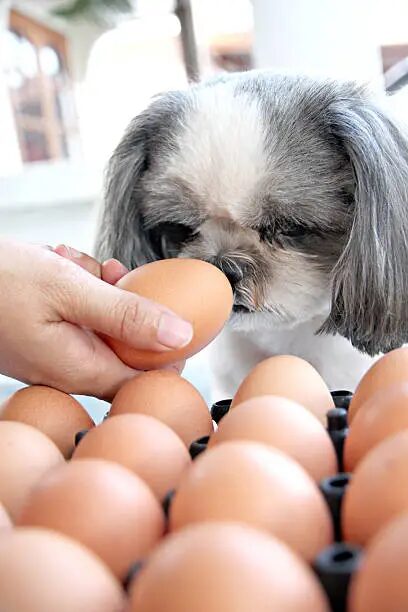
If your dog has ever grabbed a fallen egg from the kitchen floor, you may have wondered, can dogs eat eggshells? It is also a common question among owners who have heard that eggshells are a natural source of calcium.
The short answer is a little more complicated than simply yes or no.
Eggshells are rich in calcium, and properly prepared eggshell powder may have a place in certain homemade or carefully formulated diets. However, whole eggshells or large, sharp pieces should not be treated as an ordinary dog treat. Sharp fragments can cause physical injury, while excessive calcium can upset the nutritional balance of a dog’s diet. Raw or poorly handled shells can also carry bacterial contamination. The American Kennel Club specifically warns that eggshells have sharp edges that can potentially hurt a dog’s throat or internal organs.
There is also an important difference between eating an eggshell accidentally and intentionally using eggshell powder for dogs as a calcium supplement.
A dog that accidentally swallows a tiny piece of shell may have no problem at all. But deliberately adding powdered eggshell to food is a nutritional decision that should take the dog’s complete diet into account.
This matters because most dogs eating a complete and balanced commercial dog food already receive the calcium and other minerals they need. Adding extra calcium simply because eggshells are “natural” can create an imbalance rather than improving the diet. Purina’s current guidance takes a particularly conservative position, advising against feeding eggshells because their high mineral content can disrupt dietary balance.
So, before you start saving every eggshell from breakfast for your dog, it helps to understand exactly what you’re dealing with.
In this guide, we’ll explain can dogs eat eggshells, whether eggshell powder is safe, how much calcium dogs need, how to prepare shells properly, whether puppies and senior dogs can have them, and what to do if your dog accidentally swallows an eggshell.
Quick Answer: Can Dogs Eat Eggshells?
Dogs should not casually eat whole or sharp eggshells.
However, properly prepared, finely ground eggshell powder may be appropriate for some dogs when there is a genuine nutritional need and the amount is determined appropriately.
That distinction is important.
PetMD’s current guidance says dogs can eat eggshells when they are prepared properly. It recommends boiling or baking shells to reduce pathogens and then grinding them into a fine powder, but specifically says this should be done under veterinary guidance so the dog’s calcium requirements and safe amount can be determined.
Purina takes a different, more conservative approach and advises against eggshells because their high mineral content, particularly calcium, can disturb the nutritional balance of a dog’s diet.
The American Kennel Club acknowledges that eggshells contain calcium but warns that sharp shell edges can hurt a dog’s throat or internal organs and recommends veterinary guidance when eggshells are being considered as a supplement.
So there are really two different questions:
“Can dogs eat eggshells?”
A small accidental amount may not cause a problem, but whole or sharp shell pieces are not a good treat.
“Should dogs eat eggshells?”
Not routinely. If a dog’s diet already supplies enough calcium, additional eggshells may be unnecessary.
What About Eggshell Powder?
This is different from feeding a whole shell.
Finely ground eggshell powder can provide a concentrated source of calcium. It may be useful in certain homemade dog food recipes or other situations where a veterinarian has identified a mineral requirement. PetMD recommends veterinary guidance before using it.
The safest general rule is:
Whole eggshells are not a casual treat. Eggshell powder is a supplement that should only be used when the dog’s nutritional needs justify it.
Are Eggshells Safe for Dogs?
The safety of an eggshell depends on how it is prepared, how much is eaten, and why it is being given.
A shell sitting beside your breakfast plate is not the same thing as a professionally formulated calcium supplement.
Whole Eggshells
Whole eggshells are not an ideal food for dogs.
The main concern is physical damage.
When an eggshell breaks, it can create surprisingly sharp edges. If a dog chews or swallows large pieces, those fragments could potentially irritate or injure the mouth, throat, or digestive tract.
The AKC specifically notes that eggshells have sharp edges that can hurt a dog’s throat or internal organs.
There is also a choking concern, particularly for:
- Small dogs
- Puppies
- Dogs that swallow food without chewing
- Dogs given large shell pieces
That’s why letting your dog crunch an entire shell after breakfast isn’t a sensible way to provide calcium.
There are safer and more controlled ways to supplement minerals when supplementation is actually needed.
Crushed Eggshells
You might think that crushing an eggshell with your fingers automatically makes it safe.
Not necessarily.
A shell broken into several large fragments can still have sharp edges. Simply making pieces smaller does not eliminate the physical risks.
There is a major difference between:
Crushed shell: irregular pieces that may still be sharp.
Fine eggshell powder: a thoroughly ground powder with no large fragments.
When veterinary guidance calls for eggshell supplementation, the goal is generally a very fine powder, not chunks of shell scattered over food. PetMD recommends grinding appropriately prepared shells into a fine powder rather than giving large pieces.
Finely Ground Eggshell Powder
This is the form of eggshell that can have a legitimate nutritional purpose.
Eggshells are largely made of calcium carbonate, making them a concentrated calcium source.
But calcium is not a nutrient where “more is better.”
A dog’s nutritional requirements depend on the complete diet. Adding a concentrated calcium source without considering the rest of the food can disrupt the balance between minerals.
That’s why eggshell powder for dogs should be treated as a supplement, not a snack.
Before adding it to your dog’s food, consider:
- Does your dog actually need additional calcium?
- Is the current diet already complete and balanced?
- How much calcium is already present?
- How much phosphorus is present?
- Is your dog still growing?
- Does your dog have kidney or other health problems?
- Is the diet homemade or commercially formulated?
These questions matter far more than simply asking whether eggshells contain calcium.
Are Raw Eggshells Safe?
Raw eggshells present an additional food-safety issue.
Eggs and their shells can become contaminated with bacteria such as Salmonella. While contamination does not mean every raw shell contains harmful bacteria, it creates an avoidable risk.
PetMD recommends baking or boiling shells before preparing them as a supplement, particularly when non-pasteurized eggs are being used.
Proper handling matters not only for the dog but also for people.
A person can encounter bacteria while:
- Handling raw shells
- Cleaning preparation surfaces
- Grinding shells
- Preparing the dog’s food
- Cleaning food bowls
If you are going to prepare an eggshell supplement, good kitchen hygiene is essential.
Why Do Dogs Eat Eggshells?
Most dogs don’t specifically seek out eggshells because they understand that they’re a calcium source.
More often, they simply smell an egg, see something interesting, and eat it.
However, the calcium content of eggshells is the reason humans sometimes intentionally include them in homemade dog food.
Calcium Content
Eggshells are composed primarily of calcium carbonate, a concentrated form of calcium.
Calcium plays essential roles in the body, including supporting:
- Bones
- Teeth
- Normal muscle function
- Nerve signaling
- Blood clotting
- Other normal physiological processes
That makes calcium an essential nutrient for dogs.
But the body needs calcium in an appropriate amount and balance.
A deficiency can cause problems, but excessive supplementation can also create problems.
That’s the central issue with eggshells.
The fact that eggshells contain calcium does not automatically mean your dog needs more calcium.
Phosphorus and Trace Minerals
Eggshells aren’t composed exclusively of calcium.
They can also contain smaller amounts of other minerals, which contributes to their overall mineral profile.
Calcium and phosphorus are particularly important to consider together because they interact within the diet and play related roles in bone health and other physiological processes.
This is why supplementation should never be based solely on one nutrient.
A dog does not need “some calcium.” It needs the right amount of calcium as part of a properly balanced nutritional profile.
This is especially important for puppies and dogs eating homemade diets.
Natural Calcium Source vs. Calcium Supplement
You may see eggshell powder promoted online as a natural calcium supplement for dogs.
There is some truth behind the idea: eggshells are naturally rich in calcium.
But “natural” doesn’t automatically mean appropriate.
Plenty of substances found in nature can be harmful when consumed in excessive amounts.
The same principle applies to nutrients.
For example, if a commercial dog food already supplies the calcium your dog requires, adding eggshell powder doesn’t make the food automatically healthier.
It simply adds more calcium.
Eggshell powder may be considered in situations such as:
- Carefully formulated homemade diets
- Dogs with a veterinarian-identified nutritional requirement
- Specific dietary plans where additional calcium has been calculated
It is generally unnecessary when:
- Your dog eats a complete and balanced commercial diet
- There is no diagnosed calcium deficiency
- Your veterinarian has not recommended supplementation
- You are simply looking for a “healthy extra”
The goal should always be nutritional balance rather than maximum supplementation.
Are Eggshells Good for Dogs?
The most accurate answer is:
Eggshells can provide calcium, but that does not mean they are beneficial for every dog.
For a dog that genuinely needs additional calcium, appropriately prepared eggshell powder can be a useful ingredient when incorporated into a carefully formulated diet.
For a dog already eating a complete and balanced food, however, additional eggshell calcium may simply be unnecessary.
PetMD notes that eggshells contain calcium and trace minerals and may benefit dogs that require extra calcium, but it recommends veterinary guidance to determine whether supplementation is actually needed and how much to use.
Purina, meanwhile, advises against feeding eggshells and highlights the possibility of disrupting nutritional balance because of their high mineral content.
That difference in guidance is worth understanding rather than hiding.
The practical takeaway is:
Eggshells aren’t inherently a superfood for dogs. Their usefulness depends on the dog’s nutritional situation.
Eggshell Nutritional Value for Dogs
Here’s a simple look at what eggshells contribute:
| Nutrient/Component | Potential Role |
|---|---|
| Calcium | Supports bones, teeth, muscles, nerves, and other normal physiological functions |
| Calcium carbonate | The primary mineral form found in eggshell |
| Phosphorus | Involved in bone and cellular functions |
| Trace minerals | Contribute to overall mineral intake |
The important thing to notice is what isn’t on this table.
Eggshell isn’t a complete food.
It doesn’t provide everything a dog needs from a meal. It is primarily useful because of its mineral content, particularly calcium.
That is why the amount matters so much.
With ordinary food, eating a little extra may simply mean extra calories. With a concentrated mineral supplement, an inappropriate amount can affect the balance of the entire diet.
Can Dogs Eat Eggshell Powder?
Potentially, yes—but only when it is properly prepared and there is a reason to use it.
This is the most important distinction in an article about eggshell powder for dogs.
Finely ground eggshell powder can be incorporated into certain homemade diets because it provides calcium. But that doesn’t mean every dog needs it.
Before using it, ideally determine:
- Whether calcium supplementation is actually required.
- How much calcium the dog’s existing diet supplies.
- The dog’s total daily calcium requirement.
- The calcium-to-phosphorus balance of the diet.
- Whether the dog has any condition that affects mineral management.
PetMD recommends consulting a veterinarian before using eggshell powder so the need and amount can be assessed properly.
This is especially important when the dog eats a prescription diet or has an underlying medical condition.
How to Prepare Eggshells for Dogs
If your veterinarian has recommended eggshell powder, preparation should focus on hygiene, reducing physical hazards, and achieving a consistently fine texture.
Step 1: Separate the Shell From the Egg
After using the egg, separate the shell carefully.
Remove as much remaining egg as reasonably possible.
Avoid leaving significant amounts of raw egg residue on shells that you plan to store and process.
Step 2: Wash the Shells Thoroughly
Rinse the shells carefully to remove remaining egg material and debris.
Good kitchen hygiene is important throughout the process because raw eggs and shells can carry bacteria.
Wash your hands and clean the utensils and surfaces afterward.
Step 3: Heat-Treat or Bake the Shells
If your veterinarian has recommended homemade eggshell powder, heat treatment is an important food-safety step.
PetMD recommends baking or boiling eggshells to kill pathogens when using non-pasteurized eggs before grinding them into powder.
The purpose here is not to make the shell somehow nutritionally superior.
It is primarily about reducing contamination.
Step 4: Allow Them to Dry Completely
The shells should be completely dry before grinding.
Moisture can make storage more difficult and may encourage contamination or spoilage.
Allow the prepared shells to cool and dry before moving on to the next step.
Step 5: Grind Into a Fine Powder
Use a clean food processor, spice grinder, or dedicated grinder to reduce the shells to a very fine powder.
Do not stop after the shells become small flakes.
The goal is a powder without obvious sharp pieces.
Be careful while grinding because fine eggshell dust can become airborne.
A useful precaution is to allow the powder to settle before opening the grinder rather than immediately removing the lid and creating a cloud of shell dust.
Step 6: Store Properly
Place the finished powder in a clean, dry, airtight container.
Keep moisture away from it and avoid introducing contaminants with wet utensils.
Labeling the preparation date can also help you keep track of freshness.
If the powder becomes damp, contaminated, or develops an unusual odor, discard it.
Step 7: Use Only the Veterinarian-Recommended Amount
This is the step that matters most.
Don’t simply fill a teaspoon and assume it is an appropriate daily amount.
The correct amount depends on the nutritional needs of the individual dog and the rest of their diet.
Preparation alone does not make unlimited eggshell powder safe.
How Much Eggshell Powder Can a Dog Have?
One of the most commonly searched questions is:
“How much eggshell powder can I give my dog?”
Unfortunately, there isn’t one universal answer.
The appropriate amount depends on:
- Body weight
- Age
- Growth stage
- Existing diet
- Calcium content of the diet
- Phosphorus content of the diet
- Health status
- Whether the diet is commercial or homemade
- Whether a veterinarian has identified an actual calcium requirement
This is why internet formulas such as “one teaspoon per dog” can be misleading.
Two dogs weighing the same amount can still have very different nutritional needs if one eats a complete commercial food and the other eats a carefully formulated homemade diet.
What about eggshell calcium dosage for dogs?
A proper eggshell calcium dosage for dogs should be calculated based on the complete nutritional plan rather than just body weight.
Veterinary nutrition is more complicated than adding a fixed amount of calcium to every dog’s bowl.
How much calcium does a dog need?
That also varies with age, size, growth status, diet, and health.
For puppies, getting the balance right is particularly important.
For adults eating complete commercial food, additional calcium may not be needed at all.
When in doubt, have your veterinarian or a veterinary nutritionist calculate the requirement.
Can Puppies Eat Eggshells?
Puppies need calcium—but that doesn’t mean they should automatically receive eggshell powder.
In fact, puppies are one of the groups where unnecessary calcium supplementation deserves particular caution.
Their bones are developing rapidly, and their diet needs to provide the right balance of calcium, phosphorus, energy, and other nutrients.
Adding a concentrated mineral source to an already balanced puppy food can disturb that balance.
Why Puppies Need Special Care
Growing puppies have precise nutritional requirements.
Too little calcium can be problematic.
But too much calcium can also be problematic, especially during skeletal development.
This is particularly important for large-breed puppies, whose growth needs to be carefully managed.
So, can puppies eat eggshells?
They should not be given eggshells casually.
If your puppy is eating a properly formulated, complete puppy food, there is generally no reason to sprinkle extra eggshell powder over the food unless your veterinarian specifically recommends it.
Purina’s current guidance recommends keeping puppies on balanced, age-specific food rather than adding egg-related extras that could disrupt nutrient ratios or trigger digestive upset.
This is an area where more is definitely not better.

Can Large-Breed Puppies Eat Eggshells?
Large-breed puppies deserve particular attention because inappropriate nutrition can affect skeletal development.
Owners sometimes assume that because large dogs eventually have large bones, they need extra calcium while growing.
That’s not how it works.
Their calcium and phosphorus requirements need to be met in the correct proportions, alongside appropriate calorie intake.
Adding eggshell calcium without professional nutritional guidance can therefore be counterproductive.
If you’re feeding a large-breed puppy, choose a complete diet specifically formulated for growth and follow your veterinarian’s recommendations rather than trying to improve the diet with homemade calcium additions.
Can Senior Dogs Eat Eggshells?
Aging does not automatically mean a dog needs extra calcium.
Senior dogs can have different nutritional requirements because of changes in:
- Activity
- Body weight
- Muscle mass
- Kidney function
- Digestive health
- Other age-related conditions
Some senior dogs may need carefully managed mineral intake rather than additional calcium.
For example, a dog with kidney disease may be on a therapeutic diet specifically designed to manage phosphorus and other nutrients.
Adding eggshell powder without veterinary approval could work against the nutritional goals of that diet.
So while eggshells may have a role in selected diets, senior dogs should not receive them simply because they are older.
Can Dogs on Homemade Diets Eat Eggshells?
This is one situation in which eggshell powder may be useful—but professional formulation is extremely important.
Homemade dog food recipes can easily become nutritionally incomplete.
A recipe might contain plenty of meat and vegetables but still lack sufficient calcium or have an inappropriate calcium-to-phosphorus ratio.
That’s where a carefully measured calcium source can become important.
Eggshell powder is one possible source.
However, adding a random amount to a homemade recipe is not the same thing as balancing the recipe.
A properly formulated homemade diet should account for:
- Protein
- Fat
- Calories
- Calcium
- Phosphorus
- Vitamins
- Trace minerals
- Essential fatty acids
- Other nutrients
A veterinary nutritionist can formulate a diet and determine exactly what supplementation is required.
If you are preparing your dog’s food at home, don’t assume that an internet recipe plus eggshell powder for dogs automatically creates a complete diet.
Can Dogs on Commercial Dog Food Eat Eggshells?
They can physically swallow eggshell powder, but that doesn’t mean they should receive it.
Complete and balanced commercial dog foods are formulated to provide the nutrients dogs need in appropriate amounts.
Adding a concentrated calcium source on top of that diet may be unnecessary.
Purina specifically recommends against feeding eggshells because their mineral content can upset dietary balance.
This distinction is crucial:
A calcium deficiency is a reason to supplement. Eating complete food is not.
If your dog already receives nutritionally complete food, talk with your veterinarian before adding any mineral supplement—including one you make yourself from eggshells.
Can Dogs With Calcium Deficiency Eat Eggshells?
Possibly, but calcium deficiency should not be self-diagnosed.
A dog with a suspected nutritional deficiency needs more than a pinch of calcium.
The underlying diet needs to be assessed.
Depending on the circumstances, nutritional problems may be related to:
- An improperly balanced homemade diet
- Poor absorption
- Certain diseases
- Inadequate nutrition
- Other metabolic issues
Simply adding eggshell powder can potentially mask the real problem or create a different nutritional imbalance.
If you suspect your dog has a calcium deficiency, speak with your veterinarian before starting supplementation.
Can Dogs With Kidney Disease Eat Eggshells?
Dogs with kidney disease need especially careful nutritional management. Their diets may be adjusted to control nutrients such as phosphorus, protein, sodium, and calories, depending on the severity of the disease and the individual dog’s needs.
Because eggshells are concentrated in minerals, they should not automatically be added to the food of a dog with kidney disease.
A dog eating a prescription kidney diet may already have a carefully calculated mineral profile. Adding eggshell powder on top of that food could interfere with the nutritional goals of the diet.
Why Calcium and Phosphorus Matter
Calcium and phosphorus work together in the body, particularly in relation to bones and other normal physiological processes. Changing one mineral without considering the overall diet isn’t always a good idea.
That’s why a dog with chronic kidney disease should only receive eggshell calcium supplementation under veterinary guidance.
Your veterinarian can consider:
- Kidney function
- Bloodwork
- Existing food
- Mineral intake
- Hydration
- Body condition
- Other medications and supplements
There is no universally safe amount of eggshell powder for every dog with kidney disease.
Can Dogs With Pancreatitis Eat Eggshells?
Eggshell itself is primarily a mineral source, so it does not have the same fat content as egg yolk or butter.
However, that doesn’t mean eggshell supplementation is automatically appropriate for a dog with pancreatitis.
The bigger issue is the dog’s overall diet.
Dogs recovering from or prone to pancreatitis may need carefully controlled fat intake. If you’re giving your dog a whole egg along with the shell, the yolk and other ingredients can add fat.
For example, these foods can make an otherwise simple egg much richer:
- Butter
- Cooking oil
- Cheese
- Bacon
- Cream
- Fatty meats
Eggshells should never be presented as a treatment for pancreatitis.
If your veterinarian has prescribed a low-fat or therapeutic diet, don’t add homemade calcium supplements without discussing them first.
Can Eggshells Help Dogs With Weak Bones?
Because eggshells contain calcium, it is easy to assume they can automatically make a dog’s bones stronger.
That isn’t necessarily true.
Bone health depends on much more than calcium.
Factors can include:
- Calcium intake
- Phosphorus balance
- Vitamin D
- Protein
- Genetics
- Growth rate
- Hormonal health
- Physical activity
- Age
- Underlying disease
A dog with weak bones may therefore need a proper veterinary examination rather than simply an extra calcium supplement.
When Should You See a Veterinarian?
Seek veterinary advice if your dog develops:
- Difficulty walking
- Repeated fractures
- Pain while moving
- Weakness
- Abnormal posture
- Limping
- Poor growth
- Bone or joint abnormalities
Adding more calcium without understanding the cause can sometimes make nutritional management more complicated.
Can Eggshells Help Dogs With Arthritis?
This question is especially interesting because eggshell and eggshell membrane are two different things.
They should not be treated as the same supplement.
Eggshell
The hard outer shell is primarily valued as a calcium source.
Eggshell Membrane
The thin membrane attached to the inside of the shell contains compounds that have been studied for potential joint-support benefits.
The American Kennel Club discusses research involving eggshell membrane and joint health, but that research should not be confused with the benefits of eating eggshell calcium. (akc.org)
So if you’re looking for eggshells for dogs with arthritis, it is important to understand whether you’re talking about calcium from the shell or an eggshell-membrane supplement.
Neither should be considered a proven standalone cure for arthritis.
A dog with arthritis may benefit from a broader treatment plan involving:
- Weight management
- Appropriate exercise
- Veterinary-prescribed pain control
- Joint-support diets
- Physical therapy
- Specific supplements when appropriate
Eggshells vs. Other Calcium Sources for Dogs
If a dog genuinely needs additional calcium, eggshell powder is only one possible option.
| Calcium Source | Main Consideration |
|---|---|
| Eggshell powder | Calcium-rich but requires accurate dosing |
| Veterinary calcium supplement | May provide more consistent, measurable supplementation |
| Complete commercial dog food | Usually already balanced for required nutrients |
| Bone meal | Contains calcium and phosphorus and requires careful formulation |
| Dairy products | Can provide calcium but may add calories and may not suit every dog |
| Calcium-rich whole foods | Must be evaluated as part of the complete diet |
There isn’t one “best calcium source” for every dog.
The right choice depends on why calcium is being added in the first place.
For a complete commercial diet, no additional calcium may be needed.
For a properly formulated homemade diet, a measured calcium supplement may be necessary.
Eggshell Calcium vs. Calcium Supplements
Why use eggshells when commercial calcium supplements exist?
There are a few possible reasons owners choose eggshell powder.
Potential Advantages of Eggshell Powder
- Readily available
- Inexpensive
- Naturally rich in calcium
- Can be prepared at home
- May work in carefully formulated homemade diets
Possible Disadvantages
- Calcium content isn’t necessarily measured as precisely as a commercial product.
- Preparation can introduce contamination if done poorly.
- Powder may vary from batch to batch.
- Owners may have difficulty measuring the correct amount.
- It can be added unnecessarily to an already balanced diet.
A commercial veterinary supplement may offer more predictable dosing and quality control, particularly when precise supplementation is required.
That doesn’t mean homemade eggshell powder is automatically bad. It means it should be used for a specific nutritional purpose, rather than simply because it sounds natural.
Can Dogs Eat Cooked Eggshells?
Cooking or baking eggshells can reduce microbial concerns, but it does not magically make the shell safe to swallow in large pieces.
A cooked shell can still be:
- Sharp
- Hard
- Difficult to chew
- A choking hazard
- Physically irritating if swallowed in large fragments
So the answer isn’t:
“Yes, because the shell has been cooked.”
Instead:
If eggshell supplementation is appropriate, the shell should be properly treated and then ground into a very fine powder.
Heat treatment is primarily about reducing bacterial contamination. Grinding addresses the physical hazard.
You need both considerations when preparing eggshell powder.
Can Dogs Eat Raw Eggshells?
It is better to avoid feeding raw eggshells.
The outside of an egg can come into contact with bacteria during handling and storage. Raw shells can therefore present a food-safety concern.
Salmonella is one of the major bacteria associated with raw eggs and egg products.
Although not every raw eggshell contains harmful bacteria, there is little reason to take that risk when the shell can be properly cleaned and heat-treated before being used as a supplement.
Raw Shells Also Present a Physical Risk
A raw shell can still break into jagged fragments.
So raw eggshells combine two concerns:
- Potential bacterial contamination
- Sharp physical fragments
That makes them a poor choice as a casual dog treat.
Can Dogs Eat Crushed Eggshells?
This depends on what you mean by “crushed.”
If you’re talking about several pieces of shell roughly broken by hand, those pieces may still be sharp.
If you’re talking about a fine, powder-like consistency, that’s a different matter.
Crushed vs. Powdered
| Form | Main Concern |
| Whole shell | Choking and sharp edges |
| Large crushed pieces | Sharp fragments |
| Small fragments | Still potentially sharp |
| Very fine powder | More appropriate when supplementation is actually needed |
So don’t assume that crushing a shell once or twice with your fingers makes it safe.
When eggshell powder is recommended, the objective is a fine, uniform texture without obvious shell fragments.
What Happens If a Dog Eats an Eggshell?
If your dog has just eaten a small piece of eggshell, don’t automatically panic.
Many dogs will pass a small fragment without any problem.
The situation becomes more concerning when the dog has swallowed:
- A large piece
- Multiple pieces
- Sharp fragments
- An entire shell
- Shell contaminated with spoiled food
Your response should also take the dog’s size and health into account.
A tiny fragment swallowed by a large dog is a different situation from a large sharp piece swallowed by a small puppy.
What Should You Do?
First, remove any remaining shells from your dog’s reach.
Then observe your dog.
Watch for:
- Coughing
- Gagging
- Repeated swallowing
- Vomiting
- Difficulty swallowing
- Drooling
- Abdominal discomfort
- Blood in stool
- Lethargy
- Loss of appetite
Do not attempt to force your dog to vomit unless a veterinarian specifically tells you to do so.
Inducing vomiting at home can sometimes cause additional injury, particularly when a sharp object may have been swallowed.
What If a Dog Swallows a Large Piece of Eggshell?
This deserves more caution.
A large or jagged piece could potentially cause:
- Choking
- Throat irritation
- Difficulty swallowing
- Gastrointestinal injury
- Vomiting
- Abdominal pain
Contact a Veterinarian Promptly If Your Dog Shows:
- Trouble breathing
- Persistent gagging
- Repeated vomiting
- Severe abdominal pain
- Bloody vomit or stool
- Significant weakness
- Collapse
- Difficulty swallowing
If your dog swallowed a large shell piece and you aren’t sure what to do, contact your veterinarian rather than trying home remedies.
A veterinarian can determine whether observation is appropriate or whether further evaluation is necessary.
Can Eggshells Cause Constipation in Dogs?
Large amounts of mineral supplements can potentially affect digestion, and some owners report changes in stool after adding calcium-heavy foods or supplements.
However, constipation should not automatically be blamed on eggshells.
Other common causes include:
- Dehydration
- Lack of fiber
- Reduced activity
- Certain medications
- Pain
- Foreign-body ingestion
- Other gastrointestinal problems
If your dog develops persistent constipation after starting eggshell powder, stop the supplement and discuss the issue with your veterinarian.
Don’t simply keep increasing water or adding more foods without determining what’s causing the problem.
Can Eggshells Cause Diarrhea in Dogs?
They can contribute to digestive upset in some dogs, particularly if introduced suddenly, given in large amounts, or prepared poorly.
Poorly prepared shells may also introduce bacteria.
However, diarrhea can have dozens of causes.
If your dog develops diarrhea after consuming an eggshell, consider whether they also ate:
- A new food
- Spoiled food
- Garbage
- A rich treat
- Another supplement
Contact Your Veterinarian if Diarrhea Is:
- Severe
- Persistent
- Bloody
- Accompanied by repeated vomiting
- Associated with dehydration
- Associated with weakness
- Occurring in a vulnerable puppy or senior dog
Can Eggshells Cause a Calcium Overdose in Dogs?
Excessive calcium supplementation can be a problem.
Calcium is essential, but the body needs it in the right amount and in balance with other nutrients.
Giving large amounts of eggshell powder can increase calcium intake beyond what the dog’s diet requires.
This is particularly concerning for growing puppies, especially large-breed puppies.
Why Too Much Calcium Matters
Excessive mineral supplementation can interfere with dietary balance and may contribute to skeletal-development problems in growing dogs.
This is why the simple idea of:
“My dog needs strong bones, so more calcium must be better.”
is misleading.
The correct principle is:
Dogs need adequate calcium—not unlimited calcium.
Can Dogs Get Salmonella From Eggshells?
Yes, dogs can potentially be exposed to Salmonella through contaminated eggshells.
Not every exposed dog develops obvious symptoms. Some dogs may even carry bacteria without appearing seriously ill.
Possible signs of Salmonella infection can include:
- Diarrhea
- Vomiting
- Fever
- Lethargy
- Poor appetite
- Dehydration
Raw egg products are therefore handled cautiously for good reason.
If you’re preparing eggshell powder, reducing contamination should be part of the process.
Good Hygiene Matters
After handling raw eggs or shells:
- Wash your hands thoroughly.
- Clean preparation surfaces.
- Wash equipment used to process shells.
- Clean your dog’s food bowl.
- Keep raw egg products away from ready-to-eat food.
Can Humans Get Salmonella From a Dog That Eats Raw Eggshells?
The concern isn’t that every dog who touches a shell will infect a person.
The issue is possible bacterial transfer.
A contaminated shell could spread bacteria to:
- Hands
- Countertops
- Food bowls
- Floors
- Toys
- Other food
- A dog’s mouth or fur
A dog may also carry bacteria without obvious illness.
Extra hygiene is particularly important in homes with:
- Young children
- Older adults
- Pregnant people
- People with weakened immune systems
The safest strategy is to treat raw eggshells much like other raw animal products: handle them carefully and clean up thoroughly.
Are Eggshell Membranes Good for Dogs?
You may have noticed supplements marketed as eggshell membrane for dogs.
This is not the same thing as eggshell powder.
The hard outer shell is primarily used as a calcium source.
The eggshell membrane is the thin layer attached to the inside of the shell. It contains different compounds and has been studied for potential support of joint health.
Some pet supplements use eggshell membrane as an ingredient for dogs with joint concerns.
However, research into eggshell membrane should not be used to claim that ordinary eggshell powder is an arthritis treatment.
They are two different substances with different purposes.
In simple terms:
Eggshell = primarily calcium
Eggshell membrane = studied for potential joint-support benefits
Always check the actual ingredients in a supplement rather than assuming the terms mean the same thing.
Are Eggshells Better Than Eggshell Membrane for Dogs?
Neither is universally “better.”
They serve different purposes.
If a dog needs additional calcium as part of a carefully formulated homemade diet, eggshell powder may be useful.
If a dog is being considered for a joint-support supplement, an appropriately formulated eggshell-membrane product may be a different option.
Neither should replace:
- A complete diet
- Veterinary treatment
- Appropriate arthritis medication
- Weight management
- Medical evaluation
The right supplement depends on the problem you’re actually trying to address.
Do Eggshells Provide More Calcium Than Dogs Need?
Eggshells are very calcium-rich, which is exactly why dosage can matter so much.
A tiny amount can contribute a meaningful quantity of calcium.
That may sound like a benefit, but it also means that casually adding several spoonfuls isn’t harmless simply because the shell came from a natural food.
Think of eggshell powder more like a concentrated supplement than a normal snack.
You wouldn’t give your dog an unlimited amount of a vitamin supplement simply because vitamins are essential.
The same logic applies to calcium.
Why Calcium-to-Phosphorus Balance Matters
It’s tempting to focus on calcium alone.
But calcium and phosphorus need to be considered together.
Both are important nutrients, particularly for skeletal health, but they work as part of a broader nutritional system.
A homemade diet that contains lots of meat, for example, can have an unsuitable calcium-to-phosphorus relationship if it is not properly formulated.
Adding eggshell powder may help correct a deficiency, but only if the amount is calculated correctly.
Adding a random amount may simply move the diet from one imbalance to another.
This is one of the strongest reasons to use a professionally formulated recipe for homemade dog food.
Can Eggshells Be Used in Homemade Dog Food?
Yes, eggshell powder can sometimes be used in homemade dog food, particularly when a recipe needs an additional calcium source.
But the key word is formulated.
A homemade diet should not be created by guessing at ingredient ratios.
A properly balanced homemade recipe needs to account for much more than meat and vegetables.
It may need appropriate amounts of:
- Protein
- Fat
- Calcium
- Phosphorus
- Vitamins
- Trace minerals
- Essential fatty acids
- Calories
- Other nutrients
A veterinary nutritionist can calculate these requirements and determine whether eggshell powder is appropriate.
Don’t Simply Copy a Recipe
A recipe designed for a 10-pound dog may not be suitable for a 70-pound dog.
Likewise, the needs of a healthy adult dog can be very different from those of:
- A puppy
- A pregnant dog
- A senior dog
- A dog with kidney disease
- A dog with pancreatitis
That’s why calcium supplementation needs to be considered in the context of the whole diet.
How to Store Homemade Eggshell Powder
Once you have made eggshell powder, storage matters.
Use a:
- Clean
- Completely dry
- Airtight
- Food-safe container
Keep the container away from moisture and contamination.
Labeling the container with the preparation date is a helpful habit.
Discard the powder if:
- It becomes damp
- It develops an unusual smell
- Visible contamination occurs
- Mold appears
- You aren’t sure whether it was stored safely
Don’t dip a wet spoon into the container.
Use a clean, completely dry utensil whenever you measure the powder.
Common Mistakes When Feeding Eggshells to Dogs
Even when the intention is good, several mistakes can make eggshell supplementation risky.
1. Giving Whole Eggshells
Whole shells can contain sharp edges and may be a choking hazard.
2. Feeding Large Shell Fragments
Simply breaking the shell into pieces does not eliminate the danger of sharp edges.
3. Using Raw, Unclean Shells
Raw shells can carry bacteria.
4. Failing to Grind the Shell Finely
Coarse fragments are not equivalent to fine powder.
5. Giving Too Much Calcium
More calcium isn’t automatically healthier.
6. Adding Eggshells to Complete Commercial Food Without a Reason
A balanced diet may already contain sufficient calcium.
7. Giving Eggshells to Puppies Without Veterinary Advice
Growing puppies are particularly sensitive to nutritional imbalance.
8. Treating Eggshells as an Arthritis Cure
Calcium supplementation is not the same as arthritis treatment.
9. Ignoring Kidney Disease
Dogs with kidney disease may need carefully controlled mineral intake.
10. Following an Unverified Internet Dosage
A teaspoon-sized “recipe” isn’t necessarily appropriate for every dog.
Myths About Dogs Eating Eggshells
Myth 1: Dogs Need Eggshells for Strong Bones
False.
Dogs need adequate calcium as part of a balanced diet. They don’t automatically need eggshell supplementation.
Myth 2: Eggshells Are a Free Calcium Supplement
Not exactly.
Eggshells may be inexpensive, but they still need proper preparation, calculation, and appropriate use.
Myth 3: A Whole Eggshell Is Safe Because Dogs Have Strong Stomachs
False.
A dog’s digestive system doesn’t make sharp shell fragments harmless.
Myth 4: Crushing Shells Makes Them Automatically Safe
Not if they’re still coarse or sharp.
Fine powder is different from crushed fragments.
Myth 5: More Calcium Means Stronger Bones
False.
Too much calcium can be harmful, especially in growing puppies.
Myth 6: Every Dog Needs Eggshell Powder
No.
Most dogs on complete and balanced commercial diets don’t automatically need additional calcium.
Myth 7: Puppies Benefit From Extra Calcium
Not necessarily.
Puppies need carefully balanced calcium and phosphorus, and inappropriate supplementation can create problems.
Myth 8: Eggshells Cure Arthritis
No.
Eggshell calcium and eggshell membrane are different, and neither should replace evidence-based arthritis treatment.
Myth 9: Raw Eggshells Are Safe Because They Are Natural
Natural doesn’t mean risk-free.
Raw shells may carry bacteria and can still break into sharp pieces.
Myth 10: Eggshell Powder Can Replace a Balanced Diet
Absolutely not.
Eggshell powder primarily contributes calcium and minerals. It does not provide the complete nutrition a dog needs.
Frequently Asked Questions About Dogs and Eggshells
Can dogs eat eggshells?
Dogs can accidentally consume small shell pieces without developing problems, but whole or sharp eggshells should not be offered as a casual treat. Properly prepared eggshell powder may be appropriate in certain diets under professional guidance.
Are eggshells safe for dogs?
Whole shells are not considered an ideal treat because of their sharp edges and choking risk. Properly prepared fine powder is a different matter when used for a genuine nutritional purpose.
Can dogs eat raw eggshells?
It is better to avoid raw eggshells because of possible bacterial contamination and the risk posed by sharp fragments.
Can dogs eat cooked eggshells?
Cooking can reduce bacterial contamination, but cooked shells should still be finely ground if they are being used as a calcium supplement.
Can dogs eat crushed eggshells?
Large crushed fragments may still be sharp. Very fine powder is preferable when supplementation is actually necessary.
Can dogs eat egg shell powder?
They potentially can, but the powder should be properly prepared and used only when appropriate for the dog’s complete nutritional plan.
Is eggshell powder good for dogs?
It can be useful as a calcium source in specific situations, especially some homemade diets, but it isn’t necessary for every dog.
How much eggshell powder can I give my dog?
There is no universal amount. The appropriate dose depends on the dog’s weight, age, existing diet, calcium requirement, and health status.
How much calcium is in an eggshell?
Eggshells are highly concentrated in calcium, primarily as calcium carbonate. Exact amounts can vary, which is another reason not to rely on an arbitrary household measurement.
Can puppies eat eggshells?
Puppies should not receive eggshell powder without a specific nutritional reason and professional guidance. Excessive calcium can interfere with healthy skeletal development.
Can large-breed puppies eat eggshells?
Large-breed puppies require especially careful calcium and phosphorus management. Avoid adding eggshell calcium unless a veterinarian or veterinary nutritionist recommends it.
Can senior dogs eat eggshells?
Age alone doesn’t create a requirement for extra calcium. Senior dogs with kidney disease or other conditions may need carefully controlled mineral intake.
Can dogs on homemade diets eat eggshells?
Potentially. Eggshell powder can provide calcium in some properly formulated homemade diets, but the amount should be calculated as part of the complete recipe.
Do eggshells help dogs’ bones?
They can provide calcium, which is important for bone health, but calcium is only one part of healthy bone development.
Do eggshells help dogs with calcium deficiency?
They may be one possible calcium source, but a veterinarian should first determine whether the dog actually has a deficiency and why.
Are eggshells good for dogs with arthritis?
Eggshell calcium should not be considered an arthritis treatment. Eggshell membrane is a separate ingredient that has been studied for joint support.
What is eggshell membrane for dogs?
Eggshell membrane is the thin layer inside the shell. It contains compounds studied for potential joint-support benefits and is used in some canine supplements.
Can dogs with kidney disease eat eggshells?
Only under veterinary guidance. Mineral supplementation may interfere with a carefully managed kidney diet.
Can dogs with pancreatitis eat eggshells?
Eggshell itself is low in fat, but the overall diet matters. Don’t add eggshell supplements without discussing them with your veterinarian.
Can eggshells cause constipation in dogs?
Large amounts of mineral supplementation may contribute to digestive changes, but constipation has many possible causes and shouldn’t automatically be blamed on eggshells.
Can eggshells cause diarrhea in dogs?
A sudden dietary change, excessive supplementation, or contaminated shells could contribute to digestive upset. Persistent diarrhea requires veterinary attention.
Can dogs get Salmonella from eggshells?
Yes, contaminated raw eggshells can potentially expose dogs to Salmonella.
What happens if my dog eats an eggshell?
A tiny accidental piece may pass without a problem. Monitor for gagging, vomiting, difficulty swallowing, abdominal discomfort, lethargy, or changes in appetite and stool.
What should I do if my dog swallowed a large piece of eggshell?
Contact your veterinarian, particularly if the piece was sharp or large. Seek urgent veterinary care if the dog has trouble breathing, persistent gagging, repeated vomiting, severe pain, or collapse.
Can eggshells cause a calcium overdose?
Excessive calcium supplementation can disrupt nutritional balance and is particularly concerning in growing puppies.
Are eggshells better than calcium supplements?
Not necessarily. Veterinary calcium supplements may offer more predictable dosing and quality control. The appropriate choice depends on the dog’s nutritional requirements.
Should I give eggshell powder to my dog every day?
Not unless it is part of a properly formulated nutritional plan. Daily supplementation is not automatically appropriate for every dog.
Can dogs eat boiled eggshells?
A boiled shell is less concerning from a bacterial standpoint, but it can still be sharp. If used as a supplement, it should be finely ground.
How do I prepare eggshells for dogs?
Clean the shells, heat-treat them appropriately, dry them completely, grind them into a very fine powder, and use only the amount recommended for the dog’s diet.
How do I grind eggshells for dogs?
After appropriate cleaning and heat treatment, allow shells to dry fully and use a clean grinder or food processor to create a fine, powder-like consistency without coarse fragments.
Conclusion: Can Dogs Eat Eggshells?
So, can dogs eat eggshells? The answer depends on what form you’re talking about and why you’re giving them.
A dog may accidentally swallow a small piece of eggshell without experiencing any problems, but whole eggshells and sharp shell fragments should not be treated as a regular dog treat. They can create choking concerns and may irritate or injure the mouth, throat, or digestive tract.
Eggshells are naturally rich in calcium, which is an essential nutrient for dogs. However, that doesn’t mean every dog needs extra calcium. Dogs eating a complete and balanced commercial diet generally receive the calcium they need from their regular food. Adding eggshell powder unnecessarily can disturb the nutritional balance.
Finely ground eggshell powder may have a useful role in some carefully formulated homemade diets or situations where additional calcium has been specifically recommended. But it should be considered a supplement, not a snack. The appropriate amount depends on the dog’s age, size, health, existing diet, and calcium and phosphorus requirements.
Puppies deserve particular caution because their bones are developing rapidly. Large-breed puppies are especially sensitive to nutritional imbalances, so calcium supplements should never be added casually.