When your dog comes home with a cut, scrape, torn nail, or other injury, it is easy to panic. Some wounds look worse than they are, while others may appear tiny but hide significant damage underneath the skin. Knowing the basics of dog wound care can help you respond calmly, protect the injury, and recognize when professional veterinary treatment is needed.
A wound can result from something as simple as running through rough terrain or as serious as a fight, vehicle accident, or penetrating injury. Veterinary wound management generally begins with assessing the dog’s overall condition, controlling bleeding, and cleaning contamination before deciding how the injury should be managed.
The good news is that some minor cuts and scrapes can be cared for at home when a dog is otherwise acting normally. However, deep wounds, uncontrolled bleeding, bite wounds, punctures, burns, wounds involving the eye or body cavities, and wounds with infection or significant pain deserve veterinary attention.
This guide explains the different types of dog wounds, how to assess an injury, when home care may be appropriate, how to provide basic first aid, and how to clean a minor wound safely.
Important: This article provides general pet-care information, not a diagnosis. If your dog has a serious injury or you are unsure how severe a wound is, contact a veterinarian promptly.
Quick Answer: How Do You Care for a Dog Wound?
Basic dog wound care starts with determining whether the injury is minor or requires veterinary attention.
For a small, superficial wound:
- Assess the injury and make sure your dog is stable.
- Control active bleeding with clean gauze or cloth and steady pressure.
- Flush the wound gently with clean water or an appropriate veterinary-recommended solution.
- Remove surface dirt and debris without aggressively scrubbing the tissue.
- Protect the wound with an appropriate dressing if your veterinarian recommends one.
- Prevent licking and chewing, often with an Elizabethan collar or another protective device.
- Monitor healing for increasing redness, swelling, discharge, odor, or pain.
- Contact a veterinarian if the wound is deep, infected, caused by a bite, heavily bleeding, extremely painful, or located in a particularly sensitive area.
Veterinary sources emphasize that irrigation helps remove dirt and bacteria, while excessive pressure, harsh chemicals, or inappropriate treatment can damage healthy tissue.
Dog Wound Care: Quick Facts
| Feature | Details |
|---|---|
| Common Wounds | Cuts, scrapes, punctures, bites, burns, abrasions |
| Minor Wounds | Small, shallow cuts or scrapes with limited bleeding |
| First Step | Assess the wound and control bleeding |
| Cleaning | Flush with clean water or an appropriate veterinary-recommended solution |
| Protection | Clean dressing or bandage when appropriate |
| Main Concern | Infection and deeper tissue damage |
| Prevent Licking | An E-collar or protective device may be needed |
| Vet Visit | Required for deep, severe, infected, or bite wounds |
| Emergency Signs | Heavy bleeding, exposed tissue, breathing problems, shock |
| Monitoring | Check the wound regularly for changes |
What Is a Dog Wound?
A dog wound is an injury that damages living tissue. The injury may affect only the outer layer of skin, or it may extend deeper into fat, muscle, blood vessels, nerves, or even bone.
Veterinary references classify wounds in several ways, including cuts, tears, burns, punctures, bites, and other forms of tissue damage.
The important thing to remember is that appearance alone does not always tell you how serious an injury is. A small puncture, for example, can close quickly at the surface while bacteria and damaged tissue remain underneath.
That is one reason dog owners should evaluate the cause, location, depth, bleeding, contamination, and behavior of the dog, rather than judging an injury only by its size.
What Counts as a Wound in Dogs?
Dog wounds can include many different types of injuries.
Common examples include:
- Cuts and lacerations
- Scrapes and abrasions
- Puncture wounds
- Animal bites
- Burns
- Torn paw pads
- Broken or torn nails
- Surgical incisions
- Skin tears
- Hot spots and irritated skin lesions
Some injuries are obvious because the skin is broken and bleeding. Others are less obvious.
For example, a dog may develop swelling or bruising after blunt trauma without having an open wound. In serious accidents, internal injuries can also occur even when the outside of the body looks relatively normal.
Open vs. Closed Wounds
An open wound involves a break in the skin or another external tissue barrier. Cuts, punctures, lacerations, abrasions, and many bites fall into this category.
A closed wound occurs when the skin remains intact even though tissue underneath has been damaged. Bruises and contusions are common examples.
This distinction matters because an open wound has a direct pathway for bacteria and debris to enter the body. A closed injury can still be serious, particularly when it follows major trauma.
If your dog has been hit by a vehicle, fallen from a significant height, or experienced another major accident, do not assume the absence of an obvious wound means everything is fine.
Why the Appearance of a Wound Can Be Misleading
A tiny puncture may penetrate deeper than a large-looking superficial scrape.
Likewise, a wound may initially look clean but become swollen and painful later as inflammation or infection develops.
This is especially important with dog bite wounds. The teeth can push bacteria deep beneath the skin, creating a small external opening while damaging tissue underneath.
Why Dog Wounds Need Proper Care
A wound creates an opportunity for contamination and infection. Dirt, bacteria, plant material, hair, and other debris can enter damaged tissue.
Without appropriate care, complications may include:
- Bacterial infection
- Abscess formation
- Increased inflammation
- Delayed healing
- Tissue death
- Persistent pain
- Deeper tissue damage
Merck Veterinary Manual explains that wound irrigation helps remove visible and microscopic debris and reduce bacterial contamination. It also allows the underlying tissue to be examined more effectively.
Proper wound care is therefore not simply about making an injury look cleaner. It is about creating conditions that support healthy healing while identifying problems early.
Common Types of Dog Wounds
Dogs are naturally curious and active animals. That combination can lead to everything from a minor scrape to a serious traumatic injury.
Understanding the type of wound can help you decide what to do next.
Cuts and Lacerations
A cut or laceration occurs when something sharp or forceful breaks the skin.
A superficial cut may involve only the outer skin layers. A deeper laceration can extend into underlying tissue.
Watch carefully for:
- Gaping wound edges
- Heavy bleeding
- Visible fatty tissue
- Exposed muscle
- Exposed bone
- Significant pain
A deep or gaping laceration should not be treated as an ordinary scrape. A veterinarian may need to clean, debride, and potentially close the wound. The timing and method of closure depend on factors such as contamination, tissue damage, and infection risk.
When Do Cuts Need Stitches?
Not every cut requires stitches.
A veterinarian may consider:
- How deep the wound is
- How long ago the injury occurred
- How contaminated it is
- Where it is located
- Whether tissue has been lost
- Whether infection is present
Never attempt to stitch or glue a deep dog wound yourself.
Closing a contaminated wound without proper cleaning can trap bacteria and damaged tissue underneath the skin.
Scrapes and Abrasions
An abrasion is a superficial injury caused when the skin rubs against a rough surface.
Dogs may get scrapes from:
- Concrete
- Asphalt
- Rocks
- Rough flooring
- Outdoor terrain
- Rough play
Minor abrasions may bleed slightly or simply appear red and raw.
Because the damaged area can be relatively broad, keeping it clean and preventing your dog from repeatedly licking it can be important.
If the scrape becomes increasingly swollen, painful, smelly, or produces discharge, contact your veterinarian.
Puncture Wounds
Puncture wounds are particularly important in dog wound care because their small opening can hide significant damage.
A puncture may result from:
- Another animal’s teeth
- A sharp stick
- A thorn
- A nail
- A piece of metal
- Another pointed object
The surface may close quickly, but bacteria or foreign material can remain underneath.
This is why a small puncture should not automatically be considered a minor injury.
Punctures near the chest or abdomen are especially concerning because they may penetrate deeper structures. Veterinary assessment is recommended for significant puncture wounds.
Dog Bite Wounds
A bite from another animal can cause both visible and hidden injuries.
The wound may look like only a tiny hole, yet the teeth can crush tissue underneath the skin.
Potential complications include:
- Infection
- Abscesses
- Tissue damage
- Pain and swelling
- Damage to deeper structures
Dog bite wound care should generally involve veterinary advice, even if the injury initially looks small.
This is particularly important when the biting animal is unfamiliar or when vaccination status is unknown.
Paw and Paw Pad Wounds
Your dog’s paws encounter almost everything they walk across, making them vulnerable to injury.
Common causes include:
- Broken glass
- Sharp stones
- Thorns
- Hot pavement
- Rough surfaces
- Chemicals
- Torn paw pads
A paw wound can also be frustrating because walking repeatedly puts pressure on the injured area.
For a minor paw injury, gently cleaning the area and preventing further contamination may be helpful. However, deep cuts, severe bleeding, large pad injuries, persistent limping, or wounds containing foreign objects should be evaluated by a veterinarian.
Nail and Toenail Injuries
Broken or torn nails are another common source of bleeding.
The sensitive tissue inside a dog’s nail contains blood vessels and nerves. If a nail breaks deeply enough to expose this area, the injury can be painful and may bleed significantly.
A dog first-aid kit can include appropriate supplies for minor bleeding, but severe nail injuries may require veterinary care.
Watch for:
- Persistent bleeding
- A partially detached nail
- Significant pain
- Swelling
- Repeated licking
- Limping
- Signs of infection
Burns in Dogs
Burns require special attention because their severity may not be obvious immediately.
Dogs can suffer burns from:
- Hot surfaces
- Fire
- Hot liquids
- Chemicals
- Electrical sources
- Other heat sources
A severe burn is an emergency. Veterinary sources also recommend discussing even some apparently minor burns with a veterinarian before attempting extensive home treatment.
Do not assume that a small-looking burn is harmless.
Surgical and Post-Operative Wounds
A surgical incision is different from an accidental wound because it was deliberately created and closed under controlled conditions.
After surgery, follow your veterinarian’s instructions closely.
Important aspects of dog wound care after surgery include:
- Keeping the incision clean and dry
- Preventing licking
- Limiting activity when instructed
- Monitoring the incision
- Giving prescribed medication correctly
- Watching for swelling, discharge, opening, or increasing pain
If stitches appear to be coming apart or the incision opens, contact your veterinarian rather than attempting to repair it yourself.
Hot Spots and Skin Lesions
Hot spots are irritated areas of skin that dogs often lick, scratch, or chew repeatedly.
They are not necessarily traumatic wounds in the same sense as a cut or puncture, but excessive licking can turn irritated skin into a raw, painful lesion.
Possible contributing factors include:
- Allergies
- Fleas or other parasites
- Moisture
- Skin irritation
- Underlying dermatological problems
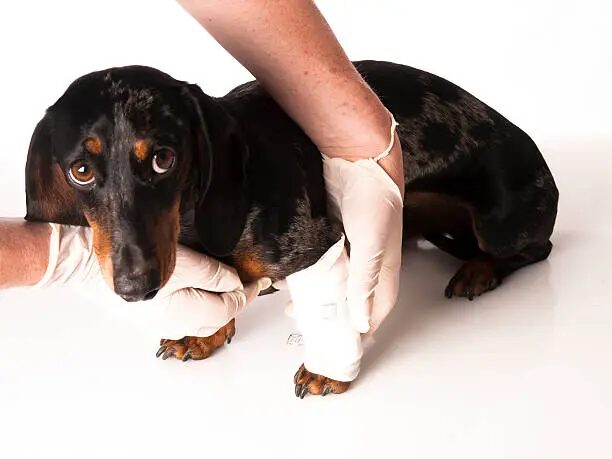
A recurring hot spot deserves veterinary attention because treating only the visible skin may not address the underlying cause.
What Causes Wounds in Dogs?
Dogs can injure themselves in surprisingly ordinary situations.
A wound may happen while your dog is:
- Running through the yard
- Exploring a wooded area
- Playing with another dog
- Chasing an animal
- Jumping over obstacles
- Walking across rough ground
- Chewing or playing with objects
- Getting into a fight
- Running into something sharp
Accidents can also result in much more serious injuries.
Common Causes of Dog Injuries
Some frequent causes include:
- Sharp objects
- Broken glass
- Sticks and thorns
- Animal fights
- Dog bites
- Falls
- Vehicle accidents
- Rough play
- Burns
- Outdoor hazards
- Surgical procedures
Active dogs and working dogs may encounter more physical hazards because they spend more time running, jumping, digging, hunting, or exploring.
That does not mean an indoor dog is immune. Household objects, broken items, doors, furniture, and other pets can also cause injuries.
Foreign Objects in Dog Wounds
Sometimes the biggest problem is not the wound itself but what entered it.
Potential foreign objects include:
- Splinters
- Thorns
- Grass seeds
- Glass
- Stones
- Metal fragments
- Plant material
If something is deeply embedded, do not dig around inside the wound trying to remove it.
Manipulating a deeply lodged object may cause additional tissue damage or bleeding. Veterinary professionals can determine the safest way to examine and remove it.
How to Assess a Dog Wound Before Treating It
Before reaching for a bottle of wound cleaner, take a moment to assess the situation.
Your first question should not be, “What should I put on this?”
It should be:
“Is this an injury I can safely manage at home?”
Veterinary wound management begins with assessment of the animal’s overall stability before focusing exclusively on the visible injury.
Check the Location of the Wound
Location can change the level of concern.
Pay particular attention to wounds:
- Around the eye
- Near the mouth
- On the face
- Around the chest
- On the abdomen
- Near joints
- On the paws
- Around the genitals
- Near important blood vessels
A wound close to the eye, for example, should not be treated casually because inappropriate cleaning or medication could damage a sensitive structure.
Check the Depth of the Wound
Look at the wound without probing it.
Ask yourself:
- Does it look superficial?
- Are the edges widely separated?
- Can I see fatty tissue?
- Is muscle visible?
- Is bone visible?
- Is tissue hanging from the wound?
Do not poke inside the wound with your fingers or instruments.
If the wound appears deep, gaping, or extensive, veterinary evaluation is the safer choice.
Check for Bleeding
Bleeding can range from a small amount of oozing to a life-threatening emergency.
Be especially concerned when:
- Blood is flowing continuously
- Bleeding does not slow with steady pressure
- Blood appears to spurt
- A large amount of blood has been lost
- Your dog becomes weak or collapses
For serious bleeding, controlling blood loss takes priority over cleaning the wound. Veterinary emergency guidance recommends applying firm pressure while seeking professional care.
Look for Foreign Objects
Inspect the surface for obvious debris, but don’t dig into tissue.
Look for:
- Glass
- Splinters
- Stones
- Thorns
- Grass or plant material
- Other visible objects
A foreign object that is deeply embedded should be left for a veterinarian to assess.
Observe Your Dog’s Behavior
Your dog’s behavior can provide important clues.
Watch for:
- Whining
- Growling when touched
- Excessive licking
- Limping
- Restlessness
- Weakness
- Loss of appetite
- Lethargy
- Reluctance to move
- Unusual aggression
Pain can make even a normally gentle dog react defensively. Handle an injured dog carefully and avoid putting your face near its mouth.
When Can You Treat a Dog Wound at Home?
Not every scratch requires an emergency clinic.
Minor dog wounds may sometimes be managed at home when they are small and superficial, bleeding has stopped, there is no embedded foreign object, the injury is not from a bite, and the dog otherwise appears comfortable and normal.
However, home treatment should never become an excuse to delay professional care when warning signs are present.
Minor Dog Wounds That May Be Managed at Home
A wound may be appropriate for basic home care when it is:
- Small
- Shallow
- Not heavily bleeding
- Free from embedded objects
- Not caused by an animal bite
- Not associated with severe pain
- Not visibly infected
- Not located in a high-risk area
- Not accompanied by concerning changes in your dog’s behavior
Even then, monitor it closely.
A wound that starts as a minor scrape can become infected or fail to heal normally.
When Home Treatment Is Not Appropriate
Contact a veterinarian promptly if your dog has:
- A deep wound
- A large or gaping laceration
- Uncontrolled bleeding
- A bite wound
- A deep puncture
- A serious burn
- An eye-area injury
- A chest or abdominal wound
- An embedded foreign object
- Suspected fracture
- Severe pain
- Significant swelling
- Pus or abnormal discharge
- A foul odor
- Increasing redness or heat
- Weakness or collapse
Major trauma can also cause internal injuries that are not immediately visible.
When in doubt, calling your veterinarian is better than guessing.
Dog Wound First Aid: What to Do Immediately
When a dog is injured, your first few actions can make a meaningful difference.
Step 1 — Keep Yourself and Your Dog Safe
Start by moving your dog away from whatever caused the injury.
If possible:
- Stay calm
- Speak quietly
- Keep other pets away
- Wear disposable gloves
- Avoid unnecessary handling
- Remember that pain can cause defensive behavior
An injured dog may bite even if it has never shown aggression before.
Step 2 — Control the Bleeding
If the wound is actively bleeding, use clean gauze or a clean cloth and apply firm, steady pressure.
Do not repeatedly lift the cloth every few seconds to see whether bleeding has stopped. That can interfere with clot formation.
For severe or uncontrolled bleeding, seek emergency veterinary care immediately.
Do not spend time thoroughly cleaning a severely bleeding wound before controlling the blood loss.
Step 3 — Cover a Serious Wound
If you are transporting your dog to a veterinarian, a clean dressing or cloth can help protect the injury from additional contamination.
Do not tightly wrap a limb unless you have been instructed by a veterinary professional.
An incorrectly applied bandage can cause swelling, circulation problems, and additional tissue injury.
Step 4 — Contact Your Veterinarian
When calling, provide as much useful information as possible.
Tell the veterinary team:
- What happened
- When the injury occurred
- Where the wound is located
- Approximately how large it is
- Whether it is deep
- Whether bleeding continues
- Whether a foreign object is present
- Whether your dog is limping
- Whether your dog seems weak or painful
Clear information helps the veterinary team determine how urgently your dog should be seen.
How to Clean a Dog Wound at Home
For an appropriate minor dog wound, gentle cleaning is one of the most useful things you can do.
The goal is to remove dirt and contamination without damaging healthy tissue.
Merck Veterinary Manual notes that wound lavage helps wash away debris and reduce bacterial contamination, while saline is considered relatively gentle on healing tissue.
What You Need to Clean a Minor Dog Wound
A simple dog first-aid kit can contain:
- Clean water or sterile saline
- Clean gauze
- Disposable gloves
- Clean towels
- Appropriate pet-safe wound cleanser
- Non-stick dressing when recommended
- Appropriate bandage supplies
- E-collar or recovery cone
Keep these supplies together so you’re not searching for them while your dog is injured.
Step-by-Step Guide to Cleaning a Dog Wound
1. Restrain Your Dog Safely
Have another person help if necessary.
Avoid forceful restraint if your dog is extremely painful or frightened. If your dog is trying to bite, professional handling is safer.
2. Examine the Injury
Determine whether it appears superficial or potentially serious.
If the wound is deep, gaping, heavily contaminated, or associated with major pain, stop and contact your veterinarian.
3. Stop Bleeding First
Do not begin extensive cleaning while significant bleeding is occurring.
Use clean gauze or cloth and steady pressure as needed.
4. Flush Away Dirt and Debris
For a minor wound, gently flushing with clean water or an appropriate solution can help remove surface contamination.
Avoid aggressive scrubbing.
5. Clean the Surrounding Skin
The skin around the wound can be gently cleaned while avoiding unnecessary irritation to the damaged tissue itself.
6. Avoid Aggressive Manipulation
Don’t scrape, dig, probe, or squeeze the wound.
Your goal is gentle cleansing, not trying to perform veterinary surgery at home.
7. Dry the Surrounding Area
Pat around the area carefully with clean material.
Avoid rubbing directly over delicate healing tissue.
8. Protect the Injury When Appropriate
Some wounds benefit from a dressing, while others are best managed without a bandage.
Your veterinarian can advise you based on the location and type of injury.
9. Prevent Licking
If your dog immediately starts licking or chewing the area, use an appropriate recovery collar or other protective method.
10. Monitor the Wound
Check regularly for:
- Increasing redness
- Swelling
- Heat
- Discharge
- Odor
- Bleeding
- Increasing pain
- Delayed healing
These changes can indicate that the wound needs veterinary assessment.
How Often Should You Clean a Dog Wound?
There is no single cleaning schedule suitable for every injury.
The frequency depends on:
- The type of wound
- Whether it is bandaged
- How contaminated it is
- Whether it is healing normally
- Your veterinarian’s instructions
If your veterinarian has given you a wound-care schedule, follow that schedule rather than relying on generic advice.
Overhandling a wound can also irritate new tissue, so more cleaning is not automatically better.
Should You Trim Hair Around a Dog Wound?
Long fur around an injury can trap moisture and debris and make it harder to monitor the wound.
Veterinary professionals may clip hair around wounds to improve visibility and cleanliness. However, owners should be cautious when using scissors or clippers near injured skin.
Never risk cutting the skin to remove a little fur.
If the wound is extensive, painful, or difficult to access, let a veterinary professional handle clipping.
What Can You Use to Clean a Dog Wound?
Choosing the right cleaning solution matters because some substances can damage healthy tissue.
Clean Water
For an appropriate minor wound, clean water can be useful for flushing away visible dirt and debris.
The goal is to rinse contamination away rather than aggressively scrub the injury.
Sterile Saline
Sterile saline is commonly used for wound irrigation because it is relatively gentle on healing tissue.
It can be particularly useful when you want to flush away surface debris without introducing a harsh chemical.
Merck Veterinary Manual identifies saline as the least toxic commonly used lavage solution for healing tissue, although it is not itself an antiseptic.
Chlorhexidine for Dog Wounds
Veterinarians may use appropriately diluted chlorhexidine for wound cleaning.
The concentration matters.
A stronger solution is not necessarily more effective or safer. In fact, excessively concentrated chlorhexidine can damage healing tissue.
If you’re considering chlorhexidine for a wound, use a product and dilution specifically recommended by your veterinarian.
Povidone-Iodine for Dog Wounds
Povidone-iodine is another antiseptic that veterinarians may use in appropriate circumstances.
As with chlorhexidine, concentration and application matter. Do not assume that applying a concentrated antiseptic directly to an open wound is better.
Pet-Safe Wound Sprays
Some products are specifically formulated for animal wounds.
When considering one, look for:
- Clear directions
- Veterinary or pet-specific labeling
- Appropriate ingredients
- Instructions for use on open wounds
If the wound is deep or potentially serious, a wound spray should not replace veterinary examination.
What Not to Put on a Dog Wound
One of the most important parts of dog wound care is knowing what not to use.
Some household products can irritate or damage healthy tissue and potentially delay healing.
Can You Use Hydrogen Peroxide on a Dog Wound?
Generally, no.
Hydrogen peroxide can damage healthy cells involved in wound healing. Merck Veterinary Manual specifically states that hydrogen peroxide is toxic to healthy tissue and should not be used for wound lavage.
Can You Use Rubbing Alcohol on a Dog Wound?
Rubbing alcohol can be irritating to damaged tissue and is not a good routine choice for cleaning an open wound.
Veterinary guidance recommends avoiding rubbing alcohol because it can damage healthy tissue around an injury.
Can You Use Human Antibiotic Cream on a Dog?
Do not automatically assume that a human topical medication is appropriate for your dog.
Some products may be tolerated in certain circumstances, while others can cause irritation or problems if licked.
Ask your veterinarian before applying medication to an open wound, particularly if the wound is deep or infected.
Can You Use Neosporin on a Dog?
Products such as Neosporin may sometimes be used under veterinary guidance, but they are not automatically the best choice for every dog or every wound.
Dogs may lick topical products, and some dogs can react to ingredients in topical medications.
A pet-specific product recommended by your veterinarian may be preferable.
Can You Use Soap on a Dog Wound?
Avoid aggressively washing an open wound with ordinary household soap.
Some soaps contain detergents or fragrances that can irritate damaged tissue. Merck specifically cautions against surgical scrub agents because their detergent components can damage tissue.
Can You Use Essential Oils on a Dog Wound?
Essential oils should not be treated as harmless simply because they are natural.
Dogs can react differently to concentrated essential oils, and some can be harmful when ingested or improperly applied.
Don’t experiment with essential oils on an open wound.
Can You Use Home Remedies for Dog Wounds?
Home remedies are not automatically safe or effective.
When dealing with an injury, the safest approach is usually straightforward:
Assess the wound → control bleeding → gently clean appropriate minor wounds → prevent licking → monitor healing → seek veterinary care when needed.
How to Bandage a Dog Wound
Not every dog wound needs a bandage. In fact, placing a bandage on the wrong type of injury—or wrapping it too tightly—can create additional problems.
A bandage may be useful when it is needed to protect a wound from dirt, reduce contamination, absorb drainage, or prevent a dog from interfering with an injury. However, the correct approach depends heavily on the wound’s location and severity.
For serious injuries, bandaging should generally be considered temporary protection while you arrange veterinary care rather than a substitute for professional treatment.
Does Every Dog Wound Need a Bandage?
No.
A small superficial wound may not require a bandage at all. Some wounds are better managed by keeping them clean and preventing the dog from licking them.
Bandaging can be particularly challenging on areas such as:
- The face
- Neck
- Chest
- Abdomen
- Around joints
- Between the toes
- The tail
A veterinarian can determine whether covering the wound is appropriate.
When a Bandage Can Help
A properly applied dressing may help:
- Protect the wound from contamination
- Reduce contact with dirt
- Absorb wound drainage
- Protect certain paw injuries
- Keep a dressing in place
- Prevent scratching or rubbing
- Support a veterinary-directed treatment plan
The bandage should always be clean, comfortable, and appropriate for the location.
How to Apply a Dog Wound Bandage
If your veterinarian has recommended home bandaging, follow their instructions carefully.
A basic approach may include:
- Clean the wound as directed.
- Place a non-stick dressing over the injury.
- Add appropriate padding if needed.
- Secure the dressing with suitable bandage material.
- Wrap firmly enough to hold it in place, but never tightly.
- Check the exposed toes or surrounding tissue regularly.
- Keep the bandage clean and dry.
- Change it according to your veterinarian’s instructions.
Bandaging is more complicated than simply wrapping material around a wound. Incorrect pressure can restrict circulation or create pressure sores.
How Often Should a Dog Bandage Be Changed?
There is no universal schedule.
The correct frequency depends on:
- The wound’s location
- Amount of drainage
- Type of dressing
- Whether infection is present
- How quickly the bandage becomes dirty
- Your veterinarian’s instructions
If a bandage becomes wet, dirty, loose, damaged, or foul-smelling, contact your veterinary team for guidance rather than ignoring the problem.
Signs a Dog Bandage Is Too Tight
A bandage that is too tight can interfere with circulation.
Watch for:
- Swelling below or above the bandage
- Cold toes
- Discolored toes
- Increased pain
- Excessive chewing
- New or worsening limping
- Changes in sensation
If you suspect circulation is being compromised, seek veterinary advice promptly.
When Not to Bandage a Dog Wound Yourself
Avoid attempting to bandage a serious injury yourself when:
- The wound is deep
- Bone is visible
- The wound is heavily contaminated
- Bleeding continues
- A foreign object is embedded
- The injury involves the chest or abdomen
- Your dog is severely painful
- The wound resulted from major trauma
A clean cloth can be used as temporary protection during transportation when appropriate, but serious injuries need professional assessment.
How to Stop a Dog From Licking a Wound
One of the biggest challenges during dog wound care is preventing licking.
Dogs naturally investigate injuries with their mouths. Unfortunately, repeated licking can make a wound worse.
Why Dogs Lick Wounds
Dogs may lick because:
- The wound is painful
- The area itches
- There is dried blood
- The wound produces fluid
- They are responding to irritation
- Licking is a natural grooming behavior
The problem is that your dog’s mouth contains many microorganisms, and repeated licking can introduce additional contamination.
Can Licking Help a Dog Wound Heal?
A dog may instinctively lick an injury, but that does not mean extensive licking is beneficial.
Occasional licking can quickly turn into persistent licking, chewing, or scratching. This can remove fragile new tissue and repeatedly traumatize the wound.
Why Excessive Licking Can Delay Healing
Constant licking may cause:
- More inflammation
- Skin irritation
- Bleeding
- Delayed wound closure
- Increased contamination
- Damage to stitches
- Increased risk of infection
If your dog keeps returning to the wound, you need a strategy to prevent access.
Using an Elizabethan Collar
An Elizabethan collar, commonly called an E-collar or cone, is one of the most reliable ways to prevent a dog from reaching certain wounds.
Although many dogs dislike wearing a cone initially, it can protect the injury while it heals.
Make sure:
- The collar fits correctly
- Your dog can breathe comfortably
- Your dog can drink
- The collar does not cause rubbing
- Your dog cannot reach the wound around the collar
If your dog cannot tolerate a traditional cone, ask your veterinarian about suitable alternatives.
Alternative Recovery Collars and Protective Clothing
Depending on the location of the wound, alternatives may include:
- Inflatable recovery collars
- Soft recovery collars
- Protective recovery shirts
- Veterinary-approved protective garments
Not every option works for every injury. A determined dog may still be able to reach its wound.
How to Stop Your Dog From Chewing a Bandage
If your dog repeatedly attacks its bandage:
- Check whether the bandage is uncomfortable
- Use an appropriate recovery collar
- Keep your dog supervised
- Follow your veterinarian’s exercise restrictions
- Contact your veterinarian if the behavior continues
Persistent chewing can sometimes indicate pain, itching, swelling, or an improperly fitted bandage, so don’t simply assume your dog is being difficult.
Dog Wound Infection: Signs to Watch For
One of the most important goals of dog wound care is preventing and recognizing infection.
A wound that initially looks clean may change over the following days.
Some inflammation is expected during normal healing, but worsening redness, swelling, pain, heat, discharge, or odor should raise concern.
What Does an Infected Dog Wound Look Like?
Potential warning signs include:
- Increasing redness
- Significant swelling
- Increased warmth
- Pus
- Yellow, green, or abnormal discharge
- Bad odor
- Increasing pain
- Delayed healing
- Excessive licking
- Separation of wound edges
Other Signs of Infection in Dogs
A wound infection can sometimes affect your dog’s overall health.
Watch for:
- Lethargy
- Reduced appetite
- Fever
- Weakness
- Reluctance to move
- Limping
- Behavioral changes
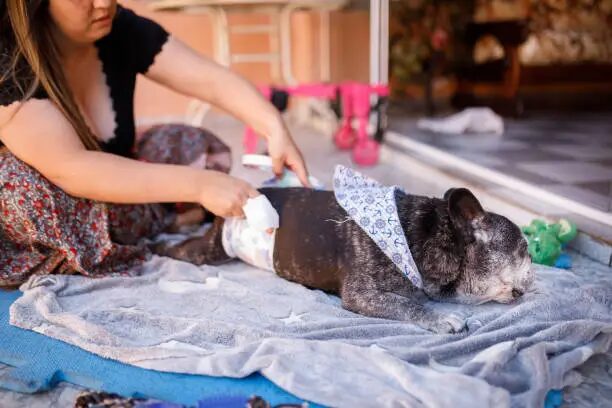
If your dog seems generally unwell rather than simply having a localized skin problem, contact your veterinarian.
What Causes Dog Wound Infections?
Infection can develop when bacteria enter damaged tissue.
Risk can increase when:
- The wound is contaminated
- A foreign object remains inside
- The injury is a puncture
- The wound is caused by a bite
- Damaged tissue is present
- The dog repeatedly licks it
- The wound is not appropriately cleaned
- A bandage remains wet or dirty
Puncture wounds and animal bites deserve particular attention because bacteria can become trapped underneath the skin.
How Quickly Can a Dog Wound Become Infected?
There is no single timeline that applies to every injury.
Some contaminated wounds can develop problems relatively quickly, while others may take longer before obvious signs appear.
This is why checking the wound regularly is more useful than relying on a specific number of days.
Look for changes from one day to the next.
If redness, swelling, pain, or discharge is increasing rather than improving, contact your veterinarian.
What to Do if a Dog Wound Becomes Infected
Do not rely on increasingly aggressive home remedies.
If you suspect infection:
- Contact your veterinarian.
- Describe the wound and how it has changed.
- Follow the recommended cleaning instructions.
- Prevent your dog from licking the area.
- Give prescribed medication exactly as directed.
- Attend a veterinary appointment if recommended.
Some infected wounds need more than topical treatment. A veterinarian may need to drain an abscess, remove damaged tissue, identify a foreign object, or prescribe appropriate medication.
When Should You Take Your Dog to the Vet for a Wound?
Knowing when dog wound care at home is not enough is just as important as knowing how to clean a wound.
When an injury is serious, delaying treatment can allow bleeding, infection, tissue damage, or other complications to progress.
Emergency Dog Wound Symptoms
Seek urgent veterinary care when your dog has:
- Uncontrolled bleeding
- Severe trauma
- Difficulty breathing
- Collapse
- Extreme weakness
- Pale or abnormal-looking gums
- Exposed bone
- Exposed internal tissue or organs
- A deep or extensive wound
- Severe pain
Major trauma should always be taken seriously.
Even if the visible wound does not appear dramatic, the underlying injury may be.
Wounds That Need Veterinary Assessment
Veterinary evaluation is especially important for:
- Bite wounds
- Deep punctures
- Large lacerations
- Eye injuries
- Chest wounds
- Abdominal wounds
- Significant burns
- Embedded foreign objects
- Wounds causing substantial limping
- Wounds with signs of infection
- Wounds that keep reopening
A wound’s location can be just as important as its size.
For example, an injury near the eye may be more concerning than a larger superficial scrape on a less sensitive area.
Does a Dog Wound Need Stitches?
Not necessarily.
Whether a wound should be closed depends on factors such as:
- Depth
- Location
- Contamination
- Age of the wound
- Amount of tissue damage
- Infection risk
Veterinarians may sometimes leave contaminated wounds open temporarily so they can drain and heal appropriately rather than trapping bacteria inside.
Never attempt to close an open dog wound using household glue, tape, or makeshift stitches.
A wound should be professionally evaluated before deciding whether closure is appropriate.
Dog Bite Wound Care
A dog bite deserves special attention because bite wounds often look smaller on the outside than they are underneath.
The teeth can create punctures that push bacteria deep into tissue.
Why Dog Bites Are More Serious Than They Look
A bite can cause:
- Puncture wounds
- Crushing injuries
- Muscle damage
- Blood vessel damage
- Infection
- Abscess formation
- Damage to organs or body cavities
A small hole in the skin does not necessarily mean the injury is minor.
What to Do After Your Dog Is Bitten
After separating the animals safely:
- Move your dog away from the other animal.
- Assess breathing and overall condition.
- Control significant bleeding with clean pressure.
- Avoid probing the wound.
- Contact a veterinarian.
- Follow veterinary instructions for cleaning and treatment.
If the attacking animal is unfamiliar, tell the veterinarian what you know about it and whether its vaccination status is known.
Depending on where you live and the circumstances of the bite, your veterinarian may also advise you about additional public-health considerations.
How to Clean a Dog Bite Wound
If your veterinarian advises initial home cleaning for a superficial bite, gentle flushing may help remove surface contamination.
However, cleaning a bite does not eliminate the need for veterinary assessment.
Deep punctures can seal over and trap bacteria underneath the skin.
Your veterinarian may need to:
- Clip surrounding hair
- Explore the wound
- Flush deeper tissue
- Remove damaged tissue
- Drain an abscess
- Prescribe medication when appropriate
- Monitor for complications
Why Puncture Wounds Are Dangerous
Punctures can be deceptive.
The surface opening may be only a few millimeters wide while the underlying injury is much larger.
Potential problems include:
- Deep infection
- Abscesses
- Tissue pockets
- Foreign material
- Muscle damage
For this reason, a puncture caused by another animal or a dirty sharp object should generally be discussed with a veterinarian.
Signs of an Abscess After a Dog Bite
An abscess is a pocket of infection that can develop under the skin.
Possible signs include:
- A growing lump
- Warmth
- Swelling
- Pain
- Redness
- Pus
- Foul odor
- Fever
- Lethargy
- Loss of appetite
Sometimes an abscess ruptures and begins draining. That does not necessarily mean the underlying infection has resolved.
A veterinarian should assess suspected abscesses.
When a Dog Bite Requires an Emergency Vet
Treat a bite as an emergency when:
- Bleeding cannot be controlled
- Your dog has difficulty breathing
- The bite is around the chest or abdomen
- There is severe weakness
- Your dog collapses
- There is extensive tissue damage
- Bone is exposed
- The eye has been injured
- The attacking animal caused major trauma
Even less dramatic bites should be discussed with a veterinarian because of the risk of infection and hidden tissue damage.
Dog Paw Wound Care
Paw injuries can be particularly frustrating because dogs cannot avoid walking on their feet.
A small cut may reopen repeatedly if your dog continues running, jumping, or walking across rough surfaces.
Common Causes of Paw Injuries
Dogs can injure their paws through:
- Sharp objects
- Broken glass
- Thorns
- Hot pavement
- Rough terrain
- Chemicals
- Ice or abrasive materials
- Torn nails
- Excessive running
How to Treat a Minor Paw Cut
For a genuinely minor paw injury:
- Keep your dog calm.
- Examine the paw.
- Control bleeding if present.
- Gently flush away visible contamination.
- Avoid digging into the wound.
- Prevent licking.
- Restrict activity.
- Monitor for swelling, discharge, or worsening pain.
If your dog refuses to put weight on the paw, has significant bleeding, or has a deep cut, contact a veterinarian.
How to Protect an Injured Paw
Depending on the injury, protection may involve:
- A veterinary-approved dressing
- A properly fitted bandage
- Limiting outdoor activity
- Keeping the paw clean and dry
- Preventing licking
- Avoiding rough surfaces
Do not leave a wet or dirty bandage on the paw.
Moisture trapped against damaged skin can create additional problems.
How to Keep a Paw Bandage Dry
If your veterinarian has recommended a paw bandage:
- Avoid unnecessary walks
- Keep your dog away from puddles
- Use appropriate temporary outdoor protection when advised
- Remove wet external coverings promptly
- Check the bandage regularly
Never wrap a plastic covering tightly around a paw for prolonged periods.
When a Paw Injury Needs a Veterinarian
Seek veterinary care for:
- Deep paw cuts
- Persistent bleeding
- Large pad injuries
- Severe swelling
- Significant pain
- Foreign objects
- Suspected burns
- Persistent limping
- Signs of infection
- A wound that repeatedly opens
Dog Wound Care After Surgery
Surgical wounds require a slightly different approach because they have been deliberately created and closed as part of a medical procedure.
Your veterinarian’s discharge instructions should always take priority over generic advice.
Normal Appearance of a Healing Surgical Incision
A healing incision may have:
- Mild swelling
- Slight redness along the incision
- Clean, closed edges
- Mild tenderness
However, the incision should generally be monitored for changes rather than judged from a single glance.
Increasing redness, swelling, discharge, odor, pain, or separation of the incision should prompt veterinary contact.
How to Keep a Surgical Wound Clean
Unless your veterinarian specifically instructs otherwise:
- Keep the incision dry
- Don’t scrub it
- Don’t apply household products
- Don’t allow your dog to lick it
- Follow bathing restrictions
- Give medications exactly as prescribed
- Restrict activity as directed
Your veterinarian may provide specific instructions about cleaning, medication, bandaging, and exercise.
Preventing Your Dog From Licking Stitches
Dogs often become interested in surgical sites once the anesthesia wears off.
A recovery collar may be necessary.
Depending on the surgical site, your veterinarian may also recommend:
- A recovery suit
- Activity restriction
- Supervision
- Other protective measures
A few minutes of unsupervised chewing can sometimes damage an incision surprisingly quickly.
Signs of a Surgical Infection
Contact your veterinary team if you notice:
- Increasing redness
- Significant swelling
- Pus
- Foul odor
- Increasing pain
- Persistent bleeding
- Wound separation
- Fever or unusual lethargy
Don’t wait for a surgical incision to become obviously severe before asking for advice.
What to Do if Stitches Open
If an incision opens:
Contact your veterinarian immediately.
Do not attempt to stitch, glue, tape, or otherwise close it yourself.
If the opening is significant or tissue is protruding, treat it as an emergency.
Prevent your dog from licking the site and follow the veterinary team’s instructions while arranging care.
How Long Does a Dog Wound Take to Heal?
One of the most common questions owners ask is, “How long does a dog wound take to heal?”
Unfortunately, there is no single answer.
A tiny scrape may improve relatively quickly, while a deep puncture, infected wound, surgical incision, or extensive laceration can require considerably more time.
Factors That Affect Healing Time
Healing can be influenced by:
- Wound depth
- Wound location
- Cause of injury
- Degree of contamination
- Infection
- Dog’s age
- Overall health
- Nutrition
- Blood supply
- Licking or chewing
- Activity level
- Quality of wound management
A wound on a body part that moves constantly may have more difficulty healing than one that can remain relatively undisturbed.
Dog Wound Healing Stages
Wound healing is a biological process rather than a simple matter of a cut “closing.”
Broadly, healing involves overlapping stages.
1. Inflammation
Immediately after injury, the body responds to tissue damage.
Blood vessels, immune cells, and signaling chemicals participate in the initial response.
Some redness and swelling can be part of this process.
2. Cleaning and Debridement
The body works to remove damaged cells and contamination.
Veterinarians may also need to remove dead or damaged tissue from significant wounds.
3. New Tissue Formation
The body begins producing new tissue and blood vessels.
Healthy granulation tissue may develop as the wound progresses.
4. Skin Closure
New skin gradually covers the damaged area.
The speed of closure depends on wound size, location, infection, and how the wound is being managed.
5. Scar Maturation
Even after the surface looks healed, deeper tissue continues to remodel.
A scar may change in appearance over an extended period.
What a Normal Healing Wound Looks Like
A healing wound should generally trend toward improvement.
You want to see:
- Less swelling
- Less redness
- Reduced discomfort
- Reduced discharge
- Increasing tissue closure
- Less interest from your dog
- Improved function
The key word is improvement.
A wound that looks slightly irritated today but significantly worse tomorrow deserves attention.
Signs a Dog Wound Is Not Healing Properly
Contact your veterinarian if:
- The wound becomes larger
- Redness increases
- Swelling increases
- Pain gets worse
- New discharge appears
- The odor becomes unpleasant
- The wound repeatedly opens
- Your dog becomes lethargic
- Appetite decreases
- Limping worsens
- New tissue appears unhealthy
Don’t focus only on how the wound looks. Pay attention to your dog’s overall behavior too.
Dog Wound Healing: What Helps?
Good wound healing depends on more than cleaning.
Keep the Wound Clean
Follow your veterinarian’s cleaning recommendations.
Avoid repeatedly applying random products simply because they claim to “speed healing.”
Prevent Licking and Scratching
This may be one of the most important things you can do at home.
Use:
- An E-collar
- Recovery clothing
- Appropriate bandaging when advised
- Supervision
Follow Veterinary Instructions
If your veterinarian provides a treatment plan, follow it consistently.
Don’t stop prescribed medication early or change the dose without asking.
Give Prescribed Medications Correctly
Some wounds require pain relief, antibiotics, or other medications.
Never give human pain medication to your dog unless your veterinarian specifically tells you to do so.
Many human medicines can be dangerous to dogs.
Provide Proper Nutrition and Hydration
Healing requires energy and nutrients.
Make sure your dog has access to:
- Fresh water
- A complete, balanced diet
- Appropriate food intake
If your dog refuses food after an injury or surgery, tell your veterinarian.
Keep Your Dog’s Environment Clean
Wash bedding regularly and keep the injured dog away from dirty areas.
This is especially important for wounds that are exposed to the ground or easily contaminated.
Restrict Exercise When Necessary
Running and jumping can reopen wounds.
Follow your veterinarian’s activity restrictions, particularly after surgery or treatment for a significant injury.
Dog Wound Care: A Simple Daily Monitoring Routine
A useful routine is to check the injury at roughly the same time each day.
Ask:
| Question | What to Look For |
|---|---|
| Is the wound smaller? | Gradual closure |
| Is swelling decreasing? | Less puffiness |
| Is redness improving? | Less surrounding redness |
| Is discharge decreasing? | Less fluid |
| Does it smell normal? | No foul odor |
| Is my dog more comfortable? | Less licking or guarding |
| Is my dog eating normally? | Normal appetite |
| Is my dog behaving normally? | Normal energy and movement |
If several answers are moving in the wrong direction, contact your veterinarian.
The Most Important Rule in Dog Wound Care
A useful way to remember the basics is:
Assess → Control bleeding → Clean → Protect → Prevent licking → Monitor → Contact your veterinarian when needed.
The goal is not to turn every dog owner into a veterinary surgeon.
The goal is to help you recognize a minor injury, provide sensible first aid when appropriate, and know when professional care is necessary.
Dog Wound Care Products and First-Aid Kit
Having a basic dog first-aid kit available can make minor injuries easier to manage while you contact your veterinarian. It can also help you respond quickly when your dog gets a small scrape, cut, or paw injury.
A first-aid kit is not a replacement for veterinary treatment. Serious bleeding, deep wounds, bites, burns, punctures, and other significant injuries still require professional assessment.
Essential Dog First-Aid Supplies
| Item | Purpose |
|---|---|
| Sterile gauze | Cleaning and covering wounds |
| Clean cloth | Applying pressure to bleeding |
| Sterile saline | Flushing superficial wounds |
| Pet-safe wound cleanser | Cleaning appropriate minor injuries |
| Non-stick dressing | Protecting a wound |
| Bandage material | Securing dressings when appropriate |
| Disposable gloves | Hygiene and protection |
| E-collar | Preventing licking and chewing |
| Digital thermometer | Monitoring health when advised by a veterinarian |
| Tweezers | Handling superficial debris when appropriate |
| Clean towels | Restraint, drying, and temporary wound protection |
| Veterinary contact information | Getting professional advice quickly |
Keep these supplies in a clean, dry, easily accessible location.
What to Keep in a Dog First-Aid Kit
A practical kit should contain supplies for the first few minutes after an injury.
Consider including:
- Sterile gauze pads
- Non-stick wound dressings
- Clean towels
- Disposable gloves
- Sterile saline
- Veterinary-approved wound cleanser
- Self-adhering bandage material
- Medical tape
- E-collar or recovery collar
- Small flashlight
- Scissors with blunt tips
- Tweezers
- Your veterinarian’s phone number
- Emergency veterinary contact information
Check your supplies periodically and replace anything that has expired, become contaminated, or been used.
What Should Not Be in Your Dog First-Aid Kit?
Avoid stocking your kit with products simply because they are commonly used for people.
Be especially cautious with:
- Human pain medications
- Undiluted antiseptics
- Hydrogen peroxide
- Rubbing alcohol
- Essential oils
- Unapproved antibiotic creams
- Strong disinfectants
- Random “natural” wound remedies
A product being safe for humans does not automatically make it safe for dogs.
Common Dog Wound Care Mistakes to Avoid
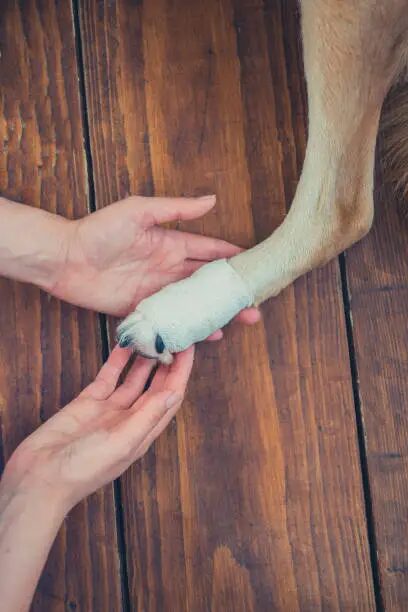
Even well-intentioned owners can accidentally make an injury worse.
Understanding the most common mistakes can help you provide safer first aid.
Waiting Too Long to See a Vet
One of the biggest mistakes is assuming that every wound will heal on its own.
A wound may look small but hide:
- Deep tissue damage
- A foreign object
- Infection
- Muscle injury
- Damage to blood vessels
- An abscess
When you’re uncertain about the severity, contacting your veterinarian is safer than waiting for the problem to become obvious.
Ignoring Bite Wounds
Never assume a tiny bite is harmless.
Puncture wounds can close at the surface while bacteria remain underneath.
This is particularly important after dog fights because the visible injury may not reflect the full extent of the damage.
Using Harsh Chemicals
Hydrogen peroxide, alcohol, strong disinfectants, and other harsh substances can irritate or damage healthy tissue.
Wound cleaning should be gentle, not aggressive.
Use clean water, sterile saline, or a veterinary-recommended wound-cleaning product when appropriate.
Scrubbing the Wound Aggressively
Scrubbing may traumatize delicate tissue and interfere with healing.
For many minor wounds, gentle irrigation is preferable to aggressive scrubbing.
Removing Deeply Embedded Objects
If glass, a thorn, stick, or another object is deeply embedded in the wound, don’t dig around trying to remove it.
Manipulating the object may increase bleeding or cause additional tissue damage.
Cover the area as safely as possible and seek veterinary care.
Wrapping a Bandage Too Tightly
A tight bandage can restrict blood flow.
This can result in swelling, pain, tissue damage, and other complications.
If you’re not confident about bandaging, ask your veterinarian to demonstrate the correct technique.
Letting the Dog Constantly Lick the Wound
Dogs may seem determined to “clean” their injuries, but excessive licking can interfere with healing.
Use an appropriate recovery collar or protective garment when necessary.
Giving Human Pain Medication
This is an especially important warning.
Do not give your dog medications such as ibuprofen, naproxen, acetaminophen, or aspirin unless your veterinarian specifically recommends a particular medication and dose.
Some human medications can cause serious or potentially life-threatening toxicity in dogs.
Assuming a Small Puncture Is Harmless
A puncture can be deceptive.
The surface opening may be tiny while bacteria and damaged tissue are located deeper underneath.
Small does not always mean minor.
Dog Wound Care for Different Body Areas
The location of an injury can change how it should be handled.
Some areas are particularly sensitive or difficult to treat at home.
Dog Leg Wound Care
Leg wounds may repeatedly reopen because dogs naturally use their legs for walking and running.
For minor injuries:
- Clean as directed
- Limit activity
- Prevent licking
- Monitor for swelling
- Keep the area clean
Significant bleeding, deep cuts, severe limping, or exposed tissue should be evaluated by a veterinarian.
Dog Ear Wound Care
Ear injuries can bleed more than owners expect.
The ears contain many small blood vessels, so even a relatively minor cut may produce considerable blood.
Avoid putting products deep into the ear unless they were specifically prescribed or recommended for that purpose.
Seek veterinary care for:
- Deep cuts
- Severe swelling
- Ear flap injuries
- Persistent bleeding
- Suspected ear-canal injury
Dog Face Wound Care
Facial wounds deserve extra caution.
An injury near the eye, nose, or mouth can involve structures that are difficult to assess at home.
Avoid applying unapproved products close to the eyes.
Eye-area injuries should generally receive prompt veterinary assessment.
Dog Neck Wound Care
Neck wounds may be associated with bites, collars, or other trauma.
Do not place a tight bandage around the neck.
If a wound is deep, actively bleeding, swollen, or associated with breathing problems, seek emergency veterinary care.
Dog Chest Wound Care
Chest wounds can be extremely serious because they may involve the structures responsible for breathing.
A penetrating chest injury should be treated as an emergency.
If your dog develops difficulty breathing after an injury, seek emergency veterinary care immediately.
Dog Abdominal Wound Care
An abdominal wound may involve internal organs even when the skin injury looks relatively small.
Seek immediate veterinary attention for:
- Deep abdominal wounds
- Severe trauma
- Exposed tissue
- Abdominal swelling
- Weakness
- Collapse
Never attempt to push exposed tissue back into the abdomen.
Dog Tail Wound Care
Tail injuries can be difficult because dogs may repeatedly wag or strike the injured area.
This can cause reopening and bleeding.
Protecting the wound and restricting activity may be necessary, but significant tail injuries should be evaluated by a veterinarian.
Dog Paw Pad Wound Care
Paw pad injuries deserve special attention because the dog must walk on the affected area.
Minor injuries may sometimes be managed with appropriate first aid, but deep cuts, large pad tears, burns, foreign objects, and persistent bleeding require veterinary evaluation.
Dog Mouth and Gum Wounds
Dogs can injure their mouths by chewing sticks, bones, toys, or sharp objects.
Mouth injuries may be difficult for owners to examine safely.
If there is significant bleeding, a penetrating injury, difficulty eating, facial swelling, or suspected foreign material, contact your veterinarian.
Dog Wound Care by Severity
A simple severity guide can help owners understand when home care may be reasonable and when professional treatment is needed.
| Wound Type | Possible Home Care? | Veterinary Assessment |
|---|---|---|
| Small superficial scrape | Sometimes | If worsening |
| Small shallow cut | Sometimes | If bleeding or infected |
| Deep laceration | No | Yes |
| Bite wound | No | Yes |
| Deep puncture | No | Yes |
| Heavy bleeding | No | Emergency |
| Burn | Usually no | Yes |
| Eye-area wound | No | Yes |
| Embedded foreign object | No | Yes |
| Infected wound | No | Yes |
| Minor paw scrape | Sometimes | If persistent or worsening |
| Surgical incision problem | No | Contact veterinarian |
This table is a general guide rather than a diagnosis.
If you’re unsure whether an injury is minor or serious, err on the side of veterinary advice.
Frequently Asked Questions About Dog Wound Care
How Do You Treat a Wound on a Dog?
Start by determining whether the injury is minor or serious.
For a small, superficial wound, basic care may involve controlling bleeding, gently flushing the area, keeping it clean, preventing licking, and monitoring healing.
Deep wounds, bites, punctures, burns, heavy bleeding, and infected injuries require veterinary attention.
How Do You Clean a Dog’s Wound at Home?
For an appropriate minor wound, gently flush the area with clean water or sterile saline.
Avoid aggressive scrubbing.
Remove surface dirt that can be safely flushed away, keep surrounding hair from contaminating the injury, and prevent your dog from licking it.
If the wound is deep, contaminated, or caused by a bite, contact your veterinarian.
What Can I Put on My Dog’s Open Wound?
For many minor wounds, clean water or sterile saline may be enough for initial flushing.
A veterinarian may recommend a specific wound cleanser or topical product depending on the injury.
Don’t automatically apply human creams, disinfectants, essential oils, or household products.
Can I Use Hydrogen Peroxide on My Dog’s Wound?
Hydrogen peroxide is generally not recommended as a routine wound-cleaning solution because it can damage healthy cells and irritate tissue.
Instead, use clean water, sterile saline, or a veterinary-recommended product when appropriate.
Can I Use Neosporin on My Dog?
Don’t assume that a human antibiotic ointment is appropriate for every dog or wound.
Dogs may lick topical products, and certain formulations may contain additional ingredients that are unsuitable.
Ask your veterinarian before using Neosporin or another human topical antibiotic.
Can I Use Rubbing Alcohol on a Dog’s Wound?
Rubbing alcohol can be irritating and painful on damaged tissue.
It is generally not a preferred option for cleaning an open wound.
Use a gentler, veterinary-appropriate approach instead.
Should I Cover My Dog’s Wound?
Not necessarily.
Some wounds benefit from a dressing, while others are better managed without one.
The decision depends on:
- Wound location
- Depth
- Contamination
- Drainage
- Risk of licking
- Veterinary recommendations
Should I Let My Dog Lick Its Wound?
No, persistent licking should generally be prevented.
Licking can introduce contamination and damage new tissue.
An E-collar is often one of the most effective ways to stop a dog from reaching an injury.
How Can I Stop My Dog From Licking a Wound?
Use an appropriately fitted Elizabethan collar or recovery collar.
Depending on the wound’s location, your veterinarian may recommend protective clothing or another recovery device.
How Long Does a Dog Wound Take to Heal?
Healing time varies widely.
A superficial scrape may improve relatively quickly, while deep, infected, surgical, or contaminated wounds may take much longer.
Monitor the trend rather than expecting every wound to heal on a fixed schedule.
What Does an Infected Dog Wound Look Like?
Possible signs include:
- Increasing redness
- Swelling
- Heat
- Pus
- Abnormal discharge
- Foul odor
- Increasing pain
- Delayed healing
Your dog may also become lethargic or lose interest in food.
How Do I Know If My Dog’s Wound Needs Stitches?
A veterinarian should decide whether a wound requires closure.
Depth, contamination, location, age, tissue damage, and infection risk all influence the decision.
Never attempt to stitch an injury yourself.
When Should I Take My Dog to the Vet for a Wound?
Contact your veterinarian for deep wounds, bite wounds, punctures, burns, persistent bleeding, foreign objects, severe pain, eye injuries, infected wounds, or wounds that aren’t improving.
Emergency care is appropriate for uncontrolled bleeding, severe trauma, breathing difficulty, collapse, exposed organs, or other life-threatening symptoms.
Are Dog Bite Wounds Dangerous?
Yes.
A bite can cause deep punctures, crushing injuries, infection, and hidden tissue damage.
Even a small puncture should be discussed with a veterinarian.
Can a Dog’s Wound Heal on Its Own?
Some small, superficial injuries can heal without extensive treatment.
However, owners should not assume that every wound will heal safely without professional assessment.
If the wound is deep, contaminated, painful, infected, or caused by an animal bite, veterinary care is important.
What Is the Fastest Way to Heal a Dog Wound?
There is no safe universal shortcut.
The best approach is to:
- Clean the wound appropriately
- Prevent contamination
- Stop licking
- Follow veterinary instructions
- Provide adequate nutrition and hydration
- Restrict activity when necessary
- Treat infection promptly
Trying aggressive home remedies can actually slow healing.
How Often Should I Clean My Dog’s Wound?
Follow your veterinarian’s instructions.
Cleaning too little may allow contamination to remain, while excessive manipulation can irritate healing tissue.
If you’re managing a minor injury at home, ask your veterinarian if you’re uncertain about the appropriate cleaning frequency.
Should a Dog Wound Be Kept Covered?
Not always.
Some injuries benefit from a dressing, particularly when protection from contamination is needed.
Others may heal better without a bandage.
The wound’s type and location determine the best approach.
Can I Bathe My Dog With an Open Wound?
Avoid bathing an injured dog unless your veterinarian says it is appropriate.
Soaking a wound can introduce contamination and interfere with healing.
After surgery, follow the specific bathing restrictions provided by your veterinary team.
What Should I Do if My Dog’s Wound Is Bleeding?
For minor bleeding, use clean gauze or cloth and apply firm, steady pressure.
Don’t repeatedly lift the material to check whether bleeding has stopped.
If bleeding is heavy, spurting, persistent, or accompanied by weakness or collapse, seek emergency veterinary care.
Dog Wound Care Checklist
Use this simple checklist when dealing with a suspected minor injury.
Assess → Control bleeding → Clean → Protect → Prevent licking → Monitor → Contact vet when needed
Minor Wound Checklist
A wound may be more suitable for basic home first aid when:
- The wound is small
- It is superficial
- Bleeding has stopped
- There is no embedded foreign object
- The injury was not caused by a bite
- Your dog is behaving normally
- There is no severe pain
- The wound can be gently cleaned
- Your dog cannot constantly lick it
- You can monitor the injury regularly
Even then, contact your veterinarian if anything changes.
Veterinary Care Checklist
Arrange veterinary assessment when you notice:
- Deep wounds
- Persistent bleeding
- Bite wounds
- Puncture wounds
- Foreign objects
- Severe pain
- Significant swelling
- Pus or discharge
- Bad odor
- Exposed tissue
- Worsening redness
- Significant limping
- Wound separation
- Weakness or lethargy
For emergencies, don’t delay treatment while attempting extensive home care.
Dog Wound Care: Prevention Tips
Preventing injuries is easier than treating them.
Although accidents can’t always be avoided, several simple habits can reduce your dog’s risk.
Keep Your Yard Safe
Regularly inspect outdoor areas for:
- Broken glass
- Sharp metal
- Nails
- Thorny plants
- Dangerous debris
- Damaged fencing
Dogs often investigate their surroundings with their paws and mouths, so even small hazards can cause injuries.
Inspect Your Dog After Outdoor Activities
After hiking, hunting, running, or playing outdoors, check:
- Paws
- Paw pads
- Legs
- Ears
- Face
- Tail
- Abdomen
Early detection can prevent a small injury from becoming a larger problem.
Keep Sharp Objects Away
Store:
- Garden tools
- Broken containers
- Sharp equipment
- Construction materials
- Other hazardous objects
out of your dog’s reach.
Use Appropriate Paw Protection
For dogs exposed to unusually hot, rough, icy, or chemically treated surfaces, ask your veterinarian whether protective footwear is appropriate.
Introduce paw protection gradually so your dog has time to become comfortable wearing it.
Supervise Dog-to-Dog Interactions
Even friendly dogs can fight.
Watch for signs of escalating tension and separate dogs safely when necessary.
If your dog is bitten, don’t assume the wound is minor simply because the skin opening is small.
Keep Nails Properly Trimmed
Long nails can become caught, split, or torn.
Regular nail maintenance can reduce the risk of nail-related injuries and may also improve comfort while walking.
Maintain Regular Veterinary Care
Routine veterinary visits allow your veterinarian to identify health issues that may affect skin integrity, healing, mobility, or overall wellbeing.
Dog Wound Care vs. Human Wound Care
It may be tempting to treat your dog’s wound exactly as you would treat your own.
That approach can be risky.
Dogs differ from humans in several important ways.
Why Human Products Aren’t Automatically Safe for Dogs
Dogs may:
- Lick topical products
- React differently to medications
- Have different safe dosages
- Develop toxicity from common human medicines
Always check with your veterinarian before applying unfamiliar products.
Differences in Wound Licking
Humans generally leave wounds alone.
Dogs don’t.
A dog may repeatedly lick or chew an injury, causing additional trauma.
That means preventing access to the wound is an important part of canine wound care.
Differences in Medications
Human painkillers and other medicines aren’t interchangeable with veterinary medications.
Never calculate a dog dose yourself based on your own medication.
Why Dogs May Require Different Antiseptics
The appropriate wound cleanser depends on the injury.
Some products can irritate tissue or delay healing when used incorrectly.
Veterinary guidance can help you choose a suitable product and concentration.
Dog Wound Care: When in Doubt, Call Your Vet
One of the hardest parts of caring for an injured dog is judging severity.
A wound can look small while extending deeper beneath the surface.
This is particularly true for:
- Bite wounds
- Punctures
- Chest injuries
- Abdominal injuries
- Wounds near joints
- Foreign-object injuries
Why Wound Severity Can Be Difficult to Judge
Fur can hide injuries.
Dogs may also conceal pain or behave relatively normally despite significant damage.
For this reason, appearance alone isn’t always enough.
Why Seemingly Small Punctures Can Hide Deeper Damage
A sharp object or animal tooth can penetrate beneath the skin.
The opening may close quickly, trapping bacteria and damaged tissue underneath.
If your dog has a puncture wound, professional assessment is often the safest choice.
Why Early Veterinary Treatment Can Prevent Complications
Prompt treatment can help identify:
- Infection
- Foreign objects
- Tissue damage
- Abscess formation
- Need for wound drainage
- Need for pain management
- Need for additional treatment
Getting advice early can be much easier than treating an advanced complication later.
How to Describe a Wound When Calling Your Veterinarian
When speaking with your veterinary team, be ready to explain:
- What caused the injury
- When it happened
- Where it is located
- Approximate size
- Whether it is deep
- Whether it is bleeding
- Whether there is discharge
- Whether your dog is limping
- Whether your dog is eating normally
- Any changes in behavior
If possible, take a clear photograph for comparison, but don’t delay emergency treatment just to obtain a picture.
Dog Wound Care: A Practical At-Home Decision Guide
When you discover an injury, work through the following questions.
Question 1: Is My Dog in Immediate Danger?
Look for:
- Difficulty breathing
- Collapse
- Severe weakness
- Uncontrolled bleeding
- Major trauma
- Exposed organs or bone
If yes, seek emergency veterinary care immediately.
Question 2: Is the Wound Deep?
If you can see deeper tissue, the wound is gaping, or the depth is difficult to determine, contact your veterinarian.
Question 3: Was It Caused by a Bite or Puncture?
If yes, veterinary assessment is recommended because deeper damage and infection may be hidden.
Question 4: Is There a Foreign Object?
Don’t dig around for deeply embedded material.
Seek professional help.
Question 5: Is the Wound Improving?
A healing wound should generally trend toward improvement.
If redness, swelling, pain, discharge, or odor is increasing, contact your veterinarian.
Dog Wound Care: What a Good Recovery Looks Like
Successful recovery isn’t simply about seeing the skin close.
Your dog should gradually become:
- More comfortable
- Less interested in the wound
- More active within permitted limits
- Less swollen
- Less red around the injury
- Free from abnormal discharge
- Less protective of the affected area
If the wound appears better but your dog remains unusually lethargic, painful, or unwilling to eat, don’t ignore those signs.
Your dog’s overall health matters just as much as the appearance of the wound.
Conclusion: Safe and Effective Dog Wound Care
Dog wound care starts with knowing the difference between a minor injury and one that needs professional treatment.
Small, superficial scrapes and cuts may sometimes be managed with appropriate first aid. The basic principles are straightforward: assess the wound, control bleeding, gently clean it, protect the area when appropriate, prevent licking, and monitor the healing process.
However, not every wound is suitable for home treatment.
Deep wounds, bite wounds, punctures, burns, heavy bleeding, eye injuries, chest or abdominal injuries, embedded foreign objects, infected wounds, and injuries involving severe pain require veterinary attention.
Remember that wound size can be misleading. A tiny puncture from another animal may hide significant damage beneath the skin. Likewise, a wound that initially appears harmless can become infected if bacteria become trapped or if the dog repeatedly licks and chews the area.
Avoid common mistakes such as using hydrogen peroxide, rubbing alcohol, harsh chemicals, unapproved human medications, or random home remedies. Don’t attempt to remove deeply embedded objects or close serious wounds yourself.
Keeping a basic dog first-aid kit at home can help you respond calmly to minor injuries. Sterile gauze, saline, clean towels, appropriate dressings, gloves, and an E-collar are useful supplies to have available.
Most importantly, monitor your dog’s progress.
A wound that is healing should generally show gradual improvement. Increasing redness, swelling, heat, pain, discharge, foul odor, or delayed healing can indicate a problem and should be discussed with your veterinarian.
When you’re uncertain about the severity of an injury, contacting your veterinarian is the safest choice. Early professional assessment can identify hidden damage, reduce the risk of complications, and help your dog return to normal as comfortably and safely as possible.
The Simple Dog Wound Care Formula
Assess → Stop bleeding → Clean gently → Protect → Prevent licking → Monitor → Call the vet when necessary.
Good wound care isn’t about doing the most things. It’s about doing the right things at the right time and knowing when a professional needs to take over.