Hearing the words “congestive heart failure” can be frightening for any dog owner. Heart disease is serious, but a diagnosis of heart disease does not automatically mean that a dog is already experiencing heart failure. In fact, some dogs can have significant heart abnormalities for years without showing obvious symptoms.
Congestive heart failure (CHF) in dogs is a syndrome that develops when severe heart disease prevents the cardiovascular system from adequately maintaining normal circulation. As the condition progresses, pressure can build up in blood vessels and cause fluid to accumulate, particularly in the lungs or, with some forms of heart failure, in the abdomen and other tissues.
Recognizing the early warning signs matters because heart failure can sometimes be managed with medication, dietary adjustments, monitoring, and treatment of the underlying heart condition. The sooner a veterinarian identifies what’s happening, the sooner an appropriate treatment plan can begin.
One of the most important signs to take seriously is a change in breathing. A dog that is struggling to breathe, breathing rapidly while resting, or showing obvious respiratory distress needs urgent veterinary attention. This isn’t something to watch at home and hope it improves.
In this guide, we’ll explain congestive heart failure in dogs, including its causes, symptoms, stages, diagnosis, treatment options, diet, home monitoring, prognosis, and emergency warning signs.
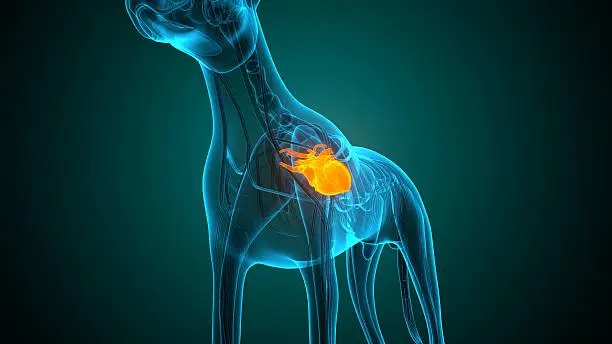
Quick Answer: What Is Congestive Heart Failure in Dogs?
Congestive heart failure in dogs occurs when severe heart disease interferes with the heart and circulation enough to cause clinical problems, including abnormal blood flow and fluid accumulation. Fluid may build up in the lungs with left-sided heart failure or in areas such as the abdomen and limbs with right-sided heart failure.
The heart normally acts as a pump. It moves oxygen-poor blood toward the lungs and sends oxygen-rich blood throughout the body. When heart disease becomes severe, the heart may no longer maintain adequate circulation without the body activating compensatory mechanisms.
Those mechanisms can help temporarily, but eventually they may contribute to fluid retention and congestion.
Is Congestive Heart Failure the Same as Heart Disease?
No.
This distinction is important.
A dog can have heart disease without being in heart failure. For example, a veterinarian may detect a heart murmur during a routine examination, yet the dog may have no coughing, breathing problems, fluid accumulation, or exercise intolerance.
Heart failure represents a more advanced clinical consequence of severe heart disease.
Is Congestive Heart Failure Curable?
It depends on the underlying cause.
Some heart problems can potentially be corrected or significantly improved with procedures, while many chronic forms of heart disease are managed rather than cured.
Treatment is designed to improve circulation, reduce fluid accumulation, control symptoms, and maintain quality of life.
Can Dogs Live With CHF?
Yes, many dogs can live with congestive heart failure for some time after diagnosis.
However, life expectancy varies considerably. The underlying heart disease, stage of CHF, response to medication, kidney function, age, and other health problems can all influence the outlook.
What Is Congestive Heart Failure in Dogs?
To understand CHF, it helps to first understand what the heart is supposed to do.
How the Dog’s Heart Normally Works
A dog’s heart has four chambers:
- Right atrium
- Right ventricle
- Left atrium
- Left ventricle
The right side receives oxygen-poor blood from the body and sends it toward the lungs.
The left side receives oxygen-rich blood from the lungs and pumps it throughout the body.
Valves between the chambers and major blood vessels help keep blood moving in the correct direction.
When the heart and blood vessels work properly, tissues receive the oxygen and nutrients they need.
What Happens When the Heart Begins to Fail?
When a serious heart problem develops, the body tries to compensate.
The heart may change its size or function, while the kidneys can retain sodium and water to help maintain circulation. These responses can initially help the dog maintain normal function.
But as heart disease becomes severe, compensation may no longer be enough.
Blood flow can become inadequate, pressures can rise inside blood vessels, and fluid may begin to leave the vessels and accumulate in tissues.
This is where the “congestive” part of congestive heart failure becomes important.
What Does “Congestive” Mean?
In simple terms, congestion means blood and fluid are backing up where they shouldn’t.
With left-sided CHF, pressure can build in the blood vessels of the lungs, causing fluid to move into lung tissue. This is called pulmonary edema.
With right-sided CHF, fluid can accumulate elsewhere, particularly in the abdomen. This may cause ascites, or abdominal fluid accumulation.
Heart Disease vs. Heart Failure vs. Congestive Heart Failure
These terms are related but shouldn’t be used interchangeably.
| Term | What It Means |
|---|---|
| Heart disease | An abnormality affecting the heart or cardiovascular system |
| Failing heart | A heart with impaired function that may still be compensated |
| Heart failure | Severe cardiovascular dysfunction causing inadequate circulation and/or abnormal pressures |
| Congestive heart failure | Heart failure accompanied by congestion and fluid accumulation |
This distinction is useful because a dog can have heart disease for a considerable period without developing clinical heart failure.
Can a Dog Have Heart Disease Without Heart Failure?
Absolutely.
A heart murmur, for example, doesn’t automatically mean a dog has CHF.
Some dogs with structural heart disease remain clinically normal for years. Regular examinations and appropriate diagnostic testing help veterinarians determine whether the disease is stable or progressing.
How Reduced Cardiac Output Affects the Body
When the heart cannot pump effectively, organs may receive less oxygenated blood.
Depending on severity, this can lead to:
- Weakness
- Exercise intolerance
- Fatigue
- Fainting
- Poor stamina
- Low blood pressure
- In severe cases, collapse
At the same time, increased pressures can produce congestion and fluid accumulation.
How Fluid Builds Up in the Body
Fluid accumulation happens because changes in pressure inside the cardiovascular system can push fluid out of blood vessels.
With left-sided heart failure, the lungs are commonly affected.
With right-sided heart failure, fluid may accumulate in the abdomen, chest cavity, liver, or limbs.
This is why the symptoms of congestive heart failure can look different from one dog to another.
What Causes Congestive Heart Failure in Dogs?
There isn’t a single cause of CHF.
Instead, congestive heart failure can develop as the final consequence of several types of cardiovascular disease.
Two important causes in dogs are myxomatous mitral valve disease and dilated cardiomyopathy (DCM). Other possibilities include congenital heart defects, arrhythmias, heartworm disease, hypertension, and various structural or systemic conditions.
Degenerative Mitral Valve Disease
Myxomatous mitral valve disease (MMVD) is one of the most important causes of heart disease and heart failure in dogs.
The mitral valve sits between the left atrium and left ventricle.
When the valve becomes diseased, it may not close properly. Blood can leak backward through the valve, a process called mitral regurgitation.
Over time, this can place additional stress on the heart and cause enlargement of the left-sided chambers.
Small and older dogs are particularly associated with this disease, although any dog can develop heart disease.
A persistent heart murmur detected during a routine veterinary examination may be one of the first clues.
Importantly, having MMVD doesn’t automatically mean a dog has CHF. The ACVIM staging system separates dogs with structural valve disease but no clinical heart failure from those that have developed actual heart failure.
Dilated Cardiomyopathy (DCM)
Dilated cardiomyopathy affects the heart muscle itself.
The heart becomes enlarged and its ability to contract effectively can decrease.
DCM is particularly associated with certain large and giant breeds, although the condition can occur in other dogs as well.
Because the heart muscle becomes weaker, the body may eventually struggle to maintain adequate circulation.
Dogs with DCM can also develop abnormal heart rhythms, which may increase the risk of weakness, fainting, or sudden collapse.
Congenital Heart Defects
Some dogs are born with structural abnormalities of the heart.
These are called congenital heart defects.
Examples include:
- Patent ductus arteriosus (PDA)
- Ventricular septal defects (VSD)
- Abnormal valves
- Abnormal blood vessels
- Other structural abnormalities
Depending on the defect and its severity, a puppy may show signs early in life or remain relatively normal until later.
Some congenital abnormalities can be treated or corrected, making early diagnosis particularly valuable.
Heartworm Disease
Heartworm disease can severely affect the cardiovascular and respiratory systems.
Heartworms are transmitted through mosquitoes. Adult worms can live in the pulmonary arteries and, in advanced cases, place significant stress on the heart and circulation.
The good news is that heartworm disease is largely preventable.
Regular veterinarian-recommended heartworm prevention is therefore an important part of protecting a dog’s cardiovascular health.
Heart Rhythm Abnormalities
A normal heartbeat needs both an appropriate rate and rhythm.
Arrhythmias are abnormal heart rhythms.
A heartbeat that is excessively fast, slow, or irregular can interfere with effective circulation.
Some arrhythmias are relatively mild, while others can be dangerous.
Dogs with significant rhythm disturbances may experience:
- Weakness
- Exercise intolerance
- Fainting
- Collapse
- Reduced cardiac output
Treatment depends heavily on the specific type of arrhythmia.
High Blood Pressure
Long-term hypertension can place additional stress on the cardiovascular system.
High blood pressure may occur alongside kidney disease, endocrine disorders, or other medical conditions.
If hypertension is severe or persistent, it can contribute to cardiovascular complications.
This is one reason veterinarians may check blood pressure when evaluating a dog with suspected heart disease.
Heart Valve Infections
Infection involving a heart valve, known as infective endocarditis, can damage the valve and interfere with normal blood flow.
Although it isn’t the most common cause of CHF, it can be a serious condition.
Dogs with certain underlying illnesses may be at increased risk.
Pericardial Disease and Fluid Around the Heart
The heart is surrounded by a protective sac called the pericardium.
Fluid can sometimes accumulate inside this sac.
If enough fluid builds up, it can interfere with the heart’s ability to fill properly.
This is different from fluid accumulating inside the lungs, but it can still cause serious cardiovascular problems.
Tumors Affecting the Heart
Certain tumors can affect the heart or surrounding structures.
Depending on their location and size, they may interfere with normal cardiac function or blood flow.
A tumor is not the most common explanation for CHF, but it is one of the conditions veterinarians may consider when the clinical picture doesn’t fit more common diseases.
Nutritional Deficiencies
Certain nutritional deficiencies can contribute to cardiac disease in particular circumstances.
However, nutritional causes are not the explanation for most cases of canine CHF.
It’s important not to start supplements simply because a dog has heart disease. Some supplements may interact with medications or may be inappropriate for a particular medical condition.
Always discuss supplements with your veterinarian.
Genetic Factors
Genetics can influence a dog’s risk of developing certain forms of heart disease.
Breed predisposition is particularly relevant for conditions such as:
- Myxomatous mitral valve disease
- Dilated cardiomyopathy
- Certain congenital heart defects
- Some inherited rhythm disorders
A dog’s breed doesn’t guarantee that heart disease will develop, but it can influence the level of risk.
Signs and Symptoms of Congestive Heart Failure in Dogs
The signs of congestive heart failure in dogs can develop gradually or appear suddenly during an acute episode.
The most important symptoms depend on which part of the cardiovascular system is affected.
Persistent Coughing
A persistent cough is one of the symptoms owners commonly associate with CHF.
With left-sided CHF, fluid accumulation in the lungs can cause coughing.
A dog may cough:
- At night
- While resting
- After lying down
- During activity
- After becoming excited
However, coughing alone does not prove that a dog has heart failure.
Respiratory diseases such as chronic bronchitis, airway disease, tracheal collapse, and infections can also cause coughing.
This distinction is important because treating the wrong condition can delay appropriate care.
Difficulty Breathing
Difficulty breathing is one of the most concerning signs.
A dog experiencing respiratory distress may breathe:
- Rapidly
- Shallowly
- With visible abdominal effort
- With the neck extended
- With the mouth open
- In an obviously distressed manner
A dog that cannot breathe comfortably should receive immediate veterinary attention.
Do not attempt to treat respiratory distress at home.
Increased Resting Respiratory Rate
One particularly useful measurement for dogs with heart disease is their resting or sleeping respiratory rate.
When a dog is asleep, count how many breaths occur in one minute.
Veterinarians may recommend monitoring this measurement at home because changes over time can provide useful information about worsening heart failure or response to treatment.
Rather than focusing on a single number, owners should pay attention to trends and follow the specific monitoring plan provided by their veterinarian.
Exercise Intolerance
A dog that once happily ran around the yard but now becomes tired after a short walk may be showing an important change.
Possible signs include:
- Stopping frequently during walks
- Refusing to climb stairs
- Sleeping more
- Avoiding play
- Becoming tired quickly
- Taking longer to recover after activity
Reduced exercise tolerance can have many causes, but it deserves veterinary evaluation when it is new or progressively worsening.
Lethargy and Weakness
Reduced cardiac output can contribute to weakness and lethargy.
Some dogs simply appear less interested in normal activities.
Others may seem tired even after sleeping.
Because lethargy is a nonspecific symptom, it needs to be considered alongside other findings such as coughing, breathing changes, appetite changes, or a known heart murmur.
Fainting or Collapse
Some dogs with significant cardiovascular disease may faint because the brain temporarily receives inadequate blood flow and oxygen.
Collapse is never something to ignore.
A dog that suddenly loses consciousness, collapses repeatedly, or becomes extremely weak needs prompt veterinary assessment.
Swollen Abdomen
A swollen or enlarged abdomen can occur with right-sided congestive heart failure.
The swelling may result from fluid accumulation called ascites.
However, abdominal enlargement isn’t always caused by heart failure.
Other causes include:
- Obesity
- Organ enlargement
- Tumors
- Gas
- Internal fluid
- Pregnancy in an intact female
A veterinarian can determine the underlying cause.
Fluid Retention
Fluid may accumulate in different locations depending on the type of heart failure.
Possible locations include:
- Lungs
- Abdomen
- Chest cavity
- Limbs
- Other tissues
The location and amount of fluid help veterinarians understand what is happening inside the cardiovascular system.
Pale or Bluish Gums
Healthy gums are generally pink.
Pale, gray, or bluish gums can indicate a serious problem, particularly when accompanied by breathing difficulty, weakness, or collapse.
This is an emergency sign.
Weight Changes
Dogs with chronic heart disease may experience changes in body weight.
Weight loss can occur because of:
- Reduced appetite
- Chronic illness
- Increased metabolic demands
- Muscle loss
On the other hand, rapid changes in body size can sometimes reflect fluid accumulation rather than ordinary weight gain.
Your veterinarian can help distinguish these possibilities.
Reduced Appetite
A dog with advanced heart failure may lose interest in food.
Poor appetite can also develop because of medication side effects, kidney problems, nausea, stress, or another illness.
If a dog with diagnosed CHF suddenly stops eating, let your veterinarian know.
Restlessness at Night
Some dogs with cardiovascular or respiratory problems may appear restless when lying down.
They may:
- Change positions repeatedly
- Get up and lie down
- Avoid sleeping normally
- Sit or stand rather than lie flat
- Seem unable to get comfortable
This can be particularly concerning when accompanied by rapid breathing or coughing.
Cold Extremities
In severe cardiovascular disease, poor circulation can contribute to cool limbs or extremities.
This isn’t a diagnostic sign by itself, but when it occurs alongside weakness, collapse, pale gums, or breathing difficulties, it warrants urgent attention.
When Symptoms Become an Emergency
Seek emergency veterinary care if your dog has:
- Severe difficulty breathing
- Blue, gray, or very pale gums
- Collapse
- Repeated fainting
- Severe weakness
- Rapid breathing accompanied by distress
- Significant respiratory effort
A dog in respiratory distress can deteriorate quickly.
Don’t wait for the symptoms to disappear on their own.
Left-Sided Congestive Heart Failure in Dogs
What Is Left-Sided Heart Failure?
Left-sided congestive heart failure (LS-CHF) occurs when disease affecting the left side of the heart causes pressure to back up toward the lungs.
It is commonly associated with diseases such as mitral valve disease.
How Left-Sided Failure Causes Fluid in the Lungs
When pressure rises in the vessels connected to the lungs, fluid can move out of the blood vessels and into lung tissue.
As the condition becomes more severe, fluid can reach the air spaces of the lungs.
This is called pulmonary edema.
Because oxygen exchange becomes more difficult, the dog may begin breathing faster or with greater effort.
Pulmonary Edema in Dogs
Pulmonary edema means fluid accumulation within the lungs.
When caused by heart disease, it is often called cardiogenic pulmonary edema.
Possible signs include:
- Rapid breathing
- Difficulty breathing
- Coughing
- Restlessness
- Exercise intolerance
- Weakness
- Collapse in severe cases
Pulmonary edema can become life-threatening and requires veterinary treatment.
Symptoms of Left-Sided CHF
Common signs include:
- Coughing
- Rapid breathing
- Difficulty breathing
- Exercise intolerance
- Weakness
- Fainting
- Restlessness
However, not every coughing dog has left-sided CHF. Diagnostic testing is important because airway and lung diseases can produce similar symptoms.
Why Breathing Problems Can Become Life-Threatening
The lungs are responsible for transferring oxygen into the bloodstream.
When fluid accumulates in the lungs, oxygen exchange can become increasingly difficult.
A dog may compensate by breathing faster, but if the underlying problem worsens, compensation may no longer be enough.
That’s why respiratory distress should always be treated as an emergency.
How Left-Sided CHF Is Diagnosed
Veterinarians may use several tools, including:
- Physical examination
- Chest X-rays
- Echocardiography
- Blood pressure measurement
- ECG
- Blood tests
- Cardiac biomarkers
Chest radiographs can be particularly useful when veterinarians need to evaluate the lungs for pulmonary edema and distinguish cardiac disease from other causes of respiratory signs.
Right-Sided Congestive Heart Failure in Dogs
While left-sided heart failure commonly causes congestion in the lungs, right-sided heart failure primarily causes blood and fluid to back up into the body’s venous circulation.
This can result in fluid accumulating in the abdomen, chest, liver, or other tissues. The exact symptoms depend on the underlying disease and how advanced the heart failure has become.
What Is Right-Sided Heart Failure?
The right side of the heart normally receives blood returning from the body and pumps it toward the lungs.
When the right side cannot handle this blood effectively, pressure can increase in the veins.
Over time, this increased pressure can contribute to fluid leaving the blood vessels and accumulating in tissues or body cavities.
How Blood Backs Up Into the Body
In right-sided CHF, the problem is essentially a backward pressure problem.
Instead of blood moving efficiently through the heart and lungs, pressure builds in the systemic veins.
This can contribute to:
- Abdominal fluid accumulation
- Enlarged liver
- Swelling of tissues
- Fluid around the lungs
- Distended veins
- Exercise intolerance
- Weakness
Ascites in Dogs
Ascites is the medical term for an abnormal accumulation of fluid inside the abdominal cavity.
A dog with significant ascites may develop a noticeably enlarged or swollen belly.
The abdomen may gradually become larger as fluid accumulates.
However, an enlarged abdomen does not automatically mean heart failure. Liver disease, cancer, internal bleeding, and other medical problems can also cause abdominal enlargement.
Swollen Abdomen
A swollen belly caused by fluid can sometimes feel different from ordinary weight gain.
Owners may notice that the abdomen appears to become larger relatively quickly.
A veterinarian may use physical examination, ultrasound, X-rays, blood tests, and other diagnostics to determine why the abdomen is enlarged.
Fluid Around the Lungs
Some dogs with cardiovascular disease can develop pleural effusion, meaning fluid accumulates in the space surrounding the lungs.
This can interfere with normal lung expansion and contribute to breathing difficulty.
Pleural effusion can have causes other than heart disease, so diagnostic testing is important.
Swollen Limbs
Fluid accumulation can sometimes cause swelling in tissues, although this is not necessarily present in every dog with right-sided heart failure.
Swelling may be more noticeable in dependent areas of the body.
Enlarged Liver
Increased venous pressure can affect the liver.
A veterinarian may detect an enlarged liver during an abdominal examination or imaging.
Symptoms of Right-Sided CHF
Possible signs include:
- Swollen abdomen
- Ascites
- Reduced exercise tolerance
- Weakness
- Fluid accumulation
- Enlarged liver
- Respiratory changes
- Weight changes
- Reduced appetite
Left-Sided vs. Right-Sided Heart Failure in Dogs
Understanding the difference between left- and right-sided heart failure can make the symptoms easier to understand.
| Feature | Left-Sided CHF | Right-Sided CHF |
|---|---|---|
| Main congestion | Lungs | Body/abdomen |
| Common fluid buildup | Pulmonary edema | Ascites/effusion |
| Cough | Common | Less characteristic |
| Breathing difficulty | Common | May occur |
| Swollen abdomen | Less typical | Common |
| Exercise intolerance | Common | Common |
| Respiratory rate | Often increased | May vary |
| Enlarged liver | Less characteristic | May occur |
Dogs don’t always fit neatly into one category.
Biventricular Heart Failure
Some dogs can experience both left- and right-sided heart failure.
This is sometimes described as biventricular heart failure.
When both sides are affected, a dog may experience a combination of respiratory problems and systemic fluid accumulation.
For example, the dog might have:
- Coughing
- Increased resting respiratory rate
- Exercise intolerance
- Difficulty breathing
- Abdominal swelling
- Weakness
- Fluid accumulation
The underlying disease determines how the condition develops and which treatments are appropriate.
Stages of Congestive Heart Failure in Dogs
Veterinary cardiologists commonly use the ACVIM staging system to describe the progression of chronic myxomatous mitral valve disease.
The stages help veterinarians distinguish dogs that are at risk from dogs that have structural heart disease, clinical heart failure, or advanced disease.
Stage A — Dogs at Risk
A dog in Stage A has an increased risk of developing heart disease but does not currently have identifiable structural heart disease.
Risk may be associated with:
- Breed
- Genetics
- Age
- Family history
- Known predisposition
For example, certain breeds are more likely to develop specific cardiac diseases.
Stage A dogs generally don’t have CHF symptoms simply because they are considered at risk.
Stage B1 — Heart Disease Without Enlargement
Stage B1 describes dogs with evidence of heart disease but without significant cardiac enlargement that would change treatment recommendations.
A veterinarian may detect a heart murmur.
The dog may otherwise appear completely healthy.
There may be:
- No coughing
- No exercise intolerance
- No respiratory distress
- No fluid accumulation
Monitoring is important because the disease can progress over time.
Stage B2 — Heart Disease With Cardiac Enlargement
Stage B2 means structural heart disease is present and there is evidence of cardiac enlargement, but the dog has not yet developed clinical signs of congestive heart failure.
This stage is important because appropriate treatment may delay the development of clinical CHF in some dogs with specific diseases.
A veterinarian may recommend:
- Echocardiography
- Chest X-rays
- Regular examinations
- Periodic monitoring
- Appropriate medication when indicated
Stage C — Clinical Congestive Heart Failure
Stage C represents clinical heart failure.
The dog has developed current or previous signs associated with CHF.
These may include:
- Coughing
- Rapid breathing
- Difficulty breathing
- Pulmonary edema
- Exercise intolerance
- Weakness
- Fluid accumulation
- Other clinical signs
Treatment at this stage generally focuses on controlling congestion, improving cardiac performance, and maintaining quality of life.
Stage D — Advanced or Refractory Heart Failure
Stage D describes advanced heart failure that has become difficult to control despite standard treatment.
The dog may continue developing symptoms despite appropriate therapy.
Possible challenges include:
- Recurrent pulmonary edema
- Persistent fluid accumulation
- Increasing medication requirements
- Reduced response to treatment
- Declining quality of life
Stage D doesn’t mean every dog will deteriorate at the same speed.
Are All Dogs With Heart Disease in Heart Failure?
No.
This is one of the most important distinctions for dog owners.
A dog may have a heart murmur or structural heart disease but remain in Stage B rather than Stage C.
Heart disease and congestive heart failure are related, but they aren’t identical.
Can a Dog Move From One Stage to Another?
Yes.
Heart disease can progress over time.
A dog may move from being at risk to developing structural disease, then potentially develop enlargement and eventually clinical heart failure.
Regular veterinary monitoring can help identify changes before or as they occur.
How Is Congestive Heart Failure Diagnosed in Dogs?
There is no single test that diagnoses every case of CHF.
Veterinarians typically combine the dog’s history, symptoms, physical examination, imaging, and laboratory results.
Veterinary Physical Examination
The examination may include:
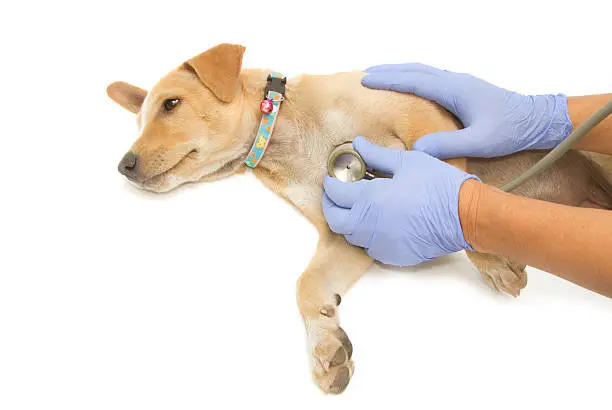
- Listening to the heart
- Listening to the lungs
- Checking pulse quality
- Measuring respiratory rate
- Checking gum color
- Evaluating body condition
- Checking for abdominal fluid
- Looking for swelling
- Measuring blood pressure
The veterinarian will also ask about changes at home.
For example:
- Has your dog started coughing?
- Is breathing faster during sleep?
- Does your dog tire more quickly?
- Has appetite changed?
- Has the abdomen become larger?
- Has your dog fainted?
These details can be extremely helpful.
Listening for a Heart Murmur
A heart murmur is an abnormal sound produced by turbulent blood flow.
A murmur can be an important clue to heart disease.
But a murmur does not automatically mean CHF.
Some dogs have murmurs without clinical heart failure, and the severity of a murmur doesn’t always perfectly correspond to the severity of heart disease.
Additional testing may therefore be necessary.
Checking Heart and Respiratory Rate
Veterinarians commonly evaluate both heart rate and respiratory rate.
The resting respiratory rate can also be useful for home monitoring once a dog has been diagnosed with heart disease.
Chest X-Rays
Chest radiographs can provide valuable information about:
- Heart size
- Lung appearance
- Pulmonary vessels
- Pulmonary edema
- Pleural fluid
- Other possible causes of respiratory signs
X-rays are particularly useful when a veterinarian is trying to determine whether respiratory symptoms are related to CHF or another condition.
Echocardiogram
An echocardiogram, often called an ultrasound of the heart, provides detailed information about cardiac structure and function.
It can help evaluate:
- Heart chambers
- Heart valves
- Heart muscle
- Blood flow
- Valve leakage
- Cardiac enlargement
- Certain congenital abnormalities
Doppler technology can also help veterinarians evaluate how blood is moving through the heart.
Electrocardiogram (ECG)
An electrocardiogram (ECG) records the electrical activity of the heart.
It is especially useful when an abnormal heart rhythm is suspected.
Some arrhythmias can reduce cardiac output or increase the risk of fainting and collapse.
Blood Pressure Testing
Blood pressure measurement can help identify hypertension and provide additional information about cardiovascular status.
It can also become important when selecting and monitoring certain heart medications.
Blood Tests
Blood testing may help evaluate:
- Kidney function
- Electrolytes
- Liver function
- Hydration
- Other concurrent conditions
This information becomes particularly important when a dog is receiving medications that affect fluid balance or kidney function.
Cardiac Biomarkers
Certain blood biomarkers can provide additional information about cardiac stress.
One commonly discussed biomarker is NT-proBNP.
NT-proBNP Testing
NT-proBNP can increase when the heart is under stress or when cardiac chambers are stretched.
However, it isn’t a standalone test that can diagnose every case of CHF.
Veterinarians interpret biomarker results alongside:
- Clinical signs
- Physical examination
- Imaging
- Medical history
- Other laboratory tests
When Is a Veterinary Cardiologist Needed?
A veterinary cardiologist specializes in cardiovascular diseases in animals.
Referral may be especially useful when:
- The diagnosis is uncertain
- A complex congenital defect is suspected
- A serious arrhythmia is present
- Advanced imaging is needed
- The dog has complicated heart disease
- Standard treatment isn’t controlling symptoms

What Does an X-Ray Show in a Dog With CHF?
Chest X-rays are among the most useful diagnostic tools when a dog is experiencing respiratory symptoms.
Enlarged Heart
Some forms of heart disease cause the heart to become enlarged.
The pattern of enlargement can provide clues about which chambers are affected.
However, heart size on an X-ray alone cannot establish every detail of heart function.
Pulmonary Edema
One of the major concerns in left-sided CHF is pulmonary edema.
On radiographs, a veterinarian may identify patterns consistent with fluid accumulation in the lungs.
The distribution and appearance of lung changes can help distinguish cardiogenic pulmonary edema from other respiratory diseases.
Fluid in the Chest
Pleural effusion is fluid surrounding the lungs rather than fluid inside the lungs.
This can occur with certain cardiovascular diseases but can also have other causes.
Changes in the Pulmonary Vessels
Heart disease can cause changes in the size and appearance of pulmonary blood vessels.
Veterinarians consider these findings together with heart size and lung appearance.
Why X-Rays Help Distinguish Heart Failure From Respiratory Disease
A dog with coughing or rapid breathing might have:
- CHF
- Pneumonia
- Chronic bronchitis
- Tracheal collapse
- Lung disease
- Other respiratory conditions
Radiographs can help narrow down these possibilities.
Can an X-Ray Confirm CHF by Itself?
Not always.
X-rays are extremely useful, but diagnosis usually depends on the complete clinical picture.
An echocardiogram may be needed to identify the underlying heart disease, while blood tests and other diagnostics can provide additional information.
How Is Congestive Heart Failure in Dogs Treated?
The goal of treatment isn’t simply to make the heart “normal.”
In many chronic conditions, treatment focuses on controlling the consequences of heart disease and helping the dog maintain a good quality of life.
Goals of CHF Treatment
Treatment may aim to:
- Reduce fluid buildup
- Improve cardiac performance
- Improve breathing
- Reduce cardiovascular pressures
- Control abnormal rhythms
- Reduce symptoms
- Improve exercise tolerance
- Maintain quality of life
- Extend survival when possible
The exact combination of treatments varies from one dog to another.
Diuretics
Diuretics help the body eliminate excess fluid through urine.
They are a central part of managing many dogs with congestive heart failure.
Furosemide for Dogs
Furosemide is a commonly used loop diuretic.
It helps remove excess fluid from the body and can be particularly important when pulmonary edema or other congestion is present.
Torsemide for Dogs
Torsemide is another loop diuretic that may be used in selected dogs.
It can be particularly useful in some cases where longer-lasting or stronger diuretic effects are needed.
How Diuretics Reduce Fluid
Diuretics encourage the kidneys to excrete more sodium and water.
This can reduce fluid accumulation and decrease some of the pressure associated with congestion.
However, excessive diuresis can cause dehydration or affect kidney function and electrolyte balance.
That’s why these medications require veterinary supervision.
Pimobendan
Pimobendan is an important cardiovascular medication used in certain canine heart conditions.
It can improve the heart’s ability to contract and also produce vasodilatory effects.
Veterinarians commonly use it in appropriate dogs with specific forms of heart disease and heart failure.
The decision to use pimobendan depends on the underlying diagnosis and stage of disease.
ACE Inhibitors
ACE inhibitors can reduce certain hormonal and vascular mechanisms involved in heart failure.
Examples include medications such as enalapril and benazepril.
Whether an ACE inhibitor is appropriate depends on the individual dog and the overall treatment strategy.
Vasodilators
Vasodilators help relax certain blood vessels.
This can reduce the resistance against which the heart pumps or modify cardiovascular pressures.
The specific drug and its role depend on the dog’s disease.
Heart Rhythm Medications
Dogs with significant arrhythmias may require medications specifically designed to control abnormal rhythms.
Treatment depends entirely on the type of arrhythmia.
There is no single antiarrhythmic medication that is appropriate for every dog.
Digoxin
Digoxin may be used in selected cardiac conditions, including certain situations involving supraventricular arrhythmias.
Because it has a relatively narrow therapeutic range, careful veterinary monitoring is important.
Oxygen Therapy
A dog experiencing serious respiratory compromise may receive supplemental oxygen in a veterinary hospital.
Oxygen therapy doesn’t cure the underlying heart disease, but it can support oxygenation while the veterinary team treats the underlying emergency.
Removing Fluid From the Chest or Abdomen
When substantial fluid accumulates in the chest or abdomen, veterinarians may sometimes remove it with a procedure.
The procedure used depends on where the fluid is located and how severely it is affecting the dog.
Medications Commonly Used for Congestive Heart Failure in Dogs
| Medication/Class | General Purpose |
|---|---|
| Furosemide | Helps remove excess fluid |
| Torsemide | Diuretic used in selected cases |
| Pimobendan | Supports cardiac function and circulation |
| ACE inhibitors | Modify cardiovascular pressures and neurohormonal activity |
| Spironolactone | May provide diuretic and neurohormonal effects |
| Digoxin | Used in selected cardiac conditions and arrhythmias |
| Antiarrhythmics | Control specific abnormal heart rhythms |
Never use this table to choose or calculate a medication dose for your dog.
Heart medications must be individualized. Kidney function, hydration, electrolytes, blood pressure, underlying heart disease, other medications, and disease severity can all influence treatment decisions.
A medication that is appropriate for one dog may be inappropriate for another.
Can Congestive Heart Failure in Dogs Be Cured?
This is one of the hardest questions for owners.
The answer depends on why the dog developed heart failure.
Is CHF Reversible?
Some causes of cardiac dysfunction may be treatable or correctable.
For example, certain congenital heart defects can sometimes be addressed through specialized procedures.
However, many chronic degenerative heart diseases cannot simply be reversed.
In those cases, treatment focuses on long-term management.
Treating the Underlying Heart Disease
The veterinarian’s treatment plan will depend on the specific cardiac diagnosis.
A dog with valve disease may require a different approach from a dog with dilated cardiomyopathy or an arrhythmia.
That’s why knowing the underlying disease is so important.
Managing Symptoms vs. Curing the Disease
CHF treatment often controls the consequences of heart disease rather than eliminating the original cause.
For example, a diuretic can reduce excess fluid.
It doesn’t repair a damaged valve.
Similarly, an antiarrhythmic can control a dangerous rhythm without necessarily correcting the underlying structural disease.
Why Early Diagnosis Matters
Early recognition can make a major difference in management.
Regular examinations allow veterinarians to monitor changes before a dog becomes critically ill.
Owners should also report changes such as:
- Persistent coughing
- Faster sleeping breathing
- Reduced exercise tolerance
- Fainting
- Appetite changes
- Abdominal enlargement
Can Treatment Put CHF Into Remission?
Some dogs respond extremely well to treatment.
Their breathing can improve, fluid accumulation can decrease, and they may return to a relatively comfortable routine.
This doesn’t necessarily mean the underlying heart disease has disappeared.
CHF can recur, which is why continued monitoring and medication compliance are important.
What Happens When Medication Stops Working?
Advanced heart failure can become increasingly difficult to control.
A dog may experience recurrent congestion despite treatment.
At that point, veterinarians may reassess:
- Medication combinations
- Dosages
- Kidney function
- Electrolytes
- Underlying disease
- Quality of life
Stage D disease may require more advanced management and careful discussions about comfort and quality of life.
Congestive Heart Failure in Dogs Life Expectancy
How Long Can a Dog Live With Congestive Heart Failure?
There is no single life-expectancy number that applies to every dog with CHF.
Some dogs respond well to treatment and maintain a comfortable quality of life for a meaningful period.
Others have aggressive disease, severe complications, or recurrent episodes and may deteriorate more quickly.
Giving a guaranteed timeline based only on the diagnosis would therefore be misleading.
Factors That Affect Life Expectancy
Several factors influence prognosis:
| Factor | Why It Matters |
|---|---|
| Underlying heart disease | Different diseases progress differently |
| CHF stage | Advanced disease generally carries a poorer prognosis |
| Severity of symptoms | Severe congestion can be more difficult to manage |
| Treatment response | Dogs respond differently to medications |
| Kidney function | Important when managing fluid balance and medications |
| Age | Older dogs may have additional health problems |
| Concurrent diseases | Other illnesses can affect treatment and quality of life |
| CHF episodes | Repeated decompensation can indicate progression |
Life Expectancy After the First CHF Episode
The first episode of clinical CHF is a major turning point.
However, what happens afterward varies greatly.
A dog that stabilizes quickly and responds well to treatment may have a very different outlook from one that develops recurrent pulmonary edema or severe kidney complications.
Stage C vs. Stage D Prognosis
Dogs in Stage C have clinical heart failure but may respond well to appropriate treatment.
Stage D represents advanced or refractory disease, meaning symptoms become difficult to control despite standard therapy.
Generally, advanced disease carries a more guarded prognosis.
Why Life Expectancy Is Different for Every Dog
Two dogs with the same CHF stage can have very different experiences.
Breed, age, kidney health, underlying cardiac disease, medication response, nutritional status, and other illnesses all matter.
Your veterinarian or veterinary cardiologist is in the best position to discuss an individual dog’s prognosis.
Can Dogs Live Comfortably With CHF?
Yes, some can.
The goal isn’t simply to extend life at any cost.
A successful treatment plan should also aim to maintain:
- Comfortable breathing
- Appetite
- Mobility
- Appropriate activity
- Interaction with family
- Sleep
- Overall enjoyment of daily life
Quality of life should remain part of every treatment discussion.
Diet for Dogs With Congestive Heart Failure
Nutrition becomes especially important once a dog has been diagnosed with congestive heart failure (CHF). However, there is no single diet that works for every dog with heart disease.
The appropriate diet depends on the underlying heart condition, stage of disease, kidney function, appetite, body condition, medications, and other health problems.
Should Dogs With CHF Eat a Low-Sodium Diet?
In many cases, veterinarians recommend avoiding excessive sodium in dogs with heart disease.
Sodium can contribute to water retention, which may make managing congestion more difficult.
However, this doesn’t mean every dog with heart disease needs an extremely restrictive sodium diet.
Dogs with mild heart disease may have different nutritional needs from dogs with severe CHF.
Why Sodium Matters
Sodium is an essential mineral, but excessive dietary sodium can encourage the body to retain water.
For a dog already struggling with fluid balance, unnecessary high-sodium foods may therefore be undesirable.
Common high-sodium foods to avoid include:
- Processed meats
- Salty table scraps
- Bacon
- Sausage
- Hot dogs
- Salty cheese
- Chips
- Highly seasoned foods
- Commercial foods with excessive sodium
Should Salt Be Completely Eliminated?
No—not without veterinary direction.
Severely restricting sodium without a reason can also be inappropriate.
Veterinarians generally consider the severity of heart failure when making dietary recommendations. Severe CHF may warrant greater sodium restriction than mild disease or heart disease without clinical congestion.
Prescription Cardiac Diets
A veterinarian may recommend a prescription cardiac diet for some dogs.
These diets are formulated to provide balanced nutrition while controlling nutrients that may be relevant to cardiovascular disease.
A prescription diet may be particularly useful when a dog has additional problems such as kidney disease or poor appetite.
Healthy Treats for Dogs With CHF
Treats should generally make up only a small part of a dog’s overall calories.
Depending on your veterinarian’s recommendations, possible options may include:
- Small pieces of plain cooked chicken
- Plain cooked turkey
- Certain fresh vegetables
- Veterinary-approved low-sodium treats
- Small amounts of the dog’s regular food
Always consider sodium content and the dog’s individual medical needs.
Human Foods to Avoid
Dogs with CHF should generally not be given salty human foods as routine treats.
Be particularly cautious with:
- Processed meats
- Fast food
- Fried foods
- Salty snacks
- Seasoned meat
- Foods containing onion or garlic
- Large amounts of cheese
- Highly processed leftovers
Maintaining Adequate Calories
A low-sodium diet isn’t useful if the dog refuses to eat it.
Maintaining adequate nutrition is important, especially in dogs with advanced disease.
If your dog suddenly becomes reluctant to eat a prescribed diet, talk with your veterinarian rather than switching diets randomly.
Omega-3 Fatty Acids
Omega-3 fatty acids may be considered as part of nutritional management for some dogs with heart disease.
However, supplements aren’t automatically appropriate for every patient.
The dose, product quality, interactions, and the dog’s overall medical condition should be considered.
Why You Should Ask Your Veterinarian Before Using Supplements
“Natural” doesn’t automatically mean safe or effective.
Supplements can interact with medications, affect blood clotting, alter gastrointestinal function, or provide unnecessary calories.
Ask your veterinarian before adding any supplement to a dog’s CHF treatment plan.
Home Care for a Dog With Congestive Heart Failure
Veterinary treatment is essential, but owners play a major role in day-to-day CHF management.
Small changes noticed at home can sometimes help the veterinary team identify worsening disease earlier.
Give Medications Exactly as Prescribed
Heart medications should be given according to your veterinarian’s instructions.
Don’t:
- Skip doses intentionally
- Double a missed dose without instructions
- Stop medication suddenly
- Change the dosage yourself
- Add another medication without checking first
Some heart medications require follow-up blood tests or blood-pressure monitoring.
Monitor Resting Respiratory Rate
One of the most useful things owners can monitor is resting or sleeping respiratory rate.
A sleeping dog is usually calm and isn’t breathing faster because of exercise, excitement, or heat.
A rising respiratory rate may provide an early warning that heart failure is becoming less well controlled.
Keep a Daily Symptom Log
A simple notebook or phone record can help you track:
- Sleeping respiratory rate
- Coughing
- Appetite
- Water intake
- Activity level
- Body weight
- Medication times
- Vomiting or diarrhea
- Breathing changes
Patterns are often more informative than a single observation.
Monitor Appetite and Weight
Sudden changes in appetite deserve attention.
Likewise, unexplained weight changes can be significant.
Some dogs with chronic illness lose muscle and body weight, while fluid accumulation can make body size increase.
Your veterinarian can help interpret these changes.
Watch for Increased Coughing
A new or worsening cough should be reported, particularly if your dog already has diagnosed heart disease.
But remember that coughing doesn’t automatically mean CHF has worsened.
Respiratory infections and airway disorders can also cause coughing.
Limit Excessive Exercise
Dogs with CHF often need a different activity plan from healthy dogs.
Your veterinarian can determine how much exercise is appropriate.
The goal is generally to avoid unnecessary cardiovascular stress while still allowing safe, comfortable movement.
Reduce Stress
Stress can increase heart rate and breathing demands.
Try to provide:
- A quiet resting area
- Comfortable bedding
- Predictable routines
- Avoidance of excessive excitement
- Protection from extreme temperatures
Keep Veterinary Appointments
Regular examinations are important because heart disease can change over time.
Your veterinarian may periodically evaluate:
- Heart rate
- Respiratory rate
- Blood pressure
- Kidney function
- Electrolytes
- Body condition
- Medication response
Never Change Medication Without Veterinary Advice
This deserves repeating.
A dog that appears better may still need medication.
Likewise, a dog that seems worse may need a completely different treatment strategy.
Medication changes should be guided by a veterinarian.
How to Monitor a Dog’s Resting Respiratory Rate
Monitoring your dog’s sleeping respiratory rate can be one of the most practical ways to track cardiovascular changes at home.
What Is a Normal Resting Respiratory Rate?
Dogs have a range of normal respiratory rates, and factors such as temperature, stress, dreaming, pain, and recent activity can influence breathing.
For dogs with heart disease, the most useful measurement is generally taken while the dog is genuinely relaxed or asleep.
Your veterinarian can tell you what range is appropriate for your particular dog.
When Should You Count Your Dog’s Breaths?
Choose a time when your dog is:
- Sleeping
- Relaxed
- Not panting
- Away from recent exercise
- Comfortable
Avoid counting immediately after a walk or exciting event.
How to Count Breaths While Your Dog Is Sleeping
Watch the chest or abdomen.
One complete rise and fall counts as one breath.
Count the breaths for a full minute, or use a shorter interval and calculate the rate if your veterinarian has shown you how.
Recording the result each day can make trends easier to identify.
What an Increasing Respiratory Rate May Mean
A persistent increase can sometimes indicate worsening pulmonary congestion.
It doesn’t prove that CHF has worsened, but it is a reason to contact your veterinarian for guidance.
Why Tracking Trends Is More Useful Than One Measurement
One unusually high reading doesn’t necessarily mean an emergency.
Your dog could have been dreaming, mildly overheated, or temporarily excited.
A persistent upward trend is generally more informative.
What Is a Congestive Heart Failure Emergency in Dogs?
CHF can sometimes deteriorate rapidly.
Knowing the emergency signs may help an owner act quickly.
Severe Difficulty Breathing
If your dog is struggling to breathe, seek emergency veterinary care immediately.
Signs can include:
- Heavy breathing
- Significant abdominal effort
- Open-mouth breathing
- Neck extended while breathing
- Inability to settle
- Severe respiratory distress
Rapid Breathing at Rest
A persistently rapid breathing rate while resting or sleeping can be concerning, particularly in a dog already diagnosed with CHF.
Contact your veterinarian promptly for advice about the appropriate response.
Blue or Pale Gums
Gums that become:
- Blue
- Gray
- White
- Very pale
can indicate inadequate oxygenation or circulation.
This is an emergency.
Collapse
Sudden collapse or repeated fainting requires urgent veterinary evaluation.
Severe Weakness
A dog that suddenly becomes profoundly weak or unable to stand normally may be experiencing a serious cardiovascular or respiratory problem.
Repeated Fainting
Fainting can occur with certain heart diseases and arrhythmias.
Repeated episodes should never be ignored.
Severe Distress
A dog that appears frightened, restless, unable to lie comfortably, or visibly distressed while struggling to breathe should be taken to an emergency veterinary facility.
Why You Shouldn’t Wait for Symptoms to Improve
Respiratory distress can worsen quickly.
Don’t attempt to treat severe breathing difficulty with home remedies.
Don’t force food or water, don’t exercise the dog, and don’t give human medications unless specifically instructed by a veterinarian.
What to Do While Traveling to the Emergency Vet
If your dog is experiencing respiratory distress:
- Call the emergency veterinary hospital if possible.
- Keep your dog as calm as possible.
- Avoid unnecessary movement.
- Keep the environment comfortably cool.
- Transport your dog promptly.
- Follow the veterinary team’s instructions.
Can Dogs With Congestive Heart Failure Exercise?
Exercise recommendations depend on the dog’s stage of heart disease and current stability.
Is Exercise Safe for Dogs With CHF?
Some dogs can still enjoy controlled activity.
Others, particularly those experiencing unstable or advanced CHF, may need much stricter restrictions.
Always follow your veterinarian’s recommendations.
Why Exercise Requirements Change
Exercise increases the body’s demand for oxygen and blood flow.
A healthy cardiovascular system can generally respond by increasing cardiac output.
A dog with significant heart failure may have limited ability to meet that increased demand.
Short, Gentle Walks
For some stable dogs, short and slow walks may be appropriate.
The emphasis should be on comfort rather than distance or speed.
Stop if your dog becomes tired, breathless, weak, or distressed.
Avoiding Strenuous Exercise
Depending on disease severity, your veterinarian may recommend avoiding:
- Running
- Long hikes
- Intense games of fetch
- Repeated jumping
- Prolonged swimming
- High-intensity play
Hot Weather and Heart Failure
Heat can increase cardiovascular and respiratory demands.
Dogs with heart disease may be less tolerant of hot or humid weather.
Exercise should generally be avoided during extreme heat unless your veterinarian has provided specific instructions.
Signs Your Dog Is Overexerting
Stop activity and seek veterinary guidance if you notice:
- Excessive breathing
- Coughing
- Weakness
- Stumbling
- Reluctance to continue
- Pale or blue gums
- Collapse
Severe breathing difficulty requires emergency care.
How Your Veterinarian Can Help Set Activity Limits
Your veterinarian can consider the dog’s:
- CHF stage
- Underlying heart disease
- Medication response
- Respiratory rate
- Exercise tolerance
- Overall condition
and create an activity plan tailored to that dog.
Congestive Heart Failure in Senior Dogs
Heart disease becomes increasingly relevant as dogs age.
Why Older Dogs Are More Likely to Develop Heart Disease
Some cardiac diseases are strongly associated with aging.
For example, myxomatous mitral valve disease is common in older small-breed dogs.
Age doesn’t guarantee CHF, but it increases the importance of routine veterinary examinations.
Common Signs in Senior Dogs
Watch for changes such as:
- New coughing
- Reduced stamina
- Faster breathing
- Difficulty sleeping comfortably
- Weakness
- Fainting
- Reduced appetite
- Abdominal swelling
Some of these symptoms can also be caused by arthritis, kidney disease, respiratory disease, or other conditions common in older dogs.
Heart Murmurs in Older Dogs
A newly detected murmur deserves evaluation.
Your veterinarian may recommend further testing depending on the dog’s age, murmur characteristics, clinical signs, and overall health.
Regular Veterinary Monitoring
Senior dogs benefit from routine examinations even when they appear healthy.
Early detection of heart disease can allow veterinarians to monitor progression and establish an appropriate management plan.
Managing CHF Alongside Other Age-Related Conditions
Senior dogs may have multiple health problems simultaneously.
For example, a dog with CHF may also have kidney disease or arthritis.
Treatment therefore needs to balance multiple medical priorities.
Congestive Heart Failure in Small Dogs
Small dogs are particularly associated with degenerative mitral valve disease.
Why Small Breeds Are Commonly Affected by Mitral Valve Disease
Myxomatous mitral valve disease is especially common among older small-breed dogs.
The condition causes progressive degeneration of the mitral valve, which can lead to leakage of blood.
Cavalier King Charles Spaniels
Cavalier King Charles Spaniels are well known for their predisposition to mitral valve disease.
Regular cardiac examinations are especially important for dogs in breeds with a recognized predisposition.
Shih Tzus
Shih Tzus can also develop degenerative valve disease, particularly as they age.
A new murmur should be evaluated rather than automatically assumed to be a normal part of aging.
Dachshunds
Dachshunds are another small breed in which mitral valve disease is an important consideration.
Miniature Poodles
Miniature Poodles may also develop degenerative valve disease.
Other At-Risk Small Breeds
Other small and toy breeds can be affected as well.
Breed risk is only one factor. Individual age, genetics, examination findings, and diagnostic results matter too.
Early Heart Murmur Detection
Routine examinations can identify murmurs before obvious CHF symptoms develop.
This is one reason senior dogs should not wait until they begin coughing or breathing abnormally before seeing a veterinarian.
Congestive Heart Failure in Large Dogs
Large and giant breeds have different cardiovascular risk profiles.
Dilated Cardiomyopathy in Large Breeds
Dilated cardiomyopathy (DCM) is an important cardiac condition associated with several large breeds.
It affects the heart muscle and can reduce its pumping ability.
Doberman Pinschers
Doberman Pinschers have a recognized predisposition to DCM.
The disease can sometimes progress silently, making appropriate screening particularly important in affected populations.
Great Danes
Great Danes can also be affected by DCM and certain rhythm abnormalities.
Boxers
Boxers are predisposed to specific cardiac conditions, including arrhythmias and cardiomyopathy.
Irish Wolfhounds
Irish Wolfhounds can also develop significant cardiac disease, including DCM.
Other Large-Breed Risk Factors
Other large breeds may have their own cardiovascular predispositions.
Genetic background is only part of the picture, however.
Why Screening May Be Important
For breeds with known inherited cardiac risks, veterinarians may recommend periodic:
- Echocardiography
- ECG monitoring
- Physical examinations
- Other cardiac screening tests
Early detection can be especially valuable when a disease can exist before obvious symptoms appear.
Heart Murmurs and Congestive Heart Failure
A heart murmur can sound alarming, but a murmur does not automatically mean a dog has congestive heart failure.
What Is a Heart Murmur?
A murmur is an unusual sound produced by turbulent blood flow through the heart or nearby vessels.
Some murmurs are caused by structural heart disease.
Others can occur for different reasons.
Does Every Heart Murmur Mean CHF?
No.
A dog can have a murmur while still having normal activity, normal breathing, and no fluid accumulation.
Can a Dog Have a Murmur Without Heart Failure?
Yes.
This is extremely important.
Dogs with early valve disease may have a murmur for a considerable period before developing clinical CHF.
When Does a Murmur Become Concerning?
Concern depends on factors such as:
- Age
- Breed
- Murmur intensity
- Murmur location
- Clinical signs
- Heart size
- Other examination findings
Why Follow-Up Testing Matters
Tests such as echocardiography and chest radiography can provide information that listening to the heart alone cannot.
Congestive Heart Failure vs. Other Causes of Coughing in Dogs
Coughing is a common reason dog owners become concerned about CHF.
But coughing is not specific to heart failure.
CHF vs. Kennel Cough
Kennel cough is an infectious respiratory condition that can cause persistent coughing.
A dog with kennel cough may otherwise appear relatively bright and active.
CHF vs. Chronic Bronchitis
Chronic bronchitis can produce a long-term cough, particularly in older dogs.
It may resemble cardiac coughing to an owner.
CHF vs. Tracheal Collapse
Tracheal collapse is especially relevant in small dogs and can produce a characteristic cough.
It can be confused with heart-related coughing.
CHF vs. Pneumonia
Pneumonia can cause coughing, rapid breathing, fever, lethargy, and reduced appetite.
Because pneumonia and pulmonary edema can both affect breathing, veterinary evaluation is important.
CHF vs. Lung Disease
Various lung conditions can cause:
- Coughing
- Rapid breathing
- Exercise intolerance
- Difficulty breathing
Why Coughing Alone Cannot Diagnose CHF
The underlying cause needs to be determined by a veterinarian.
Chest X-rays and other diagnostic tests can be especially helpful.
Can Congestive Heart Failure Cause a Dog to Cough at Night?
Yes, coughing may be more noticeable when a dog is resting, but nighttime coughing is not exclusive to CHF.
Why Coughing May Become More Noticeable at Rest
Changes in body position and fluid distribution can influence respiratory symptoms.
A dog with heart failure may also have increased respiratory effort when resting.
Coughing While Sleeping
A dog repeatedly waking up or coughing while trying to sleep deserves veterinary evaluation.
Coughing After Exercise
Heart disease can cause exercise intolerance and coughing after activity.
But respiratory disease can do the same.
When a Nighttime Cough Requires Veterinary Evaluation
Contact your veterinarian when nighttime coughing is:
- New
- Persistent
- Getting worse
- Associated with rapid breathing
- Associated with reduced stamina
- Accompanied by weakness
If the dog is struggling to breathe, seek emergency care immediately.
Can Congestive Heart Failure Cause a Dog’s Stomach to Swell?
Yes.
Right-sided heart failure can cause abdominal fluid accumulation called ascites.
Ascites and Fluid Accumulation
Ascites occurs when fluid accumulates inside the abdominal cavity.
The abdomen may become visibly enlarged.
Right-Sided Heart Failure
Increased pressure in systemic veins can contribute to fluid movement into the abdominal cavity.
How Abdominal Fluid Develops
The mechanisms are complex and can involve increased venous pressure and changes in fluid balance.
The underlying cause must be determined by a veterinarian.
Swollen Abdomen vs. Weight Gain
A rapidly enlarging abdomen shouldn’t automatically be blamed on weight gain.
Potential causes include:
- Ascites
- Organ enlargement
- Tumors
- Gas
- Obesity
- Other abdominal disorders
When Abdominal Distension Is an Emergency
If abdominal swelling occurs together with:
- Difficulty breathing
- Severe weakness
- Collapse
- Pale or blue gums
- Significant distress
seek urgent veterinary care.
What Happens in End-Stage Congestive Heart Failure in Dogs?
Discussing end-stage CHF is difficult, but owners deserve clear and compassionate information.
What Does Stage D Mean?
Stage D generally describes advanced heart failure that is refractory to standard therapy.
In other words, the disease has become difficult to control despite appropriate treatment.
Signs of Advanced Heart Failure
Possible signs include:
- Increasing breathing difficulty
- Recurrent fluid accumulation
- Frequent CHF episodes
- Severe exercise intolerance
- Persistent coughing
- Reduced appetite
- Significant weakness
- Reduced quality of life
Increasing Difficulty Breathing
Breathing distress is one of the most serious complications.
If a dog with advanced CHF develops severe respiratory distress, emergency veterinary care is necessary.
Reduced Appetite
Advanced illness can cause a substantial decline in appetite.
Persistent refusal to eat should be discussed with the veterinarian.
Severe Weakness
A dog may become unable to perform activities that were previously easy.
Frequent CHF Episodes
Repeated episodes of pulmonary edema or other congestion may indicate that the disease is becoming increasingly difficult to manage.
When Standard Treatment Becomes Less Effective
Veterinarians may reassess medications and investigate whether:
- The underlying disease has progressed
- Kidney function has changed
- Another illness is contributing
- Fluid accumulation has returned
- Treatment needs adjustment
Quality-of-Life Assessment
At advanced stages, the question isn’t simply “How long?”
It’s also:
“How comfortable is my dog?”
Owners and veterinarians can consider:
- Breathing comfort
- Appetite
- Sleep
- Mobility
- Interest in family
- Ability to enjoy favorite activities
- Frequency of bad days
- Frequency of emergency episodes
Discussing Palliative Care With Your Veterinarian
Palliative care focuses on comfort and quality of life.
It may become part of the treatment plan when disease is advanced or difficult to control.
When Is Euthanasia Considered?
Euthanasia is an intensely personal decision.
It may be discussed when a dog is experiencing persistent suffering or when acceptable quality of life can no longer be maintained.
A veterinarian can help owners assess the dog’s comfort, symptoms, prognosis, and available options.
Never make the decision based solely on a diagnosis or a generic life-expectancy statistic.
How to Improve Quality of Life for a Dog With CHF
A dog with heart failure can still have meaningful, comfortable moments.
Follow the Medication Schedule
Consistency is essential.
Use reminders if necessary.
Monitor Breathing
Track sleeping respiratory rate and report meaningful changes to your veterinary team.
Maintain a Comfortable Environment
Provide a quiet, comfortable resting space with easy access to water and food.
Keep Activity Appropriate
Avoid forcing a dog to exercise beyond its ability.
Provide Appropriate Nutrition
Follow the dietary plan recommended by your veterinarian.
Prevent Stress and Overexertion
Keep routines calm and predictable.
Maintain Regular Veterinary Follow-Up
Heart failure isn’t static.
Treatment may need adjustment as the disease progresses.
Track Good Days and Bad Days
Keeping a simple quality-of-life diary can help you recognize trends.
You might record:
| Daily Observation | Example |
|---|---|
| Appetite | Good / reduced / absent |
| Breathing | Comfortable / increased / difficult |
| Activity | Normal / reduced / very limited |
| Coughing | None / occasional / frequent |
| Sleep | Comfortable / restless |
| Interaction | Normal / reduced |
| Overall day | Good / mixed / difficult |
Work With Your Veterinarian on Quality-of-Life Decisions
Your veterinary team can help you understand what changes are expected and which ones indicate that treatment needs to be reassessed.
Frequently Asked Questions About Congestive Heart Failure in Dogs
What are the first signs of congestive heart failure in dogs?
Early signs can include persistent coughing, reduced exercise tolerance, faster breathing while resting or sleeping, weakness, and reduced stamina. Some dogs show few obvious signs until disease has progressed.
Can congestive heart failure in dogs be cured?
Some underlying heart conditions may be treatable or correctable, but many chronic forms of CHF cannot be cured. Treatment generally focuses on controlling symptoms and improving quality of life.
How long can a dog live with congestive heart failure?
There is no universal life expectancy. Prognosis depends on the underlying heart disease, stage, response to treatment, kidney function, age, and other medical conditions.
What are the final stages of congestive heart failure in dogs?
Advanced or Stage D CHF involves disease that becomes difficult to control with standard therapy. Recurrent congestion, breathing problems, severe weakness, and declining quality of life may occur.
Is coughing always a sign of CHF in dogs?
No. Coughing can result from heart disease, airway disease, infections, chronic bronchitis, tracheal collapse, and other conditions.
Why is my dog breathing fast while sleeping?
An elevated sleeping respiratory rate can have several causes. In a dog with heart disease, a persistent increase can be an important warning sign and should be discussed with a veterinarian.
What does fluid in the lungs mean in a dog?
Fluid within the lungs is called pulmonary edema. When caused by heart disease, it is known as cardiogenic pulmonary edema and can be life-threatening.
Can a dog recover from congestive heart failure?
A dog may stabilize and experience significant improvement with treatment, but the underlying heart disease may remain. Recurrence is possible.
What causes congestive heart failure in dogs?
Common causes include myxomatous mitral valve disease and dilated cardiomyopathy. Other causes include congenital heart defects, arrhythmias, heartworm disease, hypertension, pericardial disease, and other cardiovascular conditions.
What is Stage C heart failure in dogs?
Stage C generally refers to dogs with clinical signs of heart failure, either currently or historically.
What is Stage D heart failure in dogs?
Stage D describes advanced heart failure that is difficult to control despite standard treatment.
Can dogs with CHF exercise?
Some stable dogs can have controlled, gentle activity. Exercise restrictions should be individualized by the veterinarian.
What should a dog with CHF eat?
A balanced diet appropriate for the dog’s condition is important. Some dogs benefit from a veterinarian-recommended cardiac or lower-sodium diet.
Should dogs with heart failure have a low-sodium diet?
Sodium management can be important, particularly in more advanced CHF. However, severe sodium restriction isn’t appropriate for every dog, so dietary changes should be guided by a veterinarian.
What medications are used for CHF in dogs?
Depending on the underlying disease, veterinarians may use diuretics, pimobendan, ACE inhibitors, spironolactone, antiarrhythmics, digoxin, and other cardiovascular medications.
Is pimobendan used for congestive heart failure in dogs?
Yes. Pimobendan is an important medication used in appropriate dogs with certain forms of heart disease and CHF.
Is furosemide used for dogs with heart failure?
Yes. Furosemide is a commonly used diuretic that helps remove excess fluid in dogs with congestion.
How do I monitor my dog’s breathing at home?
Count breaths while your dog is sleeping or completely relaxed. Record the results consistently and contact your veterinarian if you notice a persistent upward trend or other concerning symptoms.
When is CHF in dogs an emergency?
Severe difficulty breathing, blue or pale gums, collapse, severe weakness, and significant respiratory distress are emergency signs.
Can congestive heart failure cause a swollen belly in dogs?
Yes. Right-sided heart failure can cause ascites, which is fluid accumulation inside the abdomen.
Can small dogs live with congestive heart failure?
Yes. Many small dogs with heart disease can be managed for a period with appropriate veterinary treatment. Their prognosis varies considerably.
Can large dogs develop congestive heart failure?
Yes. Large and giant breeds can develop several types of heart disease, including dilated cardiomyopathy.
Does a heart murmur mean a dog has heart failure?
No. A murmur can indicate heart disease, but many dogs with murmurs are not in clinical heart failure.
When should I take my dog to an emergency veterinarian?
Take your dog to an emergency veterinarian immediately if it has severe breathing difficulty, blue or gray gums, collapse, or severe respiratory distress.
Conclusion: Congestive Heart Failure in Dogs
Congestive heart failure in dogs is serious, but a diagnosis doesn’t automatically mean that a dog has no comfortable time left.
CHF develops when significant heart disease causes the cardiovascular system to struggle with normal circulation and, in many cases, leads to fluid accumulation. The underlying cause may be degenerative valve disease, dilated cardiomyopathy, a congenital abnormality, an arrhythmia, heartworm disease, or another cardiovascular problem.
The signs can vary considerably.
Some dogs primarily develop coughing and increased breathing, while others may develop weakness, exercise intolerance, fainting, abdominal swelling, or other signs of fluid accumulation.
One of the most valuable things an owner can do is pay attention to changes from the dog’s normal behavior. Monitoring sleeping respiratory rate, appetite, activity, coughing, body condition, and overall comfort can provide useful information for the veterinary team.
Treatment may include medications such as diuretics, pimobendan, ACE inhibitors, and other cardiovascular drugs. The exact combination must be individualized because every dog responds differently, and kidney function, electrolytes, blood pressure, and other health conditions can affect treatment choices.
Diet also matters, but more restriction isn’t always better. Sodium management should be tailored to the severity of heart disease and the dog’s overall nutritional needs.
Most importantly, don’t ignore breathing problems.
A dog that is struggling to breathe, has blue or very pale gums, collapses, or shows severe respiratory distress needs immediate emergency veterinary care.
Although CHF often cannot be completely cured, appropriate treatment can sometimes control congestion, improve comfort, and give dogs more enjoyable time with the people who love them. The focus should always be on both quantity and quality of life.