
If your dog has a habit of watching every bite that leaves your dinner plate, you may have wondered, “Can dogs eat Brussels sprouts?” Those small green vegetables may be healthy for people, but dogs have different nutritional needs, so it’s worth checking before sharing.
The good news is that most healthy dogs can eat Brussels sprouts in moderation. Plain Brussels sprouts are generally considered non-toxic to dogs and can provide fiber, vitamins, minerals, and antioxidants. However, they’re not a necessary part of a dog’s diet, and eating too many can lead to an unpleasant side effect: gas.
Brussels sprouts belong to the cruciferous vegetable family, along with broccoli, cabbage, and cauliflower. They contain fiber and certain carbohydrates that can ferment in the digestive tract. As a result, a dog that eats a large serving may experience flatulence, bloating, loose stool, diarrhea, or stomach discomfort.
Preparation is equally important. A plain, cooked Brussels sprout is very different from the buttery, salty, garlic-seasoned version that might appear on a human dinner table. Garlic and onions can be toxic to dogs, while rich sauces, excess salt, and butter can contribute to digestive problems and unnecessary calories.
There’s also a texture issue. A whole raw Brussels sprout can be firm and difficult for some dogs to chew, particularly small dogs, puppies, and fast eaters. Cutting the vegetable into small pieces and cooking it until tender makes it easier to eat.
In this guide, we’ll look at the benefits and risks of Brussels sprouts for dogs, how much they can eat, whether raw or cooked sprouts are better, how to prepare them safely, and what to do if your dog eats too many.
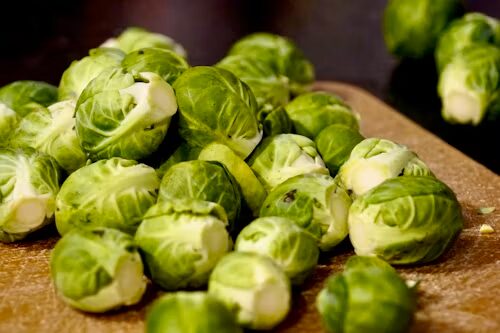
Quick Answer: Can Dogs Eat Brussels Sprouts?
Yes, dogs can eat Brussels sprouts in moderation.
Plain, properly prepared Brussels sprouts are generally safe for most healthy dogs. They contain fiber, vitamins A, B1, B6, C, and K, along with antioxidant compounds.
However, Brussels sprouts should be viewed as an occasional treat or food topper, not as a replacement for complete and balanced dog food.
The safest way to feed Brussels sprouts is to:
- Cook them until tender.
- Cut them into small, bite-sized pieces.
- Start with a very small amount.
- Serve them plain.
- Avoid onions and garlic.
- Skip excessive salt, butter, sauces, and seasonings.
- Watch your dog for gas or digestive upset.
- Avoid giving whole sprouts to dogs that gulp their food.
One of the main reasons Brussels sprouts can cause problems is raffinose, a carbohydrate that can be difficult to digest. When certain carbohydrates reach the lower digestive tract, gut bacteria ferment them and produce gas.
So while Brussels sprouts can be a nutritious little snack, more isn’t better.
Is Brussels Sprouts Safe for Dogs?
Is Brussels Sprouts Toxic to Dogs?
No. Plain Brussels sprouts are not considered toxic to dogs.
This is an important distinction because many foods that are perfectly ordinary for humans aren’t safe for dogs. Onions, garlic, grapes, and raisins, for example, can be dangerous for dogs.
Brussels sprouts don’t fall into that category.
However, non-toxic doesn’t mean unlimited.
A dog can develop digestive problems after eating too much of a food that is otherwise perfectly safe. Brussels sprouts are particularly capable of causing gastrointestinal upset because they contain fiber and fermentable carbohydrates.
If your dog grabs a small piece of plain cooked Brussels sprout from the floor, there’s generally no reason to panic. The situation is different if your dog eats a large quantity or consumes Brussels sprouts prepared with potentially harmful ingredients.
Can Dogs Eat Brussels Sprouts Every Day?
There’s generally no reason to feed Brussels sprouts every day.
Dogs don’t need this vegetable to meet their nutritional requirements. Their primary diet should be a nutritionally complete and balanced food appropriate for their age, size, and life stage.
Brussels sprouts can instead be used occasionally as:
- A vegetable treat
- A small food topper
- A tiny training reward
- An alternative to some calorie-dense snacks
Giving large servings every day could increase the likelihood of gas, bloating, loose stool, or diarrhea.
If your dog loves Brussels sprouts and tolerates them well, an occasional small serving is usually more sensible than making them a daily dietary staple.
When Can Brussels Sprouts Be Unsafe for Dogs?
Although plain Brussels sprouts are generally safe, several situations can make them unsuitable.
Be cautious if:
- Your dog eats a large quantity.
- The sprouts are served whole.
- Your dog gulps food without chewing.
- The sprouts are raw and very firm.
- They’re cooked with garlic or onions.
- They’re heavily salted.
- They’re covered in rich sauces.
- Your dog has a sensitive stomach.
- Your dog follows a prescription diet.
- Your dog has a medical condition requiring dietary restrictions.
Dogs with existing health problems deserve particular consideration. If your veterinarian has prescribed a specific diet, don’t assume that adding vegetables is harmless simply because they’re generally safe for healthy dogs.
Are Brussels Sprouts Good for Dogs?
Yes, in moderation, Brussels sprouts can be a nutritious treat for dogs.
They’re not a superfood that dogs need to eat, but they do contain several nutrients that contribute to a healthy diet.
The main advantage is that Brussels sprouts provide useful nutrients without being particularly calorie-dense when served plain.
Nutritional Benefits of Brussels Sprouts for Dogs
Brussels sprouts contain fiber, vitamins, minerals, and antioxidant compounds.
| Nutrient | Potential Role |
|---|---|
| Vitamin K | Supports normal blood clotting and bone health |
| Vitamin C | Provides antioxidant activity and supports normal immune function |
| Vitamin A | Supports normal vision, skin, and immune function |
| Vitamin B1 | Involved in energy metabolism |
| Vitamin B6 | Supports metabolism and nervous-system function |
| Fiber | Supports normal digestive function |
| Antioxidants | Help protect cells from oxidative stress |
| Plant compounds | Contribute to the nutritional value of cruciferous vegetables |
The American Kennel Club identifies Brussels sprouts as a source of vitamins, fiber, and antioxidants, while veterinary nutrition resources also highlight their vitamin and fiber content.
It’s worth remembering that your dog’s regular food should already provide the nutrients required for good health. Brussels sprouts simply add a little variety.
Can Brussels Sprouts Provide Antioxidants for Dogs?
Yes.
Brussels sprouts contain naturally occurring plant compounds with antioxidant properties. Antioxidants are involved in protecting cells from oxidative stress.
That sounds impressive—and it is—but it’s important to keep things in perspective.
Brussels sprouts aren’t medicine.
They shouldn’t be used to treat a medical condition or replace veterinary treatment. Nor should they be used instead of a complete canine diet.
Think of the antioxidants as an additional nutritional benefit rather than a reason to feed your dog large quantities of Brussels sprouts.
Can Brussels Sprouts Help With Digestion?
The fiber in Brussels sprouts can contribute to normal digestive function and bowel regularity.
Fiber can be helpful because it adds bulk to stool and supports normal movement through the digestive tract.
But there is a point where the benefit becomes a problem.
Too much fiber can upset a dog’s stomach.
After eating a large amount of Brussels sprouts, some dogs may develop:
- Gas
- Flatulence
- Bloating
- Loose stool
- Diarrhea
- Abdominal discomfort
That’s why introducing Brussels sprouts gradually is a much better approach than suddenly giving your dog an entire bowl.
Why Do Brussels Sprouts Make Dogs Gassy?
If your dog eats Brussels sprouts and suddenly starts producing enough gas to clear the room, you’re not imagining it.
Brussels sprouts are well known for causing flatulence.
One reason is their content of raffinose, a carbohydrate that can be difficult for the digestive system to break down completely.
When certain undigested carbohydrates reach the lower digestive tract, bacteria ferment them. One result of that fermentation is gas.
In simple terms:
Brussels sprouts → fiber and fermentable carbohydrates → bacterial fermentation → gas
This is completely different from poisoning. Gas after eating Brussels sprouts is usually a digestive response rather than a sign that the vegetable itself is toxic.
Some dogs are also much more sensitive than others.
One dog might happily eat a small amount with no noticeable reaction, while another may become extremely gassy after just a few bites.
Can Brussels Sprouts Cause Gas in Dogs?
Yes. Gas is one of the most common side effects associated with Brussels sprouts.
The amount of gas your dog develops can depend on several factors:
- Portion size
- Dog’s body size
- Individual digestive sensitivity
- Whether Brussels sprouts are new to the diet
- How the sprouts were prepared
- How quickly your dog ate them
- The rest of the dog’s diet
If your dog develops a little gas but otherwise behaves normally, the vegetable may simply be difficult for them to digest.
You can reduce the likelihood of problems by starting with a very small serving.
If Brussels sprouts consistently cause significant gas, there’s no nutritional reason to force your dog to eat them. Plenty of other dog-friendly vegetables are available.
Can Brussels Sprouts Cause Diarrhea or Vomiting?
Yes, particularly when a dog eats too many.
A sudden increase in fiber and fermentable carbohydrates can overwhelm a sensitive digestive system.
Possible symptoms include:
- Diarrhea
- Vomiting
- Gas
- Bloating
- Abdominal discomfort
- Reduced appetite
- Increased bowel movements
Mild digestive upset may resolve after the food passes through the digestive system, but don’t automatically assume every episode of vomiting or diarrhea is caused by Brussels sprouts.
Dogs can develop gastrointestinal symptoms for many reasons.
Contact your veterinarian if your dog develops:
- Repeated vomiting
- Persistent diarrhea
- Blood in the stool
- Severe abdominal pain
- Extreme lethargy
- Loss of appetite
- A swollen or painful abdomen
- Difficulty breathing
- Signs of choking
- Signs of intestinal obstruction
A particularly important distinction is whether your dog ate plain Brussels sprouts or a prepared human dish. If the sprouts were cooked with onion, garlic, or another unsafe ingredient, the situation needs to be evaluated differently.
Can Dogs Eat Raw Brussels Sprouts?
This question requires a little nuance.
Brussels sprouts themselves aren’t toxic, but raw whole sprouts aren’t the best way to serve them to most dogs.
Raw Brussels sprouts are firm and dense. Some dogs may struggle to chew them properly, especially if they tend to swallow food quickly.
Whole pieces may also present a choking risk, and swallowed food that isn’t adequately chewed can potentially contribute to gastrointestinal obstruction.
Extra caution is appropriate for:
- Toy breeds
- Small dogs
- Puppies
- Senior dogs with dental difficulties
- Fast eaters
- Dogs that routinely gulp their food
For these dogs, cooked, tender, finely chopped Brussels sprouts are generally a more practical choice.
Why Raw Brussels Sprouts May Be a Problem
Raw Brussels sprouts are:
- Firm
- Dense
- Difficult for some dogs to chew
- Potentially harder to digest
- More concerning when swallowed whole
A dog with strong chewing habits may handle a small piece better than a dog that inhales everything in its bowl.
That’s why preparation should be based not only on the food itself but also on your dog’s eating habits.
If your dog is a notorious gulper, don’t toss a whole Brussels sprout into the bowl and hope for the best.
Raw vs. Cooked Brussels Sprouts for Dogs
| Factor | Raw Brussels Sprouts | Cooked Brussels Sprouts |
|---|---|---|
| Texture | Firm and dense | Softer |
| Digestibility | Generally harder | Generally easier |
| Choking concern | Higher if whole | Lower when chopped |
| Preparation | Minimal | Requires cooking |
| Preferred option | Less ideal whole | Preferred |
| Gas potential | Possible | Still possible |
| Best serving method | Small pieces if used | Plain and tender |
For most dogs, plain cooked Brussels sprouts cut into small pieces are the easiest option.
Can Dogs Eat Cooked Brussels Sprouts?
Yes. Plain cooked Brussels sprouts are generally the preferred option.
You can prepare them by:
- Steaming
- Boiling
- Microwaving
- Lightly roasting
The key is to keep them plain.
Cooking softens the vegetable, which can make it easier for dogs to chew and swallow.
It also gives you an opportunity to remove the tough stalk and cut the vegetable into appropriate pieces.
What Is the Best Way to Cook Brussels Sprouts for Dogs?
Steamed Brussels Sprouts
Steaming is one of the simplest methods.
Here’s an easy preparation:
- Wash the Brussels sprouts thoroughly.
- Remove damaged outer leaves.
- Trim away the tough stem.
- Cut the sprouts into small pieces.
- Steam until tender.
- Let them cool completely.
- Serve a small amount plain.
There’s no need to add butter, salt, garlic, onion, or seasoning.
The simpler the ingredient list, the easier it is to know exactly what your dog is eating.
Boiled Brussels Sprouts
Boiling is another straightforward option.
Place the cleaned sprouts in water and cook until they’re tender.
However, don’t add:
- Salt
- Garlic
- Onion
- Stock containing onion or garlic
- Butter
- Spicy seasoning
- Rich sauces
After cooking, let the sprouts cool before giving them to your dog.
You can then chop them into small pieces and offer an appropriate portion.
Roasted Brussels Sprouts
Plain roasted Brussels sprouts can also be suitable for dogs.
The problem is that human recipes often turn a simple vegetable into a rich side dish.
Roasted Brussels sprouts may be prepared with:
- Butter
- Large amounts of oil
- Garlic
- Onion
- Bacon
- Salt
- Spices
- Cheese
- Sauces
Those additions can make the dish unsuitable for dogs.
If you’re roasting vegetables for the family, the easiest solution is to set aside your dog’s portion before adding seasonings.
Can Dogs Eat Brussels Sprouts With Butter?
It’s best to skip the butter.
A tiny amount of butter isn’t the same as feeding a toxic ingredient, but it adds unnecessary fat and calories to an otherwise simple vegetable.
Rich foods may contribute to:
- Stomach upset
- Loose stool
- Excess calorie intake
- Weight gain
Your dog doesn’t need butter to benefit from Brussels sprouts.
Plain is better.
Can Dogs Eat Brussels Sprouts With Garlic or Onion?
No.
This is one of the most important rules when preparing vegetables for dogs.
Garlic
Garlic can be toxic to dogs. Avoid Brussels sprouts prepared with:
- Fresh garlic
- Garlic powder
- Garlic salt
- Garlic butter
- Garlic seasoning
Onion
Onions are also toxic to dogs.
Avoid:
- Fresh onion
- Cooked onion
- Fried onion
- Onion powder
- Onion salt
- Sauces containing onion
The same caution applies to other members of the allium family, including certain onion- and garlic-based seasonings.
Plain Brussels sprouts are one thing. Garlic-and-onion Brussels sprouts from your dinner plate are something entirely different.
How Much Brussels Sprouts Can Dogs Eat?
Portion size matters almost as much as preparation.
Even though Brussels sprouts are safe for most healthy dogs, feeding too much can result in digestive upset.
Veterinary-oriented serving recommendations are best treated as general guidelines rather than universal prescriptions, because every dog’s calorie needs and digestive tolerance are different.
| Dog Size | Approximate Weight | General Starting Portion |
|---|---|---|
| Extra-small | 2–20 lb | 1 teaspoon or less |
| Small | 21–30 lb | 1–2 teaspoons |
| Medium | 31–50 lb | About 1 tablespoon |
| Large | 51–90 lb | 1–2 tablespoons |
| Extra-large | 91+ lb | Up to ¼ cup |
For a first introduction, start considerably below these general amounts.
Give your dog a tiny portion and observe how they respond.
Watch for:
If your dog tolerates the vegetable well, you can continue offering small amounts occasionally.
Don’t assume that a larger dog automatically needs a large serving.
How Often Can Dogs Eat Brussels Sprouts?
For most dogs, Brussels sprouts are best treated as an occasional snack or topper.
A sensible introduction looks like this:
- Start with a tiny portion.
- Monitor your dog’s digestion.
- If tolerated, offer a small amount occasionally.
- Avoid suddenly increasing the serving size.
- Stop feeding them if your dog repeatedly develops digestive problems.
The goal isn’t to maximize the amount of vegetables your dog eats.
The goal is to provide a little variety without interfering with the complete and balanced nutrition supplied by their regular food.
Can Dogs Eat Brussels Sprout Stalks?
The stalk isn’t generally considered toxic, but it’s tougher and less suitable for dogs.
The thick stalk can be difficult to chew and may be harder to digest.
For that reason, it’s better to remove it during preparation.
Before feeding Brussels sprouts:
- Remove the thick stalk.
- Remove damaged outer leaves.
- Wash the vegetable thoroughly.
- Cut it into small pieces.
- Cook until tender.
- Let it cool before serving.
This creates a softer, more manageable food.
Can Dogs Eat Brussels Sprout Leaves?
Yes. Plain Brussels sprout leaves can generally be fed in moderation.
The outer leaves can be softer than the central stalk, although they still need to be prepared properly.
Make sure leaves are:
- Fresh
- Thoroughly washed
- Free from mold or spoilage
- Free from seasoning
- Cut into manageable pieces
Don’t feed your dog leaves that are slimy, moldy, rotten, or visibly spoiled.
Can Puppies Eat Brussels Sprouts?
Puppies may tolerate tiny amounts of plain cooked Brussels sprouts, but puppies have different nutritional priorities from adult dogs.
Growing puppies require carefully balanced nutrition to support development. Their primary food should therefore be a complete and balanced puppy diet appropriate for their life stage and size.
If your veterinarian approves introducing Brussels sprouts, start with:
One tiny, soft, finely chopped piece.
Then watch your puppy for:
- Gas
- Diarrhea
- Vomiting
- Abdominal discomfort
- Changes in appetite
Avoid giving puppies whole raw Brussels sprouts because they’re firm and may be difficult to chew or swallow.

Can Dogs Eat Frozen Brussels Sprouts?
Plain frozen Brussels sprouts aren’t inherently toxic, but frozen whole sprouts aren’t an ideal dog treat.
They’re hard and firm, which can make them more difficult to chew.
If you’re using frozen Brussels sprouts:
- Check the ingredient list.
- Choose plain varieties.
- Avoid garlic and onion.
- Cook them thoroughly.
- Let them cool.
- Chop them into small pieces.
Plain cooked sprouts are generally the simplest option.
Also be careful with frozen vegetable products marketed as seasoned side dishes. A package that looks like plain Brussels sprouts may contain salt, sauces, butter, garlic, onion, or other ingredients.
Can Dogs Eat Canned Brussels Sprouts?
Canned vegetables deserve extra attention because they can contain added sodium and seasonings.
If you have canned Brussels sprouts, check the ingredient label carefully.
Avoid products containing:
- Added salt
- Garlic
- Onion
- Sauces
- Heavy seasoning
- Butter
- Other flavorings
Fresh, plain Brussels sprouts are usually easier to prepare without unnecessary additives.
If canned is your only option, choose the simplest product possible and check with your veterinarian if your dog has a medical condition requiring dietary restrictions.
Can Dogs Eat Brussels Sprouts With Their Regular Dog Food?
Yes.
A small amount of cooked Brussels sprouts can be mixed into your dog’s regular meal as an occasional vegetable topper.
For example:
- Steam a Brussels sprout.
- Let it cool completely.
- Chop it finely.
- Add a small amount to your dog’s normal food.
- Monitor stool and appetite.
This can be a convenient way to introduce a new vegetable without making it the focus of the meal.
Just remember that Brussels sprouts should supplement your dog’s diet rather than replace a substantial portion of complete and balanced dog food.
Can Brussels Sprouts Help Dogs Lose Weight?
Brussels sprouts can be a relatively low-calorie treat, but they aren’t a weight-loss treatment.
Their fiber and water content can make them useful as an occasional alternative to calorie-dense table foods.
However, successful weight management depends on the dog’s overall calorie intake, diet quality, activity level, and individual health needs.
For an overweight dog, focus on:
- Appropriate daily calories
- Complete nutrition
- Controlled treats
- Appropriate exercise
- Regular weight monitoring
- Veterinary guidance
Simply adding Brussels sprouts to an otherwise excessive diet won’t make a dog lose weight.
If your dog needs to lose weight, your veterinarian can help determine an appropriate calorie target and feeding plan.
Which Dogs Should Limit or Avoid Brussels Sprouts?
Dogs With Sensitive Stomachs
Some dogs simply don’t tolerate cruciferous vegetables well.
If your dog already experiences frequent gas, loose stool, or digestive upset, Brussels sprouts may not be the best vegetable choice.
Start extremely small—or consider another food altogether.
Dogs With Chronic Digestive Problems
Dogs with ongoing gastrointestinal problems may need carefully controlled diets.
Don’t introduce Brussels sprouts or other new foods without discussing them with your veterinarian.
Dogs on Prescription Diets
Prescription diets are formulated around specific medical or nutritional needs.
Adding human foods can interfere with the intended dietary plan.
If your dog eats a prescription diet, ask your veterinarian before introducing Brussels sprouts.
Dogs With Food Allergies or Intolerances
Dogs with known food sensitivities should also be introduced to new foods cautiously.
If your dog consistently develops symptoms after eating Brussels sprouts, stop feeding them and discuss the reaction with your veterinarian.
Brussels Sprouts vs. Other Vegetables for Dogs
Brussels sprouts aren’t the only vegetable dogs can enjoy. Depending on your dog’s preferences and digestive tolerance, another option may work better.
| Vegetable | Generally Safe? | Main Benefit | Main Concern |
|---|---|---|---|
| Brussels sprouts | Yes, in moderation | Fiber, vitamins, antioxidants | Gas and bloating |
| Carrots | Yes | Fiber, beta-carotene | Portion size |
| Green beans | Yes | Fiber, low calories | Must be plain |
| Cucumber | Yes | Water, low calories | Large pieces |
| Zucchini | Yes | Low calories | Excess may upset stomach |
| Cauliflower | Yes | Fiber and nutrients | Gas |
| Broccoli | Small amounts | Fiber and vitamins | GI irritation |
| Lettuce | Yes | Water and fiber | Loose stool if excessive |
| Kale | Small amounts/caution | Vitamins and fiber | Digestive concerns |
| Spinach | Small amounts/caution | Vitamins and minerals | Dietary suitability varies |
The important point isn’t simply whether a vegetable is technically safe. Preparation, portion size, your dog’s health, and individual tolerance all matter.
What Vegetables Can Dogs Eat Instead of Brussels Sprouts?
If Brussels sprouts turn your dog into a surprisingly effective gas producer, you have plenty of alternatives.
Carrots
Carrots are a popular dog-friendly vegetable. They provide fiber and beta-carotene and can be served in appropriately sized pieces.
Green Beans
Plain green beans are another convenient vegetable option. They can provide fiber while remaining relatively low in calories.
Cucumber
Cucumber has a high water content and relatively few calories, making it a refreshing occasional snack.
Zucchini
Plain zucchini is another mild option that many dogs tolerate well.
Cauliflower
Cauliflower can provide fiber and nutrients, although it may also cause gas if your dog eats too much.
Lettuce
Plain lettuce is mostly water and can be offered in small portions as an occasional crunchy treat.
The best vegetable for your dog is ultimately one that fits their diet, calorie needs, digestive tolerance, age, and overall health.
How Much Brussels Sprouts Can Dogs Eat?
When it comes to Brussels sprouts, portion size matters more than you might think. Even though plain Brussels sprouts are generally safe for dogs, giving your pet a large bowl can quickly turn a healthy snack into a digestive problem.
Every dog is different. A 10-pound Chihuahua and a 90-pound Labrador don’t have the same calorie needs, stomach capacity, or tolerance for high-fiber foods.
A useful rule is to start with a tiny amount and increase only if your dog handles it well.
| Dog Size | Approximate Weight | General Starting Portion |
|---|---|---|
| Extra-small | 2–20 lb | 1 teaspoon or less |
| Small | 21–30 lb | 1–2 teaspoons |
| Medium | 31–50 lb | About 1 tablespoon |
| Large | 51–90 lb | 1–2 tablespoons |
| Extra-large | 91+ lb | Up to ¼ cup |
These amounts should be treated as general guidelines rather than strict prescriptions. Your dog’s age, health, normal diet, activity level, and digestive tolerance all matter.
For a first introduction, there’s no reason to jump straight to the suggested maximum. Give your dog one or two tiny pieces and see what happens over the next day.
If there is no vomiting, diarrhea, excessive gas, or other digestive trouble, you can occasionally offer a little more.
Why Start Small?
Brussels sprouts are packed with fiber and contain fermentable carbohydrates. That’s good in reasonable quantities, but too much at once can overwhelm a dog’s digestive system.
A large serving may lead to:
- Excessive gas
- Loose stool
- Diarrhea
- Bloating
- Abdominal discomfort
- Vomiting
- Reduced appetite
In other words, your dog may enjoy the Brussels sprouts far more than your nose does afterward.

How Often Can Dogs Eat Brussels Sprouts?
For most dogs, Brussels sprouts are best treated as an occasional snack rather than an everyday food.
There’s no nutritional requirement for dogs to eat Brussels sprouts. A complete and balanced dog food should provide the essential nutrients your pet needs.
You can occasionally use a small amount of Brussels sprouts as:
- A vegetable treat
- A food topper
- A reward during training
- A low-calorie alternative to some table scraps
- A way to add variety to an otherwise balanced diet
If your dog tolerates them well, there’s no need to completely eliminate Brussels sprouts. Just avoid making them a major part of every meal.
A Simple Rule to Follow
Small portion + plain preparation + occasional feeding = the safest approach.
If your dog consistently develops gas or loose stool after eating them, there’s no reason to keep offering them. There are plenty of other dog-friendly vegetables available.
Can Dogs Eat Brussels Sprout Stalks?
The Brussels sprout stalk isn’t generally considered toxic, but that doesn’t mean it’s a good choice for your dog’s bowl.
The stalk is tough, fibrous, and considerably more difficult to chew than the soft leaves.
For that reason, it’s better to remove the thick stem before preparing Brussels sprouts for your dog.
Why Remove the Stalk?
A tough stalk can be:
- Difficult to chew
- Difficult to digest
- A choking concern if given in large pieces
- More likely to cause digestive discomfort
When preparing Brussels sprouts, simply trim away the hard bottom portion and discard it.
Then cook the remaining sprout until tender and cut it into small pieces.
Your dog doesn’t need the stalk to benefit from Brussels sprouts.
Can Dogs Eat Brussels Sprout Leaves?
Yes. Plain Brussels sprout leaves can generally be eaten by dogs in moderation.
The outer leaves are edible and can be softer than the central stalk. However, they should still be prepared properly.
Before feeding them:
- Wash the leaves thoroughly.
- Remove any dirty, damaged, or spoiled portions.
- Cook them until tender if they’re firm.
- Cut larger pieces into smaller portions.
- Don’t add seasoning, butter, garlic, or onion.
- Allow them to cool before serving.
As with the rest of the vegetable, moderation is important.
There’s no advantage to letting your dog eat an entire pile of loose Brussels sprout leaves simply because they’re softer.
Can Puppies Eat Brussels Sprouts?
This is where you should be a little more conservative.
Puppies can potentially eat a tiny amount of plain, cooked Brussels sprouts, but they don’t need them as part of their regular diet.
Growing puppies have specific nutritional requirements. Their main food should be a complete and balanced puppy diet formulated for their age and expected adult size.
Adding too many vegetables or treats can also displace the calorie and nutrient-rich food puppies actually need for growth.
If Your Veterinarian Approves Brussels Sprouts
Start with something very small, such as:
One tiny, soft, finely chopped piece.
Then monitor your puppy for:
- Gas
- Loose stool
- Diarrhea
- Vomiting
- Abdominal discomfort
- Reduced appetite
- Changes in normal behavior
If everything remains normal, Brussels sprouts can occasionally be offered in very small amounts.
What About Raw Brussels Sprouts for Puppies?
It’s better to avoid them.
Raw Brussels sprouts are firm and can be difficult for a puppy to chew properly. A whole sprout can also be a choking concern.
Cooked, soft, finely chopped Brussels sprouts are a much more practical option.
Can Dogs Eat Frozen Brussels Sprouts?
Yes, plain frozen Brussels sprouts aren’t inherently toxic to dogs, but you shouldn’t simply toss a frozen whole sprout into your dog’s bowl.
Frozen vegetables can be quite firm, especially when they’re still frozen solid.
That creates unnecessary chewing and swallowing concerns.
How to Serve Frozen Brussels Sprouts Safely
If frozen Brussels sprouts are what you have available:
- Check the ingredient list.
- Make sure they’re plain.
- Avoid varieties containing garlic or onion.
- Cook them thoroughly.
- Let them cool.
- Remove the tough stem.
- Chop them into small pieces.
- Start with a tiny serving.
Avoid frozen vegetable products that come with sauces, seasoning packets, butter, or flavored coatings.
Plain frozen Brussels sprouts that are cooked and chopped are much easier to manage than frozen whole sprouts.
Can Dogs Eat Canned Brussels Sprouts?
Canned Brussels sprouts aren’t necessarily dangerous, but they’re often less convenient for dogs because of added sodium and other ingredients.
Some canned vegetables contain significant amounts of salt. Others may contain sauces, spices, garlic, onion, or preservatives.
Before giving canned Brussels sprouts to your dog, carefully read the ingredient label.
Avoid Canned Brussels Sprouts Containing:
- Added salt
- Garlic
- Onion
- Onion powder
- Garlic powder
- Butter
- Cream sauces
- Spices
- Flavoring mixes
If you have a choice, fresh plain Brussels sprouts are usually the easiest option because you have complete control over how they’re prepared.
Can Dogs Eat Brussels Sprouts With Their Regular Dog Food?
Yes. A small amount of cooked Brussels sprouts can be mixed with your dog’s normal meal.
This is one of the easiest ways to introduce the vegetable without turning it into a separate treat.
For example:
- Steam one Brussels sprout.
- Allow it to cool completely.
- Remove the tough stalk.
- Chop the sprout into very small pieces.
- Add a small amount to your dog’s regular food.
- Watch for digestive changes.
There’s no need to cover an entire bowl of kibble with vegetables.
Think of Brussels sprouts as a small topper, not the main course.
Your dog’s regular complete and balanced food should continue to provide most of their calories and nutrients.
Can Brussels Sprouts Help Dogs Lose Weight?
Brussels sprouts can be a relatively low-calorie vegetable, so they may have a place in a carefully managed treat routine.
However, it’s important not to misunderstand this point.
Brussels sprouts don’t cause weight loss by themselves.
A dog loses weight when their overall calorie intake is appropriately managed relative to their energy needs.
For a dog carrying extra weight, a veterinarian may recommend changes involving:
- Daily calorie intake
- Portion control
- Treat management
- Exercise
- Complete and balanced nutrition
- A therapeutic weight-management diet
A few pieces of Brussels sprouts may be preferable to a high-calorie table scrap, but simply adding vegetables to a dog’s existing diet won’t necessarily make the dog lose weight.
The Bottom Line
If you’re using Brussels sprouts as a low-calorie treat, account for them as part of your dog’s overall food intake.
And if your dog is significantly overweight, talk with your veterinarian before making major changes to their diet.
Which Dogs Should Limit or Avoid Brussels Sprouts?
Although most healthy dogs can enjoy a small amount of plain Brussels sprouts, some dogs need extra caution.
Dogs With Sensitive Stomachs
Some dogs react strongly to cruciferous vegetables.
If your dog already experiences:
- Frequent gas
- Loose stools
- Digestive upset
- Food sensitivity
Brussels sprouts may not be the ideal vegetable.
There’s no benefit in forcing your dog to eat a food that repeatedly causes discomfort.
Dogs With Chronic Digestive Problems
Dogs with ongoing gastrointestinal conditions may need a carefully controlled diet.
A new high-fiber food could interfere with that dietary plan or make symptoms worse.
If your dog has a diagnosed digestive disorder, ask your veterinarian before adding Brussels sprouts or other new foods.
Dogs Eating Prescription Diets
This is especially important.
Prescription diets are formulated for specific medical needs. Adding table foods or treats without veterinary approval can alter the overall nutritional profile of the diet.
If your veterinarian has placed your dog on a prescription food, don’t assume that a healthy vegetable is automatically appropriate.
Check first.
Dogs With Food Allergies or Intolerances
Brussels sprouts aren’t among the foods most commonly associated with canine food allergies, but individual dogs can react differently to new foods.
If your dog has a history of food reactions, introduce anything new cautiously.
If you notice a consistent problem after eating Brussels sprouts, stop offering them and discuss the reaction with your veterinarian.
Brussels Sprouts vs. Other Vegetables for Dogs
Brussels sprouts aren’t the only vegetable dogs can eat. If your dog doesn’t tolerate them well, you have several alternatives.
| Vegetable | Generally Safe? | Potential Benefit | Main Concern |
|---|---|---|---|
| Brussels sprouts | Yes, in moderation | Fiber, vitamins, antioxidants | Gas and bloating |
| Carrots | Yes | Fiber and beta-carotene | Portion size |
| Green beans | Yes | Fiber and relatively low calories | Avoid seasoned varieties |
| Cucumber | Yes | Water and low calories | Large pieces |
| Zucchini | Yes | Low-calorie option | Excess may upset stomach |
| Cauliflower | Yes, in moderation | Fiber and nutrients | Can cause gas |
| Broccoli | Small amounts | Fiber and vitamins | Digestive irritation |
| Lettuce | Yes, in moderation | Water and fiber | Too much may cause loose stool |
| Kale | Limited amounts | Vitamins and fiber | Not appropriate for every dog |
| Spinach | Limited amounts | Vitamins and minerals | Dietary suitability varies |
The best vegetable isn’t necessarily the one with the most impressive nutritional profile.
It’s the one that fits your dog’s diet and agrees with their digestive system.
What Vegetables Can Dogs Eat Instead of Brussels Sprouts?
If Brussels sprouts turn your dog into a surprisingly efficient gas producer, you have plenty of alternatives.
Carrots
Carrots are one of the most popular vegetable treats for dogs.
They provide fiber and beta-carotene and can be offered raw or cooked when prepared in appropriately sized pieces.
For small dogs, cut carrots into manageable pieces to reduce choking concerns.
Green Beans
Plain green beans can be another useful low-calorie treat.
They should be served without:
- Butter
- Salt
- Garlic
- Onion
- Heavy sauces
Fresh, steamed, or plain cooked green beans are simple options.
Cucumber
Cucumber contains plenty of water and relatively few calories.
It can make a refreshing occasional snack, particularly when cut into appropriately sized pieces.
Zucchini
Plain zucchini is another vegetable some dogs tolerate well.
You can steam or lightly cook it without adding seasonings.
As always, start with a small amount.
Cauliflower
Dogs can generally eat plain cauliflower in moderation.
However, cauliflower belongs to the same broad cruciferous vegetable family as Brussels sprouts, so it can also cause gas in some dogs.
If your dog already has trouble with Brussels sprouts, cauliflower may not solve the problem.
How to Introduce Brussels Sprouts Into Your Dog’s Diet
If you’ve decided to let your dog try Brussels sprouts, don’t make the first introduction complicated.
The safest approach is simple.
Step 1: Choose Fresh Brussels Sprouts
Look for firm, fresh sprouts without mold, sliminess, or obvious spoilage.
Step 2: Wash Them
Rinse them thoroughly to remove dirt and debris.
Step 3: Remove the Tough Stalk
Trim away the hard bottom section.
Step 4: Cook Them
Steam, boil, microwave, or lightly roast them until tender.
Step 5: Keep Them Plain
Don’t add:
- Garlic
- Onion
- Salt
- Butter
- Cream
- Spicy seasonings
- Rich sauces
Step 6: Cool Them
Never serve food that’s hot enough to burn your dog’s mouth.
Step 7: Chop Them
Cut the cooked sprout into small, manageable pieces.
Step 8: Start Tiny
Give your dog just a small piece.
Step 9: Monitor
Watch your dog for digestive symptoms during the next several hours and into the following day.
If everything looks normal, you can occasionally offer another small serving.
What Should You Do If Your Dog Eats Too Many Brussels Sprouts?
Don’t panic immediately.
If your dog has eaten a large amount of plain Brussels sprouts, the most likely problem is digestive upset rather than poisoning.
Your dog may develop:
- Excessive gas
- Loose stool
- Diarrhea
- Vomiting
- Bloating
- Abdominal discomfort
What You Can Do
First, determine what exactly your dog ate.
Was it:
- Plain cooked Brussels sprouts?
- Raw whole sprouts?
- A large quantity?
- Brussels sprouts cooked with garlic?
- Brussels sprouts cooked with onions?
- A heavily salted or seasoned dish?
The ingredients matter.
If the sprouts contained garlic, onions, or another potentially toxic ingredient, contact your veterinarian or a veterinary poison service promptly for specific advice.
If your dog simply ate too many plain sprouts, monitor them closely and contact your veterinarian if symptoms become severe or don’t improve.
Seek Veterinary Attention for Concerning Symptoms
Don’t wait if your dog develops:
- Repeated vomiting
- Severe or persistent diarrhea
- Blood in the stool
- Severe abdominal pain
- A distended or painful abdomen
- Weakness or collapse
- Extreme lethargy
- Difficulty breathing
- Choking
- Repeated unproductive retching
A dog that is merely a little gassy after eating a small amount is very different from a dog showing signs of serious illness.
Frequently Asked Questions About Dogs and Brussels Sprouts
Can dogs eat Brussels sprouts safely?
Yes. Most healthy dogs can eat small amounts of plain Brussels sprouts when they’re properly prepared.
Are Brussels sprouts toxic to dogs?
No. Plain Brussels sprouts are generally considered non-toxic to dogs.
Can dogs eat raw Brussels sprouts?
It’s better to avoid feeding whole raw Brussels sprouts. They’re firm, harder to digest, and may create choking or obstruction concerns if swallowed whole.
Can dogs eat cooked Brussels sprouts?
Yes. Plain cooked Brussels sprouts are generally the preferred option.
Can dogs eat Brussels sprouts with butter?
It’s better to skip the butter. Plain sprouts are simpler and avoid unnecessary fat and calories.
Can dogs eat Brussels sprouts with garlic?
No. Garlic can be toxic to dogs.
Can dogs eat Brussels sprouts with onion?
No. Onions are toxic to dogs and should not be included in food given to them.
Can dogs eat Brussels sprout stems?
The stalk isn’t generally considered toxic, but it’s tough and can be difficult to chew and digest. Removing it is recommended.
Can dogs eat Brussels sprout leaves?
Yes. Plain, clean Brussels sprout leaves can generally be given in small amounts.
Can puppies eat Brussels sprouts?
Puppies may tolerate a tiny amount of plain, cooked Brussels sprouts, but their complete puppy food should remain their primary source of nutrition.
Can Brussels sprouts cause gas in dogs?
Yes. Gas is one of the most common complaints associated with Brussels sprouts.
Can Brussels sprouts cause diarrhea?
Yes. A large serving or sudden introduction can cause diarrhea and other gastrointestinal symptoms.
How many Brussels sprouts can a dog eat?
The appropriate amount depends on the dog’s size and tolerance. Start with a tiny amount and increase cautiously if tolerated.
Can dogs eat Brussels sprouts every day?
They’re better treated as an occasional snack or topper rather than a daily staple.
Can dogs eat frozen Brussels sprouts?
Plain frozen Brussels sprouts should ideally be cooked, cooled, and chopped before feeding.
Can dogs eat canned Brussels sprouts?
Only if they’re plain and free from excessive sodium, garlic, onion, sauces, and other unsuitable ingredients.
Conclusion
So, can dogs eat Brussels sprouts? Yes. For most healthy dogs, a small amount of plain, properly prepared Brussels sprouts can be a safe and nutritious occasional treat.
Brussels sprouts contain fiber, vitamins C and K, vitamins A and B, antioxidants, and other beneficial plant compounds. However, they aren’t an essential part of a dog’s diet. Your pet’s regular complete and balanced dog food should remain the foundation of their nutrition.
The biggest drawback is gas. Brussels sprouts contain fiber and fermentable carbohydrates that can make some dogs surprisingly gassy. Eating too many may also cause bloating, diarrhea, vomiting, or general stomach discomfort.
The safest way to serve them is simple: cook the Brussels sprouts until tender, remove the tough stalk, cut them into small pieces, allow them to cool, and serve them plain. Avoid giving your dog whole raw sprouts, especially if they tend to gulp their food.
Most importantly, never share Brussels sprouts prepared with garlic or onions, both of which can be harmful to dogs. Butter, excessive salt, rich sauces, and heavy seasonings should also be avoided.
If your dog has a sensitive stomach, food intolerance, chronic digestive condition, prescription diet, or another health concern, talk with your veterinarian before introducing Brussels sprouts.