Have you noticed reddish-brown marks beneath your dog’s eyes that seem to return even after cleaning? These marks, commonly called dog tear stains, are especially noticeable on white and light-colored coats. They can make a freshly groomed dog look as though its face is constantly wet or dirty.
Tear stains are common in dogs, particularly breeds with prominent eyes, short muzzles, or facial features that affect normal tear drainage. Although the discoloration itself is often harmless, persistent watery eyes can sometimes indicate irritation, an eye condition, or a blocked tear duct.
Many pet owners look for simple home remedies, including coconut oil, to remove these stains. However, not every popular remedy is safe or effective, especially when used close to such a sensitive area.
The good news is that you can often manage mild tear staining with gentle cleaning and appropriate grooming. The important thing is to understand what causes the stains, how to clean your dog’s face safely, whether coconut oil is appropriate, and when veterinary attention is necessary.
This guide explains the practical steps you can take to protect your dog’s eye health without relying on unproven treatments.
What Are Dog Tear Stains?
Dog tear stains are reddish, pinkish, or brown discolorations that develop on the fur beneath or around the eyes. They occur when tear fluid repeatedly wets the hair and leaves pigments behind.
The medical term for excessive tear overflow is epiphora. It can occur when a dog’s eyes produce too many tears, when the normal drainage system does not work properly, or when the anatomy of the eyelids and face encourages tears to spill onto the cheeks.
According to VCA Animal Hospitals’ guide to eye discharge and epiphora in dogs, several different conditions can contribute to excessive tearing, so identifying the underlying cause matters more than simply removing the discoloration.
Tear stains are particularly visible on white dogs because the reddish-brown pigments contrast sharply with pale fur. On darker coats, the same moisture and staining may be less obvious.
An important distinction: Tear stains are not the same as an eye infection. A dog may have harmless staining without any eye disease, while another dog with similar-looking marks may have an underlying problem that needs treatment.
What Causes Tear Stains in Dogs?
There is no single cause of tear staining. Some dogs develop it because of their facial structure, while others experience excessive tearing due to irritation or problems with normal tear drainage.
Understanding the possible causes helps you decide whether routine cleaning is enough or whether your dog needs a veterinary examination.
1. Excessive Tear Production
Tears lubricate the eyes, protect the surface of the cornea, and help wash away small particles. When the eyes produce more tears than the drainage system can handle, the excess fluid runs down the face.
Possible triggers include:
- Dust, pollen, or other environmental irritants.
- Eyelashes or facial hair rubbing against the eye.
- Inflammation of the eye or surrounding tissues.
- Foreign material trapped near the eye.
- Certain eyelid or eyelash abnormalities.
If your dog suddenly develops watery eyes, do not assume the problem is cosmetic. A veterinarian can check whether irritation or another condition is responsible.
2. Blocked or Poorly Draining Tear Ducts
Under normal circumstances, tears pass through small openings near the inner corners of the eyelids and drain through channels that lead toward the nose.
If these openings or drainage channels are narrowed, blocked, or abnormally formed, tears may spill onto the face instead.
Veterinary evaluation may involve examining the eyes and eyelids and, when appropriate, testing tear production or assessing the drainage system. Some dogs benefit from veterinary tear-duct flushing, but this is a clinical procedure rather than a home treatment.
Read the Merck Veterinary Manual’s explanation of tear-duct disorders in dogs for more information about how drainage problems can develop.
3. Breed and Facial Structure
Certain breeds are more likely to develop visible tear staining because of their facial anatomy, eye shape, or tear drainage characteristics.
Common examples include:
- Maltese: White fur makes discoloration easy to notice.
- Shih Tzu: Short muzzles and prominent eyes can contribute to eye-care challenges.
- Poodle: Tear staining can occur, especially on lighter coats.
- Bichon Frise: White facial hair makes reddish-brown marks particularly visible.
- Pekingese and Bulldogs: Facial structure may affect how tears drain or how well the eyes are protected.
These breeds are not the only dogs affected. Any dog can develop tear stains, and the presence of staining does not automatically mean a breed-related abnormality is present.
4. Porphyrins in Tear Fluid
One reason tear stains appear reddish-brown is the presence of naturally occurring pigments called porphyrins.
Porphyrins are associated with the breakdown of red blood cells and are excreted through several bodily fluids, including tears. When tear fluid repeatedly wets pale fur, these pigments can gradually discolor the hair.
This explains why a dog’s coat may develop a rusty appearance even when the dog seems comfortable and the eyes do not look inflamed.
Porphyrin staining does not, by itself, prove that a dog has an infection or a nutritional deficiency.
5. Eye Irritation, Allergies, or Infection
Allergies and environmental irritants may contribute to watery eyes in some dogs. In other cases, conjunctivitis, a corneal injury, or another eye condition can cause increased discharge.
Pay attention to accompanying signs, such as:
- Redness around the eye.
- Frequent blinking or squinting.
- Pawing or rubbing at the face.
- Thick, yellow, or green discharge.
- Swelling or sensitivity to light.
These signs are more concerning than staining alone and should prompt veterinary advice.
6. Moisture and Skin Irritation
Fur that remains wet beneath the eyes can irritate the surrounding skin. Persistent moisture may also encourage secondary skin inflammation or microbial overgrowth.
You may notice redness, unpleasant odor, damp fur, or soreness in the stained area.
Cleaning and drying can help manage surface moisture, but they will not resolve an untreated source of excessive tearing.
Can Coconut Oil Remove Dog Tear Stains?
Coconut oil is often promoted online as a natural remedy for dog tear stains. It contains fatty acids and has been studied for certain properties, but that does not establish it as an effective treatment for discoloration beneath a dog’s eyes.
There is not strong veterinary evidence that applying coconut oil to tear-stained fur reliably removes existing stains or prevents new ones.
Coconut oil should not be treated as an eye medication, and it should not be applied to the eyeball or along the eyelid margin in an attempt to treat tearing.
The area around the eyes is delicate. An oily product that enters the eye may cause irritation, and applying it repeatedly can make the facial fur greasy and harder to keep clean.
Is Coconut Oil Safe Around a Dog’s Eyes?
The safest approach is to avoid applying coconut oil close to the eyes unless your veterinarian specifically recommends a suitable product for that area.
Consider these points:
- Do not put coconut oil into the eye. It is not a substitute for veterinary eye drops or sterile ophthalmic products.
- Do not coat the eyelid margins with oil. It may migrate into the eye during blinking or rubbing.
- Do not use it to treat unexplained tearing. Persistent discharge may have a medical cause that needs diagnosis.
- Do not assume natural means harmless. Even familiar household products can cause problems when used in sensitive areas.
If you have already applied coconut oil and your dog develops redness, squinting, excessive blinking, or discomfort, stop using it and contact your veterinarian.
Can Coconut Oil Be Added to Dog Food?
Adding coconut oil to food is a separate issue from using it on tear stains. There is no good evidence that feeding coconut oil removes tear stains or corrects abnormal tear drainage.
Coconut oil is calorie-dense and contains substantial saturated fat. Extra calories may contribute to weight gain, while some dogs develop digestive upset after consuming it.
Do not start feeding coconut oil specifically to treat tear staining. If you are considering adding any supplement to your dog’s diet, discuss its nutritional value and potential risks with your veterinarian.
How to Clean Dog Tear Stains Safely
For a dog with mild staining and no signs of eye disease, gentle cleaning is a sensible first step. The aim is to remove accumulated discharge, keep the fur clean, and reduce prolonged moisture without irritating the eye.
You do not need harsh chemicals or a complicated collection of products.
What You Will Need
Gather a few simple supplies:
- A soft, clean cloth or sterile gauze.
- Plain sterile saline suitable for eye-area cleaning, if needed.
- Clean, lukewarm water for cleaning the surrounding facial fur.
- A separate clean cloth for drying.
- Dog-specific eye-area wipes, if your veterinarian approves them.
Use a fresh cloth or clean section for each eye to reduce the risk of transferring debris between them.
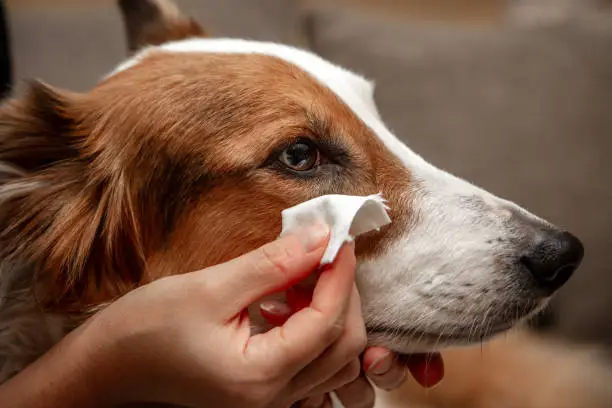
Step-by-Step Cleaning Method
Step 1: Examine the eyes first.
Before cleaning, look for redness, swelling, unusual discharge, squinting, cloudiness, or signs of pain. If any of these are present, seek veterinary advice instead of treating the problem as ordinary staining.
Step 2: Moisten the cloth.
Use clean, lukewarm water or plain sterile saline suitable for eye cleaning. The cloth should be damp rather than dripping wet.
Do not use homemade saltwater mixtures, contact-lens disinfecting solutions, or products with additional ingredients near the eyes.
Step 3: Wipe the surrounding fur gently.
Use a light touch to remove surface discharge from the fur beneath the eye. Wipe away from the eye rather than pushing debris toward it.
Never press on the eyeball, scrape the eyelid margin, or try to remove material that appears attached to the eye itself.
Step 4: Soften dried discharge.
If crust has accumulated, hold the damp cloth gently against the surrounding fur for a short time to soften it. Remove only what comes away easily.
Do not pull hard at dried material, since doing so can hurt the skin or tug on the eyelids.
Step 5: Dry the area.
Pat the fur gently with a clean, dry cloth. Keeping the surrounding hair reasonably dry helps limit ongoing moisture buildup.
Step 6: Reward your dog.
Offer praise and a small treat to make the experience more comfortable. If your dog resists, stop and try again later rather than forcing the face to be handled.
For additional guidance, see the American Kennel Club’s guide to cleaning dogs’ eyes.
How Often Should You Clean Tear Stains?
There is no universal schedule for every dog.
Some dogs need occasional cleaning, while others benefit from gentle daily maintenance because their facial hair becomes damp more easily.
Clean only as often as necessary to keep the area comfortable and free of buildup. Excessive wiping can irritate the skin, particularly if the cloth is rough or the area is already inflamed.
If the staining keeps returning despite routine cleaning, arrange a veterinary examination to investigate why the tears are accumulating.
Which Tear-Stain Products Should You Avoid?
Products marketed for tear-stain removal vary in ingredients and evidence of effectiveness. Some are designed for use on facial fur, while others may contain ingredients that are unsuitable for the eye area.
Before purchasing a tear-stain remover, read the full label and confirm that it is intended for use around dogs’ eyes. Ask your veterinarian if you are unsure about a product.
Avoid using the following without specific veterinary direction:
- Hydrogen peroxide: Can irritate or injure delicate eye tissues.
- Vinegar or lemon juice: Acidic household substances can cause irritation.
- Essential oils: Concentrated oils can be harmful and should not be used around the eyes without veterinary guidance.
- Human eye drops: Some contain ingredients that may be inappropriate for dogs or may mask an underlying condition.
- Antibiotic products used only for cosmetic staining: Unnecessary antibiotic use can contribute to antimicrobial resistance.
- Bleaching or whitening products: These may irritate the skin or eyes and should not be used close to the eye.
Even products labeled natural, organic, tearless, or pet-safe deserve scrutiny. A product’s marketing claims do not replace evidence of safety and effectiveness.
How to Prevent Dog Tear Stains
Prevention focuses on reducing unnecessary moisture, maintaining facial hygiene, and identifying the cause of excessive tearing.
It may not eliminate staining completely, particularly in dogs whose anatomy makes tear overflow more likely.
Keep the Facial Fur Clean and Dry
Gently clean the area when discharge accumulates and pat it dry afterward. Regular maintenance is usually more helpful than occasional aggressive attempts to remove established discoloration.
If the fur beneath the eyes is long enough to rub against the eyes or trap moisture, ask a qualified groomer or veterinarian to trim it safely. Do not use sharp scissors close to a moving dog’s eyes unless you have the appropriate skills.
Check for Irritation
Notice when the tearing occurs. For example, it may increase after outdoor activity, during particular seasons, or following exposure to dust.
This information can help your veterinarian determine whether environmental irritation or another trigger may be involved.
Do not give allergy medications or change prescribed treatment without veterinary guidance.
Provide a Balanced Diet
Feed a complete, balanced dog food appropriate for your dog’s life stage and health. A nutritional deficiency is not the default explanation for tear stains, and switching foods will not correct every cause of excessive tearing.
If your dog also has itching, recurrent ear problems, digestive symptoms, or other signs that could suggest a food-related issue, discuss an appropriate evaluation with your veterinarian before starting an elimination diet.
Use Clean Food and Water Bowls
Wash food and water bowls regularly. Stainless-steel or ceramic bowls are practical choices because they are easy to clean.
Providing fresh drinking water supports general health, but there is no guarantee that switching to filtered or distilled water will eliminate tear stains. Follow your veterinarian’s advice if your dog’s water source or mineral content is a concern.
Keep Up With Routine Veterinary Care
Regular checkups allow your veterinarian to assess eye health, eyelid position, tear production, and drainage when necessary.
Early assessment is especially valuable when staining appears suddenly, affects only one eye, or keeps returning despite gentle cleaning.
When Should You Take Your Dog to the Veterinarian?
This is one of the most important questions for any owner dealing with dog tear stains.
A small amount of longstanding reddish-brown staining in an otherwise comfortable dog may be a cosmetic issue. However, changes in discharge, eye appearance, or behavior can indicate a condition that needs treatment.
Seek Urgent Veterinary Attention for These Signs
Contact a veterinarian urgently if your dog develops:
- Squinting or keeping an eye closed.
- Sudden cloudiness or a visible change in the eye.
- Severe redness, swelling, or obvious pain.
- An eye injury or suspected foreign object.
- Sudden vision problems or an eye that appears displaced.
- Chemical exposure to the eye.
Eye injuries can worsen quickly, and some conditions threaten vision. Do not wait for a tear stain to improve before seeking care.
If a chemical gets into your dog’s eye, immediately rinse with clean lukewarm water or sterile saline while arranging urgent veterinary advice. Do not attempt to neutralize the chemical with another substance.
Arrange a Veterinary Appointment if You Notice
- Persistent or increasing tearing.
- Thick, yellow, green, or foul-smelling discharge.
- Repeated rubbing or pawing at the face.
- Red or irritated skin beneath the eyes.
- Recurrent staining that does not improve with gentle cleaning.
- Excessive tearing in a puppy or a dog with a history of eye problems.
One-sided tearing is particularly worth investigating because it may be associated with a local irritant, injury, eyelid problem, or blocked drainage channel.
What Will the Veterinarian Check?
Depending on your dog’s symptoms, an examination may include:
| Examination | Purpose |
|---|---|
| Eye and eyelid inspection | Looks for irritation, abnormal eyelashes, swelling, or eyelid problems |
| Tear-production testing | Checks whether the eyes are producing an appropriate amount of tears |
| Corneal examination and staining | Helps identify surface damage or an ulcer |
| Tear-drainage assessment | Investigates possible blockage or abnormal drainage |
| Additional testing | May be recommended if infection, inflammation, or another disease is suspected |
Not every dog needs every test. The veterinarian will choose the appropriate assessment based on the findings.
How Are Tear Stains Treated?
Treatment depends on the underlying cause. Cleaning the fur alone may help with visible discoloration, but it will not correct a blocked tear duct, an abnormal eyelid, or a painful eye condition.
Possible veterinary treatments include:
- Managing irritation: Identifying and addressing an environmental or physical irritant.
- Treating an eye condition: Using appropriate medication when a veterinarian diagnoses infection, inflammation, or another disorder.
- Addressing drainage problems: Investigating and, in selected cases, flushing an obstructed tear duct.
- Correcting anatomical problems: Some eyelid or drainage abnormalities may require a procedure.
- Managing secondary skin irritation: Treating inflamed skin if persistent moisture has caused a separate problem.
Do not use leftover antibiotics or medicated eye drops from another pet. The correct treatment depends on the diagnosis, and certain medications can worsen specific eye conditions.
Will Existing Tear Stains Disappear?
Cleaning can remove some surface debris, but discoloration already present in the hair may not disappear immediately.
As the stained fur grows out and is naturally replaced, the appearance may gradually improve. The rate depends on coat growth, the amount of staining, and whether excessive moisture continues.
The goal should be comfortable, healthy eyes and skin rather than achieving perfectly white fur at any cost.
Frequently Asked Questions About Dog Tear Stains
Are dog tear stains harmful?
The discoloration itself is often harmless. However, persistent tearing can indicate irritation, a drainage problem, or an eye condition, so new or worsening symptoms should be assessed.
Can I use coconut oil to remove dog tear stains?
Coconut oil has not been established as a reliable tear-stain treatment. Avoid applying it to the eye or eyelid margin, and use gentle cleaning instead. Ask your veterinarian before applying products close to the eyes.
Can I remove dog tear stains overnight?
Usually not. Surface debris may come away with gentle cleaning, but existing fur discoloration takes time to grow out. Avoid aggressive scrubbing or harsh whitening products in an attempt to speed up the process.
Why does my white dog have brown stains under its eyes?
Porphyrins in tear fluid can discolor light-colored fur when moisture repeatedly accumulates. The underlying reason for excessive tearing may be normal breed anatomy, irritation, or a tear-drainage issue.
Are tear stains a sign of infection?
Not necessarily. Tear staining can occur without infection. Redness, pain, squinting, swelling, or thick yellow or green discharge are more concerning signs that warrant veterinary assessment.
Can dog tear-stain wipes be used every day?
Some products are designed for routine use, but safety depends on the ingredients and directions. Choose a product specifically intended for the area around dogs’ eyes, keep it out of the eye itself, and stop using it if irritation develops.
Should I change my dog’s food to stop tear stains?
Not automatically. A balanced diet supports overall health, but food changes do not resolve every cause of tear staining. Discuss a dietary trial with your veterinarian if your dog has other symptoms that suggest a possible food-related problem.
Do puppies grow out of tear stains?
Some puppies experience changes as their facial features and coat mature, but persistent tearing should not simply be dismissed as something they will outgrow. A veterinary examination can help identify a drainage or eyelid issue early.
Final Thoughts
Dog tear stains can be frustrating, especially when they appear on a freshly groomed white or light-colored dog. Fortunately, mild staining can often be managed with gentle cleaning, regular grooming, and a simple routine that keeps the fur beneath the eyes clean and dry.
Coconut oil is not a proven solution for tear stains, and applying it near the eyes introduces an unnecessary risk. Avoid harsh home remedies, unverified whitening products, and medicated treatments that have not been recommended for your dog.
Most importantly, pay attention to the eyes themselves rather than focusing only on the fur. Persistent tearing, unusual discharge, redness, squinting, or discomfort deserves veterinary attention.