If your dog has ever snatched something from the grass before you could stop them, you know how quickly a harmless walk can turn into a worrying situation. Mushrooms are one of those foods that deserve extra attention because some are perfectly safe while others can be highly toxic to dogs.
So, can dogs eat mushrooms? The short answer is: it depends on the mushroom.
Plain mushrooms purchased from a grocery store and prepared appropriately are generally considered non-toxic to dogs. The bigger concern is wild mushrooms growing in yards, gardens, parks, wooded areas, or hiking trails. Some poisonous varieties can cause severe stomach problems, neurological symptoms, liver damage, kidney damage, and potentially death.
The problem is that poisonous mushrooms aren’t always easy to recognize. A mushroom that looks ordinary to you may contain dangerous toxins. Even experienced mushroom foragers can make identification mistakes, which is why veterinary experts recommend treating an unidentified wild mushroom as potentially poisonous.
In this guide, we’ll look at safe mushrooms for dogs, toxic wild mushrooms, raw versus cooked mushrooms, mushroom poisoning symptoms, and what you should do if your dog eats one.

Quick Answer: Can Dogs Eat Mushrooms?
Yes, dogs can eat certain mushrooms, but not all mushrooms are safe. Plain, grocery-store mushrooms intended for human consumption are generally considered safe for dogs when washed, prepared plainly, and served in small amounts. Wild or unidentified mushrooms should be considered potentially poisonous and should never be intentionally fed to a dog.
Here’s the important distinction:
| Type of Mushroom | Safe for Dogs? | What You Should Know |
|---|---|---|
| Plain grocery-store mushrooms | Generally yes | Give only in moderation |
| Cooked plain mushrooms | Generally yes | Avoid seasonings and sauces |
| Raw mushrooms | Better avoided | Can be difficult to digest |
| Wild mushrooms | No | Some species are highly toxic |
| Unknown mushrooms | No | Treat them as potentially poisonous |
| Mushrooms with garlic/onions | No | Garlic and onions are harmful to dogs |
| Mushroom dishes with rich sauces | Best avoided | Fat, salt, seasonings, and other ingredients can cause problems |
| Psychoactive/magic mushrooms | Dangerous | Contact a veterinarian or poison-control service |
The ASPCA also notes that grocery-store mushrooms sold for human consumption are generally considered safe for pets, while psychoactive mushrooms and mushroom-containing edibles can be dangerous.
Are Mushrooms Safe for Dogs?
For a healthy dog, a small amount of a plain, store-bought mushroom is generally not considered toxic. However, that doesn’t mean mushrooms need to become a regular part of your dog’s diet.
Dogs already receive the nutrients they need from a complete and balanced diet. Mushrooms aren’t an essential food for dogs, and there are plenty of other dog-friendly fruits and vegetables that can be offered as occasional treats.
The real concern is what happens when a dog encounters a mushroom outdoors.
If you didn’t buy the mushroom from a grocery store, don’t assume it’s safe.
Are Mushrooms Safe for Dogs?
Mushrooms are a broad group of fungi, and there are thousands of different species. Some are edible, some are mildly irritating, and others contain toxins capable of causing serious illness.
That’s why the answer to “Are mushrooms safe for dogs?” cannot simply be yes or no.
Store-Bought Mushrooms vs. Wild Mushrooms
The safest distinction for dog owners is simple:
Store-bought mushrooms are generally safer. Wild mushrooms are not.
Mushrooms sold through grocery stores for human consumption are cultivated and selected as edible varieties. Plain versions are generally considered non-toxic to dogs.
Wild mushrooms are different. They can grow unexpectedly in:
- Backyards
- Gardens
- Parks
- Fields
- Forests
- Hiking trails
- Areas containing compost
- Around rotting wood
- Lawns after periods of rain
A dog doesn’t know that a mushroom growing beside a tree could be poisonous. To an inquisitive dog, it may simply look like something interesting to sniff, lick, or eat.
Why Wild Mushrooms Are More Dangerous
The biggest problem with wild mushrooms is identification.
Some poisonous mushrooms look very similar to edible varieties. Color, shape, size, smell, and location aren’t enough for the average dog owner to confidently determine whether a mushroom is safe.
The ASPCA points out that mushrooms can be notoriously difficult to identify and recommends relying on trained professionals when identification is necessary.
Some toxic mushrooms can also produce symptoms that don’t appear immediately. A dog may look completely normal after eating one and become sick later.
That delay can create a false sense of security.
Why You Should Not Let Dogs Forage for Mushrooms
Dogs naturally investigate their environment with their noses and mouths. Unfortunately, that doesn’t mean they can safely distinguish edible fungi from poisonous ones.
There’s a common belief that animals instinctively know which mushrooms are dangerous. That’s not a safe assumption.
Dogs may eat mushrooms because of their smell, texture, or simply because they’re curious. Some toxic mushrooms can even have odors that attract dogs. The American Kennel Club specifically warns that dogs cannot be relied upon to recognize poisonous mushrooms.
For that reason, don’t encourage your dog to eat mushrooms found outdoors, even if:
- Your dog has eaten them before without getting sick.
- Another dog has eaten them.
- You think they look like an edible mushroom.
- You found the same mushroom growing elsewhere.
- The mushroom doesn’t have an unusual smell.
- Your dog isn’t showing symptoms yet.
Can Dogs Tell Which Mushrooms Are Poisonous?
No.
Dogs have an excellent sense of smell, but that doesn’t make them reliable mushroom-identification experts.
A dog may happily eat a mushroom that contains toxins. Some poisonous mushrooms may even have odors that dogs find appealing.
This is one reason training your dog to respond to “leave it” can be particularly useful during walks and outdoor play.
Why It Is Difficult to Identify Toxic Mushrooms
Mushroom identification is a specialized skill. Even humans who regularly forage for mushrooms can make mistakes.
For dog owners, trying to identify a mushroom from a quick glance isn’t a reliable safety test.
If your dog eats an unknown mushroom, don’t spend valuable time trying to determine whether it’s poisonous before contacting a veterinarian. If possible, photograph the mushroom and save a sample for professional identification while seeking veterinary guidance.
Can Dogs Eat Store-Bought Mushrooms?
Generally, yes. Plain mushrooms purchased from a grocery store are considered non-toxic to dogs.
However, there’s an important catch: the mushroom itself may be safe while the way you prepare it is not.
A plain mushroom is very different from mushrooms sautéed in butter and garlic, covered in a salty sauce, or mixed into a heavily seasoned meal.
Are Grocery Store Mushrooms Safe for Dogs?
Most common edible mushrooms sold in grocery stores are generally safe when they’re:
- Purchased from a reputable grocery store
- Washed thoroughly
- Plain
- Cooked appropriately
- Cut into manageable pieces
- Fed only occasionally
PetMD lists several common grocery-store mushrooms, including white button, cremini, portabella, baby bella, shiitake, porcini, and maitake, as mushrooms that are not considered toxic to dogs.
Still, being non-toxic doesn’t mean your dog needs mushrooms. They should be viewed as an optional treat rather than a nutritional requirement.
White Button Mushrooms
White button mushrooms are among the most common mushrooms found in grocery stores.
Plain, store-bought button mushrooms are generally considered safe for dogs. If you want to offer one occasionally, wash it and serve a small amount without seasonings, sauces, garlic, or onions.
Cremini Mushrooms
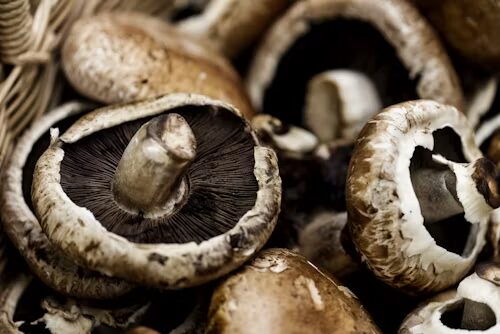
Cremini mushrooms, sometimes called baby bella mushrooms, are another commonly available edible variety.
Plain store-bought cremini mushrooms are generally considered safe for dogs. Because they can be somewhat firm, cutting them into small pieces can make them easier for a dog to eat.
Portobello Mushrooms
Portobello mushrooms are mature versions of the same general mushroom family as white button and cremini mushrooms.
A plain, grocery-store portobello mushroom is generally considered non-toxic to dogs. However, avoid giving your dog portobello mushrooms prepared with garlic butter, heavy sauces, excessive salt, or other ingredients that aren’t dog-friendly.
Shiitake Mushrooms
Shiitake mushrooms are commonly used in human cooking and are generally considered safe when purchased from a grocery store and served appropriately.
Don’t confuse a store-bought shiitake with an unidentified mushroom growing outdoors. The source matters.
Oyster Mushrooms
Plain, commercially grown oyster mushrooms are generally considered safe for dogs in small quantities.
As with other mushrooms, avoid serving them as part of a heavily seasoned human meal.
Maitake Mushrooms
Maitake mushrooms, sometimes called hen-of-the-woods, are another edible mushroom variety.
When purchased commercially and prepared plainly, they are generally considered safe. However, dogs don’t require maitake mushrooms to maintain a healthy diet.
Porcini Mushrooms
Store-bought porcini mushrooms are generally considered safe when properly prepared.
The key distinction is whether the mushroom is a commercially sold edible product or an unidentified mushroom your dog found outside.
Baby Bella Mushrooms
Baby bella mushrooms are essentially cremini mushrooms and are commonly available in supermarkets.
Plain, washed baby bella mushrooms can generally be offered in small amounts. Avoid products containing added seasonings or sauces.
Which Store-Bought Mushrooms Should Dogs Avoid?
Even when the mushroom itself is considered safe, mushroom-based foods aren’t automatically safe.
Avoid giving your dog mushrooms that have been prepared with:
- Garlic
- Onions
- Excessive salt
- Heavy sauces
- Large amounts of butter
- Rich oils
- Spicy seasonings
- Ingredients containing artificial sweeteners such as xylitol
Garlic and onions are particularly important because they are toxic to dogs.
Can Dogs Eat Raw Mushrooms?
This is where the answer becomes a little more complicated.
While commercially purchased mushrooms may not be toxic, raw or whole mushrooms aren’t the best choice for dogs. Some veterinary guidance recommends avoiding raw mushrooms because they may be difficult to digest, and certain mushroom species can contain compounds that are problematic in their raw form.
Are Raw Mushrooms Safe for Dogs?
If your dog steals a tiny piece of a plain grocery-store mushroom, there’s generally no reason to panic.
However, intentionally feeding raw or whole mushrooms isn’t recommended as a routine treat.
A safer approach is to use a commercially purchased mushroom, prepare it plainly, and cut it into small pieces.
Can Dogs Digest Raw Mushrooms?
Dogs can have difficulty digesting some raw mushrooms.
Cooking can make the food softer and easier to chew, while also making it easier for you to remove tough pieces and control the serving size.
Raw vs. Cooked Mushrooms
| Raw Mushrooms | Cooked Plain Mushrooms |
|---|---|
| Can be harder to digest | Generally easier to chew |
| Whole pieces may be a choking concern | Can be cut into small pieces |
| Not ideal as a regular treat | More practical if you choose to feed mushrooms |
| Some species may contain problematic compounds when raw | Cooking can improve digestibility |
| Avoid wild mushrooms completely | Use only commercially purchased varieties |
Why Plain Cooked Mushrooms May Be Preferable
If you decide to give your dog mushrooms, plain preparation is the key.
You don’t need to turn mushrooms into an elaborate dog treat. A small amount of appropriately prepared mushroom is enough.
Avoid the ingredients people commonly use to make mushrooms more flavorful. What’s delicious for humans isn’t necessarily appropriate for dogs.
Choking and Digestive Concerns
Large mushroom pieces can be difficult for some dogs to chew properly, particularly small dogs and puppies.
Instead of giving a whole mushroom, cut it into small, bite-sized pieces appropriate for your dog’s size.
And remember: even safe foods can cause digestive upset if a dog eats too much at once.
Can Dogs Eat Cooked Mushrooms?
If you’re wondering whether cooked mushrooms are safe for dogs, the answer is generally yes when you’re talking about plain, commercially grown mushrooms. Cooking itself isn’t the problem. The bigger issue is what the mushrooms are cooked with.
A mushroom sautéed with garlic, onion, butter, salt, or a rich sauce is very different from a plain mushroom prepared specifically for your dog.
For the safest option, keep things simple. Use a grocery-store mushroom, wash it, cook it without harmful seasonings, allow it to cool, and offer only a small amount.
Are Plain Cooked Mushrooms Safe?
Plain cooked mushrooms from the grocery store are generally considered non-toxic to dogs.
They can be chopped or sliced into small pieces and offered occasionally. However, mushrooms aren’t an essential part of a dog’s diet, so there’s no nutritional reason to feed large quantities.
If your dog has a sensitive stomach, introduce any new food gradually. Even a food that isn’t poisonous can cause gas, vomiting, diarrhea, or stomach discomfort when eaten in excess.
Can Dogs Eat Mushrooms Cooked Without Seasoning?
Yes. Plain mushrooms without added seasonings are the simplest option if you want to share a little mushroom with your dog.
You can:
- Choose a commercially grown edible mushroom.
- Wash it thoroughly.
- Remove any tough or damaged portions.
- Cook it without garlic, onion, spicy ingredients, or excessive salt.
- Let it cool.
- Cut it into small pieces.
- Give your dog a small portion.
There’s no need to add gravy or a special sauce. Dogs don’t need the extra flavorings humans typically enjoy.
Why Butter and Oil Can Be a Problem
A tiny amount of fat isn’t automatically poisonous to a dog, but fatty foods can cause digestive problems and may contribute to pancreatitis in susceptible dogs.
That’s why mushrooms cooked in large amounts of:
- Butter
- Cooking oil
- Cream
- Cheese
- Fatty sauces
are best kept away from dogs.
If your dog accidentally eats a small piece of a mushroom cooked in butter, it doesn’t necessarily mean an emergency will occur. The risk depends on the amount consumed, the dog’s health, and the other ingredients involved.
However, intentionally feeding rich mushroom dishes isn’t a good idea.
Why Garlic and Onions Are Dangerous for Dogs
This is one of the most important points for dog owners.
Garlic and onions are toxic to dogs. They belong to the Allium family and can damage red blood cells, potentially leading to anemia. Dogs can be exposed through raw, cooked, dried, powdered, or concentrated forms.
That means a plate of mushrooms cooked with garlic isn’t safe simply because the mushrooms themselves are non-toxic.
Be particularly cautious with:
- Garlic butter mushrooms
- Mushroom gravy
- Mushroom stir-fries
- Mushroom pasta
- Mushroom sauces
- Seasoned mushroom appetizers
- Restaurant mushroom dishes
If you’re unsure about the ingredients, don’t share the food.
Can Dogs Eat Mushrooms From Human Meals?
It’s usually better not to give your dog mushrooms directly from your dinner plate.
Human mushroom dishes often contain several ingredients that aren’t appropriate for dogs, including:
- Garlic
- Onion
- Salt
- Butter
- Cream
- Cheese
- Spices
- Alcohol-based sauces
- High-fat oils
Instead, if you want to give your dog mushroom as an occasional treat, prepare a small portion separately.
How to Prepare Mushrooms Safely for Dogs
Keep the preparation boring. That’s actually a good thing.
Safe preparation generally means:
- Use a commercially purchased edible mushroom.
- Wash it thoroughly.
- Cook it plainly.
- Don’t add garlic or onions.
- Avoid spicy seasonings.
- Avoid excessive salt.
- Avoid rich sauces.
- Cut it into small pieces.
- Offer a small amount.
When it comes to dogs and mushrooms, simple is safer.
Can Dogs Eat Wild Mushrooms?
No. Dogs should not intentionally eat wild mushrooms.
This is much more important than whether your dog can eat a little white button mushroom from the supermarket.
Wild mushrooms can contain toxins that cause anything from vomiting and diarrhea to seizures, liver failure, kidney damage, and death.
The tricky part is that poisonous mushrooms can look remarkably similar to non-toxic varieties. A dog owner shouldn’t rely on appearance alone to decide whether a mushroom growing outdoors is safe. (aspca.org)
If your dog eats an unidentified wild mushroom, treat the situation seriously.
Why Wild Mushrooms Are Dangerous
There are many different mushroom species, and their toxic effects vary considerably.
Some mushroom toxins primarily affect the digestive system. Others interfere with the nervous system, while some can cause severe damage to the liver or kidneys.
One of the biggest dangers is that symptoms aren’t always immediate.
A dog may eat a poisonous mushroom and appear perfectly normal for a period of time. By the time serious symptoms develop, significant internal damage may already have occurred.
That’s why waiting to see whether your dog becomes sick isn’t a safe strategy.
Mushrooms Growing in the Backyard
Your backyard can become an unexpected source of mushroom exposure.
Mushrooms may appear after:
- Heavy rain
- Warm, humid weather
- Lawn irrigation
- Decaying organic material
- Composting
- Changes in soil conditions
Dogs that spend time sniffing and digging around the yard may encounter mushrooms before their owners notice them.
Inspect your yard regularly, particularly if your dog spends a lot of time outside.
If mushrooms appear, prevent your dog from accessing the area and remove them appropriately. If you aren’t sure what you’re dealing with, consider contacting a local professional for identification or safe removal.
Mushrooms Found in the Garden
Gardens can also produce mushrooms, particularly where soil contains organic material or decomposing plant matter.
Don’t assume a mushroom is safe because it is growing among plants you know are harmless.
Your dog doesn’t need to eat a large mushroom to potentially become sick. Since the species may be unknown, any wild mushroom ingestion deserves veterinary attention.
Mushrooms Found on Walks and Hiking Trails
Hiking is a wonderful activity for dogs, but wooded trails can expose them to mushrooms they don’t normally encounter at home.
Keep an eye on your dog around:
- Fallen logs
- Damp soil
- Leaf litter
- Shaded woodland
- Rotting vegetation
- Areas with lots of fungi
A well-trained “leave it” command can be extremely useful.
If your dog is a determined scavenger, keeping them on a leash in areas where mushrooms are abundant can provide an additional layer of protection.
Mushrooms Growing Near Trees or Compost
Mushrooms often grow where organic material is breaking down.
This can include areas around:
- Trees
- Tree roots
- Mulch
- Compost piles
- Decaying leaves
- Fallen branches
- Wood chips
Compost deserves special attention because it may contain more than mushrooms. Dogs attracted to compost can potentially consume spoiled food, moldy material, or other substances that cause illness.
Should You Remove Mushrooms From Your Yard?
If mushrooms are growing where your dog can reach them, prevent access and remove them rather than allowing your dog to investigate them.
Don’t allow your dog to taste-test mushrooms while you try to identify them.
If you’re concerned that your yard repeatedly produces mushrooms, speak with a gardening or lawn-care professional about the safest way to manage them.
What to Do if Your Dog Eats a Wild Mushroom
If your dog eats a wild, unidentified, or potentially poisonous mushroom, contact your veterinarian or an animal poison-control service promptly.
Don’t wait for vomiting, diarrhea, tremors, or other symptoms to appear.
If possible:
- Remove your dog from the area.
- Prevent further ingestion.
- Take clear photographs of the mushroom.
- If it can be done safely, preserve a sample for identification.
- Note where the mushroom was growing.
- Estimate how much your dog may have eaten.
- Record approximately when the ingestion occurred.
- Contact a veterinarian immediately.
Toxic Mushrooms That Are Dangerous to Dogs
Not every poisonous mushroom causes the same type of illness. Some contain toxins that attack the liver, while others primarily affect the nervous system.
Below are several mushroom groups associated with poisoning in dogs.
Amanita Mushrooms
Amanita mushrooms are among the most important toxic mushrooms to know about.
Certain species contain powerful toxins that can cause severe gastrointestinal illness and potentially liver failure.
One major concern is that a dog may initially appear to improve after early stomach symptoms. That apparent improvement doesn’t necessarily mean the danger has passed.
Some Amanita toxins can cause serious organ damage later.
Death Cap Mushroom (Amanita phalloides)
The death cap mushroom is particularly notorious because it contains toxins capable of causing severe liver injury.
Early symptoms may include:
- Vomiting
- Diarrhea
- Abdominal discomfort
- Weakness
- Loss of appetite
The dangerous feature is that serious liver damage may develop after the initial gastrointestinal symptoms.
If you suspect your dog has eaten a death cap mushroom or any unidentified Amanita species, seek veterinary care immediately.
Death Angel Mushroom
Death angel mushrooms, which are also associated with deadly Amanita species, can contain potent liver-damaging toxins.
Their appearance can vary, and attempting to identify a mushroom by appearance alone is unsafe.
For dog owners, the practical rule is much simpler:
An unidentified mushroom is not worth the gamble.
Fly Agaric (Amanita muscaria)
The fly agaric mushroom is recognizable by its distinctive appearance in many regions, but it can still pose a serious poisoning risk.
Unlike some mushrooms that primarily cause liver damage, Amanita muscaria is associated with neurological effects.
A poisoned dog may develop abnormal behavior, agitation, weakness, lack of coordination, tremors, or other neurological signs.
Galerina Mushrooms
Some Galerina mushrooms contain amatoxins, the same general class of highly dangerous toxins associated with severe liver injury in certain Amanita mushrooms.
This illustrates why mushroom identification is so difficult.
A small wild mushroom doesn’t have to look dramatic or threatening to be dangerous.
False Morel (Gyromitra)
False morels, associated with the Gyromitra group, can cause gastrointestinal and neurological illness.
They are particularly relevant because some species can resemble edible morel mushrooms.
This is another reason dog owners should never assume that a mushroom is safe because it resembles something they recognize.
Inocybe Mushrooms
Some Inocybe mushrooms contain muscarine, a toxin that can produce excessive salivation and gastrointestinal and neurological symptoms.
Affected dogs may develop signs such as:
- Drooling
- Vomiting
- Diarrhea
- Abdominal discomfort
- Urination
- Weakness
- Breathing changes
Rapid veterinary evaluation is important when poisoning is suspected.
Clitocybe Mushrooms
Certain Clitocybe mushrooms can also contain muscarine and cause a similar cholinergic-type poisoning pattern.
The signs can develop relatively quickly and may include excessive secretions, gastrointestinal upset, weakness, and changes in breathing or heart rate.
Again, identifying the mushroom at home isn’t a safe substitute for professional advice.
False Parasol Mushroom
The false parasol mushroom (Chlorophyllum molybdites) is known for causing gastrointestinal illness.
Dogs that consume it may experience:
- Vomiting
- Diarrhea
- Abdominal pain
- Drooling
- Loss of appetite
- Lethargy
While gastrointestinal poisoning may be less catastrophic than liver failure, severe vomiting and diarrhea can still lead to dehydration and other complications.
Why Some Toxic Mushrooms Cause Liver Failure
Certain mushroom toxins, particularly amatoxins, can severely damage liver cells.
The liver plays a central role in processing substances throughout the body. When toxins interfere with liver function, the consequences can become life-threatening.
A dog may initially experience vomiting and diarrhea, followed by a period when it appears somewhat better. Later, severe liver injury may develop.
This delayed pattern is one of the reasons “my dog seems fine” is not enough reassurance after a suspected poisonous mushroom ingestion.
Why Some Mushrooms Affect the Nervous System
Some mushroom toxins primarily affect the brain and nervous system.
Depending on the toxin, a dog may develop:
- Disorientation
- Abnormal behavior
- Restlessness
- Weakness
- Poor coordination
- Tremors
- Seizures
- Extreme sleepiness
Neurological symptoms should always be treated as a veterinary concern.
Why Some Mushrooms Cause Kidney Damage
Certain toxic mushrooms can cause kidney injury or kidney failure.
The kidneys help remove waste products from the bloodstream and regulate important fluids and minerals. Severe toxin-related kidney damage can therefore have widespread effects.
Because kidney injury may not be obvious immediately, veterinary monitoring can be important even when a dog initially looks normal.
Symptoms of Mushroom Poisoning in Dogs
The symptoms of mushroom poisoning vary depending on the species of mushroom, toxin involved, amount consumed, and individual dog.
Some dogs develop gastrointestinal signs first. Others may develop neurological symptoms, while certain poisonings can cause delayed organ damage.
Early Symptoms
Possible early signs include:
- Vomiting
- Diarrhea
- Drooling
- Abdominal pain
- Loss of appetite
- Weakness
- Lethargy
These symptoms aren’t unique to mushroom poisoning. A dog can vomit or have diarrhea for many different reasons.
But if you know or suspect that your dog recently ate a wild mushroom, these symptoms become much more concerning.
Neurological Symptoms
Some toxic mushrooms affect the nervous system.
Watch for:
- Stumbling
- Loss of coordination
- Disorientation
- Tremors
- Seizures
- Abnormal behavior
- Extreme sleepiness
- Agitation
A dog displaying seizures, severe weakness, difficulty breathing, collapse, or other serious neurological symptoms requires urgent veterinary care.
Severe Symptoms
Severe mushroom poisoning may result in:
- Jaundice
- Severe weakness
- Liver injury or failure
- Kidney injury or failure
- Difficulty breathing
- Seizures
- Collapse
- Coma
- Death
The specific signs depend heavily on the toxin.
How Quickly Do Mushroom Poisoning Symptoms Appear?
There’s no single timeline for mushroom poisoning.
Some toxins can cause signs relatively quickly, while others may have a delayed onset.
That means you shouldn’t use the absence of immediate symptoms to decide that your dog is safe.
Can Symptoms Be Delayed?
Yes.
This is one of the most important things to understand about toxic mushroom exposure.
Some mushrooms can initially cause vomiting or diarrhea, followed by a period when symptoms appear to improve. Serious organ damage may occur later.
Other toxins produce neurological signs more quickly.
Because the timing varies, a veterinarian should assess a suspected poisoning rather than relying on a symptom timeline found online.
Why You Shouldn’t Wait for Symptoms
Waiting can reduce the opportunity for early intervention.
If your dog eats an unidentified mushroom, the safest approach is to contact a veterinarian promptly, even if your dog is behaving normally.
When it comes to potentially poisonous mushrooms, early professional advice is far safer than waiting to see what happens.
What Should You Do If Your Dog Eats a Mushroom?
Finding your dog chewing on a mushroom in the yard can be frightening. The first thing to remember is that not every mushroom is poisonous, but you usually cannot determine safety just by looking at it.
If the mushroom was wild, unidentified, or potentially toxic, treat the situation seriously. Don’t wait for your dog to become sick before seeking professional advice.
Step 1: Stay Calm
Try not to panic. Your dog needs you to act quickly and clearly.
Move your dog away from the area so they cannot eat additional mushrooms. If there are several mushrooms nearby, prevent further access while you determine what to do next.
Step 2: Remove Any Remaining Mushroom
If there is a mushroom in your dog’s mouth and you can safely remove it, do so.
Don’t put your fingers deep into your dog’s mouth, especially if they are frightened or resisting.
Also check the surrounding area for additional mushrooms so you can tell the veterinarian whether your dog may have consumed more than one.
Step 3: Contact Your Veterinarian Immediately
If your dog has eaten a wild or unknown mushroom, contact your veterinarian as soon as possible.
Tell them:
- Your dog’s approximate weight
- The type of mushroom, if known
- Where the mushroom was found
- Approximately how much was eaten
- When the ingestion occurred
- Whether your dog is showing symptoms
Your veterinarian can determine whether your dog needs to be examined immediately.
Step 4: Contact an Animal Poison-Control Service if Recommended
Depending on your location and your veterinarian’s advice, you may also be directed to an animal poison-control service.
Poison specialists can help evaluate the potential toxin and provide guidance to the veterinary team.
The important thing is not to delay professional advice while trying to identify the mushroom yourself.
Step 5: Save a Sample of the Mushroom
If it is safe to do so, save a sample of the mushroom your dog ate.
Place it in a container or bag according to your veterinarian’s instructions. Don’t handle an unknown mushroom unnecessarily with bare hands.
A physical sample can potentially help experts identify the mushroom.
Take Photos of the Mushroom
Take clear photographs of:
- The top of the mushroom
- The underside
- The stem
- The surrounding area
- Any other mushrooms growing nearby
Photographs may provide useful information to a veterinarian or mushroom-identification expert.
Record Where the Mushroom Was Found
The location can sometimes provide useful clues.
Make a note if it was growing:
- In grass
- Near a tree
- In mulch
- In compost
- In a garden
- Near rotting wood
- Along a hiking trail
Tell the Vet Approximately How Much Your Dog Ate
You probably won’t know the exact amount, and that’s okay.
Tell the veterinarian your best estimate.
For example, explain whether your dog:
- Took one bite
- Ate an entire mushroom
- Ate several mushrooms
- May have eaten mushrooms but you aren’t sure
The dog’s size and the suspected amount can help the veterinary team assess the situation.
Don’t Wait for Symptoms
This deserves repeating:
Do not wait for symptoms before contacting a veterinarian after suspected wild-mushroom ingestion.
Some toxic mushrooms can cause delayed illness. A dog that appears normal immediately after eating a mushroom may still be at risk.
Don’t Assume a Mushroom Is Safe Because Your Dog Looks Fine
Dogs can hide signs of illness, and some mushroom toxins have delayed effects.
Likewise, don’t assume that because your dog ate a similar-looking mushroom previously without a problem, today’s mushroom is safe.
Different mushroom species can have dramatically different effects.
Can Mushroom Poisoning Kill Dogs?
Unfortunately, yes, mushroom poisoning can be fatal in dogs.
The risk depends on the mushroom species, toxin, amount consumed, size and health of the dog, and how quickly treatment begins.
Some toxic mushrooms mainly cause temporary gastrointestinal upset, while others can cause severe neurological problems or irreversible organ damage.
When Mushroom Poisoning Becomes Life-Threatening
Mushroom poisoning becomes particularly dangerous when toxins affect vital organs such as the:
- Liver
- Kidneys
- Brain
- Nervous system
Severe dehydration from vomiting and diarrhea can also contribute to complications.
Which Toxins Can Cause Liver Failure?
Certain mushrooms, particularly some Amanita species, contain amatoxins capable of causing severe liver injury.
This type of poisoning can follow a deceptive pattern. Early stomach symptoms may improve temporarily, while liver damage continues developing underneath.
That’s why suspected Amanita ingestion should be treated as an emergency.
Kidney Damage
Certain mushroom toxins can cause kidney injury.
Kidney damage may not be obvious to a dog owner at first because early signs can be subtle. Veterinary blood and urine testing can help determine whether the kidneys are being affected.
Neurological Complications
Some mushrooms produce toxins that affect the brain and nervous system.
Possible complications include:
- Tremors
- Seizures
- Severe disorientation
- Loss of coordination
- Abnormal behavior
- Collapse
These signs require immediate veterinary attention.
Why Early Treatment Matters
The sooner a potential poisoning is evaluated, the sooner a veterinarian can determine the appropriate course of action.
Treatment may be more effective when exposure is recognized early, particularly when the mushroom has the potential to cause serious organ damage.
Can Dogs Recover From Mushroom Poisoning?
Yes, some dogs recover, especially when exposure is identified quickly and appropriate veterinary treatment is provided.
However, recovery isn’t guaranteed.
Dogs exposed to highly toxic mushrooms may develop severe organ damage despite treatment. Prognosis depends on the specific toxin, dose, timing, symptoms, and response to treatment.
How Veterinarians Diagnose Mushroom Poisoning in Dogs
Diagnosing mushroom poisoning isn’t always straightforward.
The veterinarian may not immediately know what species your dog consumed, particularly if the mushroom was partially chewed or no sample remains.
Medical History
Your veterinarian will ask questions about:
- When the ingestion occurred
- Where the mushroom was found
- How much may have been eaten
- Your dog’s size and age
- Existing health conditions
- Current medications
- Any symptoms that have developed
Providing accurate information can help the veterinarian make decisions quickly.
Identifying the Mushroom
If you have a sample or photographs, they may be useful for identification.
However, mushroom identification can be difficult, and a photograph may not always be enough.
The veterinary team may consult a qualified mushroom expert or toxicology resource when necessary.
Physical Examination
Your dog may receive a thorough examination to check for:
- Heart rate changes
- Breathing abnormalities
- Dehydration
- Abdominal discomfort
- Neurological abnormalities
- Weakness
- Changes in mental status
Blood Tests
Blood testing can help veterinarians evaluate the dog’s overall condition and look for evidence of organ injury.
Depending on the suspected toxin, repeated testing may be necessary.
Liver and Kidney Testing
Because certain mushroom toxins can damage the liver or kidneys, veterinarians may monitor:
- Liver enzymes
- Bilirubin
- Kidney markers
- Electrolytes
- Hydration status
- Other blood chemistry values
Repeated testing can be particularly important when the toxin is known to cause delayed organ damage.
Monitoring for Delayed Organ Damage
A dog may look normal immediately after ingestion while still being at risk.
Veterinarians may therefore recommend observation or follow-up testing based on the suspected mushroom and exposure.
Why Mushroom Identification Can Be Difficult
Mushrooms change as they mature. Their appearance can also vary depending on weather, soil, location, and stage of development.
A partially eaten mushroom is even harder to identify.
That’s why don’t rely on a quick internet image search to decide whether your dog’s mushroom was poisonous.

How Is Mushroom Poisoning Treated in Dogs?
Treatment depends on the suspected mushroom, toxin, amount consumed, time since ingestion, and your dog’s clinical condition.
There isn’t one universal treatment for mushroom poisoning.
Decontamination
If the ingestion was recent, a veterinarian may consider measures designed to reduce further absorption of the toxin.
The appropriate method depends on the circumstances.
Inducing Vomiting Under Veterinary Supervision
In some poisoning situations, a veterinarian may recommend inducing vomiting.
Never make your dog vomit on your own unless a veterinarian or qualified poison professional specifically tells you to do so.
Some situations make vomiting dangerous, and the wrong method can cause additional injury.
Activated Charcoal
Veterinarians may use activated charcoal for certain poison exposures because it can bind some toxins in the gastrointestinal tract.
Whether it is appropriate depends on the specific toxin and circumstances.
IV Fluids
Intravenous fluids may be used to:
- Correct dehydration
- Maintain circulation
- Support kidney function
- Correct electrolyte abnormalities
- Provide supportive care
The exact treatment plan depends on the dog’s condition.
Medications and Supportive Care
Depending on symptoms, treatment may include medications for:
- Vomiting
- Gastrointestinal irritation
- Seizures
- Tremors
- Pain
- Other complications
Liver Support
When a mushroom is suspected of causing liver injury, veterinarians may use treatments intended to support liver function and manage complications.
Dogs with severe liver damage may require intensive hospitalization and monitoring.
Seizure and Neurological Treatment
If mushroom toxins cause tremors or seizures, veterinary professionals can provide appropriate medications and monitoring.
Neurological poisoning should never be managed with home remedies.
Hospital Monitoring
Dogs with potentially serious mushroom poisoning may need hospitalization.
Monitoring can allow veterinarians to watch for changes in:
- Neurological status
- Liver function
- Kidney function
- Hydration
- Blood glucose
- Electrolytes
- Overall condition
Are Mushrooms Good for Dogs?
Mushrooms contain nutrients that can be useful in a human diet, but that doesn’t mean dogs need them.
For most dogs, the priority should be a complete and balanced diet formulated to meet their nutritional requirements.
Nutritional Benefits of Mushrooms
Edible mushrooms can contain:
- Fiber
- Protein
- B vitamins
- Minerals
- Antioxidant compounds
- Water
The exact nutritional profile depends on the mushroom variety and preparation.
Protein
Mushrooms contain some protein, but they shouldn’t be considered a major protein source for dogs.
Dogs require nutritionally complete sources of protein and other essential nutrients that are better supplied through properly formulated dog food.
Fiber
Mushrooms contain dietary fiber, which can contribute to normal digestive function.
However, adding mushrooms isn’t necessary simply to increase your dog’s fiber intake.
There are many other foods and veterinary-formulated diets that can provide fiber when appropriate.
Vitamins and Minerals
Different mushrooms provide different amounts of nutrients such as B vitamins, copper, potassium, and other minerals.
However, a healthy dog eating a complete diet generally doesn’t need mushrooms to obtain these nutrients.
Antioxidants
Mushrooms contain various antioxidant compounds.
This has contributed to interest in mushrooms as a human health food and in some pet supplements. However, it’s important not to confuse potential nutritional properties with proven medical benefits for dogs.
Do Dogs Actually Need Mushrooms?
No.
Mushrooms are not a necessary component of a dog’s diet.
If your dog enjoys a small amount of plain, commercially grown mushroom and tolerates it well, it can be an occasional treat. But there’s no reason to force mushrooms into your dog’s meals.
Are Mushrooms Better Than Other Dog-Safe Vegetables?
Not necessarily.
If you’re looking for healthy occasional treats, many vegetables can be easier to prepare and offer.
Depending on your dog’s individual diet and health needs, options may include:
- Carrots
- Green beans
- Broccoli
- Pumpkin
- Certain types of bell pepper
Before adding significant amounts of any new food, especially for a dog with dietary restrictions, speak with your veterinarian.
How to Feed Mushrooms to Dogs Safely
If you’ve decided to offer your dog a small amount of mushroom, focus on source, preparation, portion size, and simplicity.
Choose Grocery-Store Mushrooms
Use mushrooms that were commercially grown and sold as food.
Never substitute a wild mushroom simply because it resembles a grocery-store variety.
Wash Them Thoroughly
Wash commercially purchased mushrooms before preparing them for your dog.
Remove dirt and debris, and discard mushrooms that appear spoiled.
Cook Them Plain
Plain cooking is the easiest approach.
Avoid turning mushrooms into a rich human-style dish.
Avoid Salt and Seasonings
Dogs don’t need heavily seasoned food.
Large amounts of salt aren’t appropriate for dogs, and some seasoning blends may contain ingredients that are harmful to them.
Avoid Garlic and Onions
This is particularly important.
Garlic, onions, and related Allium ingredients should not be included in your dog’s mushroom treat.
Avoid Butter-Heavy Preparations
Large amounts of butter or oil can make a treat unnecessarily fatty and may cause digestive problems in some dogs.
Cut Mushrooms Into Small Pieces
Small pieces are easier to chew and can reduce the risk of gulping down a large chunk.
This is especially important for:
- Small dogs
- Puppies
- Dogs that eat quickly
Start With a Small Amount
When introducing a new food, don’t give your dog a large serving.
Start with a small amount and observe how your dog responds.
Treat Mushrooms as an Occasional Treat
Mushrooms should remain an occasional addition, not a replacement for your dog’s normal balanced food.
Treats and extras should make up only a limited portion of the overall diet.
Ask Your Veterinarian Before Introducing New Foods
Dogs with:
- Food allergies
- Digestive problems
- Liver disease
- Kidney disease
- Pancreatitis
- Prescription diets
may have different nutritional requirements.
When in doubt, ask your veterinarian before introducing mushrooms.
Can Dogs Eat Different Types of Mushrooms?
Here’s a quick reference for common mushroom varieties:
| Mushroom | Generally Safe for Dogs? | Important Consideration |
|---|---|---|
| White button | Yes, plain/store-bought | Small amounts |
| Cremini | Yes, plain/store-bought | Avoid seasoning |
| Portobello | Yes, plain/store-bought | Serve plainly |
| Shiitake | Generally yes, store-bought | Avoid sauces |
| Oyster | Generally yes, store-bought | Plain preparation |
| Maitake | Generally yes, store-bought | Small amounts |
| Porcini | Generally yes, store-bought | Don’t confuse with wild varieties |
| Baby bella | Yes, plain/store-bought | Similar to cremini |
| Wild mushroom | No | Potentially toxic |
| Unknown mushroom | No | Treat as potentially poisonous |
| Magic/psychoactive mushroom | Dangerous | Contact a veterinarian or poison service |
The key takeaway is that the source matters as much as the mushroom name. A commercially cultivated mushroom intended for human consumption is very different from an unidentified mushroom your dog finds in the yard. (aspca.org)
Can Dogs Eat Mushrooms With Garlic or Onions?
No, mushroom dishes containing garlic or onions should not be given to dogs.
This is an easy mistake because garlic and onions are extremely common ingredients in mushroom recipes.
Why Garlic Is Dangerous for Dogs
Garlic contains compounds that can damage a dog’s red blood cells.
Large or concentrated exposures can be particularly concerning, and garlic powder may also be present in seasoning mixes and processed foods.
Why Onions Are Dangerous for Dogs
Onions can also damage red blood cells and contribute to anemia.
They can be present in:
- Fresh onions
- Cooked onions
- Onion powder
- Sauces
- Gravies
- Seasoning blends
So don’t assume cooking makes onions safe.
Mushroom Soup and Dogs
Mushroom soup is generally not a good food to share with dogs.
Commercial and homemade mushroom soups may contain:
- Onion
- Garlic
- Salt
- Cream
- Butter
- High levels of fat
- Seasonings
A plain mushroom is one thing. A bowl of creamy mushroom soup is another.
Mushroom Sauce and Dogs
Mushroom sauce often contains butter, cream, salt, garlic, onion, or other seasonings.
It’s best to keep these sauces off your dog’s menu.
Garlic Butter Mushrooms and Dogs
Avoid them.
The mushroom may be safe, but garlic is toxic to dogs, while the butter adds unnecessary fat.
Mushroom Pizza and Dogs
Mushroom pizza isn’t an appropriate dog treat.
Besides mushrooms, pizza may contain:
- Garlic
- Onion
- Cheese
- Salt
- Fat
- Spices
- Processed meats
Don’t assume removing the mushroom pieces makes the rest of the pizza safe.
Creamy Mushroom Dishes and Dogs
Cream-based mushroom dishes are generally too rich for dogs.
High-fat foods can cause digestive upset and may increase the risk of pancreatitis in susceptible dogs.
Can Puppies Eat Mushrooms?
Puppies can technically eat certain plain, commercially grown mushrooms, but there is little reason to introduce them.
Puppies need carefully balanced nutrition to support rapid growth and development.
Are Mushrooms Safe for Puppies?
Plain grocery-store mushrooms aren’t generally considered toxic, but puppies can have sensitive digestive systems.
A new food may cause:
- Loose stool
- Gas
- Vomiting
- Stomach discomfort
Why Puppies May Be More Sensitive to New Foods
Puppies are still developing and often have less tolerance for sudden dietary changes.
Their meals should primarily consist of an appropriate complete puppy food.
Should You Give Mushrooms to a Puppy?
There’s no nutritional requirement to do so.
If your veterinarian says a small amount is appropriate, offer only a plain commercially grown mushroom prepared without harmful ingredients.
Safer Treat Alternatives for Puppies
Depending on your puppy’s diet and veterinarian’s advice, small amounts of appropriate puppy treats or simple dog-safe foods may be easier options.
Keep treats limited so they don’t displace the balanced nutrition your puppy needs.
Can Senior Dogs Eat Mushrooms?
Older dogs may be able to eat small amounts of plain grocery-store mushrooms, but their individual health matters more than their age alone.
Mushrooms and Older Dogs
A healthy senior dog may tolerate a small mushroom treat.
However, older dogs are more likely to have conditions requiring dietary management.
Dogs With Sensitive Stomachs
If your senior dog frequently experiences diarrhea, vomiting, or digestive upset, introducing new foods may not be worthwhile.
Dogs With Liver or Kidney Problems
Because some mushroom toxins can severely affect the liver and kidneys, mushroom exposure is particularly concerning for dogs that already have organ disease.
Don’t add mushrooms or mushroom supplements without discussing them with your veterinarian.
Dogs on Prescription Diets
If your dog eats a prescription diet, don’t routinely add extras without veterinary approval.
Even seemingly harmless treats can interfere with carefully controlled nutrition.
Why You Should Ask Your Veterinarian First
Your veterinarian knows your dog’s health history, medications, weight, and nutritional needs.
That makes them the best person to determine whether a particular food is appropriate.
Can Dogs Eat Mushroom Supplements?
This question is different from asking whether dogs can eat ordinary culinary mushrooms.
Mushroom supplements are concentrated products, and they may contain extracts or combinations of mushroom species that aren’t equivalent to eating a small piece of a grocery-store mushroom.
What Are Medicinal Mushrooms?
Medicinal mushrooms are mushrooms or mushroom extracts marketed for potential health benefits.
Some products intended for pets contain varieties such as:
- Reishi
- Lion’s mane
- Turkey tail
- Cordyceps
- Chaga
Reishi Mushrooms
Reishi is commonly used in supplements marketed for immune and general wellness support.
However, supplement claims don’t automatically mean that a product is necessary or proven to treat a specific disease in dogs.
Lion’s Mane Mushrooms
Lion’s mane has attracted attention because of research involving neurological and cognitive health.
However, evidence from laboratory or human research shouldn’t automatically be interpreted as proof that a supplement will provide the same benefits to dogs.
Turkey Tail Mushrooms
Turkey tail is another mushroom commonly found in pet supplements.
Research into its potential applications in veterinary medicine is ongoing, but supplements should be considered separately from ordinary food.
Cordyceps
Cordyceps products are marketed for various wellness purposes.
Because supplements can differ considerably in concentration and ingredients, consult your veterinarian before giving one to your dog.
Chaga
Chaga is another mushroom used in some supplements.
Its concentrated form isn’t the same as offering a small piece of a culinary mushroom.
Are Mushroom Supplements Safe for Dogs?
Not every mushroom supplement is automatically safe.
Safety depends on:
- Mushroom species
- Extract concentration
- Other ingredients
- Product quality
- Your dog’s health
- Medications your dog takes
- Intended dose
Mushroom Supplements vs. Whole Mushrooms
Whole culinary mushrooms are foods.
Mushroom extracts and supplements can contain much more concentrated compounds.
That distinction is important.
Should Dogs Take Medicinal Mushroom Supplements?
Don’t give your dog a mushroom supplement simply because it’s advertised as a natural health product.
If you’re considering one for a specific health concern, talk with your veterinarian first.
What to Look for in a Dog-Specific Supplement
If your veterinarian recommends a supplement, choose a product appropriate for dogs and follow professional dosing advice.
Avoid products with unclear ingredient lists or unsupported medical claims.
How to Prevent Mushroom Poisoning in Dogs
Prevention is much easier than dealing with a poisoning emergency.
Check Your Backyard Regularly
Walk around your yard and look for mushrooms, especially after wet weather.
Remove Wild Mushrooms Safely
Keep your dog away while mushrooms are being removed.
If you’re uncertain about identification or safe removal, contact an appropriate local professional.
Supervise Dogs Outdoors
Don’t assume a fenced yard eliminates every risk.
Dogs can quickly find and consume things their owners haven’t noticed.
Keep Dogs Away From Compost
Compost can contain mushrooms, mold, spoiled food, and other potentially hazardous materials.
Use secure compost containers that your dog cannot access.
Watch Dogs During Hiking
Stay alert around wooded areas, damp soil, and decaying vegetation.
Teach a “Leave It” Command
A strong leave-it command can help prevent dogs from eating mushrooms and other outdoor hazards.
Practice it regularly in controlled situations so your dog is more likely to respond when something tempting appears.
Keep Mushrooms Out of Reach in the Kitchen
Store fresh mushrooms where your dog cannot get to them.
Also keep cooked mushroom dishes off counters and tables where an opportunistic dog can steal them.
Be Extra Careful During Mushroom-Growing Seasons
Mushrooms can appear rapidly under favorable conditions.
After rain or during periods of warm, damp weather, check areas your dog frequently explores.
Mushrooms vs. Other Foods Dogs Can Eat
If you’re researching human foods for dogs, remember that mushrooms are only one option.
You may also want to learn about:
- Can dogs eat broccoli?
- Can dogs eat carrots?
- Can dogs eat green beans?
- Can dogs eat bell peppers?
- Can dogs eat spinach?
- Can dogs eat sweet potatoes?
- Can dogs eat pumpkin?
- Can dogs eat apples?
Regardless of the food, moderation matters. Treats should complement—not replace—a nutritionally complete canine diet.
Frequently Asked Questions About Dogs and Mushrooms
Can dogs eat mushrooms?
Yes, dogs can generally eat small amounts of plain, commercially grown mushrooms, but wild and unidentified mushrooms should be avoided because some can be poisonous.
Are cooked mushrooms safe for dogs?
Plain cooked grocery-store mushrooms are generally considered safe. Avoid mushrooms cooked with garlic, onions, excessive salt, butter, rich sauces, or other potentially harmful ingredients.
Can dogs eat raw mushrooms?
It’s better to offer mushrooms cooked plainly rather than raw. Raw mushrooms can be harder to digest, and wild mushrooms should never be given to dogs.
Can dogs eat white mushrooms?
Yes. Plain, store-bought white button mushrooms are generally considered non-toxic to dogs when offered in moderation.
Can dogs eat button mushrooms?
Yes, plain commercially grown button mushrooms are generally safe for dogs in small amounts.
Can dogs eat portobello mushrooms?
Plain, store-bought portobello mushrooms are generally considered safe. Avoid versions prepared with garlic, onions, butter, or rich sauces.
Can dogs eat shiitake mushrooms?
Plain, commercially grown shiitake mushrooms are generally considered safe for dogs when given in small amounts.
Can dogs eat cremini mushrooms?
Yes, plain store-bought cremini mushrooms are generally considered non-toxic to dogs.
Can dogs eat oyster mushrooms?
Commercially grown oyster mushrooms are generally considered safe when properly prepared and served plain.
Can dogs eat wild mushrooms?
No. Dogs should not eat wild mushrooms because some species contain potentially deadly toxins and many cannot be reliably identified by appearance.
What happens if my dog eats a mushroom?
It depends on the mushroom. A plain grocery-store mushroom may cause no problem, while a toxic wild mushroom can cause vomiting, diarrhea, neurological symptoms, liver damage, kidney damage, or worse.
If the mushroom was wild or unidentified, contact your veterinarian promptly.
How do I know if a mushroom is poisonous to my dog?
You generally cannot determine this safely by appearance alone. If your dog eats an unidentified wild mushroom, treat it as potentially poisonous and seek professional advice.
What are the signs of mushroom poisoning in dogs?
Possible signs include vomiting, diarrhea, drooling, abdominal pain, weakness, lethargy, stumbling, tremors, seizures, abnormal behavior, jaundice, and collapse.
How long does mushroom poisoning take to show symptoms in dogs?
The timeline varies significantly depending on the toxin. Some symptoms can appear quickly, while serious effects from certain toxins may be delayed.
Can one mushroom kill a dog?
Potentially, yes. Some highly toxic mushrooms contain potent toxins, and the risk depends on the species, amount eaten, and dog’s size and health.
Should I make my dog vomit after eating a mushroom?
Do not induce vomiting unless a veterinarian or qualified poison professional specifically instructs you to do so.
Should I take the mushroom to the vet?
If your dog ate a wild or unidentified mushroom, save a sample if it can be done safely and bring it according to your veterinarian’s instructions. Photos can also be useful.
Are mushroom stems safe for dogs?
For a commercially grown edible mushroom, the stem isn’t generally considered toxic. However, large or tough pieces may be difficult to chew, so cutting mushrooms into small pieces is preferable.
Can dogs eat mushrooms cooked with butter?
It’s best to avoid feeding dogs mushrooms prepared with large amounts of butter. High-fat foods can cause digestive problems and may increase pancreatitis risk in susceptible dogs.
Can dogs eat mushrooms cooked with garlic?
No. Garlic is toxic to dogs, so mushrooms cooked with garlic should not be intentionally fed to them.
Can dogs eat mushroom soup?
It’s best to avoid mushroom soup because it commonly contains garlic, onion, salt, cream, butter, and other ingredients that aren’t appropriate for dogs.
Are medicinal mushrooms safe for dogs?
Some mushroom supplements are formulated for dogs, but they aren’t automatically safe or necessary. Discuss medicinal mushroom products with your veterinarian before using them.
Can puppies eat mushrooms?
A small amount of plain store-bought mushroom isn’t generally considered toxic, but puppies don’t need mushrooms in their diet. Their primary nutrition should come from an appropriate complete puppy food.
Conclusion
So, can dogs eat mushrooms? Yes—but only certain mushrooms and only when they’re prepared appropriately.
Plain, commercially grown mushrooms such as white button, cremini, portobello, shiitake, oyster, and other common grocery-store varieties are generally considered non-toxic to dogs when offered in small amounts. They aren’t necessary for a balanced canine diet, though, so there’s no need to make mushrooms a regular part of your dog’s meals.
The situation changes completely when it comes to wild mushrooms. A mushroom growing in your backyard, garden, park, or hiking trail could contain dangerous toxins, and it’s often impossible to determine whether it’s poisonous simply by looking at it.