If your dog has ever watched you prepare dinner with those big, hopeful eyes, you probably know the feeling: “Can I give my dog a little of this?” When cauliflower is on the menu, the answer is generally reassuring.
Yes, dogs can eat cauliflower in moderation. Plain cauliflower is considered safe and nontoxic for dogs, and it can provide useful nutrients such as fiber, vitamin C, vitamin K, and several minerals. However, that doesn’t mean your dog should eat a whole bowl of cauliflower or share your seasoned side dish.
Cauliflower is a popular human vegetable because it is relatively low in calories and versatile. People roast it, mash it, turn it into rice, add cheese and sauces, or season it with garlic and spices. Unfortunately, many of those human preparations aren’t suitable for dogs.
The safest approach is surprisingly simple: wash the cauliflower, cut it into appropriately sized pieces, serve it plain, and start with a small amount. You can offer it raw or lightly cooked, depending on what your dog tolerates best.
It’s also worth remembering that vegetables are extras rather than nutritional necessities for most dogs. A complete and balanced dog food should remain the foundation of the diet, while treats—including vegetables—should be offered in moderation. Veterinary sources commonly recommend keeping treats to around 10% or less of a dog’s daily calorie intake.
In this guide, we’ll look at whether cauliflower is safe for dogs, its potential benefits, appropriate serving sizes, raw versus cooked cauliflower, cauliflower stems and leaves, puppies, cauliflower rice, possible digestive problems, and which preparations you should avoid.

Quick Answer: Can Dogs Eat Cauliflower?
Yes, dogs can eat plain cauliflower in moderation.
Cauliflower isn’t considered toxic to dogs. In small portions, it can make a crunchy, low-calorie occasional treat. It contains fiber, vitamin C, vitamin K, vitamin B6, folate, potassium, manganese, magnesium, phosphorus, choline, and antioxidants.
That said, cauliflower isn’t a necessary part of a dog’s diet. Too much can cause gas, bloating, loose stool, diarrhea, or general stomach discomfort, largely because cauliflower contains a fair amount of fiber and can be fermented in the digestive tract.
Featured Snippet Answer
Can dogs eat cauliflower? Yes. Dogs can safely eat small amounts of plain cauliflower, either raw or cooked. Cauliflower is low in calories and provides fiber, vitamins, minerals, and antioxidants. However, too much can cause gas, bloating, diarrhea, or stomach discomfort. Always serve it plain and avoid cauliflower prepared with garlic, onion, heavy seasoning, butter, or rich sauces.
Is Cauliflower Safe for Dogs?
Is Cauliflower Toxic to Dogs?
No, plain cauliflower is generally nontoxic to dogs.
But there’s an important distinction between “not toxic” and “safe to eat without limits.”
Even healthy foods can cause problems when a dog eats too much. Think about cauliflower as you would any other treat: a little can be perfectly reasonable, while a huge serving may leave your dog with a noisy stomach and an unpleasant night of gas.
The way cauliflower is prepared also matters.
Plain cauliflower is one thing. Cauliflower covered in garlic butter, cheese sauce, onion seasoning, or large amounts of salt is something completely different.
So, when offering cauliflower to your dog, aim for:
- Plain cauliflower
- Small, bite-sized pieces
- Raw or lightly cooked
- No garlic
- No onion
- No heavy sauces
- No spicy seasoning
- No excessive butter or oil
Can Dogs Eat Cauliflower Every Day?
Technically, a small amount of cauliflower may not cause a problem in an otherwise healthy dog, but there is little reason to make cauliflower an everyday staple.
Dogs have different nutritional requirements from humans. A properly formulated complete dog food should provide the protein, fat, vitamins, minerals, and other nutrients your dog needs.
Cauliflower should therefore be thought of as an occasional treat or food topper, not a replacement for regular dog food.
There is another reason to avoid large daily servings: cauliflower’s fiber can cause digestive problems when consumed in excess. Dogs that tolerate a few small pieces may develop gas or loose stool after eating considerably more.
The American Kennel Club similarly notes that vegetables can be offered as treats but should remain additions rather than replacements for a balanced canine diet.
When Can Cauliflower Be Unsafe for Dogs?
Cauliflower itself may be safe, but several situations can make feeding it a poor choice.
1. Your dog eats a very large amount
A large serving can overwhelm your dog’s digestive system and lead to:
- Gas
- Bloating
- Loose stool
- Diarrhea
- Abdominal discomfort
- Temporary loss of appetite
2. The pieces are too large
Large florets or tough pieces can be difficult to chew and may create a choking or obstruction risk, especially for small dogs and dogs that tend to gulp their food.
Cut cauliflower into pieces appropriate for your dog’s size.
3. Your dog has a sensitive stomach
Some dogs simply don’t tolerate cruciferous vegetables very well. One dog might happily crunch cauliflower with no problems, while another may become noticeably gassy after only a few pieces.
Individual tolerance matters.
4. The cauliflower contains unsafe ingredients
This is one of the biggest concerns with human-style cauliflower dishes.
Garlic and onions, for example, are toxic to dogs. The ASPCA lists both as dangerous because Allium species can cause gastrointestinal irritation and damage to red blood cells.
5. Your dog is on a prescription diet
If your veterinarian has prescribed a therapeutic diet, don’t assume a “healthy” vegetable is automatically appropriate.
Some prescription diets are carefully formulated for conditions involving the kidneys, urinary tract, gastrointestinal system, allergies, or other health concerns. Adding foods without veterinary approval can interfere with the intended nutritional plan.
Is Cauliflower Good for Dogs?
Nutritional Benefits of Cauliflower for Dogs
Cauliflower isn’t just crunchy and low in calories. It contains several nutrients that can contribute to a dog’s overall diet when offered in small amounts.
Here’s what some of these nutrients do:
| Nutrient | Potential Role |
|---|---|
| Fiber | Supports normal digestive function |
| Vitamin C | Functions as an antioxidant and supports normal body functions |
| Vitamin K | Important for normal blood clotting and bone metabolism |
| Vitamin B6 | Involved in normal metabolism and nervous-system function |
| Folate | Helps with normal cell growth and metabolism |
| Potassium | Important for muscles, nerves, and fluid balance |
| Magnesium | Supports muscles, nerves, and numerous metabolic processes |
| Phosphorus | Important for bones and energy metabolism |
| Manganese | Involved in metabolism and antioxidant defenses |
| Choline | Supports normal cellular and nervous-system functions |
| Antioxidants | Help protect cells from oxidative damage |
The key word here is supplementary.
Your dog doesn’t need cauliflower to obtain these nutrients. A complete and balanced commercial or properly formulated diet should already provide the nutrition your dog needs.
Cauliflower is simply one possible whole-food treat.
Is Cauliflower a Low-Calorie Treat for Dogs?
One of cauliflower’s biggest attractions is its low-calorie nature.
If your dog loves begging for table scraps, replacing calorie-heavy human foods with a few pieces of plain cauliflower can be a better option.
For example, giving your dog a small piece of plain cauliflower is very different from handing over a bite of:
- Fried food
- Cheese
- Fatty meat
- Creamy casserole
- Butter-covered vegetables
- Sugary desserts
However, low calorie doesn’t mean unlimited.
Treats still count. If you give a dog lots of cauliflower throughout the day, the extra food can add up, and the high fiber content may cause digestive problems.
For dogs needing weight management, vegetables can sometimes be useful as low-calorie treats, but weight loss should still be approached with a veterinarian’s guidance.
Can Cauliflower Help Dogs Lose Weight?
Cauliflower can be useful as an occasional lower-calorie treat, but it isn’t a weight-loss treatment.
If your dog is overweight, simply adding cauliflower to the existing diet won’t necessarily cause weight loss. What matters is the dog’s total calorie intake, activity level, body condition, and overall nutritional plan.
A few pieces of cauliflower can replace a higher-calorie treat, which may help reduce unnecessary calories.
For example, instead of sharing part of your buttery dinner with your dog, you could offer a couple of pieces of plain cauliflower.
That’s a much more sensible approach than feeding large quantities of vegetables.
If your dog needs to lose weight, your veterinarian can help determine an appropriate calorie target and feeding plan.
Can Cauliflower Support a Dog’s Digestion?
Cauliflower contains dietary fiber, and fiber plays an important role in normal digestive function.
A moderate amount of fiber can help support healthy stool formation and normal intestinal movement.
But there’s a catch: more fiber isn’t always better.
Too much cauliflower can have the opposite effect and cause:
- Gas
- Flatulence
- Bloating
- Loose stool
- Diarrhea
This is why portion size matters so much.
If your dog has never eaten cauliflower before, don’t start with a handful. Give a tiny amount and see how your dog responds.
Does Cauliflower Provide Antioxidants for Dogs?
Yes. Cauliflower contains several compounds with antioxidant properties, along with plant compounds such as sulforaphane.
Antioxidants help protect cells from oxidative stress and are part of a healthy diet.
Still, it’s important not to oversell what cauliflower can do.
Cauliflower isn’t a medicine, immune-system cure, or substitute for veterinary treatment. A few florets won’t suddenly transform your dog’s health.
Think of antioxidants as one small piece of the nutritional puzzle. The bigger picture is a complete, balanced diet, appropriate exercise, regular veterinary care, and a healthy body weight.
Can Dogs Eat Raw Cauliflower?
Is Raw Cauliflower Safe for Dogs?
Yes, most healthy dogs can eat small amounts of raw cauliflower.
Raw cauliflower can make a crunchy snack, and some dogs enjoy the texture.
Before giving it to your dog:
- Wash the cauliflower thoroughly.
- Remove damaged areas.
- Separate the florets.
- Cut them into small pieces.
- Give your dog a small amount first.
The main concern with raw cauliflower isn’t toxicity. It’s digestibility and size.
A large raw floret can be harder to chew, especially for a small dog or a dog that tends to swallow food quickly.
Benefits and Drawbacks of Raw Cauliflower
Benefits
- Crunchy texture that many dogs enjoy
- No cooking required
- Convenient occasional snack
- Naturally low in calories
- Contains fiber and various nutrients
Potential Drawbacks
- May be harder for some dogs to digest
- Can contribute to gas
- Large pieces may pose a choking concern
- Excessive amounts can cause digestive upset
If your dog has a sensitive stomach, lightly cooking the cauliflower may make it easier to tolerate.
Can Dogs Eat Frozen Cauliflower?
Plain frozen cauliflower can be appropriate, but it’s important to check the package.
Some frozen vegetable products contain added:
- Salt
- Butter or oils
- Sauces
- Garlic
- Onion
- Seasoning blends
Those ingredients can turn an otherwise dog-friendly vegetable into an unsuitable food.
Also consider the size and hardness of frozen pieces. A large, rock-hard floret isn’t a good choice for a dog that gulps food.
If you’re using frozen cauliflower, plain, appropriately sized pieces that have been thawed or cooked are a simpler option.
Can Dogs Eat Cooked Cauliflower?
Is Plain Cooked Cauliflower Safe?
Yes. Plain cooked cauliflower is generally safe for dogs when served in moderation.
Cooking can soften the vegetable, making it easier for some dogs to chew and digest.
Good preparation methods include:
- Steaming
- Light boiling
- Plain baking
The important part is what you don’t add.
Keep the cauliflower simple.
A little plain steamed cauliflower is much more suitable for your dog than a creamy cauliflower casserole loaded with butter, cheese, salt, garlic, and onion.
What Is the Best Way to Cook Cauliflower for Dogs?
Steaming is one of the simplest choices.
Here’s an easy method:
- Wash the cauliflower.
- Separate the florets.
- Cut large pieces into smaller portions.
- Steam until tender.
- Let the cauliflower cool completely.
- Cut or break it into dog-sized pieces.
- Give your dog a small amount.
You don’t need to make cauliflower exciting for your dog. In fact, plain is better.
Dogs don’t need the sauces, spices, and rich toppings that make human vegetables more flavorful.
The AKC also notes that processing vegetables can help break down their cell walls and may make certain vegetables easier to digest.
Can Dogs Eat Cauliflower Cooked With Butter?
It’s best to avoid butter.
Butter isn’t considered a toxic food for dogs in the way onions and garlic are, but it adds unnecessary fat and calories. Rich foods can also cause digestive upset in some dogs.
If you’re preparing cauliflower for the entire family, set aside your dog’s portion before adding butter, sauces, or seasonings.
That simple habit makes sharing vegetables much safer.
Can Dogs Eat Cauliflower With Salt and Pepper?
A tiny accidental amount of plain table seasoning isn’t necessarily an emergency, but salt and heavily seasoned cauliflower should not become a regular dog treat.
Dogs don’t need added salt on their vegetables.
Pepper and spicy seasonings may also irritate a sensitive stomach, while seasoning blends can contain ingredients that are much more concerning than pepper itself.
The safest rule is easy to remember:
If you’re preparing cauliflower for your dog, leave it plain.
Can Dogs Eat Cauliflower Cooked With Garlic?
No.
Plain cauliflower may be safe, but cauliflower cooked with garlic is a different story.
Garlic belongs to the Allium family, and the ASPCA identifies garlic as toxic to dogs. Exposure can cause gastrointestinal signs and damage to red blood cells, potentially resulting in anemia.
This includes more than fresh garlic. Garlic powder and other concentrated garlic products should also be avoided.
So don’t give your dog:
- Garlic-roasted cauliflower
- Garlic butter cauliflower
- Garlic-seasoned cauliflower
- Cauliflower with garlic powder
- Garlic cream sauce containing cauliflower
If you want to share cauliflower, remove your dog’s portion before adding garlic.
Can Dogs Eat Cauliflower Cooked With Onion?
No.
Onions are also toxic to dogs. The ASPCA lists onion as toxic and notes that exposure can cause gastrointestinal irritation and red blood cell damage.
That means your dog shouldn’t eat cauliflower prepared with:
- Fresh onion
- Fried onion
- Onion powder
- Onion seasoning
- Onion-based sauces
Be especially careful with casseroles and prepared side dishes because onion powder can be easy to overlook on an ingredient label.
Can Dogs Eat Cauliflower Florets?
Are Cauliflower Florets Safe for Dogs?
Yes, plain cauliflower florets are generally safe for dogs when given in moderation.
The florets are the part most people think about when they picture cauliflower, and they’re also one of the easiest parts to prepare for your dog. You can serve them raw or lightly cooked, provided they are washed properly and cut into manageable pieces.
The biggest issue isn’t the floret itself. It’s how much your dog eats and how large the pieces are.
A Labrador that calmly chews a couple of small florets is very different from a tiny dog that swallows one enormous chunk without chewing.
For a safer serving:
- Choose fresh cauliflower.
- Wash it thoroughly.
- Remove any damaged or spoiled sections.
- Separate the florets.
- Cut large florets into smaller pieces.
- Serve them plain.
- Supervise your dog while eating.
If your dog is trying cauliflower for the first time, start with one small piece rather than an entire serving.
How Big Should Cauliflower Pieces Be?
There’s no single piece size that works for every dog.
A small dog needs smaller pieces than a large dog. The pieces should be easy for your dog to chew and swallow rather than something that could become lodged in the throat.
For toy and small breeds, finely chopped cauliflower may be preferable. Medium and large dogs can generally handle somewhat larger pieces, but you should still avoid giving them huge chunks.
Dogs that gulp their food deserve extra caution.
If your dog routinely swallows treats without chewing, cutting cauliflower into smaller pieces can reduce the risk of choking.
A useful rule is:
The smaller the dog or the faster the eater, the smaller the cauliflower pieces should be.
Can Dogs Eat Cauliflower Stems?

Are Cauliflower Stems Safe for Dogs?
Yes, cauliflower stems can generally be eaten by dogs.
Many owners simply throw the stems away, but there’s no need to waste them if they’re fresh and properly prepared.
The stem contains fiber and other nutrients, just like the rest of the vegetable. However, stems are usually firmer and tougher than the florets, which makes preparation particularly important.
Instead of giving your dog a large raw stem, try:
- Washing it thoroughly.
- Removing any tough outer sections if necessary.
- Cutting it into small pieces.
- Lightly steaming it to soften the texture.
- Allowing it to cool before serving.
Some dogs will happily crunch through a small piece of stem, while others may find it difficult to chew.
Can Cauliflower Stems Cause a Blockage?
A large piece of tough vegetable can potentially become a choking or gastrointestinal obstruction concern, especially in small dogs, puppies, and dogs that gulp their food.
This doesn’t mean cauliflower stems are inherently dangerous. Rather, it means that size and texture matter.
Watch for concerning signs after your dog eats an unusually large piece of vegetable, including:
- Repeated vomiting
- Loss of appetite
- Significant abdominal discomfort
- Lethargy
- Difficulty passing stool
- A swollen or painful abdomen
If you suspect your dog has swallowed something that could cause an obstruction, contact your veterinarian promptly rather than waiting for symptoms to become severe.
Can Dogs Eat Cauliflower Leaves?
Are Cauliflower Leaves Safe for Dogs?
Yes, cauliflower leaves can generally be offered in small amounts when they are fresh, clean, and properly prepared.
The leaves aren’t toxic to dogs, but they’re usually tougher and more fibrous than the florets.
That makes preparation particularly important.
You can:
- Wash the leaves thoroughly.
- Remove damaged portions.
- Cut them into small pieces.
- Steam them until tender if desired.
- Let them cool.
- Serve a small amount plain.
As with florets and stems, don’t assume that because a vegetable is safe, your dog can eat unlimited quantities.
How to Prepare Cauliflower Leaves for Dogs
If you want to make use of the leaves, follow these simple steps:
- Wash thoroughly to remove dirt and residue.
- Remove damaged areas or wilted sections.
- Chop the leaves into small pieces.
- Steam or lightly cook them if your dog has trouble digesting raw vegetables.
- Allow them to cool completely.
- Serve them plain.
- Start with a tiny portion the first time.
There’s no need to add butter, salt, garlic, onion, cheese, or sauces.
Can Puppies Eat Cauliflower?
Is Cauliflower Safe for Puppies?
Puppies can potentially eat tiny amounts of plain cauliflower, but their situation is slightly different from that of adult dogs.
Growing puppies have higher and more specific nutritional requirements. Their main food should be a complete and balanced puppy diet appropriate for their age and expected adult size.
Vegetables are optional extras.
A small piece of cauliflower can be an occasional treat for a puppy that is old enough to eat solid foods, but it shouldn’t displace nutritionally complete puppy food.
Puppies also tend to explore the world with their mouths. That means they may swallow food quickly, making piece size especially important.
How Much Cauliflower Can a Puppy Eat?
When introducing cauliflower to a puppy:
- Start with one tiny piece.
- Make sure it is soft enough to chew.
- Cut raw cauliflower very finely.
- Don’t introduce several new foods at once.
- Watch for gas, diarrhea, or vomiting.
- Keep treats limited.
If your puppy develops digestive problems after eating cauliflower, stop offering it and speak with your veterinarian if symptoms persist or are severe.
For very young puppies, puppies with digestive problems, or puppies following a veterinary diet, it’s particularly sensible to discuss new foods with your veterinarian first.
Can Puppies Eat Raw Cauliflower?
They can potentially tolerate small amounts, but raw cauliflower may be more difficult for some puppies to chew and digest.
If you want to try it, finely chop a small amount and supervise your puppy while eating.
Lightly steamed cauliflower can be a gentler option because cooking softens the vegetable.
For puppies that gulp food, cooked and finely chopped cauliflower may be preferable to a large raw floret.
How Much Cauliflower Can Dogs Eat?
Why Portion Size Matters
When it comes to cauliflower, moderation is one of the most important rules.
Cauliflower contains fiber and other compounds that can be beneficial in appropriate quantities. But too much can overwhelm your dog’s digestive system.
Eating an excessive amount may lead to:
- Gas
- Flatulence
- Bloating
- Loose stool
- Diarrhea
- Abdominal discomfort
- Temporary appetite changes
Your dog’s size matters, but size isn’t the only factor.
A 10-pound dog and a 90-pound dog obviously don’t need the same amount of food. But two dogs of the same size can also have very different tolerances.
One may happily eat cauliflower without any problems. Another may become gassy after just a few bites.
That’s why serving recommendations should be treated as starting points rather than exact prescriptions.
Cauliflower Serving Size by Dog Weight
The following table provides a general starting point for occasional cauliflower treats:
| Dog Size | Approximate Weight | General Cauliflower Portion |
|---|---|---|
| Extra-small | 2–20 lb | 1–2 small pieces |
| Small | 21–30 lb | Up to 3 small pieces |
| Medium | 31–50 lb | About 5–6 small pieces |
| Large | 51–90 lb | A small handful |
| Extra-large | 91+ lb | A somewhat larger handful |
These amounts are general guidance, not universal veterinary prescriptions. Your dog’s overall diet, calorie requirements, health status, and individual tolerance should always be considered.
If you’re unsure how much your particular dog should receive, your veterinarian can help you determine an appropriate treat portion.
How Often Can Dogs Eat Cauliflower?
For most healthy dogs, cauliflower is best treated as an occasional snack rather than an everyday food.
You might offer a few pieces:
- As an occasional treat
- Mixed into a meal
- As a training reward
- Alongside other dog-safe vegetables
There’s no nutritional requirement for a dog to eat cauliflower every day.
If your dog loves it, you can rotate it with other dog-friendly vegetables such as carrots, green beans, cucumber, or zucchini.
This provides variety without relying heavily on one food.
Can Dogs Eat Too Much Cauliflower?
Yes.
Even though cauliflower is generally safe, too much can cause digestive upset.
A dog that gets into a large container of cauliflower may experience:
- Excessive gas
- Bloating
- Loose stool
- Diarrhea
- Vomiting
- Abdominal discomfort
- Reduced appetite
If your dog eats a large quantity but remains completely normal, monitor closely and contact your veterinarian if you are concerned.
If the cauliflower contained garlic, onion, or another toxic ingredient, the situation is different. In that case, contact a veterinarian promptly rather than assuming the cauliflower itself is the only issue.
Can Cauliflower Cause Gas in Dogs?
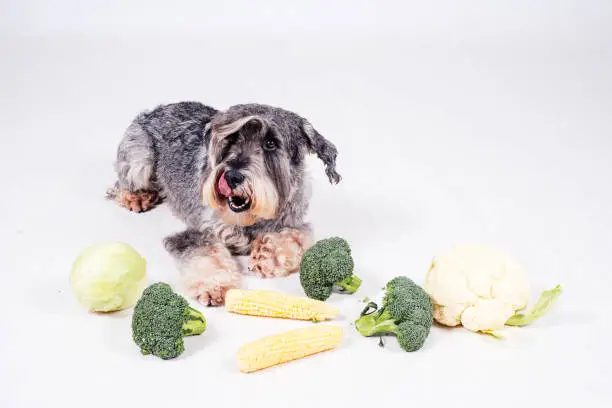
Why Does Cauliflower Make Dogs Gassy?
If you’ve ever eaten a large serving of cauliflower yourself, you probably already understand the problem.
Cauliflower can cause gas in dogs because it contains fiber and fermentable carbohydrates.
Gut bacteria break down some of these compounds during digestion, which can produce gas.
Some dogs are particularly sensitive.
Your dog may be more likely to develop gas after cauliflower if:
- They eat a large portion.
- They aren’t accustomed to vegetables.
- The food is introduced suddenly.
- They have a sensitive digestive system.
- They eat very quickly.
So if your dog suddenly starts producing enough gas to clear the room after discovering your cauliflower leftovers, the vegetable may be the culprit.
How to Reduce Gas After Feeding Cauliflower
You don’t necessarily need to remove cauliflower permanently after one episode of mild gas.
Instead, try changing how you serve it.
Start Small
Don’t give your dog a large serving the first time.
Begin with a tiny amount and observe the response.
Chop It Finely
Smaller pieces are easier to chew and can be easier for some dogs to handle.
Try Light Cooking
Lightly steaming cauliflower may make it easier for some dogs to digest than raw cauliflower.
Avoid Combining Several New Foods
If you introduce cauliflower, don’t introduce broccoli, pumpkin, a new treat, and a new dog food at the same time.
Otherwise, if your dog develops diarrhea, you won’t know which food caused it.
Keep Portions Modest
More isn’t necessarily better.
A few pieces can be enough.
Can Cauliflower Cause Diarrhea or Vomiting in Dogs?
Why Too Much Cauliflower Can Upset a Dog’s Stomach
Cauliflower can cause digestive upset for several reasons.
The most common is simply eating too much.
A sudden increase in fiber can alter stool consistency, while unfamiliar foods can irritate the digestive tract of sensitive dogs.
Potential causes include:
- Excess fiber
- Large portions
- Sudden dietary changes
- Individual food intolerance
- Eating cauliflower with rich ingredients
- Eating other unfamiliar foods at the same time
A small amount of plain cauliflower may be perfectly fine, while a large amount can produce a very different result.
Symptoms to Watch For
After introducing cauliflower, keep an eye on your dog for:
- Gas
- Bloating
- Loose stool
- Diarrhea
- Vomiting
- Abdominal discomfort
- Changes in appetite
Mild gas or one soft stool may resolve once the food passes through the digestive system.
However, more serious or persistent symptoms shouldn’t automatically be blamed on cauliflower.
When Should You Call a Veterinarian?
Contact your veterinarian if your dog experiences:
- Persistent or repeated vomiting
- Severe or repeated diarrhea
- Blood in the stool
- Significant abdominal pain
- Marked lethargy
- Loss of appetite
- A swollen or distended abdomen
- Difficulty passing stool
- Signs of a possible intestinal obstruction
The same advice applies if your dog ate cauliflower containing onion, garlic, or another potentially toxic ingredient.
If you’re unsure whether your dog’s symptoms are serious, it’s safer to call your veterinarian for personalized advice.
Can Dogs Eat Cauliflower Rice?
Is Plain Cauliflower Rice Safe for Dogs?
Yes, plain cauliflower rice can be a dog-friendly food in small amounts.
Cauliflower rice is simply cauliflower that has been chopped into small, rice-like pieces.
In fact, its small size can make portion control easy.
You can offer:
- Plain raw cauliflower rice
- Plain steamed cauliflower rice
- Plain cooked cauliflower rice
However, always check what has been added.
Commercial cauliflower rice products may contain seasonings, oils, sauces, onion, or garlic.
The ingredient list matters.
Can Dogs Eat Frozen Cauliflower Rice?
Plain frozen cauliflower rice can potentially be given to dogs after it has been appropriately thawed or cooked.
Avoid products containing:
- Garlic
- Onion
- Onion powder
- Garlic powder
- Heavy sauces
- Excessive salt
- Spices
A frozen vegetable blend isn’t necessarily equivalent to plain frozen cauliflower.
Always read the label.
Is Cauliflower Rice Better Than Regular Rice for Dogs?
Not necessarily.
Cauliflower rice and regular rice have different nutritional profiles, so calling one universally “better” for dogs would be misleading.
Cauliflower generally provides more fiber and is relatively low in calories, while rice is a carbohydrate-rich food commonly included in some canine diets.
Neither should replace a complete and balanced dog food simply because it sounds healthier.
If your dog needs a special diet for gastrointestinal disease, allergies, diabetes, kidney disease, or another condition, follow your veterinarian’s recommendations instead of making dietary substitutions yourself.
Can Dogs Eat Mashed Cauliflower?
Is Plain Mashed Cauliflower Safe?
Yes, plain mashed cauliflower can be an occasional dog treat.
It can be especially convenient for dogs that don’t enjoy crunchy vegetables.
The important word is plain.
Human mashed cauliflower often contains:
- Butter
- Cream
- Cheese
- Salt
- Garlic
- Onion
- Seasoning
Those additions aren’t necessary for dogs.
If you’re making mashed cauliflower for the family, simply remove a portion for your dog before adding the extras.
You can mash the cooked cauliflower with a fork and let it cool before serving.
Can Dogs Eat Cauliflower Mash Made With Milk?
It’s better to avoid adding milk simply to make cauliflower more appealing.
Some dogs don’t digest lactose well, and dairy products can cause:
- Gas
- Loose stool
- Diarrhea
- Stomach discomfort
Milk also adds calories that your dog doesn’t need.
If your dog enjoys cauliflower, plain mashed cauliflower is enough.
Can Dogs Eat Cauliflower Cheese?
Is Cauliflower Cheese Safe for Dogs?
Traditional cauliflower cheese is generally not a good choice for dogs.
The cauliflower itself isn’t the problem. The problem is everything that tends to accompany it.
A typical human cauliflower cheese recipe may contain:
- Cheese
- Butter
- Milk
- Cream
- Flour
- Salt
- Garlic
- Onion
- Rich sauces
High-fat foods can cause digestive upset, while onion and garlic can be toxic to dogs.
So don’t scoop a spoonful of your dinner onto your dog’s food bowl just because it contains cauliflower.
Instead, reserve a few plain florets before preparing the human dish.
What If My Dog Ate Cauliflower Cheese?
First, don’t panic.
Try to determine:
- How much was eaten?
- What ingredients were in it?
- Did it contain onion or garlic?
- Was it particularly fatty?
- Is your dog showing symptoms?
If it was a tiny accidental taste of plain cauliflower cheese and your dog remains normal, monitor them.
If the dish contained onion or garlic, your dog ate a substantial quantity, or symptoms such as vomiting, diarrhea, weakness, or abdominal discomfort develop, contact your veterinarian.
How to Prepare Cauliflower for Dogs Safely
Preparing cauliflower for a dog doesn’t need to be complicated.
The best approach is usually the simplest one.
Step 1 — Wash the Cauliflower
Rinse the vegetable thoroughly under clean running water.
This helps remove:
- Dirt
- Soil
- Surface contaminants
- Potential pesticide residue
Don’t feed visibly dirty or spoiled cauliflower to your dog.
Step 2 — Separate the Florets
Break the cauliflower into manageable pieces.
Remove any brown, slimy, or spoiled sections.
You can keep the stems and leaves if they’re fresh and you intend to prepare them properly.
Step 3 — Cut Into Small Pieces
This is particularly important for:
- Toy breeds
- Small dogs
- Puppies
- Dogs that gulp food
- Dogs with poor chewing habits
The pieces should be small enough that your dog can comfortably chew them.
Step 4 — Steam or Cook if Desired
You can serve cauliflower raw, but lightly steaming is a simple alternative.
Avoid adding:
- Butter
- Oil
- Salt
- Garlic
- Onion
- Cheese
- Cream
- Spices
Plain is best.
Step 5 — Let It Cool
Never give your dog freshly cooked vegetables that are hot enough to burn the mouth.
Allow the cauliflower to cool to a comfortable temperature before serving.
Step 6 — Start With a Small Amount
If cauliflower is new to your dog, give only a tiny portion.
Then observe.
If your dog remains comfortable and has normal stool, cauliflower can occasionally be included as a treat.
What Not to Add to Cauliflower for Dogs
| Ingredient | Safe for Dogs? | Why Avoid It? |
|---|---|---|
| Garlic | No | Toxic to dogs |
| Onion | No | Toxic to dogs |
| Onion powder | No | Concentrated onion |
| Garlic powder | No | Concentrated garlic |
| Butter | Best avoided | Adds unnecessary fat and calories |
| Heavy cream | Best avoided | Rich and may cause GI upset |
| Cheese sauce | Best avoided | Often high in fat and salt |
| Excess salt | No | Dogs don’t need heavily salted vegetables |
| Spicy seasoning | Best avoided | May irritate the digestive tract |
What Happens If a Dog Eats a Lot of Cauliflower?
Most cases of overeating plain cauliflower are likely to involve digestive upset rather than poisoning.
The amount consumed and your dog’s individual tolerance matter.
Common Symptoms
A dog that eats too much cauliflower may develop:
- Gas
- Flatulence
- Bloating
- Diarrhea
- Vomiting
- Abdominal discomfort
- Temporary appetite changes
If the cauliflower was plain and your dog is otherwise acting normally, monitor them closely.
However, don’t assume every symptom is harmless.
Signs of a Possible Blockage
Large pieces of cauliflower, stems, or other foods can potentially cause an obstruction.
Watch for:
- Repeated vomiting
- Significant abdominal pain
- Loss of appetite
- Lethargy
- Difficulty passing stool
- A distended abdomen
These signs warrant veterinary attention.
What to Do if Your Dog Eats Too Much Cauliflower
If you discover your dog has eaten a large amount:
- Stay calm.
- Estimate approximately how much was consumed.
- Determine whether it was raw, cooked, frozen, or seasoned.
- Check the ingredients for garlic or onion.
- Monitor your dog’s behavior and digestion.
- Contact your veterinarian if your dog develops significant symptoms or consumed a substantial quantity.
Don’t induce vomiting unless a veterinarian specifically tells you to do so.
If toxic ingredients were involved, tell the veterinarian exactly what your dog ate and approximately how much.
Which Dogs Should Be Careful With Cauliflower?
Although cauliflower is generally safe, some dogs need extra caution.
Dogs With Sensitive Stomachs
Dogs with sensitive digestive systems may experience gas or diarrhea after eating cauliflower.
If your dog frequently reacts to new foods, introduce cauliflower particularly slowly—or skip it altogether.
Dogs Prone to Digestive Problems
Dogs with a history of chronic gastrointestinal problems may have more specific dietary needs.
Don’t assume that a vegetable that’s safe for most dogs will automatically be appropriate for your dog.
Follow your veterinarian’s dietary recommendations.
Overweight Dogs
Cauliflower can potentially be a lower-calorie treat, making it appealing for dogs that need to watch their calorie intake.
However, portion control still matters.
Don’t simply replace regular food with large amounts of vegetables.
A veterinarian can help establish an appropriate weight-loss plan.
Dogs on Prescription Diets
If your dog eats a prescription or therapeutic diet, ask your veterinarian before adding cauliflower.
Prescription diets are designed around specific nutritional goals. Additional foods may interfere with those goals.
Dogs With Existing Health Conditions
Dogs with kidney disease, gastrointestinal disease, food allergies, metabolic disorders, or other medical conditions may require individualized diets.
When in doubt, ask your veterinarian before introducing cauliflower.
Cauliflower for Dogs With Allergies
Can Dogs Be Allergic to Cauliflower?
Dogs can develop food allergies, although cauliflower isn’t generally considered one of the most common canine food allergens.
It’s important to distinguish an allergy from an intolerance.
An intolerance may primarily cause digestive symptoms, while an allergic reaction can involve immune-mediated signs such as itching and skin problems.
Signs of a Food Reaction
Possible signs include:
- Itching
- Red or irritated skin
- Recurrent ear problems
- Vomiting
- Diarrhea
- Changes in stool
- Excessive licking or scratching
These symptoms can have many causes, so don’t automatically diagnose a cauliflower allergy based on one episode of itching or diarrhea.
What to Do if Your Dog Reacts to Cauliflower
If you notice a consistent reaction after eating cauliflower:
- Stop feeding it.
- Note how much your dog ate.
- Record any other new foods or treats.
- Monitor symptoms.
- Contact your veterinarian if symptoms are significant or persistent.
Don’t repeatedly feed a suspected trigger simply to “test” the reaction. A veterinarian can recommend the appropriate diagnostic approach if a food allergy is suspected.
Cauliflower vs. Other Vegetables for Dogs
Cauliflower isn’t the only vegetable that can be offered to dogs. In fact, rotating between several dog-friendly vegetables can give your pet variety without relying too heavily on one food.
However, every vegetable has its own nutritional profile and potential drawbacks. Some are naturally easier on the stomach than others.
| Vegetable | Generally Safe? | Main Benefit | Main Concern |
|---|---|---|---|
| Cauliflower | Yes, in moderation | Fiber, vitamins, low calories | Gas and bloating |
| Broccoli | Yes, small amounts | Fiber and nutrients | Gas/GI upset |
| Carrots | Yes | Fiber and beta-carotene | Portion size |
| Green beans | Yes | Fiber and low calories | Serve plain |
| Cucumber | Yes | Water and low calories | Large pieces |
| Zucchini | Yes | Low calories and nutrients | Excess may upset stomach |
| Spinach | Small amounts/caution | Vitamins and minerals | Oxalates |
| Kale | Small amounts/caution | Vitamins and fiber | Oxalates/GI upset |
| Brussels sprouts | Small amounts | Fiber and nutrients | Gas |
| Cabbage | Small amounts | Fiber and nutrients | Gas |
The key point is that “dog-safe vegetable” doesn’t mean “unlimited vegetable.” Even nutritious foods should fit appropriately into your dog’s overall diet.
What Vegetables Can Dogs Eat Instead of Cauliflower?
If cauliflower makes your dog excessively gassy—or your dog simply doesn’t like it—you have plenty of alternatives.
Carrots
Carrots are one of the most popular vegetables for dogs.
They can be served raw or cooked, depending on your dog’s chewing ability.
Carrots provide:
- Fiber
- Beta-carotene
- Vitamins
- A crunchy texture many dogs enjoy
For small dogs, carrots should be cut into manageable pieces to reduce choking risk.
Green Beans
Plain green beans can make an excellent occasional treat.
They’re relatively low in calories and provide fiber, making them useful for owners looking for alternatives to calorie-dense treats.
Avoid green beans prepared with:
- Butter
- Salt
- Garlic
- Onion
- Rich sauces
Plain fresh, steamed, or appropriately prepared green beans are the better option.
Cucumbers
Cucumber is mostly water, making it a refreshing, low-calorie snack.
It’s especially useful when you want to give your dog something crunchy without adding many calories.
Wash the cucumber and cut it into suitable pieces.
Avoid giving very large chunks to dogs that tend to gulp their food.
Zucchini
Plain zucchini can also be offered to dogs in moderation.
It’s mild, relatively low in calories, and can be served raw or cooked without seasoning.
As always, start with a small amount when introducing any unfamiliar food.
Broccoli
Dogs can eat broccoli in small amounts.
It provides fiber and various nutrients, but large portions can cause gas and digestive discomfort.
That makes broccoli similar to cauliflower in one important respect: moderation matters.
Plain Pumpkin
Plain pumpkin is another commonly used dog-friendly food.
It contains fiber and can be incorporated into some dogs’ diets under appropriate circumstances.
But there’s an important distinction:
Plain pumpkin is not the same as pumpkin pie filling.
Pumpkin pie filling can contain added sugar, spices, and other ingredients that aren’t appropriate for dogs.
Can Dogs Eat Cauliflower With Their Regular Dog Food?
Yes, small amounts of plain cauliflower can be used as a food topper for many healthy dogs.
For example, you might chop a few cooked florets and mix them with your dog’s normal meal.
But cauliflower should remain an addition—not a replacement for nutritionally complete dog food.
Your dog’s regular diet should provide the protein, fat, carbohydrates, vitamins, minerals, and other nutrients required for their life stage.
If you’re using cauliflower as a topper:
- Keep the portion small.
- Don’t replace a substantial amount of the regular food.
- Introduce it gradually.
- Watch your dog’s stool.
- Stop if it repeatedly causes digestive problems.
- Account for treats and extras as part of your dog’s overall calorie intake.
This approach allows your dog to enjoy a little variety without disrupting the nutritional balance of their primary diet.
Is Cauliflower Better Than Commercial Dog Treats?
That’s not necessarily an either-or question.
Cauliflower can be a healthy occasional treat, but it isn’t automatically better than every commercial dog treat.
The nutritional value of a treat depends on its ingredients, calories, purpose, and how much your dog receives.
Cauliflower vs. Dog Treats
| Factor | Cauliflower | Commercial Dog Treat |
|---|---|---|
| Calories | Generally low | Varies considerably |
| Fiber | Provides dietary fiber | Depends on ingredients |
| Ingredients | One whole food | May contain multiple ingredients |
| Convenience | Requires preparation | Usually ready to serve |
| Training use | Can work when finely chopped | Often designed for training |
| Portion control | Easy with small pieces | Depends on treat size |
| Special diets | May not be suitable for every dog | Specialized options may be available |
When Is Cauliflower a Good Treat Choice?
Cauliflower can be useful when:
- Your dog enjoys vegetables.
- You want a low-calorie snack.
- You’re looking for a simple whole-food treat.
- Your veterinarian has no concerns about your dog’s diet.
- Your dog tolerates cauliflower well.
It can also be chopped into tiny pieces and used occasionally during training.
When Might a Commercial Dog Treat Be Better?
A commercial treat may be more practical when:
- You’re training extensively.
- You need very small, precisely portioned rewards.
- Your dog has specific nutritional requirements.
- Your veterinarian recommends a therapeutic or prescription diet.
- You need a treat formulated for a particular purpose.
The goal isn’t to eliminate commercial treats or human foods entirely.
The goal is to choose treats that fit your individual dog’s nutritional needs.
Frequently Asked Questions About Dogs and Cauliflower
Can Dogs Eat Cauliflower Safely?
Yes. Most healthy dogs can eat small amounts of plain cauliflower as an occasional treat.
Wash it, cut it into appropriate pieces, and avoid ingredients such as garlic, onion, excessive salt, butter, and rich sauces.
Is Cauliflower Toxic to Dogs?
Plain cauliflower is generally not considered toxic to dogs.
The bigger concerns are excessive amounts, digestive upset, choking hazards, and unsafe ingredients added during preparation.
Can Dogs Eat Raw Cauliflower?
Yes. Dogs can generally eat small amounts of raw cauliflower.
Wash it thoroughly and cut it into bite-sized pieces.
Some dogs may find raw cauliflower harder to digest, so lightly cooking it can be a useful alternative.
Can Dogs Eat Cooked Cauliflower?
Yes, provided it’s plain and appropriately prepared.
Steamed, boiled, or simply cooked cauliflower can be offered after it has cooled.
Avoid butter, garlic, onion, heavy sauces, and excessive seasoning.
Can Dogs Eat Frozen Cauliflower?
Plain frozen cauliflower can be suitable, but it’s generally better to thaw or appropriately prepare it first, particularly for dogs that may gulp large, hard pieces.
Always check packaged products for added seasonings or sauces.
Can Dogs Eat Cauliflower Rice?
Yes. Plain cauliflower rice can be given in small amounts.
Check packaged cauliflower rice carefully because some products contain oils, sauces, garlic, onion, or seasonings.
Can Dogs Eat Cauliflower Stems?
Yes, cauliflower stems are generally safe in appropriate amounts.
Because they’re tougher than florets, chop them into small pieces or lightly cook them before serving.
Can Dogs Eat Cauliflower Leaves?
Yes, dogs can generally eat small amounts of properly washed cauliflower leaves.
Chopping or lightly cooking them can make them easier to eat.
Can Puppies Eat Cauliflower?
Puppies can potentially eat tiny amounts of plain cauliflower once they’re eating solid food.
However, their complete puppy food should remain the foundation of their diet.
Introduce new foods slowly and use particularly small pieces.
How Much Cauliflower Can a Dog Eat?
There isn’t one exact amount suitable for every dog.
As a general starting point, a small dog might receive one or two tiny pieces, while a large dog may tolerate a small handful.
Start with less and monitor your dog’s response.
Treats and extras should generally remain a small part of total daily calories.
Can Dogs Eat Cauliflower Every Day?
They can potentially tolerate small amounts regularly, but there’s usually no reason to feed cauliflower every day.
Daily large servings may increase the chance of gas, bloating, or digestive upset.
It’s better viewed as an occasional treat or topper.
Can Cauliflower Cause Gas in Dogs?
Yes.
Cauliflower contains fiber and compounds that can contribute to fermentation in the digestive tract.
If your dog becomes unusually gassy after eating cauliflower, reduce the portion or stop feeding it.
Can Cauliflower Cause Diarrhea in Dogs?
Yes, particularly if your dog eats too much or isn’t accustomed to the food.
Sudden dietary changes can also cause diarrhea.
If diarrhea is severe, persistent, bloody, or accompanied by vomiting or lethargy, contact your veterinarian.
Can Dogs Eat Cauliflower With Butter?
It’s best to avoid butter.
Butter adds unnecessary fat and calories and may contribute to digestive upset in some dogs.
Plain cauliflower is a better option.
Can Dogs Eat Cauliflower With Cheese?
Plain cauliflower is preferable.
Cheese itself isn’t necessarily toxic to dogs, but large amounts can be high in fat and calories, and some dogs don’t tolerate dairy well.
Human cauliflower-cheese dishes may also contain garlic, onion, salt, cream, or other ingredients that aren’t appropriate for dogs.
Can Dogs Eat Cauliflower With Garlic?
No.
Garlic is toxic to dogs, including concentrated forms such as garlic powder.
Never intentionally feed your dog cauliflower seasoned with garlic.
Can Dogs Eat Cauliflower With Onion?
No.
Onions are toxic to dogs, and onion powder can also be dangerous.
Avoid cauliflower dishes containing fresh onion, cooked onion, onion powder, or onion-based sauces.
Is Cauliflower Good for Overweight Dogs?
Cauliflower can be a low-calorie occasional treat, which may be useful for some overweight dogs.
However, simply adding cauliflower to an existing diet won’t cause weight loss.
Successful weight management depends on total calorie intake, activity, body condition, and an appropriate diet.
A veterinarian can help create a safe weight-management plan.
What Should I Do if My Dog Eats Too Much Cauliflower?
If your dog eats a large amount of plain cauliflower, monitor for:
- Gas
- Bloating
- Vomiting
- Diarrhea
- Abdominal discomfort
- Loss of appetite
If the cauliflower contained garlic, onion, or another potentially toxic ingredient, contact your veterinarian promptly.
Seek veterinary care if symptoms are severe, persistent, or accompanied by signs such as repeated vomiting, marked lethargy, severe abdominal pain, or difficulty passing stool.
What Vegetables Can Dogs Eat Instead of Cauliflower?
Several vegetables can be suitable for dogs in moderation, including:
- Carrots
- Green beans
- Cucumber
- Zucchini
- Broccoli
- Plain pumpkin
Always serve vegetables appropriately and avoid dangerous seasonings.
Conclusion
So, can dogs eat cauliflower?
Yes. For most healthy dogs, plain cauliflower is a safe, nutritious, low-calorie vegetable that can be offered occasionally.
It provides fiber and several vitamins, minerals, and beneficial plant compounds. That makes it a reasonable alternative to some calorie-dense human snacks when you want to give your dog something different.
But cauliflower isn’t a necessary part of a dog’s diet.
The safest approach is simple: wash it, cut it into small pieces, serve it plain, and start with a small amount. You can offer it raw, or lightly steam it if your dog finds cooked vegetables easier to digest.
The biggest problem usually isn’t the cauliflower itself—it’s too much cauliflower or the ingredients added to it.
Human cauliflower dishes can contain butter, cheese, cream, salt, garlic, onion, and rich sauces. Garlic and onion are particularly important to avoid because they can be toxic to dogs.
It’s also worth remembering that some dogs simply don’t tolerate vegetables well. If cauliflower causes repeated gas, diarrhea, vomiting, or abdominal discomfort, there’s no reason to force it into the diet. There are plenty of other dog-friendly foods to consider.
For healthy dogs, a few appropriately prepared pieces can be a perfectly reasonable treat. For puppies, dogs with sensitive digestive systems, dogs on prescription diets, or dogs with underlying medical conditions, it’s better to discuss dietary additions with your veterinarian first.
Ultimately, cauliflower should complement—not replace—a complete and balanced dog food.