
Why Raw Venison Dog Food Is Getting So Much Attention
Raw venison dog food has quietly moved from the fringes of dog nutrition into the mainstream. What once felt like something only hardcore raw feeders talked about is now showing up in pet stores, vet discussions, and online searches by everyday dog owners.
There are a few clear reasons for this shift.
First, venison is considered a novel protein for many dogs. In simple terms, that means most dogs have not eaten it regularly. For owners dealing with food sensitivities, chronic itching, or endless trial-and-error with chicken and beef, venison feels like a fresh start.
Second, raw feeding itself has gained momentum. Many people are drawn to the idea of “species-appropriate” diets, meaning food that looks closer to what dogs’ ancestors might have eaten. Whether or not you fully buy into that philosophy, it has pushed demand for minimally processed foods.
And finally, there’s a very practical reason: dogs love the taste. Venison has a rich, meaty flavor that often wins over picky eaters who have rejected multiple commercial kibbles.
Before we go any further, though, a reality check is important.
Raw venison dog food can be:
- Homemade, using raw venison meat and other ingredients
- Commercial, sold as frozen raw, freeze-dried, or air-dried products
These options are not equal in terms of safety, nutrition, or convenience.
In this guide, you’ll learn:
- What raw venison dog food actually includes
- Whether venison really works as a novel protein
- The realistic benefits (and limits) of raw venison diets
- How to think about safety and nutrition before switching
What Is Raw Venison Dog Food?
At its most basic level, raw venison dog food is any dog diet that uses uncooked venison as the primary protein source. But the word “raw” can mean very different things depending on the product or recipe.
What “Raw” Usually Includes
A typical raw venison diet may contain:
- Muscle meat (venison meat itself)
- Organs such as liver, kidney, or spleen
- Raw bone or ground bone for calcium
- Optional additions like vegetables, eggs, or oils
Not every raw food includes all of these. That difference matters more than many people realize, especially when it comes to long-term nutrition.
Types of Raw Venison Diets You’ll See
Raw venison dog food generally falls into three main categories.
Frozen Raw (Patties or Chubs)
- Sold frozen and kept in the freezer
- Often closest to “true raw”
- Requires careful handling and storage
These are popular with experienced raw feeders but can be inconvenient for travel or small freezers.
Freeze-Dried Raw Nuggets
- Raw ingredients that have had moisture removed
- Shelf-stable until rehydrated
- Easier to store and portion
Freeze-dried raw venison is often used as a full meal or topper, depending on the brand and formulation.
Dehydrated or Air-Dried “Raw-Inspired” Foods
- Gently dried at low temperatures
- Not technically raw, but minimally processed
- Lower pathogen risk than frozen raw
These products are often marketed to people who want “raw benefits” without the mess.
BARF vs PMR: Two Raw Feeding Styles You’ll See Online
If you research raw feeding, you’ll likely come across two common terms.
BARF (Biologically Appropriate Raw Food)
- Includes meat, bones, organs, and sometimes fruits and vegetables
- Focuses on variety and balance
PMR (Prey Model Raw)
- Mimics a whole prey animal
- Typically meat, bone, and organ only
- No plant ingredients
Neither approach is inherently right or wrong, but both require knowledge and planning. Many problems blamed on “raw diets” actually come from poorly executed versions of these models.
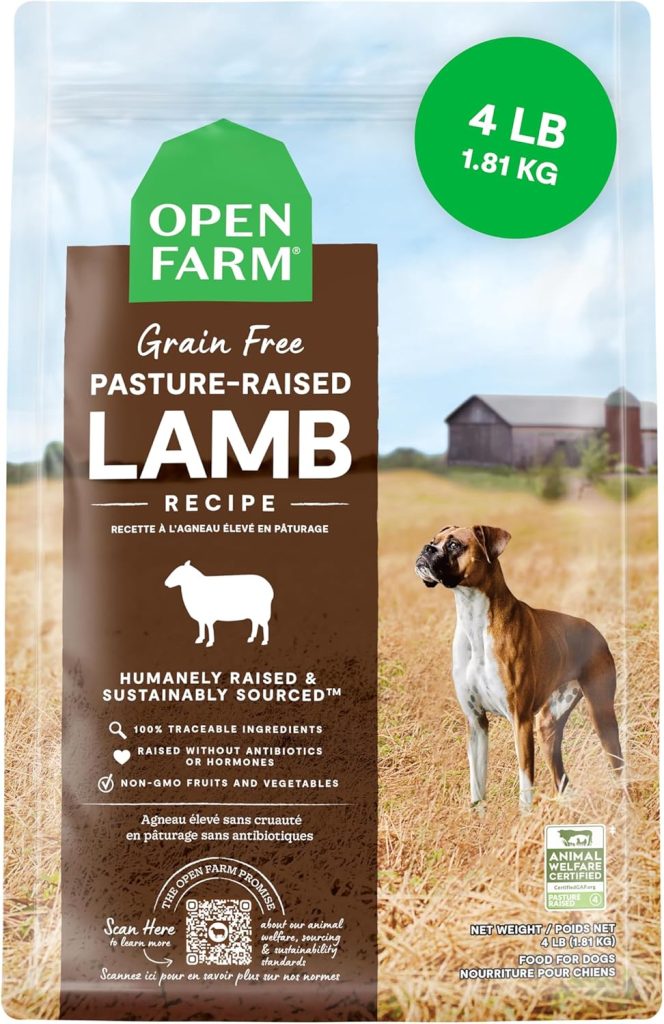
Grain-Free Dry Dog Food
Open Farm, Grain-Free Dry Dog Food, Complete & Balanced Kibble, Sustainably & Ethically Sourced Ingredients, Non-GMO Veggies & Superfoods.
Is Venison a “Novel Protein” for Dogs?
The phrase novel protein gets used a lot in dog nutrition, sometimes without explanation. Understanding it properly helps set realistic expectations.
What “Novel Protein” Really Means
A novel protein is simply a protein source your dog has not been exposed to before. For many dogs, venison qualifies because it is not commonly found in standard dog foods.
Novel proteins are often used during:
- Elimination diets
- Food sensitivity trials
- Protein rotation plans
The idea is that if the immune system has never reacted to a protein, it is less likely to cause an adverse response.
When Venison Can Actually Help
Raw venison dog food may be useful if:
- Your dog has eaten chicken, beef, or lamb for years
- Skin or digestive issues improved temporarily on limited-ingredient diets
- You are following a structured elimination diet
In these cases, switching to a single-protein raw venison diet can reduce variables and make reactions easier to track.
When Venison Will Not Fix the Problem
Venison is not a cure-all.
It will not help if:
- The issue is environmental (pollen, dust mites, mold)
- Fleas or yeast are involved
- The dog reacts to fats, additives, or supplements rather than protein
This is where many owners get frustrated. They change foods repeatedly without addressing the real cause.
Raw Venison Dog Food Benefits: Claims vs Reality
Supporters of raw venison diets often report dramatic improvements. Some of these claims have reasonable explanations. Others are more anecdotal.
Commonly Claimed Benefits
- Shinier coat
- Smaller, firmer stools
- Increased energy
- Cleaner teeth
These improvements do happen for some dogs, but they are not guaranteed.
Why Some Dogs Seem to Improve Quickly
There are a few reasons raw venison diets can look like a miracle at first:
- Fewer ingredients mean fewer potential triggers
- Higher moisture content improves hydration
- Owners become more consistent and observant
In other words, the improvement may come from simplicity and attention, not magic.
Why Picky Eaters Love Venison
Venison has a strong, savory flavor compared to poultry. Many dogs that ignore kibble will eagerly eat raw venison, especially when it is slightly warmed or rehydrated.
This palatability is one of the biggest practical advantages of raw venison dog food.
Risks, Allergies, and the Nutrition Mistakes Most People Miss
Up to this point, raw venison dog food probably sounds appealing. A novel protein. Minimal processing. A diet many dogs clearly enjoy.
But this is where the conversation usually changes tone, and honestly, it should.
Raw feeding is not just about ingredients. It is about risk management, balance, and expectations. Most problems people run into with raw venison have nothing to do with venison itself. They come from overlooking basics that are easy to miss when enthusiasm takes over.
This section focuses on the parts most guides gloss over.
Raw Venison Dog Food Risks and Safety Concerns
Let’s start with the issue everyone brings up first, for good reason.
Pathogen Risk and Why Hygiene Matters
Raw venison is still raw meat. That means it can carry bacteria such as:
- Salmonella
- E. coli
- Listeria
Many healthy dogs handle these bacteria without obvious illness. Humans, children, seniors, and immunocompromised people often cannot.
This is why raw feeding is not just a dog decision. It is a household decision.
Simple Hygiene Rules That Actually Reduce Risk
You do not need a lab-grade kitchen, but you do need discipline.
- Wash hands before and after handling raw food
- Use separate cutting boards and utensils
- Clean bowls immediately after meals
- Disinfect prep surfaces regularly
- Do not let raw food sit at room temperature
Most contamination issues come from shortcuts, not from raw food itself.
Antibiotic-Resistant Bacteria: The Real Concern
One of the bigger worries with raw diets is not just bacteria, but resistant strains. These do not always make dogs sick, but they can spread silently in a household.
This is one reason many vets advise caution, especially in homes with:
- Babies or toddlers
- Elderly family members
- People with weakened immune systems
In these cases, raw venison dog food may simply not be worth the added risk.
Bone-Related Risks People Underestimate
Raw diets often include bone, either whole or ground.
Potential issues include:
- Cracked teeth from hard bones
- Choking hazards
- Constipation or bowel obstruction
- Intestinal irritation
Ground bone reduces some risks but introduces others, especially if the ratio is off.
Is Raw Venison Dog Food Good for Allergies or Sensitive Stomachs?
This is where expectations need to be realistic.
Food Allergy vs Food Intolerance (Quick Reality Check)
Food allergies
- Involve the immune system
- Usually show up as itching, ear infections, or skin issues
Food intolerances
- Digestive in nature
- Cause gas, loose stool, or vomiting
Raw venison may help with either, but it depends on the cause.
The Elimination Diet Angle
Raw venison is often used during elimination diets because it can be fed as a single-protein meal.
This works best when:
- Venison is the only animal protein
- No treats or flavored supplements are added
- The diet is followed strictly for 6 to 8 weeks
Many elimination diets fail because owners unknowingly add “just a little something extra.”
Symptoms to Watch Closely
Not all reactions are dramatic.
Pay attention to:
- Excessive scratching or licking
- Red or smelly ears
- Chronic soft stool
- Vomiting after meals
- Excessive gas
If symptoms worsen or blood appears in stool, stop experimenting and involve a veterinarian.
When Raw Venison Will Not Help
If the issue is:
- Environmental allergies
- Fleas
- Yeast overgrowth
- Hormonal conditions
Changing proteins will not fix the problem. This is where many raw-feeding stories become misleading.
Nutritional Balance: The #1 Thing Most Raw Diets Get Wrong
This is the most important section of the entire article.
“Complete & Balanced” vs “Complementary” Raw Meals
Not all raw foods are meant to be fed alone.
- Complete & balanced diets are formulated to meet all nutrient needs
- Complementary meals are designed as toppers or part of a rotation
Feeding a complementary raw venison product as a full-time diet is one of the most common mistakes owners make.
Nutrients That Commonly Go Off Track
DIY and poorly formulated raw diets often miss:
- Calcium and phosphorus balance
- Iodine
- Vitamin D
- Zinc and copper
Dogs can look healthy for months before deficiencies appear. When they do, they are often serious.
Why “Looks Like Real Food” Is Not Enough
A bowl of raw meat may look wholesome, but dogs do not thrive on appearance.
Nutrition is about:
- Ratios
- Micronutrients
- Long-term consistency
This is why many vets are less concerned about raw vs cooked, and more concerned about formulation quality.
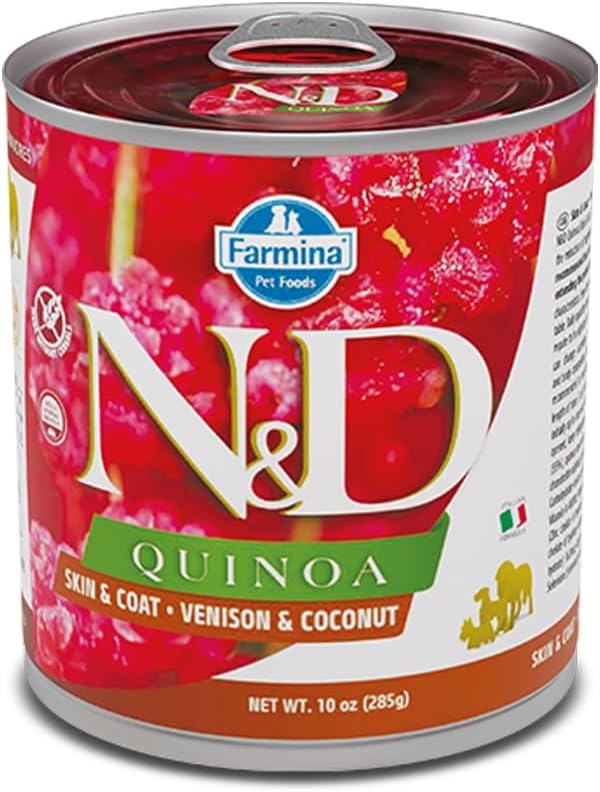
Coconut Adult Canned Dog Food
Farmina, N&D Quinoa Skin & Coat Venison & Coconut Adult Canned Dog Food, 10 Ounce..
How to Choose the Best Raw Venison Dog Food (Buyer Checklist)
If you are going to feed raw venison, choosing the right product matters more than choosing raw itself.
Look for an AAFCO Complete & Balanced Claim
This tells you:
- The food meets minimum nutrient standards
- It is suitable for a specific life stage
Life stage matters. Puppy formulas are not optional for growing dogs.
Understanding Raw Ingredient Ratios
A solid raw venison diet usually includes:
- Muscle meat for protein
- Organs for vitamins and minerals
- Bone (or calcium source) in controlled amounts
Too much bone leads to constipation. Too little leads to calcium deficiency.
Fruits and Vegetables: Optional, Not Mandatory
Some dogs benefit from added fiber and antioxidants. Others digest better without them.
There is no universal rule here. The key is digestibility and balance, not ideology.
Guaranteed Analysis: As-Fed vs Dry Matter
Raw food contains much more moisture than kibble.
This means:
- Protein percentages look lower “as-fed”
- Actual protein intake may be higher than it appears
Learning to compare foods on a dry matter basis gives a clearer picture.
Sourcing and Transparency
Good raw venison brands are clear about:
- Where the venison comes from
- Whether it is single-protein
- How the food is handled and packaged
Vague sourcing is a red flag.
Feeding, Real-World Problems, Myths, FAQs, and a Clear Verdict
If you have read this far, you already know that raw venison dog food is not a shortcut or a miracle fix. It can work very well for some dogs, and very poorly for others. What usually decides the outcome is not the protein itself, but how the food is chosen, fed, and managed over time.
This final section focuses on the everyday realities most guides skip. Portions. Transitions. Mistakes people actually make. And, at the end, an honest answer to whether this way of feeding is worth it for your situation.
Raw Venison for Puppies, Adult Dogs, and Seniors
Age changes nutritional needs more than protein choice does.
Puppies
Puppies are where raw feeding goes wrong most often.
Growing dogs need:
- Precisely balanced calcium and phosphorus
- Enough energy for growth without excess
- Consistent micronutrient intake
Homemade raw venison diets are especially risky for puppies. Even small imbalances can affect bone development. If raw is used at this stage, it should be commercial, complete, and clearly labeled for growth or all life stages.
Adult Dogs
This is where raw venison fits most naturally.
Adult dogs generally tolerate:
- Protein variety
- Slight changes in fat levels
- Texture differences
Raw venison works best for adult dogs that are active, picky, or rotating proteins intentionally rather than randomly.
Senior Dogs
Older dogs still need protein, but digestion often slows down.
For seniors:
- Moderate fat is usually easier to handle
- Softer textures may help dental comfort
- Joint support matters more than novelty
Some senior dogs do better with freeze-dried raw that has been fully rehydrated, rather than frozen raw chunks.
Feeding Guide for Raw Venison Dog Food
This is where most day-to-day problems start or stop.
How Much Raw Venison Should You Feed?
A common starting point is 2–3% of your dog’s body weight per day, adjusted by condition and activity.
| Dog Weight | Daily Amount (Approx.) |
|---|---|
| 10 lb | 3–5 oz |
| 25 lb | 8–12 oz |
| 50 lb | 16–24 oz |
| 75 lb | 24–36 oz |
This is a starting estimate, not a rule. Watch your dog’s body shape, energy, and stool. Adjust slowly.
Transitioning to Raw (Do Not Skip This)
Many dogs fail raw diets because the switch is rushed.
A slower transition often looks like this:
- Days 1–3: 75% old food, 25% raw
- Days 4–6: 50/50
- Days 7–9: 25% old food, 75% raw
- Day 10 onward: 100% raw
Sensitive dogs may need even more time. Diarrhea during transition usually means too much change, too fast.
Mixing Raw and Kibble
This topic causes endless debate, but practically speaking:
- Some dogs handle mixed feeding fine
- Others digest better when meals are separated
If mixing:
- Keep raw and kibble portions smaller
- Feed at consistent times
- Avoid constantly changing combinations
Consistency matters more than purity.
Storage and Thawing Rules
Basic rules that prevent problems:
- Store frozen raw at freezer temperatures
- Thaw in the refrigerator, not on the counter
- Use thawed food within 2–3 days
- Discard uneaten food after 20–30 minutes
Smell, slime, or gas buildup means the food is done. Do not take chances.
Common Problems and How to Fix Them
Even when everything looks right on paper, real dogs still surprise us.
Diarrhea After Switching
Most common causes:
- Transition was too fast
- Fat content is too high
- Bone ratio is off
Fixes:
- Slow down
- Reduce portion size temporarily
- Simplify ingredients
Persistent diarrhea is not something to “push through.”
Itching Did Not Improve
This is frustrating but common.
Possible reasons:
- Allergy is environmental, not food-based
- Elimination diet was not strict enough
- Reaction is to fat, not protein
Food changes do not fix pollen, fleas, or yeast.
Refusal to Eat
Raw venison is palatable, but not every dog loves it immediately.
Try:
- Fully rehydrating freeze-dried food
- Slightly warming (never cooking)
- Feeding at fixed meal times
Avoid turning meals into negotiations.
Constipation
Usually linked to too much bone.
Signs include:
- Hard, chalky stools
- Straining
Reduce bone content or switch formulas if this persists.
Homemade Raw Venison Dog Food (If You’re Seriously Considering It)
This deserves honesty.
What Responsible DIY Actually Requires
Doing it correctly means:
- Accurate nutrient formulation
- Access to supplements
- Guidance from a veterinary nutritionist
Guesswork is not responsible raw feeding.
Why “Winging It” Causes Problems
Most DIY failures come from:
- Calcium imbalance
- Missing trace minerals
- Long-term deficiencies
Dogs often look fine until they are not.
Safer Alternatives
For most owners:
- Commercial complete and balanced raw diets
- Freeze-dried raw with clear feeding guidelines
- Occasional raw toppers rather than full DIY meals
These options reduce risk without removing flexibility.
Raw Venison Diet Myths (Quick Reality Check)
Myth: Raw is always healthier
Reality: Some dogs thrive. Others do not. There is no universal winner.
Myth: Dogs can handle any bacteria
Reality: Dogs may cope, households may not.
Myth: Raw automatically fixes allergies
Reality: It only helps when food is actually the cause.
FAQs About Raw Venison Dog Food
Is venison a novel protein for dogs?
For many dogs, yes. Especially those raised on chicken or beef.
Is raw venison good for dogs with allergies?
It can help some dogs, but it depends on the allergy source.
Can dogs get sick from raw venison?
Yes, especially if hygiene or sourcing is poor.
Is freeze-dried raw safer than frozen raw?
Risk is lower, but not zero.
How long should an elimination diet last?
Typically 6–8 weeks with no deviations.
Can puppies eat raw venison?
Only if the diet is complete, balanced, and approved for growth.
Can I mix raw venison with kibble?
Some dogs tolerate it well, others do better with separate meals.
Final Verdict: Is Raw Venison Dog Food Worth It?
Raw venison dog food can be a good choice for:
- Picky adult dogs
- Protein rotation strategies
- Some sensitivity cases
It is not a good choice for:
- Homes with immunocompromised people
- Dogs needing prescription diets
- Owners who cannot commit to hygiene and consistency
A Simple 3-Step Decision Plan
- Choose a complete and balanced raw product matched to life stage
- Transition slowly and watch stool, skin, and energy
- Reassess after several weeks and involve a vet if problems appear
Raw venison dog food is neither magic nor madness. It is a tool. Used carefully, it can work very well. Used casually, it causes more stress than benefit.