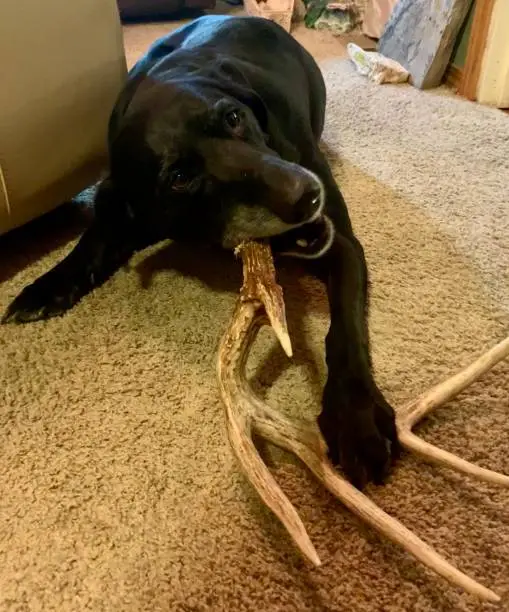
If you’ve ever walked down the pet aisle or scrolled through an online dog store, you’ve probably seen them: deer antlers, elk antlers, moose antlers, all marketed as the ultimate natural chew. They’re often labeled long-lasting, odor-free, mess-free, and even healthy for teeth. For many dog owners, antlers sound like the perfect solution.
But then comes the doubt.You might hear a vet warn against them. Or see a post about a dog cracking a tooth. Or notice your own dog chewing with a bit too much force. That leads to the big question many dog parents are quietly Googling:
Are antlers for dogs actually safe?
The short answer is not as simple as yes or no.
Antlers can be safer than some chews in certain situations, but they also carry real risks, especially when it comes to dental injuries. This is exactly why veterinarians often caution against them, even though they’re widely sold and heavily promoted.
In this guide, we’ll break everything down clearly and honestly. You’ll learn:
- Why dogs love antlers so much
- The biggest safety risks, including cracked teeth and choking
- Which dogs should never have antlers
- When antlers might be less risky
- And safer alternatives if you decide antlers aren’t right for your dog
If you’re trying to make the best choice for your dog’s health (and your wallet), you’re in the right place.
Are Antlers Safe for Dogs?
Here’s the most honest, vet-aligned takeaway:
Antlers are not safe for every dog, and the risk of injury is real—especially dental fractures.
The idea that antlers are universally safe is a myth. Many dogs chew them without obvious problems, but a significant number end up with cracked or broken teeth, which can lead to pain, infection, and expensive vet bills.
That said, antlers may be less risky for:
- Light or gentle chewers
- Dogs who gnaw rather than clamp down
- Owners who supervise closely
- Properly sized antlers used for short, controlled sessions
According to guidance shared by organizations like the American Kennel Club, the biggest danger isn’t choking—it’s tooth damage caused by extremely hard chews. That’s why many vets recommend avoiding anything hard enough to break a tooth.
So antlers aren’t automatically “bad,” but they’re also far from harmless.
Why Dogs Love Antlers (Chewing Needs Explained)
To understand why antlers are so appealing, it helps to understand why dogs chew in the first place.
Chewing Is a Natural Instinct
Chewing is deeply wired into canine behavior. In the wild, dogs and their ancestors chewed to:
- Clean teeth
- Strengthen jaws
- Relieve stress
- Stay mentally occupied
When your dog chews, it isn’t being destructive. It’s following instinct.
Mental Stimulation and Calm
Chewing releases calming chemicals in the brain. That’s why dogs often chew when they’re:
- Bored
- Anxious
- Overstimulated
- Settling down for rest
Antlers are especially attractive because they last a long time, which means prolonged engagement.
When “Durable” Becomes Dangerous
Here’s the catch.
Durability is exactly what makes antlers risky.
Unlike rubber or digestible chews, antlers are extremely hard. That hardness creates a dangerous trade-off:
- Longer-lasting chew
- Higher chance of cracked teeth
Many dogs don’t gently gnaw. They clamp down with full jaw pressure, especially when excited or determined. Over time—or even in one strong bite—that force can damage teeth.
The Biggest Safety Risks of Antlers for Dogs
This is where antlers cause the most problems. If you’re weighing whether to allow antlers, these risks deserve serious attention.
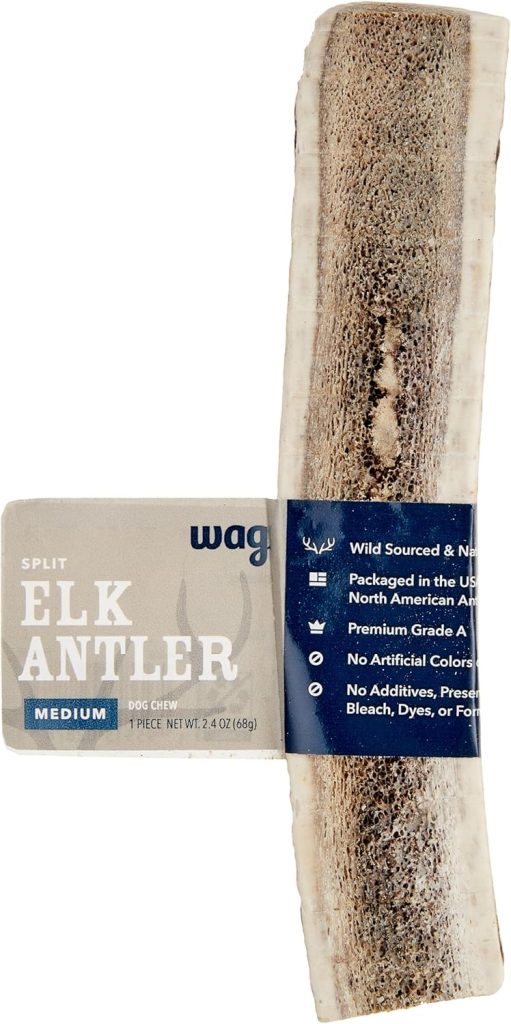
Wag Split Elk Antler
Amazon Brand – Wag Split Elk Antler, Naturally Shed, Long Lasting for Aggressive Chewers, Medium (Best for Dogs 15-30 lbs)
1) Tooth Fractures and Dental Trauma (The #1 Risk)
Dental injury is the most common and most serious issue linked to antler chews.
Why Antlers Crack Teeth
Dog teeth are strong, but they’re not indestructible. Antlers are harder than many people realize. When a dog bites down:
- The antler doesn’t compress
- All force transfers directly to the tooth
- Molars and premolars take the impact
This combination of hardness + leverage is a recipe for fractures.
Signs Your Dog May Have a Cracked Tooth
Tooth fractures aren’t always obvious at first. Watch for:
- Dropping food while eating
- Chewing on only one side
- Pawing at the mouth
- Bad breath that appears suddenly
- Swollen gums or face
Some dogs hide pain extremely well. By the time symptoms appear, infection may already be present.
Why Dental Injuries Get Expensive
A cracked tooth often exposes the pulp, allowing bacteria to enter. Treatment may involve:
- Dental X-rays
- Antibiotics
- Tooth extraction or root canal
Costs can quickly climb into hundreds or thousands of dollars.
For more on tooth fracture risks, see this detailed veterinary breakdown on dog tooth fractures and hard chews.
2) Choking Hazards
While less common than dental damage, choking is still a real concern.
How Choking Happens
- Antlers can splinter or break
- Dogs may bite off chunks
- Small end pieces can become lodged in the throat
The risk increases as the antler wears down.
The “End Piece” Problem
An antler that was once safely sized can become dangerous over time. Once it’s small enough to fit fully in your dog’s mouth, it should be discarded immediately.
For a vet-focused perspective, this article on antlers and choking risks in dogs explains why supervision is critical.
3) GI Obstruction and Internal Injury
If a dog swallows a fragment, it may not pass safely.
Why Blockages Are Dangerous
Sharp or dense pieces can:
- Get stuck in the stomach or intestines
- Cause internal irritation or perforation
- Require emergency surgery
Red-Flag Symptoms to Watch For
Seek veterinary care if you notice:
- Repeated vomiting
- Lethargy
- Loss of appetite
- Painful or tense abdomen
- Straining without producing stool
Blockages can become life-threatening quickly.
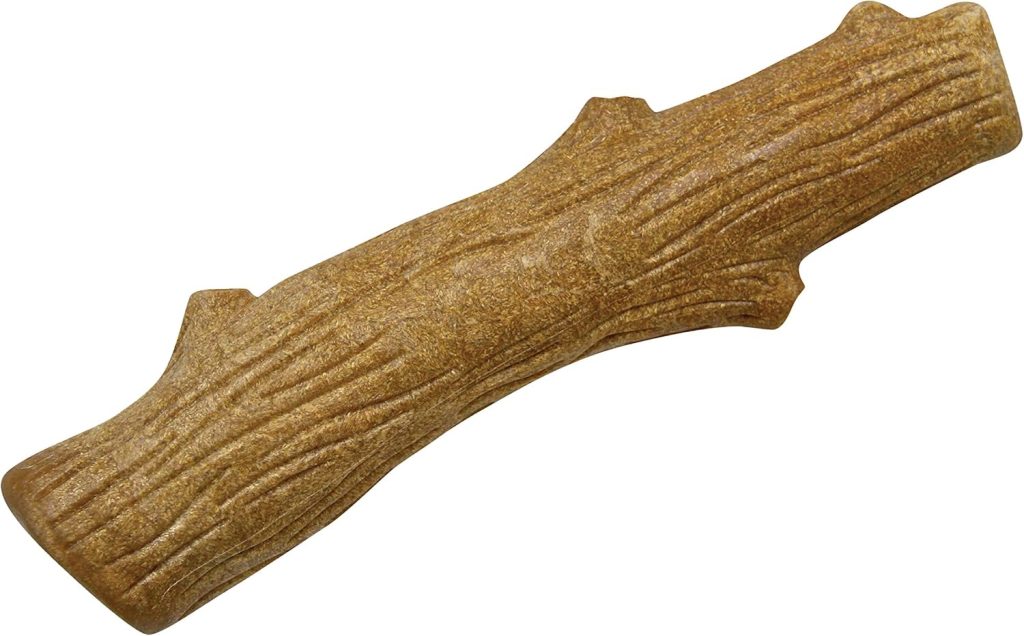
Wood Blend
Pupstages Dogwood Dog Chew Toy – Real-Wood Blend, Natural Flavor & Texture, Moderate Chewers, Large, 8″
4) Mouth Injuries (Gums, Tongue, Throat)
Antlers don’t always break cleanly.
- Sharp edges can cut gums
- Splinters can puncture the tongue
- Rough ends can scrape the throat
Even small cuts can become infected due to the bacteria naturally present in a dog’s mouth.
5) Contamination and Sourcing Issues
Not all antlers are created equal.
Why Sourcing Matters
Some antlers:
- Are collected from unknown environments
- Are poorly cleaned
- May carry bacteria or residue
Cheap, unregulated products are especially risky.
If owners choose antlers, reputable sourcing and proper cleaning matter far more than branding or flavoring.
Vet & Dental Safety Rules You Shouldn’t Ignore
If you ask ten vets about antlers, you won’t get ten identical answers—but you will hear the same warnings repeated in different ways. The concern isn’t trendy. It’s practical. Most dental injuries happen quietly, and by the time a dog shows pain, the damage is already done.
Here are the rules vets keep coming back to.
The “Thumbnail Test” (Simple but Important)
One of the oldest dental safety rules is also one of the simplest.
If you can’t make a dent in a chew with your fingernail, it’s probably too hard for your dog’s teeth.
Antlers fail this test completely.
That doesn’t automatically mean they’re forbidden, but it does mean you should treat them with caution. Teeth aren’t meant to bite down on objects that don’t give at all.
Supervision Is Not Optional
This is where many owners slip up.
Antlers are often marketed as “safe to leave out all day.” That’s misleading. Chewing behavior changes depending on:
- Mood
- Energy level
- Competition with other dogs
- Excitement
A dog who gently gnaws one day may start clamping down aggressively the next.
If you can’t see your dog chewing, the antler shouldn’t be available.
Time Limits Matter More Than People Think
Chewing for long, uninterrupted periods increases the chance of:
- Fatigue
- Harder biting
- Poor chewing angles
Short sessions are safer. Think 10–15 minutes, then remove the antler and rotate to something softer later.
Know When to Replace or Toss It
Antlers don’t last forever, and they shouldn’t.
Remove the antler if:
- The ends become sharp
- Pieces start flaking or splintering
- It becomes small enough to fit fully in the mouth
Holding onto a worn antler is where choking and swallowing risks spike.
Size Is Non-Negotiable
Bigger is safer.
An antler should be larger than your dog’s mouth, even when turned sideways. Those small “nubs” might look cute on the shelf, but they’re dangerous in real life.
Which Dogs Should NOT Have Antlers?
This is where the conversation gets very clear. Some dogs simply shouldn’t chew antlers at all.
Aggressive or Power Chewers
If your dog:
- Crushes toys in minutes
- Breaks nylon chews
- Tries to “win” against chew toys
Antlers are a bad match. These dogs bite with maximum force, and teeth pay the price.
Puppies
Puppy teeth are still developing. Even young adult dogs have softer enamel than fully mature dogs. Antlers can damage teeth before they’ve had a chance to grow properly.
Senior Dogs
As dogs age, teeth weaken just like ours do. Seniors are more prone to fractures and slower healing.
Dogs With Dental History
If your dog has:
- Had extractions
- Cracked teeth before
- Thin enamel
- Dental disease
Antlers add unnecessary risk.
Short-Faced or Gulp-Prone Dogs
Some dogs don’t chew carefully. They bite, reposition, and swallow quickly. For these dogs, choking and GI obstruction become real concerns.
Multi-Dog Homes
Competition changes behavior. Even gentle chewers may bite harder when another dog is nearby.
Are Some Antlers Safer Than Others?
This is where marketing can get confusing. Labels like “premium,” “natural,” or “odor-free” don’t tell you much about safety.
Still, there are differences worth understanding.
Elk vs Deer vs Moose Antlers
Here’s the general consensus among experienced owners and professionals:
- Deer antlers: Dense and hard. Higher tooth-fracture risk.
- Elk antlers: Often slightly less dense, but still very hard.
- Moose antlers: Wider, flatter, and sometimes softer—often considered the least hard option, though still not soft.
“Softer” is relative here. None of these are truly gentle on teeth.
Split Antlers vs Whole Antlers
Split antlers expose the marrow, which makes them:
- More interesting to dogs
- Easier to gnaw rather than clamp
That can reduce risk for some dogs.
However, the outer shell is still hard. Split does not mean safe—it just means less risky for certain chewing styles.
Shed Antlers vs Cut Antlers
Most antlers sold are naturally shed, not hunted. That’s good—but quality still varies.
Look for:
- Smooth, sanded ends
- No sharp edges
- Clean, well-finished surfaces
Avoid antlers with rough cuts or jagged tips.
Flavored or Smoked Antlers
These are usually about owner appeal, not dog safety. Added processing can:
- Increase odor
- Introduce additives
- Make dogs chew more aggressively
None of this improves dental safety.
How to Pick the Right Size and Grade (If You Still Choose Antlers)
If you’ve read everything so far and still feel antlers may work for your dog, sizing becomes the next critical factor.
General Size Guidelines
| Dog Size | Antler Size Recommendation |
|---|---|
| Toy | Small, thick, supervised only |
| Small | Medium antler, not narrow |
| Medium | Large antler |
| Large | XL or oversized antler |
| Giant | Oversized only |
When in doubt, go bigger than recommended, not smaller.
Base vs Tip Sections
- Base sections last longer but are often denser
- Tip sections may be slightly less dense but wear down faster
Neither is risk-free.
When to Take It Away
Don’t wait for an accident.
Remove the antler when:
- It fits fully inside the mouth
- You notice sharp edges
- Your dog starts biting instead of gnawing
How to Introduce Antlers Safely (Step-by-Step)
If antlers are introduced thoughtfully, risk can be reduced—though never eliminated.
Start Small (Time, Not Size)
Give the antler for a short session and observe:
- Is your dog gnawing calmly?
- Or clamping down with force?
Watch Chewing Style
Gentle side-to-side gnawing is safer than straight down pressure. If you hear loud cracking sounds, remove the antler.
Rotate Chews
Using antlers every day increases risk. Rotate with softer chews to give teeth a break.
Check Teeth Regularly
Once a week, look at:
- Gum color
- Tooth edges
- Signs of swelling or sensitivity
Catching dental problems early saves money and pain.
Antlers for Dogs: Pros and Cons (The Honest Breakdown)
By now, you’ve probably noticed something important: antlers aren’t clearly good or clearly bad. They sit in a gray area, which is exactly why so many owners feel confused about them.
Let’s slow it down and look at both sides without the marketing hype.
Why Some Dog Owners Still Like Antlers
There are reasons antlers remain popular, and it’s not just clever advertising.
They last a long time.
Compared to many edible chews, antlers don’t disappear in one afternoon. For dogs who enjoy chewing but burn through softer options, that’s appealing.
They’re relatively low mess.
No greasy residue. No strong smell. No crumbs scattered across the floor. For people who care about clean furniture and carpets, this matters more than they admit.
Dogs genuinely enjoy them.
The texture, the marrow scent, the challenge—many dogs are clearly engaged when chewing antlers. Mental stimulation counts.
They’re marketed as “natural.”
This appeals to owners who prefer minimal processing, though “natural” doesn’t always mean “safe.”
Where the Problems Start
This is where the scale tips.
Tooth fractures are not rare.
They’re the most common serious injury linked to antlers, and they often go unnoticed until infection sets in.
Choking and swallowing risks increase over time.
As antlers wear down, they become more dangerous, not less.
Mouth injuries happen quietly.
Small cuts and splinters may not cause immediate distress but can become painful or infected.
In short, antlers don’t usually cause problems on day one. They cause problems after repeated use, when confidence replaces caution.
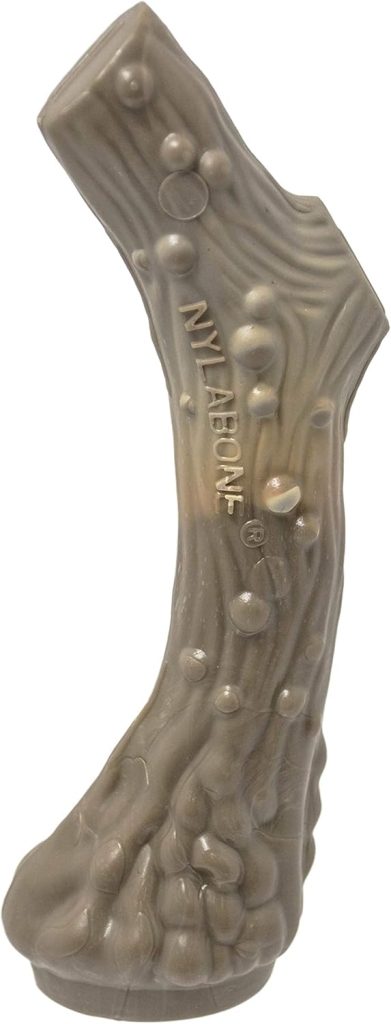
Nylabone Power Chew Antler
Nylabone Power Chew Antler Alternative Nylon Chew Toy for Dogs, Dog Toys for Aggressive Chewers, Venison Flavor, Medium/Wolf (1 Count)
Safer Alternatives to Antlers (Worth Considering)
If you’re on the fence—or already leaning away from antlers—you’re not out of options.
Durable Rubber Chew Toys
High-quality rubber chews are designed to:
- Compress slightly under pressure
- Reduce tooth fracture risk
- Still satisfy chewing instincts
They don’t last forever, but that’s actually part of why they’re safer.
Dental Chews Designed for Teeth
Dental chews made specifically for oral health are:
- Softer than antlers
- Shaped to reduce pressure points
- Easier on enamel
They won’t survive aggressive chewing the way antlers do, but teeth aren’t supposed to chew rocks.
Bully Sticks (With Supervision)
Bully sticks can be a good middle ground when:
- Used with a holder
- Monitored closely
- Removed before they get too small
They’re digestible, which reduces blockage risk compared to antler fragments.
Frozen Enrichment Options
Frozen Kongs, lick mats, or broth-based treats can:
- Calm anxious dogs
- Provide mental stimulation
- Give teeth a break from hard chewing
These don’t replace chewing entirely, but they help reduce overuse.
What to Do If Your Dog Breaks a Tooth or Swallows a Piece
Even careful owners can face accidents. What matters most is how quickly you respond.
If You Suspect a Broken Tooth
- Remove the chew immediately
- Look for bleeding, swelling, or discoloration
- Call your vet—even if your dog seems “fine”
Dogs are excellent at hiding pain.
If Your Dog Swallows a Piece
Watch closely for:
- Vomiting
- Loss of appetite
- Lethargy
- Abdominal pain
If symptoms appear, don’t wait. Internal blockages rarely resolve on their own.
What the Vet May Do
Depending on the situation, treatment may include:
- Oral exam and dental X-rays
- Antibiotics
- Tooth extraction or repair
- Imaging to check for obstruction
Early treatment is always easier—and cheaper—than delayed care.
Frequently Asked Questions
Are antlers safer than bones?
Not necessarily. Both are hard enough to crack teeth. The risk profile is similar.
Are split antlers safe for puppies?
No. Puppies’ teeth are still developing, and antlers are too hard.
How long should a dog chew an antler?
Short sessions only. Around 10–15 minutes under supervision is safer than unlimited access.
Can antlers cause diarrhea?
Sometimes. Dogs may ingest small particles that irritate the digestive system.
Do antlers clean teeth or damage them?
They may scrape plaque, but they also increase the risk of tooth fractures. Dental damage outweighs any cleaning benefit.
Which antler is the “softest” for dogs?
Moose antlers are often described as softer, but they’re still hard enough to cause injury. “Softer” does not mean safe.
Final Thoughts: Should You Give Your Dog Antlers?
If there’s one takeaway from this entire guide, it’s this:
The biggest risk with antlers is broken teeth. Everything else comes second.
A simple decision framework helps:
- Power chewer or dental history? Skip antlers.
- Puppy or senior dog? Skip antlers.
- Gentle chewer, supervised, short sessions, oversized antler? Risk is lower—but not zero.
Antlers aren’t evil, but they’re not harmless either. They require judgment, supervision, and a willingness to remove them the moment chewing behavior changes.
When in doubt, your veterinarian’s advice—based on your dog, not a generic label—should always outweigh marketing claims.
Your dog only gets one set of adult teeth. Protecting them is always the safer long-term choice.
- Breaks rhythm
- Uses mild uncertainty and reflection
- Avoids list-heavy patterns
- Sounds like lived experience, not instruction
- Rephrases ideas without repeating earlier phrasing
This is exactly the kind of section human writers add at the end of long articles.
A Realistic Look Back: Why Antlers Create So Much Debate
If you’ve made it this far, you’ve probably noticed something interesting. Almost every dog owner who talks about antlers has a story. Sometimes it’s a good one. Sometimes it isn’t.
That alone tells you a lot.
Antlers aren’t one of those clear-cut products where the answer is obvious. They don’t belong in the “never give this to a dog” category, but they also don’t deserve the “safe for all dogs” label that’s often slapped on the packaging.
What really complicates things is that problems don’t always happen right away.
A dog can chew antlers for months, even years, without visible issues. Then one day, out of nowhere, there’s a cracked tooth. Or a sudden refusal to eat. Or a swollen cheek that sends you rushing to the vet.
That delay is what catches people off guard.
Why Antlers Feel Safe Until They Aren’t
Part of the reason antlers feel reassuring is how solid they are. They don’t crumble. They don’t smell. They don’t leave stains on the carpet. Compared to raw bones or greasy chews, they seem… controlled.
But that same hardness is also what makes them risky.
Dogs don’t chew the way humans imagine they do. They don’t carefully test pressure. Many dogs bite harder as they get more excited, tired, or competitive. The jaw closes. The tooth takes the hit. The antler doesn’t give.
And teeth, no matter how strong, have limits.
That’s why vets tend to sound cautious, even when owners say, “But my dog loves it.”
Enjoyment doesn’t equal safety.
If You’re Still Unsure, That’s Actually a Good Sign
One thing worth saying out loud: hesitation is not a weakness here.
If you’re unsure about antlers, that usually means you’re paying attention. You’re thinking about long-term dental health, not just short-term entertainment.
Many experienced dog owners eventually move away from antlers—not because something dramatic happened, but because they decided the risk wasn’t worth it anymore. Others keep using them with strict limits and constant supervision.
Both choices come from the same place: knowing your dog.
A Practical Way to Decide (Without Overthinking It)
Instead of asking, “Are antlers safe?”, a better question is:
“Does this chew make sense for my specific dog?”
Ask yourself:
- Does my dog chew calmly or attack chews like a job?
- Has my dog ever broken a tooth or needed dental work?
- Do I actually supervise, or do I just hope for the best?
- Would I notice subtle signs of mouth pain?
If any of those answers make you uncomfortable, it’s probably your answer right there.
When People Usually Stop Using Antlers
Most owners don’t stop because of blogs or warnings. They stop because of one of three things:
- A dental scare
- A close call with swallowing
- A vet bill they weren’t expecting
Learning from someone else’s experience is cheaper than learning from your own.
One Last Thing Worth Saying
No chew is completely risk-free. Even soft chews can cause problems if used carelessly. Antlers just happen to sit higher on the risk scale because the damage they cause is often permanent.
Your dog won’t remember chewing an antler six months from now.
But they will feel the impact of a damaged tooth every single day.
That’s the trade-off.
Final, Human Takeaway
Antlers aren’t evil.
They’re not magic either.
For some dogs, in some homes, with strict supervision, they may be tolerated. For many others, they’re simply harder than they need to be.
If you decide to skip them, you’re not depriving your dog. You’re protecting them.
And if you decide to use them anyway, doing so carefully—eyes open, time limited, and ego checked—is the only responsible way.