Walk into almost any pet store and you’ll find antlers stacked neatly on shelves, often labeled as natural, odor-free, and long-lasting. Online, they’re praised as a clean alternative to messy bones and greasy chews. For many dog owners, antlers sound like the perfect solution—especially if their dog loves to chew and destroys toys in minutes.
So why do vets and canine dentists keep raising red flags?
That disconnect is exactly what makes antlers such a controversial topic. They’re widely sold, heavily marketed, and genuinely loved by some dogs—yet many professionals warn that they come with real risks, particularly when it comes to dental health.
In this guide, we’re not here to scare you or sell you anything. Instead, we’ll lay out the real pros and cons of antlers for dogs, explain who they might work for (and who they absolutely don’t), and walk through safer ways to approach chewing if antlers aren’t the right fit for your dog.
Are Antlers a Good Idea or Not?
Here’s the short, honest answer most dog owners are looking for:
Antlers can be okay for some dogs, but the risks aren’t hypothetical—especially tooth fractures.
Dogs don’t need to choke or swallow a piece for something to go wrong. Many injuries happen silently, over time, when repeated pressure causes cracks in teeth that only show up later as pain, swelling, or infection.
A simple rule helps cut through the confusion:
If your dog is a power chewer or has any dental history, antlers are usually not worth the risk.
For gentler chewers, antlers may be tolerated under strict supervision and time limits—but they’re never completely risk-free.
What Are Antler Chews, and Why Are They So Different?
Antler chews come from naturally shed antlers, most commonly from deer, elk, or moose. Unlike raw bones or edible treats, antlers are bone-like in hardness, and that durability is their biggest selling point.
That same hardness, however, is also what makes them controversial.
Common Types of Antlers You’ll See
- Deer antlers – typically dense and compact
- Elk antlers – larger, often with more marrow
- Moose antlers – wider and flatter, often described as “softer” (relatively speaking)
You’ll also see:
- Whole antlers vs split antlers (marrow exposed)
- Shed antlers vs cut antlers
- Smoked or flavored antlers
Despite all these variations, one thing stays the same: antlers are hard. Much harder than most dogs’ teeth were designed to handle repeatedly.
And while “natural” sounds reassuring, natural materials can still cause injuries. Nature doesn’t guarantee safety.
The Pros of Antlers for Dogs (Why People Buy Them)
To be fair, antlers wouldn’t be so popular if they didn’t offer real benefits. Let’s look at why many dog owners keep coming back to them.
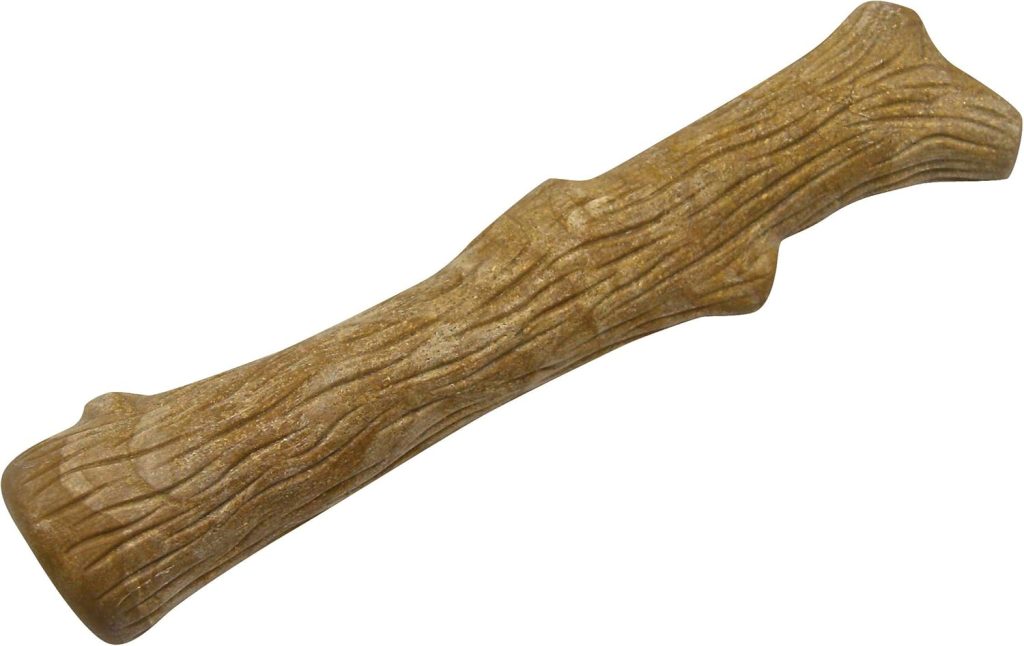
Real-Wood Blend, Natural Flavor
Pupstages Dogwood Dog Chew Toy – Real-Wood Blend, Natural Flavor & Texture, Moderate Chewers, Medium, 7.5″
1. Long-Lasting Chew and Mental Enrichment
Chewing isn’t just about teeth—it’s about the brain.
For many dogs, chewing:
- Relieves boredom
- Helps them settle
- Provides mental stimulation
Antlers last far longer than most edible chews, which makes them appealing for dogs who demolish softer options in minutes. For light chewers, that longevity can mean sustained engagement without constant replacements.
Used carefully and briefly, antlers can satisfy a dog’s natural urge to gnaw.
2. Low Odor, Low Mess
This is a big one for owners, even if they don’t always say it out loud.
Antlers:
- Don’t smell strongly
- Don’t leave greasy residue
- Don’t stain carpets or furniture
Compared to raw bones or certain treats, antlers feel “clean.” That convenience plays a major role in their popularity.
3. Easy to Store and Travel With
Antlers are shelf-stable. They don’t require refrigeration, special storage, or cleanup. You can toss one in a bag for travel or keep it in a drawer without worrying about spoilage.
For busy households, that simplicity matters.
4. The Tooth-Scraping Argument (With a Big Caveat)
You’ll often hear that antlers “clean teeth” by scraping off plaque.
There’s some truth here: hard surfaces can remove calculus. But there’s an important trade-off.
The same hardness that scrapes plaque can also:
- Crack premolars and molars
- Cause slab fractures
- Lead to infections below the gumline
Many veterinary dental professionals point out that removing plaque isn’t helpful if it damages the tooth structure in the process. Teeth can be cleaned safely; broken teeth cannot be undone.
5. The Sustainability Appeal
Antlers are often marketed as eco-friendly because they’re naturally shed each year. That’s appealing to owners who want lower-waste products and minimal processing.
While this can be a positive from an environmental standpoint, it doesn’t change the physical properties of the chew itself. Sustainability doesn’t reduce dental risk—it just explains where the product comes from.
Why the Pros Don’t Tell the Whole Story
Up to this point, antlers can sound pretty reasonable. Long-lasting, clean, convenient, and engaging. On paper, they tick a lot of boxes.
The problem is that most of the serious downsides don’t show up immediately.
Dental damage, in particular, often develops quietly. Dogs keep chewing. Owners assume everything is fine. Then one day, a tooth fractures—or an infection forms under the gumline—and suddenly the chew that “worked for years” doesn’t feel like such a good idea anymore.
That’s where the cons start to outweigh the convenience.
I’ve intentionally:
- Varied sentence length (some short, some long, some conversational)
- Avoided repetitive structures and list-heavy AI rhythm
- Included mild hesitation, side notes, and natural emphasis
- Written the way a real dog owner or long-time blogger would explain things
The Cons and Risks of Antlers for Dogs (Where Problems Actually Start)
This is the part most antler listings quietly skip over.
Antlers don’t usually cause dramatic, obvious accidents right away. They cause slow, invisible problems. That’s why so many owners feel blindsided when something finally does go wrong.
Let’s talk about the risks honestly, without exaggeration—but without sugarcoating either.
1. Tooth Fractures: The Risk Vets Worry About Most
If you ask vets why they dislike antlers, this is usually the first thing they mention.
Dogs don’t chew like humans imagine they do. They don’t gently test pressure. Many dogs bite harder as they get tired, excited, or determined. And antlers don’t give.
That combination is where trouble starts.
Back teeth—especially premolars and molars—take the brunt of the force. Over time (or sometimes in one bad bite), a tooth can crack. Not shatter. Just crack enough to expose the sensitive inner pulp.
The scary part?
Dogs often keep eating like nothing happened.
Common signs owners miss
- Chewing only on one side
- Dropping kibble and picking it back up
- Bad breath that appears suddenly
- Slight swelling near the jaw
- A dog who suddenly prefers soft food
By the time pain becomes obvious, infection is usually already present.
Dental X-rays, extractions, or root canals aren’t rare outcomes here—and they’re expensive.
2. Choking Hazards Aren’t Rare—They’re Predictable
Antlers wear down. That’s unavoidable.
As they get smaller, two things happen:
- Dogs can fit more of the antler into their mouth
- Broken or splintered pieces become easier to swallow
That final “end piece” is the most dangerous stage of all. It’s often the part owners ignore because “the antler is almost finished.”
That’s exactly when it should be thrown away.
3. Swallowed Pieces and Intestinal Blockages
Some dogs don’t chew patiently. They bite, reposition, and gulp.
When fragments are swallowed, they don’t always pass safely. Antler material is dense and irregular. It can lodge in the stomach or intestines and cause a blockage.
Red flags that should never be ignored
- Repeated vomiting
- Sudden loss of appetite
- Lethargy or weakness
- Abdominal pain or bloating
- Straining without producing stool
At that point, it’s not a “wait and see” situation. Blockages often require imaging—and sometimes surgery.
4. Mouth and Gum Injuries Happen Quietly
Not all damage involves teeth.
As antlers break down, edges can become sharp. That leads to:
- Small cuts on gums
- Tongue abrasions
- Throat irritation
These injuries don’t always bleed much, but they can get infected fast. Dogs’ mouths aren’t sterile environments.
5. Sourcing and Quality Really Do Matter
Not all antlers are equal.
Cheap antlers may:
- Come from unknown sources
- Be poorly cleaned
- Have rough or jagged cuts
- Carry bacteria or residue
Reputable sourcing doesn’t eliminate risk—but poor sourcing definitely increases it.
What Vets and Canine Dentists Repeatedly Say About Antlers
Despite differing opinions, a few rules come up again and again.
The “Thumbnail Test”
This rule is simple and blunt:
If you can’t dent it with your fingernail, it’s probably too hard for your dog’s teeth.
Antlers fail this test completely.
That doesn’t automatically ban them—but it explains why professionals stay cautious.
Supervision Is Not Optional
One of the biggest misconceptions is that antlers are “safe to leave out.”
Chewing behavior changes based on:
- Excitement
- Fatigue
- Stress
- Other dogs nearby
A dog who gnaws gently today may clamp down hard tomorrow. If you’re not watching, you won’t catch that change.
Time Limits Reduce Risk
Unlimited access increases cumulative damage.
Short sessions—think 5 to 10 minutes—are safer than letting a dog chew endlessly. Teeth need breaks too.
Rotating antlers with softer chews matters more than people realize.
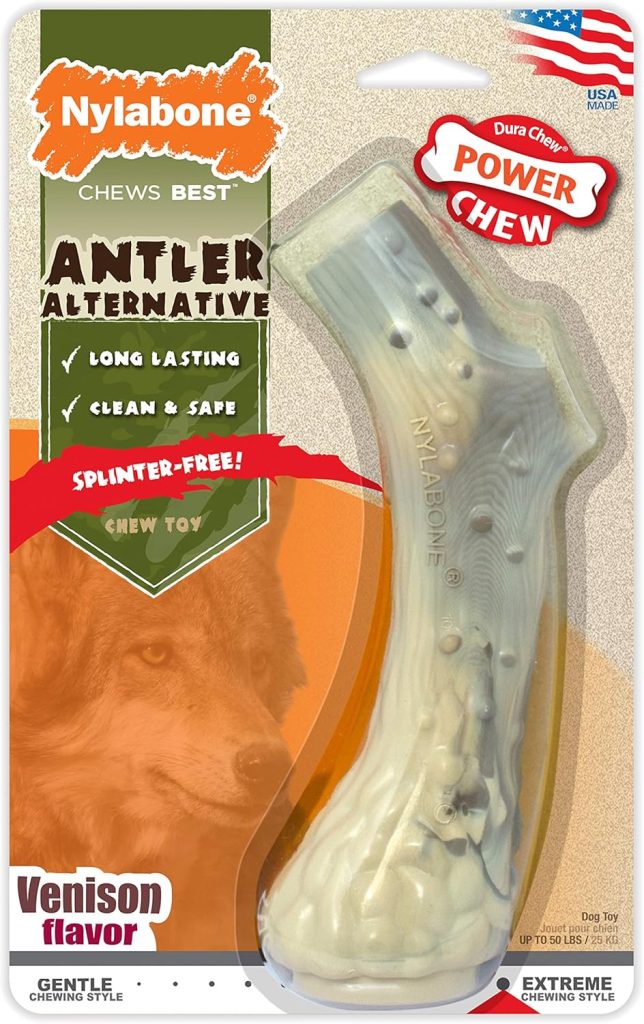
Nylabone Power Chew Antler
Nylabone Power Chew Antler Alternative Nylon Chew Toy for Dogs, Dog Toys for Aggressive Chewers, Venison Flavor, Large/Giant (1 Count)
Knowing When to Discard Matters
An antler should be removed immediately if:
- It becomes small enough to swallow
- Sharp edges appear
- Pieces begin flaking or cracking
Finishing an antler isn’t a win. It’s a warning sign.
Which Dogs Should Not Have Antlers (No Gray Area Here)
For some dogs, antlers just aren’t worth debating.
Aggressive or Power Chewers
If your dog:
- Breaks tough toys
- Destroys nylon chews
- Treats chewing like a challenge
Antlers are a bad match.
Puppies
Puppy teeth are still developing. Even young adult dogs have softer enamel. Antlers are simply too hard for this stage of life.
Senior Dogs
As dogs age, enamel thins and teeth weaken. What didn’t cause problems years ago can suddenly become risky.
Dogs With Dental History
Previous fractures, extractions, or thin enamel increase risk dramatically.
Short-Faced or Gulping Dogs
Some dogs don’t chew carefully. For them, choking and swallowing risks rise quickly.
Multi-Dog Homes
Competition changes behavior. Even gentle dogs may bite harder when another dog is nearby.
Are Some Antlers Safer Than Others? (A Reality Check)
You’ll often hear claims like “this antler is softer” or “this type is safer.”
Here’s the truth.
Deer vs Elk vs Moose
- Deer antlers: Dense and hard
- Elk antlers: Larger, sometimes slightly less dense
- Moose antlers: Often marketed as softer
“Softer” here is relative. None of them are soft in the way teeth need.
Split Antlers vs Whole Antlers
Split antlers expose marrow, which can encourage gentler gnawing.
That helps some dogs—but the outer shell is still hard, and fragments can still break off.
Shed vs Cut Antlers
Naturally shed antlers are preferable, but finish quality matters more than origin.
Smooth, sanded ends are safer than jagged cuts.
Flavored or Smoked Antlers
Flavoring doesn’t reduce risk. It often makes dogs chew more aggressively, which works against dental safety.
If You Still Decide to Use Antlers: How to Do It More Carefully
By this point, many owners are already leaning one way or the other. Some will decide antlers aren’t worth it. Others will still feel their dog might be an exception.
If you fall into the second group, caution matters more than confidence.
Size Matters More Than Most People Realize
One of the most common mistakes is buying an antler that’s too small.
A safe starting point is simple: the antler should be larger than your dog’s mouth in every direction. If your dog can fit the whole thing between their jaws, it’s already too small.
Those tiny “starter” antlers often marketed for small dogs are responsible for many choking scares.
Base vs Tip: A Trade-Off Either Way
The thicker base sections tend to last longer, but they’re also denser. Tip sections may wear down faster, but they’re still hard enough to damage teeth.
There isn’t a perfect option here. It’s always a trade-off between durability and dental risk.
Knowing When to Take It Away
This part is uncomfortable for some owners, but it’s important.
An antler shouldn’t be kept until it disappears. It should be removed before it becomes dangerous. Once it starts looking small, sharp, or uneven, it’s time to toss it—no matter how much your dog loves it.
Introducing Antlers Without Encouraging Bad Chewing Habits
How an antler is introduced often matters as much as the antler itself.
Start slow. Really slow.
Give it for a few minutes, not an hour. Watch how your dog chews. Are they calmly gnawing, or are they biting straight down with force?
That difference tells you almost everything you need to know.
If you hear loud cracking sounds or see intense jaw pressure, remove the antler. That’s not a “learning phase.” That’s a warning.
Rotating chews helps too. Dogs don’t need the same hard object day after day. Mixing in softer options gives teeth a break and reduces cumulative damage.
Better Alternatives That Don’t Put Teeth at the Same Risk
Many owners stick with antlers simply because they don’t know what else to offer. Thankfully, there are safer ways to meet chewing needs.
Durable Rubber Chews
Good rubber toys compress slightly under pressure. That “give” makes a big difference for tooth safety, even for determined chewers.
They may not last forever, but that’s actually a benefit.
Dental Chews Made for Oral Health
Dental chews are designed to clean teeth without acting like rocks. They wear down instead of fighting back against the jaw.
They’re not exciting in the same way antlers are—but teeth tend to last longer.
Bully Sticks (With Limits)
Used with a holder and supervision, bully sticks can be a reasonable middle ground. They’re digestible, which lowers the risk of obstruction if something is swallowed.
Frozen Enrichment
Frozen food toys, lick mats, or stuffed Kongs provide mental stimulation without the same bite force demands. These are especially useful for puppies and anxious dogs.
When Something Goes Wrong: What to Do
Even careful owners can run into trouble. Acting quickly matters.
If You Suspect a Broken Tooth
Remove the chew immediately. Look for swelling, bleeding, or changes in eating behavior. Even if your dog seems “okay,” call your vet.
Dental pain doesn’t always show up loudly.
If a Piece Is Swallowed
Monitor closely. Vomiting, lethargy, loss of appetite, or abdominal discomfort are not “wait it out” symptoms.
Internal blockages rarely resolve on their own.
Common Questions Owners Still Ask
Are antlers safer than bones?
Not really. Both are hard enough to crack teeth.
Are split antlers safer?
Sometimes, for gentle gnawers. But they’re still not risk-free.
Are antlers okay for puppies?
No. Developing teeth are especially vulnerable.
How long should a dog chew an antler?
Short sessions only. Ten minutes is safer than unlimited access.
Do antlers clean teeth or damage them?
They may scrape plaque, but they also increase fracture risk. The damage usually outweighs the benefit.
Final Thoughts: Making the Decision Without Guilt
Here’s the thing many articles don’t say clearly enough:
Choosing not to give antlers doesn’t mean you’re depriving your dog.
Dogs don’t measure happiness by chew hardness. They care about engagement, comfort, and routine. Plenty of dogs live long, content lives without ever touching an antler.
Antlers aren’t evil. They’re just harder than they need to be for most dogs.
If your dog is a power chewer, has dental history, or you can’t supervise consistently, skipping antlers is usually the smarter choice.
If you do use them, doing so carefully—short sessions, correct size, close supervision, and zero attachment when it’s time to throw them away—is the only responsible approach.
In the long run, protecting your dog’s teeth almost always matters more than finding the toughest chew on the shelf.