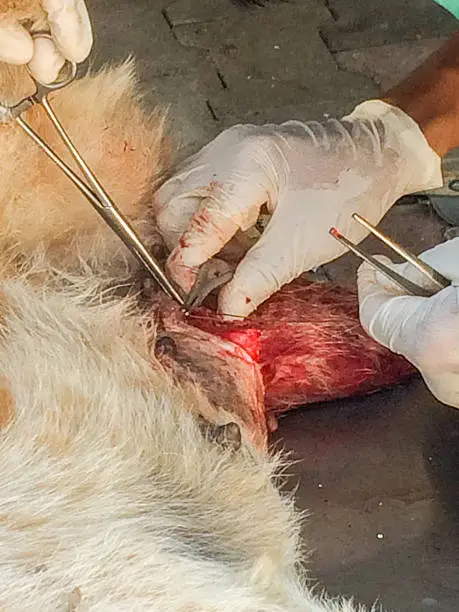
Dog Acl surgery
When a dog tears its ACL (anterior cruciate ligament), it’s a serious injury that can significantly affect its ability to move and function normally. The ACL, also known as the cranial cruciate ligament (CCL) in dogs, plays a vital role in maintaining the stability of the dog’s knee joint. It helps prevent the bones in the knee from sliding back and forth, thus ensuring smooth movement.
ACL injuries in dogs are common, particularly in certain breeds, and they often require surgery to restore knee function and improve the dog’s quality of life. This article will explore what ACL surgery involves, the different surgical techniques available, the recovery process, and much more.
The Role of the ACL/CCL in Canine Knee Stability
The ACL/CCL is a critical ligament in the knee joint, helping to stabilize the femur (thigh bone) and tibia (shin bone). It allows the knee to bear weight and absorb the forces of movement, making it essential for any physical activity, such as running, jumping, and walking.
In dogs, when the ACL is torn or ruptured, the knee becomes unstable. This leads to discomfort, pain, and difficulty walking. Without treatment, the condition often worsens, leading to arthritis and long-term mobility issues. ACL surgery is typically recommended to stabilize the knee and prevent further damage to the joint.
Why Surgery Is Often Recommended
Surgery is often the best solution for an ACL tear, especially if the injury is severe or the dog is active. Without surgery, the knee may not heal properly, and the dog could develop chronic pain and degenerative joint disease. Surgery helps to restore stability to the knee joint and improve the dog’s overall mobility, allowing them to return to normal activities with minimal pain.
2. What Is a Dog ACL Injury?
A dog ACL injury occurs when the cranial cruciate ligament (CCL), which is responsible for stabilizing the dog’s knee joint, becomes torn or ruptured. This injury often happens suddenly, especially in active dogs or those that engage in high-impact activities.
Defining ACL/CCL Injury in Dogs
- ACL/CCL Tear: The ligament tears or ruptures, causing instability in the knee joint.
- Partial Tear vs. Full Rupture: In some cases, the ACL/CCL may be partially torn, but in others, it may be fully ruptured, leading to severe pain and immobility.
How It Differs from Human ACL Injuries
While ACL injuries in humans are common in sports like football and basketball, dog ACL injuries often occur due to a combination of factors like:
- Degeneration of the ligament over time.
- Obesity, which puts extra strain on the joints.
- Trauma or sudden movements, such as jumping or running too quickly.
In humans, ACL injuries are often treated with reconstructive surgery that uses grafts from other parts of the body. In dogs, however, the surgical techniques differ due to the animal’s different anatomy, with several methods being used to repair or replace the torn ligament.
Common Causes of ACL Injuries
- Degeneration: Over time, the ligament weakens, making it more prone to injury, especially in older dogs.
- Trauma: A sudden injury or blow, such as jumping off high surfaces, can cause the ACL to tear.
- Obesity: Extra weight puts additional stress on the joints, increasing the risk of ACL injury.
- Breed Predisposition: Certain dog breeds, such as Labradors, Rottweilers, Newfoundlands, and Boxers, are more prone to ACL injuries due to their body structure and genetics.
3. Symptoms of a Dog ACL Tear
Recognizing the signs of an ACL injury early can significantly improve treatment outcomes. If your dog is suffering from an ACL tear, you may notice some of the following symptoms:
3.1. Limping or Favoring One Leg
The most noticeable symptom of an ACL tear is limping or lameness, especially after exercise. The dog may avoid putting weight on the affected leg, making it difficult to walk or stand normally. This is typically more pronounced after physical activity.
3.2. Difficulty Jumping, Walking, or Rising
A torn ACL makes it difficult for dogs to perform activities that require the use of their hind legs, such as jumping, running, or climbing stairs. If you notice that your dog is reluctant to engage in these activities or is slow to rise after lying down, it could be a sign of a torn ACL.
3.3. Swelling or Abnormal Gait
A torn ACL often leads to swelling around the knee joint. This swelling is caused by inflammation and fluid accumulation in the affected area. Dogs with ACL injuries may also develop an abnormal gait, where they walk in a way that protects the injured leg.
3.4. Pain or Stiffness After Rest
After resting or sleeping, a dog with an ACL tear may experience stiffness and pain when they first get up and start moving. This is due to the ligaments becoming tight and sore after being inactive for a period. If your dog exhibits pain or stiffness after periods of rest, it’s essential to have them evaluated by a veterinarian.

Dog Knee Brace with Adjustable Support
FurWell Dog Knee Brace with Adjustable Support – ACL & CCL Tear Recovery, Post-Surgery Stabilization, Mobility Aid for Rear Legs – Includes Secure Chest Harness for Dogs(Left,M)
4. Diagnosing a Dog ACL Injury
A proper diagnosis is crucial to ensure that the correct treatment is provided. There are several ways veterinarians can diagnose a dog ACL tear:
4.1. Physical Exams
During the physical exam, your veterinarian will perform several manipulation tests to check for instability in the knee joint. One of the most common tests is the drawer test, which involves the vet moving the tibia (shin bone) forward to check for excessive movement, a sign that the ACL has ruptured.
4.2. Imaging Techniques
To confirm the diagnosis and rule out other possible causes of the dog’s symptoms, imaging is often used. The two most common imaging techniques are:
- X‑rays: While X‑rays cannot directly show soft tissue injuries like ACL tears, they can help identify bone changes or the presence of other conditions like arthritis.
- Ultrasound or MRI: These methods allow the vet to visualize the soft tissues of the knee joint and confirm the tear in the ACL.
4.3. Confirming with Orthopedic Evaluation
In some cases, a thorough orthopedic evaluation by a specialist may be recommended. This evaluation may involve advanced imaging techniques and a detailed review of the dog’s medical history to ensure the most accurate diagnosis and treatment plan.
5. Surgical Techniques for Dog ACL Repair
When it comes to repairing an ACL injury in dogs, surgery is often the best option to restore full knee function and alleviate pain. Several surgical techniques exist, each with its own benefits and considerations. Your veterinarian will determine the most appropriate method based on your dog’s size, age, and overall health.
5.1. Tibial Plateau Leveling Osteotomy (TPLO)
TPLO is considered the gold standard for medium to large dogs with ACL tears. This technique changes the angle of the tibial plateau (the upper part of the shin bone), which in turn reduces the need for the ACL to function in stabilizing the knee. The TPLO procedure involves cutting the tibia and rotating it to a new position before stabilizing it with a metal plate and screws.
Why TPLO is Recommended:
- Ideal for larger, active dogs: This method is especially effective for dogs weighing more than 30 pounds.
- Restores normal knee mechanics: By altering the tibial plateau, TPLO helps restore normal weight-bearing mechanics, reducing the chance of developing arthritis.
- Faster recovery: TPLO can offer faster recovery times compared to other procedures, allowing dogs to return to their normal activities sooner.
Recovery Time: Typically 6-12 weeks of limited movement, followed by a gradual return to normal activity.
5.2. Tibial Tuberosity Advancement (TTA)
Another popular method for treating ACL injuries in dogs is Tibial Tuberosity Advancement (TTA). This technique involves cutting the bone above the knee, advancing the tibial tuberosity (a bony prominence on the tibia), and securing it in place with a plate and screws. This helps to reduce the stress on the ACL and restore knee stability.
Why TTA is Recommended:
- Effective for medium to large dogs: Like TPLO, TTA is ideal for larger dogs with ACL tears.
- Reduces the need for ACL function: TTA corrects the angle of the knee joint to take stress off the torn ligament, promoting better joint function.
- Good long-term outcomes: TTA offers good results with a relatively low risk of complications, providing long-term joint health.
Recovery Time: The recovery period for TTA is similar to TPLO, requiring 6-12 weeks of rest and limited movement.
5.3. Extracapsular Repair (Lateral Suture Technique)
The extracapsular repair is a less invasive surgery, often recommended for small to medium dogs. This technique involves placing a strong suture material around the knee joint, mimicking the function of the torn ACL. The suture material is attached to the bone and joint capsule to stabilize the knee while healing occurs.
Why Extracapsular Repair is Recommended:
- Less invasive: This procedure involves minimal cutting, which makes it a good option for smaller dogs or older dogs that may not be ideal candidates for more invasive surgeries.
- Faster healing: Because there’s less disruption to the bone and joint, dogs tend to heal more quickly than with other surgeries.
- Cost-effective: It’s typically less expensive than other ACL surgeries, making it an attractive option for pet owners on a budget.
Recovery Time: Dogs typically require 6-8 weeks of limited activity and close monitoring after the procedure. However, long-term follow-up care is often necessary to prevent recurrence.
5.4. Other Techniques (Tightrope, CBLO, Triple Tibial Osteotomy)
While TPLO and TTA are the most widely used surgical methods, there are other options for treating ACL injuries, including the Tightrope, CBLO (circumferential bone ligation osteotomy), and Triple Tibial Osteotomy (TTO).
Tightrope Technique
The Tightrope method involves the placement of a synthetic material (typically a rope or wire) across the knee joint to stabilize the tibia and femur. It’s often used for smaller dogs and can be less invasive than other procedures.
- Good for small to medium dogs: It’s effective for pets with lower activity levels and smaller frames.
- Minimal bone manipulation: The procedure is simpler with fewer bone cuts involved.
CBLO and TTO
These methods are less common but can be used in specific cases, such as large dogs with complex knee injuries. Both techniques involve altering the bone structure to stabilize the joint and improve knee mechanics.
- CBLO: Targets the stability of the tibia and fibula to reduce knee instability.
- TTO: Focuses on joint realignment and is usually combined with other procedures like TPLO.
6. How Dog ACL Surgery Works
Understanding what happens during dog ACL surgery is key to preparing your dog for the procedure and recovery. The surgical process typically involves several stages, from initial preparation to post-operative care.
6.1. Step-by-Step Surgical Overview
The exact procedure will depend on the type of surgery, but here’s a general overview of what happens during dog ACL surgery:
- Anesthesia: Your dog will be placed under general anesthesia to ensure they are unconscious and pain-free throughout the procedure.
- Incision: A small incision is made over the knee joint to access the damaged ligament.
- Bone Cutting or Ligament Reconstruction: Depending on the type of surgery, the veterinarian may cut and reposition bones (in TPLO or TTA) or place suture material (in extracepsular repair).
- Stabilization: The knee joint is stabilized using metal plates, screws, or suture materials.
- Closing the Incision: The incision is then closed with sutures, and the area is cleaned and bandaged.
- Post-Op Monitoring: After surgery, your dog will be monitored closely during recovery, often requiring several days in the hospital for observation.
6.2. What Happens During Surgery (Bone Cutting, Implants, Ligament Stabilization)
- Bone Cutting: In procedures like TPLO and TTA, the bone is cut and repositioned to improve the knee joint’s stability. This helps restore normal biomechanics and reduces stress on the ACL.
- Implants: Metal implants (plates, screws, or rods) are used to hold the bone in place while healing occurs.
- Ligament Stabilization: In methods like extracapsular repair, the torn ligament is stabilized with sutures that mimic the function of the ACL, reducing instability in the joint.
6.3. Differences Between Procedures
- Invasiveness: TPLO and TTA are more invasive than methods like extracapsular repair, which involves minimal bone manipulation.
- Recovery Time: Less invasive procedures often have a faster recovery time, but more invasive methods like TPLO and TTA provide better long-term results for larger, more active dogs.
- Success Rates: TPLO and TTA typically have higher success rates for dogs that are more active and need full knee stabilization.

Dog Knee Brace
Ortocanis Dog Knee Brace for Torn Acl Hind Leg, Cruciate Ligament Injuries, Patella Dislocation or Osteoarthritis – Dog Acl Knee Brace – Dog Braces for Back…
7. Preparing Your Dog for ACL Surgery
Proper preparation is key to a smooth surgery and recovery process. Here’s how you can help get your dog ready:
7.1. Pre-Surgery Exams and Weight Management
Before surgery, your veterinarian will perform a thorough physical exam and may conduct blood work to ensure your dog is healthy enough for anesthesia. It’s important to manage your dog’s weight, as excess weight can place more strain on the knee during recovery. If your dog is overweight, the veterinarian may recommend a weight loss plan leading up to surgery.
7.2. Blood Work and Anesthesia Considerations
Anesthesia is a necessary part of the surgery, but it does come with some risks. Your veterinarian will perform blood tests to assess your dog’s overall health and organ function. This helps ensure that your dog is in optimal condition for the procedure.
7.3. Pre-Op Fasting and Comfort Measures
Most veterinarians will require your dog to fast for 12 hours before the surgery to ensure their stomach is empty. During this time, make sure your dog is kept comfortable and calm, and avoid feeding them after the designated fasting period.
8. Recovery and Rehabilitation
After your dog undergoes ACL surgery, the recovery process is critical to ensure proper healing and return to normal activity. The success of the surgery largely depends on how well your dog follows post-surgical instructions, including restrictions on movement, physical therapy, and regular follow-ups with the veterinarian.
8.1. Recovery Timeline
The recovery timeline varies depending on the type of surgery performed and the individual dog’s response to treatment. Here’s what you can expect during the recovery phase:
Immediate Post-Op Period (First 2 Weeks)
- Rest and Restricted Movement: For the first two weeks, your dog will need to rest and avoid excessive movement. This means no jumping, running, or climbing stairs. The incision site will need to heal, and the risk of complications is highest during this period.
- Pain Management: Your veterinarian will provide pain relief medications to help manage your dog’s discomfort after surgery. It’s important to follow their instructions on medication administration.
- Incision Care: Monitor the surgical site for signs of infection, such as redness, swelling, or discharge. Keep the area clean and dry, and prevent your dog from licking or biting the incision by using an Elizabethan collar if necessary.
Weeks 3–6
- Controlled Activity: After the first two weeks, your veterinarian may allow some controlled activity, such as short leash walks to keep the muscles active. However, it’s important to avoid any strenuous exercise or off-leash play.
- Gradual Increase in Movement: Over time, you can increase the length of your dog’s walks, but make sure they are always on a leash and not overexerted.
Weeks 6–12
- Increased Mobility: After the initial recovery period, your dog should start to show improvement in mobility. You’ll begin seeing less limping or stiffness, and your dog will be able to move more freely.
- Physical Therapy: Regular physical therapy or rehabilitation exercises will be key to helping your dog regain full knee function and strength. This may include gentle stretching and controlled exercise under the supervision of a veterinarian or certified canine rehabilitation specialist.
Long-Term Recovery (6 Months and Beyond)
- Full Healing: For full recovery, it may take up to 6 months or longer, depending on your dog’s age, health, and the type of surgery performed.
- Return to Normal Activity: After the initial 3-6 months of recovery, your dog should be able to return to normal activities like walking, running, and playing. However, it’s important to monitor their condition and avoid overexertion, especially if they are older or have other health concerns.
8.2. Physical Therapy and At-Home Care
Physical therapy plays an important role in helping your dog recover and regain strength. It should begin as soon as the veterinarian deems it safe, and can include:
Passive Range-of-Motion Exercises
- Gentle bending and stretching of the knee joint helps prevent stiffness and muscle atrophy. These exercises should be performed slowly and under guidance to avoid causing additional strain or discomfort.
Hydrotherapy
- Water therapy is especially beneficial for dogs recovering from ACL surgery. It allows them to exercise without putting weight on the injured leg. The buoyancy of water reduces stress on the joints while building strength and range of motion.
Massage
- Gentle massage around the surgical area can help improve circulation and reduce muscle tightness. Always follow your vet’s instructions on how to safely massage the affected area.
At-Home Care
- Make sure your dog’s environment is safe and conducive to rest. Set up a comfortable, soft resting area where they can sleep and recover without the risk of jumping or moving too much. Limit their access to stairs, slippery floors, and furniture.
- Follow-up Appointments: Regular check-ups with the vet are necessary to monitor healing, make adjustments to rehabilitation protocols, and detect any complications early.
8.3. Signs of Complications
While complications are rare, it’s important to be vigilant and watch for any signs that might indicate problems during recovery. Some potential issues to look out for include:
- Excessive Swelling: While some swelling is normal, significant or worsening swelling could indicate an infection or other complications.
- Redness or Discharge from the Incision Site: This could be a sign of infection. If the wound opens or leaks fluid, consult your veterinarian immediately.
- Sudden Limping After Initial Progress: If your dog begins to limp again after initially improving, this could signal that the surgical site is not healing properly, or that they’ve overexerted themselves.
- Loss of Appetite, Lethargy, or Fever: These could be signs of an infection or a reaction to medications.
If any of these symptoms occur, contact your veterinarian promptly for advice.
9. Risks and Potential Complications
Like any major surgery, ACL surgery carries certain risks. However, when performed by an experienced surgeon, complications are generally rare. Some potential risks include:
9.1. Infection Risk
Infection is one of the most common complications after surgery, although it is relatively uncommon with proper post-operative care. The risk of infection can be minimized by keeping the surgical site clean, following your veterinarian’s instructions, and administering prescribed antibiotics as directed.
9.2. Implant Failure or Bone Healing Issues
In surgeries like TPLO and TTA, where metal plates and screws are used to stabilize the bone, there is a small risk of implant failure. This can occur if the implants do not hold the bone in place long enough for it to heal properly.
- Signs of Implant Issues: Pain, swelling, or difficulty moving the leg even after the expected recovery period.
9.3. Arthritis Development
Even with successful surgery, many dogs develop arthritis in the affected joint over time. This is a natural consequence of the injury and surgery. While surgery can stabilize the knee and improve mobility, arthritis may still develop, leading to discomfort as your dog ages. Joint supplements and regular physical therapy can help slow the progression of arthritis.
9.4. Anesthesia Risks
As with any surgery requiring general anesthesia, there is a small risk of complications related to the drugs used during the procedure. Pre-surgery blood tests and careful monitoring by veterinary professionals help mitigate these risks.
10. Cost of Dog ACL Surgery
The cost of ACL surgery can vary greatly depending on factors such as the type of surgery, the veterinarian’s location, and the dog’s size. Here’s a general breakdown:
10.1. Typical Cost Range
- TPLO Surgery: $2,500–$7,000
- TTA Surgery: $2,500–$6,000
- Extracapsular Repair: $1,500–$3,500
These prices typically include pre-operative exams, the surgery itself, anesthesia, and post-surgical medications. However, additional costs may be involved, especially if your dog requires physical therapy or further treatments during recovery.
10.2. Factors Influencing Cost
Several factors can affect the cost of surgery, including:
- Geographical location: Veterinary services in urban areas may be more expensive than in rural areas.
- Dog’s size: Larger dogs often require more complex procedures, and the cost may be higher.
- Veterinary expertise: A surgeon’s experience and specialization can affect the overall cost.
10.3. Options for Financial Assistance
- Pet Insurance: Many pet insurance plans cover a significant portion of ACL surgery costs, so it’s a good idea to check your policy for details.
- Payment Plans: Some veterinary clinics offer financing options, such as payment plans or services like CareCredit, which allow you to pay for the surgery in installments.
11. Factors to Consider Before Surgery
Before proceeding with ACL surgery, it’s essential to weigh a few factors. Surgery may not be the right choice for every dog, and there are important aspects to consider.
11.1. Dog’s Age, Weight, and Activity Level
Surgery is generally recommended for active dogs who require full use of their legs for normal movement. Older dogs, or those with other health issues, may face more risks during recovery and should be evaluated on a case-by-case basis.
11.2. Long-Term Quality of Life Expectations
The goal of surgery is to return your dog to normal activities. However, some dogs may develop arthritis later, even after surgery. It’s important to consider how much activity your dog will be able to engage in post-surgery.
11.3. Second Opinions for Borderline Cases
In some cases, the decision to proceed with surgery may be difficult. If you’re unsure, consider seeking a second opinion from an orthopedic specialist to discuss all available options.