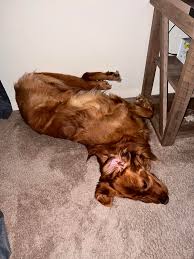
You finally crawl into bed after a long day, ready to claim your precious sleep space. But before you can settle, thud—your dog slams against your side like a furry meteor. Not just on the bed, but fused to your hip, your back, your legs. It’s equal parts adorable and baffling. That constant pressure leaves you sweating, trapped, and wondering: Is he anxious? Cold? Or just stealing my body heat? The clinginess disrupts your sleep and sparks that nagging worry—is something wrong? That furry furnace pressed against you feels like a riddle wrapped in dog hair.
Here’s the straight talk: This isn’t neediness—it’s hardwired instinct. Your dog’s ancestors survived by clinging to the pack, and your body is his modern-day lifeline. Try this tonight: Slip a warmed rice sock (wrapped in your t-shirt) into his bed. If he chooses it over you, warmth was the magnet. But if he still Velcros to your skin? Buckle up—we’re diving into the fascinating reasons behind this extreme closeness.
1. Your Body Is His Survival Tool (Literally)
That insistent pressure against you? It’s not random. Thousands of years of evolution are screaming in his DNA. Wild dogs and wolves don’t sleep solo—they pile together in a furry heap:
- Heat thieves: Sleeping skin-to-fur cut heat loss by 20% in freezing temps—a life-or-death stat for ancient canids.
- Back-to-back sentries: Pressing together meant eyes on all directions for predators.
- “Pack glue”: Physical contact reinforced social bonds critical for hunting and raising pups.
Your modern pup? He’s running the same old software. When he molds against you:
→ He’s hijacking your body heat to save energy
→ He’s trusting you to watch for “danger” (that creaky floorboard, the cat lurking outside)
→ He’s shouting, “You’re my pack—this is where I belong!”
Spotting primal-driven contact:
- Positions his back against you (protective mode)
- Resettles instantly if you shift positions (must maintain contact)
- Totally relaxed—no trembling or panting
- Happens year-round (not just winter)
Real-life proof: My neighbor’s Malamute, Nanook, sleeps jammed against her legs even in July heatwaves. “He’d spontaneously combust if he got closer,” she laughs. Our trainer explained: Northern breeds are hardwired to seek body heat—even when it’s 80°F.
2. Pressure = His Natural Xanax
Sometimes that body slam isn’t about warmth—it’s canine therapy. Deep pressure releases calming chemicals:
- Drops cortisol (stress hormone) by 25%
- Triggers serotonin and dopamine (feel-good neurotransmitters)
- Slows heart rate like a biological mute button
Common anxiety traps that turn your body into a security blanket:
- Thunder/construction noise
- Separation panic (“If I’m touching her, she can’t leave!”)
- Past trauma (rescue dogs are pressure junkies)
- Aging confusion (your scent = mental GPS)
Red flags it’s anxiety-driven:
- Shakes or pants while glued to you
- Shows “whale eye” (white of eyes visible)
- Freaks out if you shift positions
- Shadows you 24/7, not just at bedtime
Is it mild or severe? Quick clues:
| Behavior | Mild Stress | Full-Blown Anxiety |
|---|---|---|
| Position | Leans on legs | Must be chest-to-chest |
| If You Move | Sighs dramatically | Trembles or whines |
| Calm-Down Time | 5 minutes | Over an hour |
Give him independence (gently):
→ Weighted dog blankets (10% of body weight)
→ Thundershirt swaddles
→ Teach “settle” on a mat with bacon treats
→ Body pillow barrier (let him hug that instead)
*Pro tip: My friend’s terrier, Gizmo, panicked during storms until she draped a 5lb weight vest over his hips. “It’s like off-switching his nerves,” she says. Now he seeks the vest before storms hit.*
The Hidden Messages in Fur-to-Skin Contact
Your dog isn’t just leaning on you—he’s communicating. That insistent pressure speaks a language written in scent, instinct, and silent alarms. Let’s decode what your Velcro dog is really saying when he melts against your skin.
3. Your Scent is His Drug (Literally)
Breathe in. That’s just “you” to your nose. But to your dog? It’s a neurochemical cocktail that rewires his brain.
The science hits hard:
- University of Helsinki studies show a 40% cortisol drop in dogs sniffing their owner’s scent
- Your unique odor profile (skin oils, hormones, even stress sweat) triggers dopamine surges
- Pressing against you = maximum scent absorption through his nose and skin
Why he’s “scent-bathing” against you:
- Stress detox: Your smell overrides environmental chaos (traffic noise, strangers)
- Emotional anchor: Your scent = safety in unfamiliar places (travel, vet visits)
- Breed superpower: Bloodhounds and Beagles press hardest—they have 300M scent receptors!
Spot scent-driven contact:
- Rubs his face/neck against you like a cat
- Steals your dirty laundry to sleep on
- Calms instantly when given your worn shirt
- Presses hardest after you’ve been apart
“My rescue coonhound, Roscoe, used to pancake against my legs after work. A behaviorist had me leave worn gym shirts in his crate. Now he greets me calmly—then dives into ‘his’ shirt pile like it’s a spa.”
— Derek, Tennessee
Scent-Swap Test:
- Sleep in a cotton t-shirt for two nights
- Place it in his bed before you get in yours
- If he chooses the shirt over you? Scent-bond confirmed
4. The Possession Game (When “Mine” Means You)
That pressure against your hip might not be love—it could be quiet ownership. Resource guarding often masquerades as affection.
Subtle signs he’s staking a claim:
- Positions himself between you and your partner
- Stiffens when someone approaches “his” side of the bed
- Cuts off access to your body (lying across your legs)
- Low growl if disturbed (even just a sigh)
Triggers that spark guarding behavior:
| Situation | Why It Happens |
|---|---|
| New baby/partner | Fears resource loss |
| Another pet joins | Competition anxiety |
| Schedule changes | Routine disruption = insecurity |
| Aging/pain | Vulnerability increases defensiveness |
“Obsessive” vs. “Healthy” Closeness:
| Behavior | Healthy Bonding | Possessive Guarding |
|---|---|---|
| If you move | Adjusts position | Blocks your movement |
| Partner approaches | Wags or ignores | Tracks them intensely |
| During the day | Independent | Hyper-vigilant near you |
Fix it early:
→ Teach “off/on” commands away from bed first
→ Have others hand-feed high-value treats (kibble won’t cut it!)
→ Never punish growling—it’s a warning scream
5. Your Body as His Painkiller
Sometimes that desperate press against you screams: “Something hurts.” Dogs seek our warmth for physical relief.
Medical reasons for extreme contact:
- Arthritis: Your body heat eases stiff joints (hips/spine most common)
- GI pain: Warmth soothes cramping bellies
- Dental issues: Elevation reduces jaw pressure
- Your chronic condition: Dogs often press against owner’s pain zones
Spot pain-driven contact:
- Whimpers when repositioning
- Only presses against specific areas (your lower back, knees)
- Limps/stiffness during daytime
- Heavy panting while resting
Real-Life Medical Alert:
Sarah’s Lab, Duke, started pressing against her right hip every night. Weeks later, Sarah’s appendicitis flared—exactly where Duke had focused. “He knew before I did,” her surgeon confirmed.
At-Home Pain Check:
- Gently feel joints (hips, elbows, knees) for heat/swelling
- Watch for hesitation before jumping off bed
- Note if contact increases after activity
- Vet rule: Sudden nighttime clinginess = medical check now
Breed Secrets, Temperature Tricks, and When to Worry
Your dog’s breed history holds surprising clues about why he needs skin contact. And sometimes—that clinginess isn’t about love or anxiety… it’s pure climate control. Let’s unravel the genetic and environmental forces fueling your furry furnace.
6. Velcro Breeds: When DNA Demands Contact
Some dogs are hardwired to fuse with you. Centuries of selective breeding amplified their need for physical connection:
| Breed Group | Why They Cling | Real-Life Example |
|---|---|---|
| Herding Breeds (Collies, Shepherds) | Bred to stay hyper-aware of handler’s movements | “My Border Collie sleeps with her nose pressed to my ankle—ready to ‘work’ if I twitch.” |
| Sighthounds (Greyhounds, Whippets) | Thin skin/fat = desperate heat seekers | “My Greyhound molds to my legs like thermal paste—even with 3 blankets.” |
| Toy Breeds (Chihuahuas, Yorkies) | Prone to hypothermia; humans = survival heaters | “My Chihuahua tunnels under my neck. If I move, he grumbles like a disgruntled badger.” |
| Rescue Mutts | Early trauma creates lifelong security needs | “My street dog rescue sleeps on my chest. Shelter said he slept piled with 12 dogs.” |
Breed-Specific Contact Styles:
- Livestock Guardians (Great Pyrenees): Lean against you (backup sentry duty)
- Retrievers: Full-body press (maximum heat transfer)
- Scent Hounds (Beagles): Face buried in your armpit (scent immersion)
Pro Tip: Northern breeds (Huskies/Malamutes) often press hardest in SUMMER—their double coats trap heat, making your AC skin irresistible.
7. Your Body: The Ultimate Thermostat
Dogs don’t just seek warmth—they micro-manage temperature. Your body creates microclimates:
| Your Position | Dog’s Thermal Hack |
|---|---|
| Back-sleeper | Presses against belly (warmest zone) |
| Side-sleeper | Slots into knee/armpit “pocket” |
| Stomach-sleeper | Lies along calves (avoids overheating) |
Seasonal Shifts Prove It’s Temperature-Driven:
- Winter: Full-body press, burrowing under covers
- Summer: Presses against cooler areas (ankles, back of knees)
- Spring/Fall: Alternates between contact and proximity
Thermal Hack Test:
- Winter: Place heating pad in dog’s bed (set to 102°F)
- Summer: Freeze water bottle, wrap in towel for cool “core”
- Observe: If he chooses gadget over you? Thermal drive confirmed
“My Lab, Bear, abandons me for a frozen water bottle on muggy nights. The betrayal is real.”
— Marcus, Florida
When Closeness Crosses into Concern
Most contact sleeping is normal—but these red flags demand action:
| Behavior | What It Signals | Action |
|---|---|---|
| Growling when moved | Pain or resource guarding | Vet check + behaviorist |
| Panting/trembling while clinging | Severe anxiety | Anxiety meds + desensitization |
| Only presses against one body part | Your chronic pain or his injury | Medical scans (both!) |
| Blocks partner from bed | Dangerous guarding | Immediate professional intervention |
The Independence Test:
→ Can he sleep near you without touching? (Healthy)
→ Does he panic if you go to the bathroom? (Unhealthy)
Real Crisis Case:
*Ellie’s German Shepherd started lying across her throat at night. Trainer identified severe guarding. After 3 months of counter-conditioning, he now sleeps at her feet.*
Sleep Solutions for Velcroed Souls
So your dog treats you like a full-body heating pad. Now what? Whether you want to reclaim your personal space or peacefully coexist, actionable solutions exist that honor both your needs and his instincts. Let’s turn this nightly wrestling match into restful compromise.
Custom Fixes by Root Cause
Match these strategies to why he’s glued to you:
| Cause | Keep Him Close | Gently Redirect |
|---|---|---|
| Anxiety/Pressure Need | Weighted blanket over hips | Calming mat with faux fur + heartbeat sound |
| Scent Bonding | Wear cotton PJs he loves → leave in his bed | Spray Adaptil on his bedding nightly |
| Thermal Regulation | Share electric blanket (pet-safe low setting) | Self-warming/cooling bed based on season |
| Breed Instinct | Designate “his” side with your old pillowcase | Place identical bed touching yours |
| Resource Guarding | BEHAVIORIST FIRST | Teach “place” command with high-value rewards |
“We put a toddler mattress beside our bed. Our Great Pyrenees ‘guards’ us from there—everyone sleeps intact!”
— Chloe, Colorado
Reclaiming Your Space (Without Guilt)
If you need breathing room, try these stress-free transitions:
1. The Gradual Retreat Method:
- Week 1: Let him sleep on your legs (place towel barrier for sweat)
- Week 2: Move him to dog bed touching mattress edge
- Week 3: Slide bed 6 inches away → reward with morning treats
- Week 4: Move to final location → celebrate with “big bed” treats
2. The Bait-and-Switch:
- Heat a rice sock to 100°F, wrap in your worn shirt
- Place in his bed before you get under covers
- When he investigates, say “YES!” + toss chicken bit into bed
3. The “Off-Switch” Ritual:
- Last potty break
- Special chew only given in his bed (“Go to nest!”)
- Lights out → ignore all protests (earplugs help!)
Never Do This:
Shove him off mid-sleep → breaks trust Lock him out suddenly → triggers separation panic. Scold for seeking comfort → worsens anxiety
When Surrender is the Sweetest Option
Sometimes the win is embracing the snuggles:
- Senior dogs with limited time
- Rescue pups finally feeling safe
- If it comforts you too (the ultimate antidepressant!)
Co-Sleeping Survival Kit:
| Problem | Hack |
|---|---|
| Overheating | Cooling gel mat on his side |
| Allergies | Hypoallergenic mattress cover + monthly baths |
| Space Hogging | Body pillow barrier between you |
| Nail Scratches | Bi-weekly grinds + silicone nail caps |
“After fighting my arthritic Lab’s bed invasion, I surrendered. That first night she sighed so deeply it cracked my heart open. Now her warmth against my back is my favorite comfort.”
— Miguel, 68
The “Healthy Cling” Checklist
Your setup works if:
Everyone sleeps soundly (no frequent wake-ups)
No aggression if moved/touched
Daytime independence (he’s not glued to you 24/7)
Your relationship isn’t strained
Seek professional help if:
- He growls when you shift positions
- You dread bedtime due to anxiety
- He panics if you use the bathroom at night
(Find certified behaviorists: IAABC Consultant Search)
The Ultimate Truth: It’s About Trust
That pressure against your side is his way of saying:
- “You’re my safe place” (anxiety)
- “We survive together” (instinct)
- “I choose you” (bond)
Whether you redirect or embrace it—honor that trust.