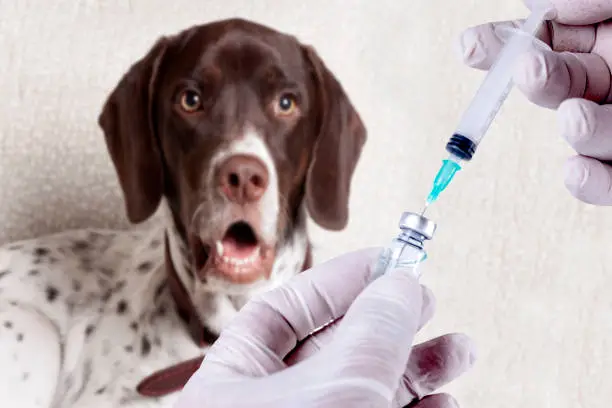
Few words scare dog owners as much as parvo. Canine parvovirus is not just another routine illness. It is a highly contagious and potentially fatal disease, and puppies are the most vulnerable. Even with modern veterinary care, parvo can progress quickly, leading to severe dehydration, organ damage, and in many cases, death if treatment is delayed.
Parvo spreads easily through contaminated surfaces, feces, shoes, clothing, and even human hands. A puppy doesn’t need to meet a sick dog to be exposed. Simply walking where an infected dog has been can be enough. That’s what makes this virus especially dangerous.
This is where the parvo vaccine for dogs becomes critical. The vaccine does not treat parvo once a dog is infected, but it plays a powerful role in preventing the disease altogether. Because of how deadly and widespread parvo is, veterinarians classify the parvo vaccine as a core vaccine, meaning it is considered essential for almost every dog, regardless of lifestyle.
Who should read this guide?
This article is especially important for:
- New puppy owners
- Breeders
- Rescue and shelter adopters
- Households with multiple dogs
- Anyone living in an area where parvo outbreaks have occurred
In this guide, we’ll break down how the parvo vaccine works, why puppies need multiple doses, and what you should realistically expect as a dog owner. Everything is explained in plain language, without medical jargon.
2. What Is the Parvo Vaccine for Dogs?
Parvo Vaccine Basics
The parvo vaccine protects dogs against canine parvovirus type 2 (CPV-2), the most common and dangerous strain affecting dogs today. Rather than being given as a standalone shot in most clinics, the parvo vaccine is usually included in a combination vaccine.
You may see it labeled as:
- DHPP
- DAPP
- DA2PP
These combinations protect against multiple serious diseases at once, including distemper, hepatitis, parainfluenza, and parvovirus. Combining vaccines reduces stress on puppies and simplifies vaccination schedules.
According to guidance widely shared by veterinary authorities such as American Veterinary Medical Association, parvo vaccination is considered essential because of the virus’s severity and environmental persistence.
You can read more about how parvovirus affects dogs here:
👉 Canine parvovirus explained by the AVMA
Parvo-Only vs Combination Vaccines
Some owners wonder if there is a parvo-only vaccine. While it does exist in limited situations, most veterinarians prefer combination vaccines for several reasons:
- Fewer injections for puppies
- Proven safety and effectiveness
- Better compliance with recommended schedules
Combination vaccines have been studied extensively and are standard practice in veterinary medicine.
Core vs Non-Core Vaccines (Where Parvo Fits)
Vaccines for dogs are divided into two categories:
- Core vaccines: recommended for nearly all dogs
- Non-core vaccines: based on lifestyle, environment, or risk
The parvo vaccine falls firmly into the core category, along with rabies and distemper. This classification means that, regardless of breed, size, or living situation, most dogs need protection against parvo.
3. Why Puppies Need Multiple Parvo Shots
One of the most confusing parts of puppy care is the repeated parvo shots. Many owners ask the same question: Why can’t one shot be enough?
The answer lies in how a puppy’s immune system develops.
Maternal Antibodies: Protection That Can Interfere
When puppies are born, they receive antibodies from their mother through nursing. These maternal antibodies provide early protection against diseases, including parvo. While this sounds helpful, it creates a challenge for vaccination.
Maternal antibodies can:
- Block the vaccine from working fully
- Wear off at different times in different puppies
This means an early parvo shot might not “stick” if maternal antibodies are still strong.
The Window of Susceptibility
As maternal antibodies fade, there is a period called the window of susceptibility. During this time:
- The puppy is no longer protected by the mother
- The vaccine may not yet provide full immunity
This is the most dangerous phase of a puppy’s life when it comes to parvo exposure. Repeating the vaccine every few weeks increases the chance that one of those doses will land when the immune system is ready to respond properly.
Veterinary guidelines frequently stress this timing issue, which is why strict schedules matter. You can explore this concept in more detail here:
👉 Why timing matters in puppy vaccinations
Why the Final Dose at or After 16 Weeks Is So Important
Most veterinary guidelines emphasize that the last parvo vaccine dose should be given at or after 16 weeks of age. By this point:
- Maternal antibodies are almost always gone
- The puppy’s immune system can respond effectively
In high-risk environments, such as shelters or outbreak areas, some vets may recommend an additional dose at 18–20 weeks for extra protection.
4) Parvo Vaccine Schedule (Puppies)
This is the part most puppy owners worry about, and understandably so. The schedule can feel repetitive, but there’s a reason vets stick to it so closely. With parvo, timing matters more than almost anything else.
When Puppies Usually Start
Most puppies receive their first parvo-containing vaccine between 6 and 8 weeks of age. Some breeders start earlier in very high-risk environments, but for most homes, this window is typical.
From there, vaccines are repeated because no one can predict exactly when maternal antibodies will fade in an individual puppy.
How Often the Shots Are Given
The standard approach is a repeat dose every 2 to 4 weeks until the puppy reaches at least 16 weeks of age. Each dose increases the chance that the puppy’s immune system can respond properly once maternal antibodies are gone.
High-Risk Puppies
Puppies in shelters, rescues, daycare environments, or areas with known parvo outbreaks may need extra protection. In those cases, some veterinarians recommend an additional dose at 18 to 20 weeks.
This is not over-vaccinating. It’s a precaution when exposure risk is unusually high.
Example Puppy Parvo Schedule
| Puppy Age | Vaccine Dose |
|---|---|
| 6–8 weeks | First parvo-containing vaccine |
| 10–12 weeks | Second dose |
| 14–16 weeks | Third dose (critical) |
| 18–20 weeks | Optional extra dose (high-risk cases) |
Your veterinarian may adjust this slightly based on lifestyle and local risk.
5) Parvo Booster Schedule (Adult Dogs)
Once the puppy series is complete, the focus shifts from building immunity to maintaining it.
The 1-Year Booster
Dogs typically receive a booster about one year after the final puppy dose. This helps lock in long-term protection.
After That: Every 3 Years (Usually)
For most healthy adult dogs, parvo boosters are given every three years as part of a core vaccine update. This recommendation is supported by veterinary guidelines and long-term immunity studies, including those referenced by American Animal Hospital Association.
Not every dog needs annual revaccination for parvo, but skipping boosters entirely is risky, especially if exposure chances change.
What About Titer Testing?
Some owners ask about titer tests, which measure antibody levels in the blood. While useful in certain cases, titers:
- Don’t always reflect full immune memory
- Can be expensive
- Are best interpreted with a vet’s guidance
For most dogs, following the standard booster schedule is simpler and more reliable.
TevraPet Activate II Flea
TevraPet Activate II Flea and Tick Prevention for Dogs, Extra Large Dogs 55+ lbs., Topical Drops, 4 Month Flea and Tick Treatment
6) Which Dogs Need Parvo Vaccination the Most
While parvo vaccination is considered essential for nearly all dogs, some groups face much higher risk than others.
Puppies and Unvaccinated Dogs
Puppies are the most vulnerable. Their immune systems are still developing, and exposure can happen before owners realize the danger.
Unvaccinated adult dogs are also at serious risk. Parvo does not only affect puppies, and adult dogs can become severely ill if they lack immunity.
Rescue, Shelter, and Multi-Dog Homes
Dogs in shelters, rescues, or homes with frequent dog traffic face higher exposure risk due to:
- Shared surfaces
- Unknown vaccination histories
- Stress, which can weaken immune response
These environments make strict vaccination schedules especially important.
Small Breeds and High-Exposure Lifestyles
Small-breed puppies often have less physical reserve to handle severe illness. Dogs that regularly visit:
- Dog parks
- Groomers
- Boarding facilities
- Training classes
are also more likely to encounter contaminated surfaces.
7) Effectiveness: How Well Does the Parvo Vaccine Work?
No vaccine offers a 100 percent guarantee, but the parvo vaccine comes very close when the full series is completed properly.
What “Protected” Really Means
Vaccination trains the immune system to recognize parvo and respond quickly. A vaccinated dog is far more likely to:
- Avoid infection entirely, or
- Experience a much milder illness
Why Completing the Series Is Critical
Most vaccine failures happen when:
- Doses are missed or delayed
- The final dose is given too early
- Exposure happens during the susceptibility window
This is why veterinarians stress completing the schedule rather than stopping early once a puppy “looks healthy.”
Breakthrough Cases
Rare cases of parvo in vaccinated dogs usually trace back to:
- Incomplete vaccination
- Early exposure before immunity developed
- Strong maternal antibody interference
These cases are uncommon when guidelines are followed carefully.
8) Safety and Side Effects of the Parvo Vaccine
For most dogs, the parvo vaccine is routine and uneventful. That said, it’s normal for owners to watch their dog closely after any injection and wonder what’s “normal” and what isn’t.
Common, Mild Reactions
These are short-lived and usually fade within a day or two:
- A little sleepiness or lower energy
- Mild soreness at the injection site
- Slight decrease in appetite
Many puppies nap more than usual the day of vaccination. That alone isn’t a reason to worry.
Rare but Serious Reactions
Severe reactions are uncommon, but it’s important to know the warning signs:
- Facial swelling or hives
- Vomiting or diarrhea that doesn’t stop
- Difficulty breathing
- Collapse or extreme weakness
If you notice these signs, contact your veterinarian immediately. Clinics take vaccine reactions seriously and can adjust future plans if needed.
Extra Caution for Certain Dogs
Very small puppies, dogs with autoimmune conditions, or dogs with a history of vaccine reactions may need:
- Spaced-out vaccines
- Pre-treatment plans
- Closer monitoring
Your vet can tailor the schedule without compromising protection.
NOVEHA Pet Wipes
NOVEHA Pet Wipes – Formulated Pet Wipes – for Facial and Finger Folds, Underarms – 3″ x 2″ Size (150 Counts)
9) Parvo Vaccine Cost: What to Expect
Costs vary widely depending on where you live and where the vaccine is given. Knowing what affects pricing helps avoid surprises.
What Influences the Price
- Geographic location
- Private clinic vs low-cost vaccine clinic
- Whether vaccines are bundled in a puppy wellness plan
- Shelter or rescue programs
On average, a single parvo-containing vaccine is affordable, and puppy packages often reduce the total cost of the full series.
Ways to Keep Costs Down
- Ask about puppy wellness bundles
- Check local humane societies or shelters for clinics
- Look for community vaccination days
- Ask your vet about payment plans if needed
Treating parvo is far more expensive than preventing it, which is why vaccination is considered cost-effective care.
10) Parvo Prevention Beyond Vaccination
Vaccination is essential, but it isn’t the only layer of protection.
Why Parvo Is So Hard to Eliminate
Parvovirus is incredibly tough. It can survive for months on surfaces and isn’t killed by most household cleaners.
Veterinarians commonly recommend bleach-based disinfectants (properly diluted) for areas that may be contaminated. According to guidance shared by organizations like American Veterinary Medical Association, proper cleaning is critical during outbreaks.
Puppy Exposure: Finding the Balance
Socialization is important, but timing matters. Before full vaccination:
- Avoid dog parks and high-traffic areas
- Stick to known, vaccinated dogs
- Carry puppies in public spaces when possible
Once the full puppy series is complete, most vets gradually relax these restrictions.
During a Local Parvo Outbreak
If parvo cases are reported nearby:
- Delay non-essential outings
- Disinfect shoes and entryways
- Check with your vet about additional precautions
11) What If My Dog Missed a Parvo Shot?
Missed appointments happen. The key is not guessing your way through it.
Don’t Start Over Without Advice
In most cases, the series does not need to restart. Your veterinarian can create a catch-up schedule based on:
- Age
- Number of doses already received
- Time since the last shot
General Catch-Up Principles
- Resume as soon as possible
- Maintain proper spacing between doses
- Ensure the final dose is given at or after 16 weeks of age
That final timing is what confirms long-term protection for most puppies.
12) FAQs About the Parvo Vaccine
How Many Parvo Shots Does a Puppy Need?
Most puppies receive 3 to 4 parvo-containing vaccines, starting at 6–8 weeks and continuing until at least 16 weeks of age.
When Can My Puppy Go Outside Safely?
Light, controlled exposure is often allowed before full vaccination, but high-risk areas should wait until the series is complete. Always follow your vet’s guidance.
Can Vaccinated Dogs Still Get Parvo?
It’s rare, but possible if the series wasn’t completed or exposure happened before immunity developed. Fully vaccinated dogs are far less likely to become seriously ill.
Is Parvo Included in DHPP or DA2PP?
Yes. Parvo protection is included in standard DHPP/DAPP/DA2PP combination vaccines.
What’s the Difference Between “Parvo Shot” and “5-in-1”?
The “5-in-1” is simply a combination vaccine that includes parvo along with several other core protections.
Conclusion
Parvo is one of the most serious diseases dogs can face, especially early in life. The virus spreads easily, survives in the environment, and can overwhelm a young immune system in days. That’s why the parvo vaccine is considered a core vaccine, not an optional one.
The most important takeaways:
- Start the puppy series on time
- Follow through until at least 16 weeks of age
- Stay current on boosters as recommended
- Adjust precautions based on local risk
No two dogs live the same life, which is why vaccination schedules should always be confirmed with your veterinarian. When protection is built thoughtfully and consistently, the parvo vaccine remains one of the most reliable tools we have to keep dogs healthy.