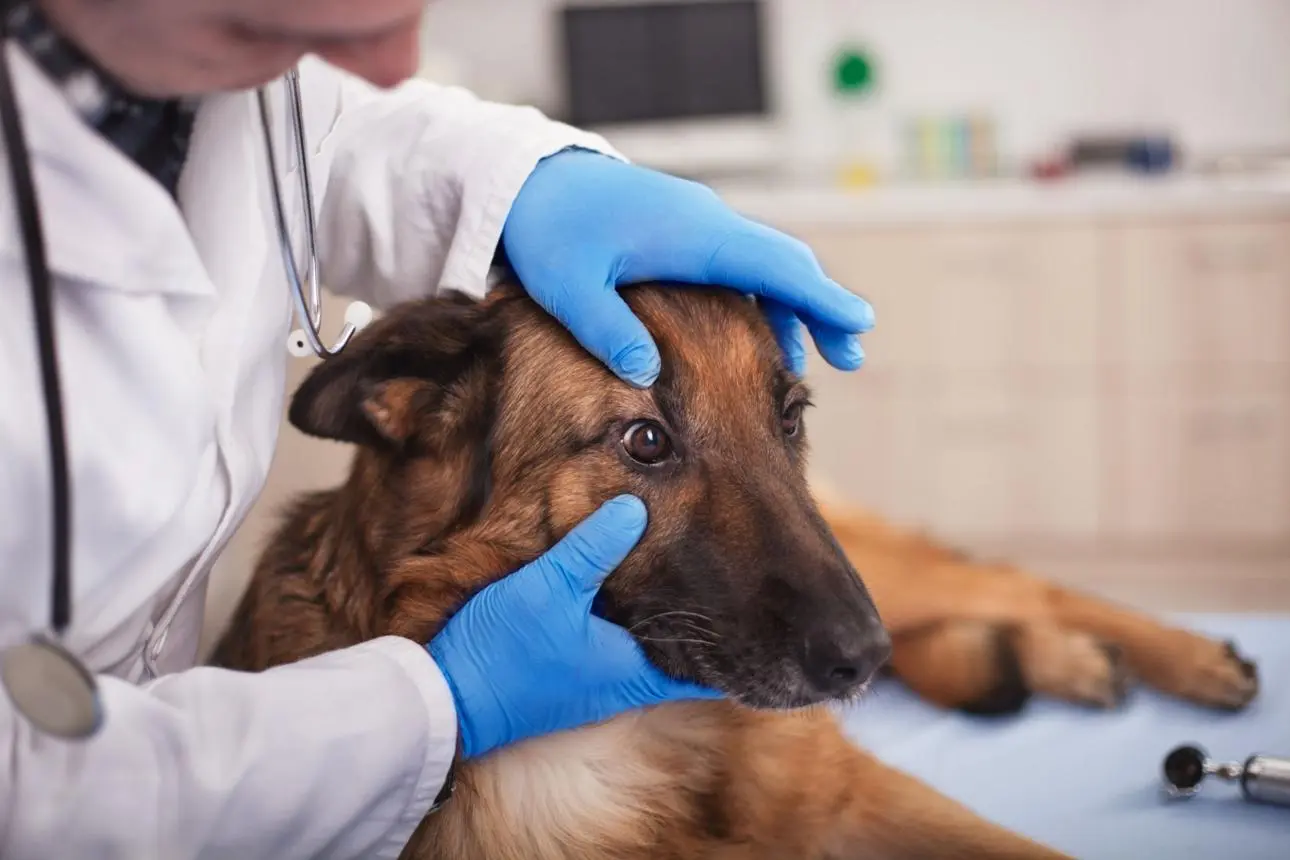
If you’ve ever looked at your dog and noticed swollen or puffy eyes, it can instantly raise concern. Is it just allergies? Did something get into their eye? Or could it be something more serious? Dog puffy eyes can range from mild irritation to signs of infections, injuries, or even underlying health conditions. The challenge is that many causes look similar at first, making it difficult for pet owners to know when to relax—and when to act fast. Ignoring it could risk your dog’s comfort or even their vision… but overreacting can also lead to unnecessary stress. So how do you know what’s really going on?
That’s exactly what we’re going to break down—so you can confidently understand what your dog’s eyes are trying to tell you.
Quick Solution (For Busy Pet Owners)
If your dog has puffy eyes, start by checking a few key things:
- Is it one eye or both eyes?
- Are there other symptoms like discharge, redness, or pain?
- Did it happen suddenly or gradually?
Mild cases (like allergies or dust irritation) can often improve with basic care such as gentle cleaning and monitoring.
Severe cases (like swelling, pain, or discharge) require immediate veterinary attention.
Golden Rule: If your dog is in pain, squinting, or the eye looks unusual (cloudy, bulging, or very red), don’t wait—get professional help.
Want to understand exactly what’s causing it and how to treat it properly? Let’s dive deeper.
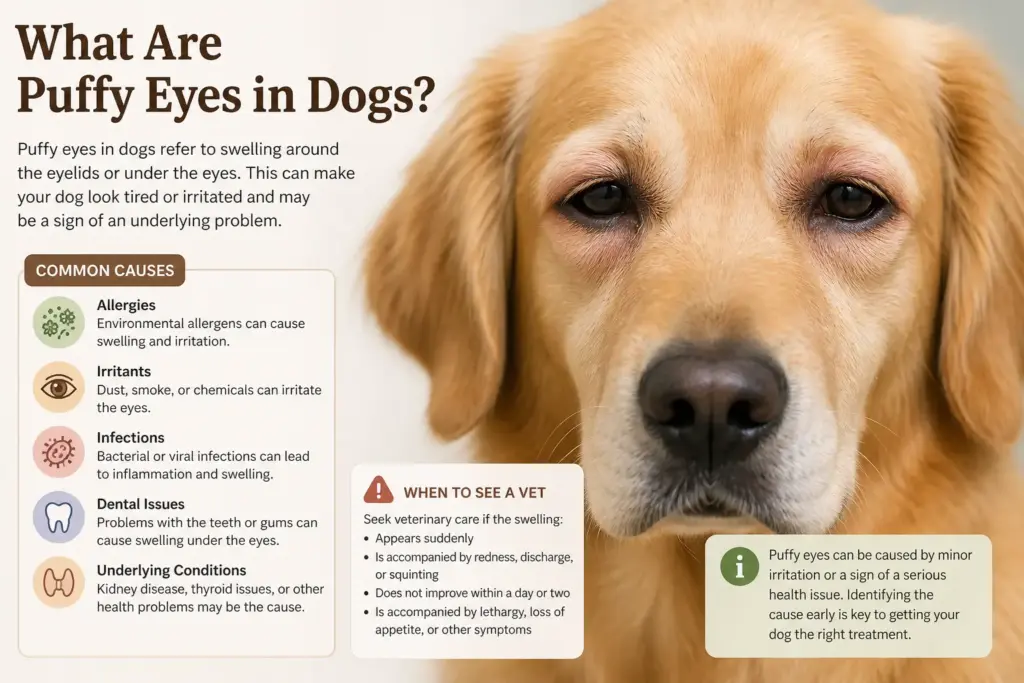
2. What Are Puffy Eyes in Dogs?
Definition
Puffy eyes in dogs refer to swelling around the eye area, including:
- Eyelids
- Tissue around the eye
- Sometimes the eye itself
This swelling can be temporary or persistent, depending on the cause.
Types of Eye Swelling
Understanding the type of swelling is the first step in identifying the issue:
| Type of Swelling | Description | Possible Causes |
|---|---|---|
| Swollen eyelid | Puffy or inflamed eyelid | Allergies, insect bites, infections |
| Swollen eyeball | Eye appears enlarged or bulging | Glaucoma, trauma |
| One eye affected | Only one eye is swollen | Injury, foreign object, dental issue |
| Both eyes affected | Swelling in both eyes | Allergies, systemic illness |
Key Medical Terms You Should Know
When researching or visiting a vet, you may hear these terms:
- Conjunctivitis (Pink Eye):
Inflammation of the eye lining, often causing redness and discharge - Blepharitis:
Inflammation of the eyelids, leading to swelling, itching, and irritation
For a deeper understanding of eye inflammation, check this helpful guide on
common dog eye problems and symptoms.
Why Puffy Eyes Shouldn’t Be Ignored
Even though some cases are harmless, others can escalate quickly. Eye issues can:
- Affect your dog’s vision
- Cause pain and discomfort
- Lead to chronic conditions if untreated
According to veterinary experts, early diagnosis is key—especially for conditions like glaucoma or infections.
You can explore more about warning signs in this detailed resource on
why your dog’s eye is swollen.
3. Common Causes of Puffy Eyes in Dogs (Core Section)
This is the most important part—because understanding the cause determines the treatment.
3.1 Allergies (Most Common Cause)
Allergies are the #1 reason behind puffy eyes in dogs.
Common Triggers:
- Pollen
- Dust mites
- Mold
- Food ingredients
- Insect bites or stings
Symptoms:
- Itchy eyes
- Watery discharge
- Sneezing
- Facial swelling
Pros & Cons of Allergy-Related Puffy Eyes
| Pros | Cons |
|---|---|
| Usually not life-threatening | Can become chronic |
| Often easy to manage | Causes discomfort |
| Responds well to treatment | May require long-term care |
Important Insight
If both eyes are swollen and your dog is itching, allergies are the most likely cause.
3.2 Eye Infections
Eye infections can be caused by:
- Bacteria
- Viruses
- Fungi
Common Symptoms:
- Yellow or green discharge
- Redness
- Swelling
- Crust around eyes
Pros & Cons of Eye Infections
| Pros | Cons |
|---|---|
| Treatable with medication | Can worsen quickly |
| Diagnosis is straightforward | May spread if untreated |
| Recovery is usually fast | Requires vet visit |
eye infections in dogs and treatments
3.3 Injuries & Trauma
Dogs are naturally curious—and sometimes that leads to accidents.
Common Causes:
- Scratches from other animals
- Running into objects
- Rough play
- Exposure to sharp debris
Warning Signs:
- Sudden swelling
- Squinting
- Cloudy eye
- Sensitivity to light
Pros & Cons of Trauma-Related Swelling
| Pros | Cons |
|---|---|
| Often visible cause | Can damage vision |
| Immediate symptoms | Painful for the dog |
| Treatable if caught early | May require urgent care |
3.4 Foreign Objects & Irritants
Sometimes the problem is as simple as something stuck in your dog’s eye.
Common Irritants:
- Dust
- Sand
- Grass seeds
- Chemicals (shampoo, cleaning products)
Signs to Watch:
- Excessive blinking
- Tearing
- Pawing at the eye
Pros & Cons
| Pros | Cons |
|---|---|
| Often easy to fix | Can cause infection |
| Quick relief after removal | May scratch the eye |
| No long-term issue if treated | Needs careful handling |
Pro Tip
Never try to remove deep objects yourself—this can make things worse.
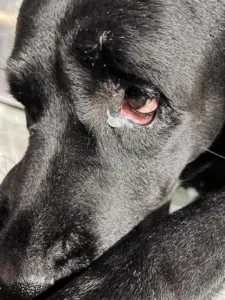
3.5 Conjunctivitis (Pink Eye)
One of the most frequently diagnosed eye conditions in dogs is conjunctivitis, commonly known as pink eye.
What Is It?
It’s the inflammation of the conjunctiva—the thin membrane covering the eye and inner eyelid.
Causes of Conjunctivitis
- Allergies
- Bacterial or viral infections
- Irritants (dust, smoke, chemicals)
- Underlying eye conditions
Symptoms
- Red or bloodshot eyes
- Puffy eyelids
- Watery or sticky discharge
- Frequent blinking or squinting
Pros & Cons of Conjunctivitis
| Pros | Cons |
|---|---|
| Very common and treatable | Can become chronic |
| Often resolves quickly with meds | May indicate deeper issue |
| Easy to diagnose | Contagious in some cases |
Key Insight
If your dog has red, swollen eyes with discharge, conjunctivitis is one of the top suspects.
3.6 Eyelid Disorders (Blepharitis, Entropion)
Sometimes the problem isn’t the eye itself—but the eyelids.
Common Conditions
Blepharitis
- Inflammation of the eyelids
- Causes swelling, redness, crusting
Entropion
- Eyelid rolls inward
- Eyelashes rub against the eye → irritation
Symptoms
- Puffy, red eyelids
- Hair loss around eyes
- Crust or flakes
- Constant irritation
Pros & Cons
| Pros | Cons |
|---|---|
| Diagnosable by vet exam | Can be painful |
| Treatable (sometimes surgically) | May become chronic |
| Manageable with care | Can damage cornea |
Important Note
Certain breeds (like Bulldogs, Pugs, and Shar Peis) are more prone to eyelid issues.
3.7 Dental Problems (Hidden Cause!)
This one surprises many dog owners.
A tooth abscess can cause swelling under the eye, making it look like an eye issue.
How It Happens
- Infection in upper teeth spreads upward
- Creates swelling below or around the eye
Signs
- One-sided swelling
- Bad breath
- Difficulty eating
- Eye puffiness without discharge
Pros & Cons
| Pros | Cons |
|---|---|
| Treatable with dental care | Often misdiagnosed |
| Swelling reduces after treatment | Can become severe |
| Clear cause once identified | Requires vet intervention |
Key Insight
If only one eye is puffy, and your dog has dental issues—this could be the root cause.
3.8 Tear Duct Issues
Your dog’s eyes rely on tear ducts to stay clean and lubricated. When these get blocked…
Fluid builds up → leading to puffiness and discharge
Causes
- Blocked tear ducts
- Infection
- Congenital issues
Symptoms
- Constant watery eyes
- Tear stains
- Mild swelling
Pros & Cons
| Pros | Cons |
|---|---|
| Usually not painful | Chronic issue |
| Manageable with care | May require flushing |
| Slow progression | Can lead to infection |
Pro Tip
This is especially common in small breeds like Shih Tzus and Maltese.
3.9 Serious Medical Conditions
Sometimes, puffy eyes are a warning sign of something serious.
Major Conditions to Watch For
Glaucoma
- Increased pressure inside the eye
- Can cause blindness if untreated
Tumors
- Growths around or behind the eye
- May cause swelling or bulging
Autoimmune Diseases
- Body attacks its own tissues
- Leads to inflammation
Symptoms of Serious Conditions
- Bulging eye
- Vision loss
- Severe redness
- Persistent swelling
Pros & Cons
| Pros | Cons |
|---|---|
| Detectable with testing | Can be life-threatening |
| Some are treatable | May require surgery |
| Early treatment helps | Expensive care |
4. Symptoms That Accompany Puffy Eyes
Understanding symptoms helps you pinpoint the cause faster.
Common Symptoms List
- Redness
- Discharge (clear, yellow, or green)
- Squinting or blinking
- Pawing or rubbing eyes
- Cloudy or bulging eye
- Light sensitivity
Behavioral Changes
Don’t ignore these subtle signs:
- Lethargy
- Loss of appetite
- Irritability
- Avoiding light
Symptom Breakdown Table
| Symptom | Possible Cause |
|---|---|
| Clear discharge | Allergies |
| Yellow/green discharge | Infection |
| Sudden swelling | Allergy or injury |
| Bulging eye | Glaucoma |
| One eye only | Injury, dental issue |
Key Insight
Symptoms are like clues—the combination matters more than a single sign.
5. Puffy Eyes in One Eye vs Both Eyes
This is one of the most important diagnostic clues.
One Eye Puffy
Likely causes:
- Injury
- Foreign object
- Tooth abscess
Both Eyes Puffy
Likely causes:
- Allergies
- Systemic illness
- Environmental irritants
Quick Comparison Table
| Condition | One Eye | Both Eyes |
|---|---|---|
| Injury | ✅ | ❌ |
| Foreign object | ✅ | ❌ |
| Allergies | ❌ | ✅ |
| Infection | ✅/❌ | ✅ |
| Dental issue | ✅ | ❌ |
Why This Matters
This simple observation can:
- Help you act faster
- Guide home care vs vet visit
- Improve diagnosis accuracy
6. When Puffy Eyes in Dogs Are an Emergency
Not all cases are urgent—but some require immediate action.
The problem? Many serious eye conditions start looking mild.
Emergency Warning Signs
If you notice any of the following, don’t wait:
- Sudden, severe swelling
- Eye is completely swollen shut
- Difficulty breathing (possible allergic shock)
- Bulging or protruding eye
- Vision changes (bumping into objects)
- Severe pain (whining, avoiding touch)
- Thick yellow/green discharge
Emergency vs Non-Emergency Table
| Situation | Urgency Level | What to Do |
|---|---|---|
| Mild puffiness, no pain | Low | Monitor at home |
| Redness + discharge | Medium | Vet visit within 24–48 hrs |
| Sudden swelling + itching | High | Possible allergy → act quickly |
| Bulging eye or blindness | Critical | Immediate emergency care |
Key Insight
Eye problems escalate fast. Waiting even 24 hours in serious cases can risk permanent damage.
If you’re unsure, it’s always safer to err on the side of caution.
7. How Vets Diagnose Puffy Eyes in Dogs
Once you visit a vet, they follow a systematic approach to find the exact cause.
7.1 Physical Eye Examination
The vet will check:
- Swelling location
- Eye movement
- Light response
- Signs of pain or discharge
- This step alone can often identify allergies, injuries, or infections.
7.2 Fluorescein Stain Test
This is a simple but powerful test.
- A special dye is applied to the eye
- Highlights scratches or ulcers
Essential for detecting corneal damage.
7.3 Imaging (Advanced Cases)
Used when deeper issues are suspected:
- X-rays
- Ultrasound
- CT scans
Helps detect:
- Tumors
- Abscesses
- Internal damage
7.4 Tear Production Test
Checks if your dog produces enough tears.
- Helps diagnose dry eye (KCS)
- Prevents long-term irritation
7.5 Dental Examination
Especially important if swelling is under one eye.
Vets will check for:
- Tooth infections
- Abscesses
Pros & Cons of Veterinary Diagnosis
| Pros | Cons |
|---|---|
| Accurate diagnosis | Cost involved |
| Identifies root cause | May require multiple tests |
| Prevents complications | Time-consuming in complex cases |
Pro Tip
Early diagnosis = simpler treatment + lower cost.
8. Treatment Options for Dog Puffy Eyes
Treatment depends entirely on the cause, not just the symptom.
8.1 Home Care (Mild Cases Only)
For minor irritation or allergies, home care can help.
Safe Home Care Steps
- Clean the eye gently
Use a soft cloth or vet-approved wipes - Remove irritants
Keep your dog away from dust, smoke, chemicals - Monitor symptoms
Watch for worsening signs
Pros & Cons of Home Care
| Pros | Cons |
|---|---|
| Easy and cost-effective | Limited effectiveness |
| Good for mild cases | Risk of missing serious issue |
| Immediate relief | Not a permanent solution |
Important Rule
If symptoms don’t improve within 24–48 hours, stop home care and consult a vet.
8.2 Veterinary Treatments
For anything beyond mild irritation, professional treatment is required.
Common Treatments
1. Antibiotic Eye Drops
- Used for bacterial infections
- Reduces swelling and discharge
2. Antihistamines
- Used for allergies
- Reduces itching and inflammation
3. Anti-inflammatory Medications
- Helps reduce swelling and pain
4. Pain Relief Medications
- Keeps your dog comfortable
5. Surgery (Severe Cases)
Used for:
- Tumors
- Glaucoma
- Eyelid disorders
Pros & Cons of Veterinary Treatment
| Pros | Cons |
|---|---|
| Targets root cause | Costly in some cases |
| Faster recovery | May require follow-ups |
| Prevents complications | Requires vet access |
9. Home Remedies (Safe & Vet-Approved Tips)
If your dog’s puffy eyes are mild and not painful, you can try a few safe, vet-approved remedies at home.
1. Saline Eye Rinse
A sterile saline solution helps flush out:
- Dust
- Allergens
- Minor irritants
Use pet-safe saline only (not contact lens solution with additives).
2. Warm Compress
A warm, damp cloth can reduce swelling and soothe irritation.
How to do it:
- Soak cloth in warm (not hot) water
- Gently place over the eye for 2–3 minutes
- Repeat 2–3 times daily
3. Keep the Eye Area Clean
- Wipe away discharge regularly
- Prevent buildup of dirt or bacteria
4. Trim Hair Around Eyes
Long fur can trap:
- Dust
- Moisture
- Bacteria
Keeping it trimmed improves airflow and hygiene.
Pros & Cons of Home Remedies
| Pros | Cons |
|---|---|
| Natural and safe | Only for mild cases |
| Easy to do at home | Not a replacement for vet care |
| Provides quick relief | Can delay proper diagnosis |
What NOT to Do
Avoid these common mistakes:
- Don’t use human eye drops
- Don’t apply chemicals or herbal mixtures
- Don’t try to remove deep objects
- Don’t ignore worsening symptoms
Key Insight
Home remedies are helpful—but only when you’re 100% sure it’s a minor issue.
10. How to Prevent Puffy Eyes in Dogs
Prevention is always better than treatment—especially when it comes to eye health.
1. Regular Grooming
- Clean around the eyes weekly
- Trim excess fur
- Prevent buildup of irritants
2. Avoid Allergens
Try to reduce exposure to:
- Dust
- Pollen
- Smoke
- Harsh chemicals
3. Maintain Eye Hygiene Routine
- Use vet-approved eye wipes
- Check eyes daily for redness or discharge
4. Regular Vet Checkups
Routine visits help detect:
- Early infections
- Chronic conditions
- Hidden issues like dental problems
5. Protect from Injuries
- Avoid rough play with aggressive dogs
- Be careful in areas with sharp objects
- Monitor outdoor activities
Pros & Cons of Prevention
| Pros | Cons |
|---|---|
| Reduces risk of issues | Requires consistency |
| Saves vet costs long-term | Takes time and effort |
| Keeps your dog comfortable | Not 100% foolproof |
Pro Tip
Dogs with flat faces (Pugs, Bulldogs) or long hair need extra eye care.
11. Frequently Asked Questions (FAQ)
This section targets real user queries and boosts SEO.
Why does my dog have puffy eyes all of a sudden?
Sudden puffiness is usually caused by:
- Allergic reaction
- Insect bite
- Injury
If swelling appears quickly, monitor closely—it may require urgent care.
Can allergies cause swollen eyes in dogs?
Yes—this is the most common cause.
Allergies can trigger:
- Itching
- Redness
- Watery discharge
- Facial swelling
Is dog eye swelling contagious?
- Allergies & injuries: ❌ Not contagious
- Infections (bacterial/viral): ✅ Can be contagious
Keep infected dogs away from others until treated.
How long do swollen eyes last in dogs?
- Mild cases: 1–2 days
- Allergies: A few days with treatment
- Infections: Several days (with medication)
If it lasts more than 48 hours, consult a vet.
Can I treat my dog’s eye at home?
Yes, but only if:
- Symptoms are mild
- No pain or discharge
- No vision changes
Otherwise, always seek professional care.
Quick Action Guide (At-a-Glance)
| Situation | What You Should Do |
|---|---|
| Mild swelling, no pain | Clean & monitor |
| Itching + both eyes | Likely allergies |
| One eye swollen | Check for injury or object |
| Discharge present | Visit vet |
| Severe swelling/pain | Emergency care |
12. Conclusion
Dog puffy eyes can range from something as simple as dust irritation… to serious conditions like infections, glaucoma, or even tumors.
The key takeaway:
- Don’t ignore eye swelling
- Observe symptoms carefully
- Act quickly when needed
Final Recap
- Common causes: Allergies, infections, injuries
- Serious risks: Glaucoma, tumors, autoimmune diseases
- Best approach: Early detection + proper care
Final Advice
If you’re ever unsure, trust your instincts.
It’s always better to check early than risk your dog’s vision or comfort.