
If you share your life with a dog, you’ve probably experienced that moment: your dog yawns, licks your face, or comes in close for a cuddle—and suddenly you’re hit with a smell that makes you pull back. Dog breath stinks, and many owners brush it off as normal. After all, dogs lick everything, right?
But here’s the truth most people don’t realize: bad breath in dogs is not just a cosmetic issue. While a mild odor can be normal, strong, persistent, or worsening breath is often your dog’s way of signaling that something isn’t right.
In many cases, foul-smelling dog breath points to dental disease, poor oral hygiene, or diet issues. In more serious situations, it can be an early warning sign of kidney disease, diabetes, liver problems, or oral infections. Ignoring it doesn’t just mean dealing with unpleasant kisses—it can allow underlying health problems to quietly progress.
In this guide, you’ll learn:
- Why dog breath smells bad
- The most common and serious causes
- How to tell when bad breath is a problem
- What you can do at home—and when to see a vet
By the end, you’ll know exactly how to handle stinky dog breath and protect your dog’s long-term health.
2. What Is Halitosis in Dogs?
The medical term for bad breath—whether in humans or animals—is halitosis. In dogs, halitosis refers to any persistent, unpleasant odor coming from the mouth that goes beyond a mild “doggy smell.”
How common is halitosis in dogs?
Very common. In fact, studies show that over 80% of dogs show signs of dental disease by age three, and bad breath is often the first noticeable symptom. According to veterinary experts at PetMD’s guide on dog bad breath causes, most cases of halitosis are linked directly to oral health issues.
Why halitosis matters
Bad breath isn’t just unpleasant—it’s usually caused by bacteria producing sulfur compounds inside your dog’s mouth. These bacteria don’t stay confined to the teeth and gums. Over time, they can enter the bloodstream, potentially affecting the heart, kidneys, and liver.
In short: halitosis is often a symptom, not the problem itself.
3. Common Causes of Stinky Dog Breath
There isn’t just one reason dog breath stinks. In most cases, it’s a combination of oral hygiene, diet, and habits. Let’s break down the most common causes.
3.1 Poor Dental Hygiene & Plaque Buildup
This is the number one reason dogs develop bad breath.
Just like humans, dogs build up plaque on their teeth. Plaque is a sticky film of bacteria that forms after eating. If it isn’t removed, it hardens into tartar, which creates the perfect environment for odor-producing bacteria to thrive.
Over time, this leads to:
- Persistent bad breath
- Yellow or brown buildup on teeth
- Red, inflamed gums
- Pain while chewing
Veterinary dental experts at Chewy’s dog oral health resource explain that once tartar hardens, brushing alone can’t remove it—it requires professional cleaning.
Why plaque causes odor
The bacteria in plaque release volatile sulfur compounds, the same chemicals responsible for rotten egg smells. That’s why breath caused by dental issues often smells especially foul.
3.2 Periodontal (Gum) Disease
When plaque and tartar aren’t addressed, dogs can develop periodontal disease, a serious and painful condition affecting the gums and bone that support the teeth.
This disease progresses in stages:
- Gingivitis – red, swollen gums that may bleed
- Early periodontal disease – gum recession and infection
- Advanced periodontal disease – tooth loss, bone damage, severe infection
At advanced stages, the odor becomes strong and constant. The smell often worsens because bacteria thrive in infected gum pockets where food and debris get trapped.
According to VCA Animal Hospitals’ dental disease overview, periodontal disease doesn’t just affect the mouth—it can contribute to heart and organ complications if left untreated.
3.3 Diet and Eating Habits
What your dog eats—and what they shouldn’t eat—plays a big role in breath odor.
Foods that contribute to bad breath
- Low-quality dog food with excessive fillers
- Strong-smelling proteins
- Sticky treats that cling to teeth
But diet issues don’t stop there.
Problematic behaviors
Some dogs develop habits that significantly worsen breath, including:
- Eating garbage
- Consuming spoiled food
- Coprophagia (eating feces)
Dogs that eat feces often develop a strong, sour, or fecal odor that brushing alone won’t fix. According to Pet Direct Pharmacy’s explanation of dog breath smells, these habits can also introduce harmful bacteria into the mouth.
3.4 Foreign Objects in the Mouth
Sometimes, the cause of bad breath is surprisingly simple.
Dogs love to chew—and sometimes pieces of:
- Sticks
- Bones
- Toys
- Rawhide
can become lodged between teeth or under the gums.
When this happens:
- Bacteria quickly multiply
- Infection develops
- A sudden, strong odor appears
If your dog’s breath suddenly becomes foul overnight—especially if they’re pawing at their mouth or refusing food—a foreign object could be the culprit. This situation often requires veterinary removal to prevent abscesses or gum damage.
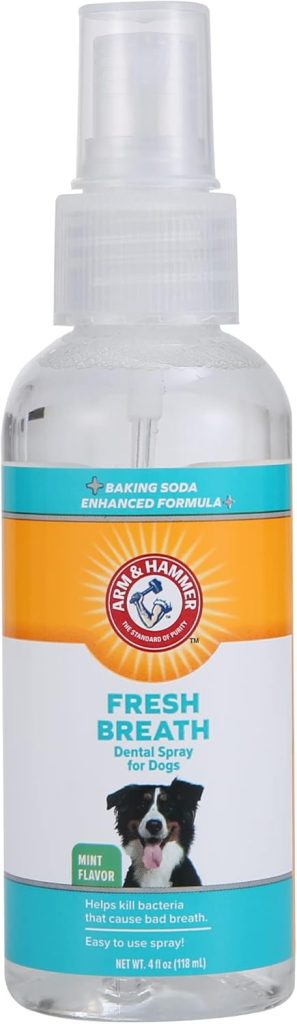
Arm & Hammer for Pets Dog Oral Care Spray
Arm & Hammer for Pets Dog Oral Care Spray, Mint Flavor Breath Freshener & Teeth Cleaning, Baking Soda Enhanced Plaque & Tartar Support, Easy…
Quick Summary: Common Causes of Dog Breath That Stinks
| Cause | Why It Smells | How Serious |
|---|---|---|
| Plaque & tartar | Bacterial sulfur compounds | Moderate to severe |
| Gum disease | Infected gum pockets | High |
| Poor diet | Food residue & bacteria | Mild to moderate |
| Eating feces/garbage | Harmful bacteria | Moderate |
| Foreign objects | Localized infection | High |
4. When Stinky Dog Breath Is a Sign of Something More Serious
Sometimes bad breath really is “just breath.” Other times, it’s the body quietly waving a red flag.
If your dog’s breath smells unusually strong, different than before, or suddenly worse, it’s worth paying closer attention. Certain internal health issues change the way a dog’s breath smells, and those changes can be surprisingly specific.
4.1 Kidney Disease and Ammonia-Like Breath
One of the most concerning smells owners describe is a breath odor that reminds them of ammonia, urine, or cleaning chemicals.
This type of smell can be linked to kidney disease.
When a dog’s kidneys aren’t working properly, waste products build up in the bloodstream instead of being filtered out. Those toxins eventually affect the mouth, causing a sharp, chemical-like odor.
You might also notice:
- Increased thirst
- More frequent urination
- Weight loss
- Lethargy
- Mouth ulcers
Bad breath alone doesn’t confirm kidney disease, but when paired with these signs, it’s not something to ignore.
4.2 Liver Disease and Musty or Sweet Odors
Liver issues can cause a musty, slightly sweet, or moldy smell coming from a dog’s mouth. Some owners describe it as a “rotting” or “fermented” odor that doesn’t improve with brushing.
The liver plays a huge role in detoxifying the body. When it struggles, toxins circulate and affect breath odor.
Other warning signs may include:
- Yellowing of gums or eyes
- Vomiting or diarrhea
- Loss of appetite
- Behavioral changes
- Abdominal swelling
This kind of breath change is subtle at first, which is why many owners overlook it until other symptoms become obvious.
4.3 Diabetes and Sweet or Fruity Breath
If your dog’s breath smells oddly sweet, fruity, or like nail polish remover, diabetes may be involved.
This scent comes from ketones, chemicals produced when the body can’t use glucose properly. It’s a very distinct smell and different from normal bad breath caused by plaque or food.
Dogs with diabetes often show:
- Excessive thirst
- Increased urination
- Sudden weight loss
- Fatigue
- Changes in appetite
Fruity breath combined with these symptoms should be treated as urgent.
4.4 Oral Tumors, Growths, and Infections
Not all bad breath is caused by teeth or internal organs. Sometimes the problem is physical damage or abnormal growth inside the mouth.
Tumors, abscesses, or infected wounds can produce a strong, decaying smell that seems localized rather than general.
Clues to look for:
- Bleeding from the mouth
- One-sided chewing
- Dropping food
- Swelling around the jaw
- Visible lumps on gums or tongue
These cases often produce a smell that brushing doesn’t touch at all.
5. Symptoms That Often Come With Bad Dog Breath
Bad breath rarely travels alone. Most of the time, it’s accompanied by other small changes that are easy to miss if you’re not actively watching for them.
Here are some common signs that suggest bad breath is more than a minor issue:
Physical Signs
- Excessive drooling, especially thicker saliva
- Bleeding gums or blood on chew toys
- Loose or discolored teeth
- Pawing at the mouth
- Facial swelling
Eating & Behavior Changes
- Chewing on one side
- Dropping kibble
- Avoiding hard food or treats
- Reduced interest in play
- Irritability or withdrawal
Dogs are very good at hiding pain. Bad breath is often one of the earliest outward signs that discomfort is already present.
6. How to Figure Out What’s Causing Your Dog’s Bad Breath
You don’t need veterinary tools to start investigating. A lot can be learned with a simple, calm check at home.
What You Can Safely Check at Home
- Look at the gums: healthy gums are pink, not red or swollen
- Check the teeth for yellow or brown buildup
- Smell the breath closely (unpleasant, but helpful)
- Look for foreign objects stuck between teeth
- Note any changes in eating or behavior
If your dog resists mouth handling or shows pain, stop. That’s information in itself.
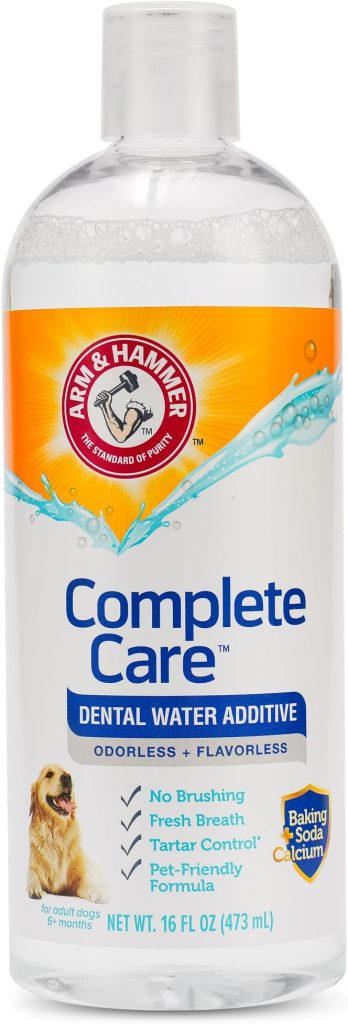
Arm & Hammer Dog Dental Water
Arm & Hammer Dog Dental Water Additive Breath Freshener, Odorless Flavorless Oral Care Solution for Plaque and Tartar Control, Daily No Brush Dental Support for Dogs, 16 Fl Oz
What a Veterinarian Will Look For
When bad breath persists, a vet visit is the safest next step. A veterinarian typically evaluates:
- Full oral exam (often under sedation if needed)
- Gum pocket depth
- Tooth stability
- Signs of infection or decay
Depending on findings, they may recommend:
- Blood tests (kidney, liver, glucose levels)
- Urine testing
- Dental X-rays
- Imaging for tumors or abscesses
The goal isn’t just to fix the smell, but to identify what’s causing it beneath the surface.
Why Early Diagnosis Matters
Dental disease and internal illness don’t stay contained. Bacteria from the mouth can enter the bloodstream and affect the heart, kidneys, and liver over time.
Catching problems early:
- Reduces pain
- Lowers treatment costs
- Improves lifespan and quality of life
In other words, addressing bad breath early isn’t overreacting—it’s responsible care.
7. What Actually Helps Fix Bad Dog Breath
There’s no single magic fix for bad breath. What works depends on why your dog’s breath stinks in the first place. That said, there are a few approaches that consistently make a real difference when done properly.
7.1 Professional Dental Cleaning (Why It Matters More Than People Think)
If your dog already has heavy tartar buildup or gum disease, home care alone usually won’t solve the problem. In those cases, a professional dental cleaning isn’t optional—it’s necessary.
During a vet-led dental cleaning:
- Tartar is removed above and below the gum line
- Infected pockets are cleaned
- Loose or damaged teeth are assessed
- Dental X-rays may reveal hidden issues
Many owners hesitate because of anesthesia, but untreated dental disease is far riskier in the long run. Once plaque hardens into tartar, brushing can’t remove it—no matter how often you try.
Think of professional cleaning as a reset. Everything else works better after that.
7.2 Daily Oral Care at Home (What’s Realistic and What’s Not)
Let’s be honest. Most dogs aren’t thrilled about having their teeth brushed. That doesn’t mean you shouldn’t try—it just means expectations need to be realistic.
Brushing (Even a Few Times a Week Helps)
- Use dog-safe toothpaste only (never human toothpaste)
- Start slow—short sessions, calm tone
- Focus on outer tooth surfaces where plaque builds fastest
Daily brushing is ideal. A few times a week is still far better than nothing.
Dental Chews & Toys
Dental chews don’t replace brushing, but they do help reduce plaque mechanically. Look for chews designed to clean teeth, not just flavored treats.
Hard toys that encourage chewing can also help scrape buildup—just avoid anything hard enough to crack teeth.
Water Additives & Rinses
Water additives can reduce odor-causing bacteria, especially for dogs who won’t tolerate brushing. They’re not miracle cures, but they can noticeably improve breath over time.
7.3 Diet Changes That Actually Improve Breath
Food plays a bigger role in breath than many people realize.
Low-quality diets often leave sticky residue on teeth and fuel bacterial growth. Switching to higher-quality, balanced dog food can reduce odor within weeks.
Helpful diet tips:
- Choose food with real protein sources
- Avoid excessive fillers
- Limit soft, sticky treats
- Don’t share table scraps regularly
If your dog has a habit of eating garbage or feces, addressing that behavior is just as important as brushing. No oral routine can fully compensate for that habit.
8. How to Prevent Dog Breath From Getting Bad Again
Once bad breath improves, the goal becomes keeping it that way.
Prevention doesn’t require perfection. It requires consistency.
Simple Habits That Make a Big Difference
- Brush teeth regularly (as often as your dog allows)
- Offer dental chews a few times a week
- Check the mouth occasionally for redness or buildup
- Schedule routine vet checkups
- Address chewing habits early
Dogs rarely develop severe dental disease overnight. It builds slowly, which means you usually have time to intervene—if you’re paying attention.
9. Frequently Asked Questions About Dog Breath
Is bad breath ever normal in dogs?
Mild odor can be normal. Strong, foul, or worsening breath is not. If it smells bad enough to make you recoil, it deserves attention.
How often should I brush my dog’s teeth?
Ideally, daily. Realistically, a few times a week still provides meaningful benefits. Even irregular brushing is better than none.
When should I worry about dog breath?
You should be concerned if:
- The smell suddenly changes
- It becomes very strong
- It smells chemical, sweet, or rotten
- Your dog shows behavior or appetite changes
Bad breath combined with other symptoms should always be checked.
10. Final Thoughts: Why Bad Breath Deserves Attention
It’s easy to laugh off stinky dog breath. Many people do. But in reality, it’s often one of the earliest and most visible signs that something isn’t right.
Sometimes the fix is simple—better dental care, improved food, a few habit changes. Other times, bad breath is the first hint of a deeper health issue that needs veterinary attention.
Either way, paying attention to your dog’s breath isn’t overprotective. It’s part of responsible care.
Your dog may not be able to say, “Something feels off,” but their breath often says it for them.