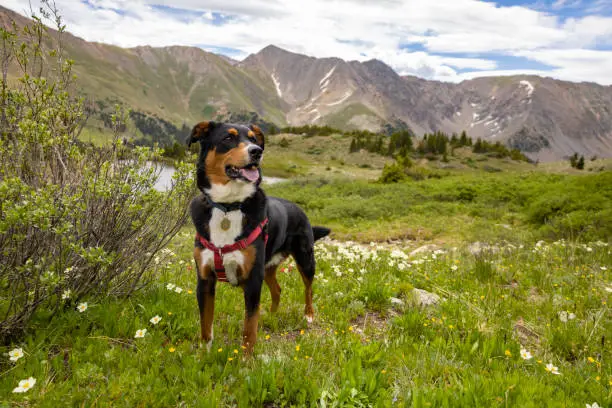
If you’ve been researching livestock guardian dogs (LGDs) and keep running into the term Colorado Mountain Dog, you’re not alone. Over the past few years, this breed has gained attention among small farm owners, homesteaders, and rural families who want protection for their animals without constant roaming, excessive barking, or aggression toward visitors.
This guide is written for people who want real-world clarity, not hype.
What this guide covers
In this complete guide, you’ll learn about:
- The history and development of the Colorado Mountain Dog
- Temperament and behavior, especially around people and visitors
- Size, coat, and appearance
- Training and socialization for farm and family life
- Working ability as a livestock guardian dog
- Whether a CMD is a good family fit
- How to evaluate breeders and puppies responsibly
Whether you’re guarding goats, chickens, sheep, or simply protecting a rural property, this guide will help you decide if this breed truly matches your lifestyle.
Why people search “Colorado Mountain Dog”
Most people looking up this breed are searching for something very specific:
- A livestock guardian dog that accepts human visitors
- A dog suitable for small acreage farms or hobby farms
- Protection against coyotes, foxes, stray dogs, and even mountain lions
- An LGD with lower roaming and more controlled barking than traditional guardians
Many standard LGDs excel at protection but struggle with modern farm realities like delivery drivers, neighbors, children, or frequent guests. The Colorado Mountain Dog was intentionally developed to address this gap.
Quick snapshot: What makes the Colorado Mountain Dog different
Colorado Mountain Dogs are not designed to be “softer” guardians — they are designed to be smarter about people.
Key distinguishing traits include:
- Natural acceptance of calm, non-threatening visitors
- Strong livestock bonding without excessive aggression
- Lower tendency to roam when properly bonded and fenced
- Balanced alert barking, not nonstop noise
- A temperament that works for working farms that also function as homes
This combination is what separates the CMD from many traditional LGDs.

Important note: Colorado Mountain Dog vs Bernese Mountain Dog
One of the most common points of confusion online is between:
- Colorado Mountain Dog, and
- Bernese Mountain Dog living in Colorado
They are not the same thing.
| Feature | Colorado Mountain Dog | Bernese Mountain Dog |
|---|---|---|
| Purpose | Livestock guardian | Companion / working draft dog |
| Guarding instinct | Strong | Minimal |
| Visitor response | Calm but alert | Friendly, non-guarding |
| Farm suitability | Excellent | Limited |
| Breed origin | Purpose-bred LGD | Swiss companion breed |
If someone is describing a gentle, fluffy pet with no guarding role, they are almost certainly talking about a Bernese Mountain Dog, not a Colorado Mountain Dog.
What Is a Colorado Mountain Dog?
A Colorado Mountain Dog (CMD) is a purpose-bred livestock guardian dog developed in the United States to combine effective predator deterrence with human-friendly behavior.
Unlike many ancient LGD breeds that evolved in isolated regions, the CMD was intentionally developed for modern farms, especially those where people, children, neighbors, and service workers are part of daily life.
Origin story: the “Caspian” foundation
The breed’s development traces back to a foundation dog named Caspian, whose temperament stood out among traditional LGDs.
Caspian demonstrated:
- Strong natural guarding instincts
- Exceptional calmness around humans
- Low reactivity toward visitors
- Reliable bonding with livestock
Breeders recognized that these traits were rare but extremely valuable for small and mid-size farms. Over time, dogs with similar characteristics were selectively bred, forming what is now known as the Colorado Mountain Dog.
What the founders were selecting for
The goal was never to create a “pet LGD.” Instead, breeders focused on:
- Farm-appropriate protection without unnecessary aggression
- Visitor tolerance without sacrificing guarding instincts
- Predictable temperament, even under pressure
- Reduced roaming behaviors
- Dogs that could live near the home, not miles away from it
This careful selection is why CMDs are often described as calm, steady, and thoughtful guardians rather than reactive or overly territorial.

Buckle-Down Plastic
Buckle-Down Plastic Clip Collar – Colorado Flag/Mountain Silhouette Yellow – 1″ Wide – Fits 15-26″ Neck – Large
Is the Colorado Mountain Dog AKC recognized?
No — the Colorado Mountain Dog is not recognized by the AKC, and this is intentional.
CMDs are typically associated with:
- Colorado Mountain Dog Association
- Independent working-dog registries and breeder networks
For buyers, this means:
- Function matters more than appearance
- Temperament and working ability take priority over show standards
- Responsible breeder evaluation becomes especially important
AKC recognition is not a requirement for a dog to be healthy, stable, or effective at its job.
CMD “type” and lineage
Colorado Mountain Dogs are not a single closed genetic line in the traditional sense. Instead, they represent a type defined by temperament, structure, and working behavior.
Typical contributing LGD breeds
Depending on the breeder, CMD lines may include influence from:
- Great Pyrenees-type guardians
- Anatolian or Central Asian guardian lines
- Other established LGDs selected for calmness and reliability
Each contributing breed brings specific traits, such as size, endurance, or coat type.
Why DNA tests can vary
Because CMDs are purpose-bred rather than closed-registry dogs, DNA tests often show mixed LGD ancestry.
This is normal and expected.
What matters more than the DNA breakdown is:
- How the dog behaves with livestock
- How it responds to people
- Whether it meets the functional goals of the breed
Colorado Mountain Dog Temperament and Behavior
Temperament is where the Colorado Mountain Dog truly stands apart.
The signature trait: acceptance of human visitors
Most LGDs are suspicious of strangers by default. CMDs are different.
A well-bred CMD typically:
- Alerts to new arrivals
- Observes calmly
- Accepts visitors once the owner signals approval
- Does not escalate unnecessarily
In real life, this looks like:
- A dog standing between livestock and a visitor
- Calm posture, minimal vocalization
- No lunging, snapping, or panic
This trait makes CMDs especially valuable on farms with frequent foot traffic.
Guardian instincts: what they protect and how
Colorado Mountain Dogs are livestock guardians first, not personal protection dogs.
Livestock guarding vs pet protection
CMDs are bred to:
- Bond with animals, not objects or territory
- Deter predators through presence, posture, and confidence
- Escalate only when a real threat appears
They are not trained attack dogs and should not be treated as such.
Predator pressure scenarios
CMDs are commonly used against:
- Coyotes
- Foxes
- Stray dogs
- Bobcats
In high-pressure regions with mountain lions or wolves, multiple dogs may be required. CMDs often work best in pairs or teams in these environments.
Barking, roaming, and boundary habits
No LGD is silent — but CMDs are known for intentional barking.
What “low roaming” actually depends on
Roaming is influenced by:
- Bonding quality with livestock
- Property size and fencing
- Early training and supervision
CMDs tend to stay closer to their assigned animals than many traditional LGDs when properly raised.
Preventing nuisance barking
Common barking triggers include:
- Wildlife movement at night
- Unfamiliar sounds
- Poor boundary clarity
Prevention strategies:
- Clear routines
- Secure fencing
- Proper livestock bonding from puppyhood
Family life with a Colorado Mountain Dog
Despite being working dogs, CMDs often integrate well into family life.
CMDs with kids and guests
They typically:
- Remain calm around children
- Observe rather than react
- Require supervision during early socialization
Red flags include:
- Excessive nervousness
- Over-protectiveness toward people
- Inability to settle
CMDs with other animals
With early exposure, CMDs can coexist with:
- Dogs
- Cats
- Chickens
- Goats
- Sheep
Early and consistent socialization is critical during puppyhood.
Colorado Mountain Dog: Size, Training, Health, and Real-World Care
In Part 1, we covered the origins, temperament, and working philosophy behind the Colorado Mountain Dog (CMD).
Now, in Part 2, we’ll go deeper into the practical side of living and working with this breed — what they look like, how much work they need, how they mature, and what kind of care they realistically require.
This section is especially important if you’re asking:
- Can I physically manage a CMD?
- What does daily life actually look like?
- Is this breed suitable for my land, animals, and schedule?
Size, Appearance, Coat, and Colors (What a CMD Looks Like)
Colorado Mountain Dogs are large, athletic livestock guardians, but they tend to be leaner and more agile than some heavier LGD breeds.
Height, weight, and body type
While exact size varies by bloodline, most adult CMDs fall within these general ranges:
| Trait | Typical Range |
|---|---|
| Height | 25–30 inches |
| Weight | 85–120 lbs |
| Build | Tall, balanced, athletic |
| Bone density | Moderate (not bulky) |
CMDs often appear lighter on their feet compared to breeds like Great Pyrenees. This structure helps with:
- Covering terrain efficiently
- Staying mobile around livestock
- Enduring long hours outdoors
A well-built CMD should look strong but not heavy, capable of movement rather than brute force.

Sporn Large/XL No Pull Dog Harness
Sporn Large/XL No Pull Dog Harness for Large Dogs – Black Mesh Body, Durable Nylon, Breathable, Easy to Put On, No Choke, Padded, Adjustable, XL Dog Harness…
Coat types and shedding reality
CMDs have a double coat, designed to protect them from:
- Snow and cold winters
- Hot summer sun
- Rain, wind, and debris
What to expect:
- Moderate shedding most of the year
- Heavy seasonal shedding (spring and fall “coat blow”)
- Weather-resistant outer coat
- Dense insulating undercoat
This is not a low-shedding breed. Anyone considering a CMD should be comfortable with fur, brushing, and seasonal coat maintenance.
Colors and markings
CMDs come in a wide range of traditional LGD colors. Common variations include:
- White or mostly white
- Badger markings
- Cream, fawn, or tan
- Brindle or darker facial markings
Color is not prioritized in breeding decisions. Function and temperament always come first.
Colorado Mountain Dog Exercise, Training, and Socialization
CMDs are not hyperactive dogs, but they are purpose-driven workers. Their exercise needs are different from sporting or herding breeds.
Training goals (LGD-specific)
The primary goal is bonding, not obedience tricks.
CMD training focuses on:
- Bonding with livestock
- Learning property boundaries
- Calm responses to daily farm activity
- Respectful behavior around people
Unlike pet dogs, CMDs are not designed for constant command-based training. They think independently and act based on judgment.
Bonding with livestock vs bonding with family
One of the most important balancing acts with CMDs is ensuring they:
- Bond strongly to livestock
- Still accept human handling and direction
Best practices include:
- Raising puppies near livestock from an early age
- Daily calm interaction with humans
- Clear expectations, not harsh correction
A well-bonded CMD sees livestock as their responsibility and humans as leaders, not threats.
Early exposure checklist (critical window)
The first year of a CMD’s life shapes everything. During this period, they should safely experience:
- Children and adults
- Farm vehicles and equipment
- Delivery drivers
- Veterinarian handling
- Other animals
Controlled exposure prevents fear-based reactions later in life.
“Farm manners” and property behavior
CMDs should learn:
- Calm fence greetings
- Not jumping on people
- Not barging through doors or gates
- Respect for food and space
These behaviors are shaped through routine, consistency, and supervision, not force.
Adolescent stage: the toughest months (6–18 months)
This phase is where many owners struggle.
Common adolescent behaviors include:
- Boundary testing
- Ignoring cues they previously followed
- Rough play with livestock
- Increased independence
This stage passes with patience. Overcorrecting often creates long-term problems. Calm guidance and consistency are key.
Health, Lifespan, and Veterinary Care
Colorado Mountain Dogs are generally robust, working-bred dogs, but responsible care still matters.
What to ask breeders about health selection
Responsible breeders should discuss:
- Hip and joint soundness in parent dogs
- Longevity within the line
- Stable, predictable temperaments
- Absence of fear or aggression issues
Avoid breeders who focus only on appearance or make unrealistic promises.
Nutrition for a large working dog
CMD nutrition should match growth stage and workload.
| Life Stage | Feeding Focus |
|---|---|
| Puppy | Slow, controlled growth |
| Adolescent | Joint support, lean muscle |
| Adult | Energy balance, stamina |
| Senior | Joint and mobility care |
Overfeeding puppies is one of the most common mistakes and can lead to long-term joint problems.
Spay and neuter timing (important consideration)
For large working breeds, veterinarians often recommend:
- Delaying spay/neuter until growth plates close
- Evaluating workload and environment
Always discuss timing with a vet familiar with large guardian breeds.
Grooming a Colorado Mountain Dog (Realistic Maintenance Plan)
CMD grooming is manageable, but it must be consistent.
Brushing schedule and tools
Best tools include:
- Undercoat rake (during shedding seasons)
- Slicker brush (weekly maintenance)
- Metal comb (checking for mats)
Typical routine:
- Weekly brushing most of the year
- Daily brushing during heavy shedding
Bathing and coat care on farms
CMDs don’t need frequent baths, but they do need:
- Burr removal
- Mud management
- Regular paw checks
- Occasional rinse during heavy dirt buildup
Too many baths can strip natural oils and damage the coat.
Seasonal shedding management
Spring and fall are intense. Expect:
- Large amounts of undercoat loss
- Increased brushing frequency
- Temporary “messy” appearance
This is normal and healthy for the breed.
Colorado Mountain Dog as a Livestock Guardian (LGD)
This is where CMDs truly shine.
Best-fit scenarios
CMDs are especially well-suited for:
- Small to mid-size farms
- Hobby farms
- Homesteads with mixed livestock
- Properties with frequent human activity
They can work on large ranches too, but may need multiple dogs in high-predator areas.
Animals CMDs typically guard
CMDs commonly guard:
- Goats
- Sheep
- Chickens
- Alpacas
- Cattle
Early, supervised exposure is critical for poultry and small animals.
How many dogs do you need?
| Situation | Recommendation |
|---|---|
| Low predator pressure | 1 CMD |
| Moderate pressure | 2 CMDs |
| High predator pressure | Team of dogs |
Terrain, fencing, and livestock size all influence this decision.
Introducing a CMD to livestock
Key steps include:
- Controlled introductions
- Calm supervision
- Gradual responsibility increase
- Immediate correction of chasing or rough play
Rushing this process causes most early failures.
Helpful resources
- Read our in-depth guide on livestock guardian dog training
- Learn about farm fencing best practices for LGDs
- Explore predator-specific strategies for rural properties
Colorado Mountain Dog: Comparisons, Puppies, Breeders & Final Verdict
In Part 3, we’ll finish the complete guide by answering the biggest decision-making questions people have about the Colorado Mountain Dog (CMD).
This section is designed to help you decide yes or no with confidence.
We’ll cover:
- How CMDs compare to other popular guardian breeds
- What to expect from puppies (price, temperament, timelines)
- How to find responsible breeders and avoid costly mistakes
- The official “breed traits” philosophy
- High-intent FAQs
- A clear conclusion on who this breed is (and is not) for
CMD vs Other Guardian Breeds (High-Search Comparison Section)
These comparisons rank well in search results because they address real buyer confusion.
Colorado Mountain Dog vs Great Pyrenees
This is the most common comparison.
| Trait | Colorado Mountain Dog | Great Pyrenees |
|---|---|---|
| Visitor tolerance | High (with owner cue) | Low to moderate |
| Roaming tendency | Lower (with bonding/fencing) | Higher |
| Barking | Intentional, alert-based | Frequent nighttime barking |
| Build | Taller, leaner | Heavier, bulkier |
| Farm + family fit | Excellent | Challenging for active homes |
Bottom line:
Great Pyrenees excel in remote, low-traffic environments. CMDs excel where people and livestock share space.
Colorado Mountain Dog vs Anatolian Shepherd
(Some CMD lines include Anatolian influence.)
| Trait | CMD | Anatolian Shepherd |
|---|---|---|
| Independence | Moderate | Very high |
| Handler experience needed | Intermediate | Advanced |
| Human tolerance | High | Variable |
| Guarding intensity | Balanced | Intense |
| Suitability for small farms | High | Often difficult |
Bottom line:
Anatolians are powerful guardians but can overwhelm inexperienced owners. CMDs offer guarding with approachability.
Colorado Mountain Dog vs Bernese Mountain Dog
(This confusion causes many bad purchases.)
| Category | CMD | Bernese Mountain Dog |
|---|---|---|
| Breed purpose | Livestock guardian | Companion/draft |
| Predator deterrence | Yes | No |
| Farm suitability | High | Low |
| Temperament with strangers | Calm, assessing | Friendly, non-guarding |
| Recognition | Working registries | American Kennel Club recognized |
Bottom line:
If you need livestock protection, a Bernese is not a substitute.
Colorado Mountain Dog Puppies
Buying a CMD puppy is a working-dog decision, not an impulse buy.
Average price ranges and what affects cost
Typical CMD puppy prices fall within:
| Factor | Impact on Price |
|---|---|
| Proven working parents | Higher |
| Livestock exposure | Higher |
| Breeder reputation | Higher |
| Health screening | Higher |
| Geographic demand | Variable |
Expect mid-to-high four figures from reputable breeders. Cheap puppies often cost far more later in training failures.
What a good breeder should provide
A responsible CMD breeder should offer:
- Clear explanation of temperament goals
- Proof of livestock exposure
- Honest discussion of strengths and limits
- Support if placement fails
- Written agreement or contract
Avoid breeders who promise:
- “Zero barking”
- “No roaming ever”
- “Perfect with everything”
Those claims are unrealistic.
Puppy temperament testing (practical checklist)
When evaluating a puppy, look for:
- Calm curiosity (not fear)
- Recovery after startling sounds
- Comfortable handling
- Balanced interest in livestock
- Neutral response to visitors
The “boldest” puppy is not always the best guardian.
Bringing a CMD puppy home (first 30 days)
The first month sets the tone.
Focus on:
- Supervised livestock bonding
- Calm routines
- Clear boundaries
- Consistent sleep location
- Gentle but firm correction
Avoid overwhelming the puppy with constant excitement or chaos.
Finding a Colorado Mountain Dog Breeder (and Avoiding Bad Ones)
Because CMDs are not AKC-recognized, breeder selection matters even more.
Where people actually find CMD breeders
Most reputable breeders are connected through:
- Colorado Mountain Dog Association
- Established working-dog networks
- Farm referrals (word-of-mouth)
Social media alone is not a vetting tool.
CMD-specific breeder red flags
Be cautious if you see:
- No livestock on the property
- Dogs kept primarily as pets
- Focus on rare colors or size extremes
- No discussion of temperament challenges
- Refusal to answer detailed questions
A good breeder welcomes scrutiny.
Questions to ask breeders (copy/paste list)
Ask directly:
- How do your dogs behave with visitors?
- What livestock are they actively guarding?
- How do you handle adolescent issues?
- What happens if placement fails?
- Can I meet the parents or working adults?
Clear answers matter more than polished marketing.
Colorado Mountain Dog Standard and “Breed Traits”
CMDs are evaluated by function, not show appearance.
What the formal standard emphasizes
Working standards focus on:
- Stable, calm temperament
- Predictable guarding behavior
- Absence of fear or uncontrolled aggression
- Strong livestock bonding
- Environmental confidence
What should NOT happen:
- Chasing or playing with livestock
- Human-directed aggression
- Panic responses
Temperament goals: calm and predictable
When visiting a working CMD farm, observe:
- Dogs settling after initial alert
- Neutral reactions to owner-approved guests
- Quiet confidence near livestock
Calm behavior is a feature, not a flaw.
FAQs (High-Intent SEO Section)
Are Colorado Mountain Dogs good family dogs?
Yes — when placed correctly. They do best in rural or semi-rural families that respect their working role.
Do CMDs bark a lot?
They bark with purpose. Excessive barking usually signals poor bonding, boredom, or unclear boundaries.
Do CMDs roam?
Roaming is lower than many LGDs but still depends on fencing, training, and bonding.
Are they good with chickens, cats, and goats?
Yes, with early, supervised exposure. Poultry introductions must be managed carefully.
How big do Colorado Mountain Dogs get?
Most adults range from 85–120 lbs, with males typically larger.
What colors do CMDs come in?
White, badger, cream, fawn, brindle, and mixed LGD patterns are common.
How much do Colorado Mountain Dog puppies cost?
Reputable breeders typically charge mid-to-high four figures, reflecting working quality and support.
Where can I find reputable CMD breeders?
Start with the Colorado Mountain Dog Association and trusted farm referrals.
Conclusion: Is the Colorado Mountain Dog Right for You?
Best for:
- Small to mid-size farms
- Homesteads with visitors
- Families needing livestock protection
- Owners wanting calmer LGD behavior
Not ideal for:
- Urban or suburban homes
- People wanting a pet-only dog
- Owners expecting instant obedience
- Properties without fencing or structure
The Colorado Mountain Dog is not a trendy pet breed.
It is a purpose-bred working guardian designed for modern farms that need protection and predictability.
If you respect the role, choose a responsible breeder, and commit to proper bonding, a CMD can be one of the most rewarding livestock guardians you’ll ever own.