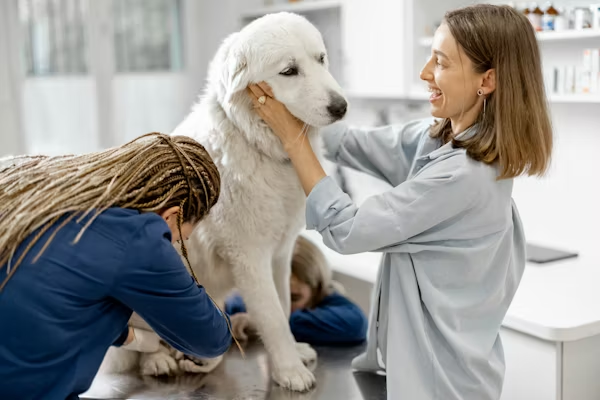
Your dog, who used to leap onto the sofa like a furry superhero, now pauses. A careful calculation happens in their brown eyes before they make the jump. Or maybe it’s that stiff, stilted walk they have for the first few minutes after a nap. It’s not a dramatic limp or a yelp of pain—just a subtle whisper from their body that something isn’t quite right.
If you’ve found yourself searching “dog chiropractor near me,” you’re probably in that worried, in-between space. You know your friend is uncomfortable, but the problem seems… vague. Traditional vet visits might have ruled out major diseases, leaving you with a prescription for pain meds and a sense that there must be more you can do.
Let’s talk about what you’re actually looking for. This isn’t about finding a quick fix or a magical healer. It’s about finding a specific kind of partner in your dog’s healthcare—one who looks at movement, alignment, and the quiet language of the body. I’ve been through this search myself with an old, arthritic German Shepherd, and I learned that the journey is less about finding any practitioner and more about finding the right one. This guide is here to walk you through that process, step by human step.
Decoding the “What”: It’s About the Nervous System, Not Miracles
First, let’s demystify what animal chiropractic actually is. Forget the dramatic spine-cracking you might associate with human treatments. Canine chiropractic is far more subtle.
Think of your dog’s spine as the main information superhighway for their entire body. Billions of nerve signals zip up and down this highway every second, telling legs to move, hearts to beat, and tails to wag. When a vertebra (a bone in the spine) gets slightly out of its ideal position or loses its normal range of motion, it can create a tiny “traffic jam” on that nerve highway. This is often called a subluxation.
The signal doesn’t get through clearly. The muscles that vertebra controls might get tense and sore. The joint it’s connected to might not move as freely. Over time, this can lead to stiffness, pain, and that altered gait you’re noticing.
A certified animal chiropractor is trained to find these areas of restricted motion through their hands—a skill that takes hundreds of hours to master. The adjustment itself is a quick, precise, and gentle impulse. It’s not about forcing bones back into place; it’s about restoring normal motion so the body can do its own healing work. You often won’t hear a “pop.” You might just see your dog take a deep sigh of relief as tension releases.
So, who is this for? It’s not just for the obviously injured dog. Commonly, it helps with:
- The Slowdown of Age: Arthritis, degenerative joint disease, general stiffness.
- The Mystery Ailment: Intermittent limping, sensitivity to touch, or a hunched back with no clear cause on an X-ray.
- The Weekend Warrior: The dog who overdid it at the park and is now sore.
- The Performance Athlete: Agility dogs, show dogs, or working dogs where peak physical function is key.
- Post-Surgical Recovery: Helping the body readjust and heal after an operation.
A crucial note of caution: This is not for puppies. Their skeletal systems are still developing and are too delicate for adjustments. A reputable practitioner will turn young puppies away.
The One Thing That Matters More Than Anything Else: Credentials
This is the part that can’t be shouted from the rooftops loudly enough. The single biggest factor in your dog’s safety is the practitioner’s specific, post-graduate certification.
Here’s the uncomfortable truth: a license to adjust humans does not qualify someone to adjust animals. A veterinary degree alone does not provide training in chiropractic techniques. A dog’s spine is shaped differently, moves differently, and requires a completely different set of skills.

Chiropractic Care
Leash Boss Slow Feeder Dog Bowls – Nonslip Slow Feeder Insert, Healthy Eating Dog Food Bowl, Includes Puppy Essentials Placemat & Star Mold, 2 Cup, Gray
The Gold Standards to Look For:
You are looking for one of two acronyms after their name. These are not weekend seminar certificates; they represent rigorous, accredited education.
- AVCA-Certified: This stands for the American Veterinary Chiropractic Association. Their Animal Chiropractic Certification Commission (ACCC) runs the most recognized program in the United States. Practitioners must complete over 200 hours of classroom and hands-on training and pass brutal practical exams.
- IVCA-Certified: The International Veterinary Chiropractic Association is another globally respected body with similarly high standards.
These practitioners are proud of their certification. It should be front and center on their website, their business card, and in their introduction. If you have to dig for it, that’s your first red flag.
Red Flags That Should Make You Walk Away Immediately:
- The Vague Answer: “I’ve taken courses in animal adjusting.” Press for the exact certifying body. If it’s not AVCA or IVCA, be deeply skeptical.
- The Miracle Worker: Anyone who claims chiropractic can “cure” diseases like cancer, diabetes, or kidney failure is making dangerous, unethical claims. It is a musculoskeletal therapy, not a cure-all.
- The Lone Wolf: A practitioner who dismisses your regular veterinarian, tells you to stop prescribed medications, or suggests they don’t need to see your dog’s medical history is a major danger sign. The best practitioners work with vets, not against them.
- The High-Pressure Salesman: Pushing you to buy a large, pre-paid package of adjustments before they’ve even assessed your dog is a bad sign. Care should be tailored and evolve based on your dog’s response.
Your Practical Roadmap to Finding “The One” Locally
Okay, you understand the “what” and the “who.” Now for the “how.” Finding a local expert is a blend of using smart tools and trusting your gut.
Step 1: Start with the Source – The Official Directories.
Don’t just Google and hope. Go straight to the horse’s mouth.
- Use the AVCA’s “Find a Doctor” Directory. You can search by state and city.
- Check the IVCA’s member directory on their website.
This is your most reliable shortlist. Any name here has passed the fundamental credential check.
Step 2: Become a Digital Detective.
Now, take those names and investigate their local presence.
- Google the Clinic + Reviews: Look beyond the star rating. Read the actual comments. Are pet owners describing specific improvements? Phrases like “helped my dog’s arthritis,” “much more playful,” or “gentle with my nervous shepherd” are gold. See how the clinic responds to feedback.
- Scrutinize Their Website: A professional site should clearly explain their philosophy, outline the first visit, and emphasize collaboration with veterinarians. It should feel informative, not salesy.
Step 3: Make The Phone Call.
Before you book, call. This conversation is a vital test. Have your questions ready:
- “I see you’re AVCA-certified. Can you tell me about your background?” (They should be able to explain their training journey easily.)
- “Do you require a referral from my vet, or will you contact them?” (The right answer involves enthusiastic collaboration.)
- “Can you walk me through what a first appointment looks like?” (Listen for: history-taking, observation, hands-on exam, discussion then adjustment.)
- “What is your experience with [my dog’s breed/condition, e.g., Dachshunds with back issues]?”
Their answers, and their tone, will tell you almost everything. Are they patient? Do they explain things clearly without jargon? Do they sound like they love animals?
Step 4: The First Visit – What “Good” Looks Like.
When you arrive, a thorough, professional first visit should feel comprehensive, not rushed (plan for 45-60 minutes). It will follow a logical flow:
- The Story: You’ll talk… a lot. About everything. Past injuries, current habits, when you first noticed the problem.
- The Observation: They’ll watch your dog walk, trot, and maybe sit. They’re looking for asymmetries you can’t see.
- The Hands-On Exam: This is the core. They’ll gently feel along every inch of the spine and major joints, assessing for heat, tension, and restriction.
- The Clear Explanation: Before any adjustment, they should tell you what they found, what they think is going on, and what their proposed plan is. You should never feel in the dark.
- The Adjustment: It’s often so quick and gentle you’ll miss it if you blink.
- The Home Instructions: You’ll leave with clear advice—usually rest, maybe some gentle leash walks, and a plan for follow-up.
Navigating the Search for a Dog Chiropractor: What I Wish I’d Known
Alright, so you’re convinced that a certified dog chiropractor might be a good next step for your pup. You’ve read up on what it is, why the right credentials are non-negotiable, and now you’re staring at your screen, thinking, “Okay, but how do I actually find one of these people?”
I remember hitting this exact wall. I had a list of questions and a deep fear of picking the wrong person for my old dog, Scout. The internet felt full of options, but that was the problem—too many options, and no clear way to tell who was the real deal. I felt overwhelmed, to be honest.
This part of the journey is less about theory and more about being a smart, slightly skeptical detective. It’s about translating the checklist from Part 1—that must-have AVCA or IVCA certification—into a real person you can actually call and trust with your best friend. Let’s break down the search into a practical, step-by-step process that cuts through the noise.

Dog Food Bowl
Jaoul Slow Feeder Dog Bowls Insert, Puzzle Slow Feeder Insert with 30 Octopus Suction Cups for Small Medium Large Size Dog Food Bowl (4.72 inch, Black)
Where to Actually Look (Hint: Skip the General Google Rabbit Hole)
Your first instinct might be to just Google “dog chiropractor near me.” I did that, too. It’ll give you a list, but it’s a messy one, filled with human chiropractors who “also see pets” and other unclear options. Don’t start there. You’ll waste hours sifting.
Instead, go straight to the source. Remember those gold-standard certifying bodies we talked about? They have the only directories that really matter for your initial search.
- The American Veterinary Chiropractic Association (AVCA) Directory: This is your absolute best starting point. Their “Find a Doctor” tool lets you search by state and city. Anyone listed here is AVCA-certified, which means they’ve passed those rigorous exams. It immediately filters out 90% of your worry.
- The International Veterinary Chiropractic Association (IVCA) Directory: Another excellent, vetted list. If someone is on either the AVCA or IVCA list, they’ve cleared the biggest hurdle.
Write down every name within a reasonable driving distance from these two sites. This is your legitimate shortlist. Now, the detective work begins.
Playing Detective: How to Vet a Practitioner Online
You have your shortlist. Now, you need to see who these people are in practice. This is where you’ll start to get a feel for who might be the right fit.
- Read Their “Story” (Their Website): Click on every website. A professional, credible animal chiropractor will have a website that does a few key things:
- Proudly displays their AVCA or IVCA certification (often with a logo) on their homepage or “About” page. If you have to dig through a “Bio” page to find a vague mention of “training in animal chiropractic,” that’s a minor red flag.
- Clearly explains their philosophy and process. They should talk about working with veterinarians, not replacing them. Look for phrases like “complementary care,” “team approach,” or “veterinary referral.”
- Describes what a first visit entails. It should sound thorough—taking a long history, doing an exam, discussing findings. If it just says “adjustment,” that’s not enough detail.
- Listen to the Chorus (Online Reviews): Now, head to their Google My Business listing or Facebook page. Don’t just look at the star rating. Read the actual text of the reviews.
- Look for patterns. Do multiple people mention a specific condition like hip dysplasia or arthritis? That’s good—it shows experience.
- Do reviewers comment on the practitioner’s demeanor? Phrases like “so patient with my anxious dog,” “took so much time to explain,” or “my dog visibly relaxed with them” are worth their weight in gold.
- Crucially, look at how the business responds to reviews, especially critical ones. A thoughtful, professional response to a concern tells you more about their character than a dozen five-star reviews. A defensive or ignored complaint is a warning sign.
The Make-or-Break Phone Call: Your Question Script
You’ve narrowed it down to one or two favorites. Do not book online yet. Pick up the phone. This five-minute conversation is the most important part of your vetting process.
Have your questions written down. You might feel awkward, but a true professional will welcome them. Here’s what to ask:
- “I saw you’re AVCA-certified—that’s great. Can you tell me a bit about your path to working with animals?” (This is a warm, open-ended question that gets them talking. You’re listening for passion, knowledge, and clarity.)
- “My vet is Dr. [Your Vet’s Name]. Do you typically connect with a dog’s regular vet to look at records or discuss a plan?” (You want to hear an enthusiastic “Yes, absolutely.” Collaboration is key.)
- “My dog [has this specific issue, e.g., is stiff in the rear after resting]. What’s your typical approach or experience with something like that?” (This tests their communication skills and whether they jump straight to a “cure” or talk about assessment and management.)
- “Practically, what should I expect to bring or do for our first visit?” (A good answer: bring any vet records, maybe don’t feed a huge meal right before, and plan for 45-60 minutes.)
Listen not just to what they say, but how they say it. Do they sound rushed? Dismissive? Or are they patient, happy to explain, and sound like they love animals? Your gut feeling here is a powerful tool.
The Reality Check: Money, Logistics, and That First Visit
Let’s talk practicalities, because they matter.
Costs: This varies wildly by region and the practitioner’s experience. In my search, initial consultations ranged from about $80 to $180. Follow-up adjustment visits were typically less, maybe $50 to $120. Some practitioners who travel to your home charge a trip fee. Always ask for the fee structure over the phone. There’s no hidden shame in asking, “Can you outline your fees for the first visit and any potential follow-ups?”
Pet Insurance: Here’s the blunt truth: most standard accident/illness pet insurance policies do NOT cover chiropractic care. However, some companies offer separate wellness plan add-ons that might. Providers like Embrace or Pets Best sometimes include it. Do not assume you’re covered. Call your insurance company and ask, “Does my policy include any benefits for complementary or alternative therapies like chiropractic?” Get the answer in writing if you can.
Preparing for Day One:
- Bring Everything: Your dog’s vaccination records, any recent vet notes, and X-rays or lab results if you have them. The more info they have, the better.
- Manage Expectations (Yours and Your Dog’s): Your dog might be a little unsure. Bring their favorite high-value treats (think chicken, cheese, hot dog bits) to help create a positive experience. Let them sniff and explore the room if possible.
- Wear Your Advocate Hat: The first visit is a two-way interview. You should leave understanding what they found, what their proposed plan is (e.g., “Let’s do three sessions over the next month and reassess”), and why. If you feel confused or rushed, speak up.
Real Stories, New Hope, and Taking the First Step
Let’s be real for a second.
After all this talk of certifications and phone scripts and directories, a little voice in your head might still be asking: “But does this actually work?”
I get it. When you’re standing there looking at your stiff-legged dog, scrolling past conflicting opinions online, it’s easy to get bogged down in doubt. Is this just wishful thinking? A fad? Or can a pair of skilled hands truly make a difference for a creature who can’t even tell you where it hurts?
This final part isn’t about more checklists. It’s about something more powerful: proof and perspective. I want to share a couple of stories that shifted my own thinking and give you a clear path from “maybe” to making an actual decision.
Seeing the Possibility: The Stories That Changed My Mind
Before I committed to taking Scout to a chiropractor, I needed to hear from other owners who weren’t selling anything. I spent hours in online forums and reading clinic reviews, not for star ratings, but for the small, specific details that rang true.
One story that stuck with me was about a senior Border Collie named Finn. His owner, a woman named Sarah, wrote a long post in a dog arthritis group. Finn was her agility partner in his youth, but at 13, he struggled to get up from his bed. His back legs would sometimes splay out on the kitchen floor. Sarah’s vet had him on a good pain management plan, but she described him as “dulled” – comfortable, but not truly Finn anymore.
On a friend’s suggestion, she found an AVCA-certified practitioner. Sarah was meticulous in her post. She didn’t call it a miracle. After the first visit, Finn was sore, like he’d had a good workout. After the second, she noticed he was putting more weight on his hind legs when he stood at his food bowl. The big moment came after the third session. She let him out into the yard, and for the first time in over a year, he didn’t walk—he trotted. A slow, stiff trot, but a trot nonetheless. Sarah wrote, “I cried. It wasn’t that he was cured; it was that I saw him again. The therapy gave him back a piece of his body that the arthritis had stolen.”
Another case I came across was completely different. A young, hyperactive Labrador named Bolt had started refusing to jump into the family SUV after a hiking trip. Nothing was torn, nothing was broken on X-rays, but he’d plant his feet and look worried. His family assumed he was being stubborn. A chiropractic exam found significant tension and restriction in his lumbar spine and hips—likely from an awkward twist or impact. After an adjustment, the dog hesitated at the tailgate for a moment, then launched himself in like nothing had ever been wrong. The problem wasn’t behavior; it was a silent, painful restriction.
These stories did something important for me. They moved chiropractic care out of the abstract “alternative therapy” category and into the realm of practical problem-solving. It wasn’t magic; it was mechanics. It was about finding a specific, physical roadblock and carefully removing it so the dog could function the way nature intended.
The Science of Prevention: A Surprising Finding
While personal stories are powerful, you might wonder if there’s any hard data. Research in veterinary chiropractic is growing, and one recent study offers a fascinating perspective that goes beyond fixing existing problems.
A 2021 study published in the journal Veterinary Sciences looked at chiropractic care not as a treatment, but as a preventative measure. Researchers followed litters of Boxer puppies. One group received gentle, monthly chiropractic adjustments from the age of eight weeks until they were a year old. Their littermates did not.
At the one-year mark, they took X-rays. The results were compelling. In the group that received no care, 46.5% showed early signs of spondylosis, a form of spinal arthritis. In the group that had received adjustments, that number was only 25%.
Think about that. This suggests that for some breeds, especially those prone to spinal issues, regular chiropractic care during growth may help the skeleton develop in a healthier, more balanced way. It’s like getting regular alignments for your car to prevent uneven tire wear—it’s proactive maintenance. This study reframed the entire concept for me. It wasn’t just for the old, sore dog; it could be a valuable part of raising a healthy, structurally sound puppy.
Bringing It All Home: Your Decision, Made Clear
So, you’ve read through all of this. You understand the what and the why. You have a battle plan for the how. The final step is simply making the choice.
Here’s how to synthesize everything we’ve covered into a clear path forward:
- Listen to Your Dog (and Your Gut). You started this search because you saw a signal—a limp, a stiffness, a hesitation. That signal is real. Your job isn’t to diagnose, but to advocate. You’ve now done the homework to advocate intelligently.
- Use Your Toolkit. You’re not going in blind. You have the only two directories that matter (AVCA and IVCA). You have a list of red flags. You have a script of questions that will separate the true professionals from the rest. This toolkit exists to reduce your anxiety and increase your confidence.
- Reframe the Goal. The goal of seeing a canine chiropractor is not necessarily a “cure.” For many dogs, the goal is management, comfort, and improved quality of life. It’s about giving them less pain and more freedom of movement today, tomorrow, and next month. It’s about supporting their body so they can be as much of a dog as they can be, for as long as they can be.
- Take the First Step. It’s always the hardest one. Pick up the phone and call the practitioner at the top of your list. Use your questions. Schedule the consultation. Go in with open eyes and realistic expectations.
I’ll leave you with this final thought from my own experience. Taking Scout for his first appointment, I was nervous. Was I being a silly, overindulgent pet parent? The practitioner, a calm woman with gentle hands, spent an hour with us just talking and observing before she ever touched him. She explained everything in plain English. When she finished, Scout shook himself off, walked over to her, and leaned against her leg—a classic dog sign of trust.
We didn’t get a miracle that day. What we got was the start of a process. Over the following weeks, the stiffness in his morning routine eased. The sigh he made when lying down became less pronounced. He regained a noticeable spring in his step on the way to the park.
It was worth it. Every bit of research, every phone call, every bit of doubt was worth it to see him move with a little more ease. You’ve done the hard part already—the learning. The next part, the doing, is where the hope becomes real.