Okay, let’s be real for a second. We’ve all been there—cuddled up with our furry best friend when a wave of not-so-pleasant breath hits us. It’s easy to laugh it off as just “doggy breath,” but what if that smell is actually a warning sign?
If you found this article by searching for “dog teeth cleaning near me,” you’re not just being a picky pet owner. You’re listening to your gut, which is telling you something might be up with your pup’s health. And your gut is probably right.
Here’s a startling piece of information that vets wish more people knew: a huge majority of dogs, something like over 80%, show signs of periodontal disease by the time they turn three. That means dental issues aren’t a rare problem for a few unlucky pups; they’re practically an epidemic in the dog world.
Dog Teeth Cleaning Near Me. And that bad breath? It’s often the first clue of a hidden problem. The bacteria causing that odor don’t just hang out in the mouth. They can sneak into the bloodstream, creating silent trouble for your dog’s heart, liver, and kidneys. It’s a scary thought, but the good news is that it’s largely preventable.
Feeling a bit lost about what to do next? You’ve come to the right place. Think of this guide as a friendly chat from someone who’s been through it. We’re going to walk through the whole process together—demystifying what happens during a cleaning, tackling the big anesthesia question, and figuring out how to find a vet you trust without breaking the bank.
Why a Dental Cleaning is More Than a “Tooth Spa”
It’s tempting to think of professional Dog Teeth Cleaning Near Me as an optional extra, like a puppy pedicure. But in the vet world, it’s treated as essential medicine. Here’s the straight talk on why skipping it can lead to bigger problems down the road.
The Silent Problem Growing in Your Dog’s Mouth
Dental disease doesn’t happen overnight. It’s a slow, creeping process that many owners miss until it’s advanced.
It all starts innocently enough with plaque—that soft, sticky film you can feel on your Dog Teeth Cleaning Near Me in the morning. It’s full of bacteria. If it isn’t brushed away (and let’s be honest, most dogs aren’t getting a perfect brush every day), it hardens into tartar within about a day. Tartar is that rough, cement-like brown or yellow stuff that sticks like glue.
This is where the trouble really begins. Tartar irritates the gums, causing them to become red, swollen, and inflamed—a condition called gingivitis. You’ve probably seen this in people, and it’s the same for dogs. At this stage, your dog’s mouth is sore, and their breath is getting worse, but the damage can still be reversed.
If nothing is done, the inflammation doesn’t just stay at the surface. It starts to attack the foundations of the tooth—the ligaments and jawbone itself. This is periodontitis, and it’s a point of no return. It causes painful pockets around the Dog Teeth Cleaning Near Me, bone loss, and eventually, loose or lost teeth. It’s like termites quietly eating away at the frame of a house.
The Mouth-Body Connection You Never Knew About
This is the part that really opens people’s eyes. The danger of a dirty mouth isn’t confined to the mouth.
Imagine your dog’s inflamed gums as an open wound. Now, imagine bacteria from that wound constantly seeping into their bloodstream. That’s exactly what happens. This bacteria then travels throughout the body, and the body has to fight it off wherever it lands.
Where does it often end up?
- The Heart: Bacteria can latch onto heart valves, leading to a serious infection called endocarditis.
- The Kidneys and Liver: These hard-working organs, which filter the blood, can become chronically inflamed and damaged by the constant bacterial assault.
- Diabetes Management: For diabetic dogs, the constant inflammation from dental disease can make their blood sugar levels nearly impossible to control.
And perhaps the most heartbreaking part? Dogs are masters at hiding pain. A dog with a severe toothache will often keep eating, so we never even know they’re suffering. That “slowing down” we blame on old age might actually be our pet living in constant discomfort.
The Hard Truth About Brushing and Dental Treats
“I give my dog greenies and try to brush his Dog Teeth Cleaning Near Me—isn’t that enough?” This is one of the most common questions vets get.
Let’s clear this up: At-home care is fantastic for prevention, but it can’t solve an existing problem.
Brushing is the single best thing you can do at home. It’s great for removing soft plaque. But once that plaque hardens into tartar? Your toothbrush is useless against it. It’s like trying to scrub a barnacle off a boat with a soft sponge.
And those dental chews and toys? They’re helpful for scraping plaque off the tops of the Dog Teeth Cleaning Near Me, but they do almost nothing for the most critical area—the part under the gumline, where the real destruction happens.
Think of it like this: you brush and floss, but you still need a professional cleaning from a hygienist to get the hardened stuff (calculus) that you can’t. Your dog needs the same professional attention.
What Really Happens When Your Dog Goes in for a Cleaning?
The idea of your dog undergoing anesthesia can be terrifying. I get it. I’ve been that anxious owner in the waiting room. Knowing the detailed, safety-focused process can really help calm your nerves.
Step 1: The Pre-Anesthetic Blood Test – Your Dog’s Personal Safety Report
Before anyone even thinks about anesthesia, your vet will want to run a simple blood test. This isn’t a money-making scheme; it’s arguably the most important safety step of the entire day.
Dog Teeth Cleaning Near Me. Why? This blood draw acts like a detailed report card on your dog’s internal organs. It checks that their liver and kidneys are in good shape to process the anesthetic drugs. It also makes sure they aren’t fighting a hidden infection or anemic. It’s the vet’s way of looking under the hood before a long journey. This allows them to customize the anesthetic plan specifically for your dog, making it as safe as humanly possible.
Step 2: The “A-Word”: Anesthesia
Let’s tackle the elephant in the room. The thought of anesthesia is scary. But modern vet medicine has come a long, long way.
Dog Teeth Cleaning Near Me. Here’s the perspective shift that helped me: A professionally managed anesthesia is far safer than the consequences of untreated dental disease. Periodontal disease is a known, constant source of pain and infection. Anesthesia, in a modern clinic, is a controlled, temporary state with multiple layers of safety.
Beware the “Anesthesia-Free” Cleaning
You might see ads for this. No anesthesia sounds safer, right? Well, most veterinary dental specialists will tell you these cleanings are, at best, a waste of money and, at worst, a danger to your pet’s health.
Why?
- It’s Superficial: It’s like just cleaning the parts of your car you can see, while the engine is about to fail. They only clean the crowns of the Dog Teeth Cleaning Near Me you can see, completely ignoring the disease festering below the gumline where it matters most.
- It’s Terrifying for Your Dog: Your dog doesn’t understand why a stranger is holding them down and scraping their Dog Teeth Cleaning Near Me with sharp tools. It’s a stressful, and sometimes traumatic, experience.
- It Provides a False Sense of Security: The Dog Teeth Cleaning Near Me might look whiter, but the underlying disease is still raging out of sight, making you think everything is fine when it’s not.
The Vet’s Safety Net: How They Protect Your Pup
In a reputable veterinary clinic, your dog isn’t just “put under.” They are carefully managed through a multi-layered safety system:
- Their Own Nurse: A dedicated veterinary technician’s only job is to monitor your dog’s vital signs from the second they go to sleep until they are fully awake.
- An IV Drip: An IV catheter provides fluids to support blood pressure and gives instant access to a vein if needed.
- A Protected Airway: A breathing tube (endotracheal tube) ensures your dog gets oxygen and anesthetic gas safely and prevents them from inhaling any water during the cleaning.
Step 3: The Actual Cleaning – It’s Not Just a Scrub
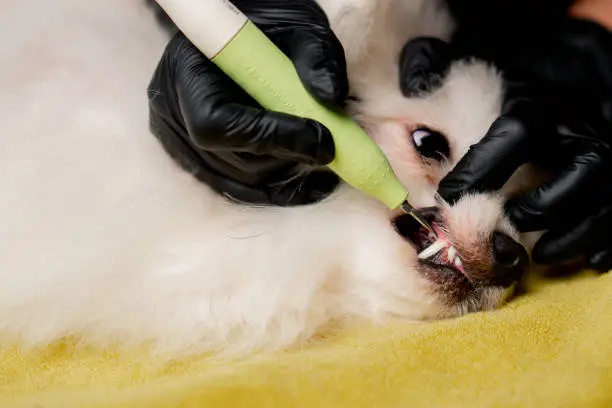
Dog Teeth Cleaning Near Me. Once your dog is safely asleep, the detailed work begins. This isn’t a quick scrub; it’s a meticulous, multi-step medical procedure.
First, the vet or technician uses special tools—both ultrasonic and hand scalers—to carefully remove every speck of tartar, from the top of the tooth all the way down the root, deep below the gumline. This is the part that is impossible to do on a conscious animal.
What Really Happens During Your Dog’s Dental Procedure
You’ve made the decision to get your Dog Teeth Cleaning Near Me – that’s the first big step. But if you’re anything like I was with my first dog, you’re probably lying awake at night wondering what exactly goes on once you hand over the leash. Let me walk you through what I’ve learned from years of experience and conversations with veterinary professionals.
The Magic of Dental X-Rays: Seeing Beneath the Surface
I’ll never forget the day my vet showed me my dog’s dental X-rays for the first time. It was like discovering a hidden world I never knew existed. Those images revealed problems that were completely invisible to the naked eye – and they completely changed how I thought about my dog’s dental health.
Here’s what most people don’t realize: the part of the tooth you can see is just the tip of the iceberg. The real action happens below the gumline, where roots anchor into the jawbone and where trouble can brew undetected for months or even years.
Common surprises vets find through dental X-rays:
- Hidden infections that have been simmering at the tooth roots
- Gradual bone loss that’s weakening the foundation of multiple Dog Teeth Cleaning Near Me
- Tiny fractures from that antler or bone you thought was safe
- Dog Teeth Cleaning Near Me that never properly came in and are causing problems below the surface
- Early signs of oral tumors or cysts
My friend’s terrier, Buster, is a perfect example. His Dog Teeth Cleaning Near Me looked decent during his annual exam, but the dental X-rays revealed two abscessed teeth that needed immediate attention. Without those images, Buster would have continued living with silent pain.
When Extractions Become Necessary
Hearing that your dog needs Dog Teeth Cleaning Near Me pulled can feel like you’ve failed somehow. I felt that exact way when my vet told me my senior dog needed three extractions. But here’s the perspective shift that helped me: extraction isn’t about losing teeth – it’s about gaining freedom from pain.
Think about the last time you had a serious toothache. Now imagine trying to eat dinner with that level of discomfort, day after day, with no way to ask for help. That’s the reality for many dogs with advanced dental issues.
What modern extractions actually look like:
- They use local anesthesia to completely numb the area (just like your dentist does)
- The approach is surgical and precise, focusing on preserving healthy tissue
- Your dog receives multiple types of pain control throughout the process
- The goal is always to remove the source of pain while causing minimal trauma
The transformation I’ve seen in dogs after problematic Dog Teeth Cleaning Near Me are removed is genuinely remarkable. They start playing with toys again, their appetite improves, and you can just see the relief in their eyes. It’s not about what they’re losing – it’s about what they’re gaining back.
Finding the Right Veterinary Partner on Dog Teeth Cleaning Near Me
So you know your dog needs dental work – now what? Finding the right veterinary practice can feel overwhelming, but having been through this search multiple times, I’ve learned what questions really matter.
Starting with Your Regular Vet
For many routine dental cleanings, your family veterinarian is an excellent choice. They already know your dog’s medical history, personality, and any underlying health issues that might affect anesthesia.
What many people don’t realize is how much dental technology and training has become standard in general practices. Many local clinics now have equipment and expertise that rival what was only available at specialists a decade ago.
When to Consider a Dental Specialist
There are times when seeking out a board-certified veterinary dentist makes sense. These are vets who have completed additional years of specialized training – they’re the oral surgeons of the animal world.
Situations where a specialist might be worth considering:
- Complex root canal procedures
- Advanced gum disease requiring sophisticated surgery
- Jaw fractures or other traumatic injuries
- Complicated congenital issues
- When multiple difficult extractions are anticipated
Your regular vet will usually be the first to suggest a referral if they encounter something outside their comfort zone – which is actually a sign of a good, conscientious practitioner.
Questions That Separate Good Practices from Great Ones
Over the years, I’ve developed a list of questions that help me understand a clinic’s approach to dental care:
“Can you walk me through your anesthesia monitoring process?”
I listen for specifics about dedicated monitoring staff and the equipment they use.
“How do you approach pain management throughout the process?”
The answer should include both during-procedure and take-home pain control.
“Are dental X-rays part of your standard cleaning protocol?”
Be cautious of practices that treat radiographs as optional extras.
“Could you help me understand the different components of this estimate?”
Transparent pricing shows an organized, trustworthy practice.
“What does recovery typically look like, and what support do you provide afterward?”
Look for clear aftercare instructions and emergency contact availability.
Managing the Financial Side of Dental Care
Let’s talk about the part nobody enjoys – the cost. Dental procedures can be expensive, but understanding what you’re paying for can make those numbers feel more reasonable.
Breaking Down the Costs
When you look at a dental estimate, you’re not just paying for “Dog Teeth Cleaning Near Me.” You’re funding an entire medical procedure that requires multiple professionals, sophisticated equipment, and various medications.
What typically goes into the price:
- The expertise of the veterinary team (from surgeon to anesthesia monitor)
- Pre-anesthetic blood work and analysis
- Anesthetic drugs and monitoring equipment
- The dental procedure itself (often taking several hours)
- Dental X-rays and their interpretation
- Pain medications and sometimes antibiotics
- The overhead of maintaining dental-specific equipment
It helps to think of it as comparable to outpatient surgery in humans – because that’s essentially what it is.
Real-World Price Ranges
Through conversations with other dog owners and my own experiences, I’ve found that costs vary widely but generally fall within these ranges:
For basic cleanings without extractions, most people report spending $400-$800 in urban areas.
When extractions are necessary, costs typically range from $900-$2,500 depending on how many Dog Teeth Cleaning Near Meare involved and their complexity.
The most significant dental bill I’ve encountered was for a rescue dog who needed multiple surgical extractions – it came to about $2,800 at a specialty practice. While the cost was substantial, seeing her go from barely eating to enthusiastically enjoying meals made it worth every dollar.
Making Dental Care More Affordable
If the financial aspect feels daunting, here are some strategies that have worked for me and other dog owners:
Pet insurance can be incredibly valuable if you enroll your dog while they’re young and before dental issues develop. Just be sure to read the fine print about dental coverage.
Payment plans through services like CareCredit allow you to spread costs over several months, often with interest-free promotional periods.
Some veterinary schools offer dental services at reduced rates through their teaching hospitals, though wait times can be longer.
Wellness plans through certain veterinary chains sometimes include dental cleanings for a monthly fee.
Having an honest conversation with your vet about financial constraints can sometimes lead to phased treatment plans or prioritization of the most critical issues.
Your At-Home Dental Care Toolkit & Final Questions
So your dog has had their professional cleaning, or maybe you’re working to prolong the time between vet visits. Either way, what you do at home makes all the difference. I’ve experimented with nearly every dental product out there with my three dogs, and I’m here to share what actually works in real life.
Tooth Brushing: The Gold Standard (That Doesn’t Have to Be Perfect)
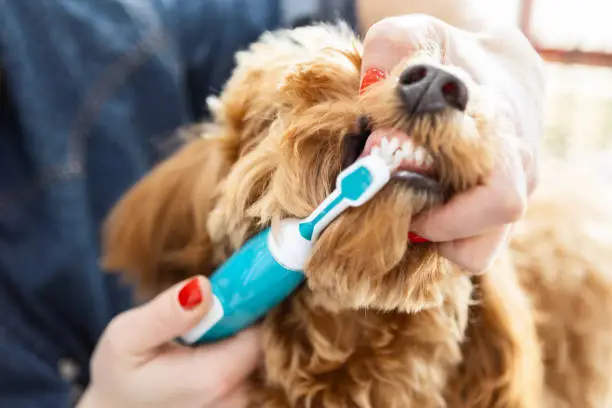
Let’s get real about brushing. We all know we’re supposed to do it, but actually making it happen is another story. The secret I’ve learned? Consistency beats perfection every time.
When I first started brushing my dog’s Dog Teeth Cleaning Near Me, I aimed for a full two-minute scrub session. It was stressful for both of us. Then my vet gave me some wisdom: “Thirty seconds of cheerful brushing is better than two minutes of wrestling.”
Here’s what works in the real world:
- Find the right toothpaste: Dogs hate mint—try poultry, beef, or seafood flavors. Never use human toothpaste—the fluoride can make them sick.
- Start slow: Let them lick the toothpaste off your finger, then gradually introduce the toothbrush or finger brush.
- Timing matters: Pick a calm time of day when your dog is relaxed, not right after exercise or when they’re excited about dinner.
- Location, location: Find a comfortable spot for both of you. I brush my dog’s Dog Teeth Cleaning Near Me while we watch TV in the evening—it’s become our weird bonding ritual.
My current success story is with a silicone finger brush and seafood-flavored toothpaste. We manage about 45 seconds most nights, and my dog actually comes looking for his “tooth treat” now.
Beyond the Brush: Other Tools That Help
Let’s be honest—some dogs will never tolerate brushing. Or maybe you’re like me and occasionally miss a day (or three). That’s where these other options come in handy.
Water additives are the easiest place to start. You just add them to your dog’s water bowl. They help reduce plaque-causing bacteria, though they won’t remove existing tartar. I use one as a backup on days we skip brushing.
Dental chews can be effective, but you need to choose wisely. Look for the VOHC (Veterinary Oral Health Council) seal—this means they’ve been scientifically proven to work. The key is finding one your dog actually chews rather than gulps. My German shepherd needs the extra-large, textured chews, while my terrier does better with smaller, bendable options.
Dental diets are prescription foods with larger kibble designed to scrape Dog Teeth Cleaning Near Me as dogs chew. They’re not magic, but they’re better than regular kibble for dental health. My vet recommended one for my senior dog, and it’s made a noticeable difference in keeping his back teeth cleaner.
Interactive toys like rubber grooved toys you smear with paste can be great for dogs who love to chew. The key is supervision—I learned this the hard way when one of my dogs decided his dental toy was a snack.
Your Top Dental Questions Answered
Over the years, I’ve collected the most common questions from fellow dog owners. Here are the straight answers I’ve gathered from veterinary professionals.
“How often does my dog really need a professional cleaning?”
This depends entirely on your dog. Small breeds like Yorkies and Chihuahuas often need yearly cleanings, while some larger breeds with good home care might go 2-3 years between procedures. Your vet will tell you what’s right for your individual dog based on their breed, age, and how well you’re maintaining their Dog Teeth Cleaning Near Me at home.
My neighbor’s pug needs cleanings every 10-12 months like clockwork, while my lab mix has made it three years between visits thanks to diligent home care.
“My dog is 12—isn’t anesthesia too risky?”
This was my biggest fear with my senior dog. But as my vet explained, “Age isn’t a disease—it’s just a number.” Older dogs actually benefit more from pre-anesthetic blood work, and modern anesthesia protocols are much safer than they were even a decade ago.
The real question isn’t whether anesthesia is risky—it’s whether the risk of untreated dental disease is greater. For most senior dogs with dental problems, the constant infection and pain pose a much bigger threat to their health and quality of life.
“What are the signs that my dog might need dental work?”
Keep an eye out for these red flags:
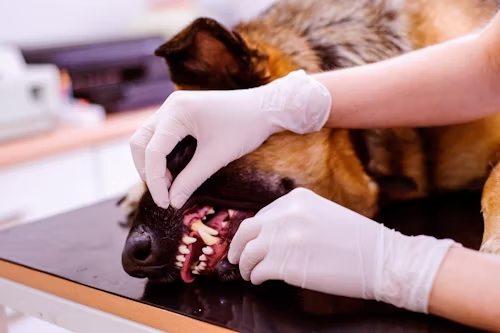
- Breath that could knock you over (not just normal doggy breath)
- Red or bleeding gums
- Yellow or brown buildup on Dog Teeth Cleaning Near Me
- Dropping food or chewing on only one side
- Pawing at the mouth or face
- Sudden reluctance to play with favorite toys
- Swelling around the muzzle
I missed the signs with my first dog until I noticed he was only chewing on one side. Turns out he had a painful cracked tooth on the other side.
“Are those anesthesia-free cleanings at pet stores any good?”
I understand the appeal—no anesthesia sounds safer. But every vet I’ve spoken with agrees: these cleanings are cosmetic at best and dangerous at worst. They only clean the visible surfaces while ignoring the disease happening below the gumline where it really matters. Plus, most dogs find the experience stressful and frightening.
Putting It All Together
Taking care of your Dog Teeth Cleaning Near Me might seem overwhelming at first, but remember: every small step counts. Whether it’s switching to a VOHC-approved dental chew, adding a water additive, or managing 30 seconds of brushing a few times a week, you’re moving in the right direction.
The goal isn’t perfection—it’s consistent, thoughtful care that keeps your dog comfortable and healthy. I’ve seen the difference it makes in my own dogs: brighter energy, healthier appetites, and those happy, pain-free smiles that make all the effort worthwhile.
Your dog’s dental health is a journey, not a destination. Start where you are, use what works for your situation, and don’t hesitate to ask your vet for guidance. Your furry friend will thank you with every comfortable meal and happy, healthy year you give them.