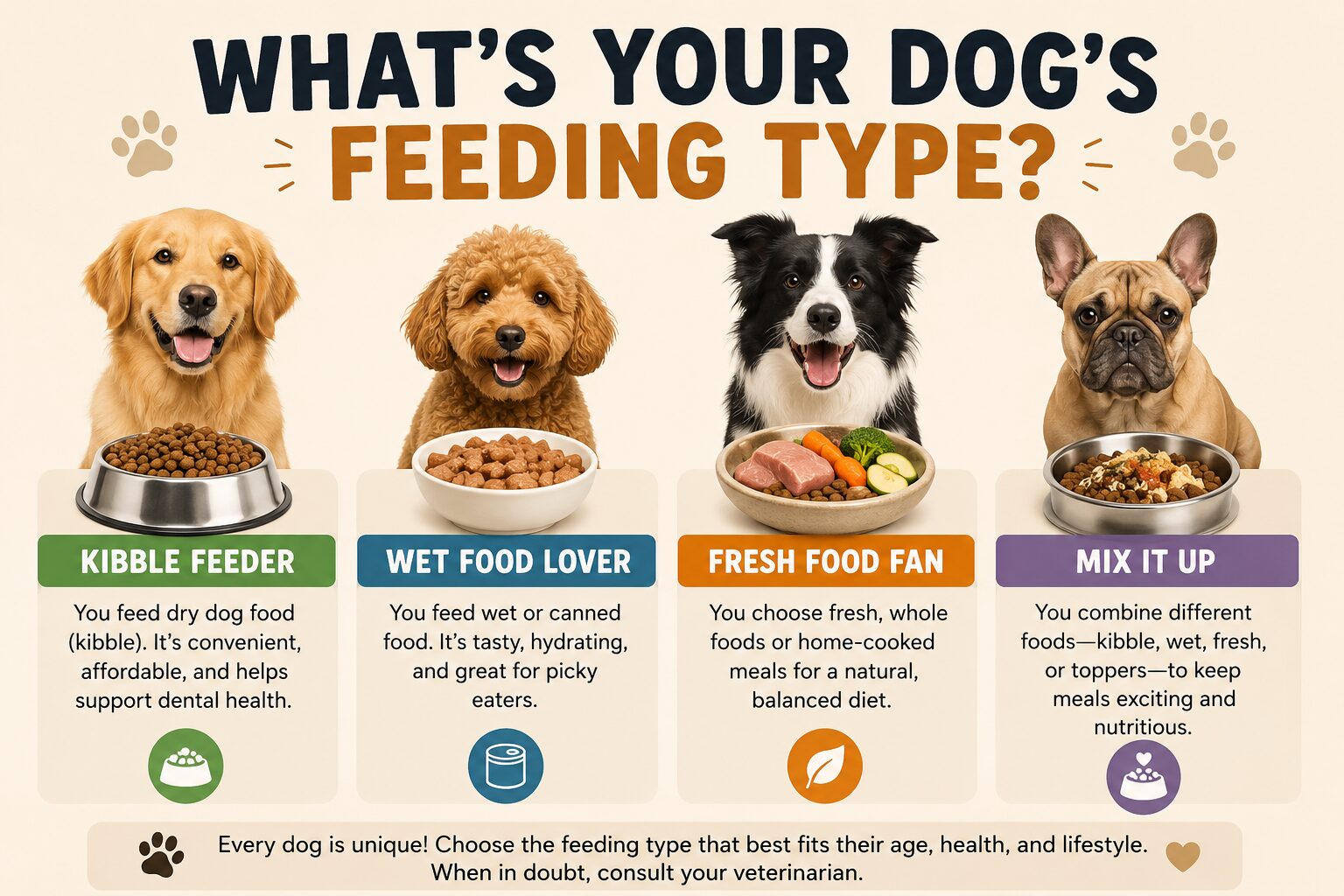
Dogs may not speak our language, but they communicate a lot through their eating habits. Some dogs inhale food within seconds, while others casually nibble throughout the day. Some eagerly wait by the bowl at the exact same hour every day, while others become picky and selective for no obvious reason. Understanding your dog’s feeding type is one of the most important steps toward improving their health, behavior, and overall quality of life.
A dog’s feeding style goes beyond simply choosing between wet or dry food. It involves how, when, and why your dog eats the way they do. From portion control and feeding schedules to personality-driven eating behaviors, every dog has unique nutritional needs that owners should understand.
In this guide, we’ll explore the different feeding types, how they impact canine health, and how to identify the best feeding routine for your furry companion.
Why Understanding Your Dog’s Feeding Type Matters
Feeding is more than filling a bowl. A dog’s eating pattern affects nearly every aspect of their physical and emotional well-being.
When dogs are fed according to their natural habits and nutritional needs, they often experience:
- Better digestion
- Healthier weight management
- Improved energy levels
- Reduced anxiety
- Stronger immune systems
- Healthier skin and coat
On the other hand, poor feeding routines can lead to obesity, digestive upset, behavioral problems, and long-term health issues.
For example, a highly active dog may require scheduled meals with calorie-dense food, while a low-energy indoor dog may benefit from carefully measured portions to prevent weight gain. Learning your dog’s feeding type helps create a routine that supports their lifestyle instead of working against it.
How Feeding Habits Affect Health, Behavior, and Energy
A dog’s relationship with food often reflects their overall physical and emotional state. Feeding habits influence more than hunger—they directly impact mood, stamina, sleep quality, and digestive health.
Physical Health
Consistent feeding habits help maintain:
| Health Area | Effect of Proper Feeding |
|---|---|
| Weight | Prevents obesity or malnutrition |
| Digestion | Reduces bloating and stomach upset |
| Skin & Coat | Supports shiny fur and healthy skin |
| Muscles & Bones | Provides balanced nutrients |
| Immune System | Helps defend against illness |
Dogs fed irregularly may experience blood sugar fluctuations, low energy, or overeating tendencies.
Behavior and Mental Wellness
Dogs thrive on routine. Feeding schedules provide structure, which helps reduce stress and anxiety.
A hungry dog may become:
- Irritable
- Hyperactive
- Aggressive around food
- Destructive indoors
Common Mistakes Dog Owners Make During Feeding
Even caring dog owners sometimes make feeding mistakes without realizing it.
Here are some of the most common problems:
1. Overfeeding
Many owners judge portions by eye instead of measuring food accurately. Extra treats and table scraps can quickly add unnecessary calories.
2. Feeding Inconsistent Portions
Changing meal sizes daily confuses dogs and may contribute to digestive problems.
3. Giving Too Many Human Foods
Some human foods are dangerous for dogs, including:
- Chocolate
- Grapes
- Onions
- Garlic
- Xylitol sweeteners
- Alcohol
4. Switching Foods Too Quickly
Sudden diet changes can upset your dog’s digestive system and cause diarrhea or vomiting.
5. Ignoring Feeding Personality
Not every dog eats the same way. A grazer may struggle with strict schedules, while a fast eater may need slow-feeding tools.
Understanding feeding behavior is just as important as selecting quality food.
The Link Between Feeding Style and Canine Nutrition
A dog’s feeding style and nutritional needs work together. Choosing the wrong feeding method can reduce the benefits of even the highest-quality food.
For instance:
- Free-fed dogs may overeat calorie-rich kibble.
- Highly active dogs often need timed meals with protein-rich diets.
- Sensitive dogs may respond better to fresh or limited-ingredient meals.
Nutrition should always match:
- Age
- Breed
- Activity level
- Health conditions
- Metabolism
- Feeding behavior
What Does “Dog Feeding Type” Mean?
A dog’s feeding type refers to the overall way they consume food, including:
- Eating schedule
- Portion habits
- Feeding behavior
- Food preferences
- Energy requirements
Some dogs thrive on structured meal schedules, while others naturally graze throughout the day. Certain dogs become highly food-motivated, while others are extremely selective eaters.
Understanding feeding type helps owners choose the right:
- Meal timing
- Food texture
- Portion size
- Feeding equipment
- Nutritional plan
Feeding Type vs Dog Food Type
Many people confuse feeding type with food type, but they are different.
| Feeding Type | Dog Food Type |
|---|---|
| Refers to eating habits and routines | Refers to the actual food |
| Includes schedules and behavior | Includes kibble, wet food, raw food |
| Focuses on how dogs eat | Focuses on what dogs eat |
| Examples: grazing, scheduled feeding | Examples: dry, fresh, freeze-dried |
Both are important for maintaining canine health.
For example, a fast eater may still eat dry kibble but require portion-controlled feeding with a slow feeder bowl.
Why Every Dog Has Unique Eating Habits
Dogs are individuals. Their feeding habits develop through genetics, environment, training, and health.
Some dogs naturally regulate their appetite, while others eat excessively whenever food is available.
Several factors influence feeding behavior:
- Breed tendencies
- Previous experiences
- Stress levels
- Exercise routines
- Household environment
- Medical conditions
A rescue dog who experienced food scarcity may guard food aggressively, while another dog raised in a calm environment may eat slowly and casually.
There is no universal feeding strategy that works for every dog.
Factors That Influence Feeding Type
Breed
Different breeds often show different feeding behaviors.
For example:
| Breed Type | Common Feeding Behavior |
|---|---|
| Labrador Retrievers | Highly food-motivated |
| Greyhounds | Light, selective eaters |
| Beagles | Strong appetite and scavenging tendencies |
| Toy breeds | Small but frequent meals |
| Huskies | Often moderate eaters |
Breed genetics can influence appetite, metabolism, and energy needs.
Age
A dog’s feeding needs change dramatically throughout life.
Puppies
- Need frequent meals
- Require high-calorie nutrition
- Burn energy quickly
Adult Dogs
- Usually thrive on 1–2 meals daily
- Need balanced maintenance diets
Senior Dogs
- May require fewer calories
- Often benefit from softer food
- Can develop dental or digestive sensitivities

Activity Level
Highly active dogs need significantly more calories than sedentary dogs.
Working breeds, agility dogs, and athletic dogs typically require:
- More protein
- More calories
- More frequent meals
Indoor companion dogs usually need careful portion management to avoid obesity.
Health Conditions
Medical issues can completely change feeding habits.
Conditions affecting feeding include:
- Diabetes
- Obesity
- Food allergies
- Kidney disease
- Digestive disorders
- Dental problems
Dogs with health conditions often require specialized diets and scheduled feeding routines.
Personality
Believe it or not, personality plays a huge role in feeding behavior.
Some dogs are:
- Competitive eaters
- Nervous nibblers
- Food-obsessed scavengers
- Relaxed grazers
- Picky snackers
A dog’s emotional temperament affects how they interact with food daily.
The Main Types of Dog Feeding Styles
There are several common dog feeding styles, and each has its own advantages and drawbacks.
Understanding these feeding methods can help owners build healthier routines tailored to their dog’s needs.
Free Feeding (Graze Feeding)
What Is Free Feeding?
Free feeding means leaving food available all day so dogs can eat whenever they want.
This method is common among owners whose dogs naturally regulate their appetite.
Pros of Free Feeding
- Convenient for busy owners
- Allows dogs to eat naturally throughout the day
- May reduce hunger anxiety in some dogs
Cons of Free Feeding
- Difficult to monitor appetite changes
- Can lead to overeating
- Encourages obesity in food-driven dogs
- Makes house training harder in puppies
Dogs Best Suited for Free Feeding
Free feeding may work for:
- Naturally moderate eaters
- Highly active dogs
- Multi-dog households with stable routines
Risks of Obesity and Overeating
Food-motivated breeds often struggle with unlimited access to food.
Signs free feeding may not work include:
- Rapid weight gain
- Constant begging
- Food guarding
- Digestive upset
Veterinarians frequently recommend scheduled meals instead of unlimited feeding for better weight control.
Scheduled Feeding
What Is Timed Feeding?
Scheduled feeding involves offering meals at specific times during the day.
Most dogs eat once or twice daily under this system.
Benefits of Portion Control
Timed feeding provides:
- Better digestion
- Easier weight management
- Predictable bathroom schedules
- Improved appetite monitoring
It also helps owners quickly notice health changes if a dog suddenly refuses food.
Ideal Feeding Schedule by Age
| Dog Age | Recommended Feeding Frequency |
|---|---|
| Puppies | 3–4 meals daily |
| Adult dogs | 1–2 meals daily |
| Senior dogs | 2 smaller meals daily |
Why Veterinarians Often Recommend Scheduled Feeding
Scheduled feeding creates routine and supports healthy metabolism.
It’s especially helpful for:
- Overweight dogs
- Diabetic dogs
- Dogs with digestive issues
- Multi-pet households
Consistent meal timing can also reduce anxiety and food-related behavioral issues.
Portion-Control Feeding
Portion-controlled feeding focuses on carefully measuring food amounts rather than simply filling the bowl.
How to Measure Correct Portions
Owners should consider:
- Dog weight
- Activity level
- Calorie requirements
- Food type
- Veterinary recommendations
Using a measuring cup or digital scale improves accuracy significantly.
Signs You’re Overfeeding or Underfeeding
Overfeeding Signs
- Weight gain
- Low energy
- Difficulty feeling ribs
- Excessive stool production
Underfeeding Signs
- Visible ribs
- Constant hunger
- Low body weight
- Fatigue
Best Tools for Portion Control
Helpful feeding tools include:
- Measuring cups
- Food scales
- Automatic feeders
- Portion-control bowls
These tools help maintain consistency and reduce accidental overfeeding.
Mixed Feeding
Mixed feeding combines multiple food types, usually wet and dry food.
This feeding style has become increasingly popular among dog owners seeking balance between convenience and nutrition.
Mixed Feeding
Mixed feeding combines multiple food types, usually wet and dry food. This feeding style has become increasingly popular among dog owners seeking a balance between convenience, nutrition, hydration, and taste.
Some owners use dry kibble during the day and wet food at night, while others combine both in the same bowl.
Combining Wet and Dry Food
Dry food offers convenience and dental benefits, while wet food improves flavor and moisture intake. Together, they can create a more appealing and nutritionally balanced meal plan.
Benefits of Combining Food Types
| Benefit | Why It Matters |
|---|---|
| Improved taste | Encourages picky eaters |
| Better hydration | Wet food contains more moisture |
| Texture variety | Prevents boredom |
| Flexible nutrition | Easier calorie adjustment |
| Cost balance | More affordable than full wet-food diets |
Mixed feeding can also help dogs transition from one food type to another more smoothly.
Advantages of Hybrid Feeding
Many veterinarians support mixed feeding because it combines the strengths of both food types.
Key Advantages
- Increased water intake
- Better palatability
- Easier digestion for some dogs
- Variety in nutrients and textures
- Greater feeding flexibility
Dogs recovering from illness or dental procedures often benefit from partially wet diets.
Common Mistakes in Mixed Feeding
Despite its advantages, mixed feeding must be done carefully.
Common Errors Include:
- Overfeeding calories by doubling portions
- Mixing incompatible foods
- Ignoring nutritional balance
- Switching brands too often
- Leaving wet food out too long
Always calculate the combined calorie total from both food types to avoid accidental weight gain.
Raw Feeding (BARF Diet)
Raw feeding, often called the BARF diet (Biologically Appropriate Raw Food or Bones and Raw Food), has become a major trend among dog owners seeking natural feeding methods.
Supporters believe raw diets mimic what dogs’ ancestors ate in the wild.
What Is the BARF Diet?
The BARF diet typically includes:
- Raw meat
- Bones
- Organ meats
- Vegetables
- Fruits
- Supplements
Some owners prepare meals at home, while others buy commercially prepared raw diets.
Benefits and Risks of Raw Feeding
Potential Benefits
Advocates claim raw diets may help improve:
- Coat quality
- Muscle tone
- Energy levels
- Dental health
- Stool quality
Possible Risks
However, raw feeding also carries risks:
- Bacterial contamination
- Nutritional imbalances
- Choking hazards from bones
- Digestive upset
- Foodborne illness exposure
Dogs with compromised immune systems may face greater health risks from raw diets.
Safety Concerns With Raw Meat
Raw meat can contain dangerous bacteria such as:
- Salmonella
- E. coli
- Listeria
These bacteria may affect both pets and humans in the household.
Safe handling practices include:
- Proper refrigeration
- Thorough cleaning of bowls
- Handwashing after preparation
- Separating raw foods from human foods
Is Raw Feeding Right for Every Dog?
Not necessarily.
Raw diets may not be suitable for:
- Puppies
- Senior dogs
- Immunocompromised dogs
- Dogs with digestive diseases
- Homes with small children or elderly family members
Before starting raw feeding, consult a veterinarian or certified canine nutritionist.
Homemade Dog Feeding
Homemade dog meals allow owners full control over ingredients and food quality. However, homemade feeding requires careful planning to avoid nutritional deficiencies.
Pros and Cons of Home-Cooked Meals
Benefits
- Ingredient transparency
- Better control over allergens
- Fresh food quality
- Easier customization
Drawbacks
- Time-consuming preparation
- Risk of nutrient imbalance
- Higher costs
- Need for supplementation
Dogs require specific nutrients that can be difficult to balance without professional guidance.
Essential Nutrients Dogs Need
A complete canine diet should include:
| Nutrient | Function |
|---|---|
| Protein | Muscle development |
| Fat | Energy and skin health |
| Calcium | Bone strength |
| Vitamins | Immune support |
| Fiber | Digestive health |
| Carbohydrates | Energy source |
Missing even one essential nutrient long-term can negatively affect health.
Vet-Approved Homemade Diet Tips
If preparing homemade meals:
- Follow veterinarian-approved recipes
- Include proper supplements
- Avoid toxic foods
- Rotate protein sources carefully
- Monitor your dog’s weight regularly
Different Dog Food Types Explained
Choosing the right feeding style is only part of the equation. Understanding dog food types is equally important.
Each food category has advantages and disadvantages depending on your dog’s health, age, and feeding behavior.
Dry Dog Food (Kibble)
Dry kibble remains the most widely used dog food option worldwide.
Benefits of Kibble
Why Owners Prefer Dry Food
- Affordable
- Easy to store
- Long shelf life
- Convenient for portion control
- Compatible with automatic feeders
Some kibble formulas also support dental health by helping reduce plaque buildup.
Drawbacks of Dry Food
Despite its convenience, dry food has limitations.
Potential Downsides
- Lower moisture content
- May contain fillers
- Less appealing to picky eaters
- Some formulas are heavily processed
Low-quality kibble may contain excessive carbohydrates or artificial additives.
Best Dogs for Dry Food Diets
Kibble often works well for:
- Healthy adult dogs
- Dogs with strong teeth
- Busy households
- Portion-controlled feeding plans
High-quality kibble with real protein sources is usually the best option.
Wet Dog Food
Wet food contains significantly more moisture than kibble and is often more flavorful.
Moisture Benefits
Wet food can help dogs stay hydrated, especially those who drink little water.
This is particularly useful for:
- Senior dogs
- Dogs with kidney issues
- Small breeds
- Dogs prone to urinary problems
Taste and Digestibility
Many dogs prefer wet food because of its:
- Strong aroma
- Softer texture
- Richer flavor
Dogs with dental problems or missing teeth may also find wet food easier to eat.
When Wet Food Is Recommended
Wet food is often recommended for:
- Picky eaters
- Recovering dogs
- Senior dogs
- Dogs needing hydration support
However, wet food is usually more expensive and spoils faster once opened.
Fresh Dog Food
Fresh dog food has grown rapidly in popularity due to increasing interest in minimally processed diets.
Human-Grade Dog Food Trends
Fresh dog food often contains:
- Real meat
- Vegetables
- Whole-food ingredients
- Limited preservatives
These meals are typically refrigerated or frozen.
Nutritional Advantages
Fresh diets may offer:
- Better ingredient quality
- Improved digestibility
- Higher moisture content
- Reduced artificial additives
Some owners report improved coat condition and energy levels after switching to fresh food.
Cost vs Health Benefits
Fresh feeding can be expensive, especially for large dogs.
Still, many owners believe the nutritional benefits outweigh the higher cost.
Factors to consider include:
- Budget
- Storage space
- Preparation time
- Veterinary recommendations
Freeze-Dried and Air-Dried Dog Food
These newer food categories provide raw-style nutrition with longer shelf stability.
How They’re Made
Freeze-Dried Food
Moisture is removed through freezing and vacuum processing.
Air-Dried Food
Ingredients slowly dry at low temperatures to preserve nutrients.
Both methods reduce moisture while maintaining shelf life.
Nutritional Value
These foods are often:
- High in protein
- Less processed
- Rich in nutrients
- Highly palatable
Many formulas contain fewer fillers than traditional kibble.
Storage Convenience
Benefits include:
- Lightweight storage
- Long shelf life
- Easy transportation
- Minimal refrigeration needs
Some freeze-dried foods require rehydration before feeding.
Semi-Moist Dog Food
Semi-moist foods fall between dry and wet food in texture.
They are soft, chewy, and highly appealing to many dogs.
What It Contains
Semi-moist foods often contain:
- Meat by-products
- Preservatives
- Added sugars
- Flavor enhancers
These products are designed to maximize taste and convenience.
Nutritional Concerns
Some semi-moist foods contain:
- High sodium levels
- Artificial coloring
- Excess sugar
- Chemical preservatives
These ingredients may not support long-term canine health.
Is It Safe for Daily Feeding?
Occasional use is usually acceptable for healthy dogs, but many veterinarians recommend avoiding low-quality semi-moist diets as a primary food source.
Choosing premium products with better ingredients is important if using this food type regularly.
How to Identify Your Dog’s Feeding Personality
Just like humans, dogs develop unique relationships with food. Understanding your dog’s feeding personality can make mealtimes healthier and less stressful.
Observing eating patterns helps owners choose the right feeding style, equipment, and meal routine.
Fast Eaters
Some dogs devour meals in seconds without chewing properly.
Risks of Fast Eating
Eating too quickly can cause:
- Choking
- Vomiting
- Gas
- Poor digestion
- Bloating
Large breeds may also face increased risk of gastric dilatation-volvulus (bloat), a dangerous emergency condition.
How Slow Feeders Help
Slow feeder bowls create obstacles that force dogs to eat more slowly.
Benefits include:
- Improved digestion
- Better portion awareness
- Reduced choking risk
- Longer mealtime enrichment
Puzzle feeders can also mentally stimulate fast eaters during meals.
Picky Eaters
Some dogs sniff their food and walk away without interest.
Why Dogs Become Selective
Picky eating may develop because of:
- Too many treats
- Frequent food switching
- Stress or anxiety
- Dental pain
- Learned behavior
Certain breeds are naturally more selective than others.
Tips to Encourage Healthy Eating
Helpful Strategies
- Maintain a feeding schedule
- Limit treats between meals
- Avoid constantly changing foods
- Warm wet food slightly for aroma
- Reduce distractions during meals
Persistent appetite loss should always be evaluated by a veterinarian.
Food-Motivated Dogs
Food-motivated dogs constantly search for snacks, treats, and leftovers.
These dogs often appear hungry even after eating full meals.
Managing Constant Hunger
Managing highly food-driven dogs requires structure.
Effective Approaches
- Portion-controlled meals
- High-fiber diets
- Puzzle feeders
- Healthy low-calorie treats
- Scheduled feeding routines
Preventing Weight Gain
Food-motivated dogs can easily become overweight if calorie intake is not carefully monitored.
Ways to Maintain a Healthy Weight
- Measure every meal accurately
- Avoid excessive table scraps
- Use treats only for training
- Increase daily exercise
- Choose nutrient-dense foods instead of empty calories
Maintaining a healthy body condition is one of the best ways to support long-term canine health.
Grazers
Some dogs prefer eating small amounts throughout the day instead of finishing meals immediately.
Why Some Dogs Snack All Day
Grazing behavior may be influenced by:
- Breed tendencies
- Lower food motivation
- Calm temperament
- Free-feeding environments
Dogs that graze naturally tend to regulate their own appetite better than highly food-driven dogs.
Healthy Ways to Support Grazing
If your dog naturally grazes:
- Use measured daily portions
- Monitor total calorie intake
- Keep feeding areas clean
- Avoid leaving wet food out too long
- Watch for appetite changes
Even grazers still require nutritional balance and portion awareness.
Anxious or Stress Eaters
Some dogs eat more—or less—when stressed.
Emotional Triggers in Dogs
Stress-related eating behavior can be caused by:
- Household changes
- Loud noises
- Separation anxiety
- Competition with other pets
- Travel or unfamiliar environments
Dogs often use food for comfort just like humans do.
Feeding Routine Adjustments
Helpful strategies include:
- Feeding in quiet areas
- Creating predictable routines
- Using calming enrichment toys
- Separating pets during meals
- Avoiding punishment around feeding time
If anxiety severely affects eating habits, veterinary advice may be necessary.
Choosing the Right Feeding Type for Your Dog
There is no universal feeding method that works for every dog. The best feeding type depends on your dog’s lifestyle, age, medical condition, and personality.
Based on Age
Puppies
Puppies grow rapidly and burn enormous amounts of energy.
They require:
- Frequent meals
- High-quality puppy food
- Protein-rich nutrition
- Controlled portion sizes
Most puppies eat three to four meals daily until around six months of age.
Adult Dogs
Healthy adult dogs typically do well with:
- One or two meals daily
- Consistent feeding schedules
- Balanced maintenance diets
Activity level strongly affects calorie needs during adulthood.
Senior Dogs
Older dogs often need dietary adjustments because metabolism slows with age.
Senior dogs may benefit from:
- Smaller meals
- Softer textures
- Joint-support supplements
- Lower-calorie diets
Dental issues can also affect feeding preferences in older pets.
Based on Breed Size
Small Breeds
Small dogs usually have:
- Faster metabolisms
- Smaller stomachs
- Higher calorie needs per pound
They often benefit from smaller, more frequent meals.
Medium Breeds
Medium-sized dogs generally adapt well to standard feeding schedules and balanced diets.
Portion control remains important to prevent obesity.
Large Breeds
Large breeds require special attention because rapid weight gain can stress joints and bones.
Large dogs often benefit from:
- Controlled growth diets
- Slow-feeder bowls
- Joint-support nutrition
- Carefully measured portions
Based on Health Conditions
Obesity
Overweight dogs often need:
- Strict portion control
- Low-calorie foods
- Reduced treats
- Increased exercise
Obesity increases the risk of diabetes, arthritis, and heart disease.
Diabetes
Dogs with diabetes usually require:
- Fixed feeding schedules
- Consistent carbohydrate intake
- Veterinary-supervised meal planning
Timing meals correctly is extremely important for insulin regulation.
Sensitive Stomachs
Dogs with digestive sensitivities may do better with:
- Limited-ingredient diets
- Smaller meals
- Easily digestible proteins
- Slow dietary transitions
Allergies
Food-allergic dogs often require elimination diets or prescription foods.
Common canine food allergens include:
- Beef
- Dairy
- Chicken
- Wheat
- Soy
Veterinary testing may help identify triggers.
Based on Activity Level
Working Dogs
Working and service dogs burn high amounts of energy daily.
They often need:
- High-protein diets
- Increased calories
- Frequent hydration
- Scheduled energy-support meals
Indoor Dogs
Indoor dogs generally require fewer calories due to lower activity levels.
Without proper portion control, weight gain can happen quickly.
Athletic Breeds
Athletic dogs benefit from:
- Protein-rich nutrition
- Balanced fats
- Recovery meals after exercise
- Consistent feeding routines
Hydration is especially important for active dogs.
How Often Should You Feed Your Dog?
Meal frequency depends on age, health, and activity level.
There is no single perfect schedule, but consistency matters.
Puppy Feeding Schedule
Puppies require frequent feeding because they grow quickly.
| Puppy Age | Meals Per Day |
|---|---|
| 8–12 weeks | 4 meals |
| 3–6 months | 3 meals |
| 6–12 months | 2 meals |
Frequent meals help stabilize energy and support development.
Adult Dog Feeding Frequency
Most healthy adult dogs thrive on:
- Two meals daily
- Morning and evening feeding
- Consistent timing
Some owners feed once daily, but twice-daily feeding often improves digestion and hunger control.
Senior Dog Feeding Needs
Senior dogs may benefit from:
- Smaller meals
- Softer foods
- Easier digestion
- More controlled calorie intake
Older dogs sometimes develop reduced appetite or dental discomfort that affects eating habits.
Signs Your Dog Needs More or Less Food
Signs Your Dog May Need More Food
- Weight loss
- Constant hunger
- Low energy
- Visible ribs
Signs Your Dog May Need Less Food
- Weight gain
- Difficulty exercising
- Excessive sleeping
- Large stool volume
Body condition is usually a better indicator than appetite alone.
Best Feeding Equipment for Different Feeding Types
The right feeding equipment can improve safety, digestion, and mental stimulation.
Slow Feeder Bowls
Slow feeders help prevent rapid eating.
Benefits
- Slower chewing
- Better digestion
- Reduced bloating risk
- Mental enrichment
These bowls are especially helpful for food-motivated dogs.
Elevated Dog Bowls
Elevated bowls raise food and water off the floor.
Potential Benefits
- Improved posture
- Reduced neck strain
- Easier eating for senior dogs
- More comfortable access for large breeds
However, not every dog needs elevated feeding stations.
Automatic Feeders
Automatic feeders provide meals at scheduled times.
Best For
- Busy owners
- Portion control
- Dogs requiring routine
- Multi-meal schedules
Some smart feeders even track feeding habits through mobile apps.
Puzzle Feeders
Puzzle feeders turn mealtime into a mental activity.
Advantages
- Slows eating
- Reduces boredom
- Encourages problem-solving
- Supports mental stimulation
They are excellent for highly intelligent or energetic dogs.
Travel Feeding Bowls
Portable bowls help maintain routines during travel.
Look for bowls that are:
- Lightweight
- Foldable
- Leak-resistant
- Easy to clean
Consistency during travel helps reduce feeding stress.
Common Dog Feeding Mistakes to Avoid
Even small feeding mistakes can affect long-term health.
Overfeeding Treats
Treats should make up no more than 10% of daily calories.
Too many treats can contribute to:
- Obesity
- Poor nutrition balance
- Reduced appetite for regular meals
Feeding Human Foods That Are Unsafe
Some foods are toxic to dogs.
Dangerous Foods Include:
- Chocolate
- Grapes
- Raisins
- Onions
- Garlic
- Macadamia nuts
- Xylitol
When unsure, always verify food safety before sharing human meals.
Sudden Food Changes
Abrupt diet changes often cause:
- Diarrhea
- Vomiting
- Gas
- Appetite loss
Transition new foods gradually over 7–10 days.
Ignoring Portion Sizes
Eyeballing portions frequently leads to overfeeding.
Using measuring tools creates consistency and improves weight management.
Feeding at Inconsistent Times
Dogs thrive on routine.
Irregular meal timing may increase:
- Anxiety
- Begging behavior
- Digestive issues
Consistent schedules help stabilize appetite and digestion.
Signs Your Dog’s Current Feeding Type Isn’t Working
Not every feeding method works forever. Dogs change with age, lifestyle, and health conditions.
Weight Gain or Weight Loss
Unexpected weight changes often indicate:
- Incorrect calorie intake
- Poor food quality
- Medical conditions
- Inappropriate feeding routines
Digestive Problems
Frequent digestive upset may include:
- Vomiting
- Diarrhea
- Excessive gas
- Constipation
Digestive symptoms sometimes improve with feeding adjustments.
Low Energy Levels
Poor nutrition or incorrect meal timing can reduce energy.
Dogs should appear alert, active, and mentally engaged.
Excessive Hunger or Refusing Food
Constant begging or appetite loss may signal:
- Nutritional imbalance
- Stress
- Illness
- Feeding routine problems
Sudden appetite changes should never be ignored.
Skin and Coat Issues
Feeding problems may affect:
- Coat shine
- Skin hydration
- Shedding
- Itching
Nutritional deficiencies often appear externally first.
Transitioning Your Dog to a New Feeding Style
Changing feeding methods should always happen gradually.
How to Change Food Safely
Start by mixing small amounts of the new food with the current food.
Increase the new food slowly over time.
Gradual Transition Timeline
| Day | New Food | Old Food |
|---|---|---|
| 1–2 | 25% | 75% |
| 3–4 | 50% | 50% |
| 5–6 | 75% | 25% |
| 7+ | 100% | 0% |
Slow transitions help prevent digestive upset.
Managing Digestive Upset
During transitions:
- Monitor stool quality
- Encourage hydration
- Avoid excessive treats
- Slow the process if needed
Persistent digestive issues require veterinary evaluation.
Monitoring Your Dog During Transition
Watch for:
- Appetite changes
- Energy shifts
- Weight changes
- Skin reactions
- Stool consistency
Every dog adjusts differently.
Expert Tips for Healthy Dog Feeding Habits
Healthy feeding habits involve more than selecting premium food.
Reading Dog Food Labels
Look for foods with:
- Real meat as the first ingredient
- Named protein sources
- Balanced nutrients
- Minimal artificial additives
Avoid foods overloaded with fillers and unnecessary preservatives.
Understanding AAFCO Guidelines
AAFCO standards help ensure pet foods provide balanced nutrition for specific life stages.
Foods labeled “complete and balanced” meet established nutritional requirements.
Importance of Hydration
Water is just as important as food.
Dogs should always have access to fresh, clean water.
Hydration supports:
- Digestion
- Organ function
- Temperature regulation
- Joint health
Creating a Consistent Feeding Routine
Consistency helps dogs feel secure.
A healthy routine includes:
- Fixed meal times
- Measured portions
- Limited treats
- Regular exercise
- Fresh water availability
When to Consult a Veterinarian
Consult a veterinarian if your dog experiences:
- Sudden appetite changes
- Rapid weight gain or loss
- Digestive problems
- Food allergies
- Chronic vomiting or diarrhea
Professional guidance is especially important for puppies, seniors, and dogs with medical conditions.
For trusted veterinary feeding information, visit World Small Animal Veterinary Association nutrition toolkit.
Frequently Asked Questions (FAQs)
What is the healthiest feeding type for dogs?
The healthiest feeding type depends on the individual dog. Most veterinarians recommend balanced nutrition with portion-controlled scheduled feeding.
Is free feeding bad for dogs?
Free feeding is not always harmful, but it can increase obesity risk in food-driven dogs.
Should dogs eat once or twice a day?
Most adult dogs do best with two meals daily because it supports digestion and appetite control.
Can I mix wet and dry dog food?
Yes. Mixed feeding is common and can improve taste, hydration, and dietary flexibility.
How do I know if my dog is overeating?
Signs include weight gain, excessive body fat, low activity levels, and difficulty feeling the ribs.
Are raw diets safe for dogs?
Raw diets can carry bacterial risks and nutritional imbalances if not carefully managed. Veterinary guidance is strongly recommended.
Conclusion
Every dog has a unique feeding type shaped by genetics, age, health, activity level, and personality. What works perfectly for one dog may not work for another.
Understanding your dog’s eating habits helps create healthier routines that support long-term wellness, stable energy, proper digestion, and emotional comfort.
The key is observation and consistency. Paying attention to appetite, body condition, energy levels, and feeding behavior can reveal whether your current routine truly meets your dog’s needs.
Instead of following feeding trends blindly, focus on balanced nutrition, portion control, hydration, and routines tailored specifically to your pet.