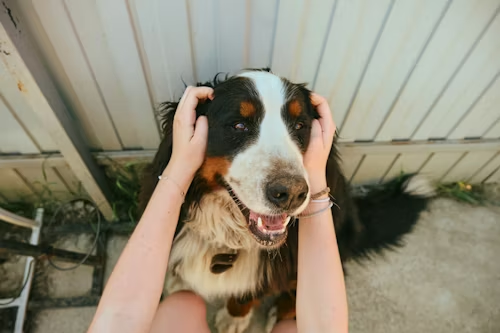
Dog owners often panic when their pet starts scratching nonstop—but a common surprise is this: there are no fleas at all.
If your dog is itching but you can’t find fleas, you’re dealing with a very real (and very common) issue known as “dog itching no fleas.” This condition is not a disease itself, but a symptom of something deeper happening inside or outside your dog’s body.
In this first part, we’ll break down:
- What it really means when your dog is itchy but flea-free
- The most common hidden causes
- Early warning symptoms you should never ignore
1.Dog Itching but No Fleas – What Does It Mean?
When a dog is scratching, licking, or biting its skin constantly, most people immediately assume fleas are the problem. But in reality, fleas are only ONE of many possible causes.
If fleas are not visible, it usually means:
- The problem is internal (allergies, hormones, food reactions)
- Or environmental (dust, pollen, cleaning chemicals)
- Or skin-related (infections, dryness, parasites like mites)
Why this matters
Ignoring the real cause can make things worse over time:
- Skin becomes inflamed and painful
- Secondary infections develop
- Hair loss and bald patches appear
- Your dog becomes restless, anxious, and uncomfortable
Key takeaway
If your dog is itching but no fleas are found, the problem is not minor. It’s a signal that something deeper needs attention.
2. Common Reasons Your Dog Is Itchy Without Fleas
There are several major causes of dog itching no fleas, and most of them are more common than flea infestations themselves.
Below is a simple breakdown:
Main Causes of Itchy Dogs (No Fleas Found)
| Cause Category | Examples | How Common |
|---|---|---|
| Allergies | food, pollen, dust | ⭐⭐⭐⭐⭐ Very common |
| Dry skin | weather, shampoo | ⭐⭐⭐⭐ Common |
| Infections | bacteria, yeast | ⭐⭐⭐⭐ Common |
| Parasites (non-flea) | mites, lice | ⭐⭐⭐ Moderate |
| Food intolerance | protein sensitivity | ⭐⭐⭐ Moderate |
| Hormonal issues | thyroid, Cushing’s | ⭐⭐ Less common |
| Stress/behavior | anxiety, boredom | ⭐⭐⭐ Moderate |
2.1 Allergies (Most Common Cause)
Allergies are responsible for a large percentage of itchy dog cases without fleas.
Dogs can develop allergies just like humans.
Environmental allergies
These include:
- Pollen from grass and trees
- Dust mites in carpets and bedding
- Mold spores in humid environments
Dogs often itch more:
- During spring or rainy seasons
- After playing outside
- At night (dust exposure indoors)
Food allergies
Some dogs react badly to:
- Chicken
- Beef
- Dairy products
- Wheat or grains
Symptoms may include:
- Constant scratching
- Ear infections
- Soft stool or digestive issues
Contact allergies
These happen when your dog’s skin reacts directly to something it touches:
- Shampoos or grooming products
- Cleaning chemicals on floors
- Grass or certain plants
Even a new detergent used on bedding can trigger itching.
2.2 Dry Skin in Dogs
Dry skin is often underestimated but is a major cause of non-flea itching.
Seasonal dryness
Dogs may itch more:
- In winter (low humidity)
- In very hot, dry climates
Nutritional deficiency
A lack of omega-3 fatty acids can cause:
- Flaky skin
- Dull coat
- Mild to severe itching
Over-bathing problem
Too much bathing or harsh shampoos can:
- Strip natural oils
- Damage skin barrier
- Increase sensitivity
2.3 Skin Infections (Bacterial & Yeast)
Sometimes itching is not the root problem—it’s a secondary infection caused by scratching.
How it starts
- Dog scratches due to allergy or irritation
- Skin breaks or becomes weak
- Bacteria or yeast grow in affected area
Common signs of infection:
- Strong unpleasant odor
- Red or inflamed skin
- Greasy or oily coat
- Hair loss in patches
Yeast infections are especially common in:
- Ears
- Paws
- Skin folds
2.4 Parasites Other Than Fleas
Even if fleas are absent, other microscopic parasites may still be present.
Mites (very common)
Types include:
- Sarcoptic mange (highly itchy, contagious)
- Demodex mites (affects immune-compromised dogs)
These are often invisible without a vet microscope test.
Lice
- Less common than fleas
- Cause mild to moderate itching
- Spread through contact with infected animals
2.5 Food Intolerance or Sensitivities
Not all dogs have true allergies—some have food intolerance, meaning their body cannot properly digest certain ingredients.
Common triggers:
- Beef protein
- Chicken meals
- Artificial additives
- Grain fillers
Elimination diet method
Vets often recommend:
- Switching to a limited-ingredient diet
- Feeding one protein source only
- Observing changes over 8–12 weeks
2.6 Hormonal Imbalances
Sometimes itching is caused by internal hormone issues, not skin problems.
Thyroid disease (hypothyroidism)
Can lead to:
- Dry skin
- Hair loss
- Constant scratching
Cushing’s disease
Can cause:
- Thinning skin
- Increased infections
- Skin sensitivity
2.7 Stress, Anxiety, and Behavioral Itching
Yes—dogs can scratch due to emotional stress.
Common triggers:
- Separation anxiety
- Boredom or lack of exercise
- Changes in environment
Behavior signs:
- Constant licking paws
- Chewing tail or legs
- Restless movement
This is often called psychogenic itching.
3. Symptoms to Watch Along With Itching
If your dog has no fleas but is still scratching, pay attention to these signs:
Physical symptoms:
- Constant scratching or biting
- Red, irritated skin
- Bald patches or thinning coat
- Scabs or sores
Ear-related symptoms:
- Frequent head shaking
- Ear scratching
- Dark discharge or odor
Behavioral signs:
- Excessive licking (especially paws)
- Restlessness
- Irritability
4. How to Diagnose Dog Itching Without Fleas
When fleas are ruled out, diagnosis becomes a process of elimination and observation. Vets usually combine medical tests with behavioral and dietary history.
4.1 Veterinary Skin Examination
A vet examination is often the fastest way to identify the root cause.
What vets typically check:
- Skin texture and inflammation level
- Presence of infection (bacteria or yeast)
- Hair loss patterns
- Ear condition (very important indicator)
Skin scraping test
This is used to detect:
- Mites (like sarcoptic mange or demodex)
- Microscopic parasites
- Skin infections under the surface
A small sample of skin is taken and examined under a microscope.
Allergy testing
If allergies are suspected, vets may suggest:
- Blood tests
- Intradermal (skin prick) testing
These help identify triggers like:
- Pollen
- Dust mites
- Certain foods
4.2 Food Elimination Diet Trial
Food allergies are one of the most overlooked causes of dog itching no fleas, so vets often recommend an elimination diet.
What is an elimination diet?
It is a controlled feeding plan where:
- Only one protein source is given
- No treats or extras are allowed
- Ingredients are kept extremely simple
Step-by-step process
Step 1: Choose a limited diet
Examples:
- Lamb + rice
- Fish-based formula
- Hydrolyzed protein diet
Step 2: Strict feeding only
- No table scraps
- No flavored treats
- No mixing foods
Step 3: Monitor changes
Watch for:
- Reduced scratching
- Improved skin condition
- Less ear irritation
Duration
An elimination diet usually takes:
- 8 to 12 weeks
This is important because skin healing takes time.
Common mistake
Many owners stop too early when they see slight improvement—but full results take patience.
4.3 At-Home Observation Checklist
Before jumping to treatments, careful observation can give strong clues about the cause.
What to track at home:
When does itching happen?
- Morning or night?
- After walks?
- After eating?
- Seasonal changes?
What changed recently?
- New shampoo or grooming product
- New detergent for bedding
- New food or treats
- Change in environment (new home, garden, etc.)
Where does your dog itch most?
- Ears (often allergies or yeast)
- Paws (contact allergies or anxiety)
- Belly (environmental allergens)
- Back (parasites or fleas sometimes hidden)
Simple tracking table
| Observation | Possible Cause |
|---|---|
| Itching after eating | Food allergy |
| Worse in spring | Pollen allergy |
| Constant paw licking | Anxiety or contact allergy |
| Ear scratching + odor | Yeast infection |
| Night-time itching | Mites or dry skin |
Why observation matters
Many vets say that 80% of diagnosis starts with owner observation, because patterns often reveal the cause faster than tests.
5. Treatment Options for Itchy Dogs (No Fleas)
Once the cause is identified, treatment becomes more targeted. Treating without diagnosis often leads to temporary relief only.
5.1 Medicated Shampoos and Topical Treatments
For many dogs, skin relief starts externally.
Medicated shampoos help with:
- Bacterial infections
- Yeast overgrowth
- Skin inflammation
Types of shampoos:
- Antibacterial shampoos → for infected skin
- Antifungal shampoos → for yeast issues
- Hypoallergenic shampoos → for sensitive skin
Pro tip:
Let medicated shampoo sit for 5–10 minutes before rinsing for best results.
5.2 Allergy Management
If allergies are confirmed, treatment focuses on reducing immune reactions.
Common vet treatments:
- Antihistamines
- Steroids (short-term relief)
- Prescription allergy medications
Immunotherapy (allergy shots)
For long-term control:
- Small doses of allergens are introduced
- Helps the immune system build tolerance
5.3 Dietary Improvements
Food plays a major role in skin health.
Helpful dietary changes:
- Add omega-3 fatty acids
- Switch to limited-ingredient diets
- Avoid artificial additives
Best nutrients for skin:
- Fish oil (EPA & DHA)
- Vitamin E
- Zinc
These help strengthen the skin barrier and reduce inflammation.
5.4 Treating Skin Infections
If scratching leads to infection, direct treatment is needed.
Common medications:
- Antibiotics (for bacterial infections)
- Antifungal tablets or creams
- Ear drops (for ear infections)
Important rule
Always complete the full treatment course—even if symptoms improve early.
Stopping too soon can cause:
- Recurrence
- Stronger infection
- Antibiotic resistance
5.5 Managing Stress and Behavior
Sometimes the issue is not physical at all—but emotional.
Stress-related itching solutions:
- Daily walks and exercise
- Interactive toys
- Training and mental stimulation
- Calming routines
Helpful behavioral tools:
- Chew toys
- Puzzle feeders
- Anxiety wraps
Routine matters
Dogs feel safe with structure:
- Same feeding time
- Regular walks
- Predictable environment
6. Home Remedies for Dog Itching (Safe Options)
When your dog is uncomfortable, home care can provide temporary relief, especially while waiting for vet treatment or diagnosis results.
Important note: Home remedies are supportive—not a replacement for veterinary care if symptoms are severe or ongoing.
6.1 Oatmeal Baths
One of the most trusted natural remedies for itchy skin.
Why it works:
- Soothes irritated skin
- Reduces inflammation
- Provides gentle moisture
How to use:
- Grind plain oatmeal into fine powder
- Mix with lukewarm water
- Let your dog soak for 10–15 minutes
- Rinse gently and pat dry
6.2 Coconut Oil Application
Coconut oil is widely used for skin hydration.
Benefits:
- Moisturizes dry skin
- Has mild antibacterial properties
- Helps reduce flakiness
How to apply:
- Use a small amount
- Rub gently on dry or itchy areas
- Avoid overuse (can make coat greasy)
6.3 Apple Cider Vinegar (Diluted Use)
Apple cider vinegar can help restore skin balance.
Important:
Never apply directly—always dilute.
Mix ratio:
- 1 part vinegar
- 1 part water
Use for:
- Mild itching
- Paw cleaning
- Skin spray (avoid open wounds)
6.4 Keeping Skin Clean and Dry
Sometimes the simplest care is the most effective.
Best practices:
- Wipe paws after walks
- Keep bedding clean
- Avoid damp fur after baths or rain
- Brush coat regularly
7. When to See a Vet Immediately
Not all itching is harmless. Some cases of dog itching no fleas indicate serious underlying conditions.
Warning signs you should NOT ignore:
Severe skin damage
- Open wounds
- Bleeding from scratching
- Thick scabs or crusts
Strong odor or discharge
- Foul smell from skin
- Oozing or sticky discharge
- Ear infections with dark wax
Behavior changes
- Constant restlessness
- Loss of appetite
- Aggression due to discomfort
No improvement
If home care does not improve symptoms within:
- 7–10 days → visit a vet
8. Prevention Tips for Future Itching
Once your dog recovers, prevention is key to avoiding repeated flare-ups.
8.1 Regular grooming routine
A clean coat reduces allergens and bacteria.
Recommended routine:
- Brush 2–3 times per week
- Bathe every 3–6 weeks (depending on breed)
- Use mild, dog-friendly shampoo
8.2 Parasite prevention (even without fleas)
Even if fleas are not visible, prevention is still necessary.
Include:
- Vet-approved flea & tick prevention
- Regular skin checks
- Clean sleeping areas
8.3 Balanced diet with essential fatty acids
Diet directly affects skin health.
Include:
- Omega-3 supplements (fish oil)
- High-quality protein sources
- Vitamin-rich dog food
8.4 Clean living environment
Many itching triggers come from the environment.
Keep clean:
- Dog bedding
- Carpets and rugs
- Sofa areas
- Dust-prone corners
Bonus tip:
If your dog has seasonal allergies, consider:
- Air purifiers
- Frequent vacuuming
- Limiting outdoor exposure during high pollen seasons
9. Conclusion: Managing Dog Itching Without Fleas
If your dog is scratching but you can’t find fleas, the most important thing to remember is:
Itching is a symptom—not the disease itself.
Key takeaways from this guide:
Most common causes:
- Allergies (food + environmental)
- Dry skin
- Skin infections
- Mites or hidden parasites
- Hormonal imbalance
- Stress or anxiety
Why diagnosis matters
Treating without knowing the cause often leads to:
- Temporary relief only
- Recurring symptoms
- Worsening skin damage
Proper diagnosis ensures:
- Faster healing
- Long-term comfort
- Healthier skin and coat
Final advice
If your dog is experiencing ongoing itching:
- Don’t ignore it
- Don’t rely only on home remedies
- Seek veterinary help early
Early action can prevent:
- Chronic skin disease
- Painful infections
- Long-term discomfort
A healthy dog is a comfortable dog—and healthy skin is one of the clearest signs of overall wellbeing.
With the right care, most cases of dog itching no fleas can be successfully managed and even fully resolved.