1. Why Do Dogs With Braces?
A picture of a dog with braces almost always goes viral. It’s an unexpected and seemingly humorous sight—a canine companion sporting a mouthful of metallic hardware. The image invites a chuckle, but the reality behind it is far more serious than a fashion statement. What appears to be a quirky anomaly is, in fact, a advanced and compassionate veterinary procedure aimed at relieving pain and improving quality of life.
Dogs With Braces canine orthodontics exists for one reason only: medical necessity. Unlike humans who often seek Dogs With Braces for cosmetic alignment, the goal for our four-legged friends is purely functional. It’s about correcting painful and debilitating dental issues that impact their ability to eat, play, and live comfortably. This specialized field of veterinary dentistry focuses on diagnosing and treating malocclusions (misaligned bites) that cause physical harm.
In this comprehensive guide, we will move beyond the initial surprise to explore the crucial medical reasons for Dogs With Braces, the common conditions they treat, and the detailed process involved. We’ll also tackle the cost, the ethical considerations, and the dedicated aftercare required, providing you with a full understanding of this remarkable aspect of modern pet healthcare.
2. It’s Not About Vanity: The Medical Reasons for Canine Orthodontics
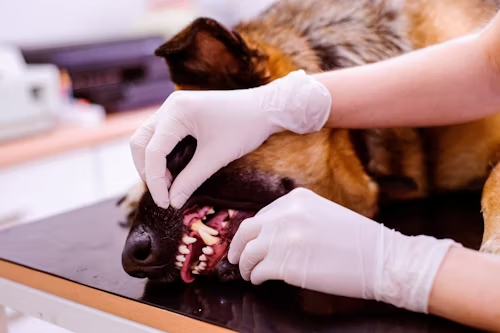
Let’s be perfectly clear: no reputable veterinary dentist will ever apply Dogs With Braces for aesthetic reasons. The driving force behind any orthodontic treatment is always to address a functional health problem that is causing or will cause significant issues for the animal. The primary reason a dog would need braces is to correct a malocclusion, which is the misalignment of a dog’s teeth and bite.
An improper bite is far more than a minor inconvenience; it can lead to a cascade of serious and painful health problems, including:
- Chronic Pain and Discomfort: Constant abnormal pressure on teeth, jaws, and the temporomandibular joint (TMJ) can lead to significant, unrelenting pain. A dog may not cry out, but they live with a persistent ache that affects their demeanor.
- Soft Tissue Trauma: This is one of the most common and urgent reasons for intervention. Misaligned teeth can dig into the soft tissues of the mouth. A classic example is lingual penetration, where lower canine teeth (
base narrow canines) press into the hard palate or gums on the roof of the mouth, creating painful ulcers and holes. - Difficulty Eating and Chewing: When a dog’s teeth don’t meet correctly, the fundamental act of chewing food becomes difficult and painful. This can lead to weight loss, nutritional deficiencies, and a decreased quality of life.
- Premature Tooth Wear and Damage: Abnormal tooth-on-tooth contact can cause excessive, uneven wear, leading to cracked enamel, exposed tooth pulp, and severe tooth damage that may require extraction.
- Increased Risk of Periodontal Disease: Crooked, rotated, or crowded teeth create tiny crevices that are impossible to clean. Food and plaque accumulate in these spaces, drastically accelerating the development of tartar, gum disease, and tooth loss.

Labra Dog Front Leg Brace
Labra Dog Front Leg Brace – Compression Wrap with Adjustable Straps – Dog Wrist Brace for Support – Leg Sleeve to Stop Licking – Aid in Wound Care and…
3. Common Dental Issues in Dogs That May Require Dogs With Braces
Veterinary dentists classify malocclusions to accurately diagnose and plan treatment. The most common system uses four classes:
- Class I (Neutroclusion): The jaw length is normal, but one or more teeth are out of alignment (e.g., rotated or misplaced).
- Class II (Malocclusion, Overbite, Overshot): The upper jaw is longer than the lower jaw.
- Class III (Malocclusion, Underbite, Undershot): The lower jaw is longer than the upper jaw. This is normal and standard for brachycephalic breeds like Boxers, Bulldogs, and Pugs.
- Class IV (Wry Bite): An asymmetrical bite where one side of the jaw grows longer than the other.
Within these classes, several specific conditions frequently necessitate orthodontic intervention:
Base Narrow Canines (Linguoversion)
This is the most common reason gets Dogs With Braces. The lower canine teeth are too close together and grow angled inward, toward the tongue. Instead of fitting neatly behind the upper lip, they strike the hard palate or upper gum line with every bite, causing significant pain and injury.
Lance Canines (Mesioversion)
Often seen in Shetland Sheepdogs and other long-snouted breeds, this condition occurs when the upper canine teeth are displaced and point forward, protruding outwards in a “lance-like” fashion instead of downward. This can interfere with the lower jaw’s movement and cause trauma to the lip.
Rostral Crossbite
This involves the incisor teeth (the small front teeth). In a normal bite, the upper incisors sit slightly in front of the lower incisors. In a rostral crossbite, one or more lower incisors are positioned in front of the upper incisors.
Crowding and Tooth Rotation
This occurs when there is not enough space in the jaw for all the teeth to erupt normally. Teeth may become twisted, overlap, or be forced into abnormal positions, creating areas prone to plaque buildup and disease.
Persistent Deciduous Teeth
A dog’s baby teeth are meant to fall out as the adult teeth erupt. If a deciduous tooth fails to fall out, it can block the adult tooth from coming in correctly, forcing it to erupt at an abnormal angle and causing a malocclusion. This is why veterinarians recommend monitoring puppy teething closely.
| Condition | Description | Common Breeds Affected |
|---|---|---|
| Base Narrow Canines | Lower canines point inward, damaging the palate. | Any breed, but common in smaller breeds. |
| Lance Canines | Upper canines protrude forward horizontally. | Shetland Sheepdogs, Dachshunds, Collies. |
| Class II Overbite | Upper jaw significantly longer than the lower jaw. | Typically a developmental issue in many breeds. |
| Persistent Teeth | Baby teeth that don’t fall out, displacing adult teeth. | Toy and small breed dogs (e.g., Yorkies, Maltese). |
Table: Common canine dental conditions that may require orthodontic intervention.
4. The Process: What Does Getting Dogs With Braces Actually Involve?
The journey to correcting a dog’s bite with orthodontics is a meticulous and specialized process, far removed from a simple vet visit. It requires the expertise of a board-certified veterinary dentist.
- Step 1: Referral to a Specialist
The process almost always begins with your general veterinarian. During a routine exam or a visit for a specific concern (like bad breath or pawing at the mouth), they may identify a malocclusion causing problems. They will then provide a referral to a veterinary dental specialist. These specialists have undergone years of additional training beyond veterinary school to become experts in oral health. - Step 2: Comprehensive Examination and Diagnosis
The specialist will conduct a thorough initial consultation. The gold standard for diagnosis is a sedated oral exam paired with full-mouth dental radiographs (X-rays). The sedation ensures the dog is stress-free and allows for a perfect assessment. The X-rays are non-negotiable and critical; they reveal what’s happening below the gum line—the position of tooth roots, the health of the jawbone, and the presence of any hidden problems that could affect treatment. - Step 3: Custom Treatment Planning
Using the information gathered, the veterinary dentist will develop a customized treatment plan. This plan outlines the specific type of appliance needed, the predicted duration of treatment, the number of anticipated adjustments, and a detailed cost estimate. They will discuss all available options, including alternatives like tooth extraction. - Step 4: Application of the Orthodontic Appliance
The application of Dogs With Braces or other devices is always performed under general anesthesia. This ensures the dog is completely still and pain-free, allowing the specialist to place the appliance with precision. The process of bonding brackets or fitting an acrylic device is delicate and time-consuming. - Step 5: Adjustments and Monitoring Progress
Orthodontics is not a “set it and forget it” procedure. The dog will require regular follow-up appointments (every few weeks) for the specialist to check progress, make adjustments, tighten wires, or activate springs. These visits are crucial for ensuring the teeth are moving correctly and as planned.
5. Types of Canine Dental Appliances: It’s Not Just Metal Dogs With Braces
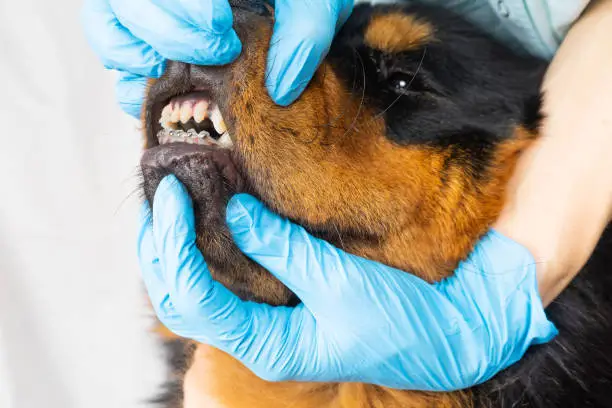
While the image of traditional metal Dogs With Braces is the most common, veterinary dentistry employs a variety of appliances tailored to the specific problem.
- Traditional Brackets and Wires: Similar to human Dogs With Braces, these involve bonding small composite brackets to the tooth enamel and connecting them with a special orthodontic wire. The tension from the wire gently guides the teeth into their correct position over time. The composite material is tooth-colored, making it less noticeable than metal.
- Inclined Planes (Bite Plates): This is a common solution for overbites (Class II malocclusion) in young dogs. It’s an acrylic device that fits over the upper teeth, creating a ramp. When the dog closes its mouth, the lower incisors hit this ramp, which encourages the lower jaw to grow forward while restraining the upper jaw’s growth. It is usually worn for a few weeks to several months.
- Elastics and Springs: These are often used in conjunction with brackets to apply specific directional force. Elastics (rubber bands) can help rotate teeth or close spaces, while small springs placed on the wire can push teeth apart or pull them together.
- Interproximal Tooth Reduction (IPR): Sometimes, Dogs With Braces are not needed. In cases of mild crowding, a veterinarian may gently file or reduce the enamel between teeth to create enough space for them to align naturally. This is a permanent alteration but can prevent the need for more invasive treatment.
| Appliance Type | Primary Use | How It Works |
|---|---|---|
| Composite Brackets & Wire | Correcting rotated or misplaced teeth (e.g., base narrow canines). | Applies continuous, gentle pressure to guide tooth movement. |
| Inclined Plane (Bite Plate) | Correcting overbites in young, growing dogs. | Prevents full mouth closure, encouraging lower jaw development. |
| Elastics & Springs | Fine-tuning tooth position; applying specific forces. | Works with brackets to rotate teeth or open/close spaces. |
| Tooth Reduction | Addressing mild crowding. | Creates space by reducing the width of specific teeth. |
Table: Types of canine orthodontic appliances and their functions.
6. The Cost of Care: How Much Do Dogs With Braces Cost?
Let’s address the significant financial aspect of canine orthodontics. This is a specialized and expensive procedure due to the expertise, equipment, and time required.
- Price Range: The total cost for Dogs With Braces can vary dramatically based on several factors, including:
- Geographic location and cost of living.
- The severity and complexity of the malocclusion.
- The type of appliance required.
- The individual specialist’s fees.
A broad estimate for full treatment typically falls between $1,500 and $5,000+.
- What the Cost Includes: This total is rarely a single fee. It usually encompasses:
- Initial consultation and examination.
- Anesthesia for procedures.
- Diagnostic imaging (dental X-rays).
- The orthodontic appliance itself.
- The procedure to apply the appliance.
- All follow-up adjustment appointments.
- Medication for pain and anxiety.
- The final procedure to remove the appliance.
- The Crucial Role of Pet Insurance: This is where pet insurance becomes incredibly valuable. If a malocclusion is causing documented health problems (like palatal ulcers), some insurance policies may cover orthodontics as a medically necessary treatment. However, coverage is not guaranteed.
- Action Step: You must carefully review your policy’s wording or speak directly with your provider. Look for terms like “orthodontics” or “dental disease treatment” in the inclusions and exclusions. It is often classified as a “hereditary” or “congenital” condition, which some plans cover and others do not. Never assume it’s covered; always get pre-approval in writing.
7. Caring for a Dogs With Braces: Recovery and Maintenance
Once the appliance is placed, the owner’s role becomes paramount. Successful treatment requires diligent home care and strict adherence to the veterinary dentist’s instructions. This period demands a significant commitment but is crucial for a positive outcome.
- Pain Management: It is normal for a dog to experience some discomfort after the appliance is applied and after each adjustment. Your veterinarian will prescribe appropriate pain medication and possibly anti-inflammatory drugs to keep your dog comfortable during these periods. Monitoring your dog’s behavior is key—if they seem excessively painful, contact your specialist.
- Diet Changes: A soft food diet is essential for the duration of treatment.
- What to feed: Canned wet food, soaked kibble (softened with warm water or broth), or a prescription recovery diet are ideal options.
- What to avoid: Absolutely no hard treats, bones, antlers, rawhide, or hard chew toys. Avoid hard, crunchy kibble as-is. These can break brackets, bend wires, and cause significant pain or injury.
- Feeding method: Some dogs may benefit from eating meatballs of soft food by hand to help guide them to chew in a way that avoids the appliance.
- Activity Restrictions: Playtime must be modified. Games like fetch with a hard ball or frisbee must be stopped. Instead, offer soft, plush toys for gentle play. Closely monitor interactions with other dogs to prevent roughhousing that could damage the mouth.
- Oral Hygiene: This is one of the most important and challenging aspects of care. The appliance creates numerous nooks and crannies where plaque and food can accumulate, drastically increasing the risk of periodontal disease.
- Tools: You will need special supplies, such as a soft-bristled toothbrush, canine toothpaste, and potentially oral rinses or chlorhexidine gel prescribed by your vet.
- Technique: Gentle, daily brushing around the brackets and wires is necessary. Your veterinary team will show you the best way to clean the appliance without damaging it.
- Monitoring: You must become a vigilant observer. Regularly check the appliance for any signs of damage, such as loose brackets, broken wires, or any piece that has come unattached. Also, watch for behavioral signs of problems, including increased pawing at the mouth, refusal to eat, drooling, or bleeding.
8. The Ethical Debate: Is Putting Dogs With Braces Cruel?
The image of a Dogs With Braces naturally sparks a passionate ethical debate. It’s a complex issue with valid perspectives on both sides.
- The Case For (Pro – The Veterinary Perspective):
Proponents, overwhelmingly consisting of veterinary professionals, argue that orthodontics is a medically necessary intervention. The core ethical principle in veterinary medicine is to alleviate suffering. They view Dogs With Braces not as a cosmetic luxury but as a legitimate treatment to relieve chronic pain, prevent severe soft tissue trauma, and restore a dog’s ability to eat normally. From this viewpoint, withholding treatment could be considered unethical, as it condemns the animal to a lifetime of discomfort and potential health complications. - The Case Against (Con – The Owner’s Concern):
Critics voice concerns about subjecting an animal to the stress of repeated veterinary visits, anesthesia, and the discomfort of wearing an appliance for a condition that is not imminently life-threatening. There is a worry about anthropomorphism—projecting human values of straight teeth onto an animal that doesn’t care about its appearance. The question is asked: are we doing this for the dog, or for ourselves? - Conclusion of the Debate:
The consensus among veterinary ethics experts is that canine orthodontics is ethical when two conditions are met:- The procedure is performed to address a documented, painful medical condition that impacts the animal’s quality of life.
- The treatment is performed by a qualified specialist with the dog’s welfare as the sole priority.
The alternative to Dogs With Braces is often the extraction of otherwise healthy teeth. In many cases, orthodontics is actually the more conservative and tooth-preserving option. The decision is never made lightly and is a collaborative process between a concerned owner and a specialized veterinarian focused solely on the dog’s health and comfort.
Dogs With Braces
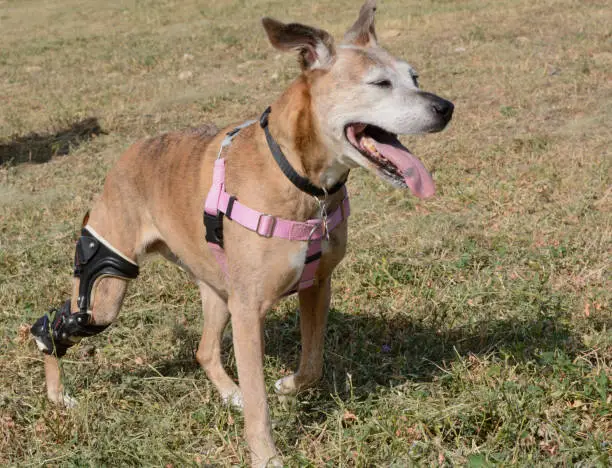
Dog Knee Brace for Torn ACL Hind Leg, Adjustable Dog Leg Braces for Back Leg with 4 Metal Stabilizers Helps with Torn CCL, Luxating Patella, Ligament Injuries, Hip Dysplasia,XXL
9. Frequently Asked Questions (FAQ)
Q: Can any Dogs With Braces?
A: Dogs With Braces are not based on breed but on medical need. However, certain breeds are more prone to the dental issues that require them. For example, Shelties often see lance canines, while small breeds like Maltese are prone to overcrowding and persistent deciduous teeth.
Q: How long do dogs have to wear Dogs With Braces?
A: Treatment time varies significantly based on the severity of the issue and how quickly the teeth move. It can range from a few weeks for minor corrections to several months for more complex cases. Your veterinary dentist will provide a tailored timeline.
Q: Do dog Dogs With Braces hurt?
A: There is some discomfort associated with the pressure of tooth movement, especially after adjustments. However, this is effectively managed with veterinary-prescribed pain medication. It’s crucial to remember that the treatment is alleviating the far greater, constant pain caused by the malocclusion.
Q: What is the alternative to dog Dogs With Braces?
A: The most common alternative is tooth extraction. For example, in the case of base narrow canines, the problematic teeth can be removed. A modern alternative is crown reduction with vital pulpotomy, where the crown of the tooth is shortened and the exposed pulp is sealed. Your specialist will discuss all options, weighing the pros and cons of each for your dog’s specific situation.
Q: Are there any risks?
A: As with any procedure requiring general anesthesia, there are inherent risks, though they are minimized by modern protocols and monitoring. Orthodontic-specific risks include root shortening or damage from movement and periodontal disease if home care is inadequate. These risks are greatly reduced when treated by an experienced board-certified veterinary dentist.
10. Conclusion: A Medical Solution, Not a Fashion Statement
The journey through the world of canine orthodontics reveals a field dedicated not to aesthetics, but to animal welfare. What begins as a surprising or even humorous image of a Dogs With Braces is, upon closer inspection, a story of advanced medical care. It’s a story about alleviating chronic pain, healing painful ulcers, and restoring the simple joy of eating without discomfort.
The decision to pursue orthodontics for your dog is a significant one, involving a substantial commitment of time, finances, and daily care. It is a path taken not on a whim, but after careful consultation with veterinary professionals who have identified a clear, painful problem with a clear, effective solution.
If your veterinarian has expressed concern about your dog’s bite, or if you notice signs of oral discomfort, your first step is to seek a professional evaluation. A board-certified veterinary dentist can provide the expertise needed to understand the options, whether that involves orthodontics, extraction, or monitoring. The goal is always the same: to ensure your best friend lives a happy, healthy, and pain-free life.