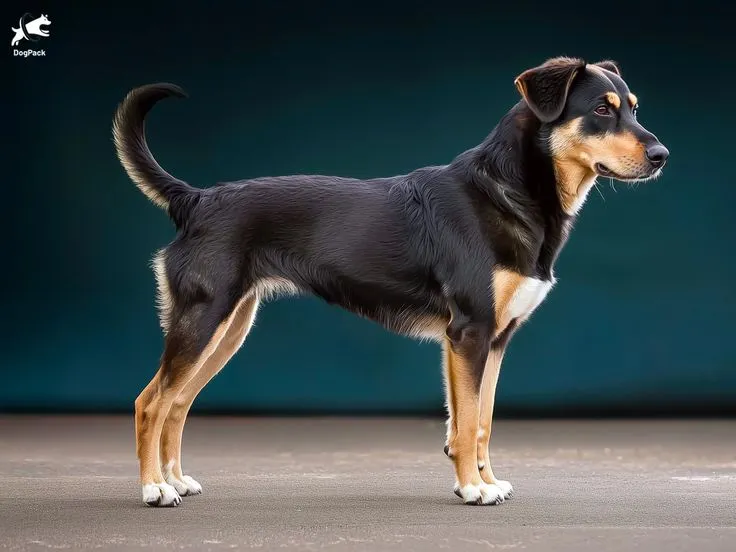
I saw one at the park—it’s huge, it barks a lot, and it looks…wild. What’s up with that?”
Seriously, that’s pretty much the reaction most people have when they encounter a Huntaway. These are not your average backyard dogs. Yet, almost no one seems to know why they’re built this way or what they even do.
What’s infuriating is how quickly the conversation turns from “Oh cool, a big dog” to “Hope it doesn’t get bored” or “That barking—maybe it’s aggressive?” And that’s just it: it’s not aggression. It’s instinct. But unless you know their backstory, it sounds like chaos.
If you’ve ever wondered:
- “Why does this dog have to bark?”
- “Are they just high-energy for no reason?”
- “Would they be too loud for my neighborhood?”
…then stick around. Because once you unpack their history, their behavior, and their true needs—you either get the dog and its world…or you walk away, knowing it wasn’t your right fit. Either way? You’ll have clarity.
TL;DR—If you just want the punchline:
Huntaways are elite working dogs from New Zealand. They’re bred to run all day, bark the sheep along, and make independent decisions when you’re nowhere nearby. You won’t mistake them for Border Collies or Labs—they operate differently.
- Built for long distances and tough terrain
- Highly intelligent, but not made to be couch potatoes
- Barks purposefully—that’s how they herd
- Not ideal for small spaces, beginners, or quiet living
- Great for active, experienced owners ready for a breed that works
Where Did These Mighty Barkers Come From?
Let’s rewind to late 1800s New Zealand. Picture wide-open hills, thousands of sheep scattered across farmland, and no fences to help control them. Farmers needed dogs that could announce their presence clearly, cover long distances, and handle rough ground—not just look cute or obey commands.
They found what they needed in mixed breeds: Border Collie meets versatile working dogs like Labradors, Foxhounds, even some Dobermans. Over decades, these crosses produced a new kind of herder—the Huntaway—known for using its voice as much as its feet.
That’s right. When a Huntaway barks, it’s working sheep. When it stays quiet, it’s likely resting—on its feet.
Bark-Based Herding—Why It Matters
Technique-wise, this is not what most herding dogs do. Labrador mixes might bark if startled, but the Huntaway barks to herd. That bark travels across valleys. It convinces sheep to move on cue.
And it’s not random noise—it’s purposeful. In competitions and on farms, handlers can single out this trait and develop it. Turn the bark on or off. Use it to move or stop. It’s brilliant. It’s intentional. It’s genius born of necessity.
Formal Recognition—Better Late Than Never
Despite being key to New Zealand’s farming for generations, the Huntaway wasn’t recognized by the New Zealand Kennel Club until 2013. Sounds late—but there’s a reason:
They weren’t bred to conform to a look. They were bred to perform. So you’ll see Huntaways in black-and-tan, brindle, smooth coat, rough coat—you name it. Their lineage is buried in deeds, not looks.
In New Zealand, they’re treated with pride. Fans say: this is our national dog. But outside? Still pretty rare.
Are They Found Anywhere Else?
A handful of farms, working dog enthusiasts, and adventure-loving families have Huntaways outside of NZ. You might find them in search-and-rescue programs, agility competitions, or even scent-detection work. But they remain uncommon.
That means fewer passes, fewer meetups, fewer side-by-side comparisons with other national breeds. Makes getting one part excitement, part unknown.
What Makes the Huntaway Stand Out?
Here’s a snapshot of their unique traits:
| Characteristic | Why It’s Special |
|---|---|
| Bark-based herding | Vocal herder, not silent eye-contact worker |
| Built for stamina | Can work long hours—wide range endurance |
| Independent thinking | Makes decisions on the job |
| Loyal, but not clingy | Deep bonds, not needy personality |
| No breed “standard” look | Function over form—varied appearance |
First Glance: “Is That a Lab Mix?”
If you see one trotting across a field, you might mistake a Huntaway for a chunky Labrador cross with a bark that sounds like a foghorn. But watch it for five minutes and you’ll quickly realize — this dog isn’t just another big mutt.
They move with purpose. They think. They calculate. And they use their bark like a tool.
Unlike other breeds that are judged by their pretty coats or perfect posture in a ring, Huntaways were bred to work. That’s why their appearance is secondary to their ability. Still, there are some telltale traits if you know what to look for.
Physical Traits of the Huntaway
Let’s break it down:
| Feature | Details |
|---|---|
| Size | Medium to large — most fall between 22–26 inches tall, 50–80 pounds |
| Build | Muscular and deep-chested — stamina over sleekness |
| Ears | Droopy, relaxed ears that hang to the sides |
| Coat Types | Smooth, rough, or wire-coated (function-focused, not standardized) |
| Colors | Commonly black-and-tan, but brindle, white patches, and even pied exist |
| Feet | Broad, rugged paws — made for uneven ground and long days outdoors |
You’ll find some Huntaways with short coats like a hound, and others with shaggy fur more like a shepherd. There’s no “wrong” look, as long as the dog can work.
Temperament: Independent But Connected
Now, if you’re used to golden retrievers or velcro dogs that follow your every move, the Huntaway might throw you for a loop. These dogs have a mind of their own. And that’s not a bad thing — if you know how to handle it.
The Good Stuff
- Incredibly smart — They can learn fast and make decisions without direct supervision.
- Loyal — Once bonded, they’re committed, protective, and steady.
- Friendly — Not typically aggressive toward people or dogs when socialized early.
- Driven — They want to do, not just be.
They’re like that one coworker who always finds the shortcut that gets the job done better than the rulebook ever could. Give them a task, and they’ll figure it out. Just don’t micromanage.
The Challenges
Let’s be real — not everything about owning a Huntaway is easy:
- They bark. A lot. And while they can be trained to manage it, barking is instinctual.
- They’ll herd your kids, your cat, your guests. It’s not aggression — it’s behavior they’ve been bred for.
- They must be stimulated. Leave a Huntaway with nothing to do, and you’ll come home to a bored, frustrated animal chewing the couch or digging escape holes in the backyard.
So yeah. They’re not couch ornaments. They’re thinkers. Workers. Problem-solvers.
Energy Levels: Not for Lazy Days
Huntaways don’t really “chill” until they’ve had their daily quota of activity. We’re not just talking about a walk around the block. We mean:
- Long, off-leash runs (in safe, fenced areas)
- Mental challenges like puzzle feeders or tracking games
- Herding practice or agility training
- Even structured tasks at home (hide-and-seek, scent work)
They do best when their day has a mission. And if you don’t give them one, they’ll invent their own… usually involving your furniture or the neighbor’s lawn.
Barking Behavior — Let’s Talk About the Elephant in the Room
Yes. They bark. A lot.
But that bark isn’t nuisance noise — it’s a tool. It’s communication. It’s bred into their bones. On the job, that deep, resonant bark helps drive sheep across hills, call them in from afar, and assert pressure where needed.
That said, you can train them to understand when barking is appropriate. But you’ll need patience, boundaries, and consistency.
Pro tip: Give them a “speak” and “quiet” command early. Reward quietness like you would any other good behavior. You can’t remove the bark entirely — but you can guide it.
Are They Good with Families?
They can be! But with a few caveats:
- With kids: They’re affectionate and gentle, but their herding instinct can kick in. Some may try to “round up” small children. Supervise playtime.
- With other pets: Socialization is key. They may chase or nudge other animals in a herding-like way. With proper introductions and rules, they coexist just fine.
- With strangers: Generally not aggressive. Curious and alert, but not naturally protective unless trained for it.
Their loyalty runs deep, but it’s built over time. Once it’s there, you’ve got a solid family dog — one that wants in on the action but won’t pester for constant attention.
Summary: What You’re Getting Into
If you’re thinking about life with a Huntaway, here’s what you’re signing up for:
| Pro | Con |
|---|---|
| Loyal, intelligent, friendly | High energy + needs serious exercise |
| Low grooming needs | Barking needs management |
| Excellent for outdoor lifestyles | Not great for apartments or city life |
| Great with training when done consistently | Can be headstrong or overly independent |
You Can’t “Outlazy” a Huntaway
If there’s one non-negotiable with this breed, it’s this: they need to move. And not just casually stretch their legs on a sidewalk stroll. We’re talking daily bursts of energy, purpose, and stimulation — or else they’ll find their own way to release it.
Spoiler: that “own way” often involves digging trenches in your garden or launching themselves over a fence like a furry parkour master.
Daily Exercise Requirements
A bored Huntaway is a noisy, destructive Huntaway. That’s not a behavioral flaw — it’s just the way they’re wired. They’ve been bred for centuries to cover large distances in the toughest terrain, driving hundreds of sheep with nothing but instinct and bark.
Minimum Daily Routine:
- 1.5 to 2 hours of physical activity, broken into chunks (e.g., one morning hike + an evening fetch session)
- Off-leash time in secure areas whenever possible
- Herding-style play — chasing, hide-and-seek, anything that triggers problem-solving
- Weekly variety — don’t just do the same loop around the block every day
Some Real-Life Enrichment Ideas:
| Activity | Why It Works for Huntaways |
|---|---|
| Sheepdog trials or “mock herding” | Activates their natural drive in a controlled setting |
| Scent work or treasure hunts | Appeals to their independent thinking |
| Agility courses | Challenges both mind and body |
| Canine obstacle runs (Shemozzle!) | Lets them work and play in bursts |
| Trail runs or long hikes | Taps into their stamina and drive |
If you’re not an outdoor person, this is probably where your lifestyle might clash with theirs. These dogs need motion — ideally tied to a task.
Mental Stimulation: The Missing Piece
Too many owners underestimate this. A tired dog isn’t just one who’s run in a field — it’s one who’s used their brain.
Huntaways thrive when given something to think about:
- Hide their meals around the yard or house
- Rotate toys weekly to keep interest fresh
- Teach scent games using treats under cups or towels
- Train new commands regularly, even if they already know the basics
Don’t let their independence fool you. They want to learn — they just need a reason to stay focused.
Grooming and Maintenance: Surprisingly Simple
Unlike some high-performance breeds that need constant brushing, the Huntaway is pretty low-maintenance in the coat department.
Coat Types and Care:
- Smooth coat: Brush once a week to remove loose fur and dirt
- Rough/wiry coat: Slightly more upkeep — brush 2–3 times weekly
- Shedding: Moderate and seasonal; nothing out of the ordinary
- Bathing: Only when truly needed — too much can strip natural oils
Their coat is built for outdoor life. Wash when muddy or smelly, but don’t go overboard.
Don’t Forget the Other Stuff:
- Dental care: Regular brushing or dental chews help
- Nail trims: Monthly, unless worn down naturally
- Ears: Check and clean weekly, especially after outdoor activity
- Diet: High-protein, active-dog formulas recommended
They burn through calories quickly. A one-size-fits-all food brand won’t cut it here — choose a working-dog blend with healthy fats, lean protein, and joint-supporting nutrients.
Common Health Issues to Watch For
Huntaways are known for being tough and resilient, but no breed is immune to health concerns. Here’s what tends to come up:
| Condition | Notes |
|---|---|
| Hip & Elbow Dysplasia | Due to their active lifestyle and frame |
| Bloat (Gastric Torsion) | Deep chests = higher risk, especially after meals |
| Mucopolysaccharidosis IIIA | A rare genetic issue in some lines |
| Ear Infections | Especially with floppy-eared types exposed to wet |
| Dilated Cardiomyopathy (DCM) | Less common, but worth testing for with age |
Regular checkups and early screening are your best weapons here. Most issues are manageable if caught early.
Proactive Health Tips:
- Don’t let them eat a huge meal right before or after heavy exercise
- Mix training with movement to avoid repetitive stress injuries
- Consider joint supplements from age 6+
- Use raised food bowls to reduce bloat risk in older Huntaways
Quick Summary of Daily Needs
Here’s what a well-cared-for Huntaway needs in a nutshell:
| Need | What It Looks Like |
|---|---|
| Exercise | 1.5+ hours per day, mix of running and play |
| Mental Stimulation | Puzzles, tasks, training, games |
| Grooming | Brushing weekly, basic hygiene monthly |
| Diet | High-protein, active-formula food |
| Health Care | Annual vet visits, optional hip/elbow screening |
Where Do Huntaways Thrive?
Let’s get this out of the way first: this is not an apartment dog. If you’re city-based with no yard and long hours away from home, a Huntaway will not be a good fit — no matter how much you love dogs.
Huntaways are born for space, movement, and purpose. They thrive in places where they can roam, explore, and engage with the world around them. Think:
- Rural properties
- Farms
- Suburban homes with large, secure yards
- Households that hike, run, or work dogs regularly
If your home matches that list, you’ve cleared the first big hurdle.
Personality Fit: Who Should Own a Huntaway?
They’re incredible dogs, but they’re not plug-and-play pets. The ideal Huntaway owner is:
- Physically active — you enjoy long walks, hikes, or outdoor work
- Mentally engaged — you’ll take time to teach, challenge, and interact
- Patient and consistent — barking, herding, and strong willpower need guidance
- Confident — you set rules, stick to training, and manage energy productively
- Aware of boundaries — you know when your dog needs space, and when it needs stimulation
Are they good for first-time dog owners? Sometimes — but only if that first-timer is willing to do a lot of learning and commit fully to training.
Pros and Cons Recap
Here’s a side-by-side breakdown to help weigh things out:
| Pros | Cons |
|---|---|
| Highly intelligent and task-driven | Needs 1.5–2+ hours of daily activity |
| Loyal and generally friendly with people/kids | May herd other pets or small children without socialization |
| Low grooming needs, rugged and weather-adaptive | Barking can be problematic in urban settings |
| Rare and fascinating breed with unique heritage | Not ideal for apartments or sedentary lifestyles |
| Can excel in herding, agility, scent, and sport | Requires firm, confident leadership |
Final Checklist: Is This Your Dog?
Ask yourself:
- Do I have space — physically and in my schedule — for a high-drive dog?
- Am I okay with regular barking and confident in training that behavior?
- Can I meet both the mental and physical demands of this breed?
- Will this dog fit into my family dynamic — with kids, pets, or partner?
- Do I want a companion that requires active participation — not just passive affection?
If you said “yes” to most of these, you might be the kind of person a Huntaway has been waiting for.
Conclusion: A Working Dog with a Heart of Gold
The New Zealand Huntaway isn’t flashy. It won’t win best-in-show or trend on Instagram reels. But what it offers instead is something deeper: purpose, loyalty, and pure utility wrapped in a dog that knows how to lead, love, and work.
Bred in the rugged hills of a beautiful country, these dogs carry a bit of that wild spirit in their bark and in their bones. They’re honest workers, intuitive thinkers, and companions for people who truly want to partner with their dog — not just walk one.
If that sounds like you, then maybe it’s time to look beyond the mainstream breeds… and consider the call of the Huntaway.